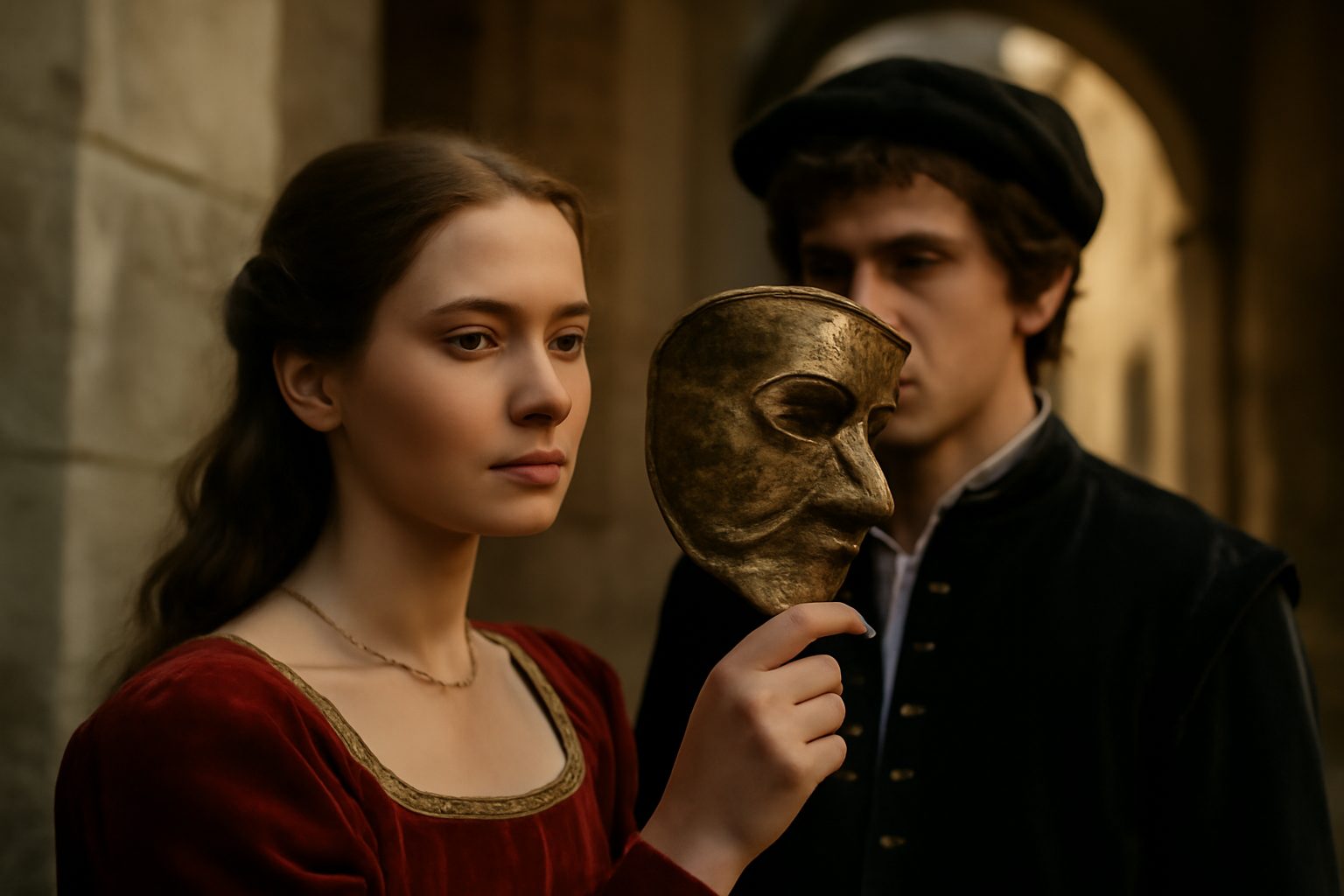
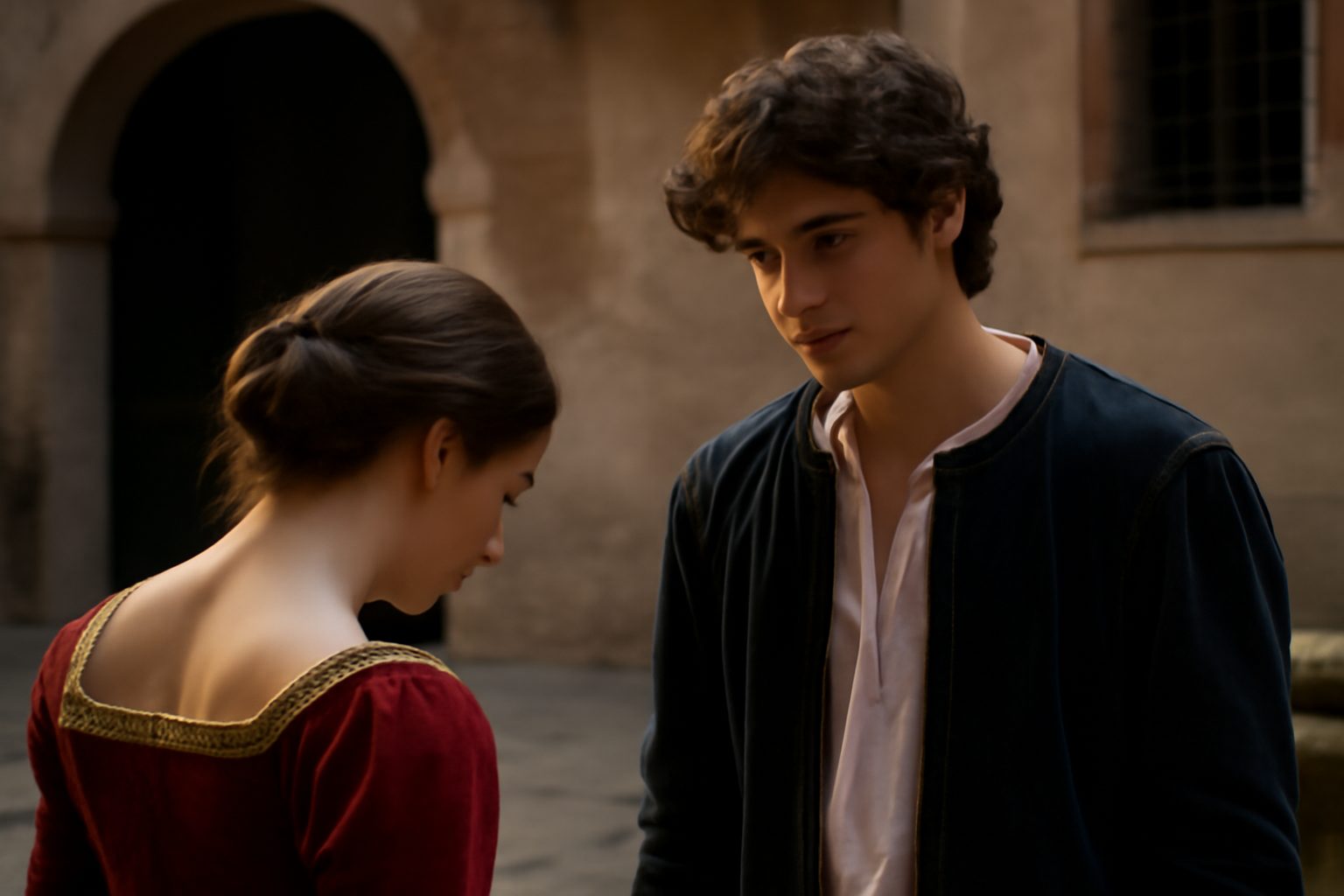
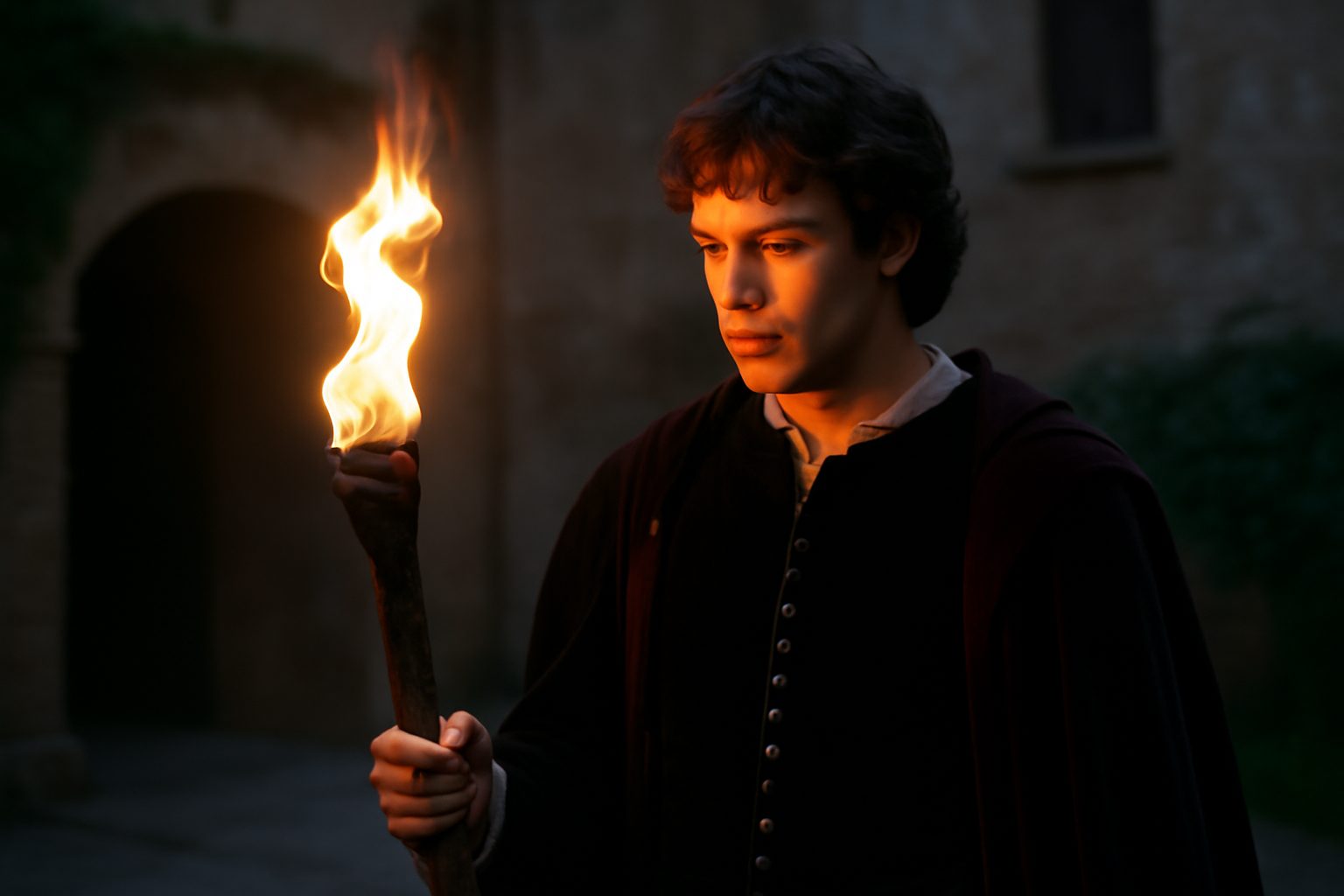
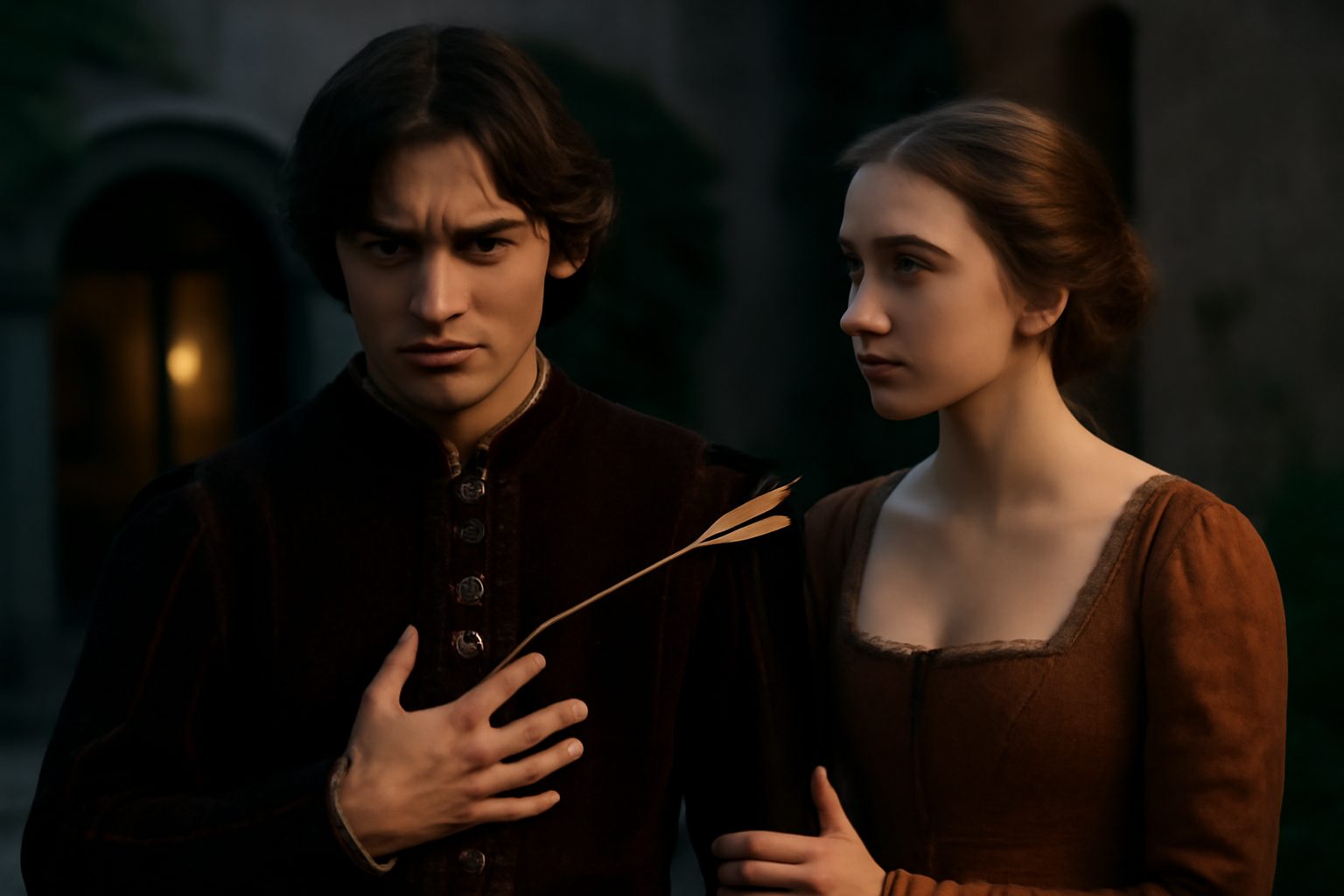
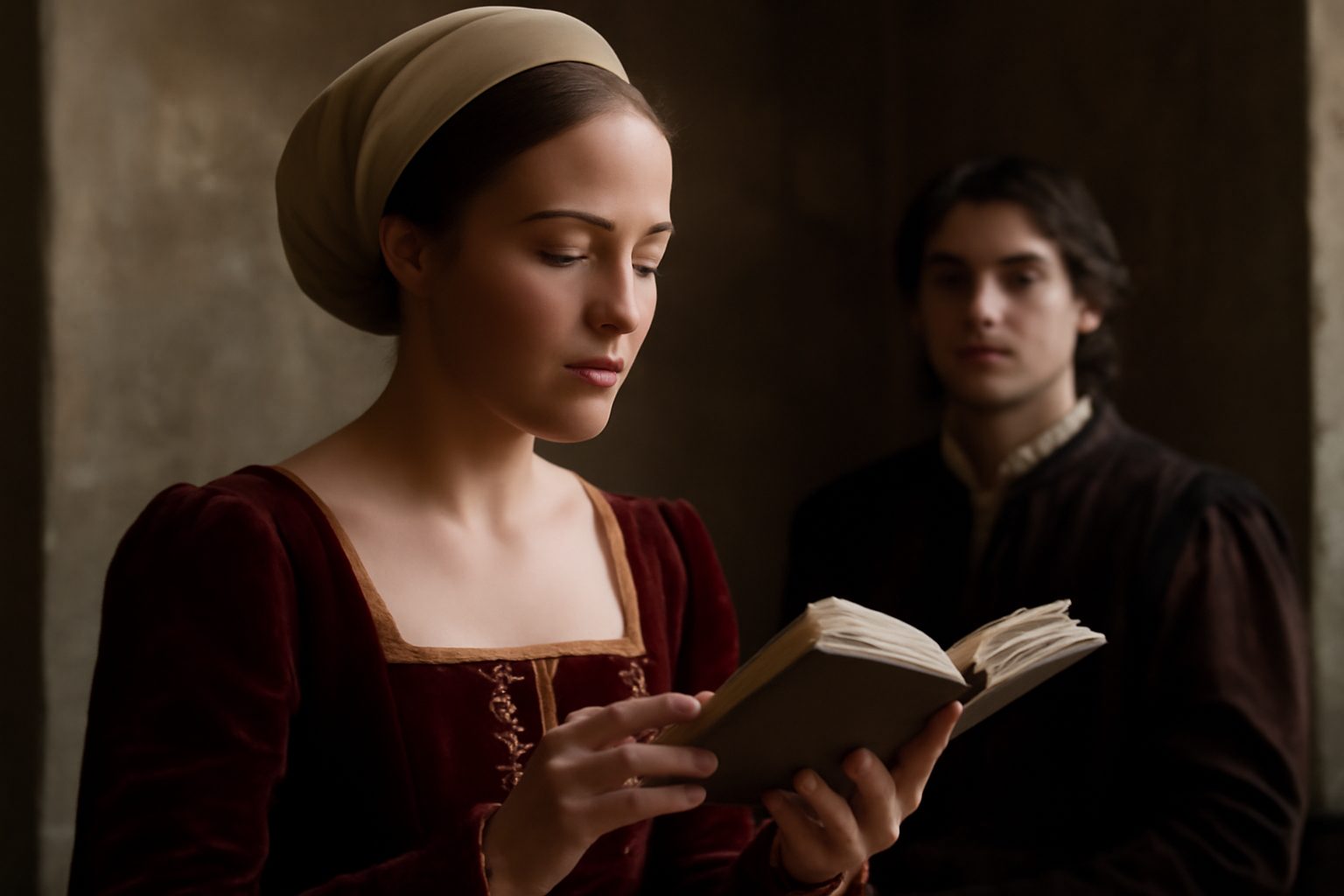
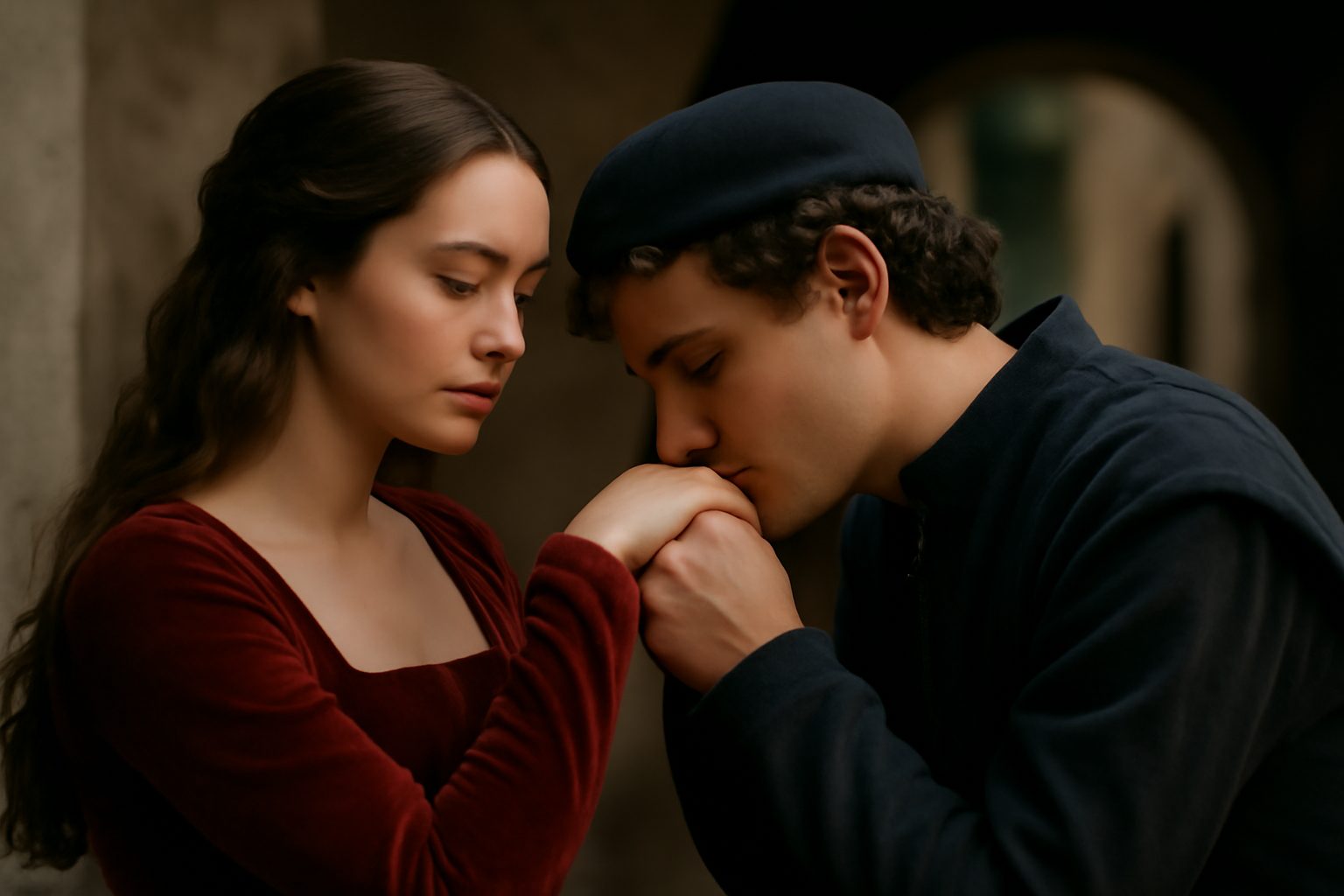
In Act 1, Scene 4 of Romeo and Juliet, Mercutio and Romeo are on their way to the Capulet's masquerade feast when Mercutio teases Romeo for his lovesick mood. Romeo, reluctant to join in the festivities, claims he is not in the spirit for dancing. Mercutio responds with playful sarcasm, suggesting Romeo is merely making excuses despite being perfectly capable of enjoying himself.
Romeo: "Not I, believe me: you have dancing shoes"
In modern day english, we would say:
Not me, trust me—you’re the one ready to dance.
Frequently Asked Questions
What does Romeo say about dancing shoes in Act 1 Scene 4?
Romeo says he does not have dancing shoes.
Connections to other verses:
Connections to "Not I, believe me: you have dancing shoes"
The verse "Not I, believe me: you have dancing shoes" is spoken by Romeo, expressing his reluctance to dance due to his heavy heart. This sentiment is immediately preceded by Mercutio's urging in "Nay, gentle Romeo, we must have you dance", highlighting the contrast between Romeo's melancholy and the festive mood of his friends.
Romeo's Melancholy and Physical Heaviness
Romeo elaborates on his reluctance in "With nimble soles: I have a soul of lead", using a pun to emphasize how his emotional state weighs him down physically, making him unfit for dancing. This is further reinforced when he states "So stakes me to the ground I cannot move", illustrating his immobilizing sorrow.
Contrast with Other Characters' Attitudes
While Romeo refuses to dance, Benvolio suggests they should "We'll measure them a measure, and be gone", showing a pragmatic approach to the event. Mercutio, ever the provocateur, responds to Romeo's heaviness with advice to "If love be rough with you, be rough with love", advocating a more aggressive, less passive response to emotional pain.
Symbolism of Lightness and Heavy Burdens
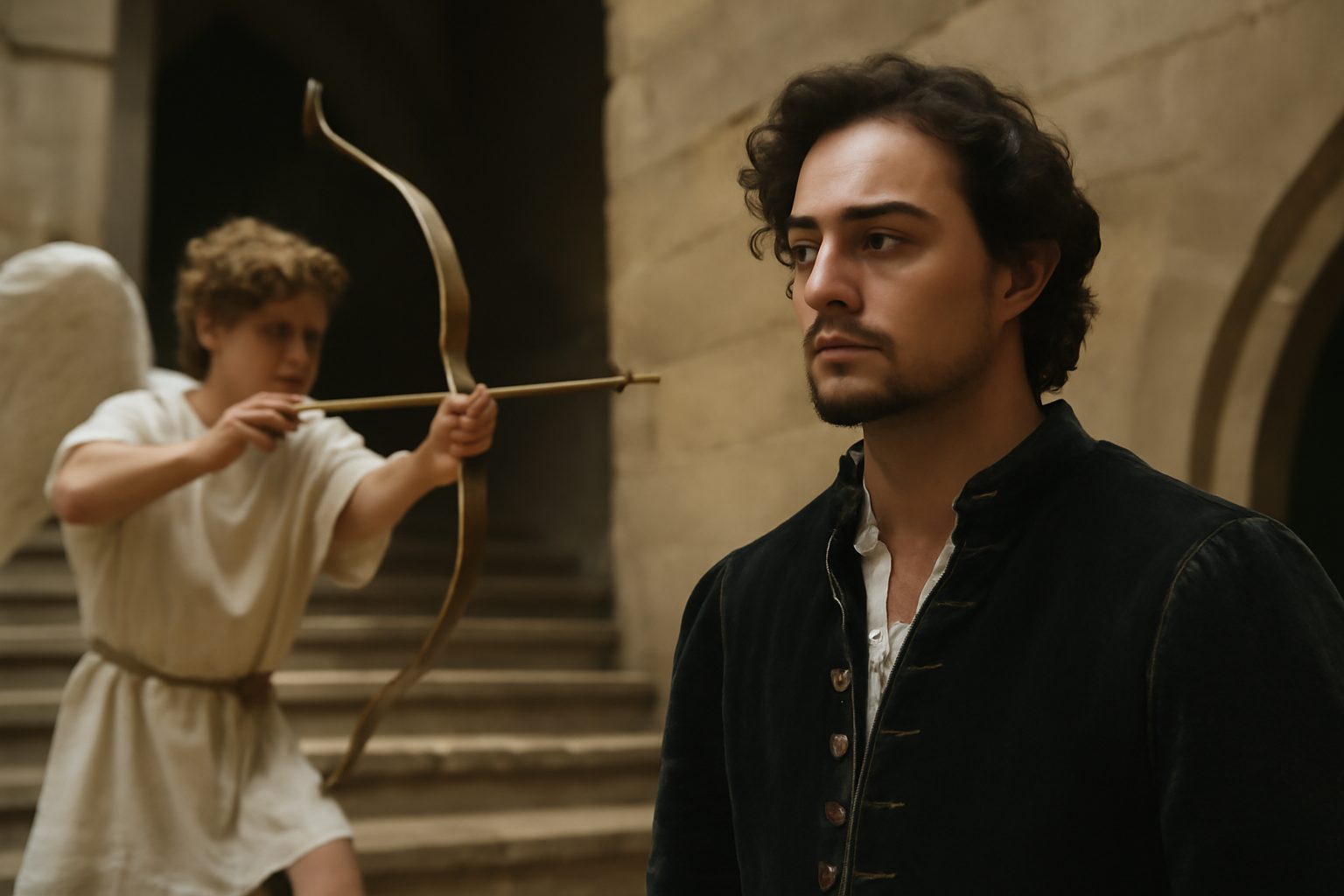
The theme of lightness versus heaviness recurs when Romeo says "Under love's heavy burden do I sink", directly tying his inability to dance to the weight of his unrequited love. In contrast, Mercutio earlier encouraged Romeo to "borrow Cupid's wings, / And soar with them above a common bound", symbolizing the freedom and elevation that love could bring if embraced rather than resisted.
Rejection of Festivity
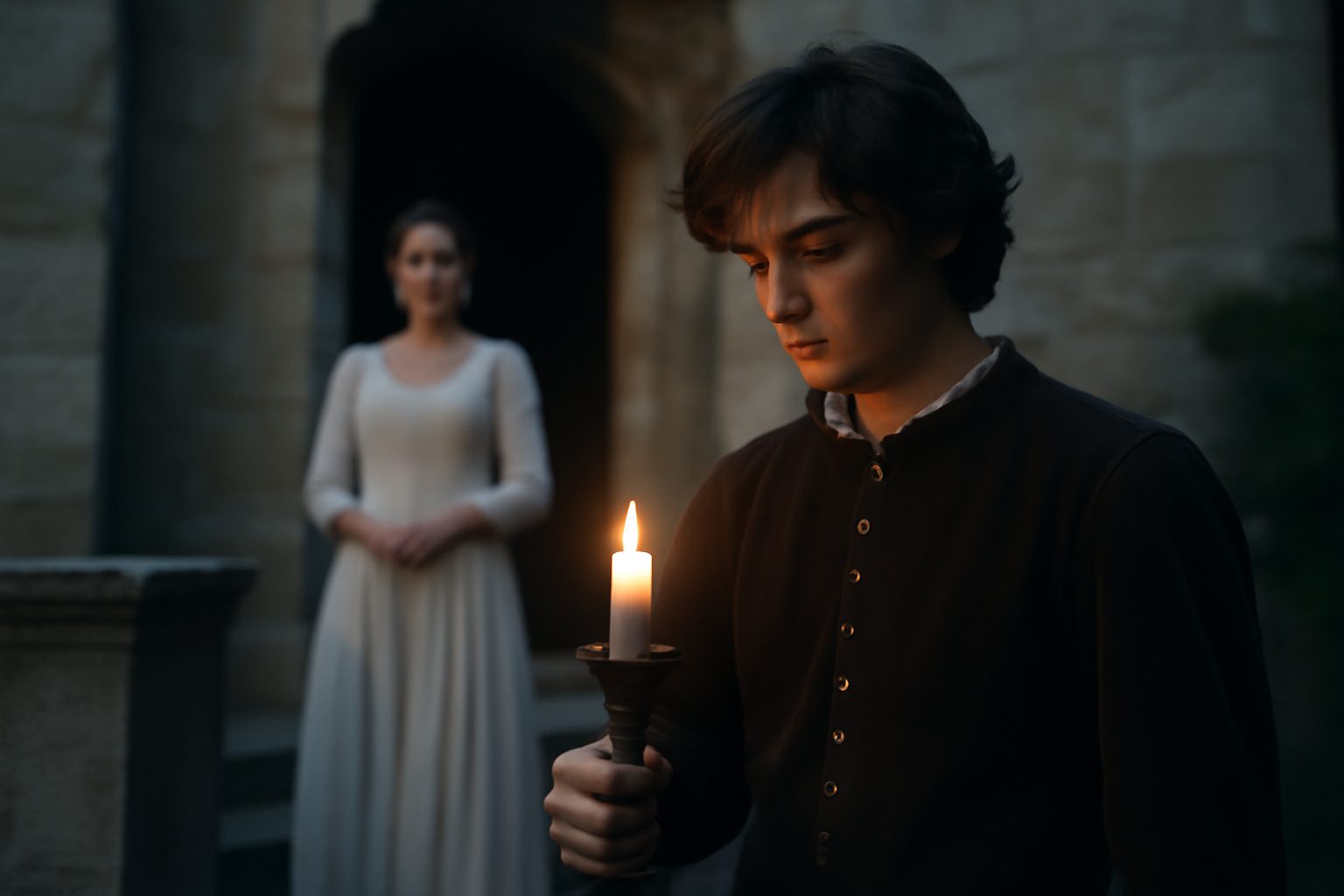
Romeo's refusal to dance is part of a broader pattern of rejecting the masquerade's festivities. He explicitly states "Give me a torch: I am not for this ambling", preferring to carry light rather than participate in the dancing. This is echoed later when he says "I'll be a candle-holder, and look on", reinforcing his role as an observer rather than a participant in the revelry.
Foreshadowing and Foreboding
Romeo's somber mood culminates in his foreboding statement: "I fear, too early: for my mind misgives / Some consequence yet hanging in the stars". This connects his refusal to dance with an intuitive sense of impending doom, suggesting that his heavy heart is not just about love but also an unconscious premonition of the tragedy to come.