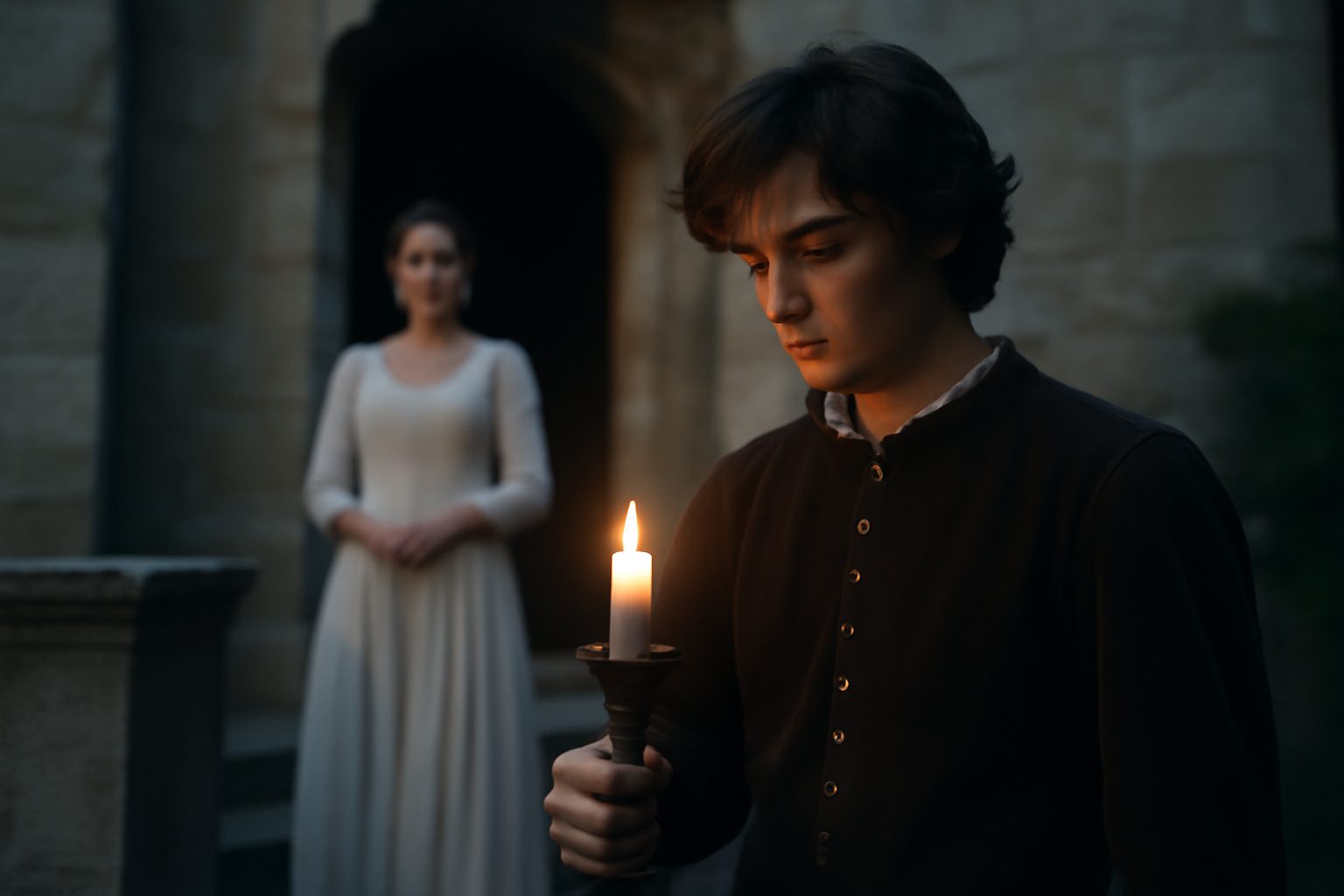
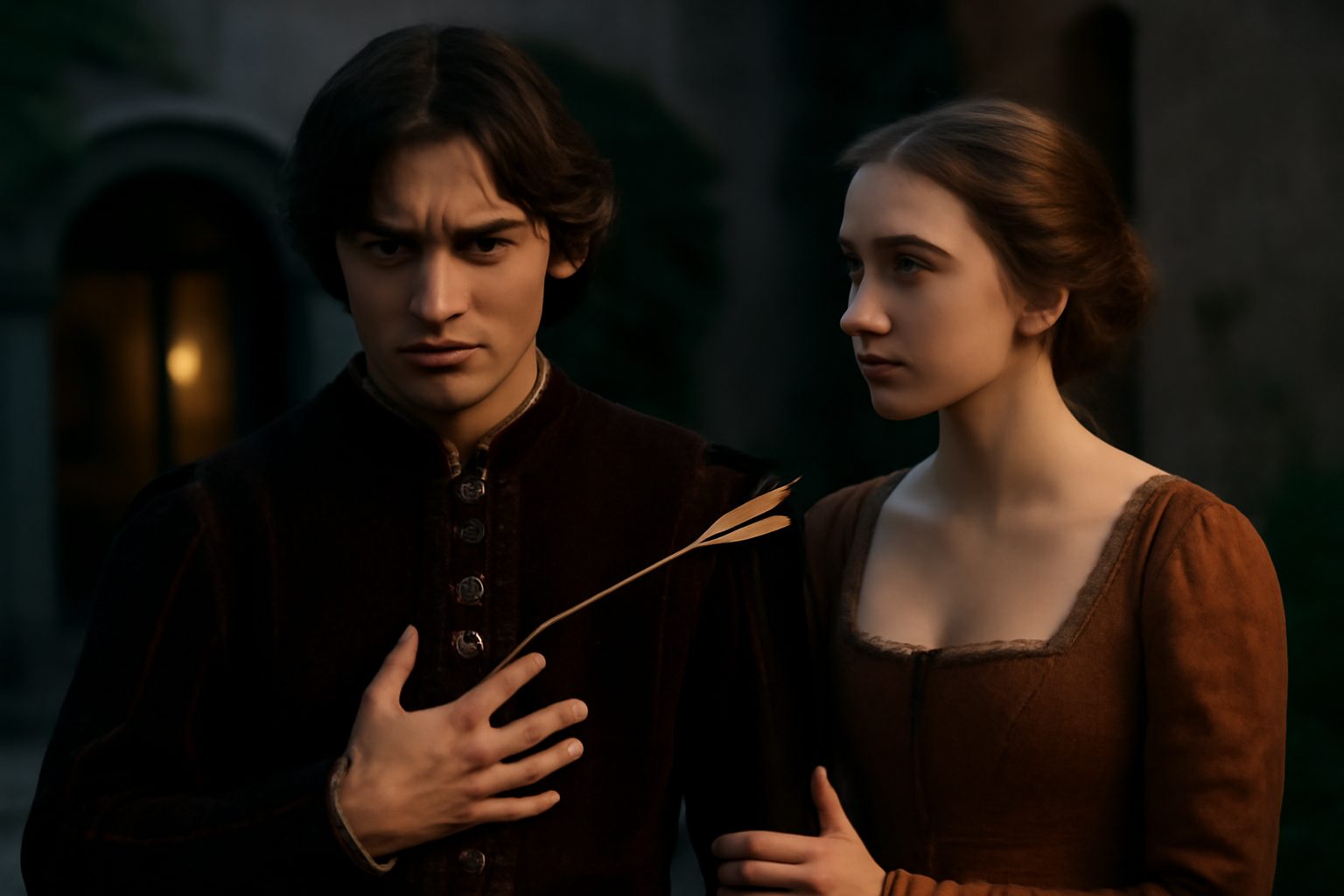
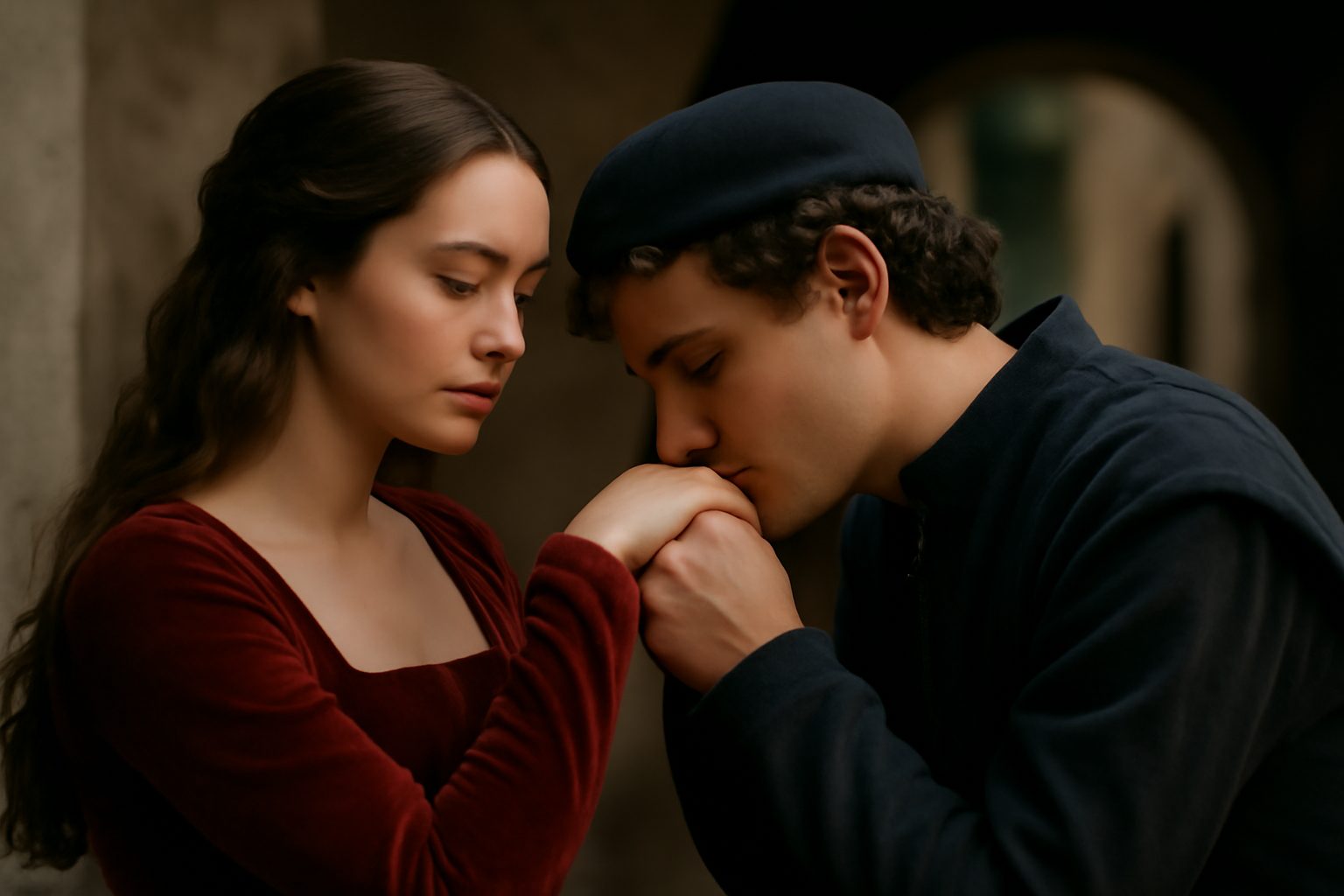
In Act 1, Scene 4 of Romeo and Juliet, Romeo speaks these words as he hesitates to join his friends in crashing the Capulet feast. He feels paralyzed by a sense of foreboding, as if fate has rooted him in place, foreshadowing the tragic events to come. The line captures his inner conflict between desire and dread as he stands on the threshold of meeting Juliet.
Romeo: "So stakes me to the ground I cannot move."
In modern day english, we would say:
It pins me down so I can't move.
Frequently Asked Questions
What does Romeo mean when he says he is stuck to the ground and cannot move?
Romeo means that he feels so overwhelmed by love or emotion that he cannot take any action or move forward.
Connections to other verses:
Connections to "So stakes me to the ground I cannot move"
The verse So stakes me to the ground I cannot move reflects Romeo's emotional paralysis due to his unrequited love for Rosaline. This sense of being weighed down connects thematically and emotionally to several other lines in the scene.
Emotional and Physical Heaviness
Romeo's feeling of being immobilized is echoed in With nimble soles: I have a soul of lead, where he contrasts the lightness expected of a dancer with the heaviness of his own spirit. Similarly, Under love's heavy burden do I sink reinforces this imagery of love as an oppressive weight.
Inability to Engage in Festivity
Romeo's reluctance to participate in the masquerade is clear in Give me a torch: I am not for this ambling, where he prefers to hold a light rather than dance. His declaration in I'll be a candle-holder, and look on further emphasizes his desire to remain an observer, immobilized by his sorrow.
Dreams and Premonitions
Later in the scene, Romeo's foreboding is captured in I fear, too early: for my mind misgives, suggesting a paralysis not just of emotion but of fate. His resignation to destiny in But He, that hath the steerage of my course contrasts with his earlier helplessness, yet both convey a lack of agency.
Mercutio's Contrasting Energy
Mercutio's lively speech, such as O, then, I see Queen Mab hath been with you, highlights Romeo's stagnation by juxtaposing it with imaginative energy. The reference to dreams as Begot of nothing but vain fantasy subtly critiques Romeo's lovesick state as unproductive.