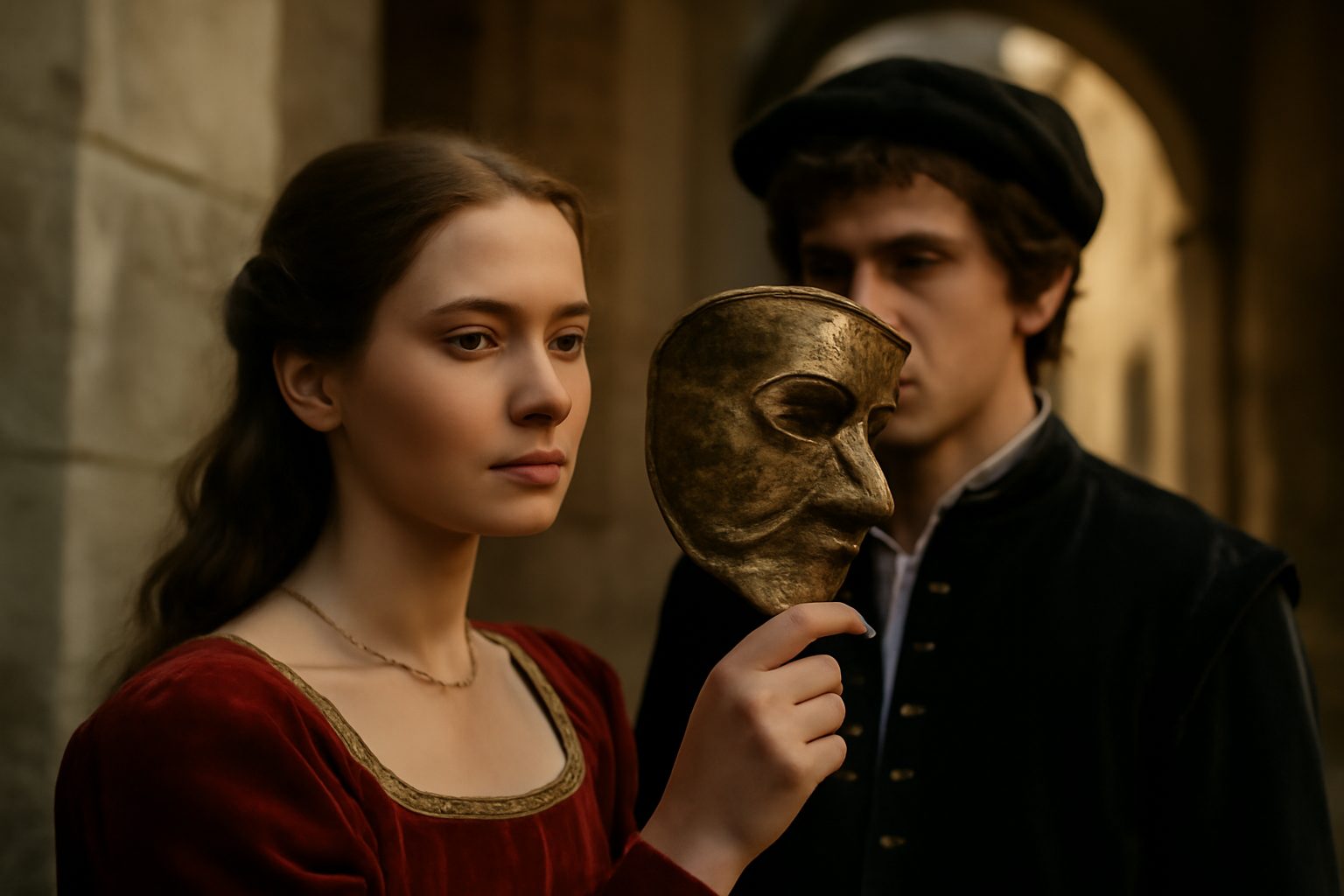
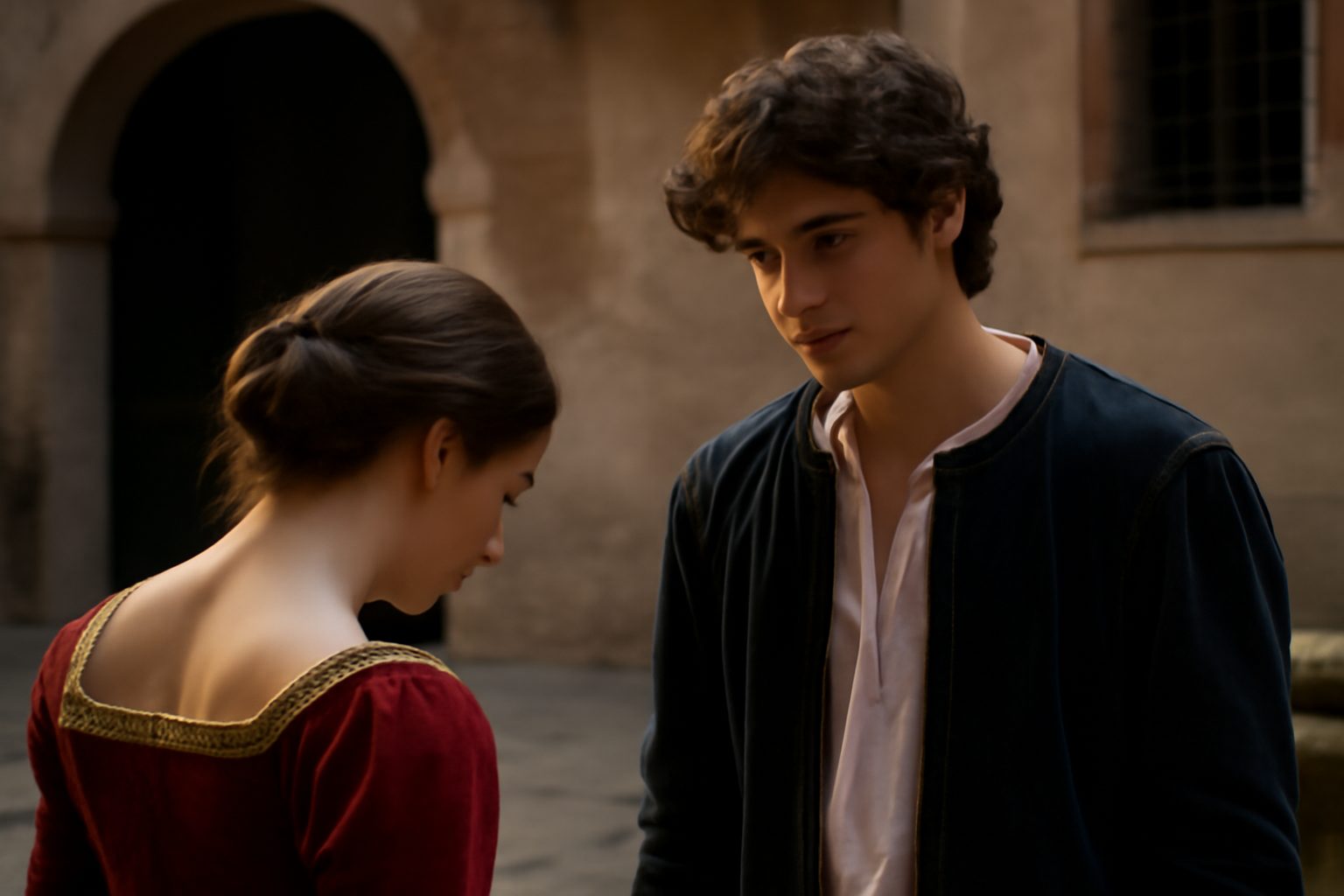
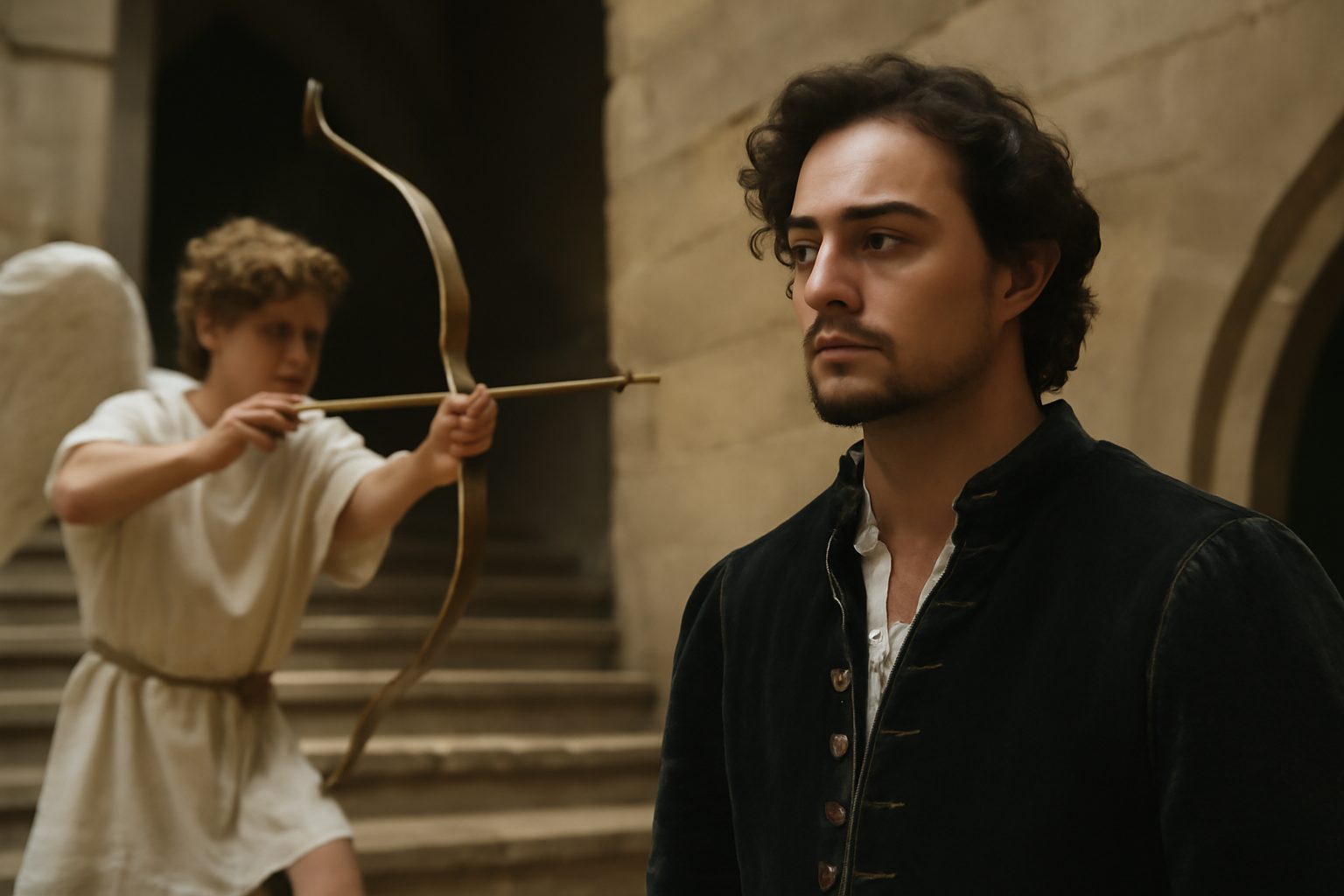
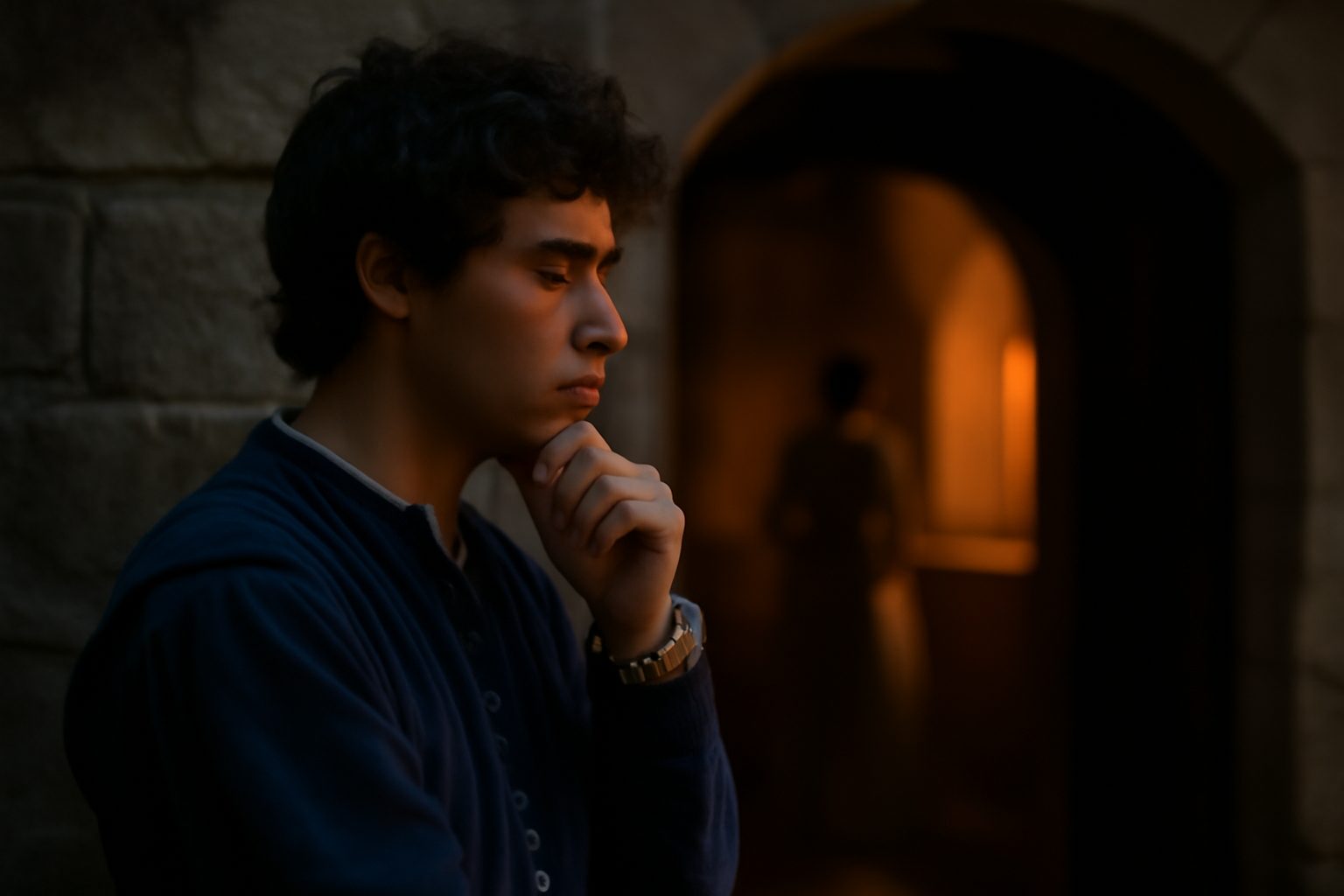
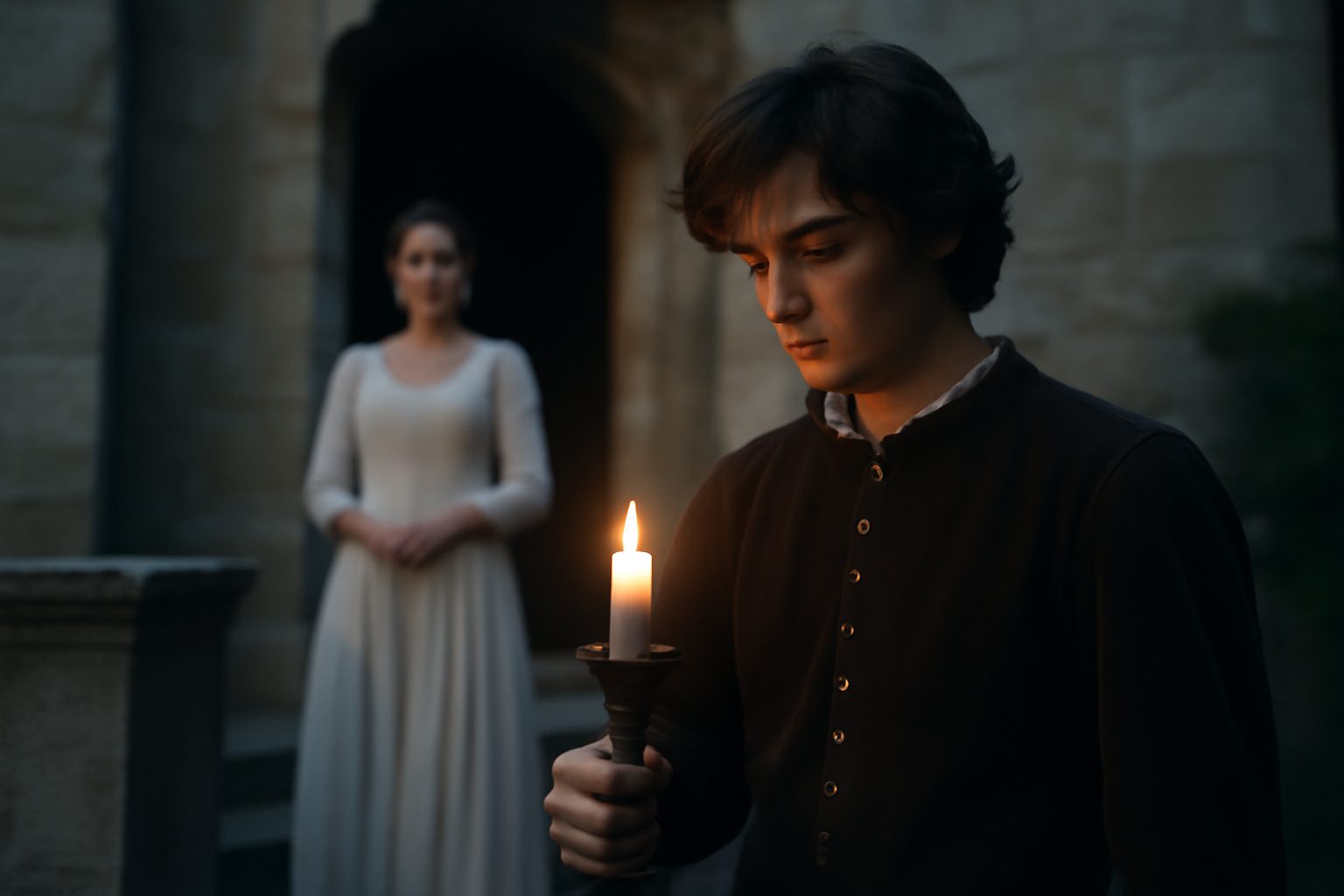
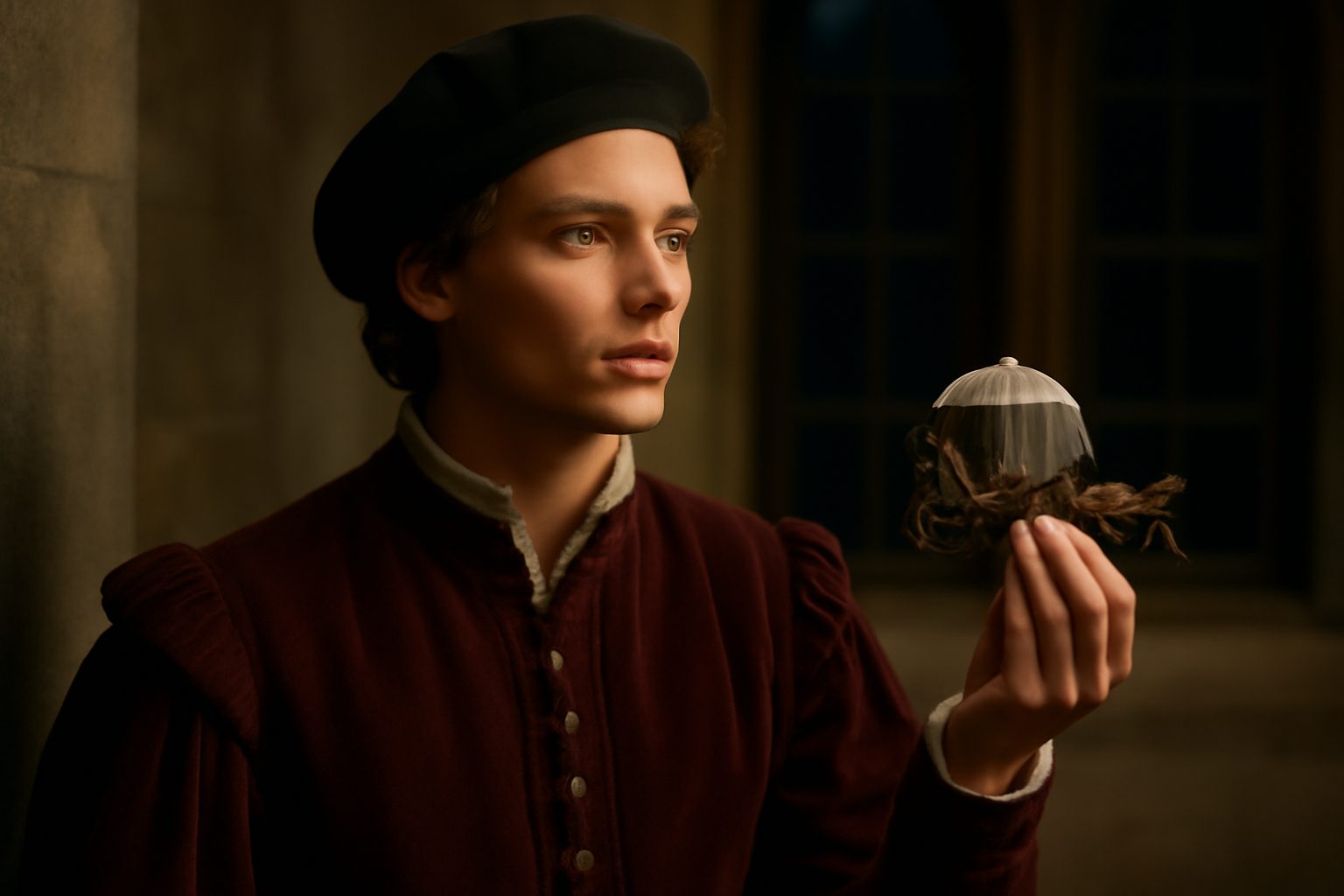
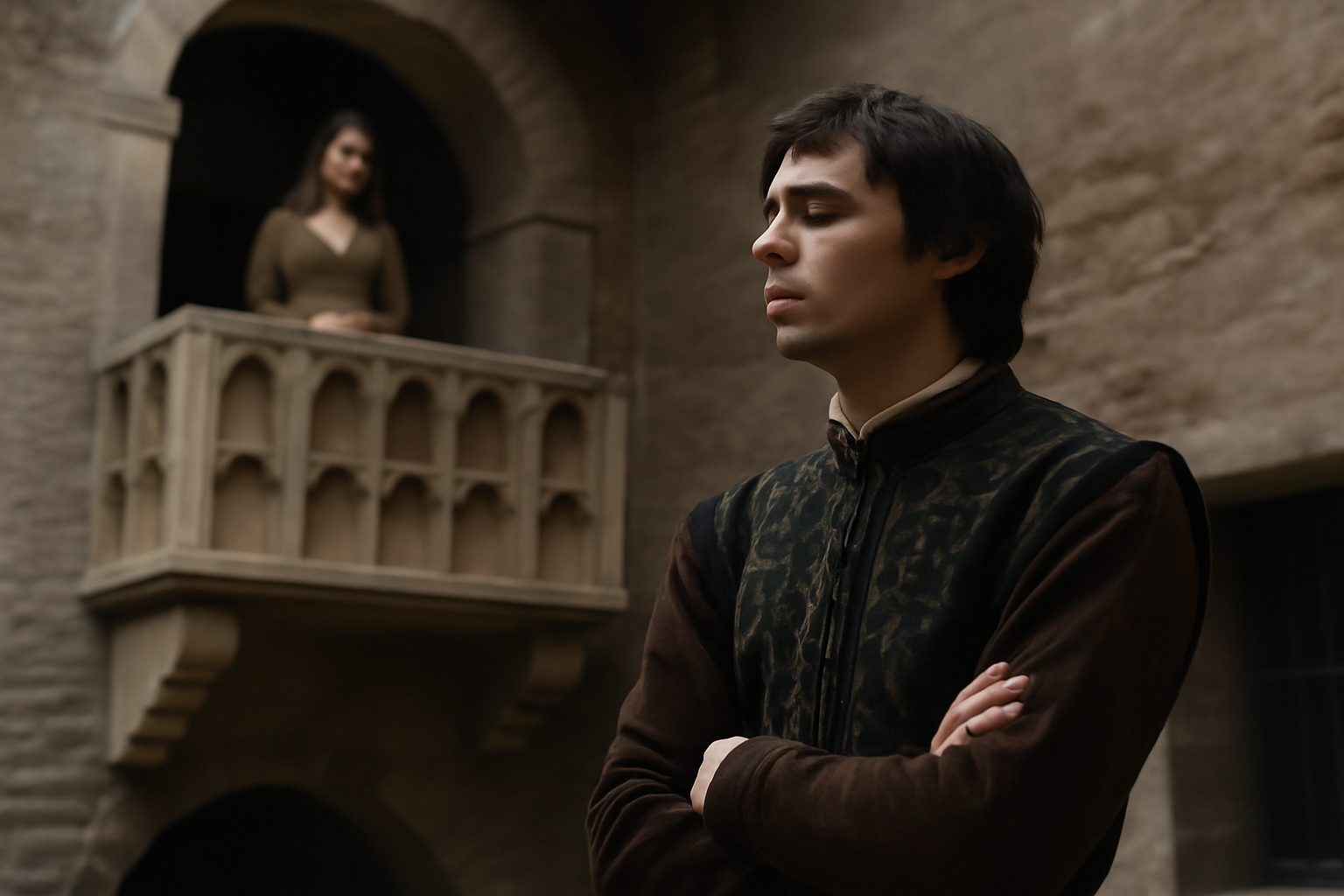
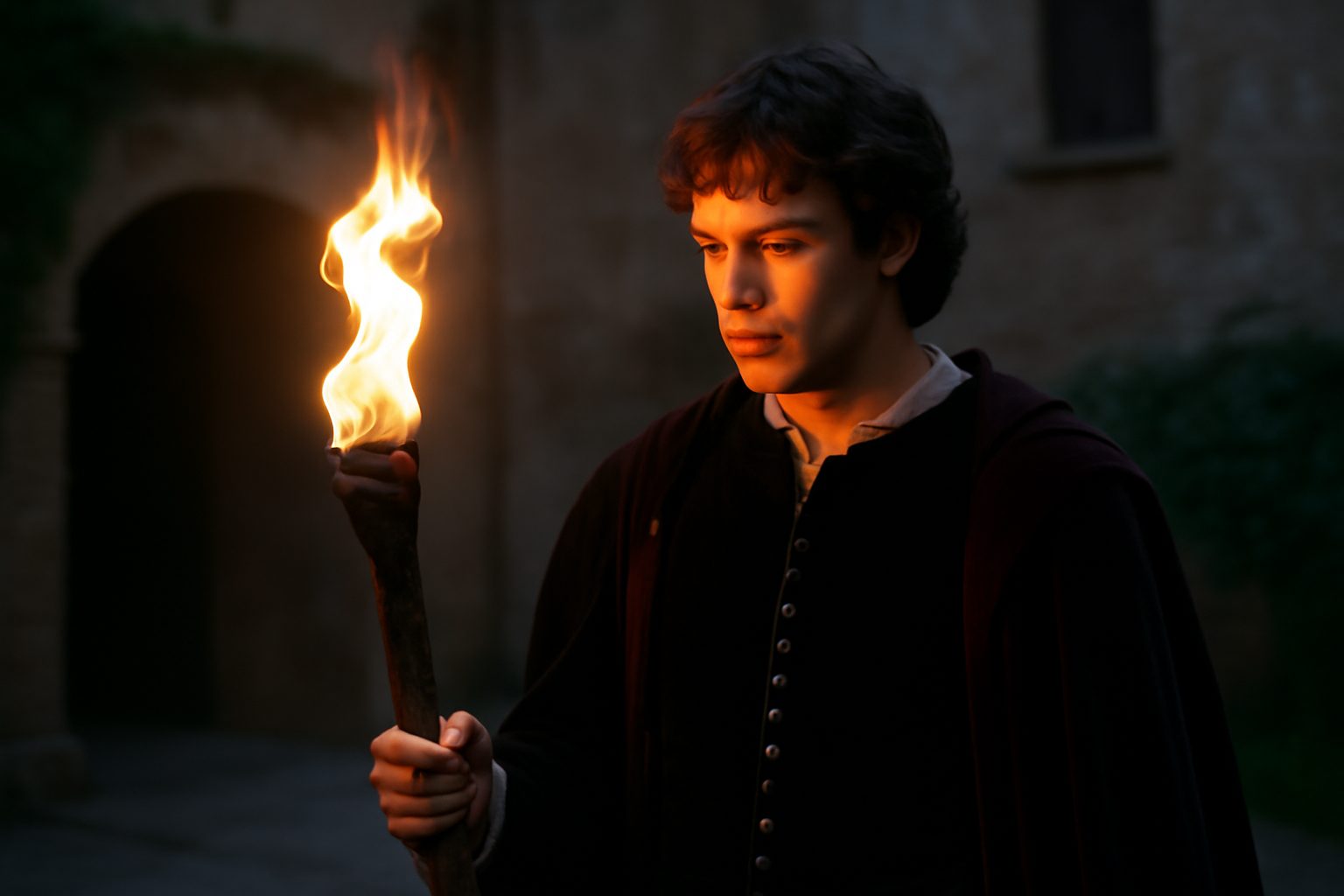
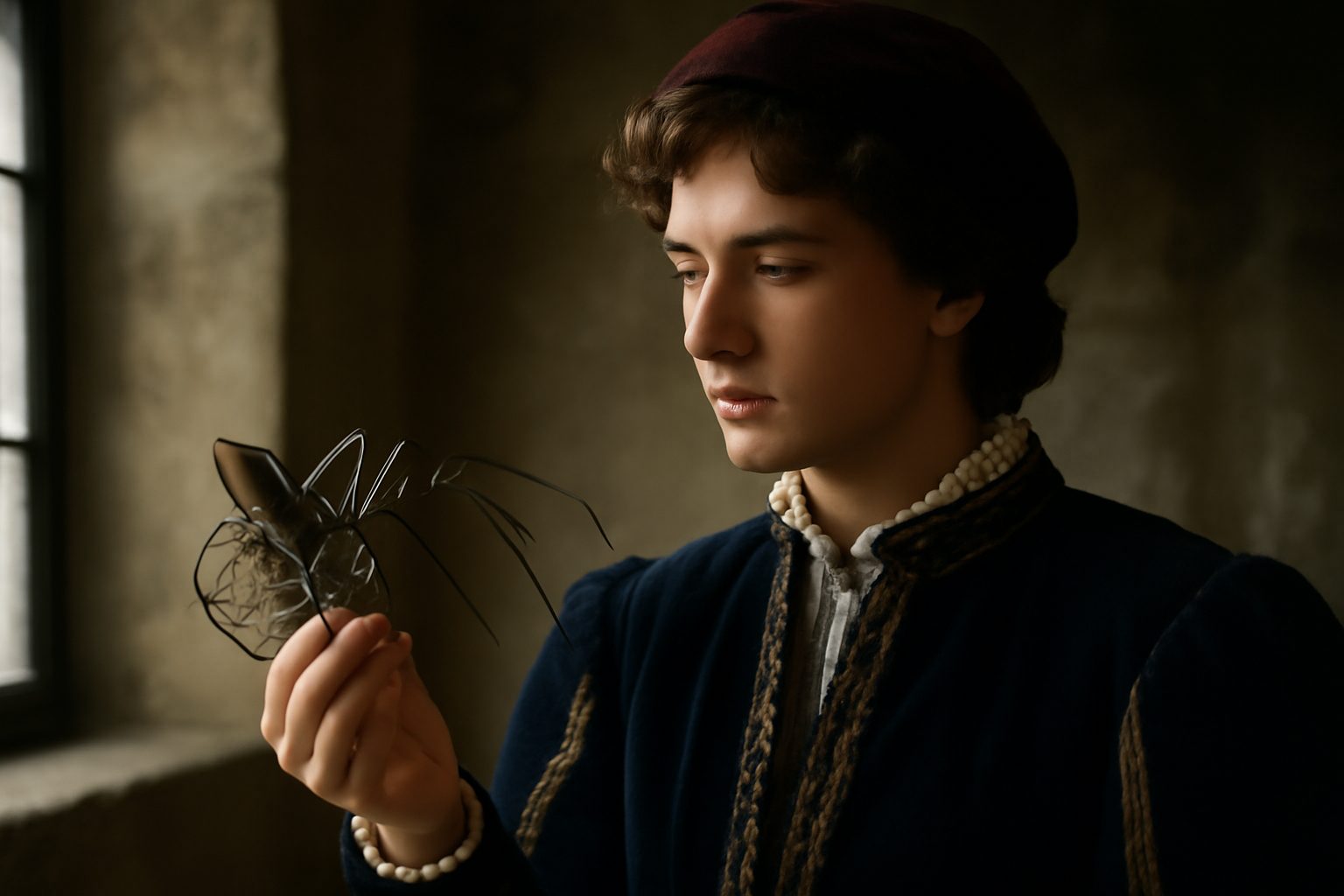
In Act 1, Scene 4 of Romeo and Juliet, Mercutio and Romeo are on their way to the Capulet's masquerade ball. As they prepare to enter, Mercutio, ever the jester, playfully asks for a mask to hide his face, emphasizing the lighthearted and mischievous mood before the fateful events of the evening unfold. This line reflects Mercutio's witty and theatrical nature, contrasting with Romeo's more somber preoccupation with love.
Mercutio: "Give me a case to put my visage in:"
In modern day english, we would say:
Hand me a mask to cover my face with.
Frequently Asked Questions
What is Mercutio asking for in this line from Romeo and Juliet?
Mercutio is asking for a mask to cover his face.
Connections to other verses:
Connections to "Give me a case to put my visage in:"
This line, spoken by Romeo, expresses his desire to hide his face with a mask, reflecting his melancholy and reluctance to engage in the festivities. It connects thematically and contextually with several other verses in the scene.
Reluctance and Melancholy
Romeo's wish to conceal his visage aligns with his earlier declaration: Give me a torch: I am not for this ambling, where he rejects lighthearted dancing. His heavy-heartedness is further emphasized in With nimble soles: I have a soul of lead, illustrating the contrast between his inner sorrow and the expected merriment.
Masking and Identity
The idea of hiding one's true self is echoed in A visor for a visor! what care I, where Mercutio dismisses concerns about appearances, embracing the masquerade's anonymity. Additionally, What curious eye doth quote deformities? questions whether anyone will scrutinize their disguised forms, reinforcing the theme of concealed identity.
Contrast with Lightheartedness
Romeo's somber mood contrasts sharply with Mercutio's exuberance, such as in A torch for me: let wantons light of heart, where Mercutio cheerfully accepts the role of torchbearer. The playful banter in If thou art dun, we'll draw thee from the mire further highlights Romeo's resistance to the group's high spirits.
Foreshadowing and Dreams
Romeo's inclination to withdraw prefigures his later sense of foreboding in I fear, too early: for my mind misgives, where he suspects dire consequences from the night's events. This connects to the broader theme of dreams and illusions discussed in Mercutio's Queen Mab speech, such as Which are the children of an idle brain, questioning the substance of fantasies—much like the temporary concealment of a mask.