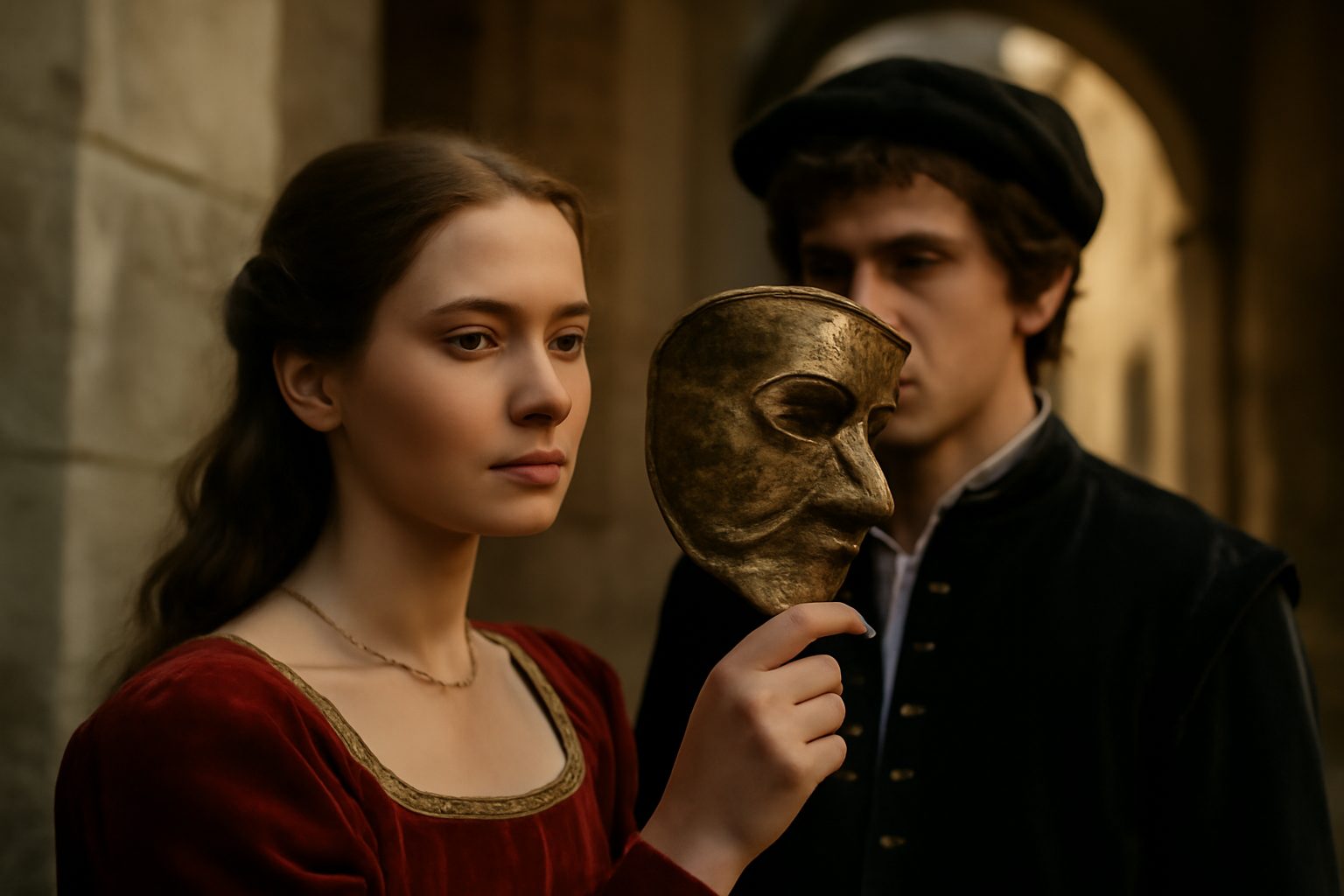
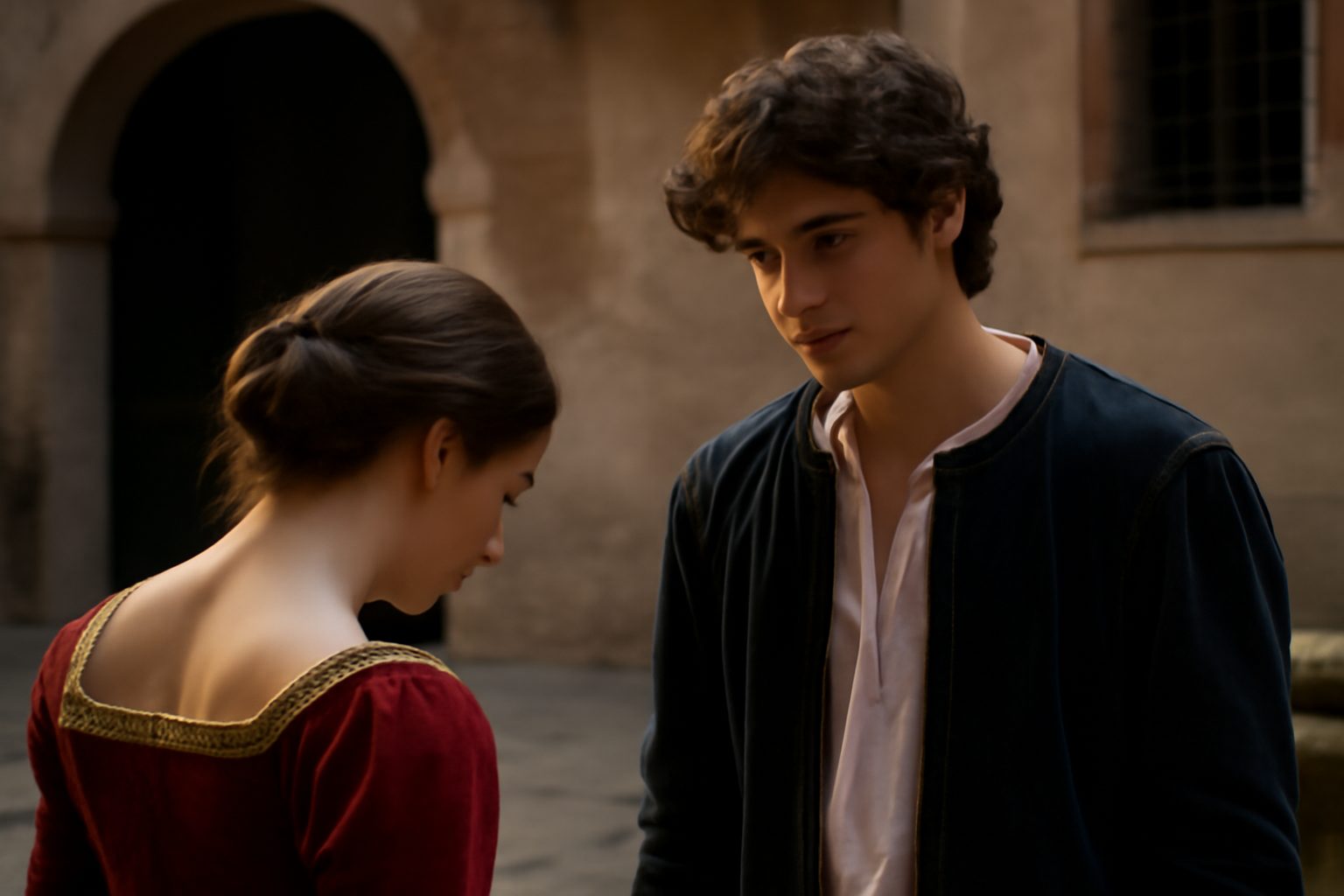
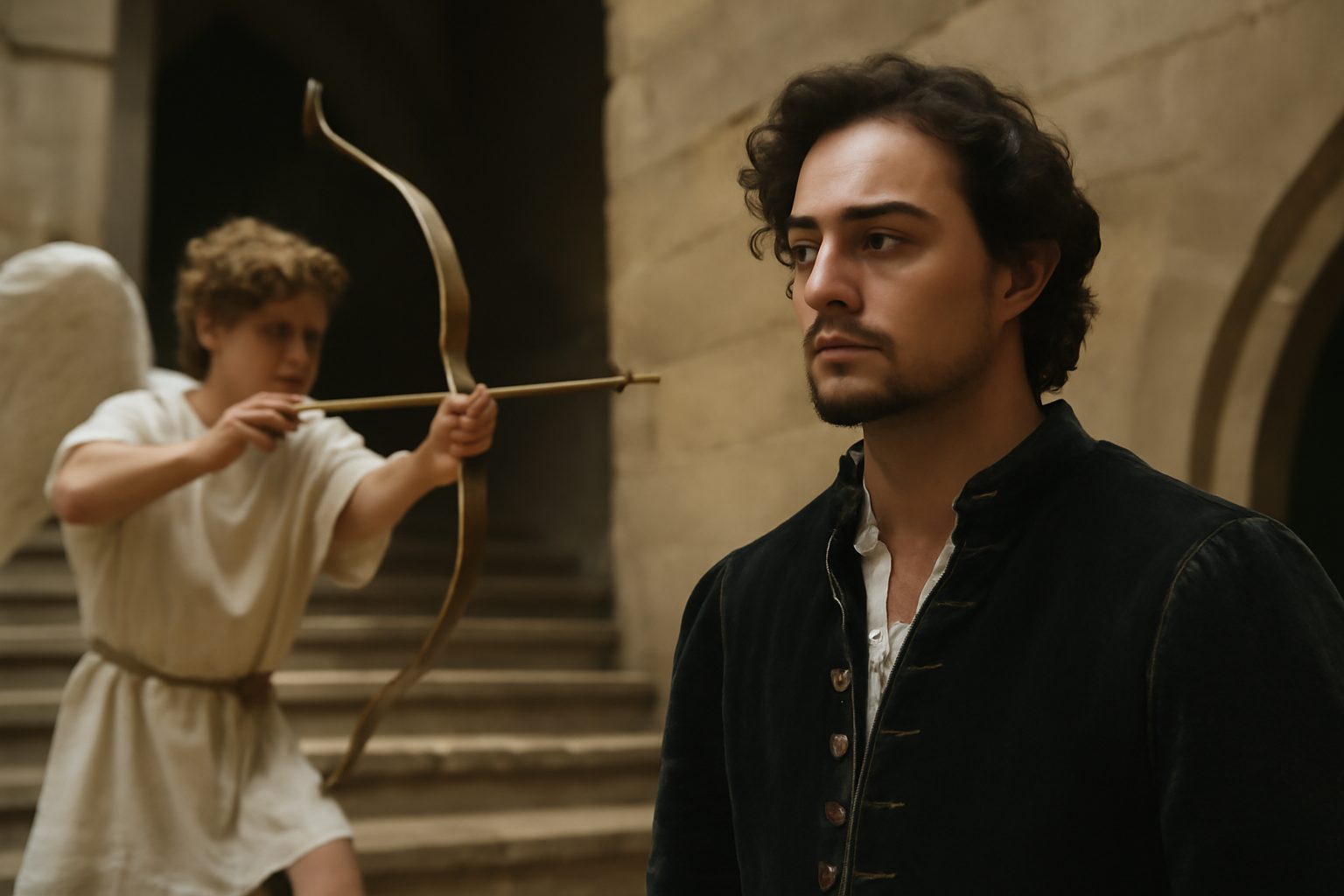
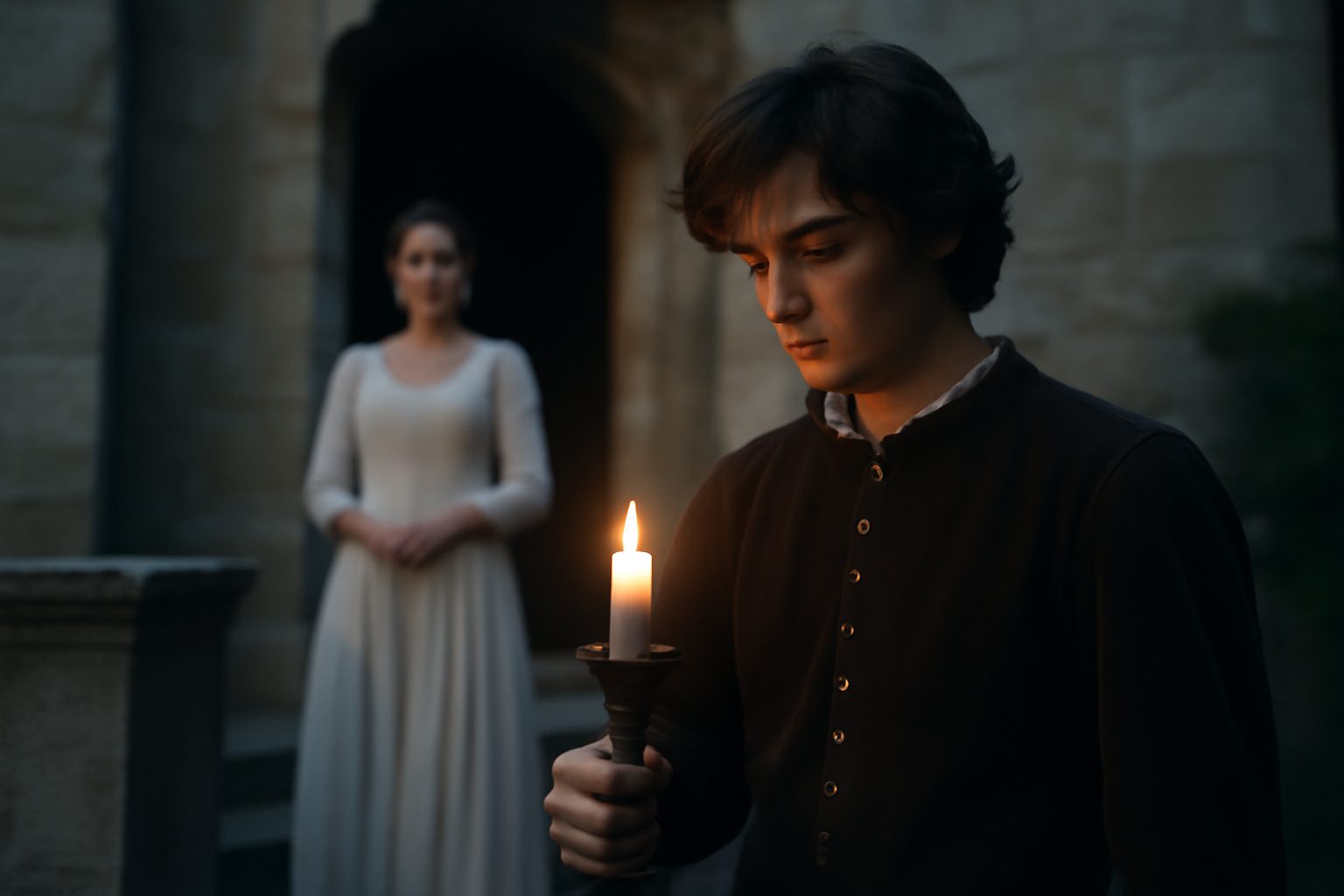
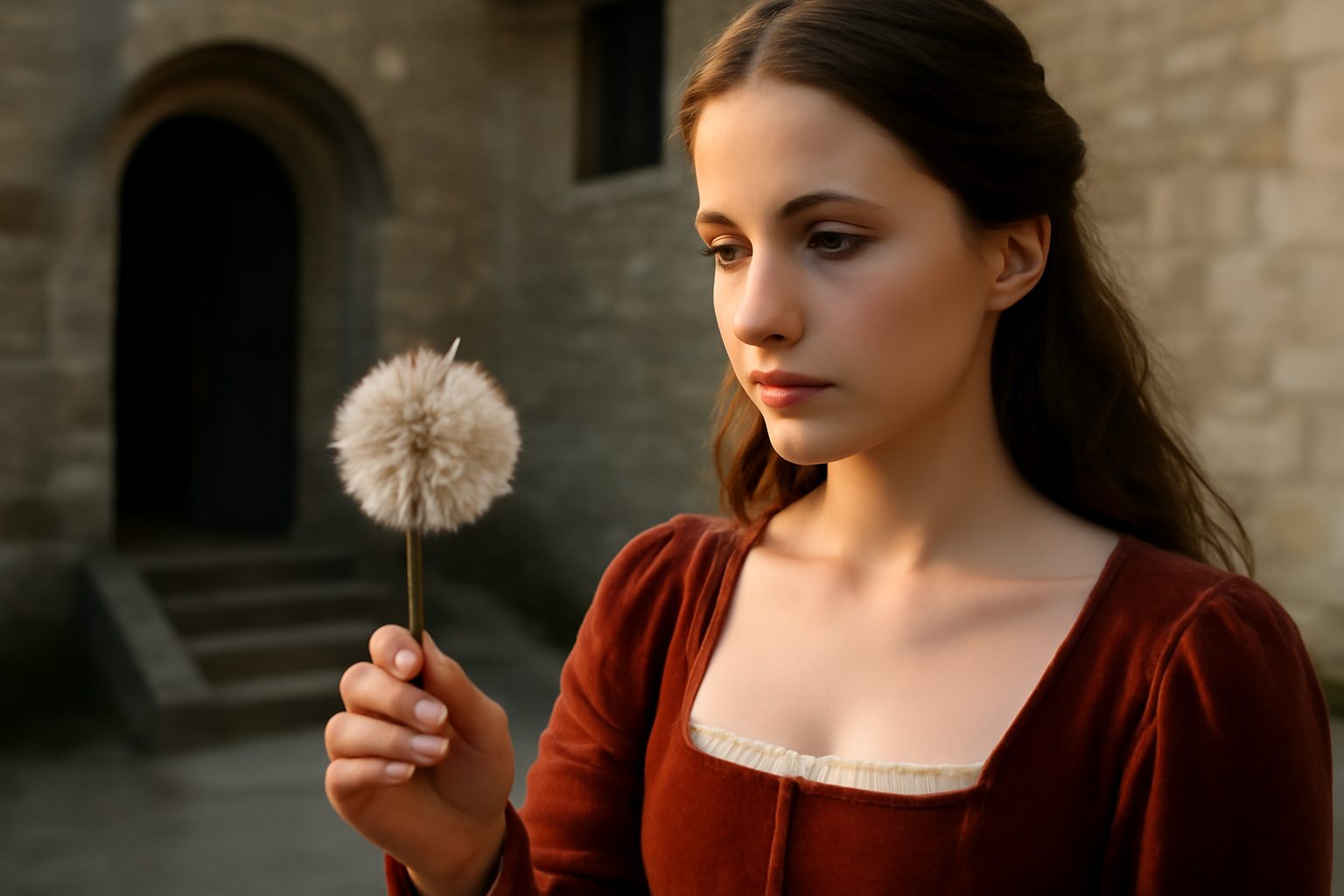
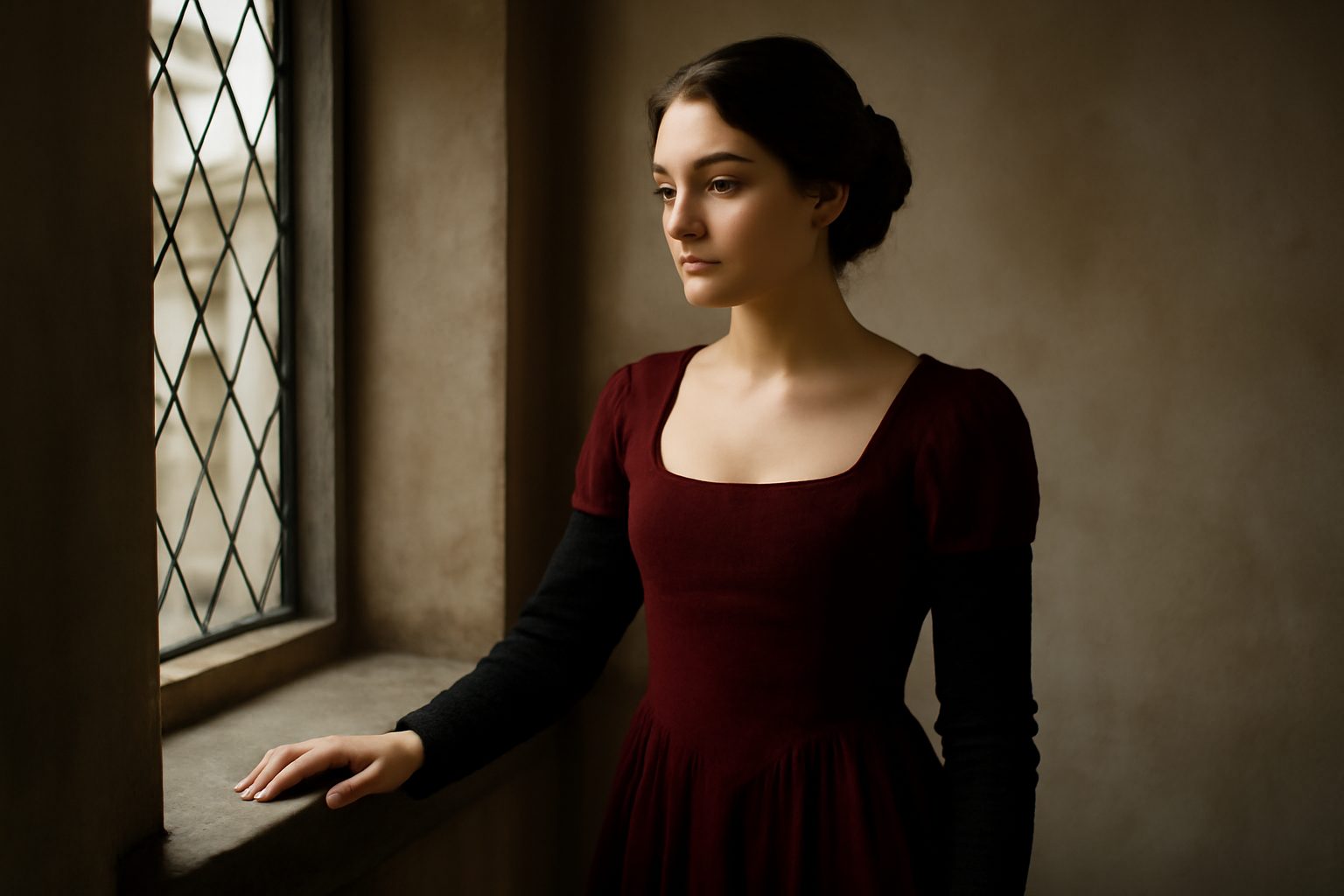
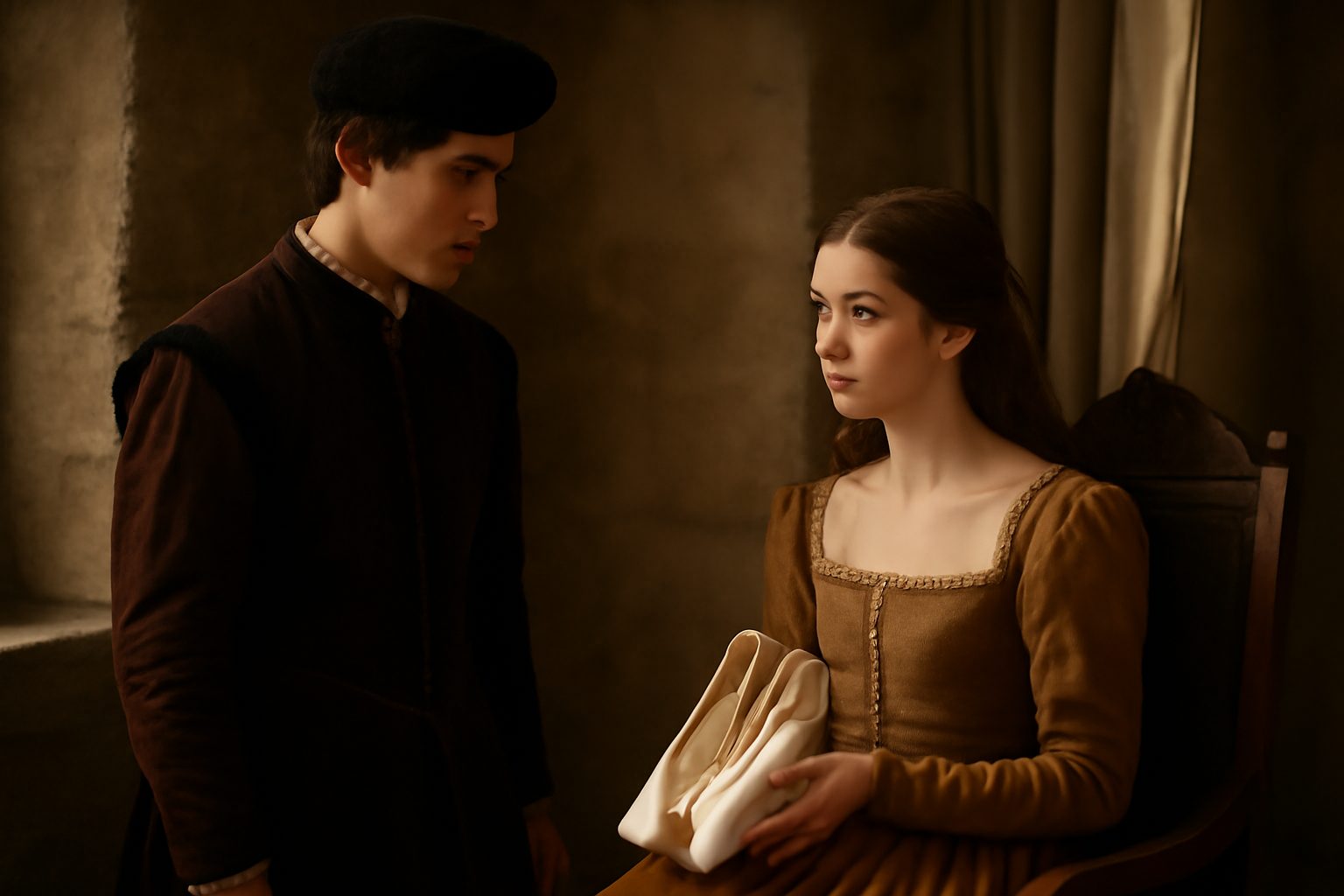
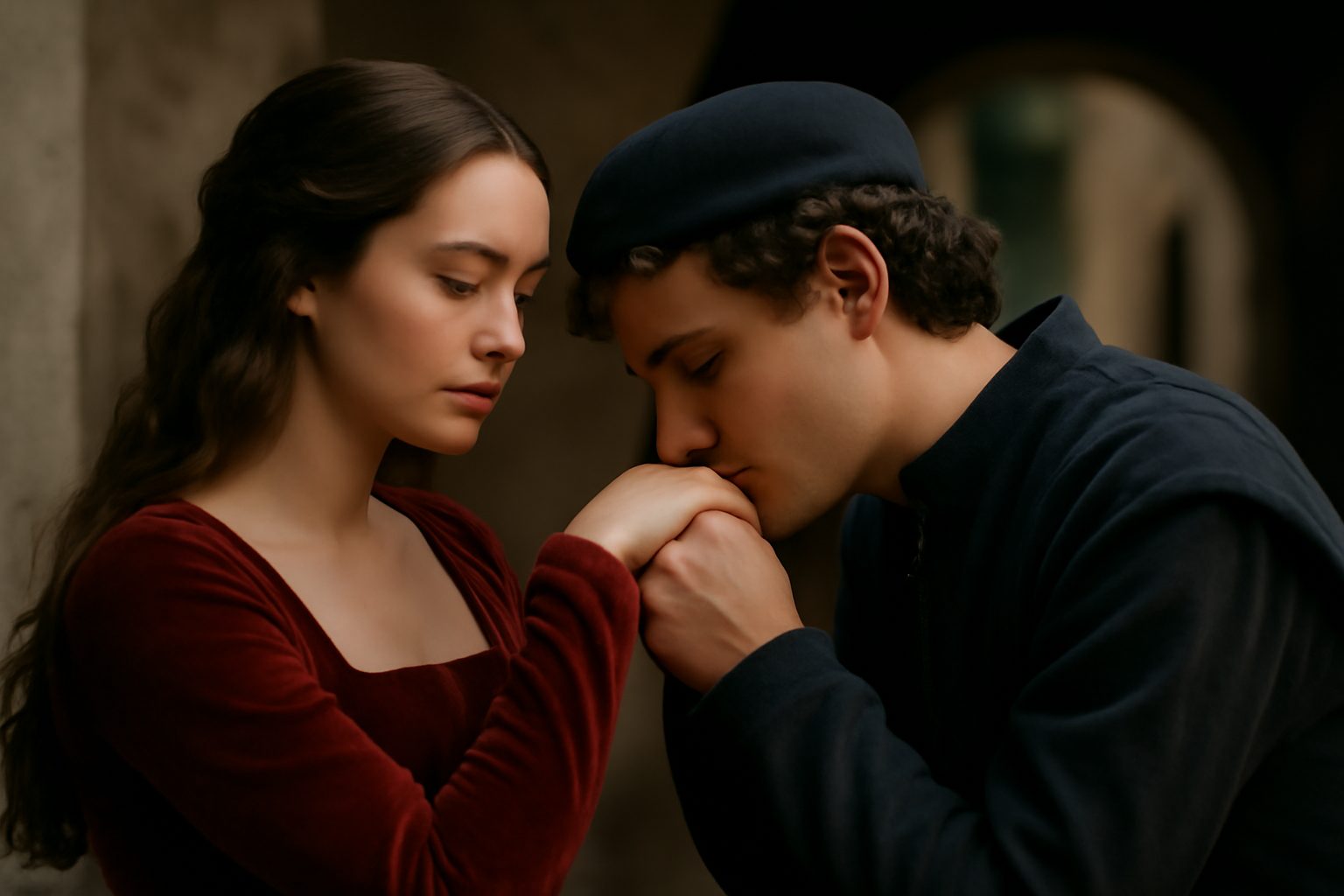
In Act 1, Scene 4 of Romeo and Juliet, Mercutio and Benvolio are trying to persuade Romeo to join them in crashing the Capulet's masquerade feast. Romeo, still lovesick over Rosaline, hesitates, worrying it is unwise to attend. Mercutio dismisses Romeo's reluctance with this line, brushing off his concerns as pointless overthinking.
Romeo: "But 'tis no wit to go."
In modern day english, we would say:
It’s not smart to go.
Frequently Asked Questions
What does Romeo mean when he says it is not wise to go?
Romeo is expressing his reluctance and feeling that attending the party is a bad idea.
Connections to other verses:
Connections to "But 'tis no wit to go."
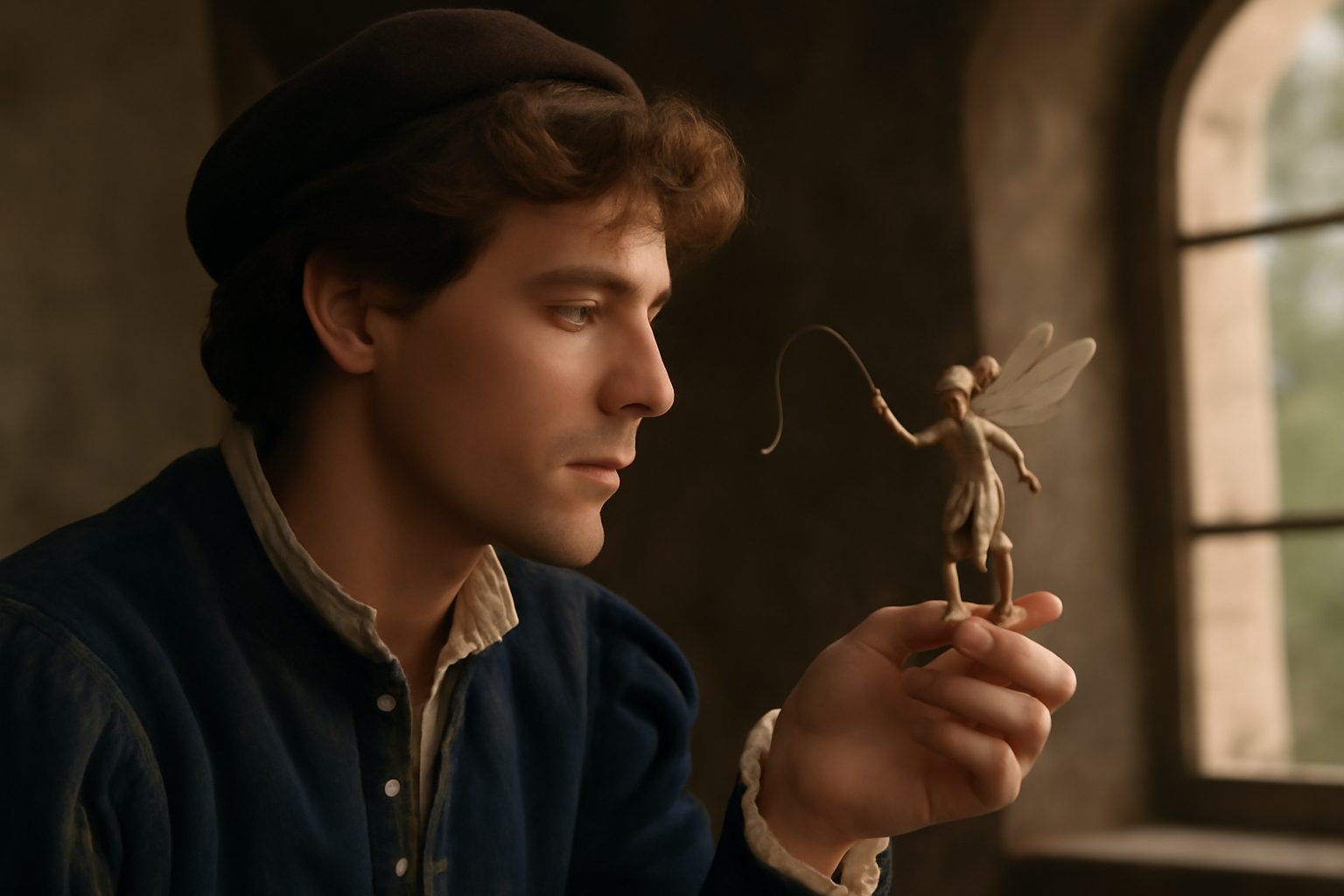
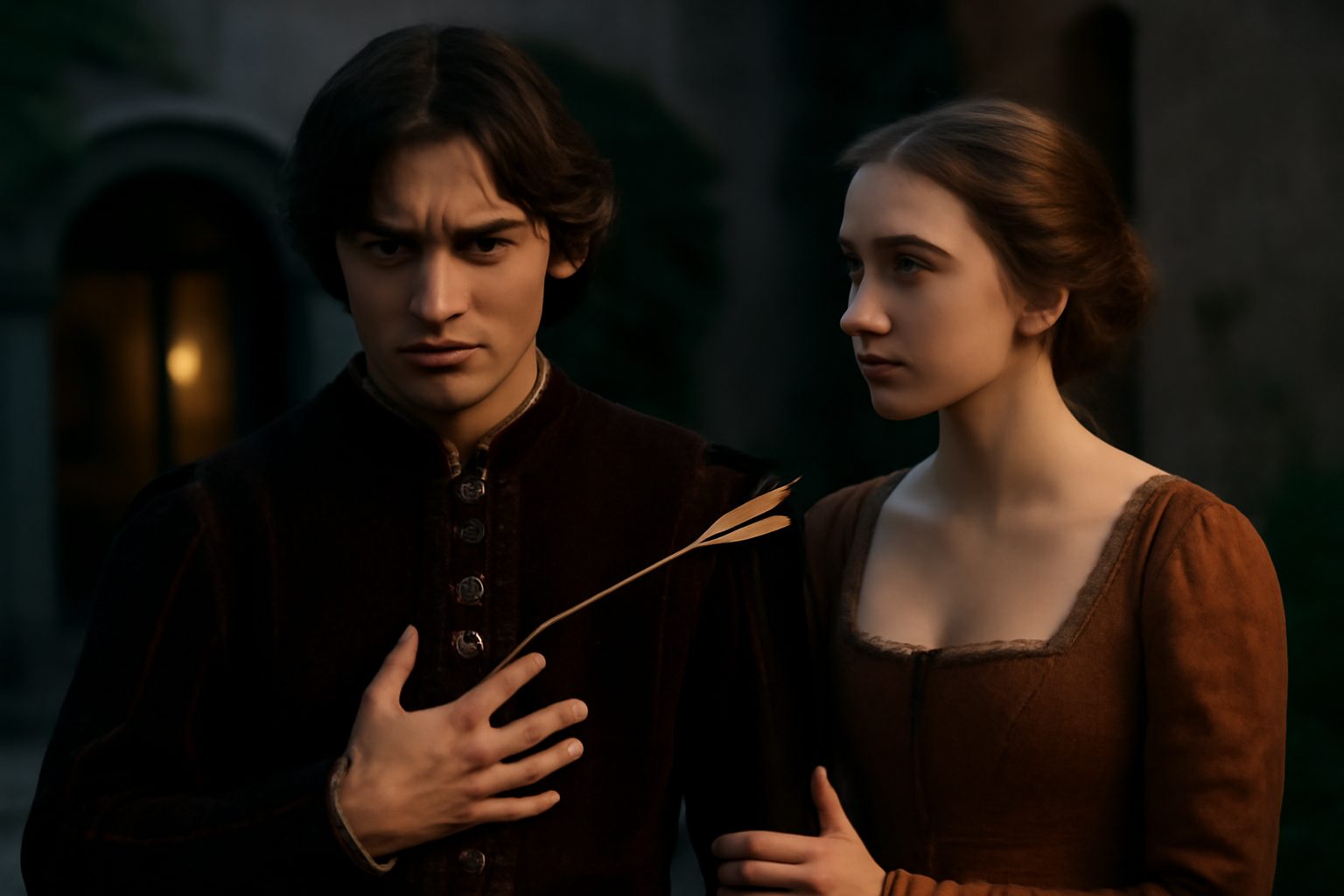
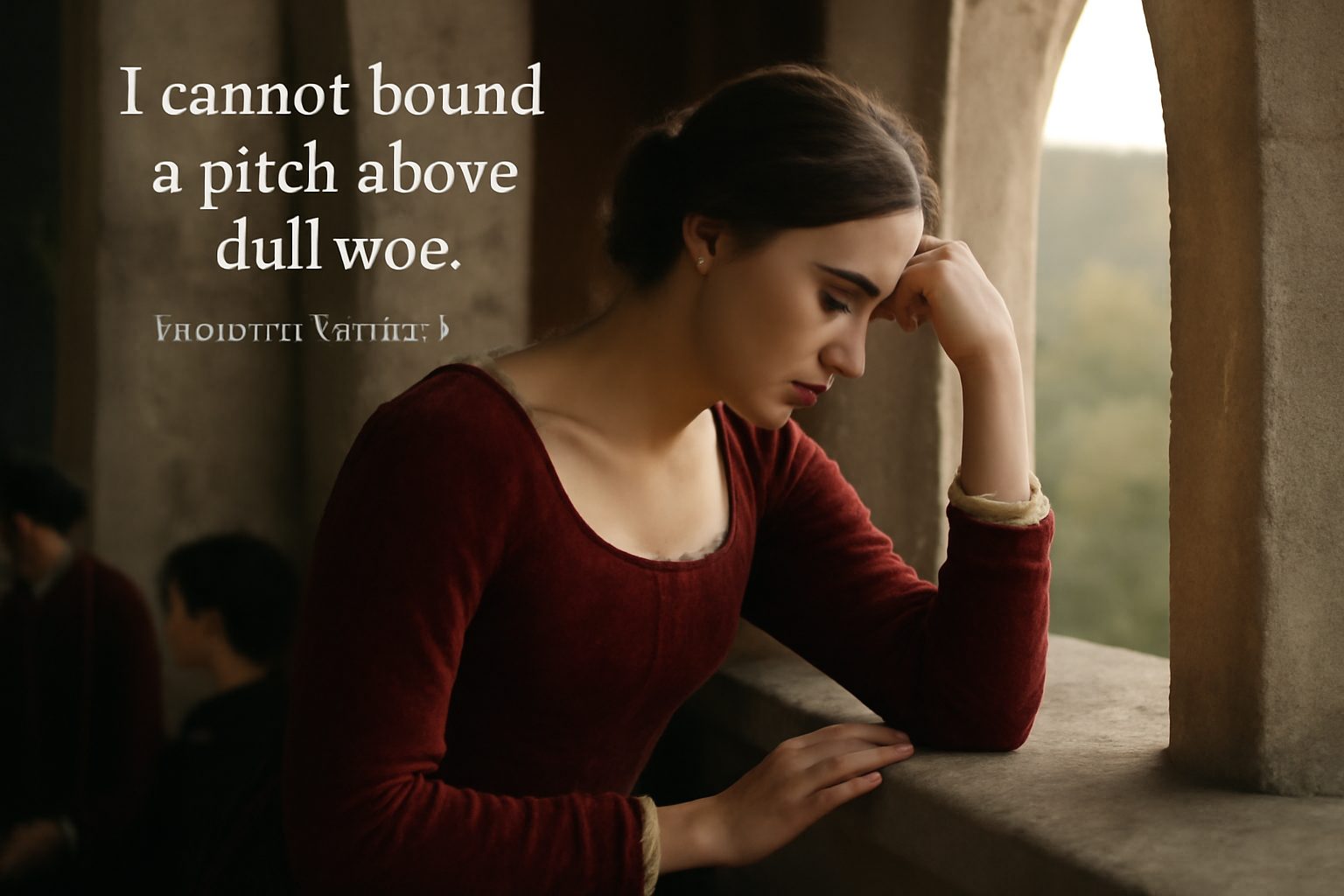
The line "But 'tis no wit to go." reflects Romeo's reluctance to attend the Capulet feast, rooted in his melancholic state and foreboding feelings. This hesitation is directly challenged by Mercutio's earlier encouragement in "You are a lover; borrow Cupid's wings," urging Romeo to embrace lightness and joy. Romeo's resistance is further emphasized when he states "I have a soul of lead", highlighting his emotional heaviness, and his fear that love is "too rough" and oppressive.
Contrast with Other Characters
Benvolio's pragmatic view in "And we mean well in going to this mask" contrasts with Romeo's apprehension, suggesting the feast is an innocent diversion. Mercutio's playful taunt in "If thou art dun, we'll draw thee from the mire" mocks Romeo's stubbornness, while his call to action in "Come, we burn daylight, ho!" underscores the urgency Romeo resists.
Foreshadowing and Resolution
Romeo's ominous premonition in "I fear, too early: for my mind misgives" directly explains his reluctance, fearing some "consequence yet hanging in the stars". Despite this, he ultimately yields to fate, declaring "But He, that hath the steerage of my course, Direct my sail!", accepting the journey he initially deemed unwise.