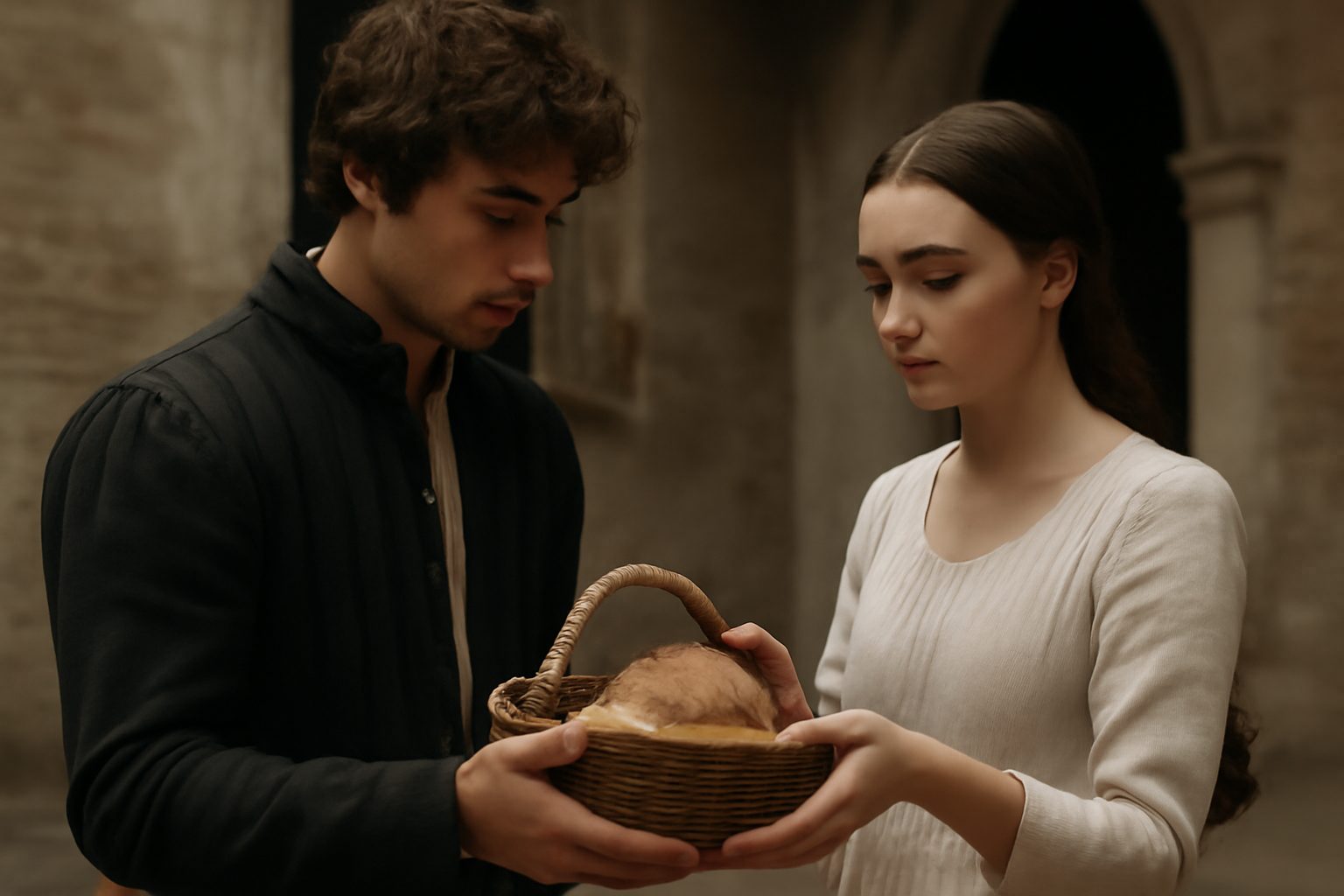
In Act 5, Scene 1 of Romeo and Juliet, Romeo speaks these words after a dream in which he believes he has died but is revived by Juliet's kiss. Unaware of the tragic events unfolding in Verona, he interprets the dream as a sign of impending good fortune. This moment of hopeful anticipation starkly contrasts with the devastating news he is about to receive regarding Juliet's supposed death.
Romeo: "My dreams presage some joyful news at hand:"
In modern day english, we would say:
I feel like my dreams are hinting at good news coming soon.
Frequently Asked Questions
What does Romeo think his dreams are predicting?
Romeo thinks his dreams are predicting some happy news coming soon.
Connections to other verses:
Connections to "My dreams presage some joyful news at hand"
Romeo's optimistic declaration "My dreams presage some joyful news at hand" stands in stark contrast to the tragic reality that unfolds throughout the scene. This line represents the pinnacle of Romeo's hopefulness before his world collapses.
Contrast with Balthasar's News
The joyful anticipation expressed in Romeo's dream immediately clashes with Balthasar's arrival and his ominous statement "Your looks are pale and wild, and do import some misadventure". This contrast highlights the dramatic irony of Romeo's misplaced optimism.
Connection to Earlier Dream References
Romeo's hopeful dream follows his earlier description "I dreamt my lady came and found me dead", creating a complex dream sequence that foreshadows both his optimism and the tragic outcome.
Defiance of Fate
When Romeo learns the truth about Juliet's supposed death, his hopeful dream gives way to defiance "Is it even so? then I defy you, stars!", showing how quickly his joyful anticipation turns to determination to challenge fate.
Transition to Desperate Action
The hopeful dream ultimately leads Romeo to seek the apothecary, where he declares "Well, Juliet, I will lie with thee to-night", demonstrating how his initial joyful anticipation transforms into a desperate plan for reunion in death.
Irony of "Joyful News"
The greatest irony emerges when Romeo, who believed in joyful news, instead receives the poison from the apothecary with the words "Come, cordial and not poison, go with me to Juliet's grave", perverting the concept of joyful news into a tragic resolution.