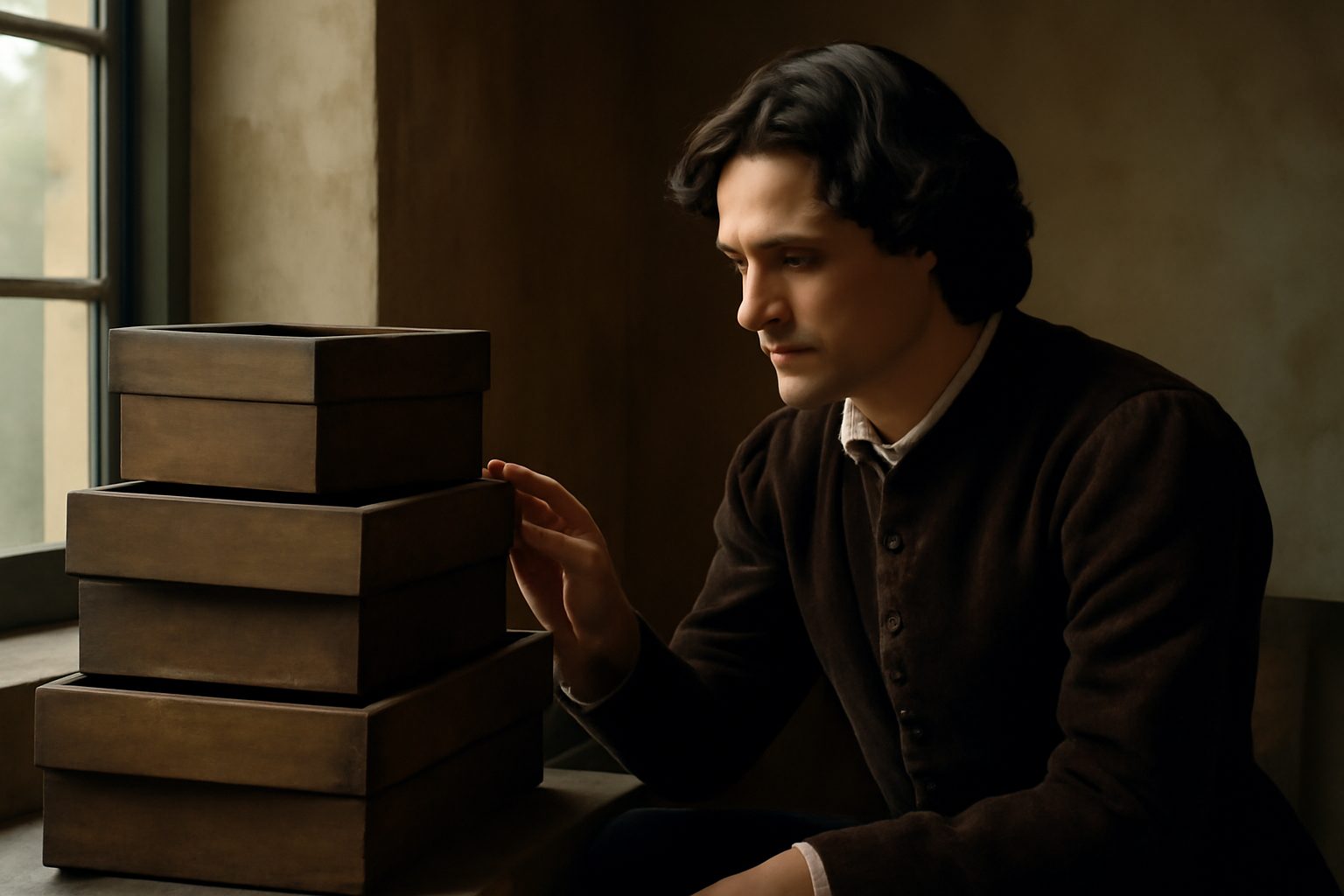
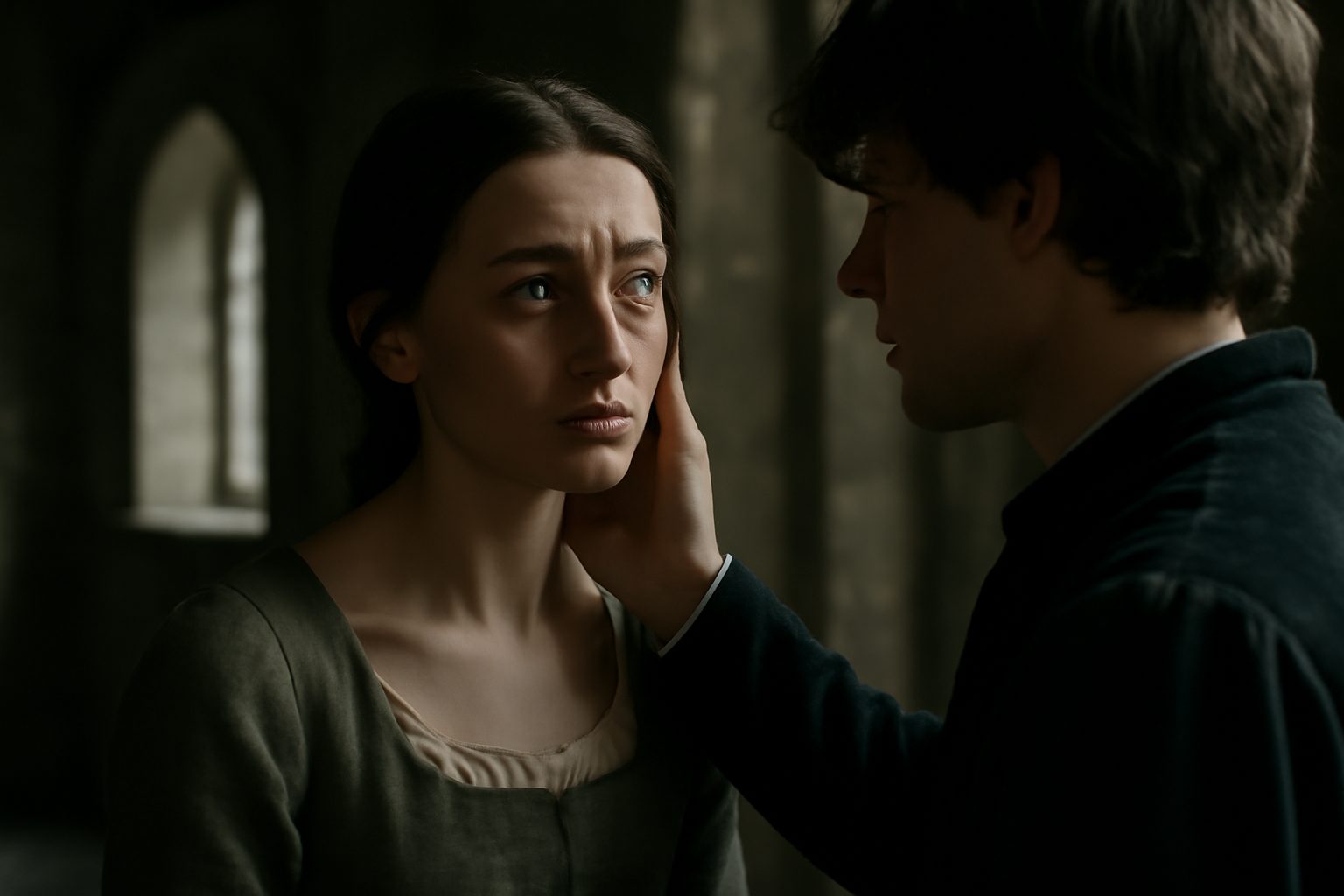
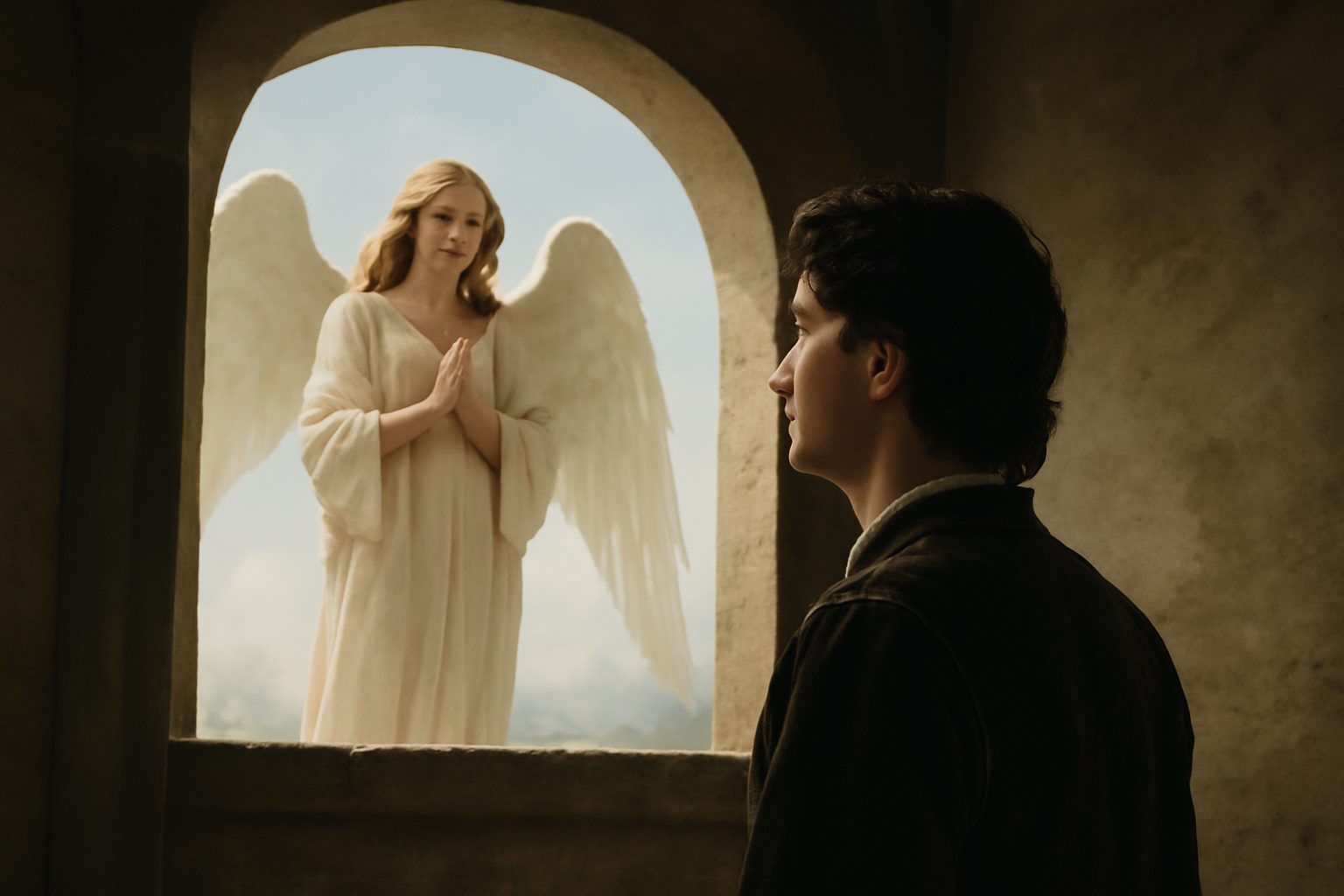
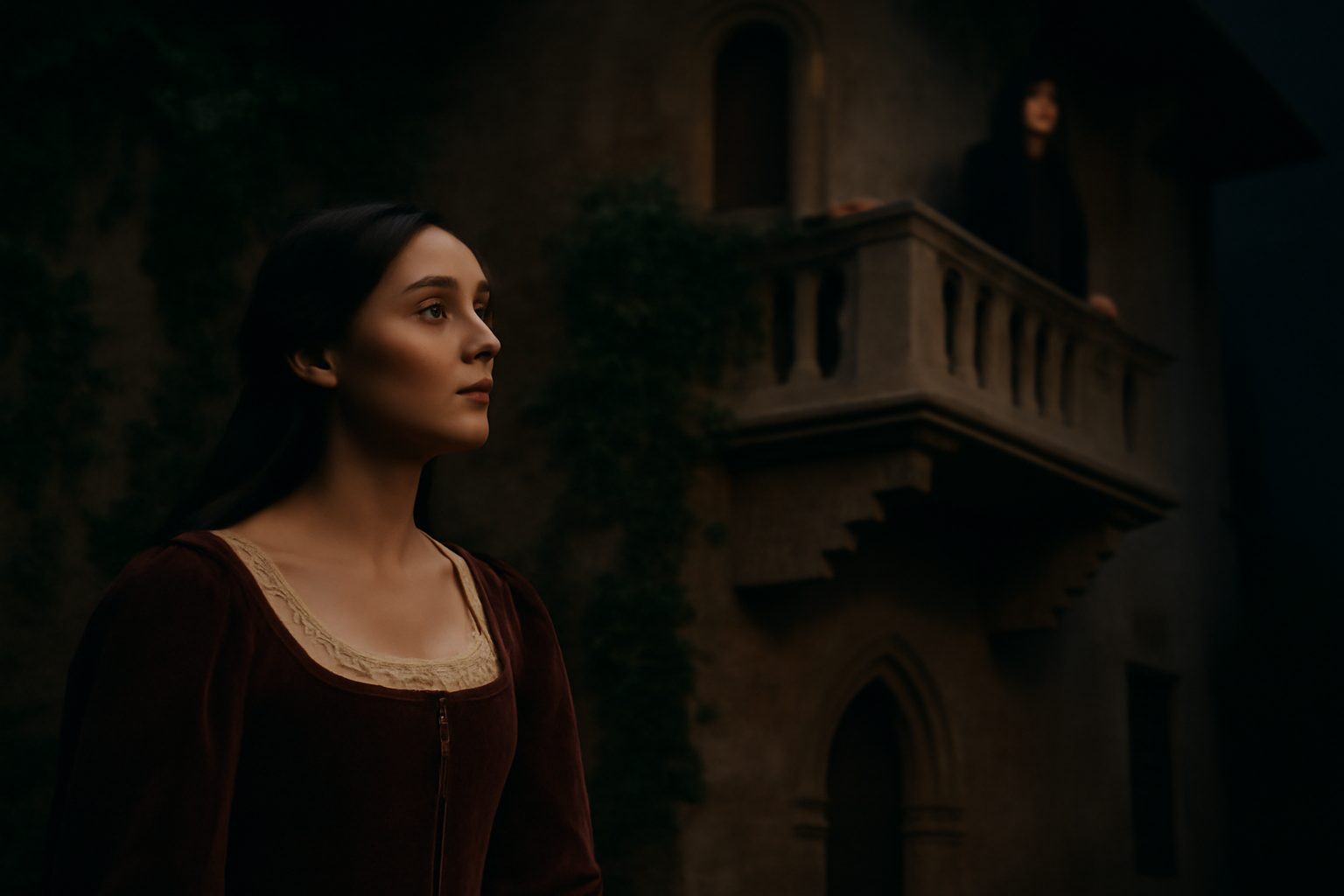
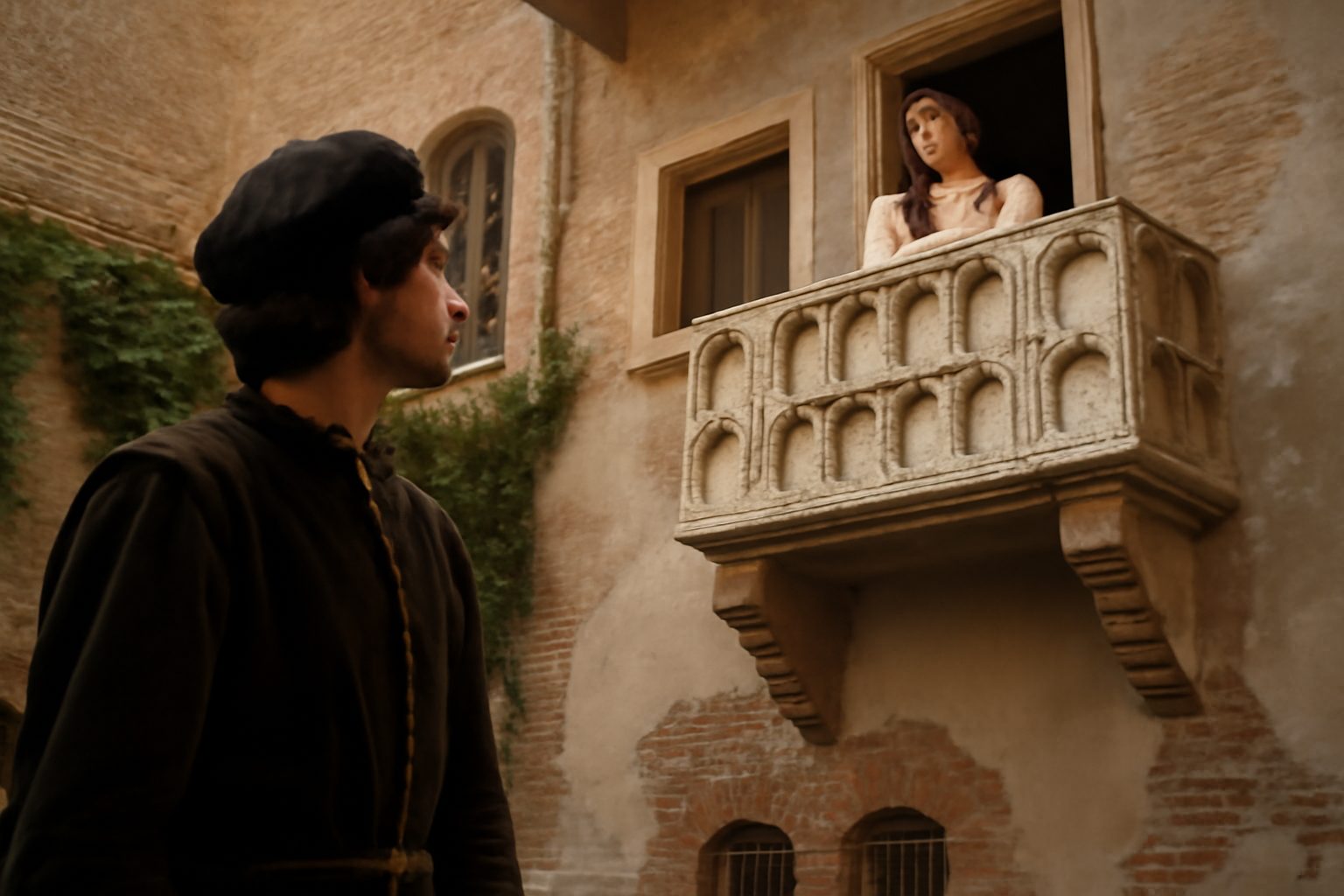
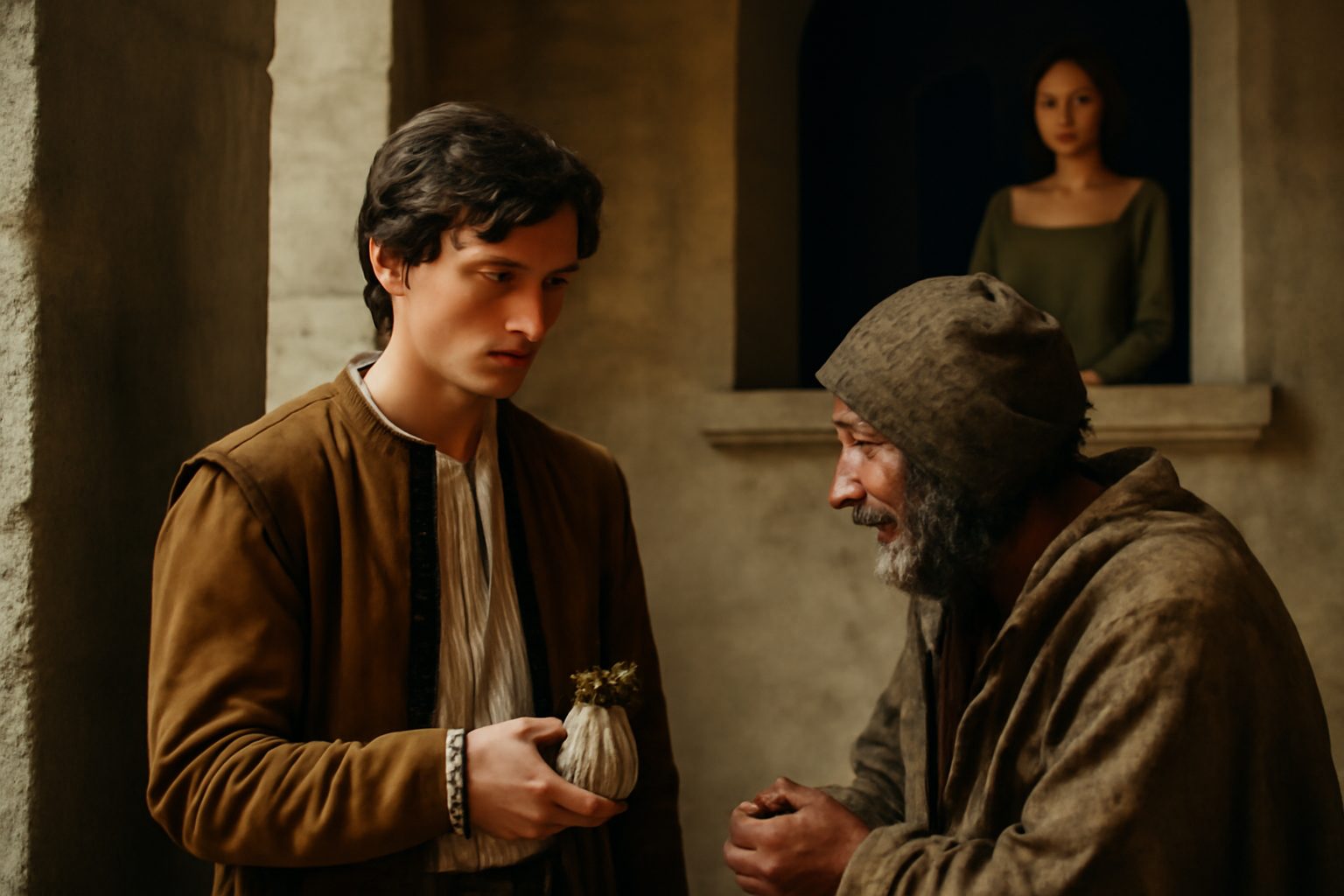
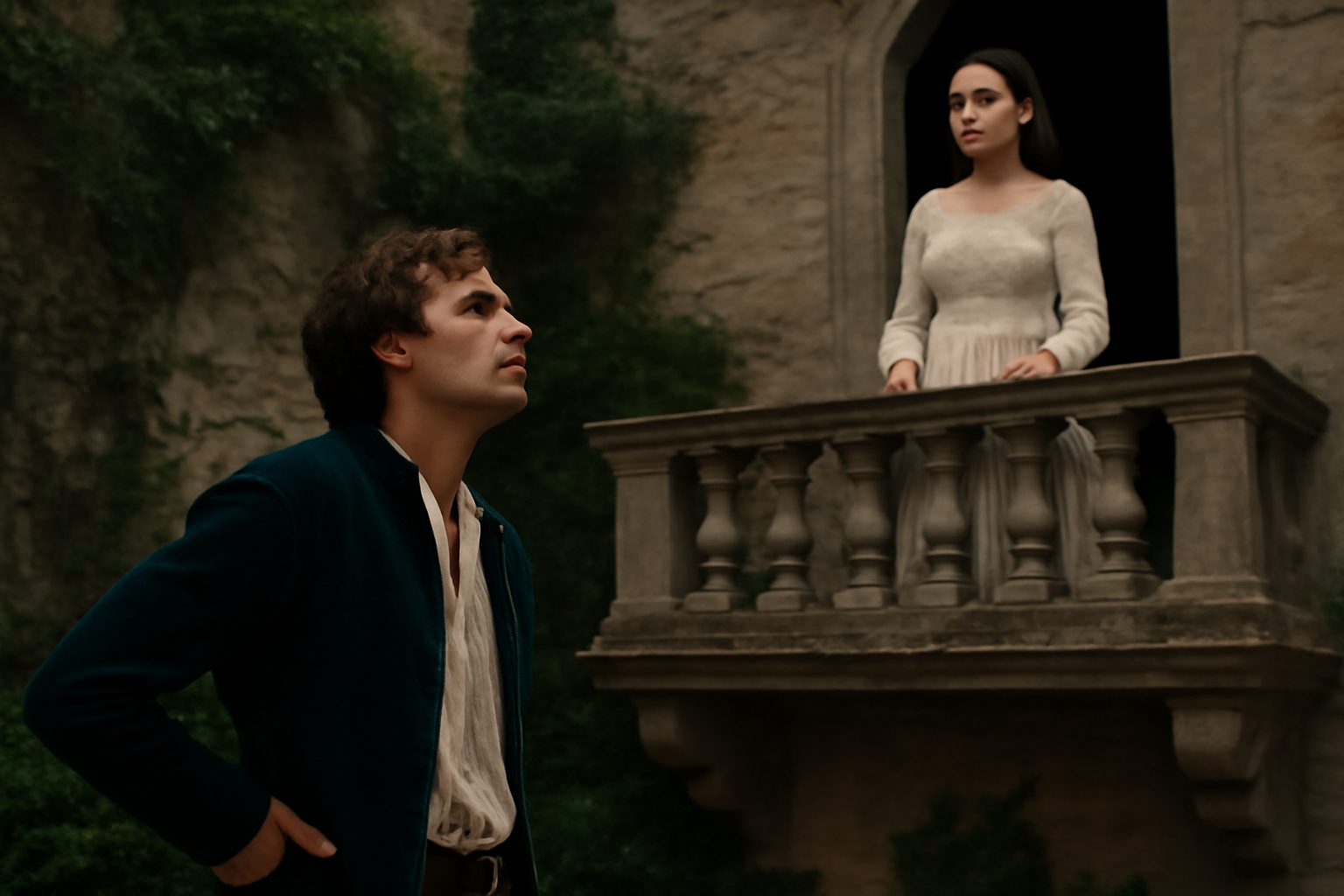
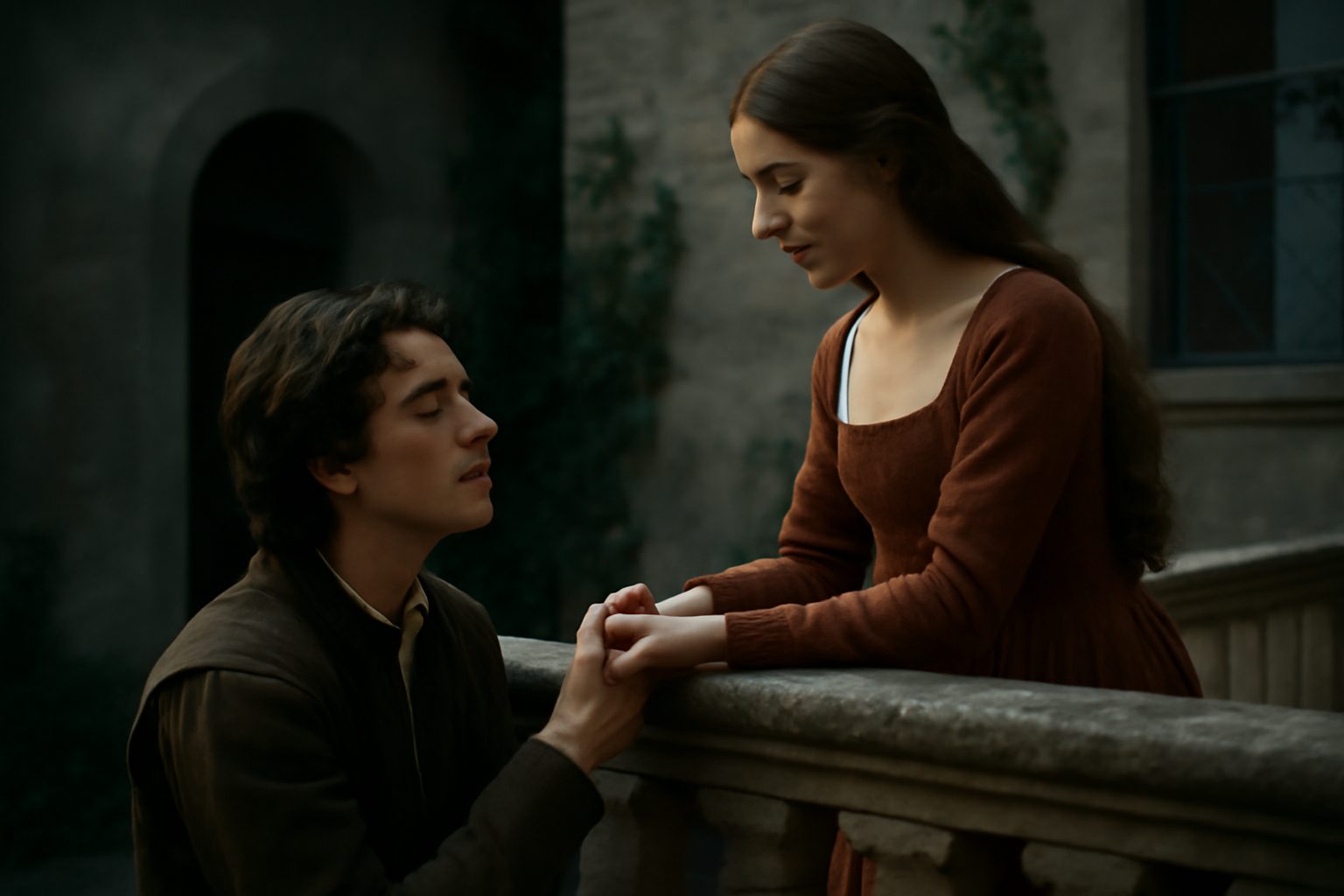
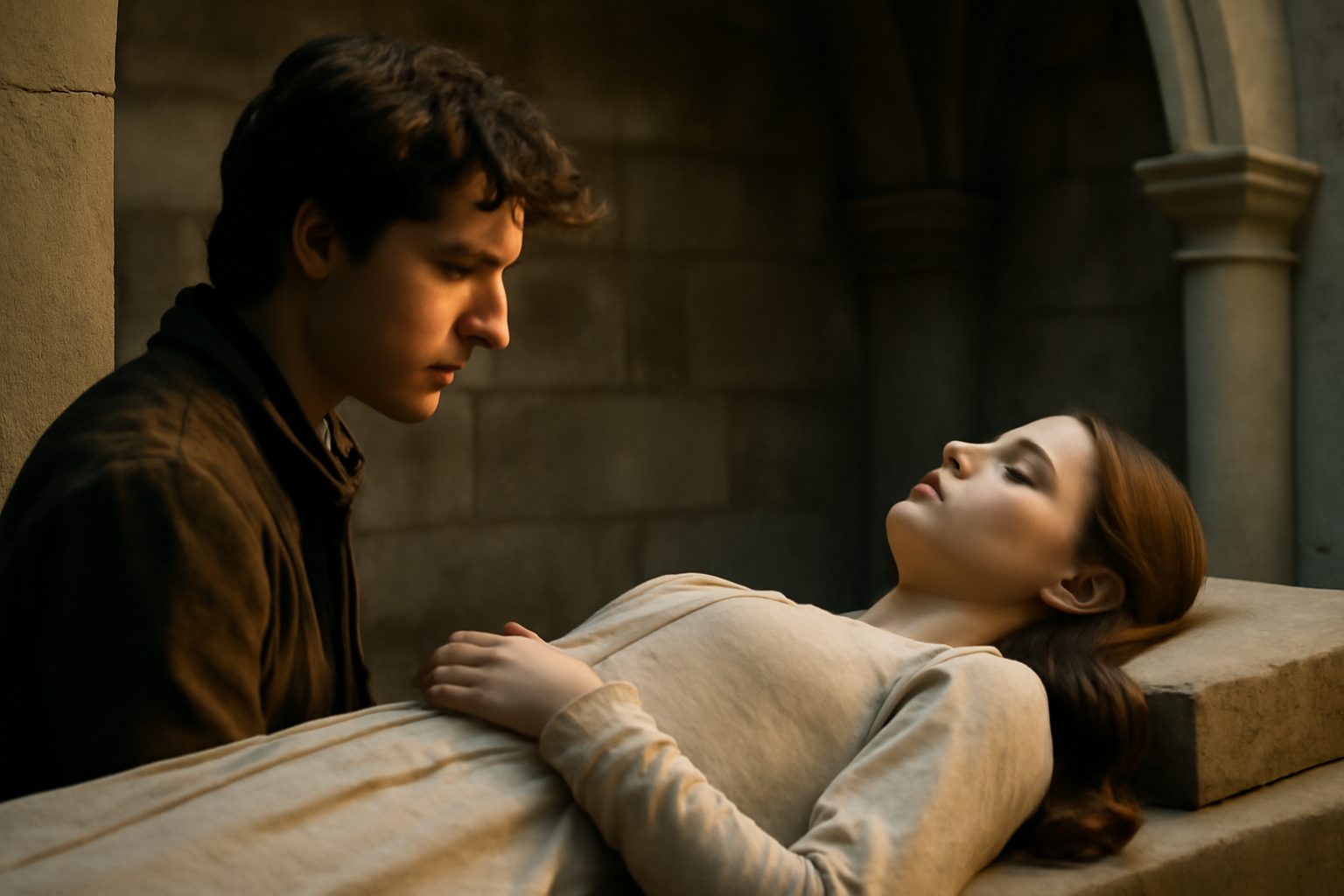
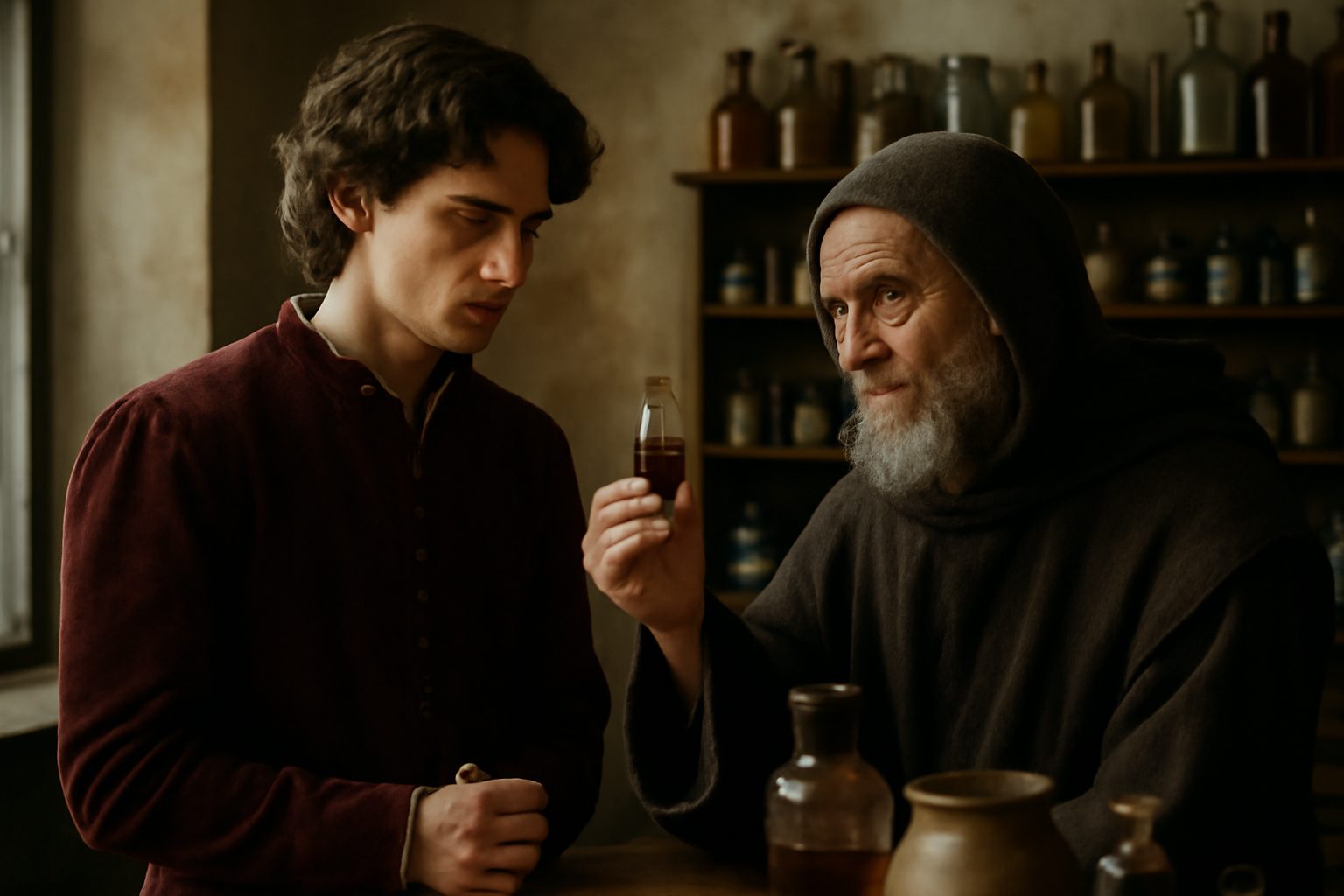
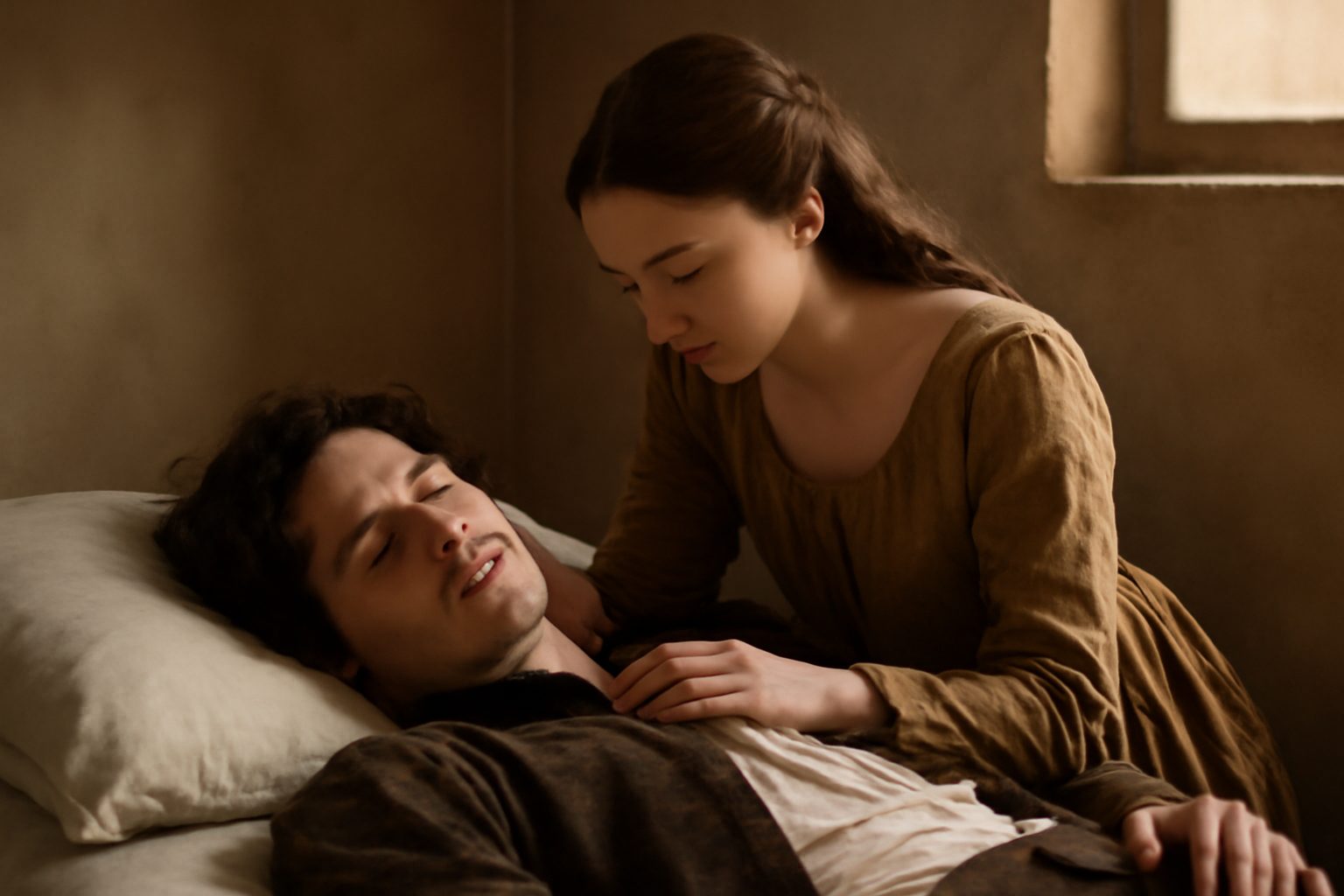
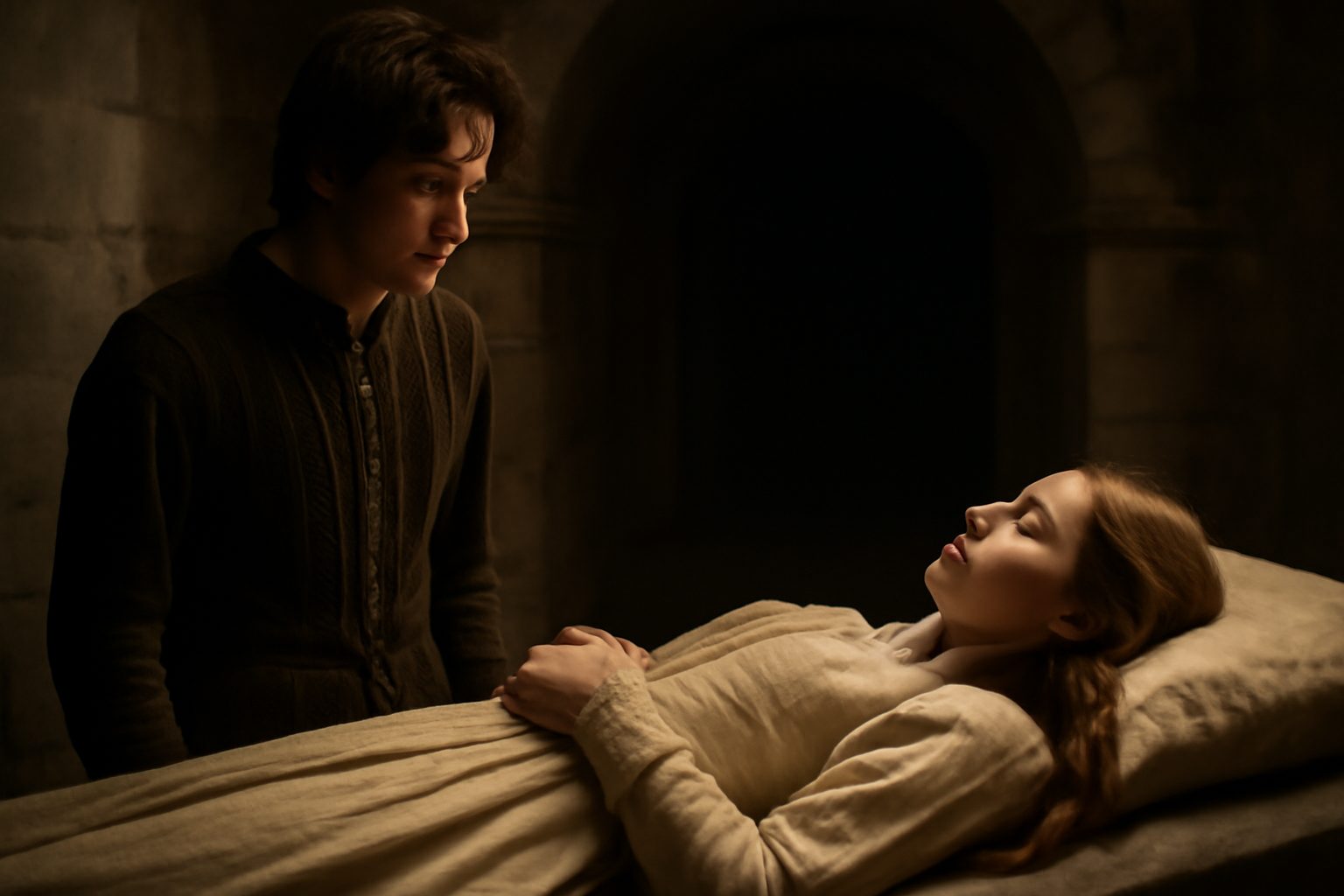
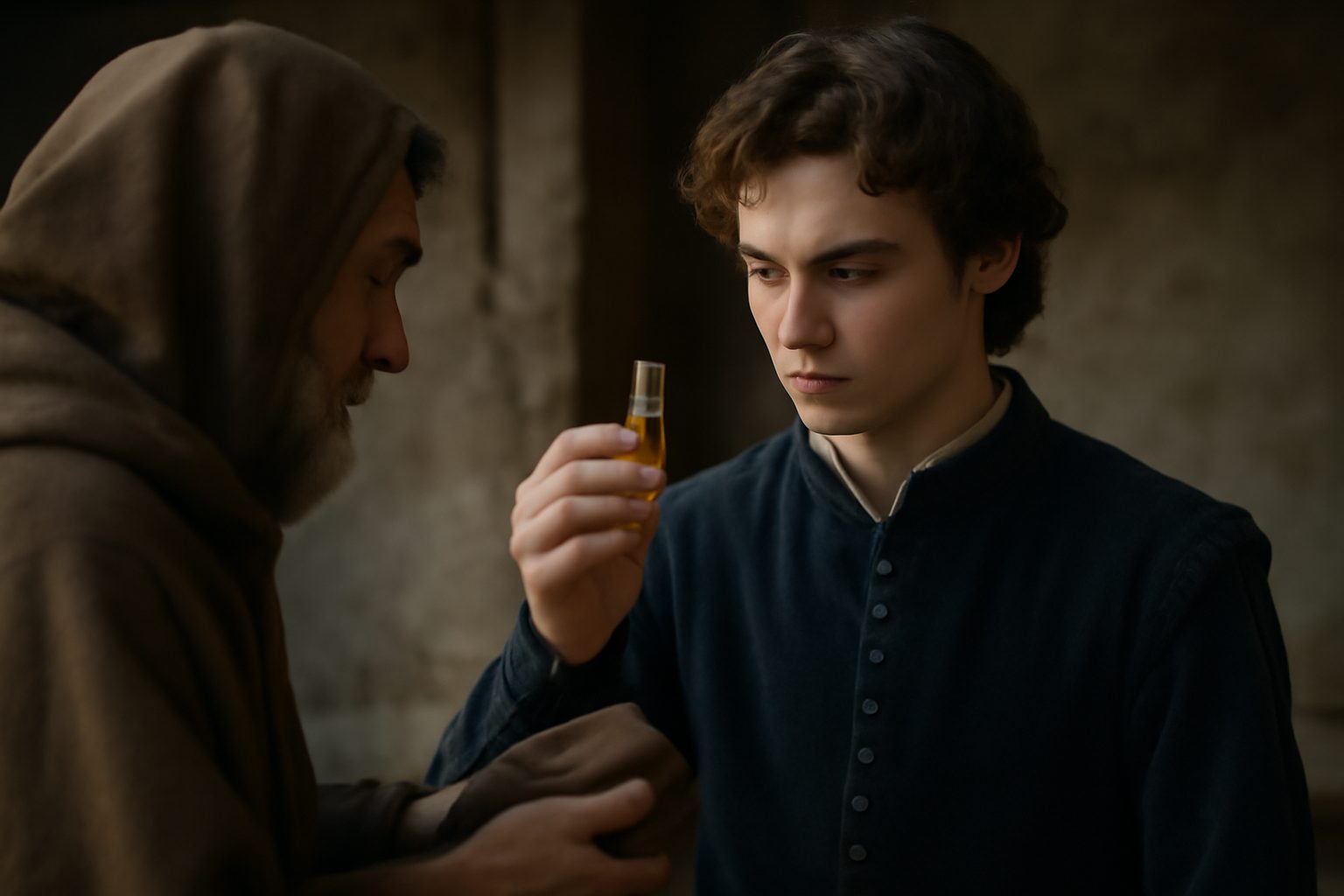
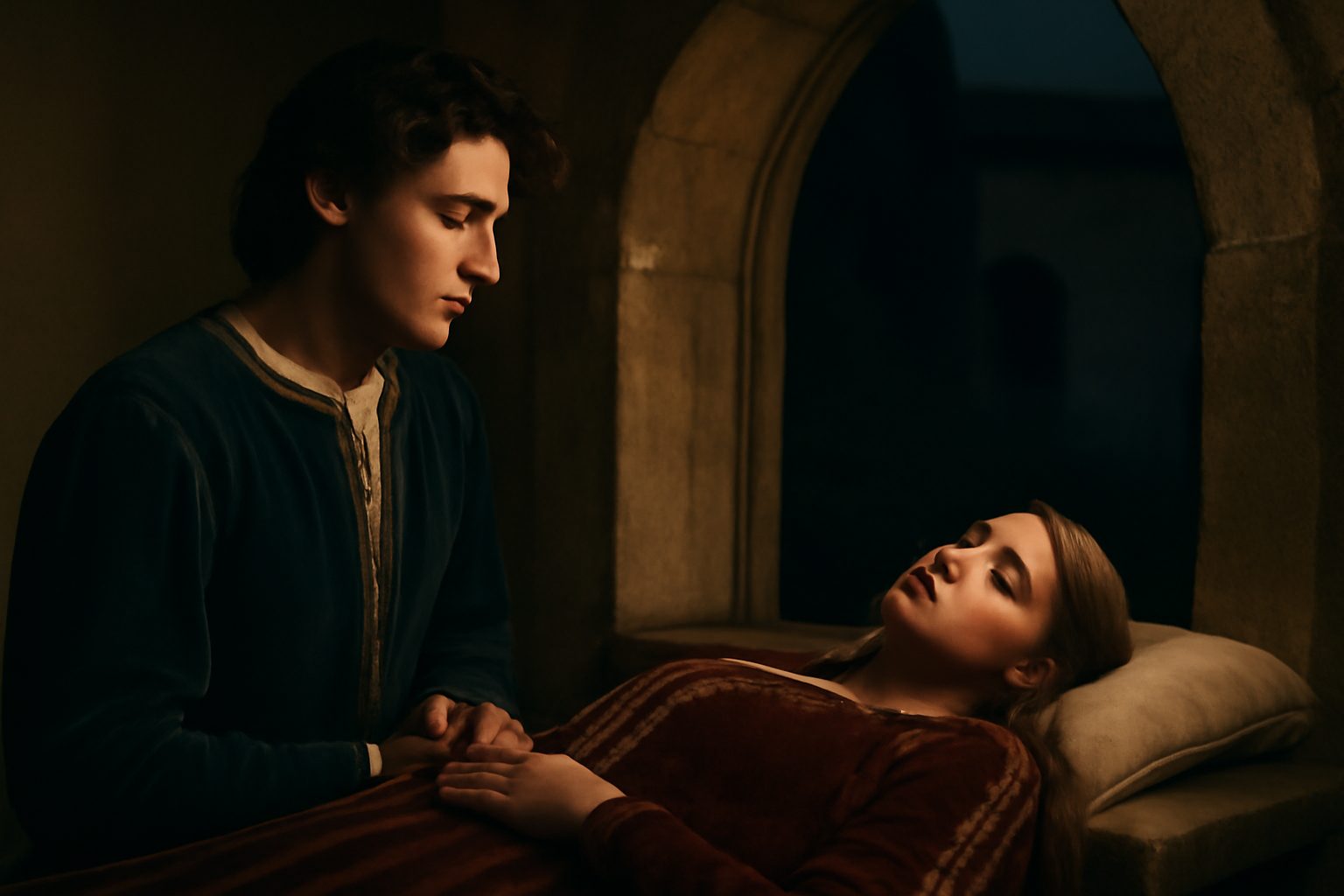
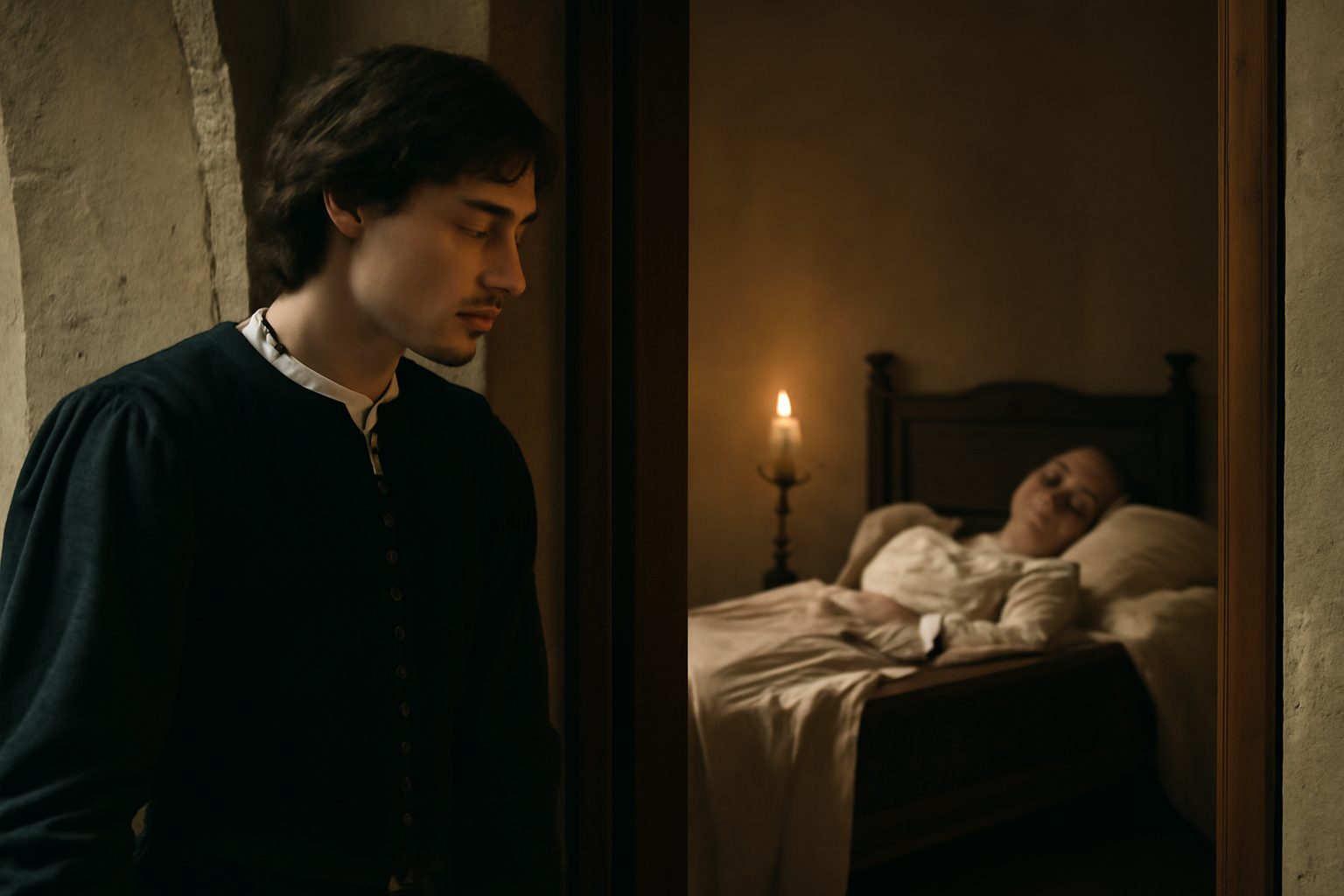
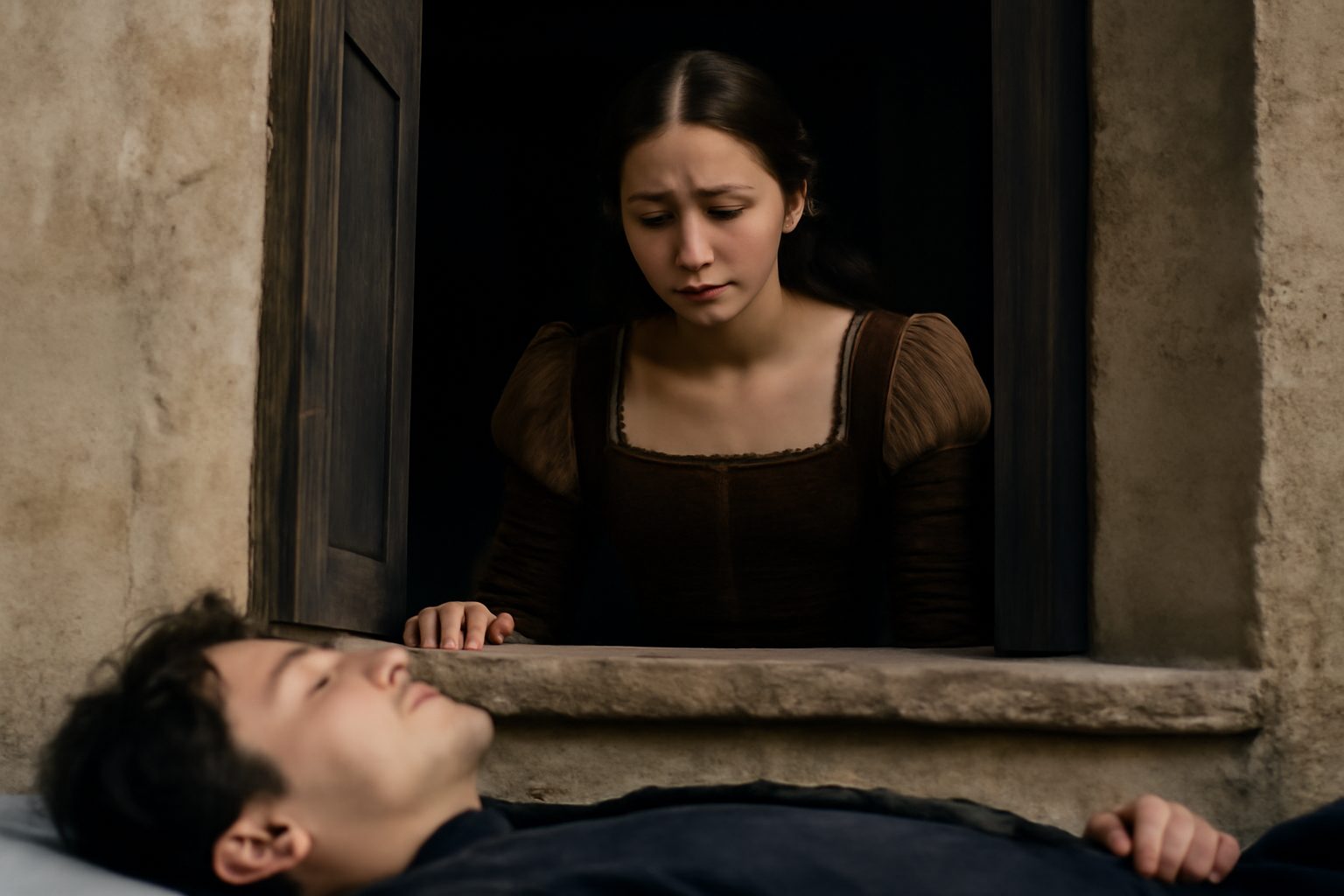
In Act 5, Scene 1 of Romeo and Juliet, Romeo speaks these words after dreaming of Juliet finding him dead yet reviving him with a kiss. This moment occurs in Mantua, where Romeo, unaware of Friar Laurence's plan, is still exiled and grieving over his separation from Juliet. The line reflects his troubled state of mind, blending hope and foreboding as he grapples with the boundaries between life, death, and dreams.
Romeo: "Strange dream, that gives a dead man leave"
In modern day english, we would say:
It’s a weird dream that lets a dead man think or act.
Frequently Asked Questions
What does Romeo mean when he says that his dream allows a dead man to do something?
Romeo is talking about a strange dream he had where a dead person was able to act or speak, which feels unusual and unsettling to him.
Connections to other verses:
Connections to "Strange dream, that gives a dead man leave"
Romeo's line, "Strange dream, that gives a dead man leave", reflects his preoccupation with death and foreshadowing, which is echoed throughout Act 5, Scene 1. This verse introduces the theme of dreams as omens, a motif that recurs in his earlier statement, "I dreamt my lady came and found me dead", directly linking the dream to Juliet's tragic fate.
Dreams and Premonitions
Romeo's dream is tied to his emotional state, as seen in "My dreams presage some joyful news at hand", where he initially interprets the dream positively. However, this optimism is shattered by Balthasar's news, leading to his defiant cry, "Is it even so? then I defy you, stars!", connecting the dream to his desperate actions.
Death and Desperation
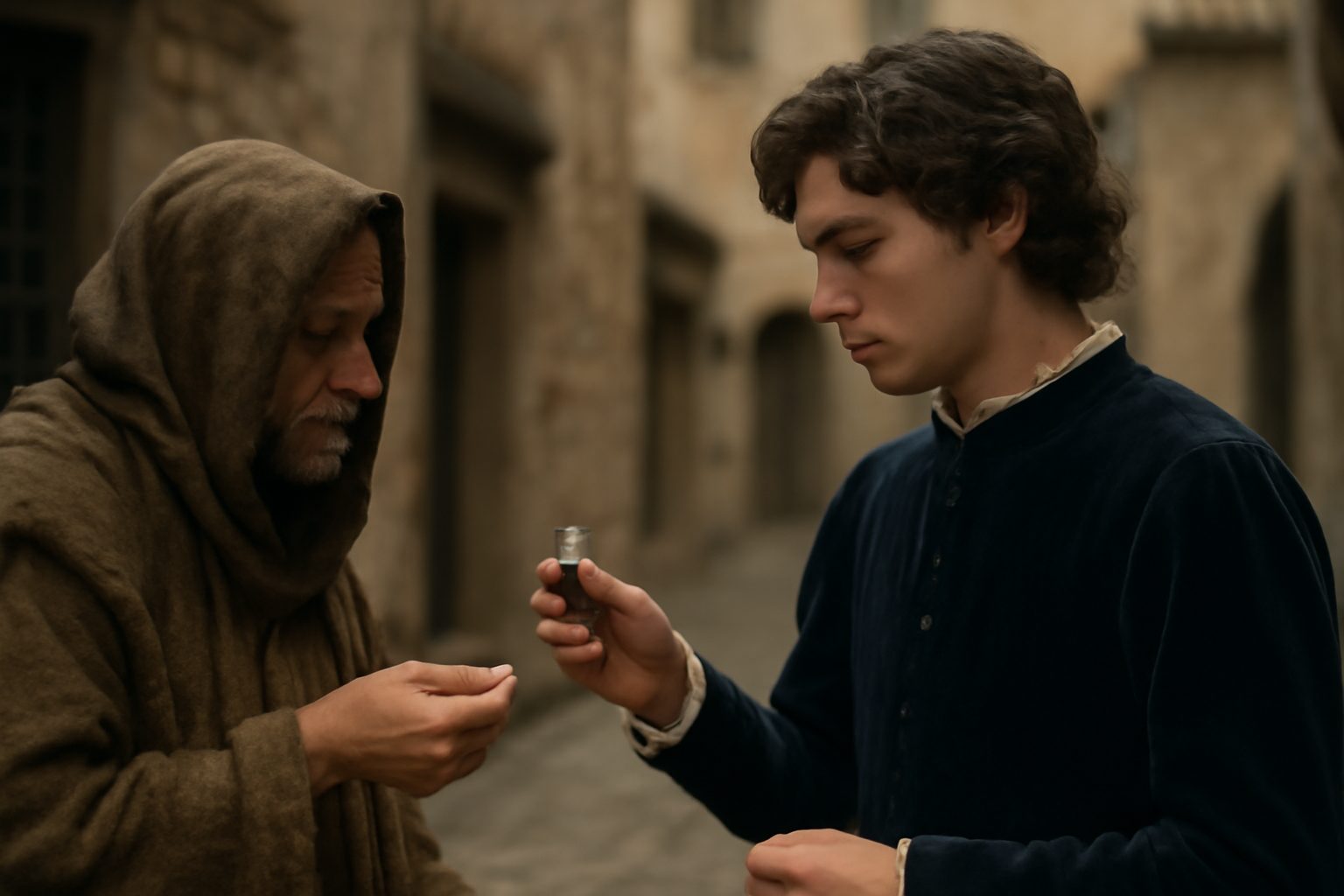
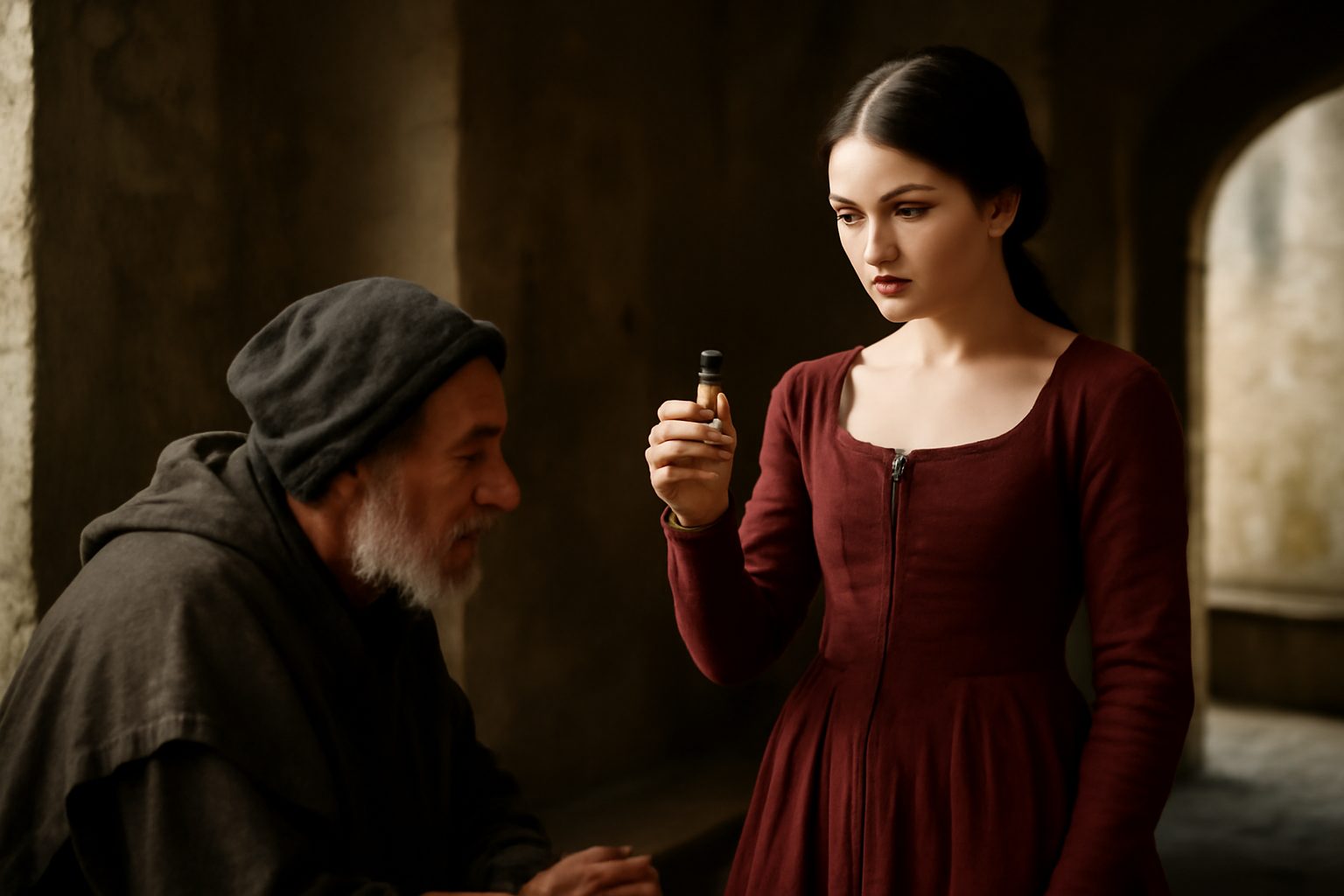
The dream's morbid imagery foreshadows Romeo's plan for suicide, evident in his resolve: "Well, Juliet, I will lie with thee to-night". This intention is reinforced by his purchase of poison, described in "A dram of poison, such soon-speeding gear", highlighting how the dream propels him toward death.
Contrast with Earlier Joy
The dream's darkness contrasts with Romeo's earlier joy in love, as expressed in "Ah me! how sweet is love itself possess'd", emphasizing the sudden shift from hope to despair. This juxtaposition deepens the tragedy of his subsequent actions.