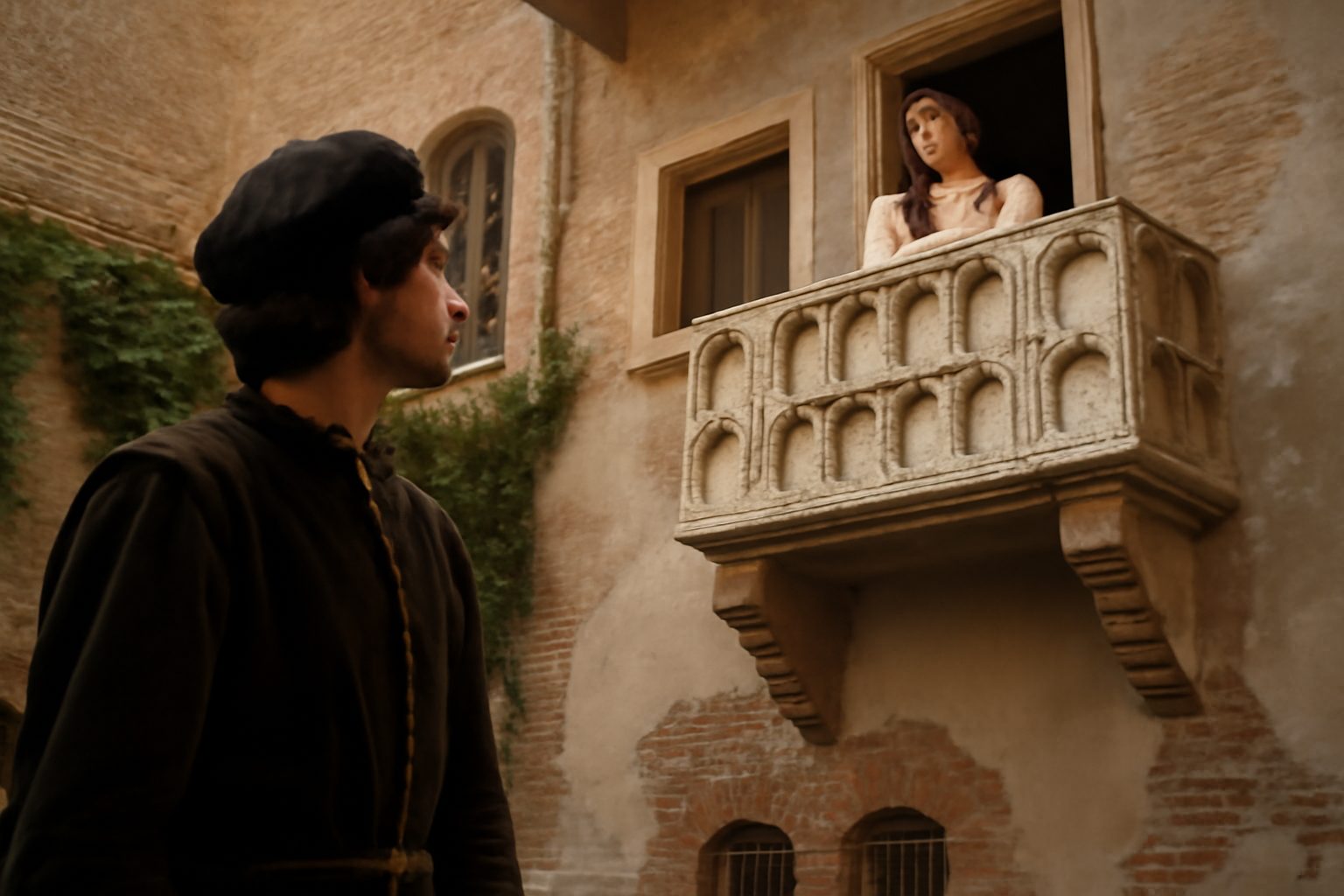
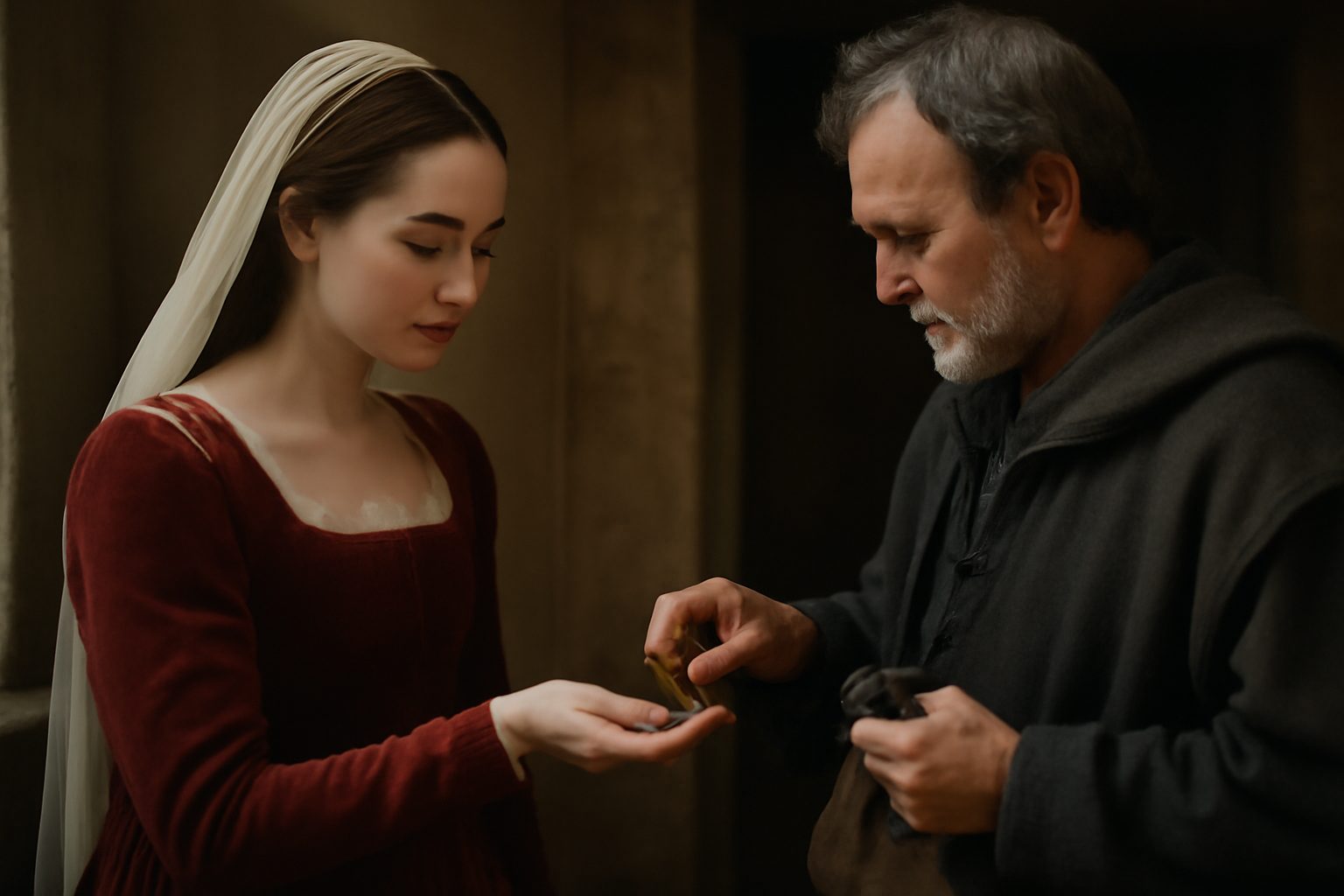
In Act 5, Scene 1 of Romeo and Juliet, Romeo is in Mantua, unaware of the tragic events unfolding in Verona. When his servant Balthasar arrives with news of Juliet's supposed death, Romeo reacts with despair and urgency. This line is his abrupt dismissal of Balthasar, signaling his resolve to act immediately, no matter the consequences.
Romeo: "No matter: get thee gone,"
In modern day english, we would say:
It doesn’t matter; just leave.
Frequently Asked Questions
What is Romeo telling the other person to do in this line?
Romeo is telling the other person to leave.
Connections to other verses:
Connections to "No matter: get thee gone"
The line No matter: get thee gone reflects Romeo's abrupt dismissal of Balthasar's concern, showing his shift from hopeful anticipation to desperate resolve.
Immediate Context and Balthasar's Role
This dismissal follows Balthasar's hesitant response in No, my good lord, where he confirms he has no letters from Friar Laurence. Romeo's impatience is further emphasized when he repeats his command in Leave me, and do the thing I bid thee do, insisting on obedience without question.
Transition to Desperation
Romeo's sudden change in demeanor is starkly contrasted with his earlier joyful mood, such as in My bosom's lord sits lightly in his throne, where he feels uplifted by hopeful dreams. The news of Juliet's death shatters this, leading to his defiant cry in Is it even so? then I defy you, stars!, which directly precedes his command to Balthasar.
Practical Instructions and Foreshadowing
Alongside dismissing Balthasar, Romeo gives specific orders in Thou know'st my lodging: get me ink and paper, showing his immediate plan to act. This urgency culminates in his resolution to join Juliet in death, as declared in Well, Juliet, I will lie with thee to-night, which the dismissal helps set into motion.
Contrast with the Apothecary Scene
Romeo's command to Balthasar contrasts with his later interaction with the apothecary, where he shows pity for the man's poverty in I pay thy poverty, and not thy will. This highlights Romeo's single-minded focus on his own tragic path, disregarding others' loyalties in his desperation.