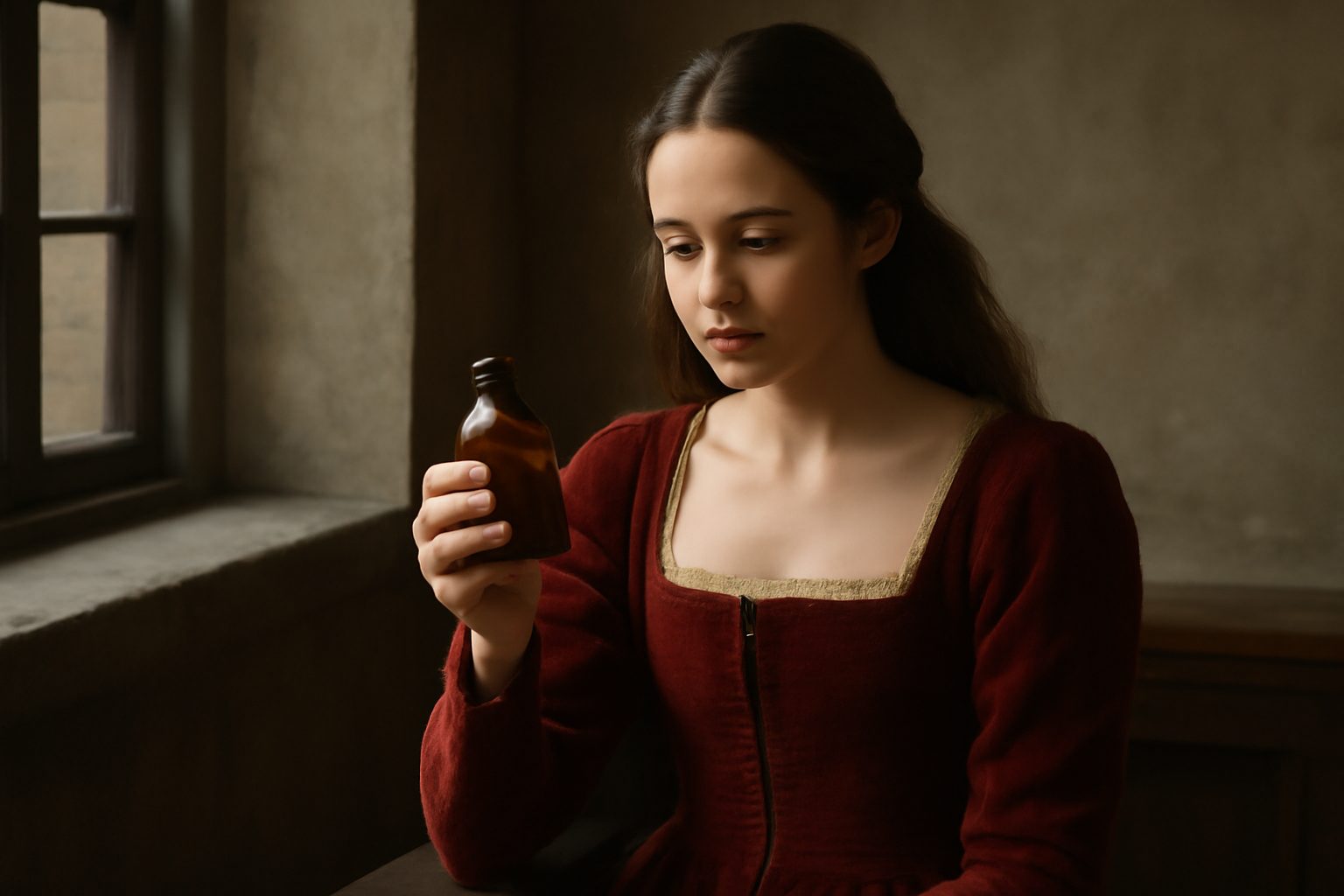
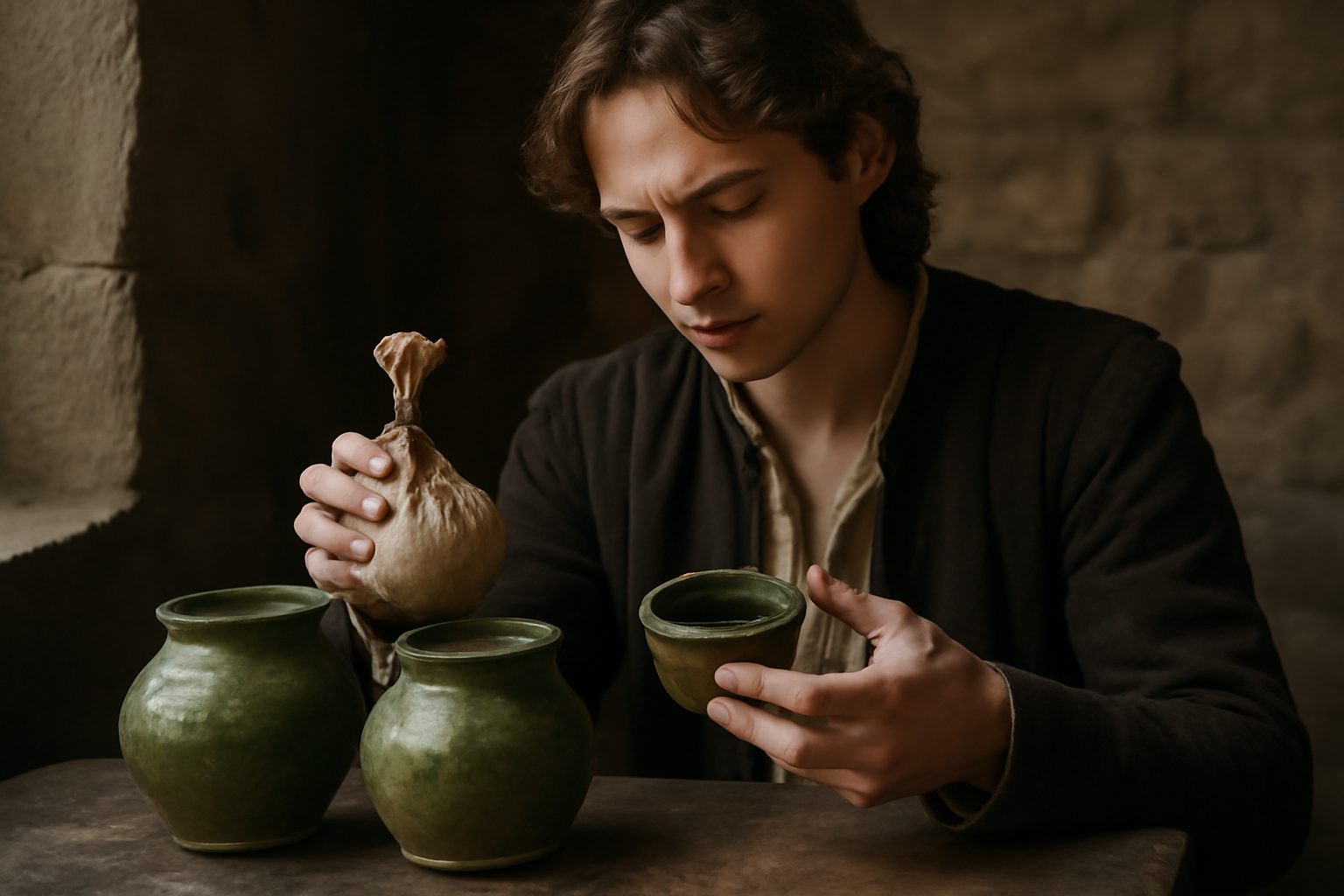
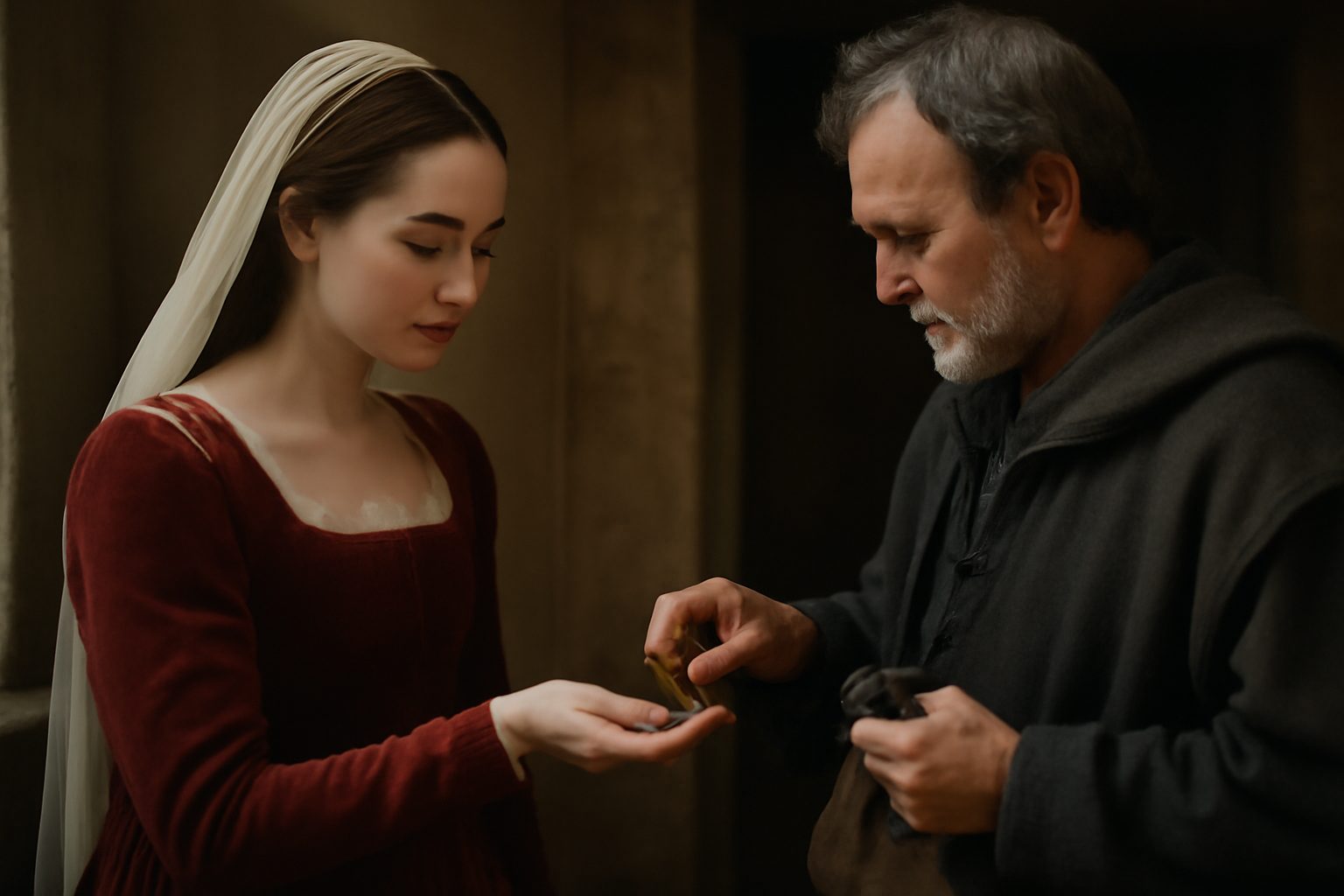
In Act 5, Scene 1 of Romeo and Juliet, Romeo is in exile in Mantua when he receives false news of Juliet's death. Overwhelmed by grief, he becomes a shadow of his former self, his suffering so profound that it has visibly ravaged him. This line captures his physical and emotional deterioration, reflecting the depth of his despair as he prepares to take drastic action.
Romeo: "Sharp misery had worn him to the bones:"
In modern day english, we would say:
The constant pain of his grief had left him gaunt and exhausted.
Frequently Asked Questions
What does Romeo mean when he says that sharp misery had worn him to the bones?
Romeo means that his deep sadness has made him very thin and weak, as if his suffering has physically worn him down.
Connections to other verses:
Connections to "Sharp misery had worn him to the bones"
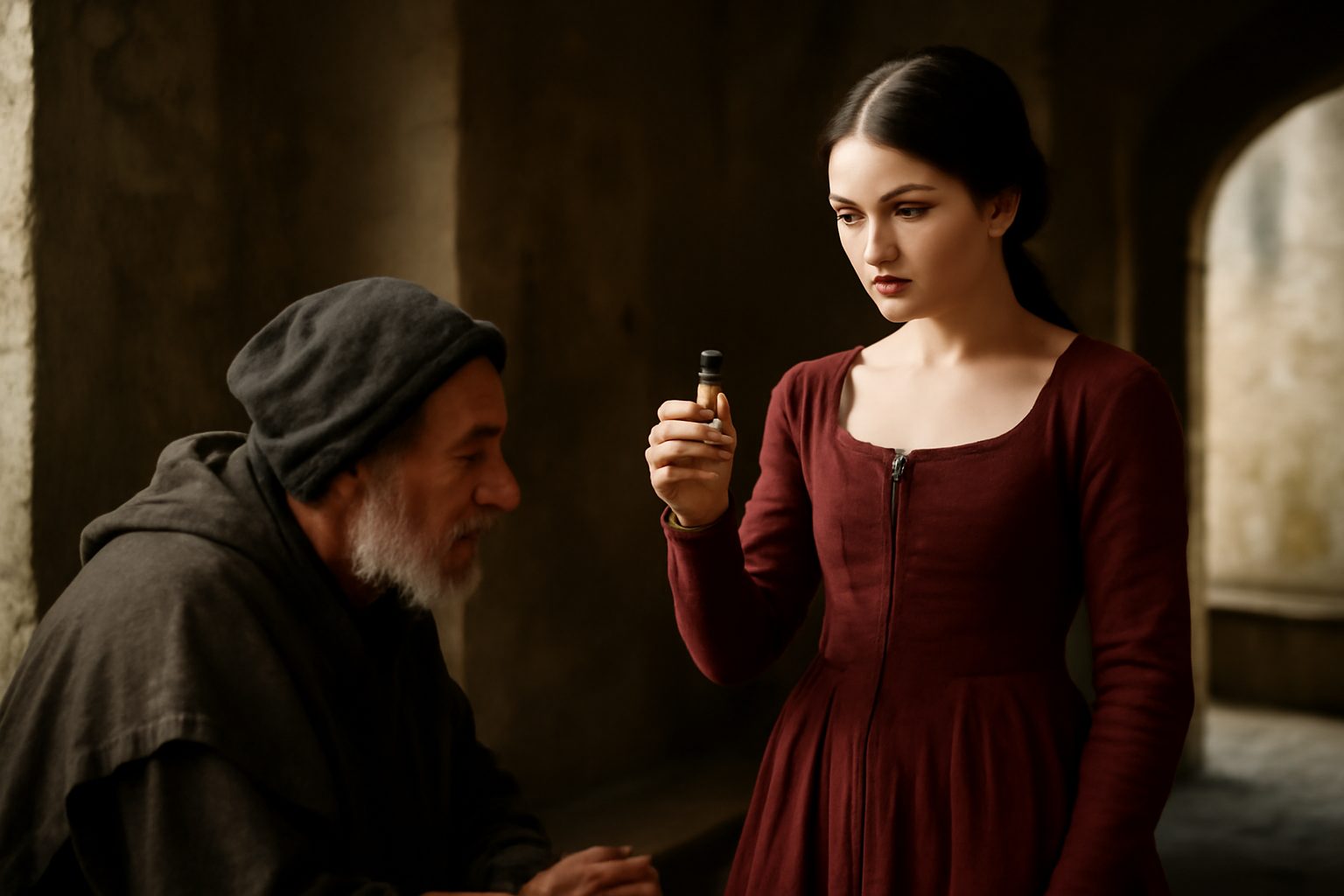
The line "Sharp misery had worn him to the bones" describes the apothecary's physical state, reflecting the theme of poverty and desperation that permeates the scene. This imagery is echoed in other descriptions of the apothecary, such as "Culling of simples; meagre were his looks", which similarly emphasizes his gaunt and deprived appearance.
Poverty and Desperation
Romeo observes the apothecary's extreme need, noting "Noting this penury, to myself I said", which directly connects to the misery described. The apothecary's own admission, "My poverty, but not my will, consents", underscores how his physical and financial decay forces him into illegal actions, mirroring the "sharp misery" that has consumed him.
Contrast with Romeo's State
While the apothecary is worn by material need, Romeo's misery is emotional, stemming from Juliet's supposed death. His resolve, "Well, Juliet, I will lie with thee to-night", shows a different kind of desperation—one that leads him to seek the poison. The apothecary's physical decay thus parallels Romeo's emotional torment, both driving them toward tragic choices.
Symbolic Poison Transaction
The transaction between Romeo and the apothecary highlights their shared desperation. Romeo notes "I pay thy poverty, and not thy will", acknowledging that the apothecary's misery makes him a tool for fate. This connects to the earlier description, as the apothecary's skeletal state becomes a symbol of the corrupting power of want.