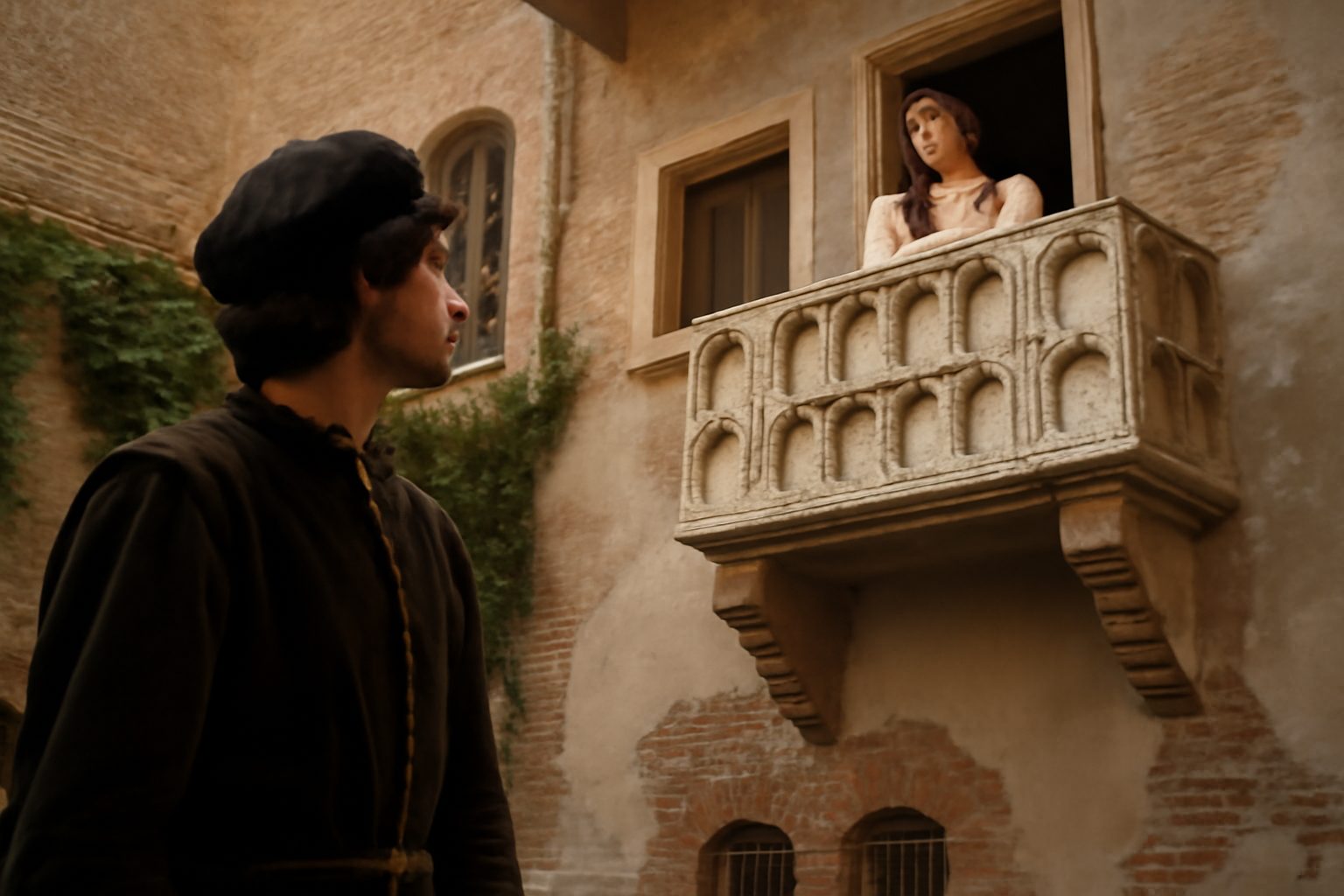
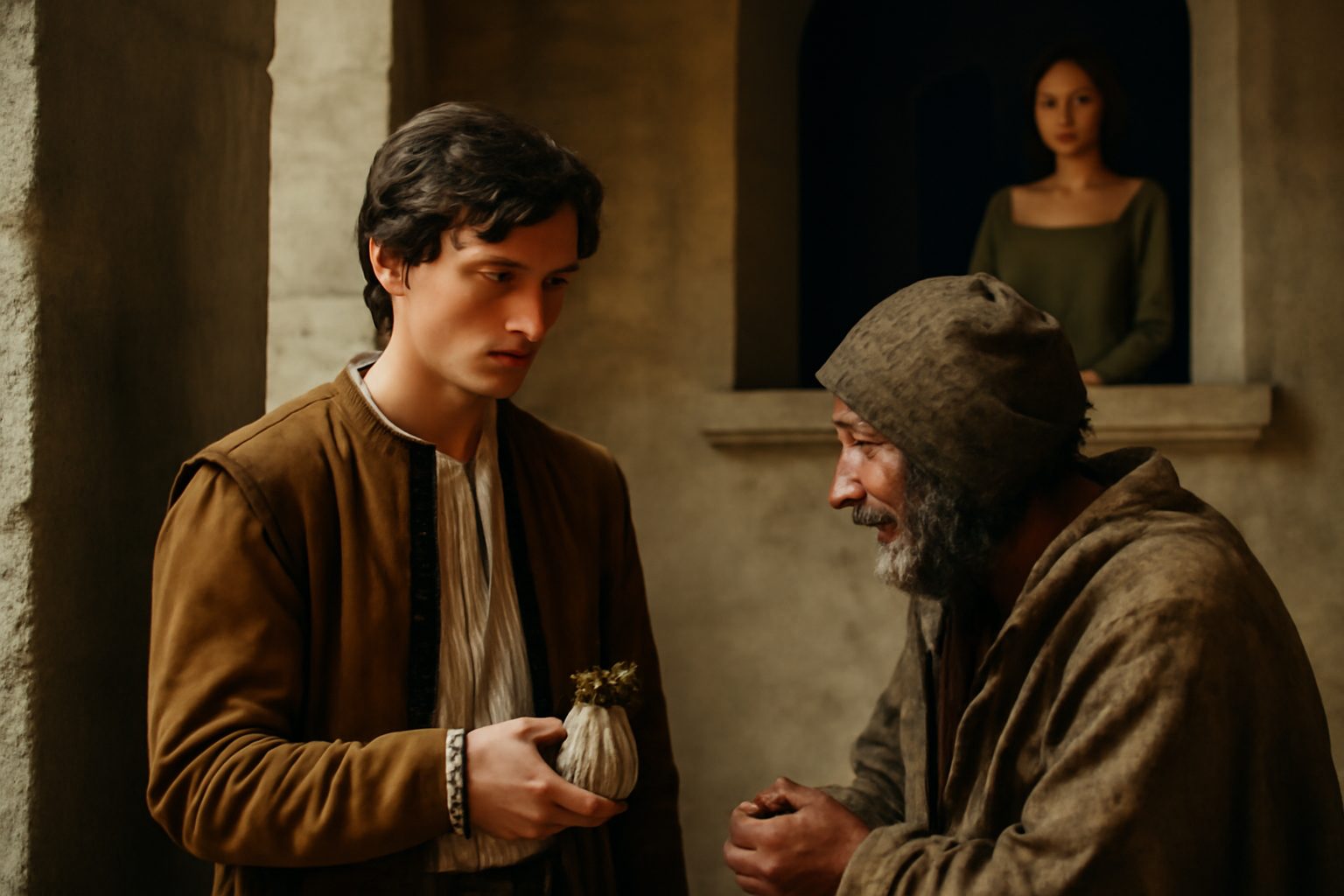
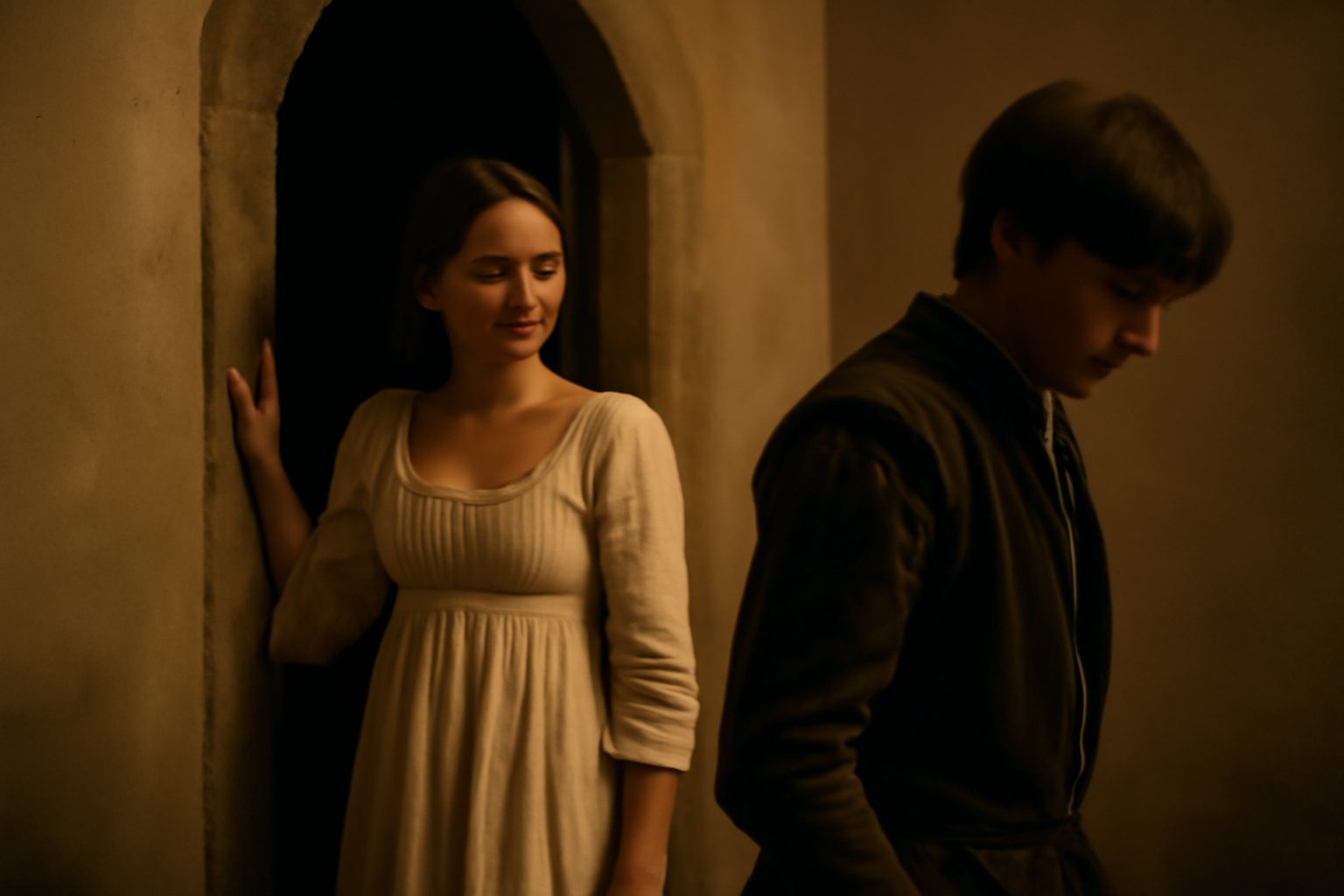
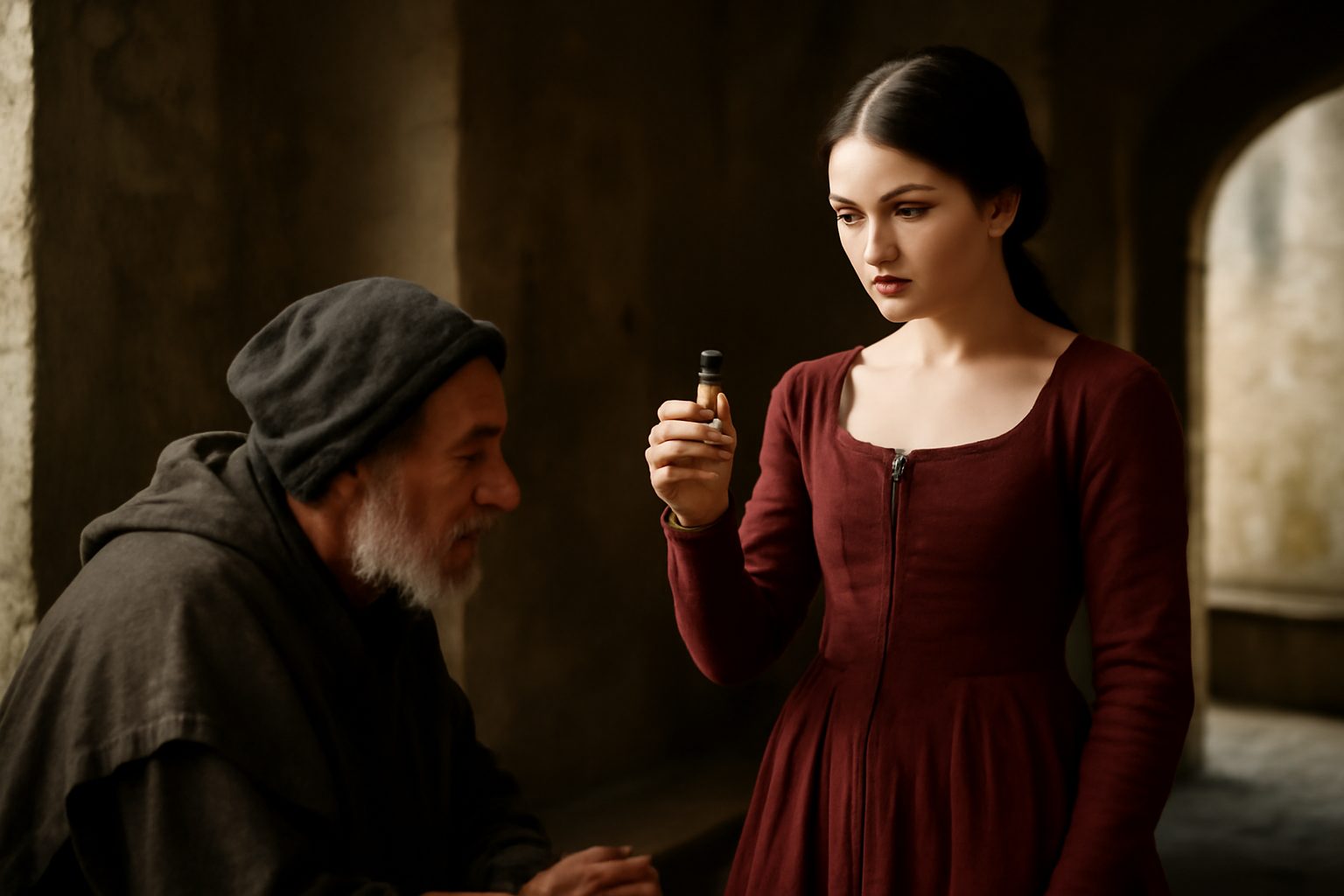
In Act 5, Scene 1 of Romeo and Juliet, Romeo is in exile in Mantua when his servant Balthasar arrives with news from Verona. Mistakenly believing Juliet is dead, Romeo dismisses Balthasar with these words, urging him to take care of himself while Romeo prepares to return to Verona in despair. The line reflects Romeo's abrupt shift from concern for his friend to single-minded determination to join Juliet in death.
Romeo: "Farewell: buy food, and get thyself in flesh."
In modern day english, we would say:
Take care of yourself—go eat something and put some weight on.
Frequently Asked Questions
What does Romeo tell someone to do in this line?
Romeo tells someone to eat more and gain weight.
Connections to other verses:
Connections to "Farewell: buy food, and get thyself in flesh."
The verse "Farewell: buy food, and get thyself in flesh." is spoken by Romeo to Balthasar as he dismisses him, urging him to nourish himself. This line reflects Romeo's awareness of physical suffering and poverty, themes that resonate throughout the scene.
Connection to Poverty and Need
Romeo's instruction to Balthasar to "buy food" and "get thyself in flesh" directly contrasts with the depiction of the apothecary's extreme poverty, as seen in "Culling of simples; meagre were his looks," and "Sharp misery had worn him to the bones." These descriptions emphasize the apothecary's emaciated state, making Romeo's advice to Balthasar a poignant reminder of the physical toll of deprivation.
Contrast with Wealth and Poison
Romeo's offer of money to the apothecary in "Hold, there is forty ducats: let me have" and his acknowledgment in "I pay thy poverty, and not thy will" highlight the transactional nature of their interaction. This stands in stark contrast to his compassionate dismissal of Balthasar, where he encourages sustenance rather than exploiting need.
Foreshadowing and Irony
The advice to "get thyself in flesh" ironically foreshadows Romeo's own intent to end his life, as he seeks poison from the apothecary, described in "A dram of poison, such soon-speeding gear." While urging Balthasar toward life and health, Romeo is moving toward death, underscoring the tragedy of his decisions.
Theme of Desperation
Romeo's desperate state is echoed in his defiance, "Is it even so? then I defy you, stars!" and his resolve to join Juliet in death, "Well, Juliet, I will lie with thee to-night." His kindness to Balthasar here contrasts with his own despair, illustrating his complex character amid tragedy.