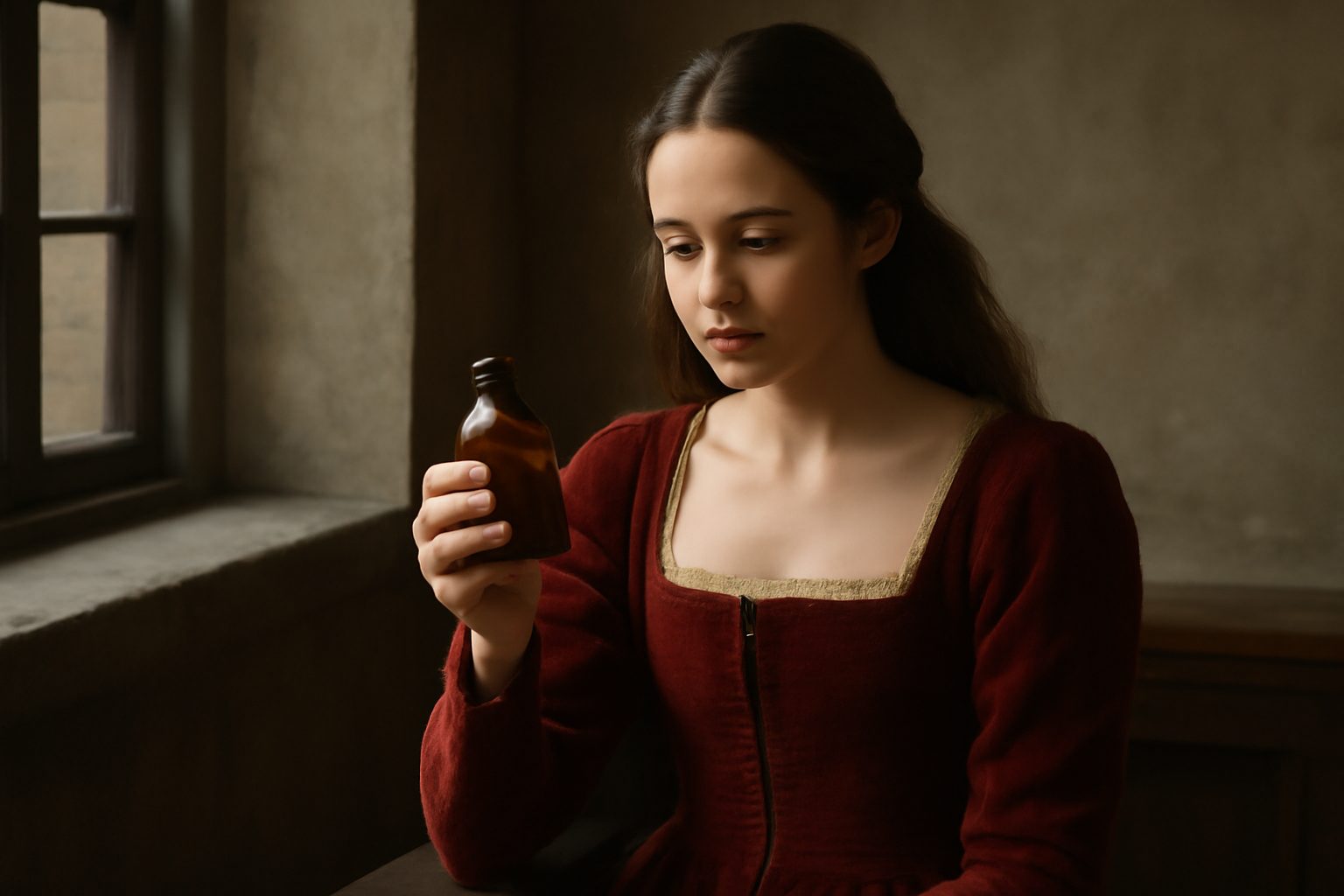
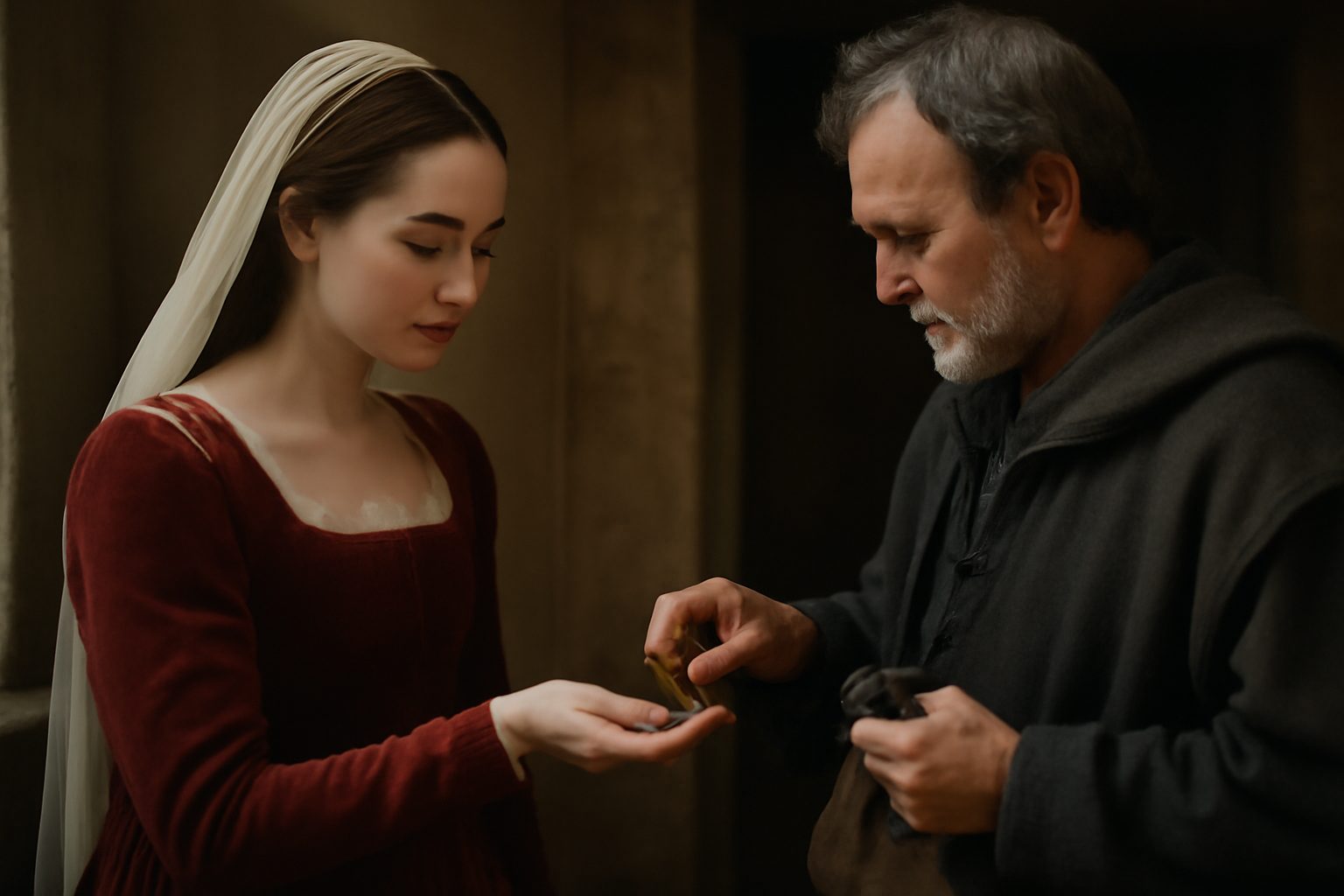
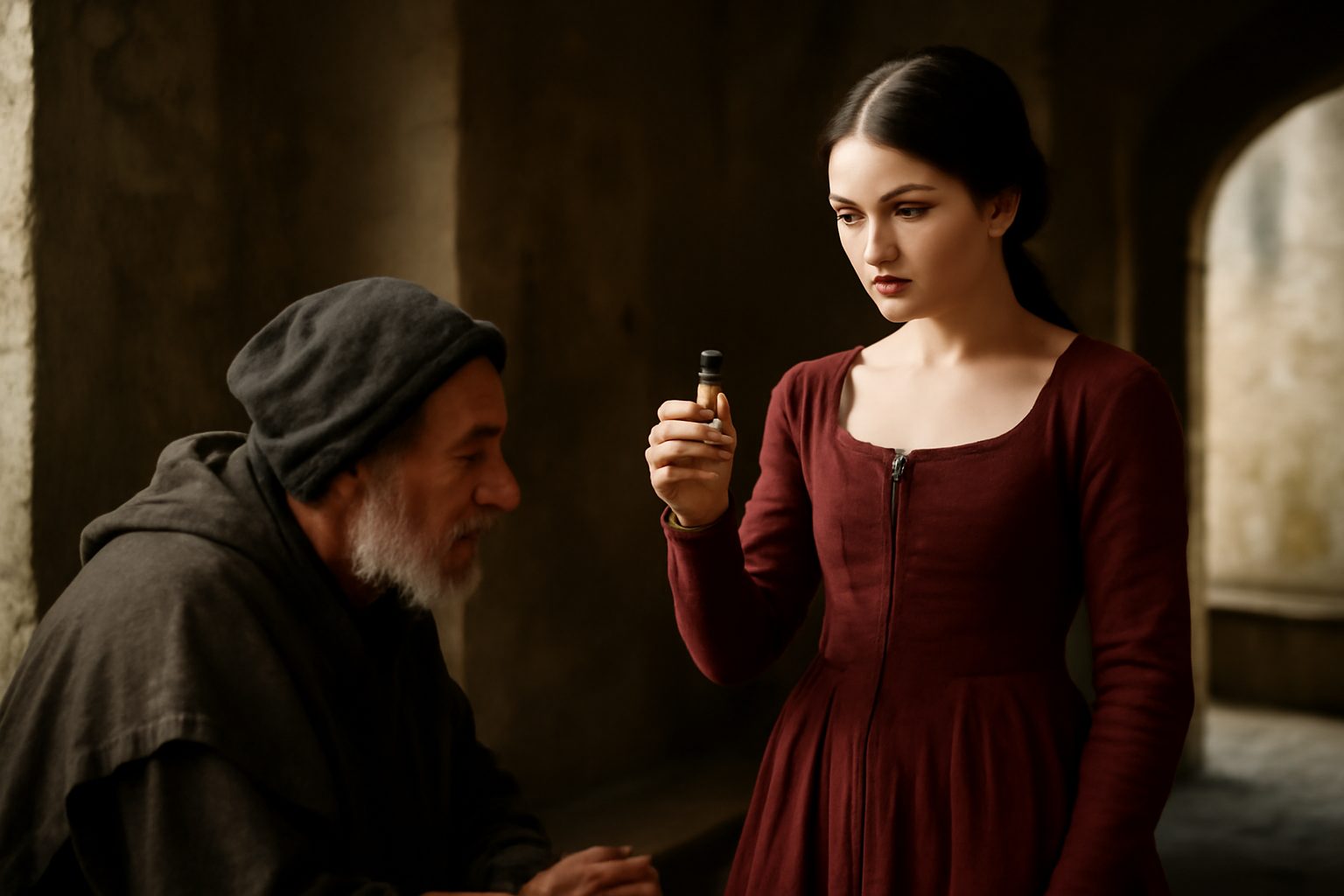
In Act 5, Scene 1 of Romeo and Juliet, Romeo speaks these words after learning of Juliet's supposed death. Distraught and desperate, he addresses the apothecary, resolving to obtain poison and journey to her tomb. This moment marks his tragic decision to take his own life beside Juliet, driven by grief and misunderstanding.
Romeo: "To Juliet's grave; for there must I use thee."
In modern day english, we would say:
I need to go to Juliet’s grave because that’s where I’ll need you.
Frequently Asked Questions
What does Romeo plan to do at Juliet's grave?
He plans to use poison to join Juliet in death.
Connections to other verses:
Connections to "To Juliet's grave; for there must I use thee."
This line represents Romeo's final resolution to join Juliet in death, directly connecting to his earlier declaration: Well, Juliet, I will lie with thee to-night. Both statements reveal his unwavering commitment to suicide upon believing Juliet dead.
Dream and Omen Connections
Romeo's fatalistic determination stems from his ominous dream where I dreamt my lady came and found me dead, which he interprets as a joyful premonition in My dreams presage some joyful news at hand, creating tragic irony when contrasted with his grave-bound resolution.
Poison as Instrument
The phrase "use thee" refers to employing the poison obtained from the apothecary, connecting to A dram of poison, such soon-speeding gear and As will disperse itself through all the veins, showing Romeo's acquired means of joining Juliet.
Defiance and Finality
This grave-bound resolution culminates Romeo's rebellion against fate expressed in Is it even so? then I defy you, stars!, transforming his defiance into concrete action through the final journey to Juliet's tomb.