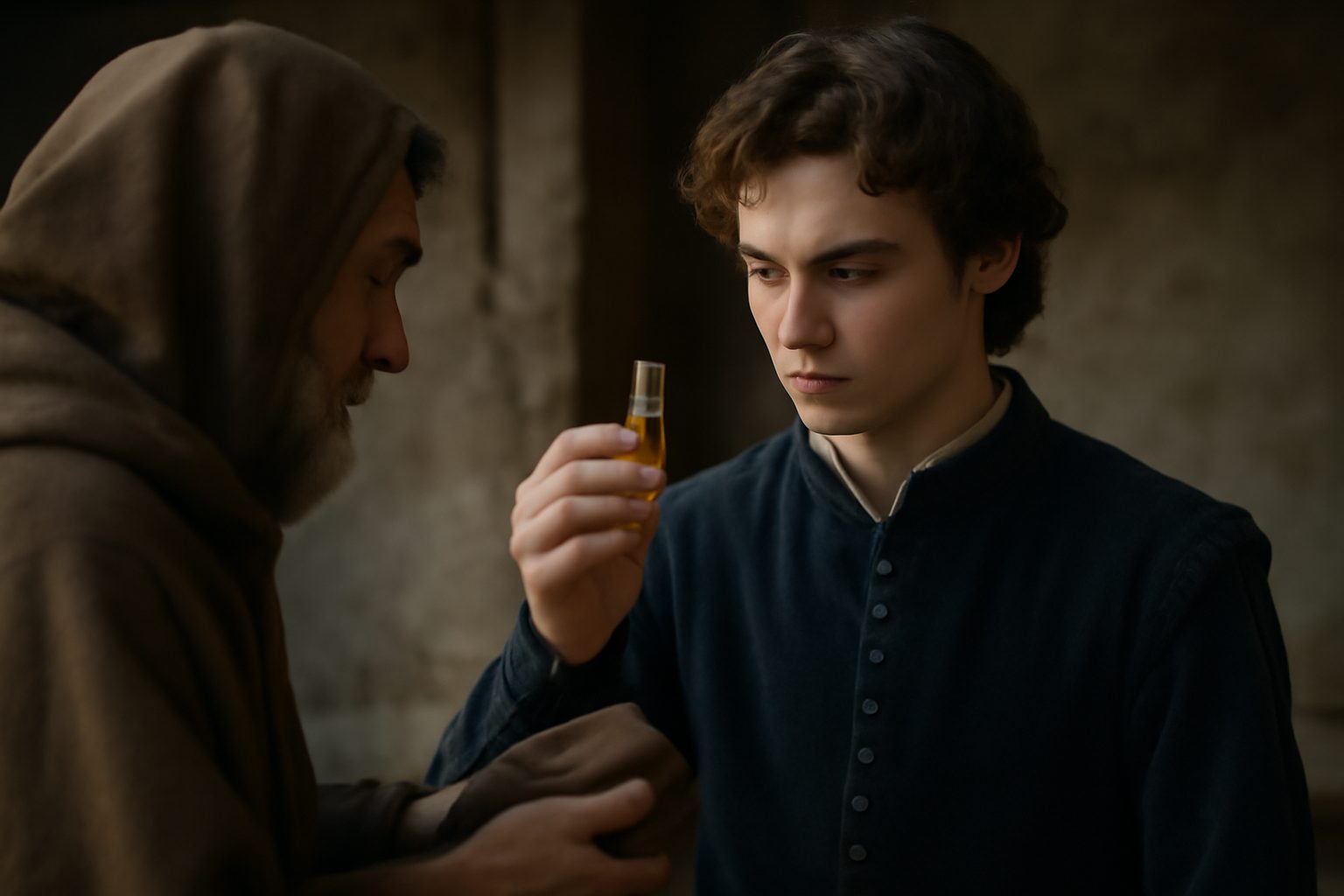
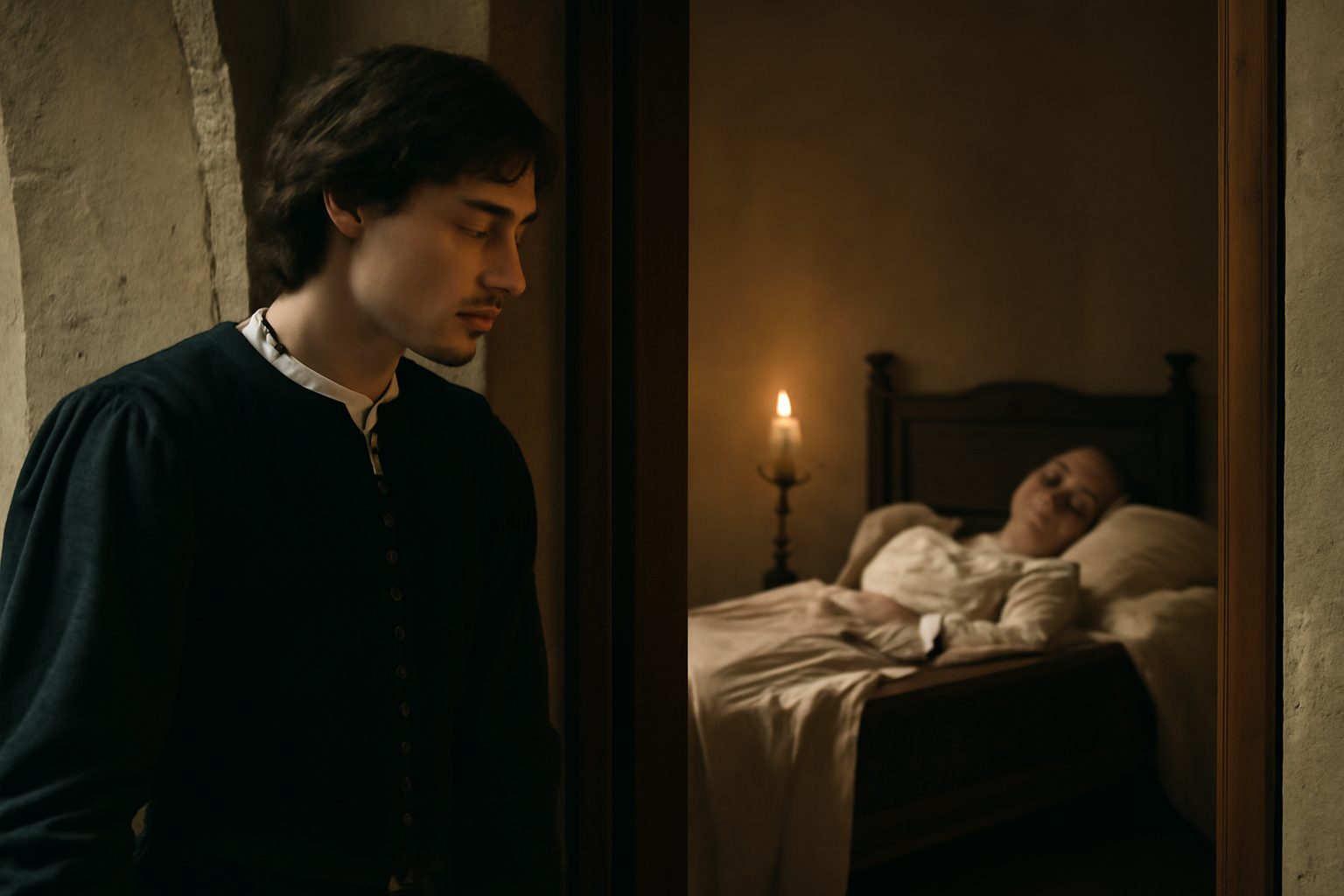
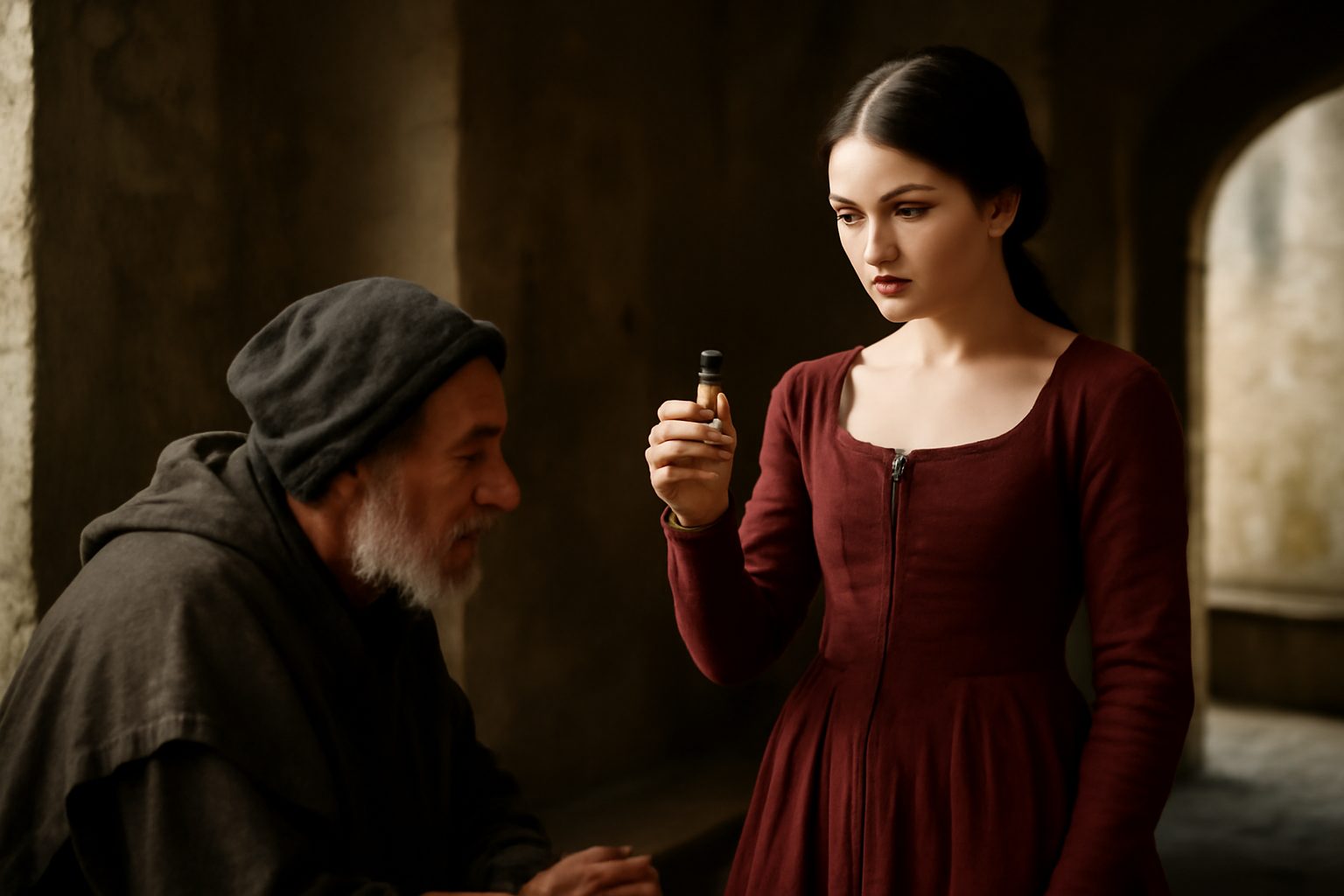
In Act 5, Scene 1 of Romeo and Juliet, Romeo speaks these words after receiving false news from Balthasar about Juliet's death. Unaware that she has taken a sleeping potion to feign death, Romeo interprets the message literally, believing she is truly gone. His declaration reflects a desperate attempt to convince himself that if she is at peace, then nothing else matters—even as the tragic reality unfolds.
Balthasar: "Then she is well, and nothing can be ill:"
In modern day english, we would say:
If she is okay, then nothing else is wrong.
Frequently Asked Questions
What does Balthasar mean when he says that Juliet is well and nothing can be wrong?
Balthasar mistakenly believes Juliet is alive and well, not knowing she has taken a potion to appear dead.
Connections to other verses:
Connections to "Then she is well, and nothing can be ill"
This verse, spoken by Romeo, reflects his initial belief that Juliet's well-being is the sole determinant of his own happiness and the state of the world. It connects thematically and emotionally to several other lines in Act 5, Scene 1.
Direct Echo and Reinforcement
The sentiment is immediately reinforced in "For nothing can be ill, if she be well", which directly echoes Romeo's earlier line, emphasizing his absolute dependence on Juliet's condition for his own peace.
Contrast with Balthasar's News
Romeo's optimistic declaration starkly contrasts with Balthasar's report in "Her body sleeps in Capel's monument" and "I saw her laid low in her kindred's vault", which shatter his illusion and precipitate his despair.
Transition to Desperation
Upon learning the truth, Romeo's mindset shifts dramatically, as seen in "Is it even so? then I defy you, stars!", marking his rebellion against fate, and his resolve in "Well, Juliet, I will lie with thee to-night", which foreshadows his tragic plan.
Connection to the Apothecary Scene
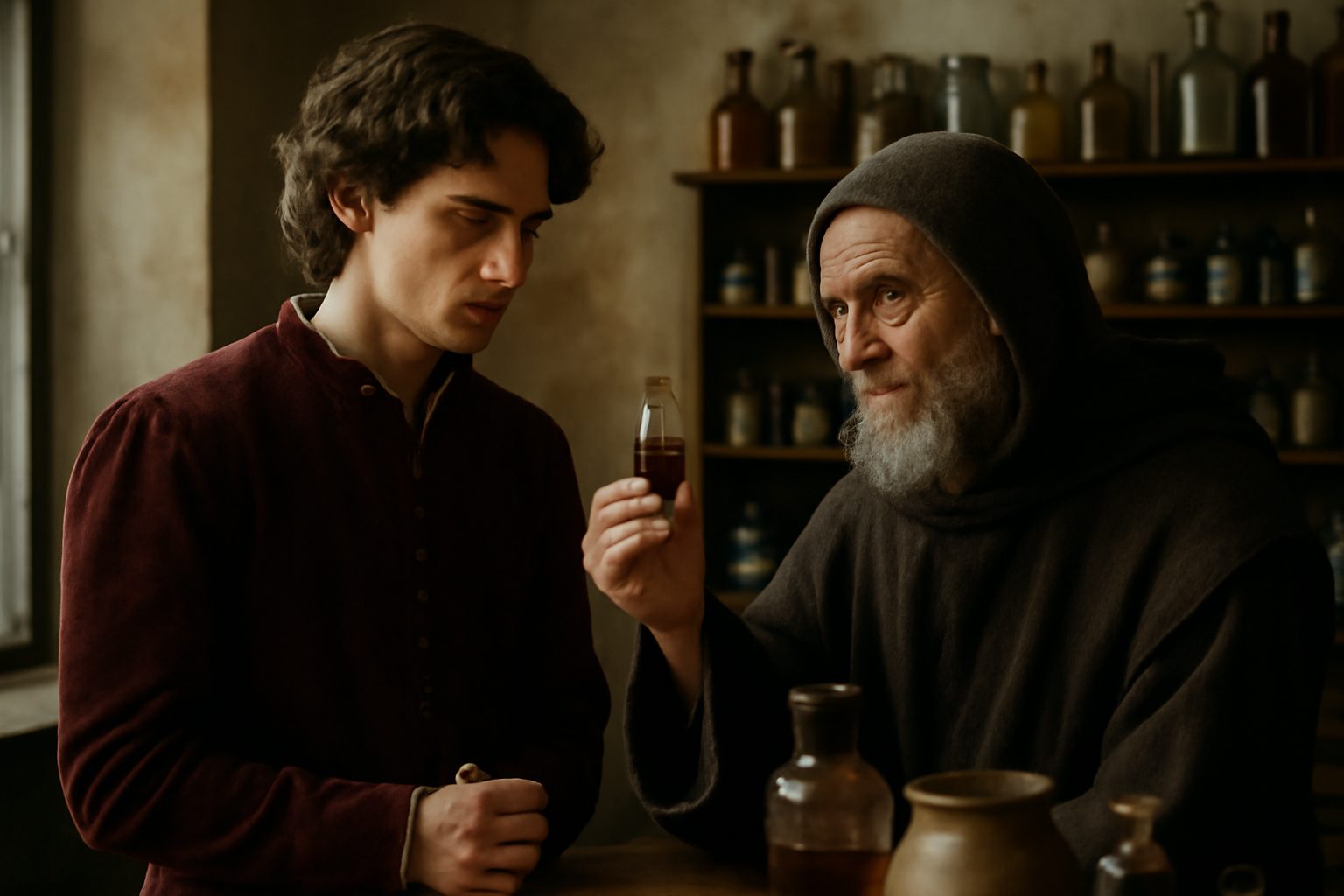
His determination leads him to seek poison, illustrated in "A dram of poison, such soon-speeding gear" and "Come, cordial and not poison, go with me", where he redefines the poison as a means of reunion, completing his journey from misguided joy to tragic resolve.