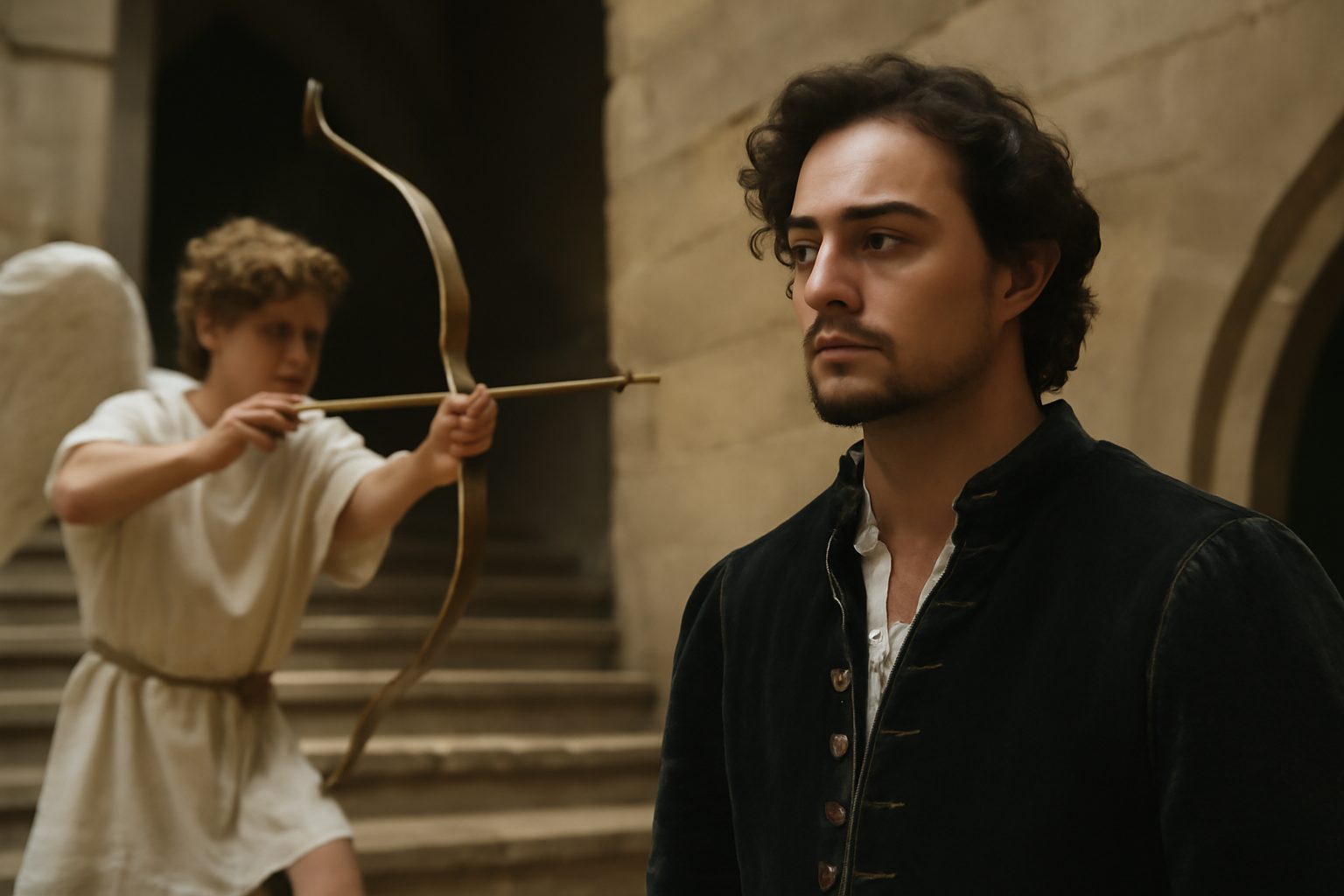
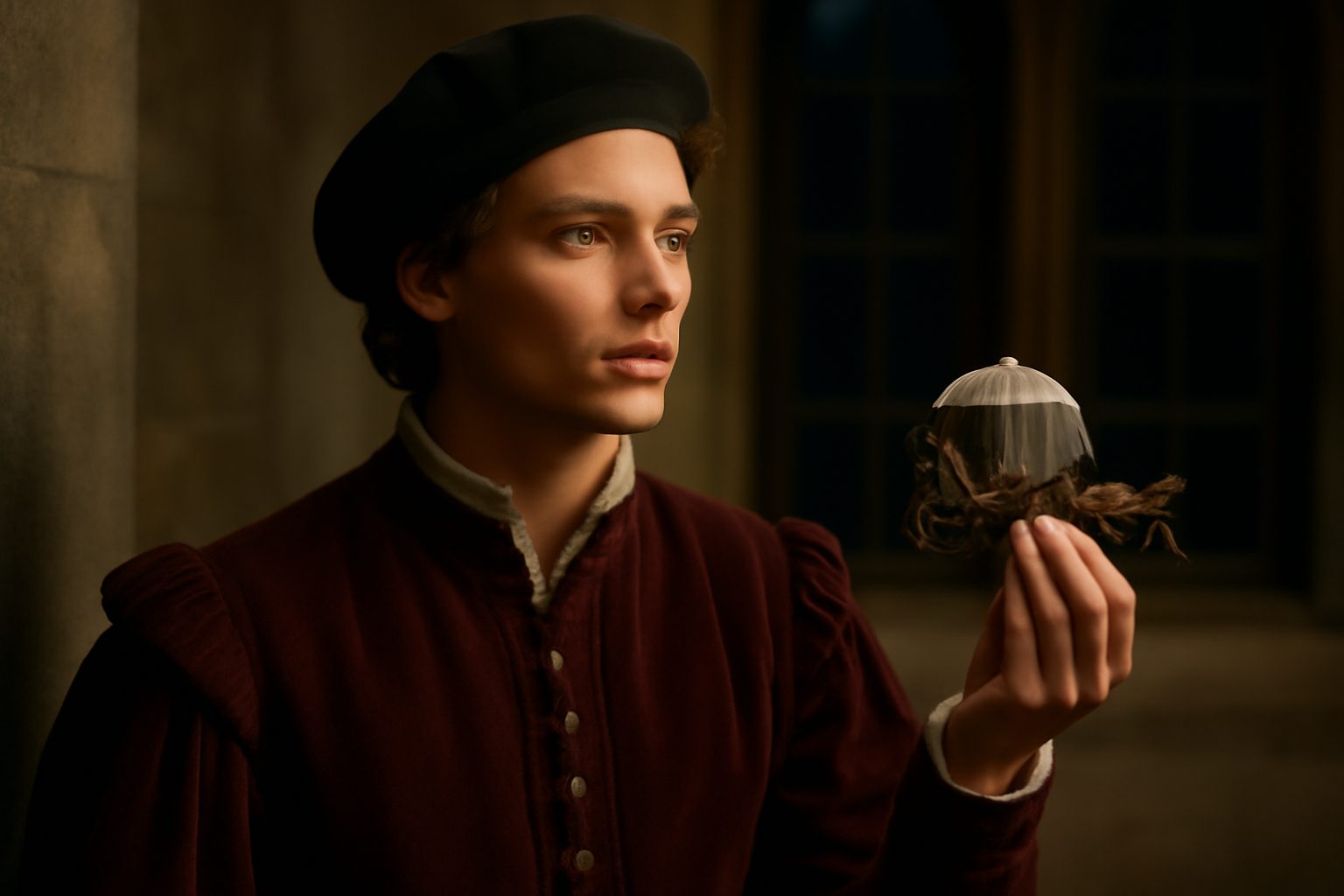
In Act 1, Scene 4 of Romeo and Juliet, Mercutio delivers a whimsical and imaginative speech about Queen Mab, the fairy who influences dreams. This line appears as he describes the fantastical details of her tiny chariot, weaving vivid imagery of moonbeams and delicate craftsmanship. The phrase captures Mercutio's playful yet poetic nature, contrasting with Romeo's more melancholy mood.
Mercutio: "The collars of the moonshine's watery beams,"
In modern day english, we would say:
The pale light of the moon shining through the clouds like watery rays.
Frequently Asked Questions
What does Mercutio compare to collars in this line?
He compares the watery beams of moonlight to collars.
Connections to other verses:
Connections to "The collars of the moonshine's watery beams"
The verse "The collars of the moonshine's watery beams" is part of Mercutio's vivid description of Queen Mab's chariot. It connects thematically and structurally to other verses in the same speech, which elaborate on the fantastical, miniature world of dreams and illusions.
Imagery of Mab's Chariot
This line contributes to the intricate imagery of Mab's chariot, linking directly to "Her wagon-spokes made of long spiders' legs", "The cover of the wings of grasshoppers", and "The traces of the smallest spider's web". Together, these verses build a cohesive picture of ethereal, delicate craftsmanship.
Dreams and Illusion
The moonshine imagery ties into the broader theme of dreams explored in Mercutio's speech, such as "True, I talk of dreams" and "Which are the children of an idle brain", emphasizing the intangible and deceptive nature of fantasies.
Contrast with Reality
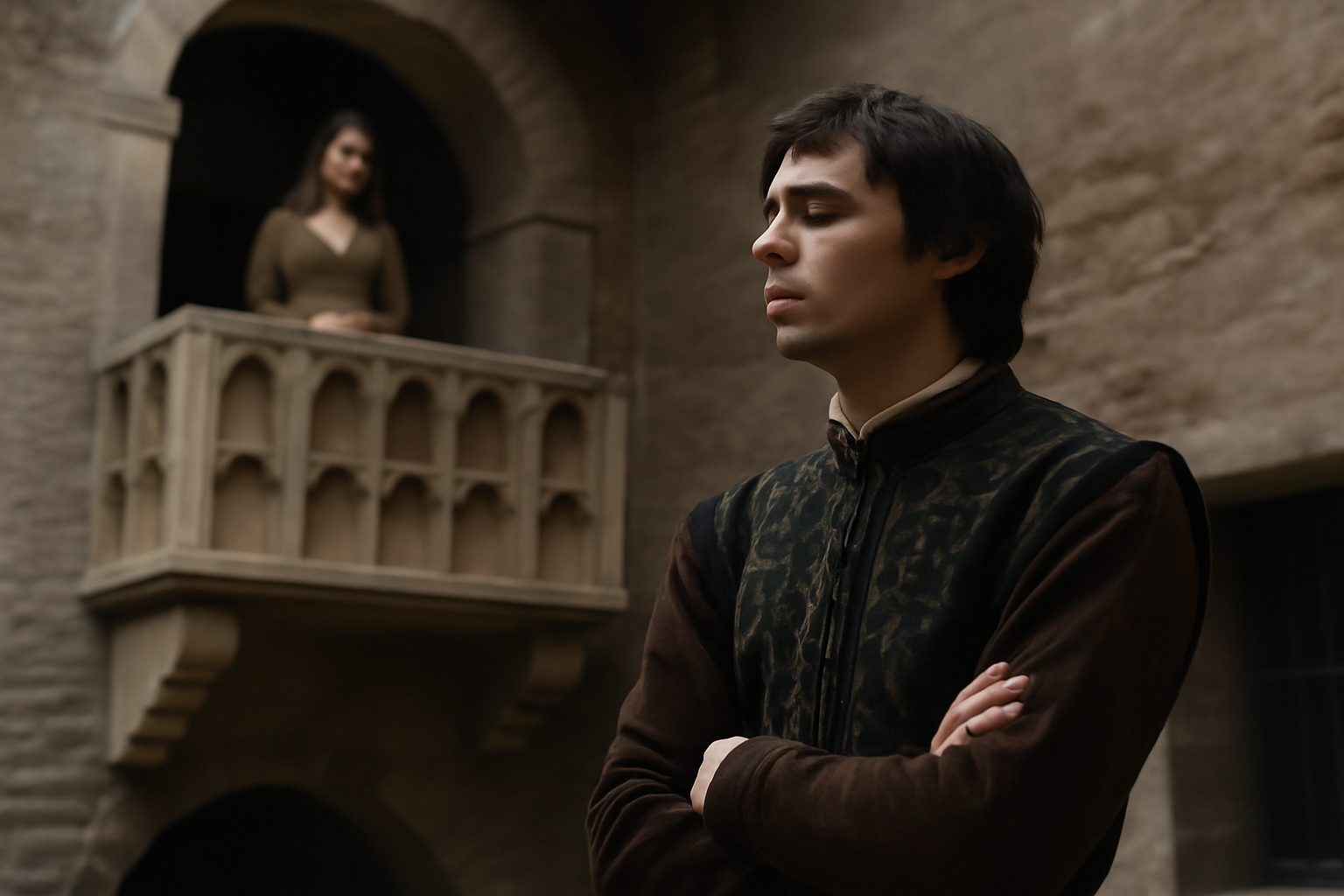
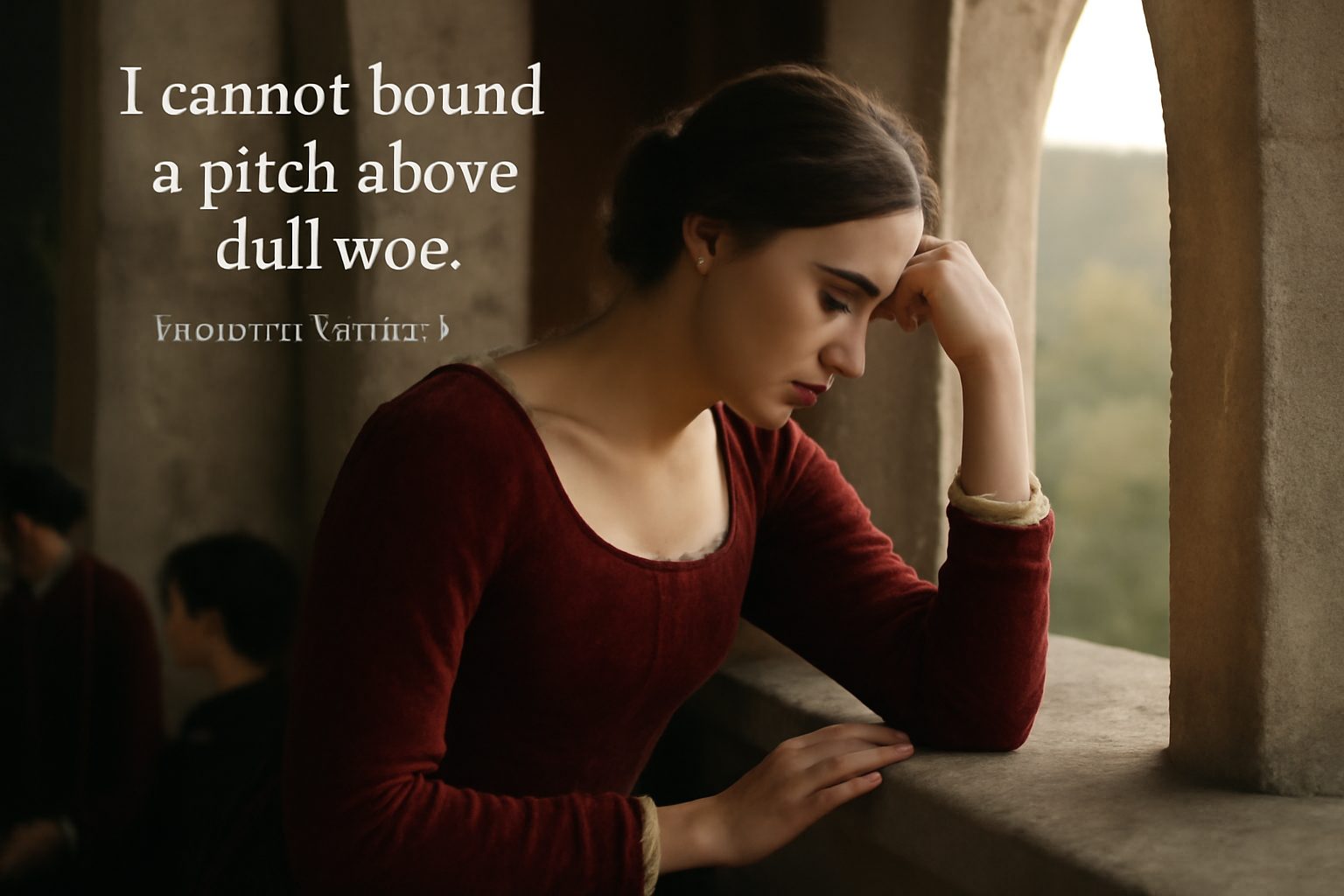
This whimsical description contrasts with Romeo's somber mood earlier in the scene, reflected in verses like "Under love's heavy burden do I sink" and "I cannot bound a pitch above dull woe", highlighting the tension between imagination and Romeo's foreboding reality.