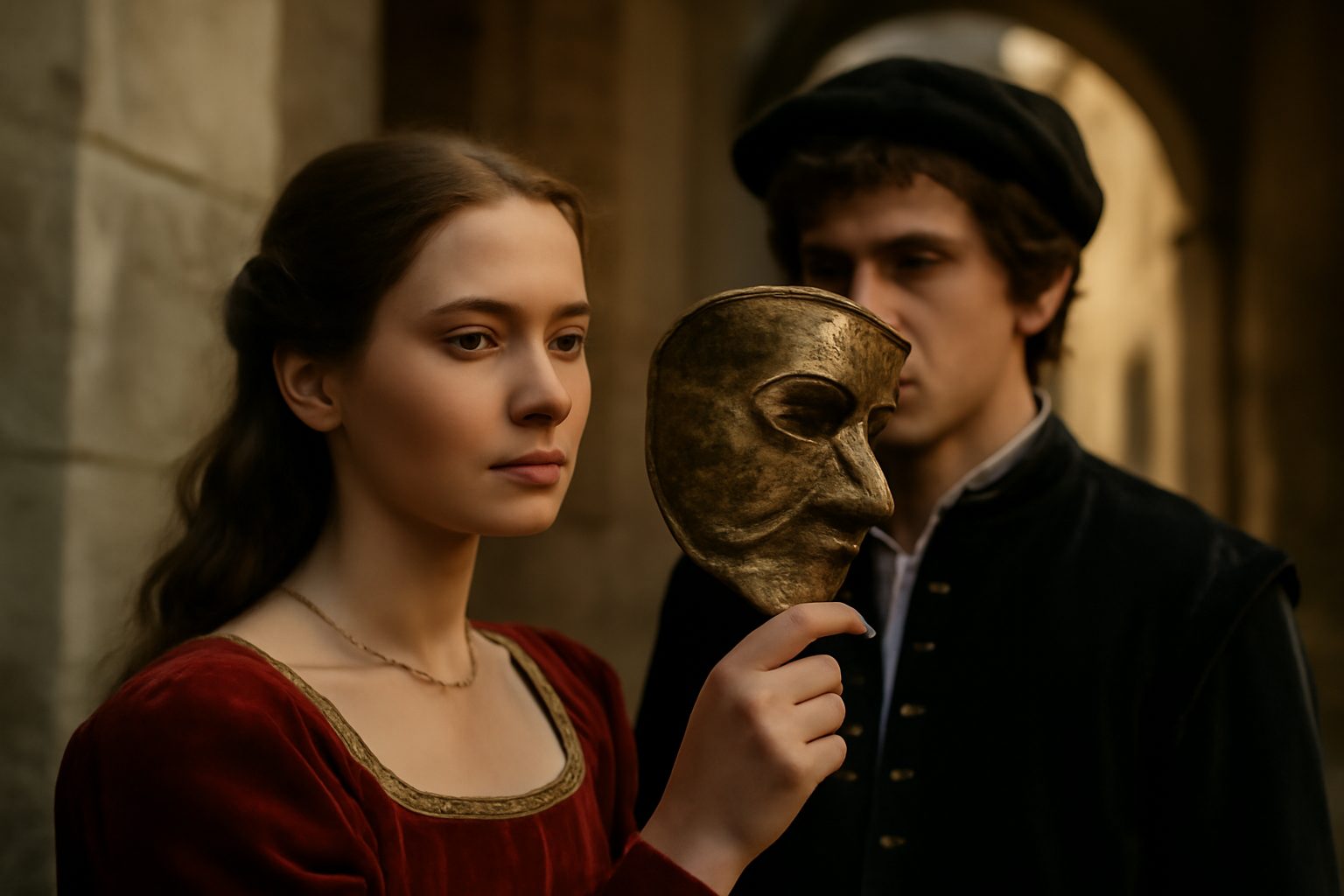
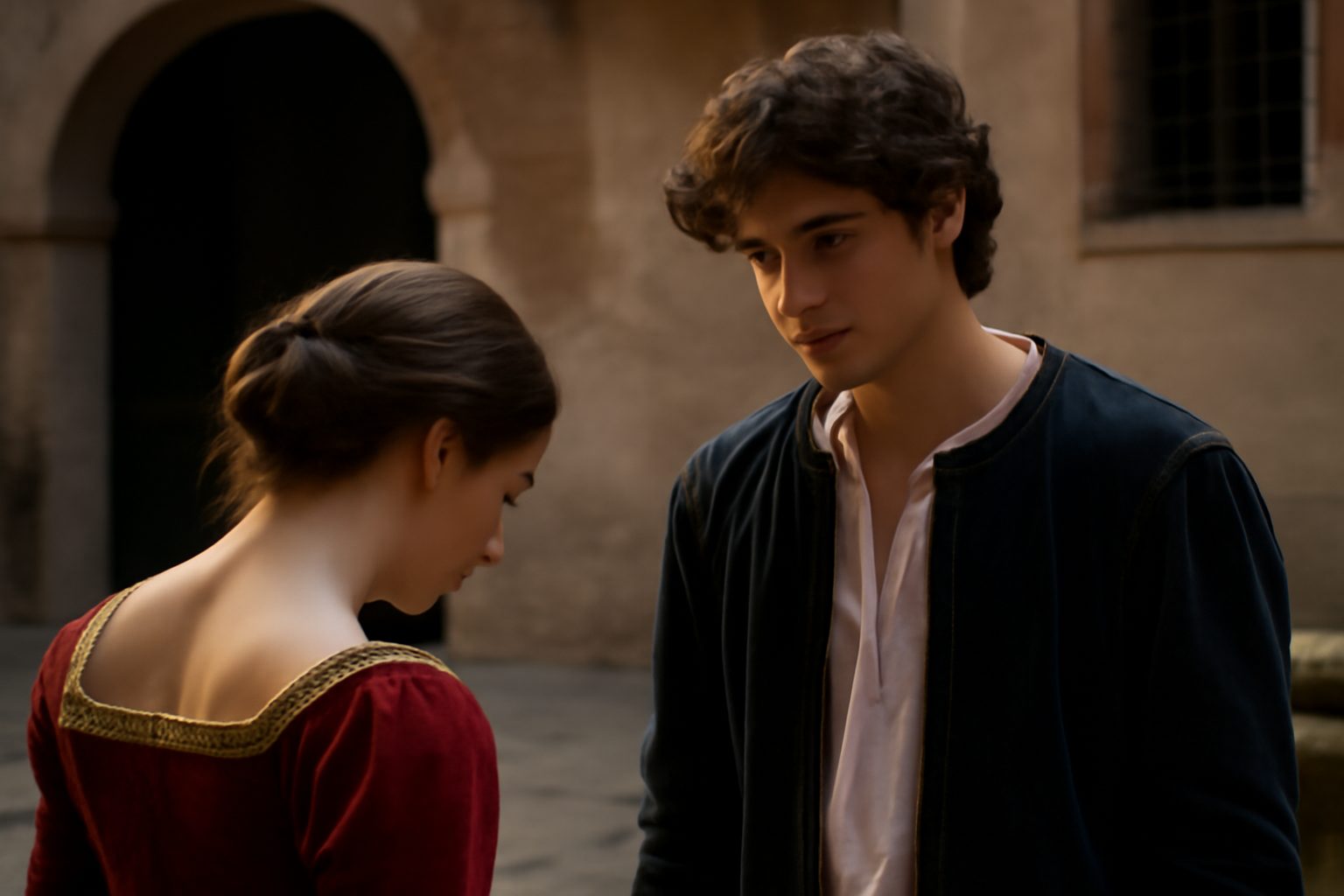
In Act 1, Scene 4 of Romeo and Juliet, Mercutio mocks Romeo's reluctance to join the Capulet feast, dismissing his friend's lovesick demeanor as overly sensitive. This line comes as Mercutio scoffs at Romeo's poetic musings about love, comparing them to something harsh and unpleasant. His crude imagery contrasts sharply with Romeo's romantic idealism, highlighting the tension between their perspectives.
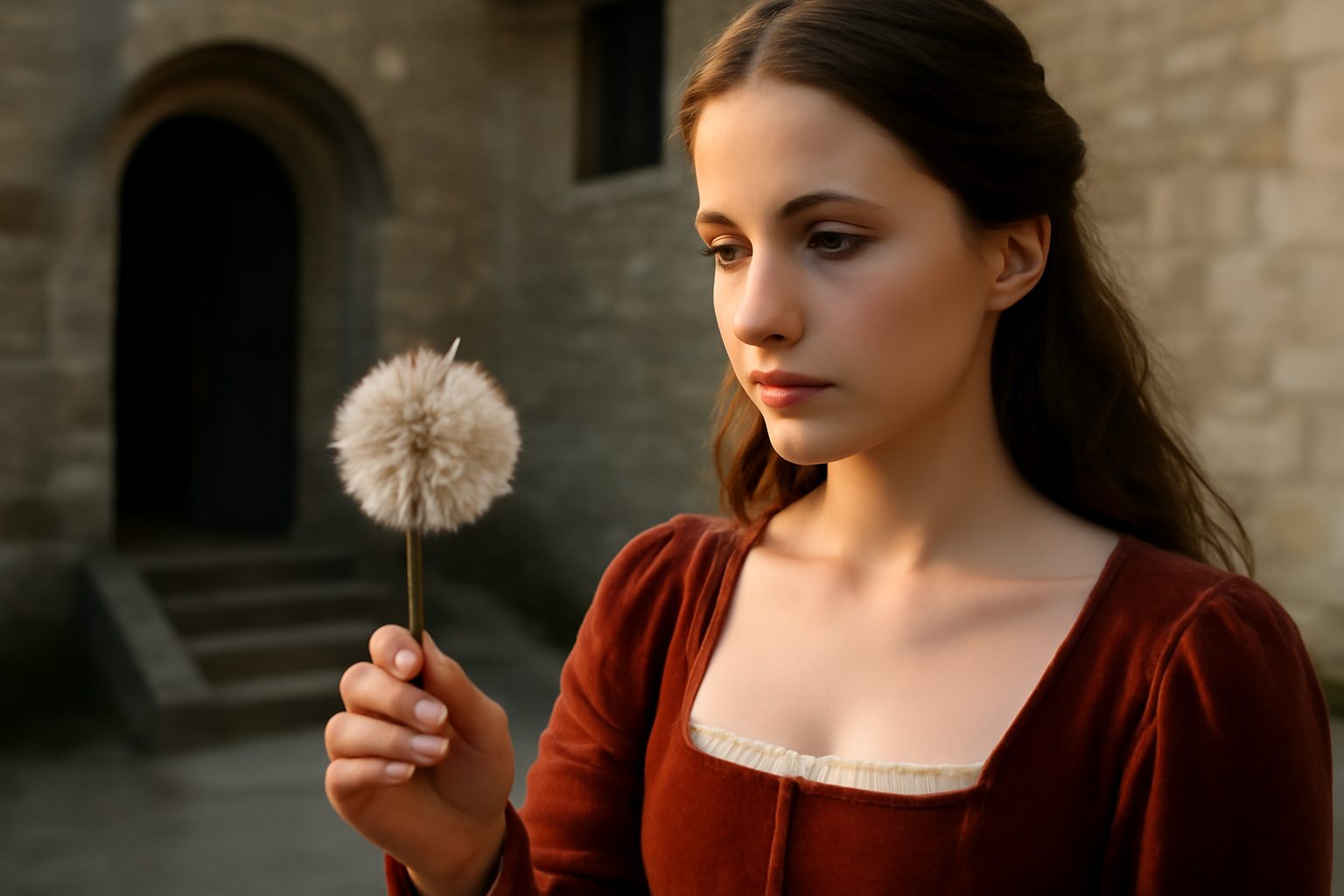
Romeo: "Too rude, too boisterous, and it pricks like thorn."
In modern day english, we would say:
It’s too rough, too loud, and sharp like a thorn.
Frequently Asked Questions
What does Romeo compare love to in this line?
Romeo compares love to a thorn that pricks.
How does Romeo describe love in this line?
Romeo describes love as rude, boisterous, and painful like a thorn.
Connections to other verses:
Connections to "Too rude, too boisterous, and it pricks like..."
The verse "Too rude, too boisterous, and it pricks like..." is part of Romeo's lament about the nature of love, which he describes as painful and overwhelming. This connects thematically and linguistically to several other verses in the scene.
Related Verses on Love's Harshness
Romeo's description of love as rough and prickly is echoed in "Is love a tender thing? it is too rough", where he questions love's gentle reputation. Mercutio responds with advice in "If love be rough with you, be rough with love", suggesting a combative approach to love's pains. The idea of "pricking" is revisited in "Prick love for pricking, and you beat love down", reinforcing the imagery of love as a physical wound.
Romeo's Emotional State
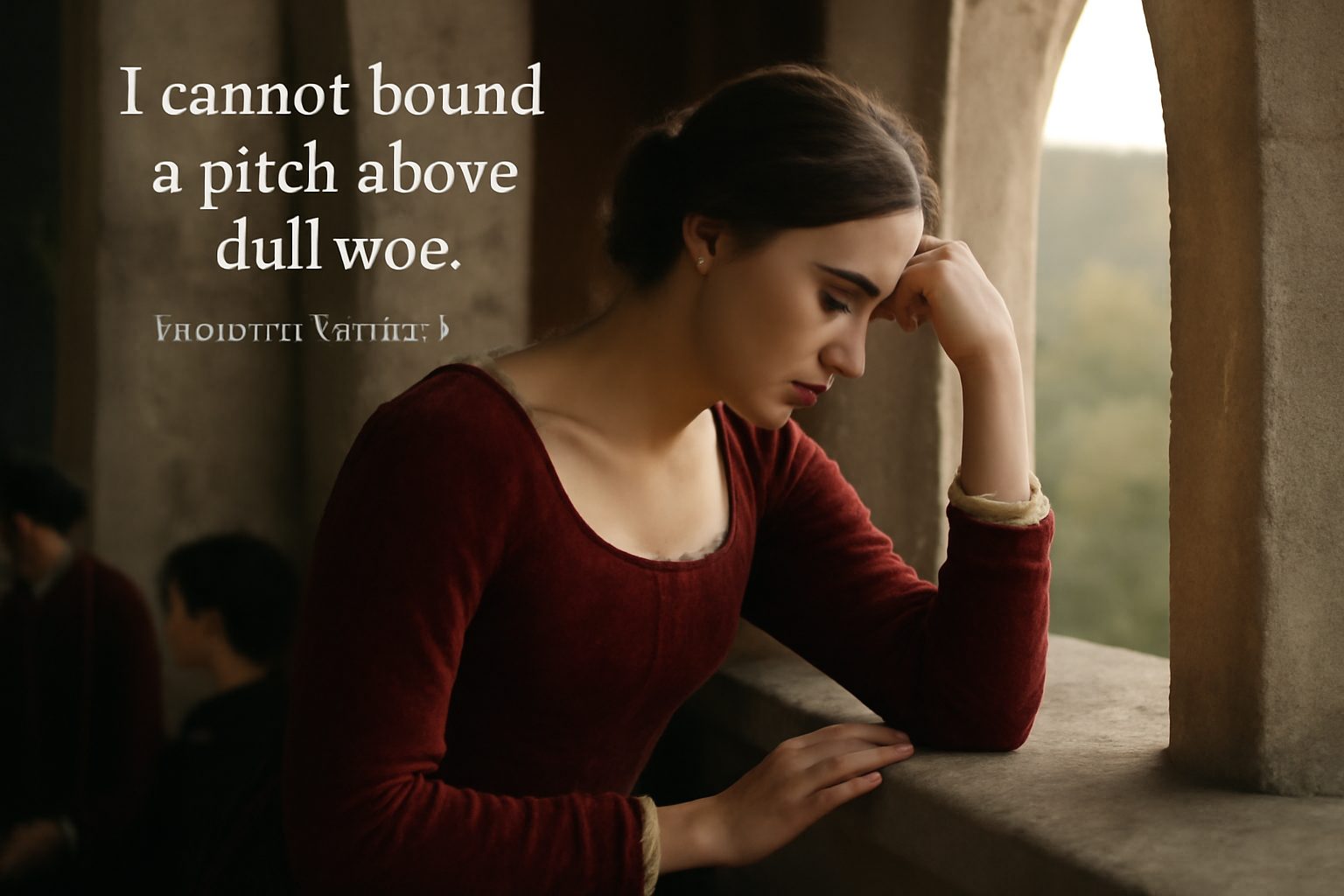
Romeo's sense of being weighed down by love is clear in "Under love's heavy burden do I sink" and "So stakes me to the ground I cannot move". His inability to rise above sorrow is stated in "I cannot bound a pitch above dull woe", contrasting with Mercutio's encouragement in "You are a lover; borrow Cupid's wings" to soar above common bounds.
Dreams and Imagination
The scene shifts to Mercutio's Queen Mab speech, where dreams—like love—are portrayed as fanciful yet deceptive. "Begot of nothing but vain fantasy" and "Which are the children of an idle brain" critique imaginative constructs, much as Romeo critiques love's painful reality. The speech culminates in Romeo's ominous foreboding in "Some consequence yet hanging in the stars", linking love's prickliness to fate's sharper sting.