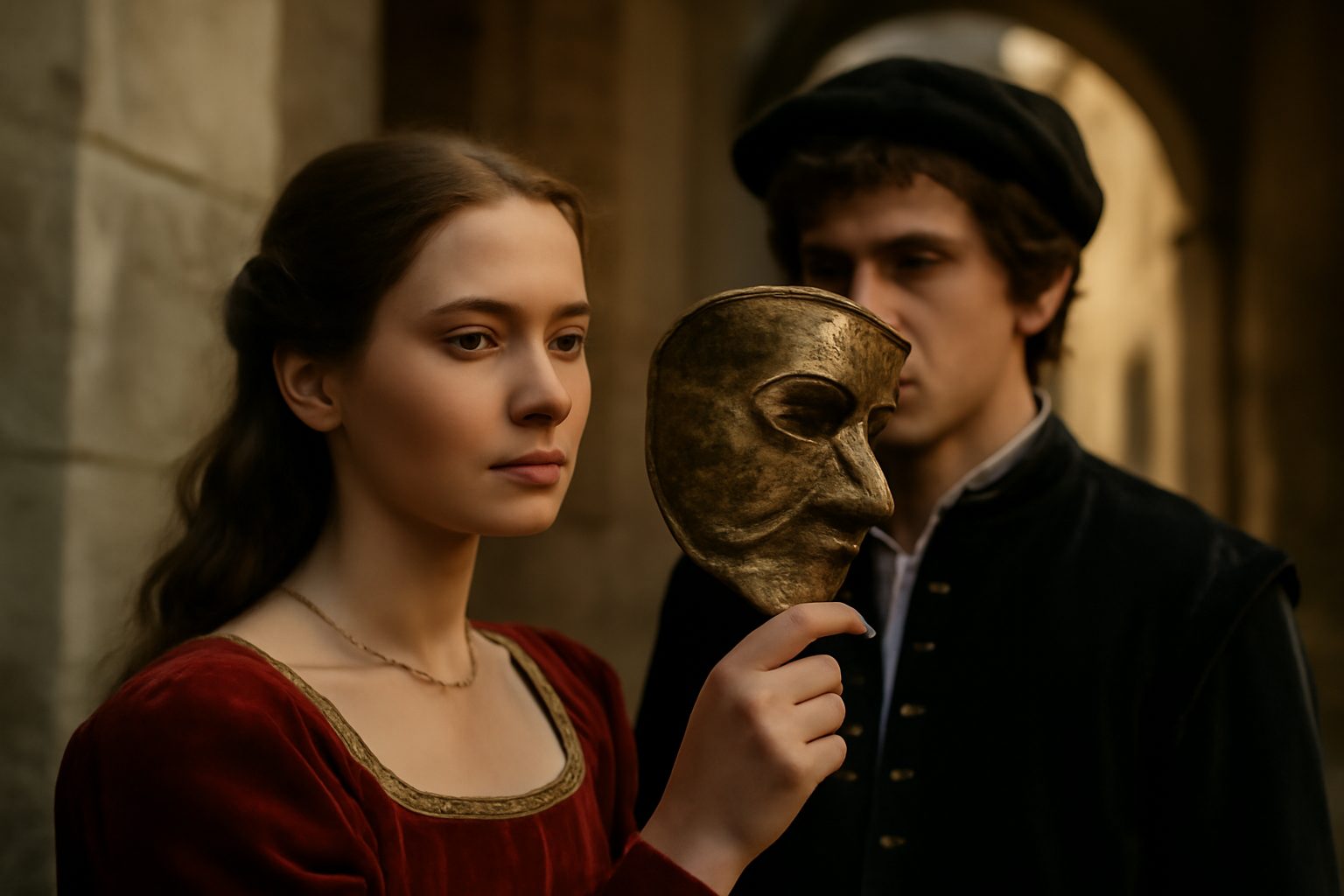
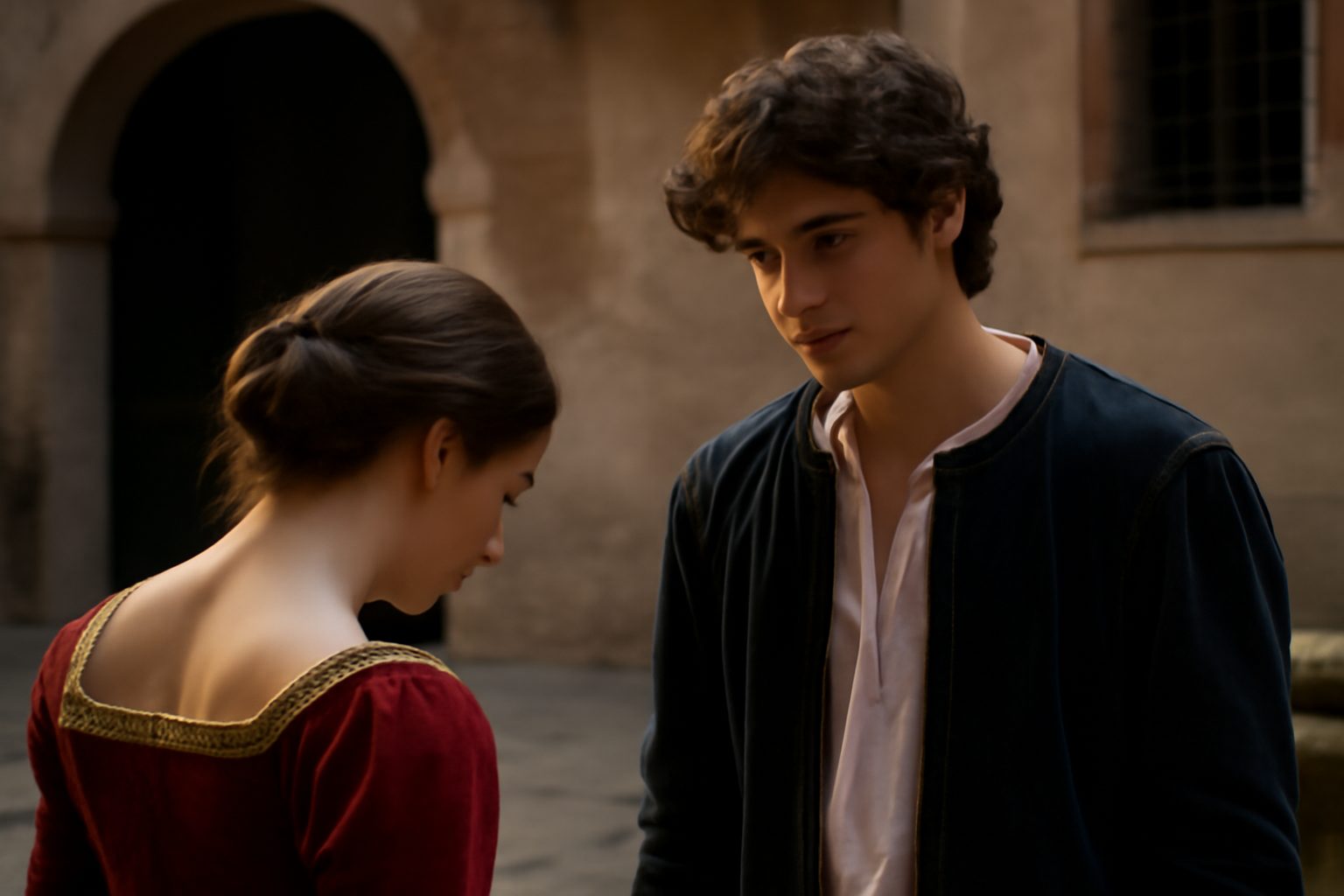
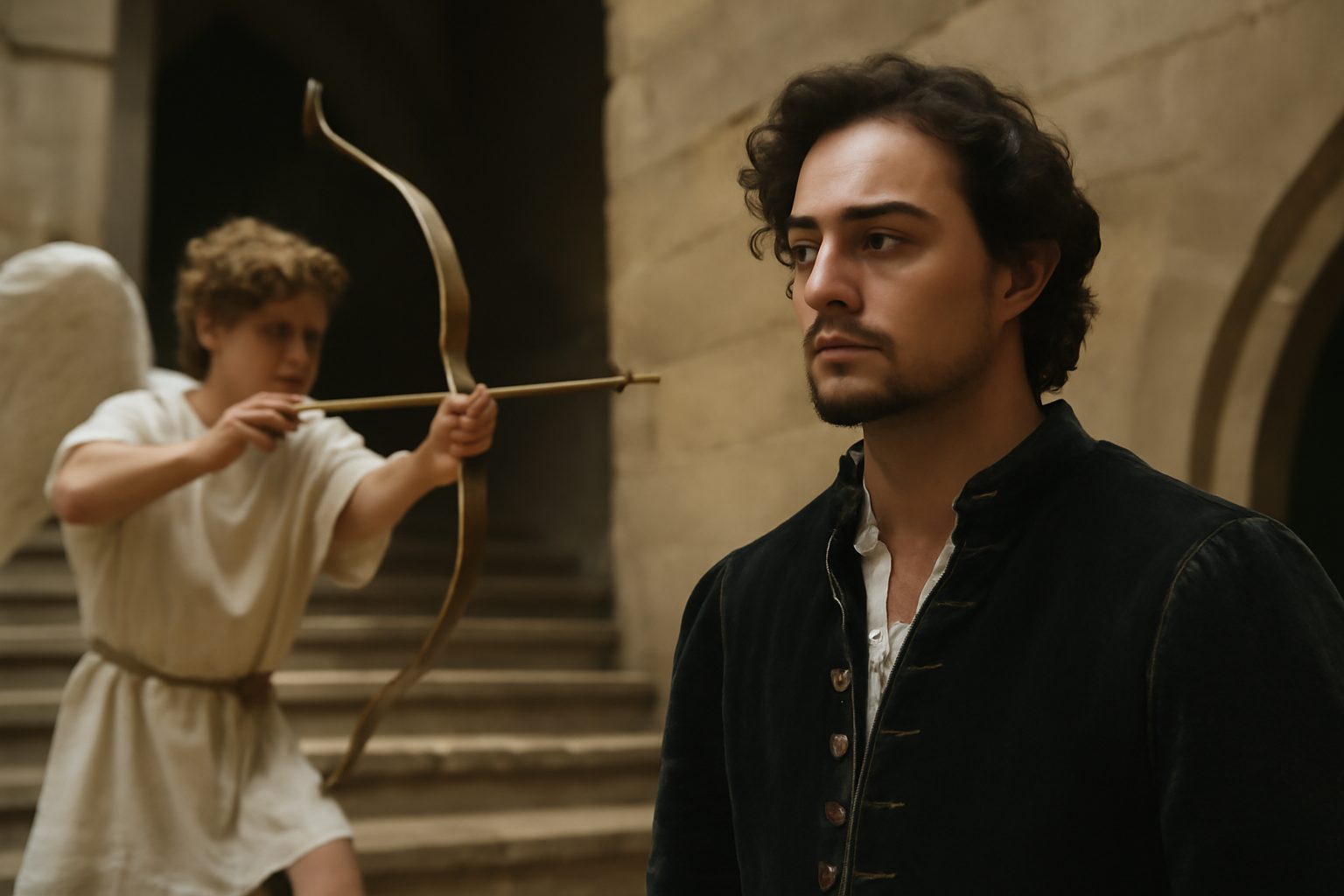
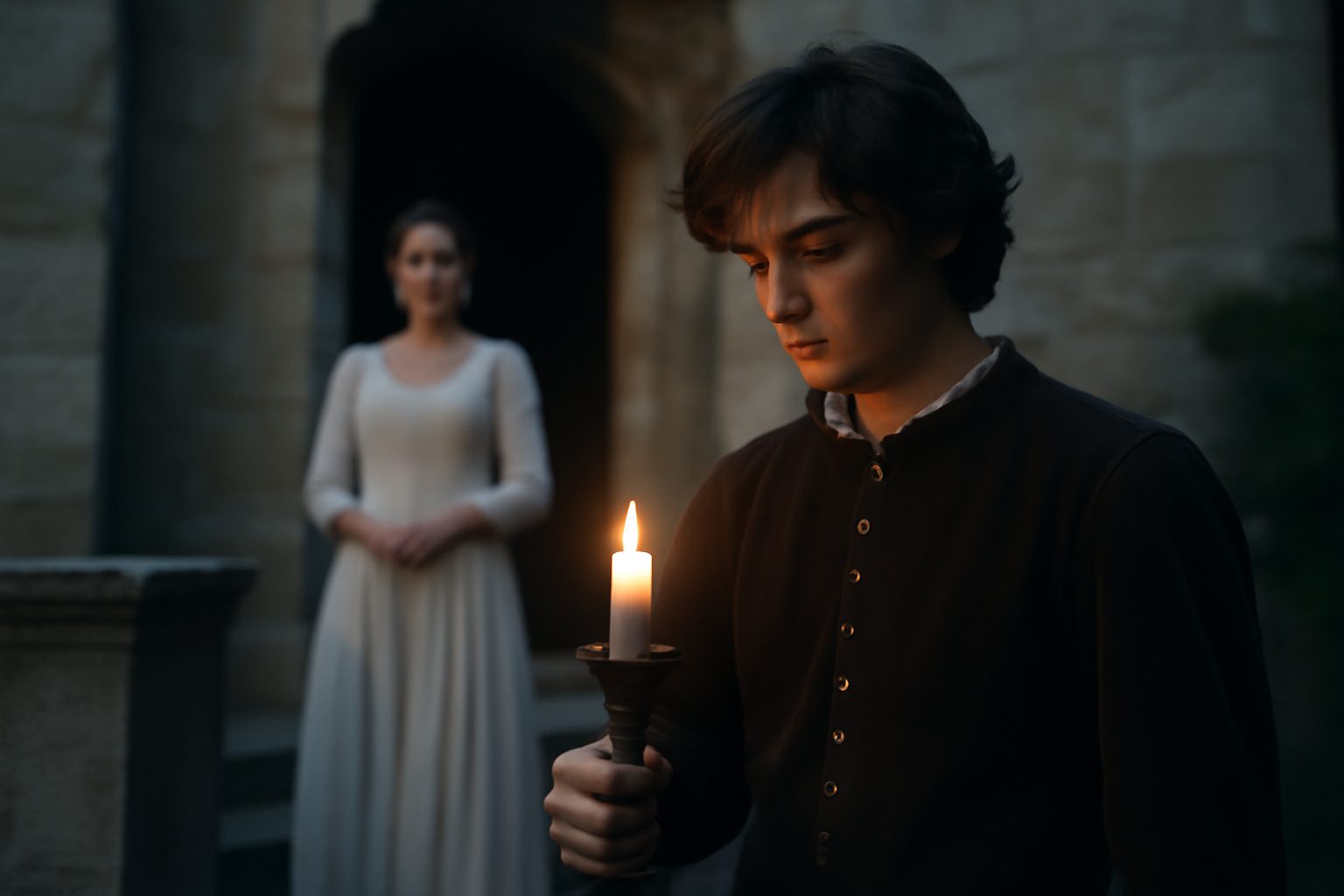
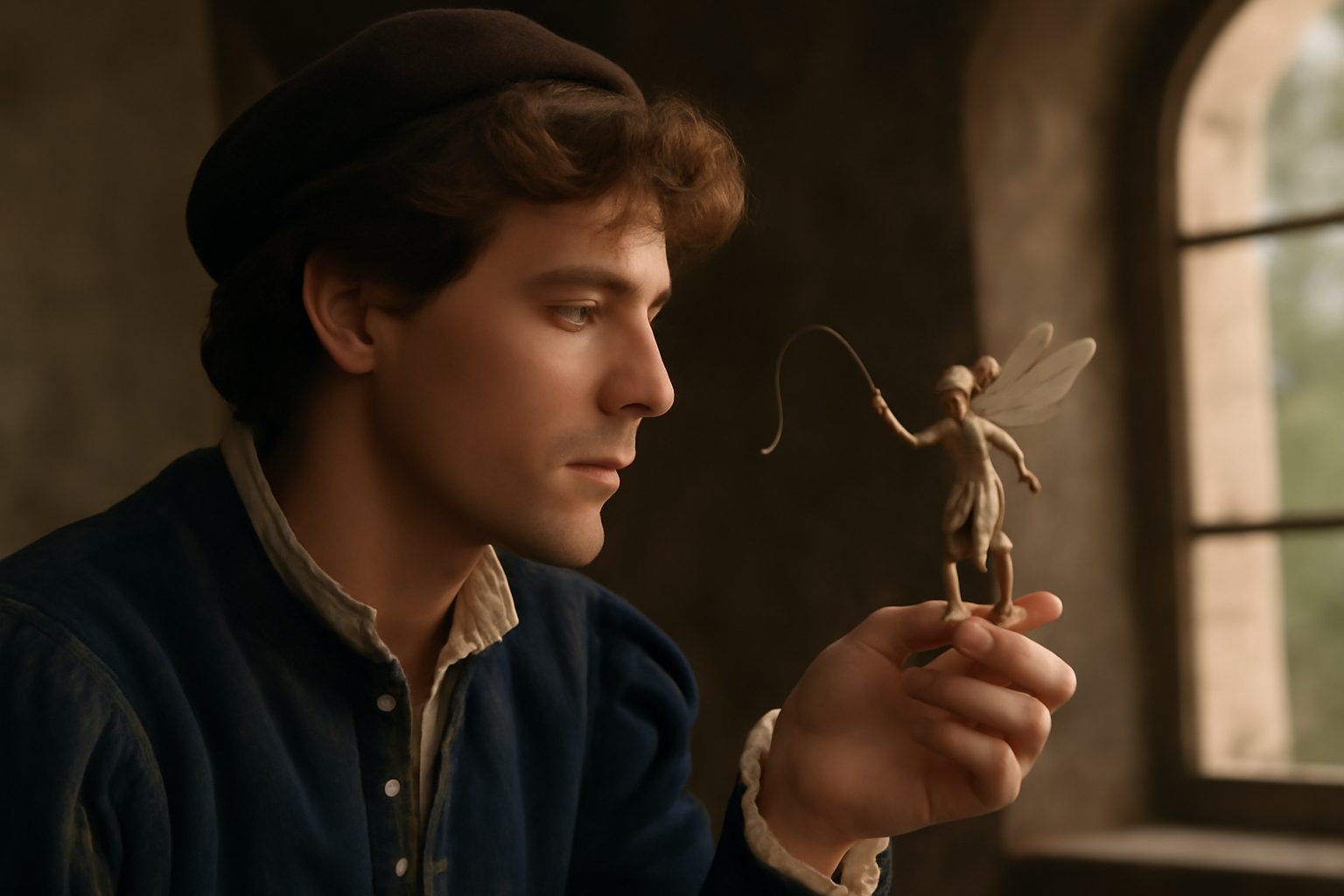
In Act 1, Scene 4 of Romeo and Juliet, Mercutio mocks Romeo's lovesick demeanor as they prepare to crash the Capulet feast. This line follows Mercutio's playful criticism of romantic idealism, suggesting that even the sweetest things can become cloying or insincere. The remark underscores Mercutio's cynical wit, contrasting with Romeo's earnest infatuation.
Mercutio: "Because their breaths with sweetmeats tainted are:"
In modern day english, we would say:
Their breath smells like candy because they’ve been eating sweets.
Frequently Asked Questions
Why does Mercutio say that people's breaths are tainted?
He says their breaths are tainted because they have been eating sweet treats.
Connections to other verses:
Connections to "Because their breaths with sweetmeats tainted are:"
This verse is part of Mercutio's Queen Mab speech, describing how Mab visits lovers and causes them to dream of kisses. It connects thematically and structurally to several other verses in the scene:
Imagery of Mab's Influence
The line directly follows Sometime she gallops o'er a courtier's nose, continuing the description of Mab's actions over different sleepers. It precedes And then dreams he of smelling out a suit, showing the cause-and-effect pattern of Mab's influence leading to specific dreams.
Dream Themes
This verse about lovers dreaming of kisses relates to O'er ladies' lips, who straight on kisses dream, which reinforces the same idea of kiss-related dreams. Both verses contribute to Mercutio's larger point about dreams being "the children of an idle brain" from Which are the children of an idle brain.
Contrast with Romeo's Love
The light, fanciful description of lovers' dreams contrasts with Romeo's more serious view of love expressed in Is love a tender thing? it is too rough and Under love's heavy burden do I sink, showing the different perspectives on love within the scene.
Structural Placement
The verse appears in the middle of Mercutio's extended Queen Mab speech, which begins with She is the fairies' midwife, and she comes and culminates in Romeo's interruption at Peace, peace, Mercutio, peace!