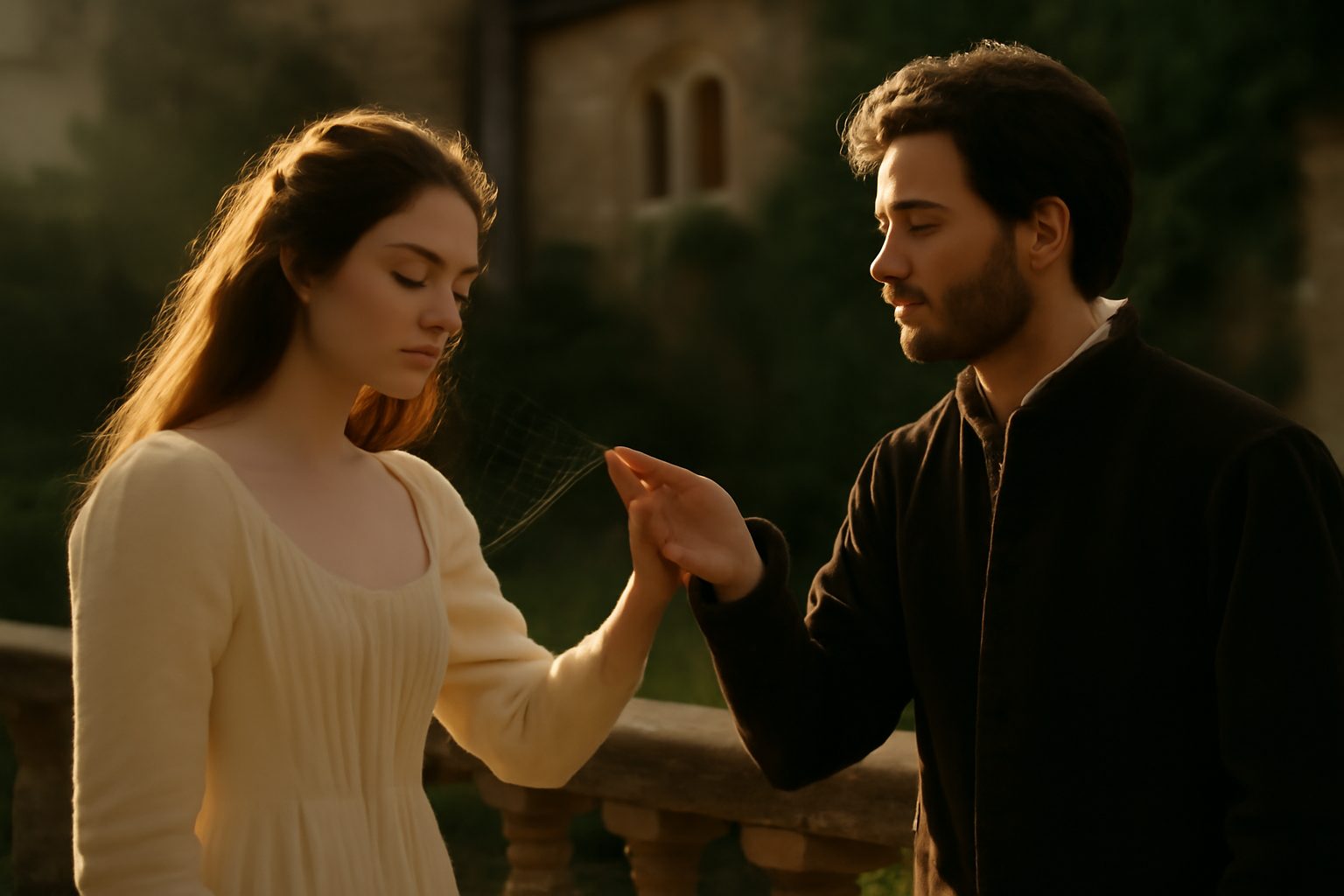
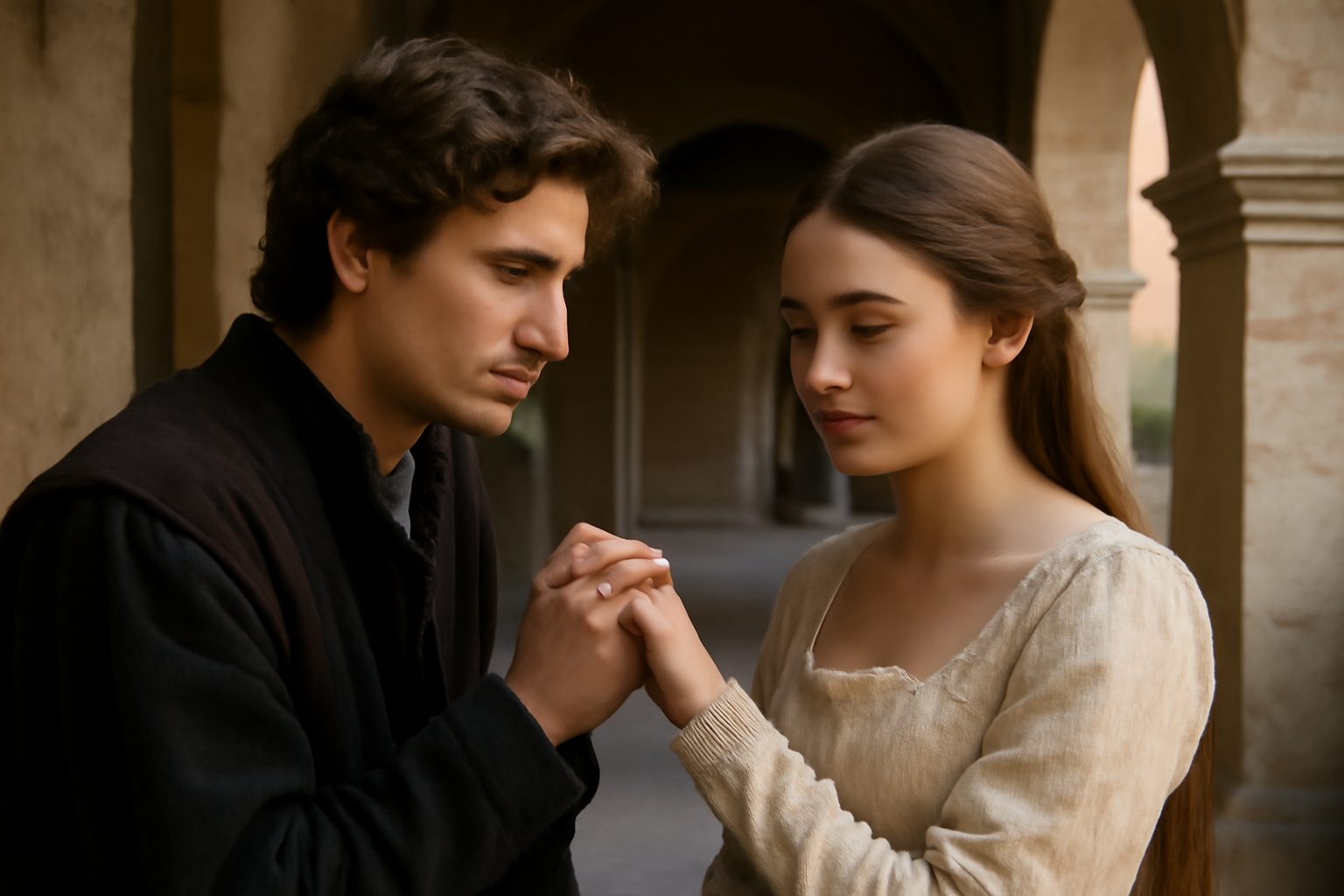
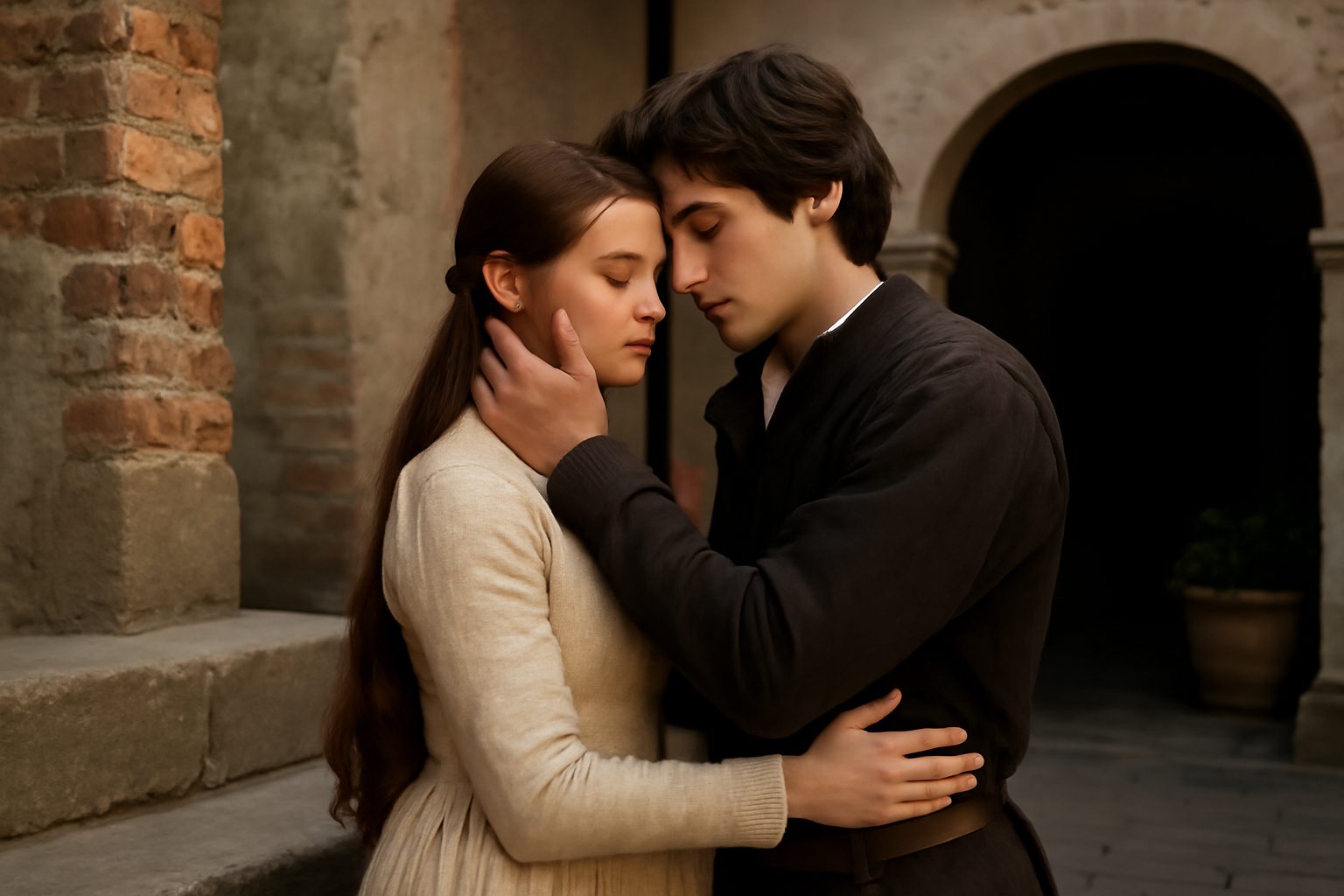
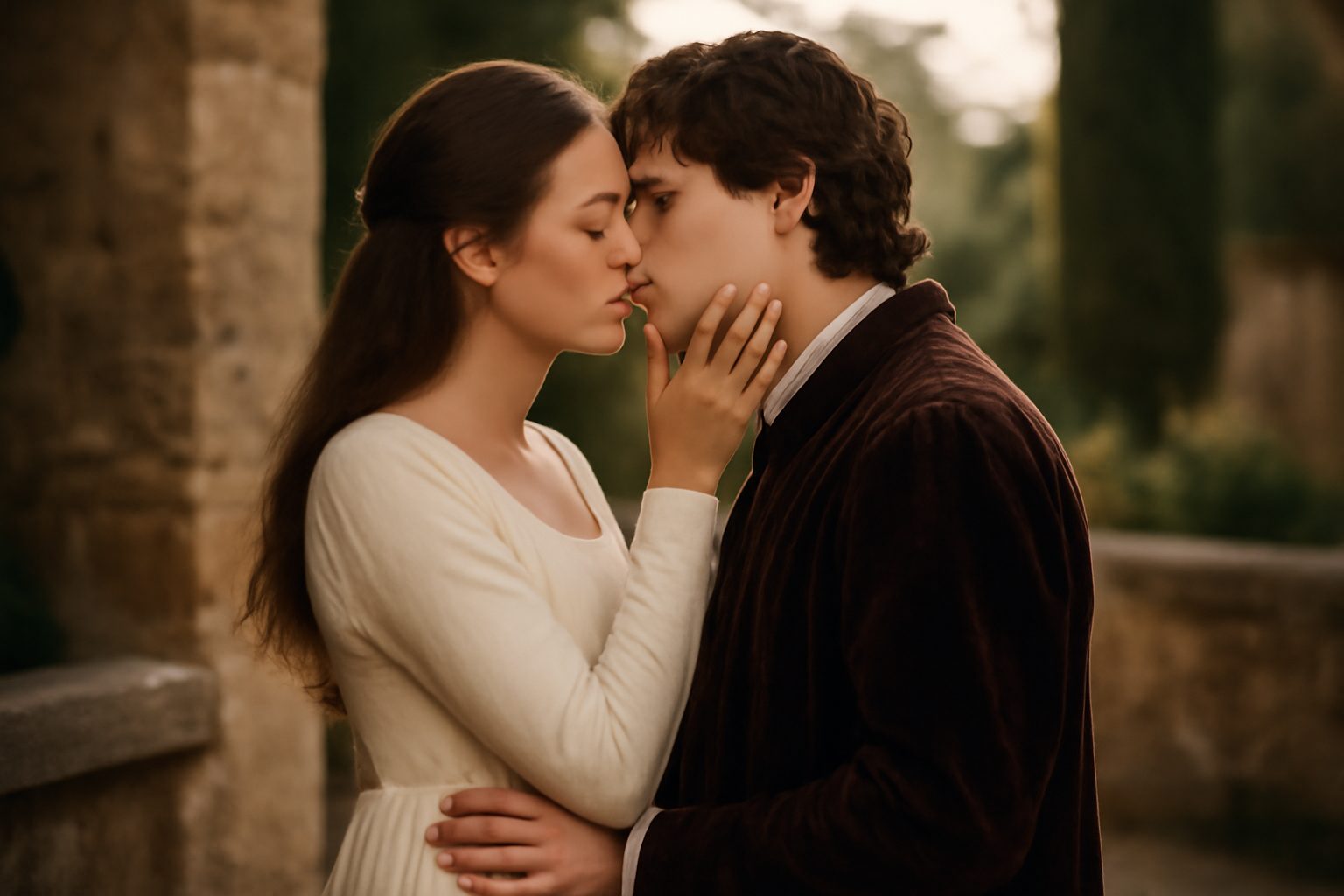
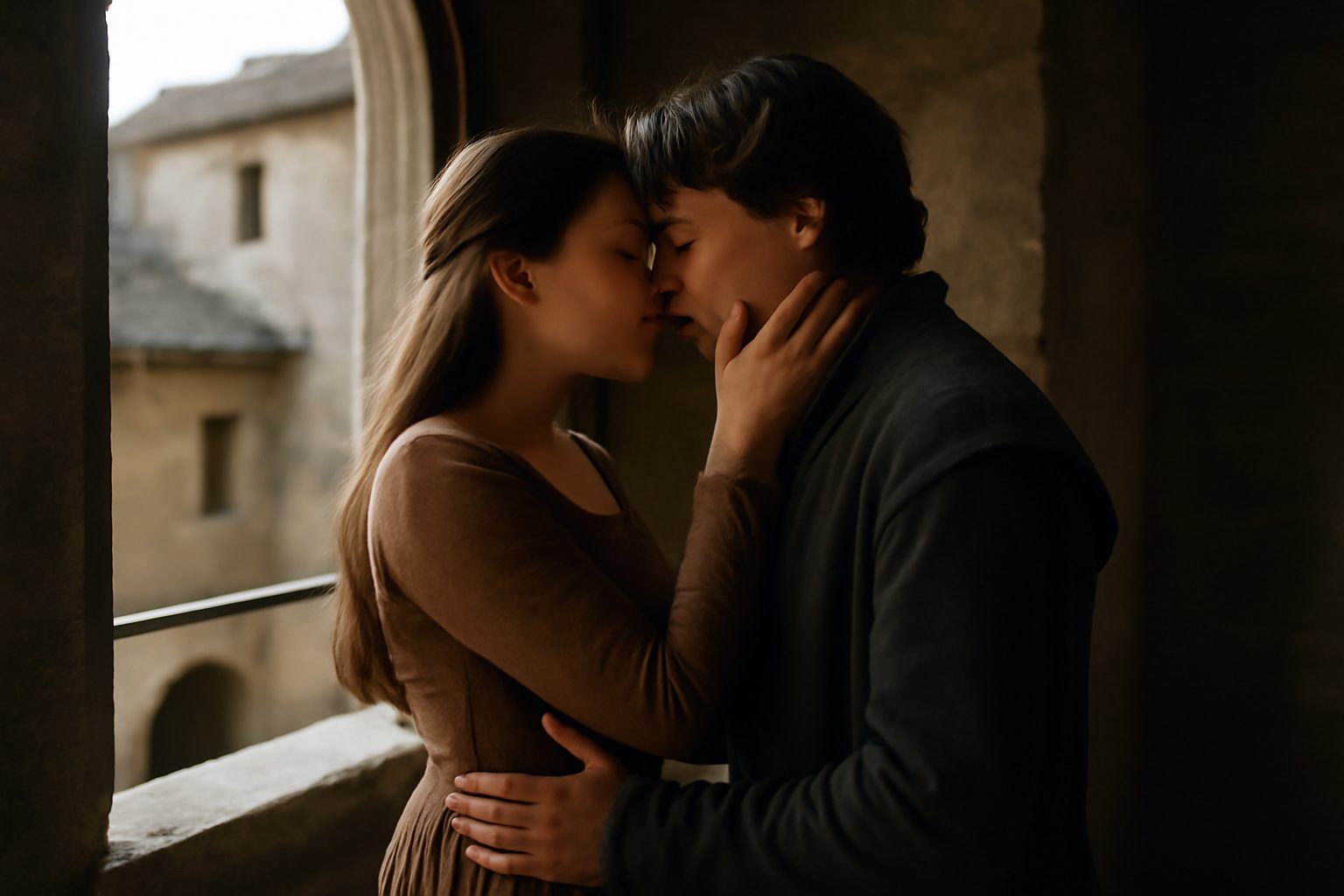
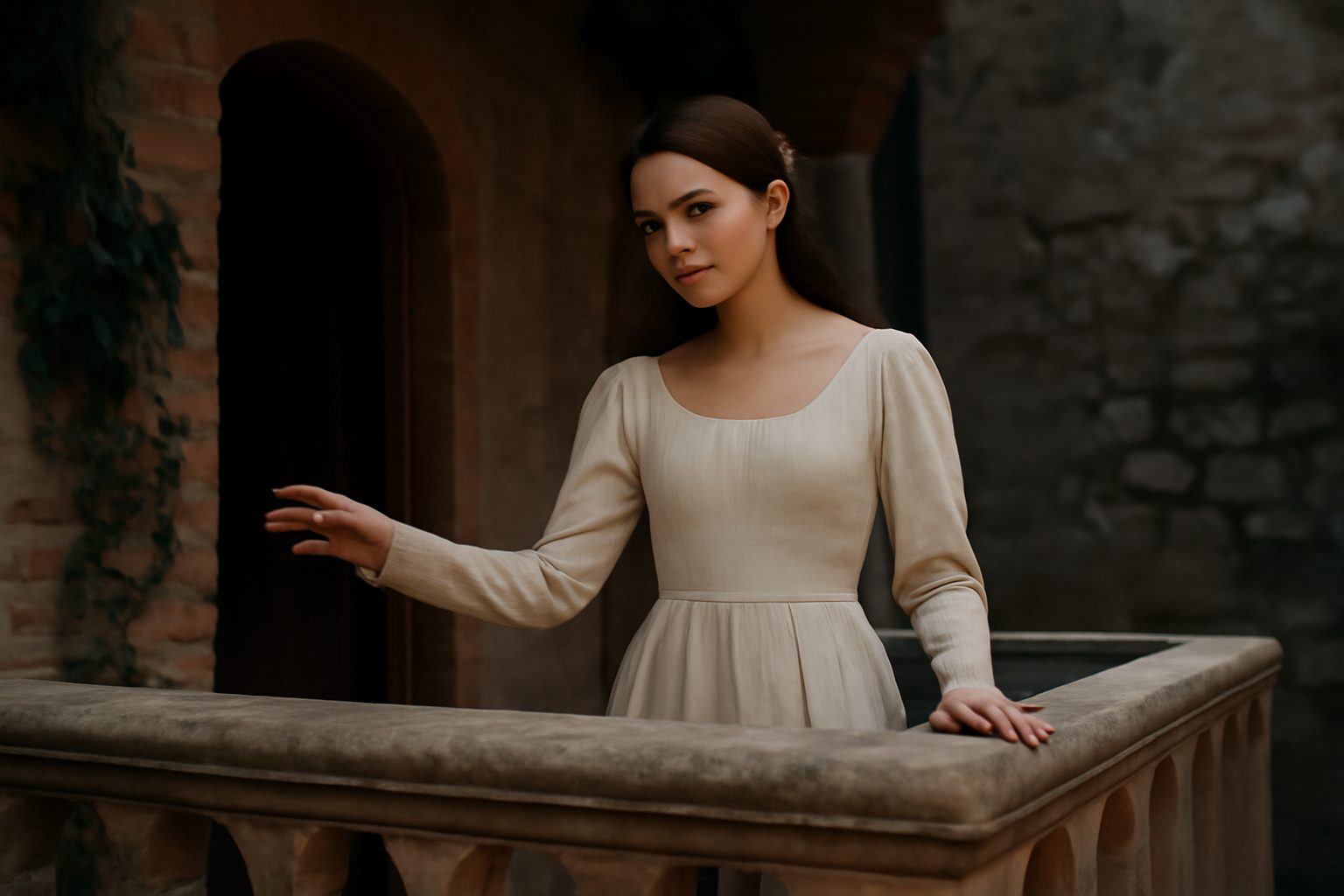
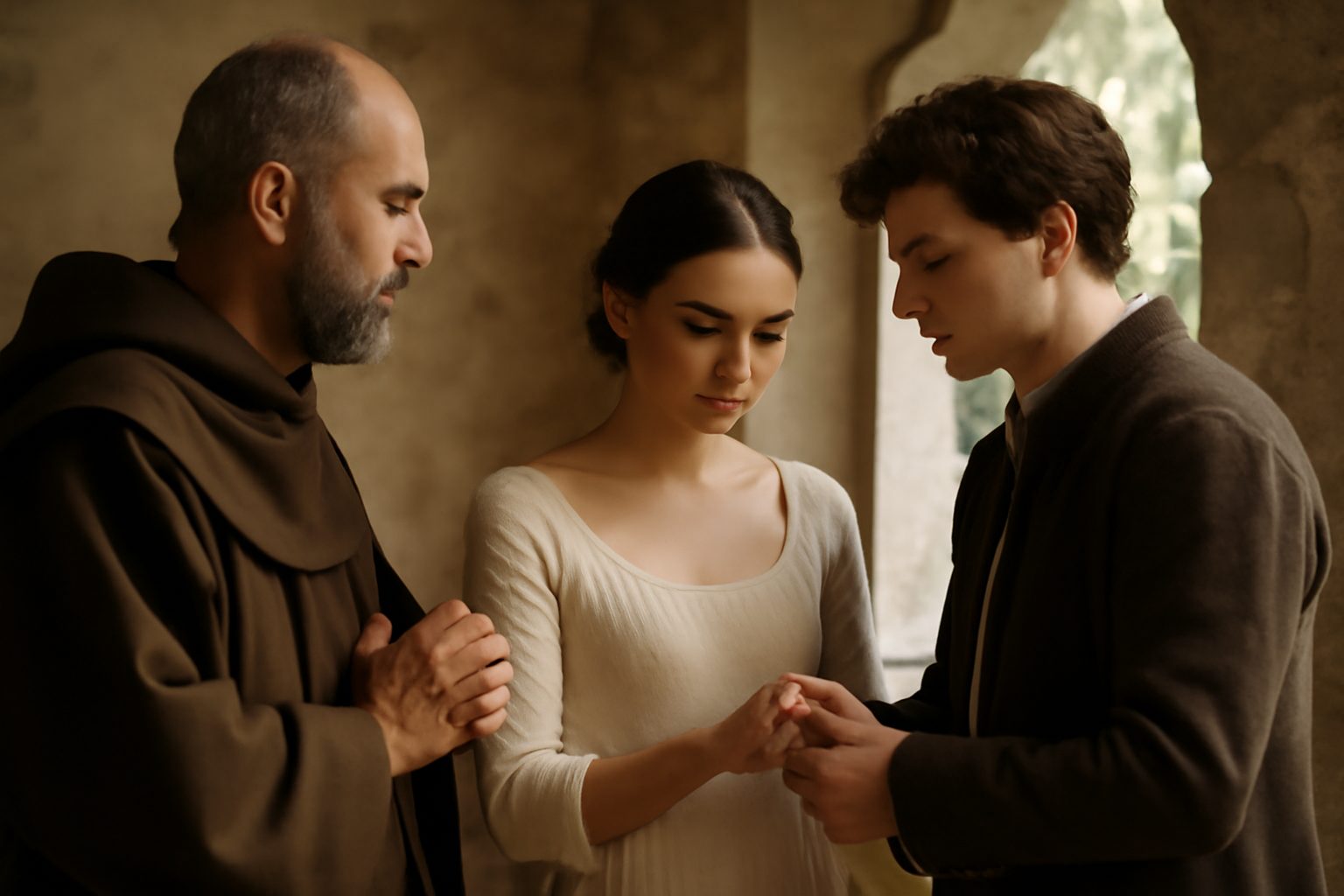
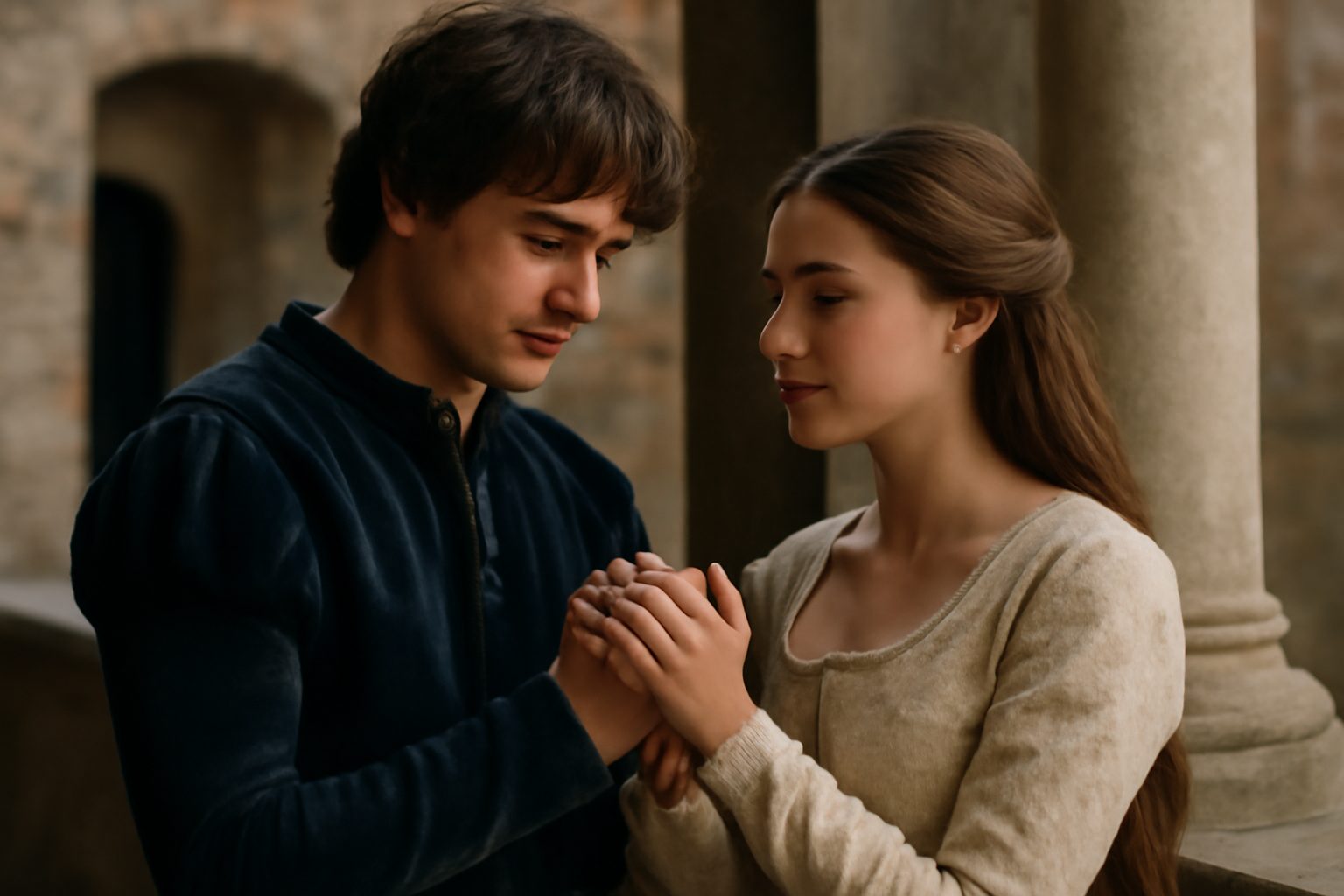
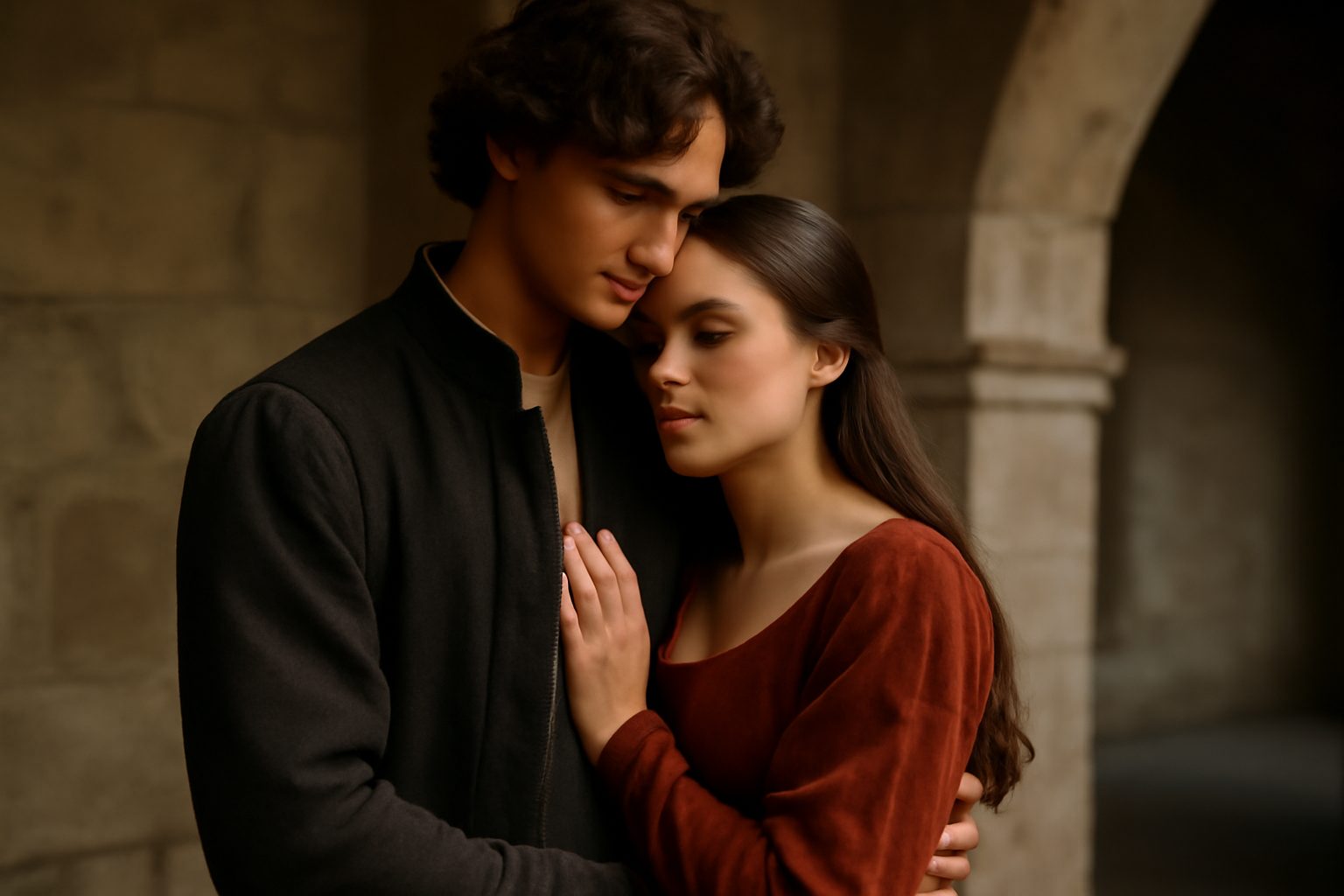
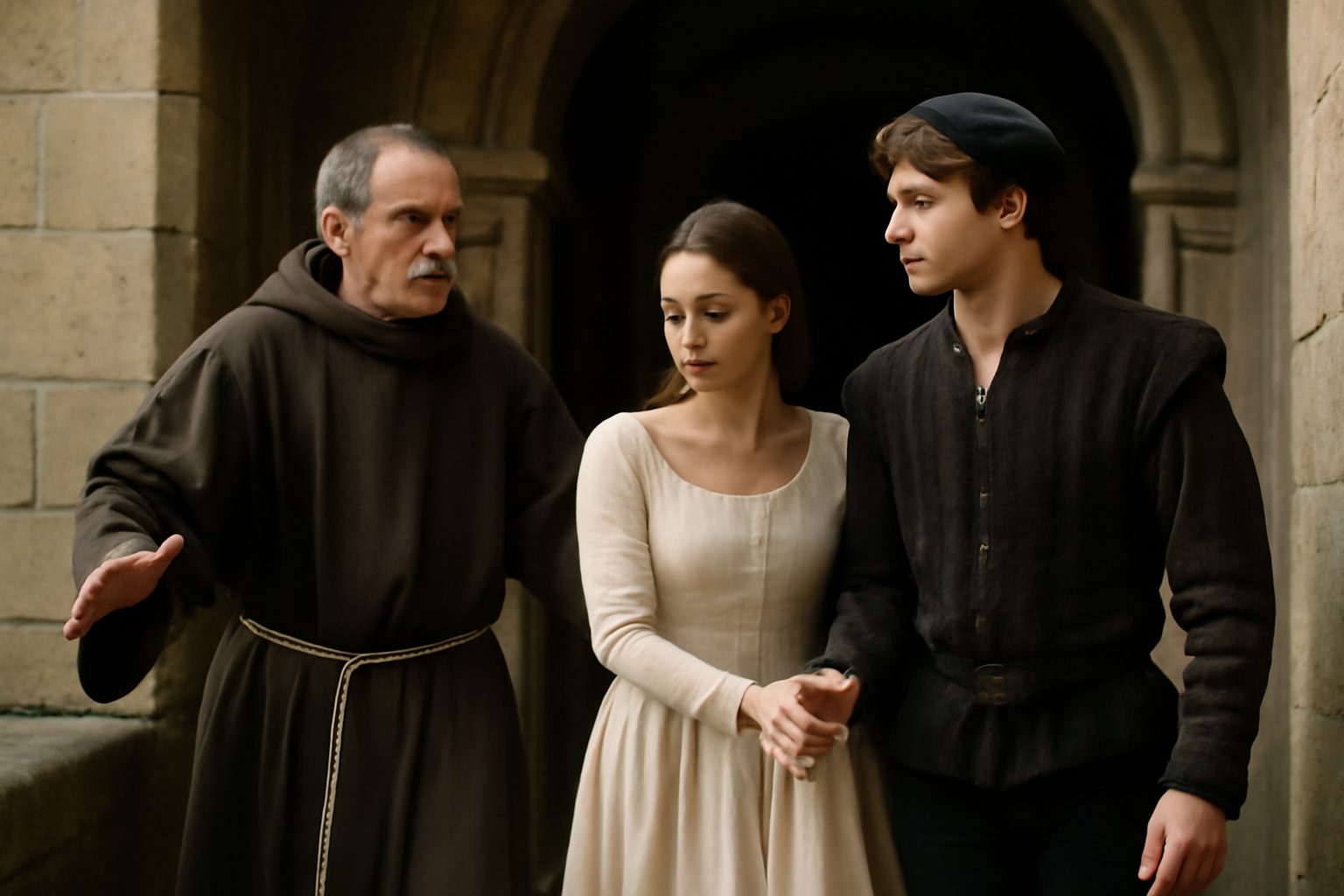
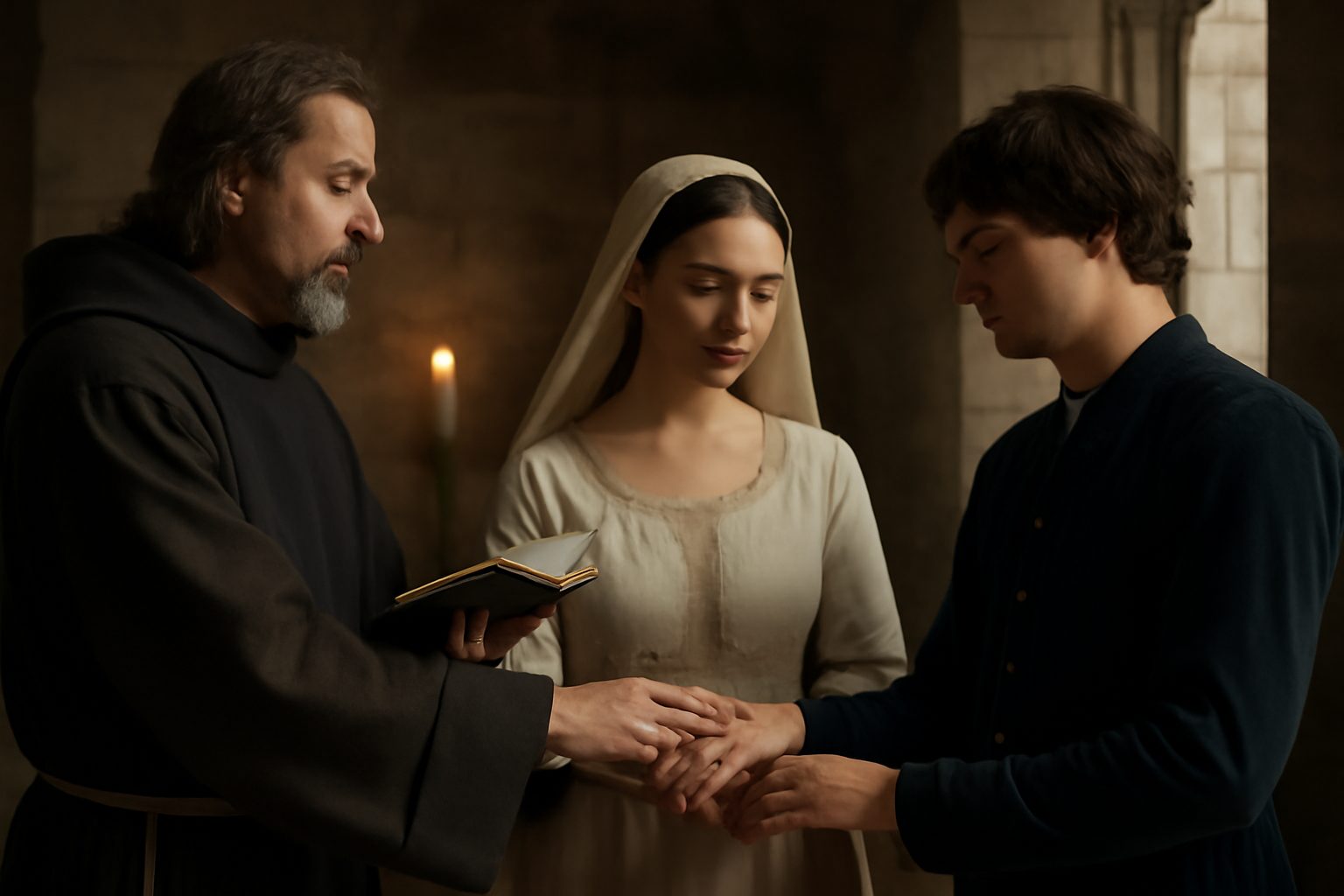
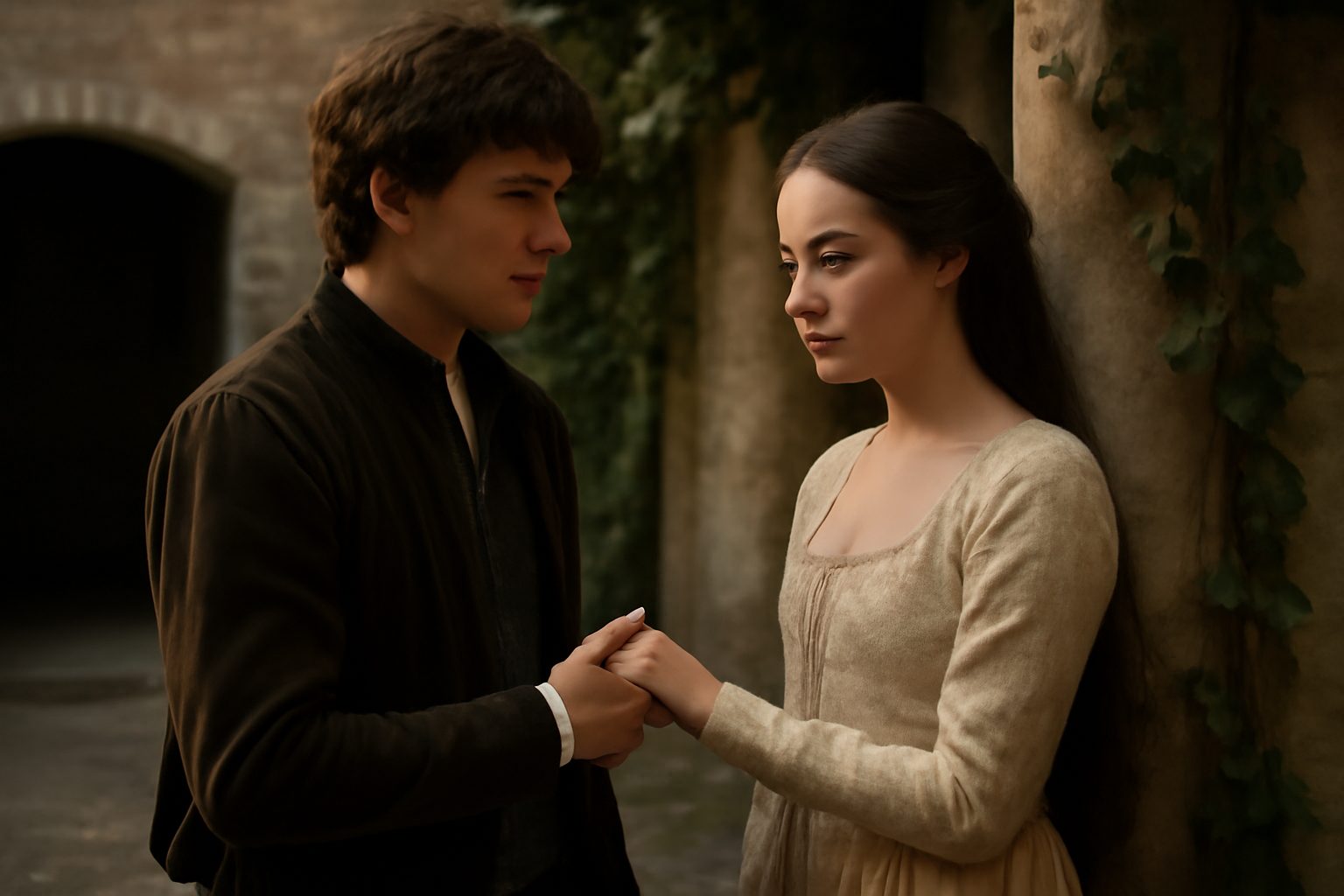
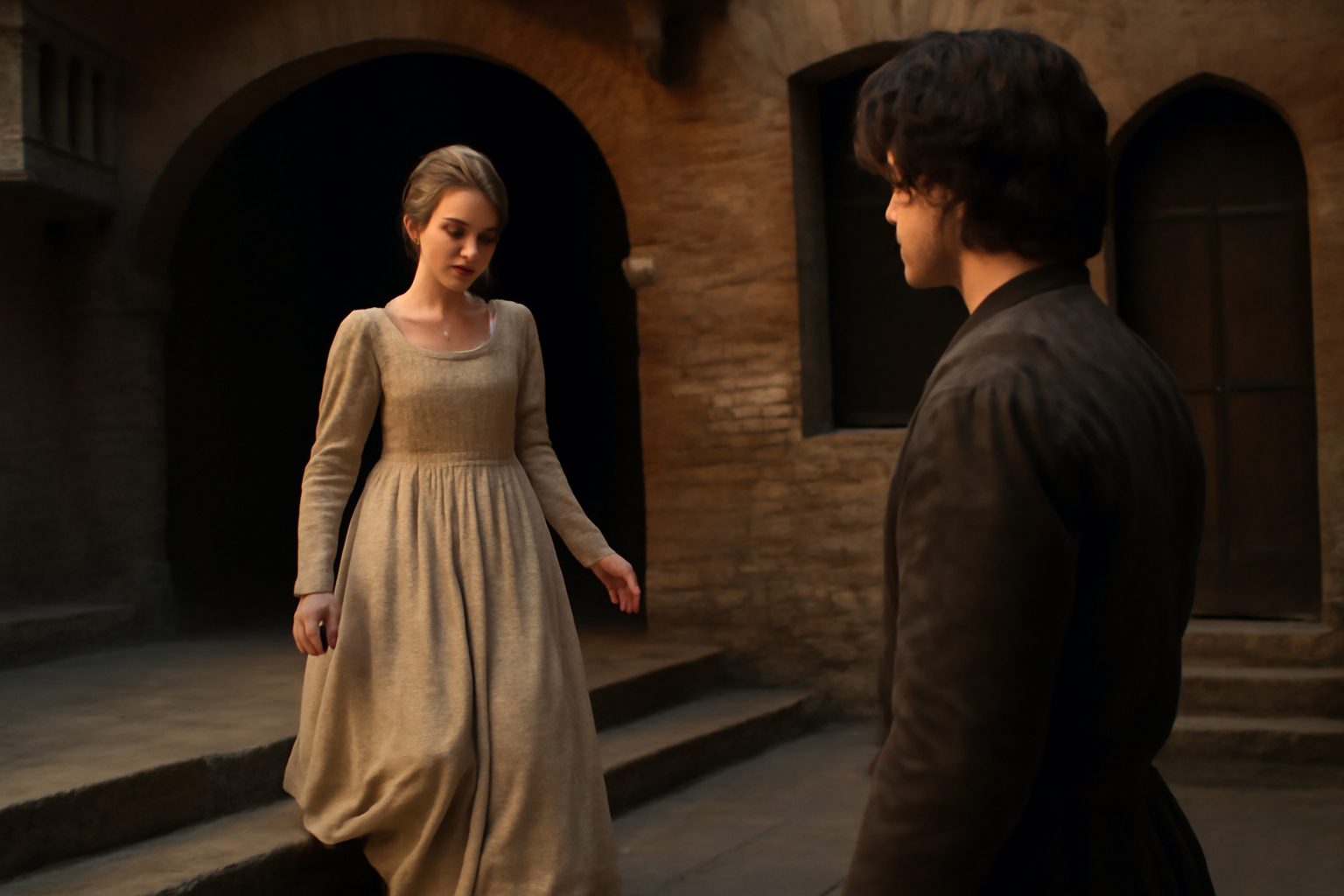
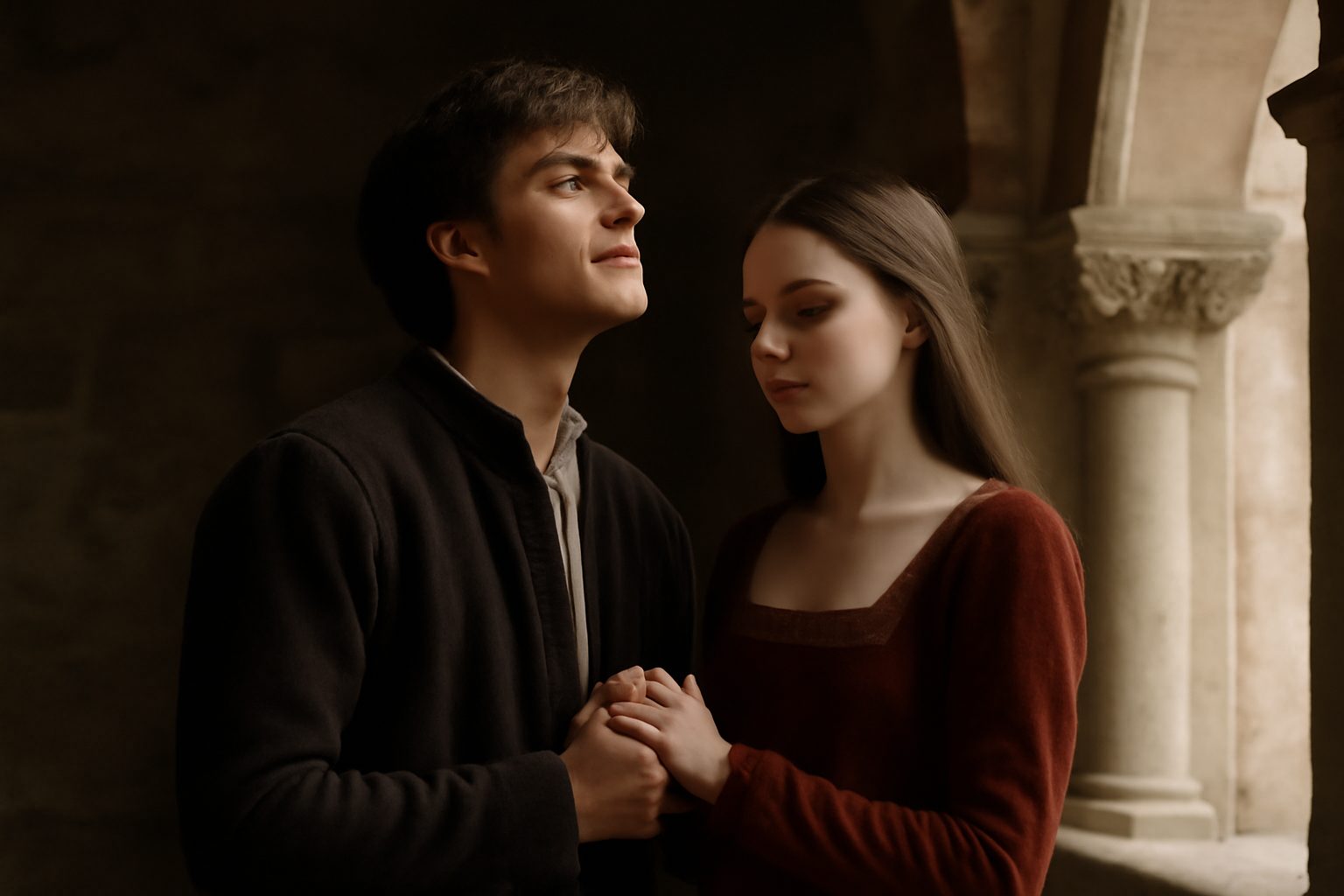
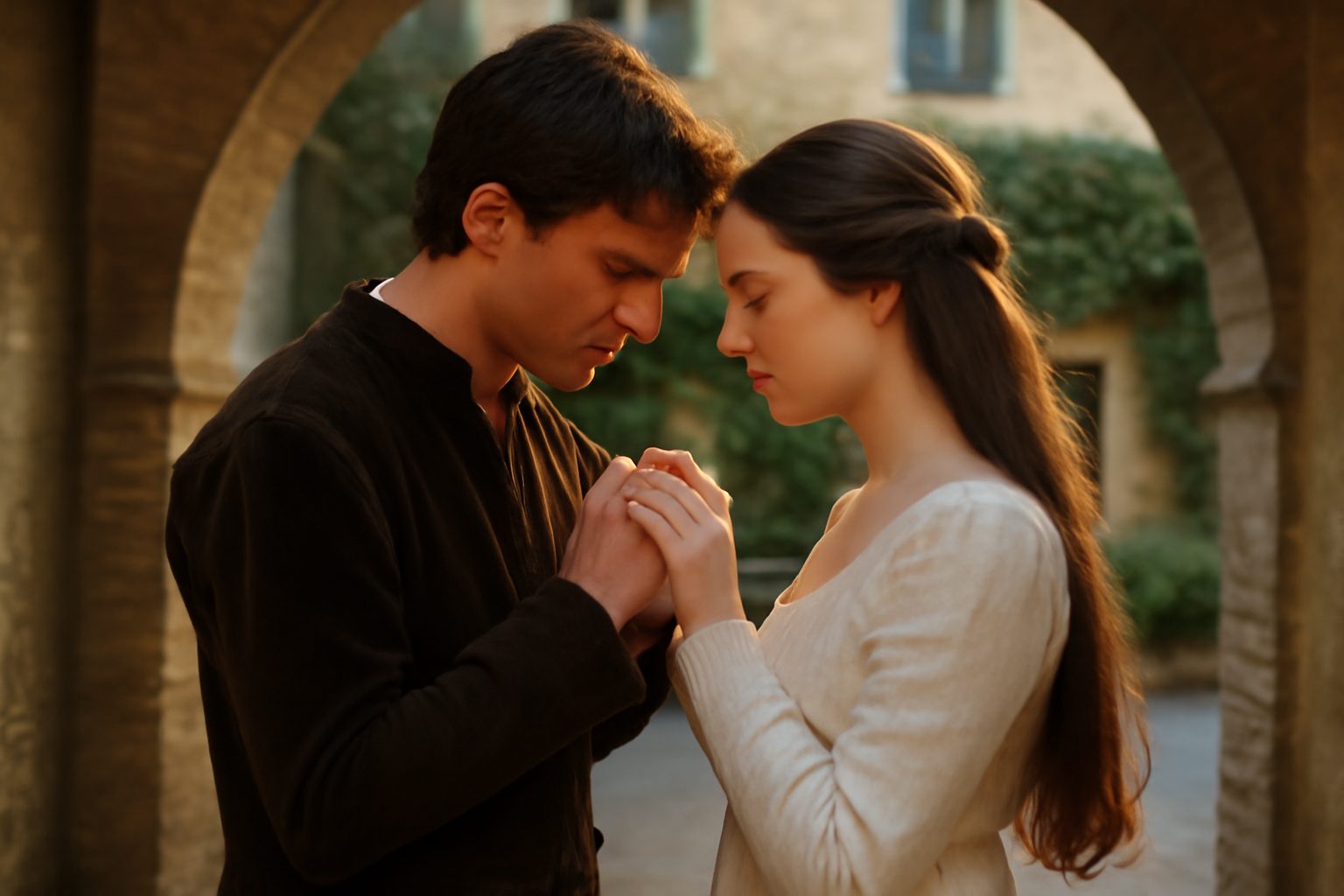
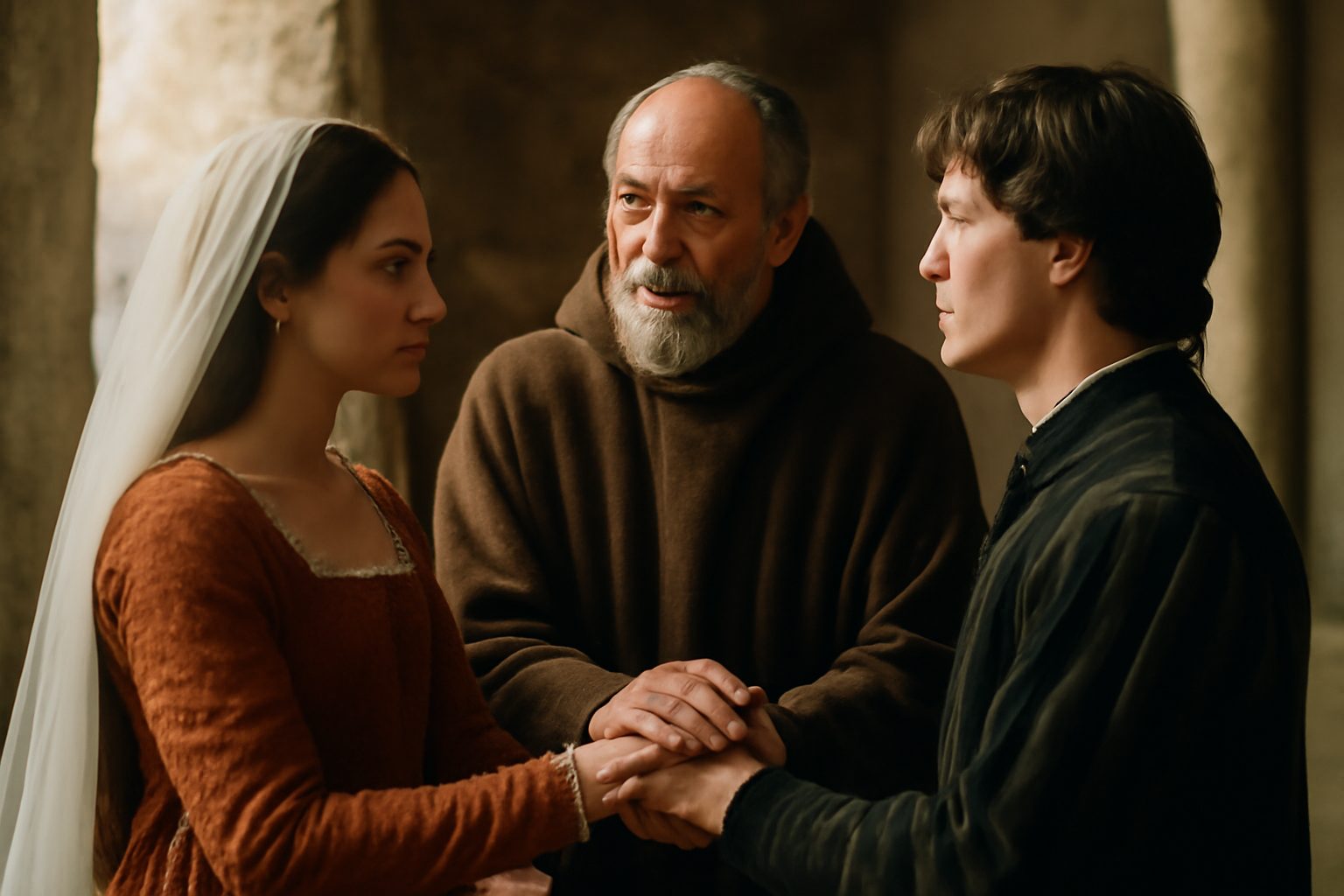
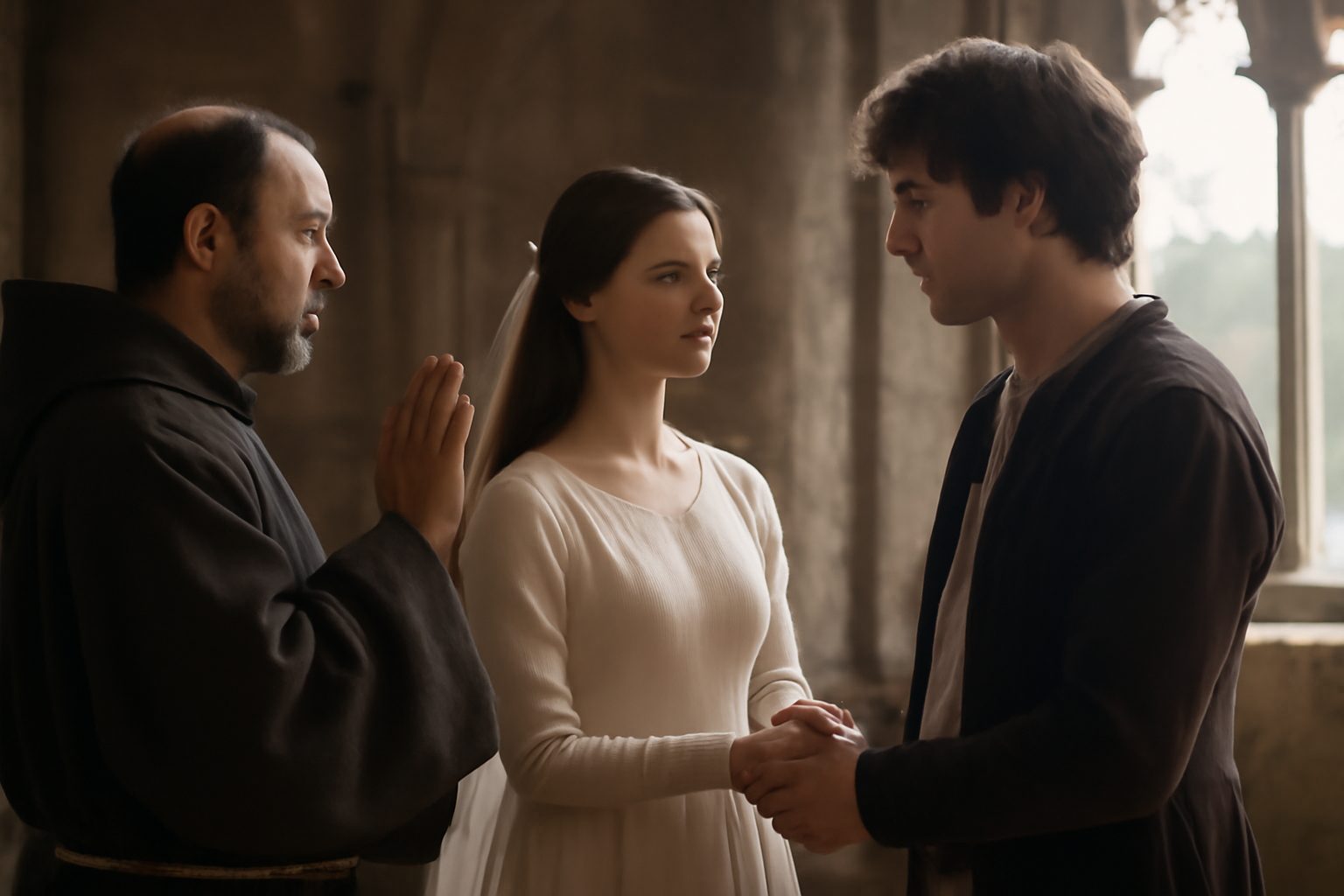
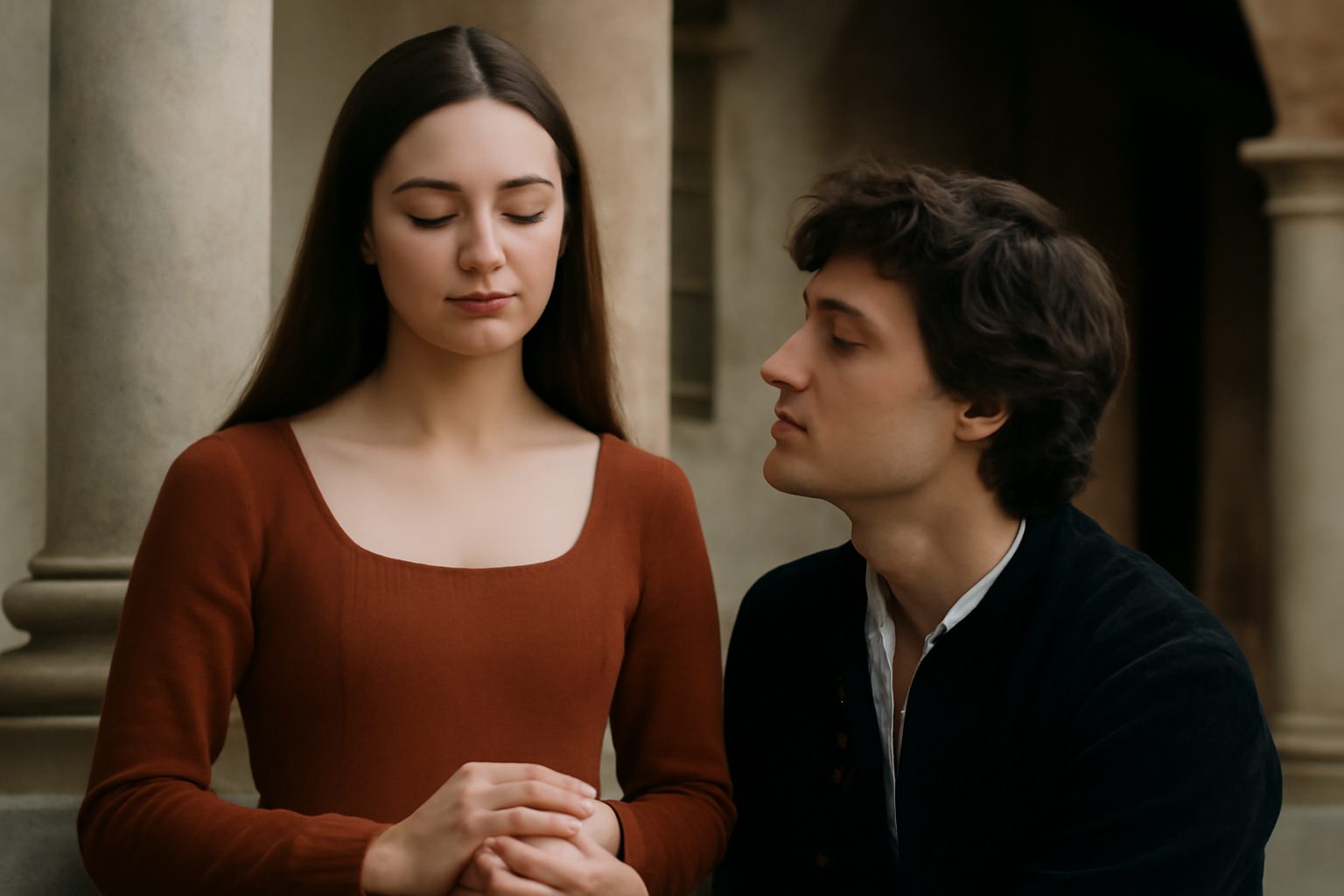
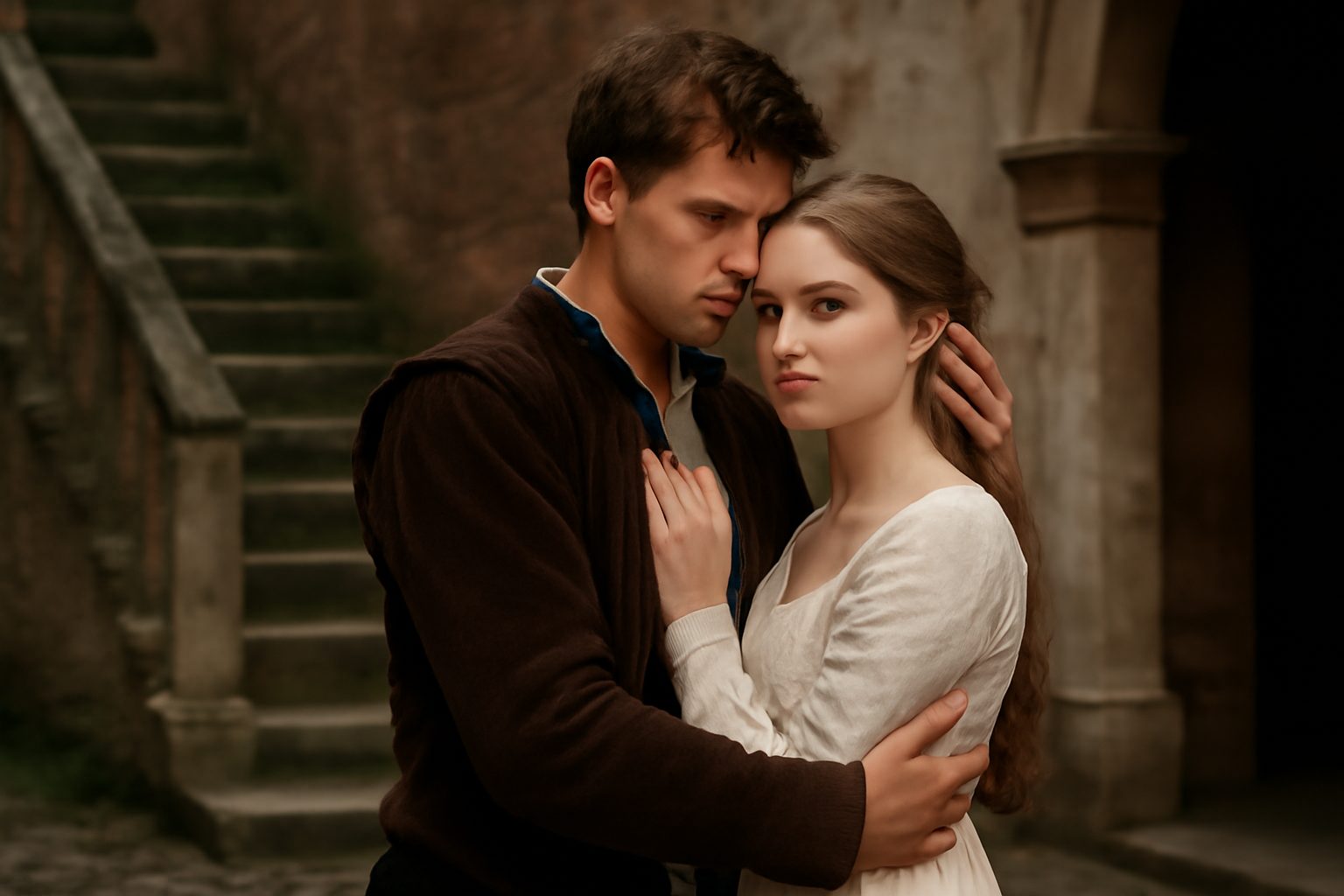
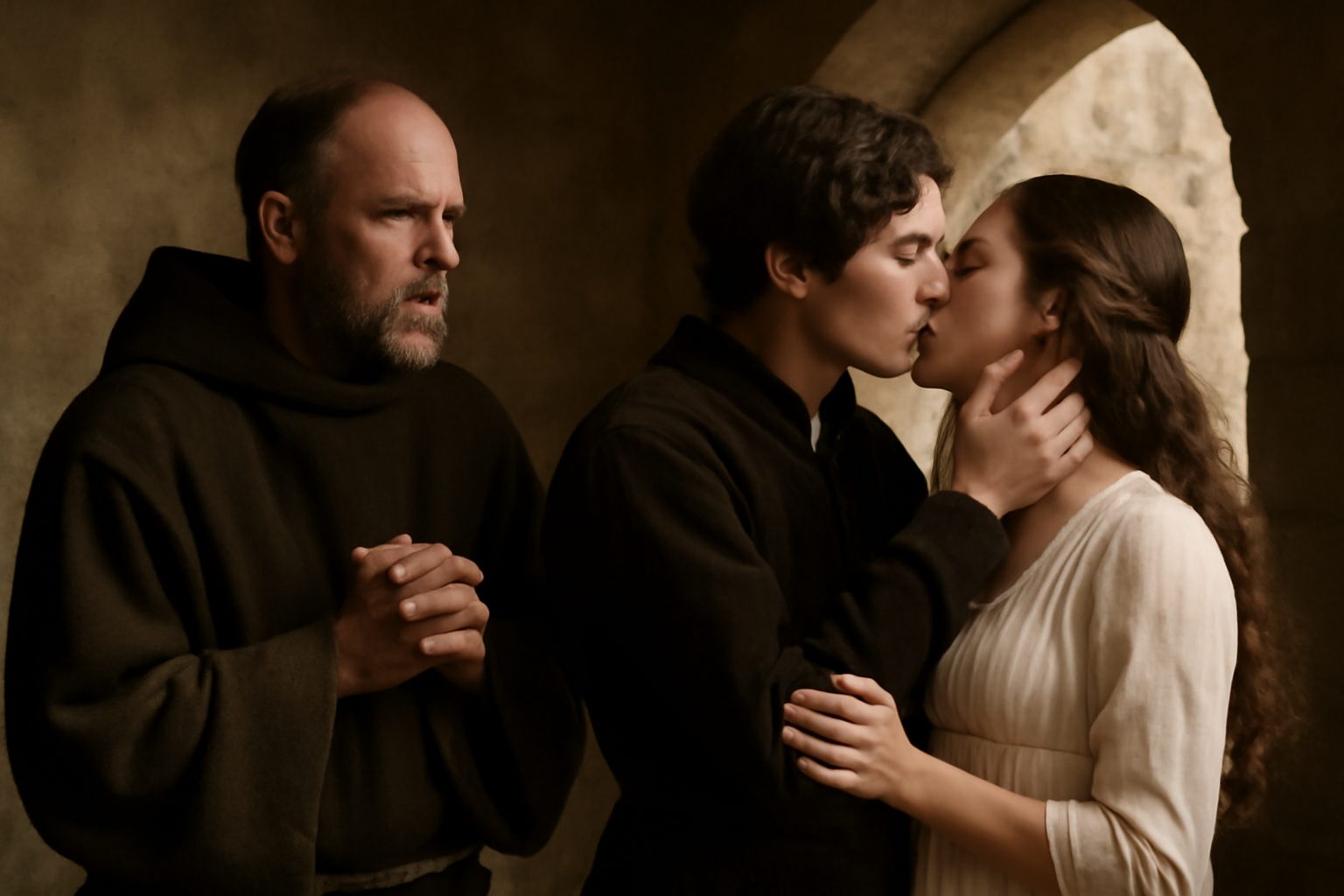
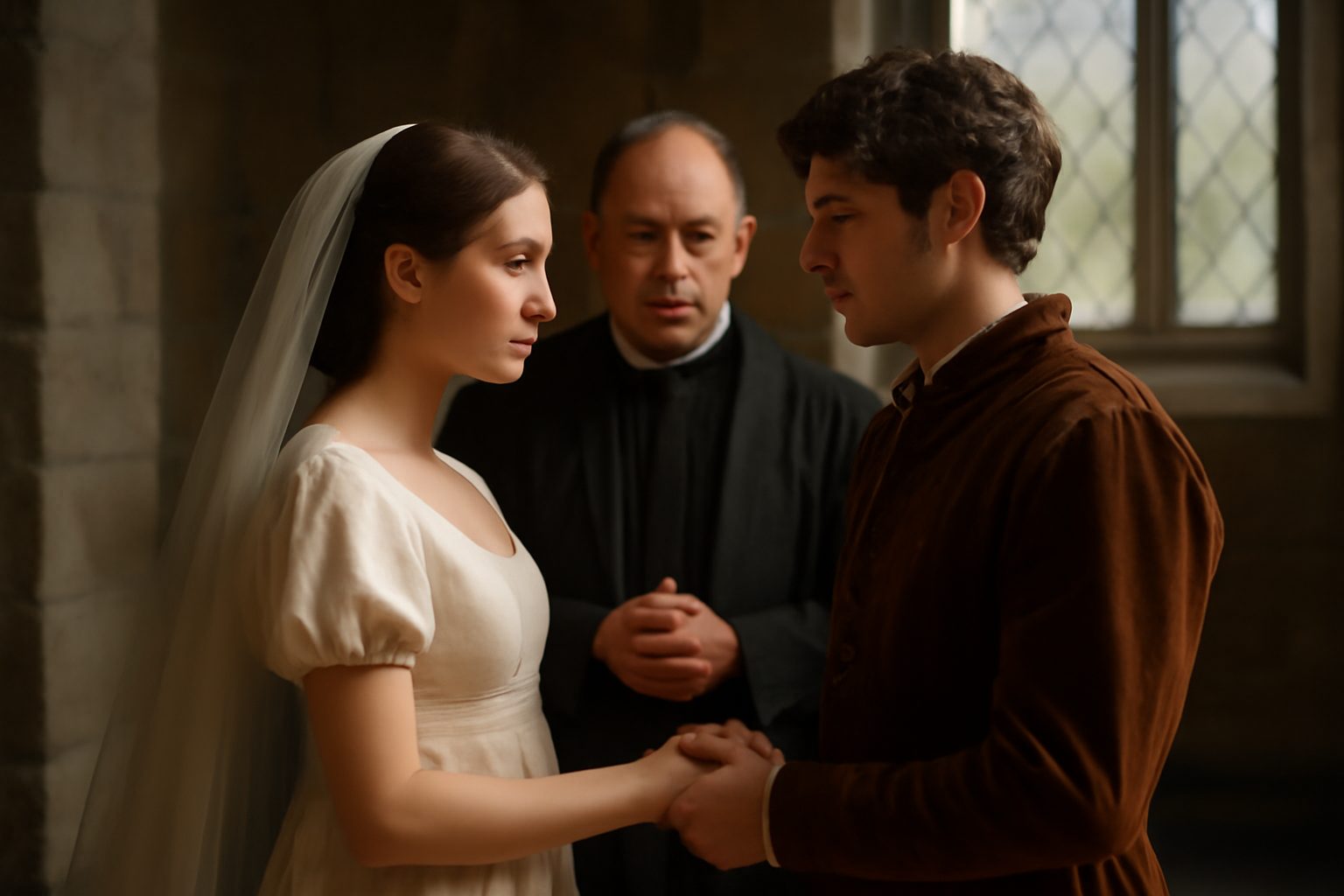
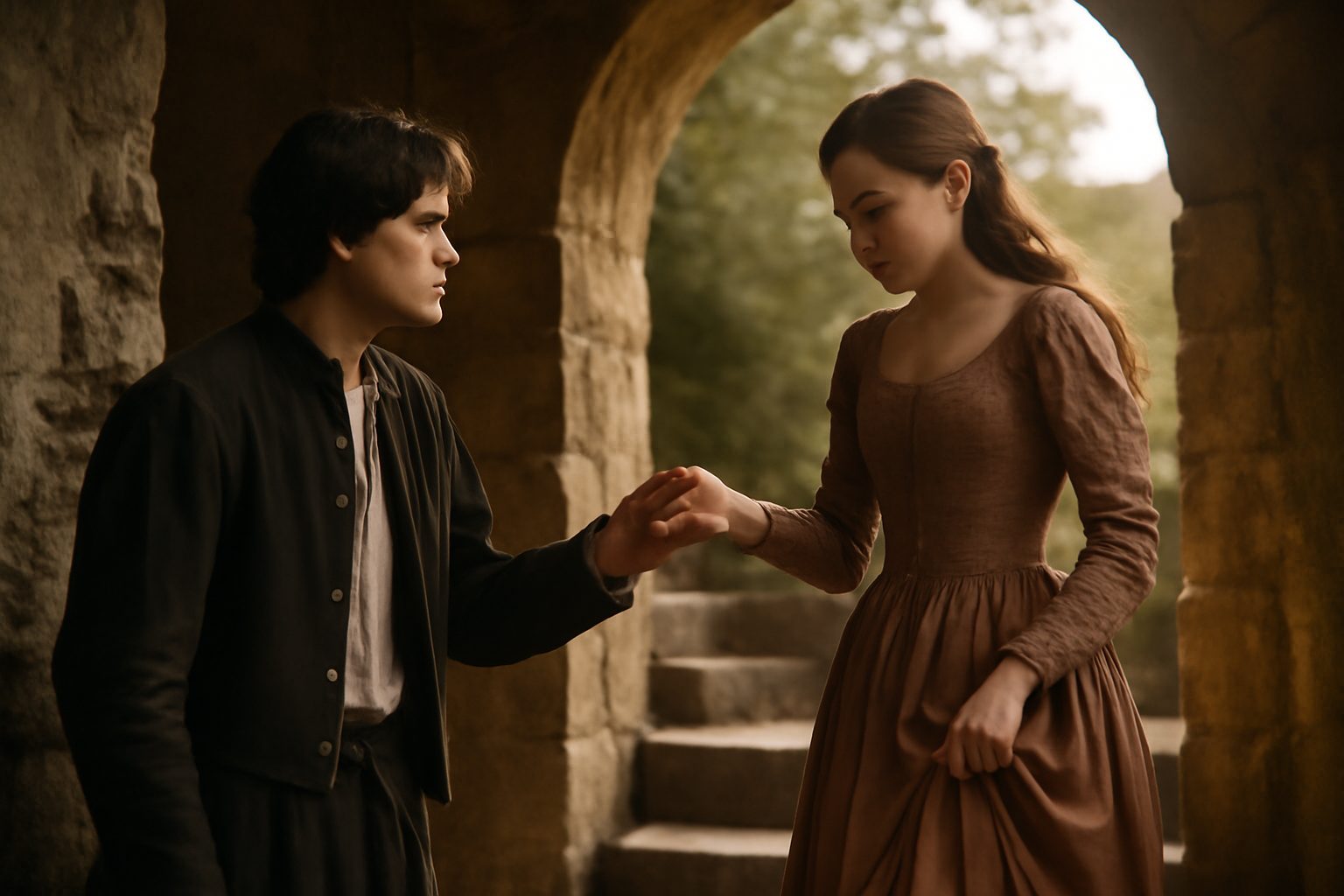
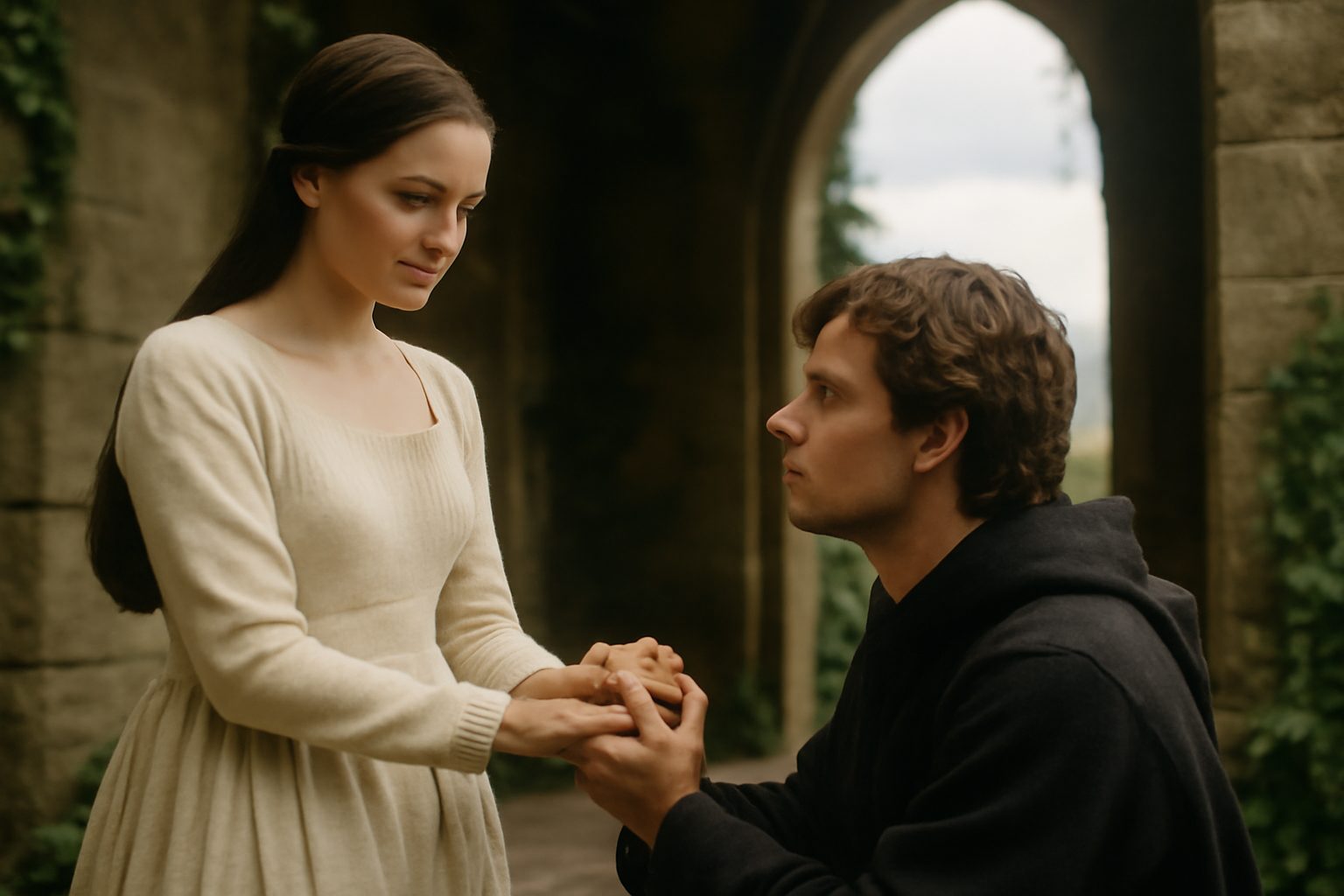
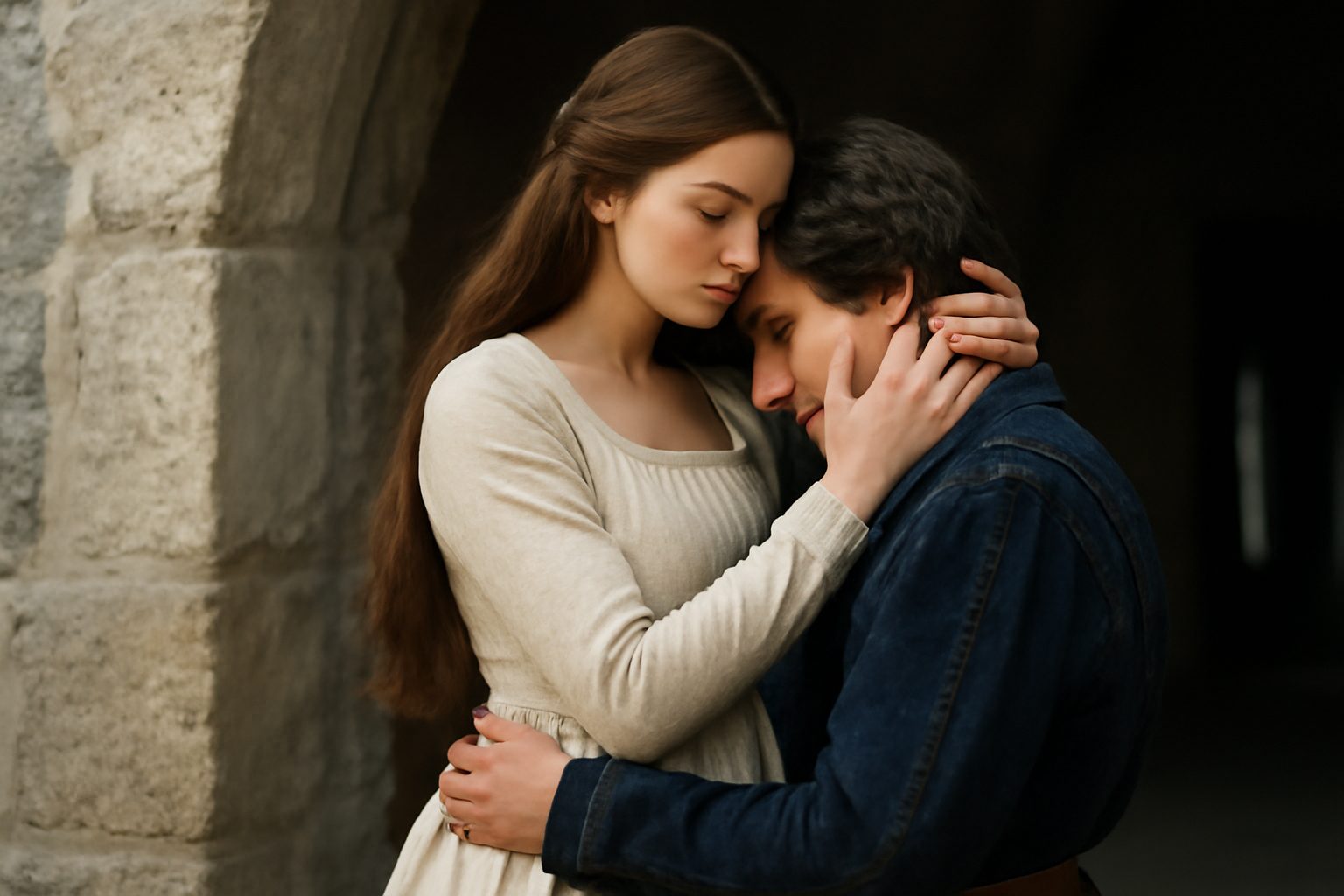
In Act 2, Scene 6 of Romeo and Juliet, Friar Laurence marries the two lovers in secret, hoping their union might reconcile their feuding families. As Romeo eagerly anticipates the joy of marriage, the Friar cautions him that even the most intense happiness carries risks. This line reflects the Friar's warning that no fleeting pleasure can outweigh the consequences of rash decisions.
Romeo: "It cannot countervail the exchange of joy"
In modern day english, we would say:
The happiness we’re feeling now is worth far more than any risk or cost.
Frequently Asked Questions
What does Romeo mean when he says that nothing can equal the joy he feels?
Romeo is expressing that no amount of trouble or hardship can outweigh the happiness he feels with Juliet.
Connections to other verses:
Connections to "It cannot countervail the exchange of joy"
This line, spoken by Romeo, expresses that no sorrow or risk can outweigh the joy he feels in his union with Juliet. It reflects the theme of love's transcendent power over adversity, a sentiment echoed throughout the scene.
Related Verses
Immediate Context: This verse directly follows "Amen, amen! but come what sorrow can," where Romeo acknowledges potential future sorrow but dismisses it in favor of present joy, reinforcing the idea that joy outweighs sorrow.
Emphasis on Joy's Value: Similarly, in "That one short minute gives me in her sight," Romeo highlights how even a brief moment with Juliet brings immense happiness, underscoring the immeasurable worth of their joy.
Contrast with Caution: Friar Laurence's warning in "These violent delights have violent ends" serves as a counterpoint, suggesting that excessive joy may lead to downfall, yet Romeo's insistence here defies such moderation.
Union and Happiness: The phrase also connects to "Unfold the imagined happiness that both", where the Friar speaks of revealing the joy both lovers anticipate, aligning with the "exchange of joy" theme.
Defiance of Death: In "Then love-devouring death do what he dare;", Romeo challenges death itself, showing that their joy makes him fearless, which complements the idea that nothing can countervail their happiness.