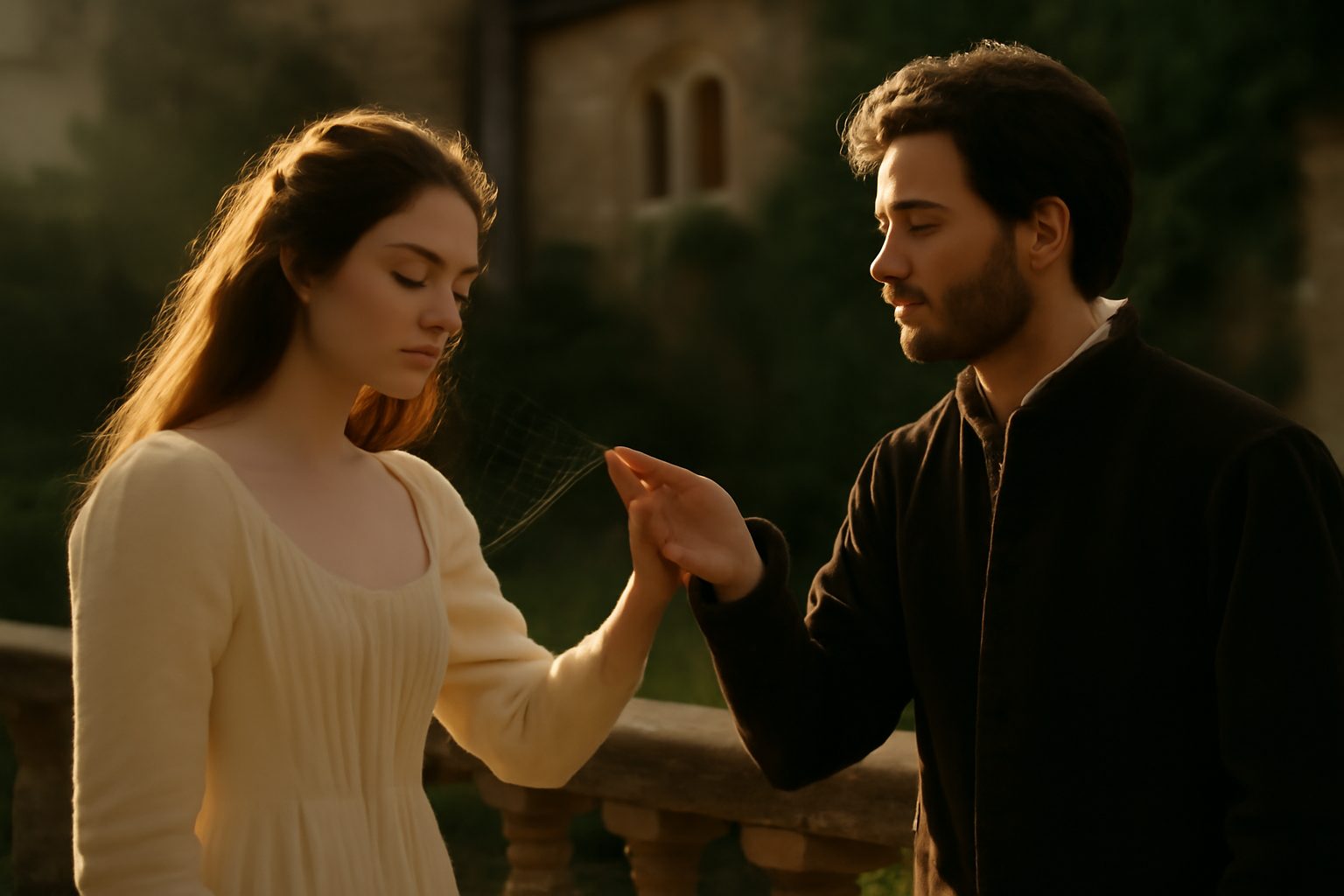
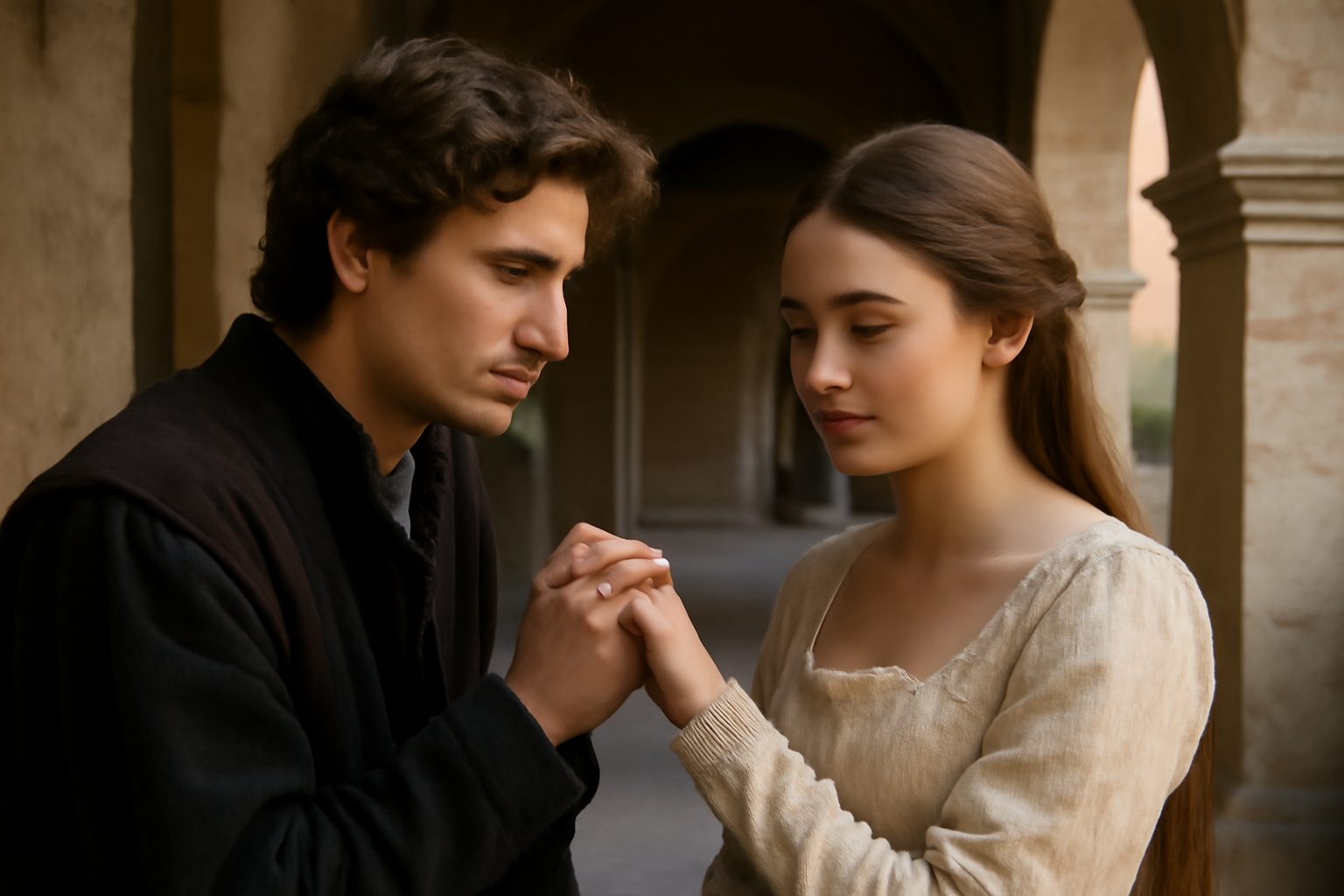
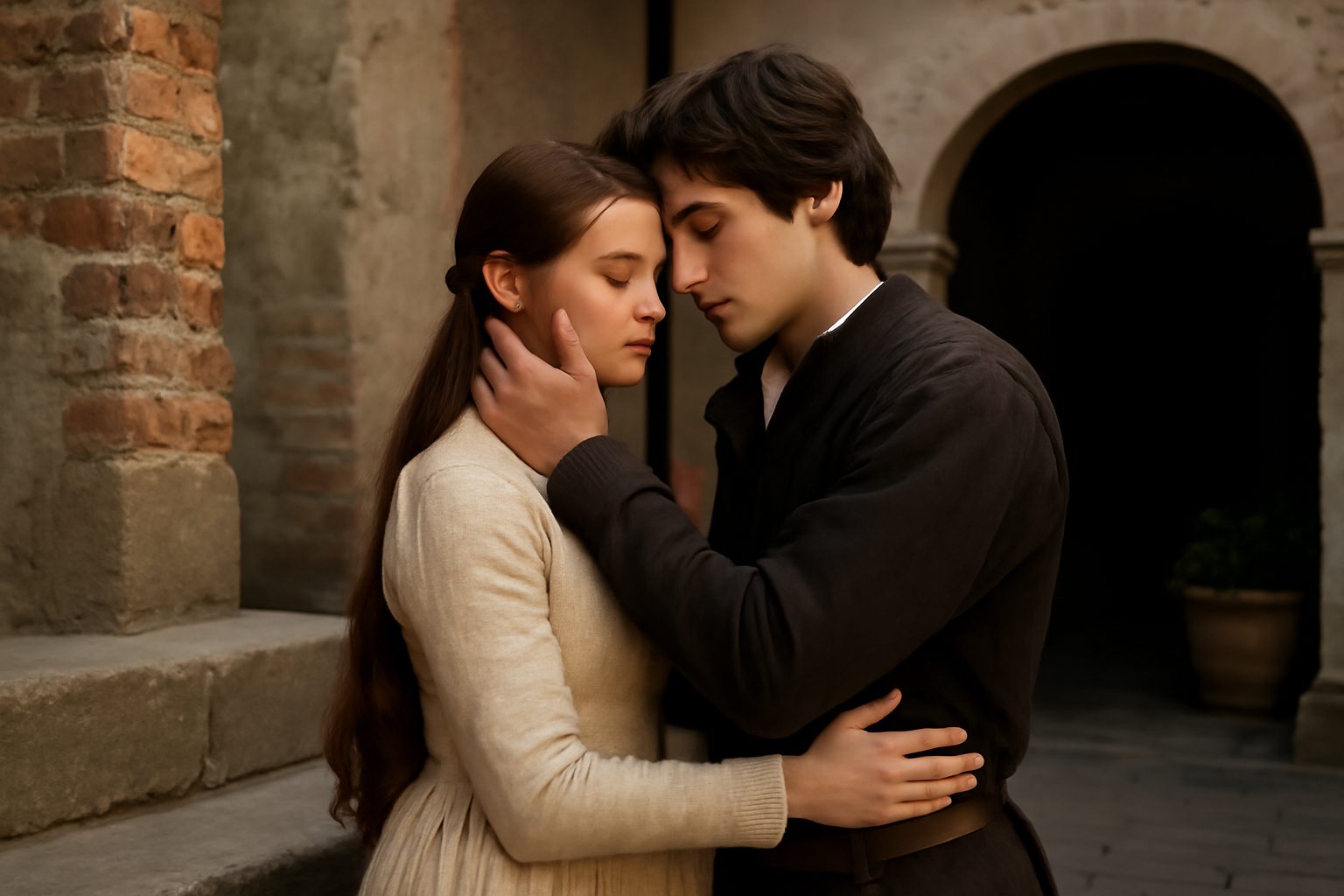
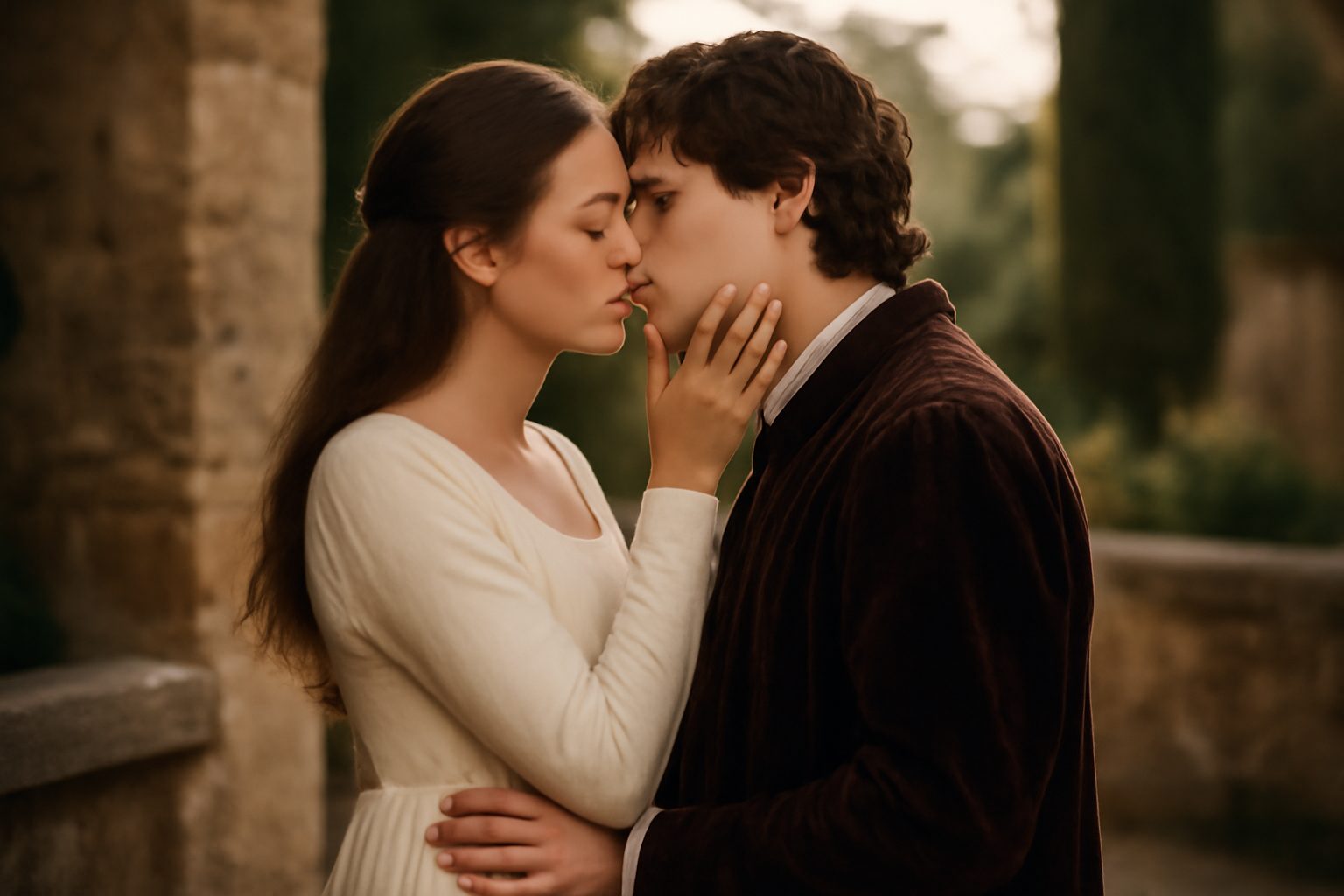
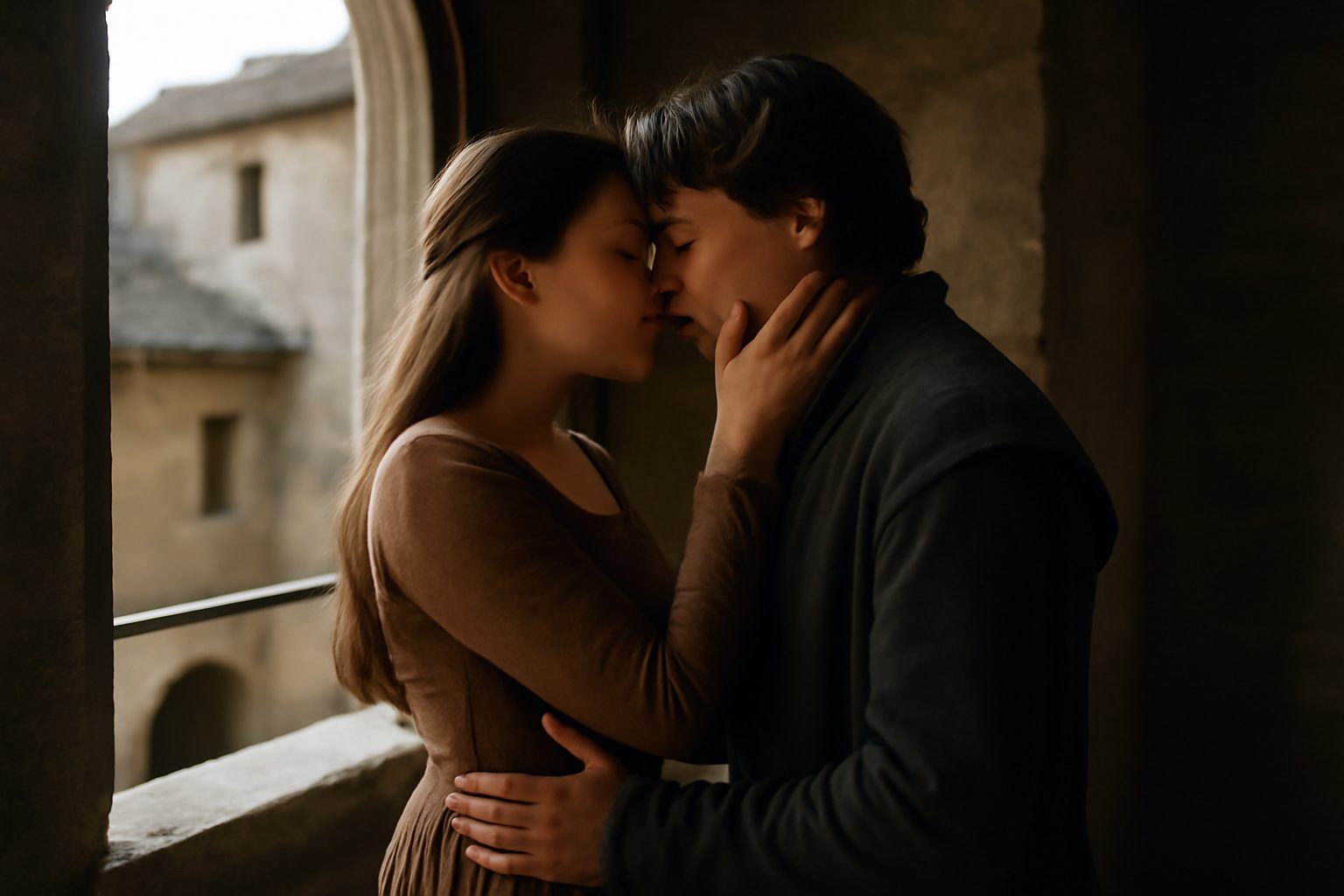
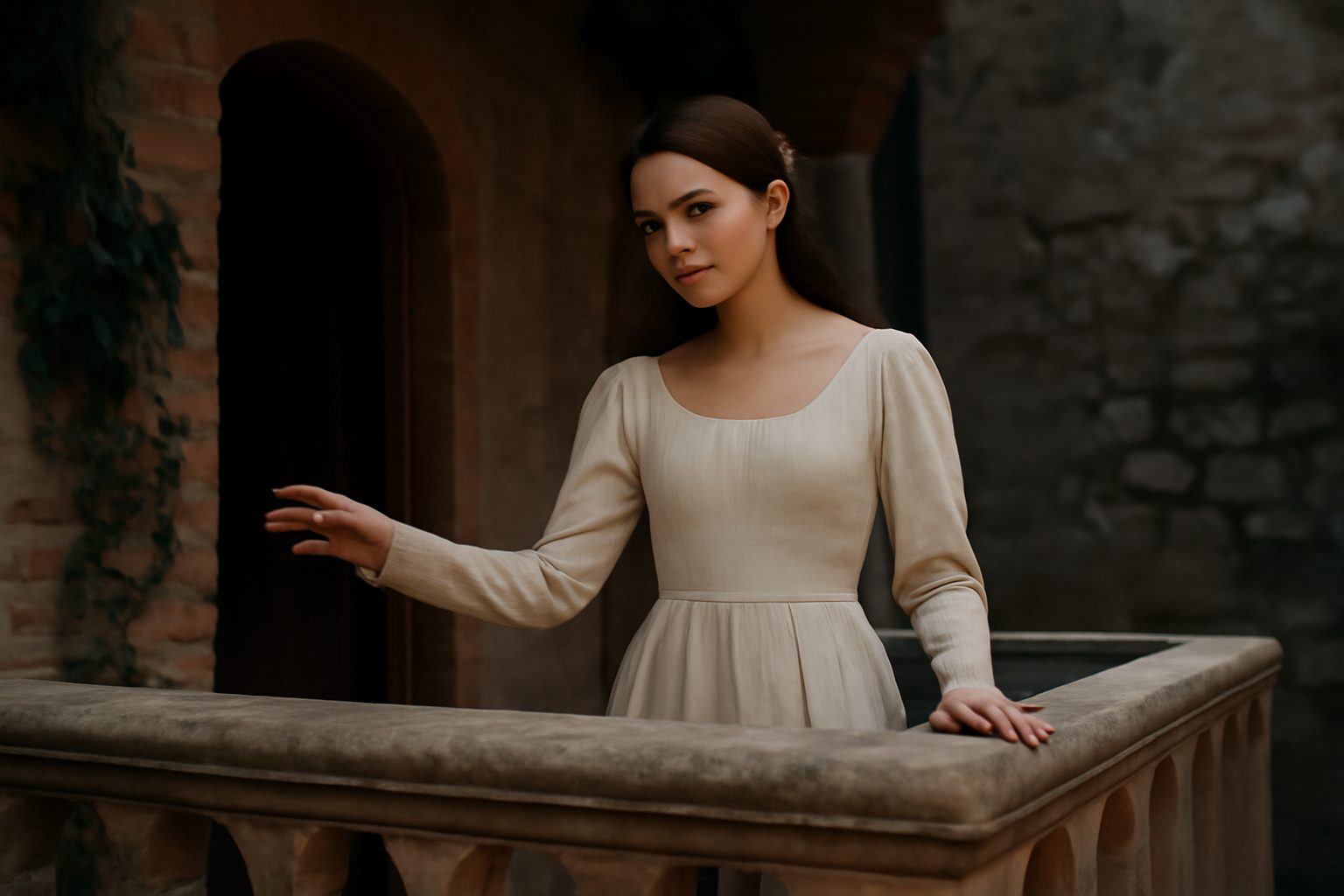
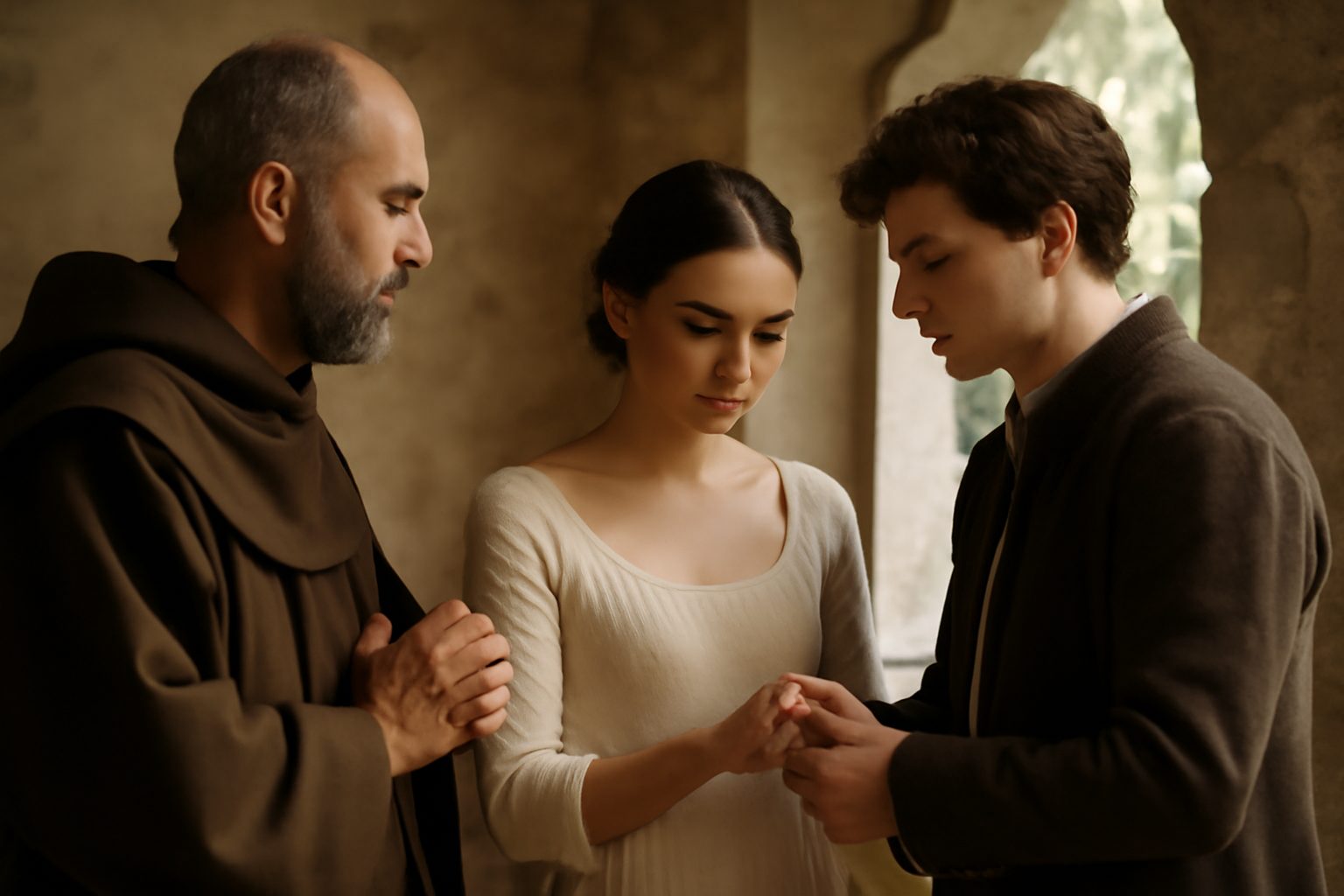
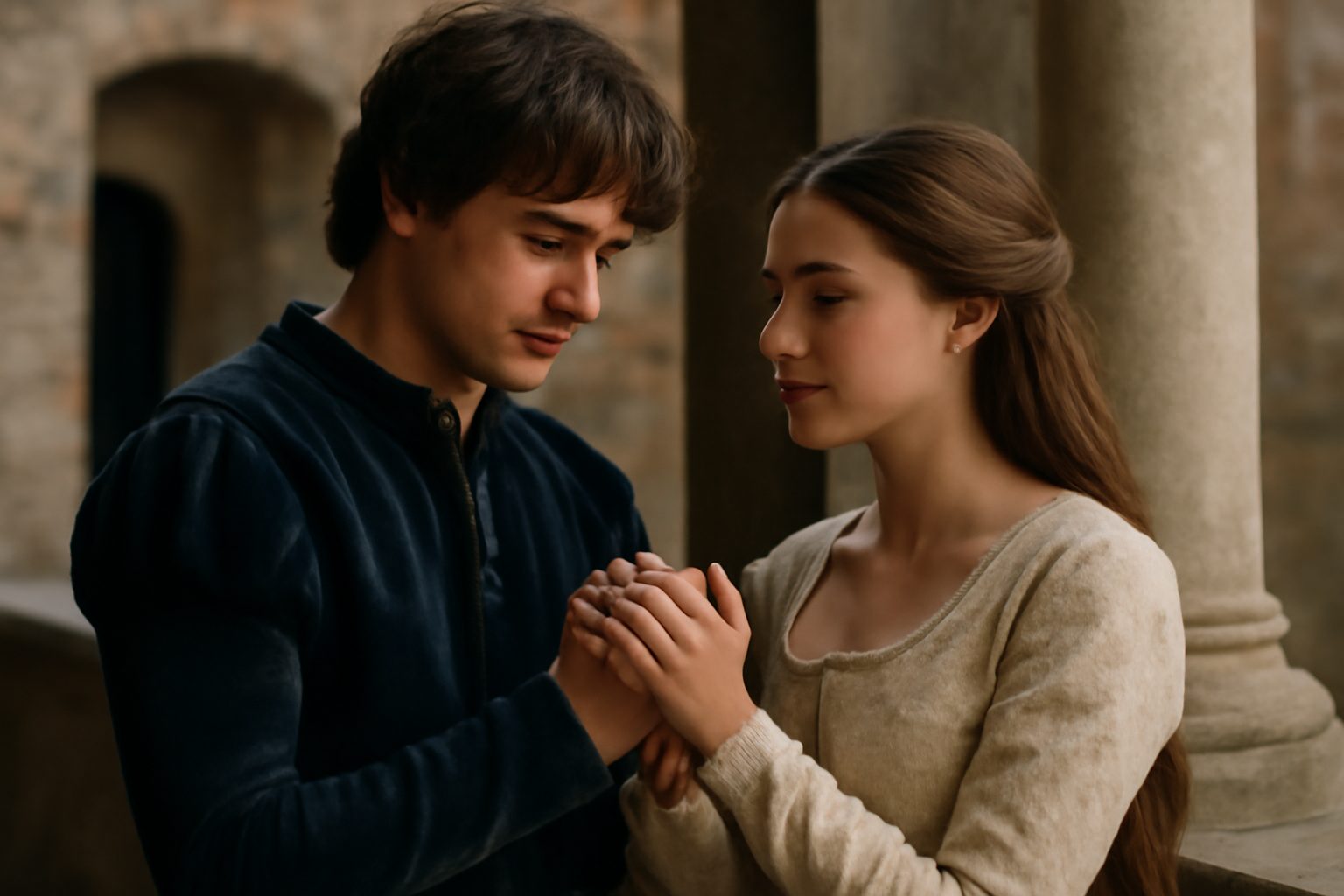
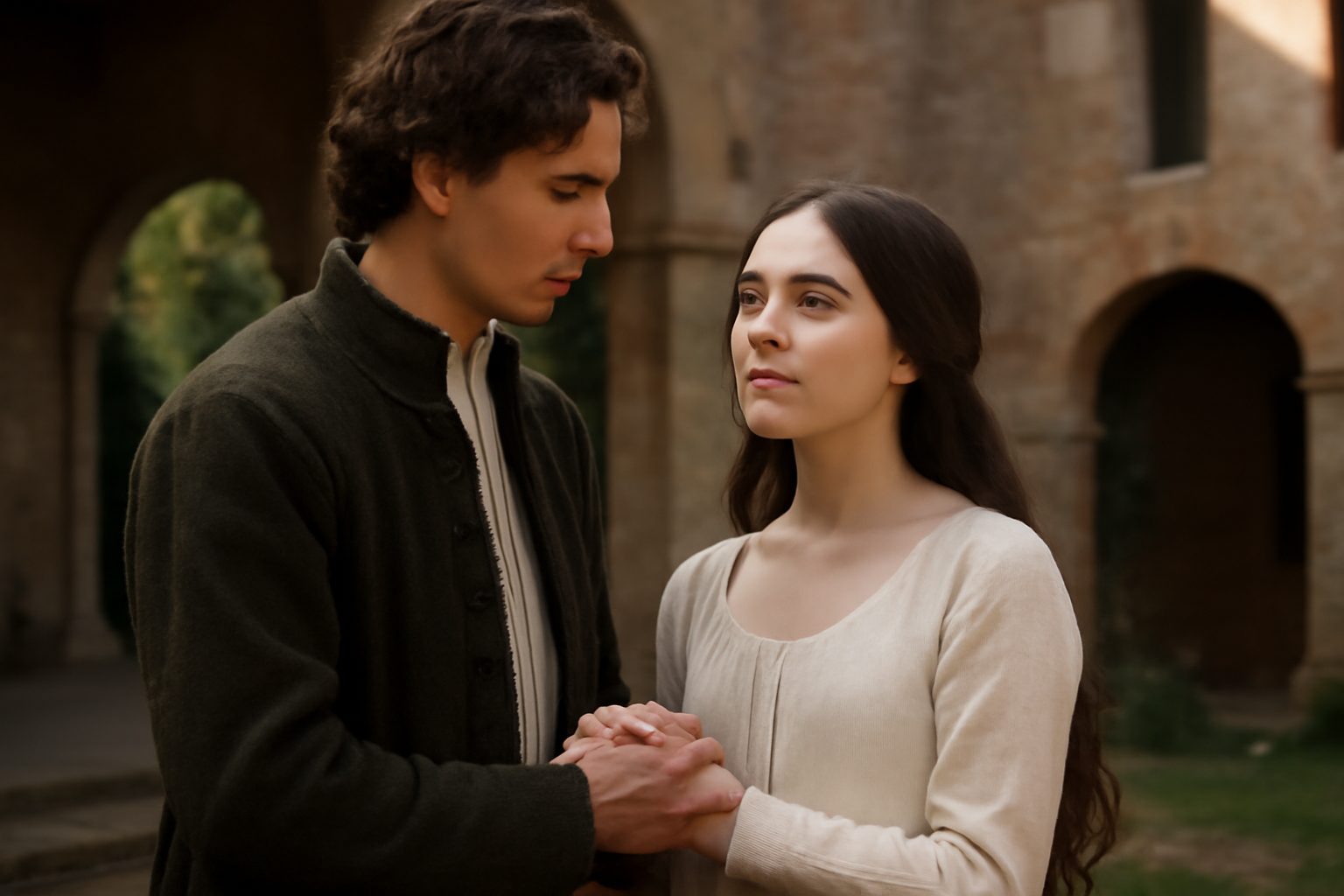
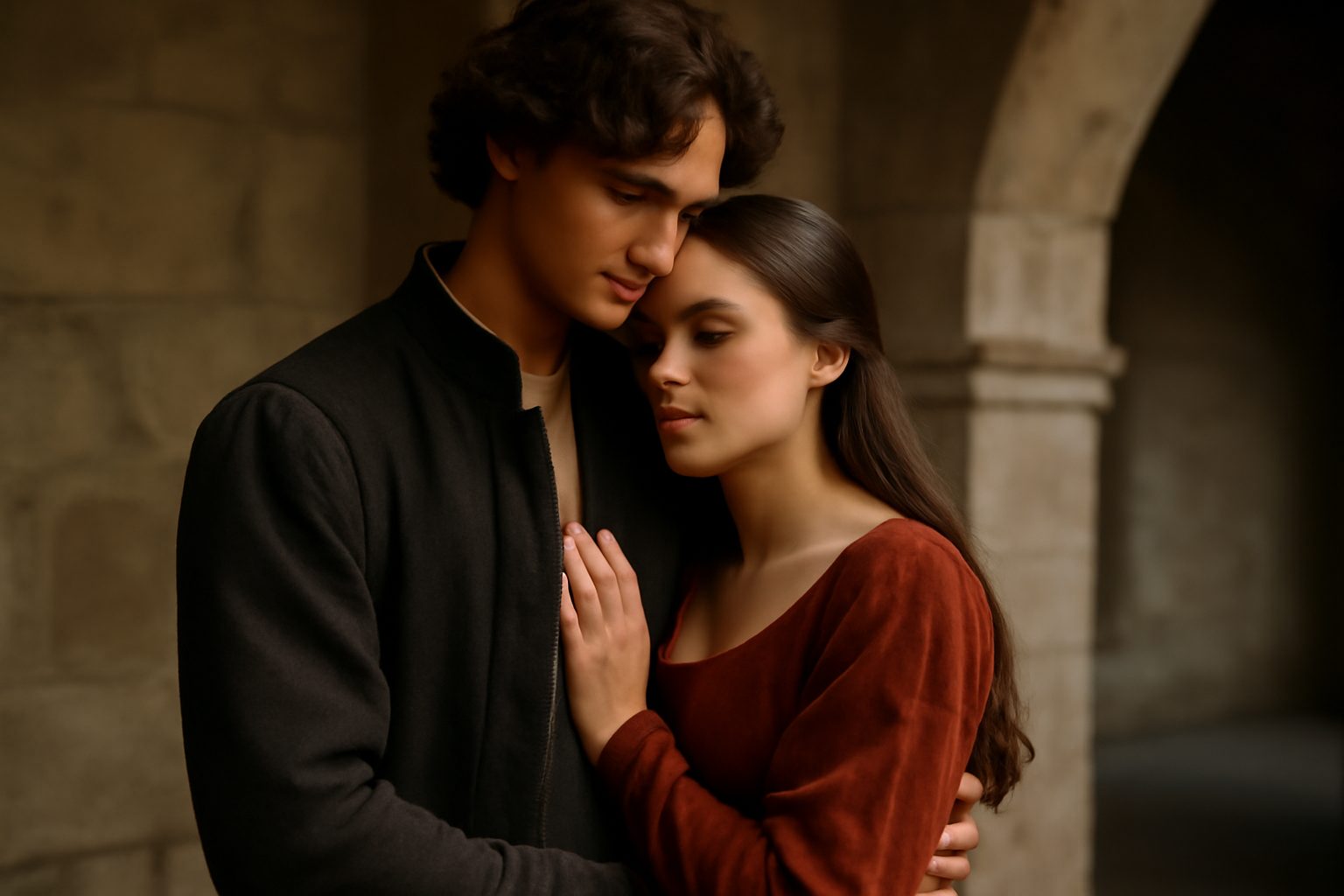
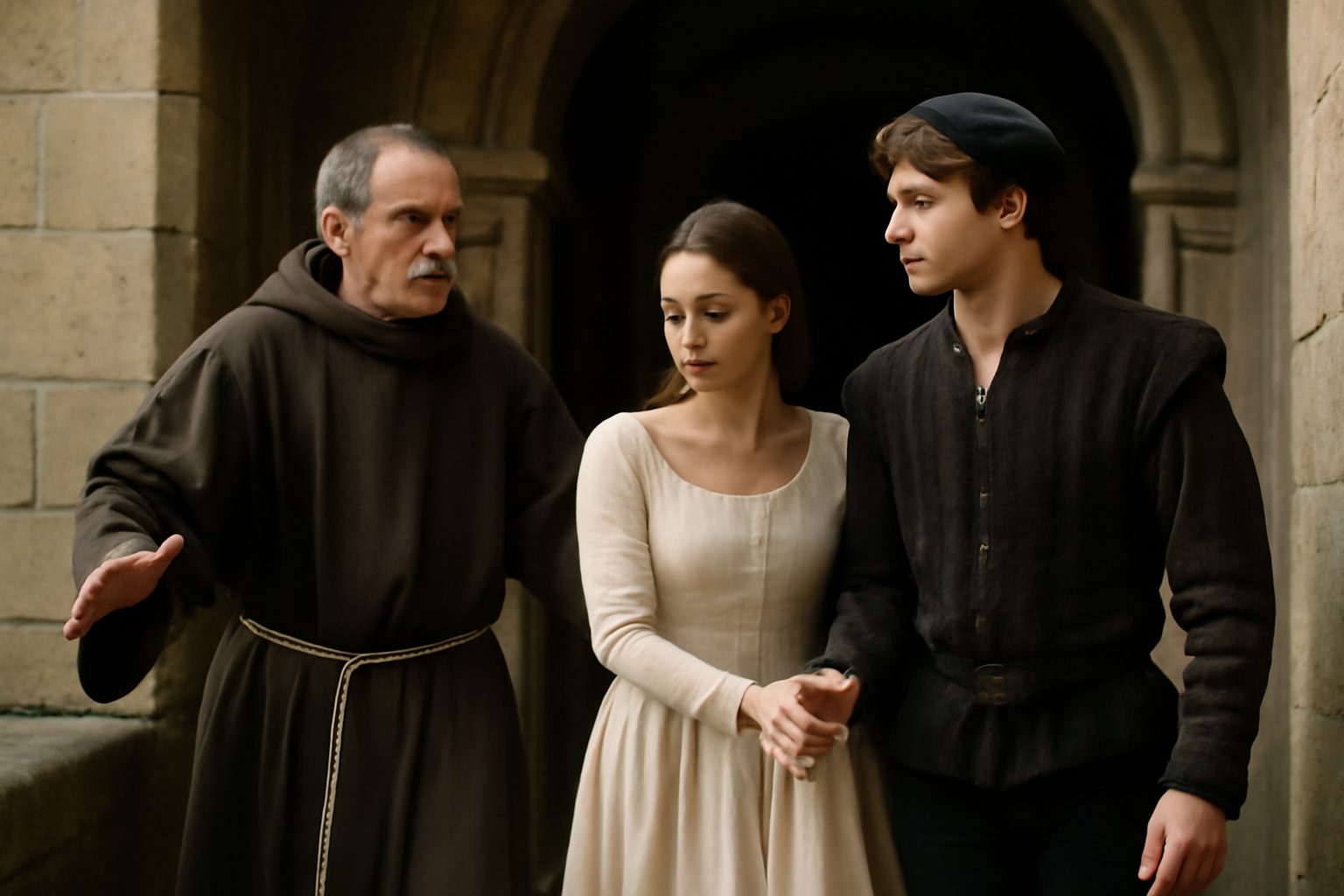
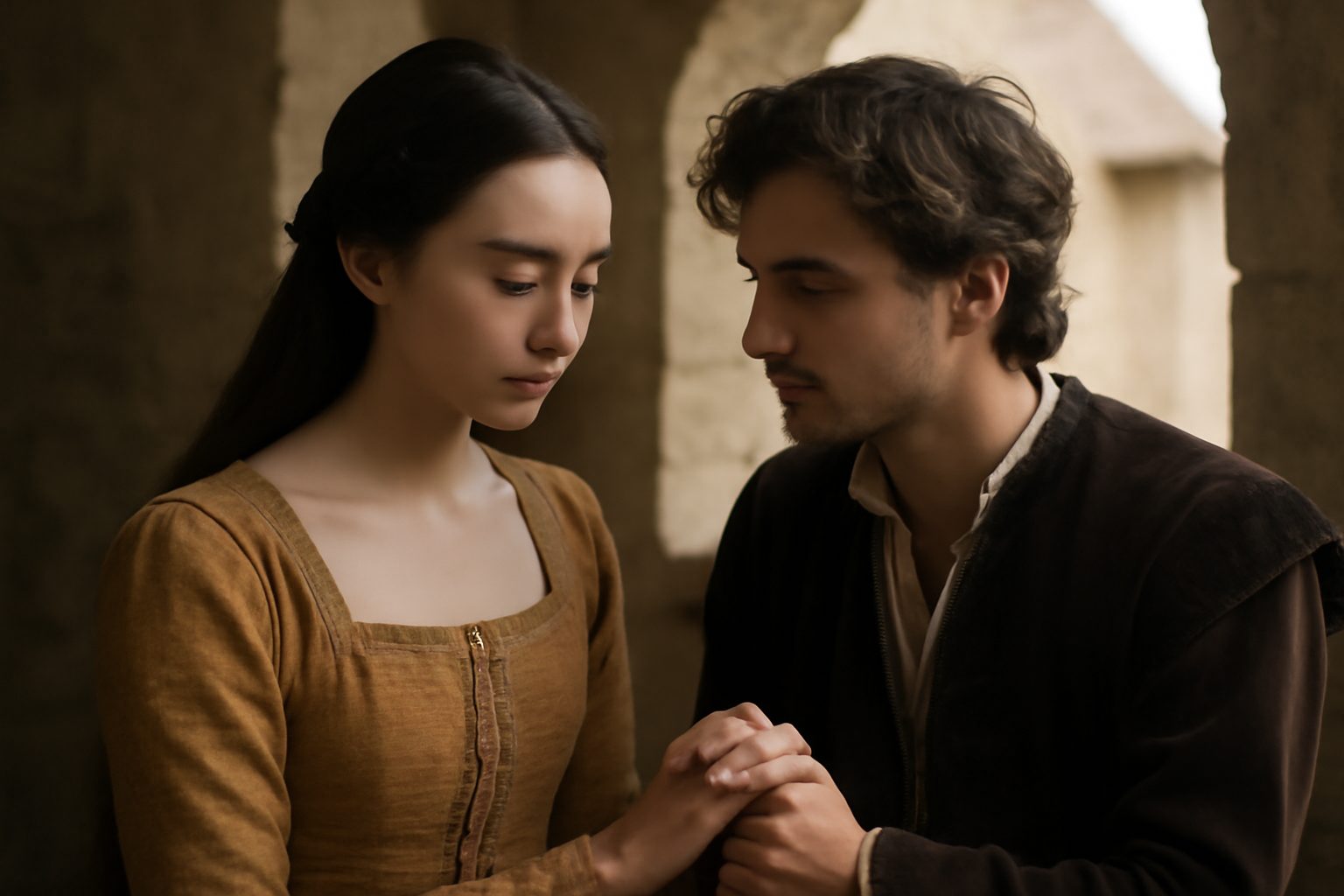
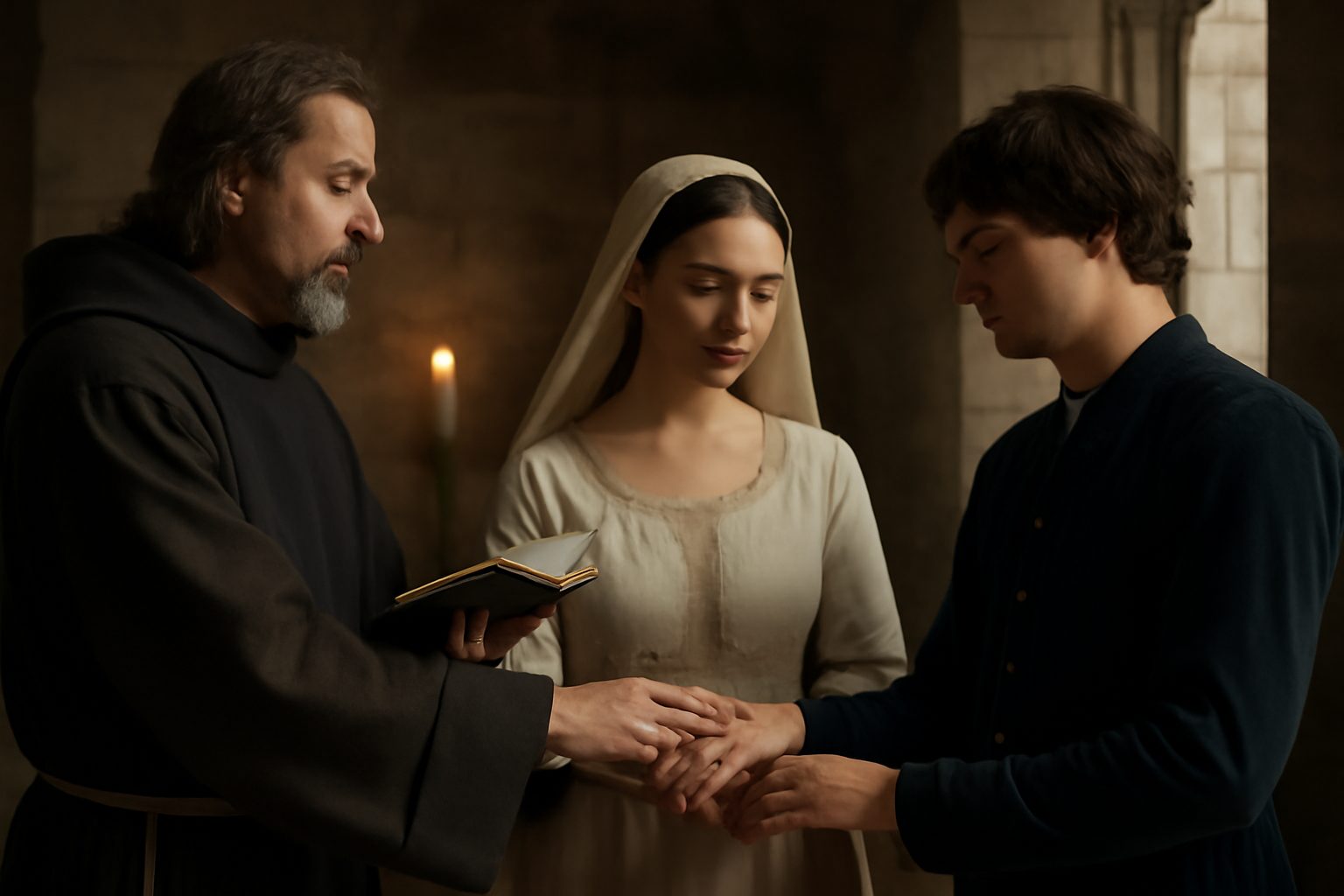
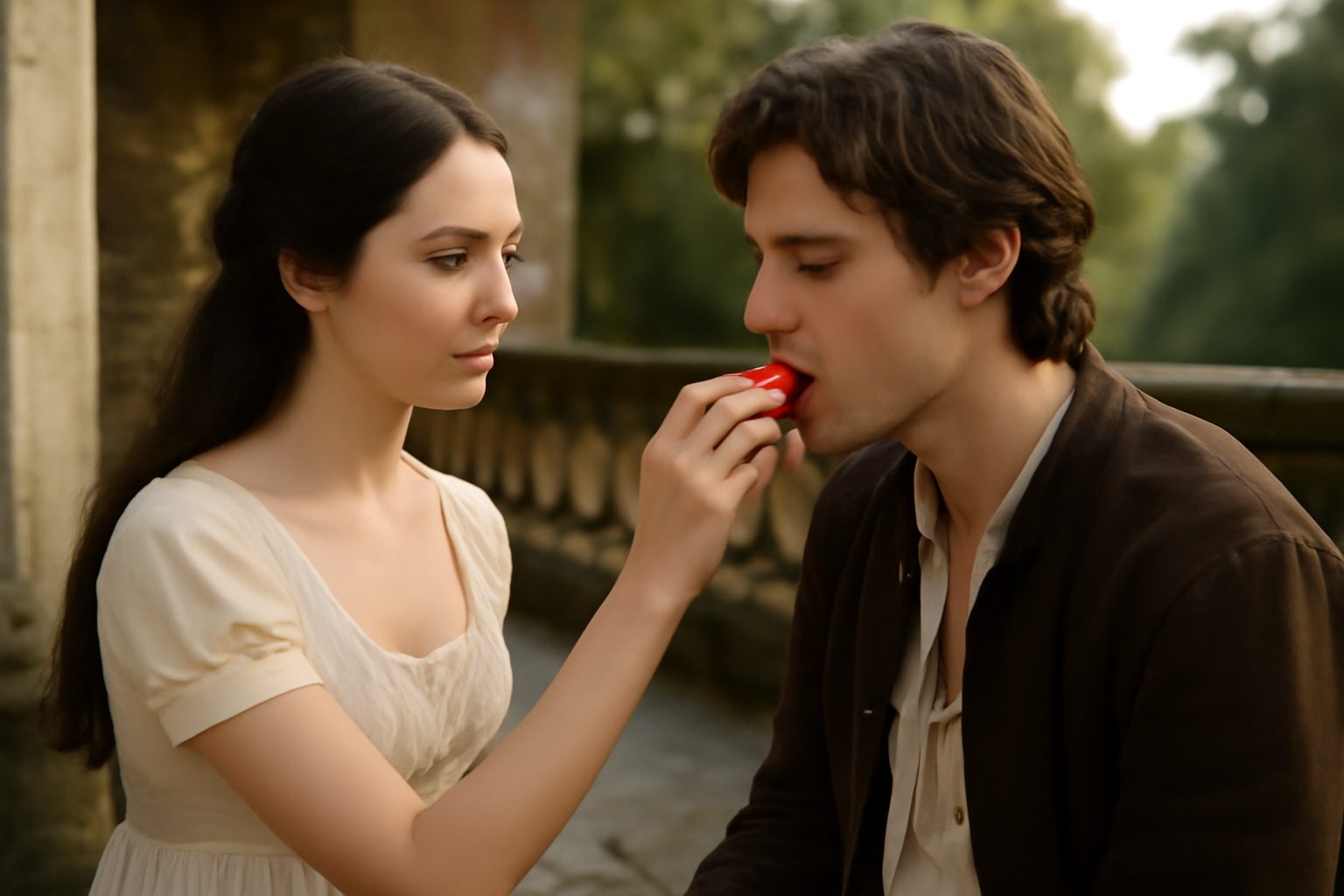
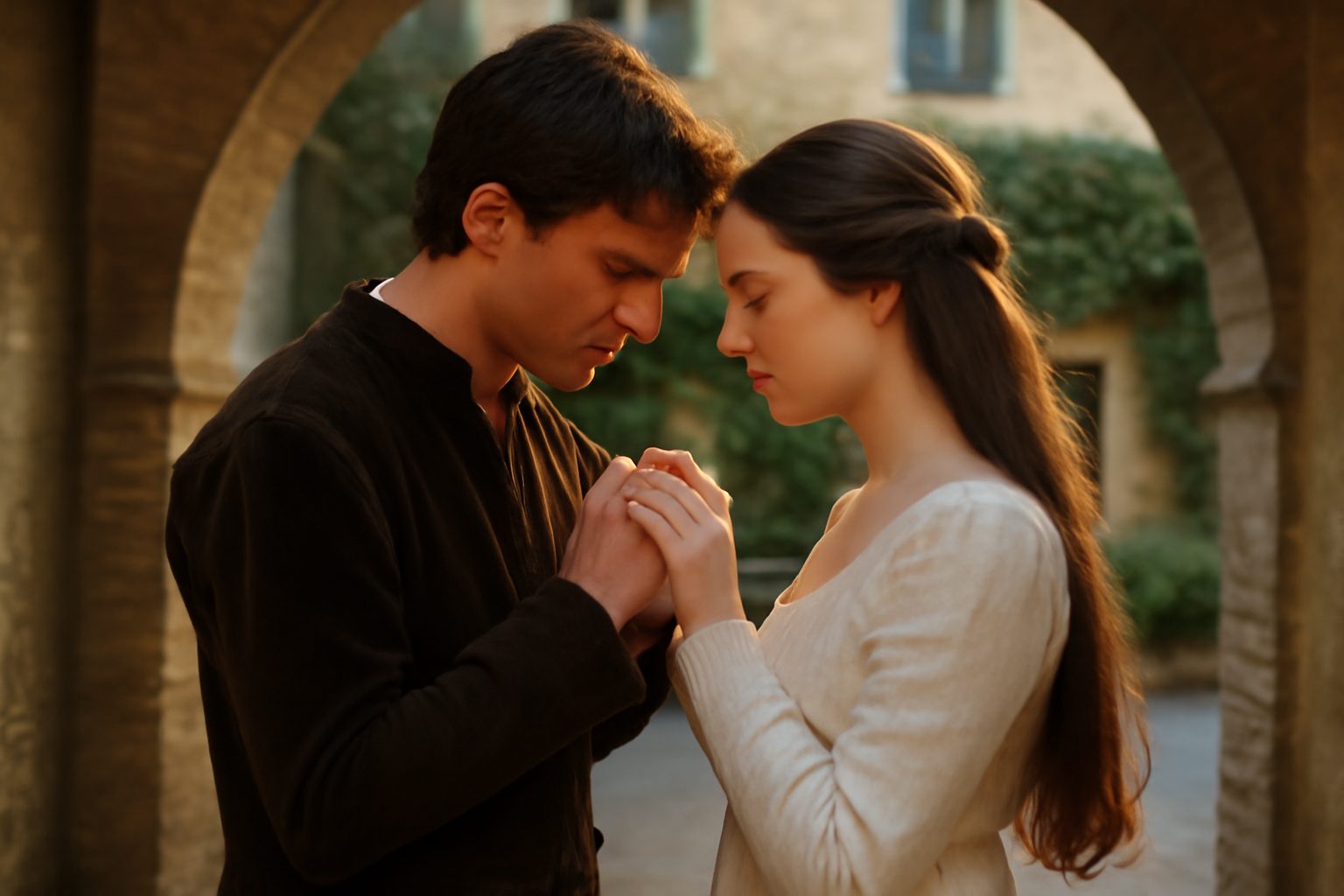
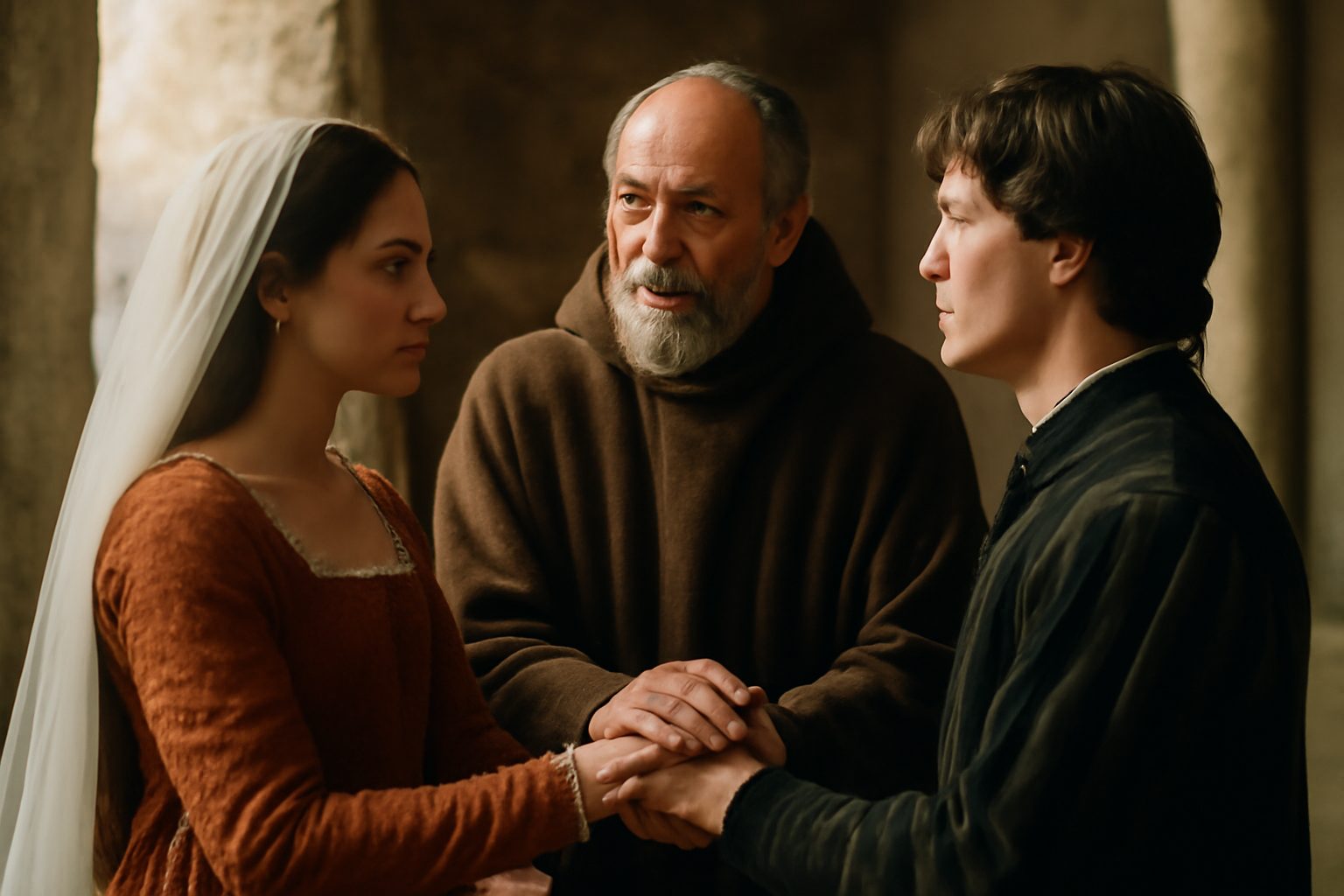
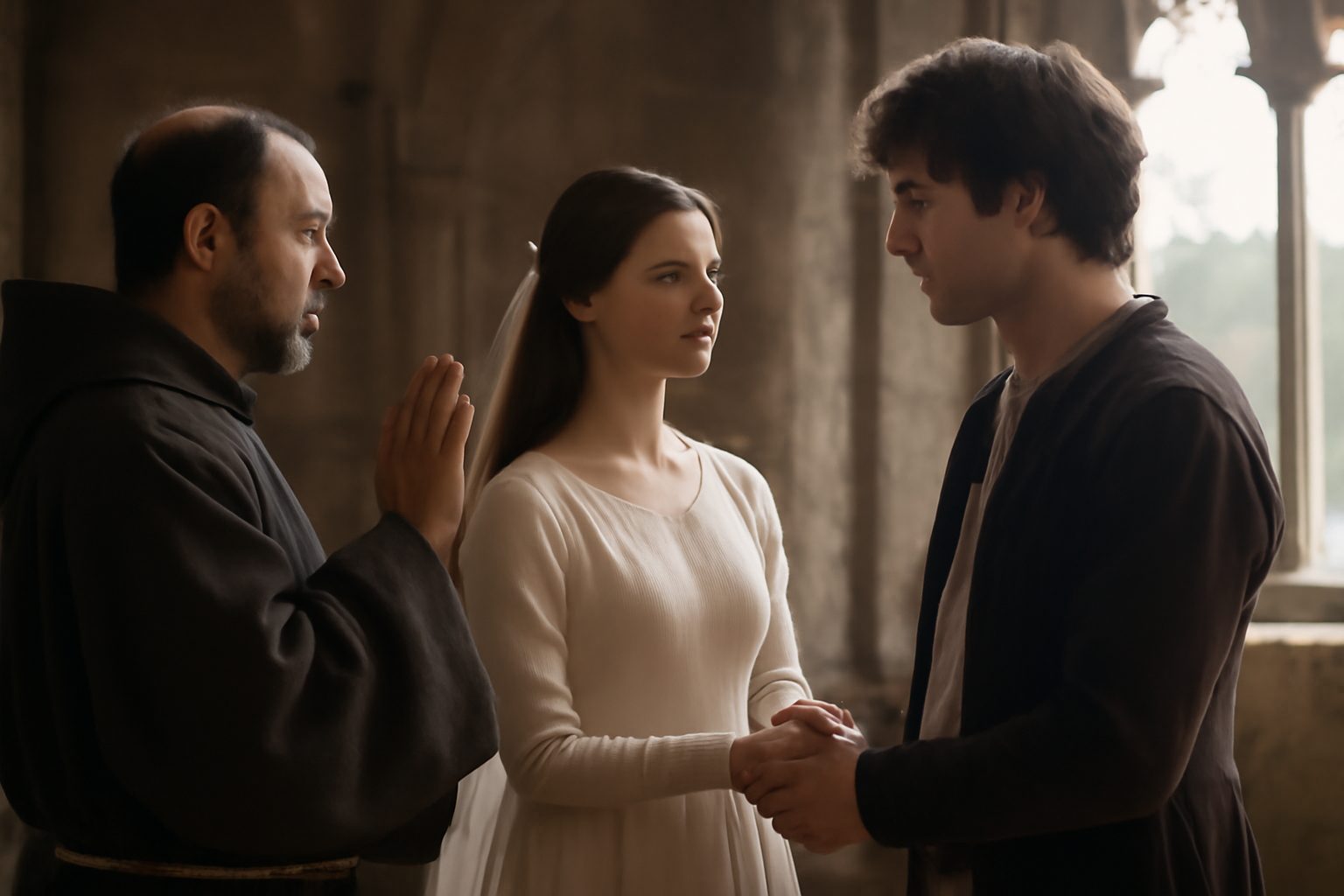
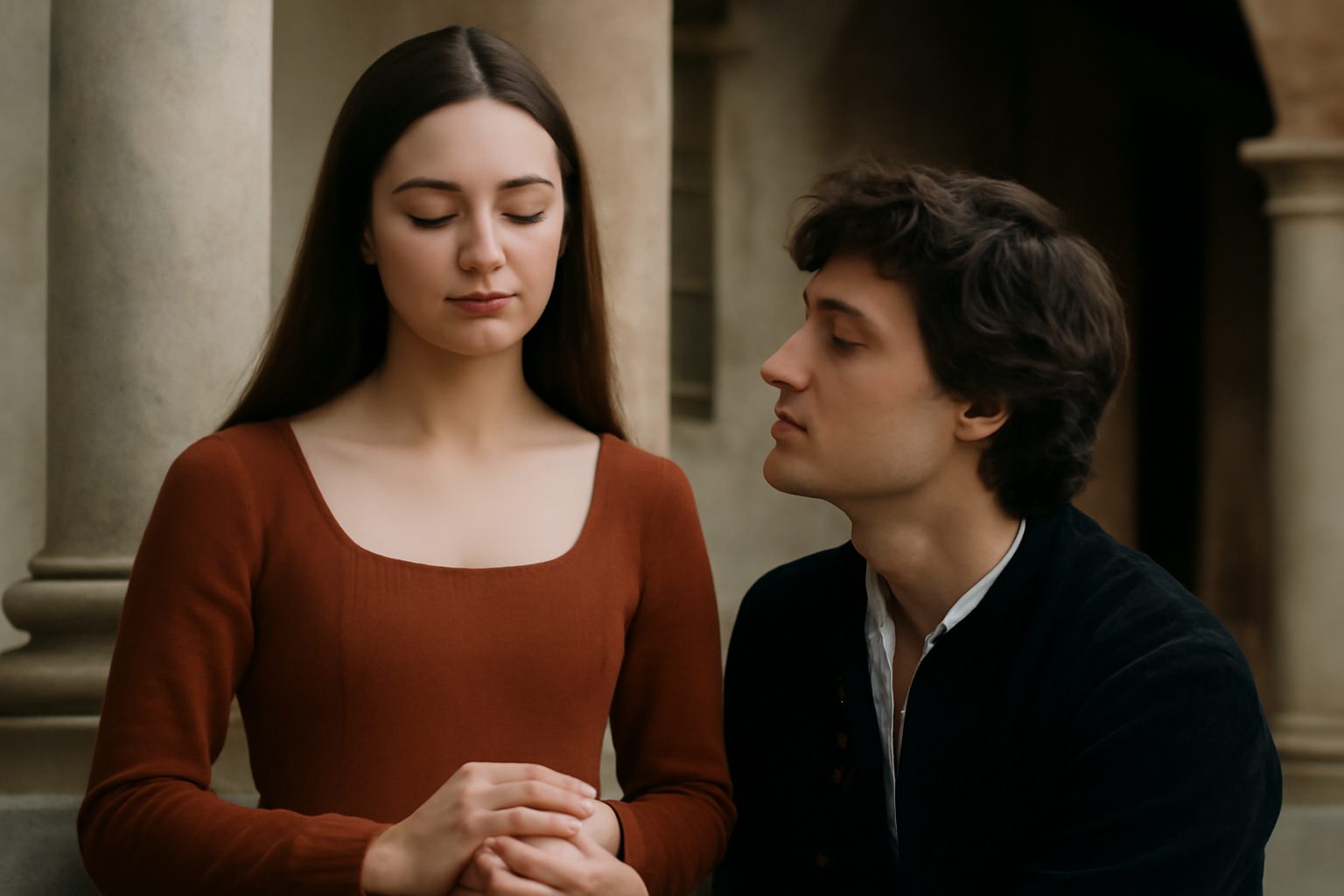
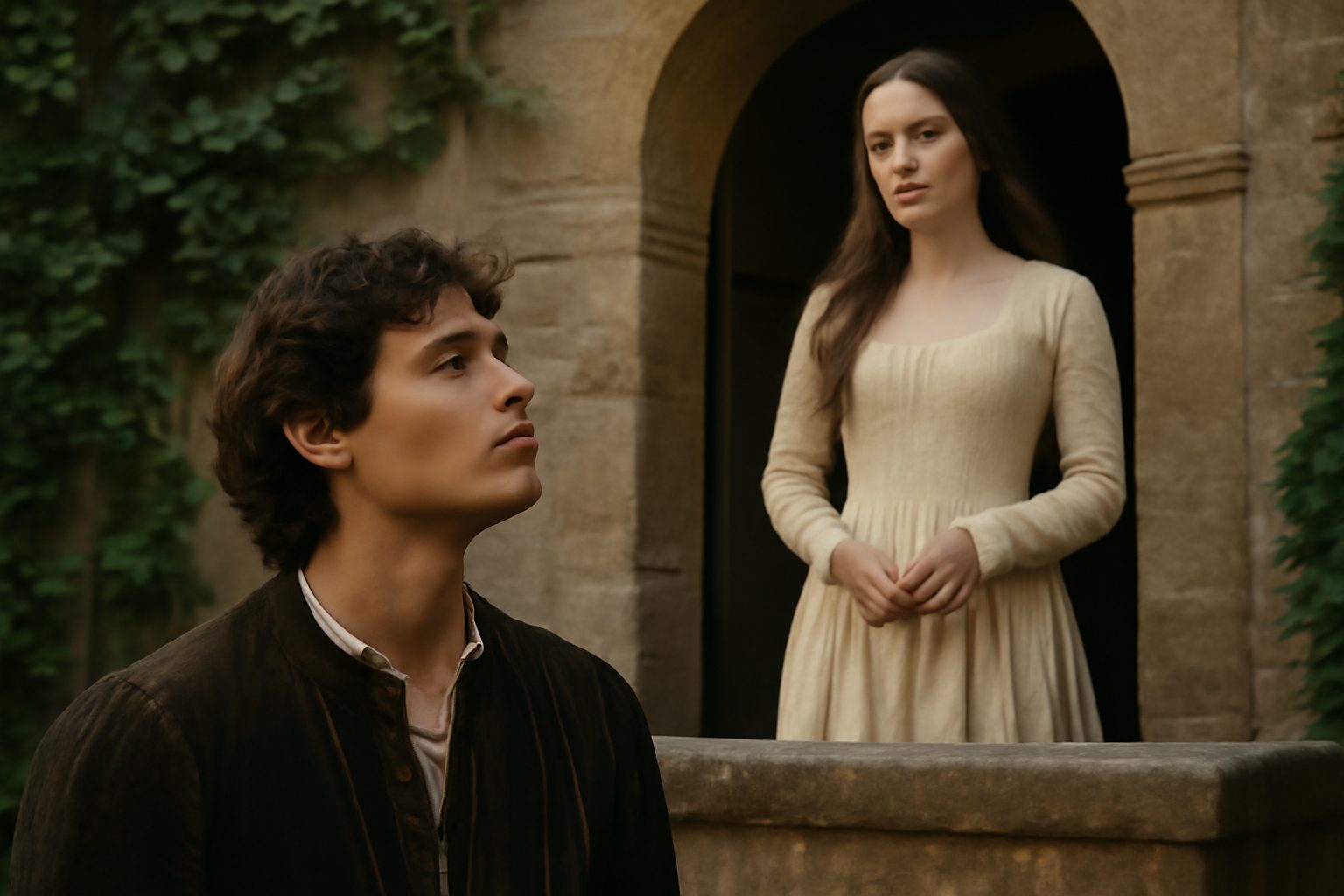
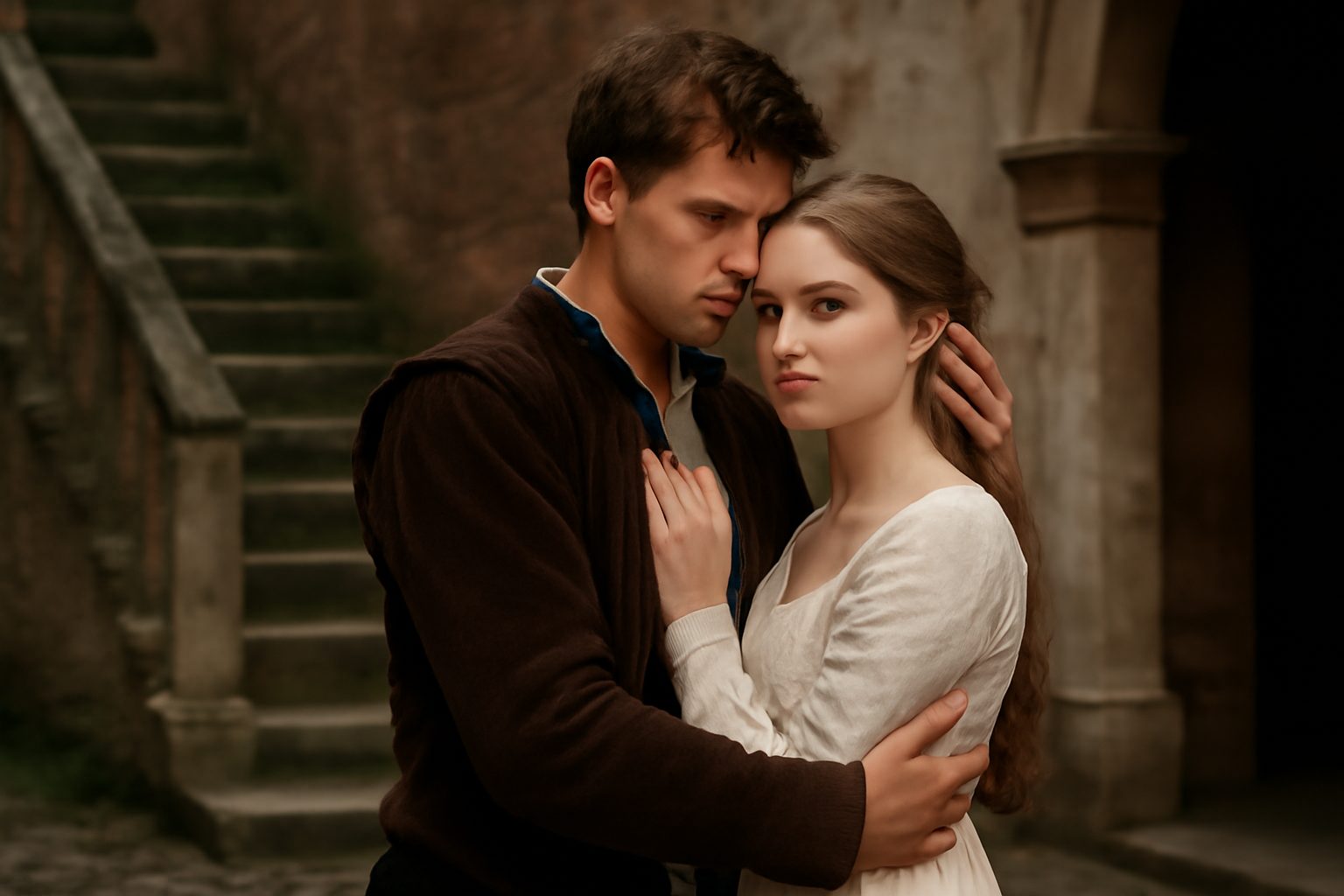
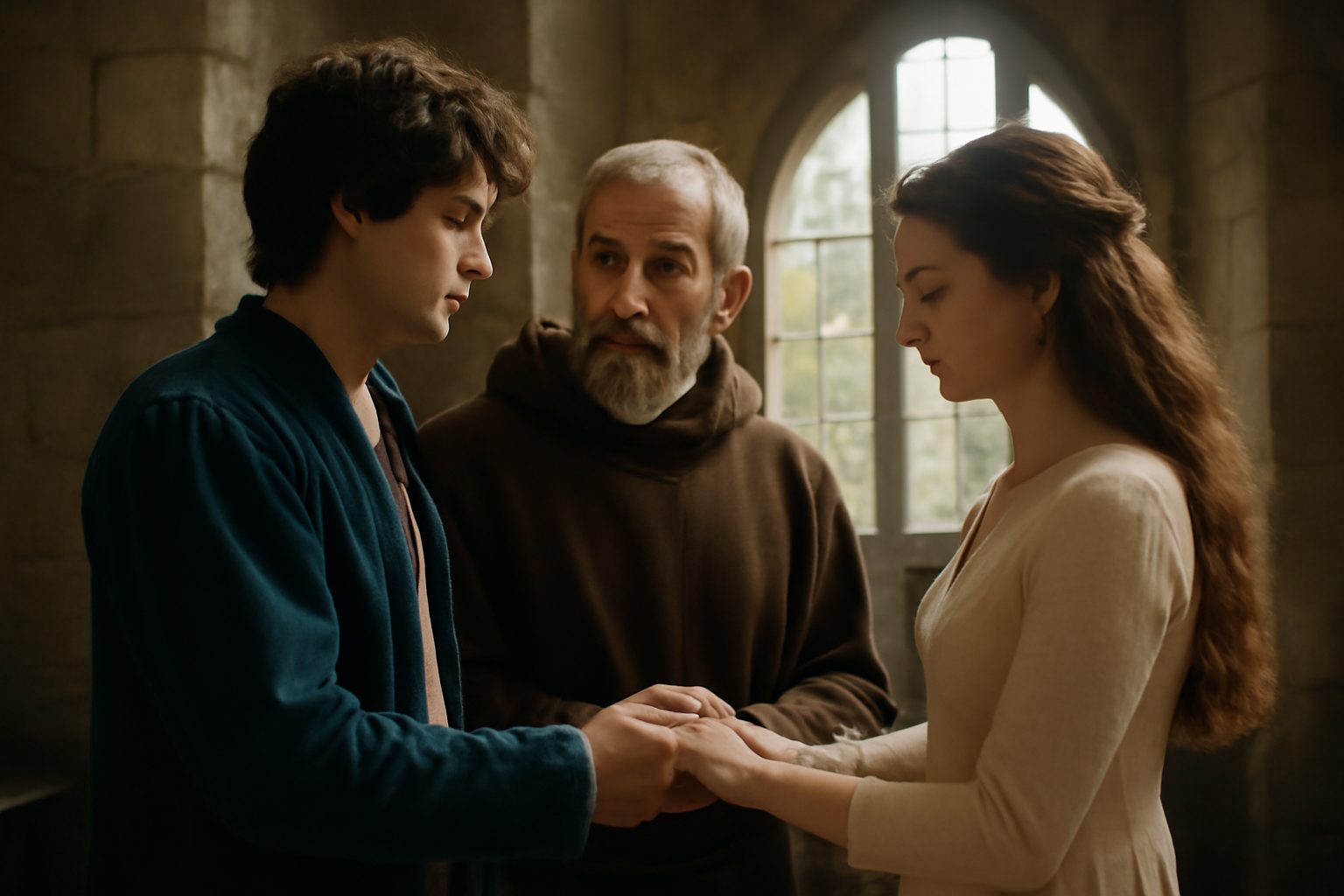
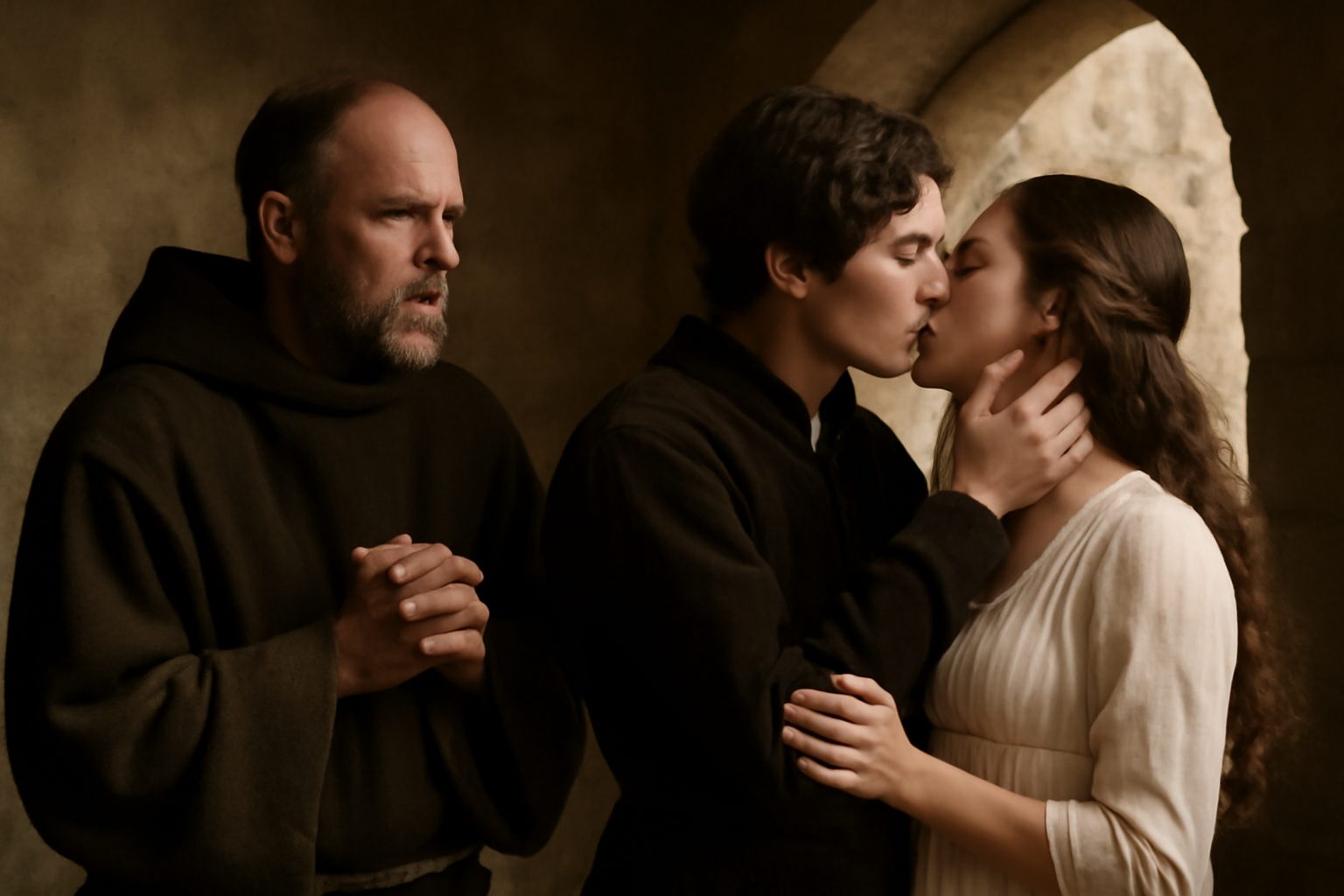
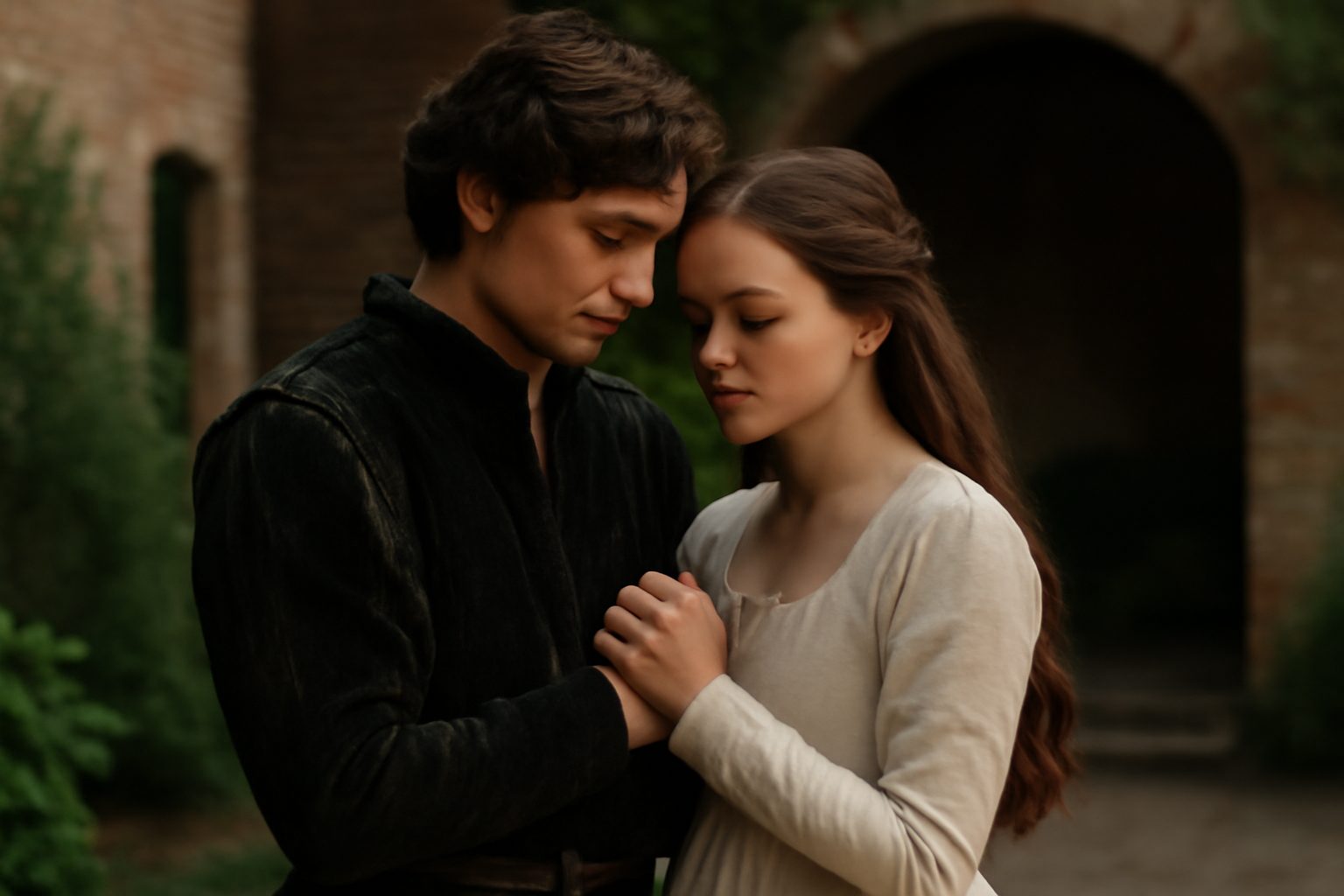
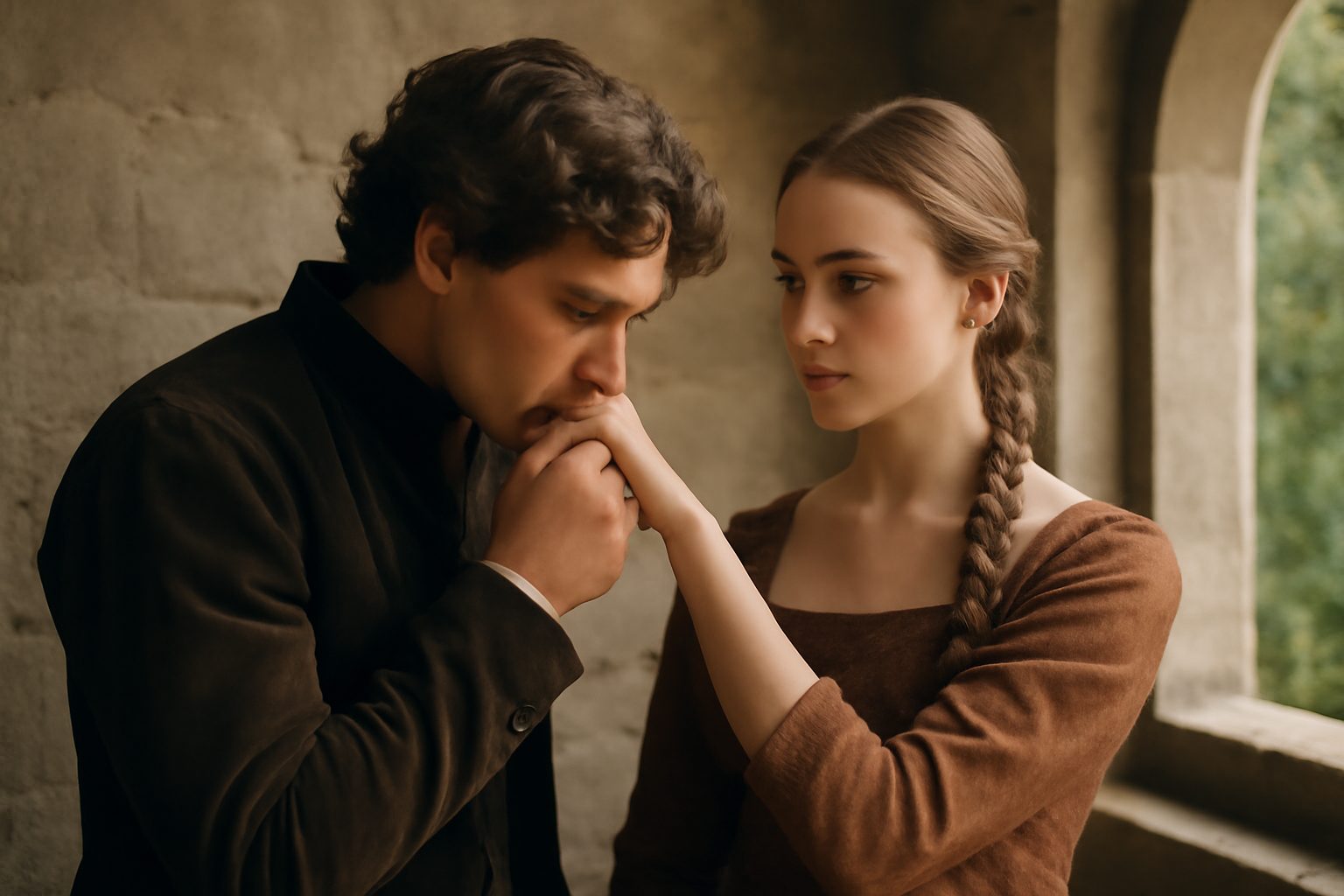
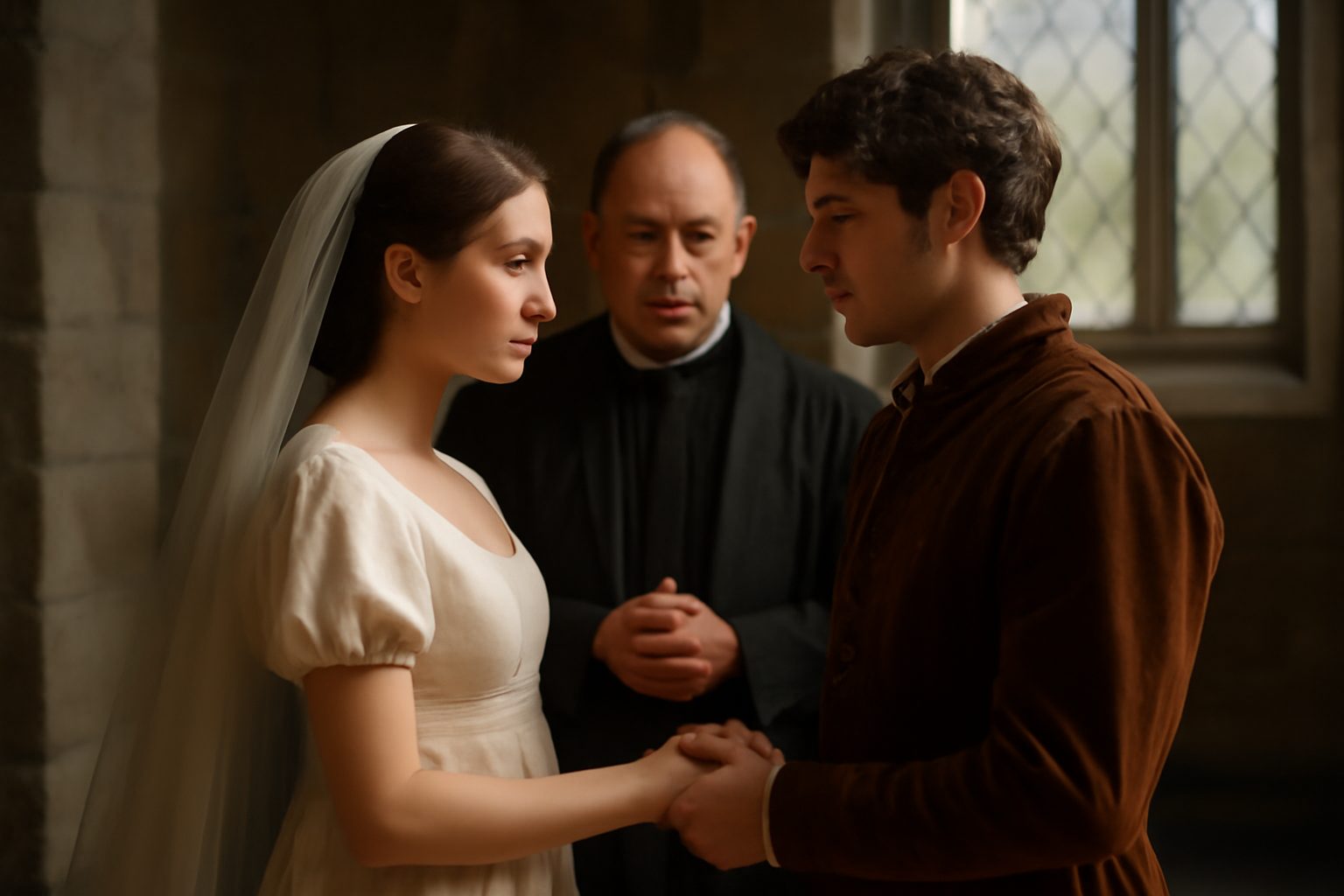
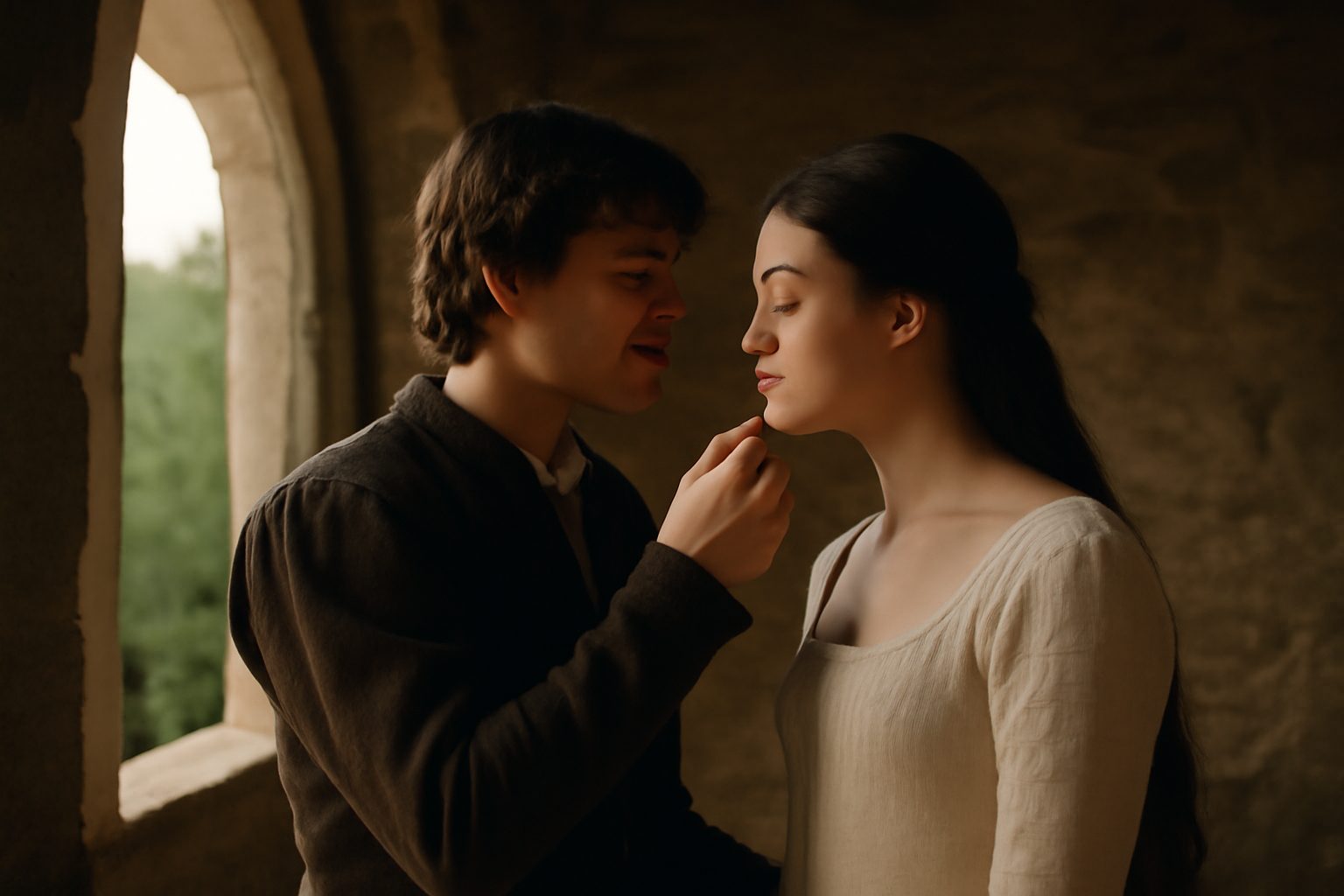
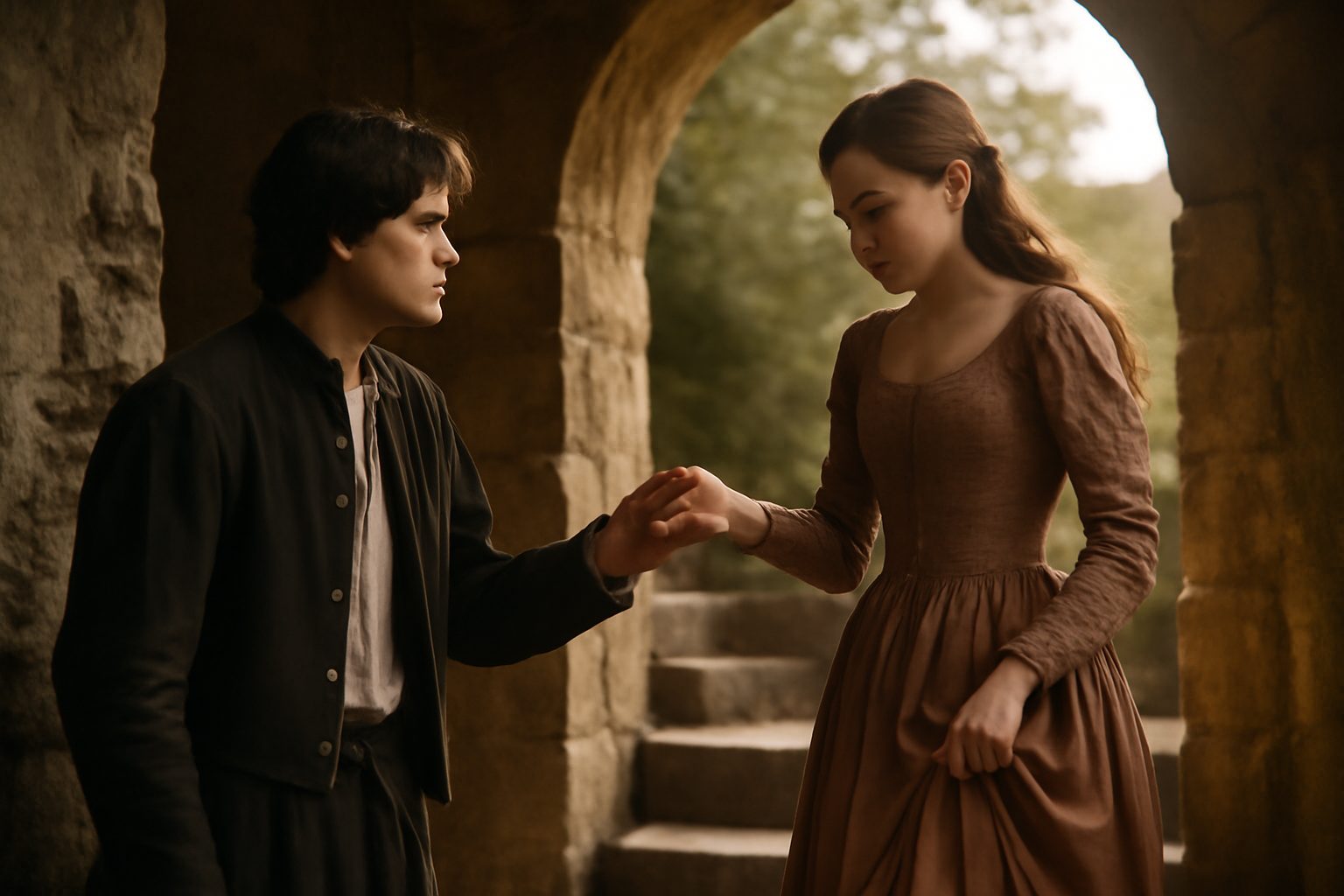
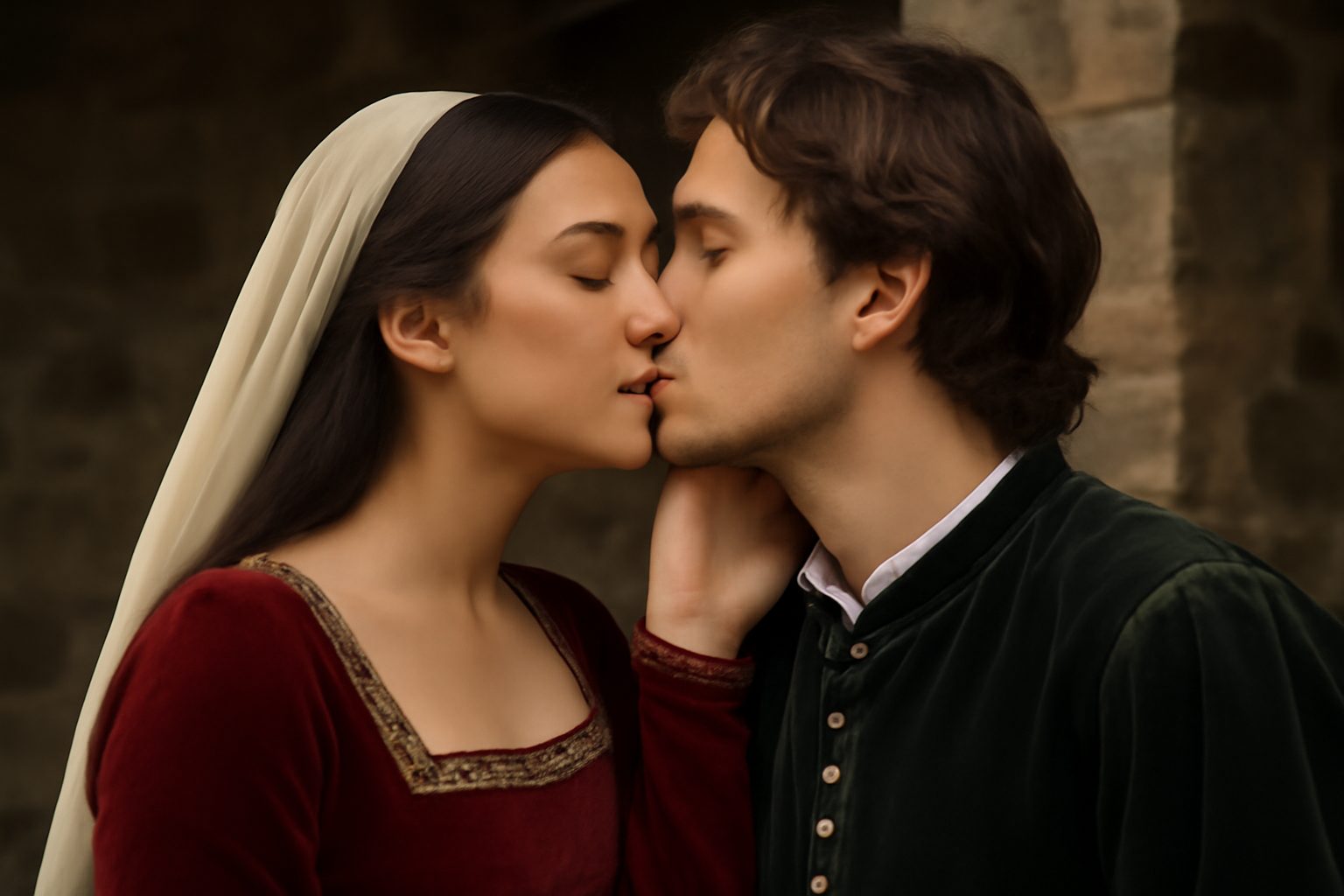
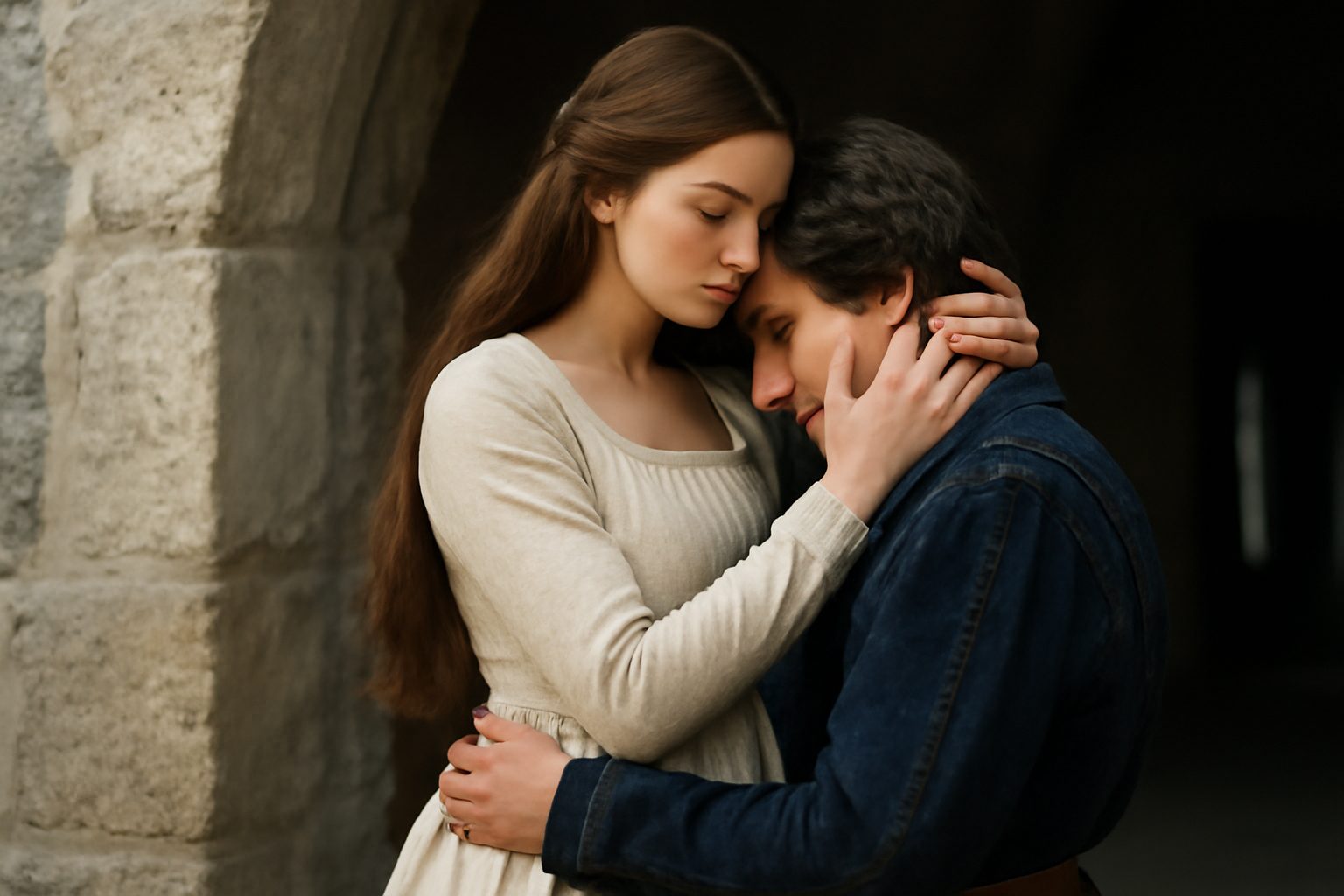
In Act 2, Scene 6 of Romeo and Juliet, Romeo speaks these words to Friar Laurence as he eagerly awaits his secret marriage to Juliet. The scene captures his overwhelming joy and devotion, emphasizing his belief that simply being able to claim Juliet as his own is all the happiness he needs. This moment highlights the intensity of their love, set against the looming tensions of their feuding families.
Romeo: "It is enough I may but call her mine."
In modern day english, we would say:
Just being able to say she’s mine is all I need.
Frequently Asked Questions
What does Romeo mean when he says it is enough for him to call her his?
Romeo means that just being able to say Juliet is his is all the happiness he needs.
Connections to other verses:
Connections to "It is enough I may but call her mine"
Romeo's declaration "It is enough I may but call her mine" reflects his profound contentment in possessing Juliet's love, a sentiment echoed throughout the scene. This line connects thematically and emotionally to several other verses:
Emphasis on Possession and Joy
Romeo's satisfaction in calling Juliet his own is immediately preceded by his request to Friar Laurence: "Do thou but close our hands with holy words", emphasizing the sanctity and fulfillment he anticipates in their union. This joy is further amplified when he states that even a brief moment with Juliet brings immense happiness, as in "That one short minute gives me in her sight", underscoring how her mere presence enriches him.
Defiance of Future Sorrows
Romeo's unwavering commitment, despite potential dangers, is evident in his bold assertion: "Then love-devouring death do what he dare", showing that claiming Juliet as his is worth any risk. This defiance aligns with his earlier resolve in "Amen, amen! but come what sorrow can", where he accepts any sorrow as long as he can call her his.
Contrast with Friar Laurence's Warnings
Friar Laurence's cautionary words provide a stark contrast to Romeo's bliss. He warns that "These violent delights have violent ends" and advises moderation in love, as seen in "Therefore love moderately; long love doth so". Romeo's claim of ownership, however, reveals his rejection of such warnings, highlighting his impulsive and all-consuming passion.
Symbolic and Poetic Enhancements
The theme of possession is enriched by poetic imagery, such as Juliet's ethereal entrance described in "Here comes the lady: O, so light a foot", which complements Romeo's idealization of her. Additionally, the metaphor in "And in their triumph die, like fire and powder" foreshadows the destructive potential of their intense union, subtly undermining Romeo's confident claim.
Resolution and Union
The scene culminates in the Friar's action to unite them, as he says "Till holy church incorporate two in one", fulfilling Romeo's desire to call Juliet his own in the eyes of God and society. This act solidifies the possessive joy Romeo expresses, bringing his wish to fruition despite the looming tragedies foreshadowed elsewhere in the scene.