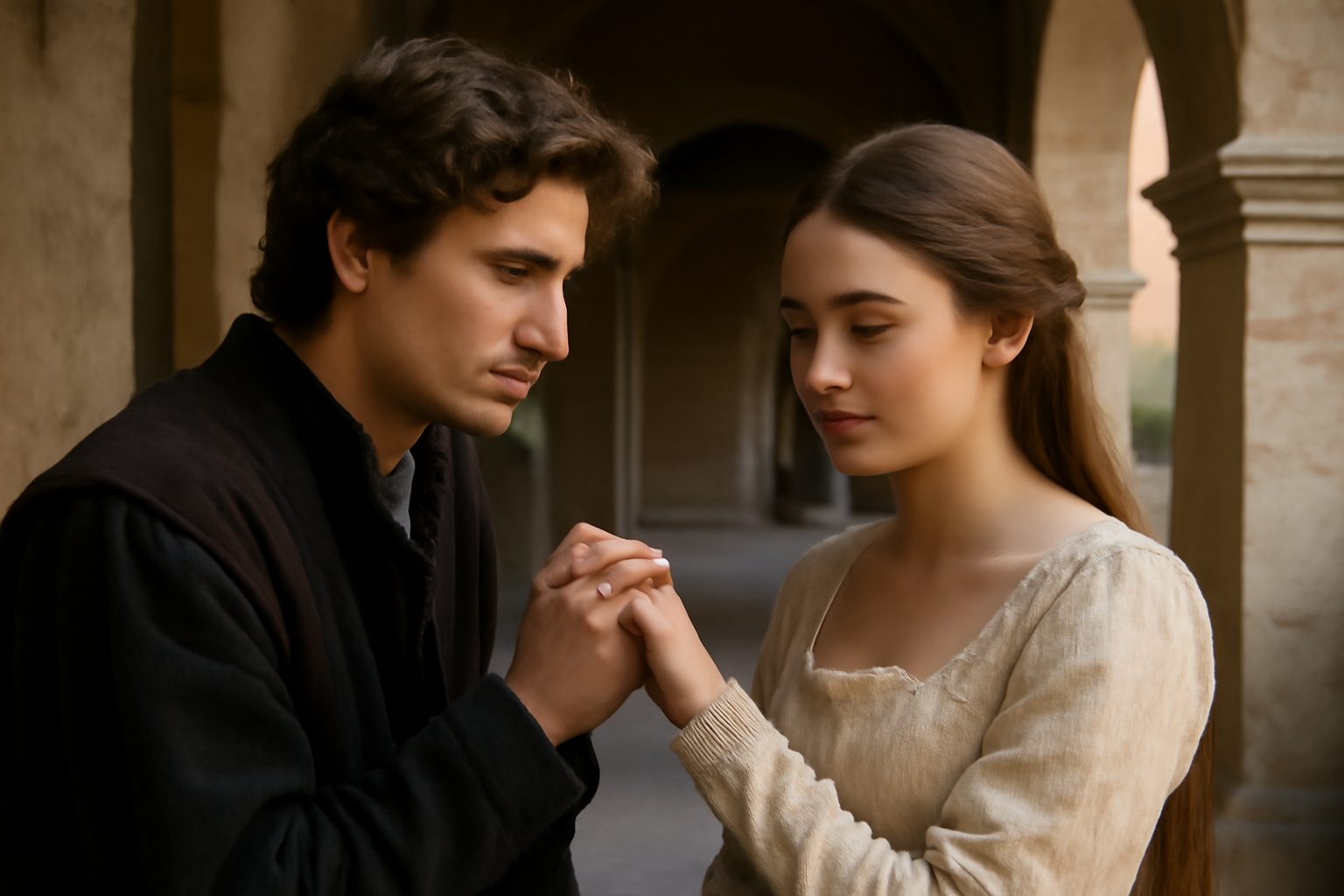
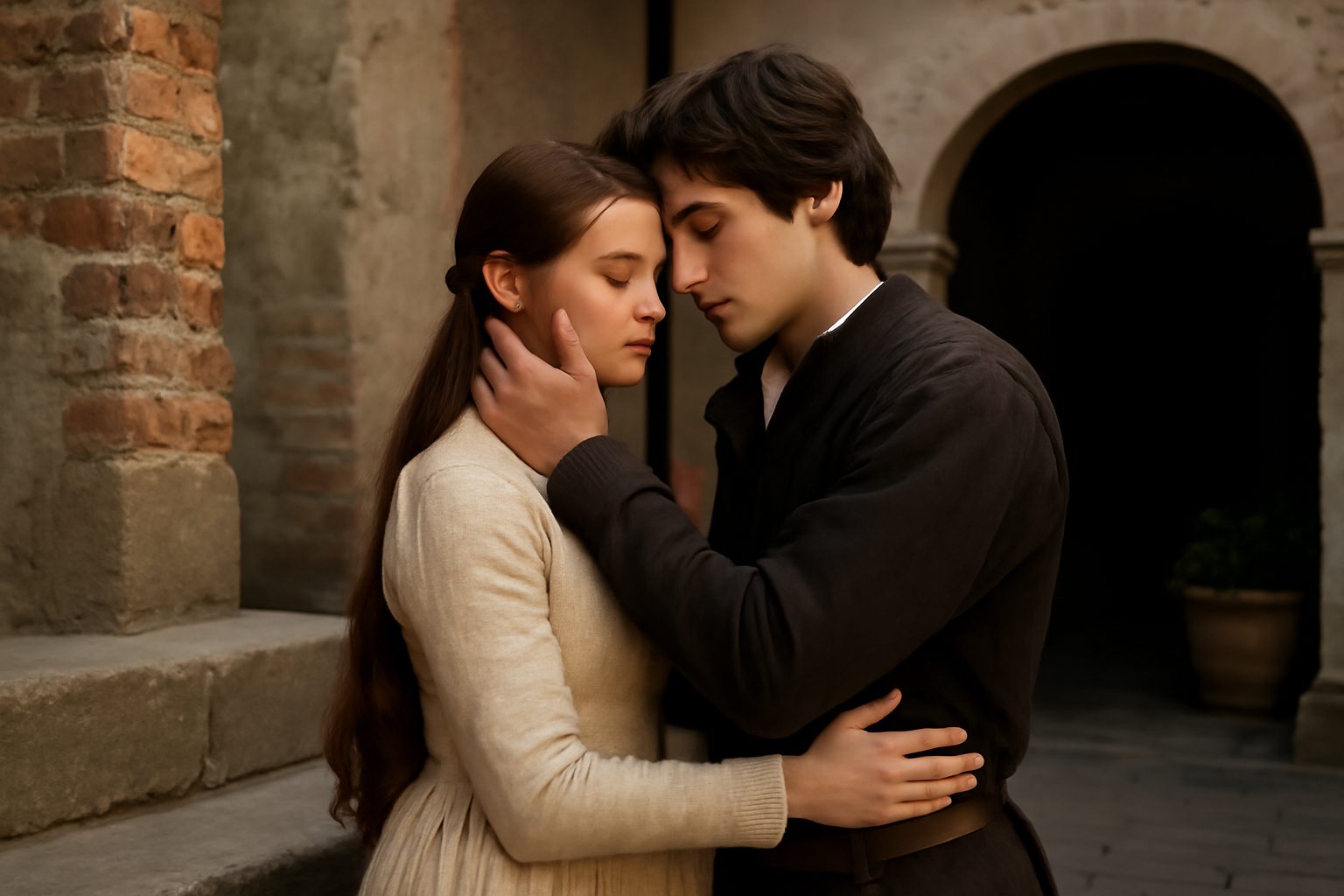
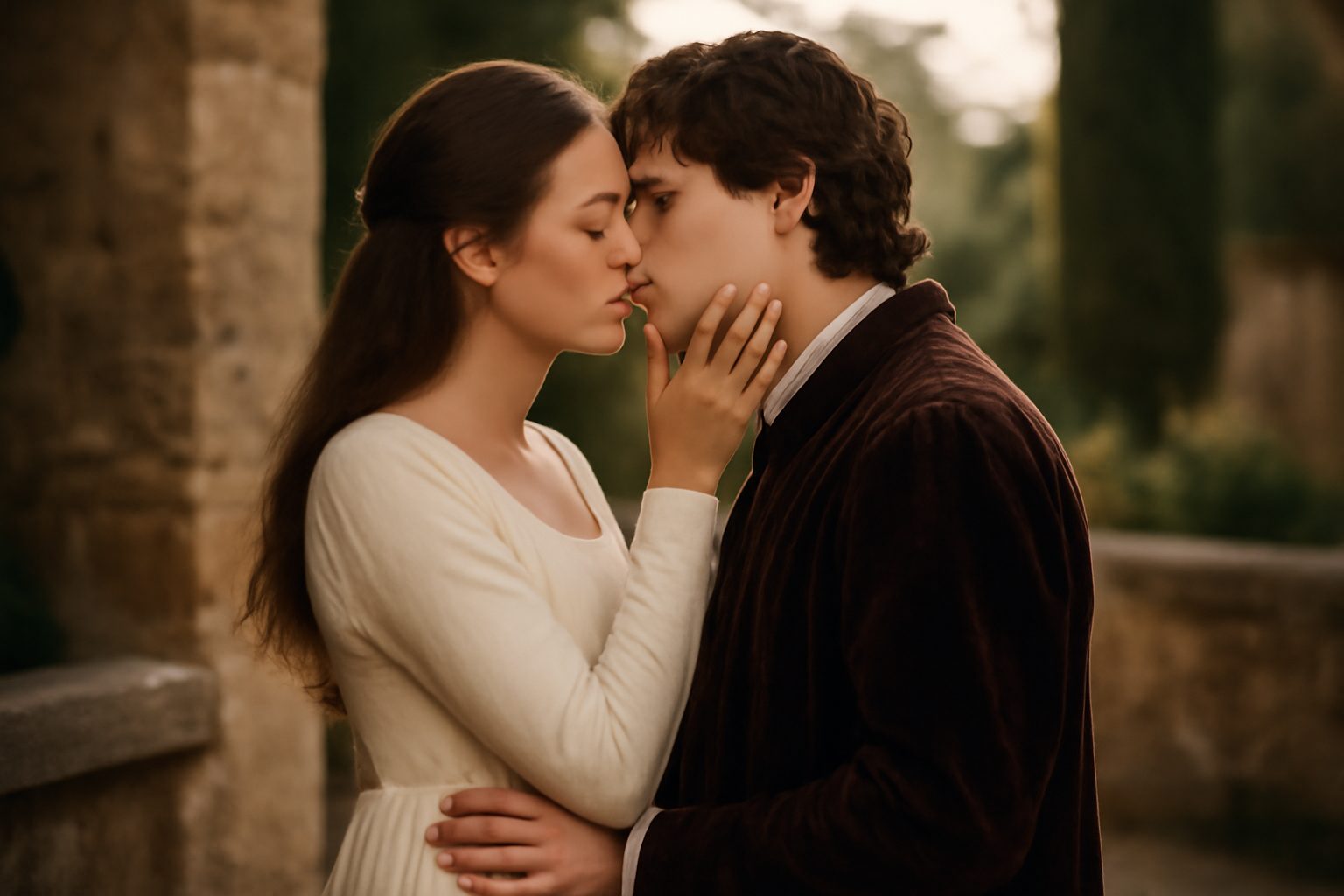
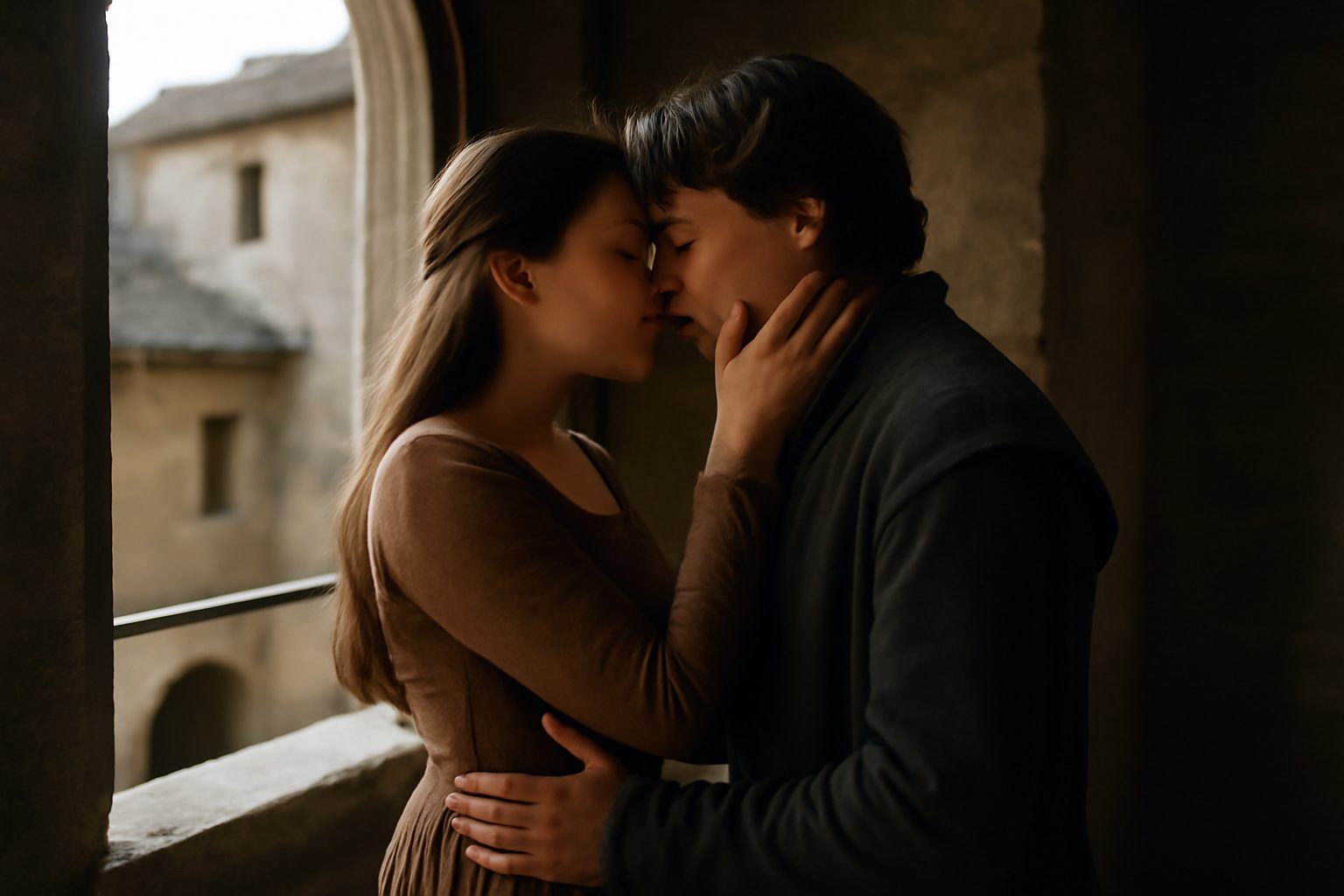
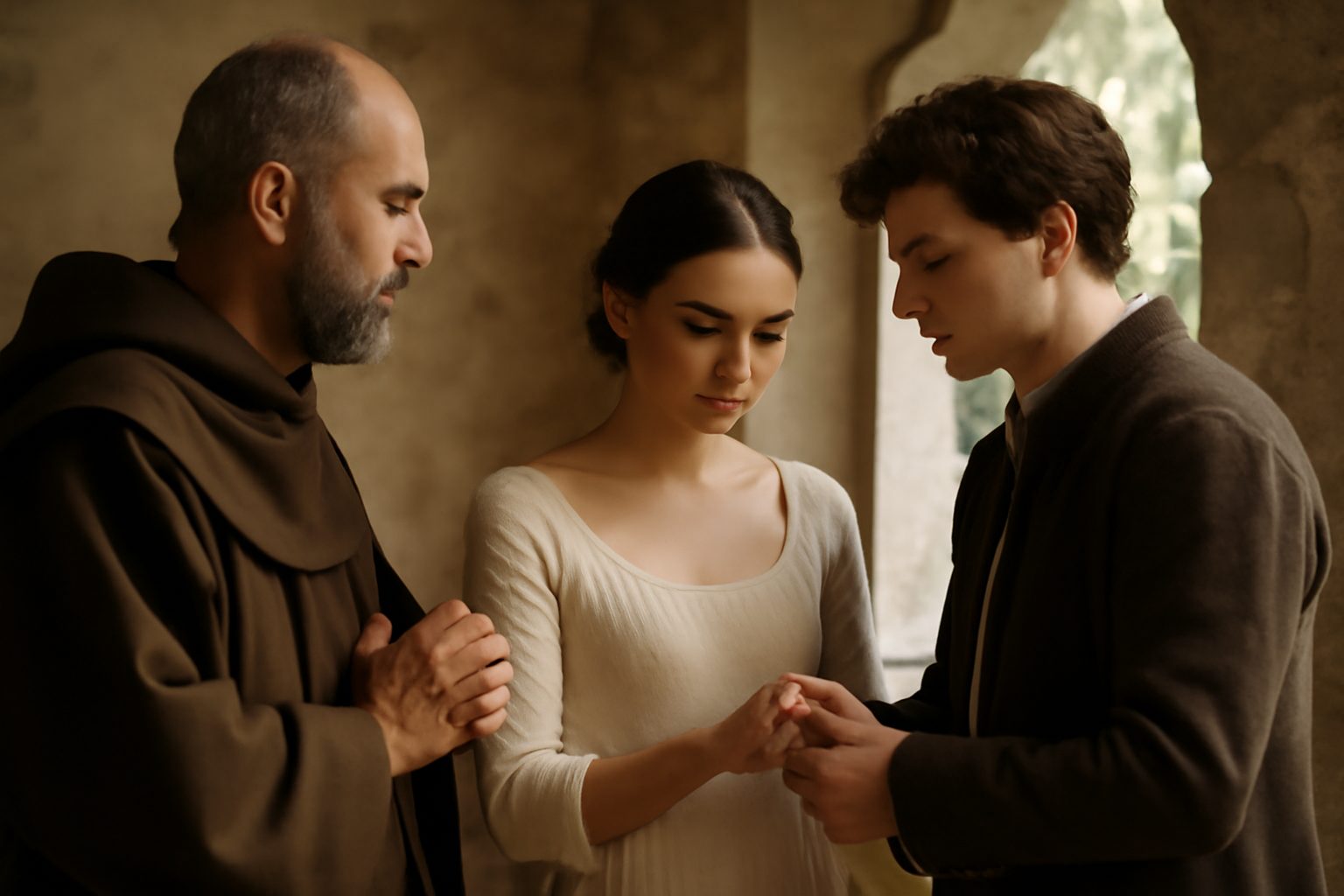
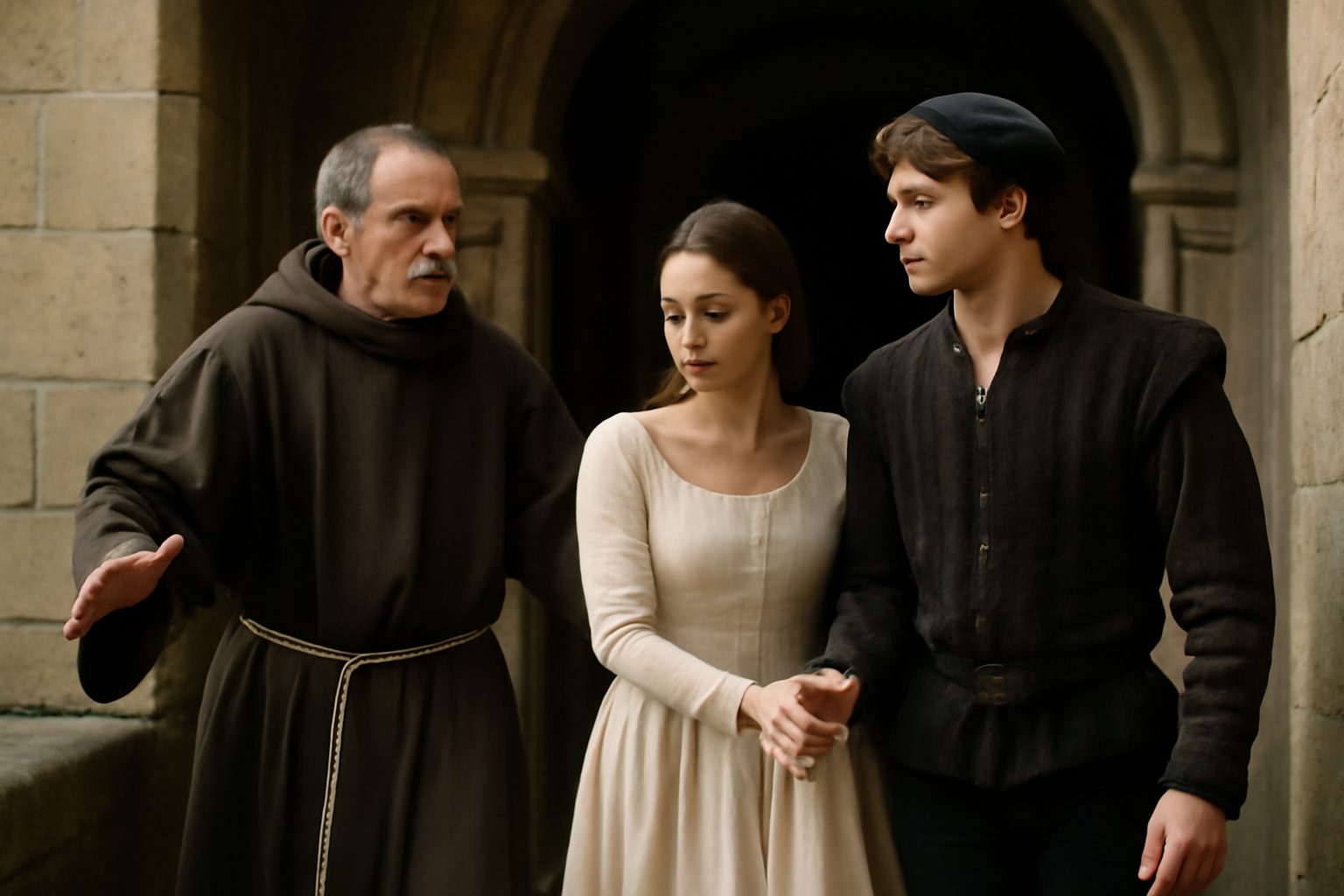
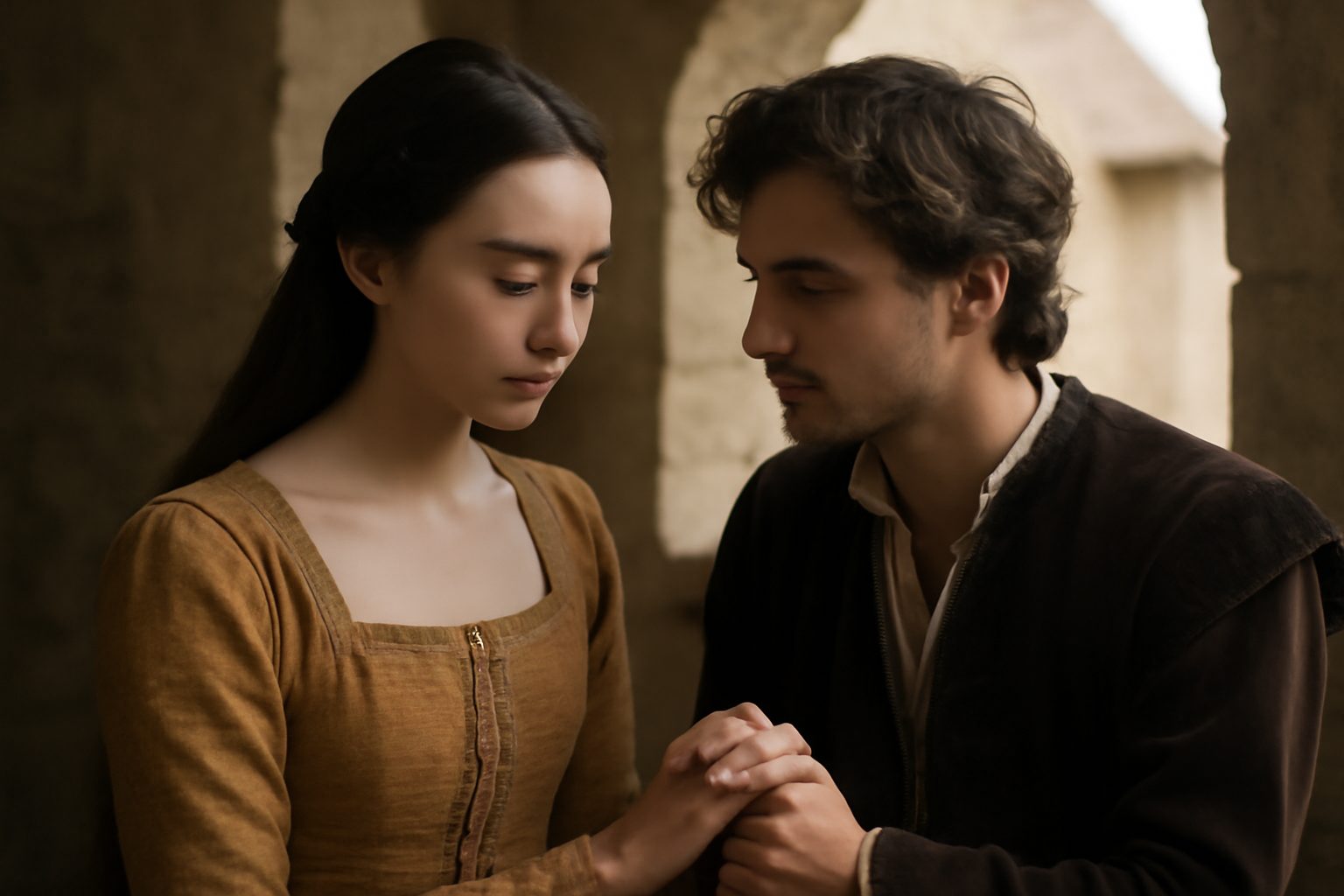
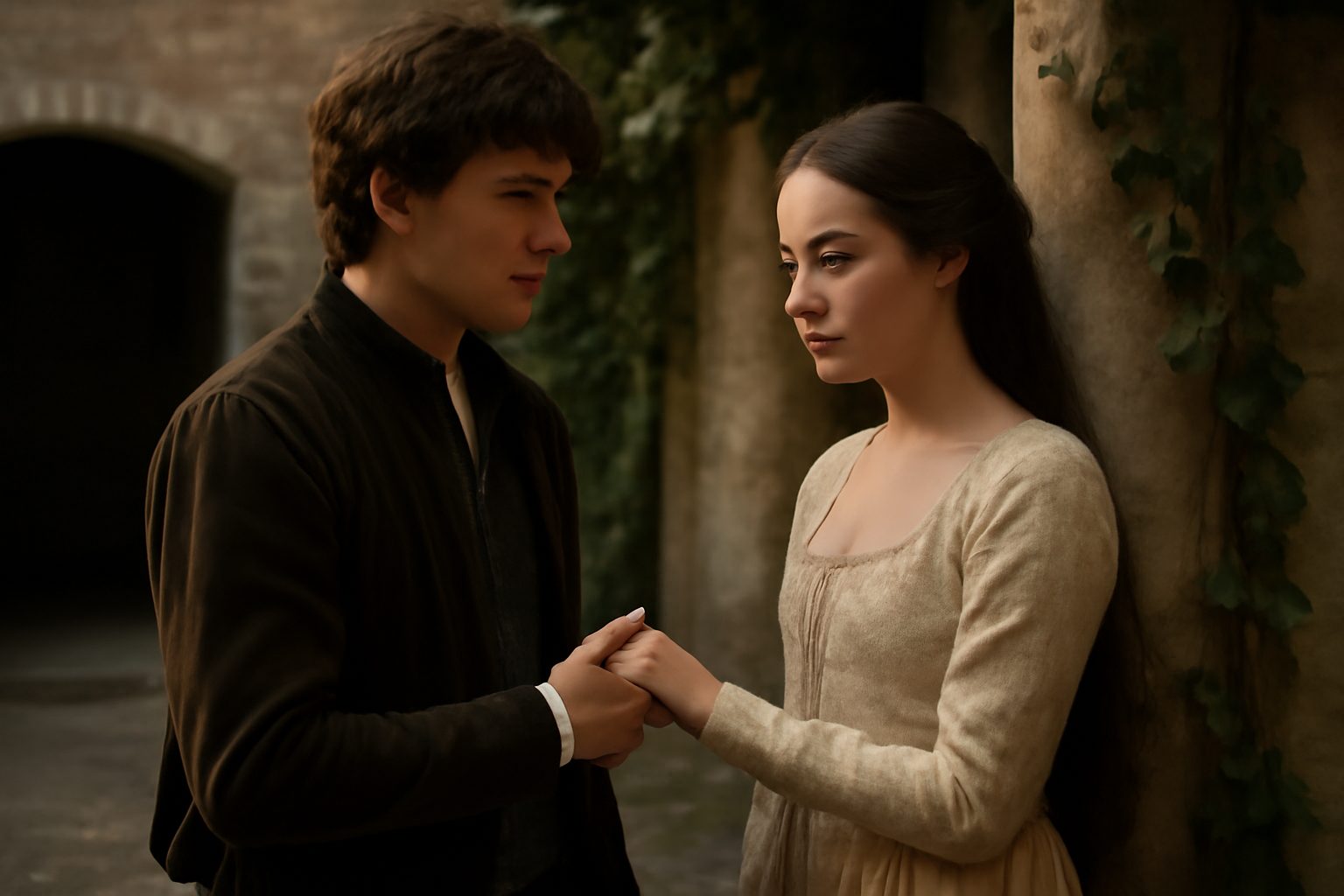
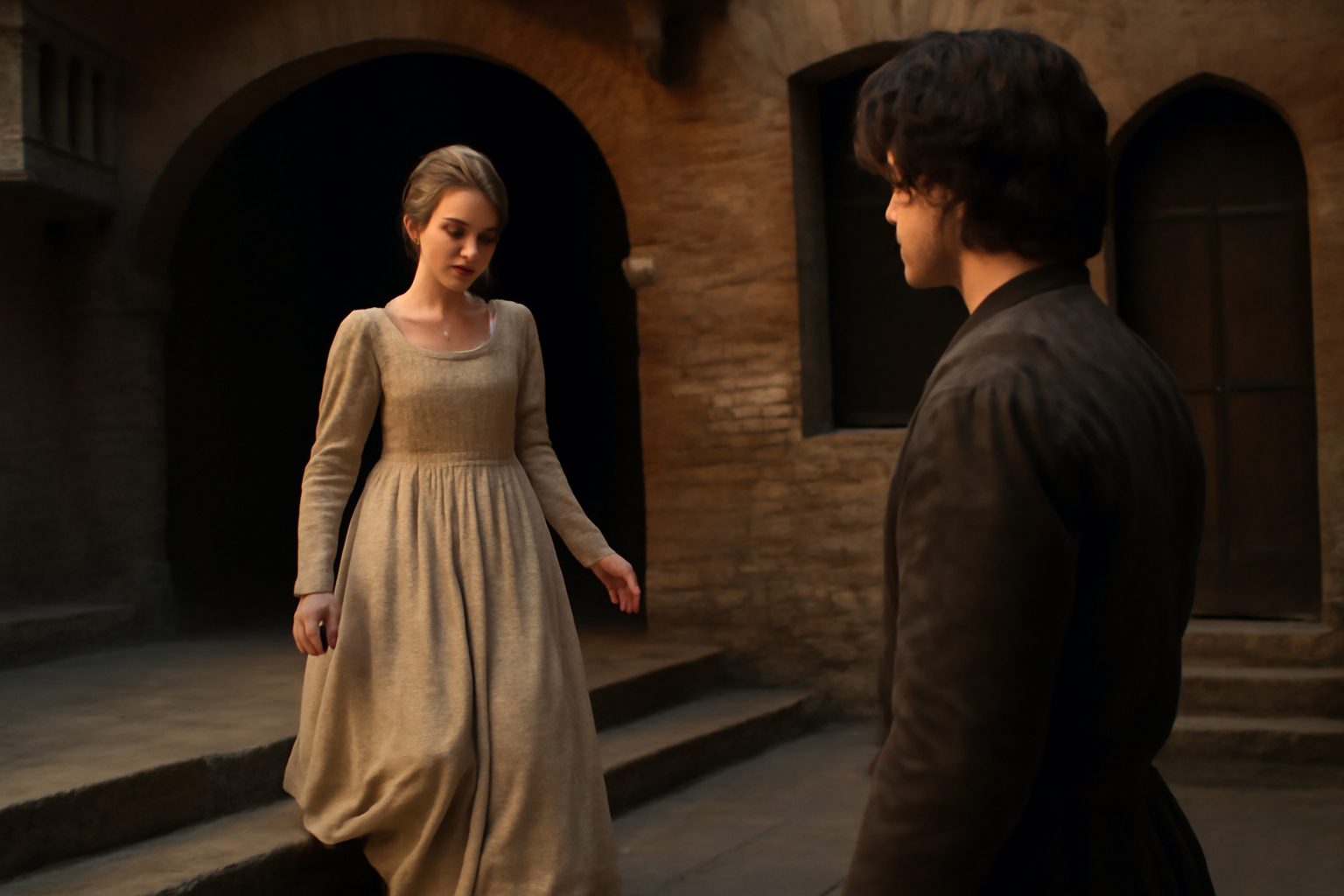
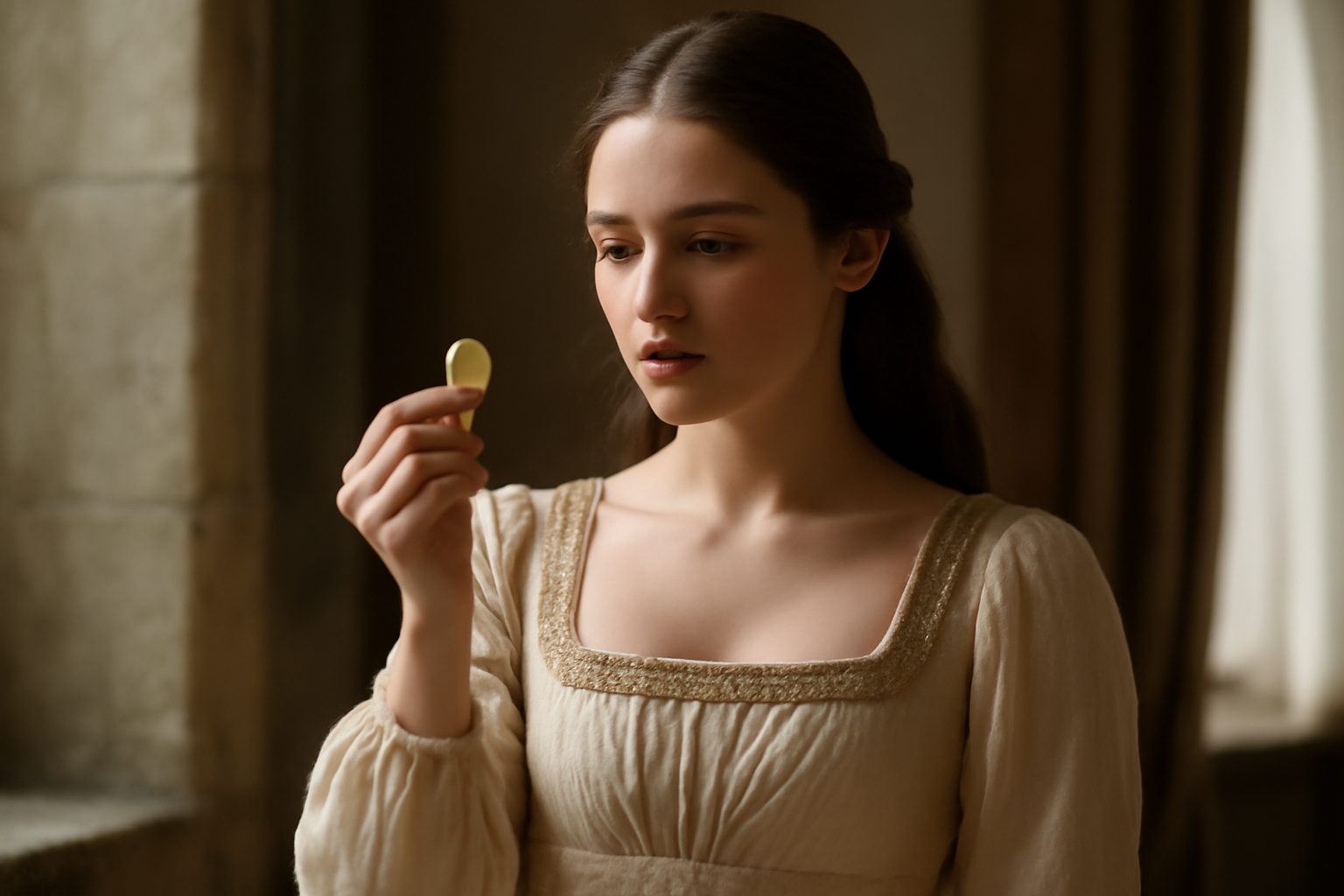
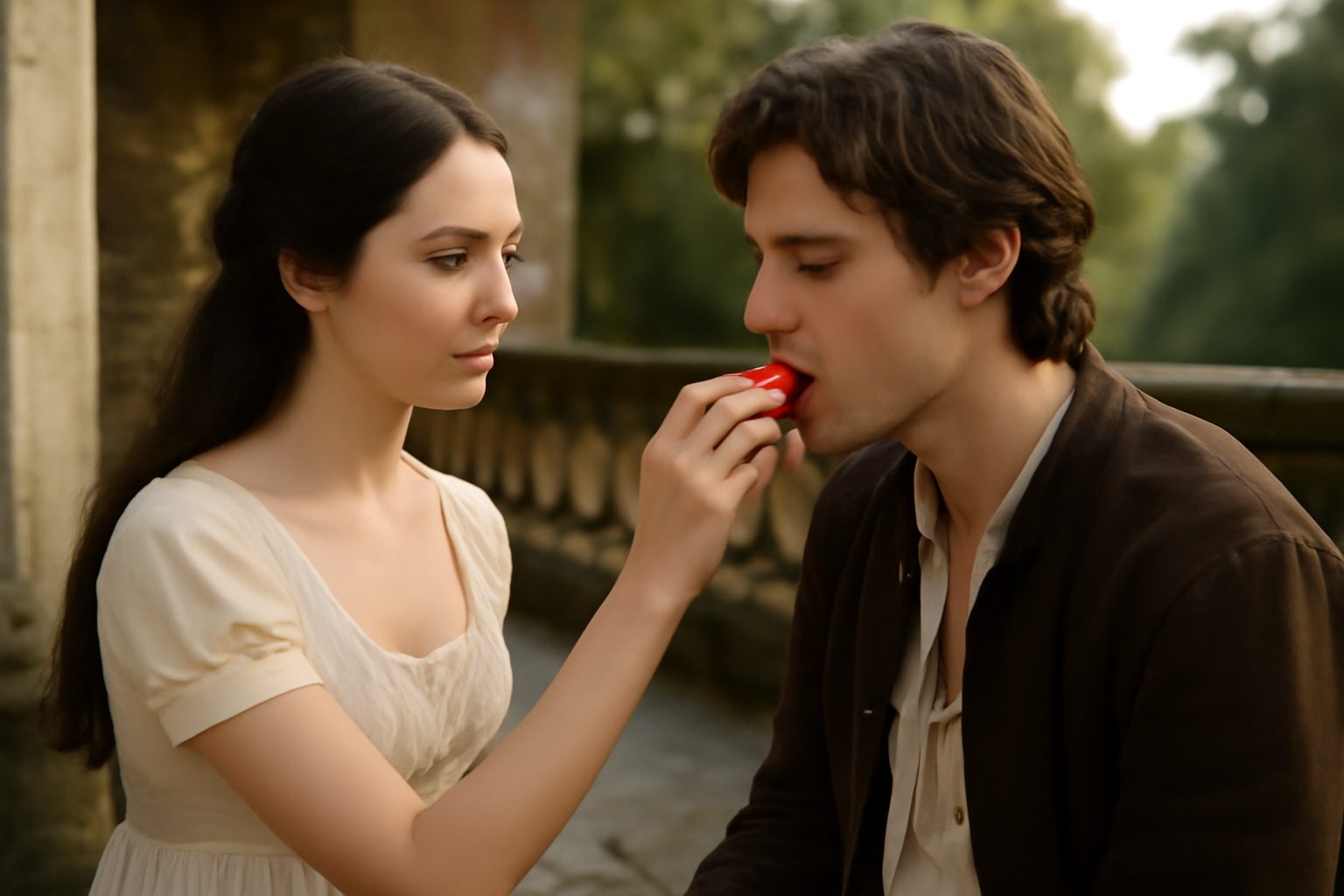
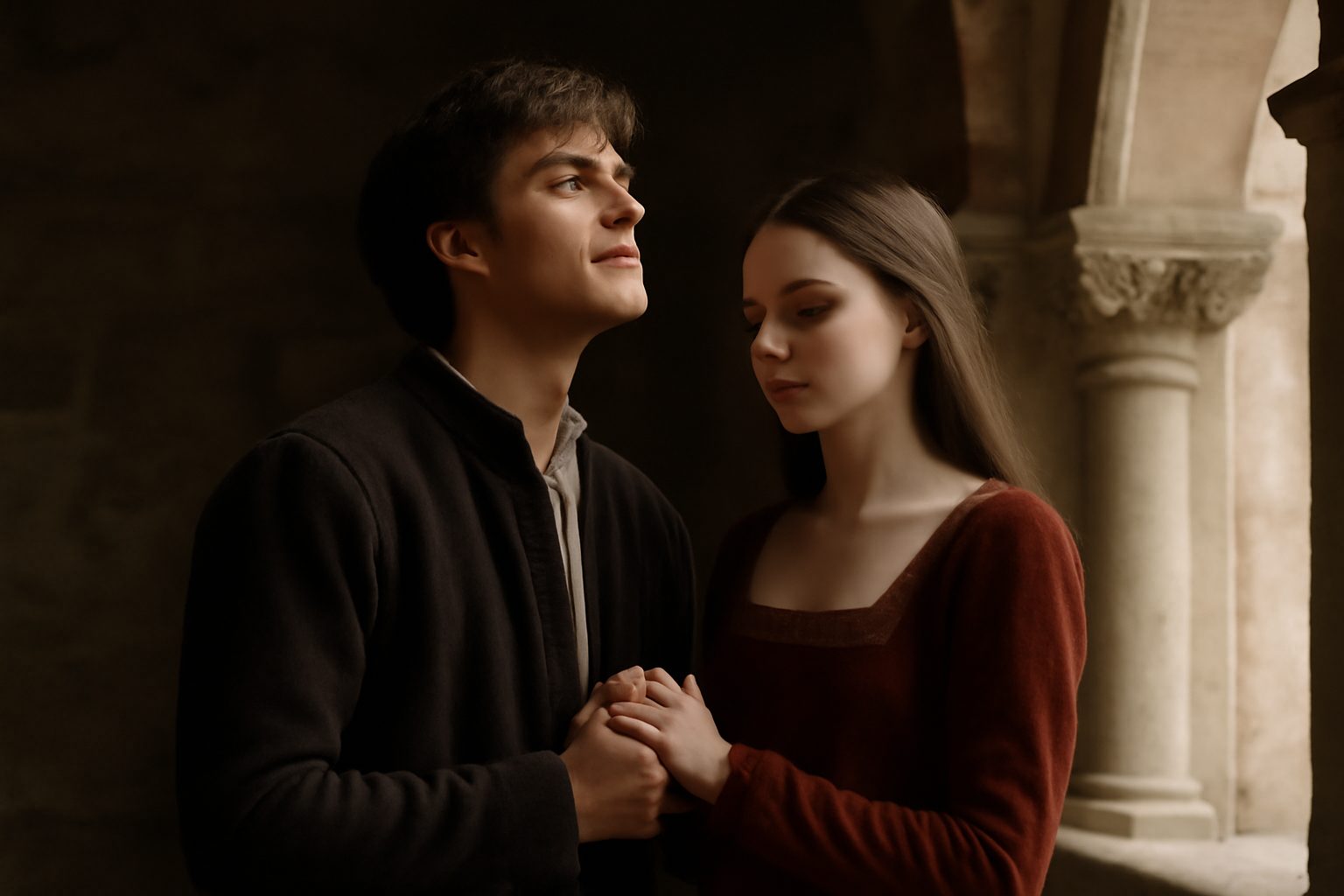
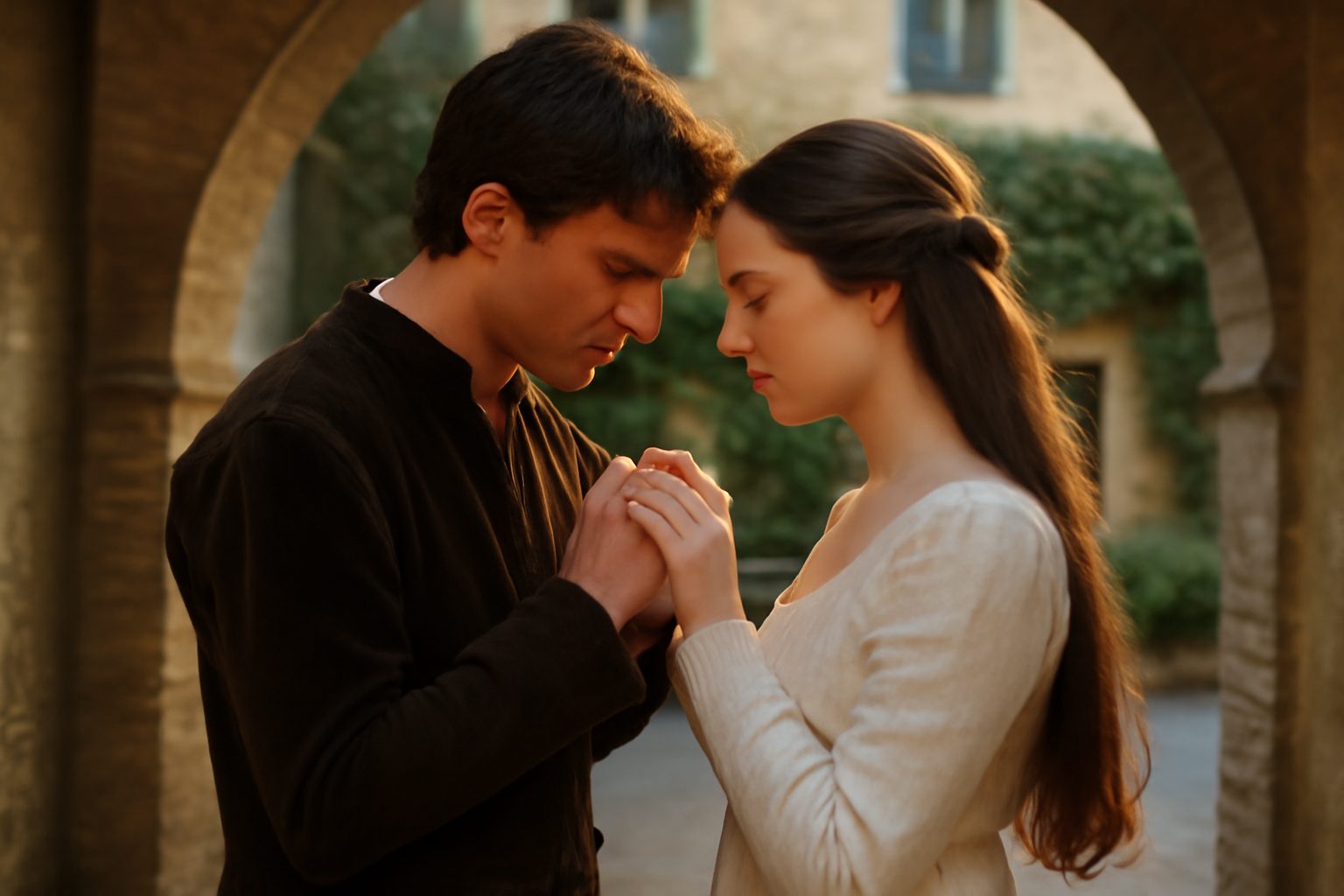
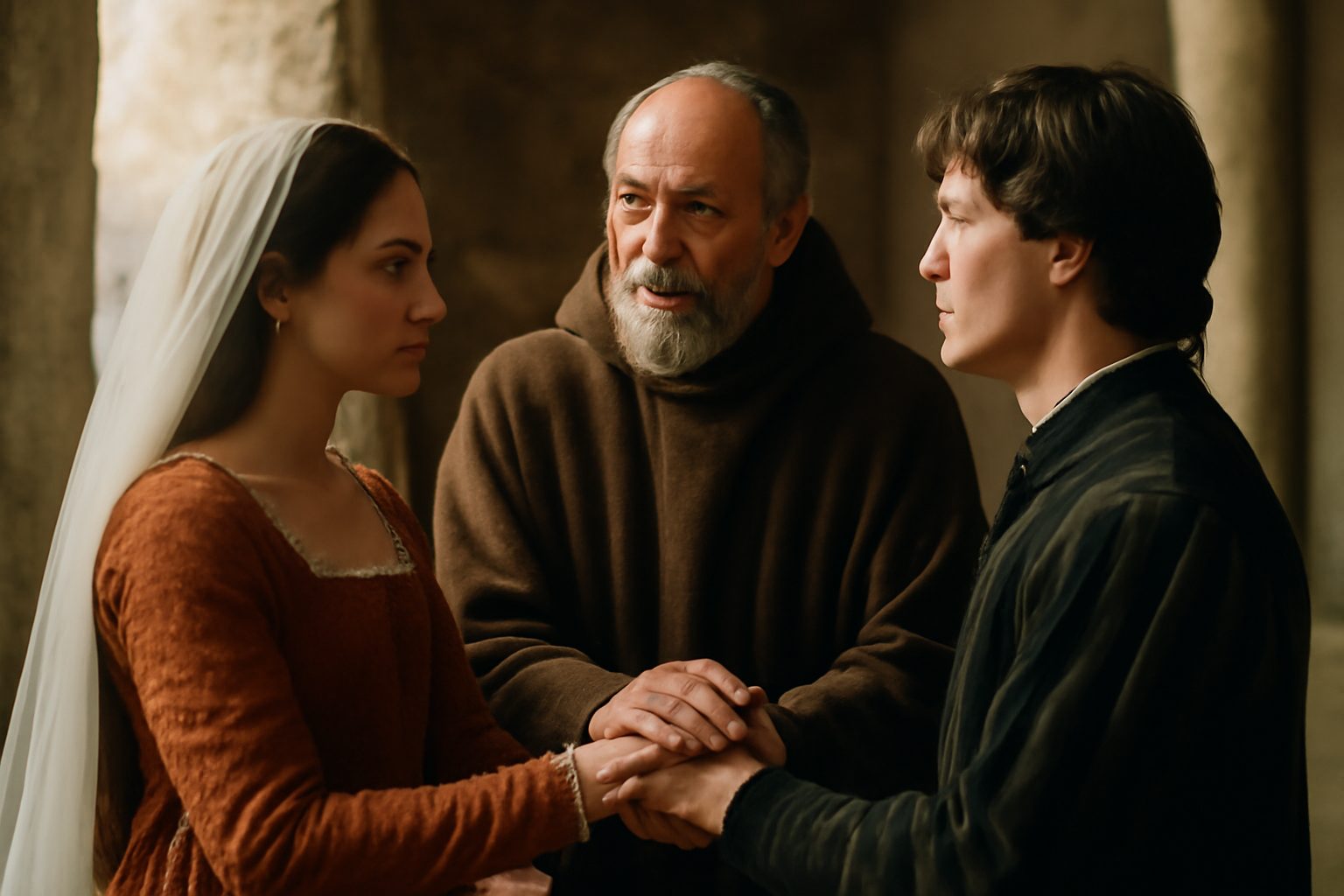
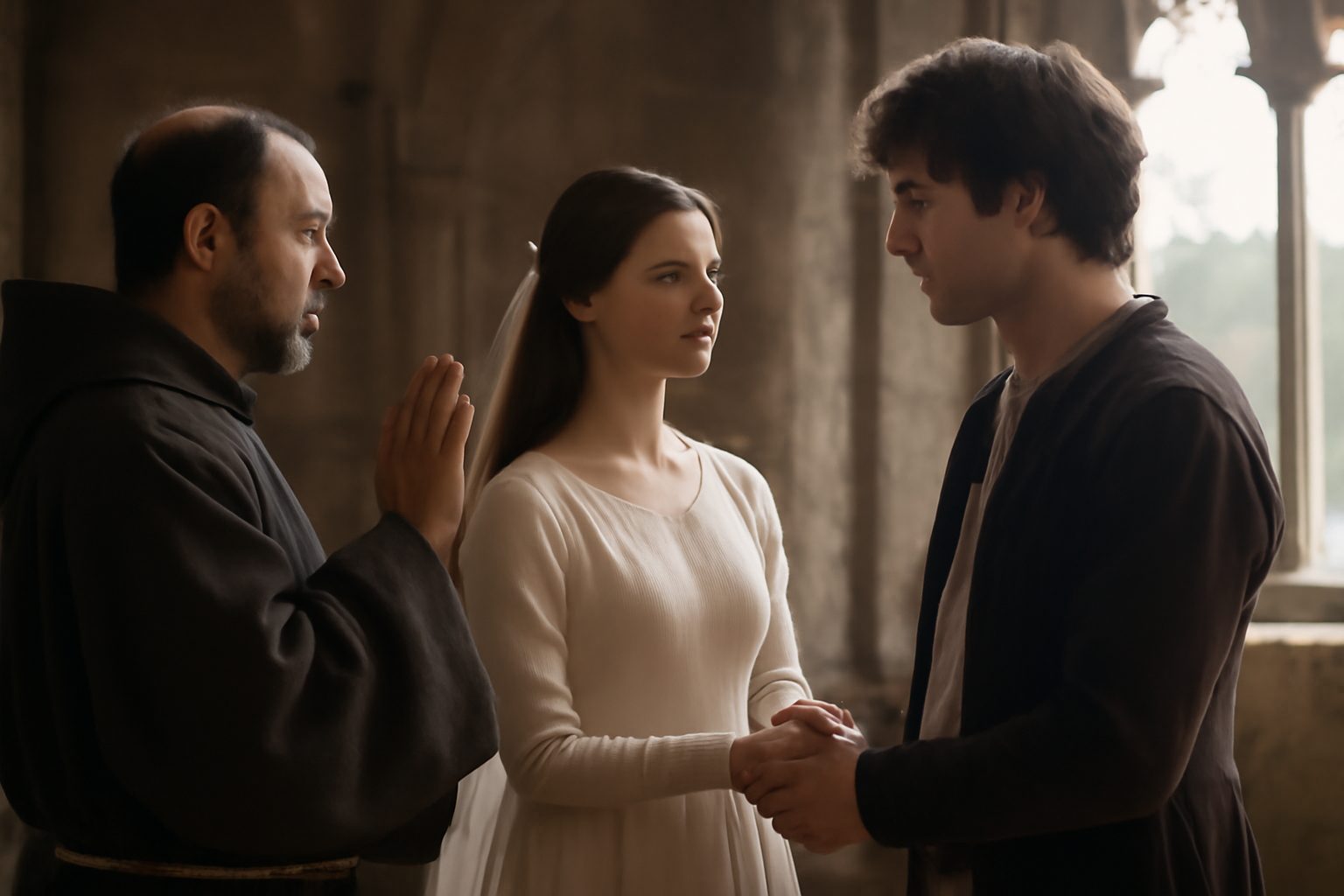
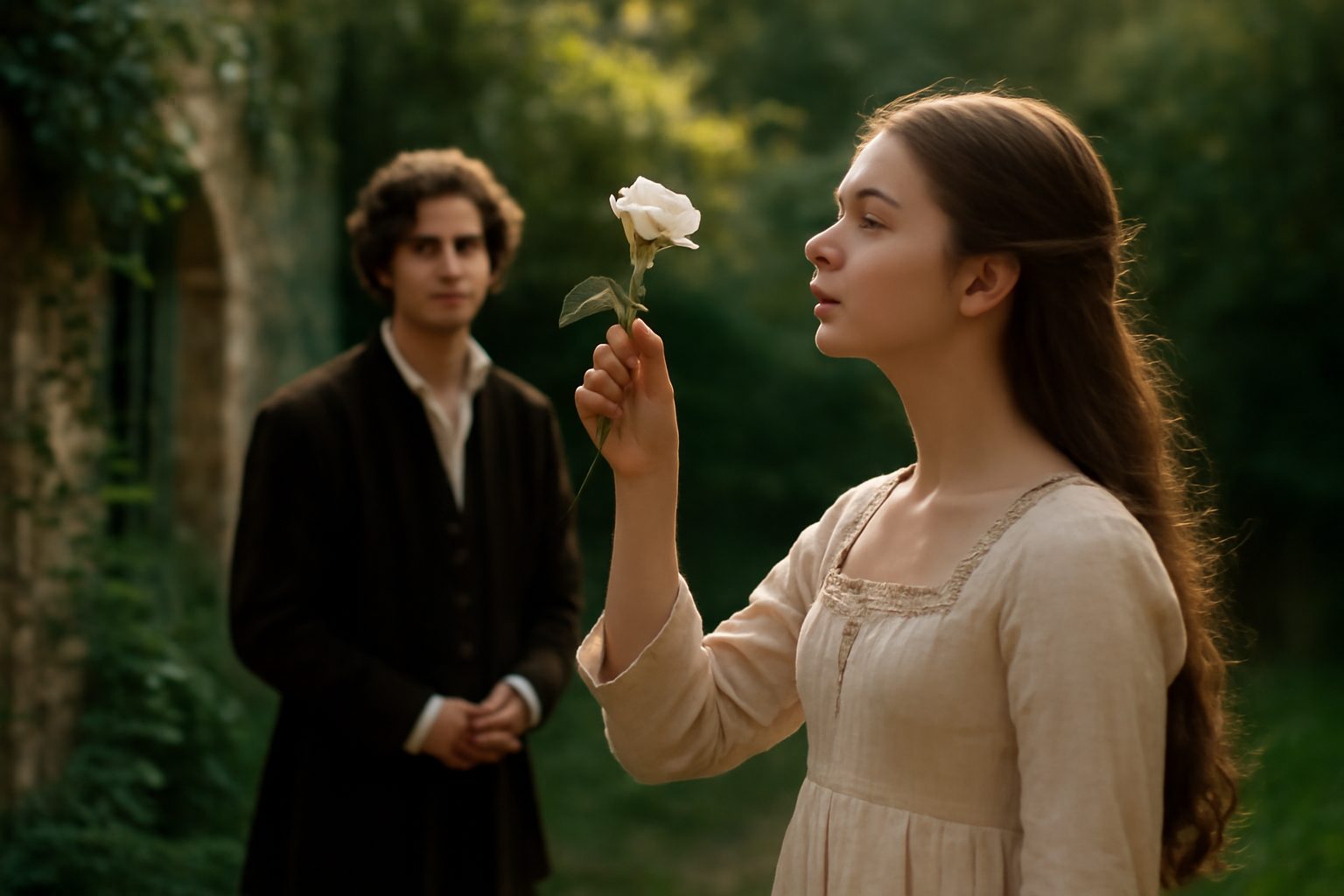
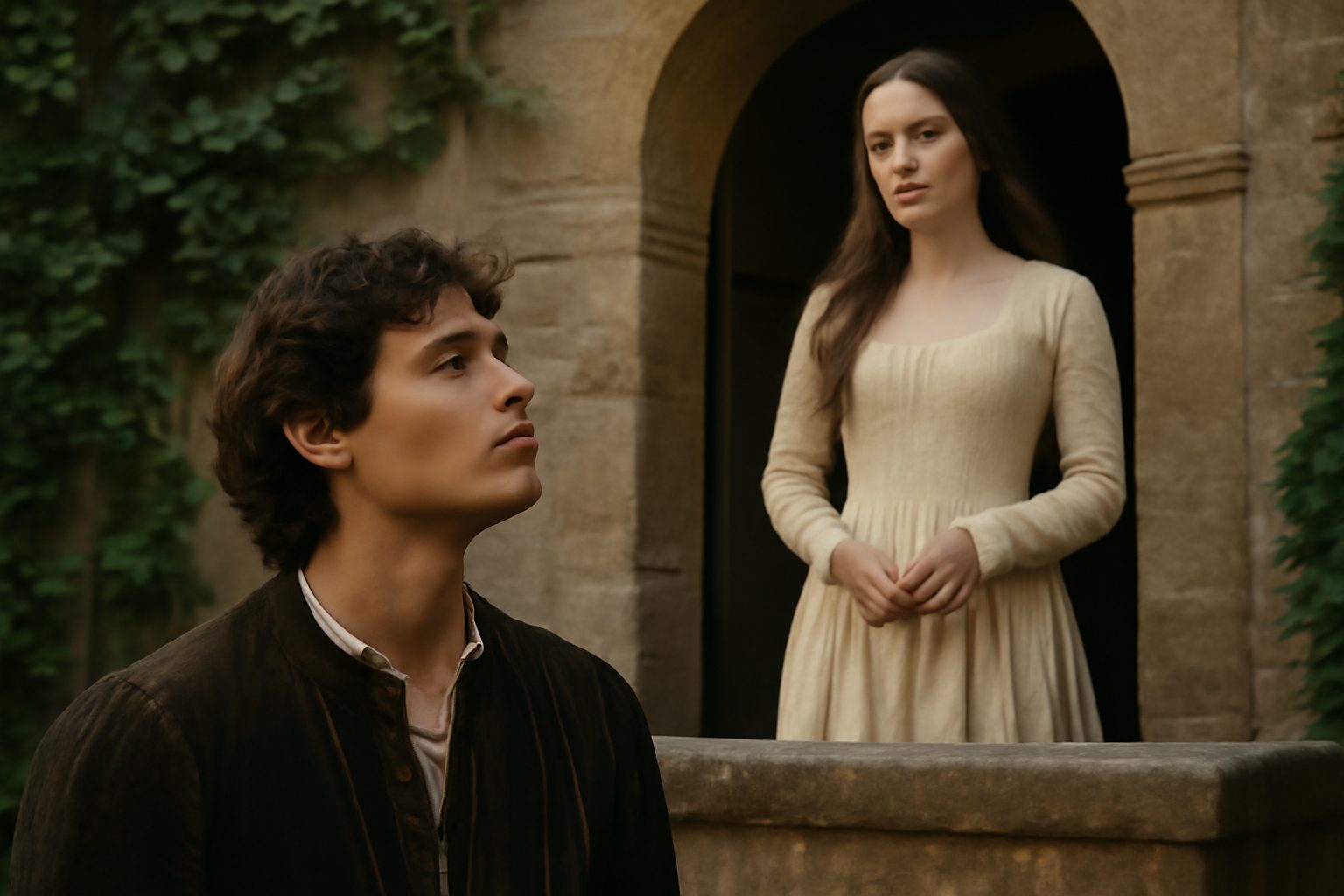
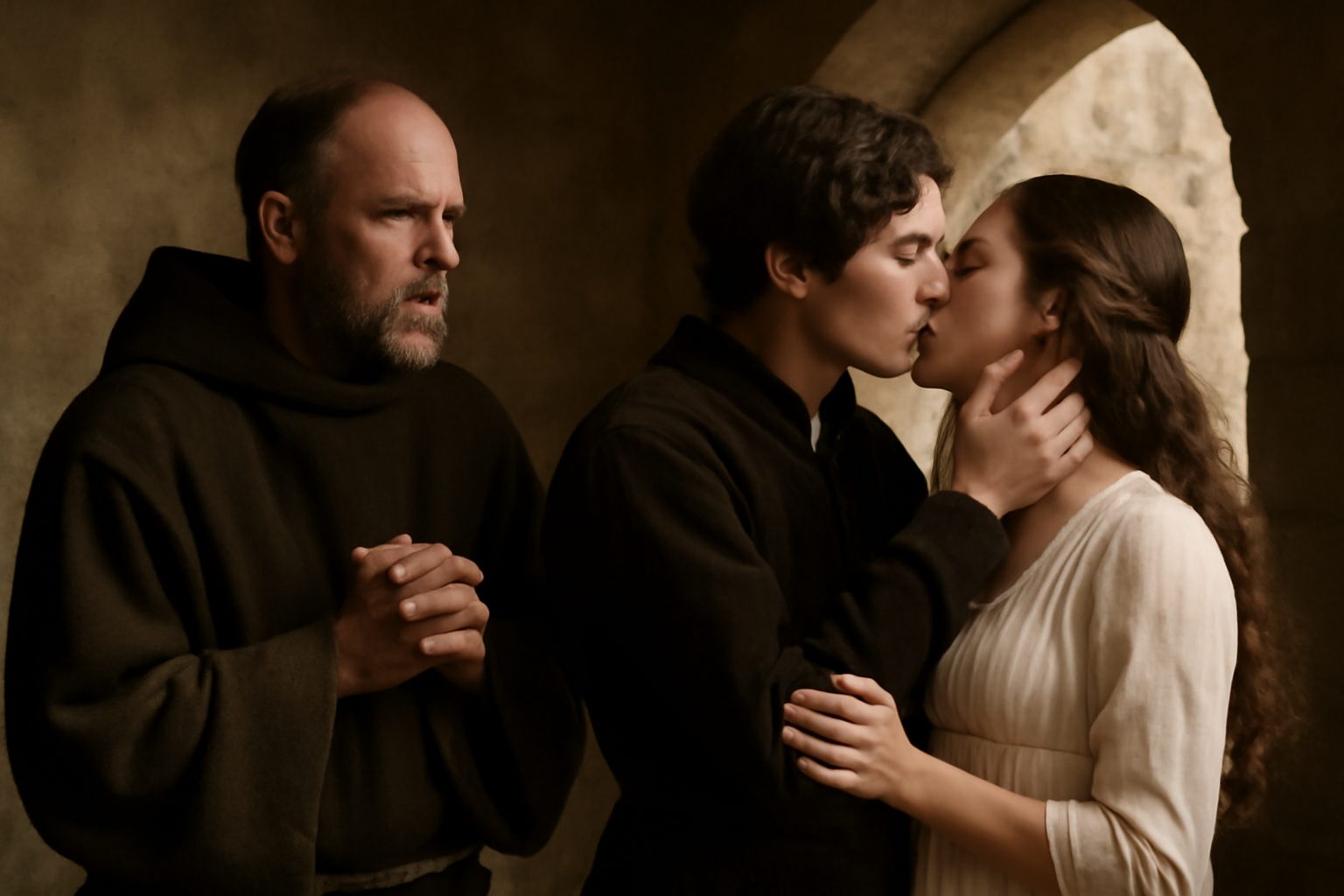
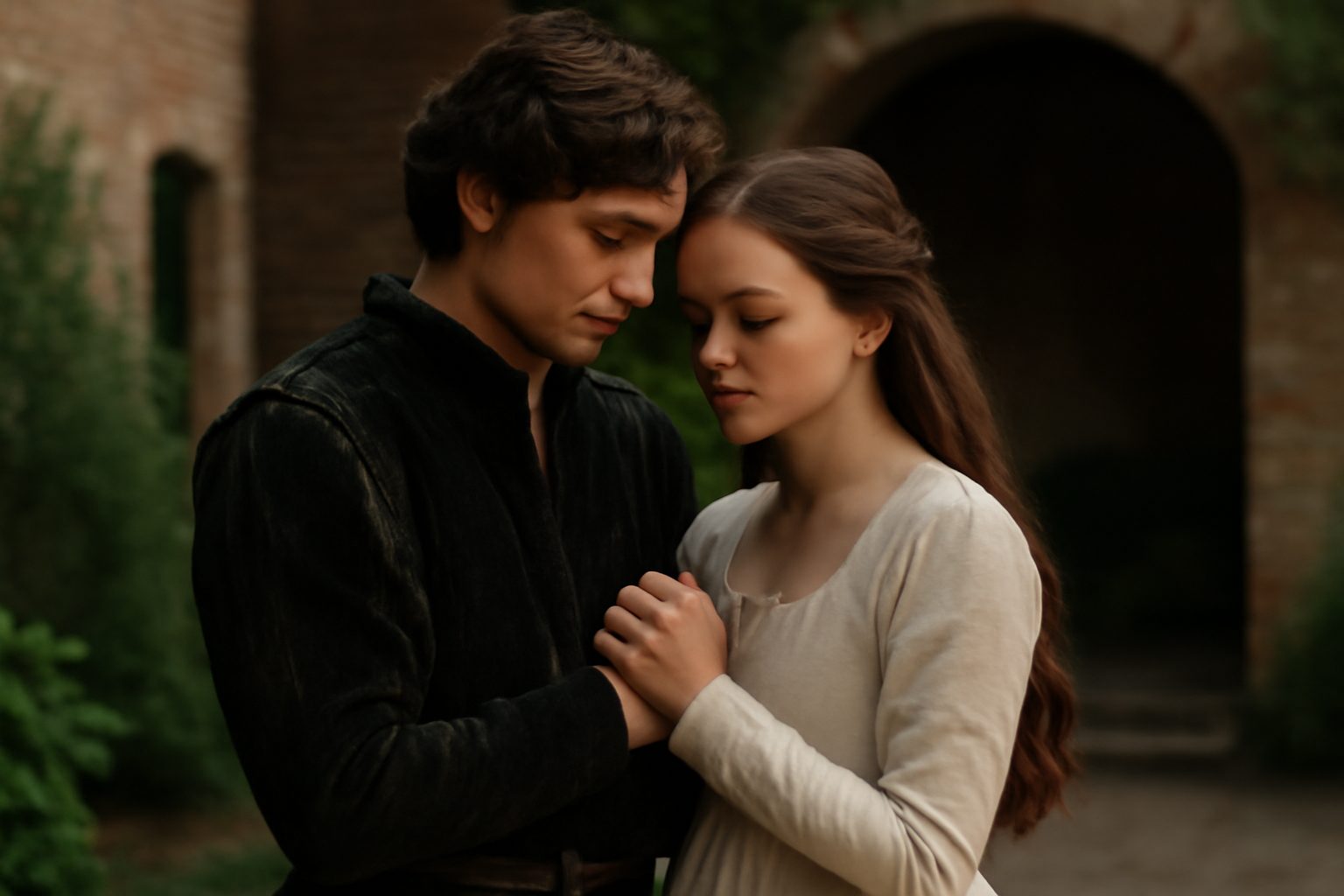
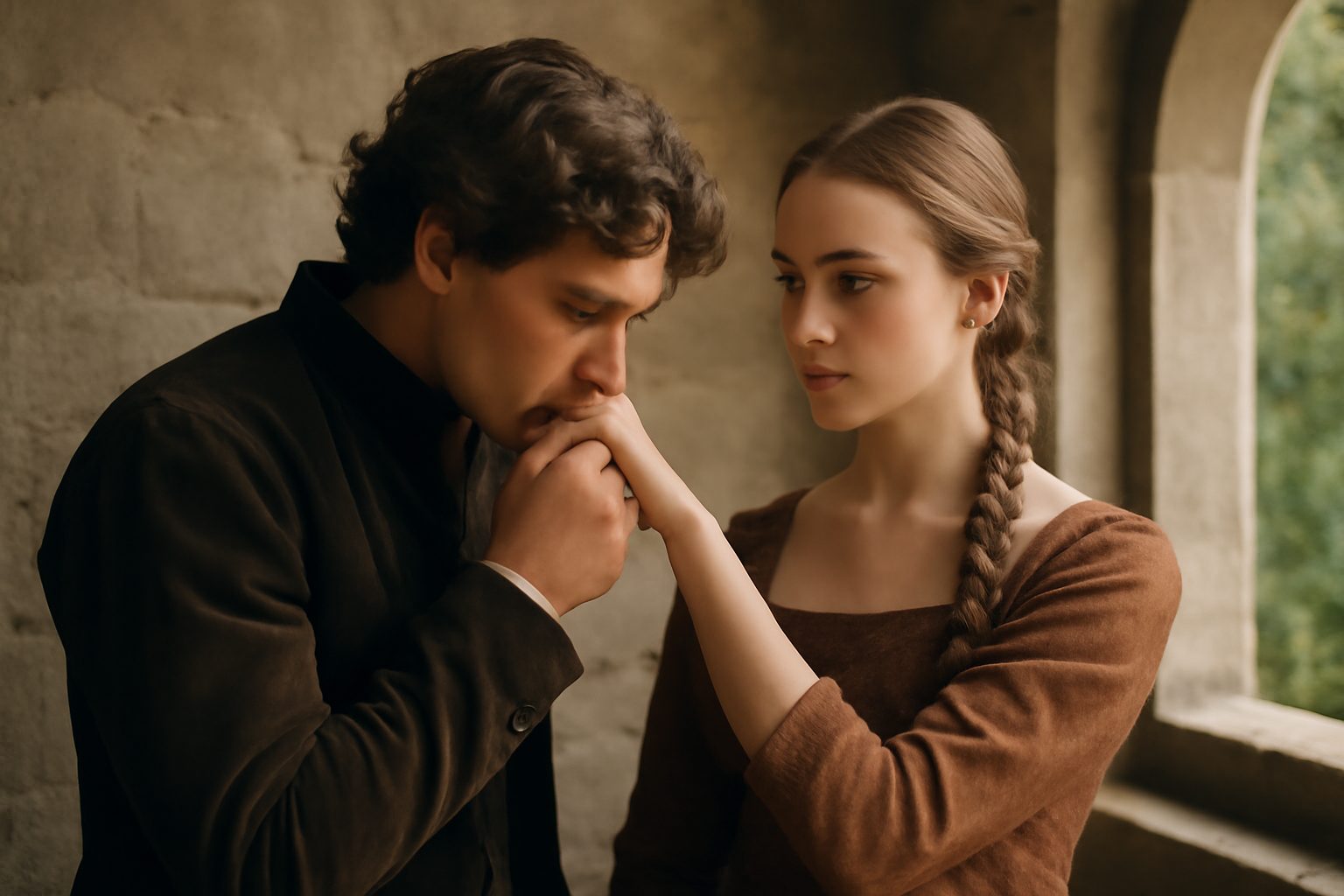
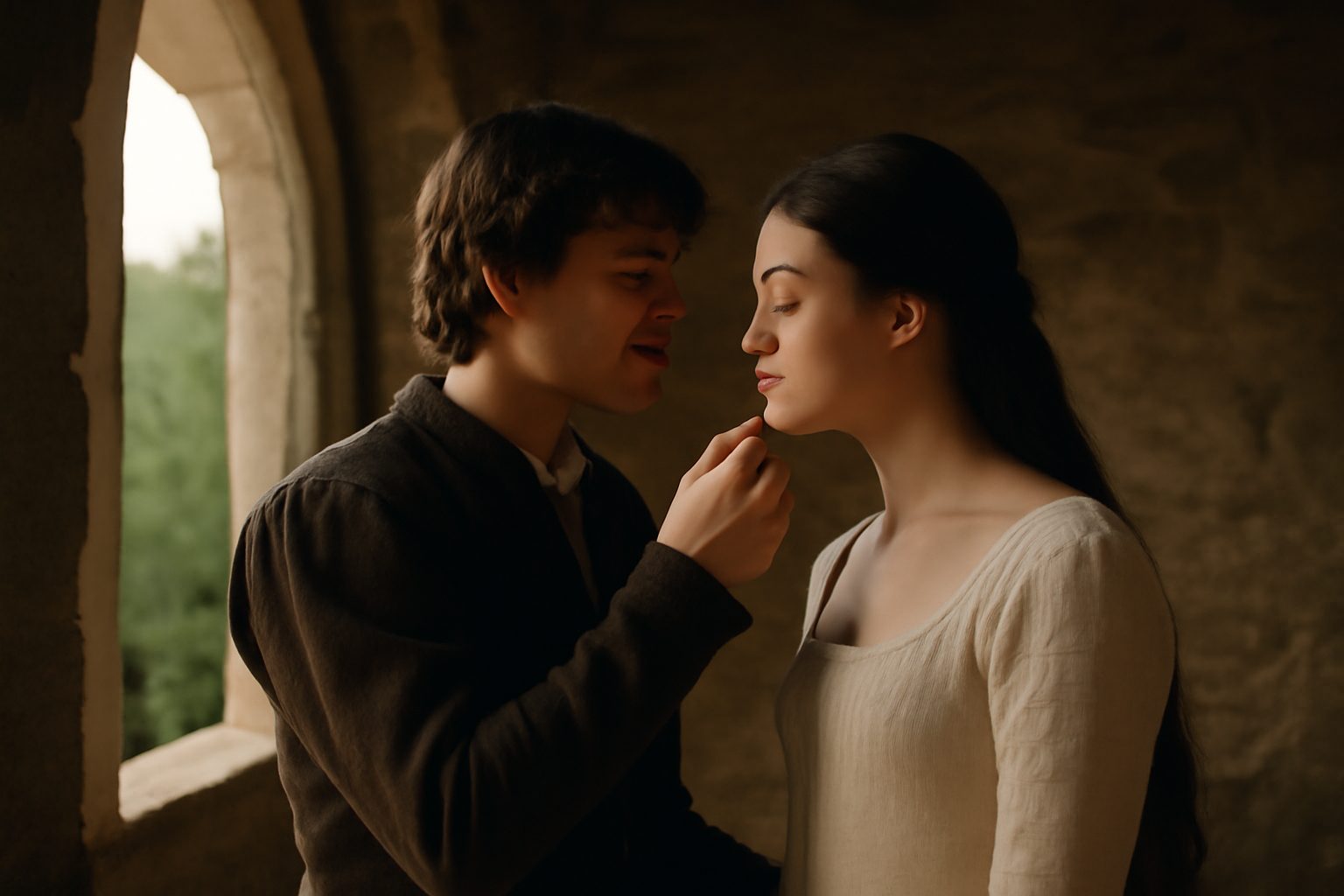
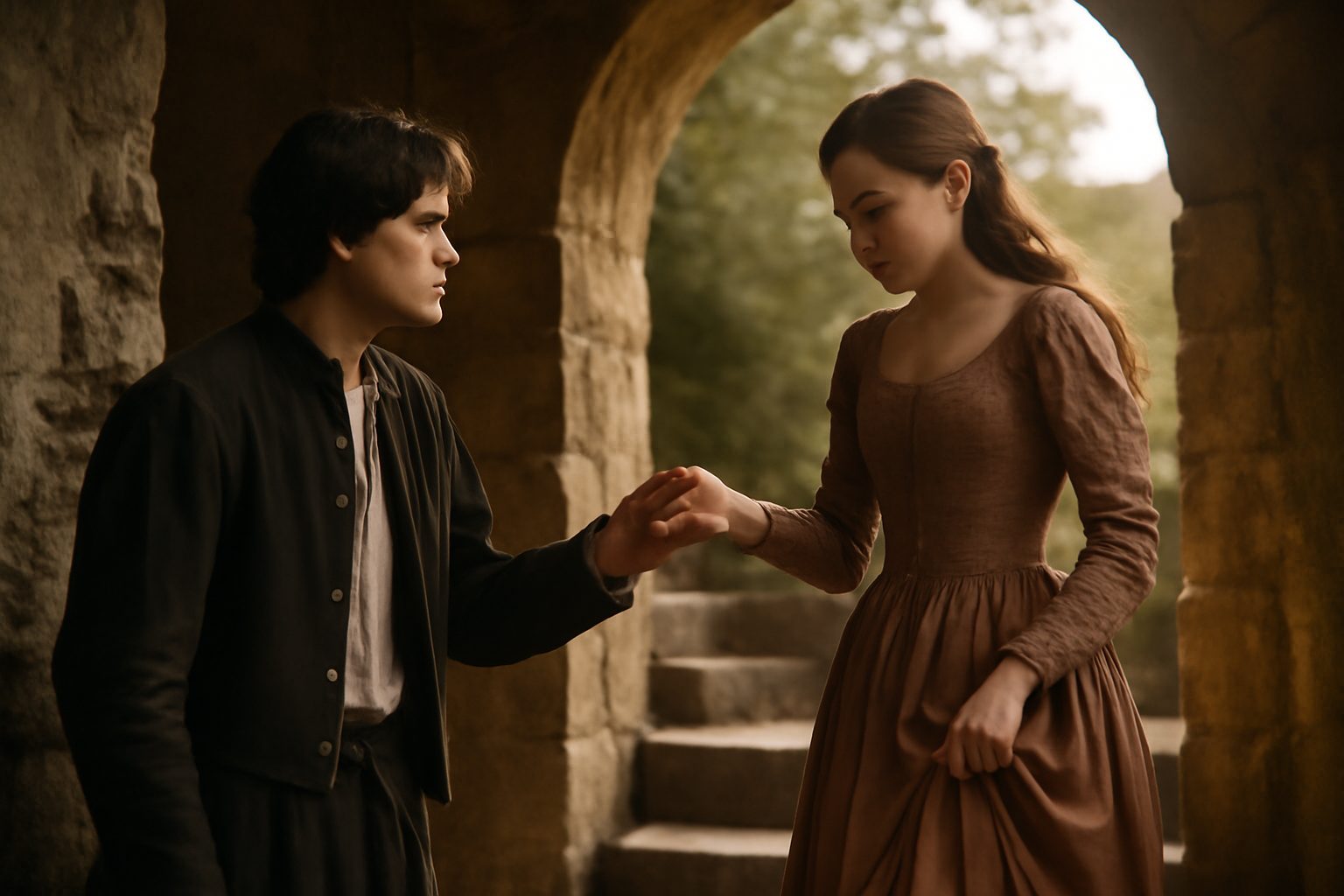
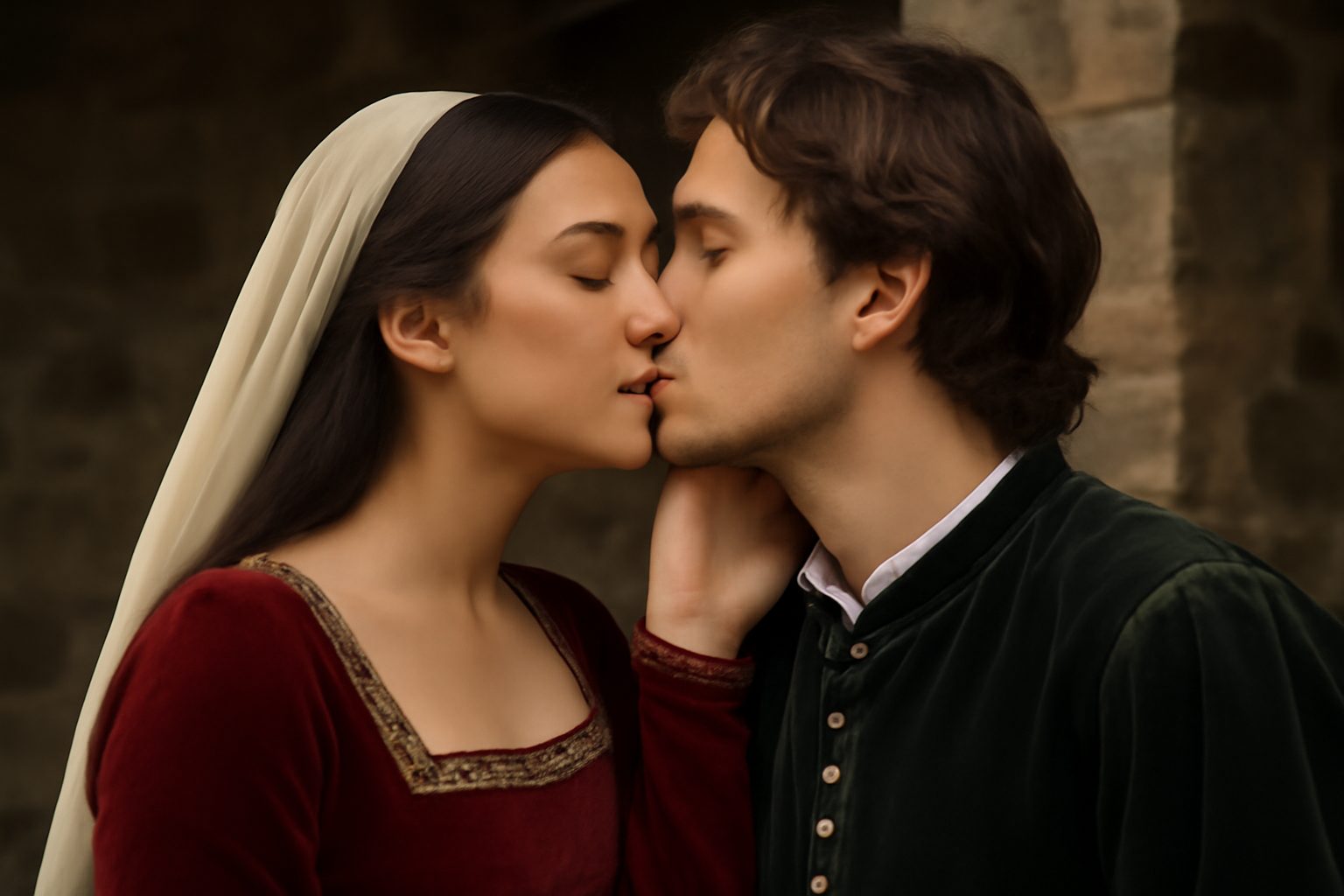
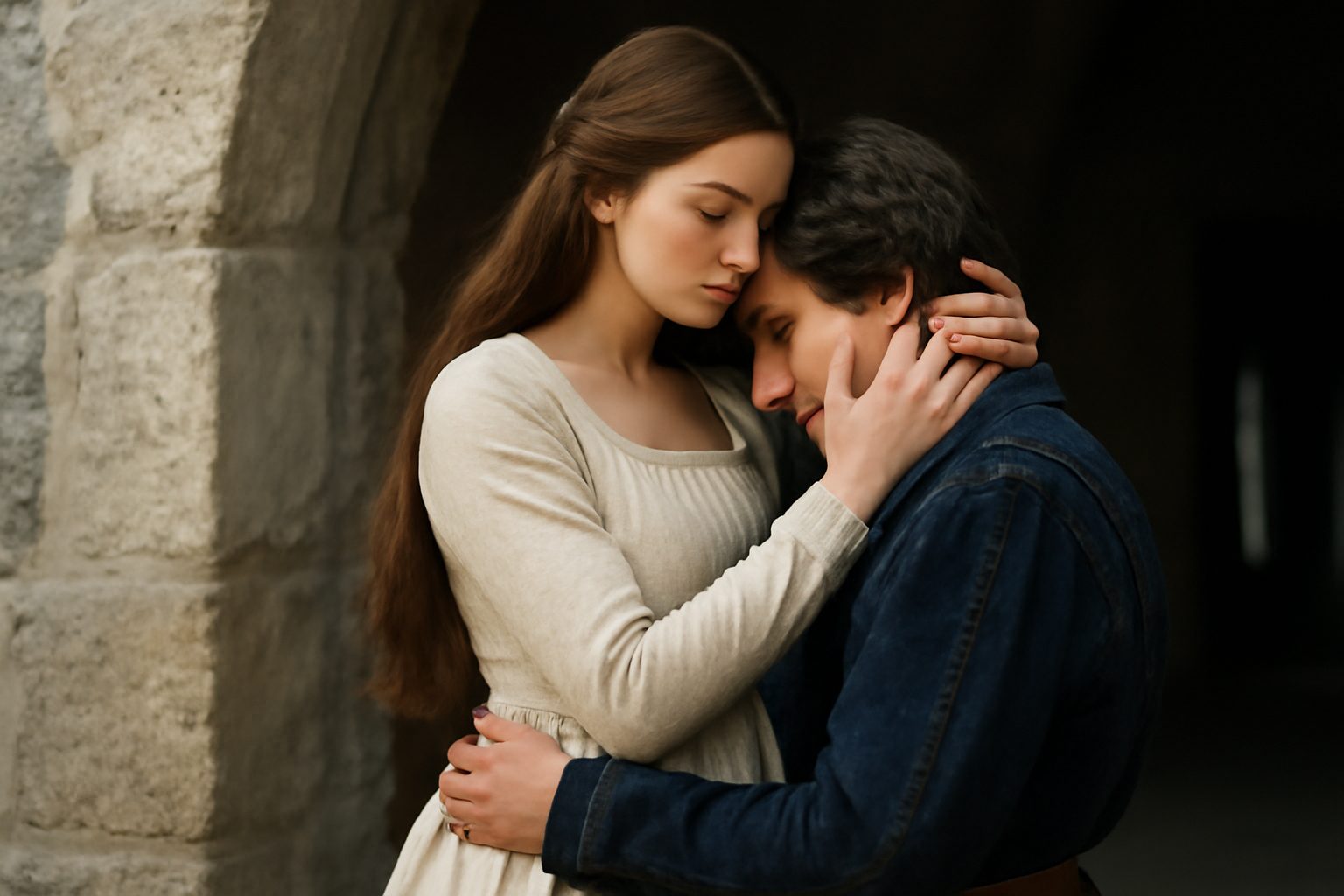
In Act 2, Scene 6 of Romeo and Juliet, Friar Laurence speaks these words as Romeo eagerly awaits Juliet's arrival before their secret wedding. The line captures the lightness and exhilaration of love, suggesting that a lover feels so weightless with joy they could tread on something as delicate as a spider's web without breaking it. This moment reflects Romeo's giddy anticipation and the Friar's cautious optimism about their hasty union.
Friar Laurence: "A lover may bestride the gossamer"
In modern day english, we would say:
A lover could walk on a spider's web without breaking it.
Frequently Asked Questions
What does Friar Laurence mean when he says a lover can walk on a spider's web?
He means that love makes people feel light and joyful, as if they could do impossible things like walking on something as delicate as a spider's web.
Connections to other verses:
Connections to "A lover may bestride the gossamer"
The line "A lover may bestride the gossamer" evokes the idea of love's lightness and transcendence, a theme echoed throughout the scene. It connects to "And yet not fall; so light is vanity", which reinforces the delicate, almost weightless quality of love and joy. Both lines use imagery of lightness to convey how love elevates the lovers above earthly concerns.
Contrast with Friar Laurence's Warnings
This ethereal imagery stands in stark contrast to Friar Laurence's cautionary words, such as "These violent delights have violent ends" and "And in their triumph die, like fire and powder". While Romeo speaks of love's lightness, the Friar warns of its intensity and potential for destruction, creating a thematic tension between idealism and reality.
Juliet's Arrival and Lightness
The gossamer metaphor also relates to Juliet's entrance, described in "Here comes the lady: O, so light a foot". This connection emphasizes her grace and the almost supernatural quality of their love, further illustrating how their union feels elevated and fragile, like walking on a spider's web.
Romeo's Declaration of Excess
Romeo's belief that love makes him light enough to tread on gossamer aligns with his later declaration in "But my true love is grown to such excess". Both lines express the overwhelming, boundless nature of his emotions, suggesting that love defies physical laws and measures.
Irony and Foreshadowing
The gossamer image, while beautiful, carries an undertone of fragility, subtly foreshadowing the tragedy to come. This connects to lines like "Then love-devouring death do what he dare", where Romeo defiantly acknowledges mortality, and "Amen, amen! but come what sorrow can", showing his willingness to embrace joy despite impending sorrow. The delicacy of the gossamer thus mirrors the precariousness of their happiness.