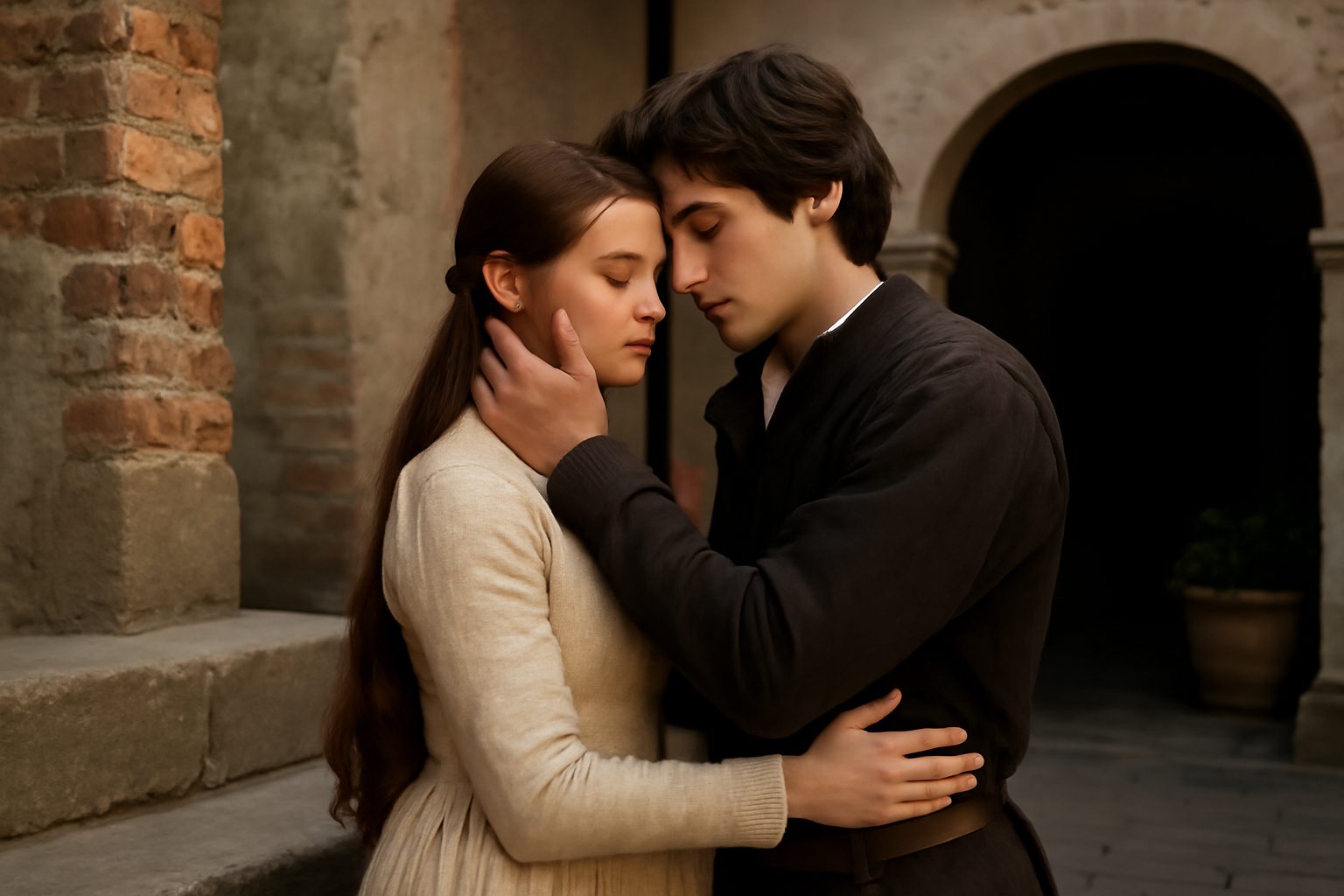
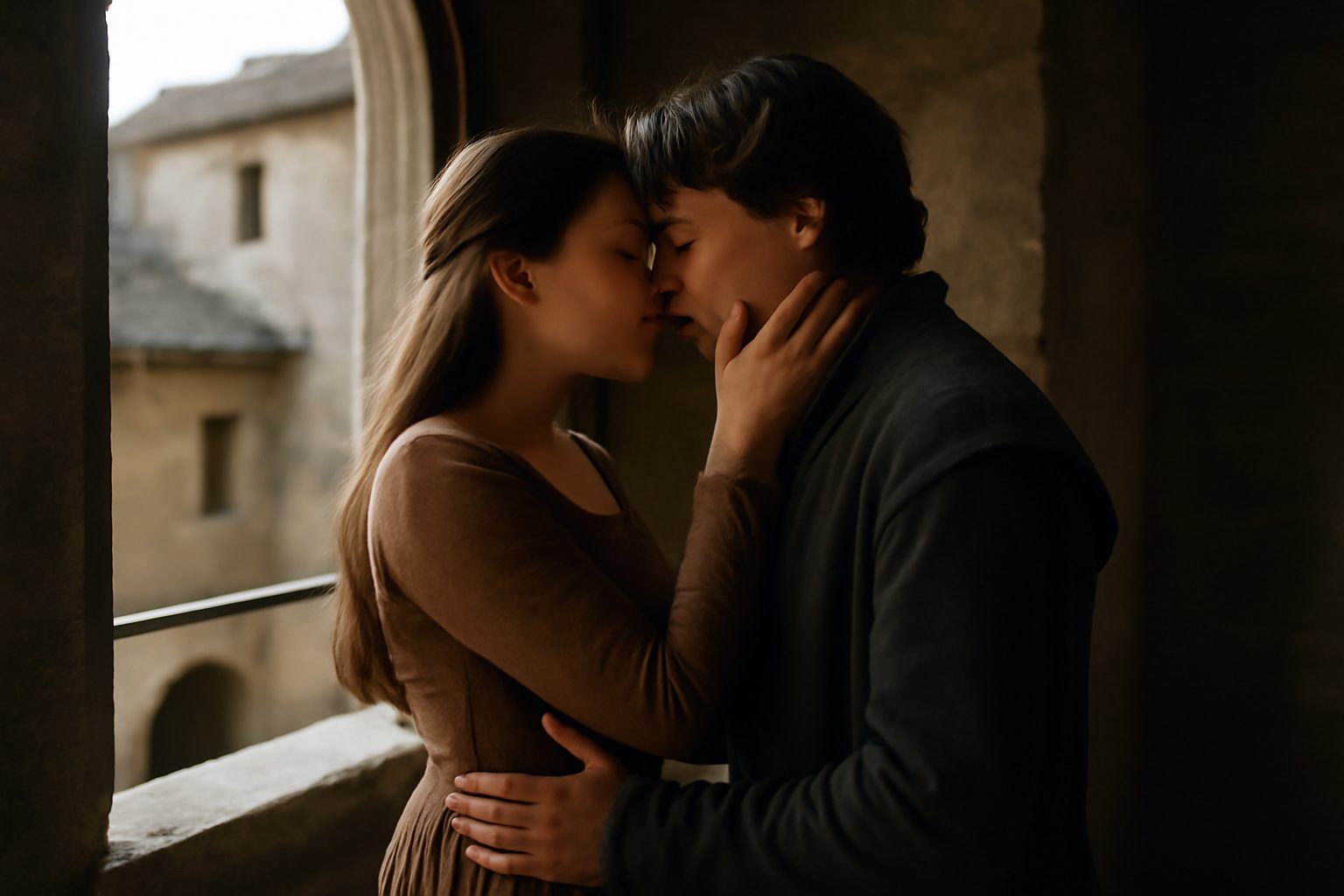
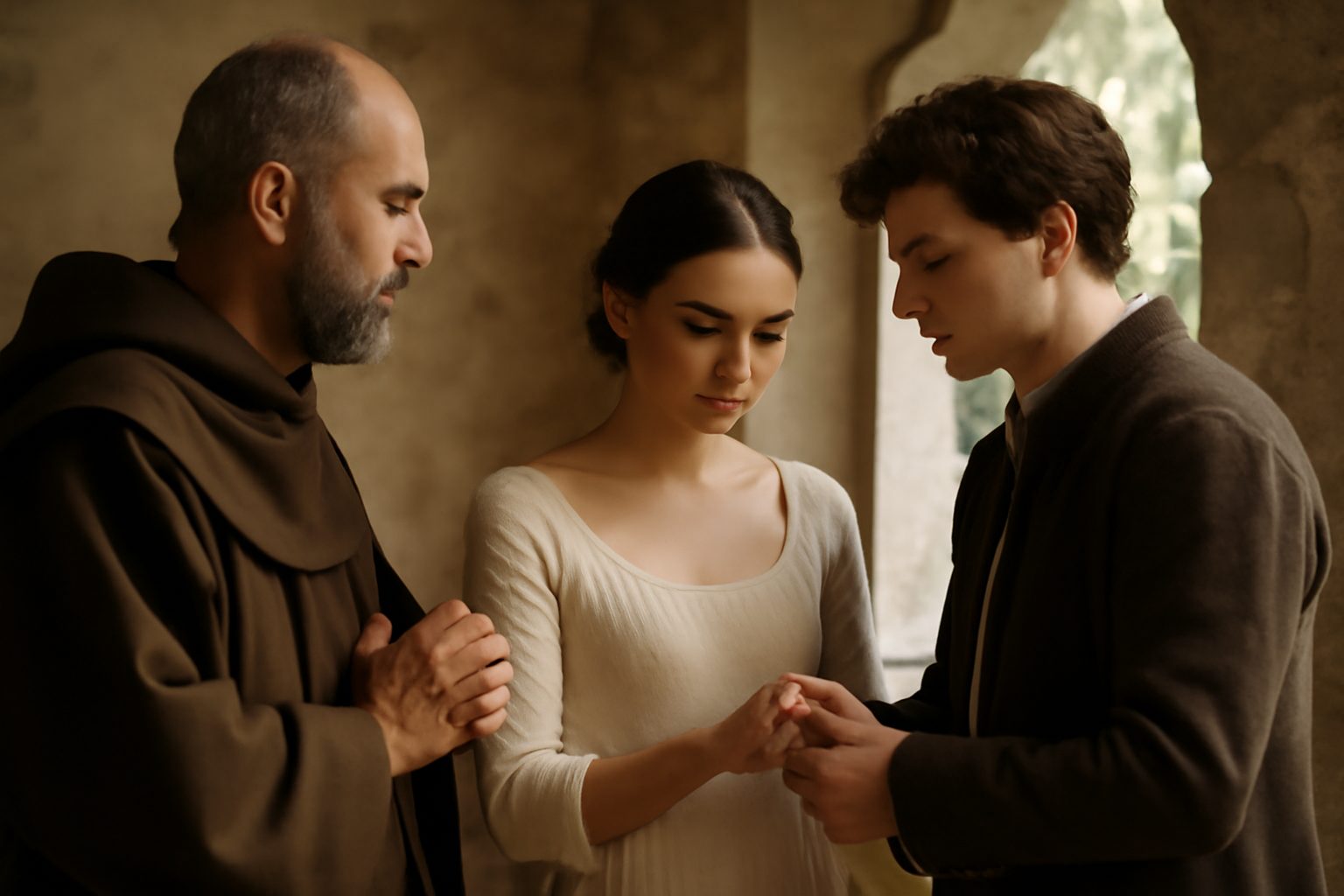
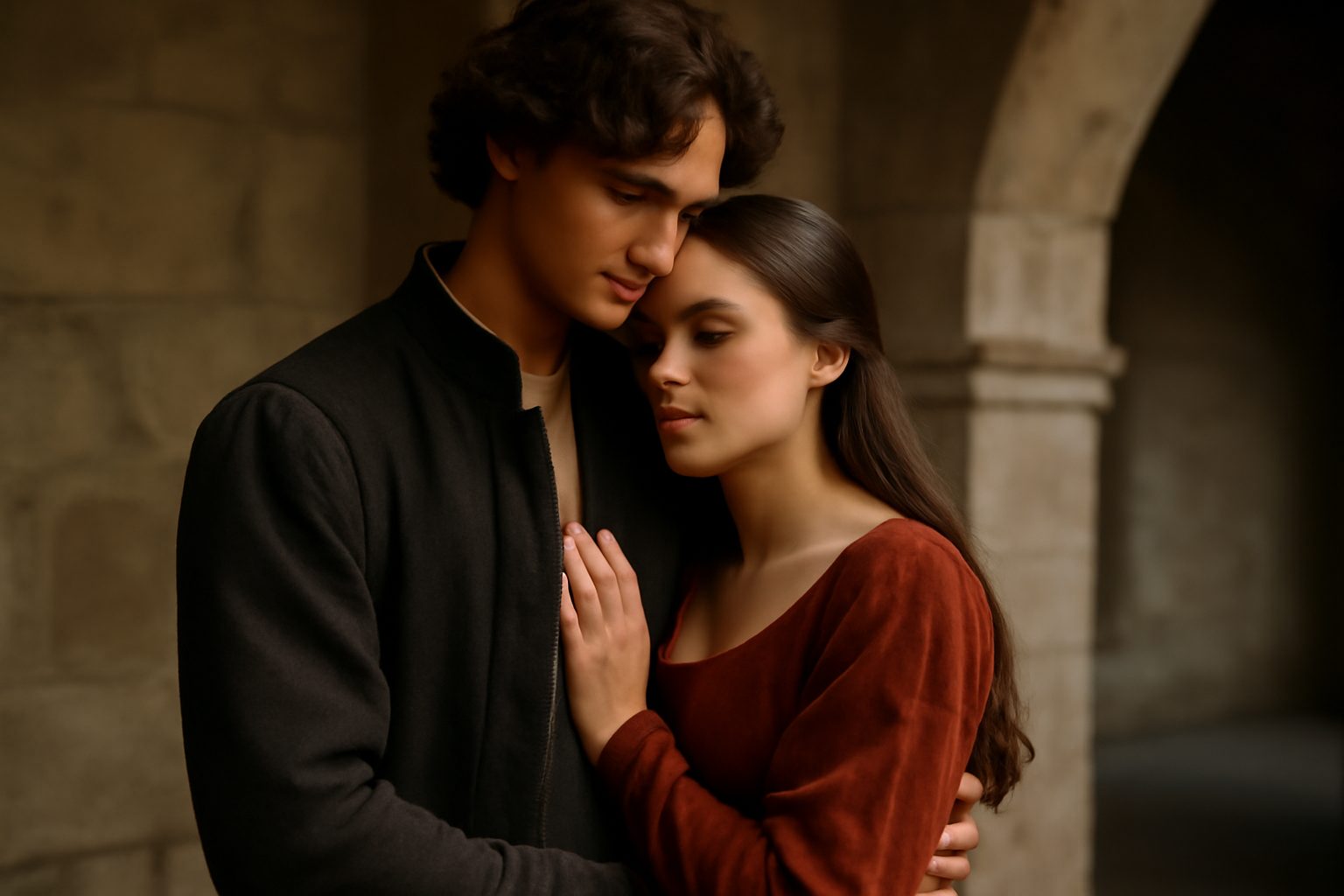
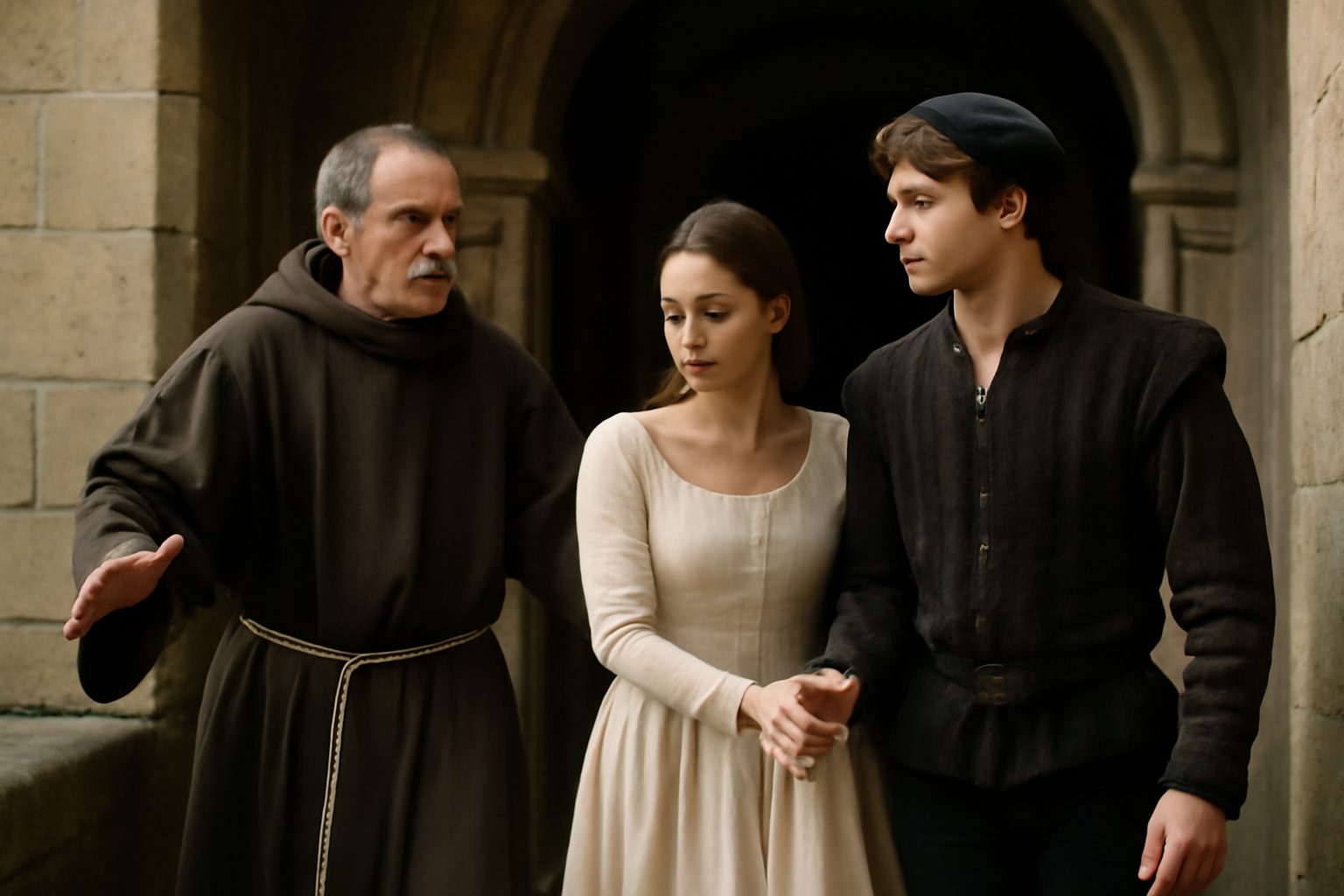
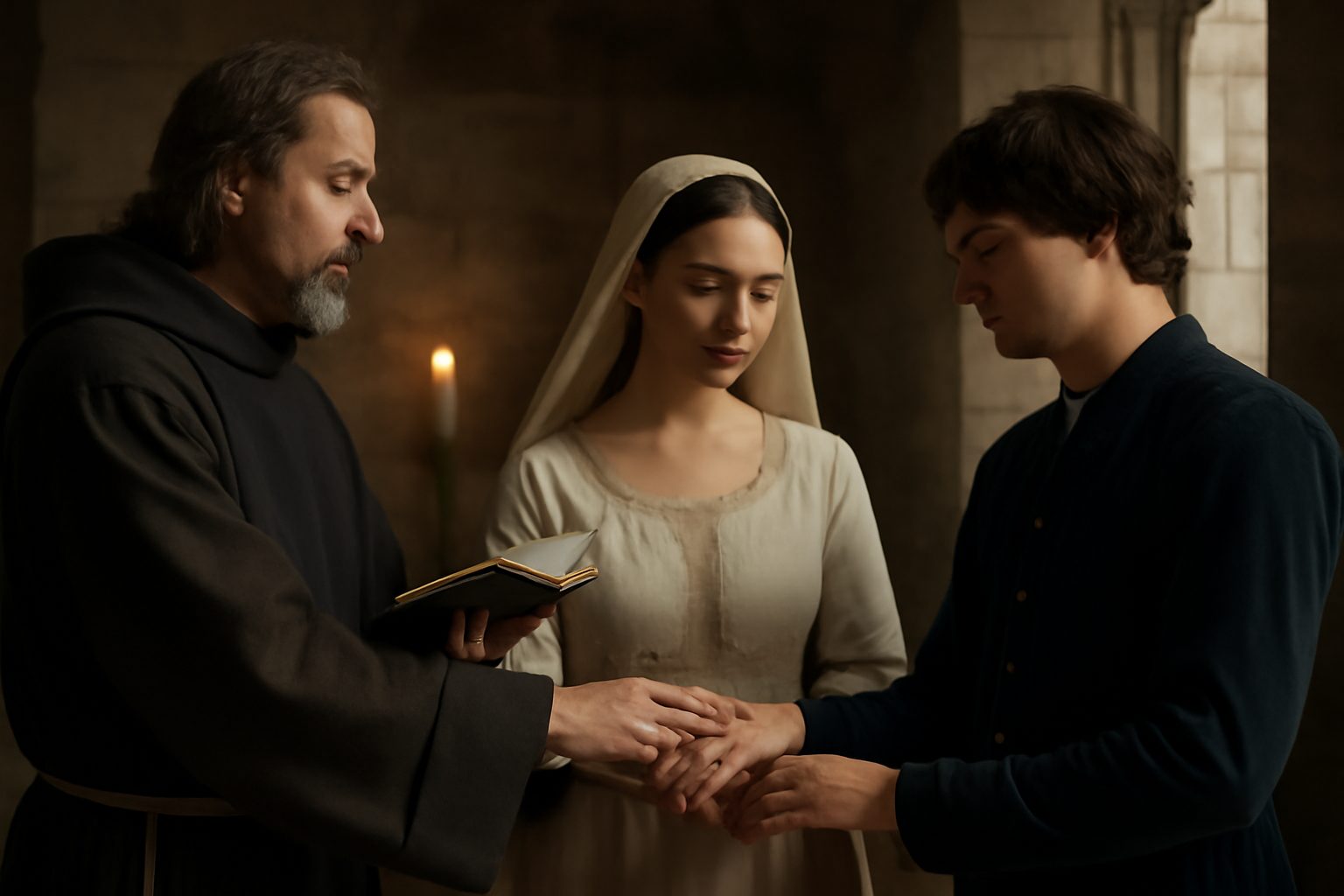
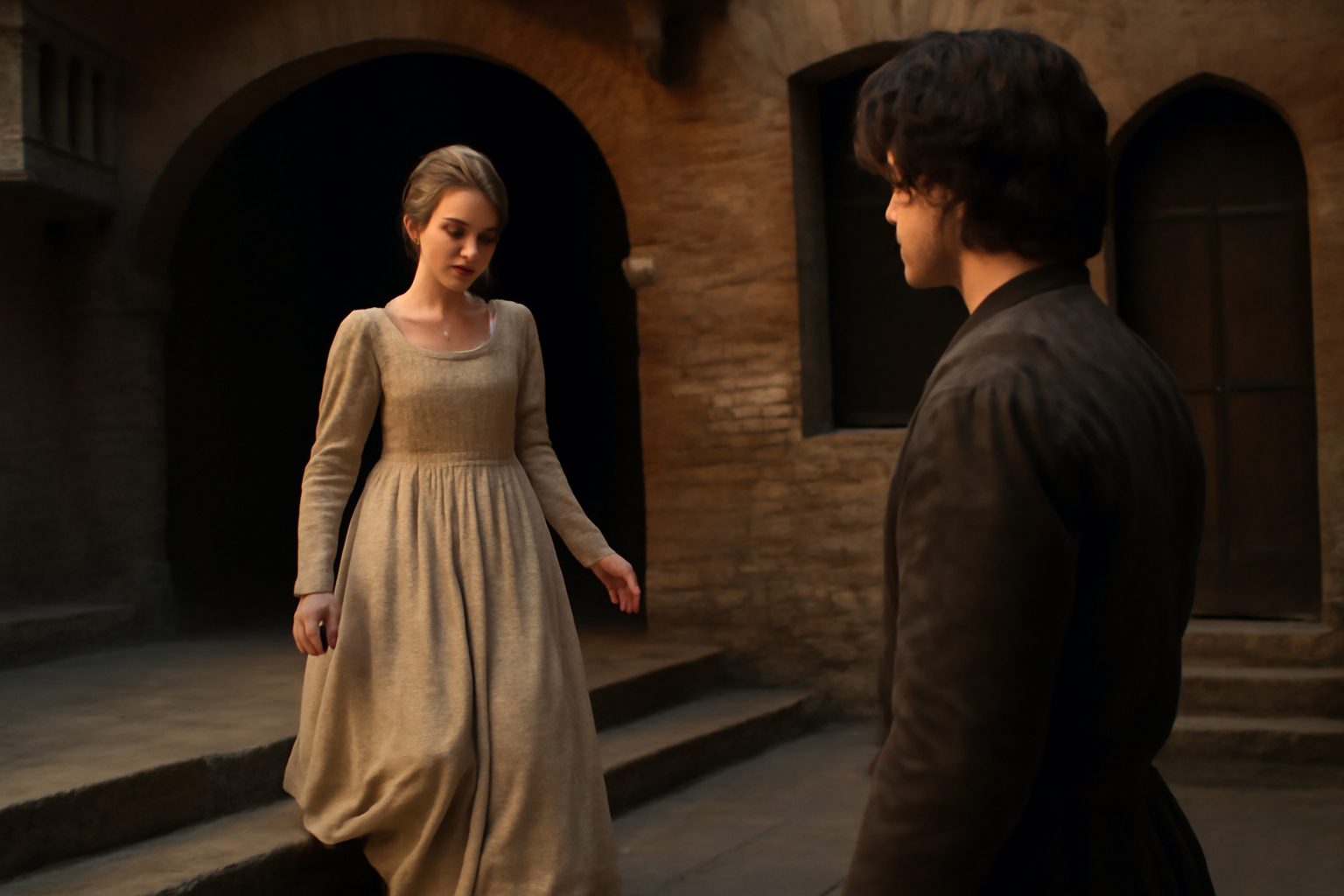
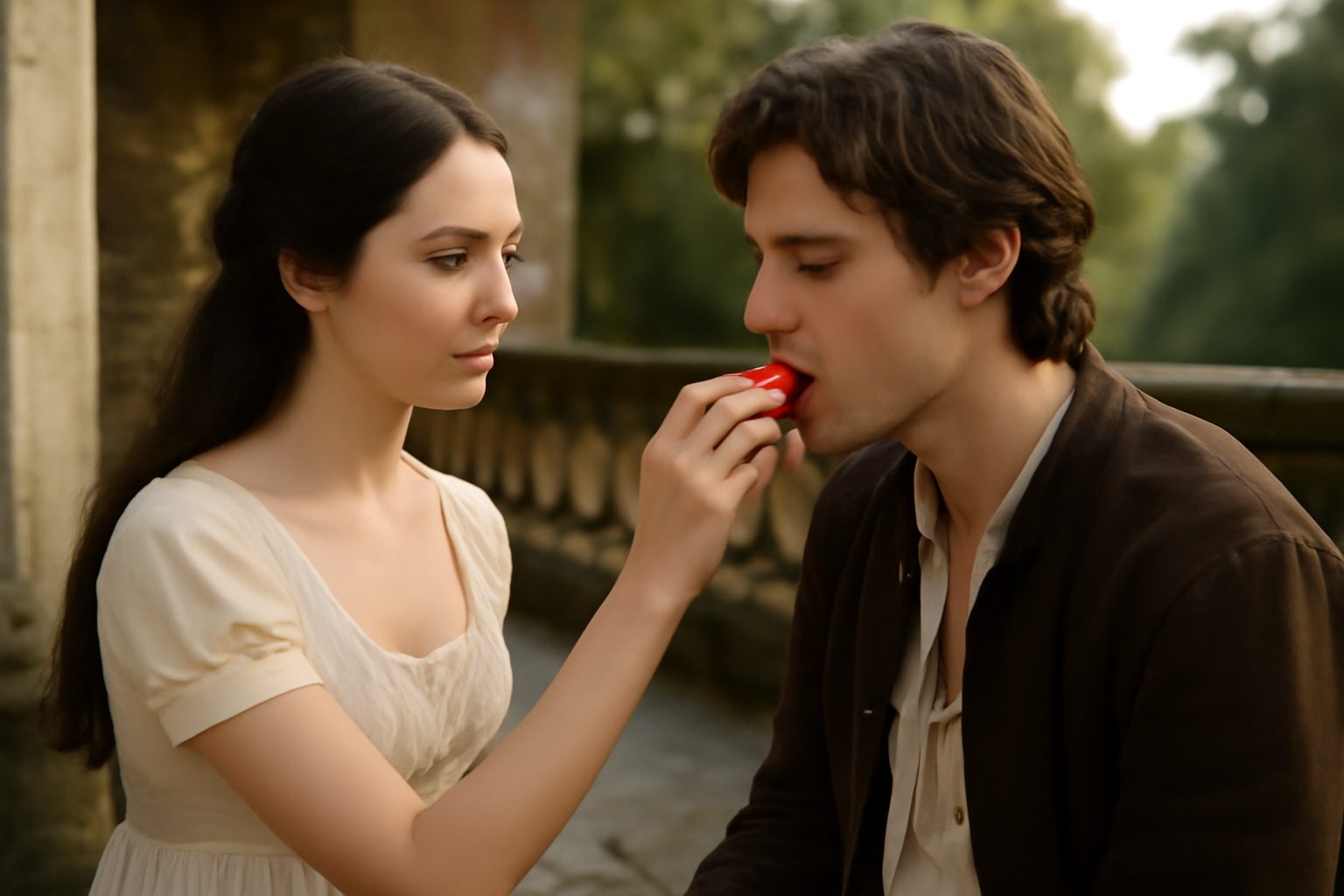
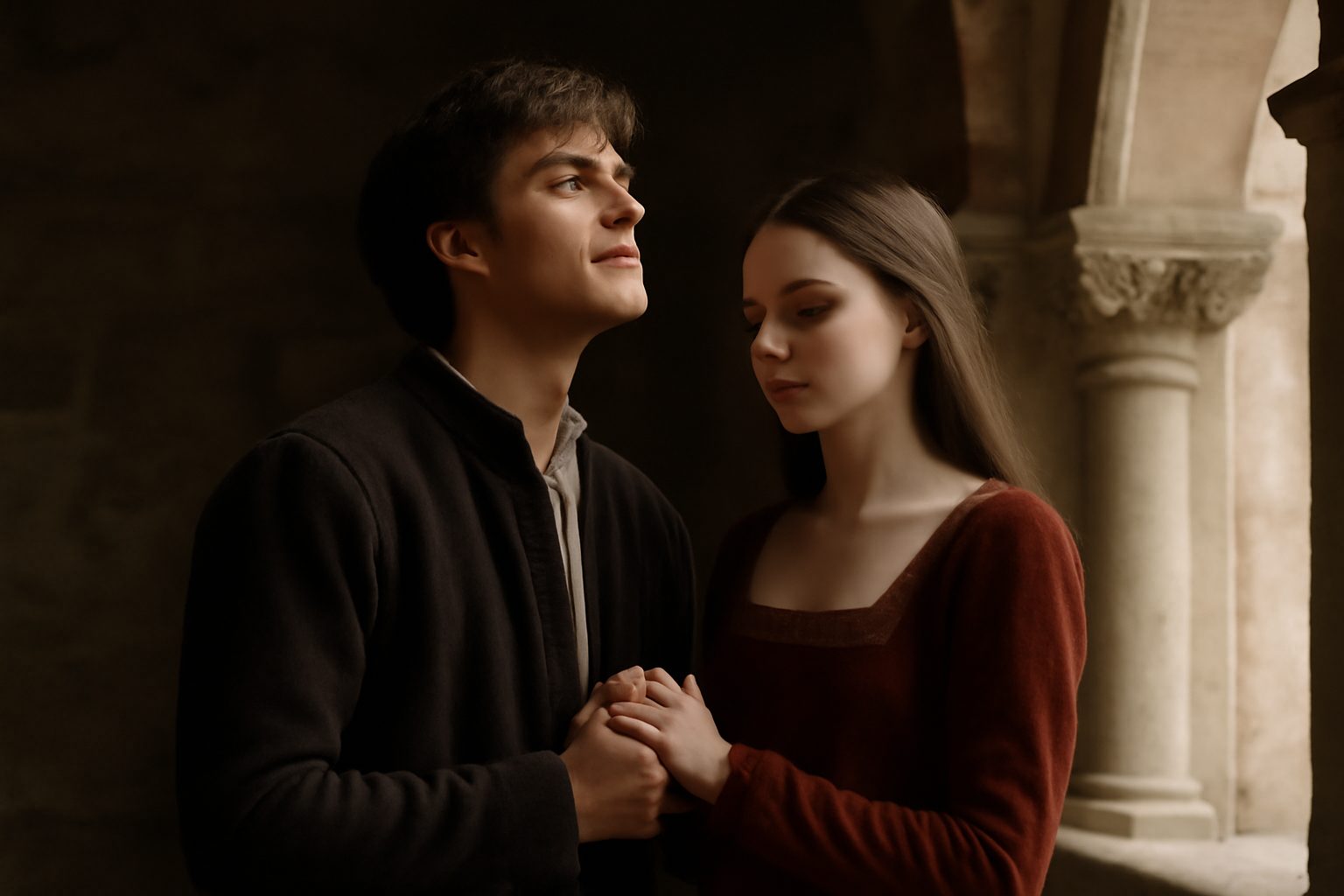
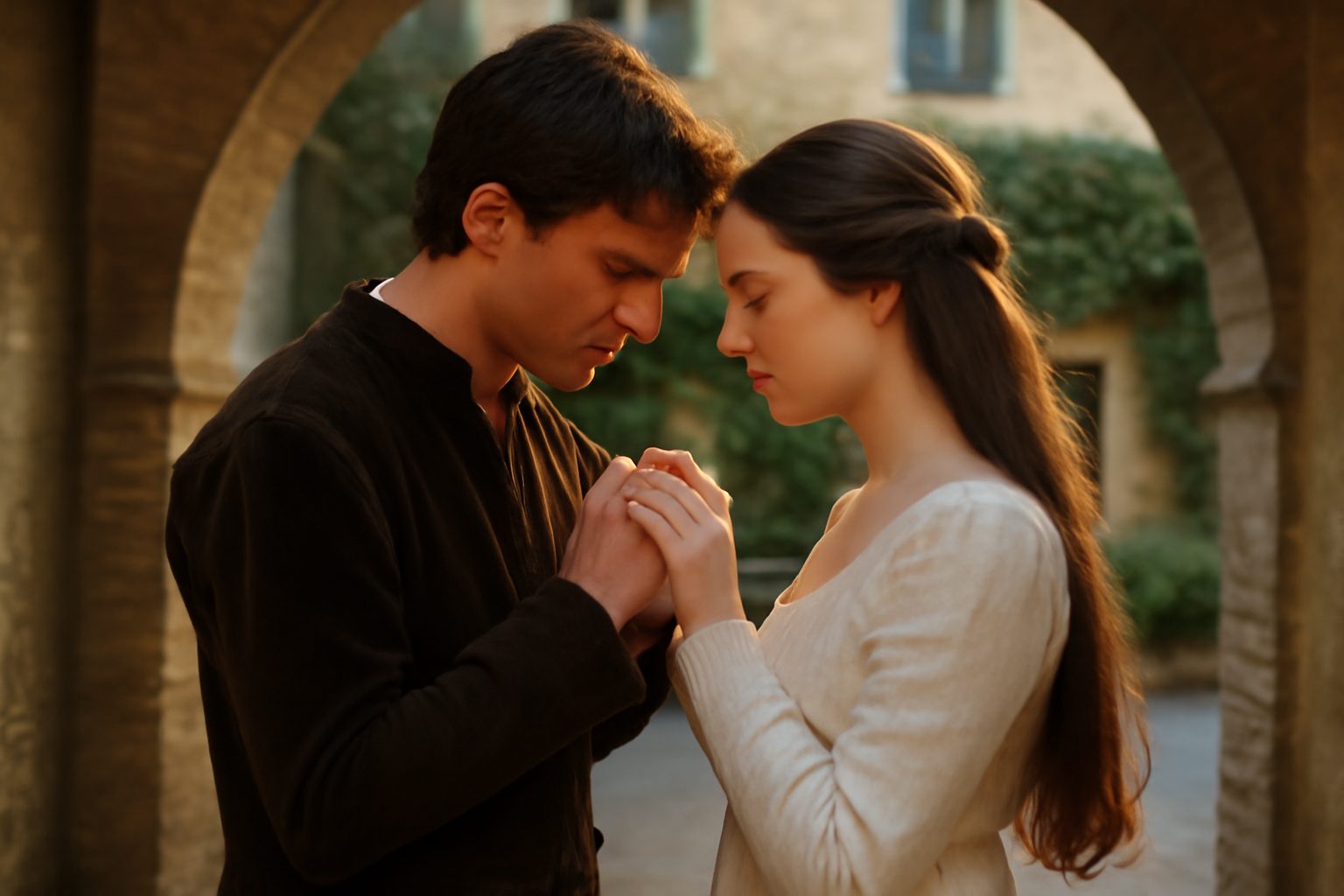
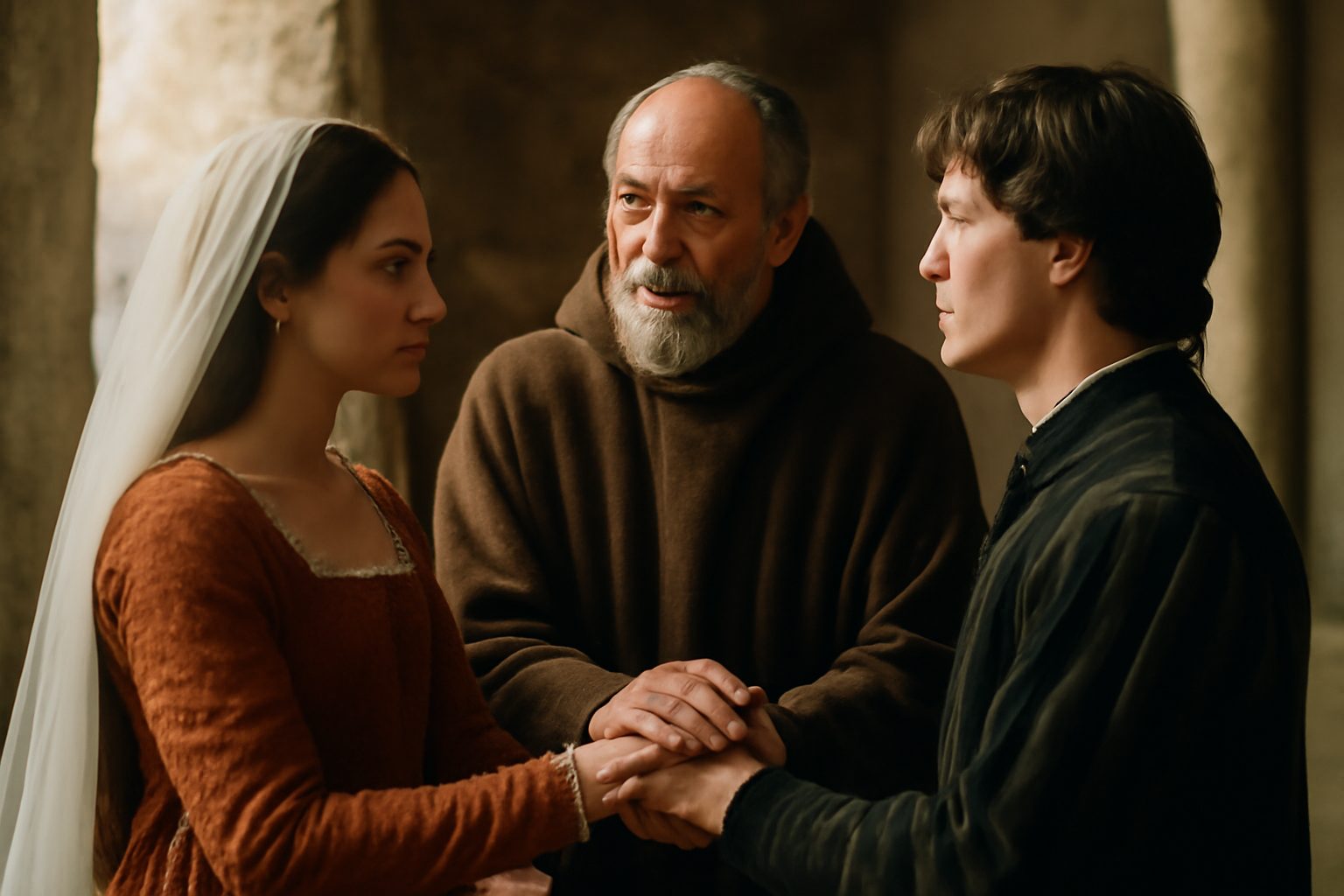
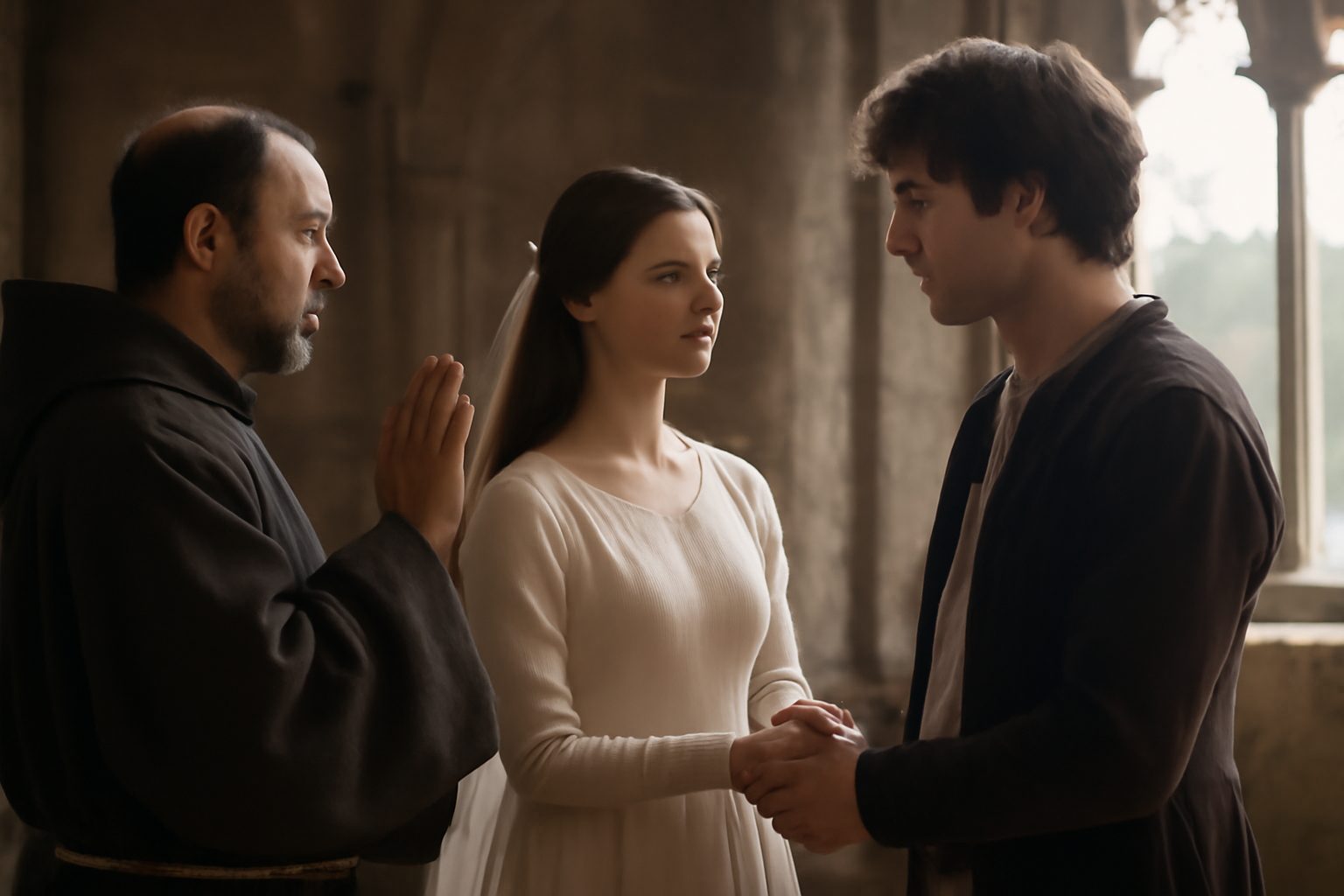
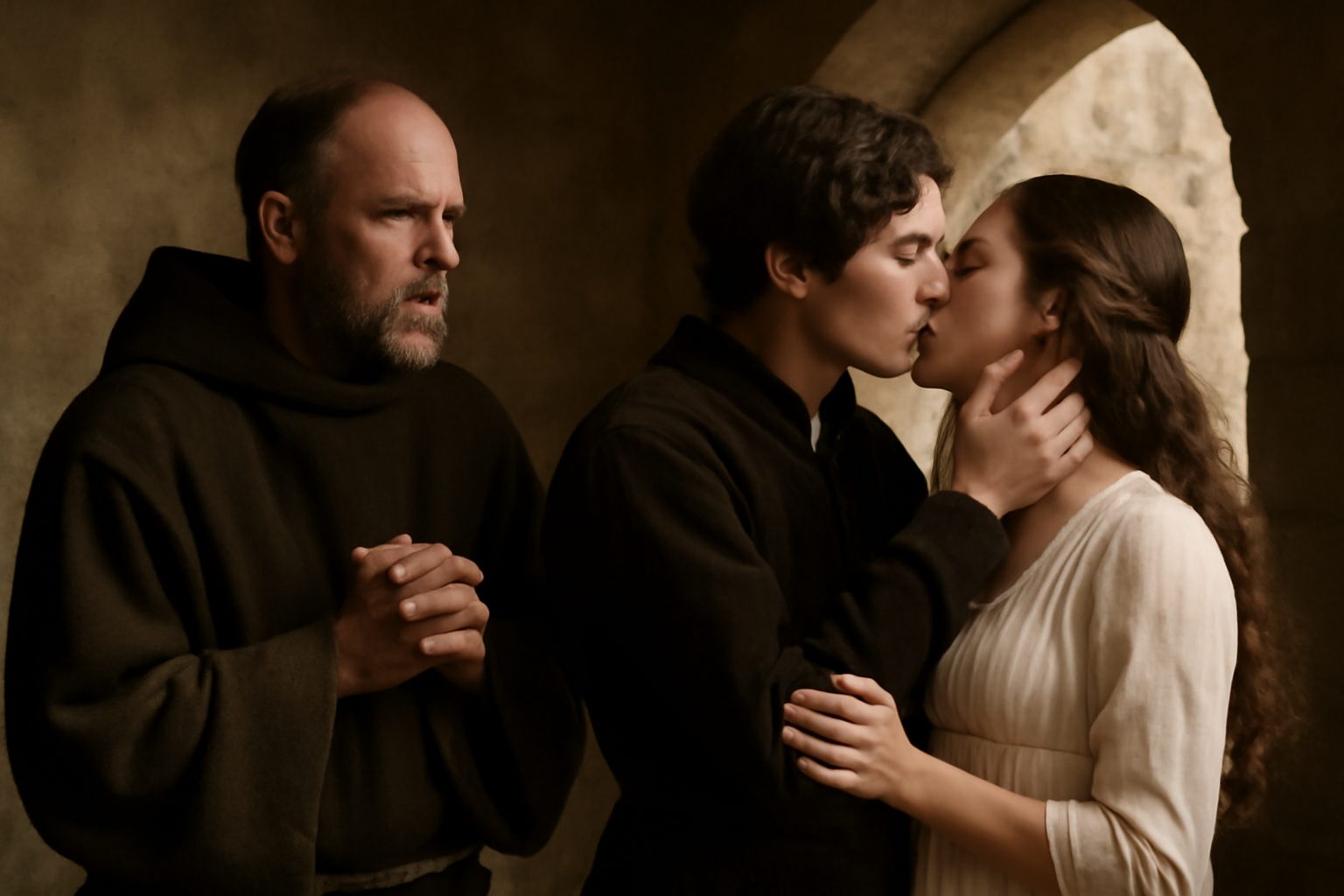
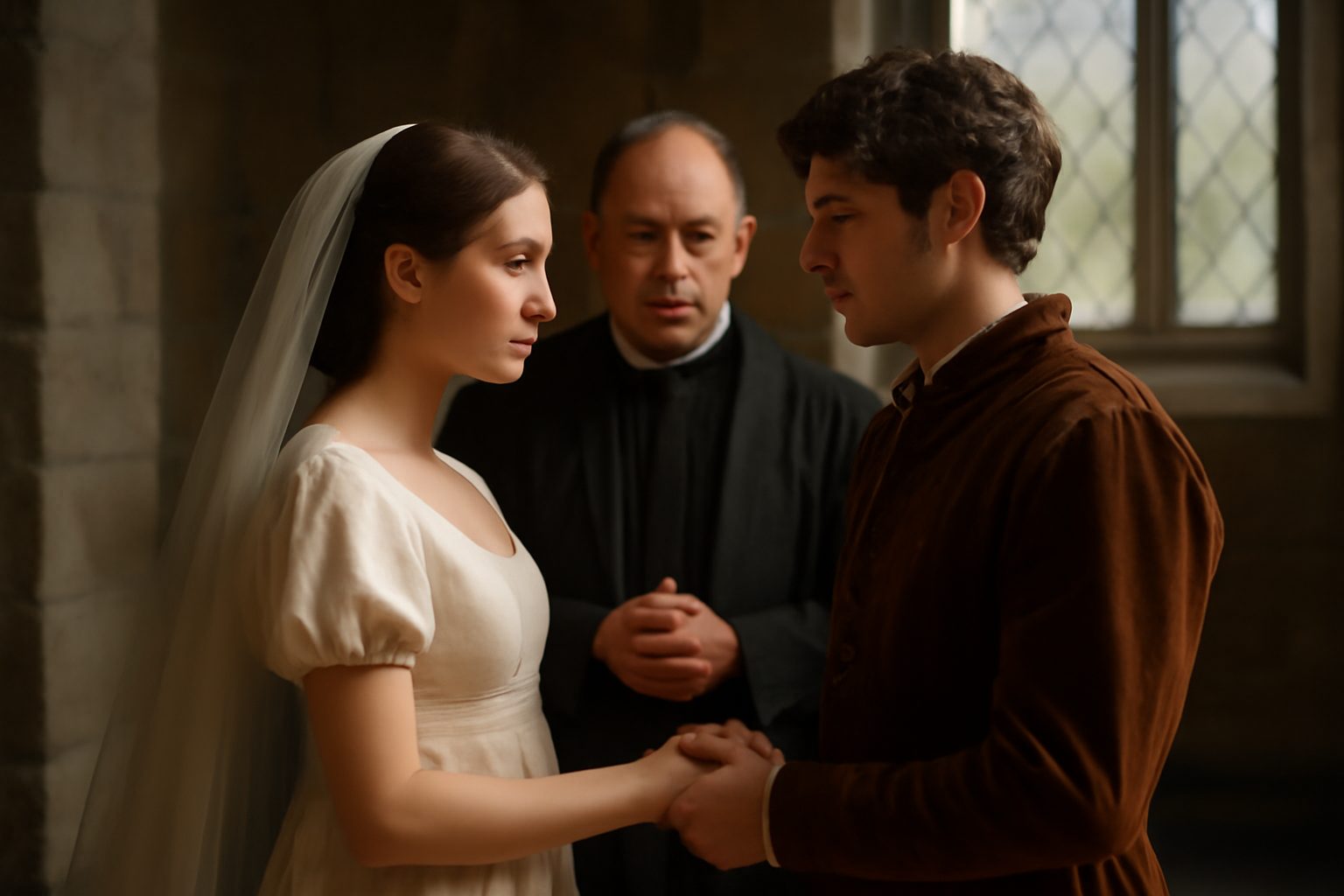
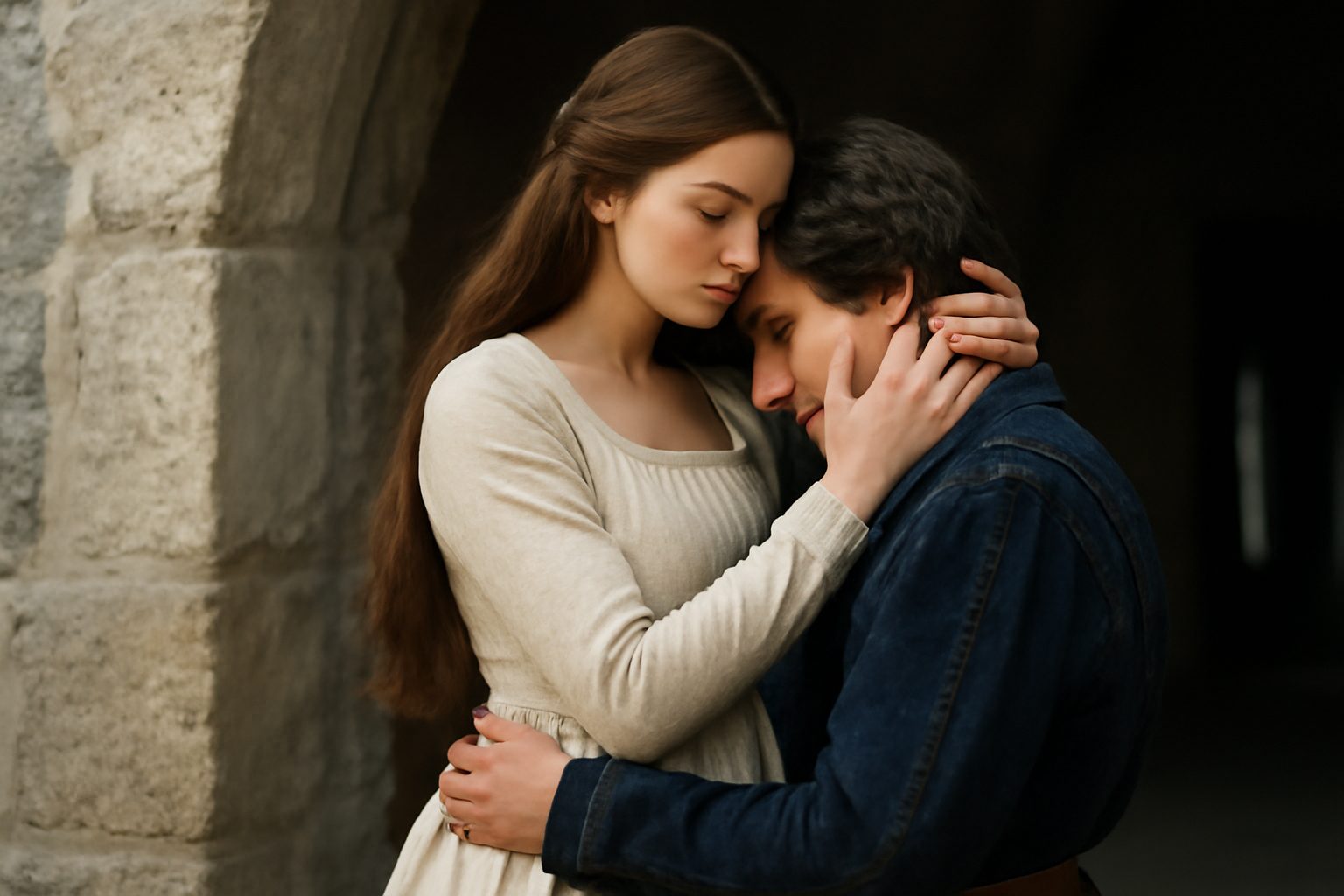
In Act 2, Scene 6 of Romeo and Juliet, Friar Laurence prepares to marry the two lovers in secret. Romeo, overwhelmed with happiness, speaks these words to Juliet as they reunite in the friar’s cell. His line reflects his boundless joy and the intensity of his love, moments before their clandestine wedding.
Romeo: "Ah, Juliet, if the measure of thy joy"
In modern day english, we would say:
Romeo is telling Juliet that if her happiness is as great as his, then she should express it with even more joy because her love is more skilled at describing it.
Frequently Asked Questions
What is Romeo comparing his happiness to in this line?
Romeo is comparing his happiness to a measurement or amount, suggesting it is as great as Juliet's joy.
Connections to other verses:
Connections to "Ah, Juliet, if the measure of thy joy"
The verse "Ah, Juliet, if the measure of thy joy" reflects Romeo's awe at Juliet's happiness, emphasizing the overwhelming nature of their love. This sentiment is echoed in "But my true love is grown to such excess", where Romeo admits his love is beyond measure, reinforcing the idea of boundless emotion.
Contrast with Friar Laurence's Warnings
In contrast, Friar Laurence's cautionary words in "These violent delights have violent ends" and "Therefore love moderately; long love doth so" serve as a sobering counterpoint to Romeo's exuberance, highlighting the tension between youthful passion and wisdom.
Symbolism of Lightness and Joy
The imagery of lightness and joy in Romeo's speech connects to "Here comes the lady: O, so light a foot", which portrays Juliet's graceful entrance, symbolizing their elevated spirits. Similarly, "And yet not fall; so light is vanity" uses lightness metaphorically, aligning with the theme of transcendent love.
Unity and Spiritual Connection
The idea of shared joy is further developed in "Receive in either by this dear encounter", emphasizing mutual exchange, and culminates in "Till holy church incorporate two in one", which symbolizes their union, mirroring the depth of emotion in the referenced verse.