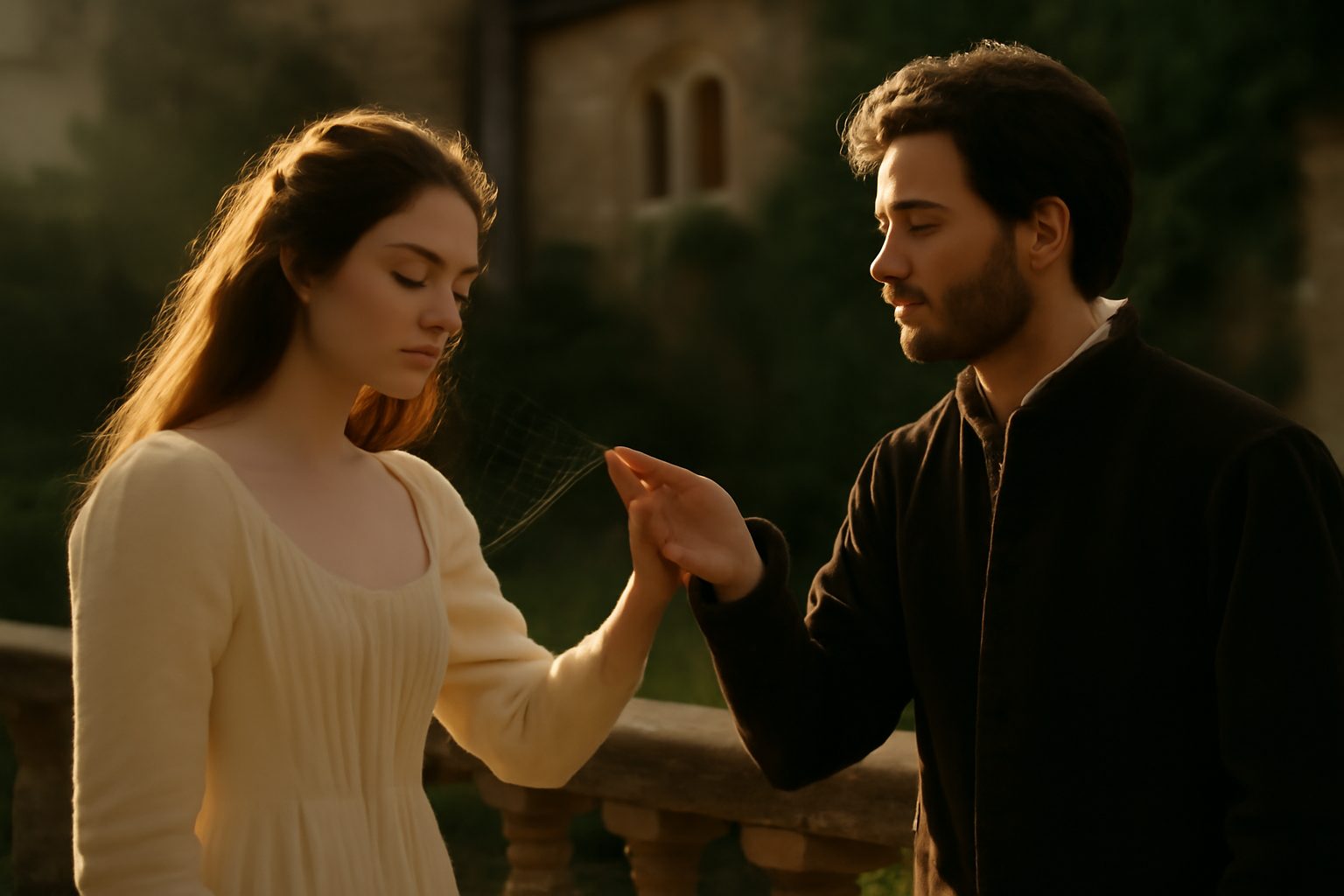
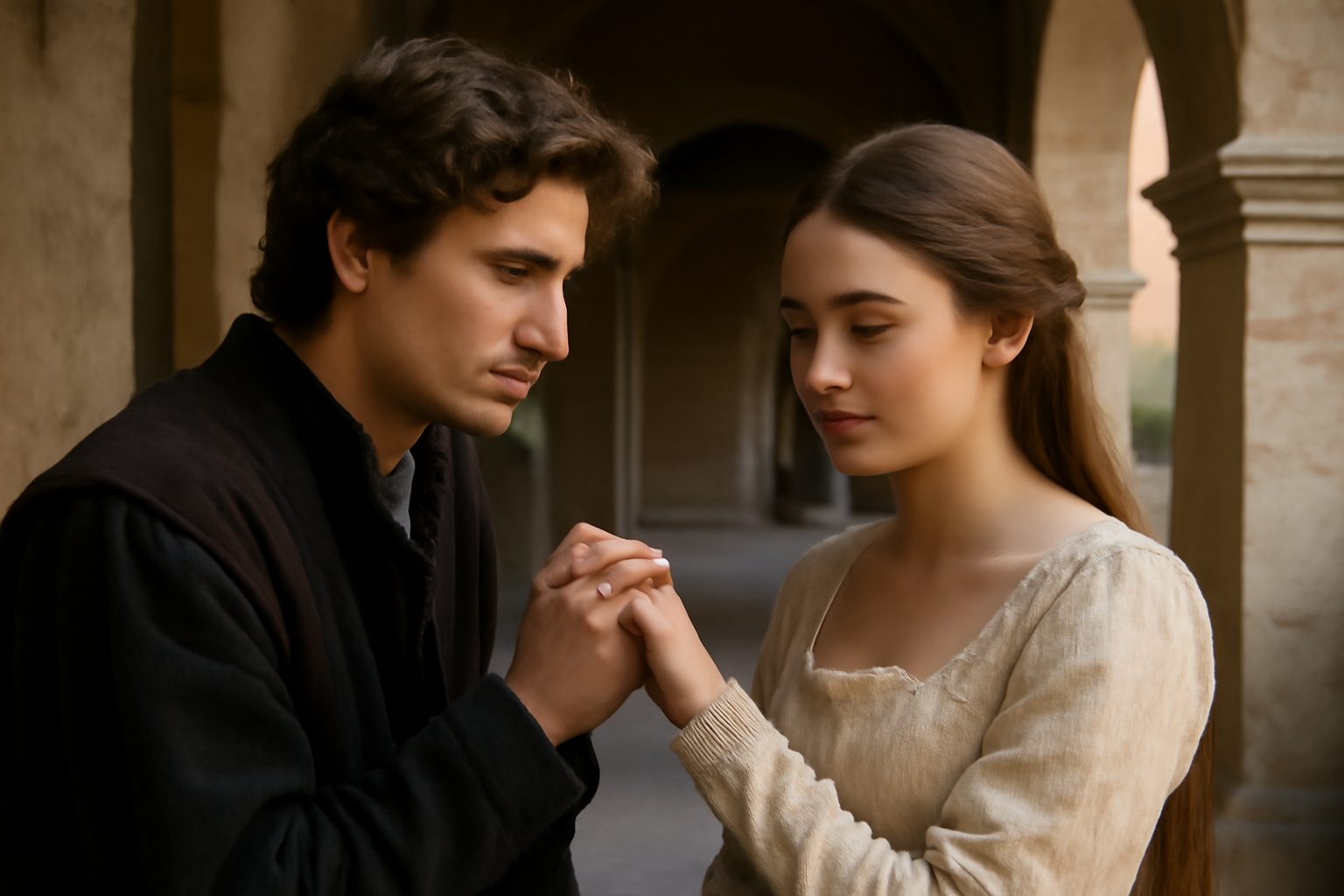
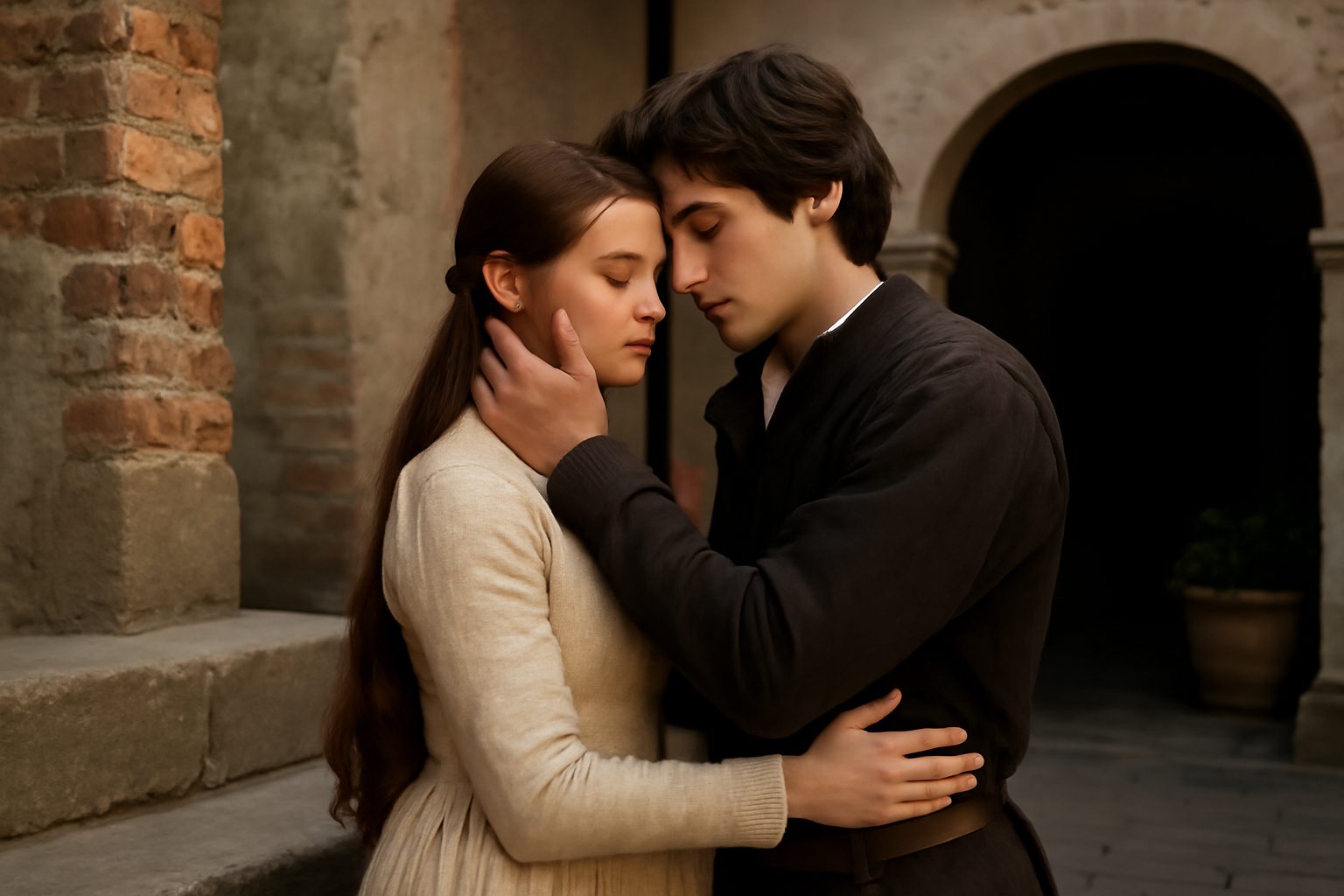
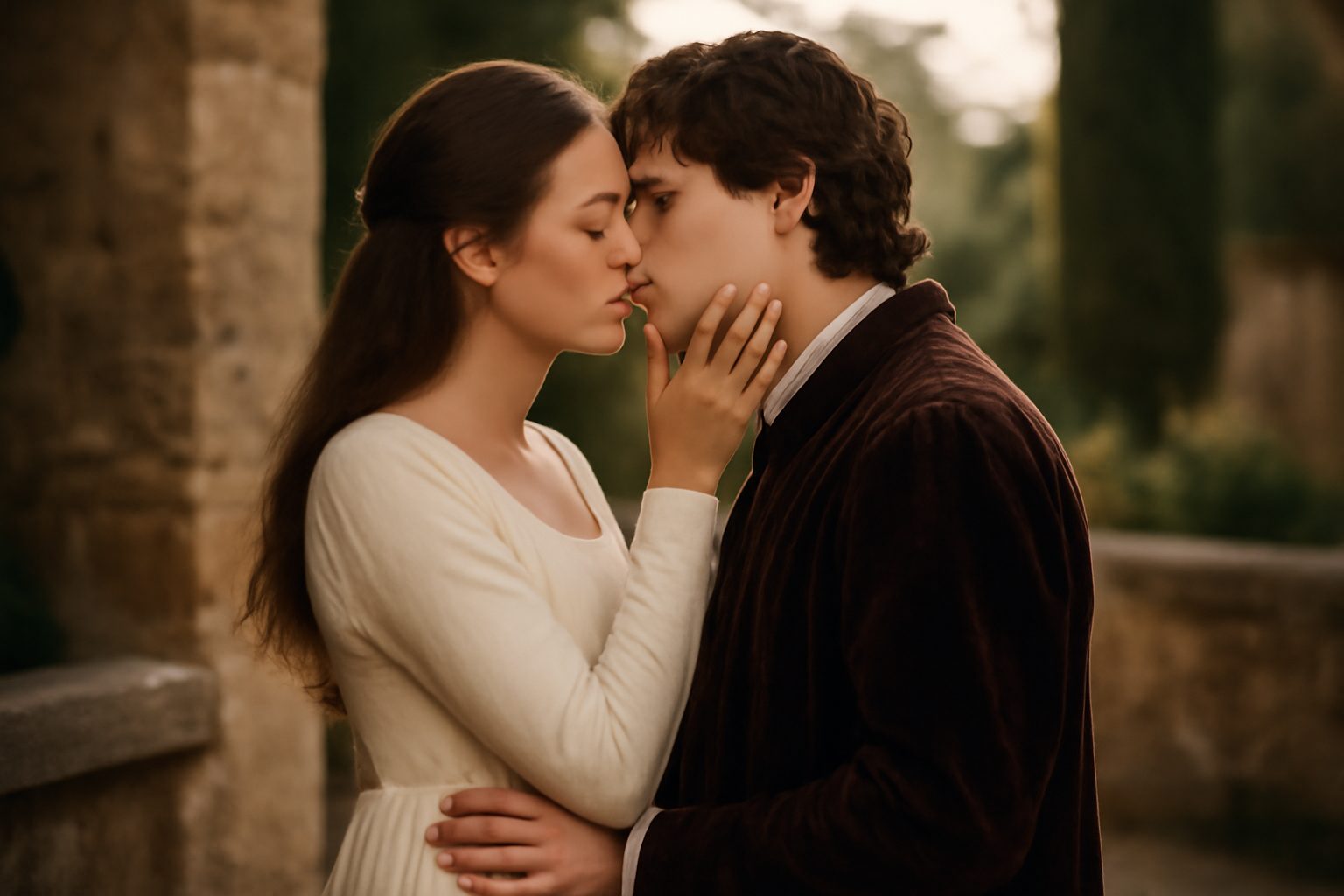
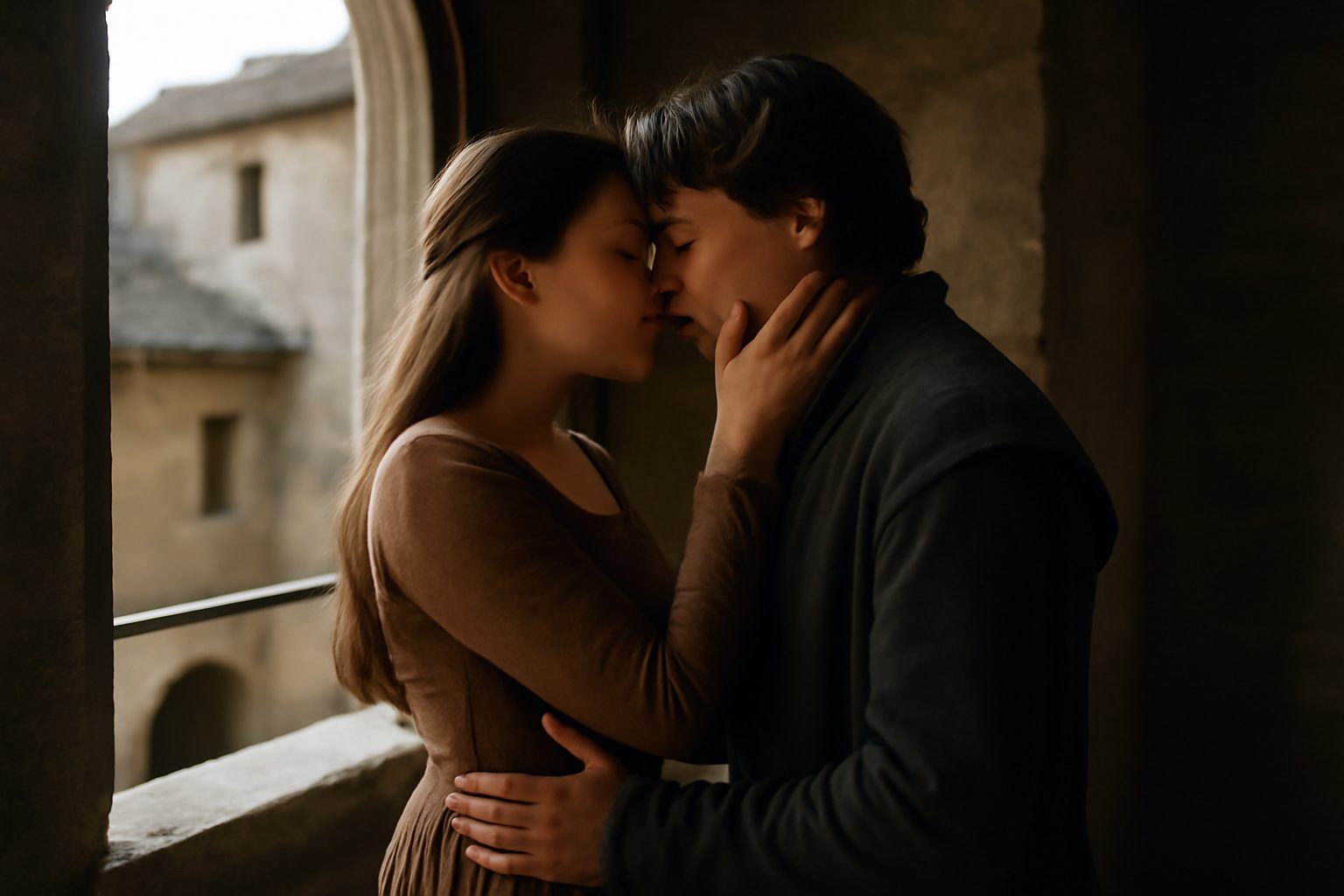
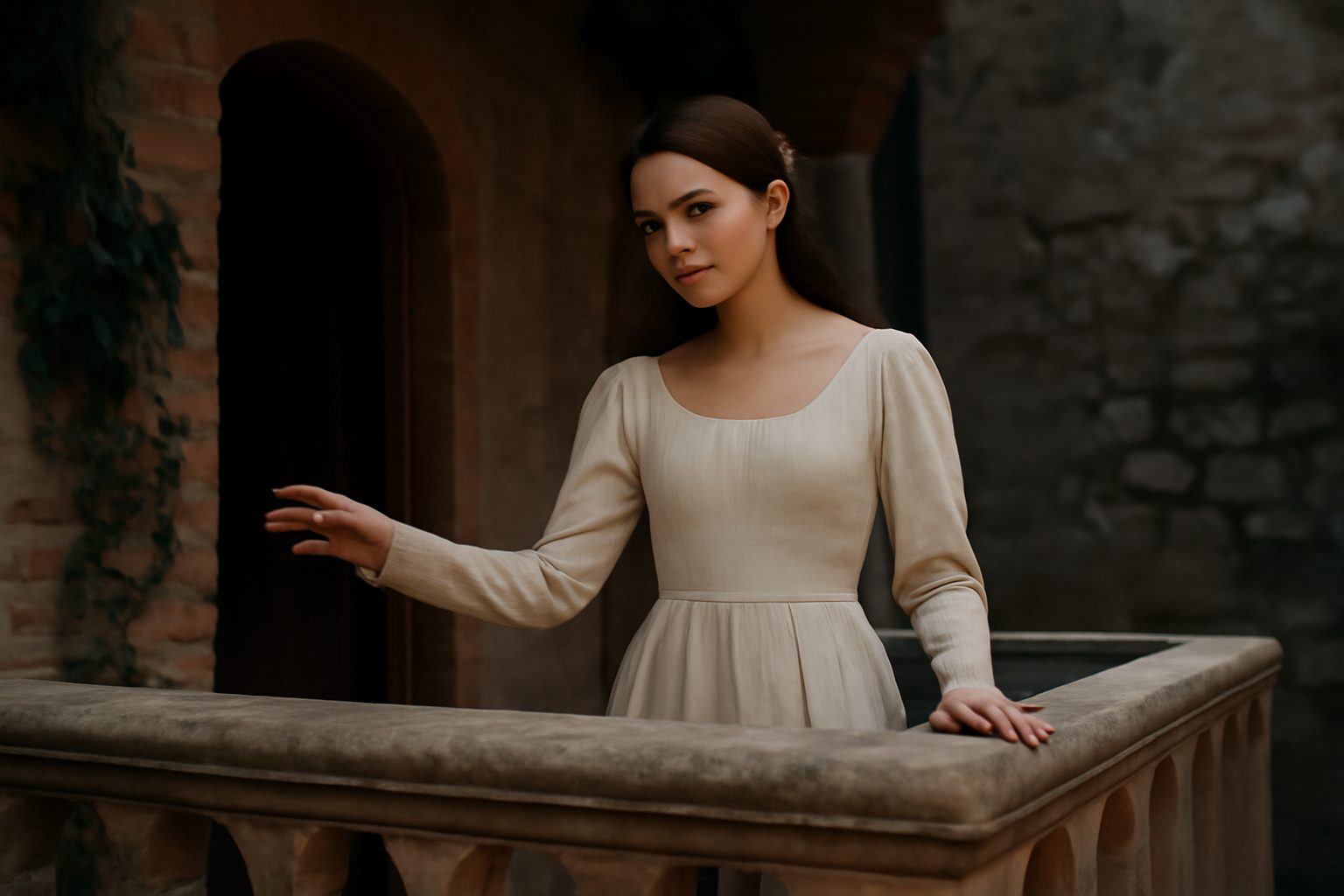
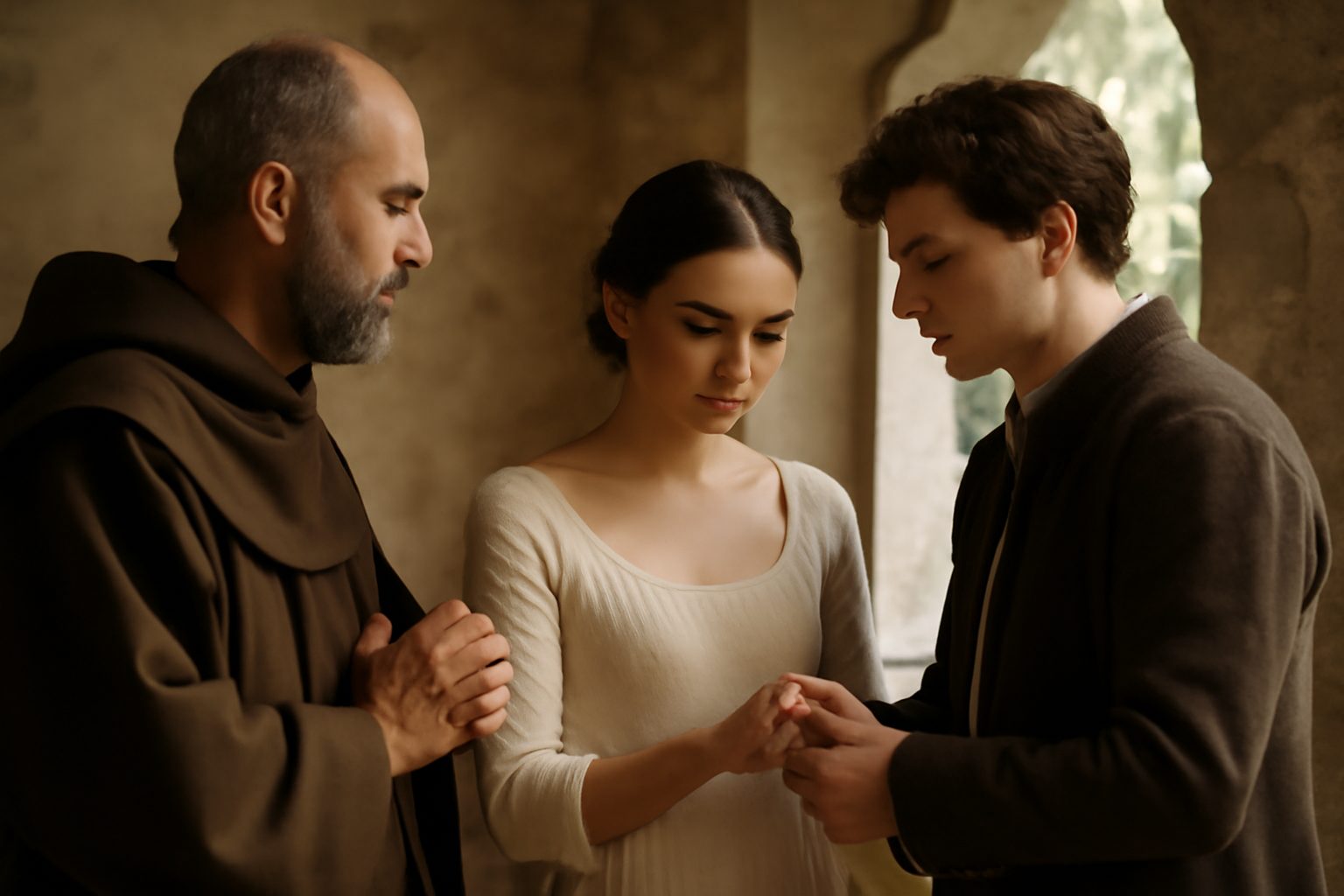
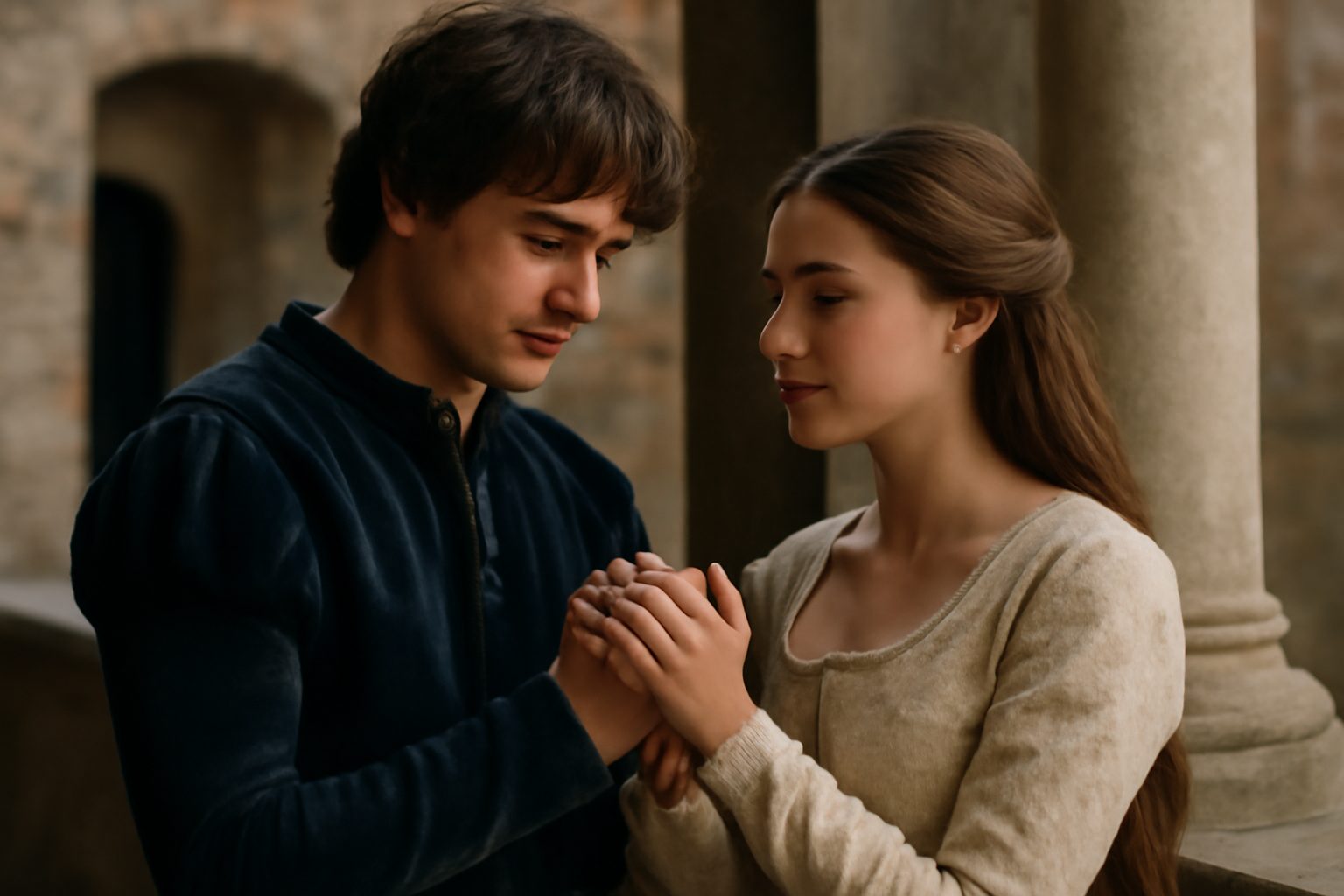
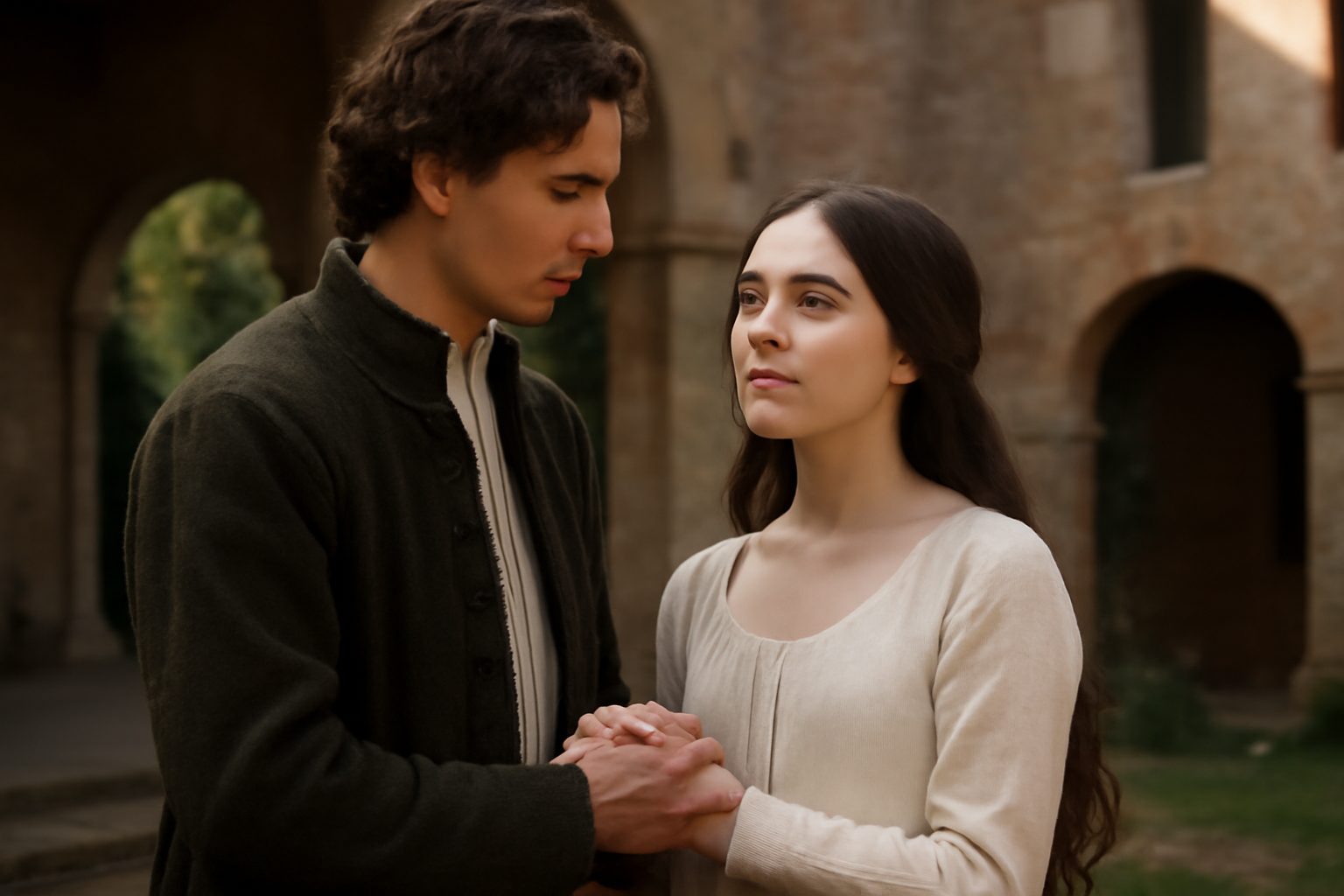
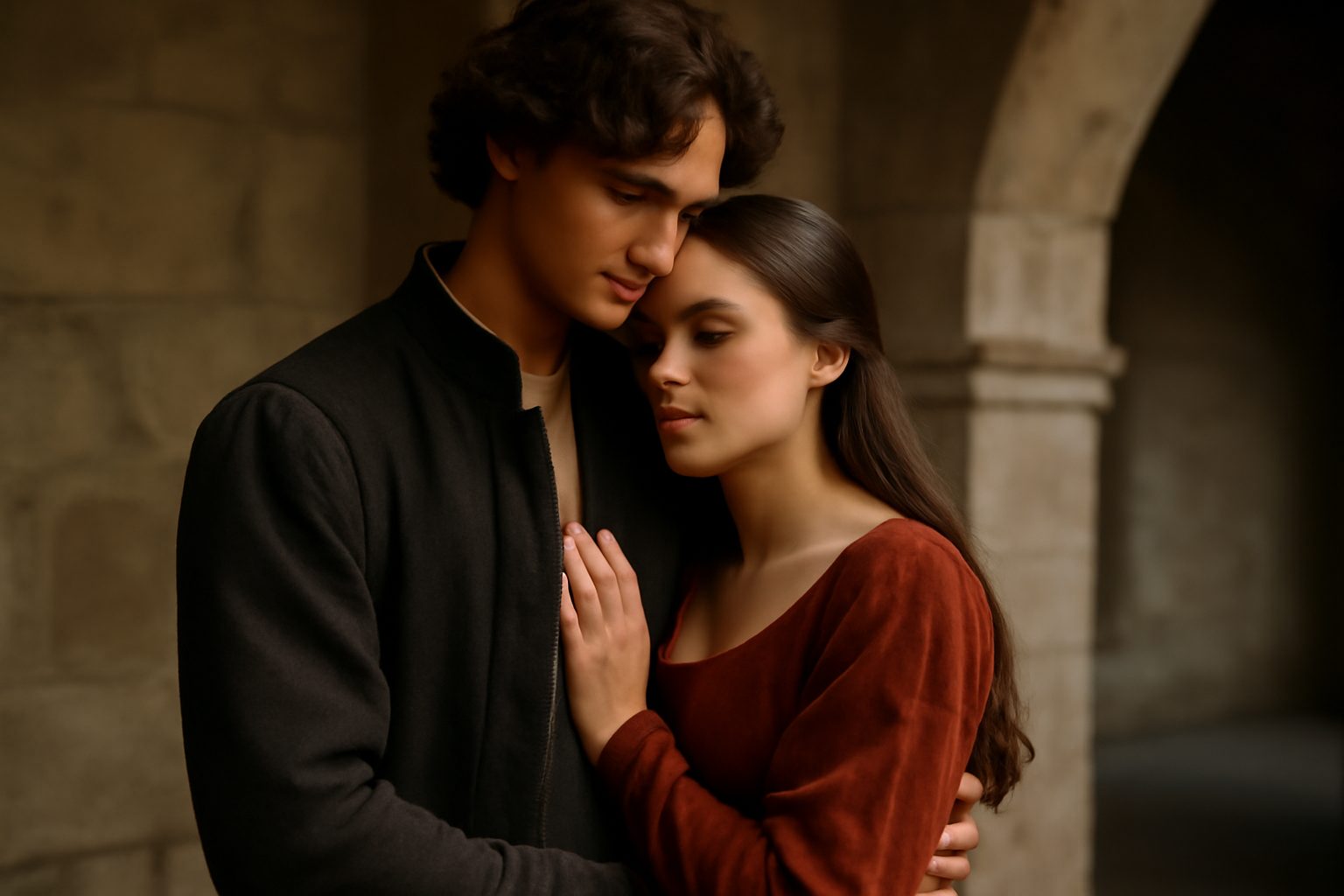
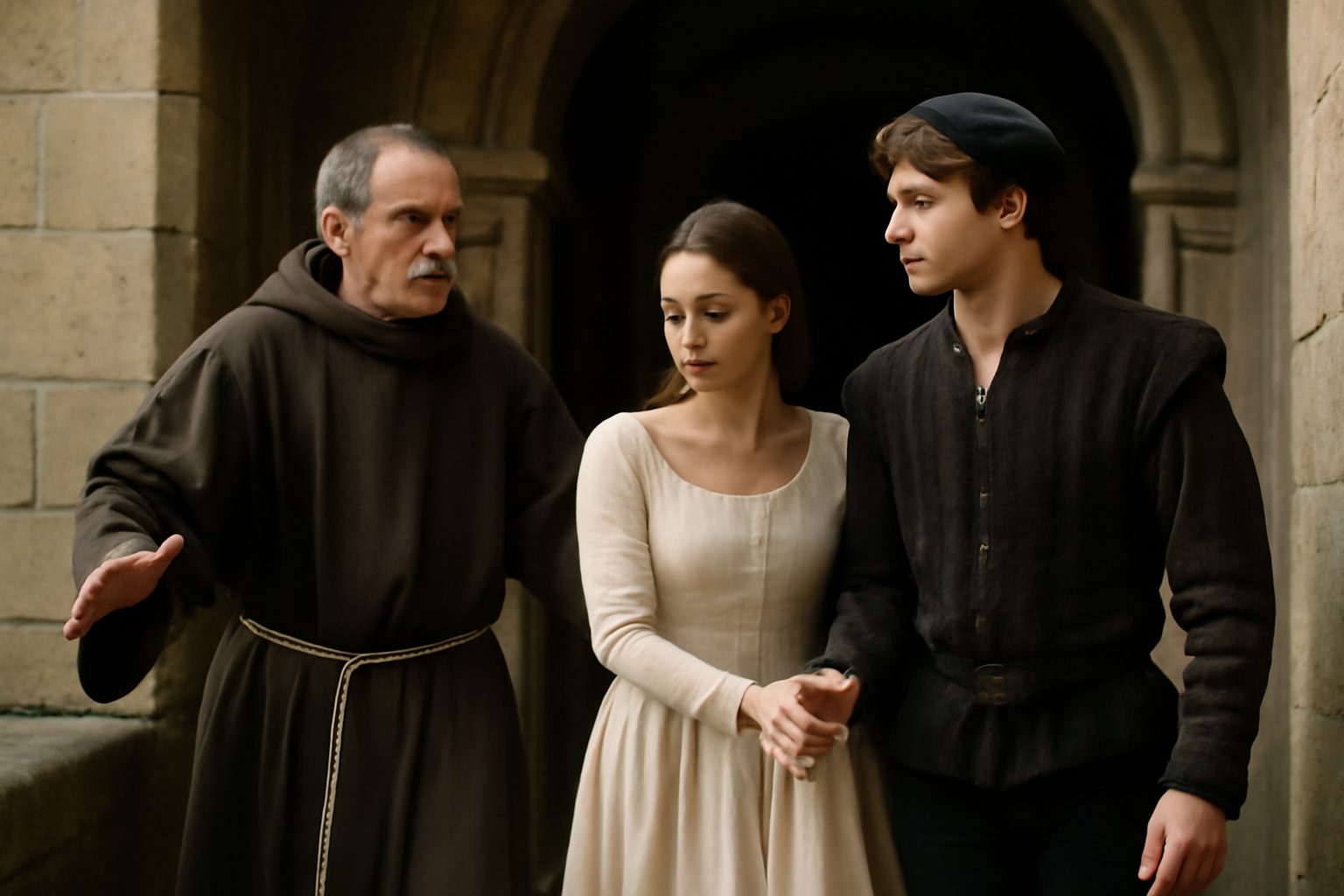
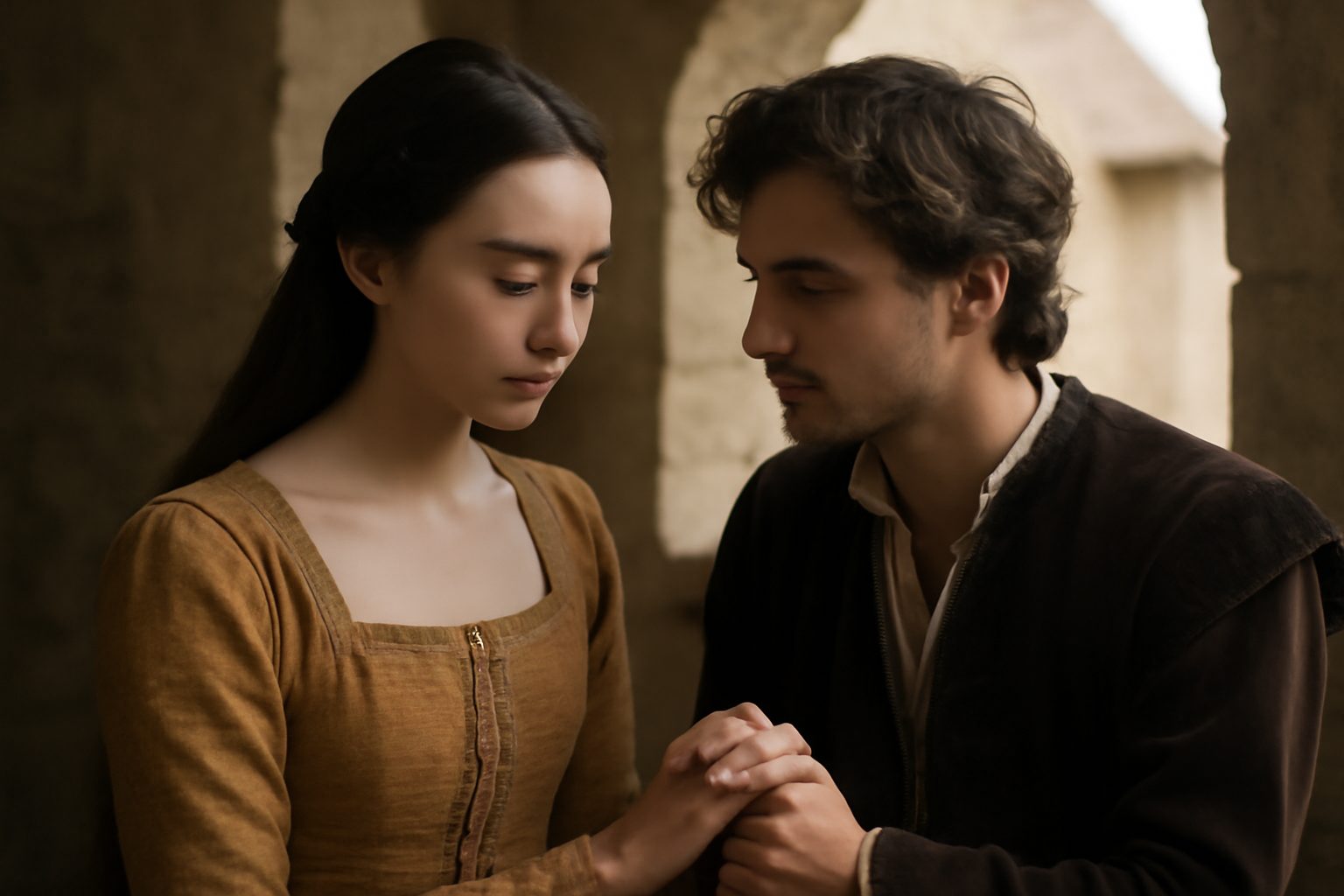
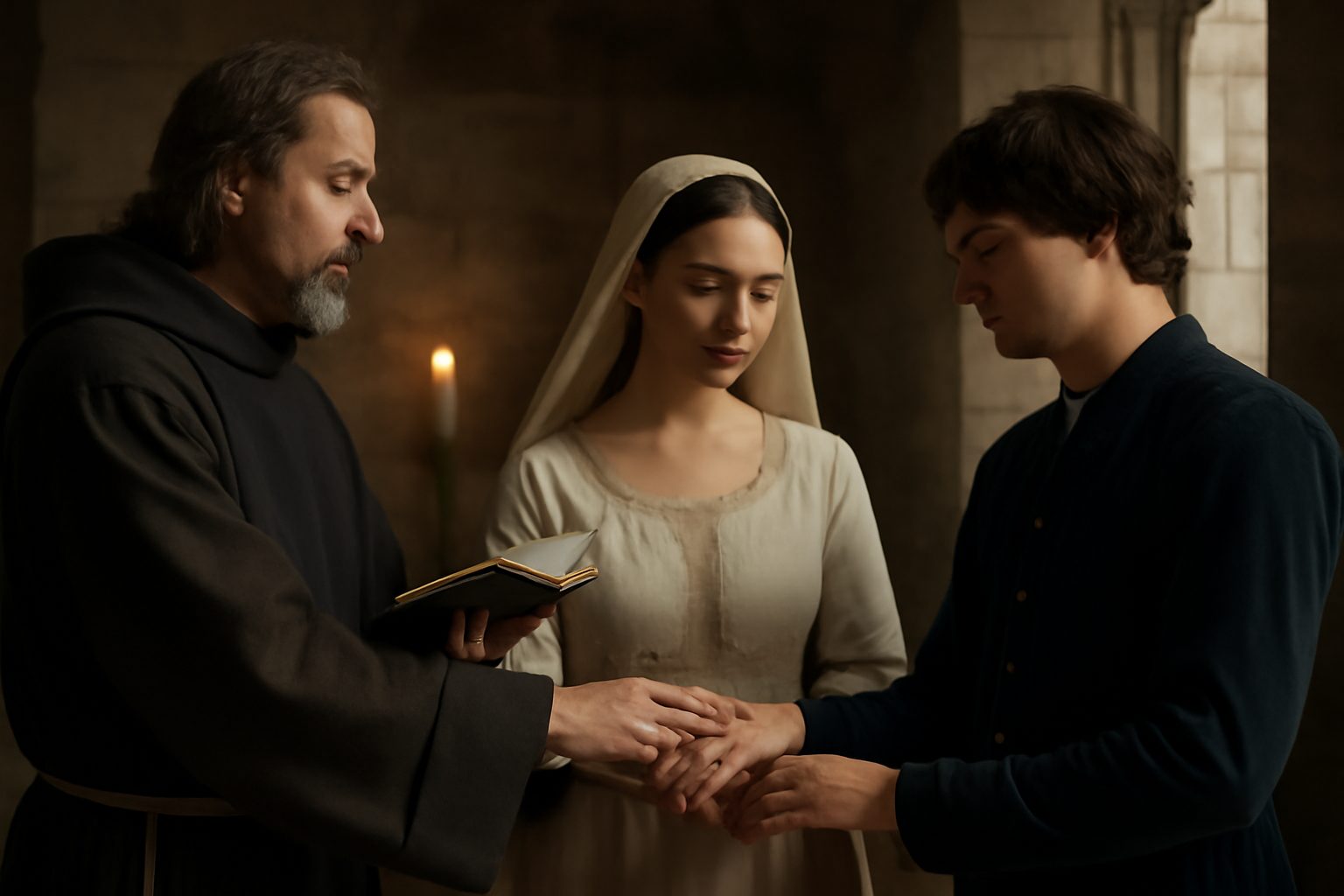
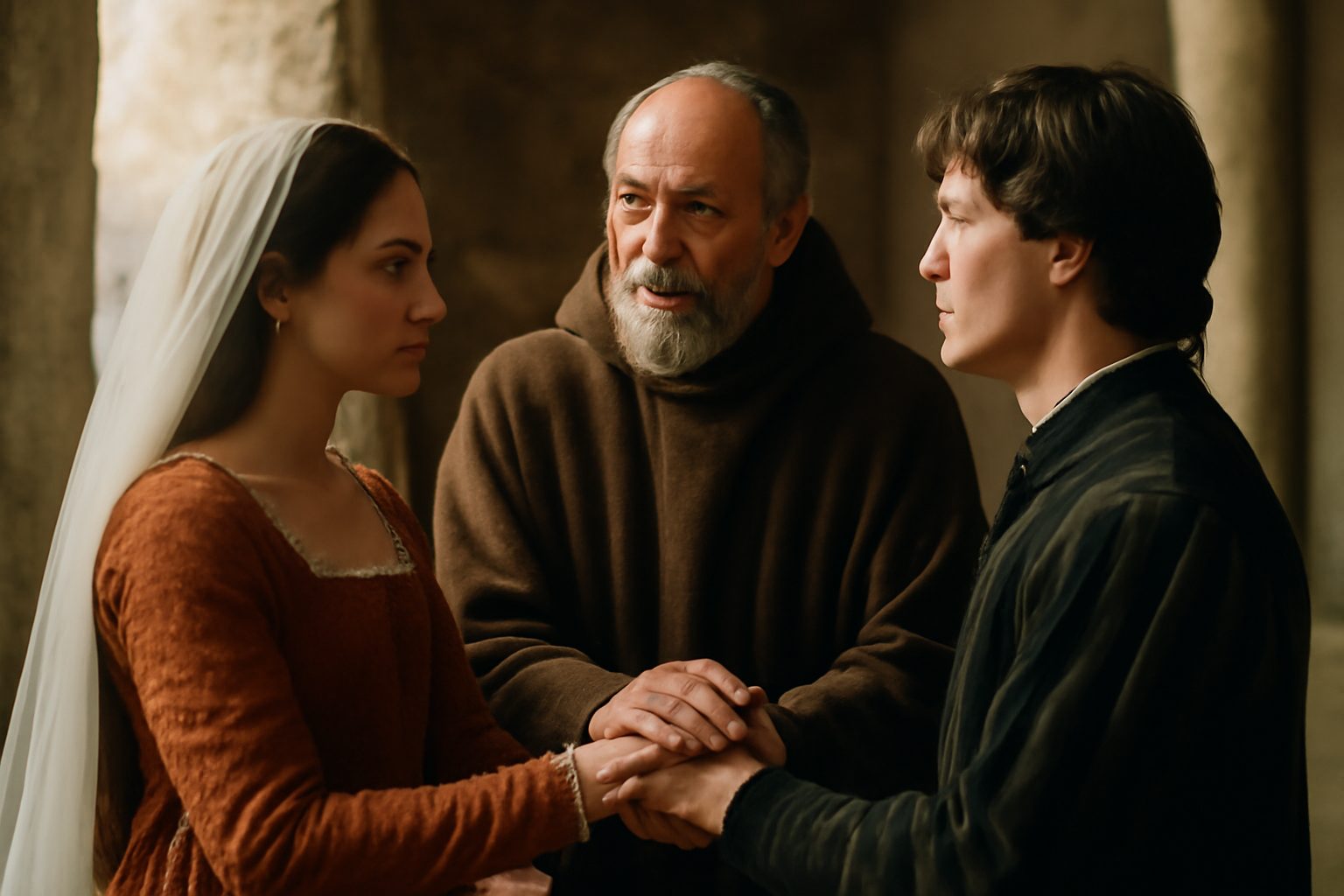
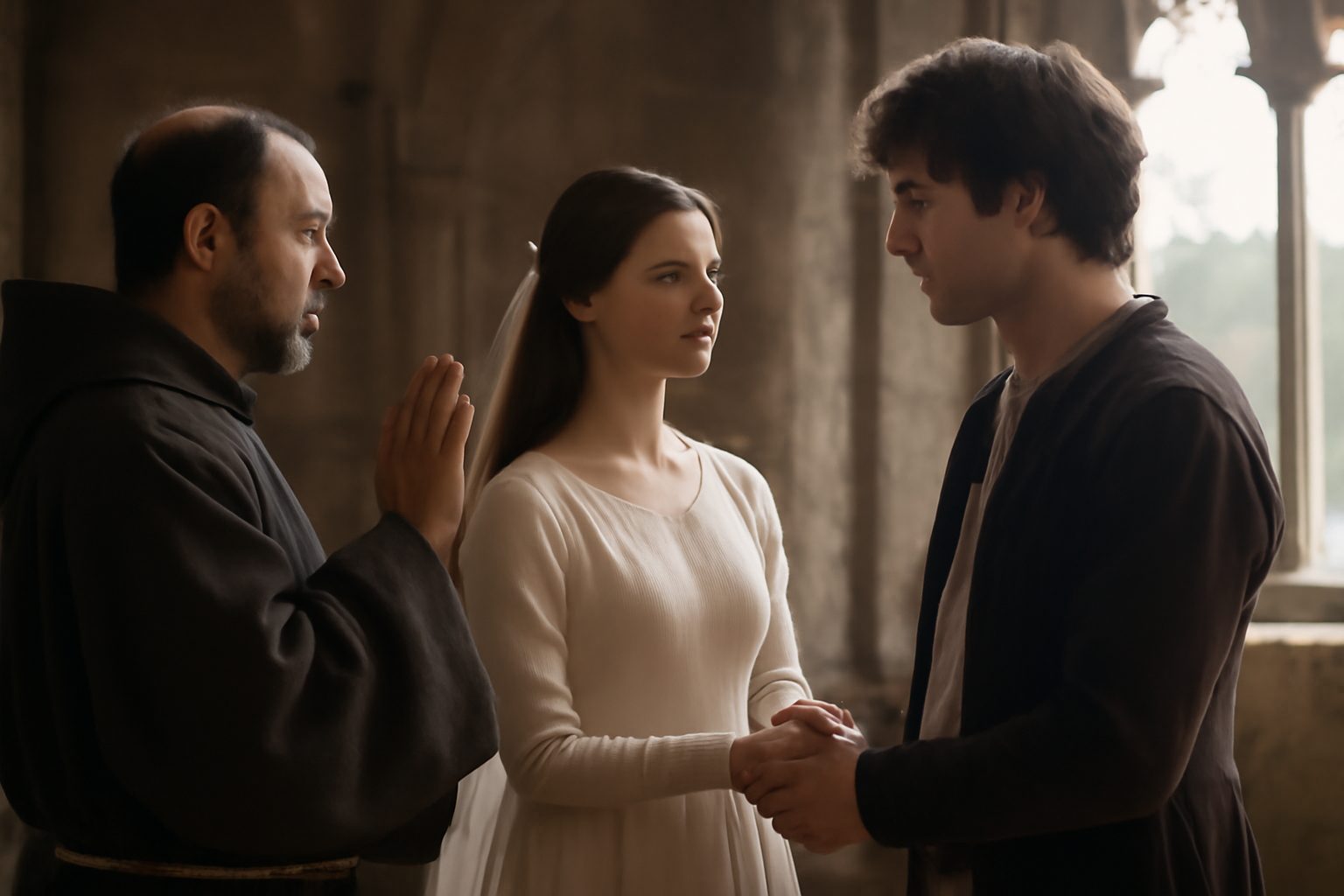
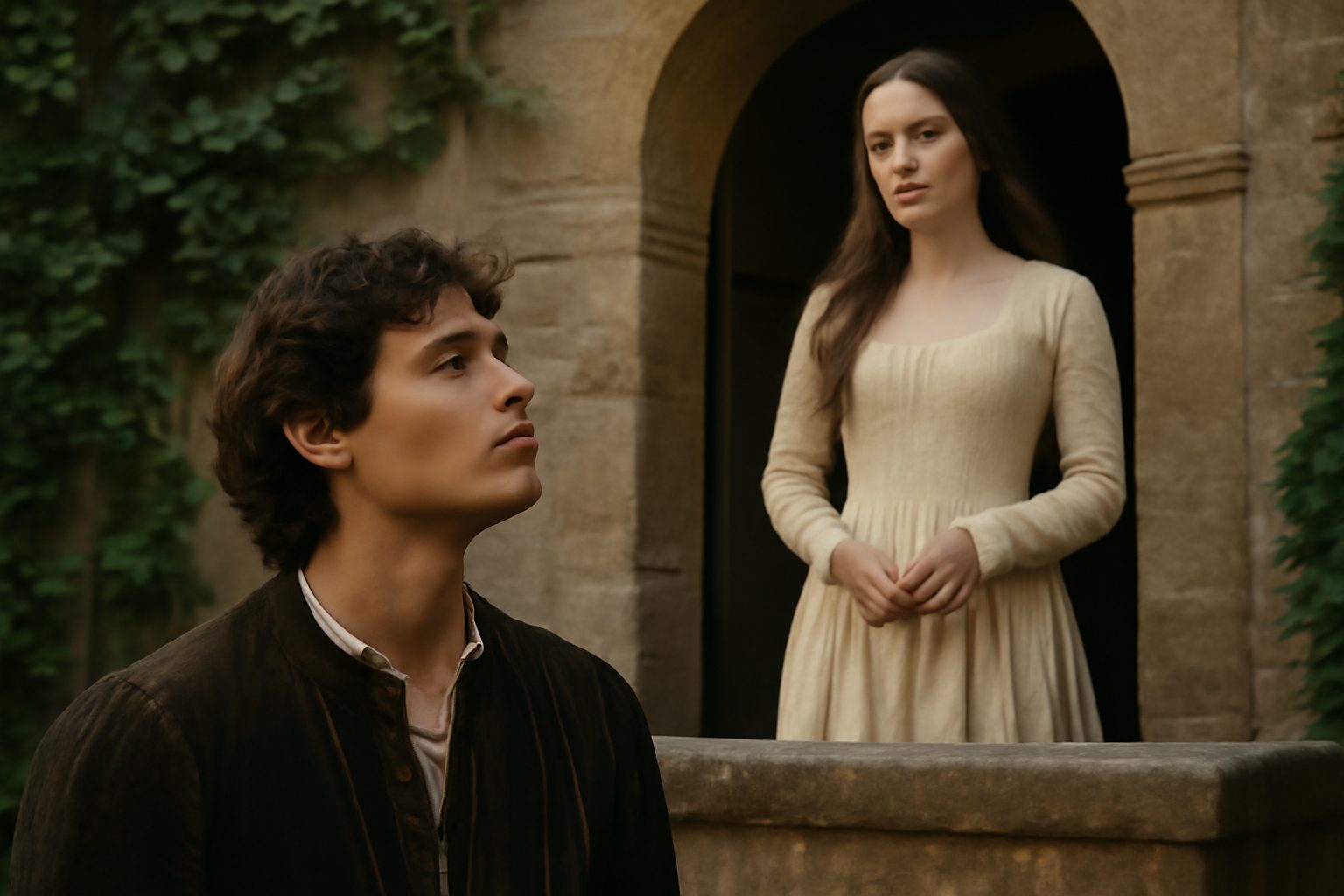
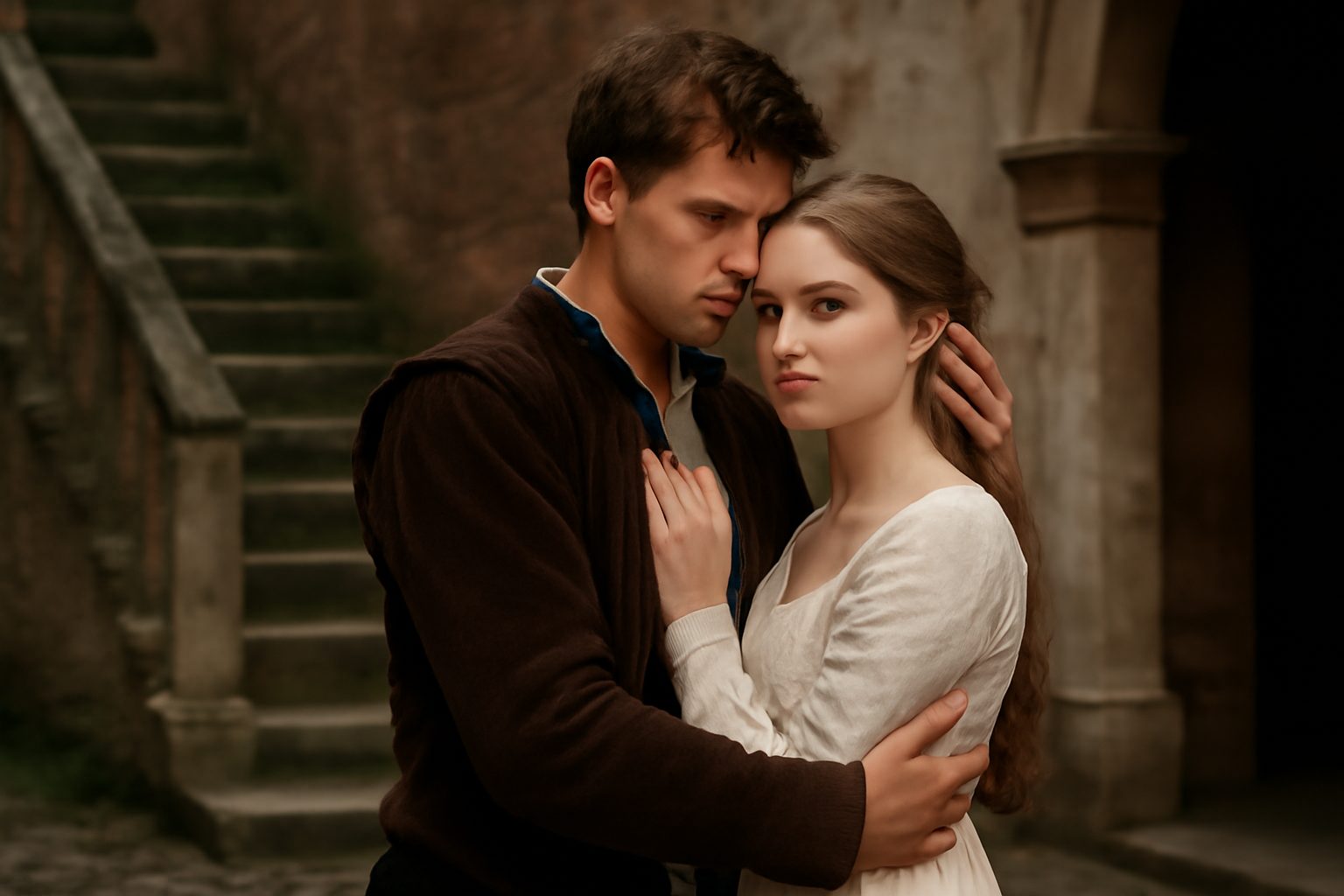
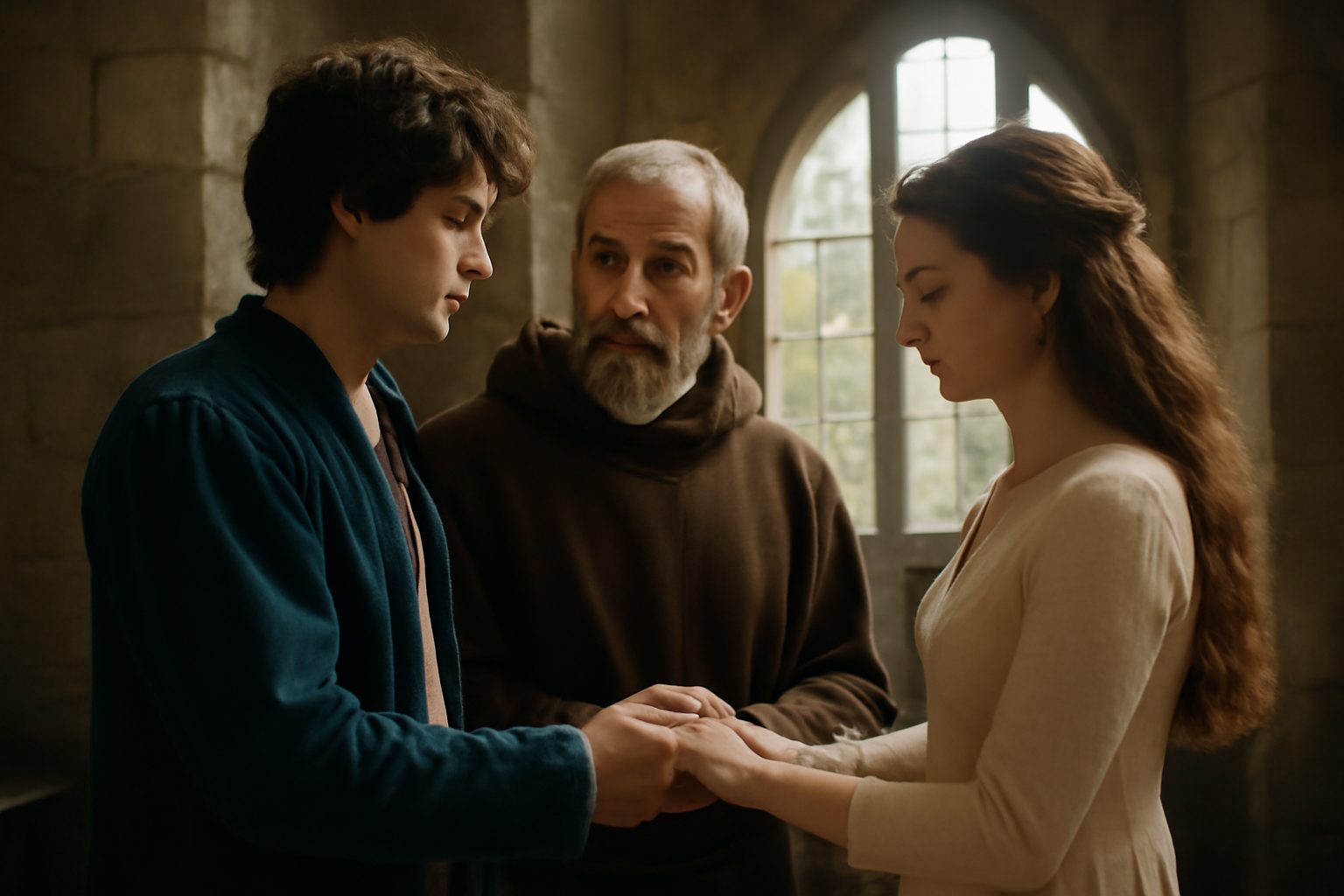
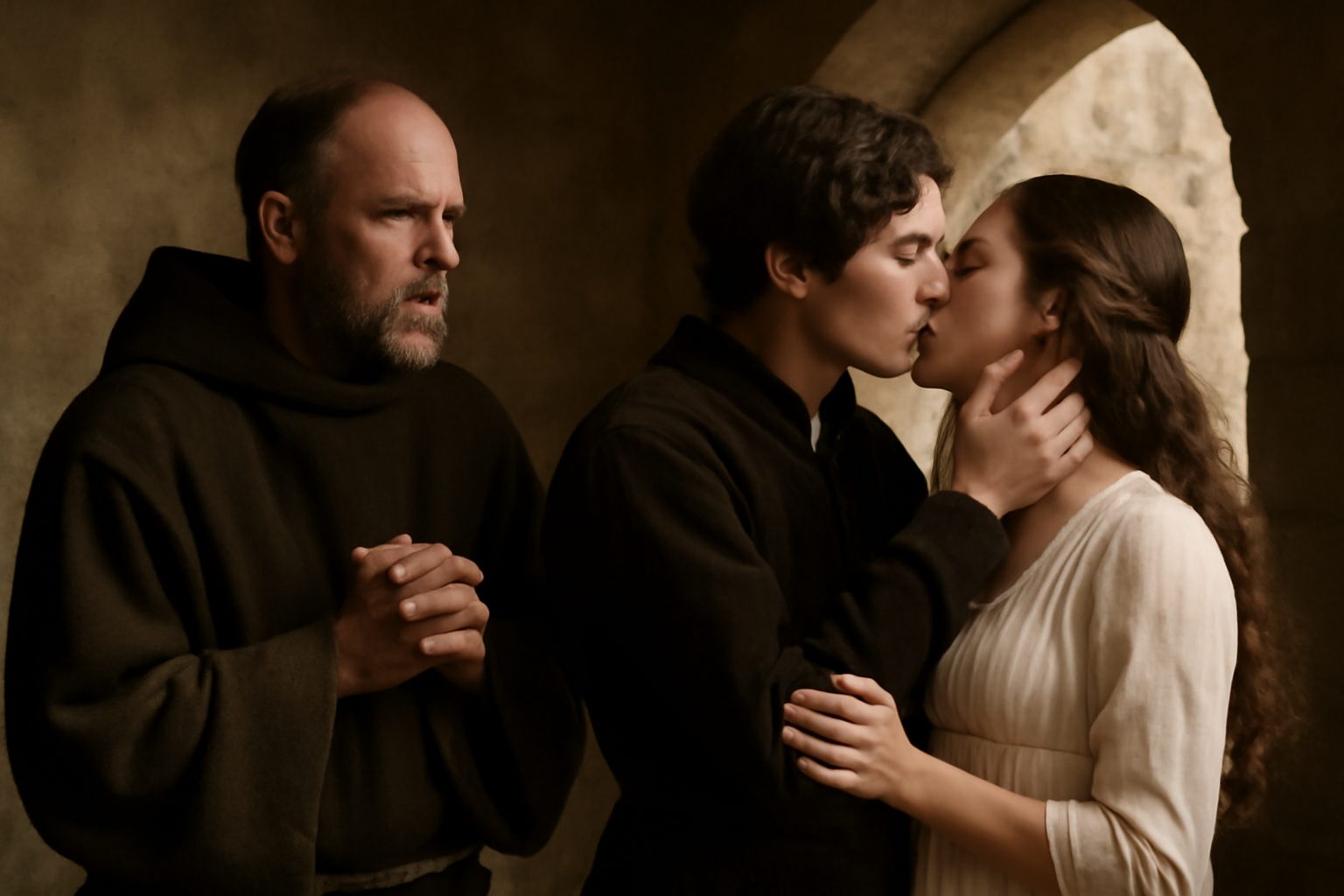
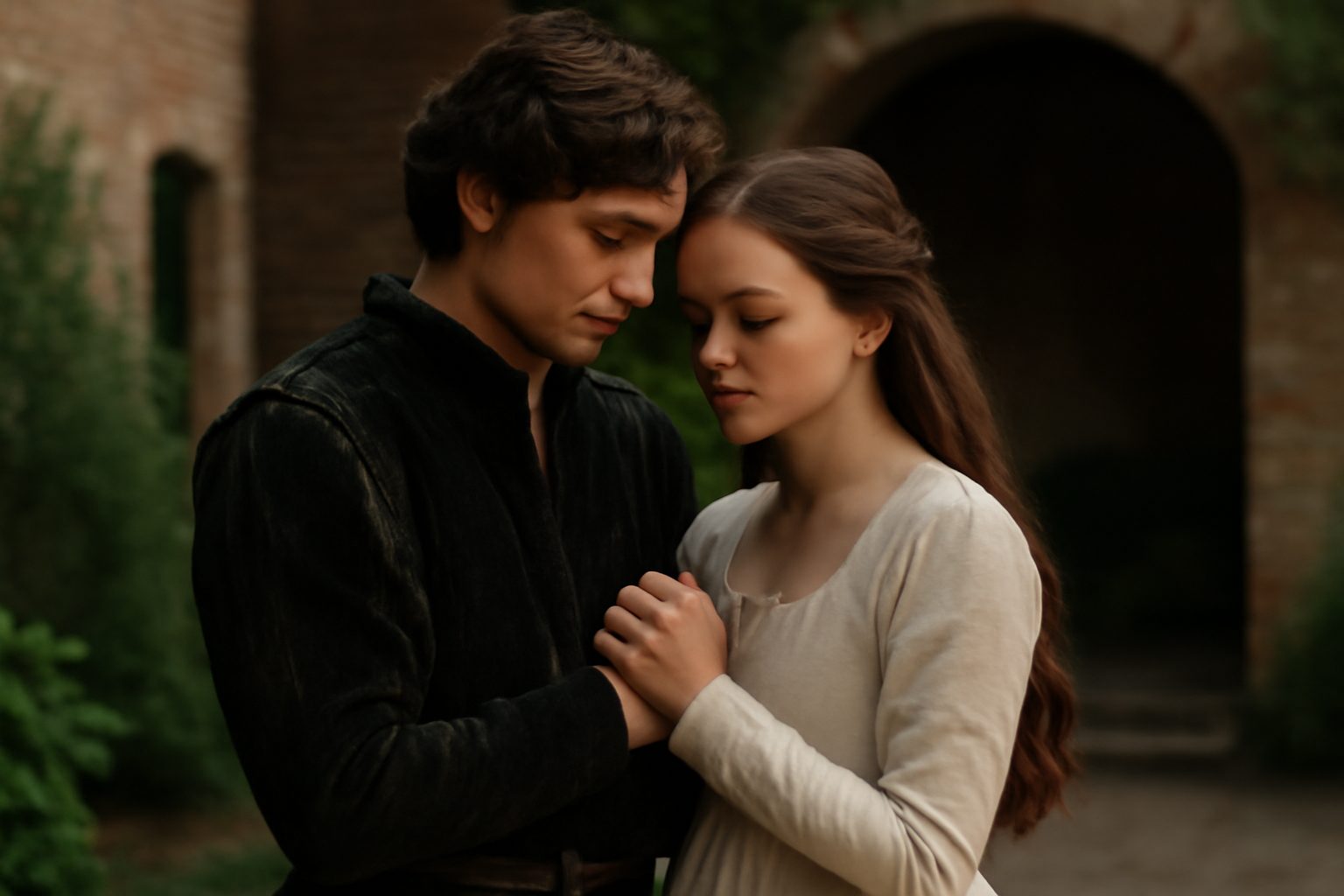
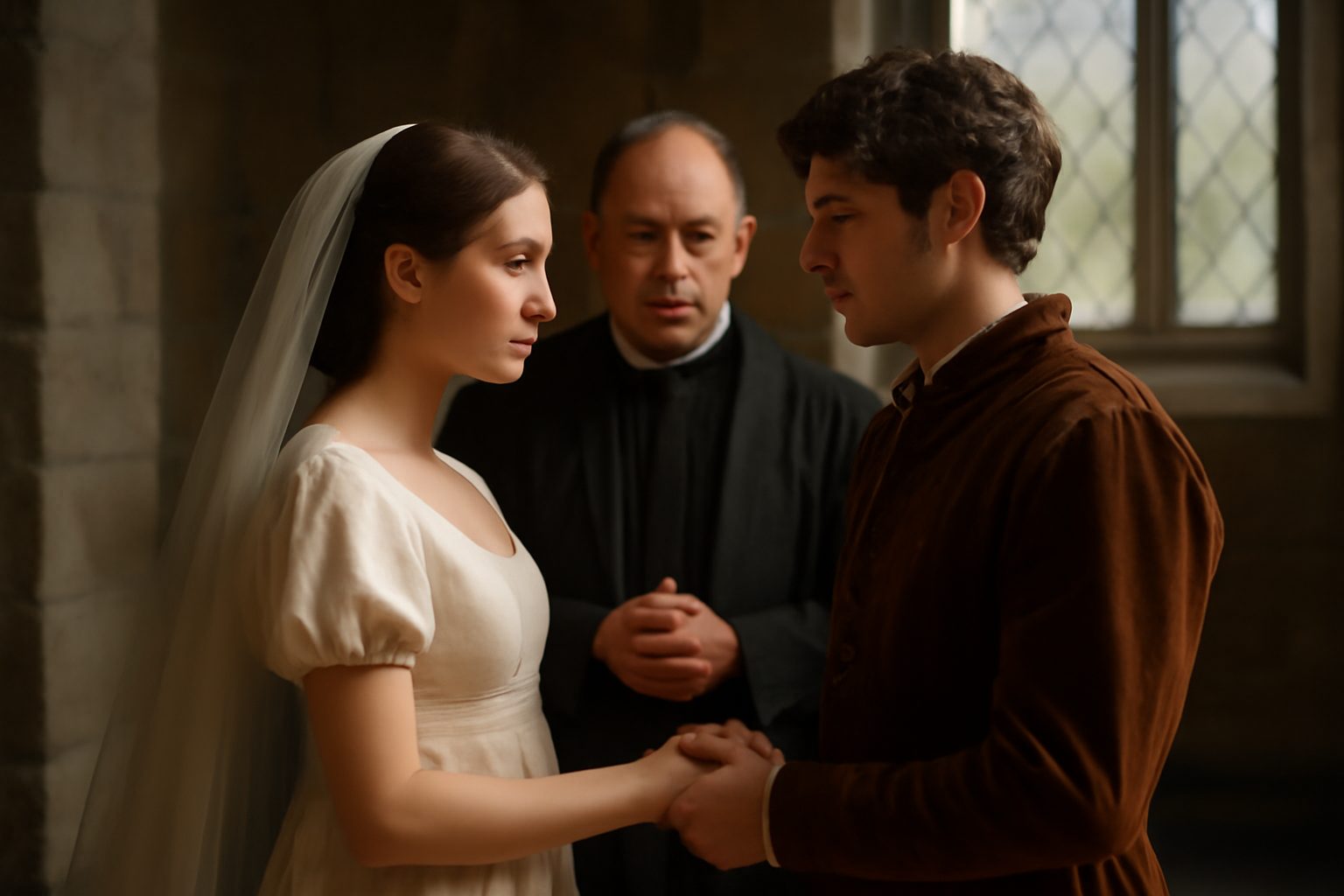
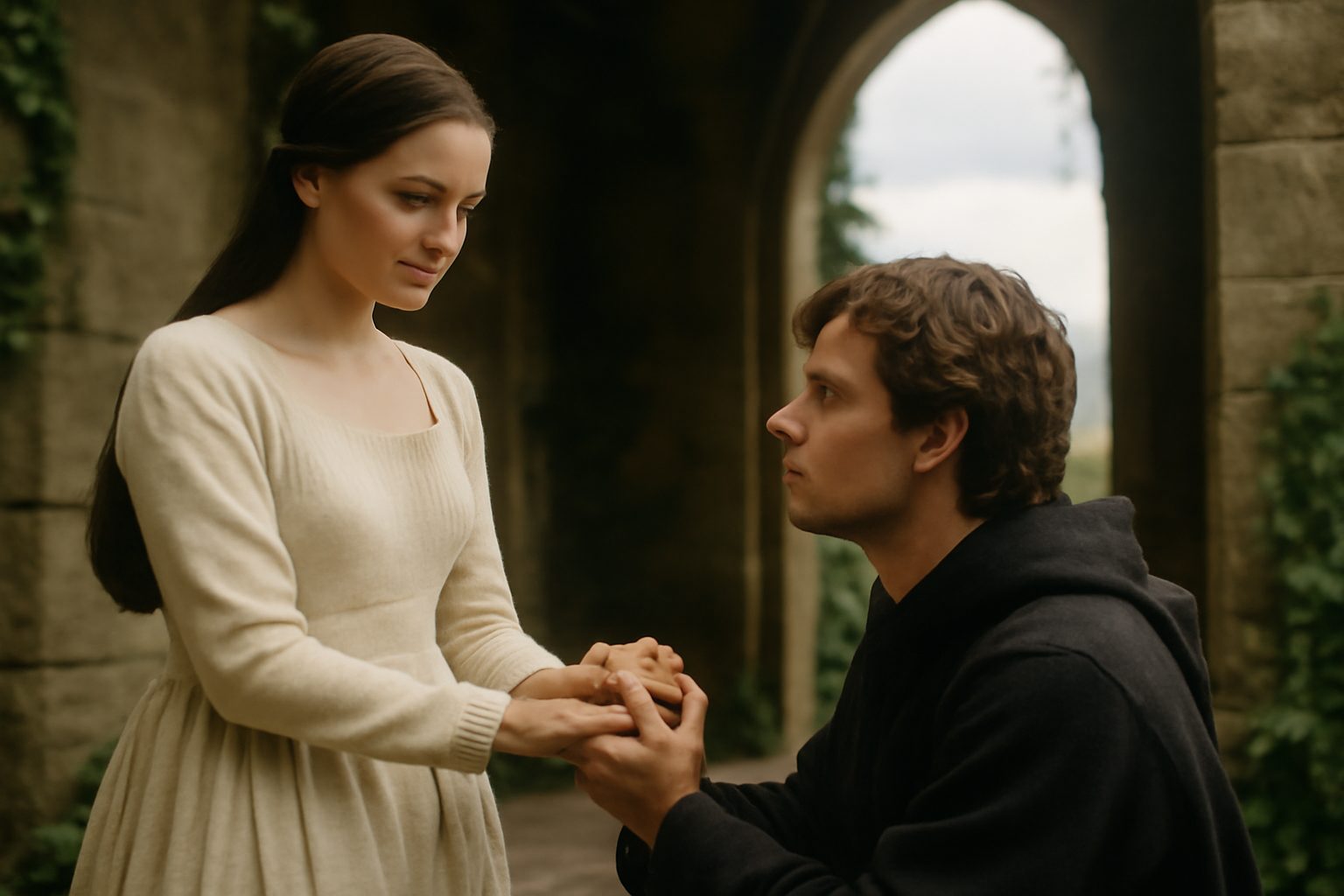
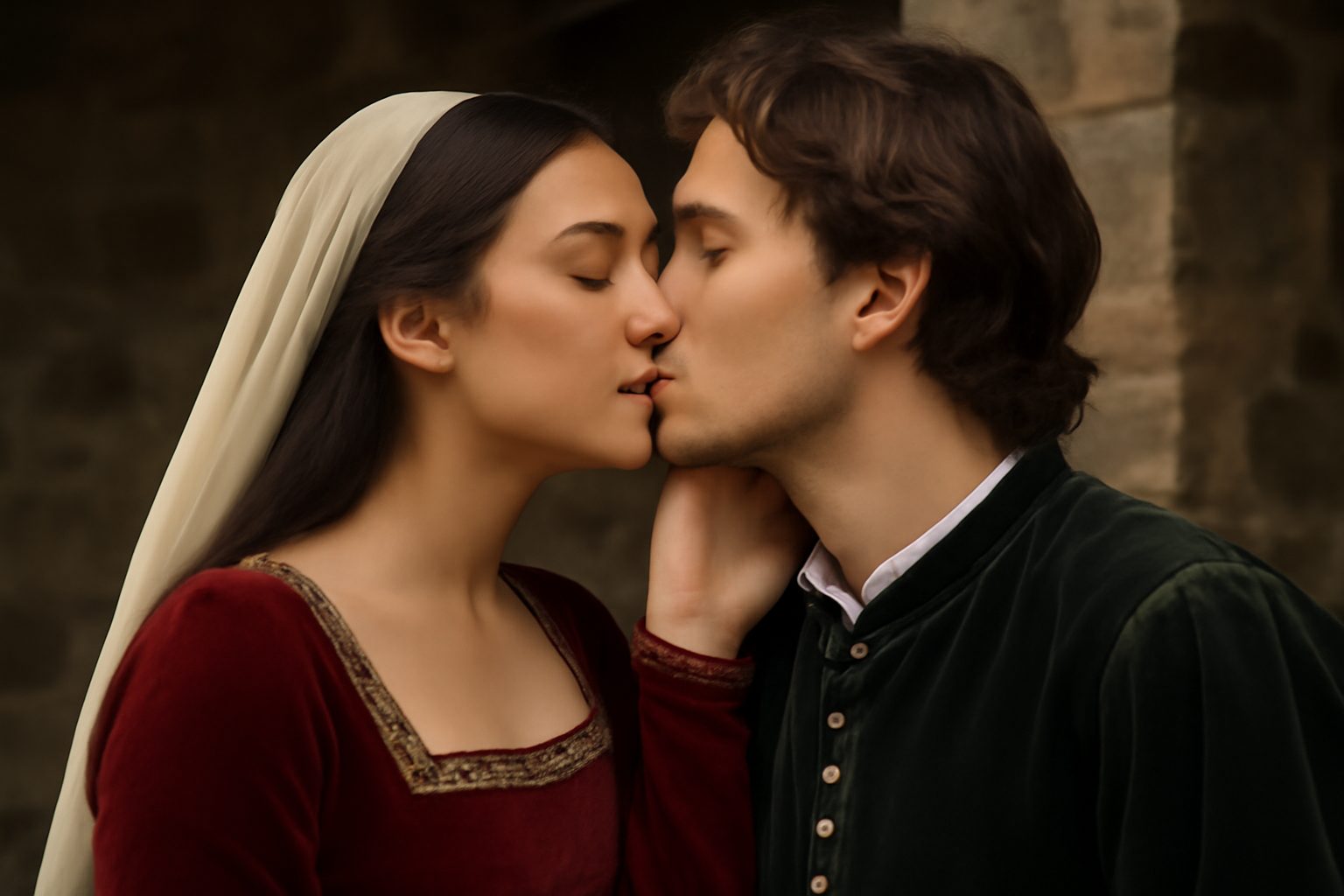
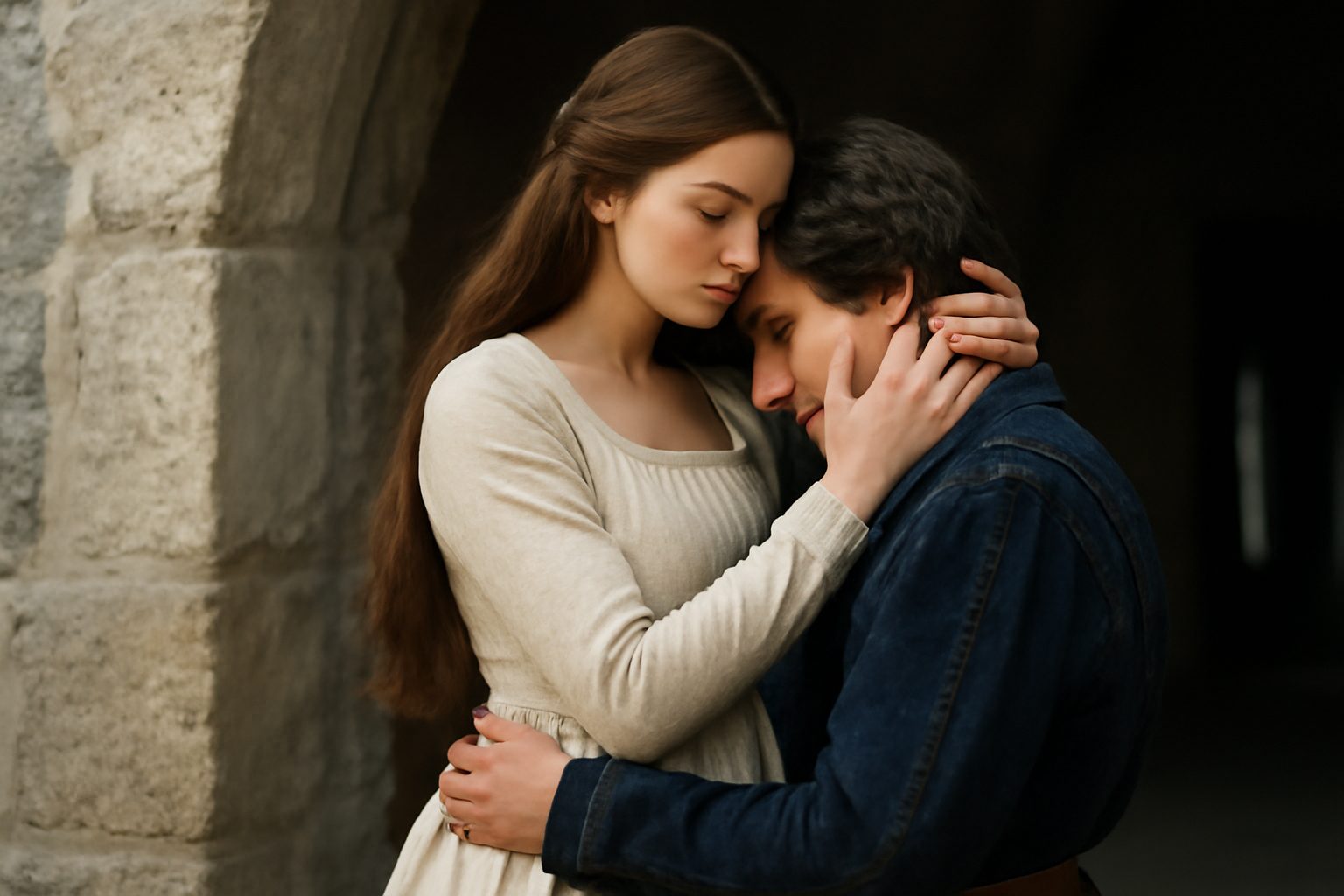
In Act 2, Scene 6 of Romeo and Juliet, Friar Laurence prepares to secretly marry the two lovers in his cell. As Romeo awaits Juliet's arrival, he speaks of the surrounding air being filled with the richness of music, expressing his eager anticipation. This line captures the fleeting joy and heightened emotions before their union, unaware of the tragedy to come.
Romeo: "This neighbour air, and let rich music's tongue"
In modern day english, we would say:
Let the air around us fill with the sound of beautiful music.
Frequently Asked Questions
What does Romeo want the air around him to do in this line?
Romeo wants the air around him to be filled with beautiful music.
Connections to other verses:
Connections to "This neighbour air, and let rich music's tongue"
The verse "This neighbour air, and let rich music's tongue" is part of a larger poetic exchange in Act 2, Scene 6, where Romeo and Juliet's union is celebrated with imagery of harmony and richness. It connects thematically and structurally to several other verses in the scene.
Harmony and Celebration
This line emphasizes the joyous atmosphere surrounding the lovers' meeting. It resonates with Here comes the lady: O, so light a foot, which similarly captures the ethereal, celebratory mood as Juliet arrives. Both verses use sensory language to elevate the moment, with "rich music's tongue" complementing the imagery of Juliet's graceful entrance.
Spiritual and Emotional Union
The idea of enriching the air with music ties into the spiritual dimension of the scene, particularly So smile the heavens upon this holy act, where Friar Laurence invokes divine blessing. The "rich music" can be seen as part of this heavenly approval, enhancing the sacredness of the union echoed in Till holy church incorporate two in one.
Excess and Intensity of Love
Romeo's declaration in But my true love is grown to such excess aligns with the richness evoked by "rich music's tongue," both emphasizing the overwhelming intensity of their emotions. This connection underscores the theme of love's abundance, which Friar Laurence cautions against in These violent delights have violent ends.
Poetic and Rhetorical Flourish
The verse also links to Conceit, more rich in matter than in words, as both employ the idea of richness beyond mere expression. "Rich music's tongue" serves as a metaphor for profound emotion that words alone cannot capture, reinforcing the scene's exploration of love's ineffable quality.