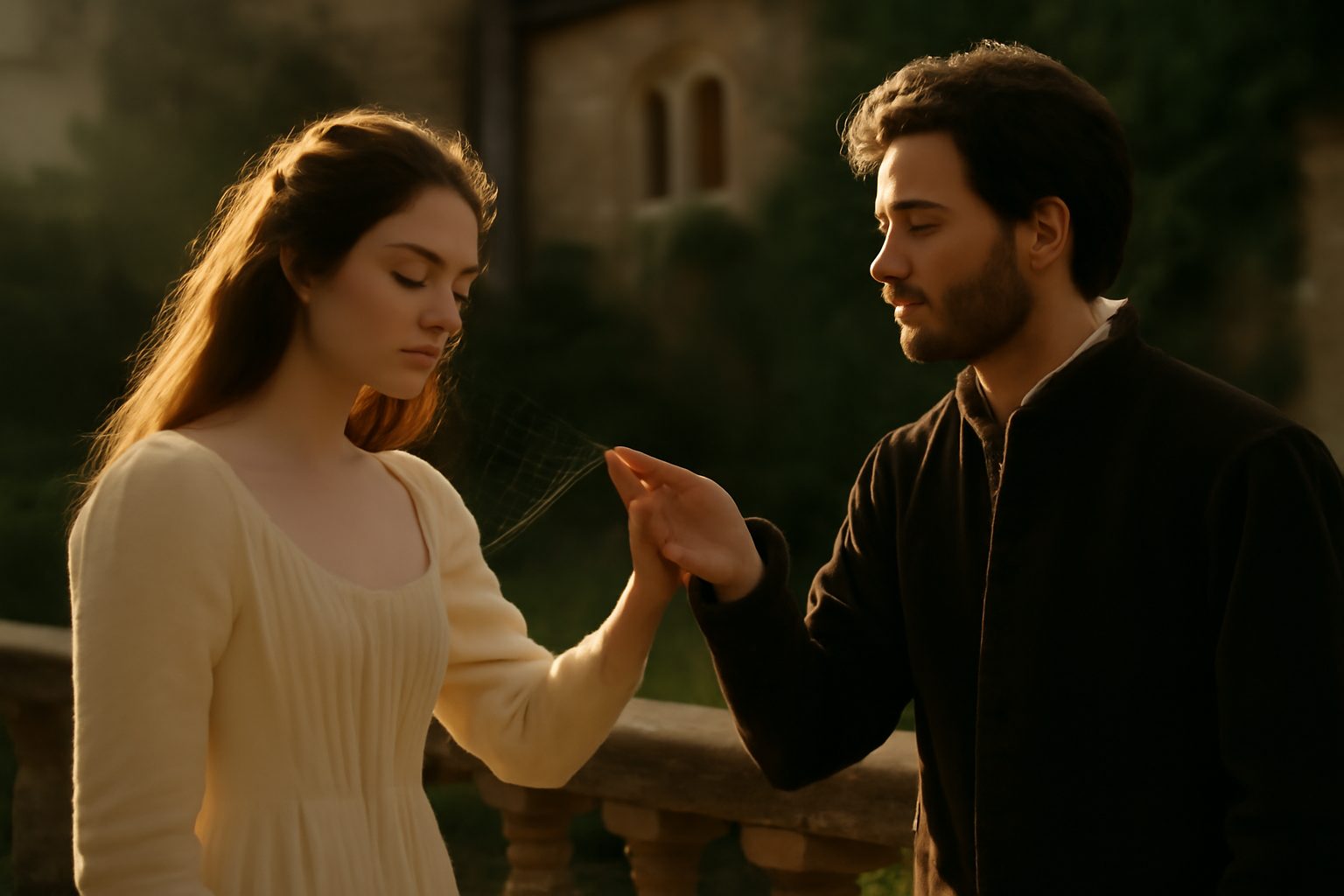
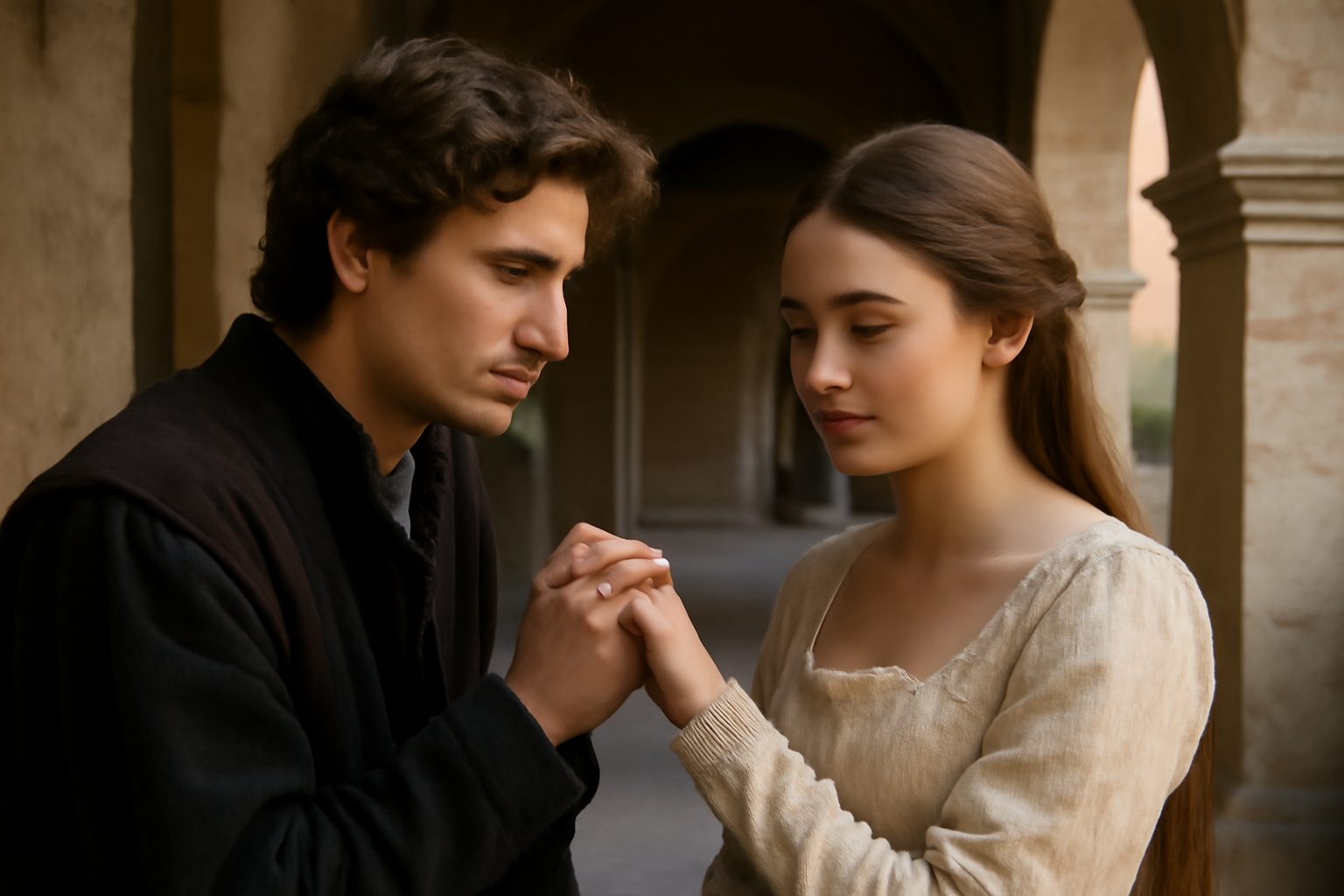
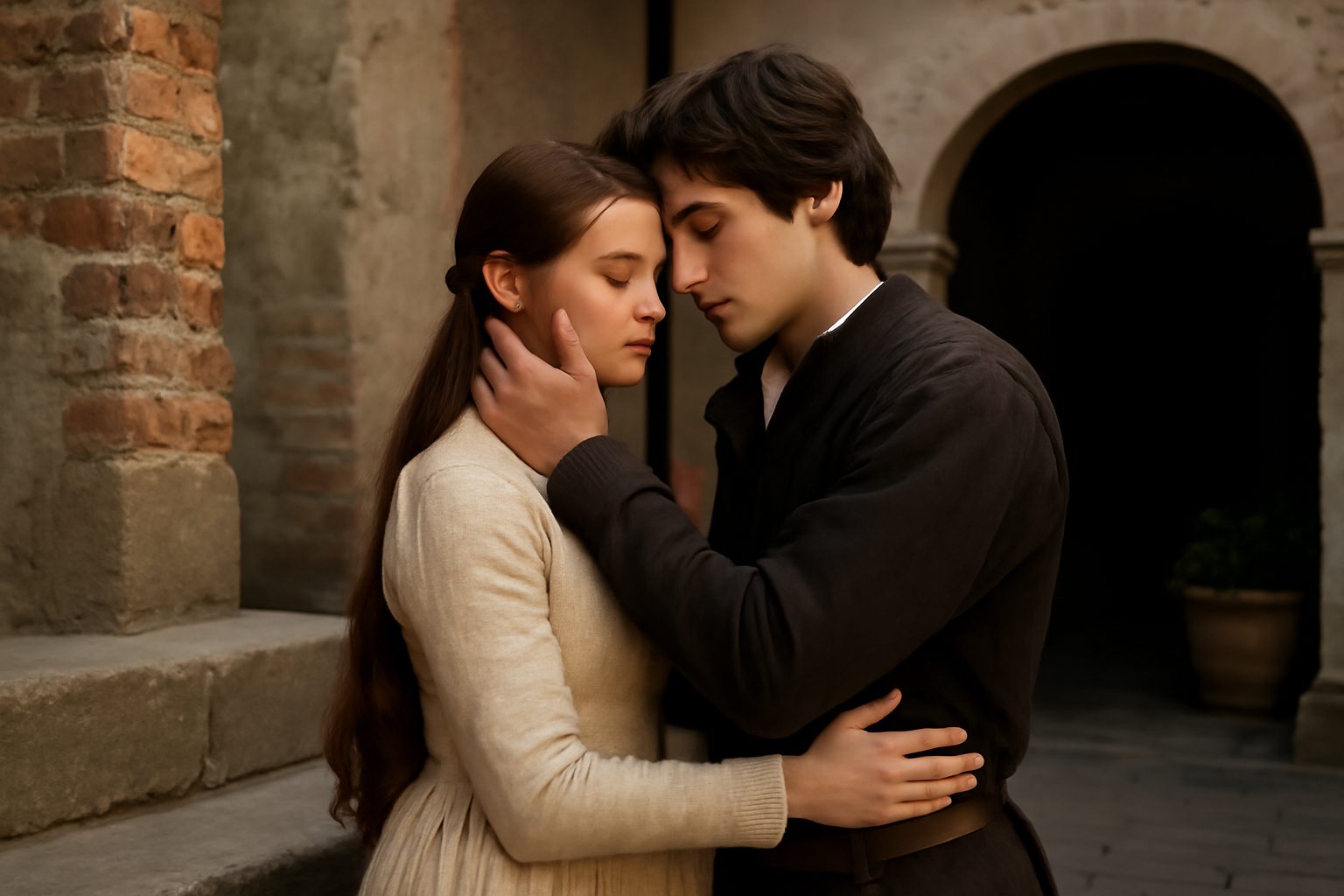
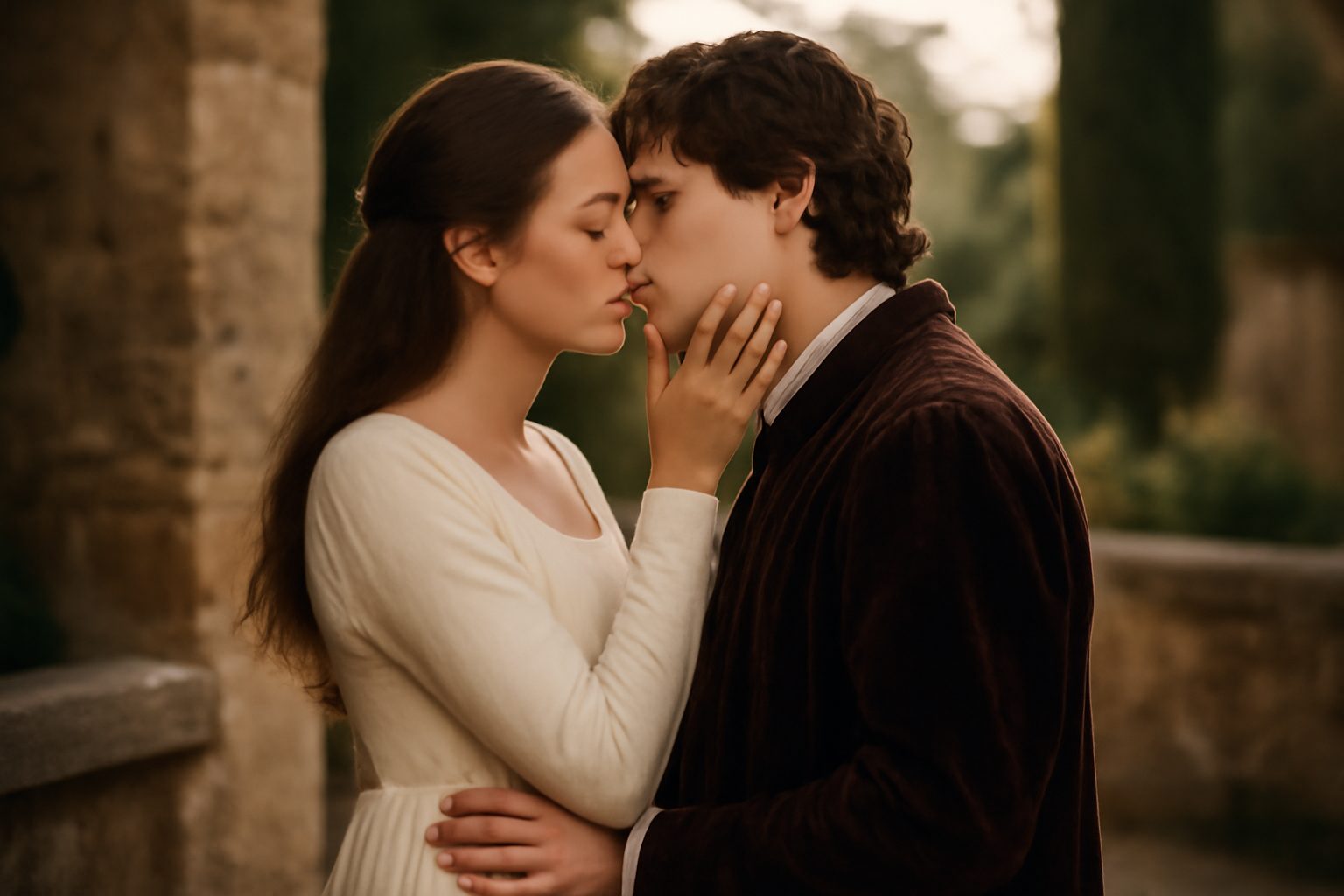
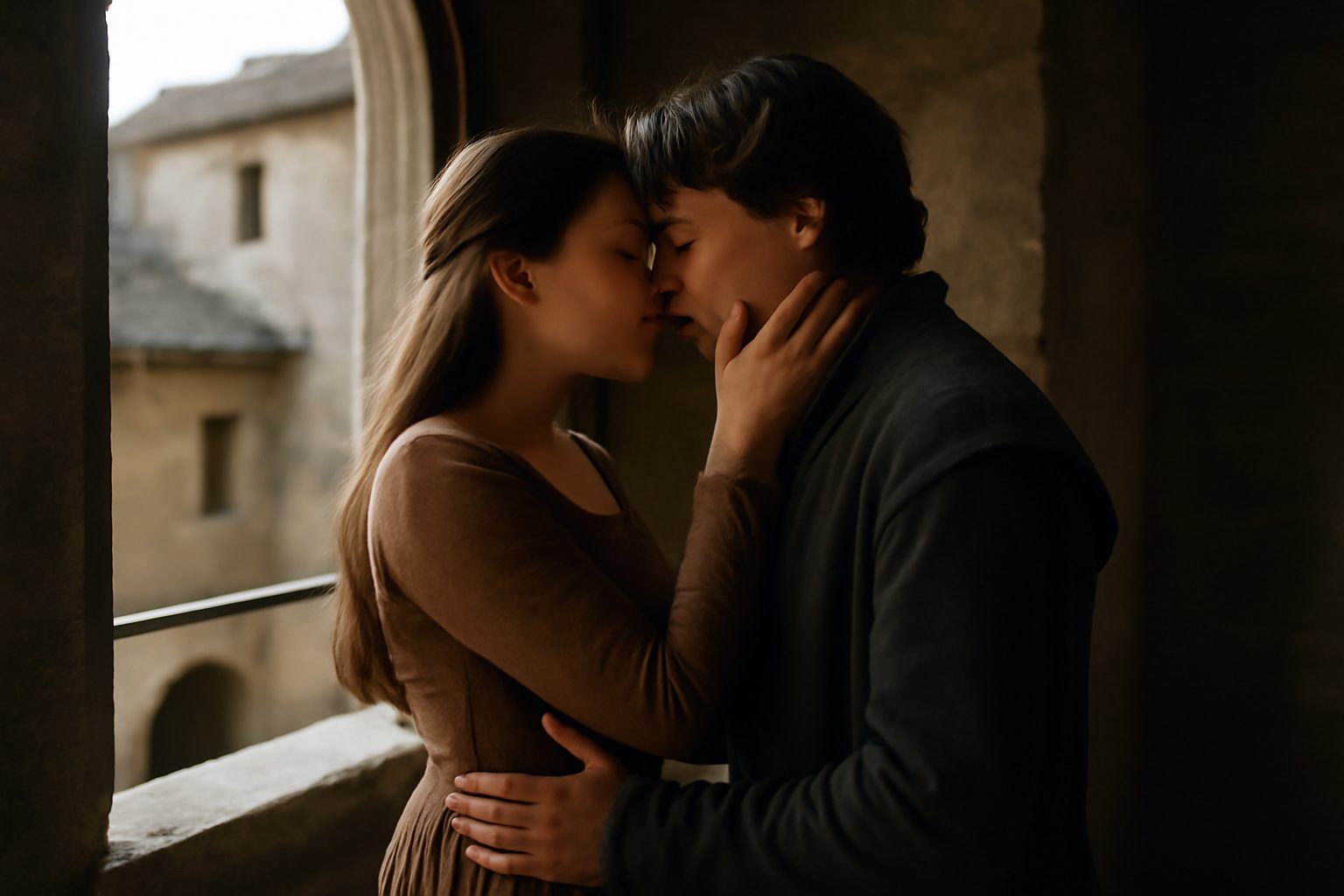
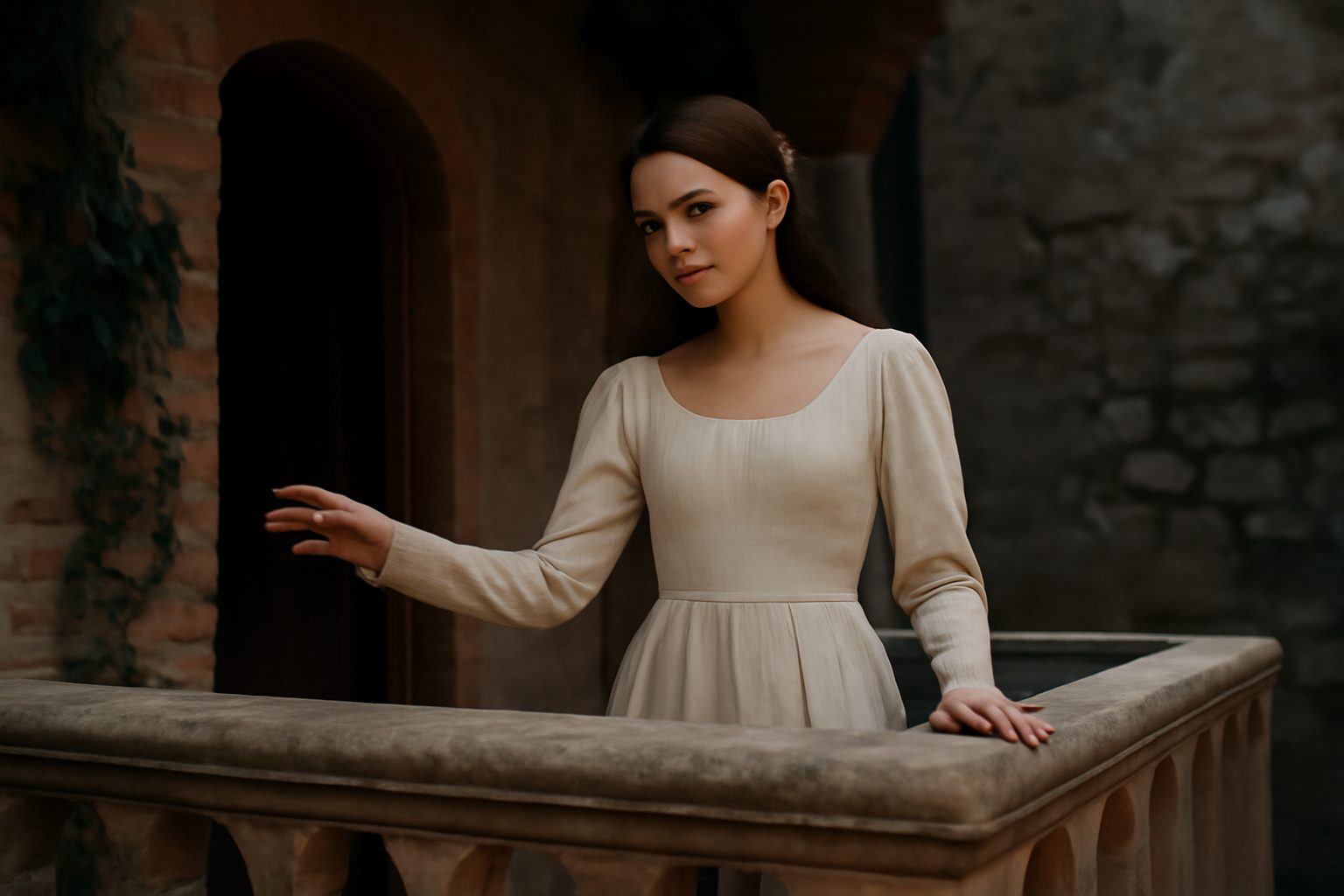
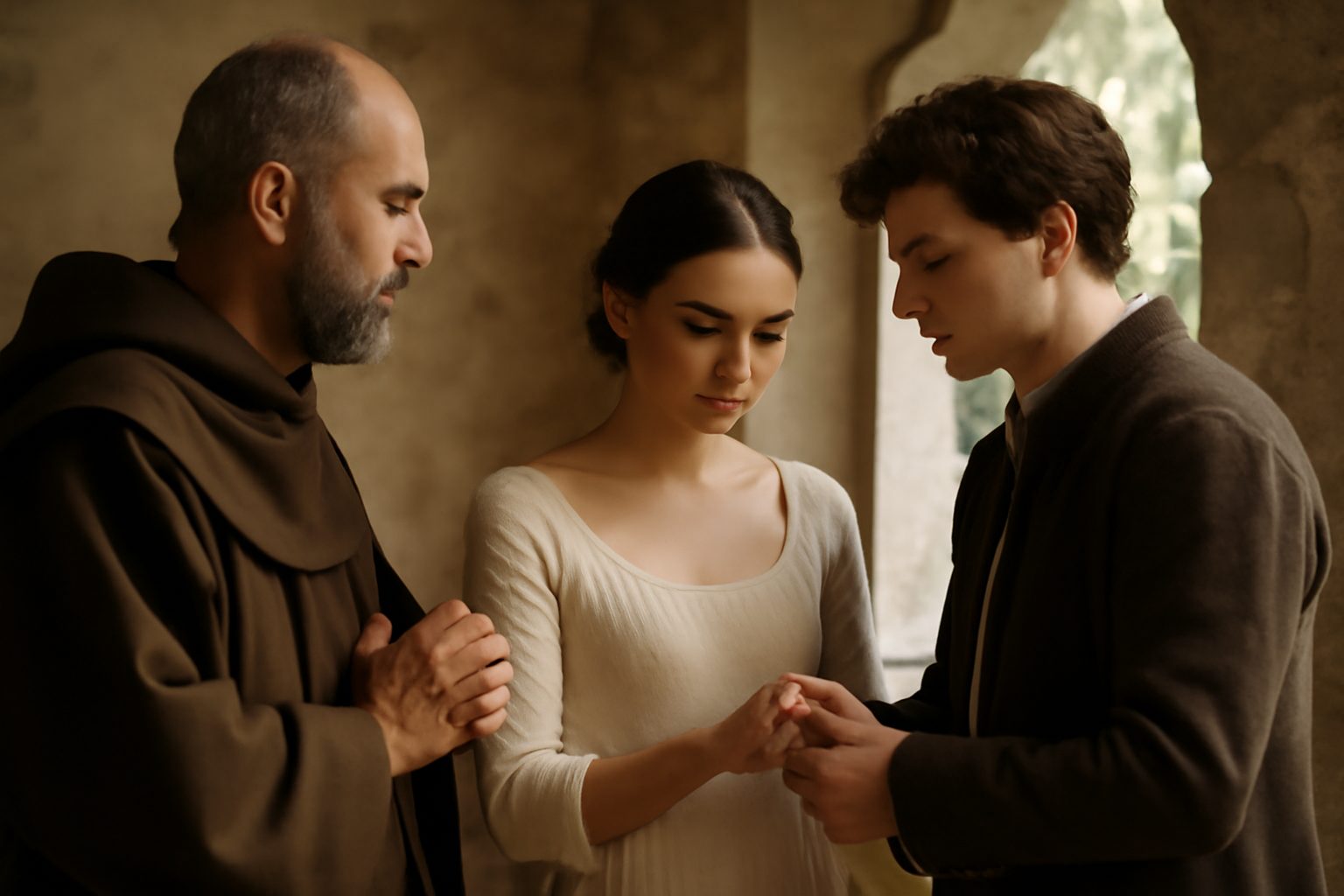
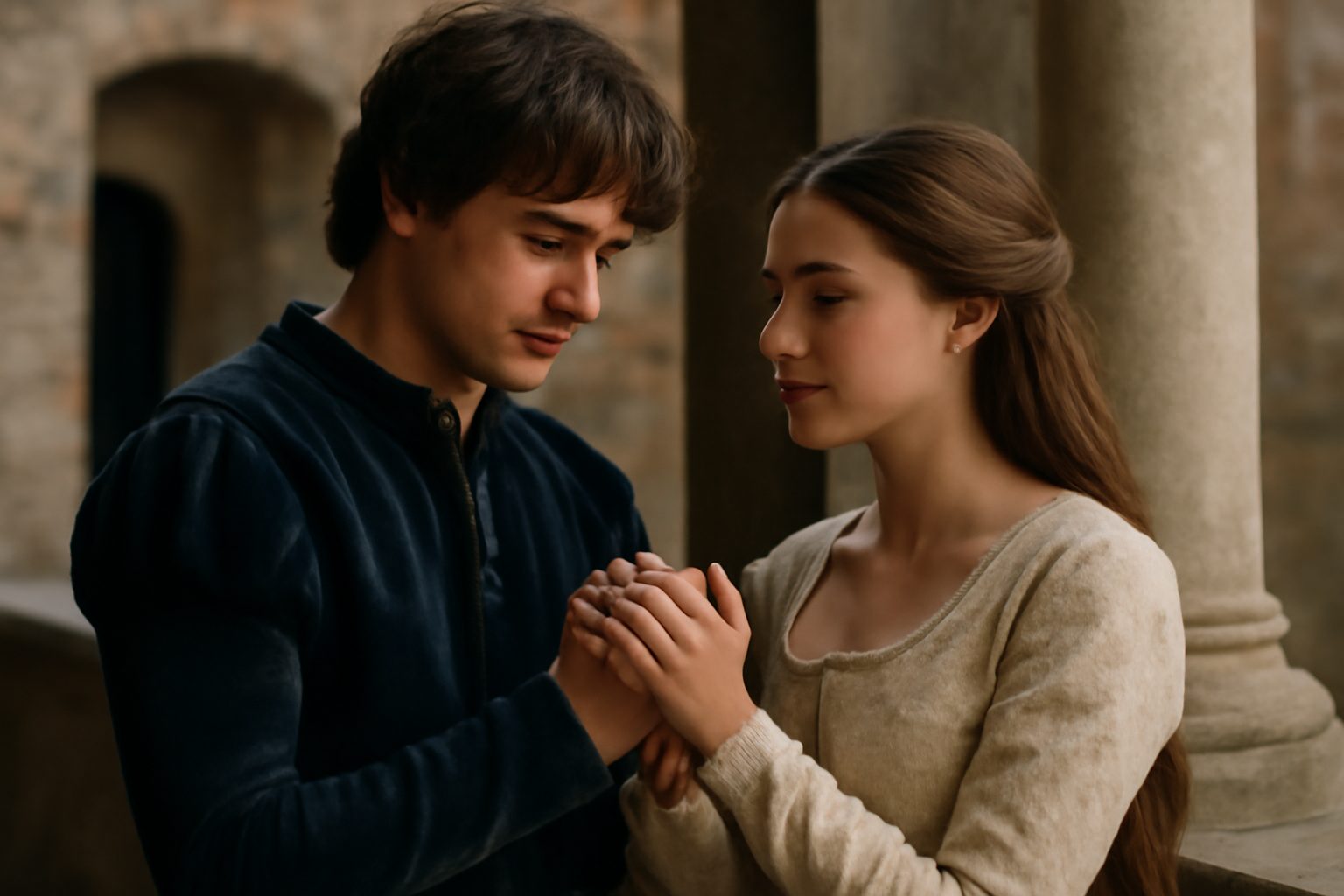
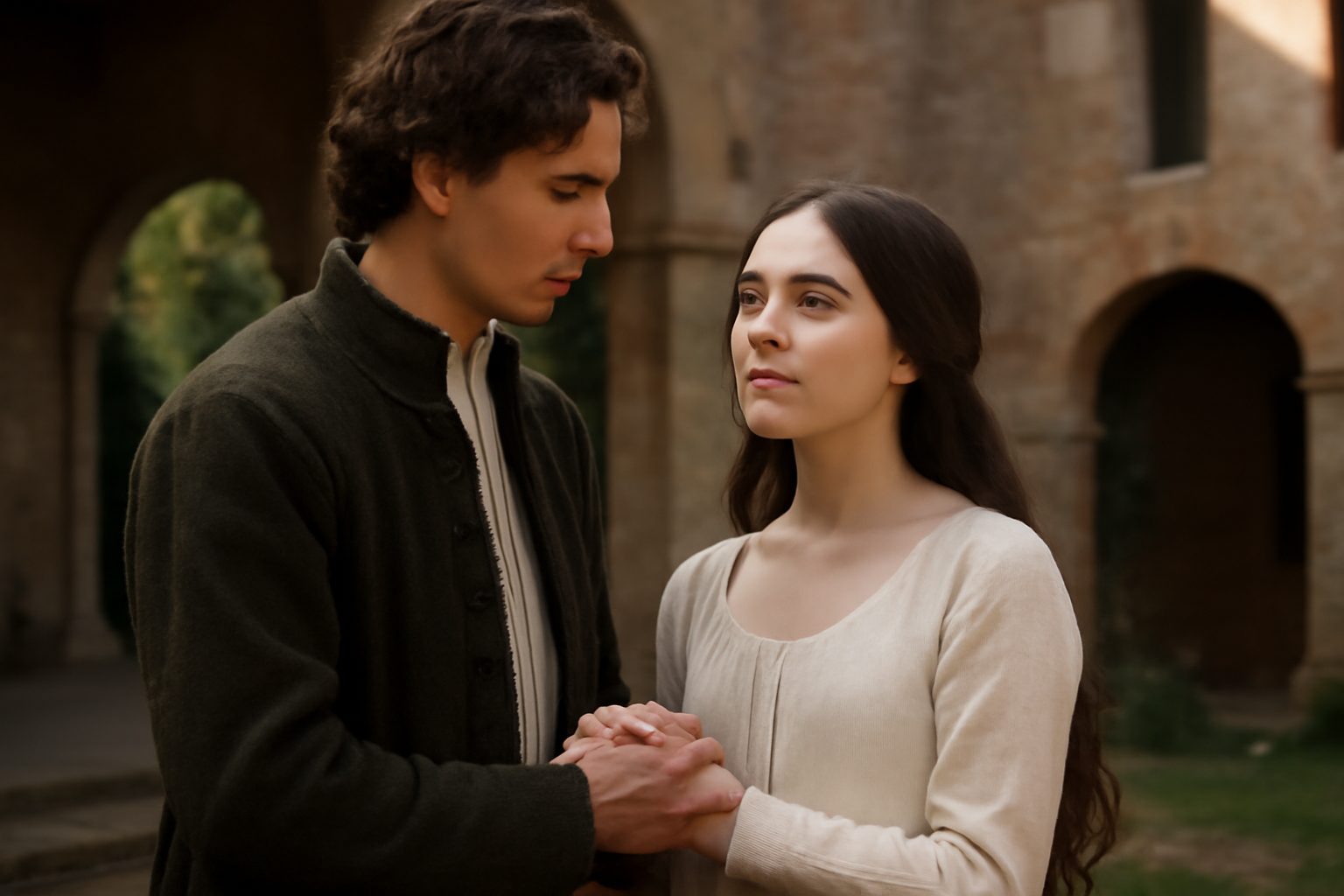
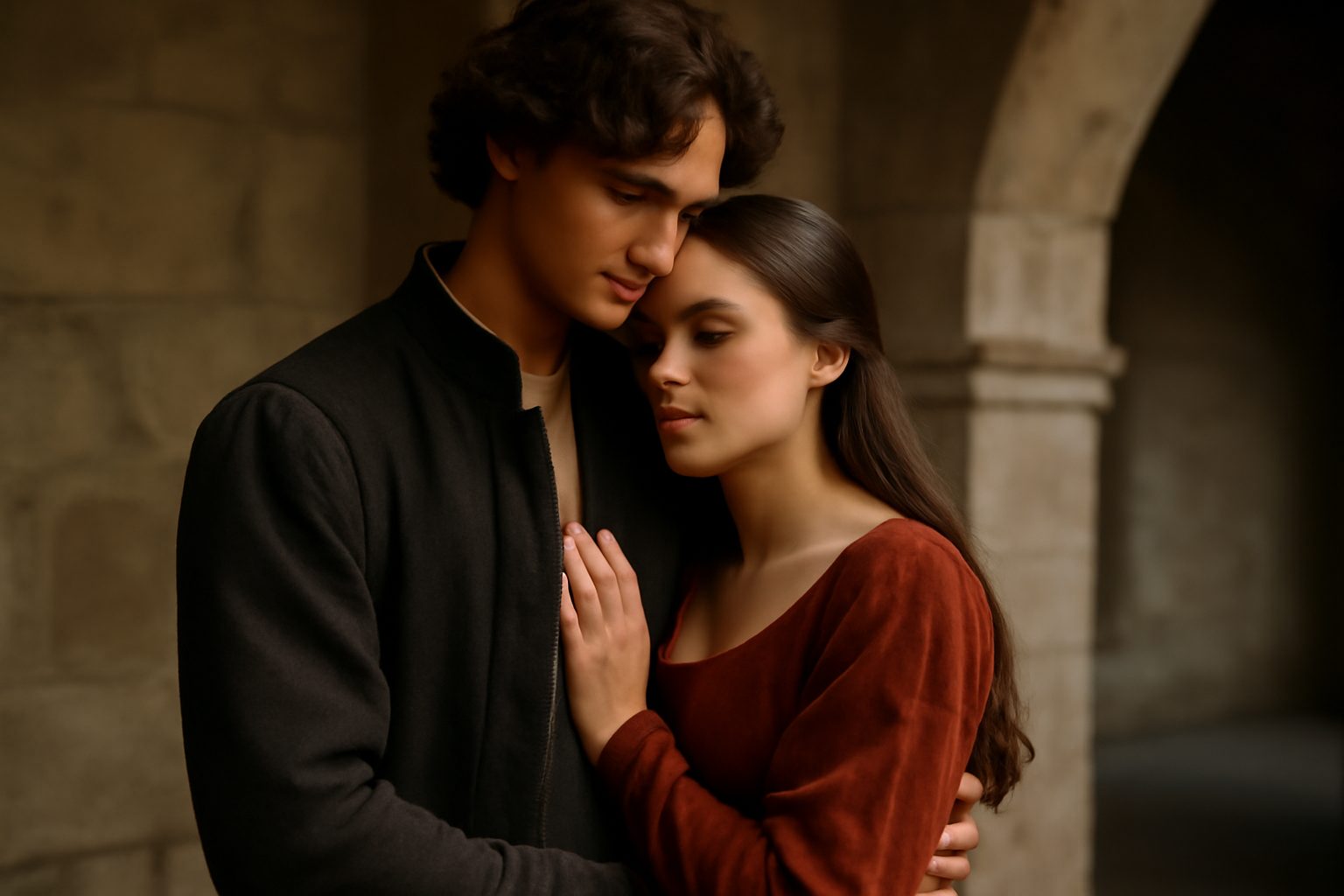
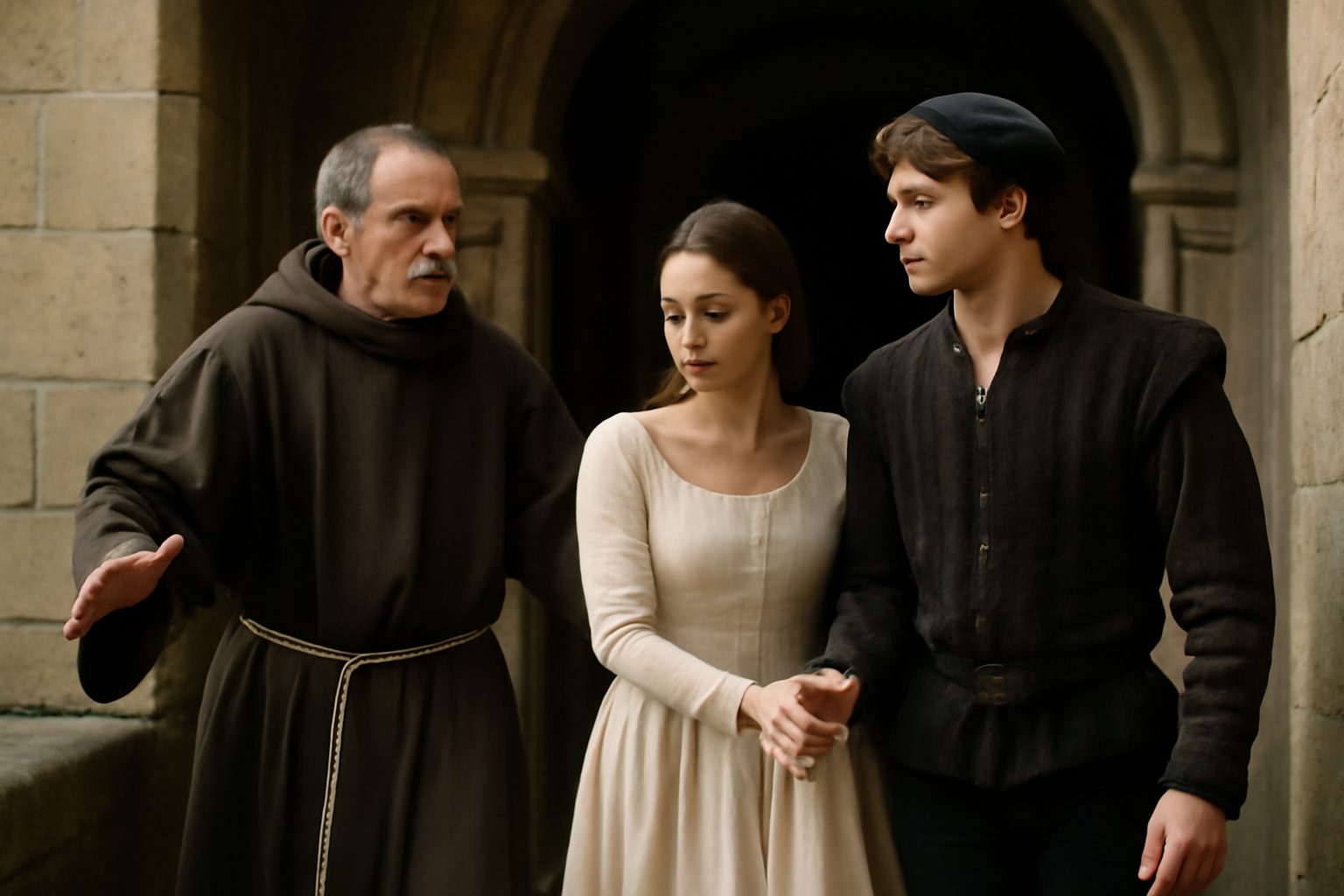
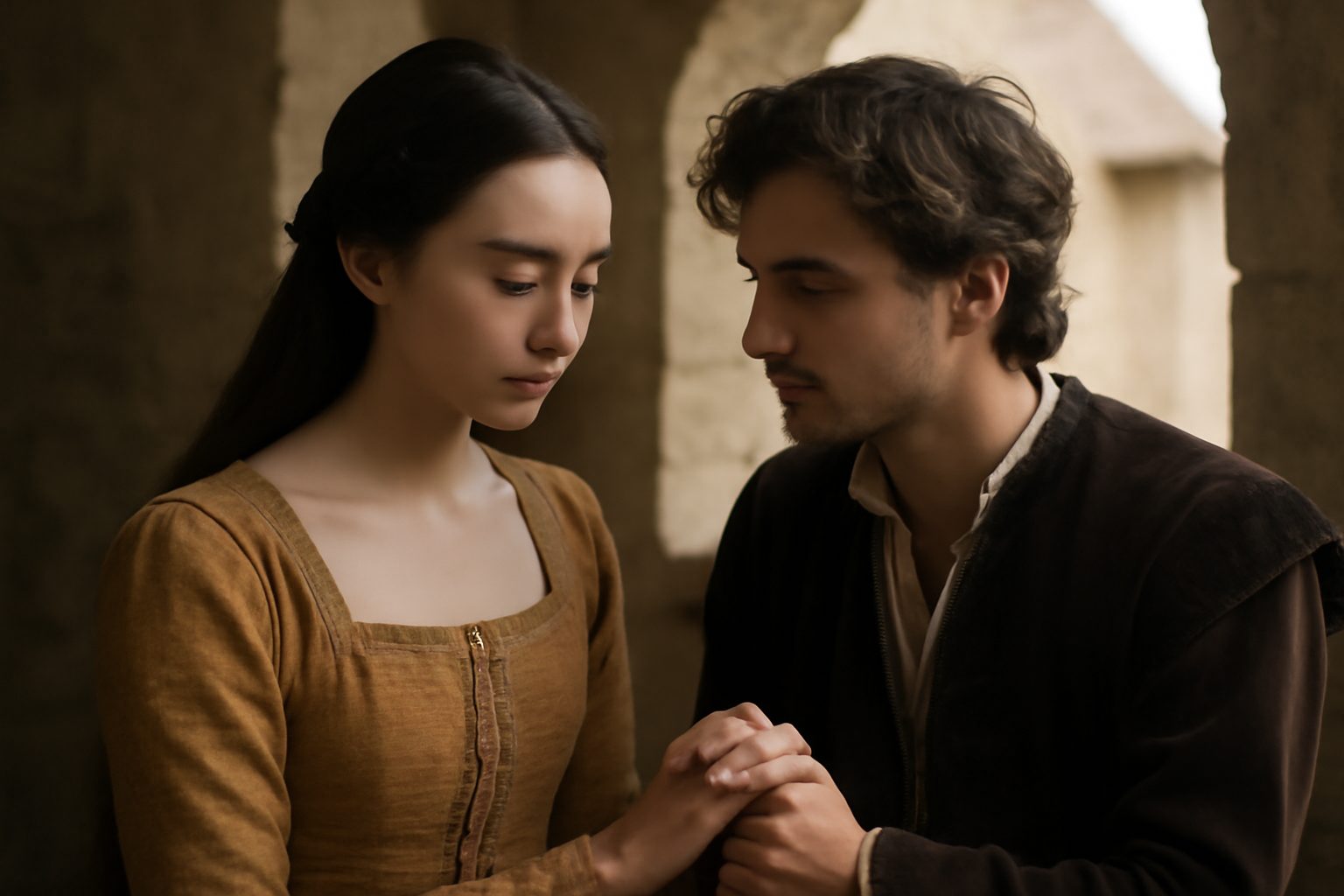
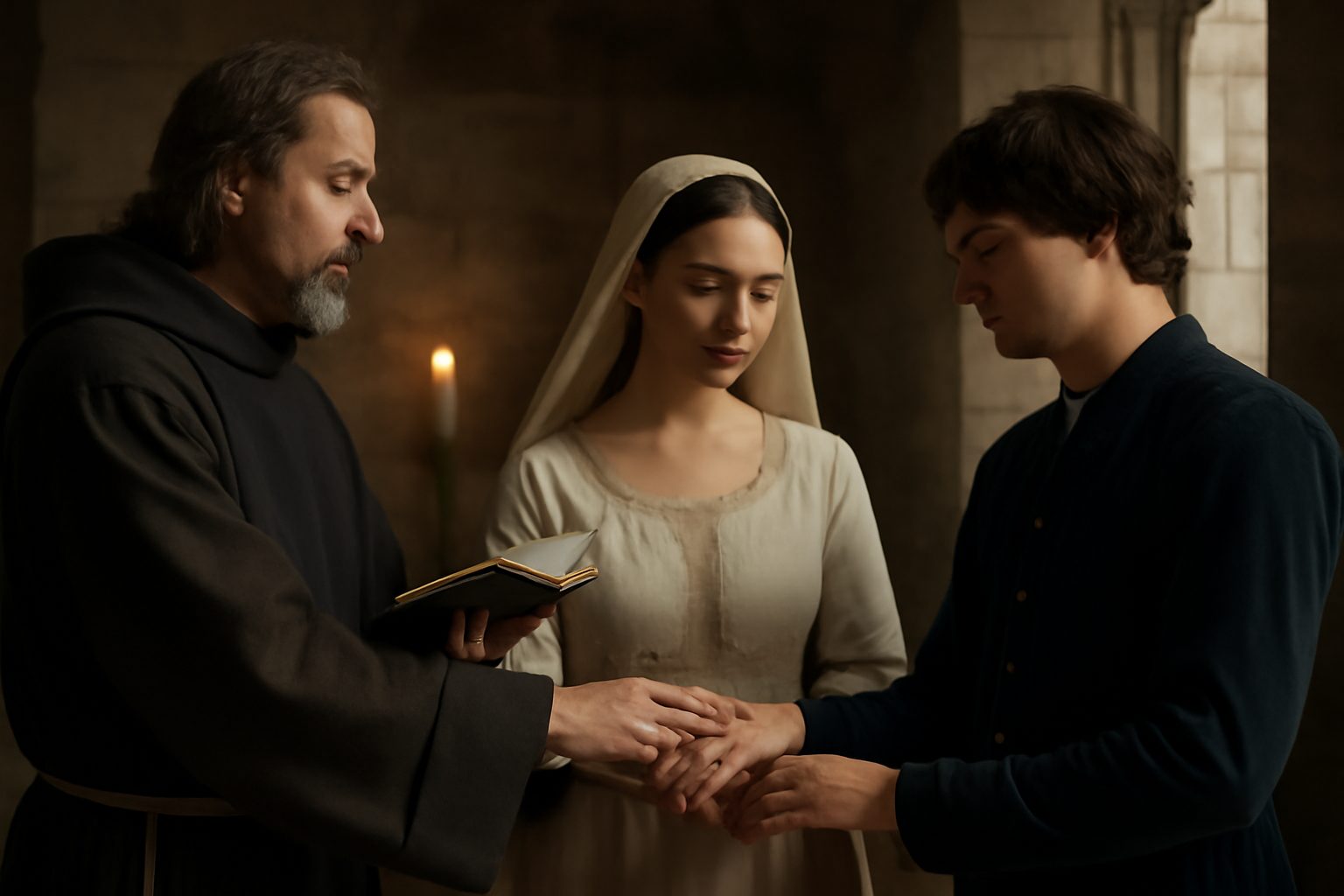
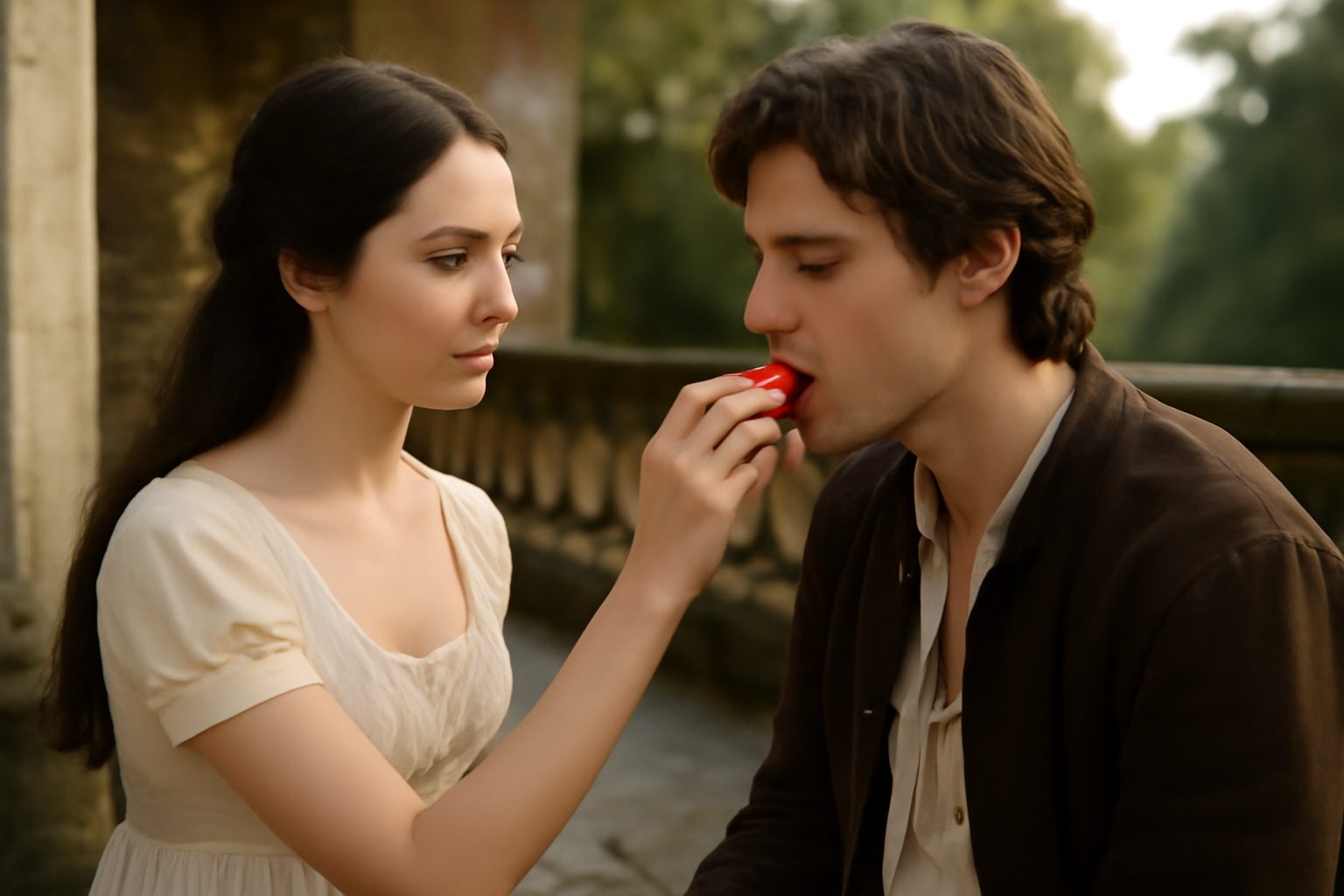
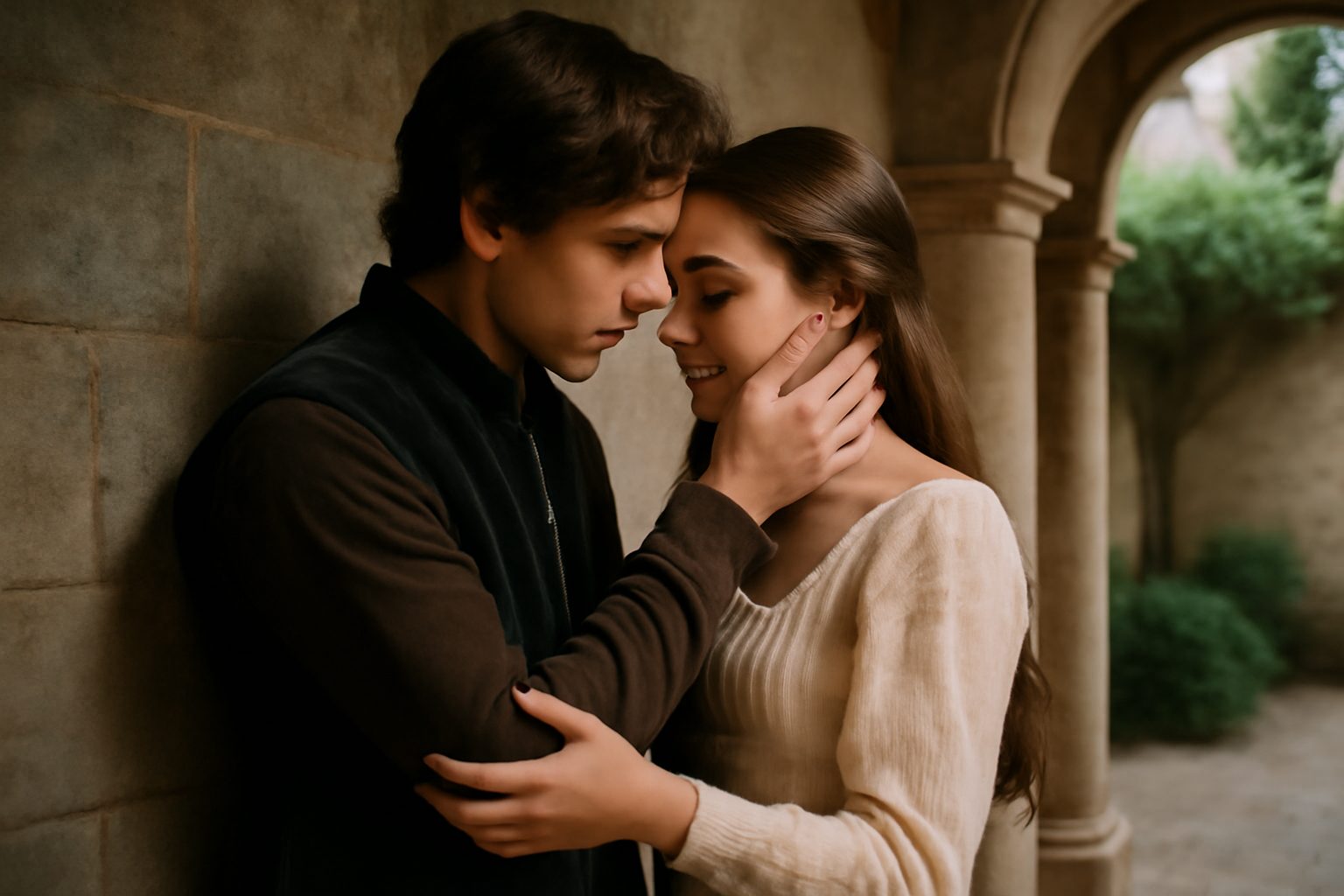
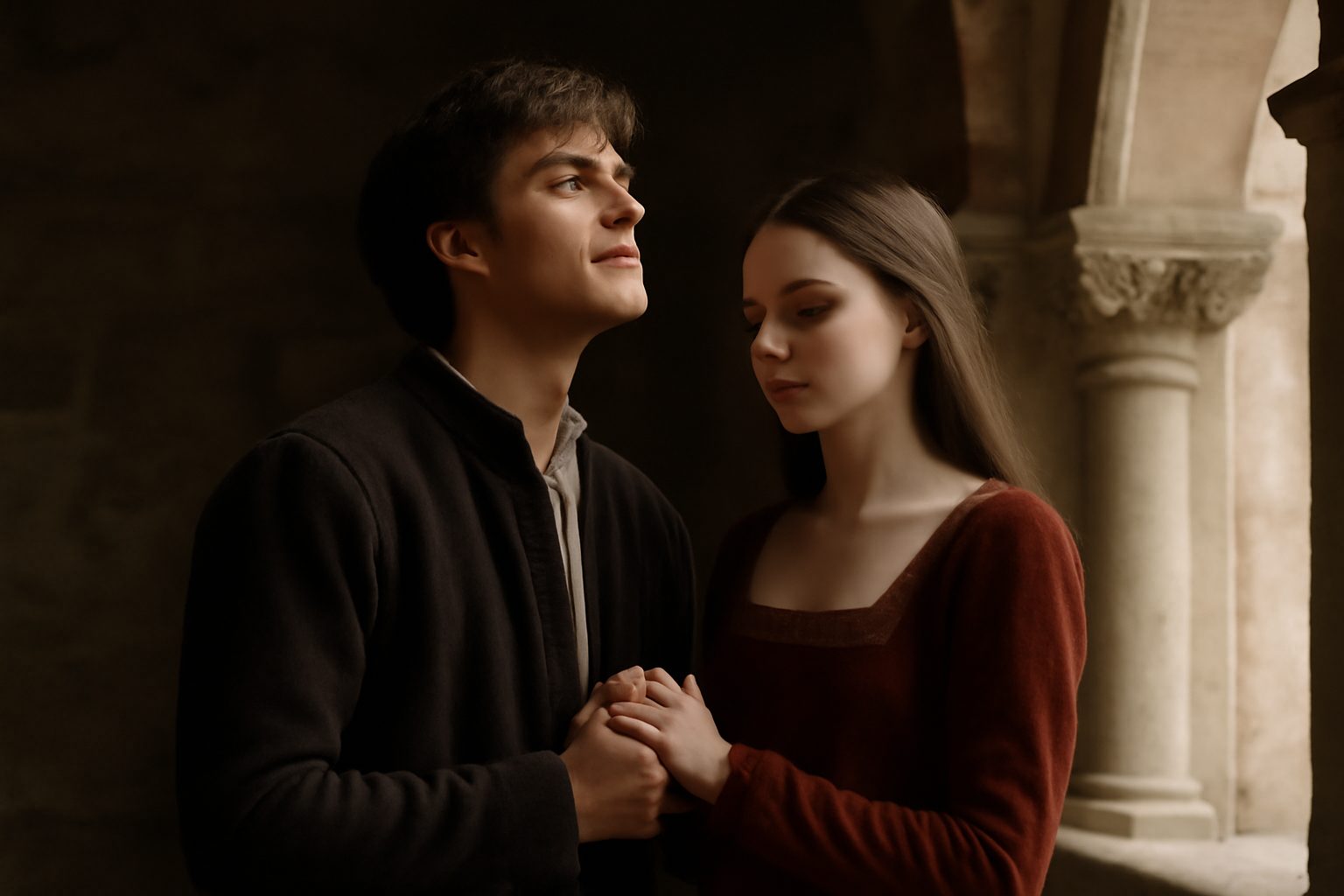
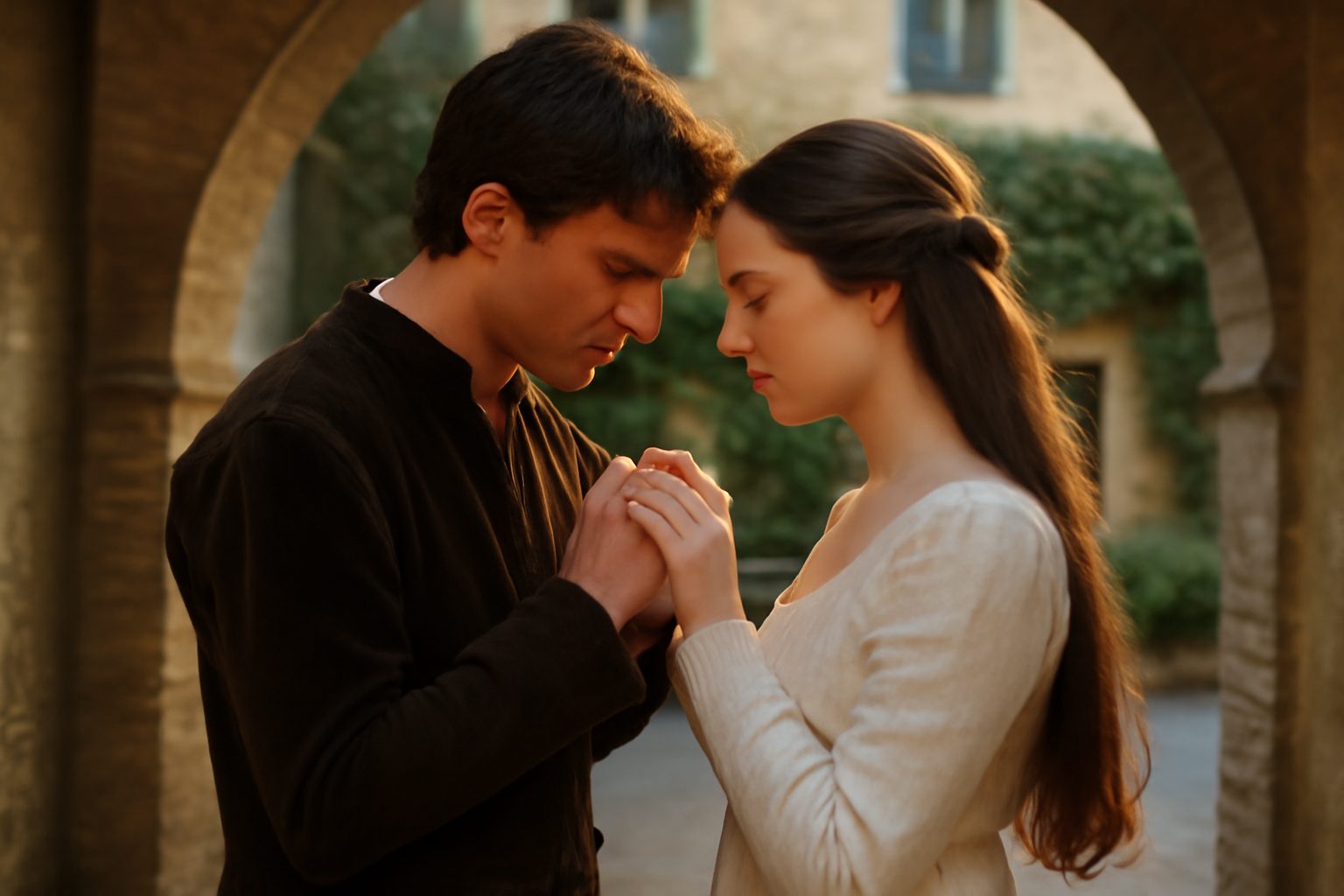
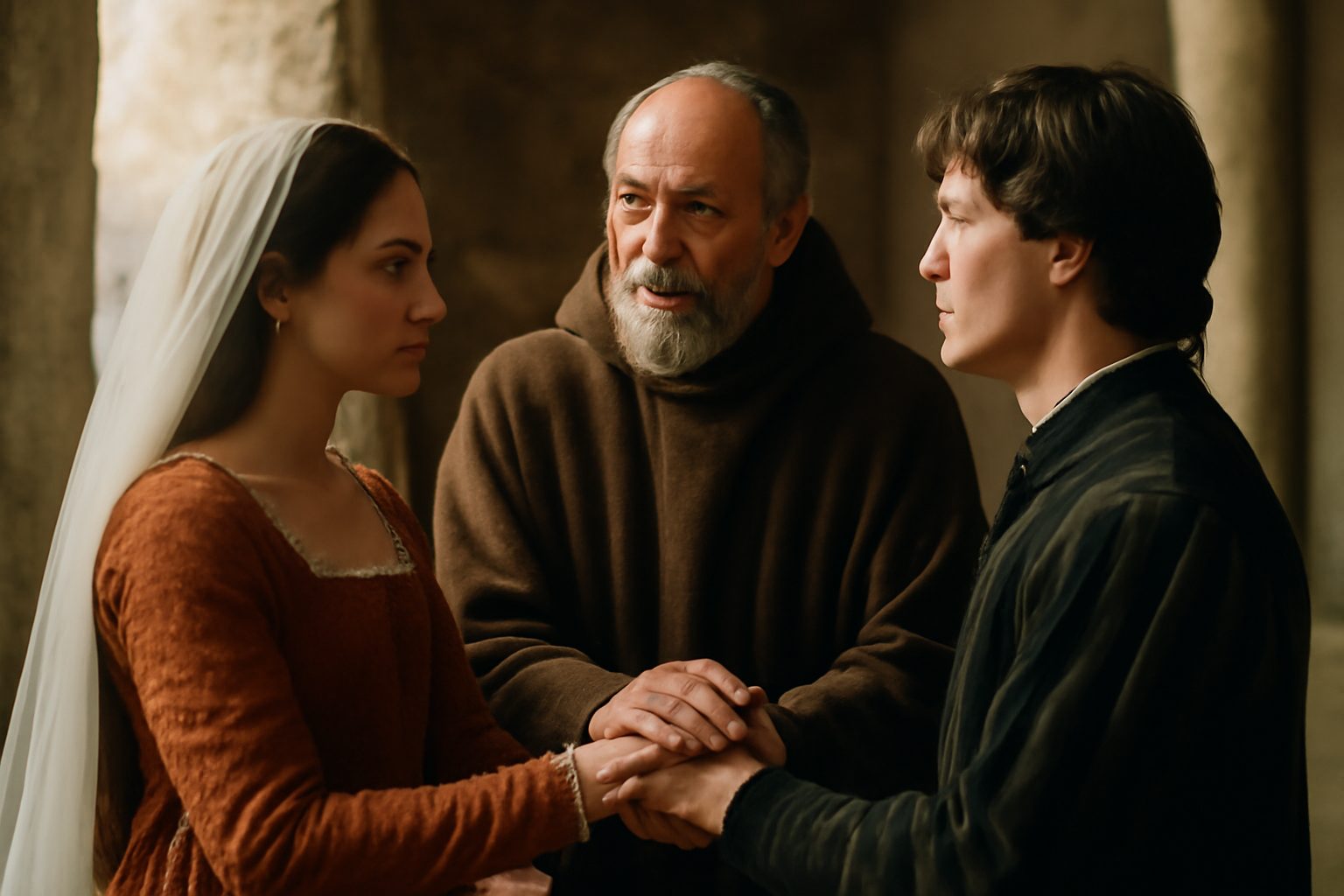
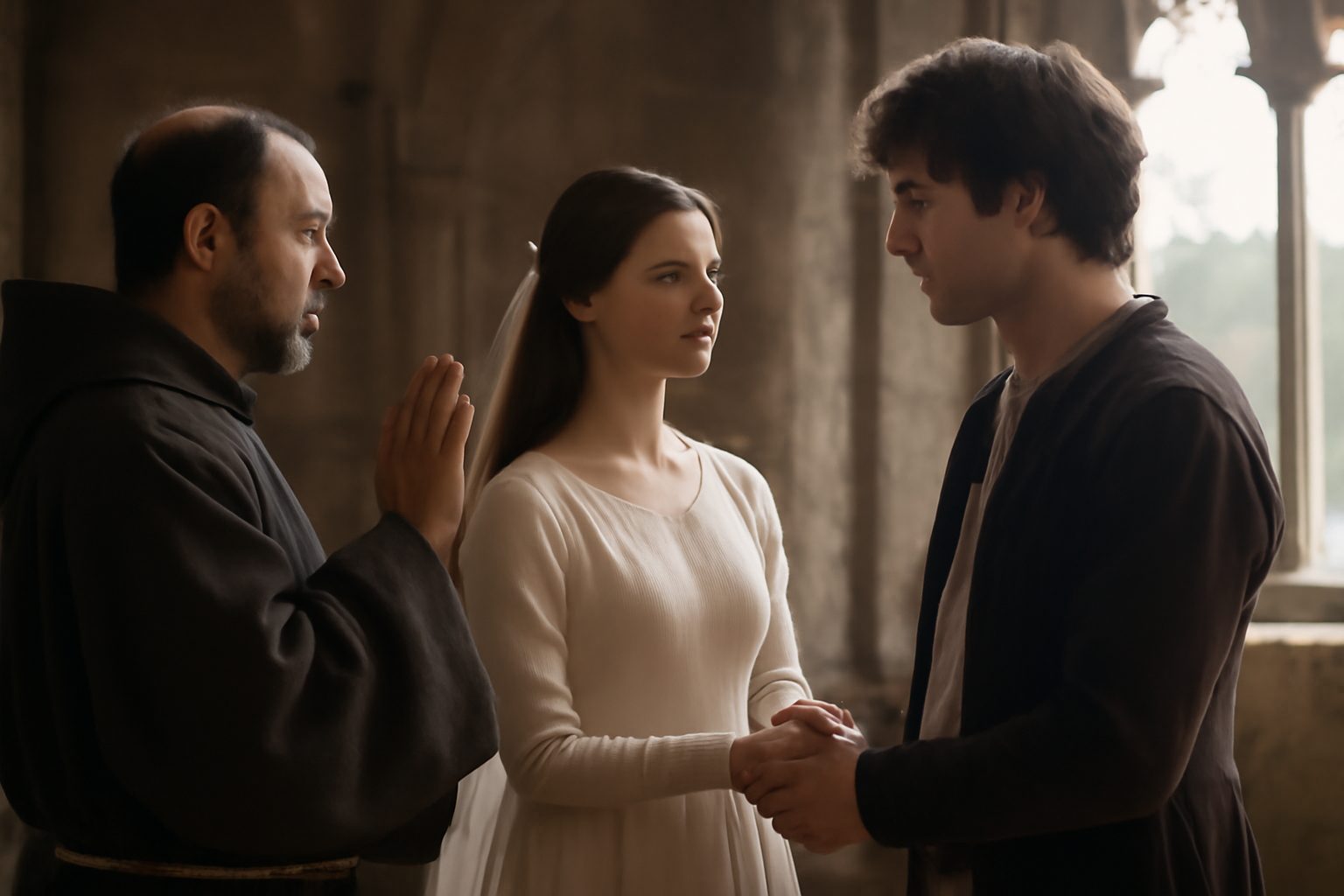
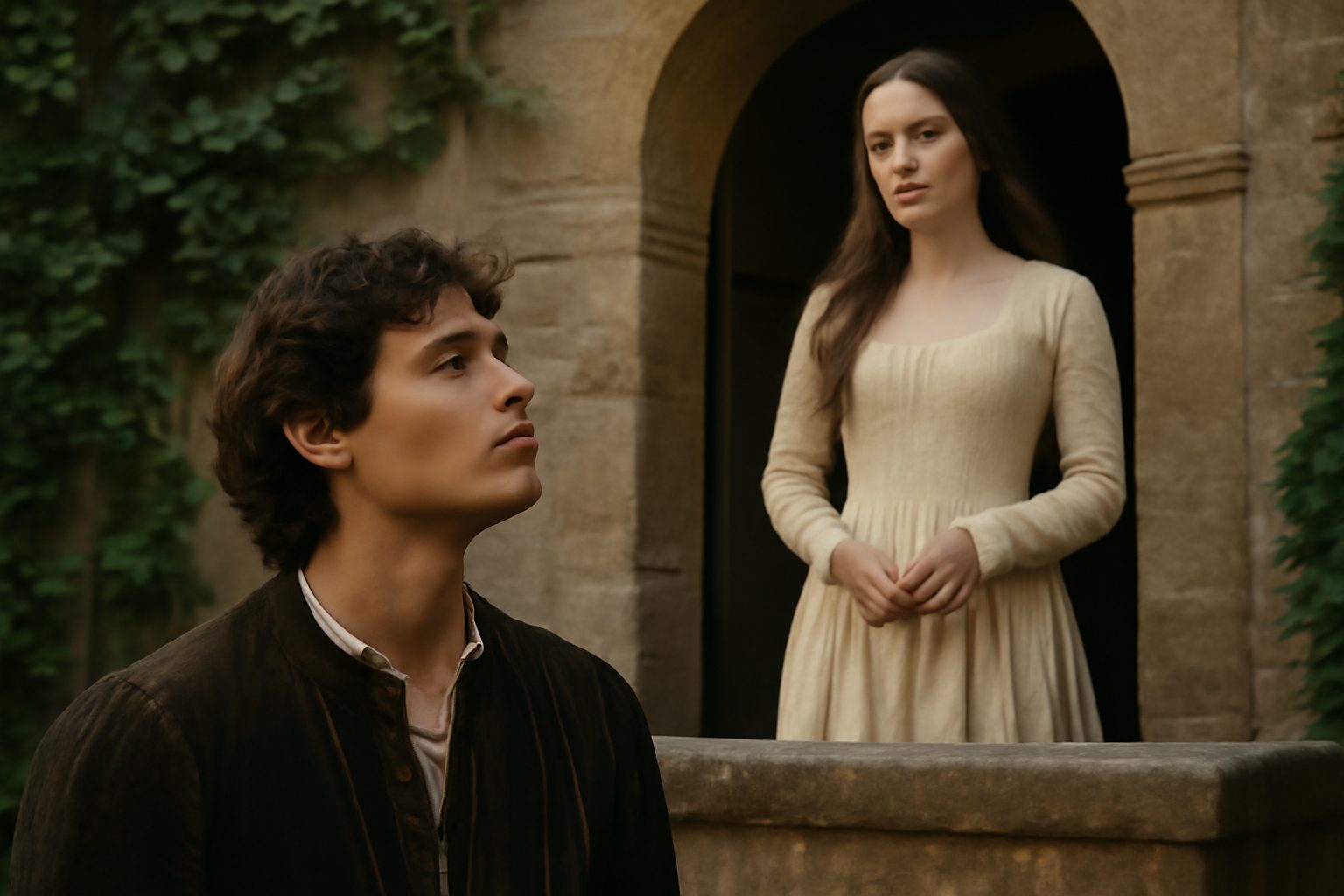
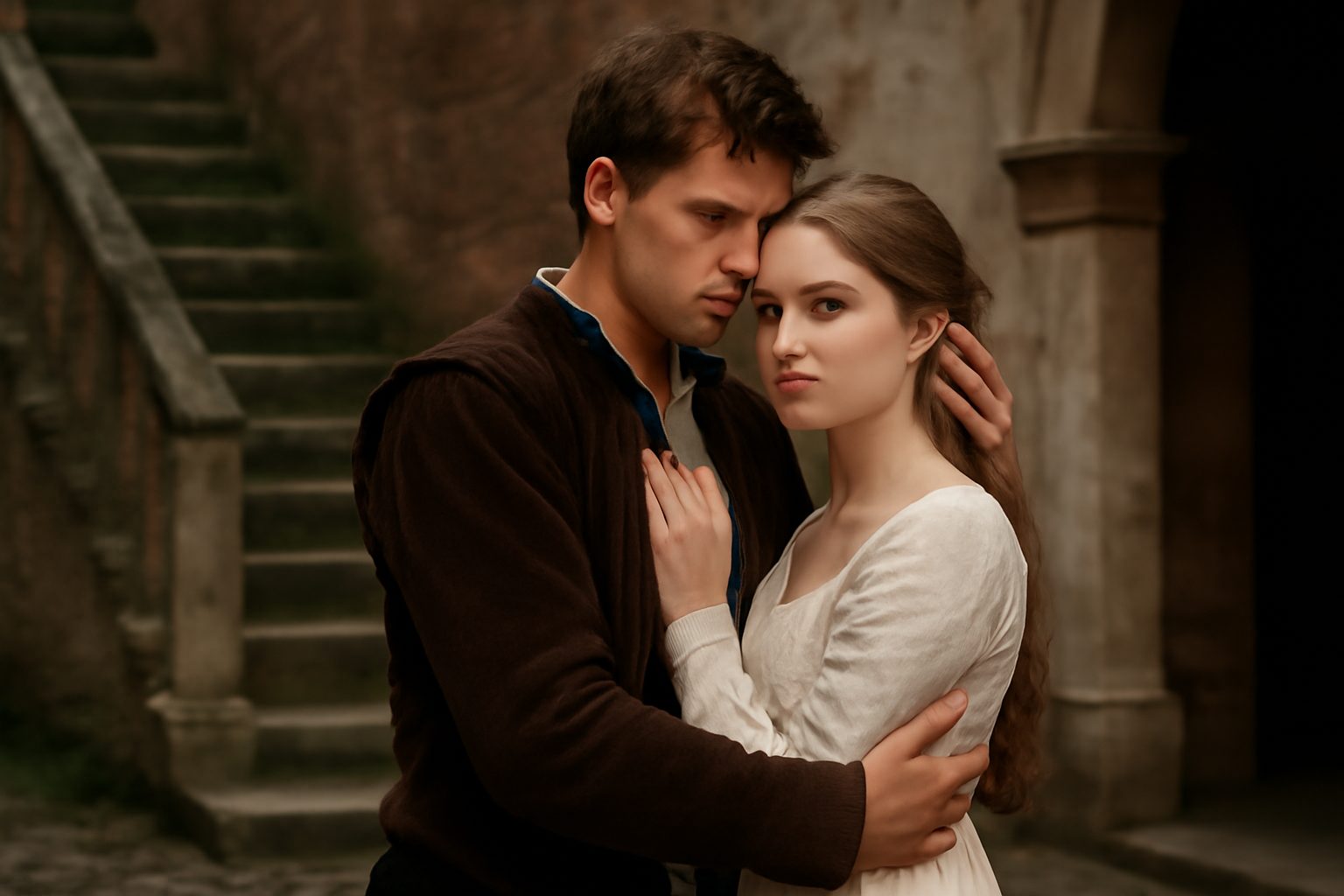
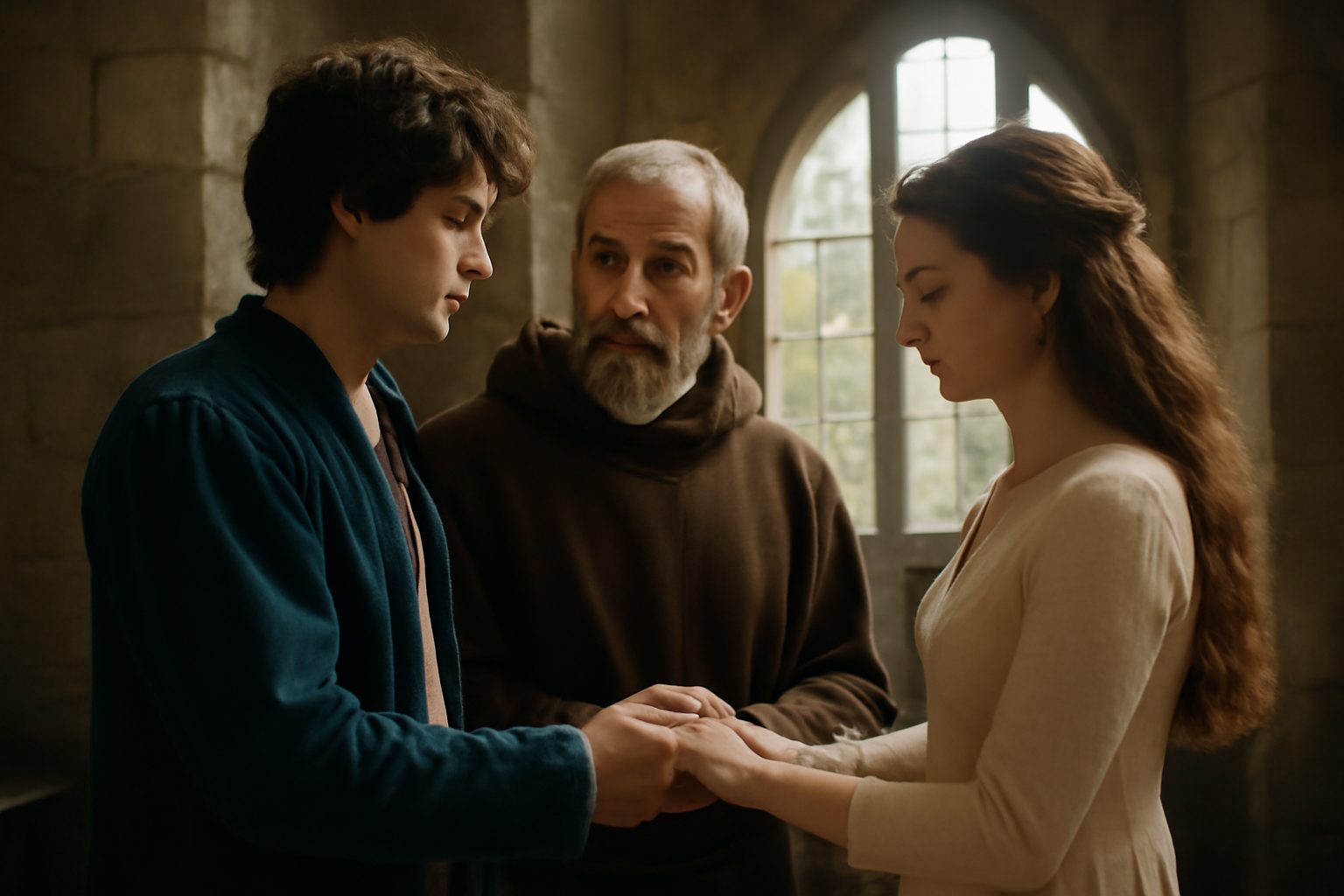
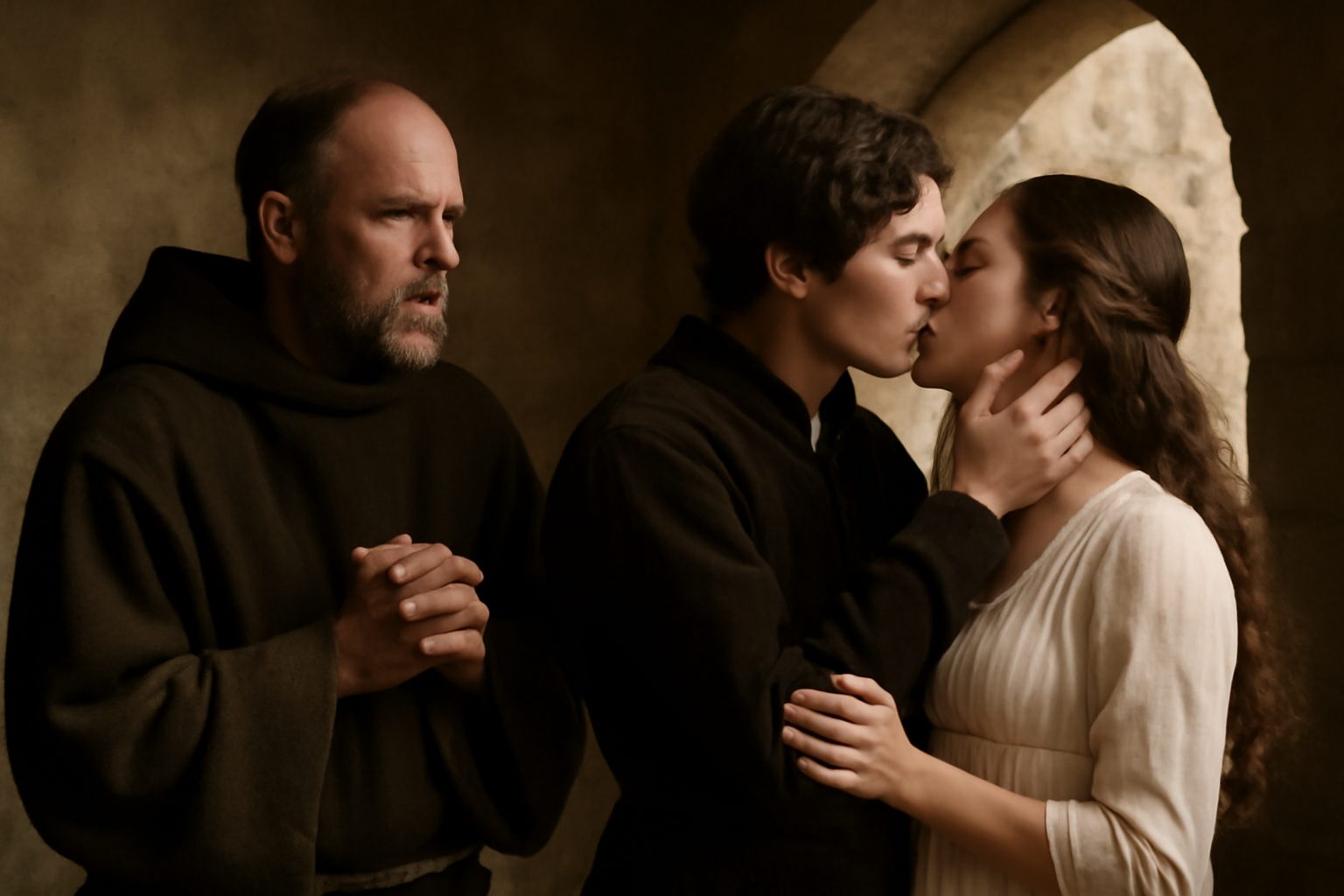
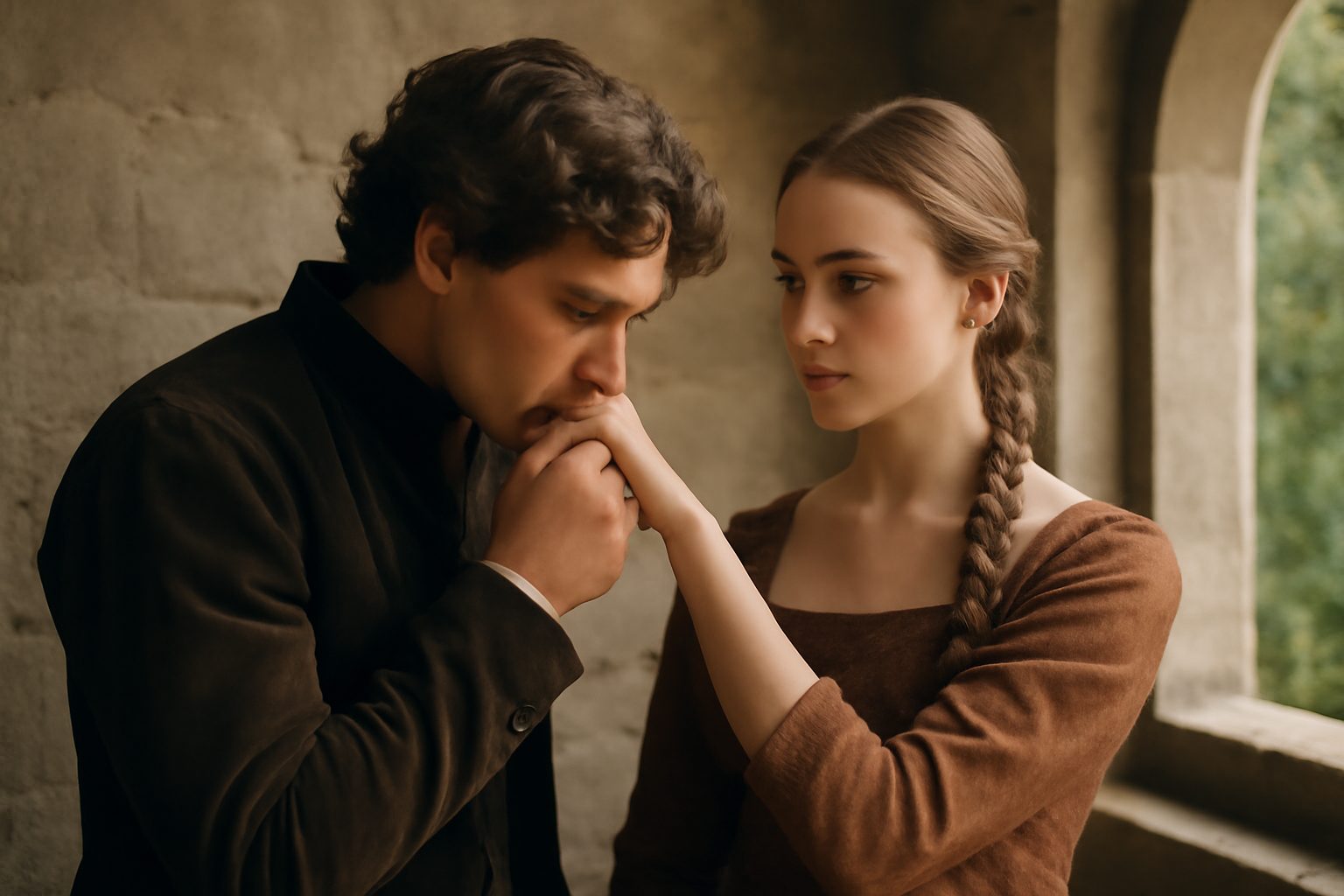
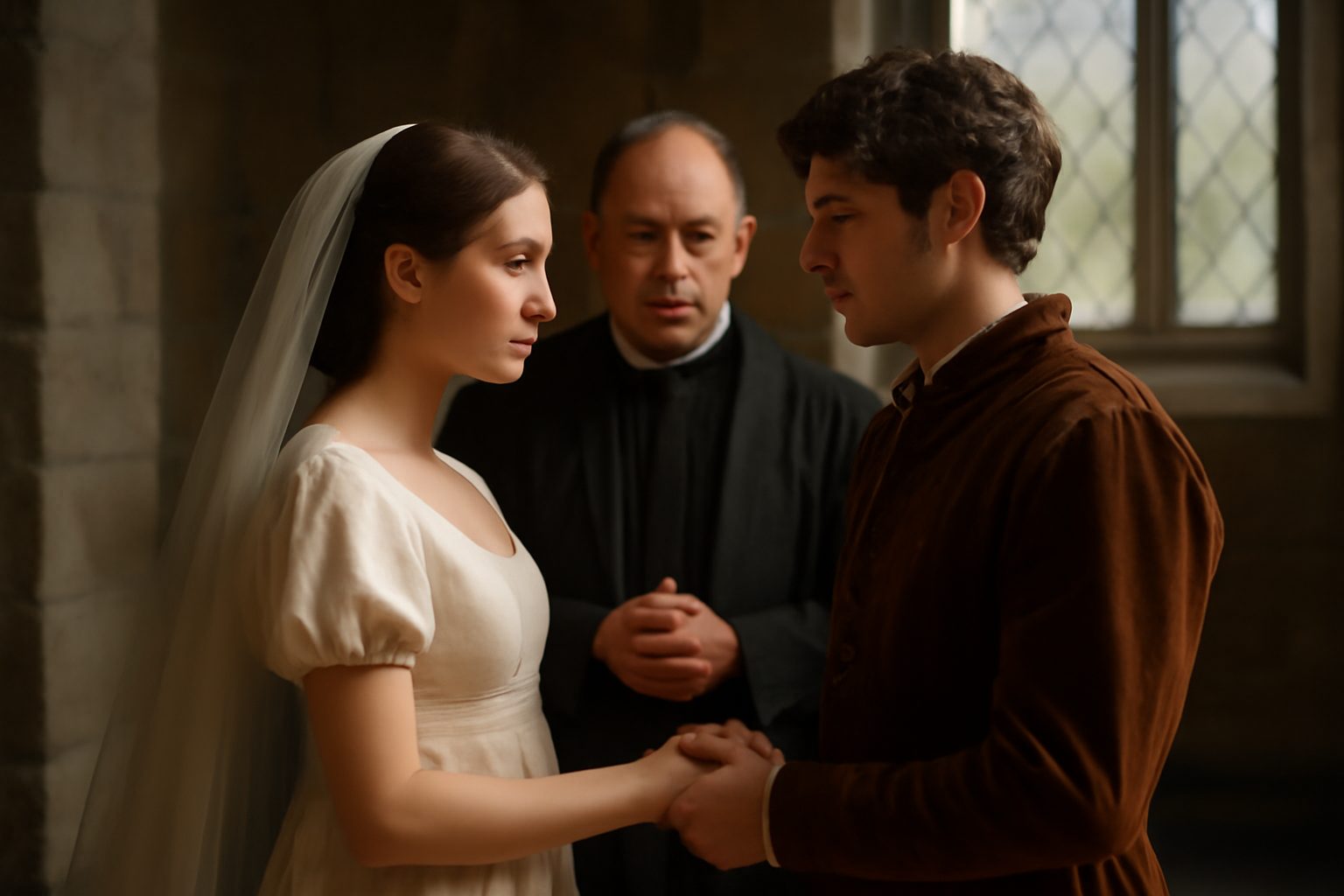
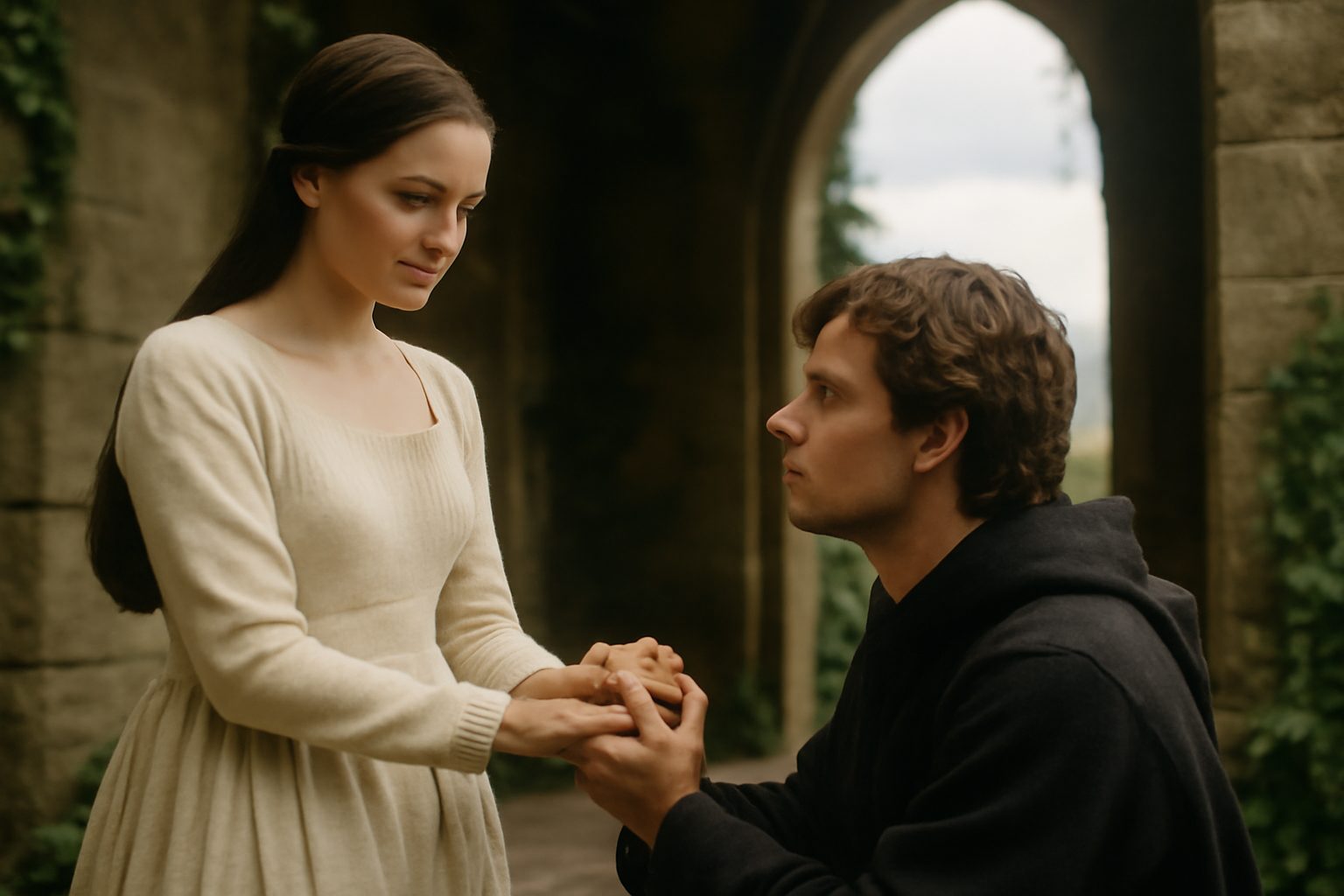
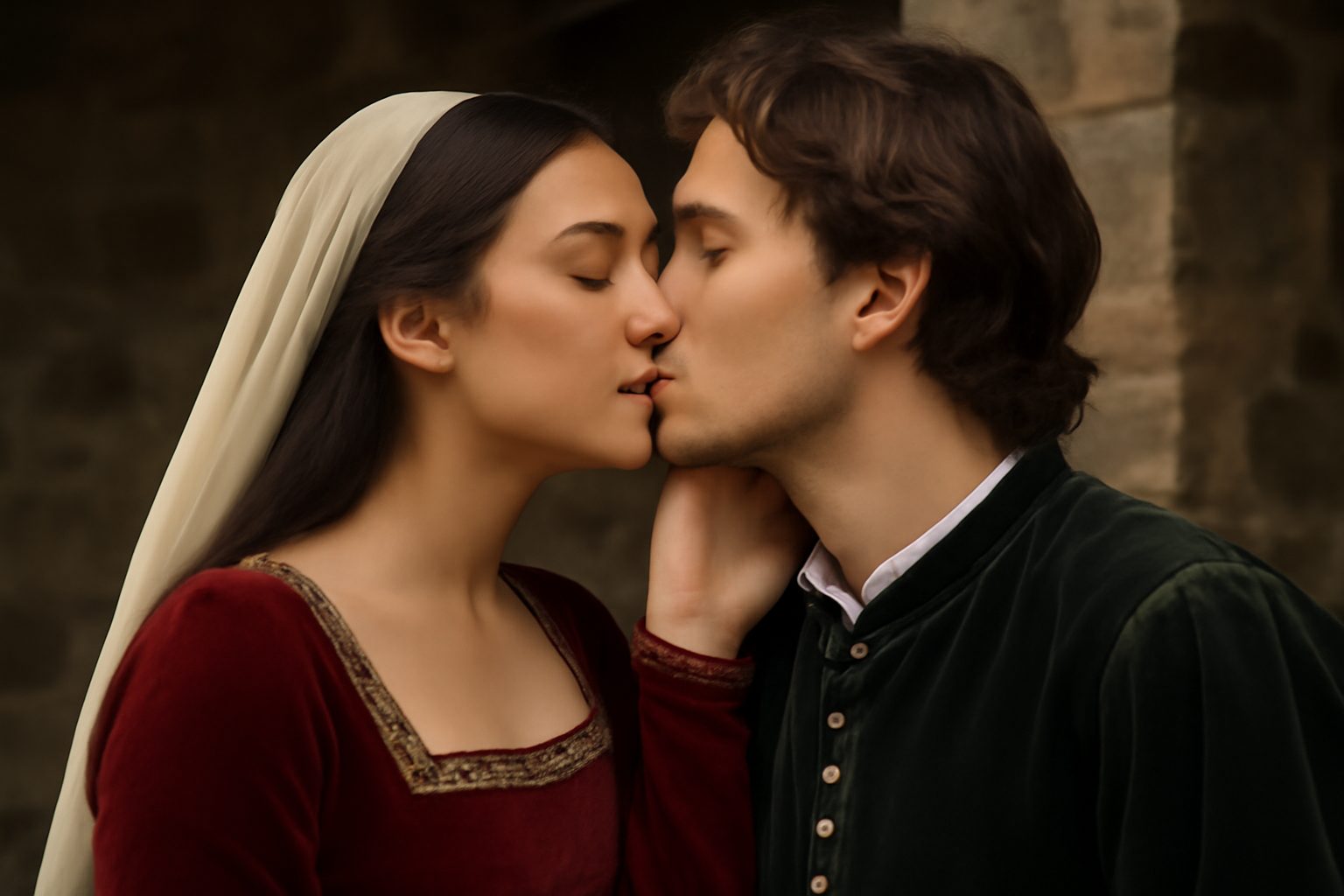
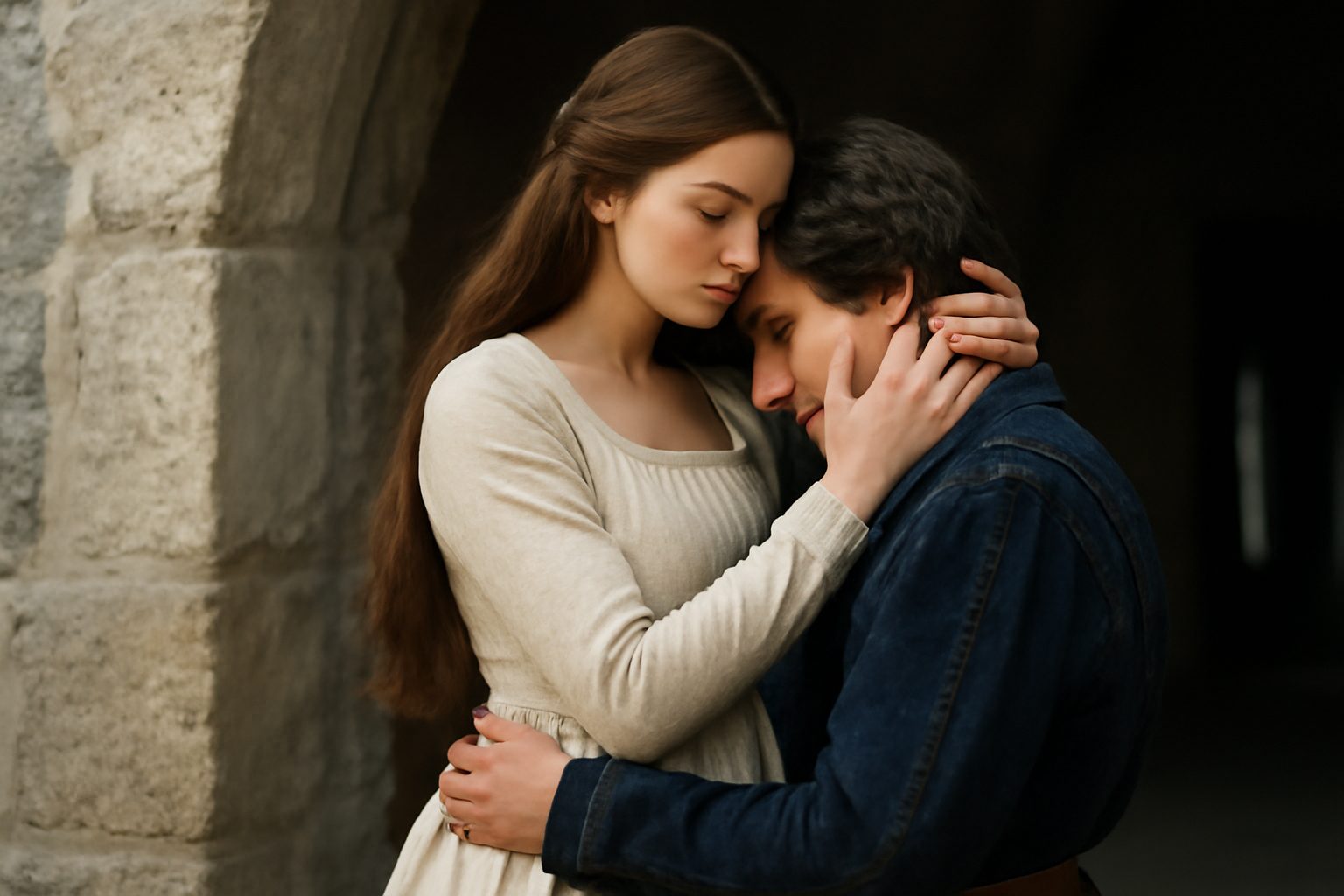
In Act 2, Scene 6 of Romeo and Juliet, Friar Laurence speaks this line to Romeo as they await Juliet's arrival for their secret wedding. The friar cautions Romeo against measuring love in material terms, suggesting that those who quantify their happiness are poor in spirit. This moment underscores the play's theme of love as an immeasurable, boundless force.
Juliet: "They are but beggars that can count their worth;"
In modern day english, we would say:
Only those who have very little can truly measure what they have.
Frequently Asked Questions
What does Juliet mean when she says that people who can count their worth are beggars?
Juliet means that true love and happiness cannot be measured or counted, so those who try to do so are poor in spirit, like beggars.
Connections to other verses:
Connections to "They are but beggars that can count their worth"
The verse "They are but beggars that can count their worth" reflects Romeo's belief that true love is immeasurable and transcends material or quantifiable value. This idea is echoed and expanded upon in several other lines within the scene.
Immeasurable Love and Joy
Romeo's declaration that he "cannot sum up sum of half my wealth" directly parallels the sentiment of the original verse, emphasizing that his love for Juliet is beyond calculation. Similarly, Juliet expresses that her joy is so profound that "if the measure of thy joy be heap'd like mine", it would be overwhelming and unquantifiable.
Moderation and Excess
Friar Laurence's warning, "Therefore love moderately; long love doth so", serves as a counterpoint to Romeo's view. While Romeo sees infinite worth in his passion, the Friar cautions that excessive emotions can lead to destructive ends, as noted in "These violent delights have violent ends".
Spiritual and Emotional Riches
The theme of intangible wealth is further explored when Romeo states that his love "is grown to such excess" that it cannot be contained or measured, reinforcing the idea that those who focus on quantifiable worth are spiritually poor. The Friar's remark that "Conceit, more rich in matter than in words" also underscores that true value lies in substance rather than superficial expression.
Defiance of Worldly Measures
Romeo's readiness to face any sorrow, as seen in "Then love-devouring death do what he dare", shows his willingness to embrace love’s immeasurable worth even at the cost of his life. This defiance aligns with the original verse’s dismissal of those who "count their worth" in worldly terms.