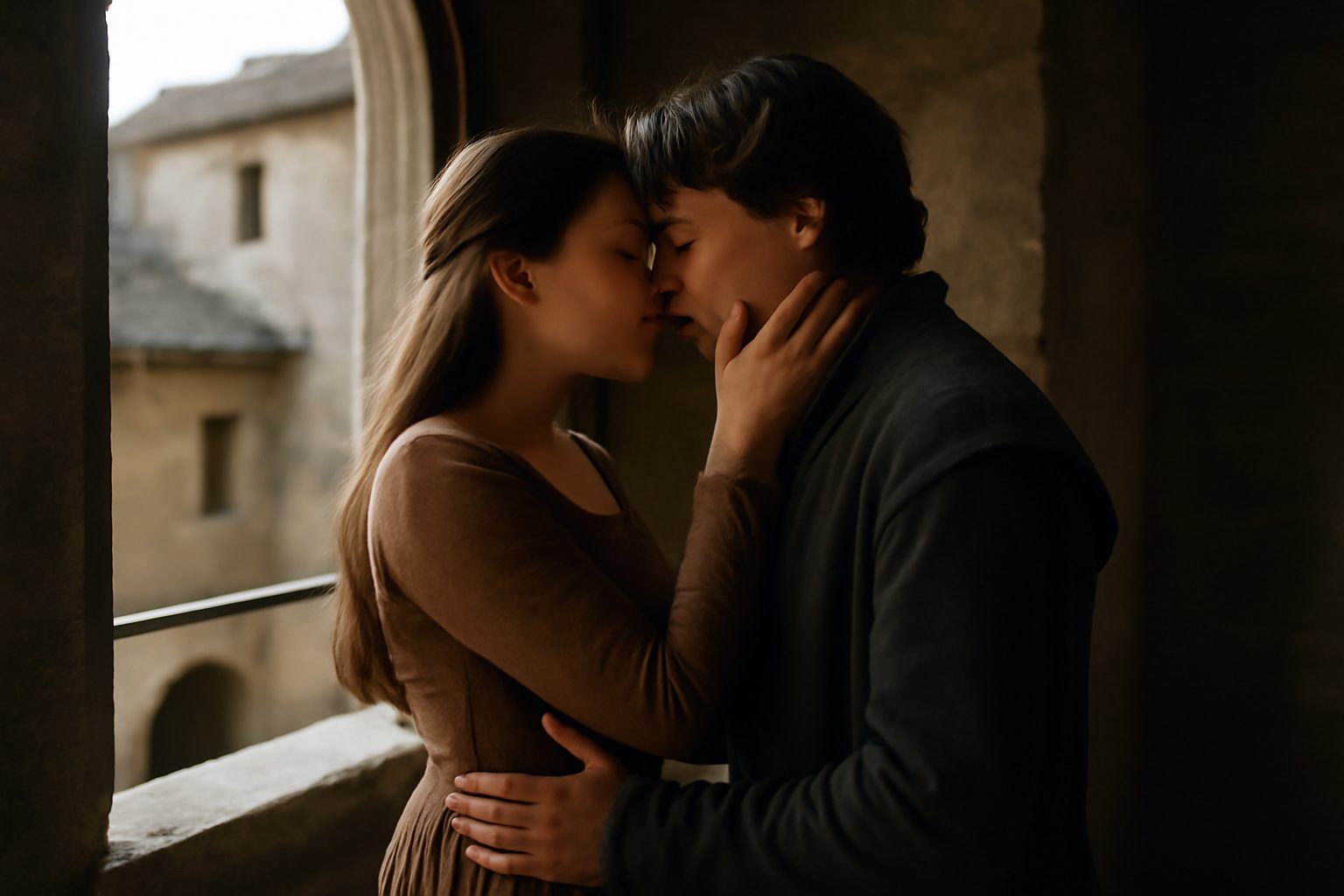
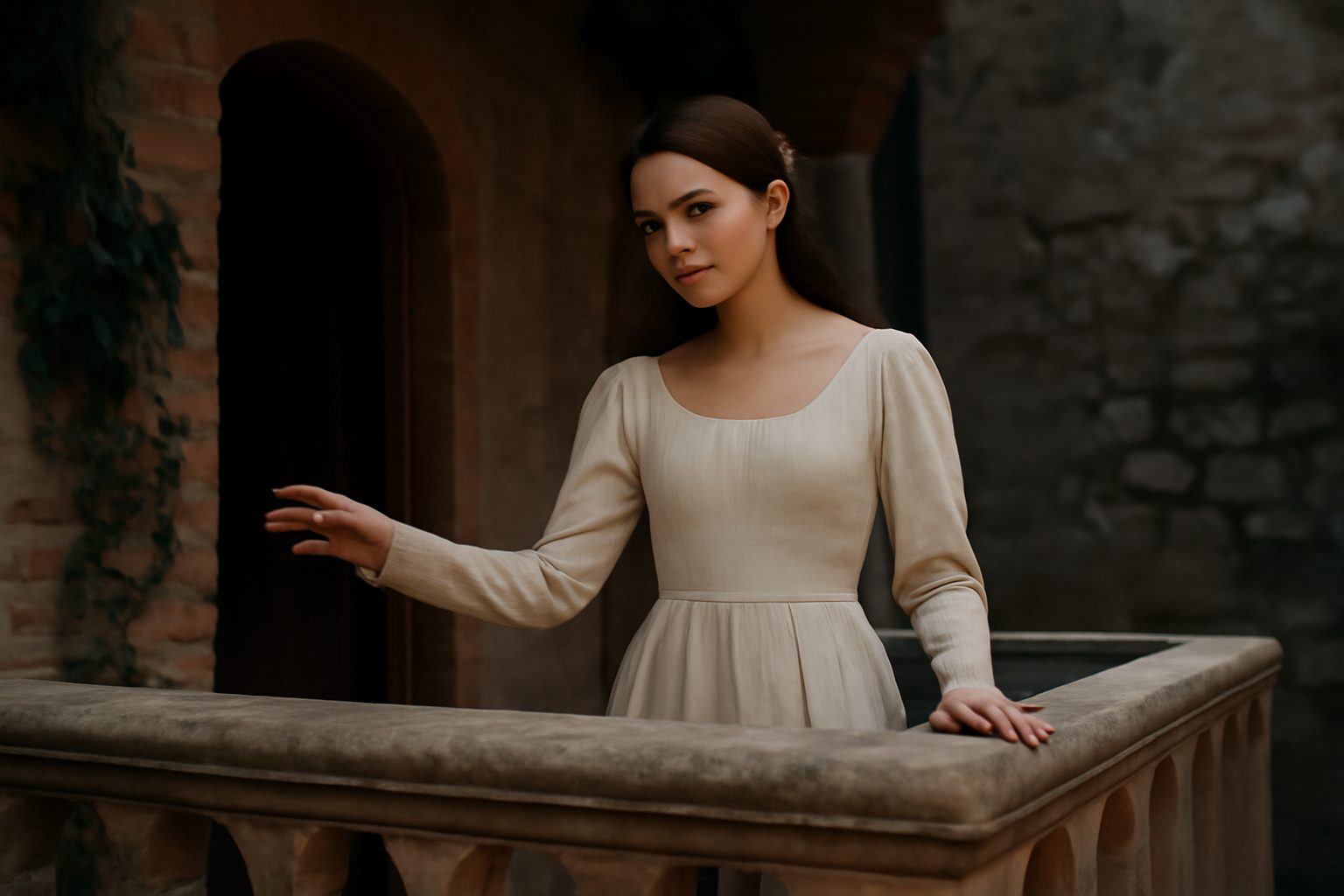
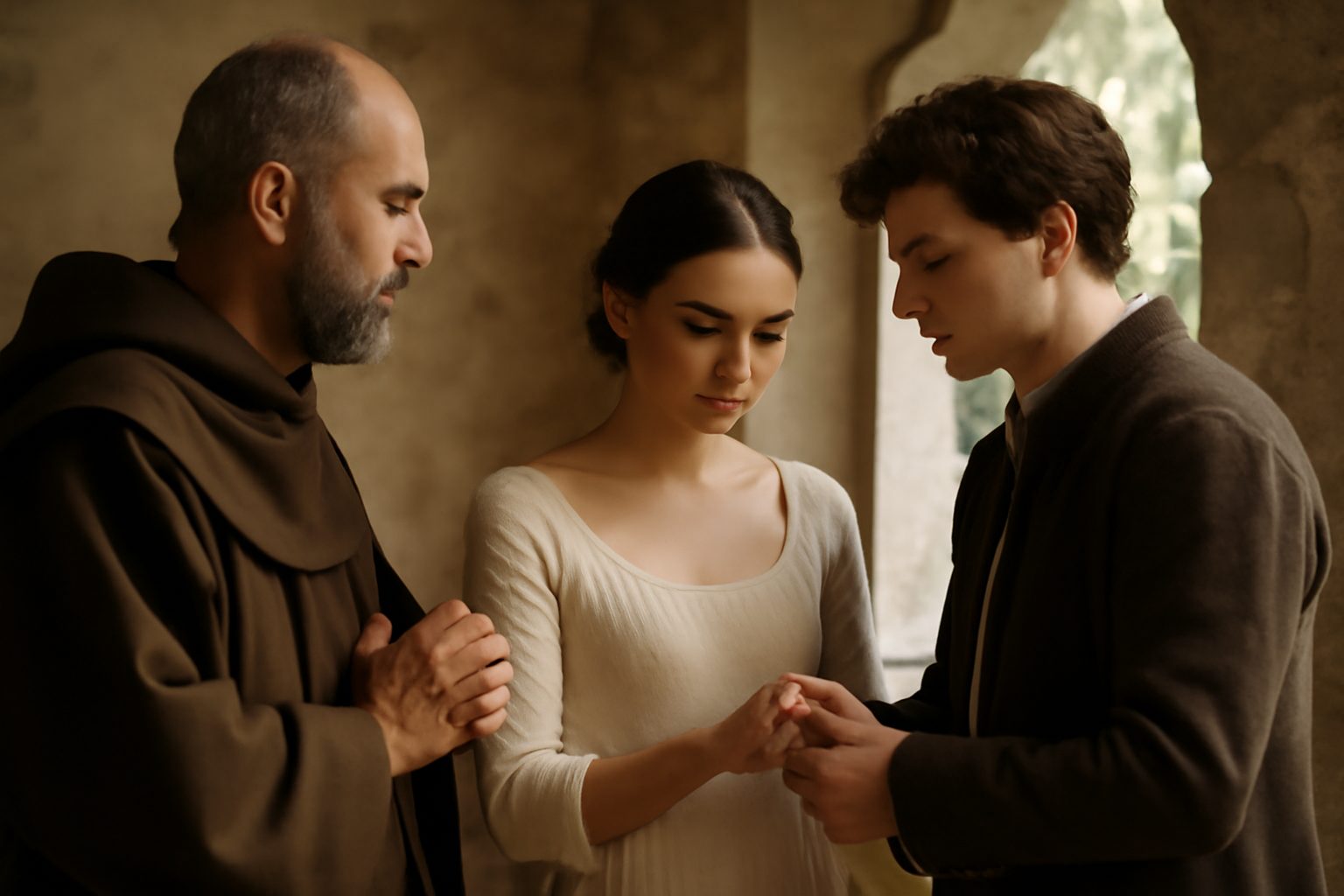
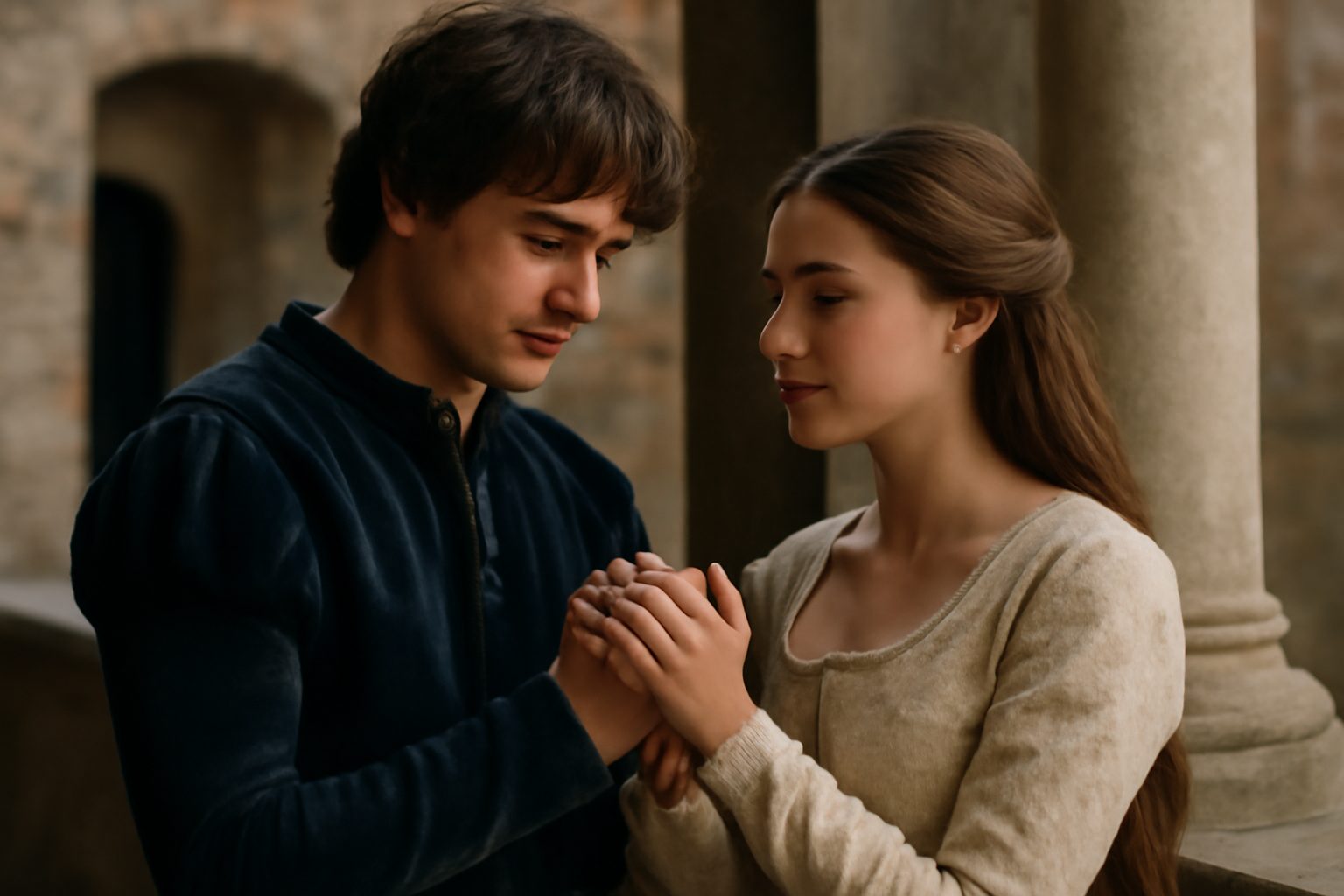
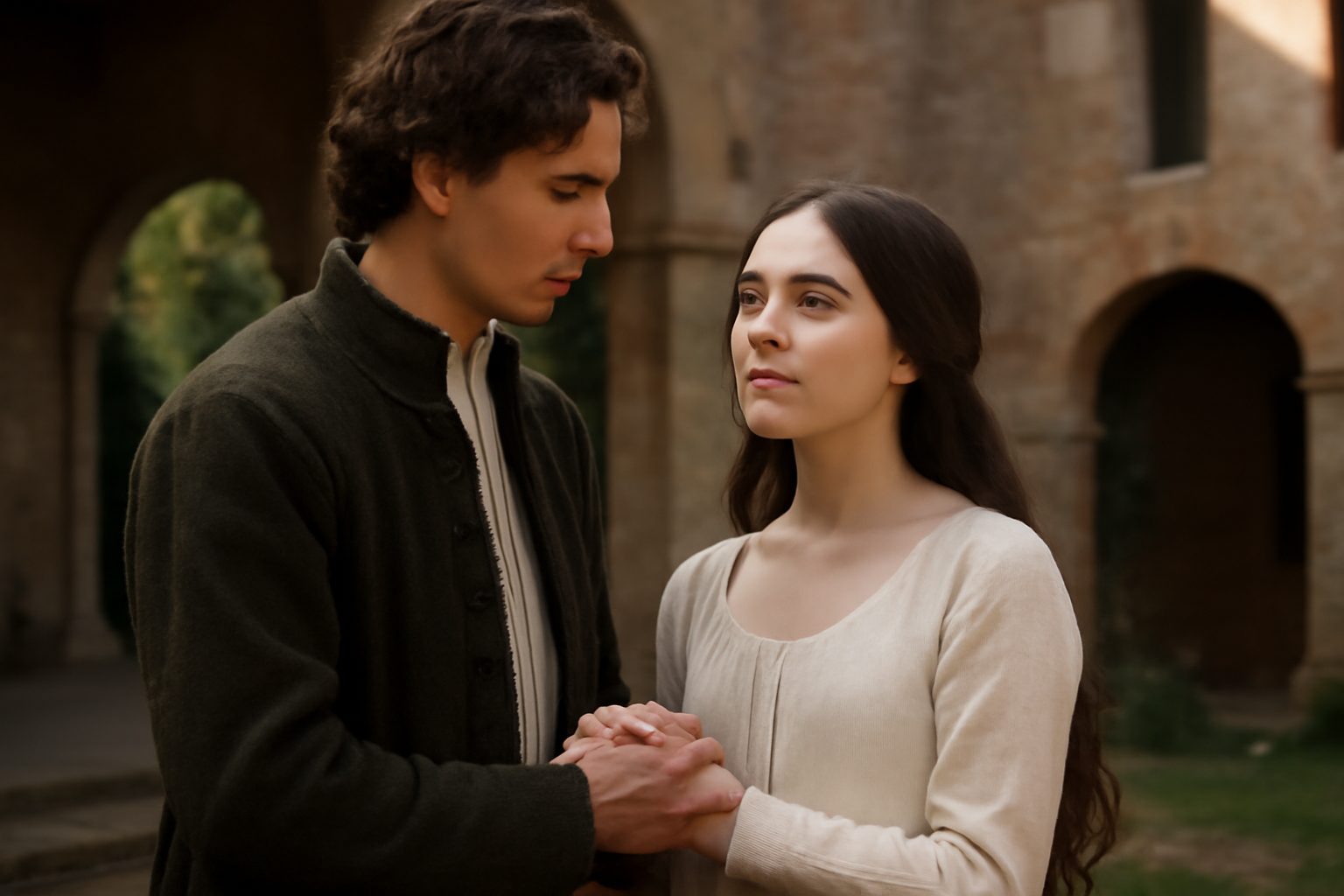
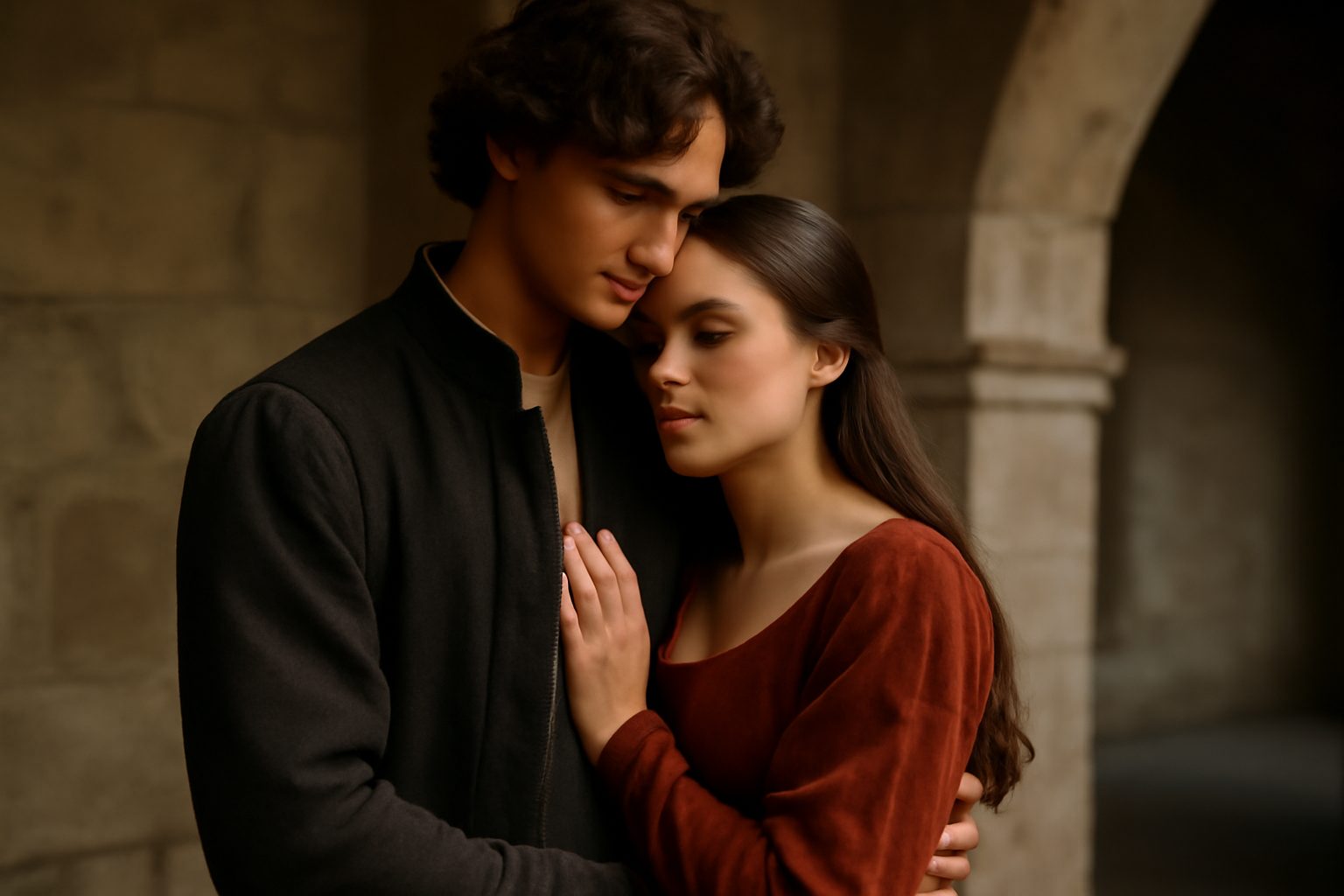
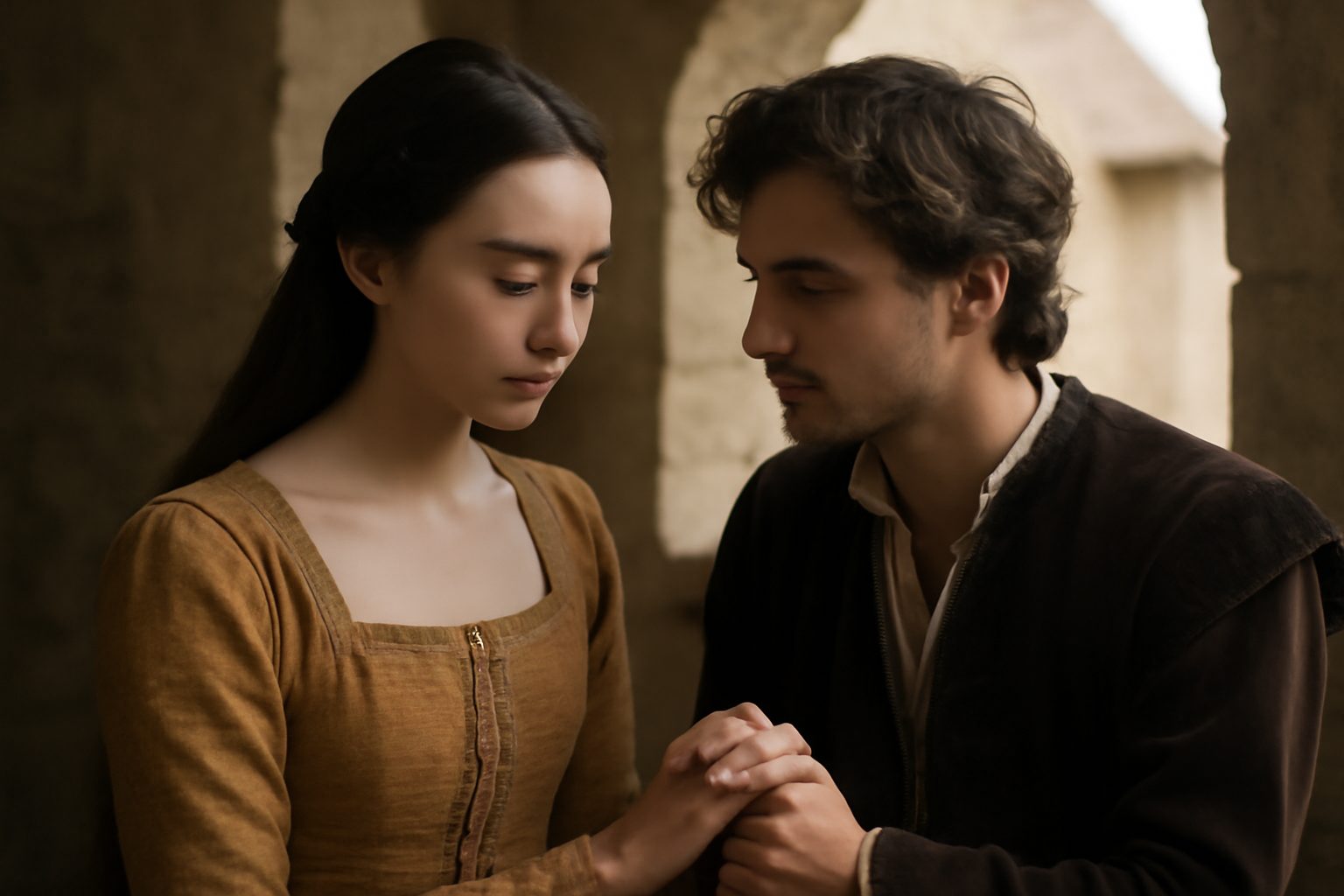
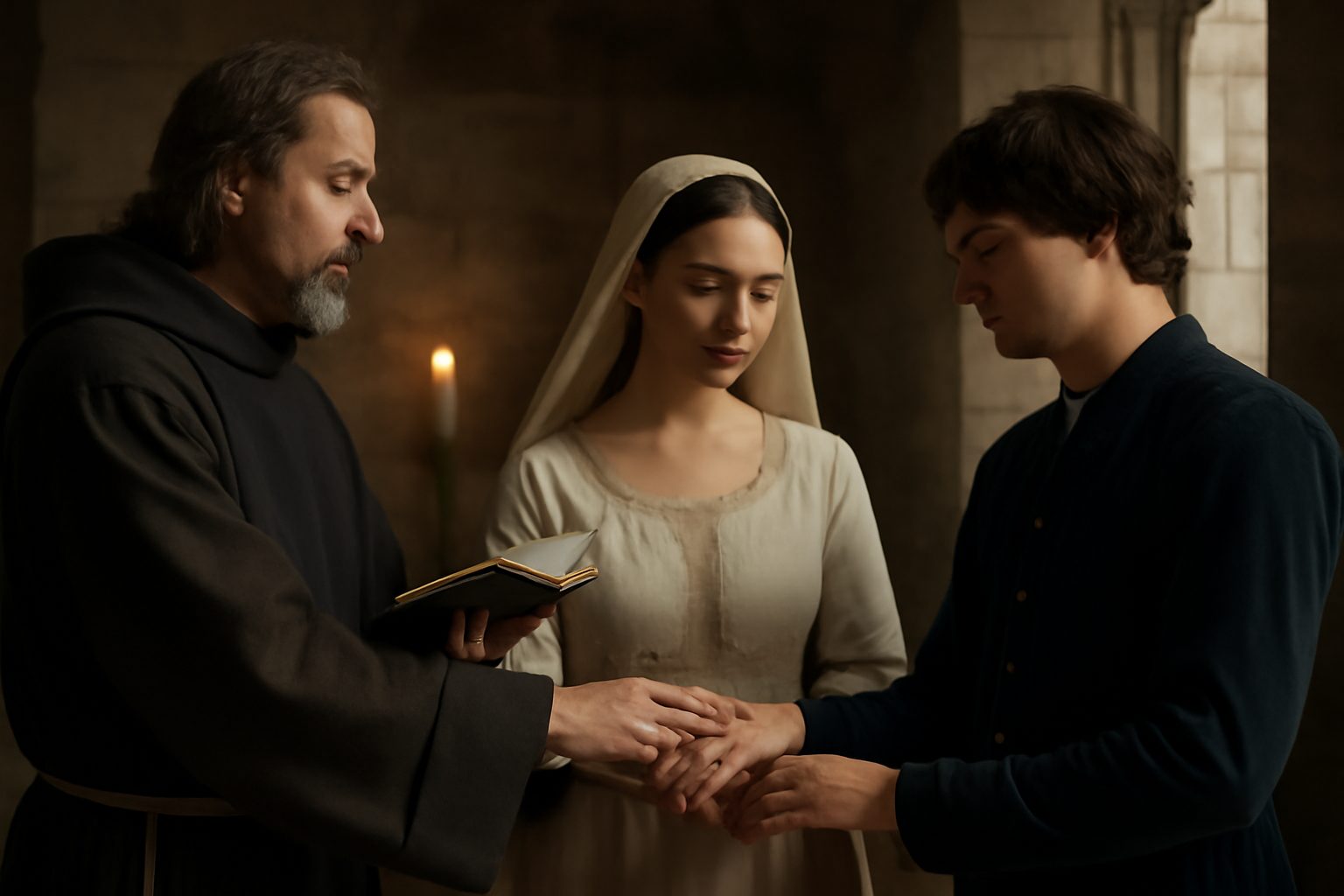
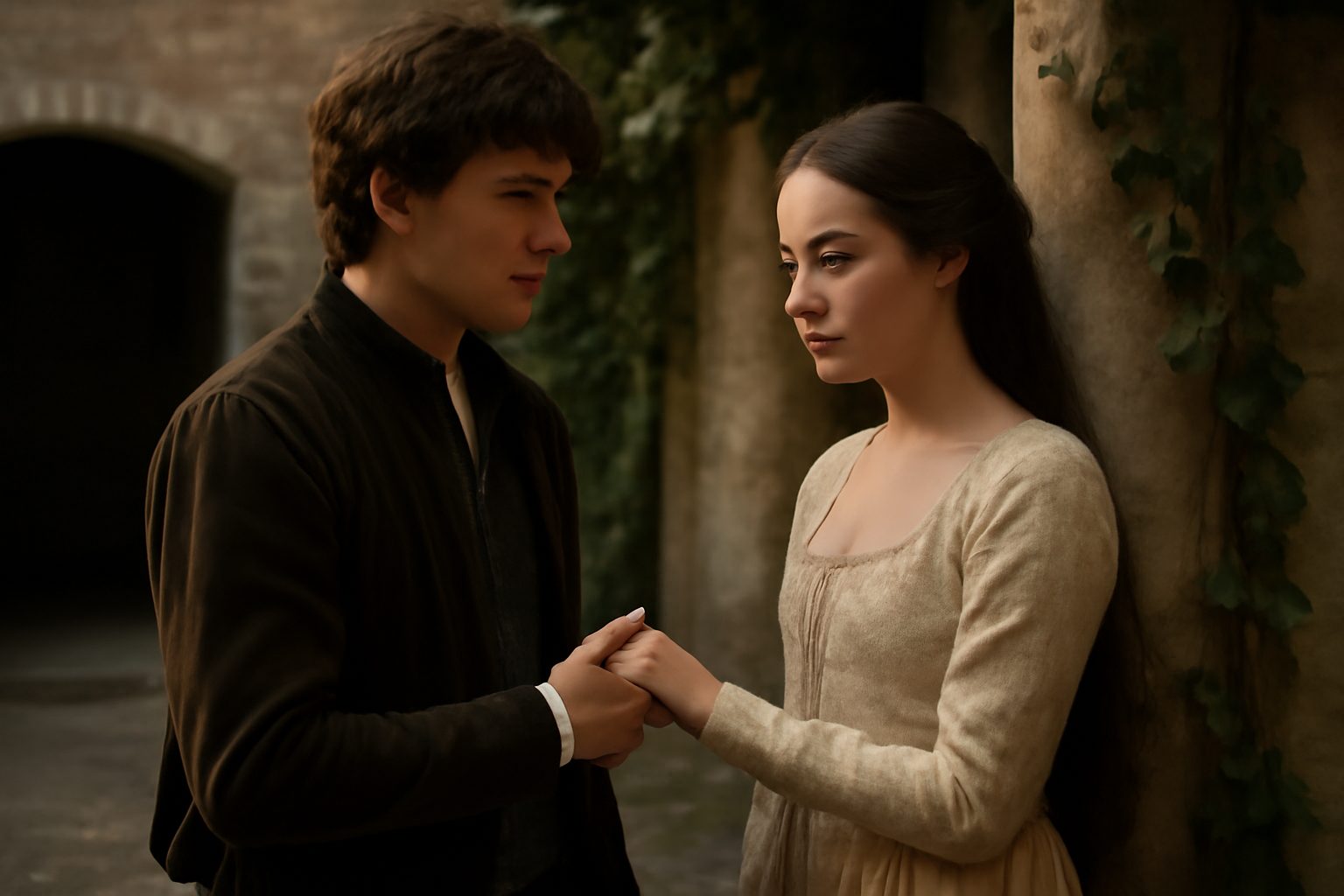
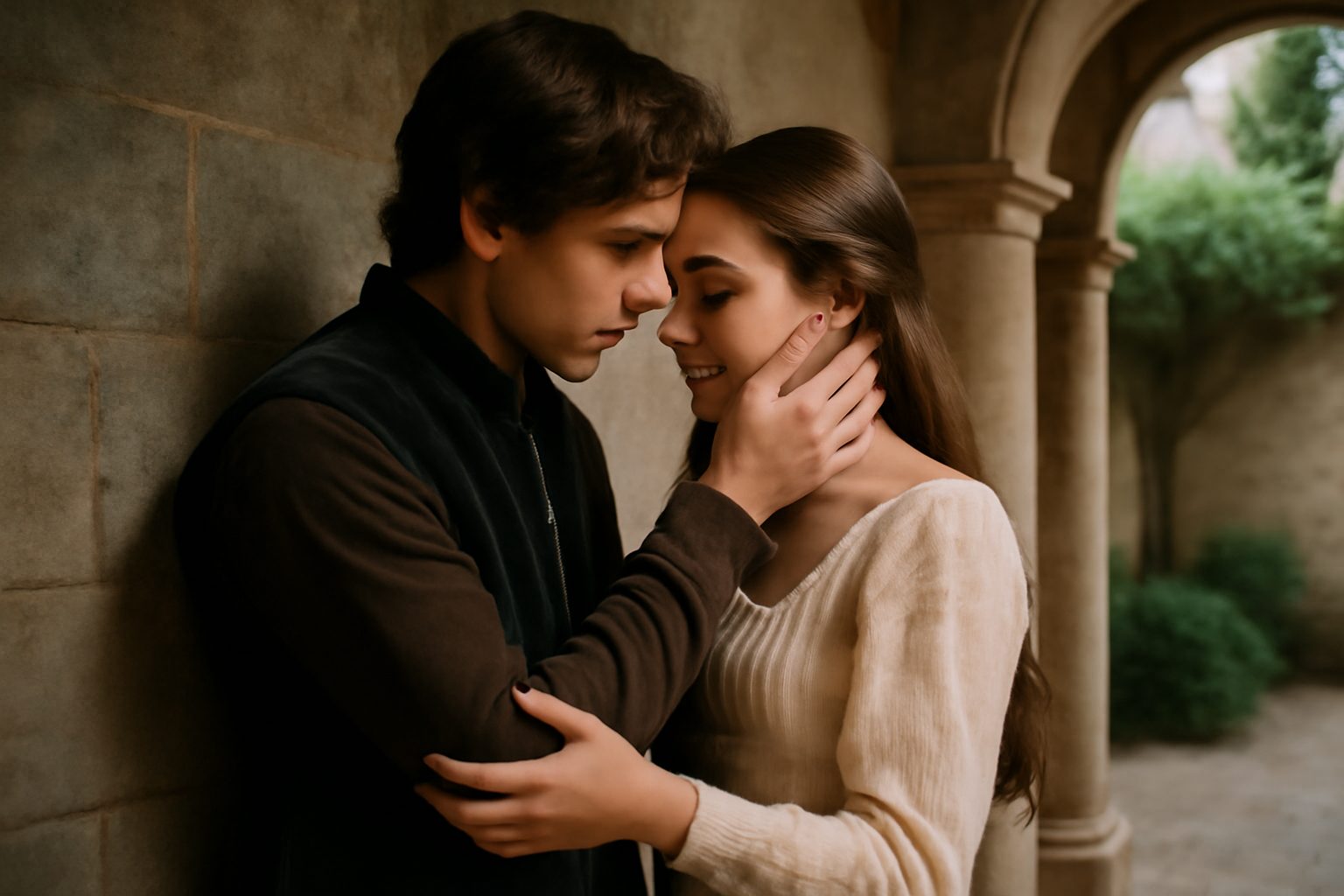
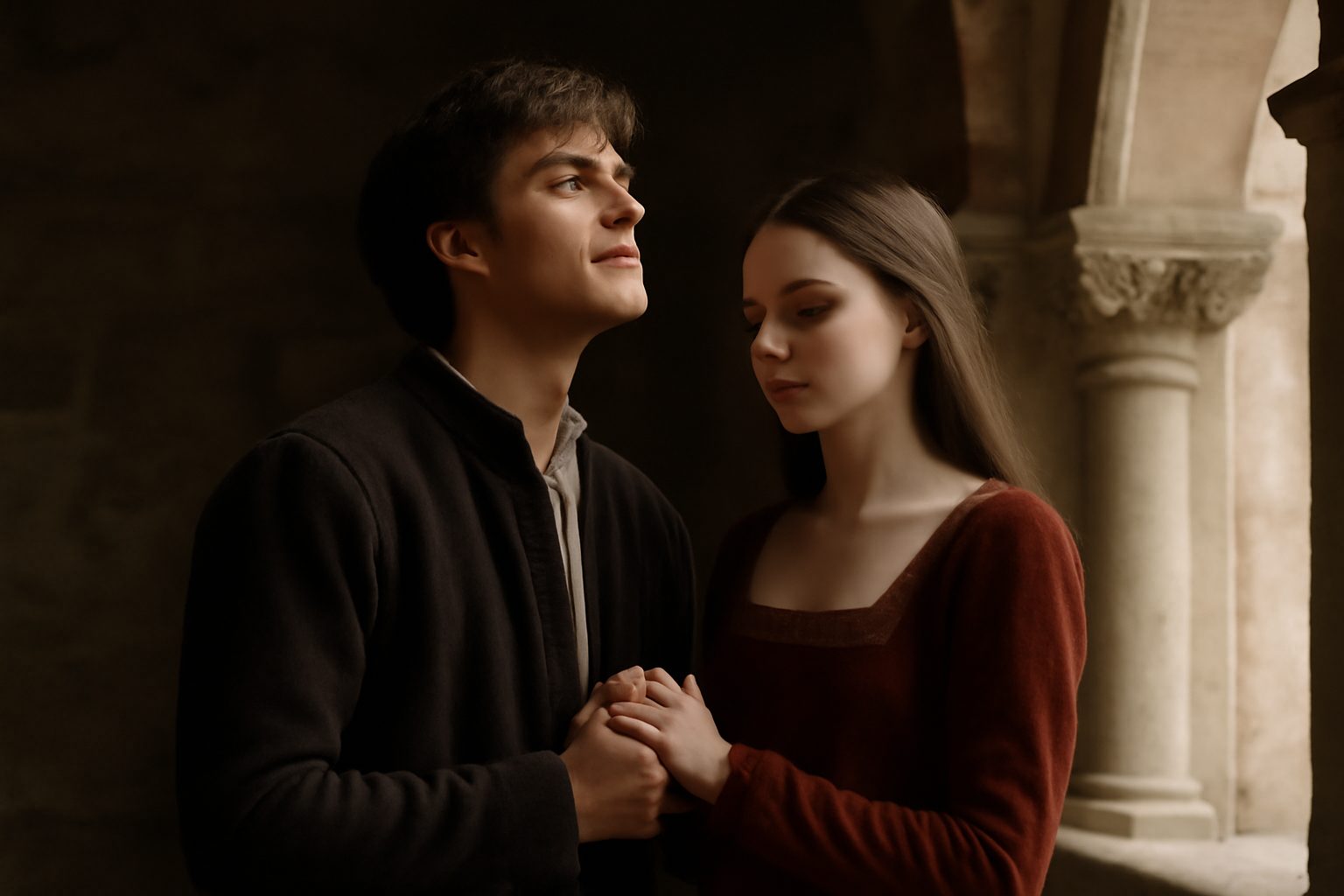
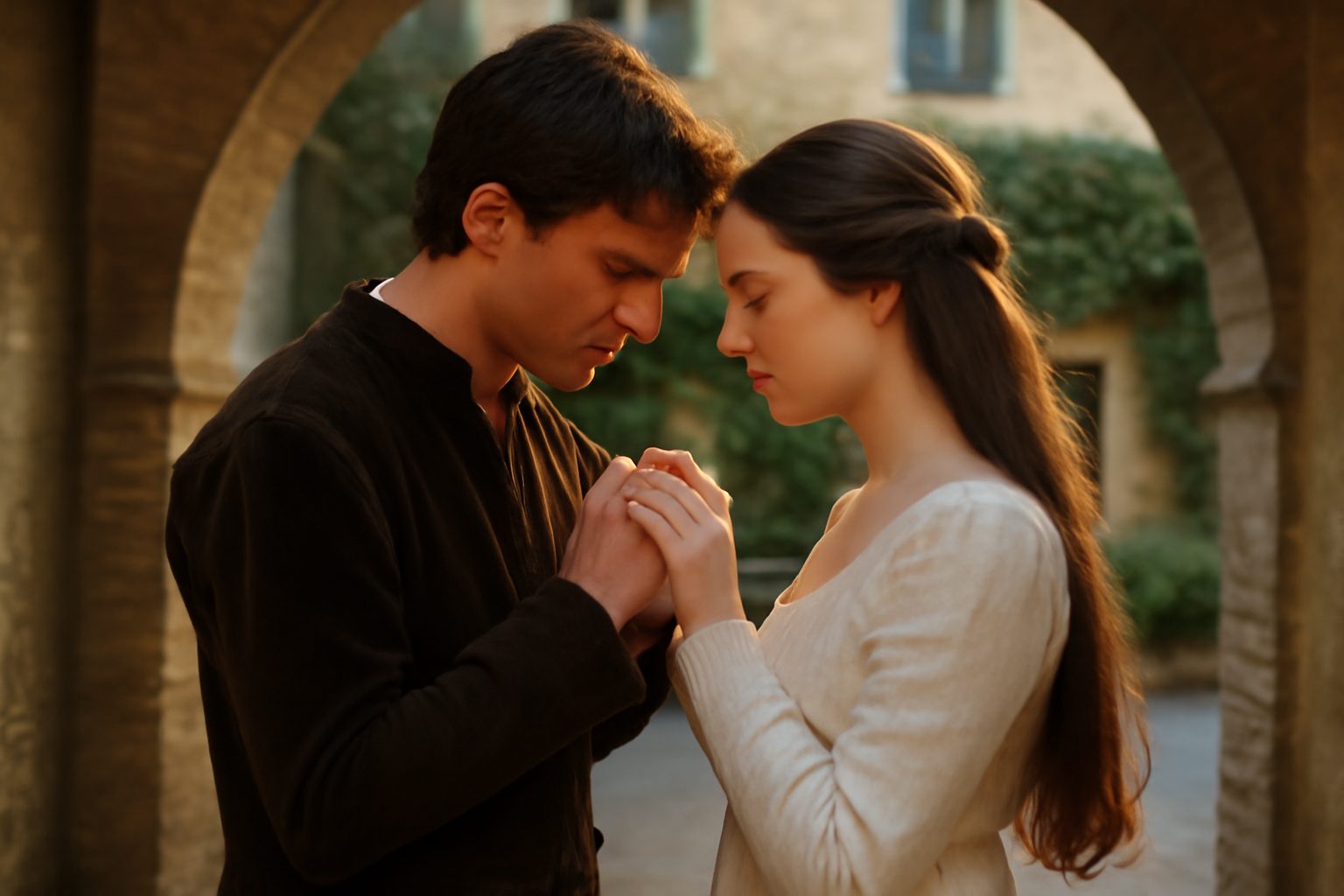
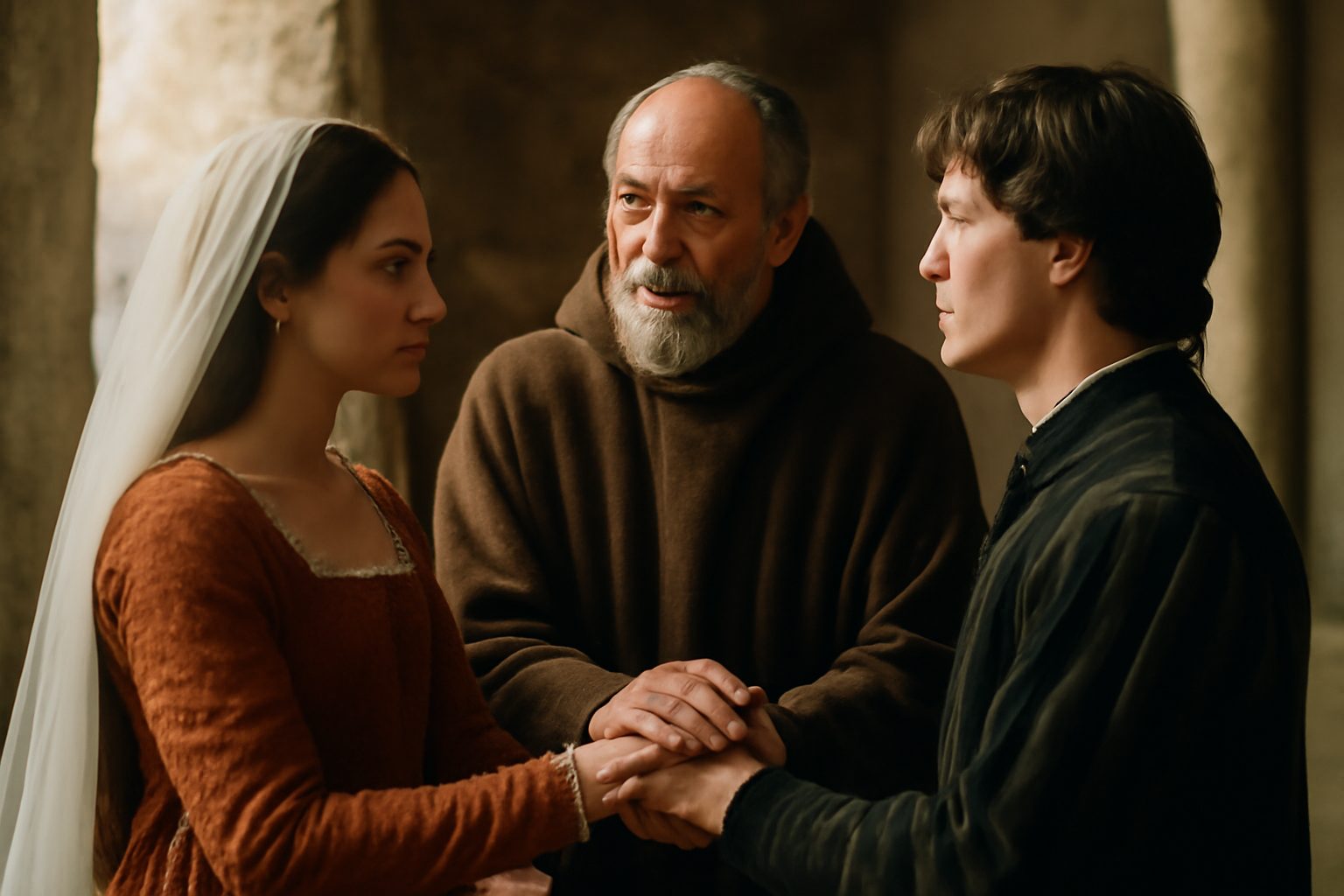
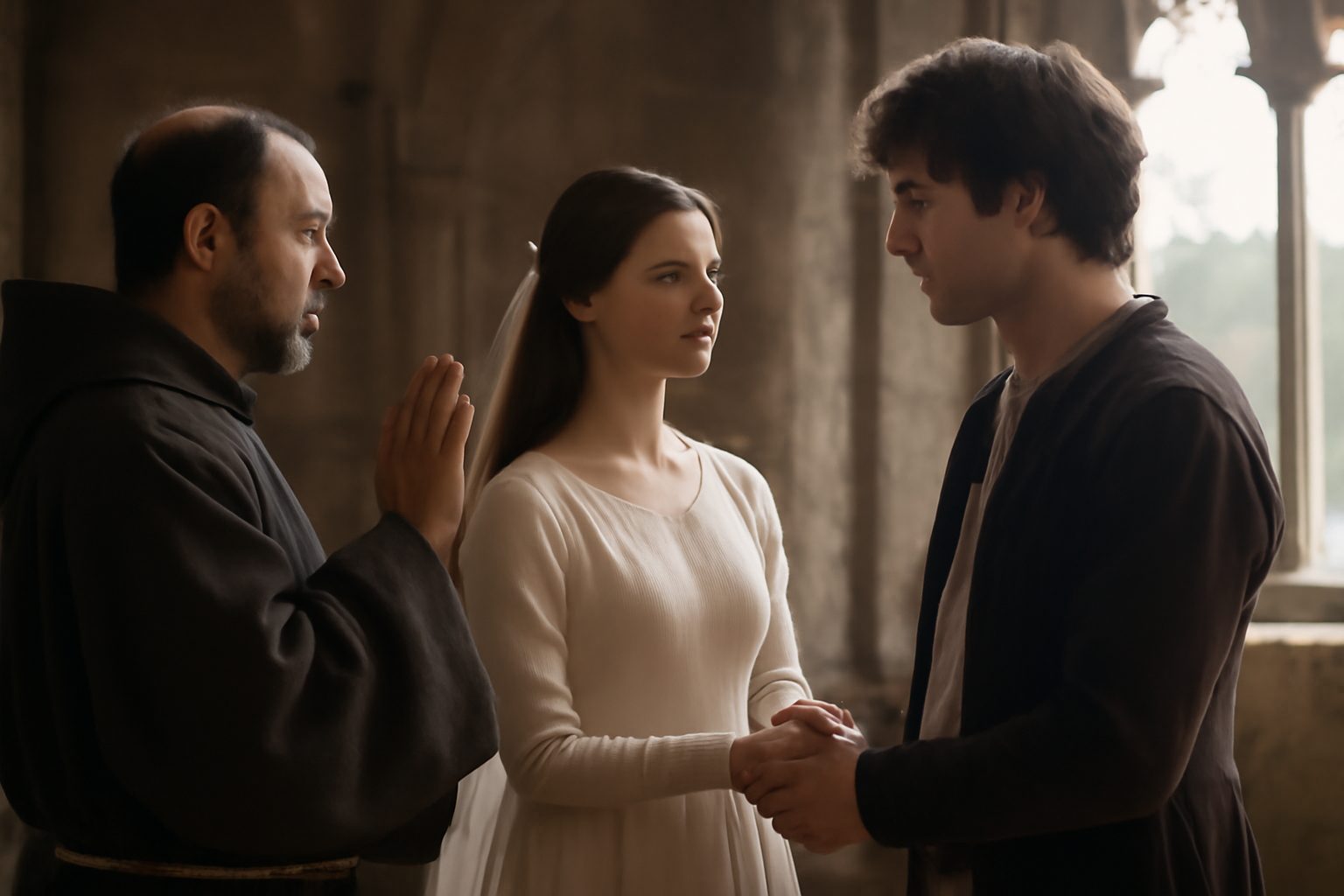
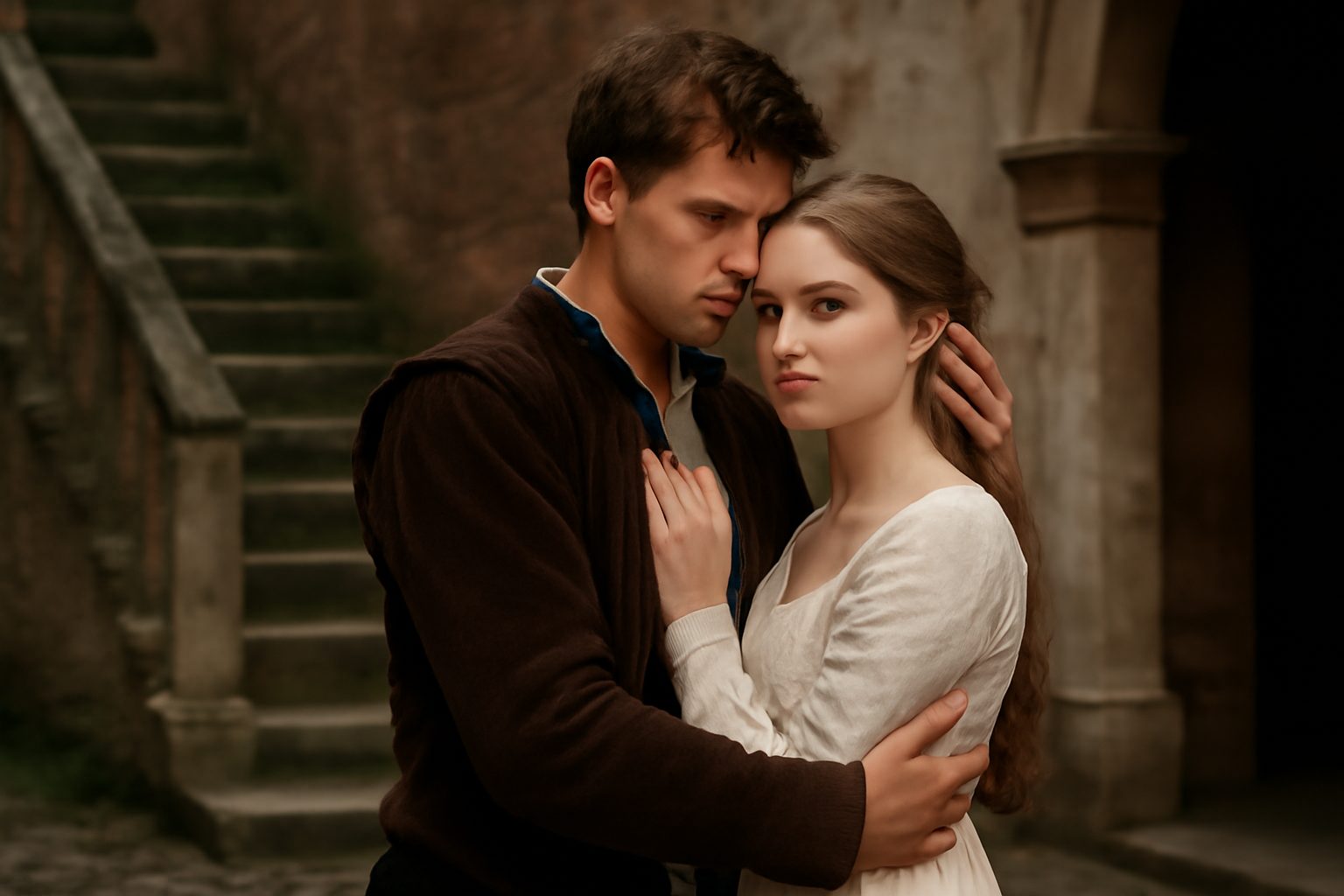
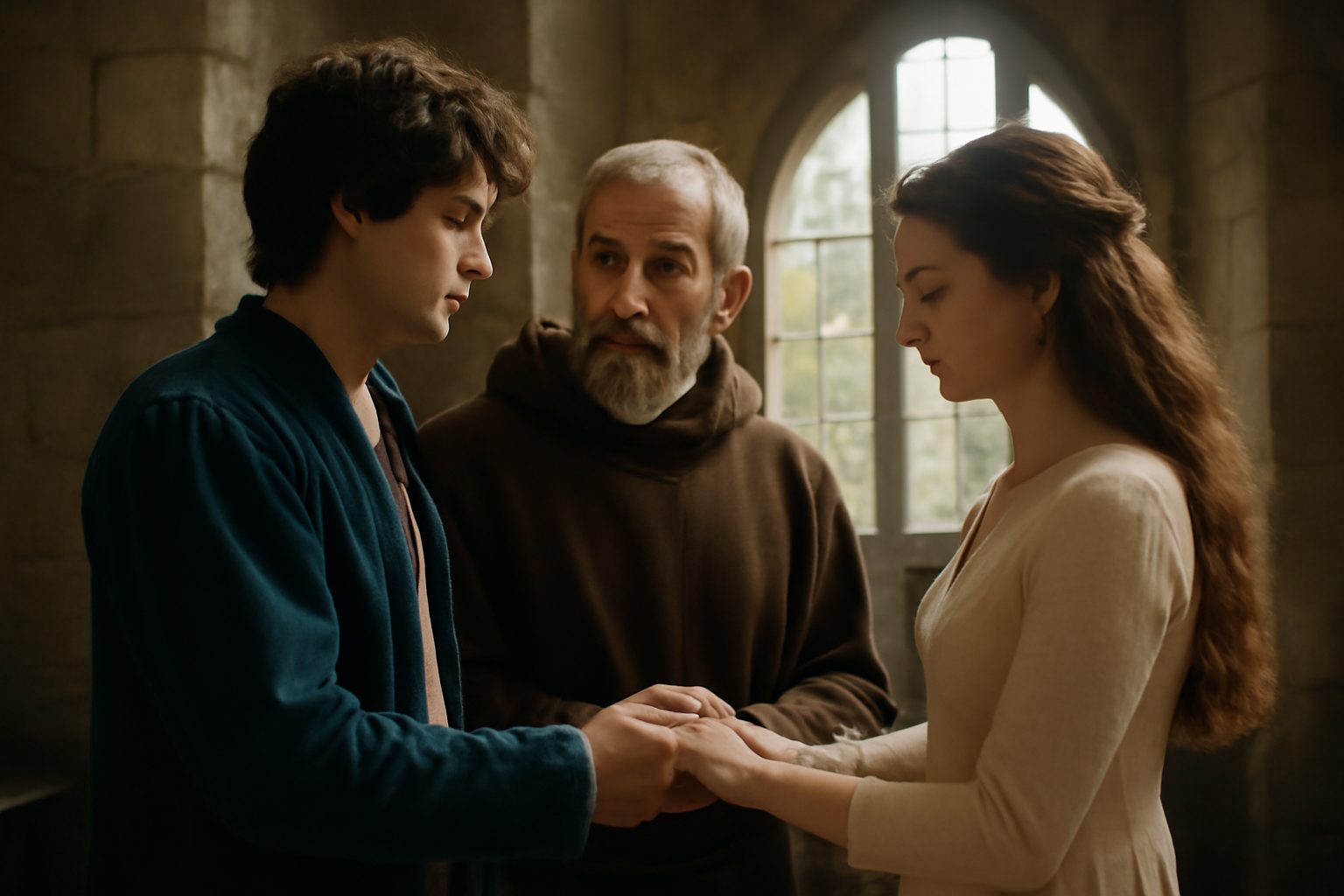
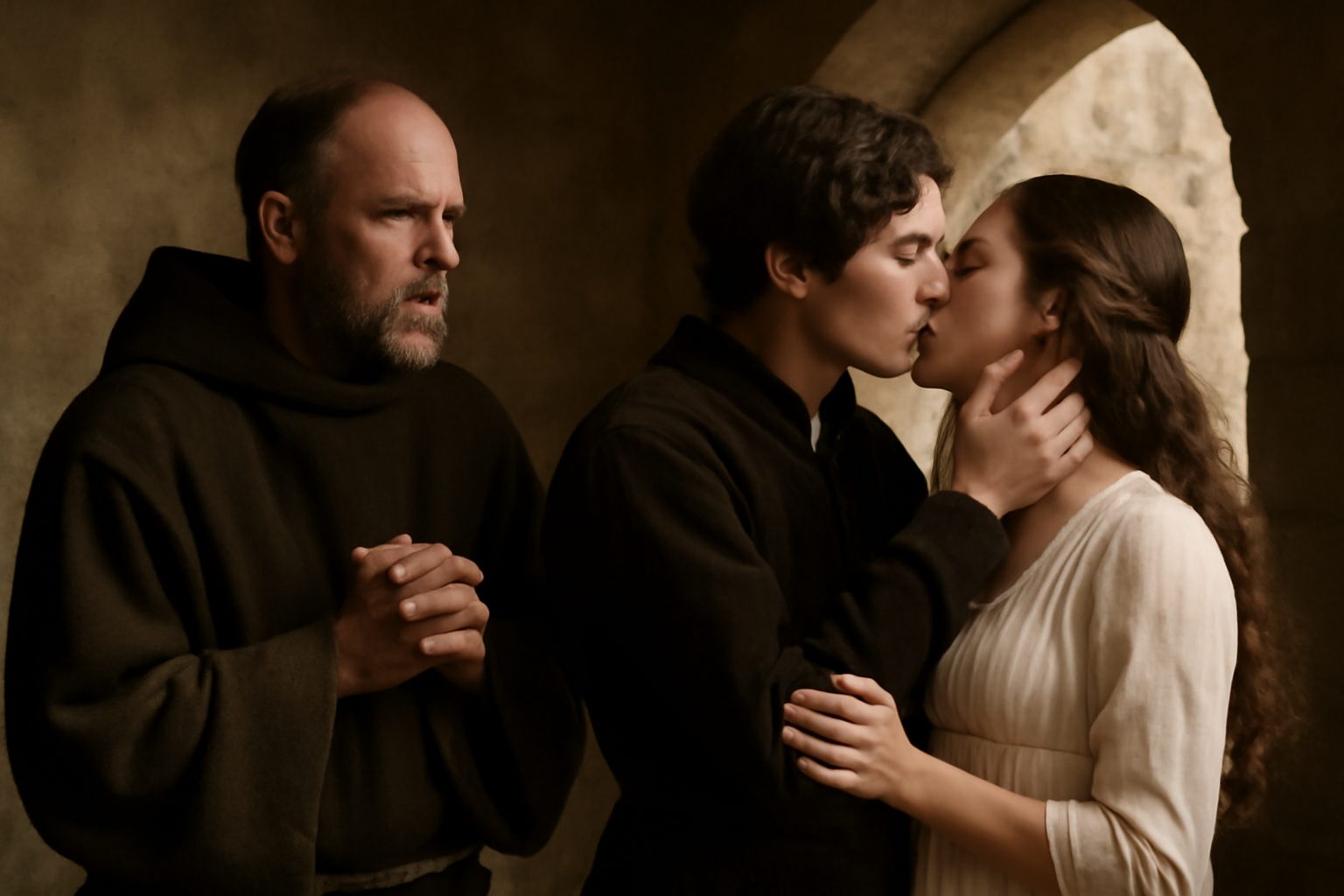
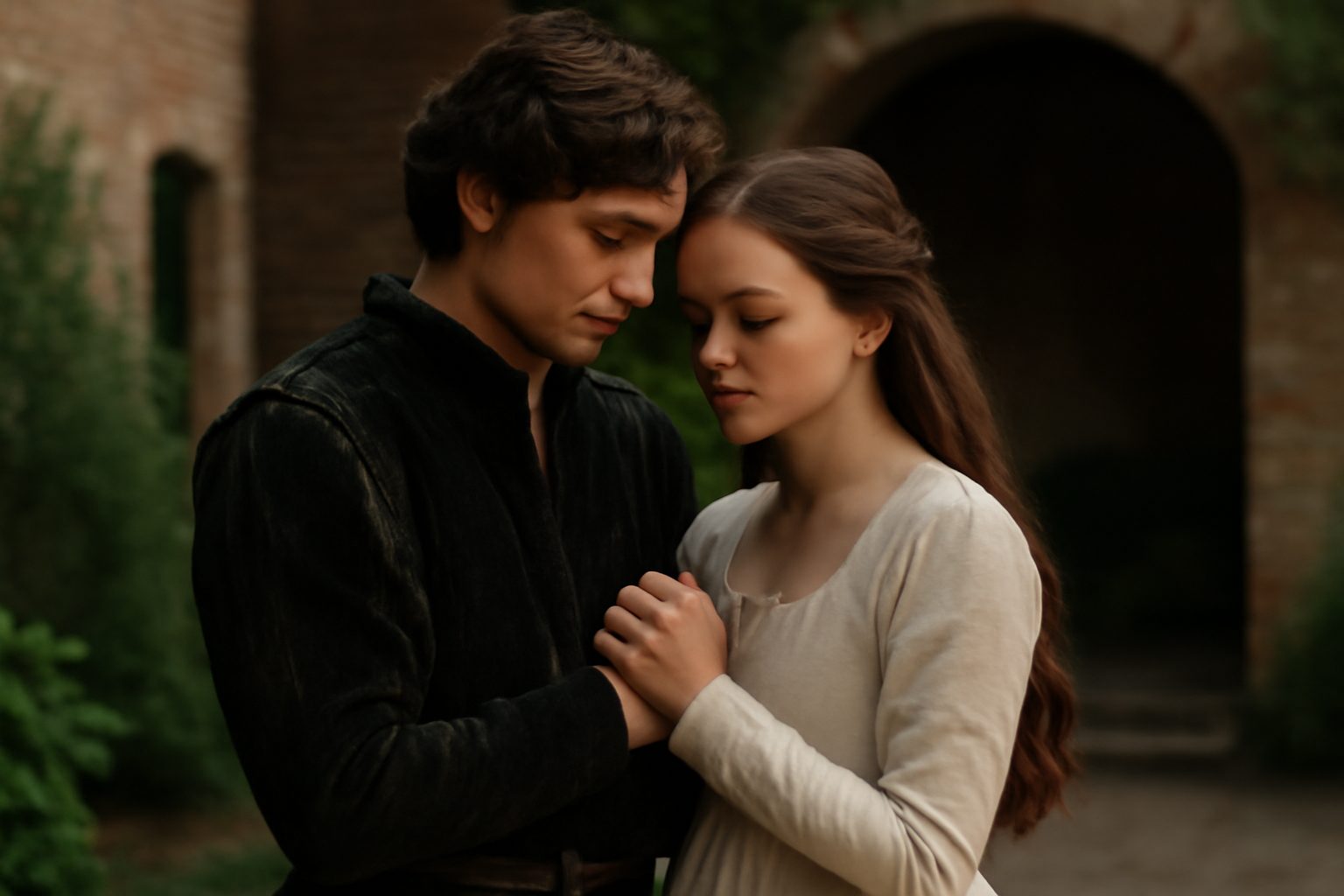
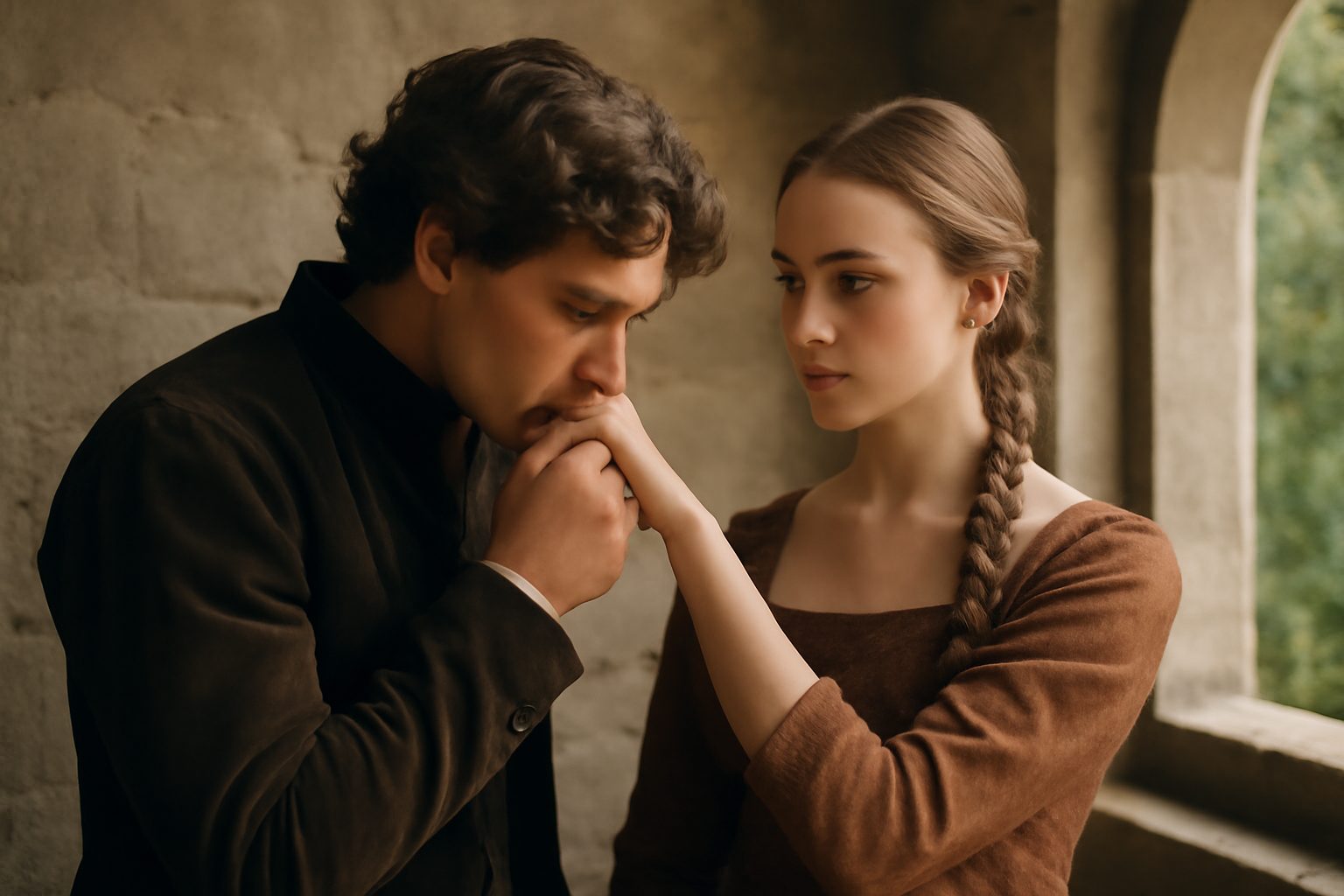
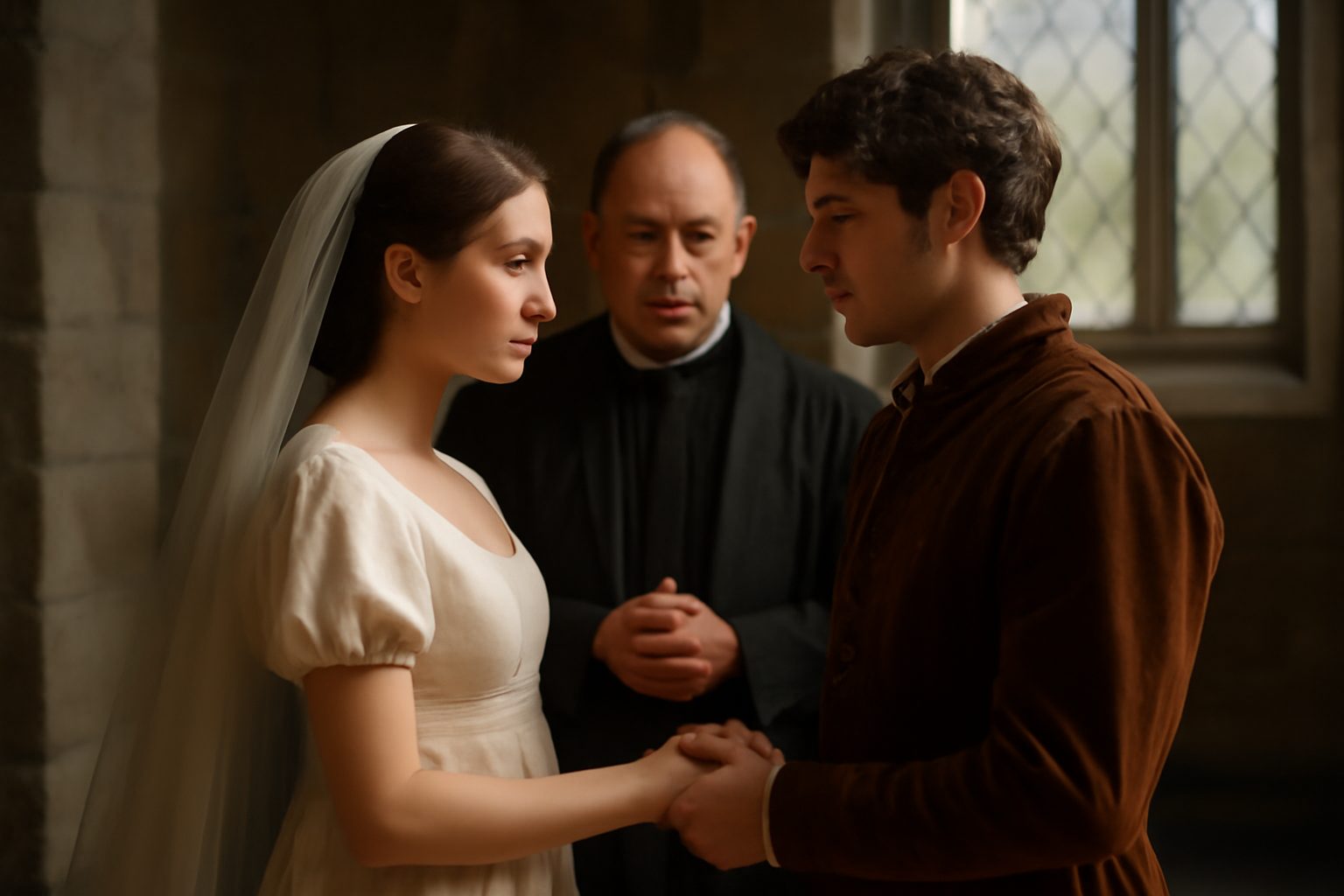
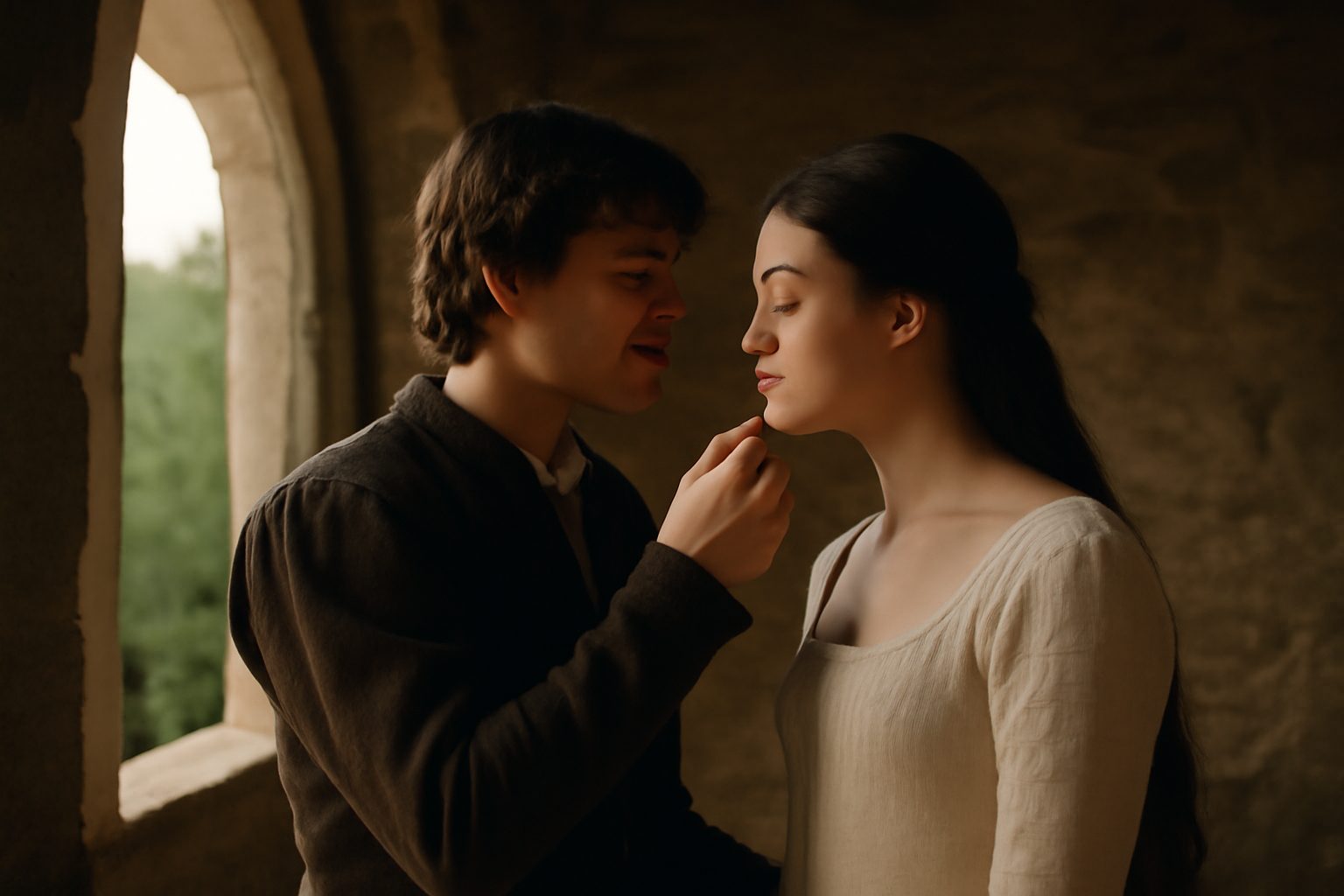
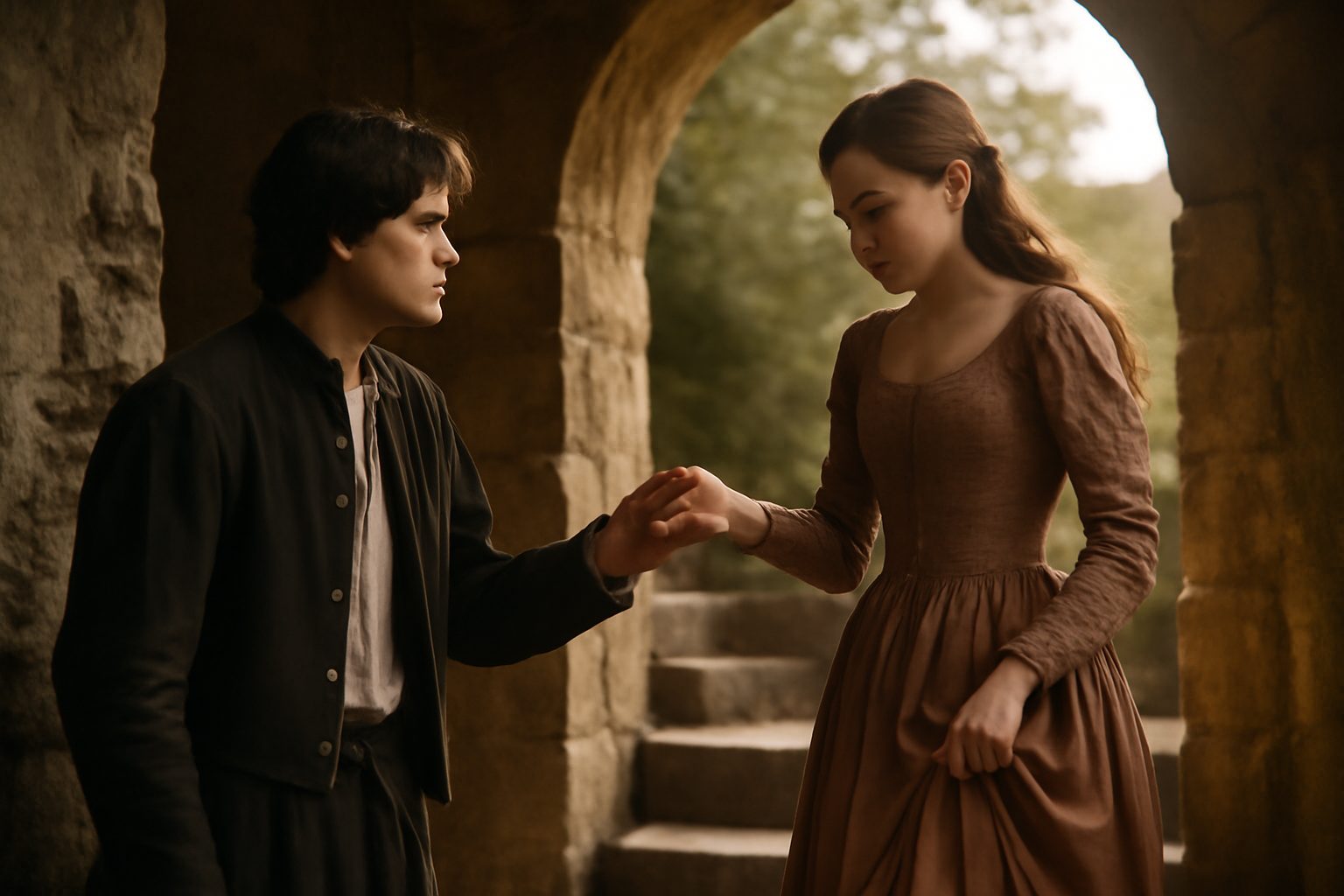
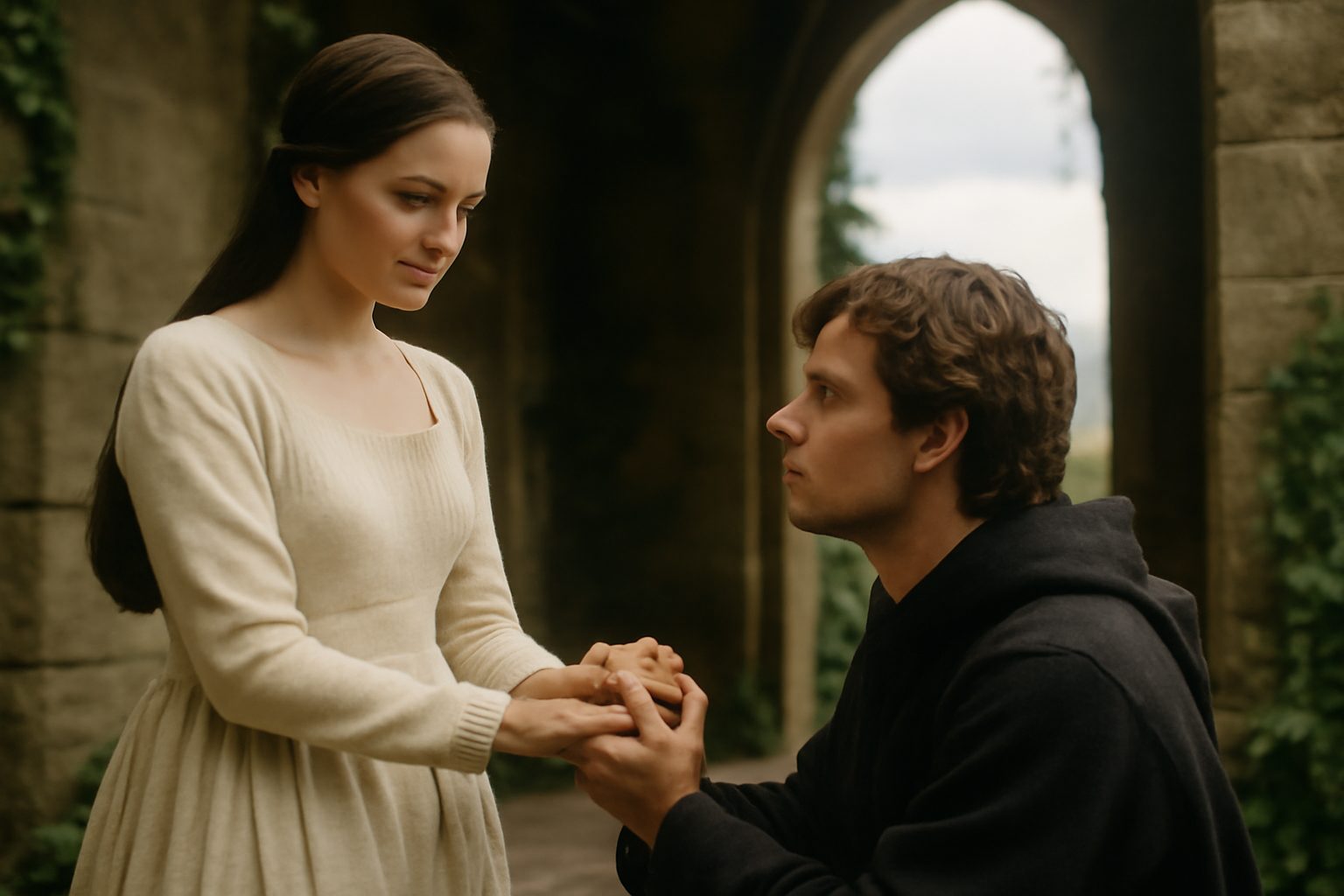
In Act 2, Scene 6 of Romeo and Juliet, Friar Laurence is preparing to secretly marry the two young lovers in his cell. This line is spoken by the Friar as he urges Romeo to hurry, emphasizing the need for discretion and speed in their clandestine union. The moment underscores the impulsive nature of Romeo and Juliet's love, as well as the Friar's cautious yet complicit role in their fate.
Friar Laurence: "Come, come with me, and we will make short work;"
In modern day english, we would say:
Hurry, let’s go with me, and we’ll get this done quickly.
Frequently Asked Questions
What does Friar Laurence want to do in this line?
He wants to quickly finish the task at hand, likely referring to marrying Romeo and Juliet.
Connections to other verses:
Connections to Friar Laurence's Urgency
Friar Laurence's line, Come, come with me, and we will make short work, reflects his practical and urgent tone as he prepares to marry Romeo and Juliet. This urgency contrasts with the more poetic and philosophical verses in the scene, such as his earlier warning in Therefore love moderately; long love doth so, where he cautions against the intensity of their passion. The friar's haste here underscores his role as both a facilitator and a voice of caution, bridging the lovers' idealism with the realities of their situation.
Contrast with Romeo's Impatience
Romeo's impatience and eagerness are evident in lines like That one short minute gives me in her sight, where he expresses how even a brief moment with Juliet feels invaluable. This connects to the friar's call for haste in Come, come with me, and we will make short work, as both characters are driven by a desire to seize the moment, though for different reasons—Romeo out of love, and the friar out of practicality and concern.
Link to the Theme of Rashness
The friar's urgency in Come, come with me, and we will make short work echoes his earlier foreboding words in These violent delights have violent ends, highlighting the theme of rash actions leading to tragic consequences. By hastening the marriage, the friar inadvertently contributes to the swift unfolding of events that culminate in the play's tragedy, reinforcing the idea that haste and passion are intertwined with danger.
Connection to Juliet's Arrival
Just before the friar's urging, Juliet's entrance is described in Here comes the lady: O, so light a foot, emphasizing her grace and the lightness of her presence. This moment of anticipation leads directly into the friar's practical directive in Come, come with me, and we will make short work, shifting the tone from poetic admiration to actionable steps, underscoring the contrast between romantic idealization and the necessary formalities of their union.
Integration with the Ceremony's Conclusion
The friar's call to action in Come, come with me, and we will make short work sets the stage for the actual marriage ceremony, which culminates in Till holy church incorporate two in one. This progression from urgency to union ties the practical aspects of the scene to its spiritual and emotional climax, illustrating how the friar's role as a mediator brings the lovers together despite the underlying tensions and warnings scattered throughout the scene.