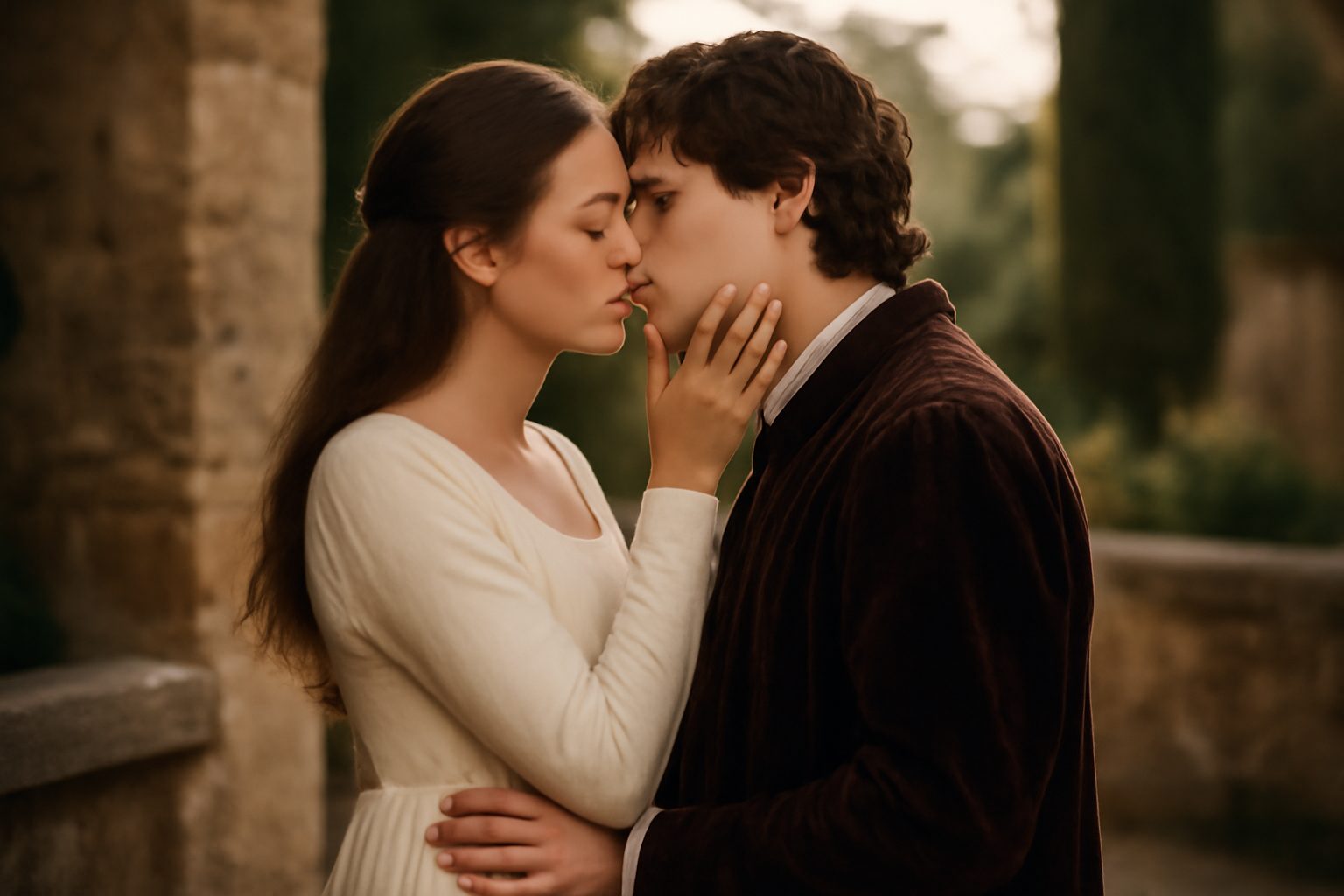
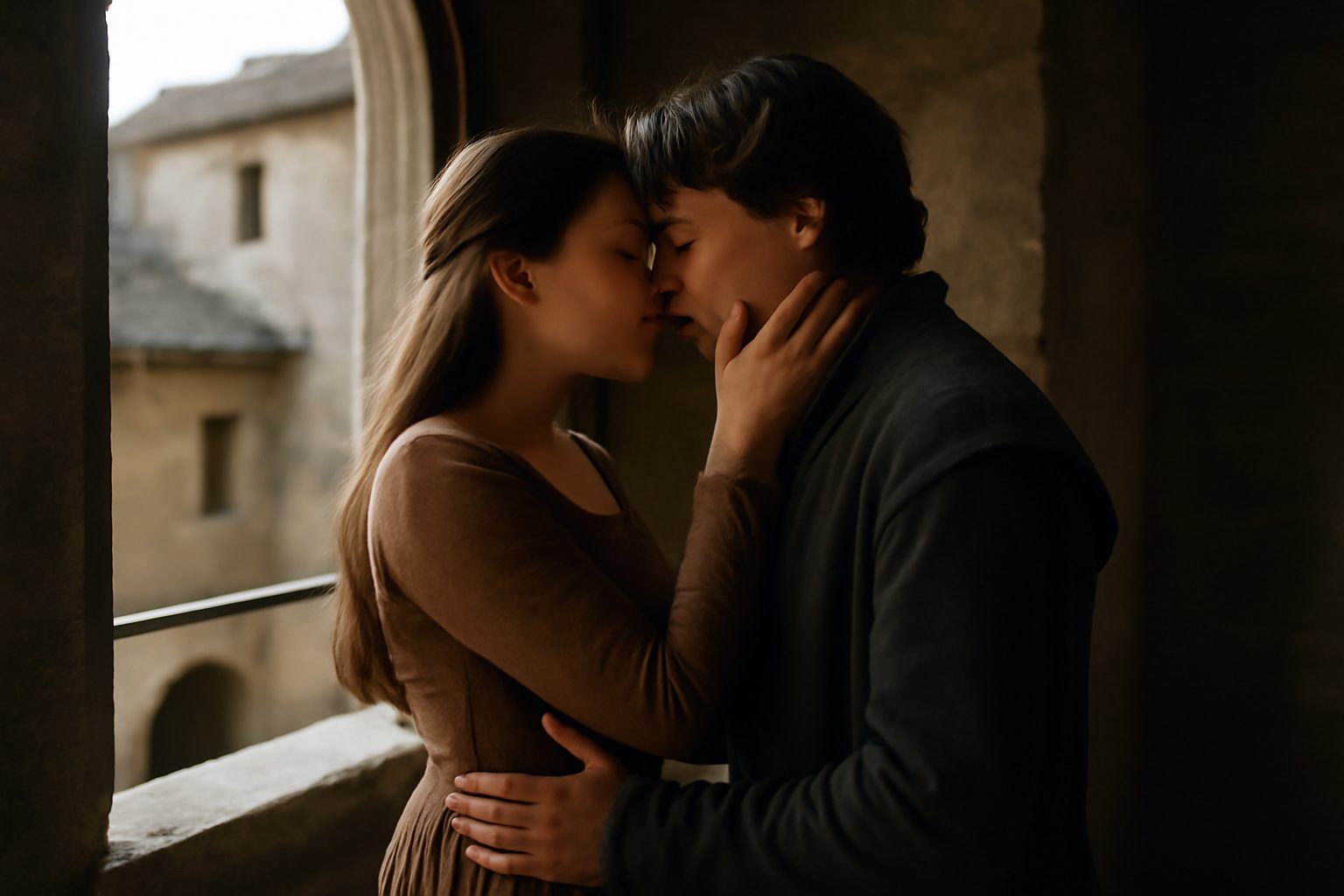
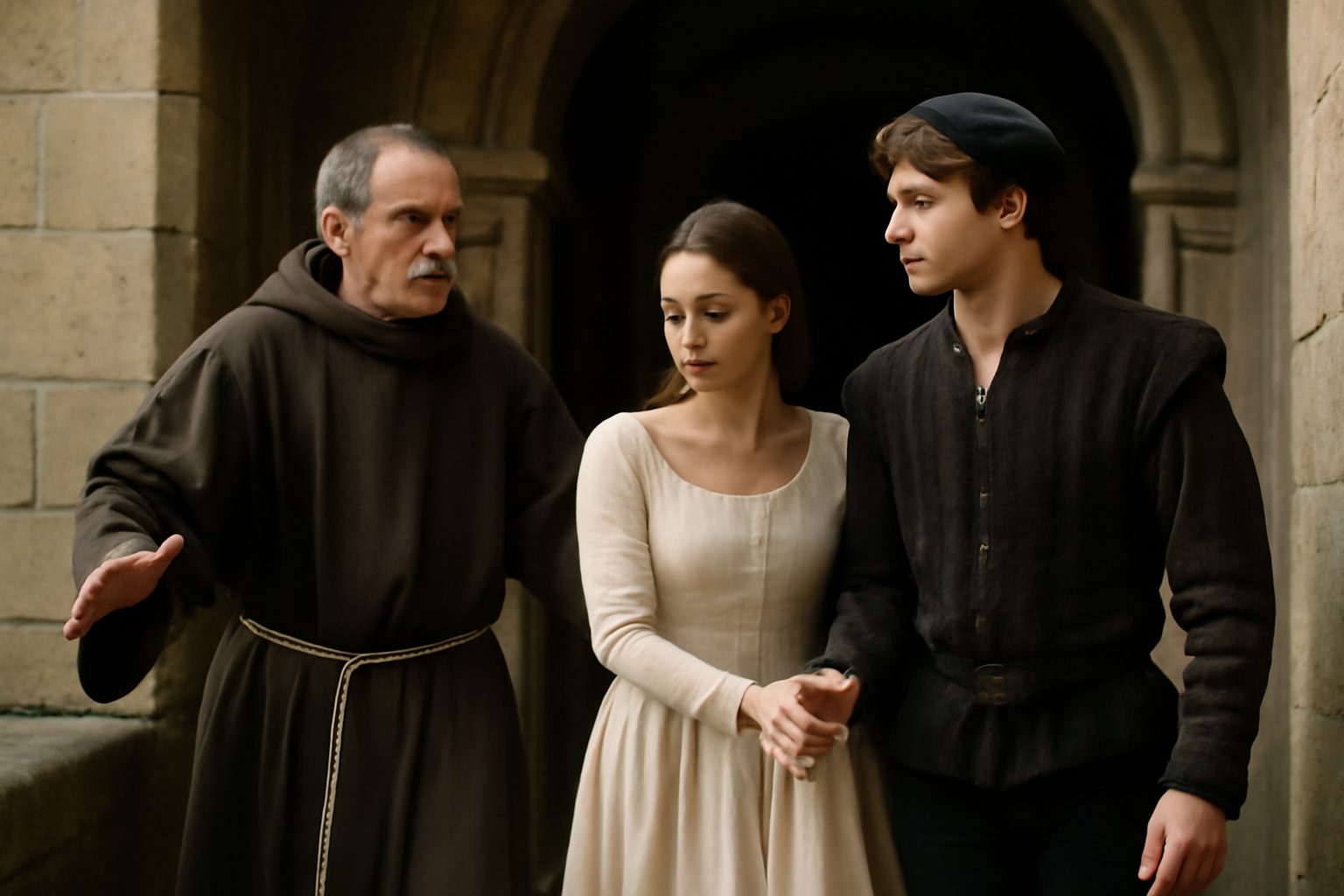
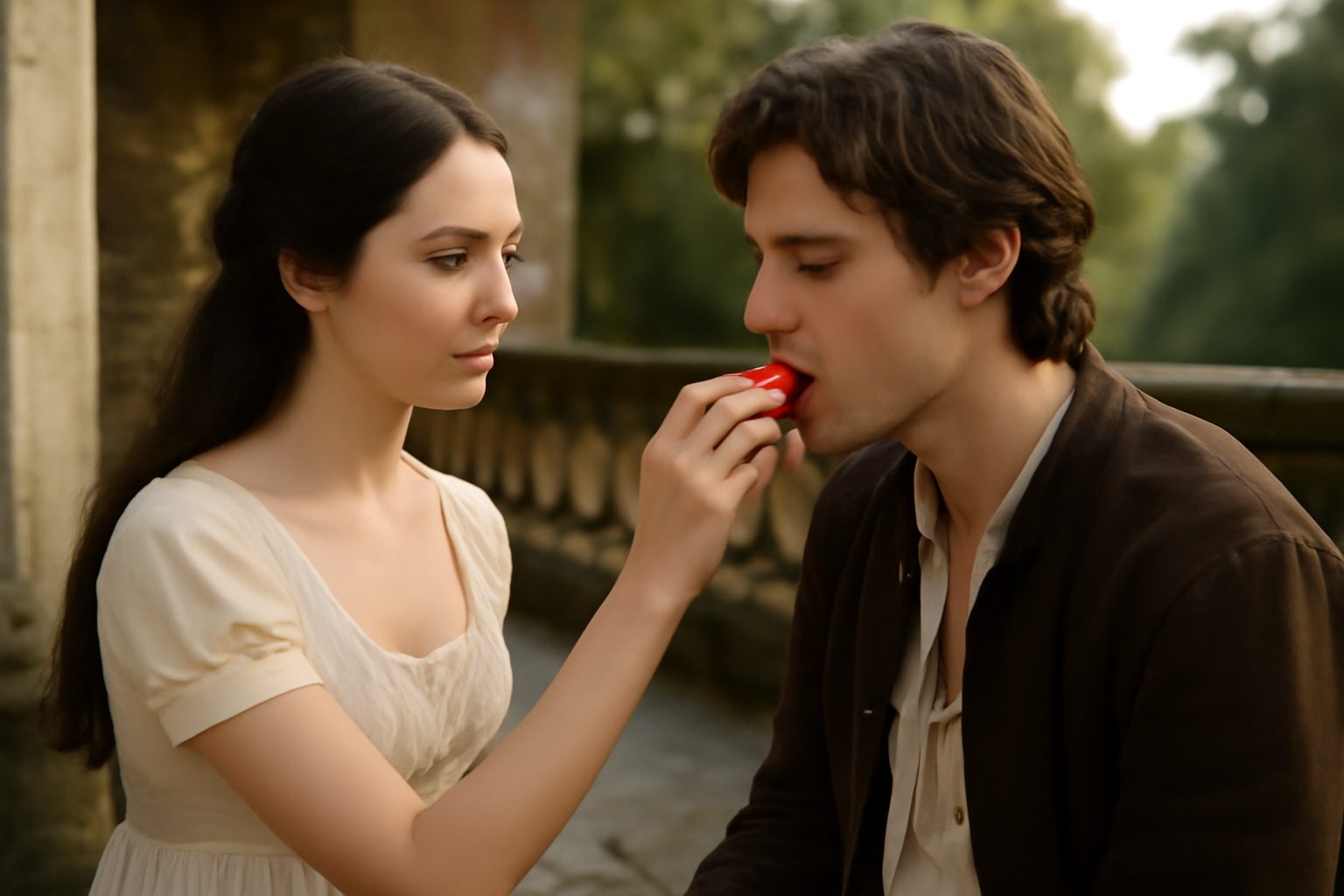
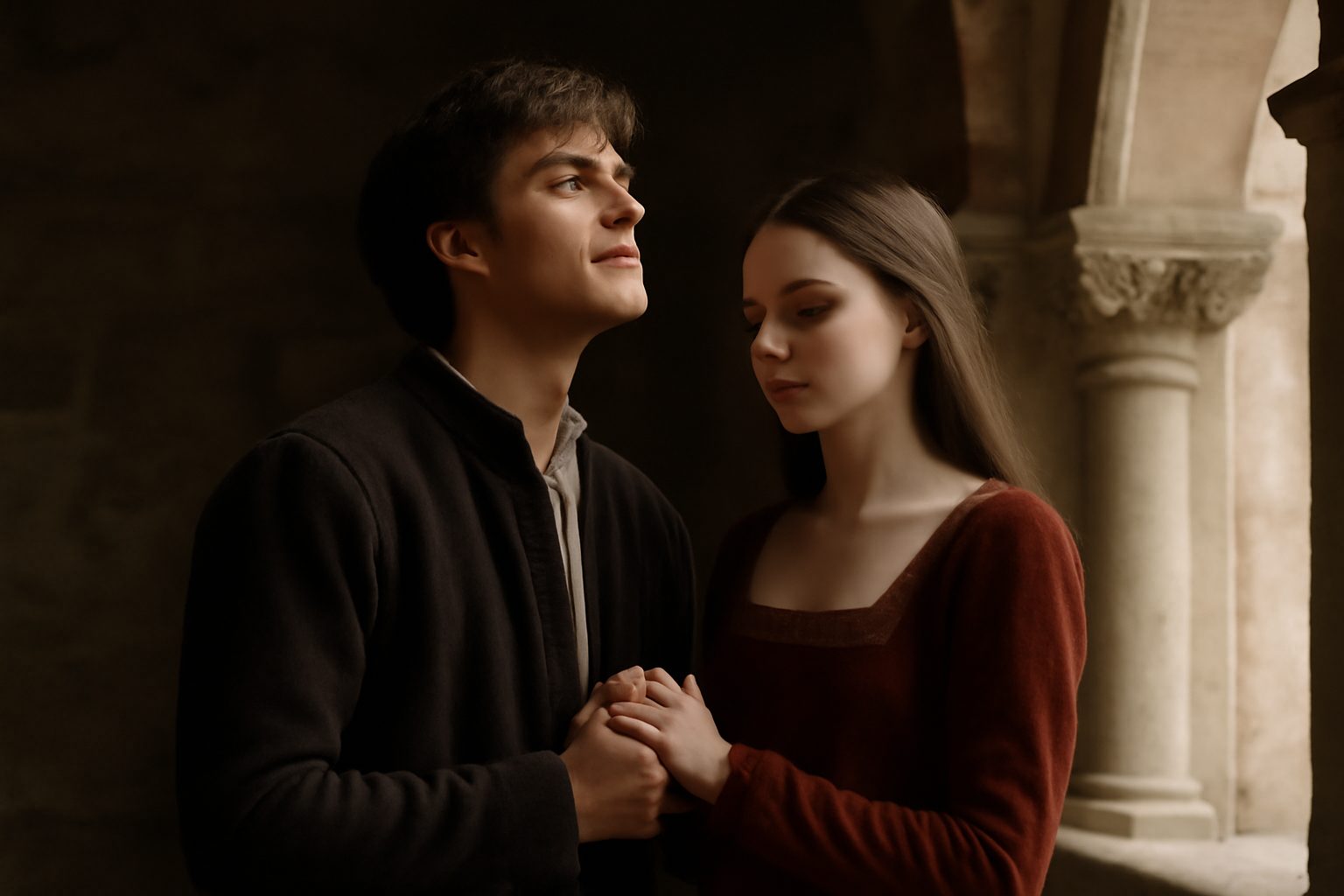
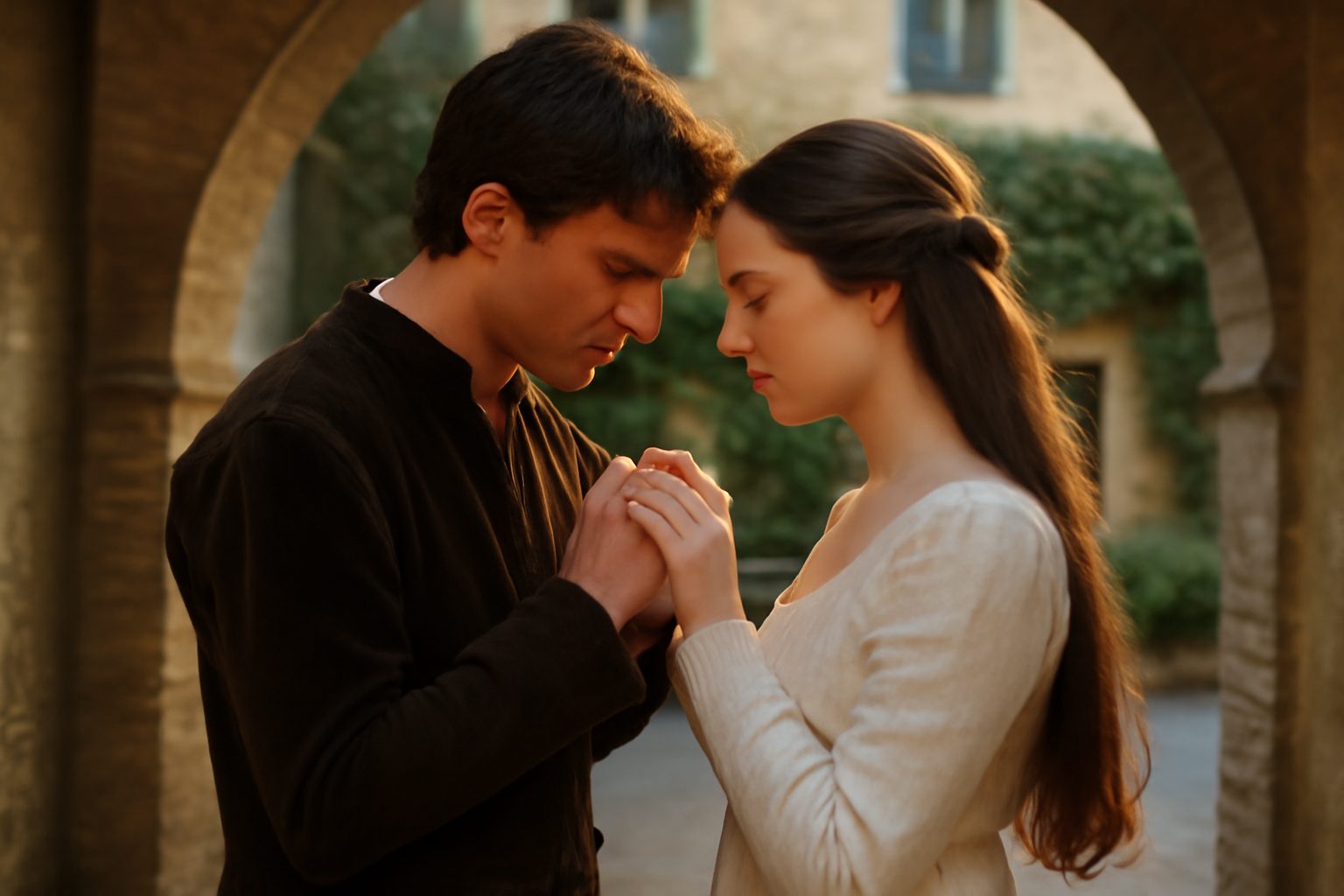
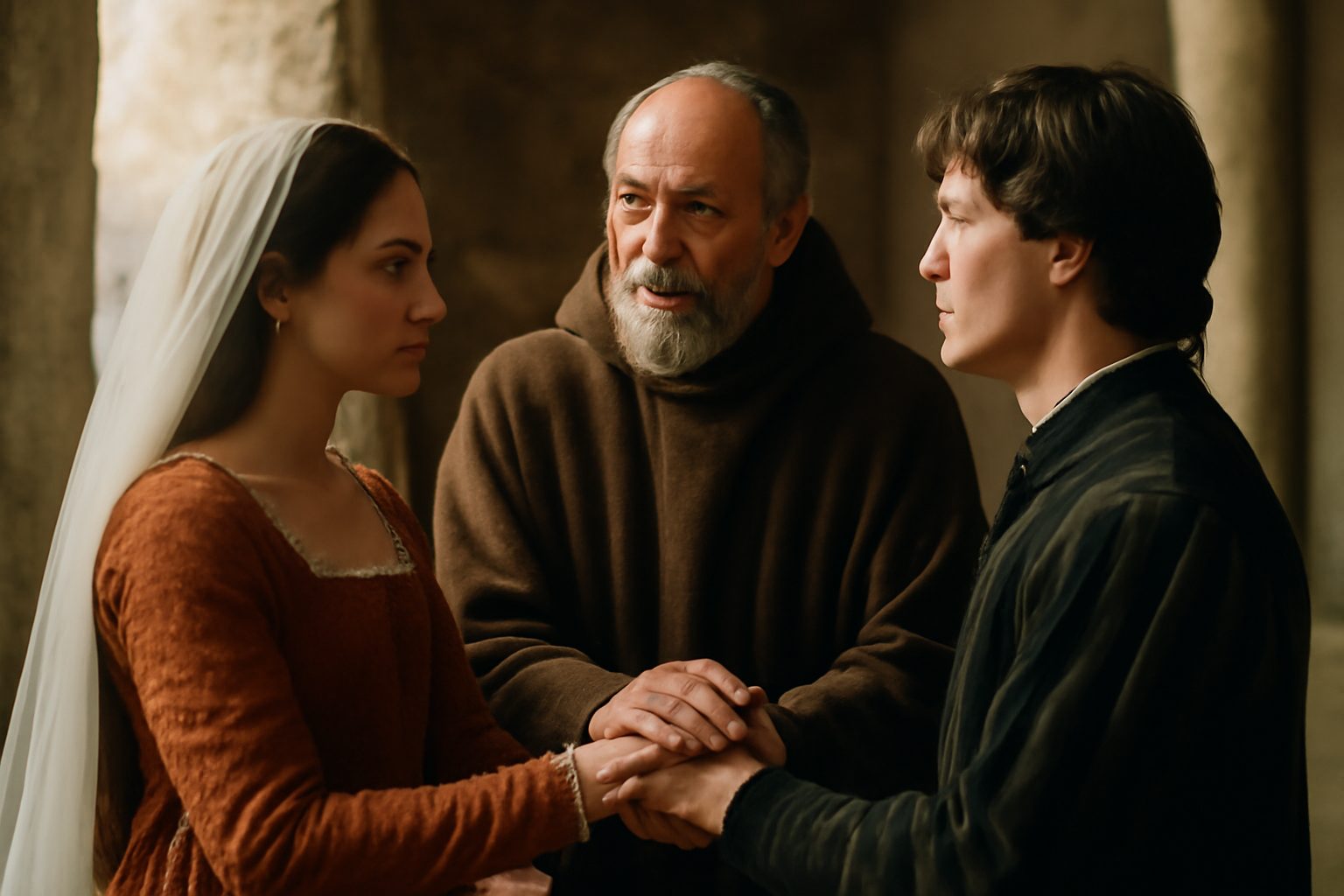
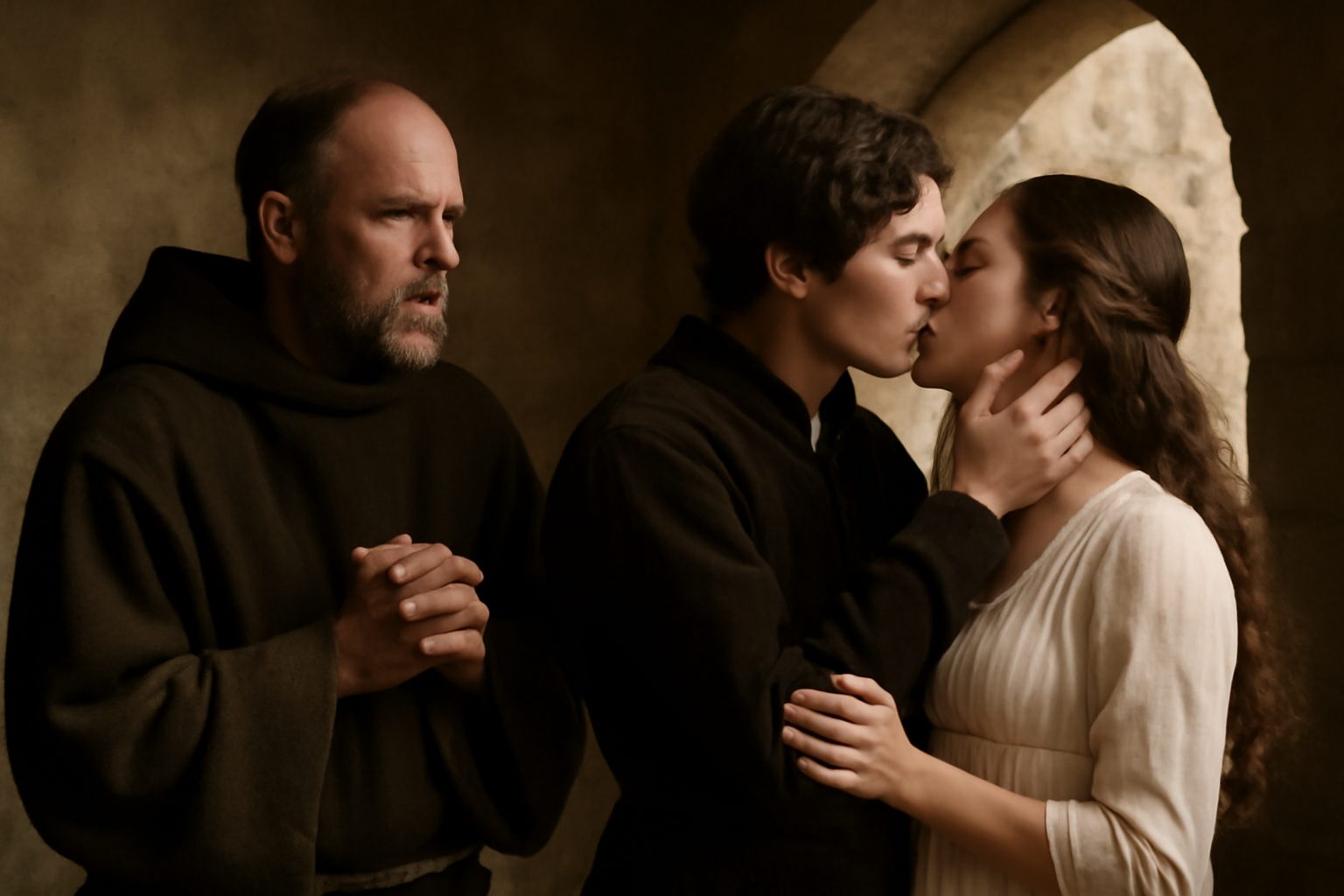
In Act 2, Scene 6 of Romeo and Juliet, Friar Laurence is about to marry the young lovers in secret. As Romeo declares his unwavering love, he dismisses any future sorrow that might come, emphasizing his readiness to face whatever hardships lie ahead. This line captures his impulsive passion and foreshadows the tragic consequences of their rushed union.
Romeo: "Amen, amen! but come what sorrow can,"
In modern day english, we would say:
No matter what pain or trouble comes our way, nothing can ruin the joy I feel now.
Frequently Asked Questions
What does Romeo mean when he says 'Amen, amen! but come what sorrow can'?
Romeo is expressing his determination to marry Juliet no matter what sadness or trouble might come their way.
Connections to other verses:
Connections to "Amen, amen! but come what sorrow can,"
The verse "Amen, amen! but come what sorrow can," expresses Romeo's fearless embrace of love despite potential sorrow. This sentiment is echoed in "Then love-devouring death do what he dare;", where Romeo similarly defies death for love's sake.
Contrast with Friar Laurence's Warnings
In contrast, Friar Laurence's lines, such as "These violent delights have violent ends" and "Therefore love moderately; long love doth so;", caution against the intensity of Romeo's passion, highlighting the tension between reckless devotion and prudent moderation.
Supporting Imagery of Lightness and Excess
Romeo's declaration is supported by imagery of lightness and excess elsewhere in the scene. For instance, "A lover may bestride the gossamer" and "And yet not fall; so light is vanity." emphasize love's transcendent quality, while "But my true love is grown to such excess" mirrors his overwhelming emotions.
Connection to Joy and Union
The verse also ties to expressions of joy and union, such as "It cannot countervail the exchange of joy" and "Till holy church incorporate two in one.", reinforcing the idea that love's rewards outweigh any sorrow.