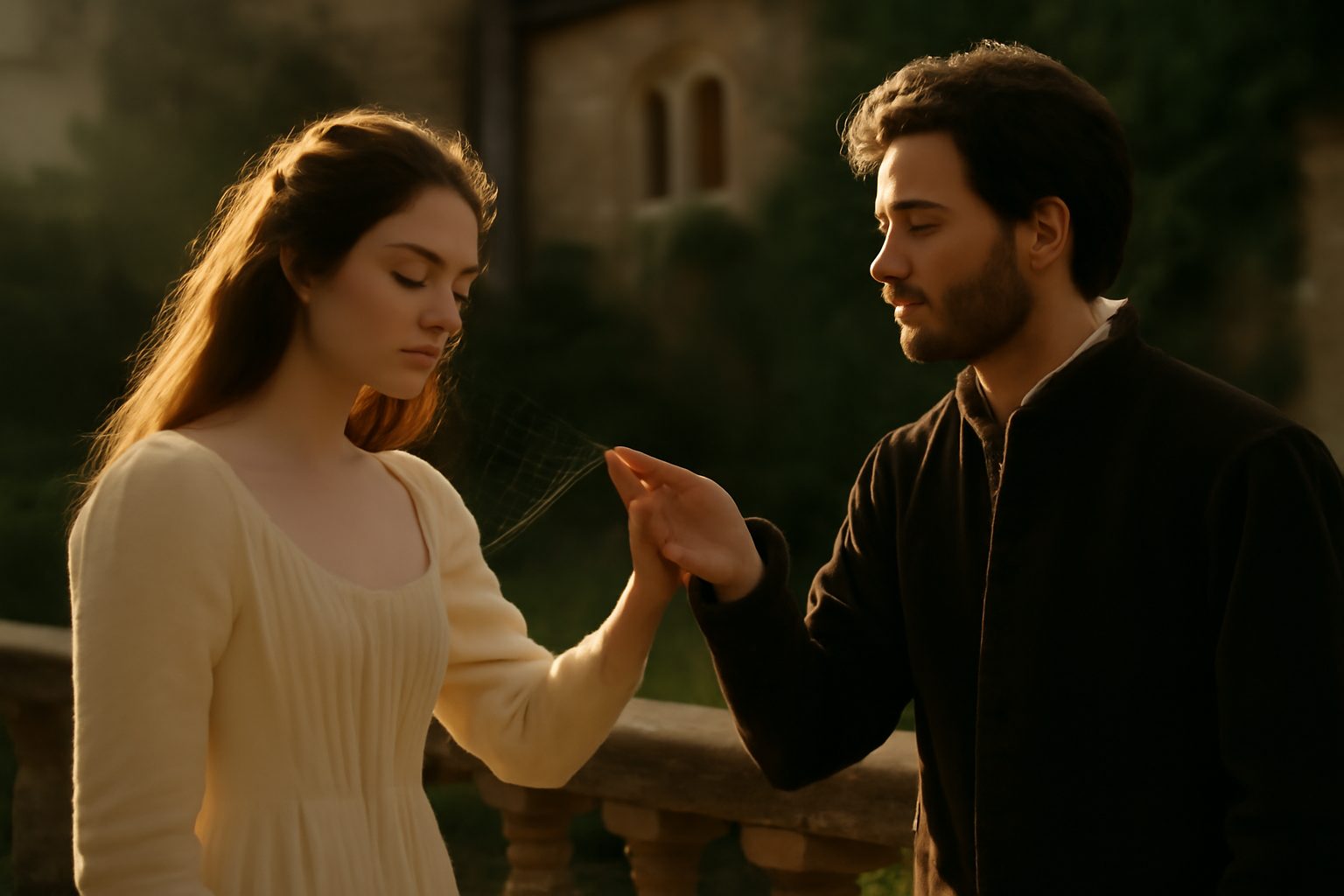
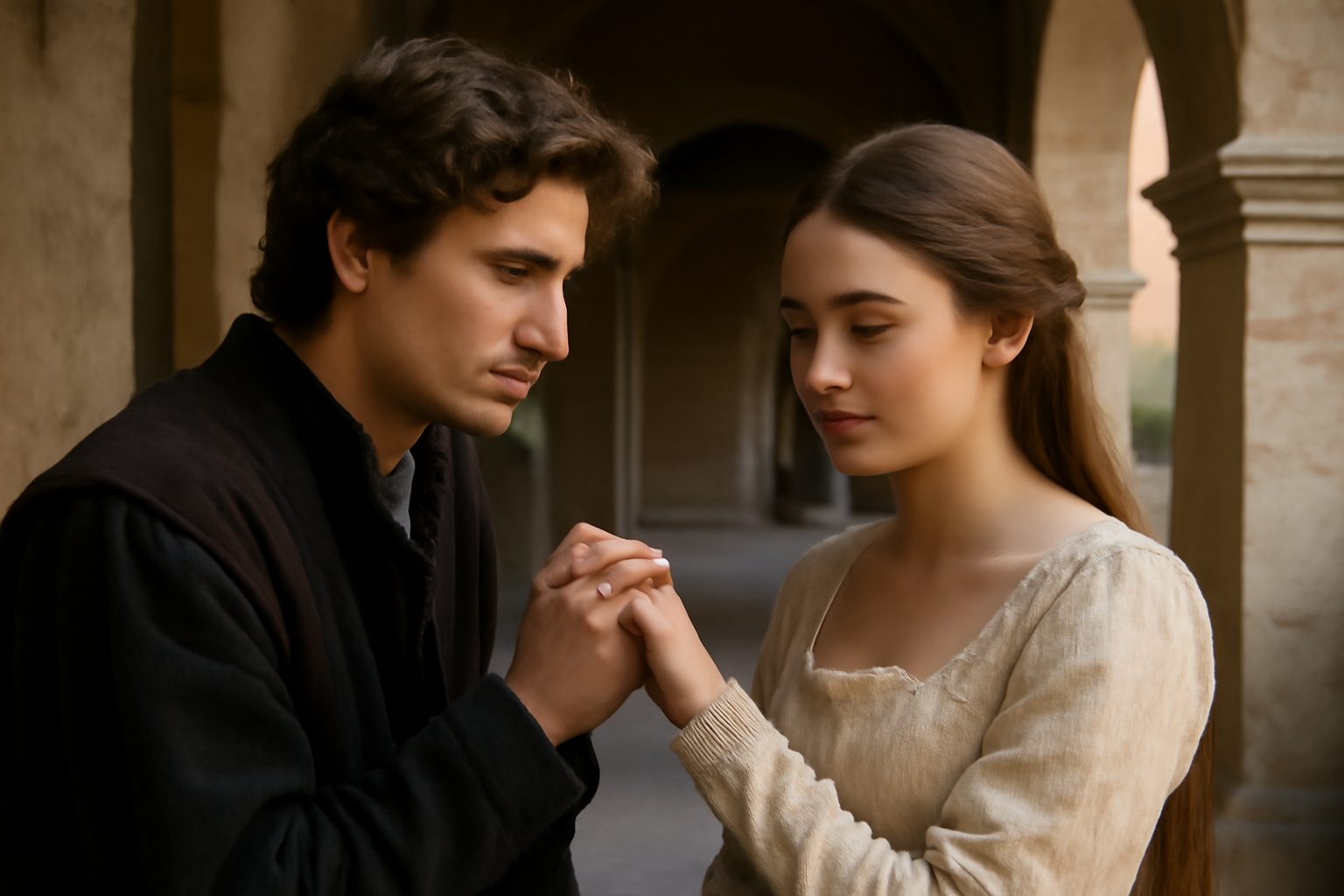
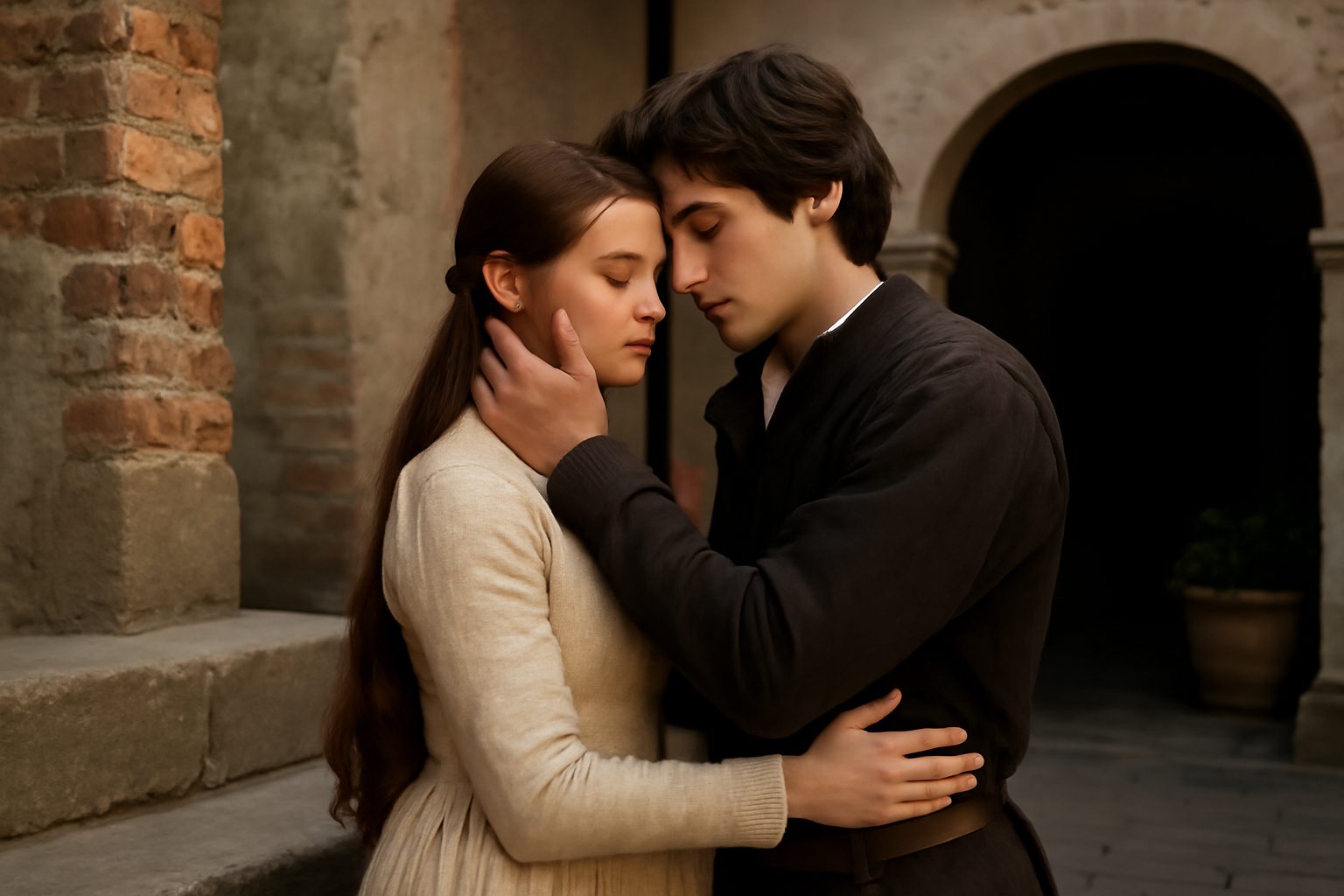
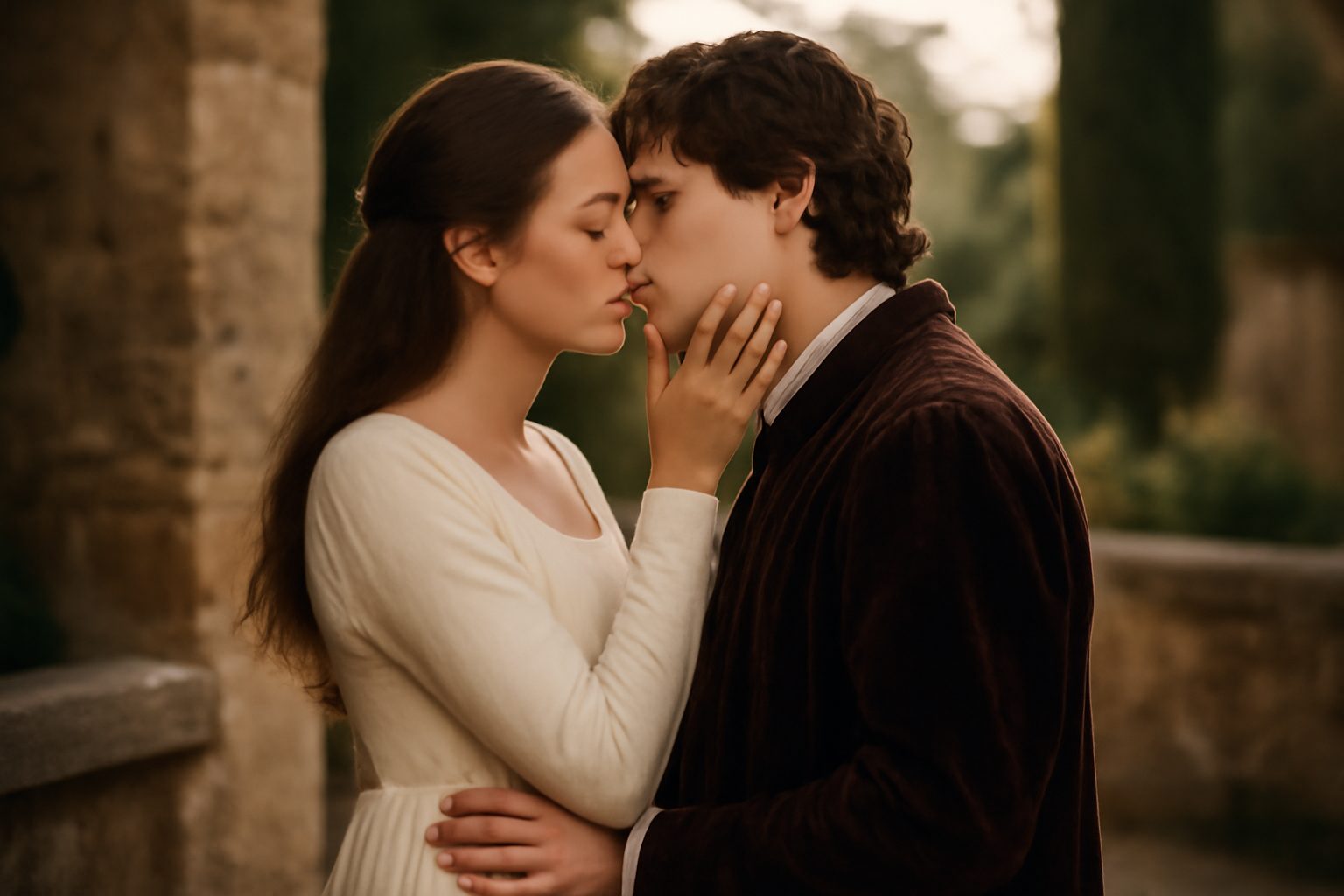
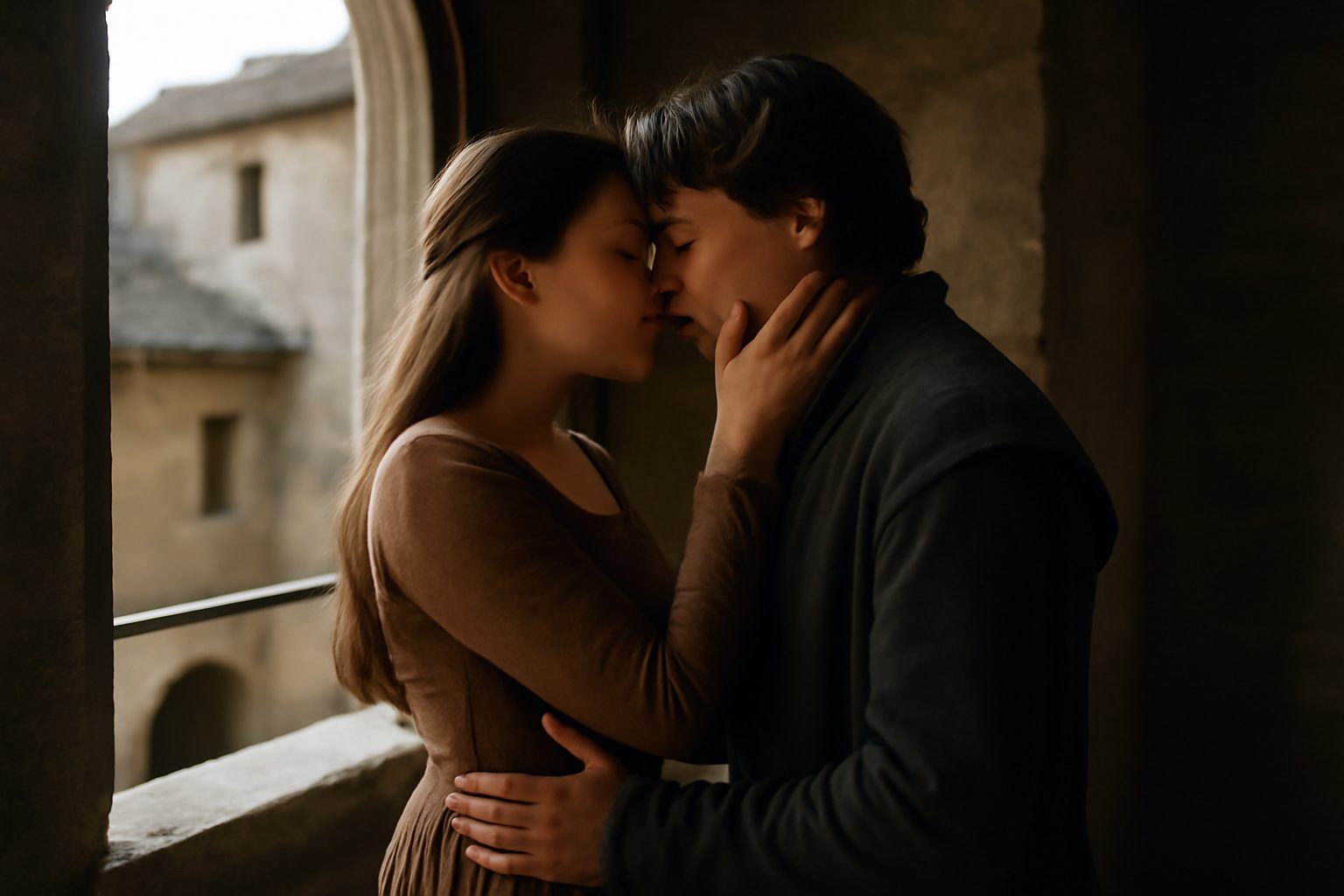
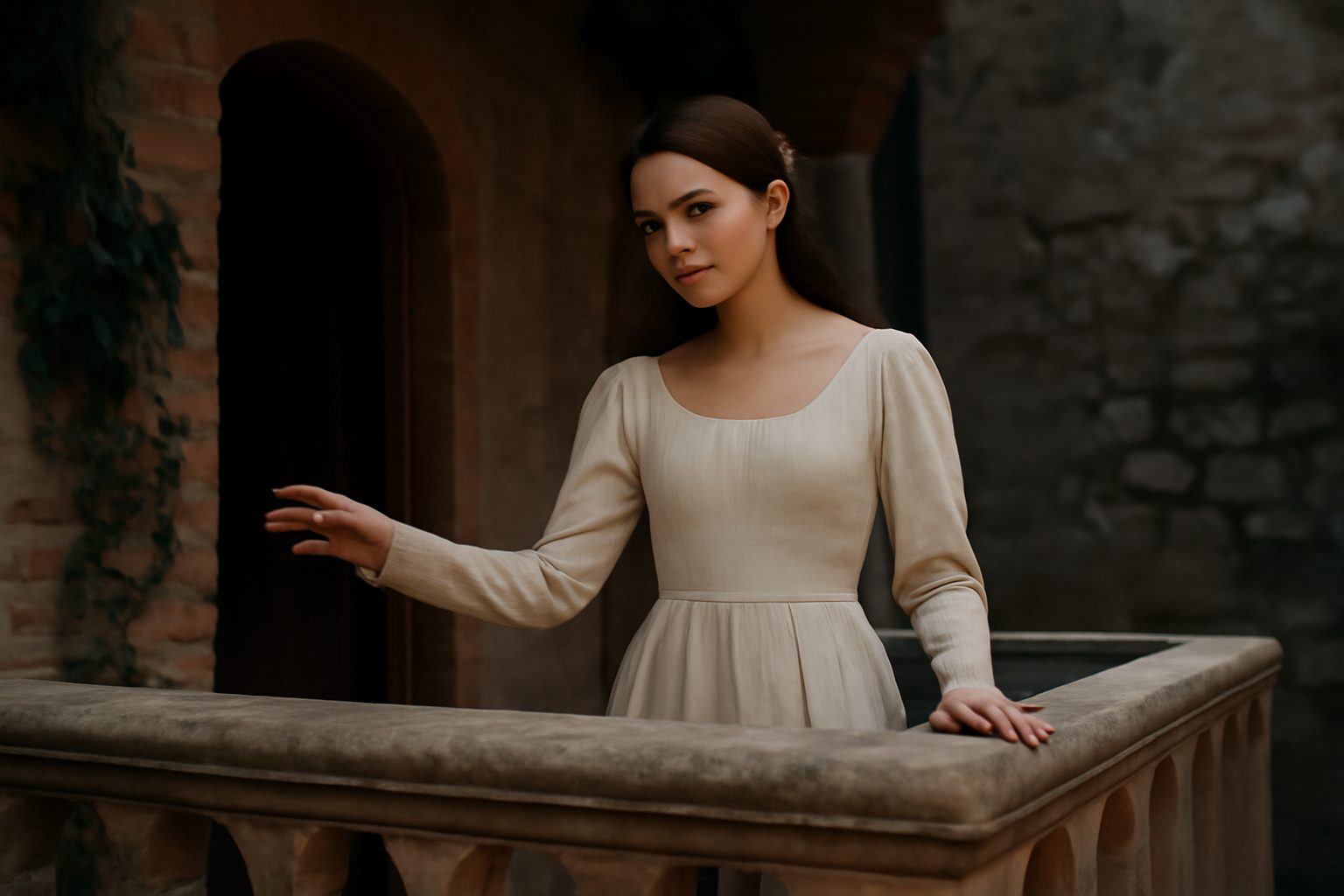
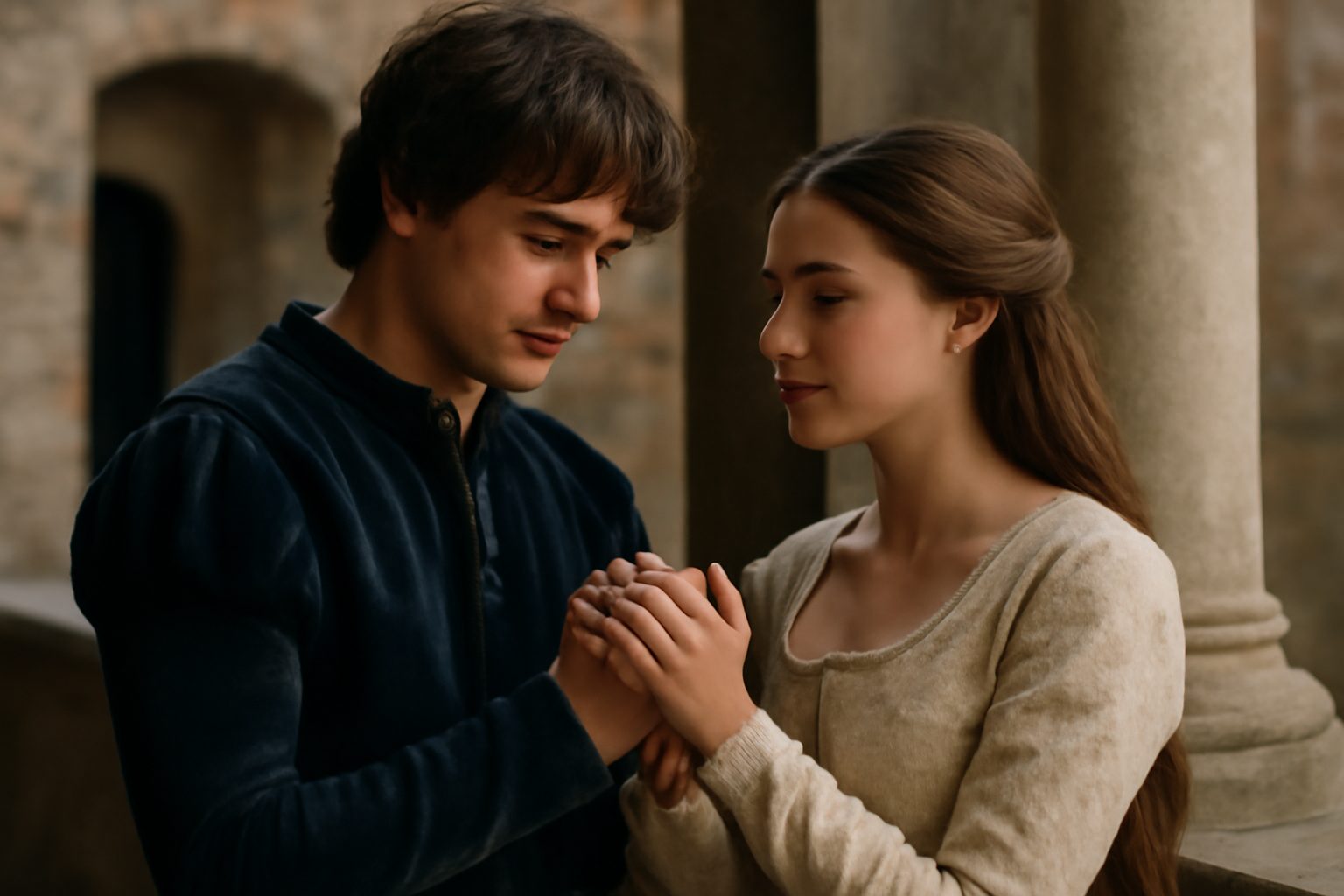
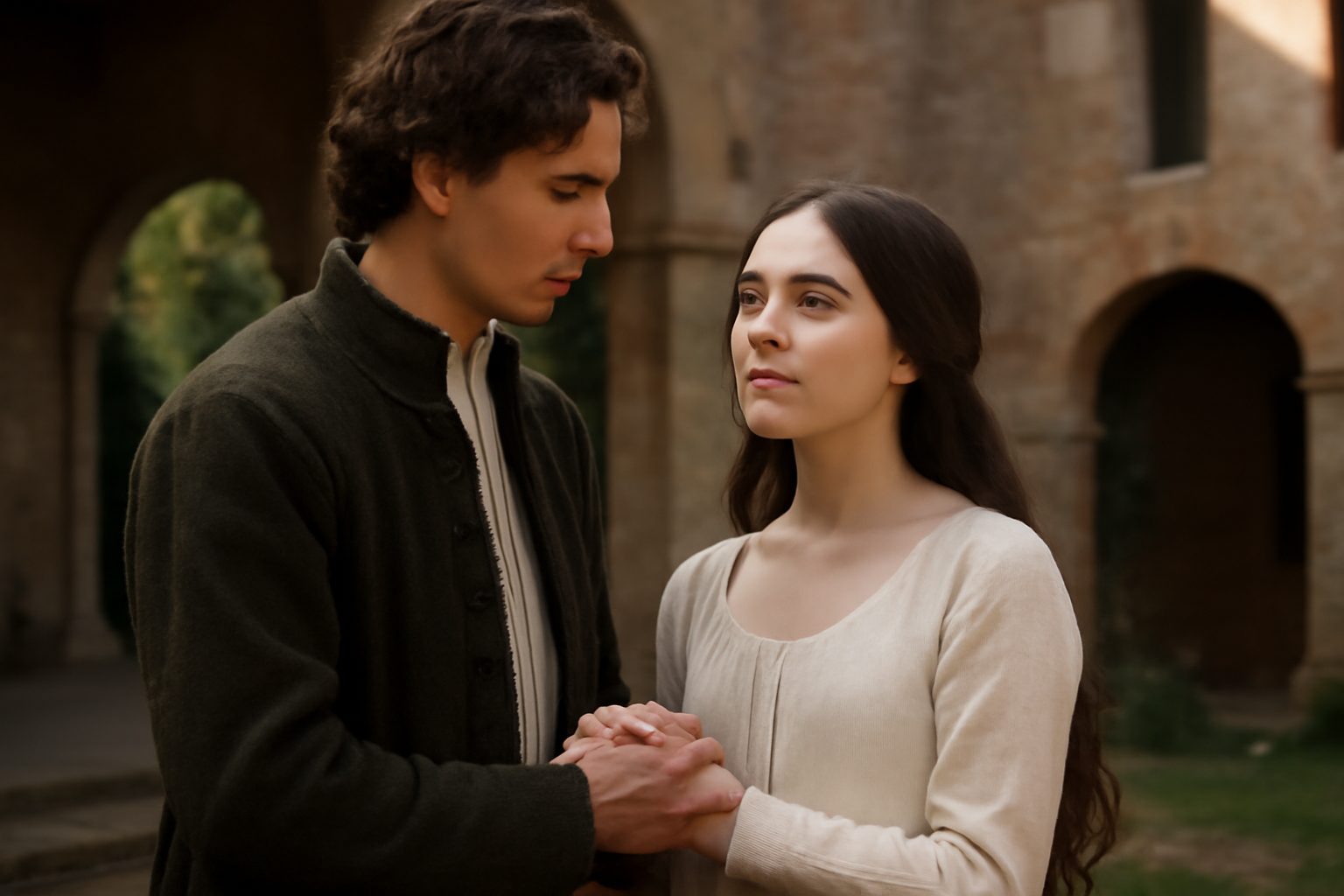
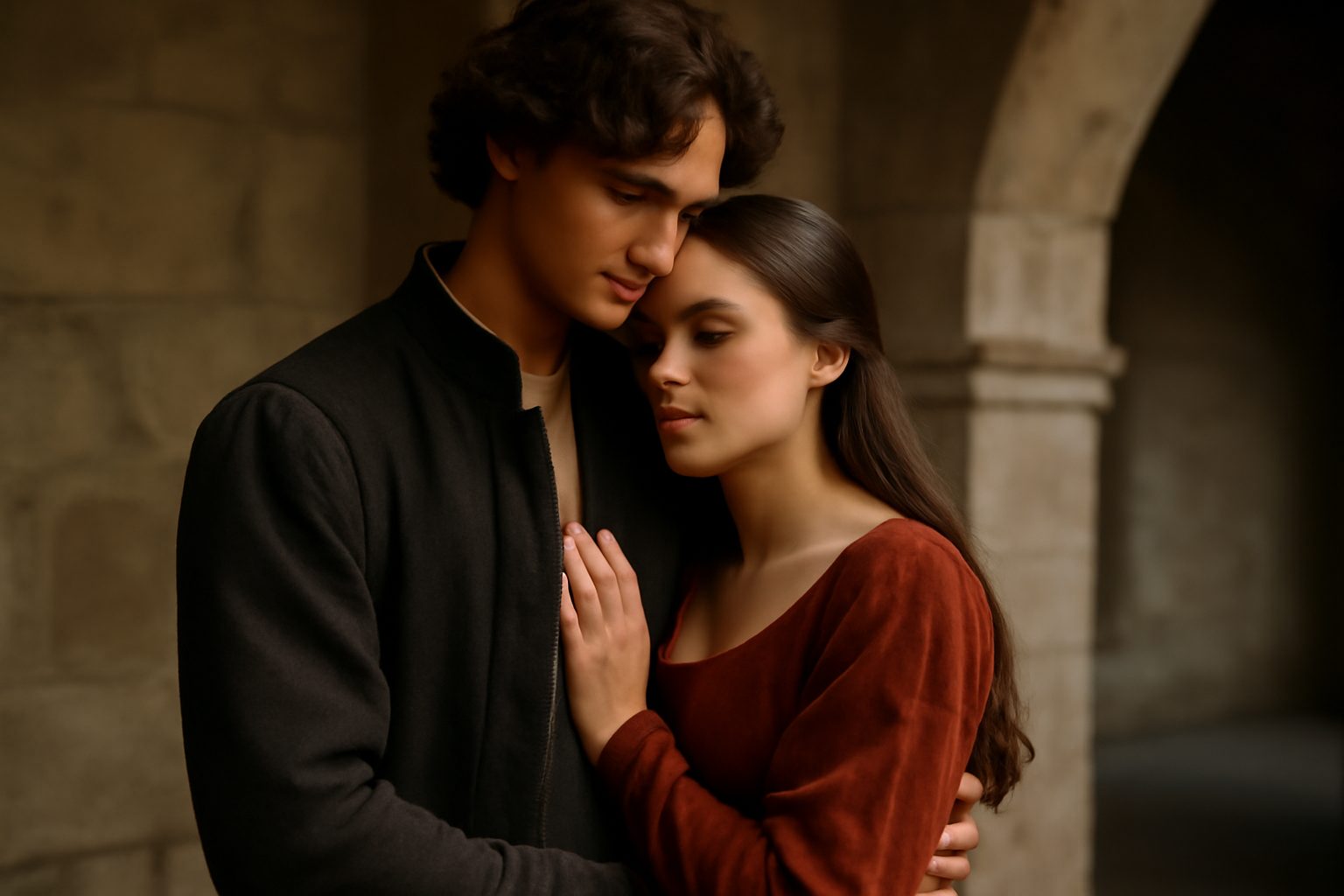
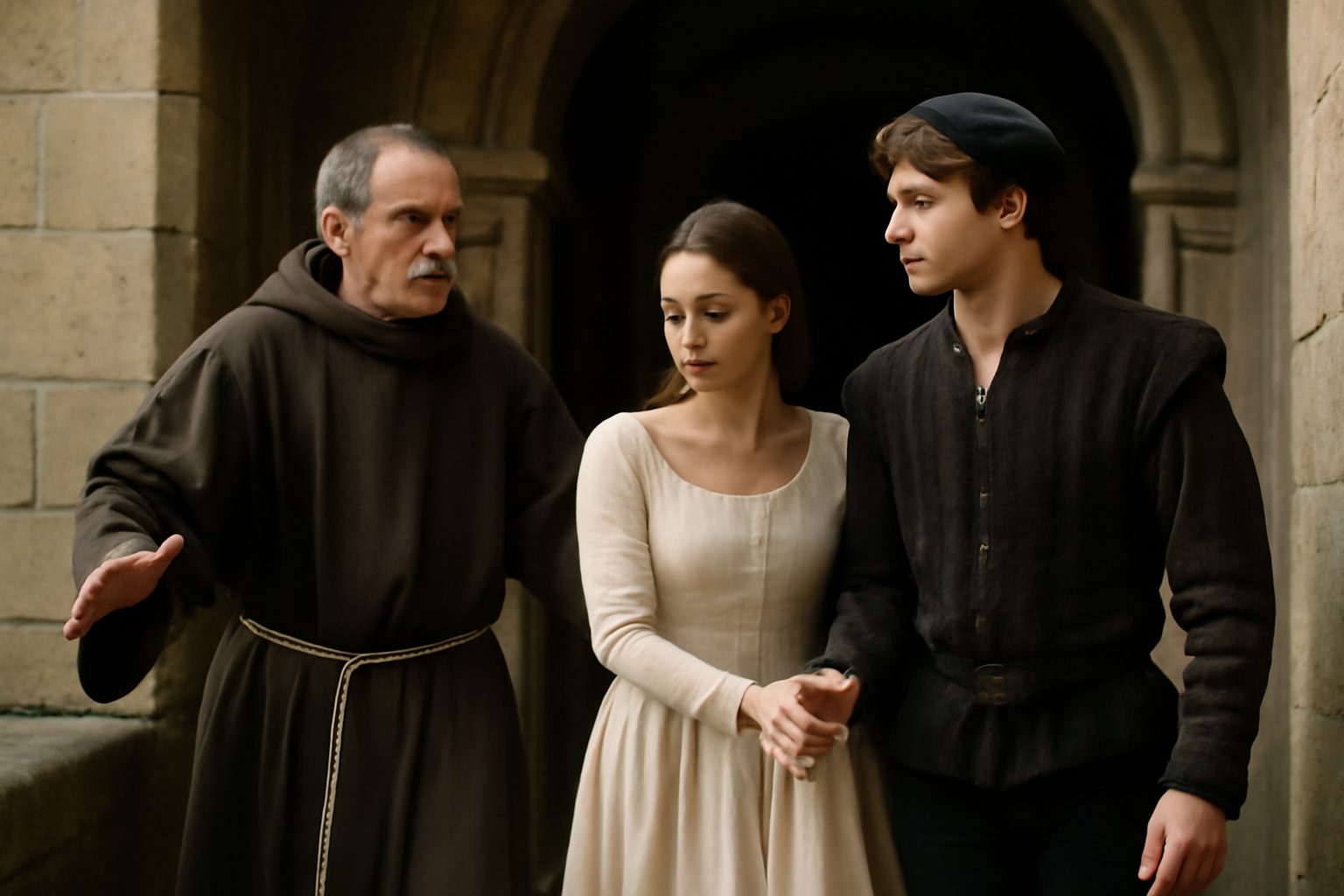
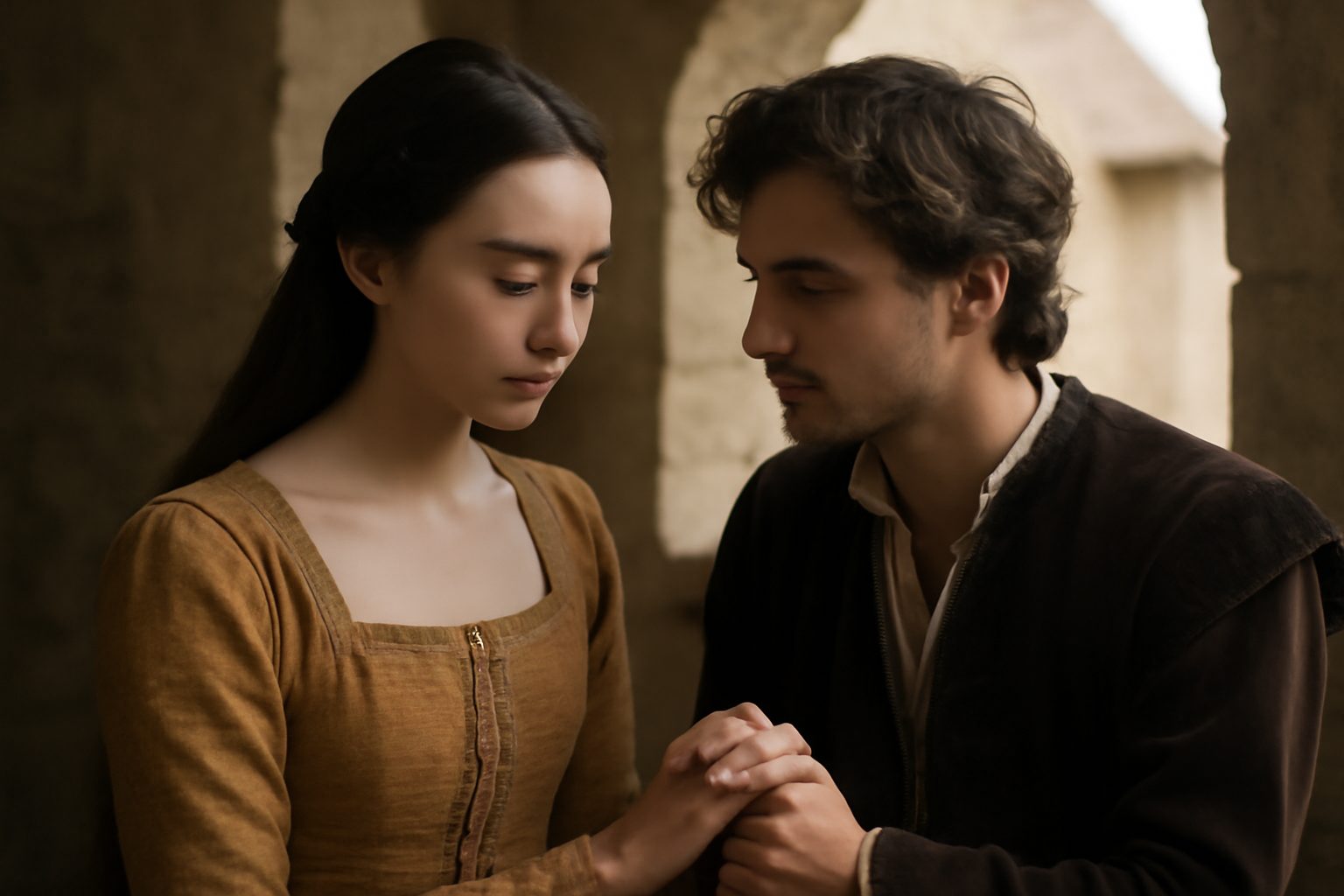
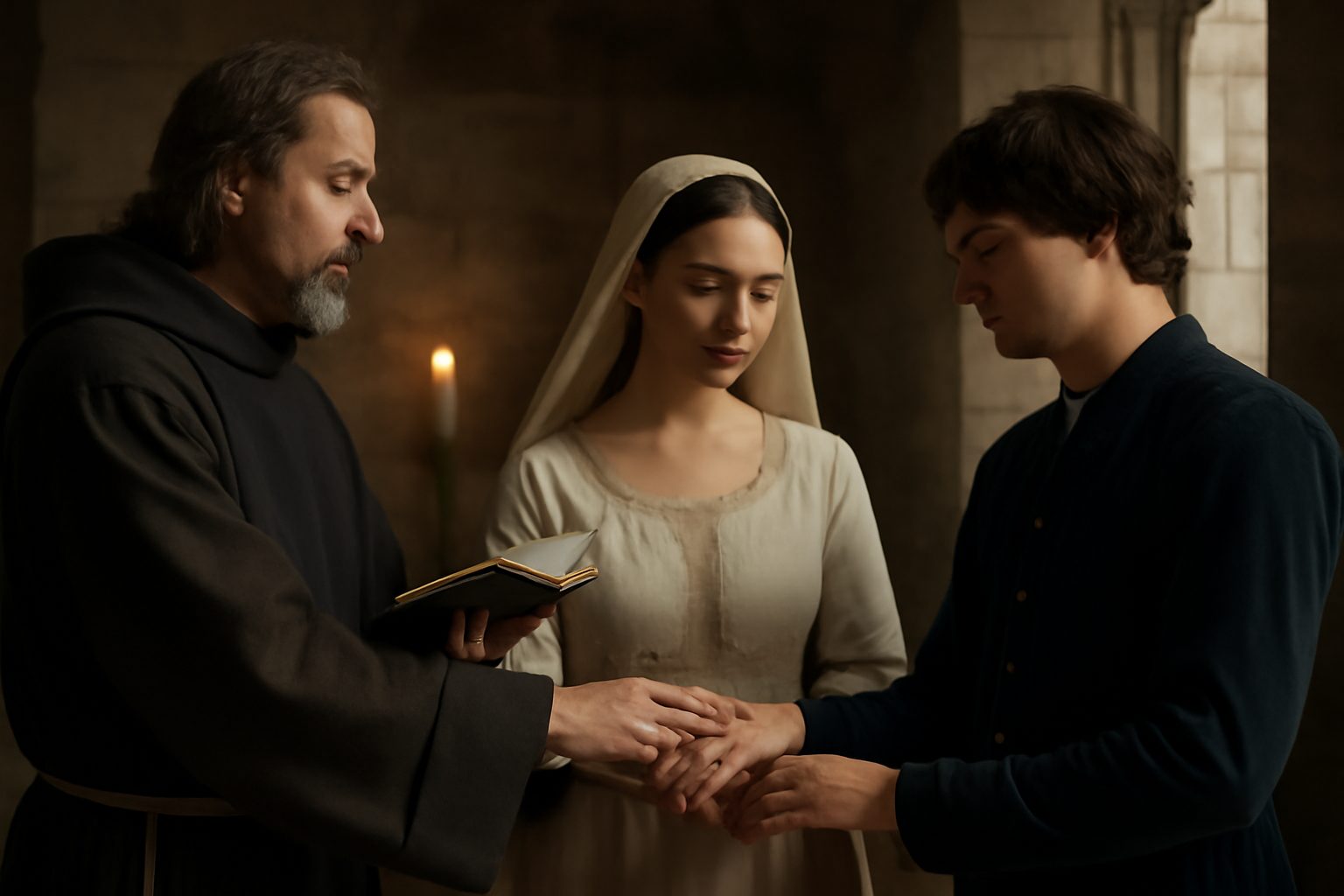
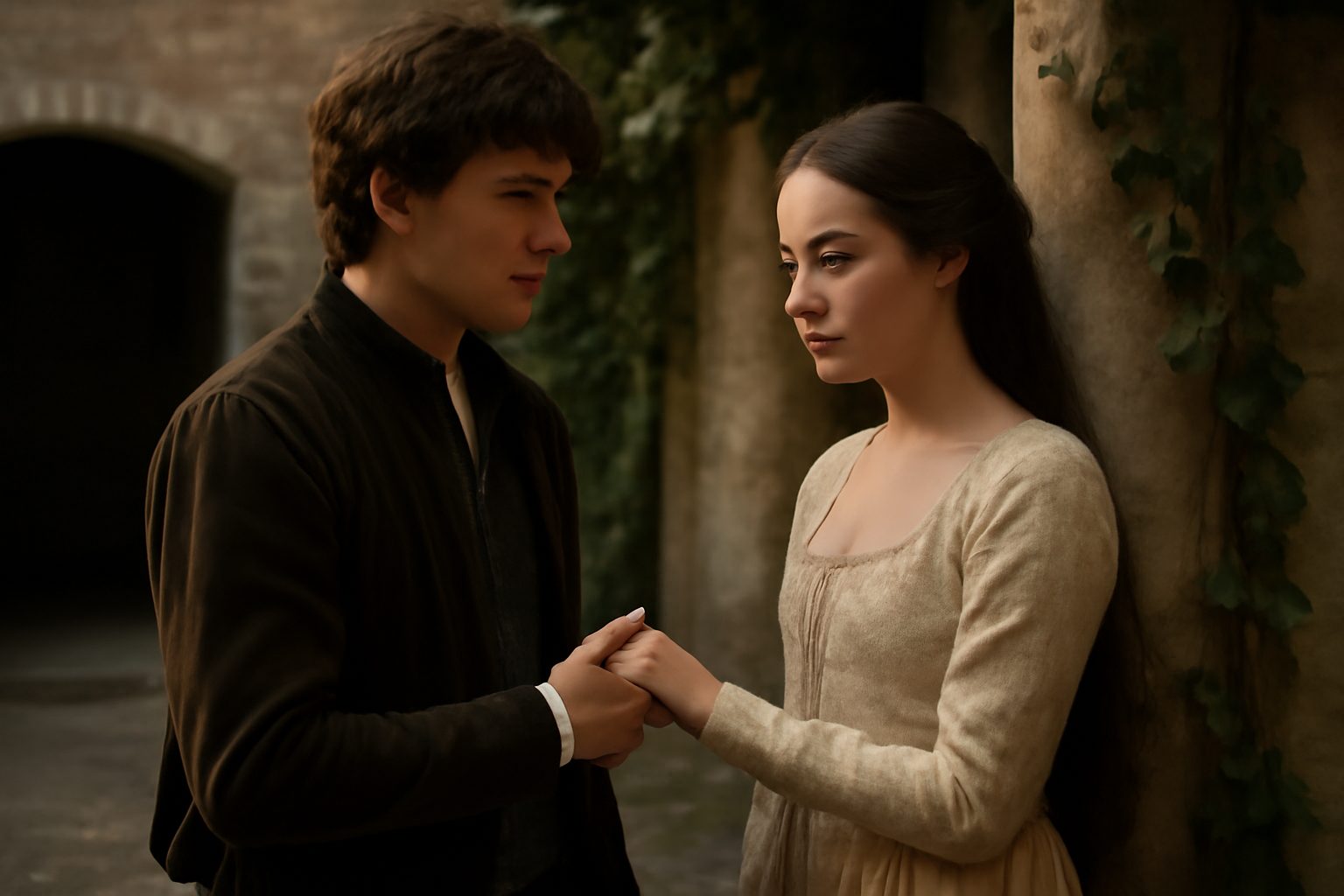
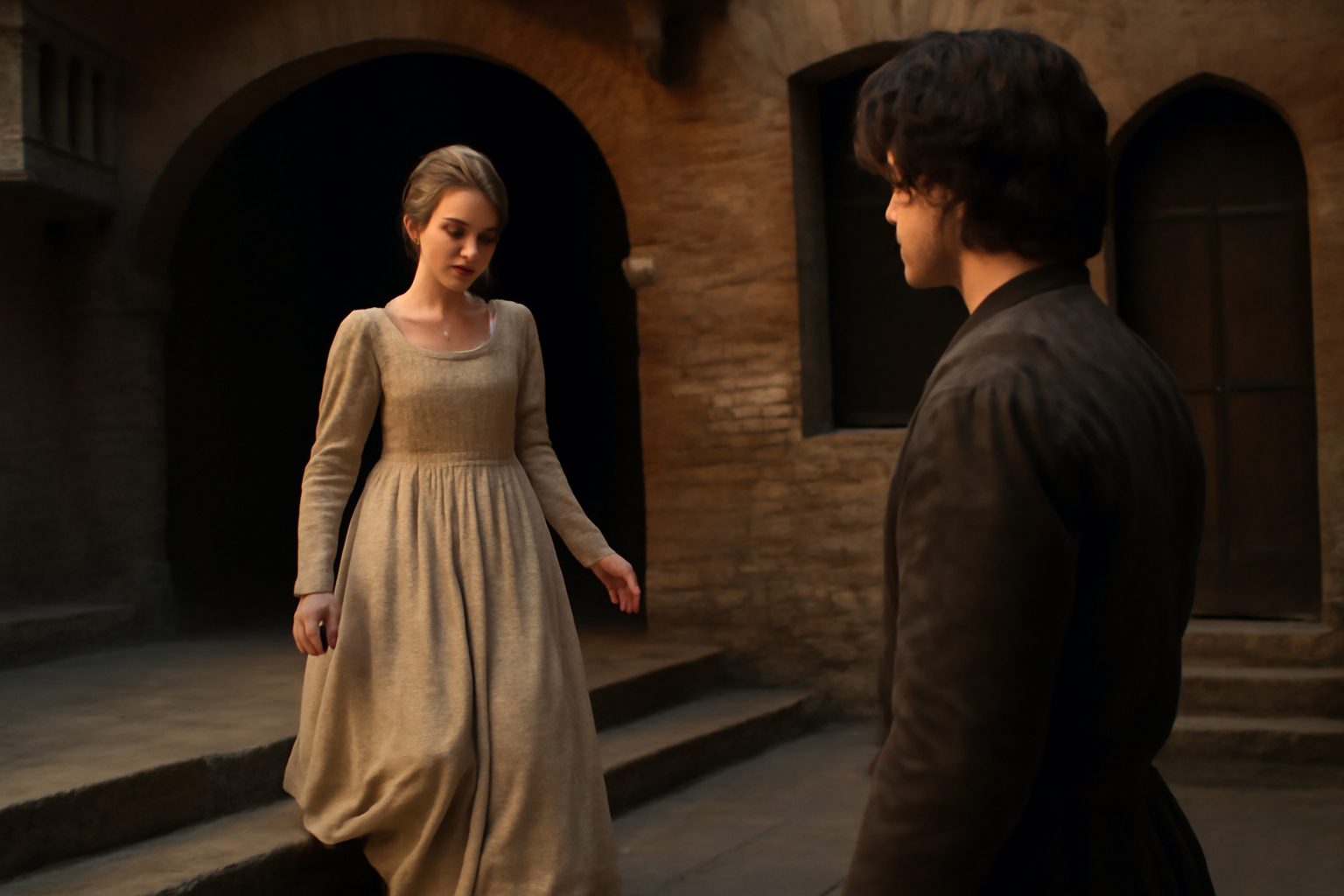
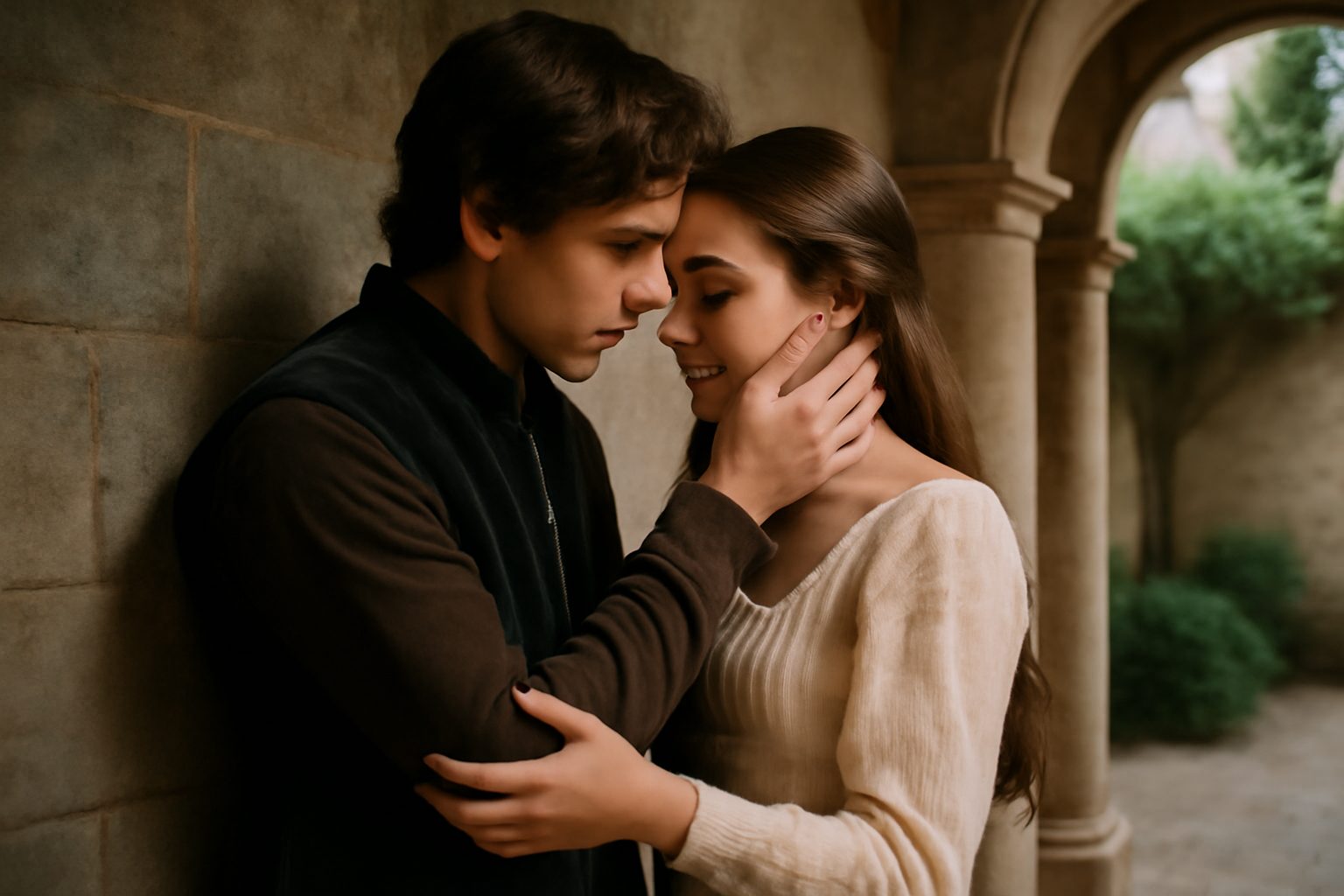
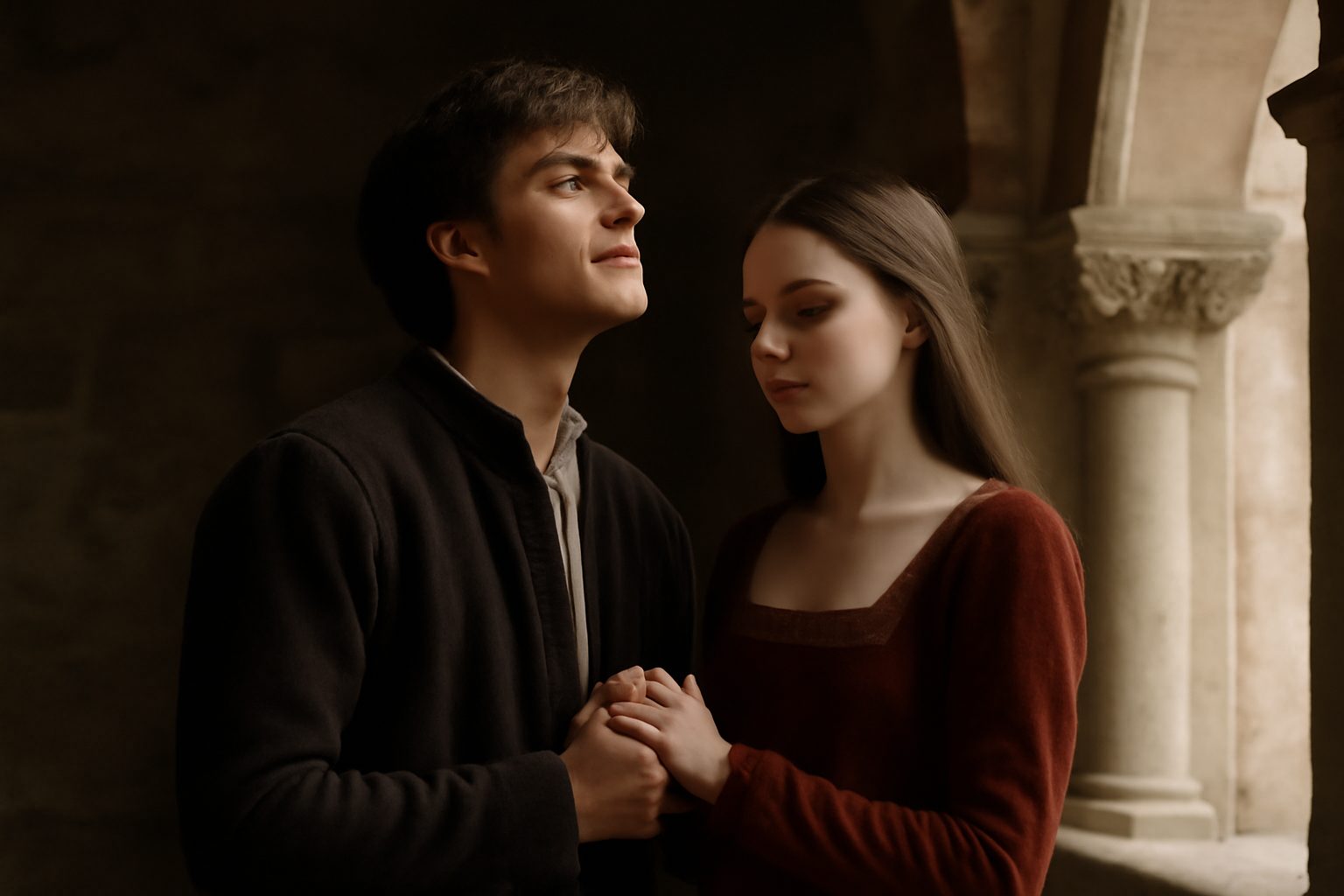
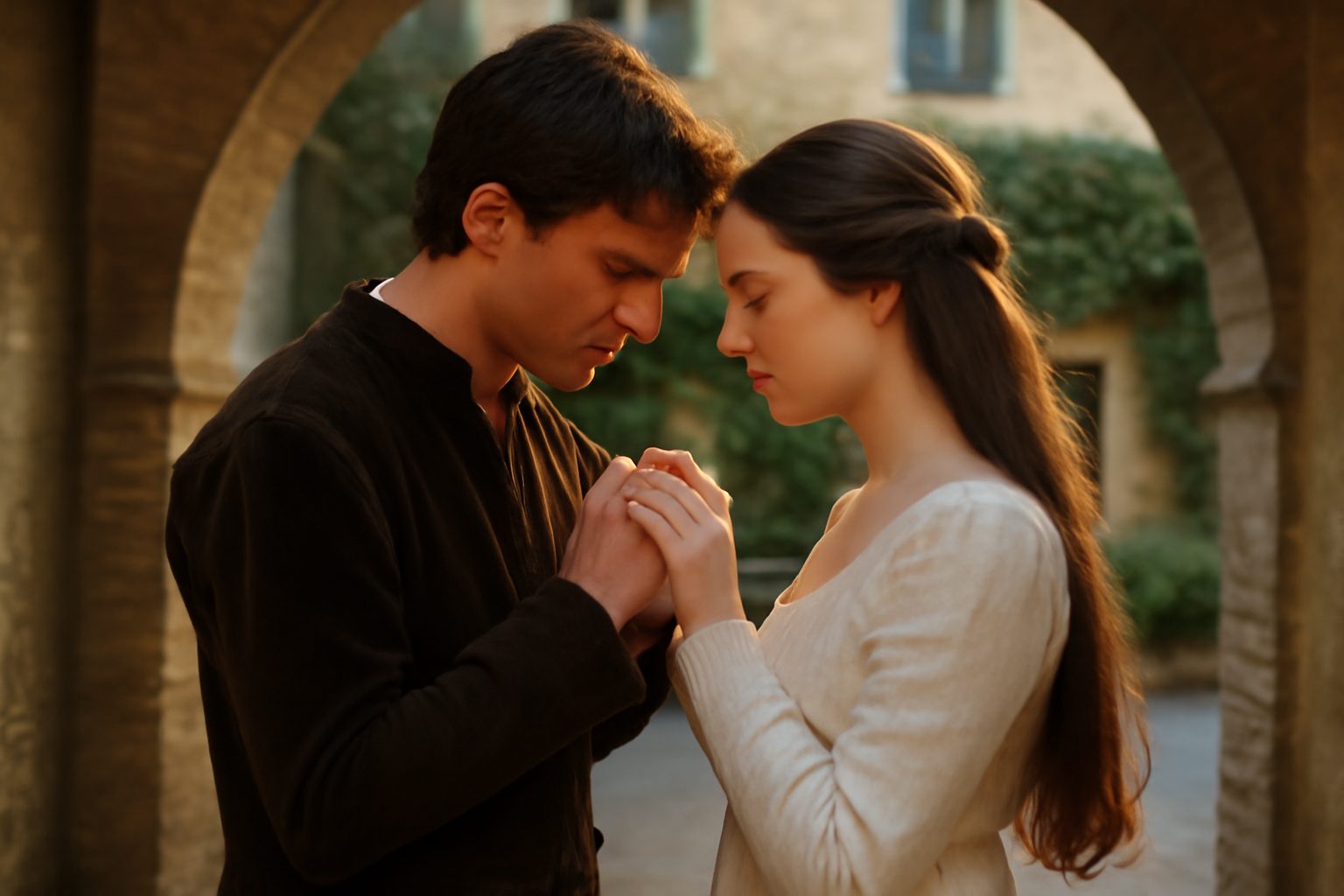
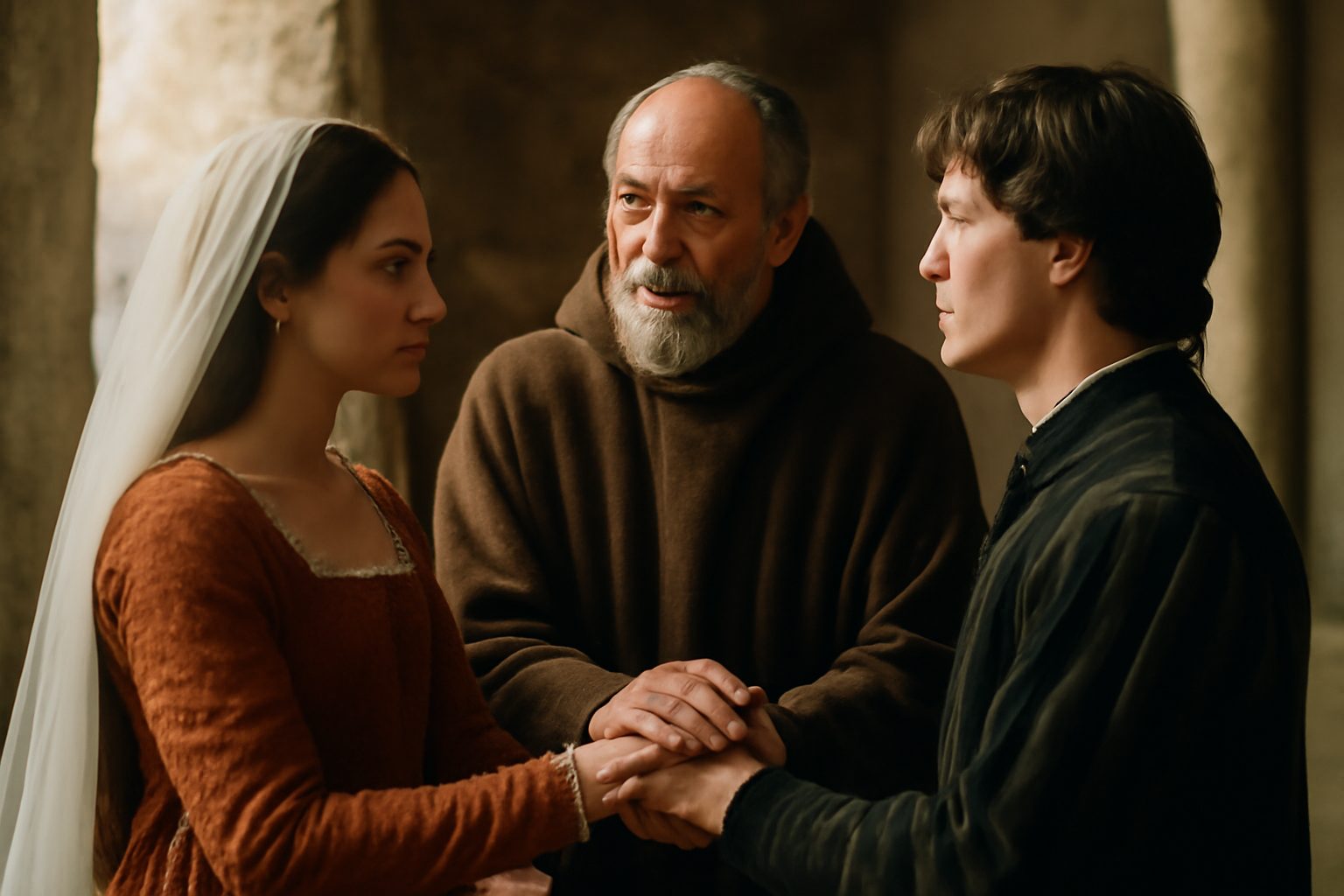
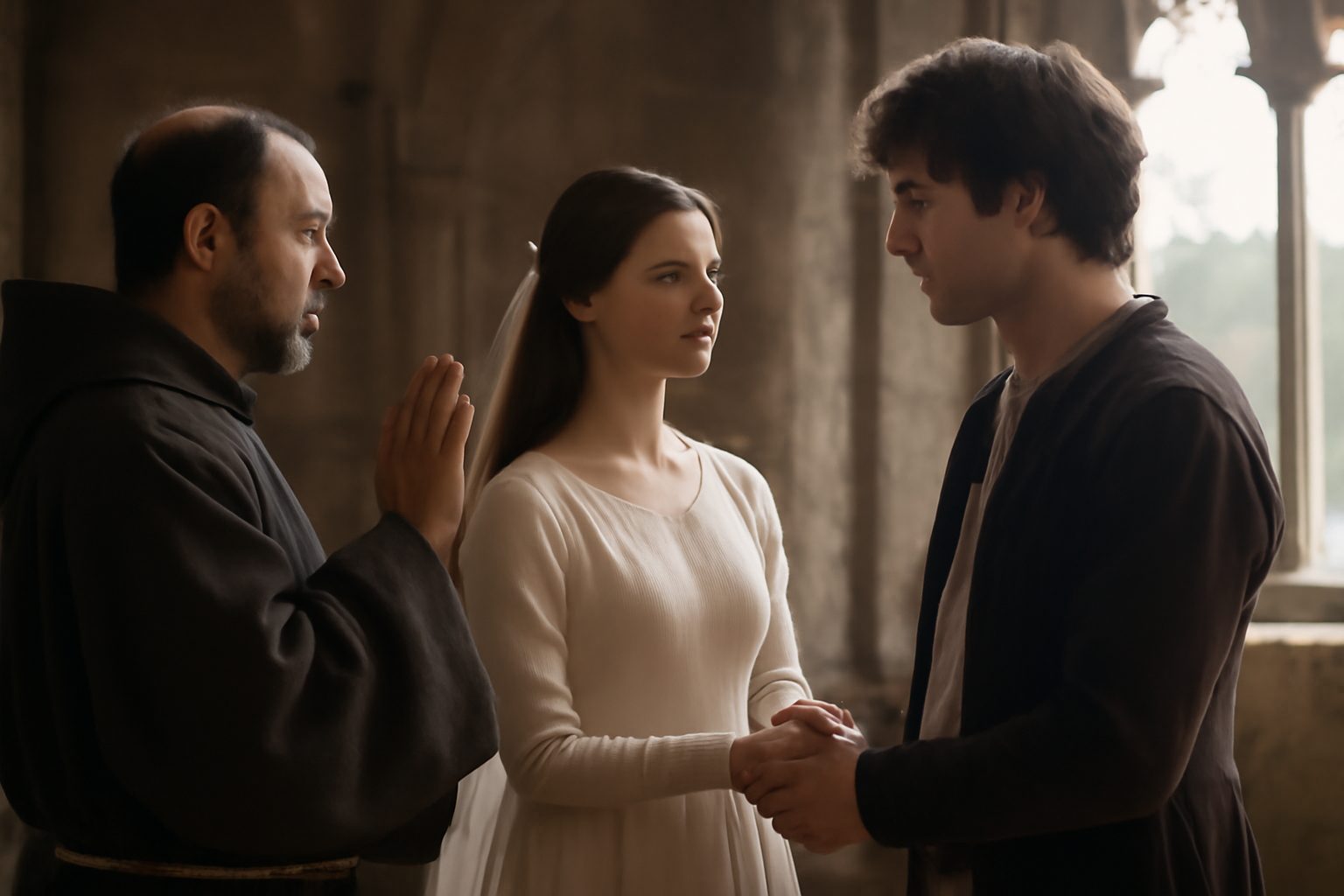
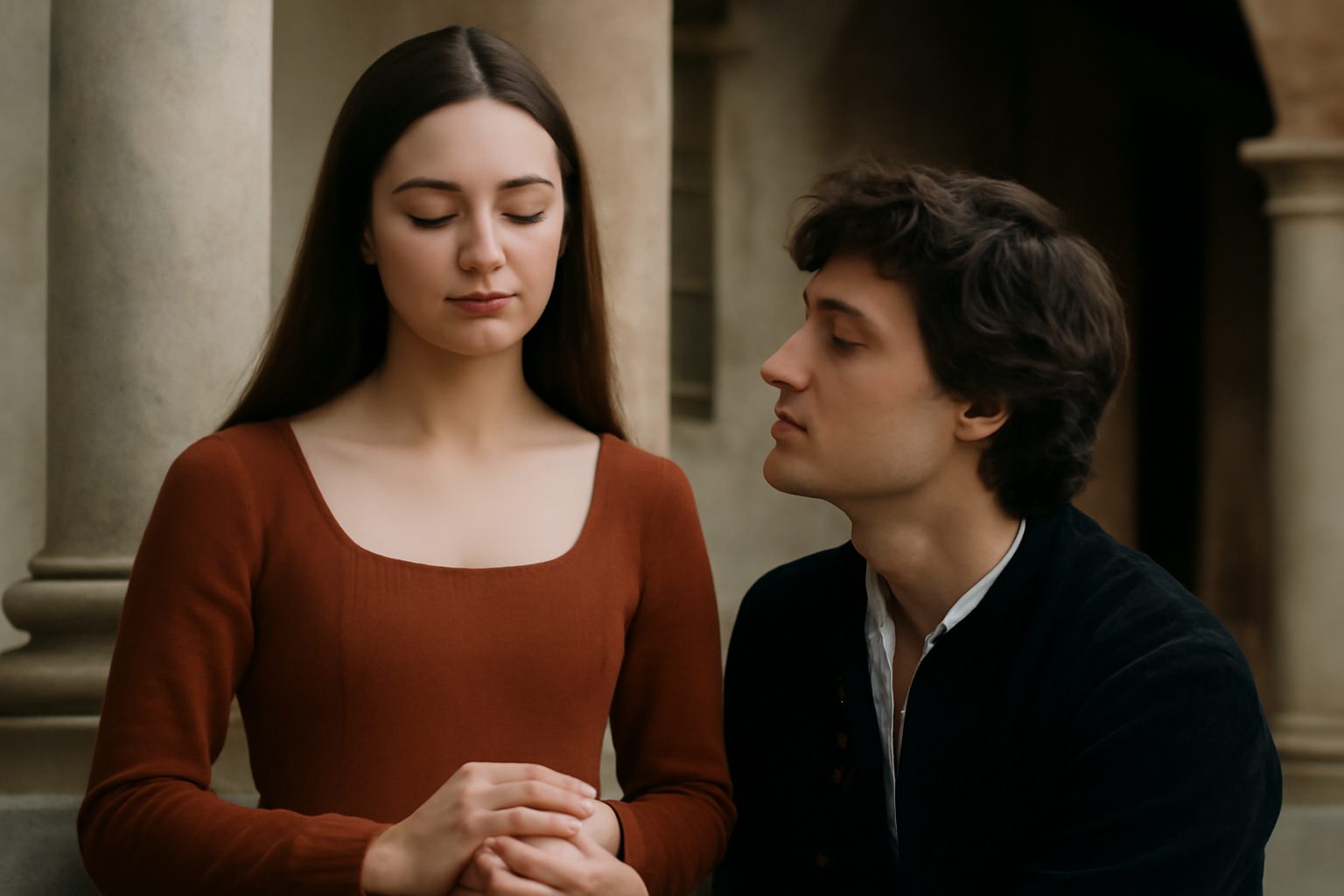
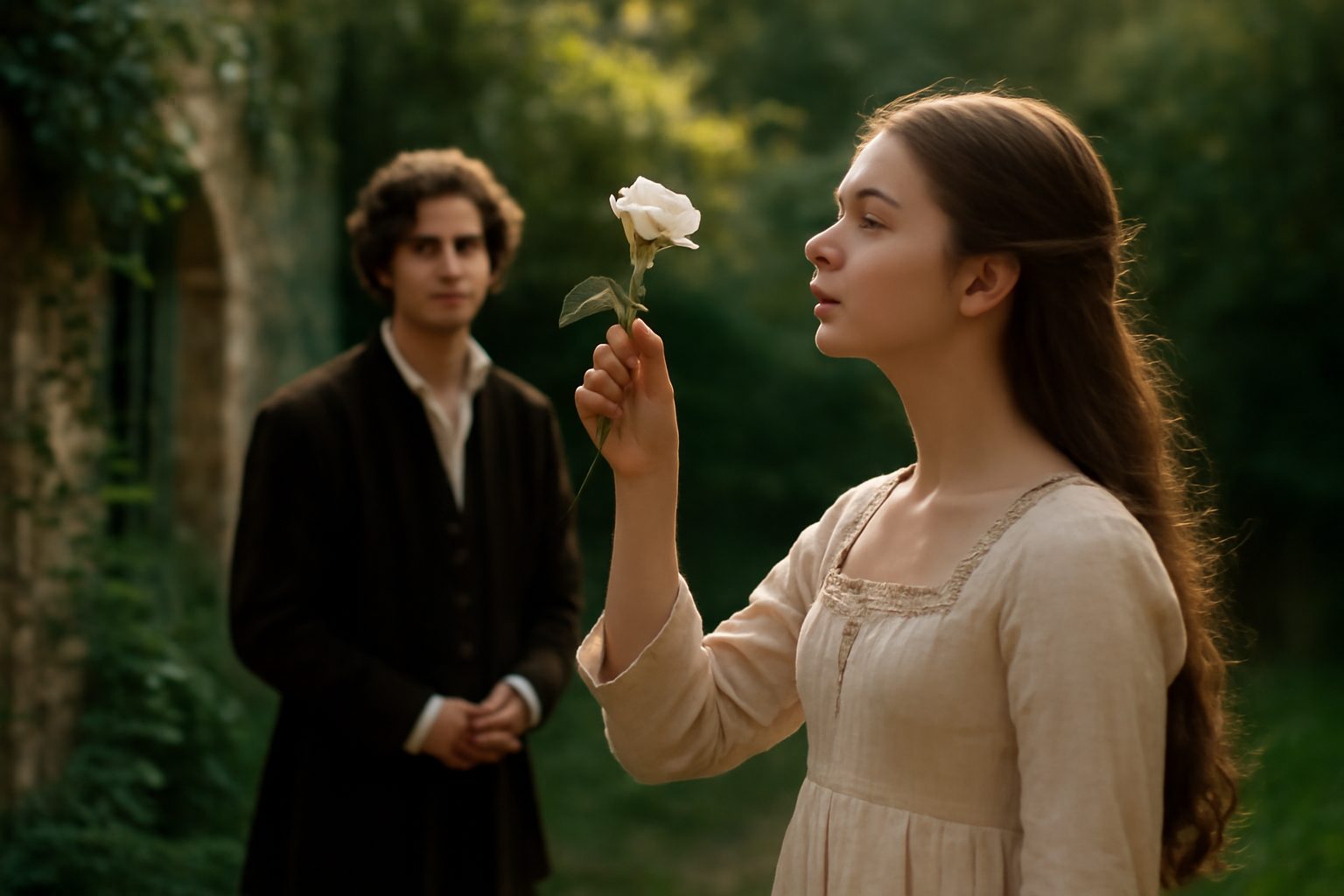
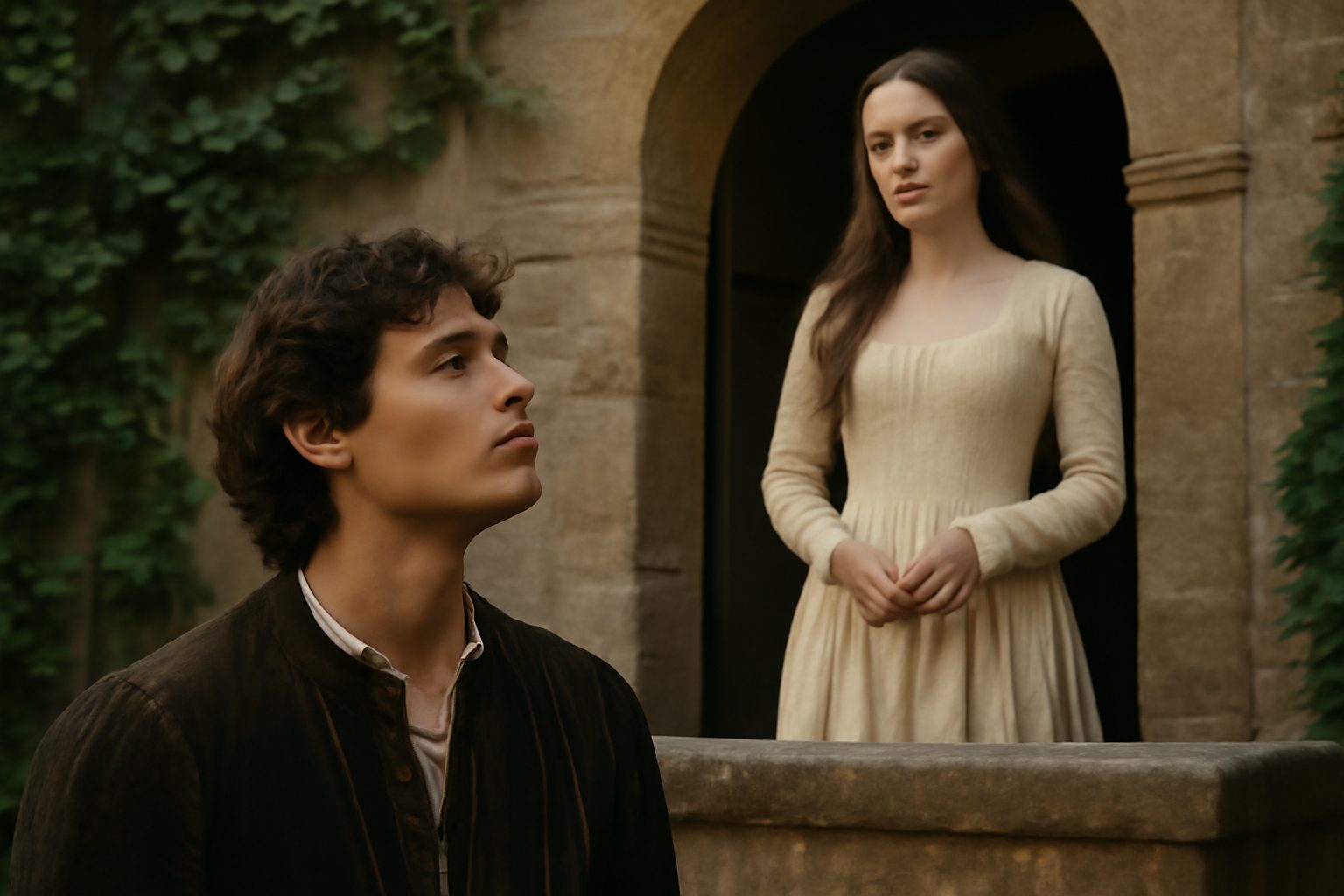
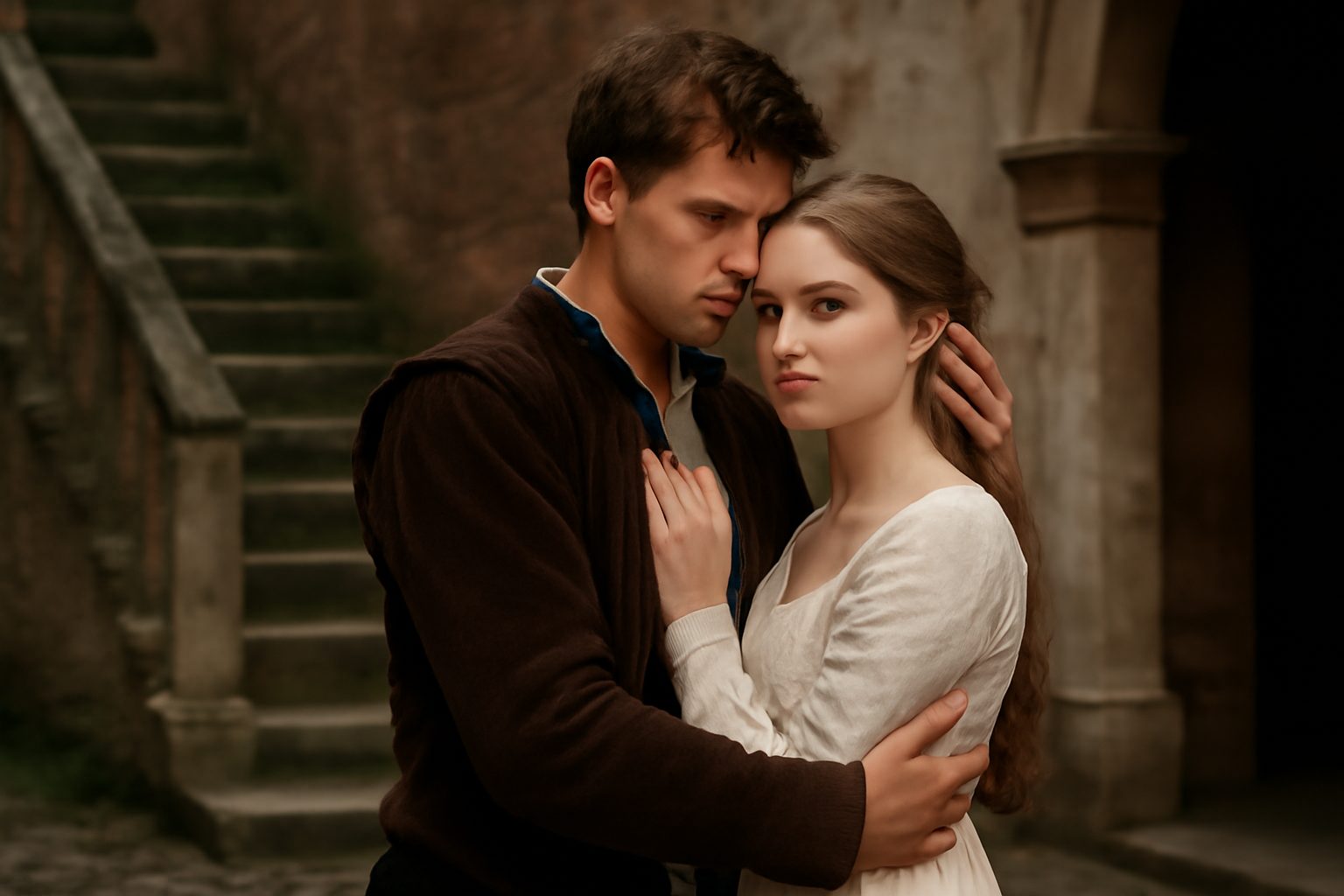
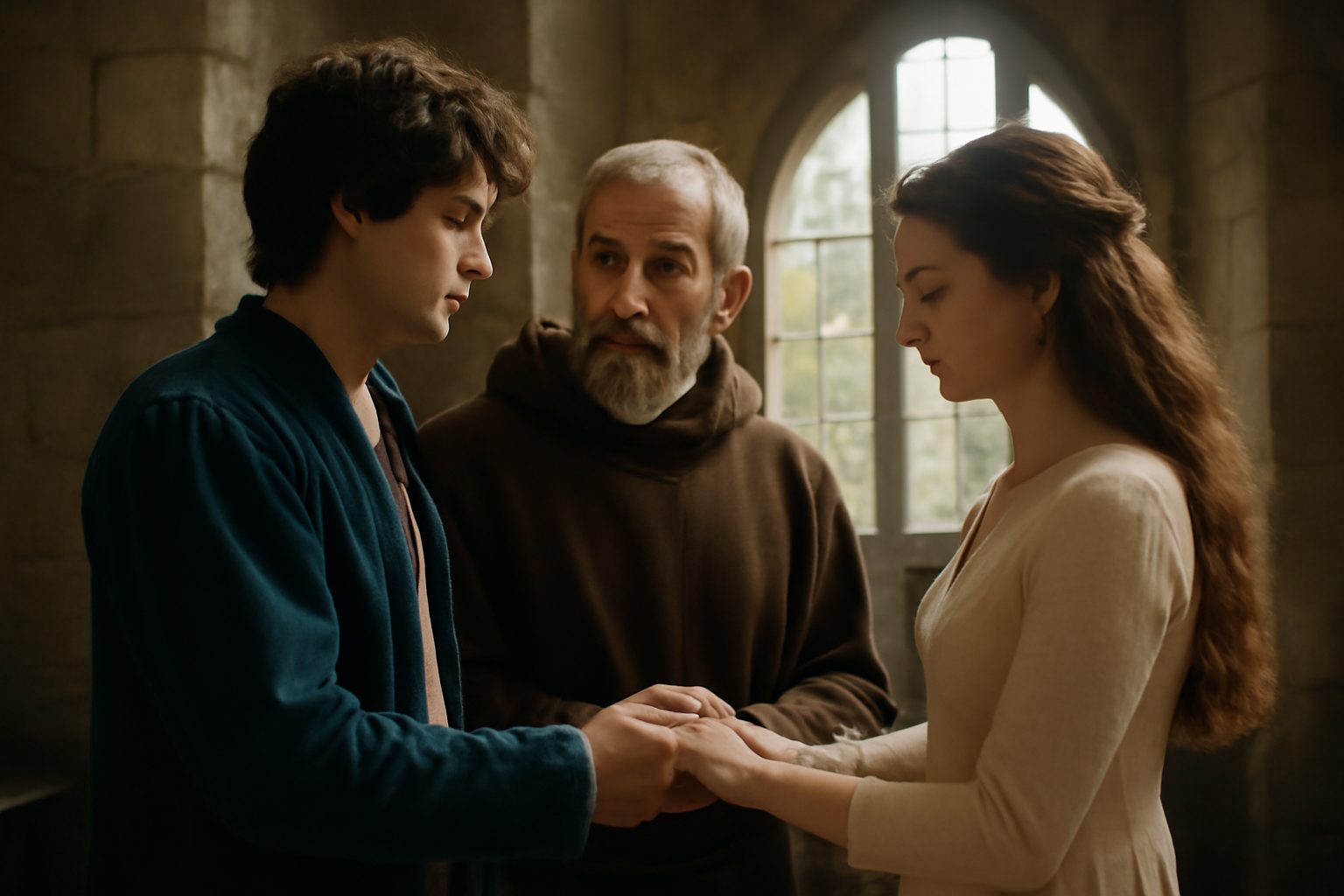
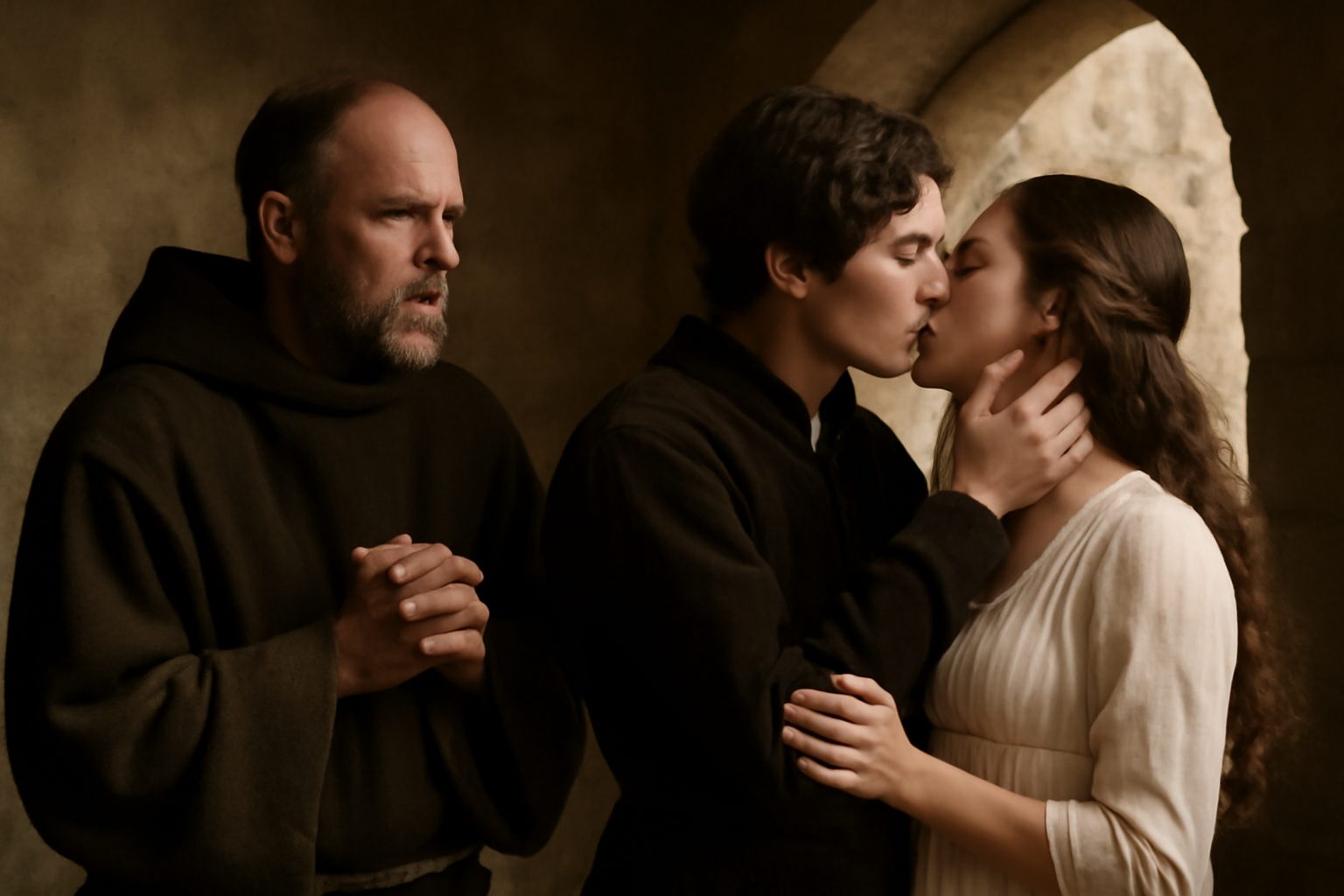
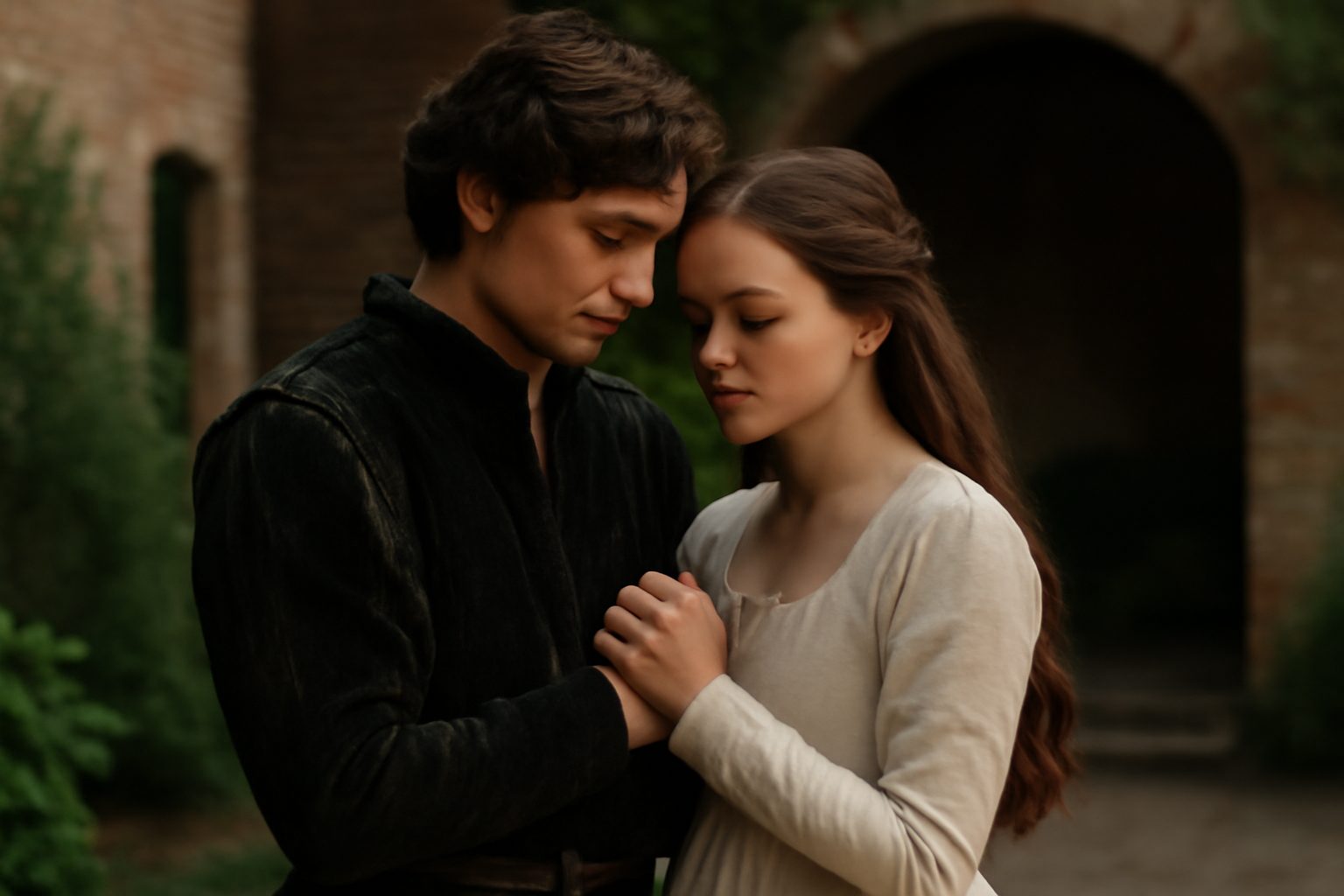
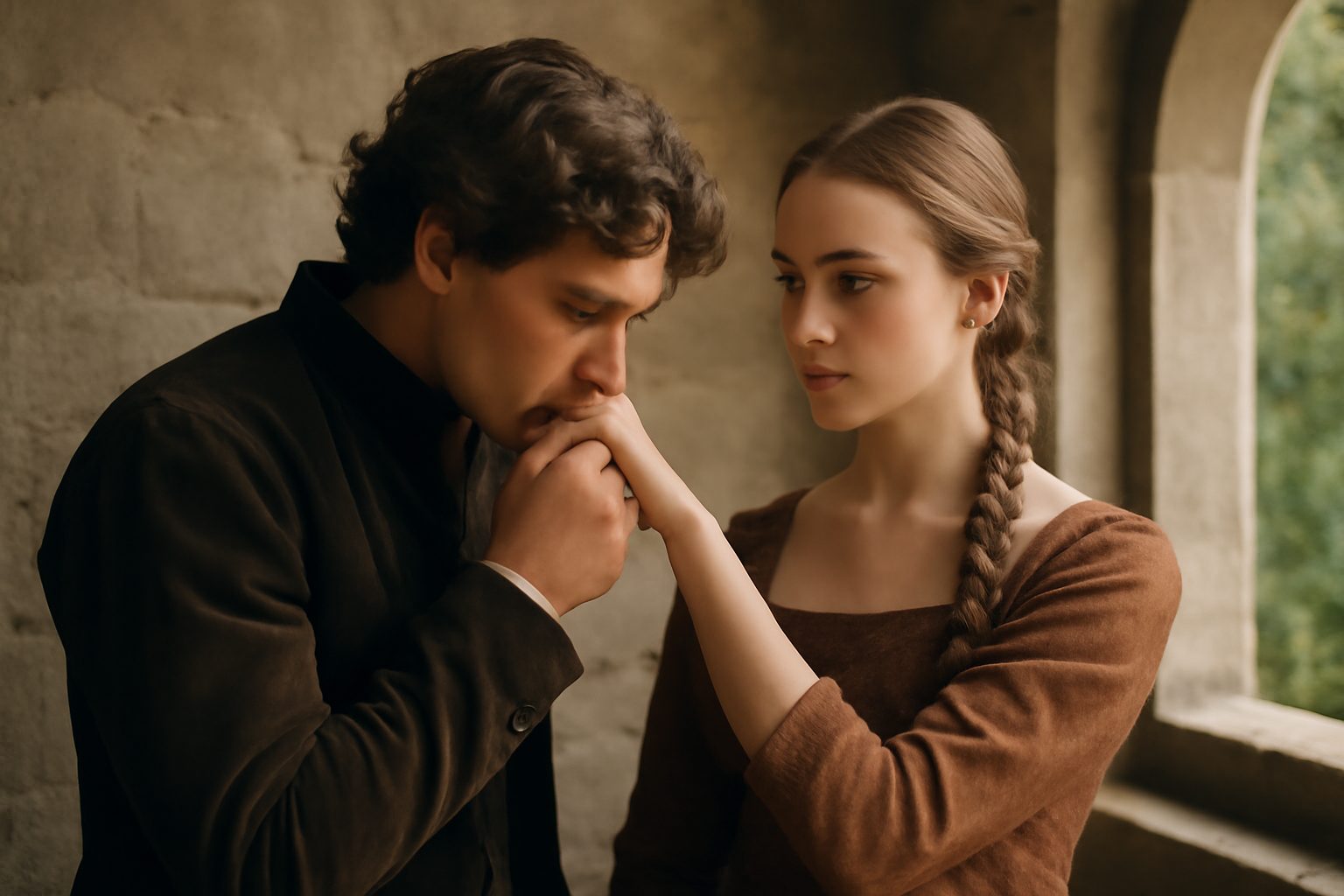
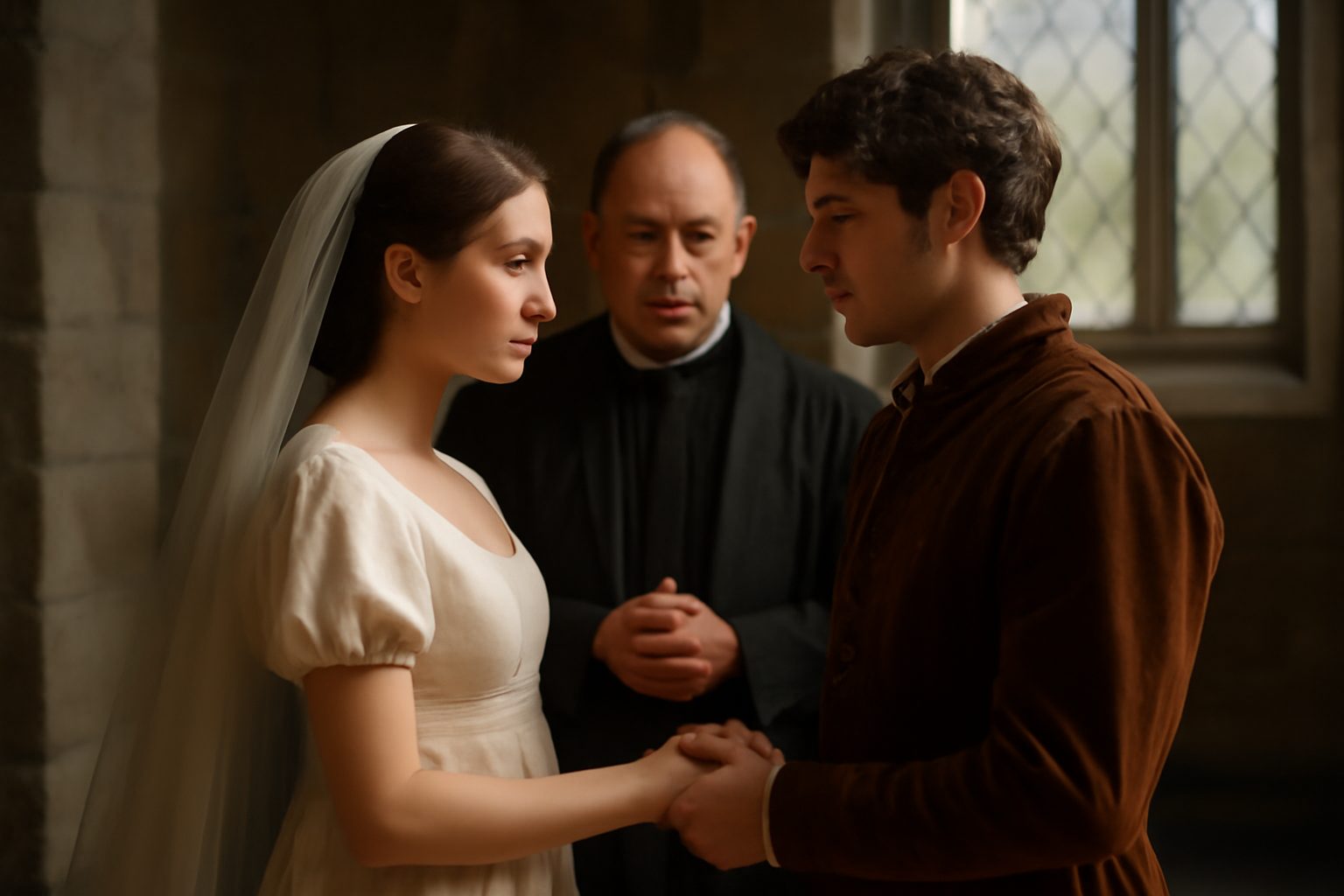
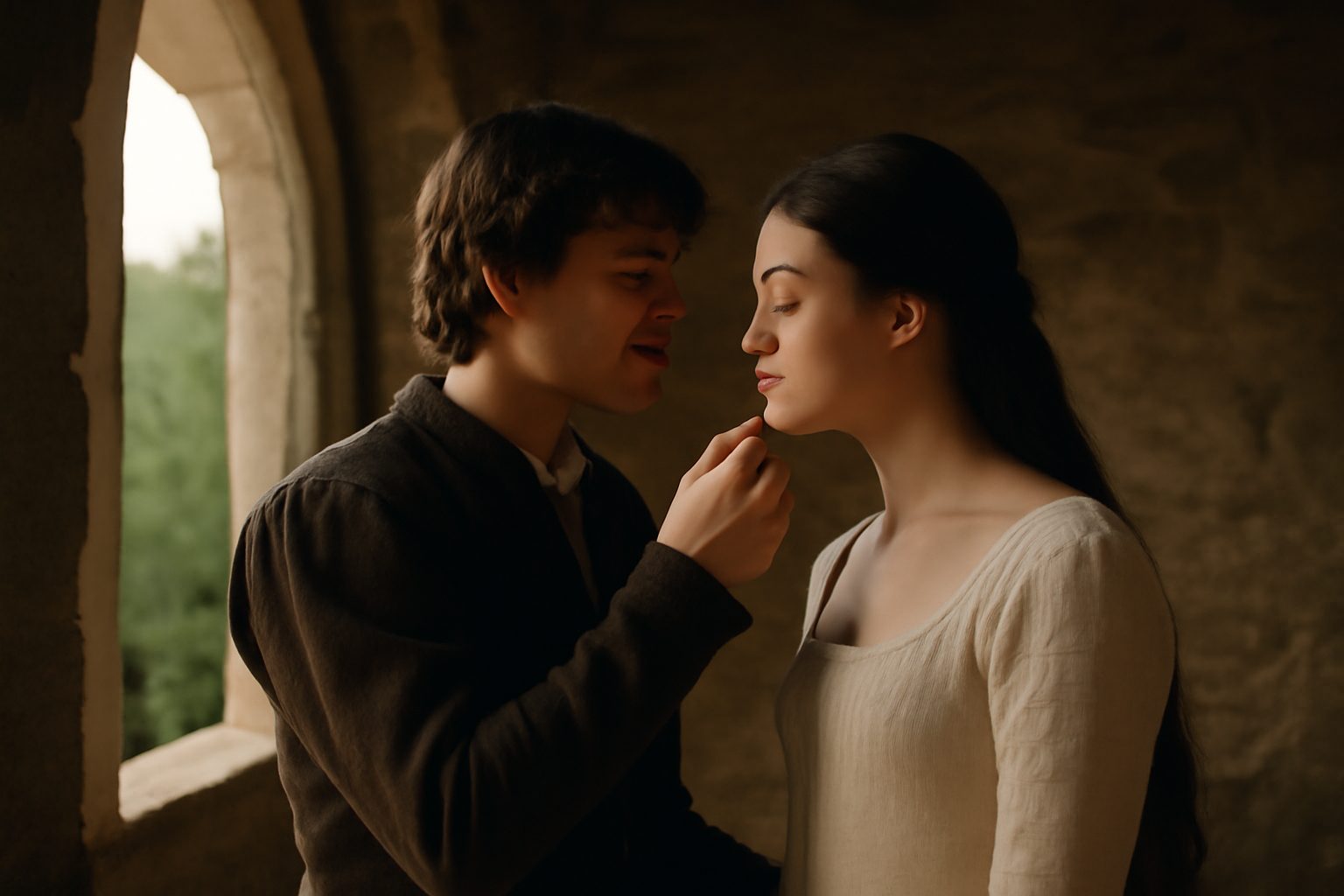
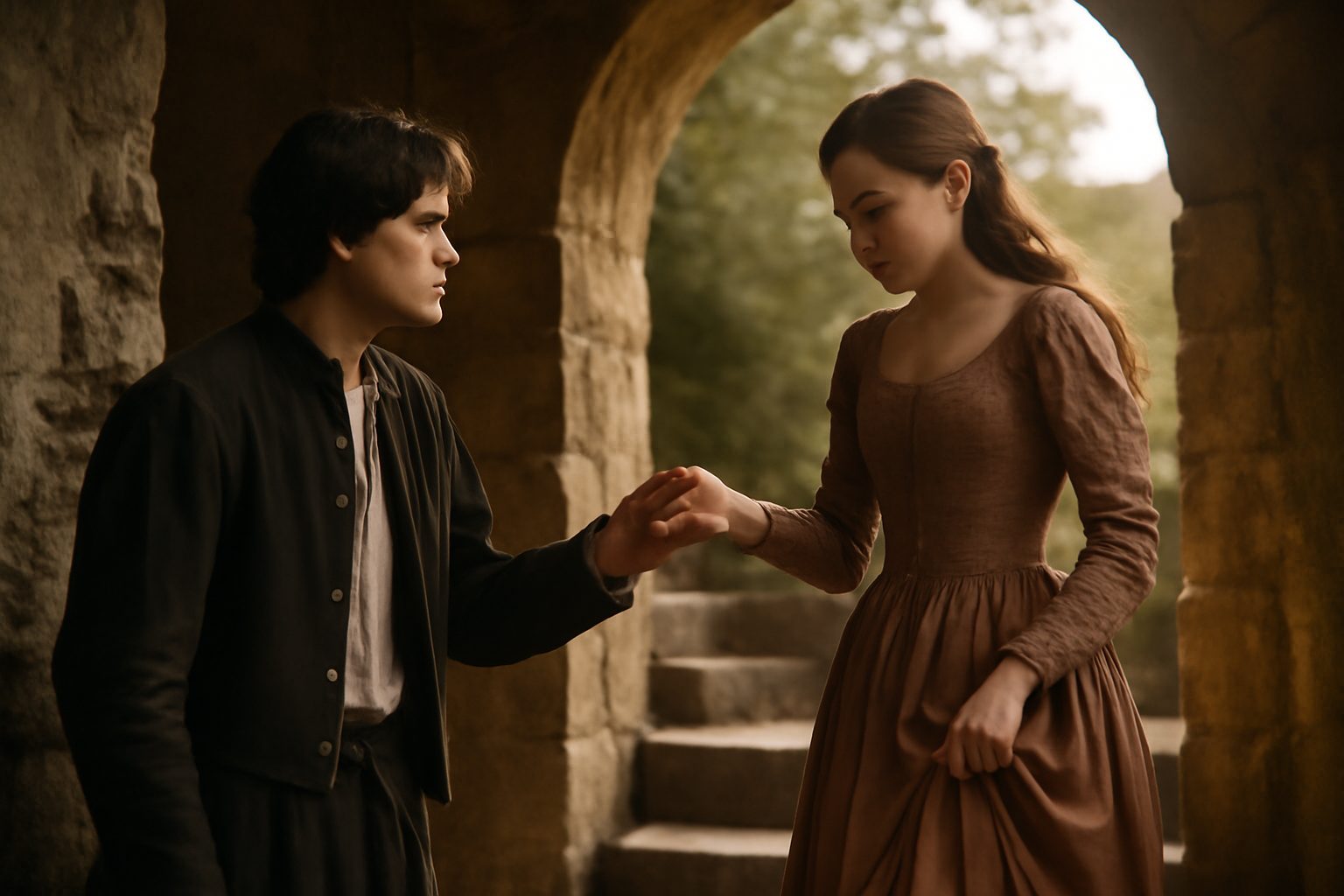
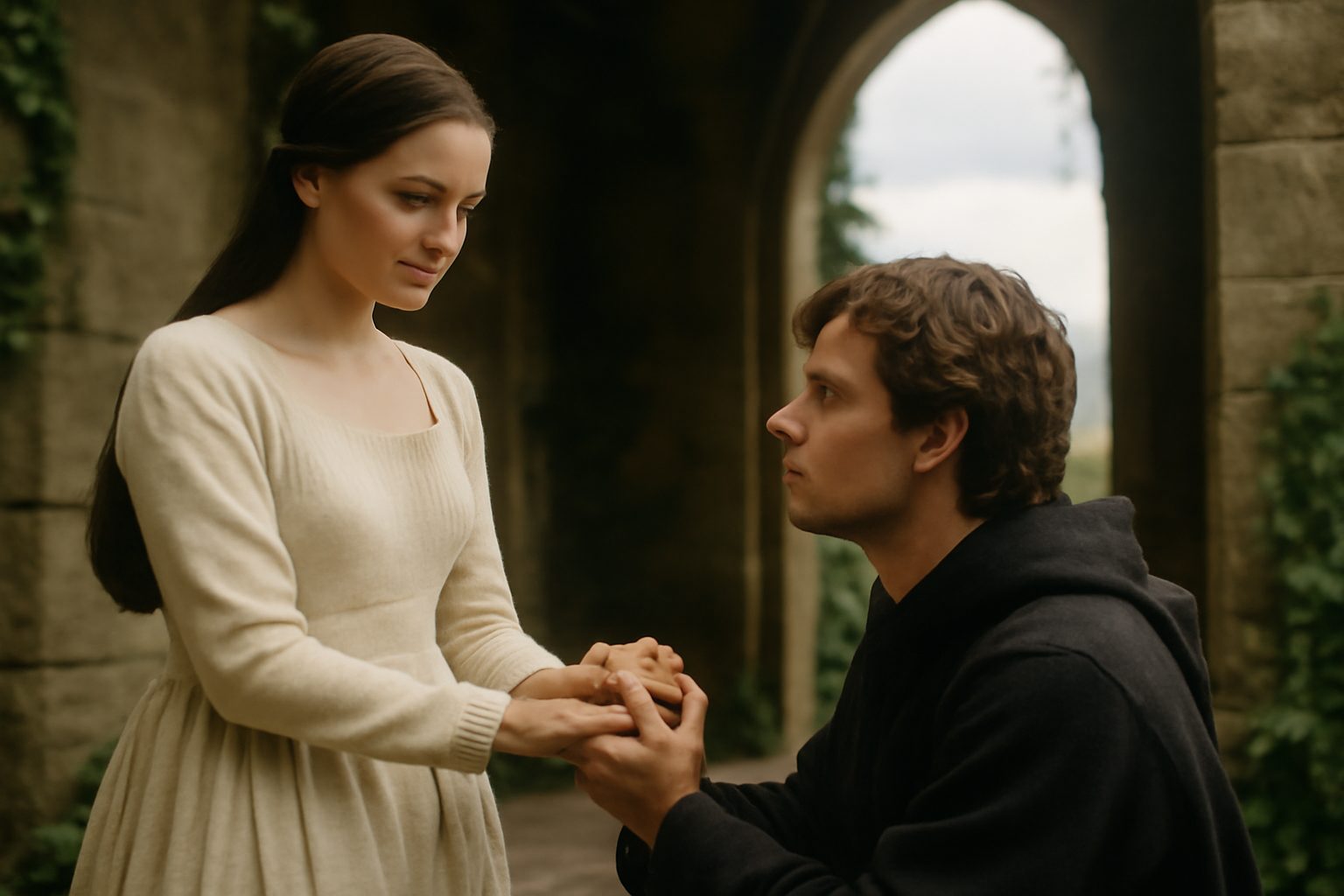
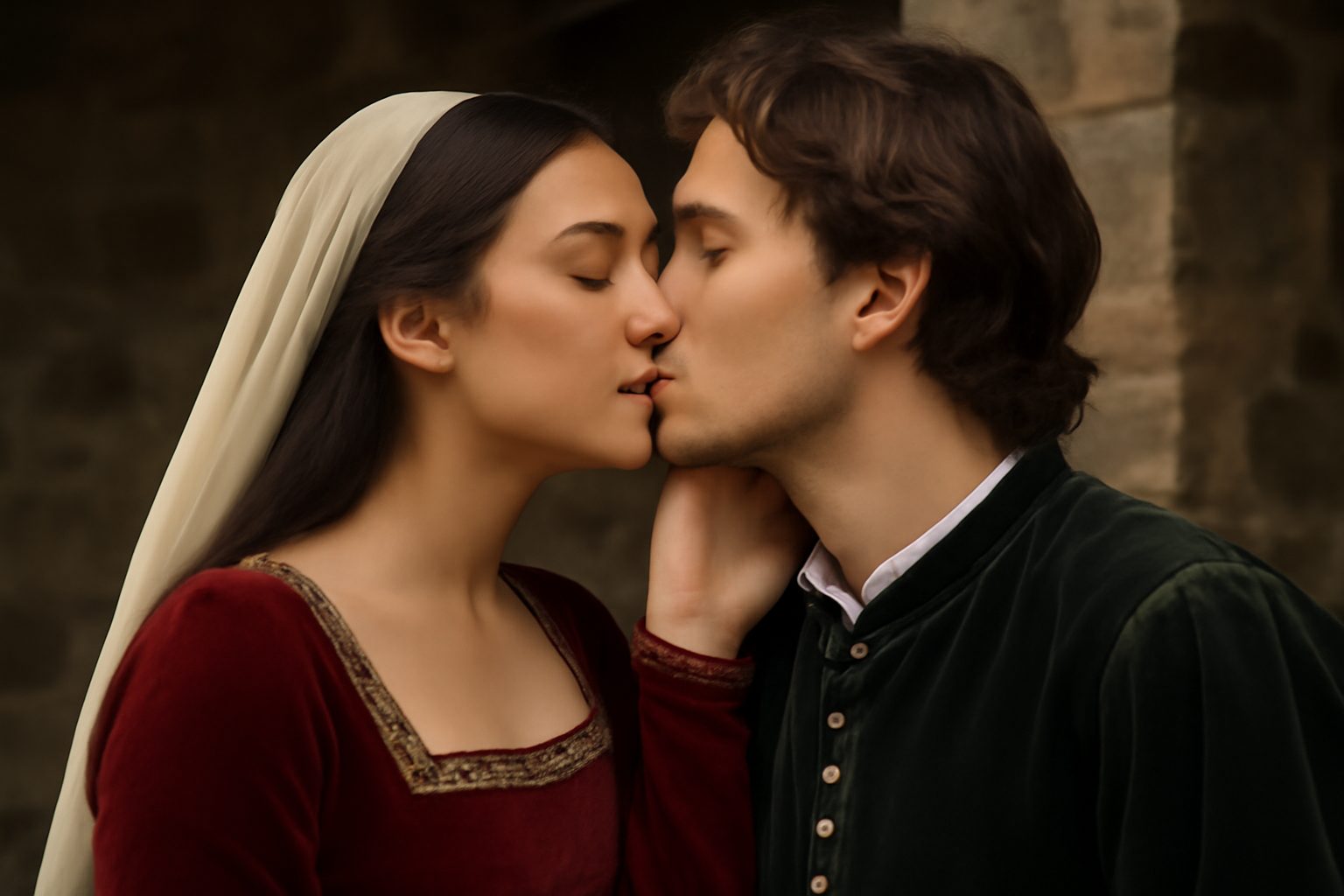
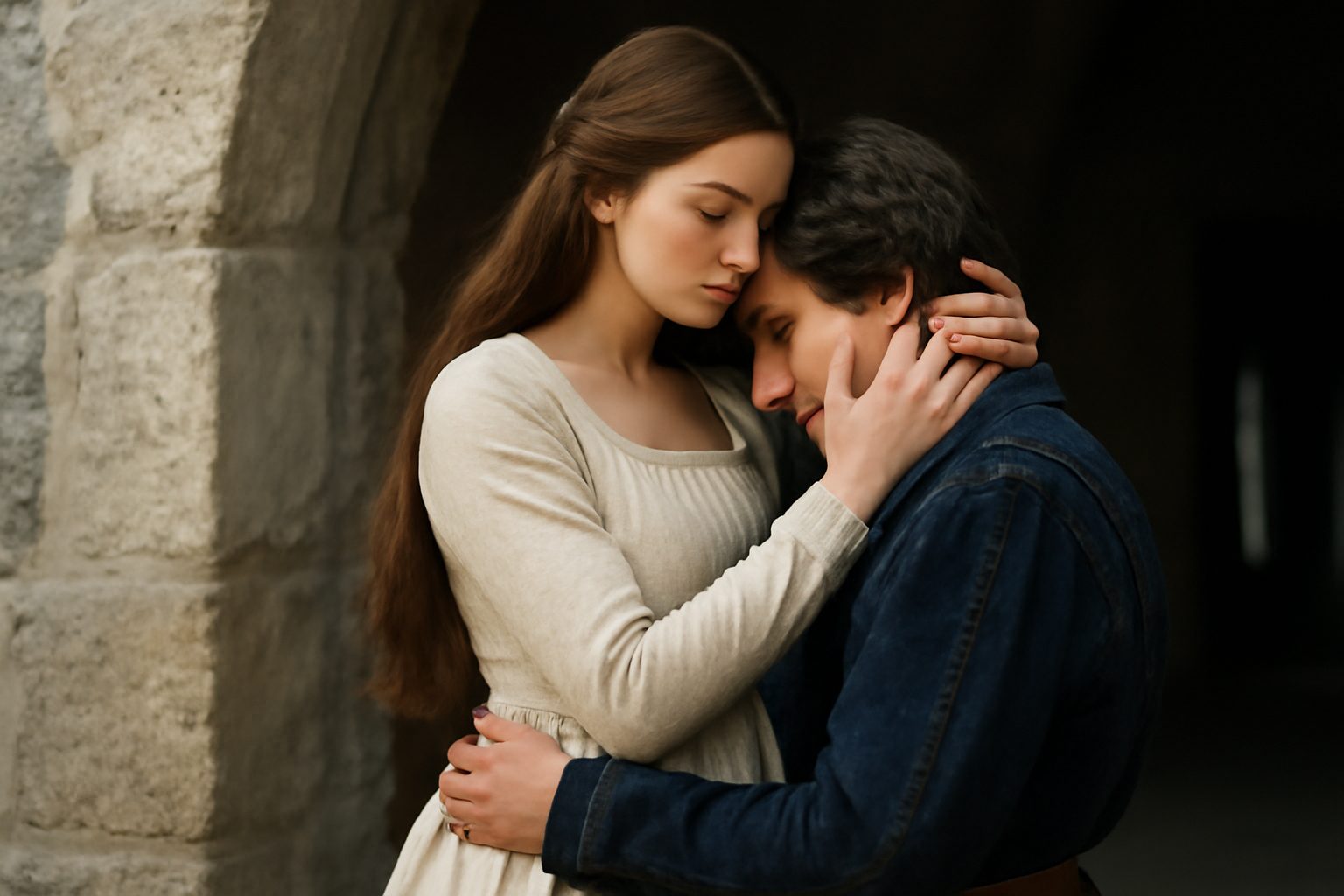
In Act 2, Scene 6 of Romeo and Juliet, Friar Laurence is preparing to marry the young lovers in secret. Romeo arrives first, and the Friar gently warns him that excessive passion can be as dangerous as too little. The line reflects the Friar's cautious wisdom, reminding Romeo that love should be balanced and measured to avoid future consequences.
Juliet: "As much to him, else is his thanks too much."
In modern day english, we would say:
If you don’t give him the same in return, his gratitude is more than you deserve.
Frequently Asked Questions
What does Juliet mean when she says that Romeo's thanks would be too much if she didn't give him as much in return?
Juliet is saying that she wants to give Romeo as much love and devotion as he gives her, so that his gratitude (thanks) is not greater than what she deserves.
Connections to other verses:
Connections to Friar Laurence's Warning
The verse "As much to him, else is his thanks too much" reflects Friar Laurence's earlier cautionary advice about moderation in love. This directly connects to his lines "Therefore love moderately; long love doth so" and "These violent delights have violent ends", where he warns that excessive passion can be self-destructive. The idea of balanced reciprocity in gratitude mirrors his concern that overwhelming emotions may lead to unsustainable relationships.
Connection to Romeo's Impatience
This line also contrasts with Romeo's earlier declaration "It is enough I may but call her mine", showing how Romeo's perspective on what constitutes "enough" differs from the Friar's more measured approach. Where Romeo sees absolute fulfillment in mere possession, the Friar suggests that proportional gratitude maintains healthier relationships.
Relation to Juliet's Arrival
The verse connects to the moment of Juliet's entrance when Romeo observes "Here comes the lady: O, so light a foot". The Friar's comment about balanced thanks serves as a sober counterpoint to Romeo's rapturous reaction to Juliet's appearance, emphasizing the contrast between youthful passion and wise moderation.
Connection to Imagery of Excess
The concept of "too much" relates to other images of excess in the scene, particularly "the sweetest honey / Which as they kiss consume" and "like fire and powder, / Which as they kiss consume". These images reinforce the Friar's warning that uncontrolled passion consumes itself, making his call for measured gratitude particularly significant.
Link to Closing Lines
The theme of balanced exchange culminates in the Friar's final words "Till holy church incorporate two in one", where the union represents not just emotional fulfillment but a proper, sanctified balance. The idea of proportional thanks thus serves as precursor to this ideal of harmonious union.