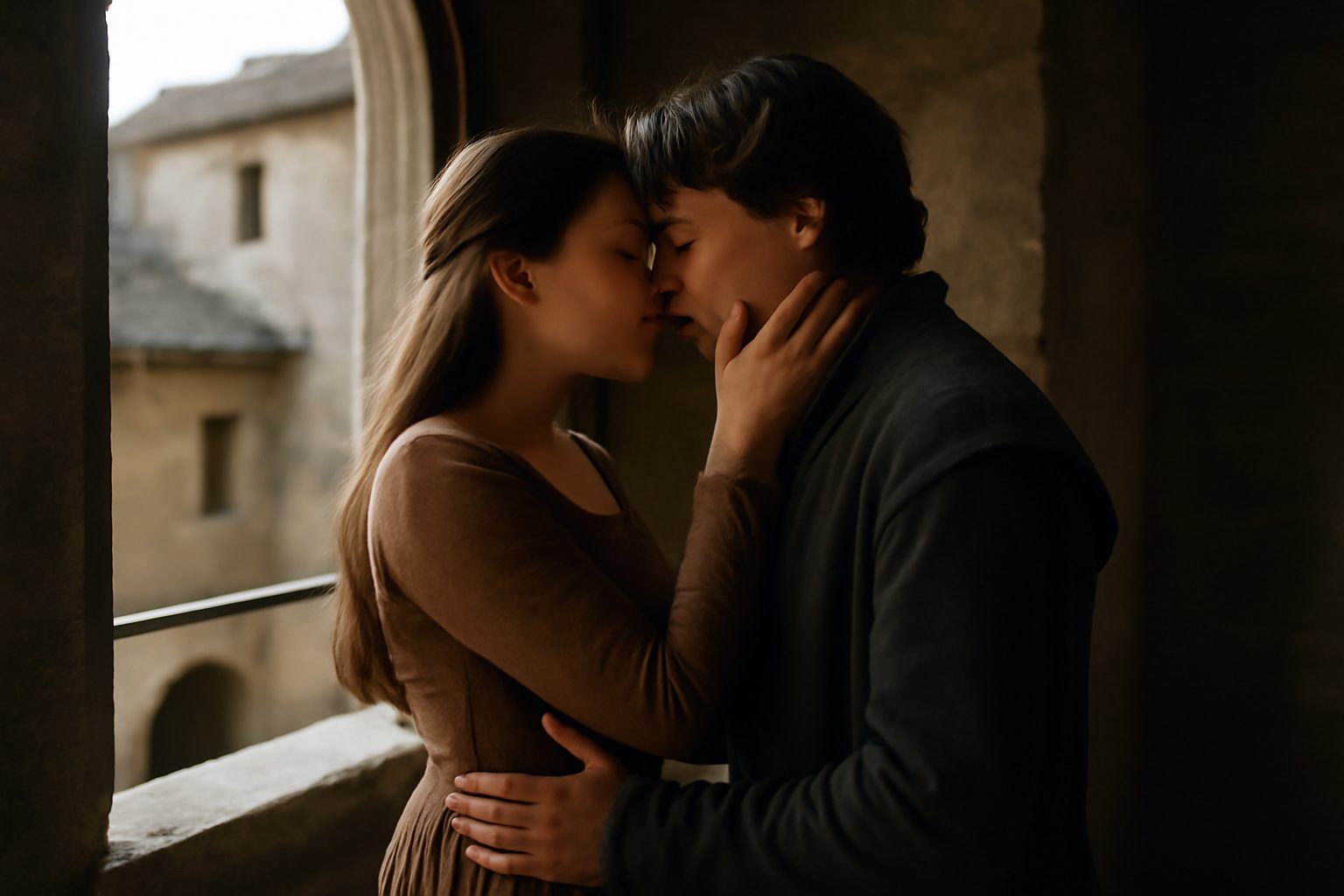
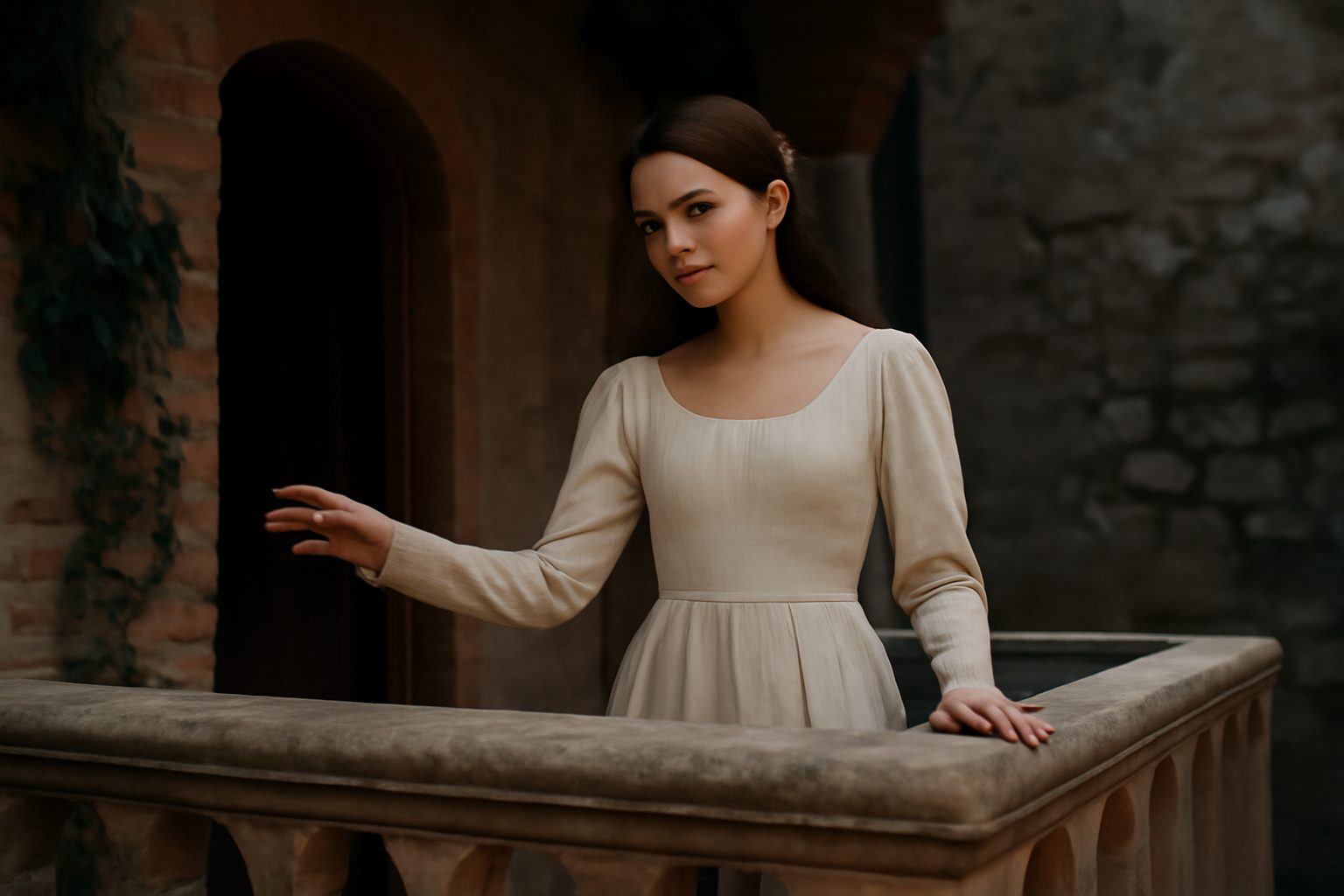
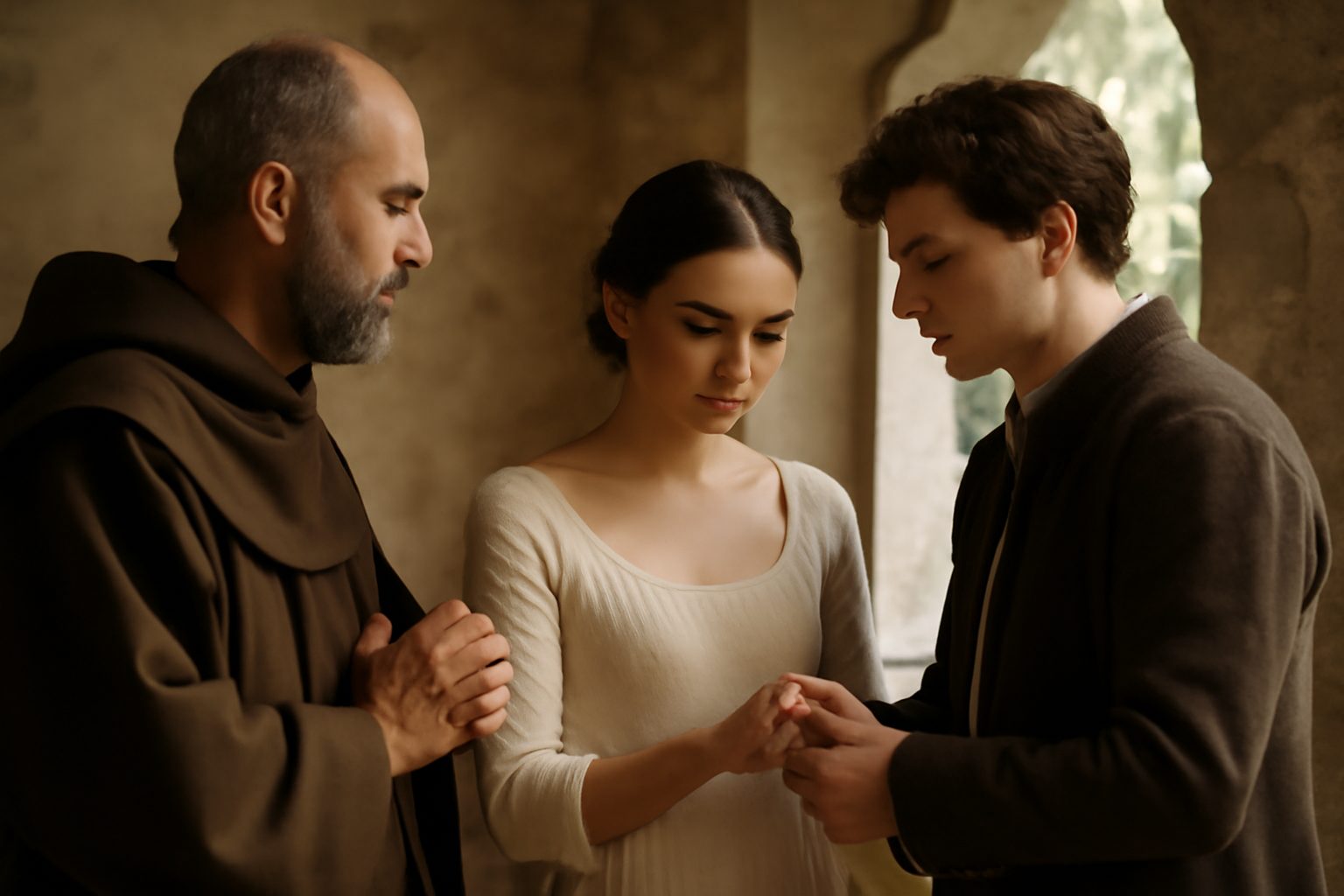
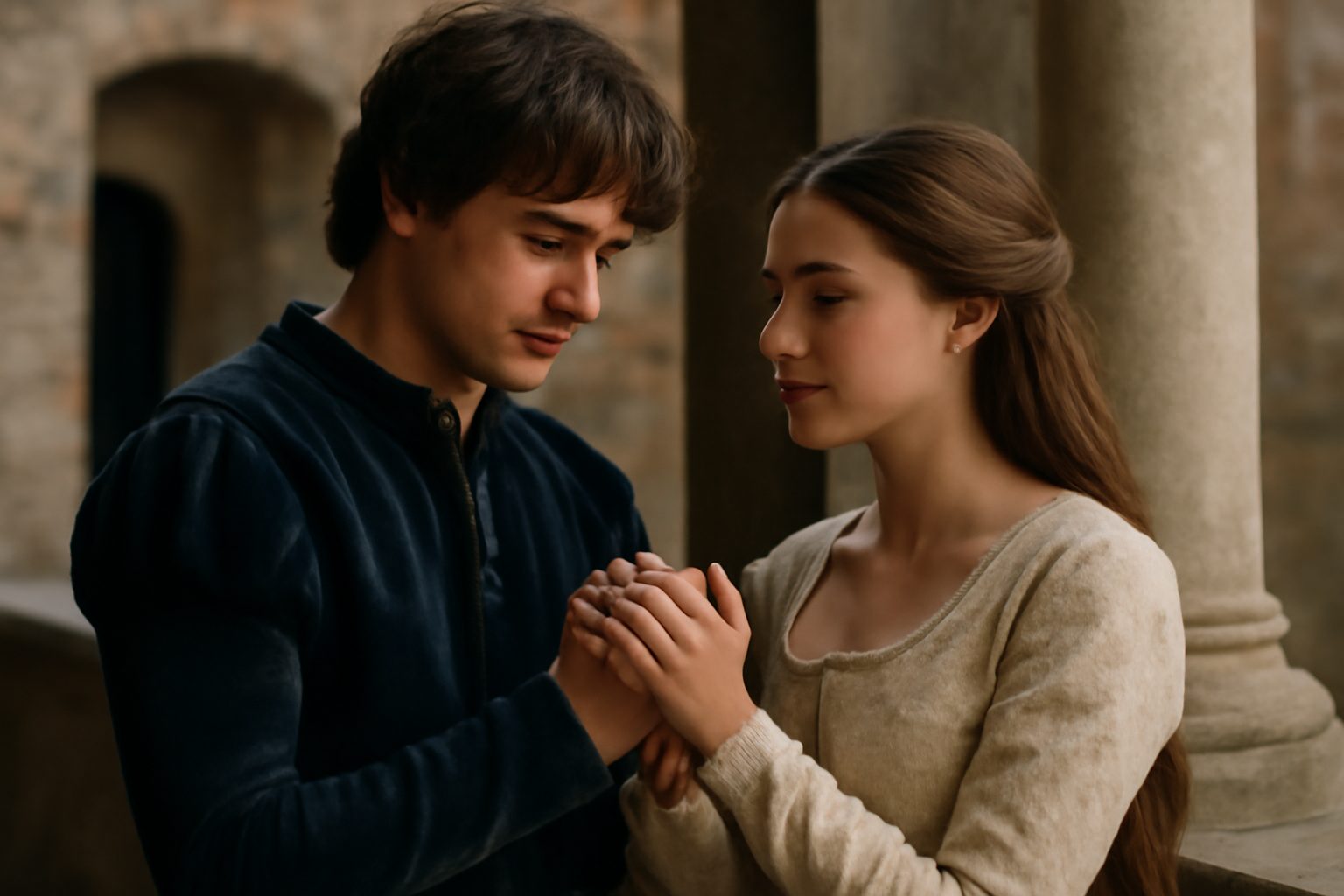
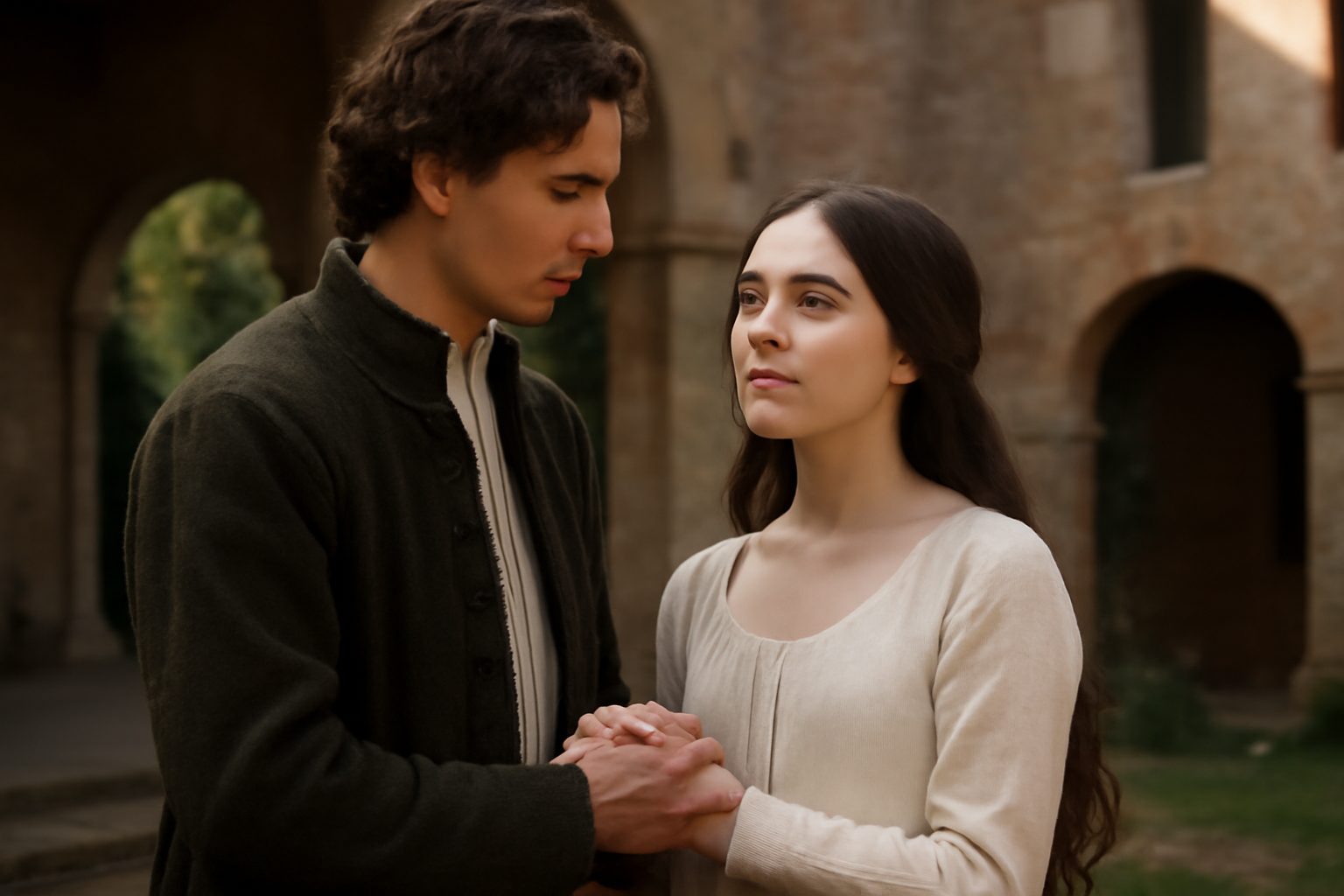
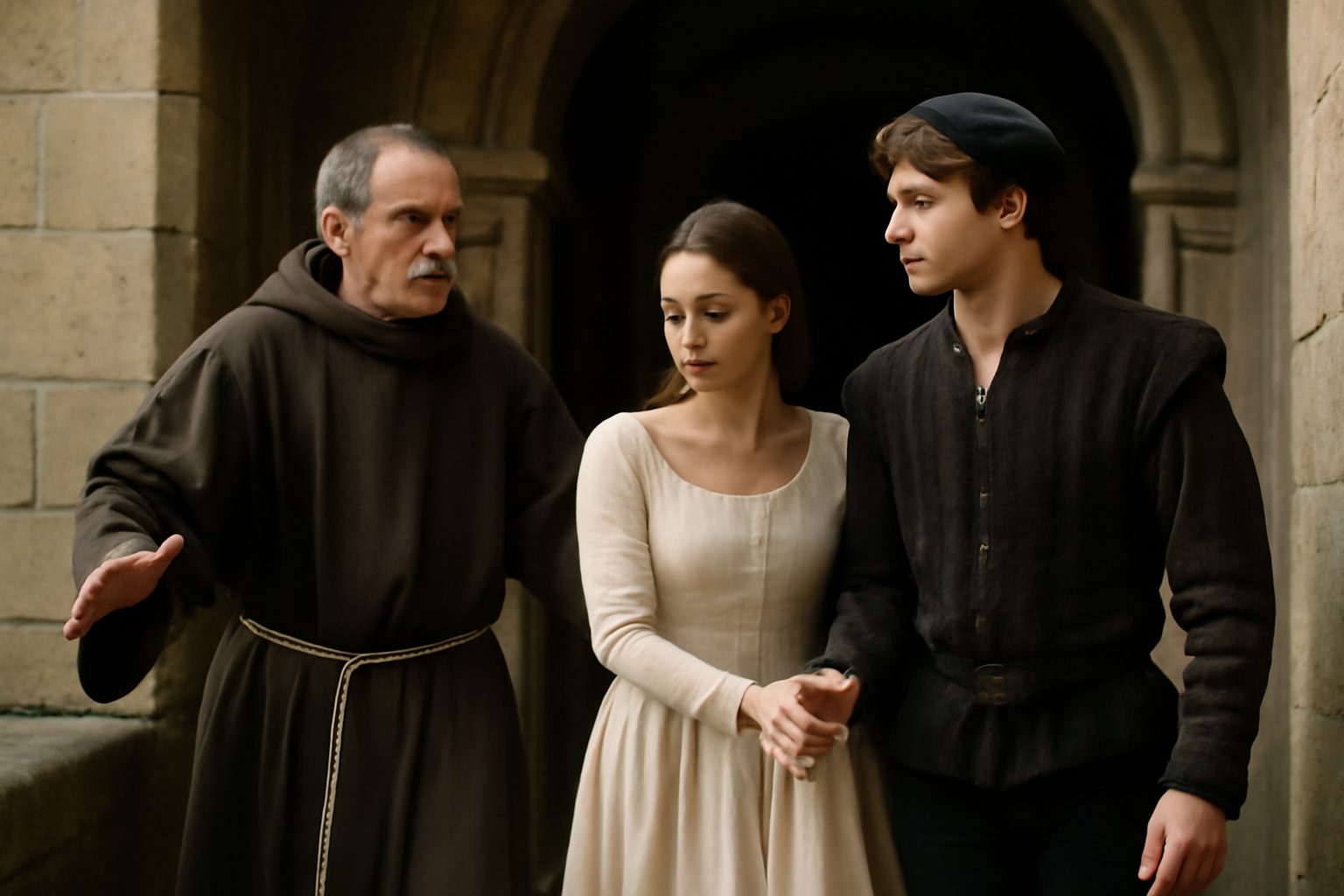
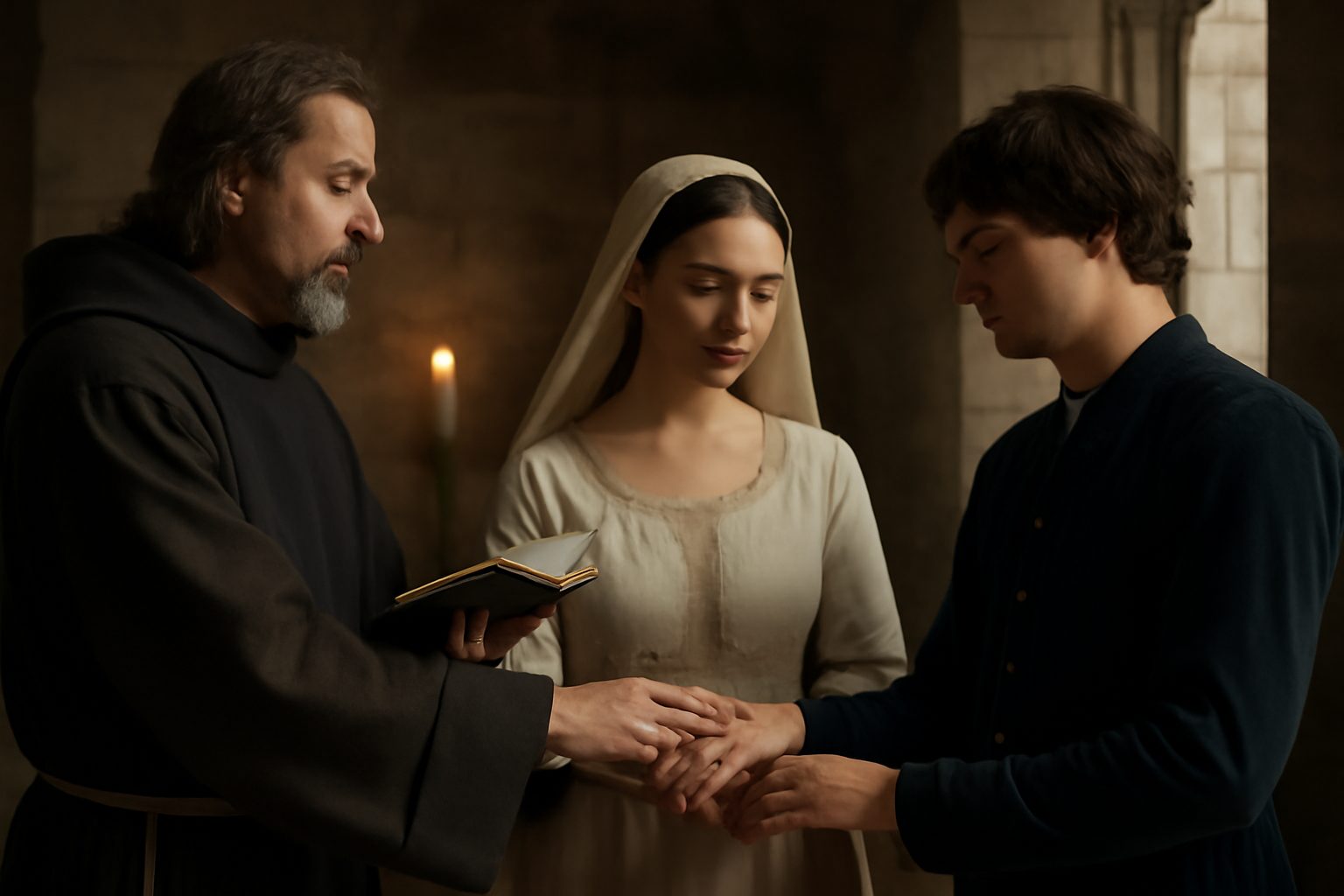
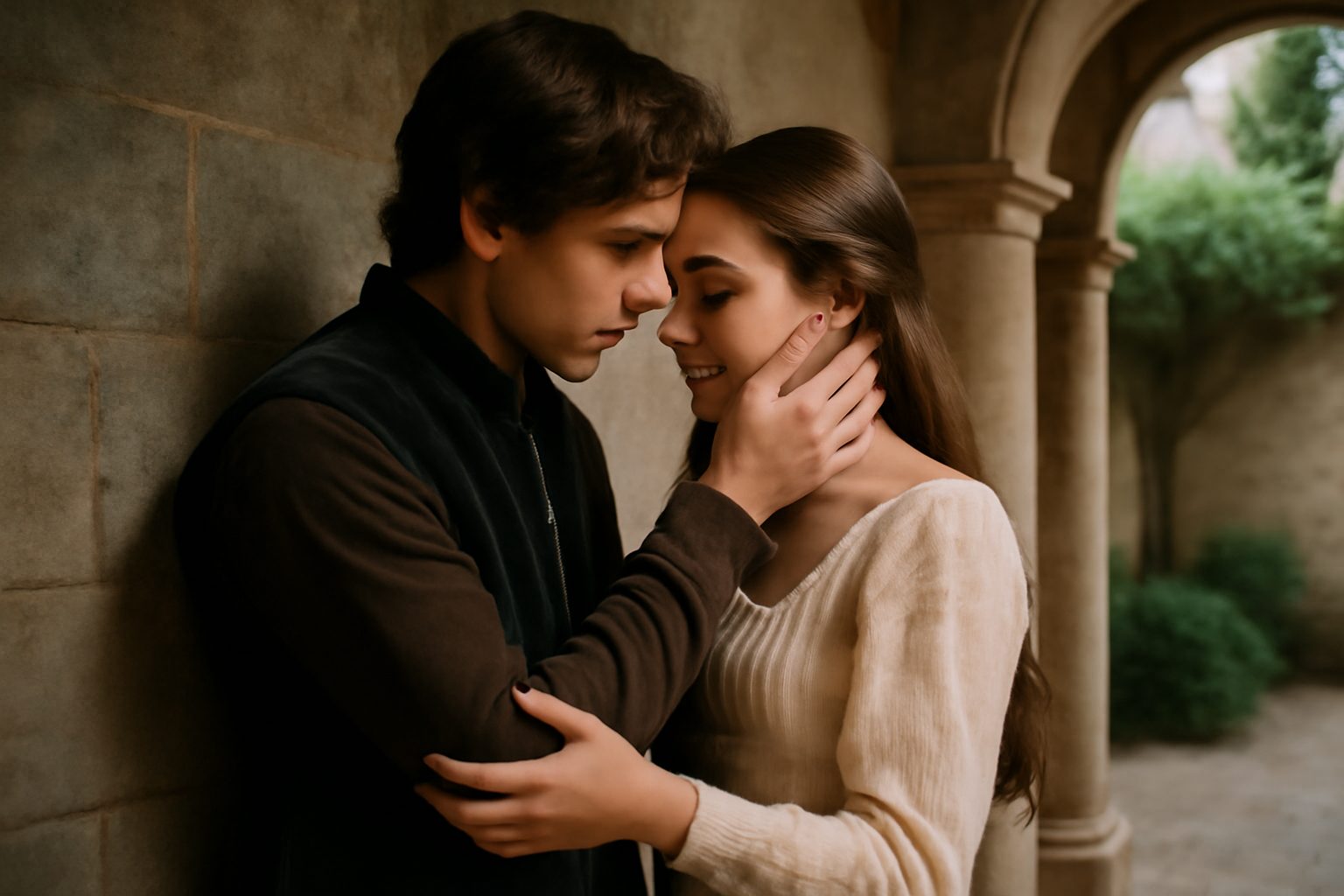
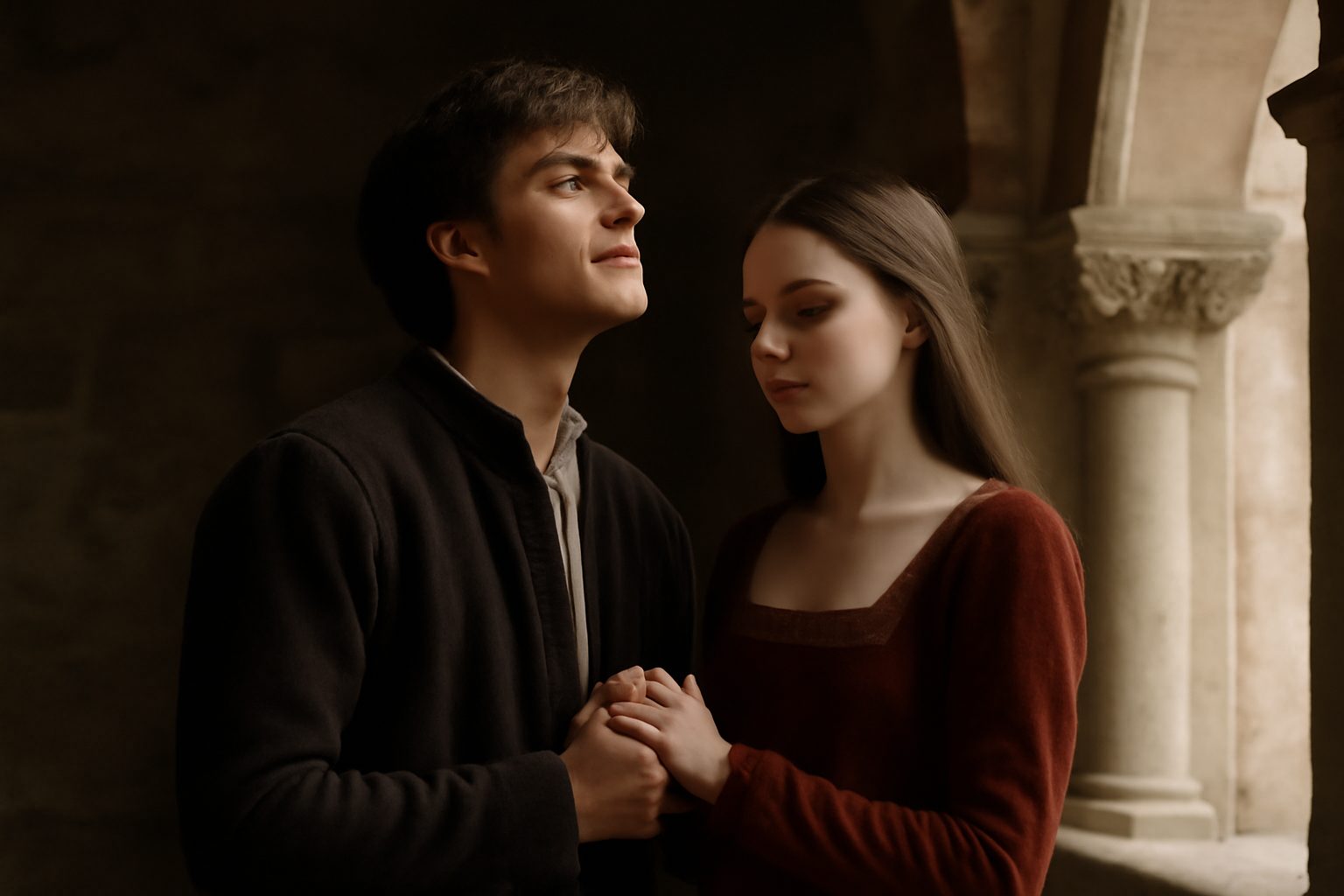
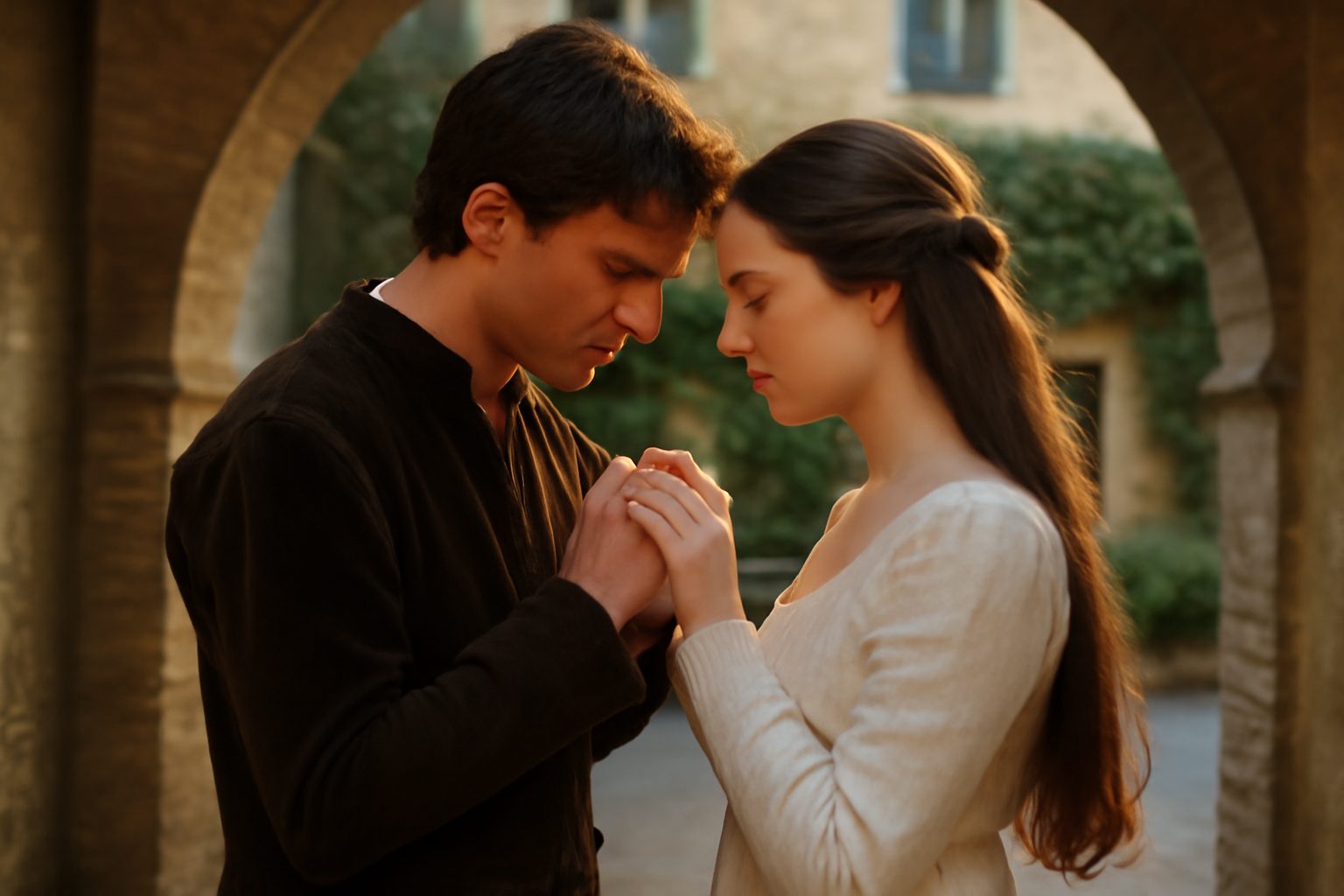
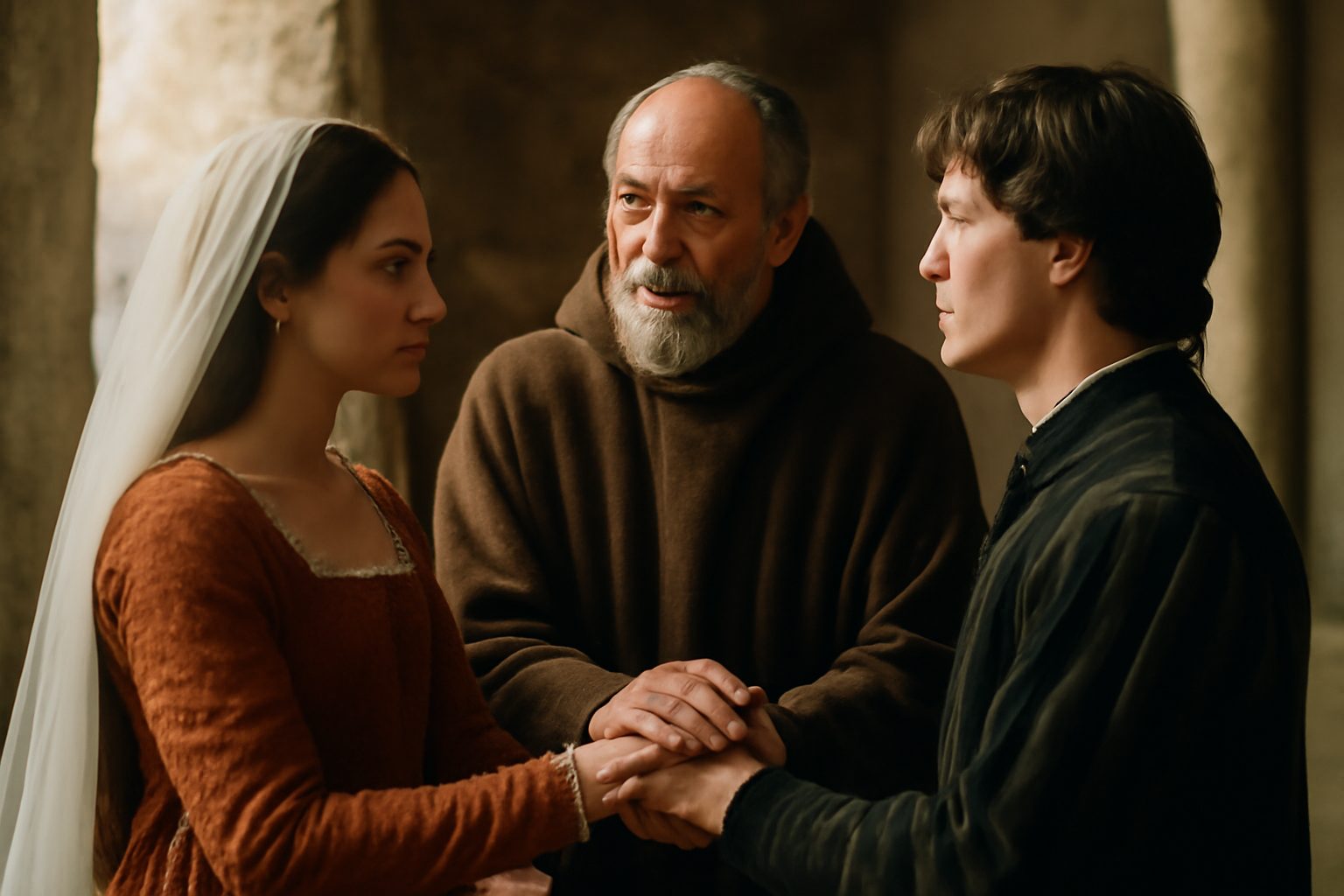
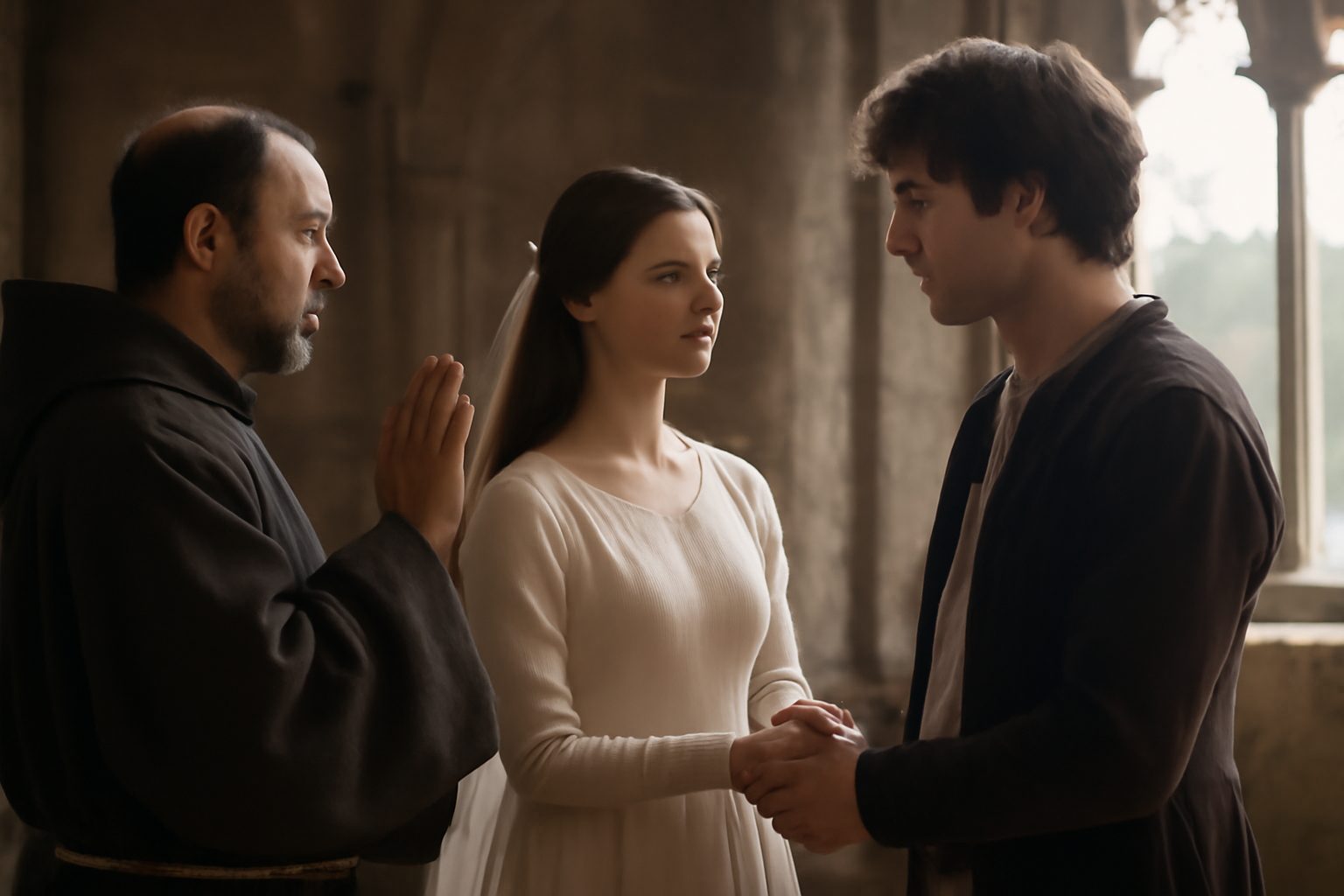
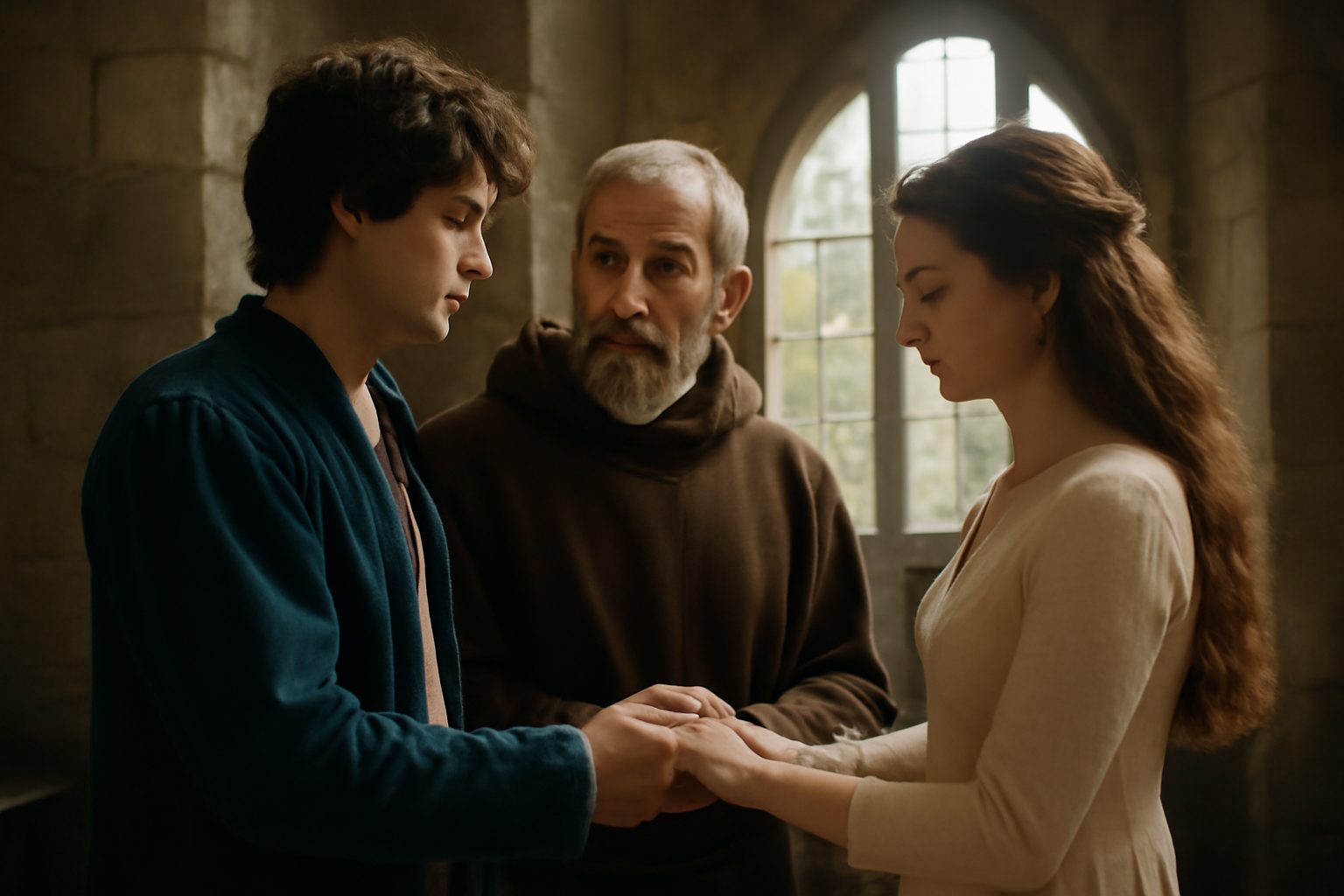
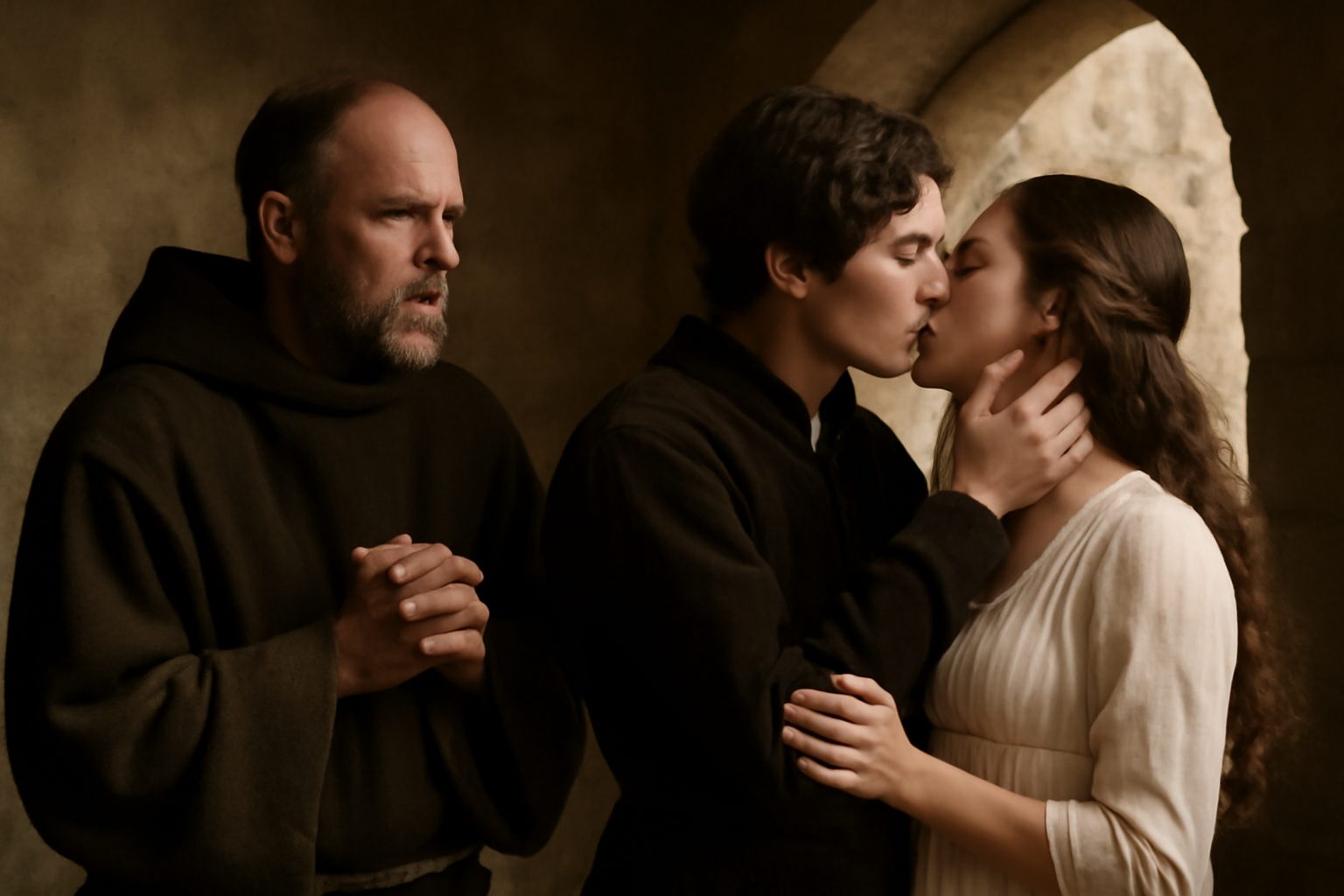
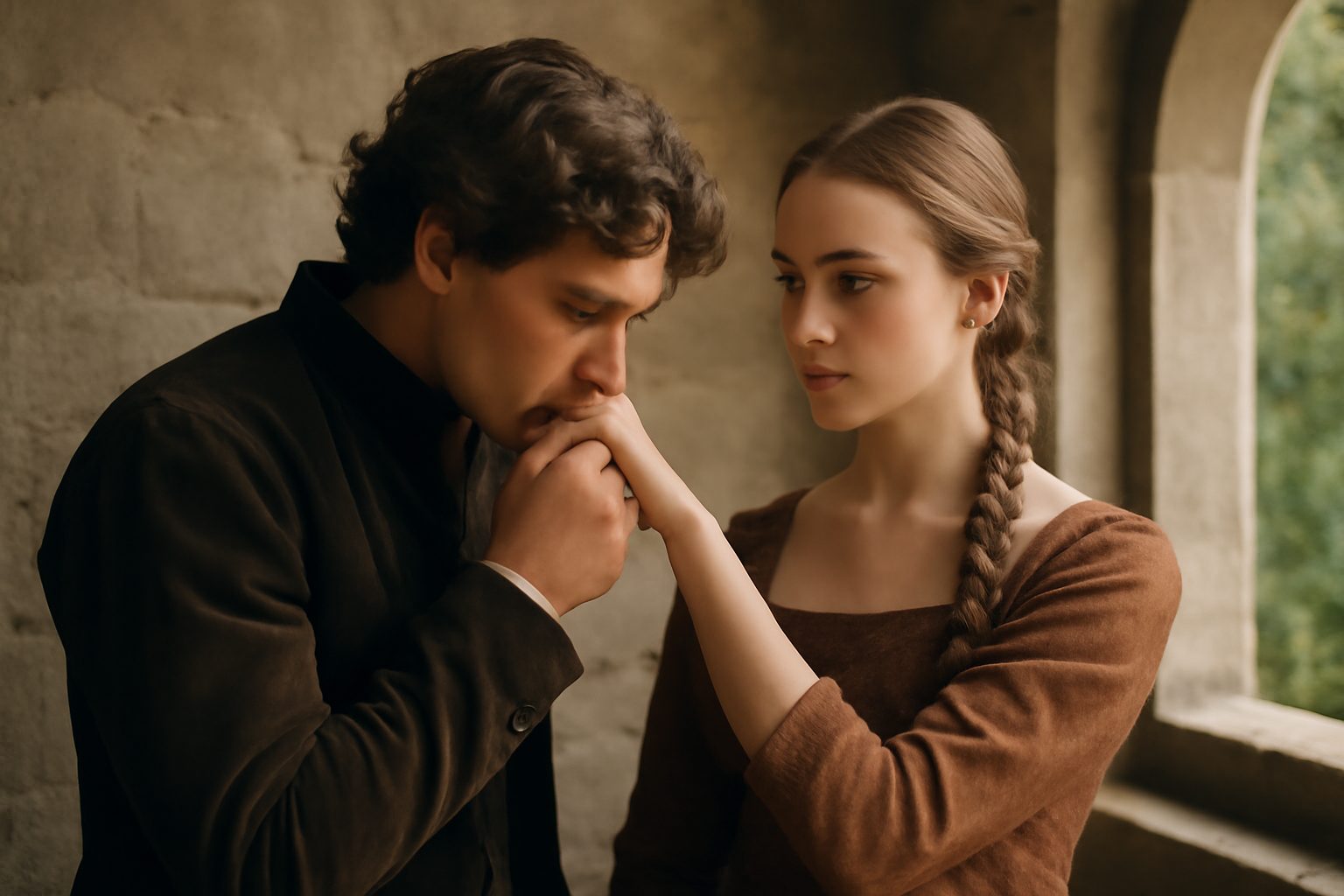
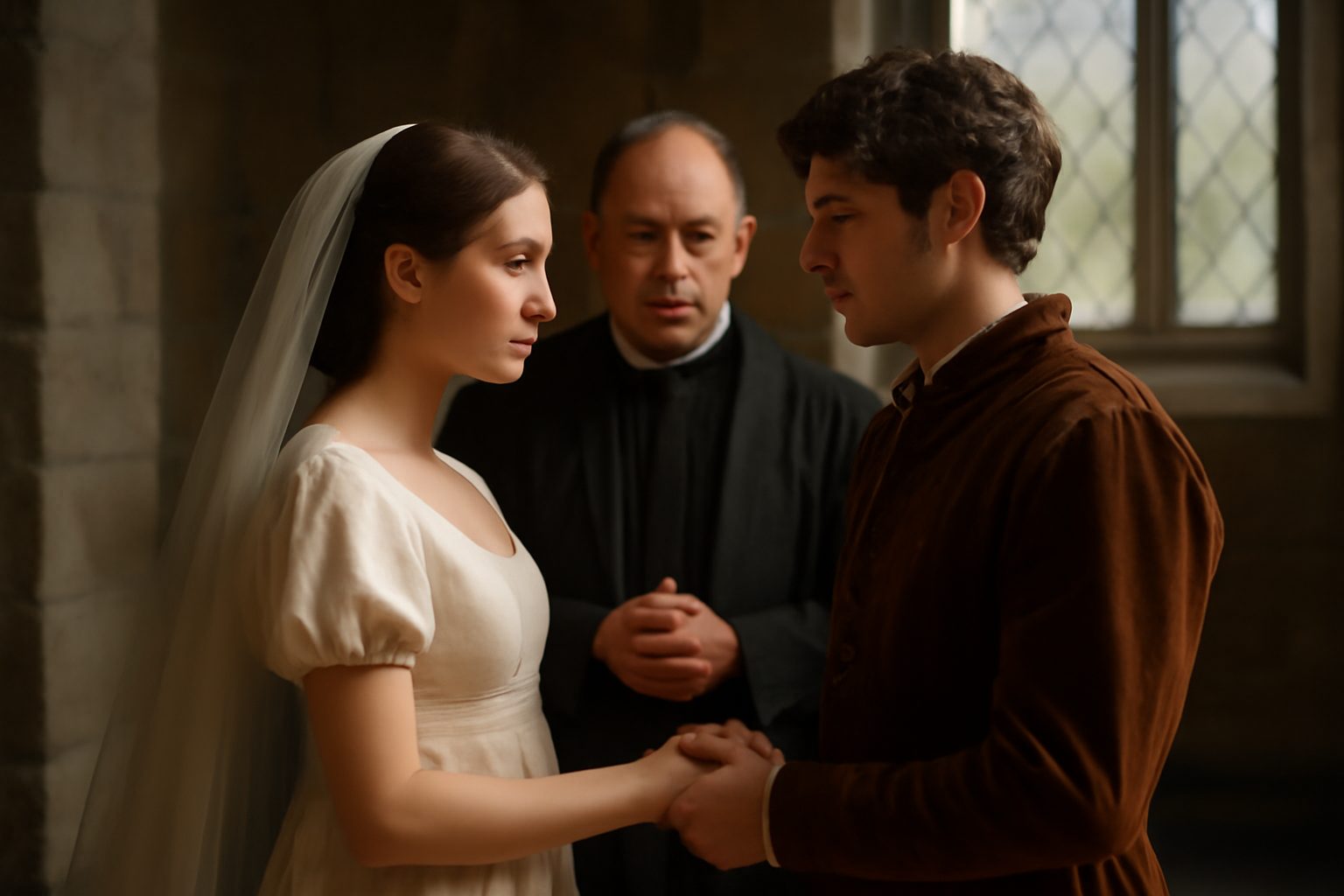
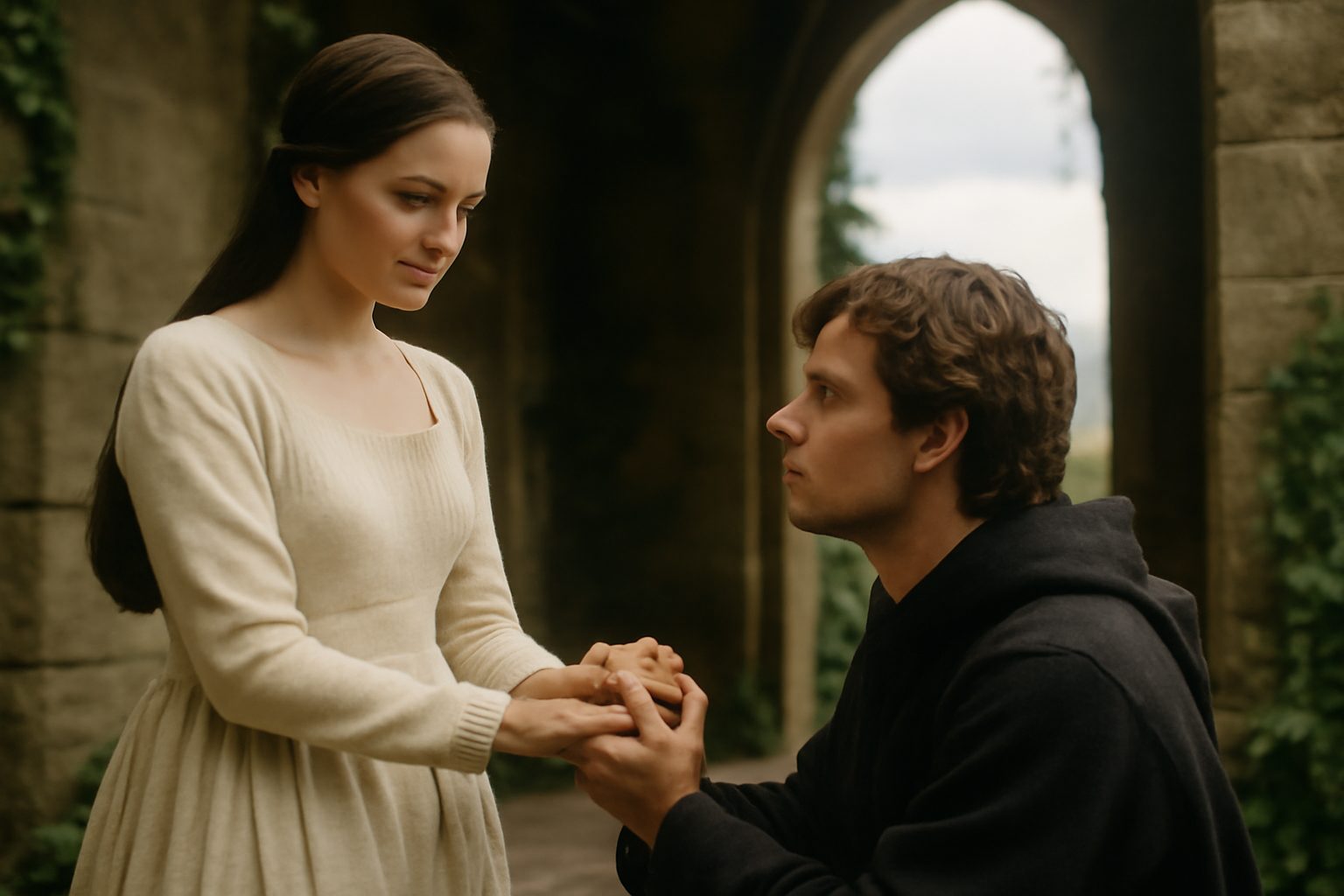
In Act 2, Scene 6 of Romeo and Juliet, Friar Laurence is about to marry the two lovers in secret. As Romeo arrives first, the Friar warns him that intense passion can burn out as quickly as it ignites. When Juliet enters, the Friar insists he will not leave them alone together, subtly cautioning them against reckless haste.
Friar Laurence: "For, by your leaves, you shall not stay alone"
In modern day english, we would say:
You won’t be left alone here, because I won’t let you stay by yourselves.
Frequently Asked Questions
What does Friar Laurence mean when he says Romeo and Juliet should not be left alone?
Friar Laurence is suggesting that Romeo and Juliet should not be left alone together because he is about to marry them and wants to ensure everything is proper.
Connections to other verses:
Connections to Friar Laurence's Warning
The verse "For, by your leaves, you shall not stay alone" serves as a practical conclusion to the scene, but its tone contrasts sharply with the Friar's earlier warnings about moderation. In Therefore love moderately; long love doth so;, he cautions against excessive passion, while These violent delights have violent ends foreshadows the tragedy to come. The urgency in the final line dismisses these cautions, emphasizing the lovers' impulsive actions.
Links to Romeo's Idealistic Language
Romeo's earlier declarations of boundless joy, such as But my true love is grown to such excess and It is enough I may but call her mine, reflect the very intensity the Friar warns against. The phrase "you shall not stay alone" accelerates their union, mirroring Romeo's desire to claim ownership and unity expressed in Till holy church incorporate two in one.
Connection to Juliet's Arrival and Imagery
Juliet's entrance is described with ethereal lightness in Here comes the lady: O, so light a foot, which Romeo poetically extends in A lover may bestride the gossamer. The directive "you shall not stay alone" physically brings them together, fulfilling the imagery of delicate unity and contrasting with the Friar's ominous metaphors like And in their triumph die, like fire and powder.
Structural and Emotional Pacing
The line acts as a narrative pivot, closing the scene after Juliet's reciprocal pledge in Ah, Juliet, if the measure of thy joy and the Friar's resigned Come, come with me, and we will make short work. It underscores the headlong rush into marriage, ignoring the thematic warnings of haste, such as Too swift arrives as tardy as too slow.