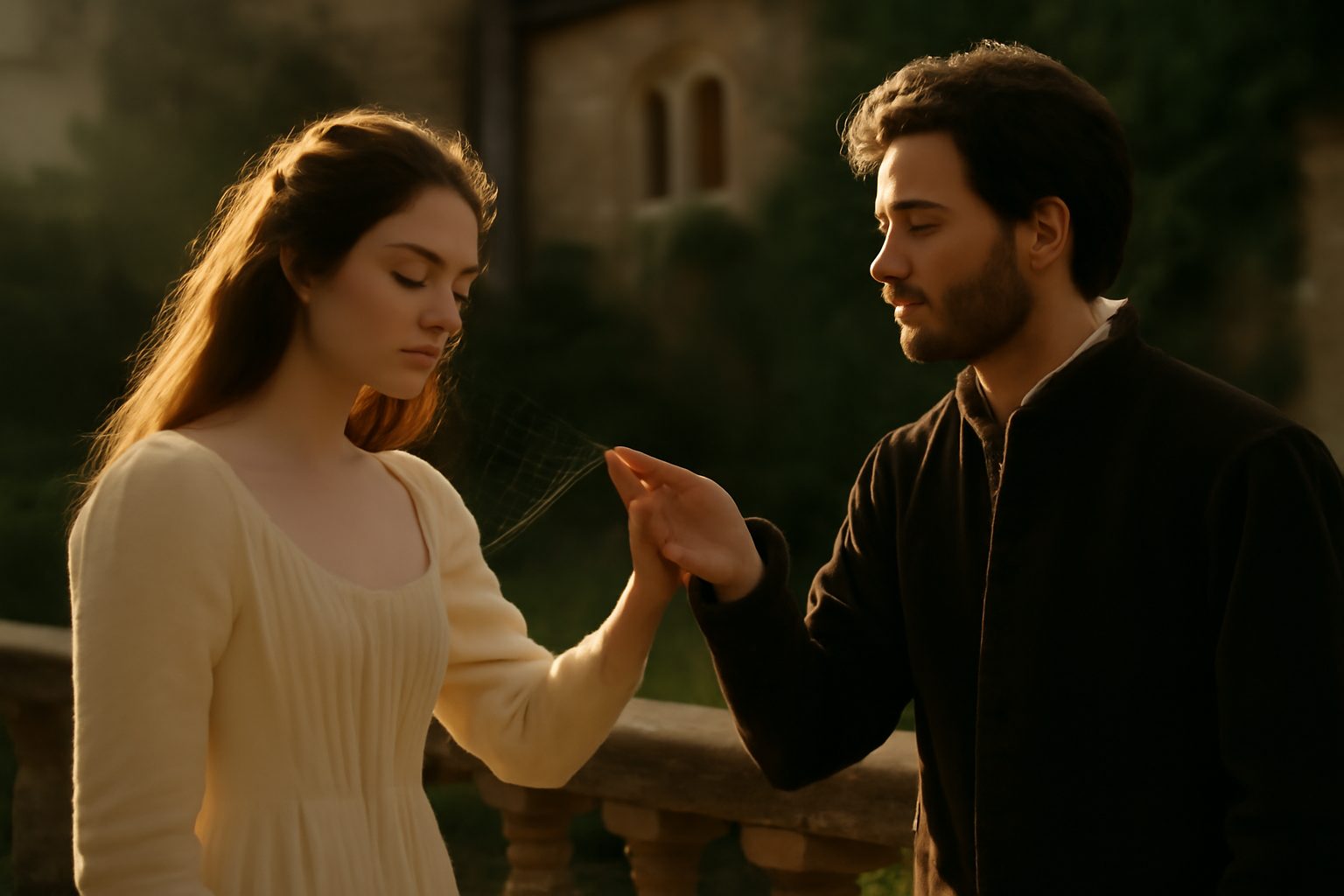
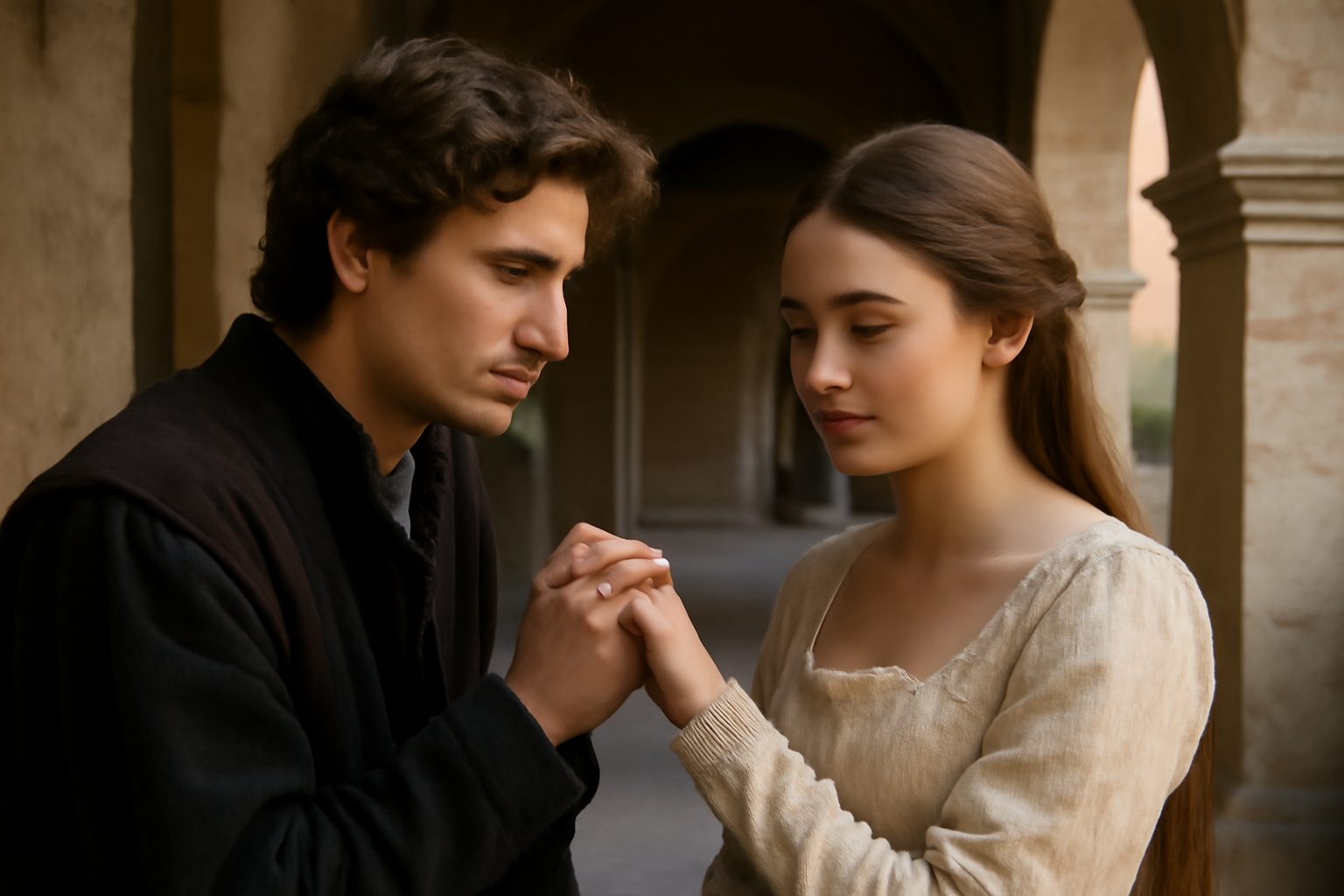
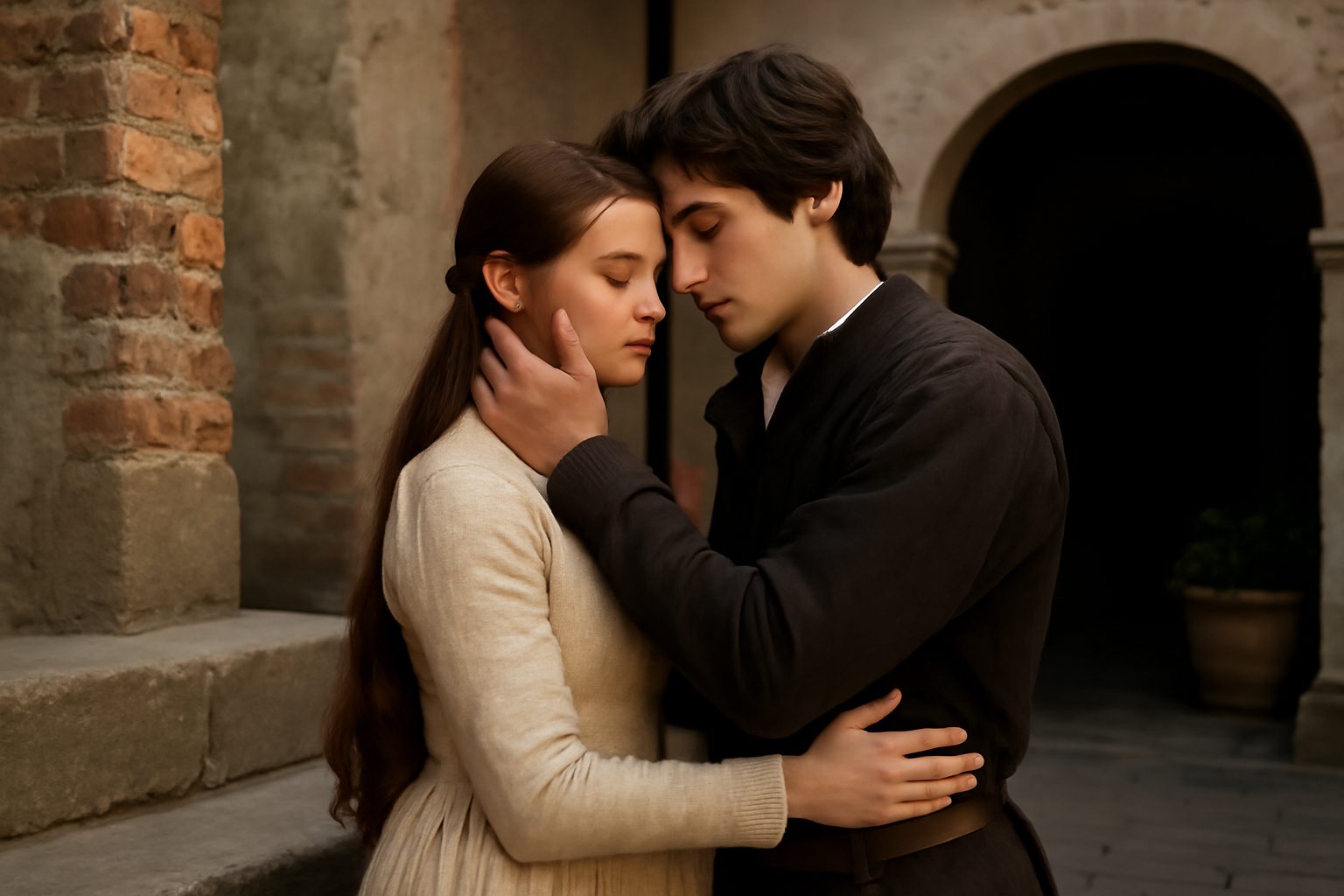
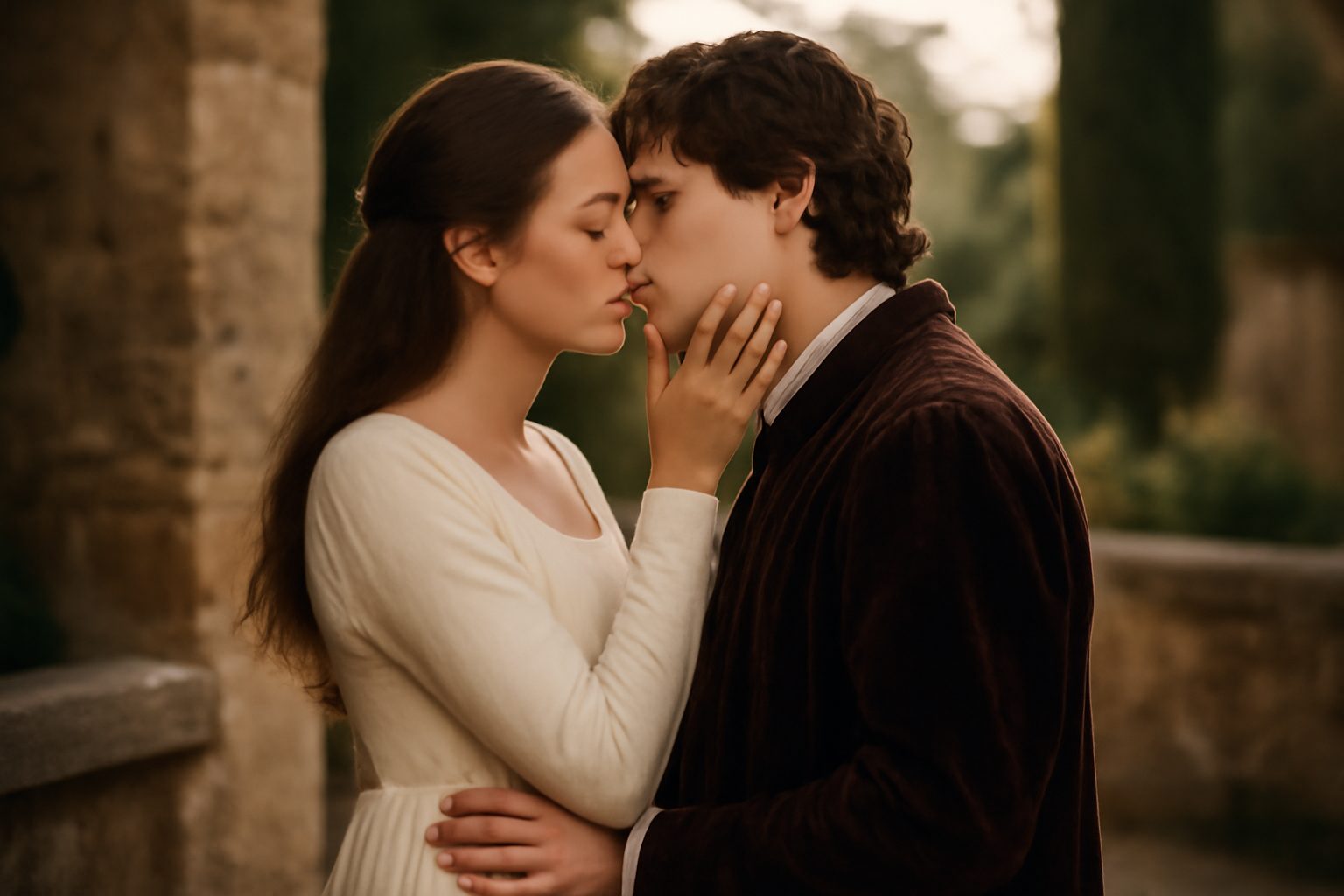
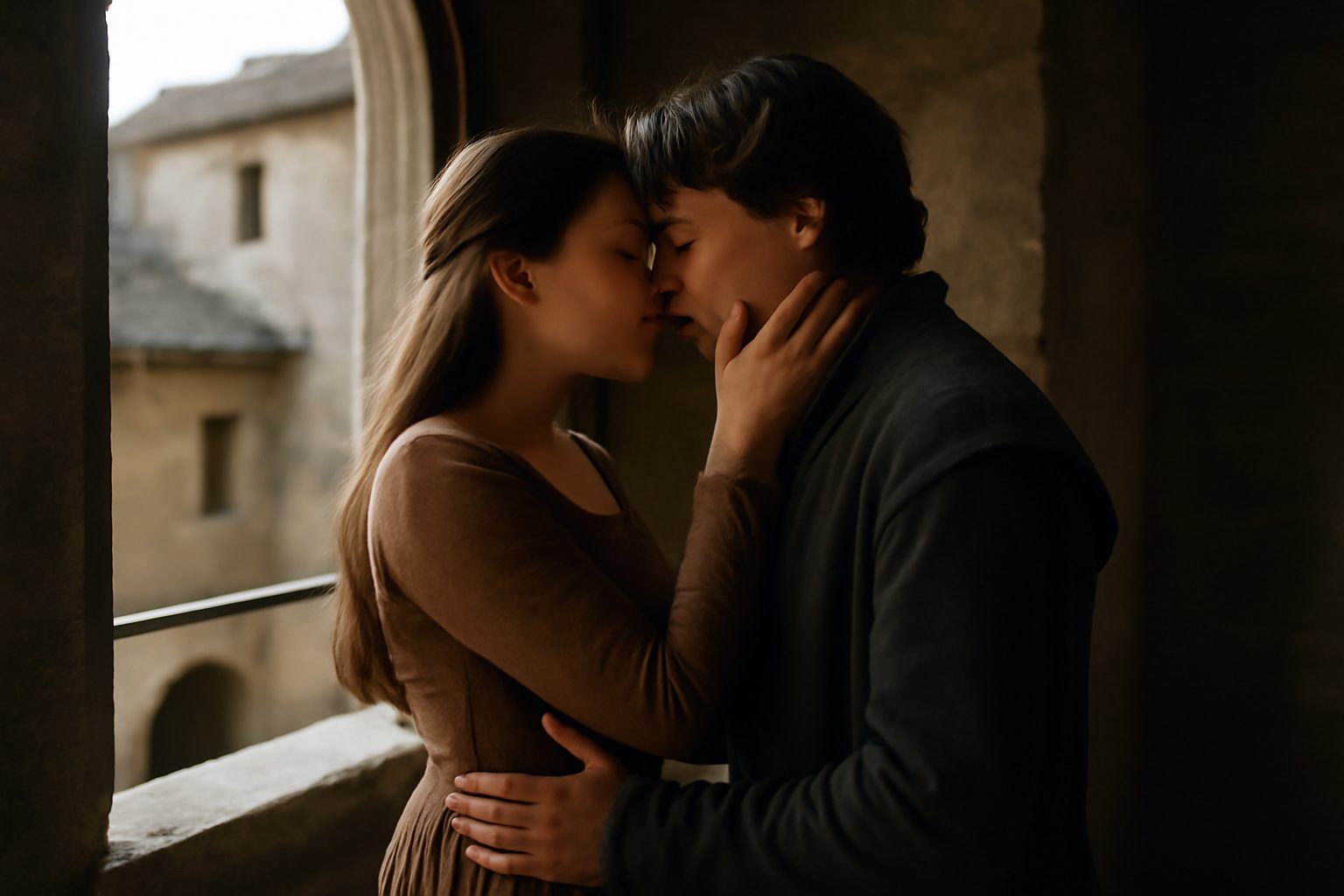
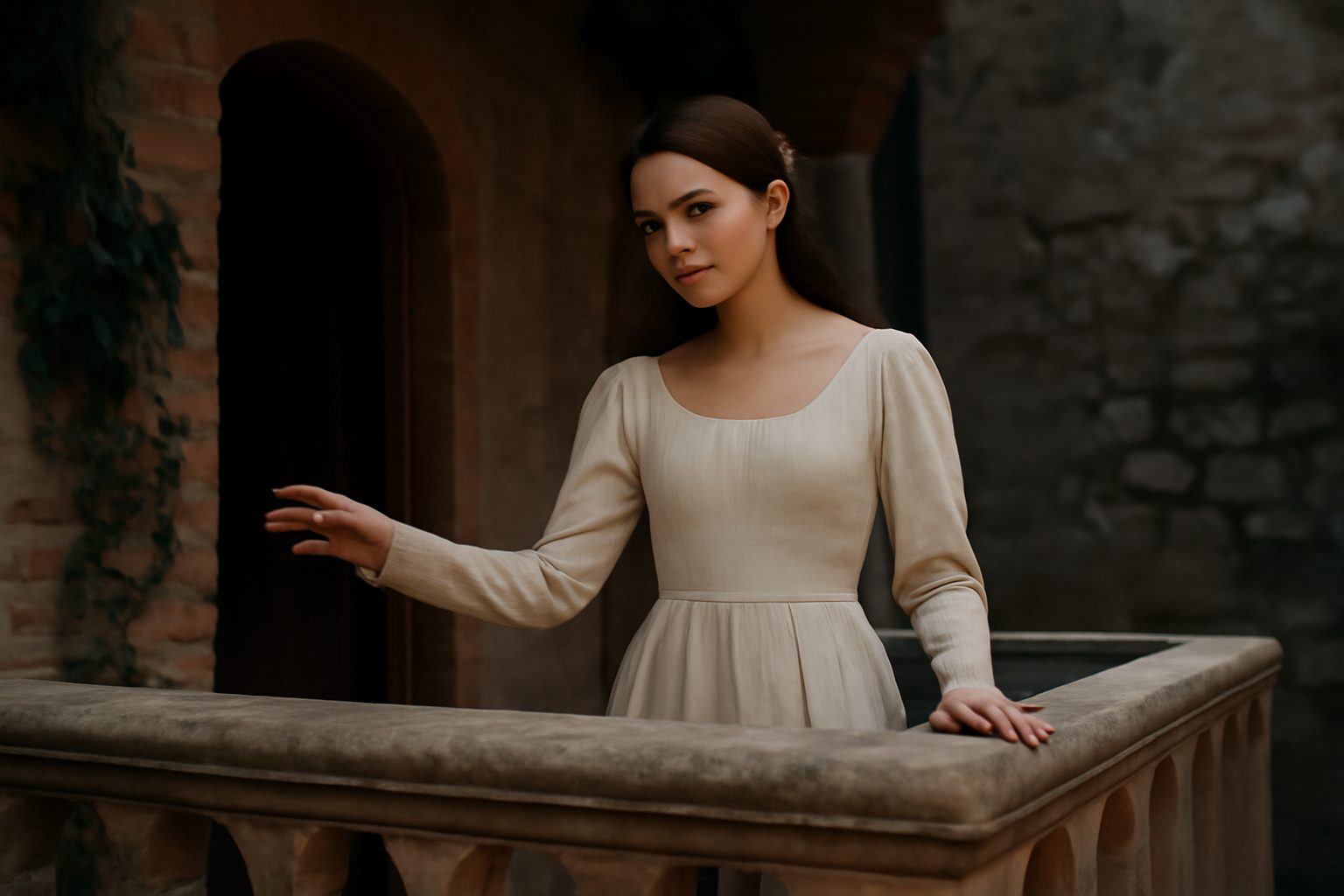
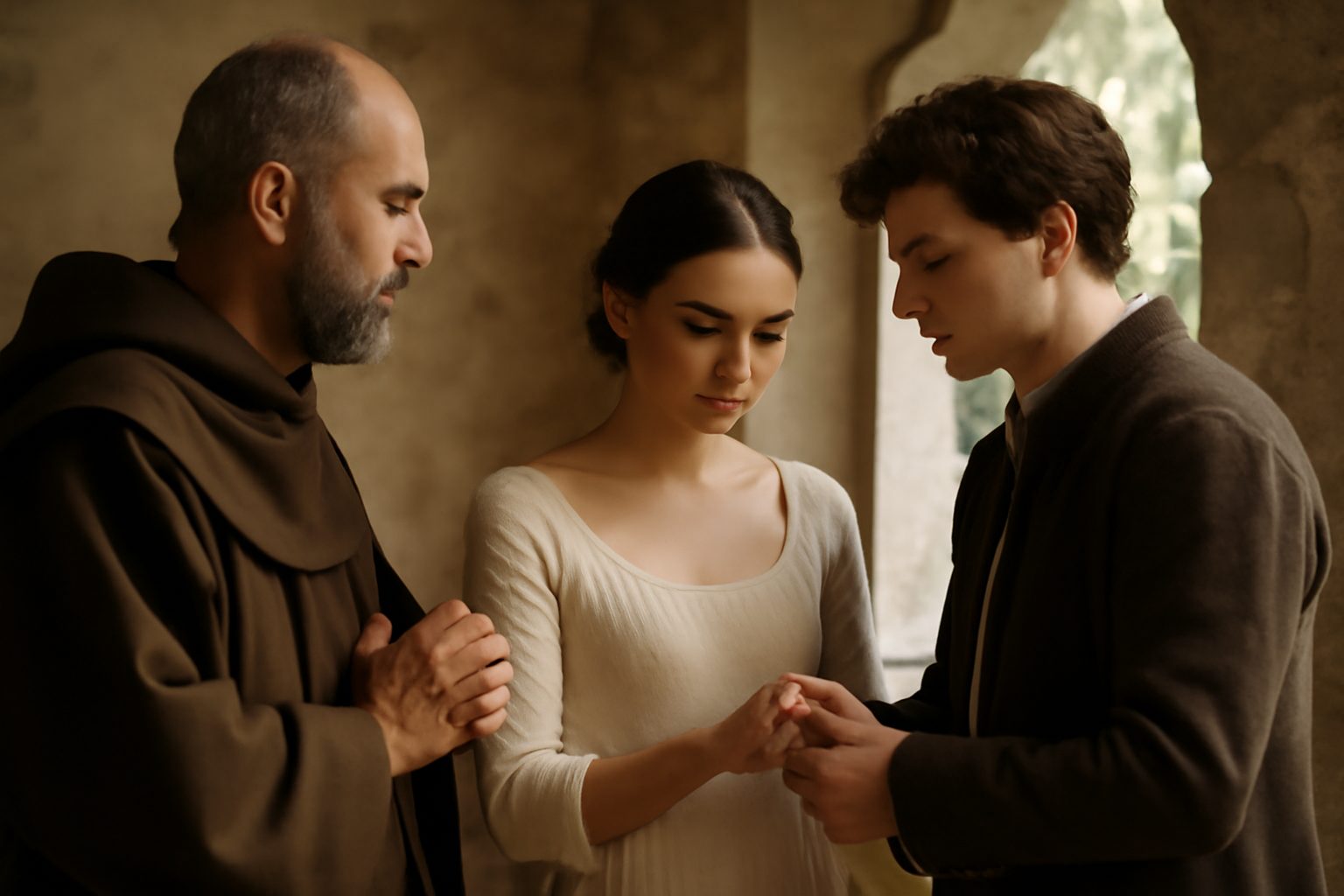
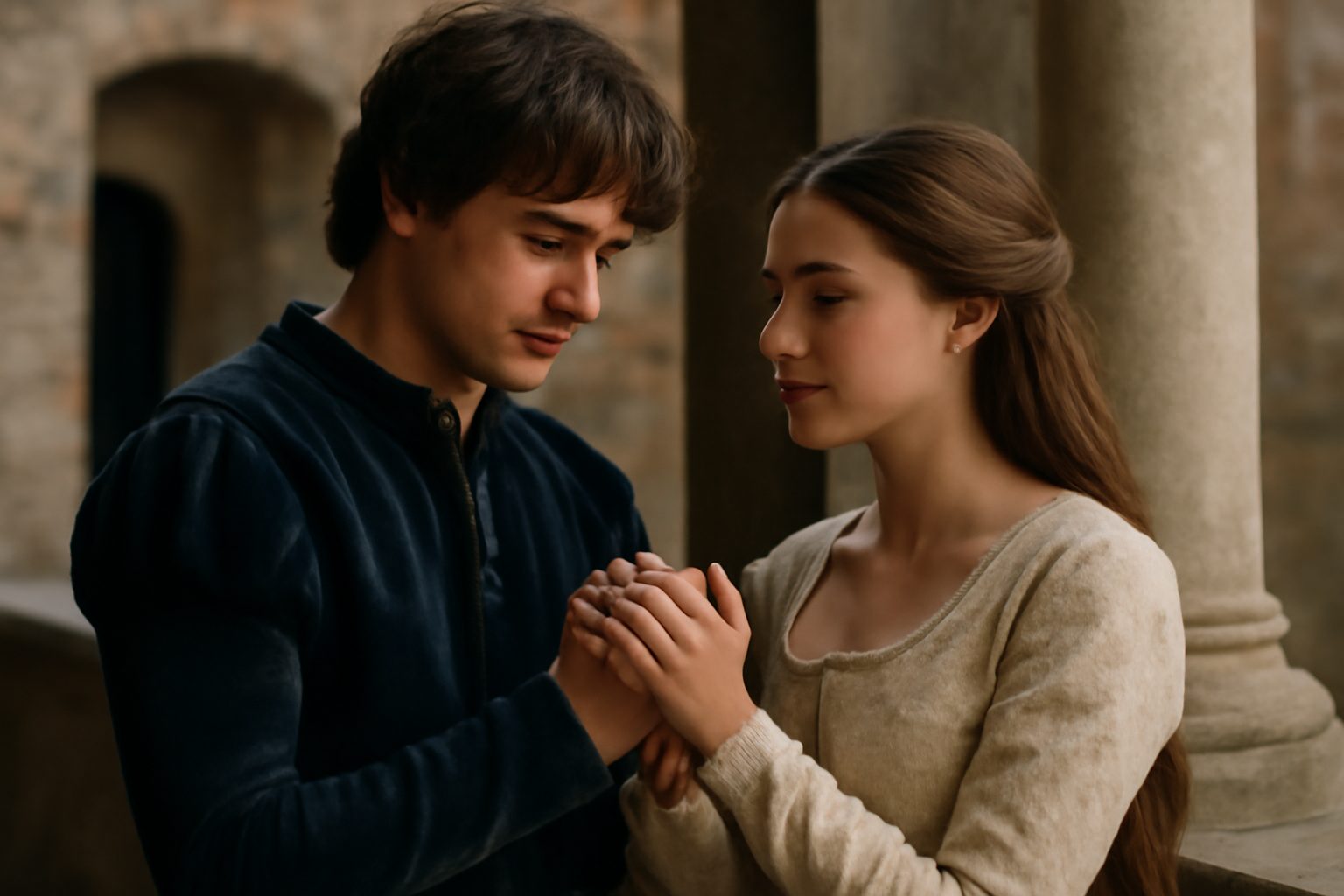
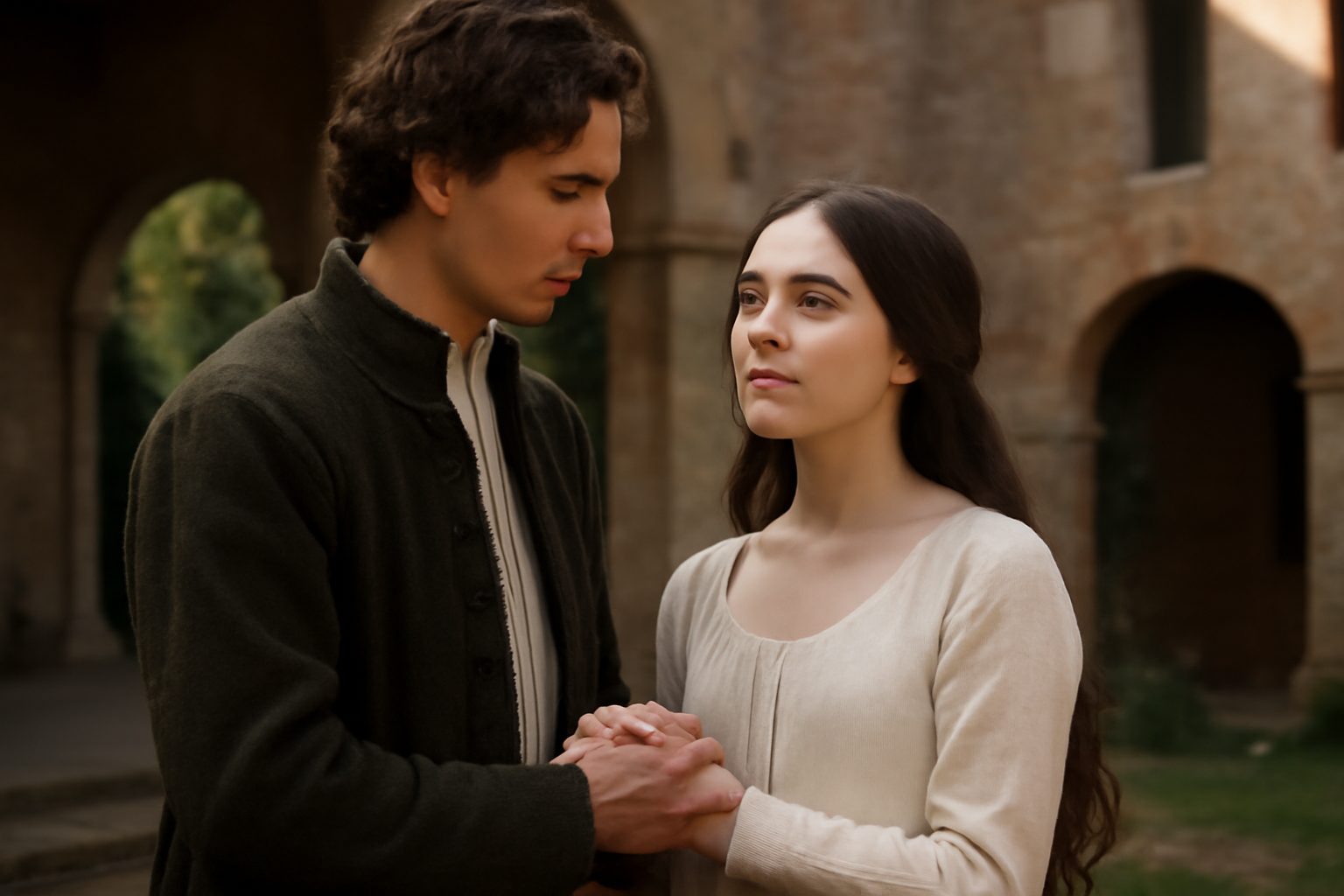
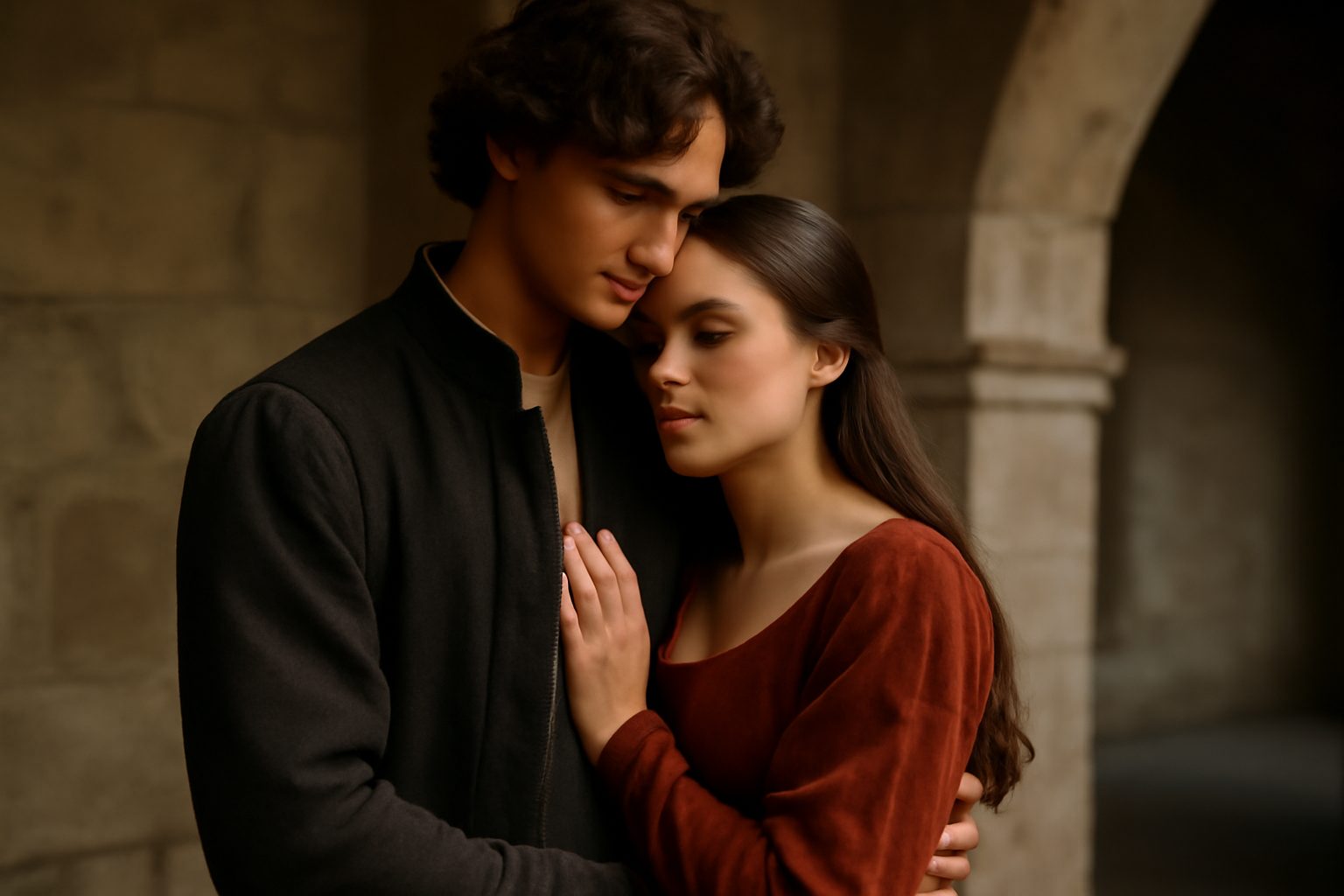
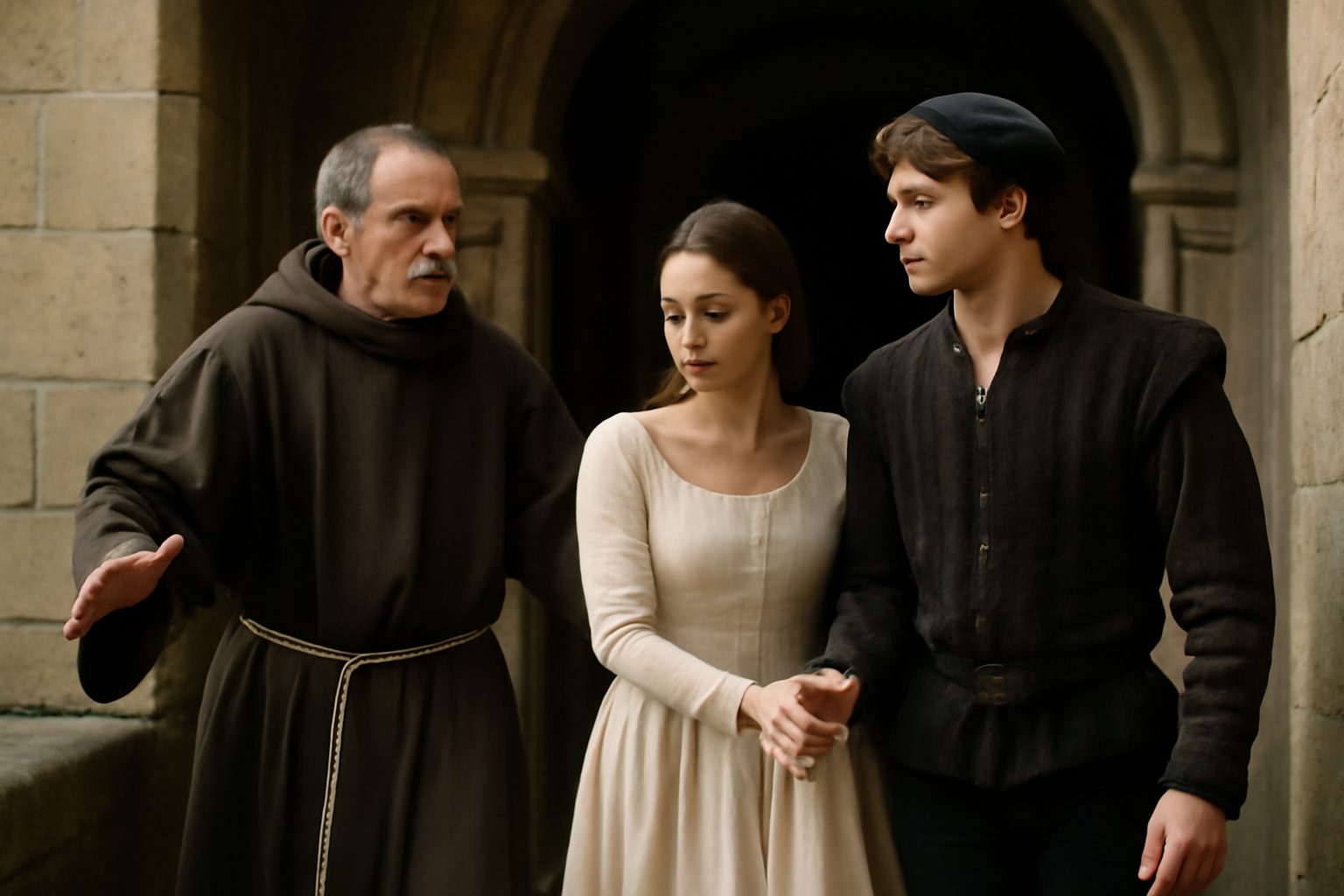
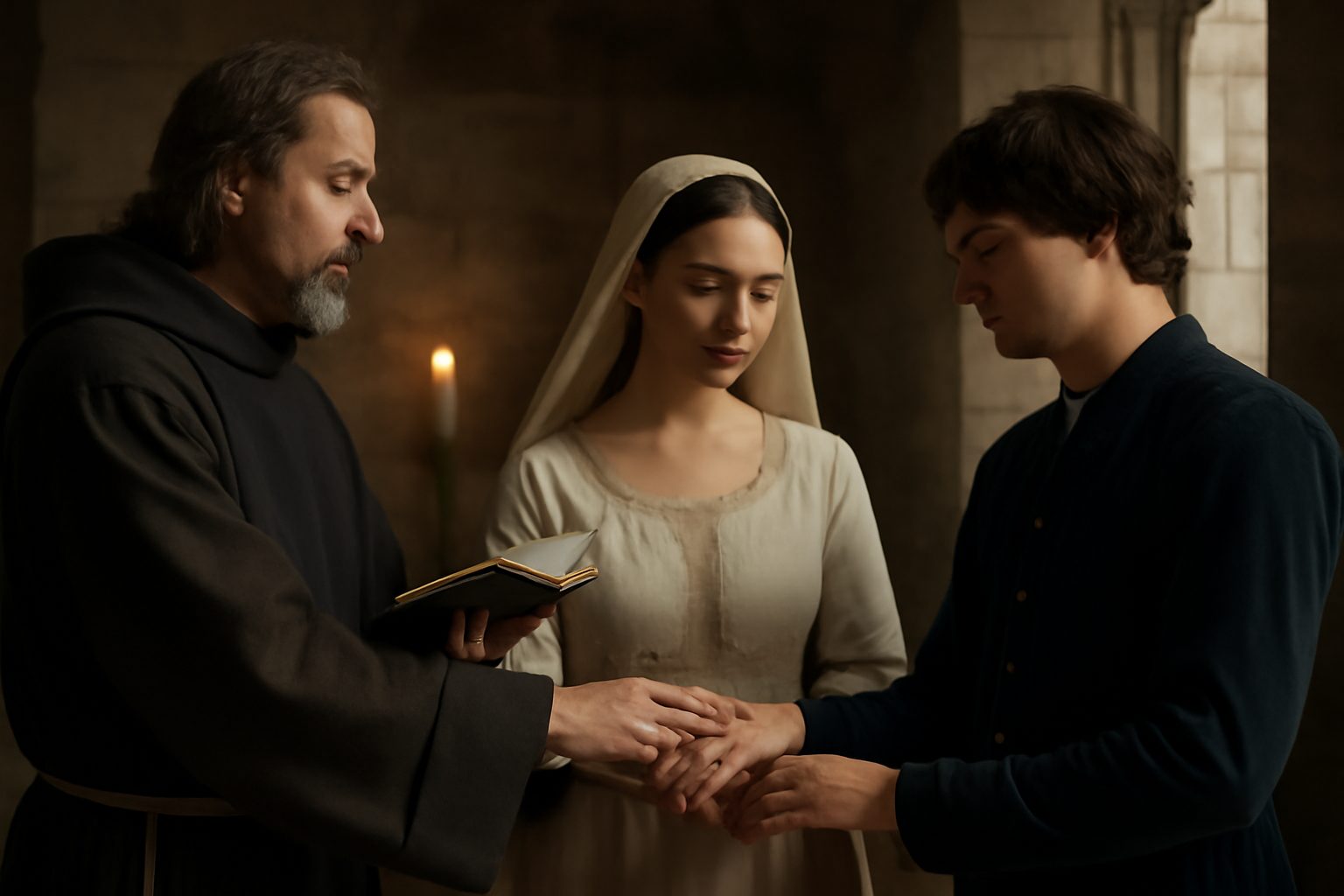
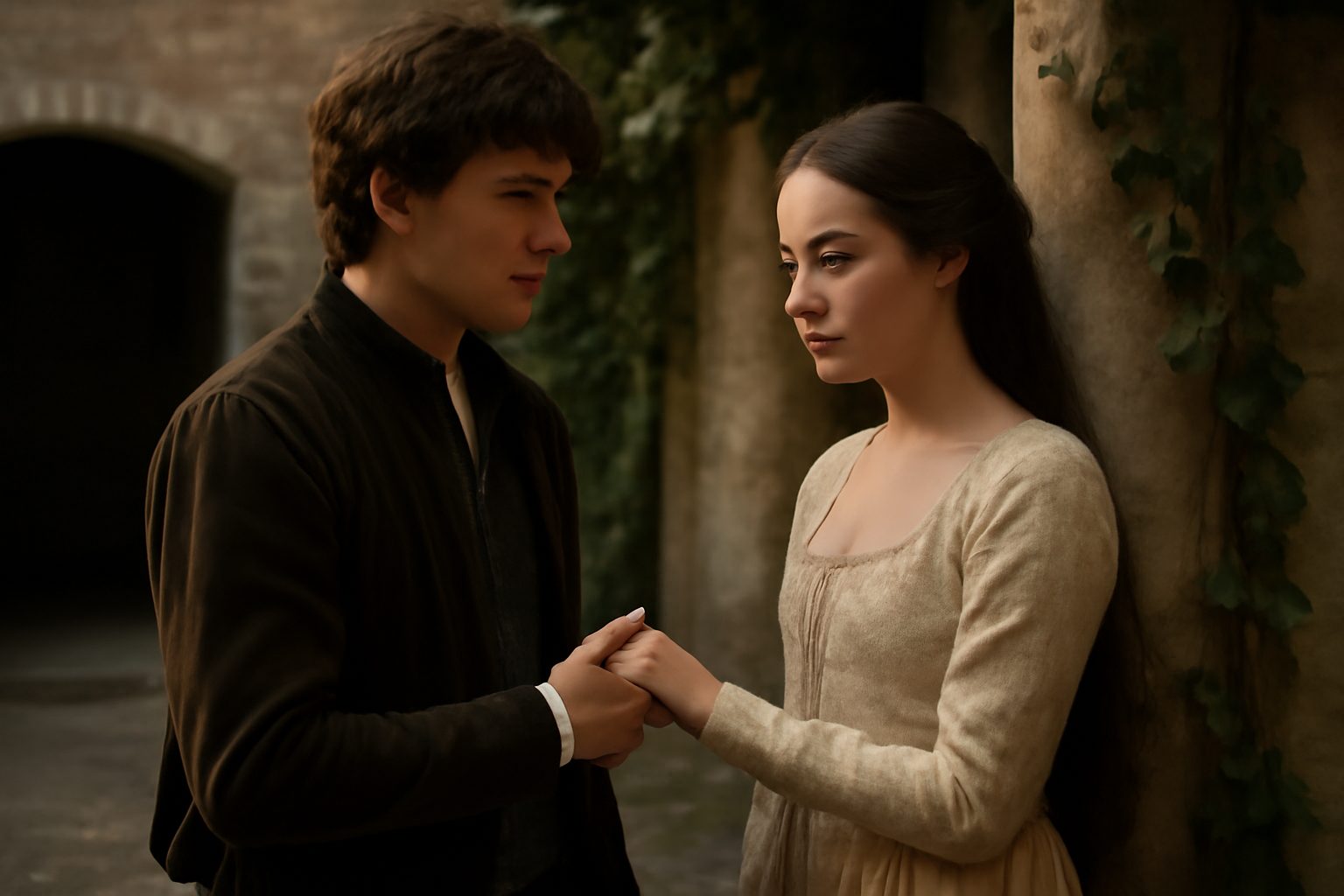
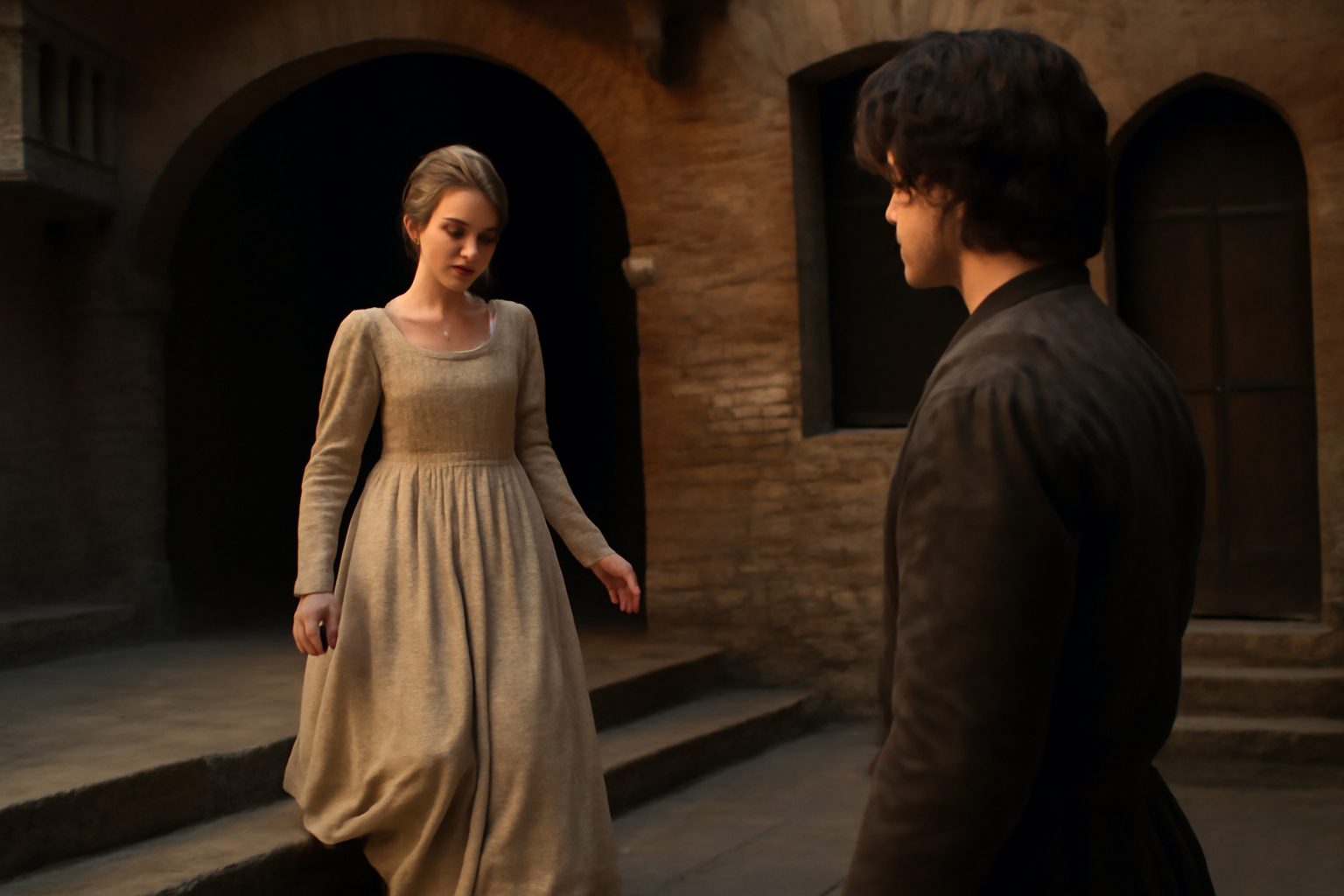
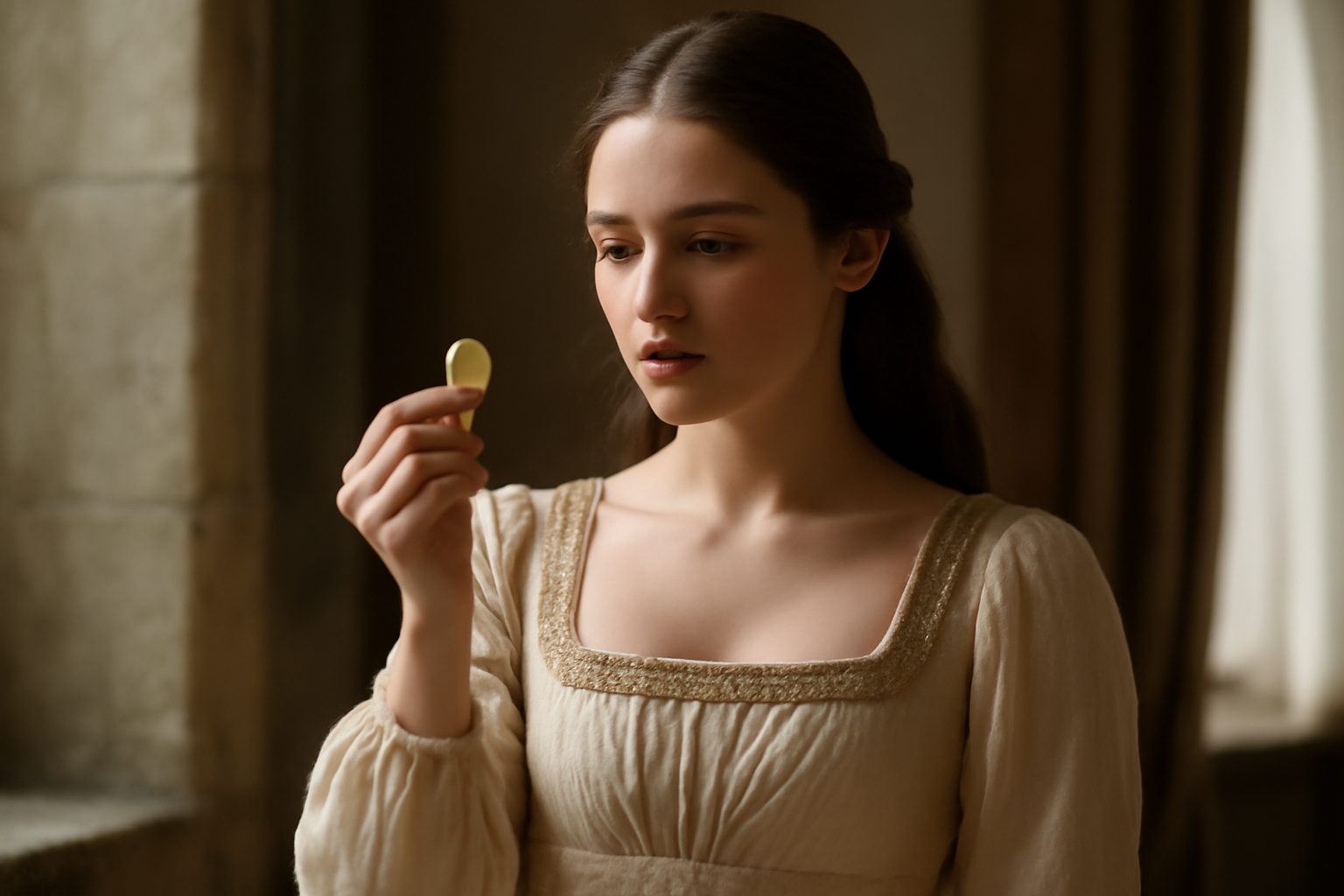
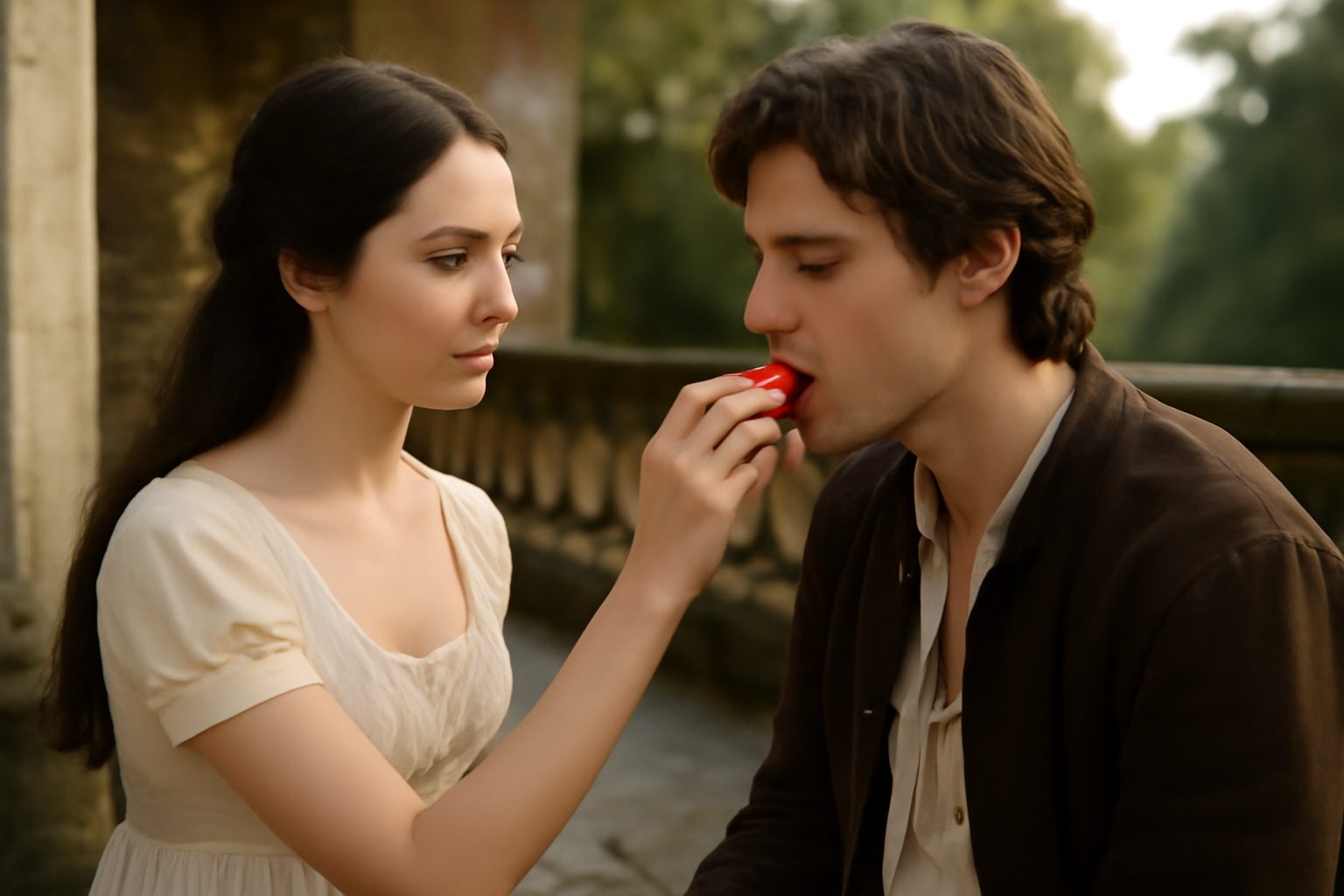
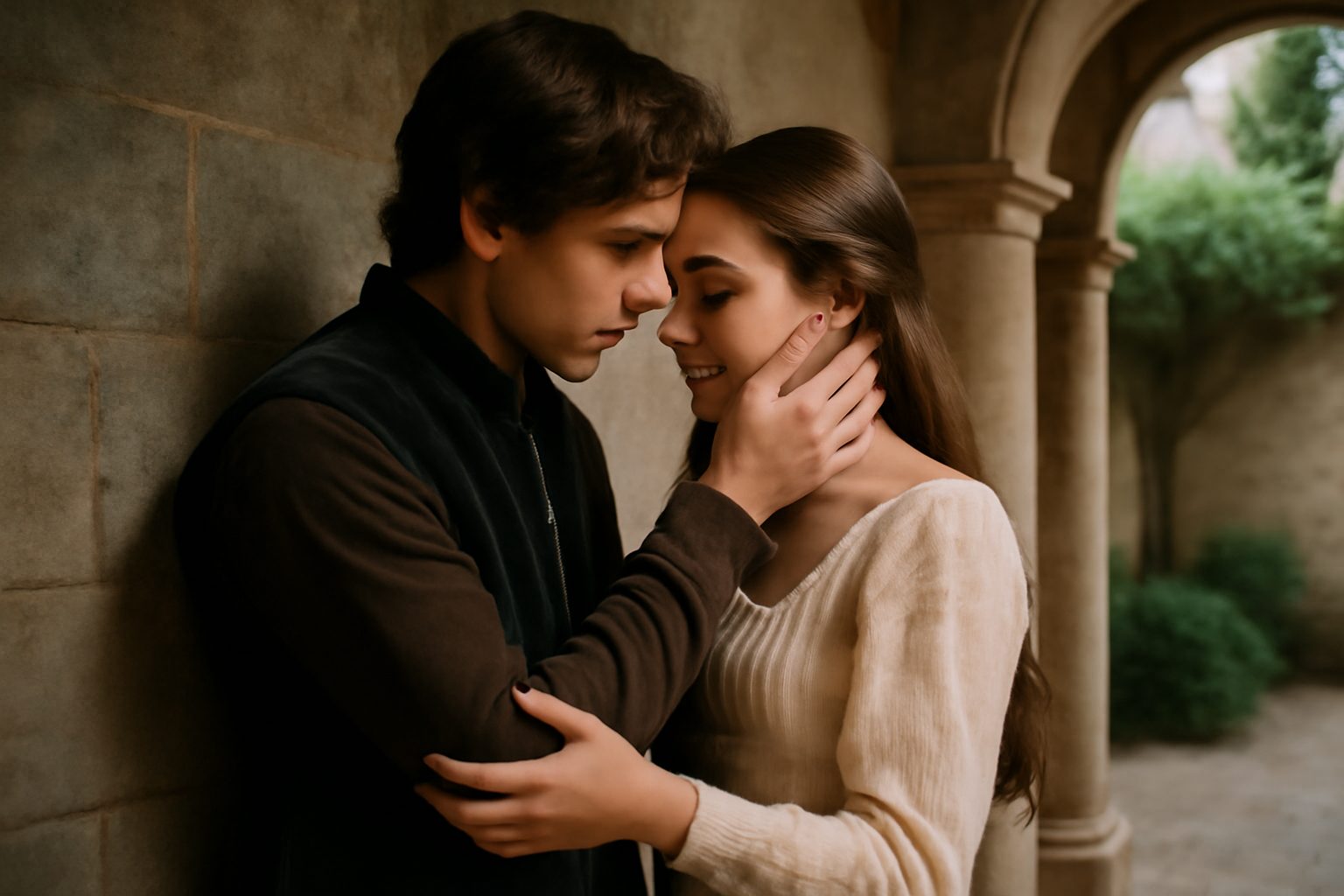
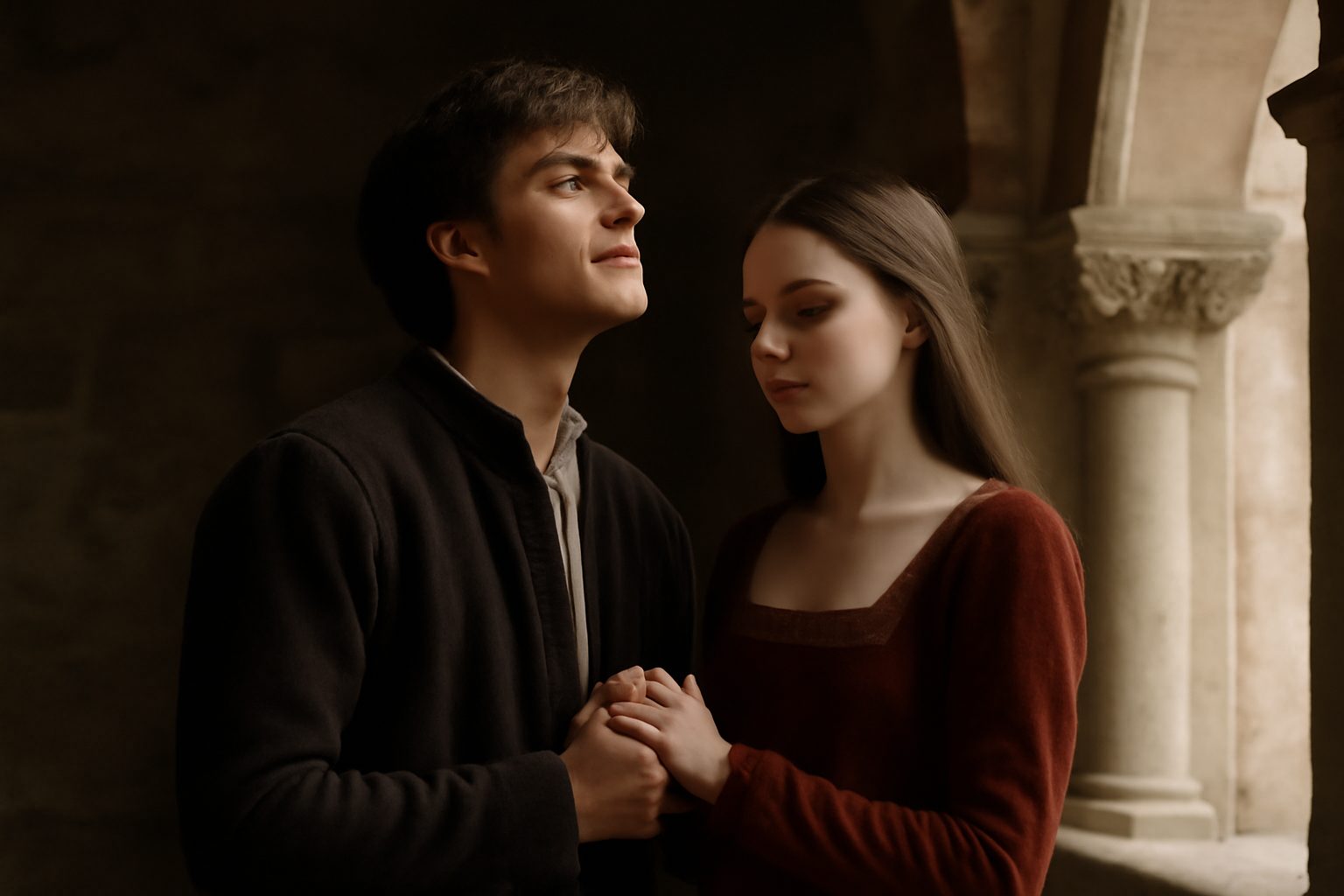
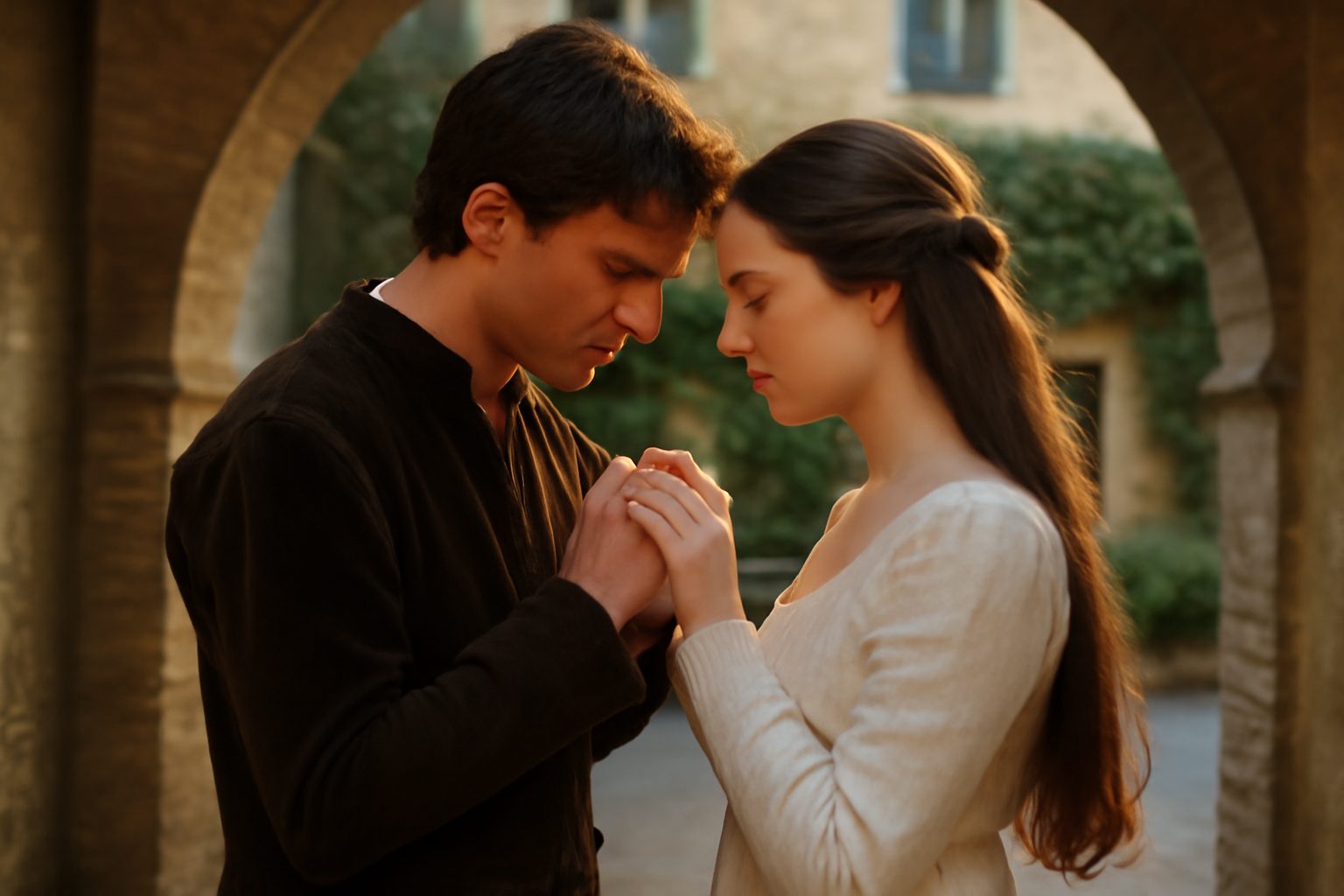
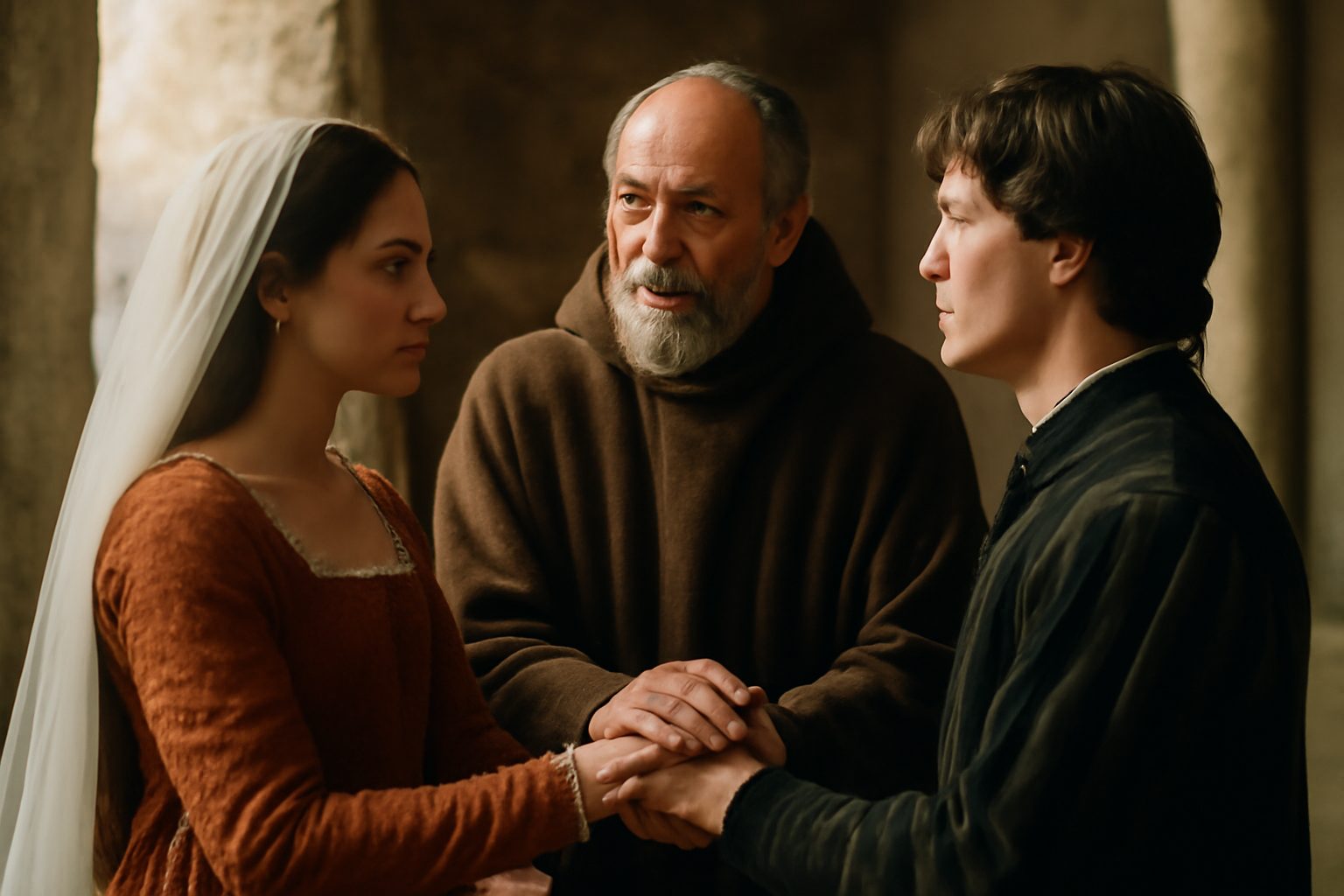
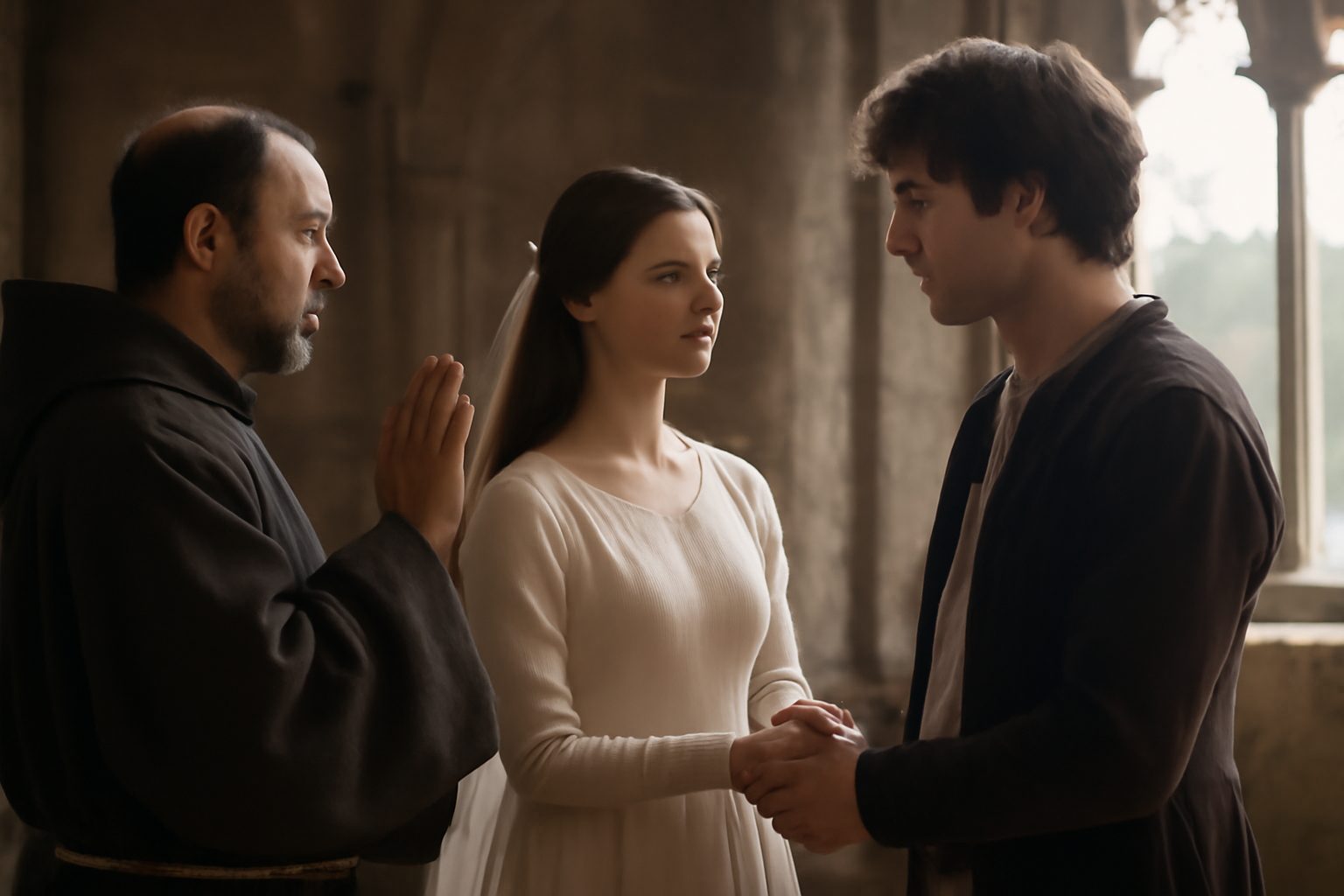
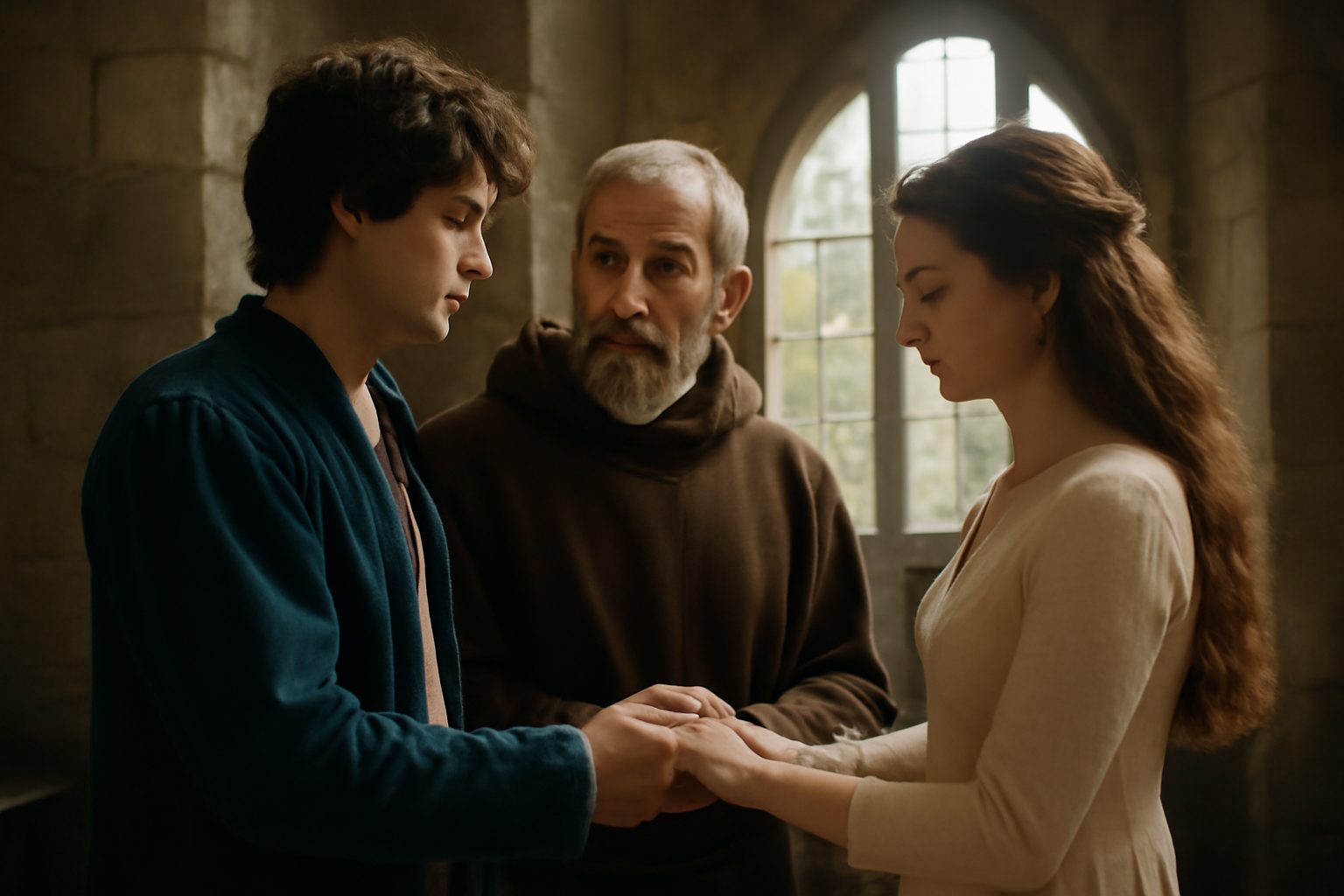
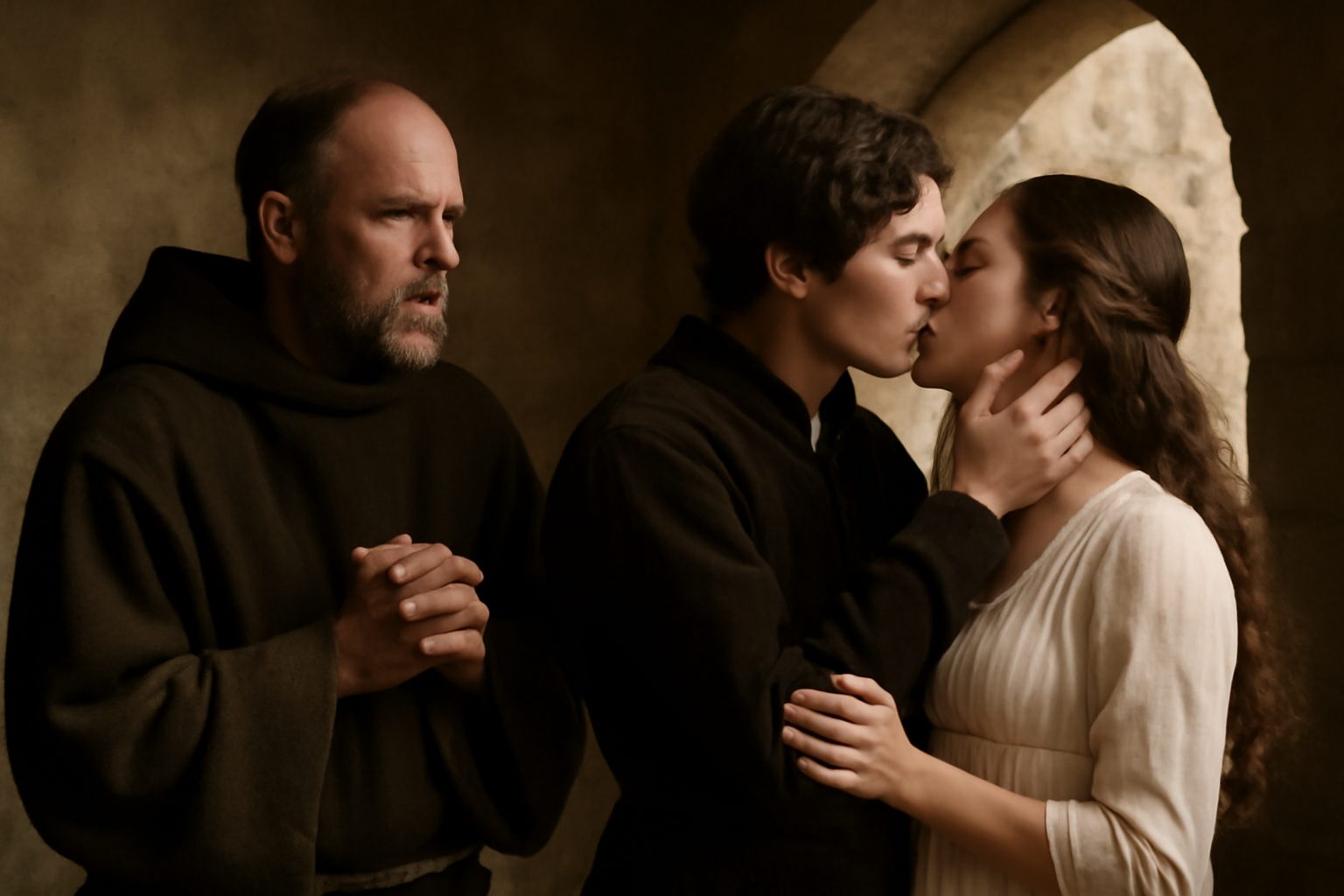
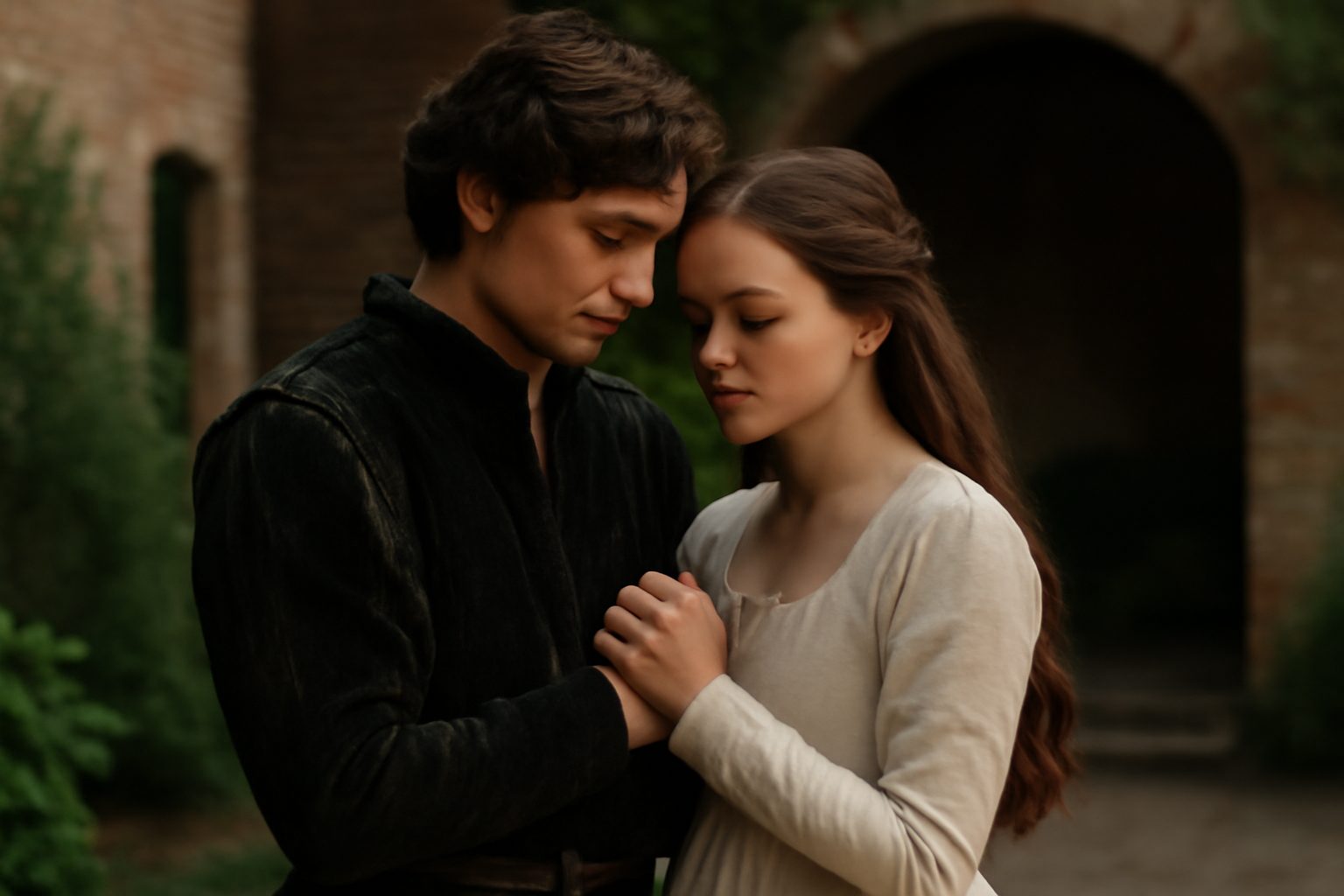
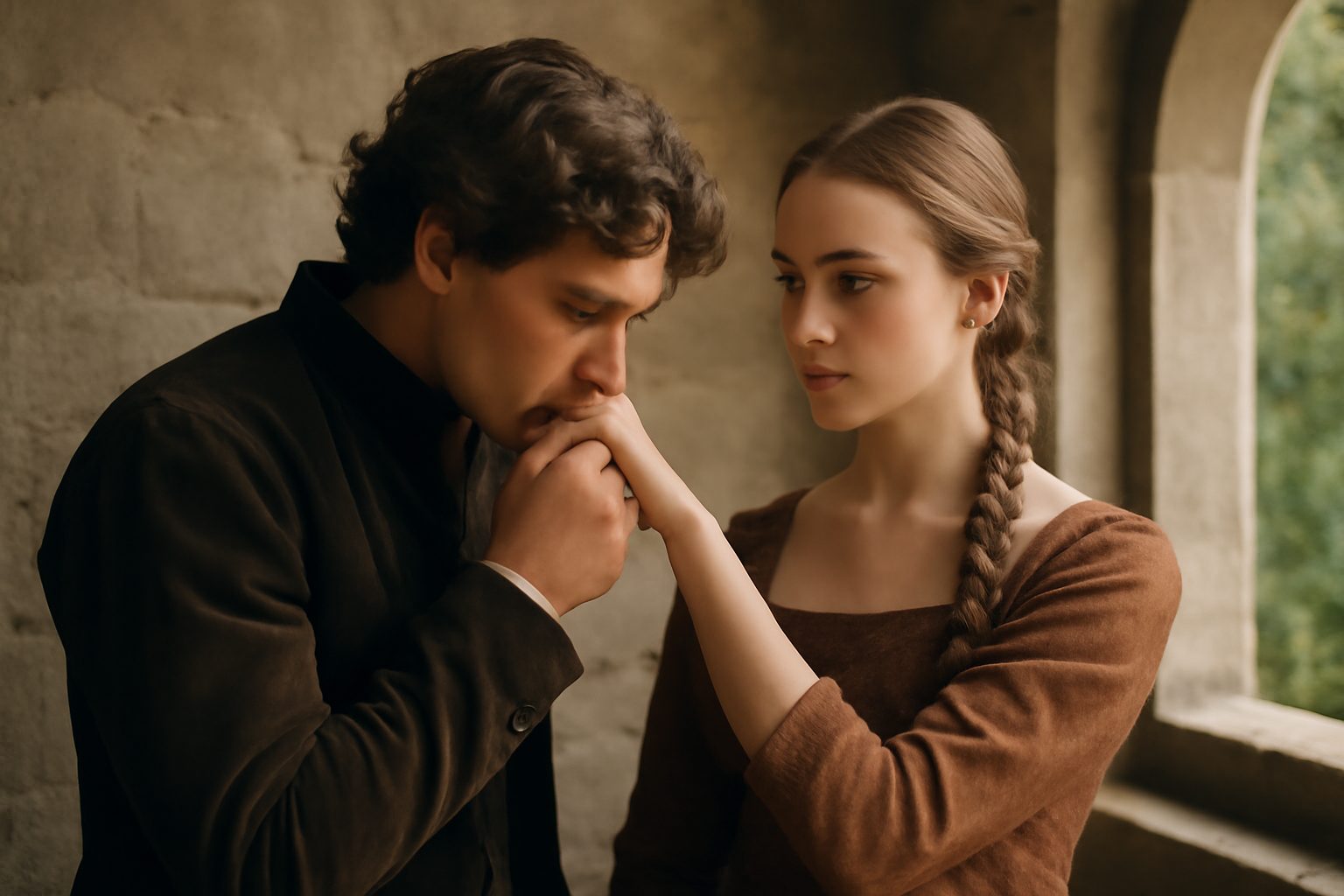
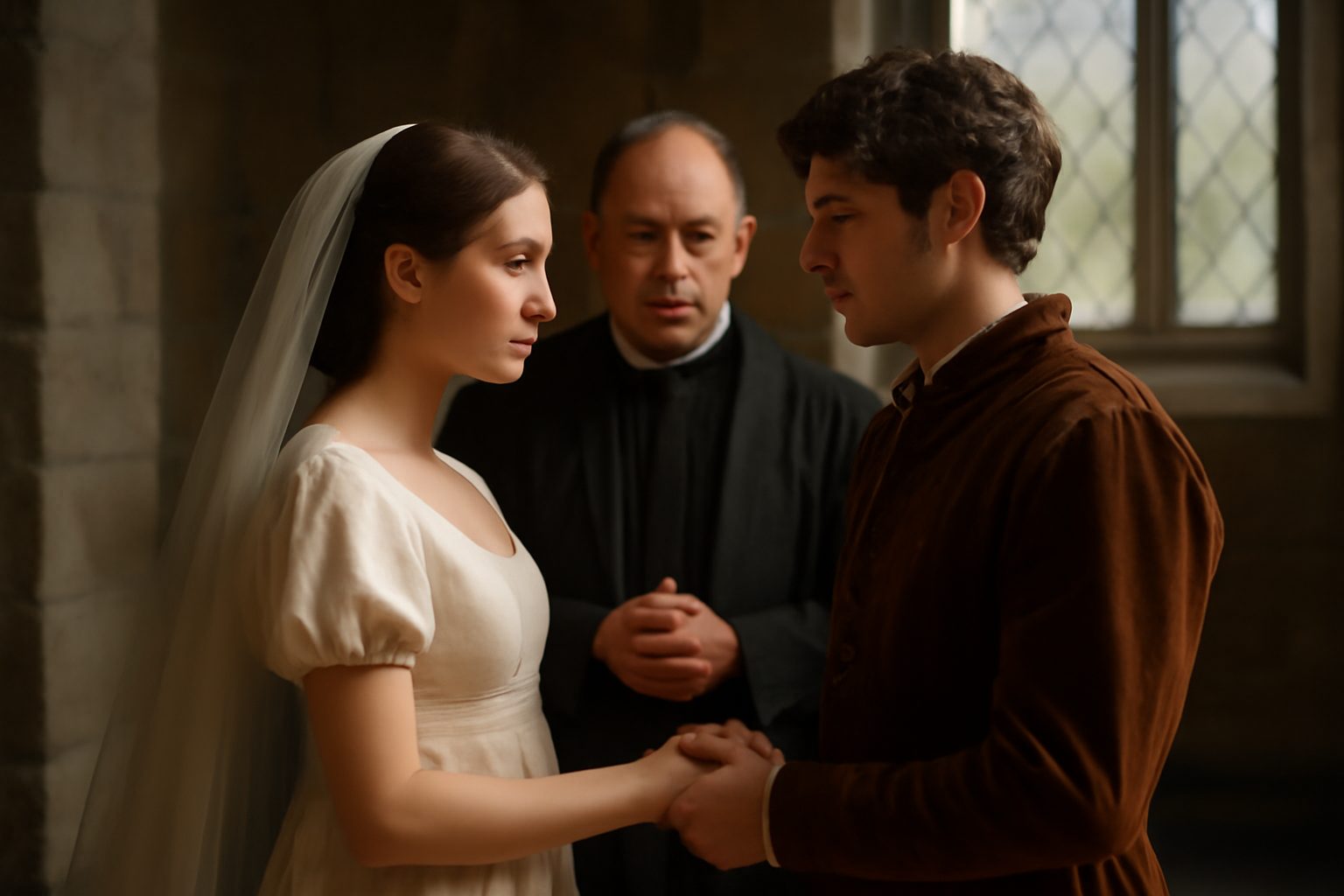
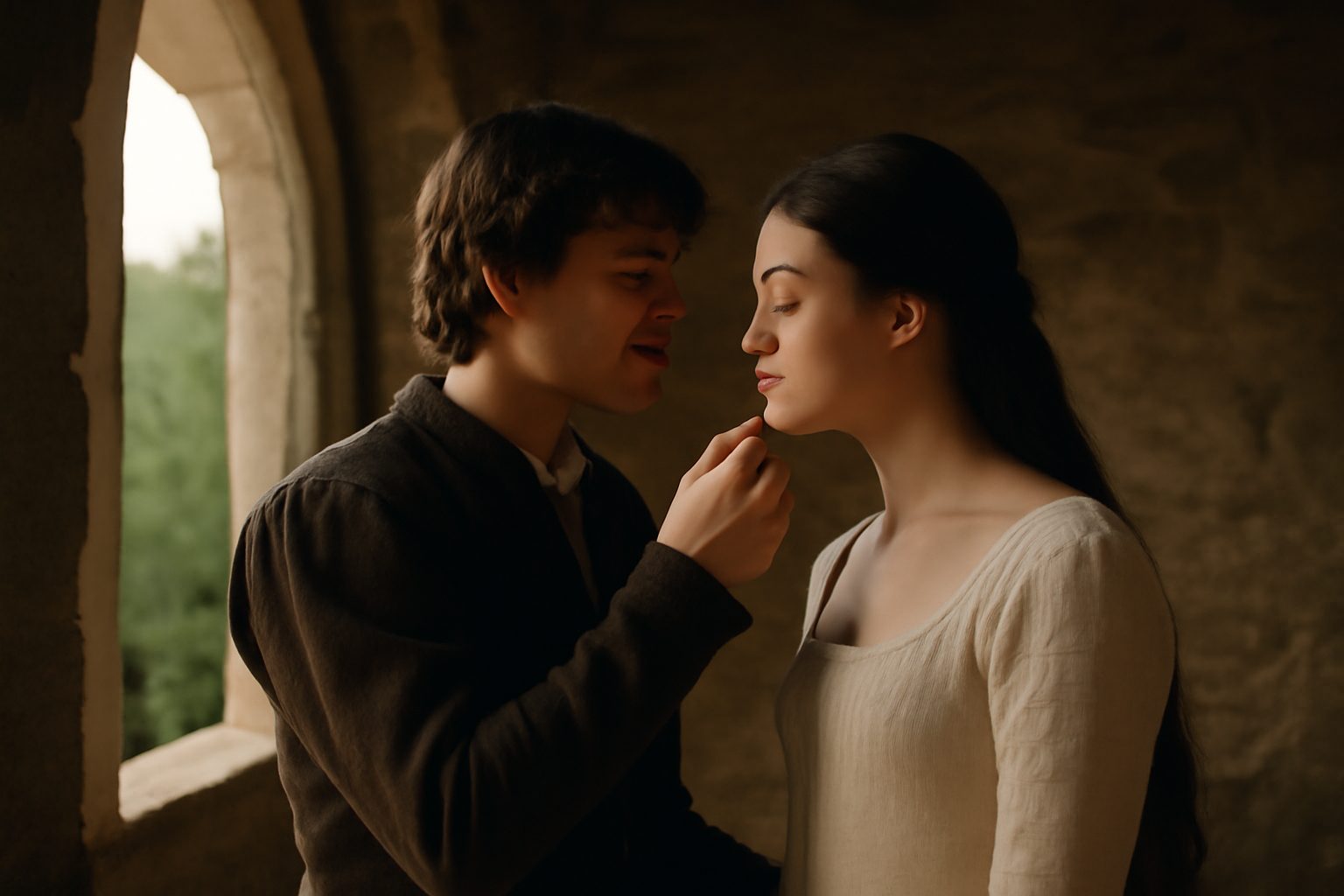
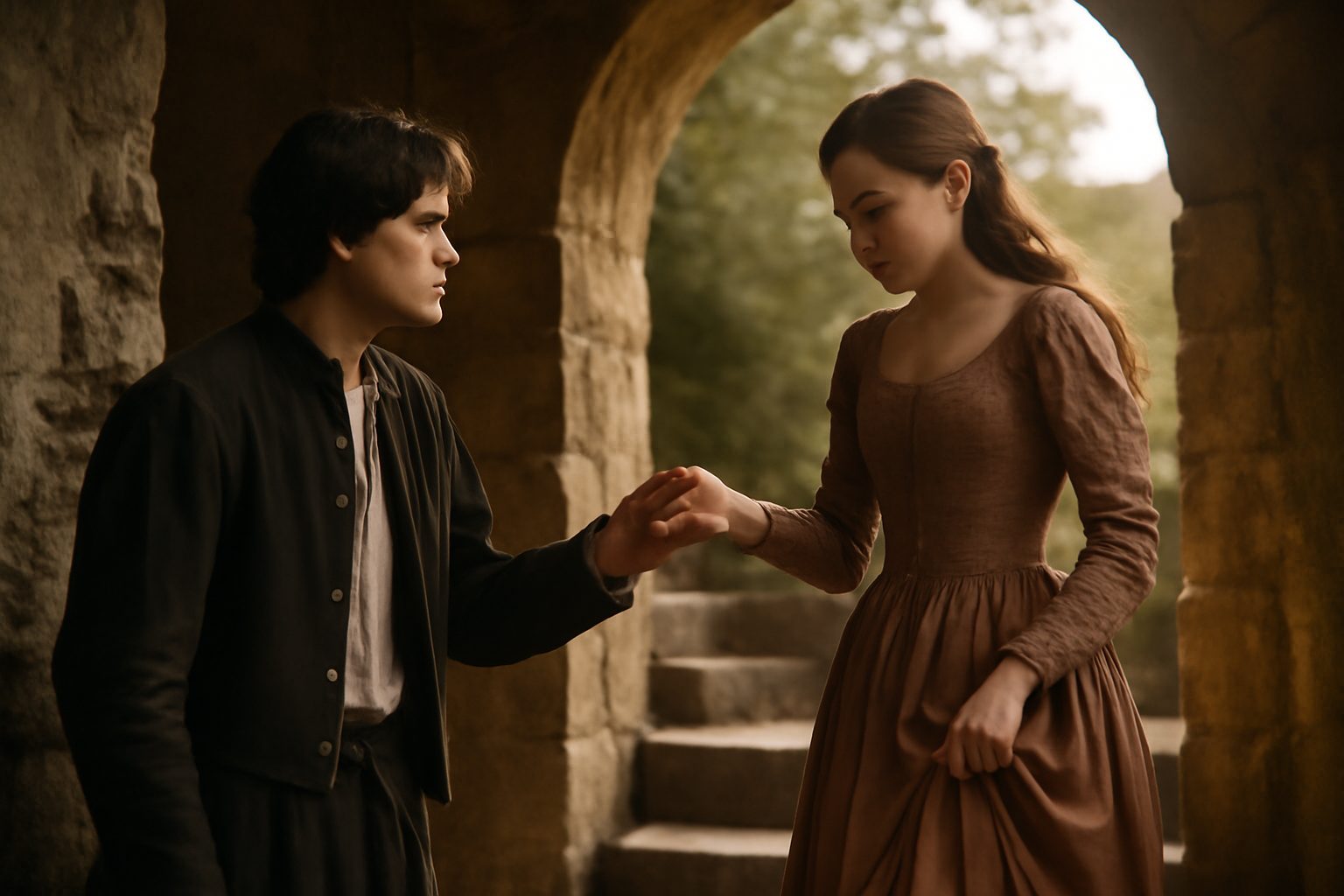
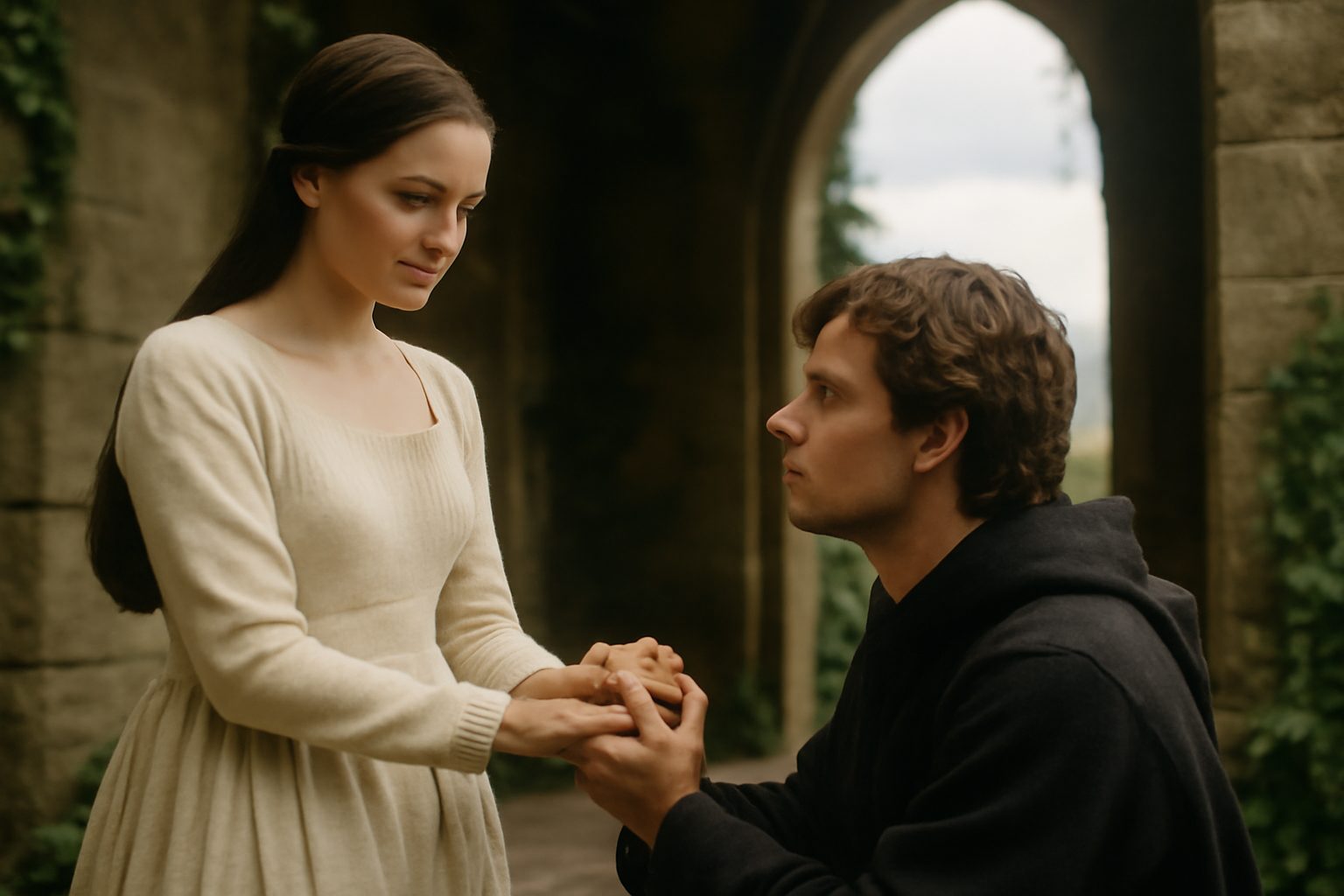
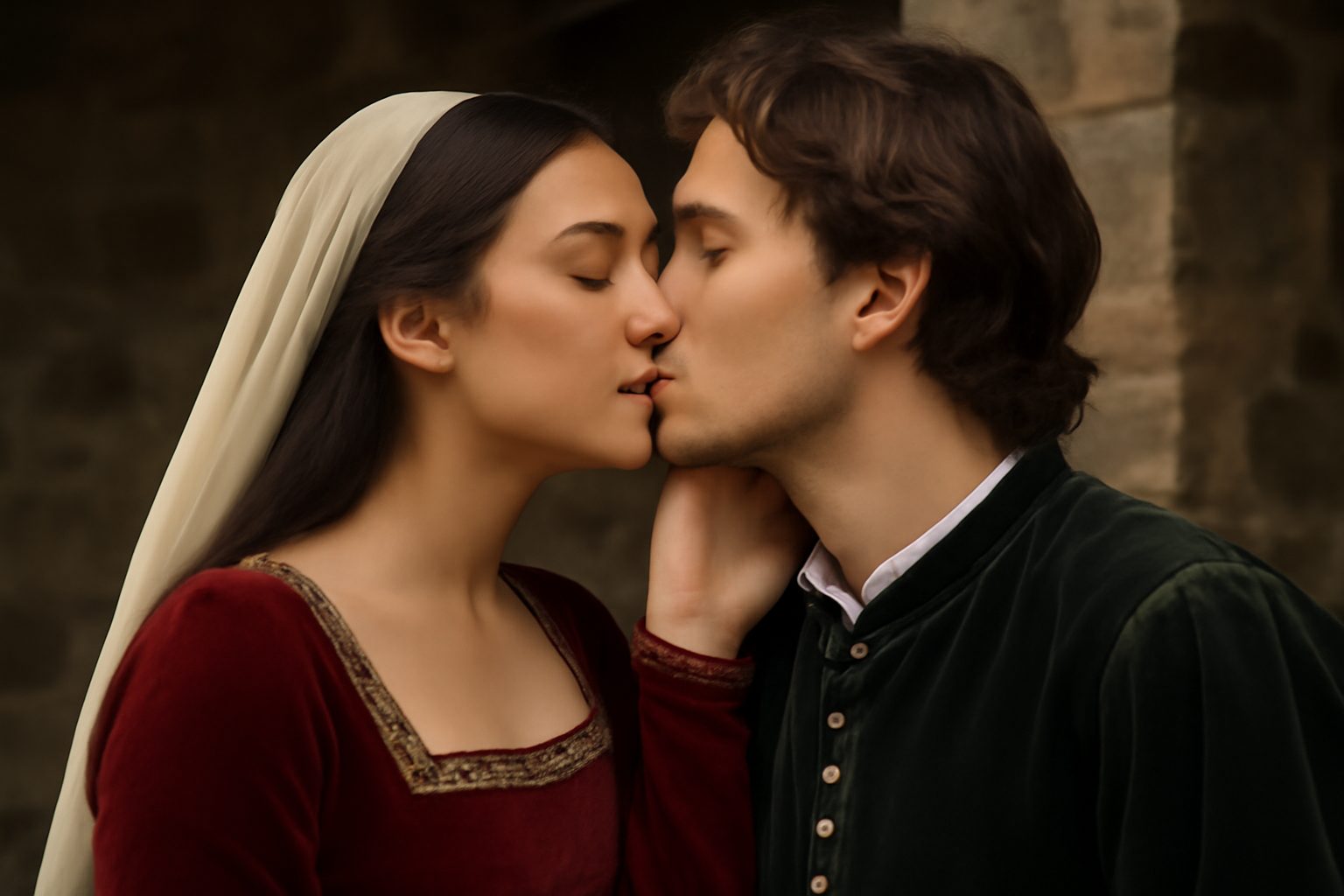
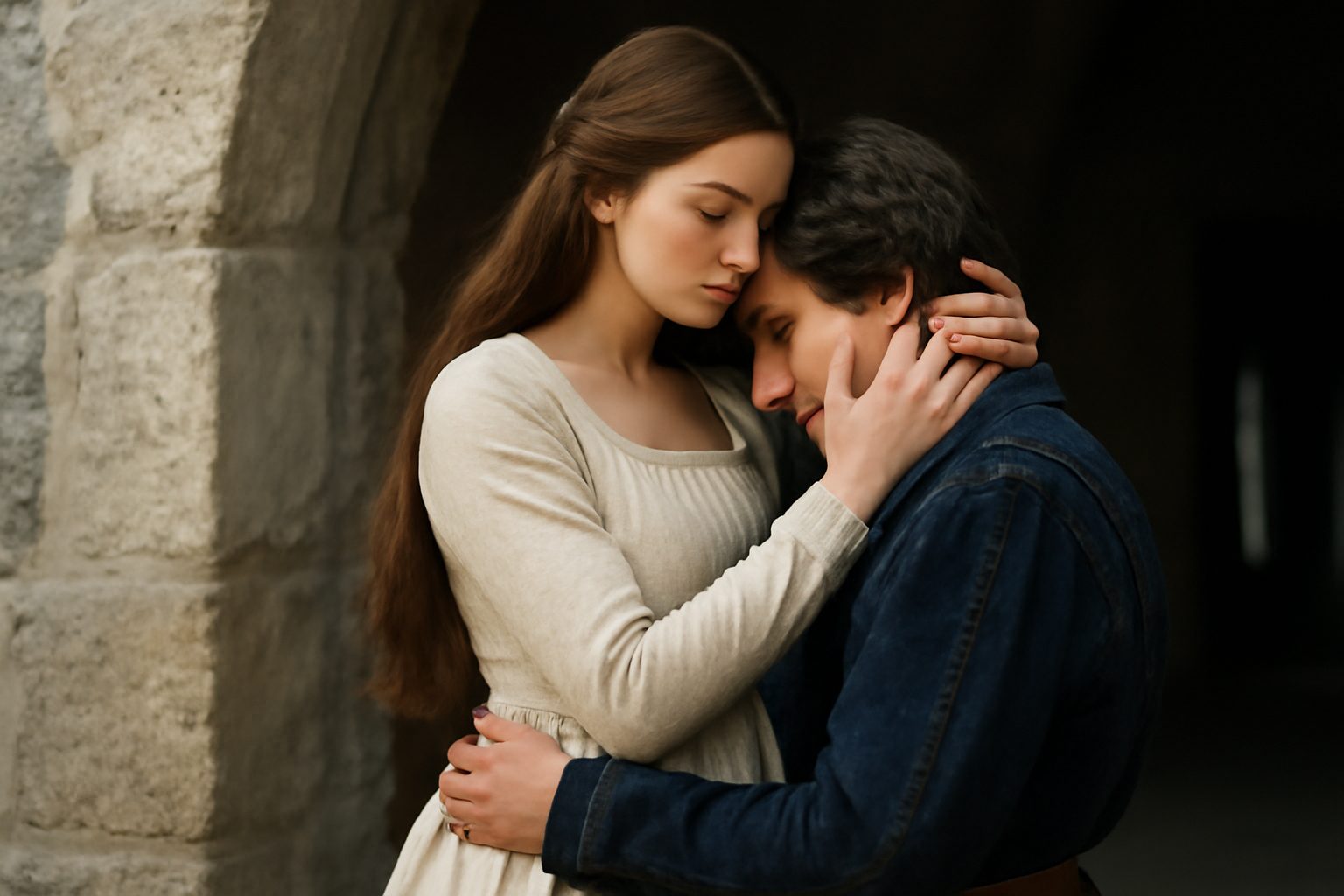
In Act 2, Scene 6 of Romeo and Juliet, Friar Laurence prepares to marry the young lovers in secret, hoping their union might end the feud between their families. As Romeo eagerly awaits Juliet's arrival, he expresses his desire for their happiness to outweigh any future sorrow. This line reflects his fleeting optimism, unaware of the tragic consequences that will soon unfold.
Friar Laurence: "That after hours with sorrow chide us not!"
In modern day english, we would say:
I hope that later on, we won’t regret this or feel sad about the time we’ve spent together.
Frequently Asked Questions
What does Friar Laurence mean when he says that they should not let future hours bring them sorrow?
He is warning Romeo and Juliet that their hasty marriage might lead to future problems and regrets.
Connections to other verses:
Connections to "That after hours with sorrow chide us not!"
The verse "That after hours with sorrow chide us not!" expresses a plea for the present joy not to be marred by future sorrow. This sentiment is echoed and expanded upon in several other verses within the same scene.
Foreshadowing and Moderation
Friar Laurence's warning in "These violent delights have violent ends" directly contrasts with Romeo's hopeful plea, foreshadowing the tragedy to come. The Friar further advises moderation in "Therefore love moderately; long love doth so", emphasizing that excessive passion can lead to sorrow, which aligns thematically with the original verse's concern about future grief.
Defiance Against Sorrow
Romeo's defiant attitude toward potential sorrow is evident in "Then love-devouring death do what he dare", where he declares that even death cannot diminish his joy. Similarly, in "Amen, amen! but come what sorrow can", he acknowledges sorrow's possibility but remains resolute, reinforcing the determination expressed in the original line.
Joy and Excess
The intensity of Romeo's emotions is captured in "But my true love is grown to such excess", illustrating how his joy is so overwhelming that it almost invites the sorrow he wishes to avoid. This idea of overwhelming emotion is further explored in "And in their triumph die, like fire and powder", which uses metaphor to show how intense passion can be self-destructive, linking back to the theme of joy potentially leading to sorrow.
Immediate vs. Lasting Happiness
In "Too swift arrives as tardy as too slow", the Friar comments on the imbalance of haste, suggesting that rushing into joy might not yield lasting happiness, which resonates with the original verse's concern about future repercussions. Romeo's belief that even a moment with Juliet is invaluable, as stated in "That one short minute gives me in her sight", shows his willingness to risk sorrow for immediate bliss, further connecting to the plea in the focal verse.