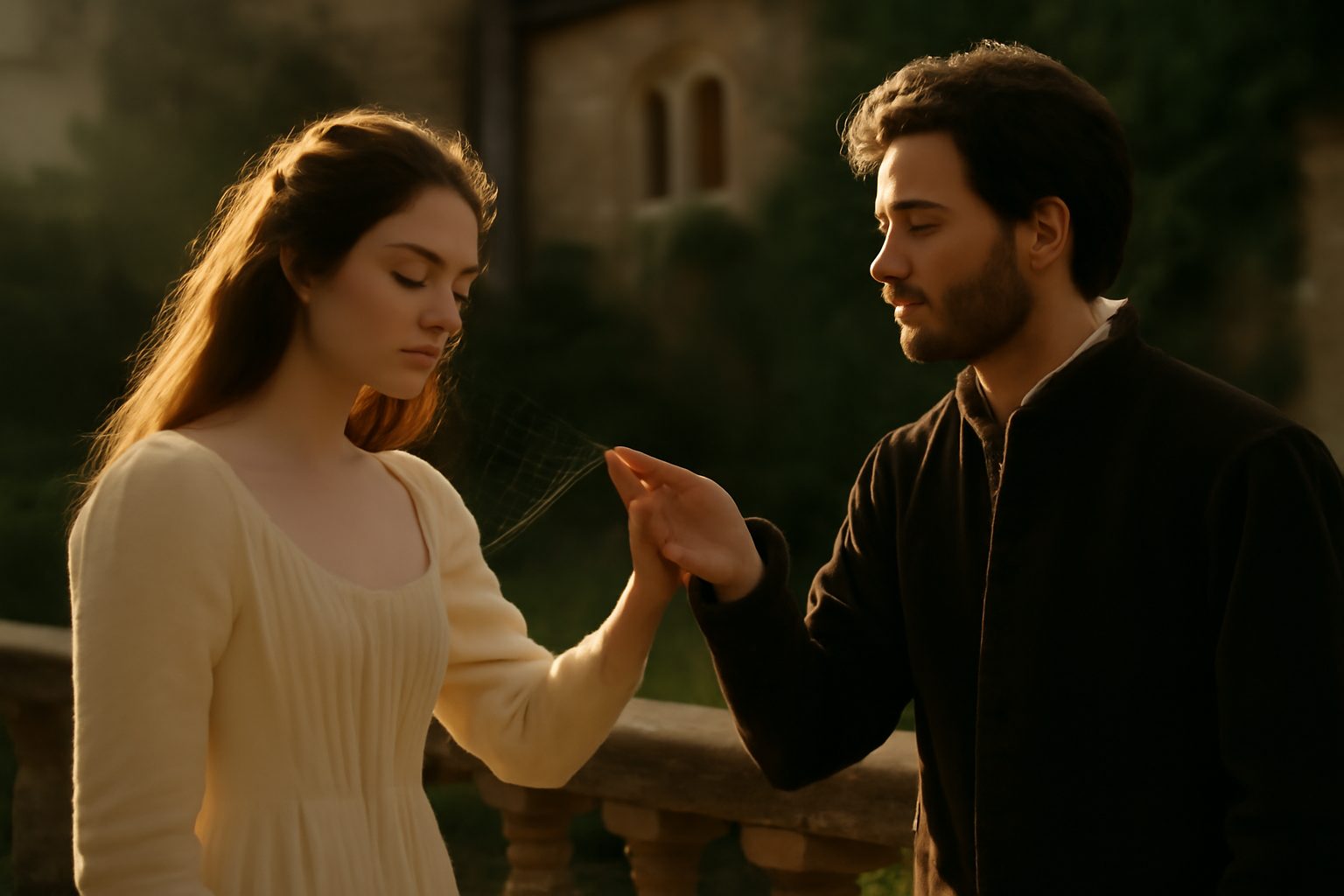
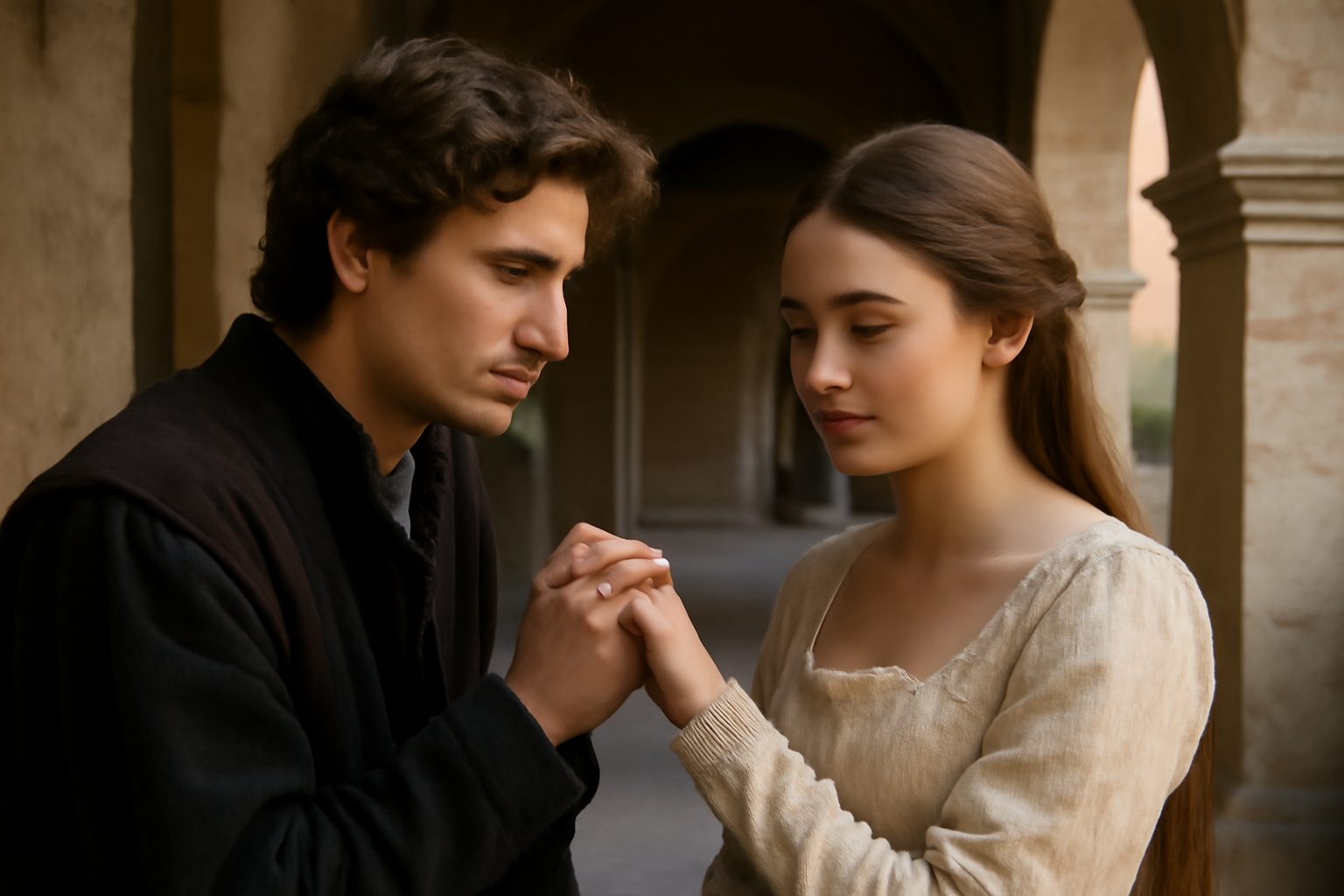
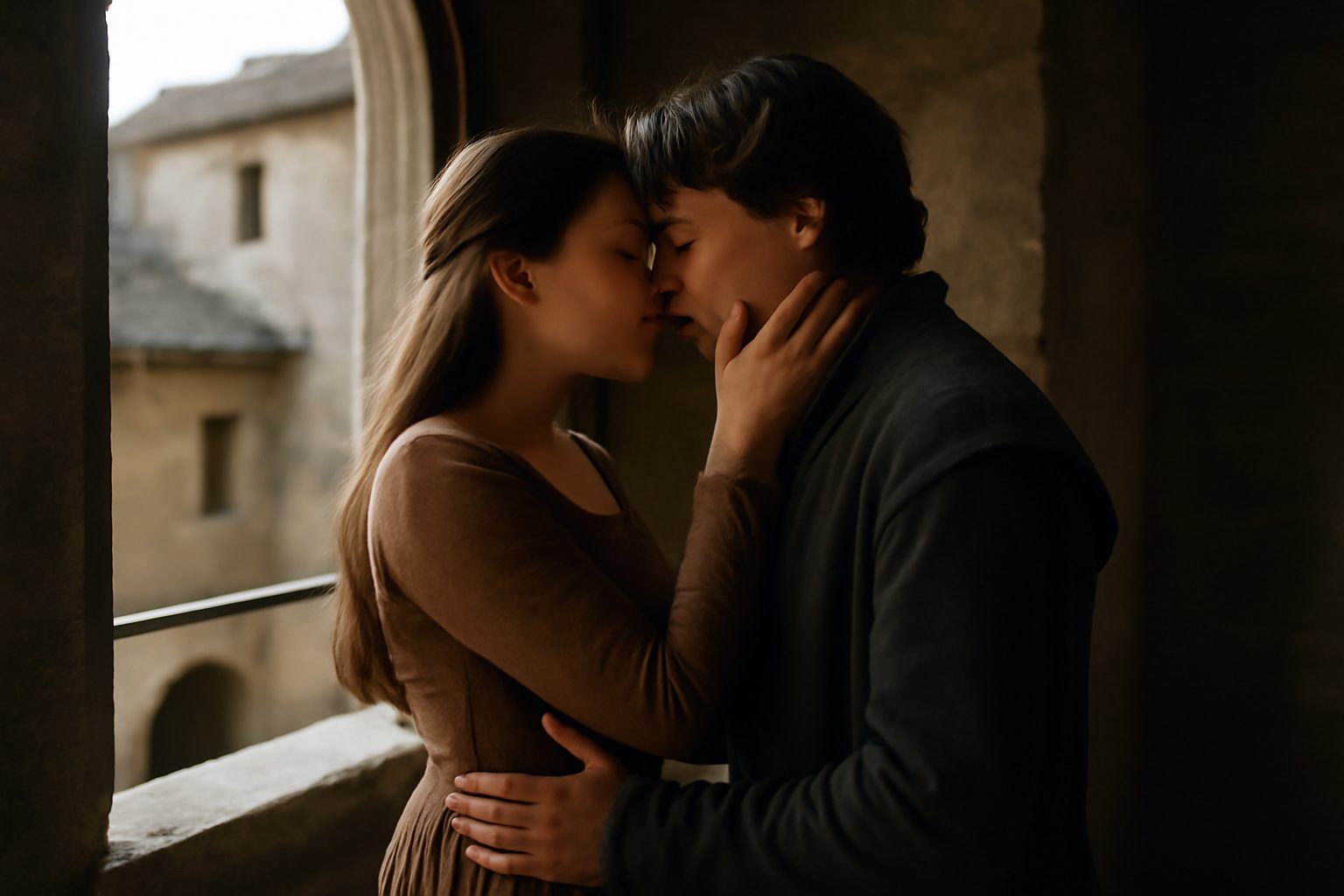
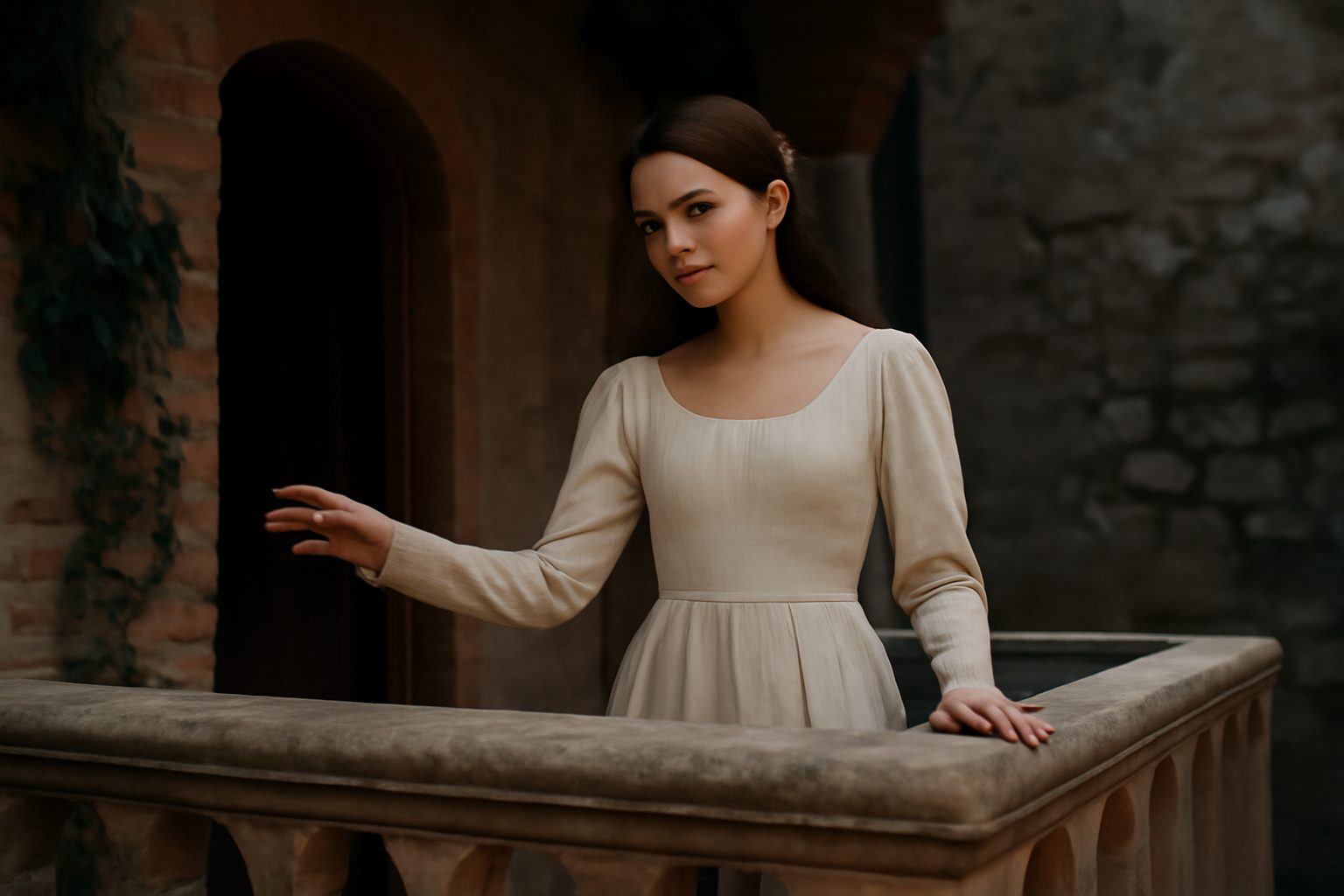
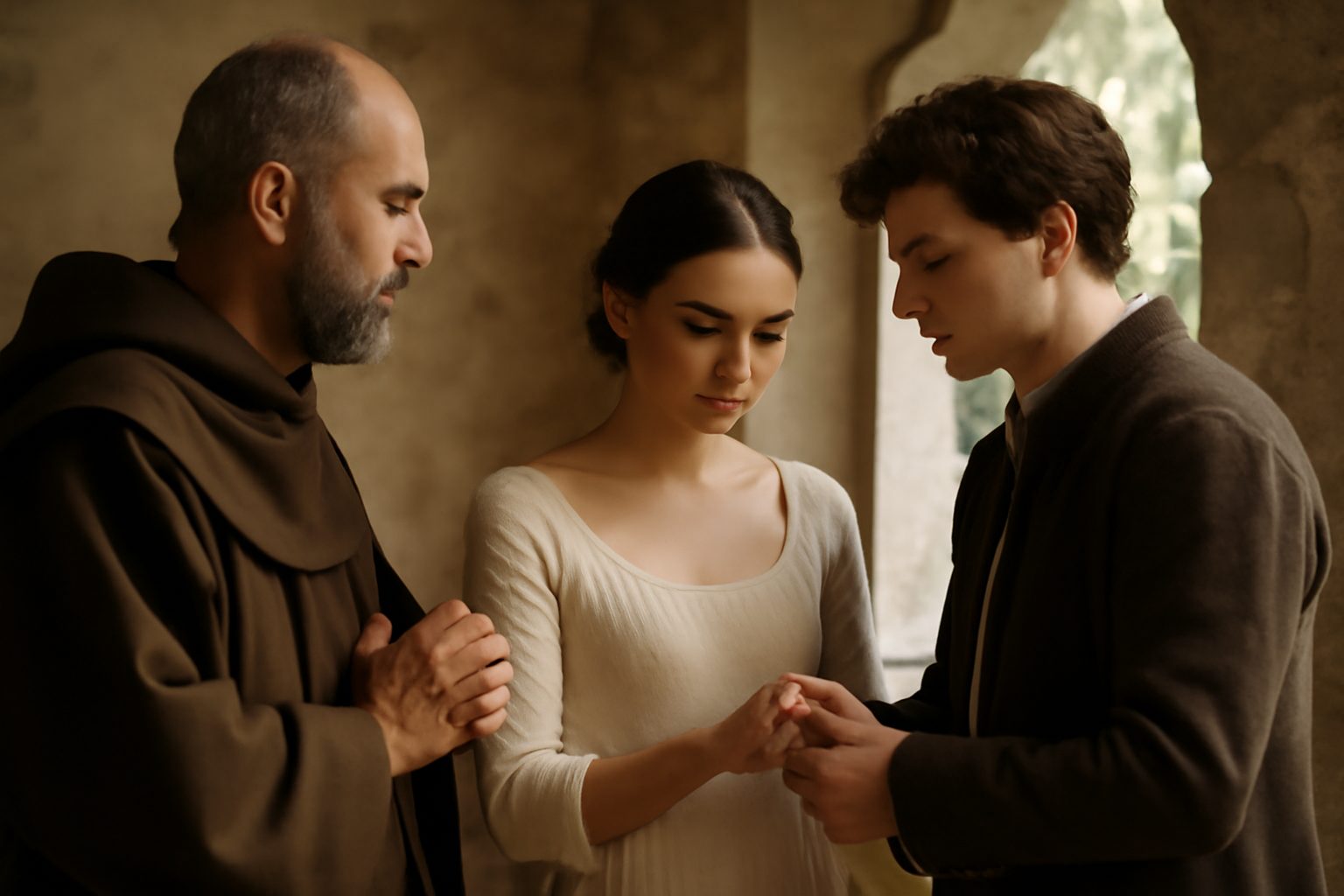
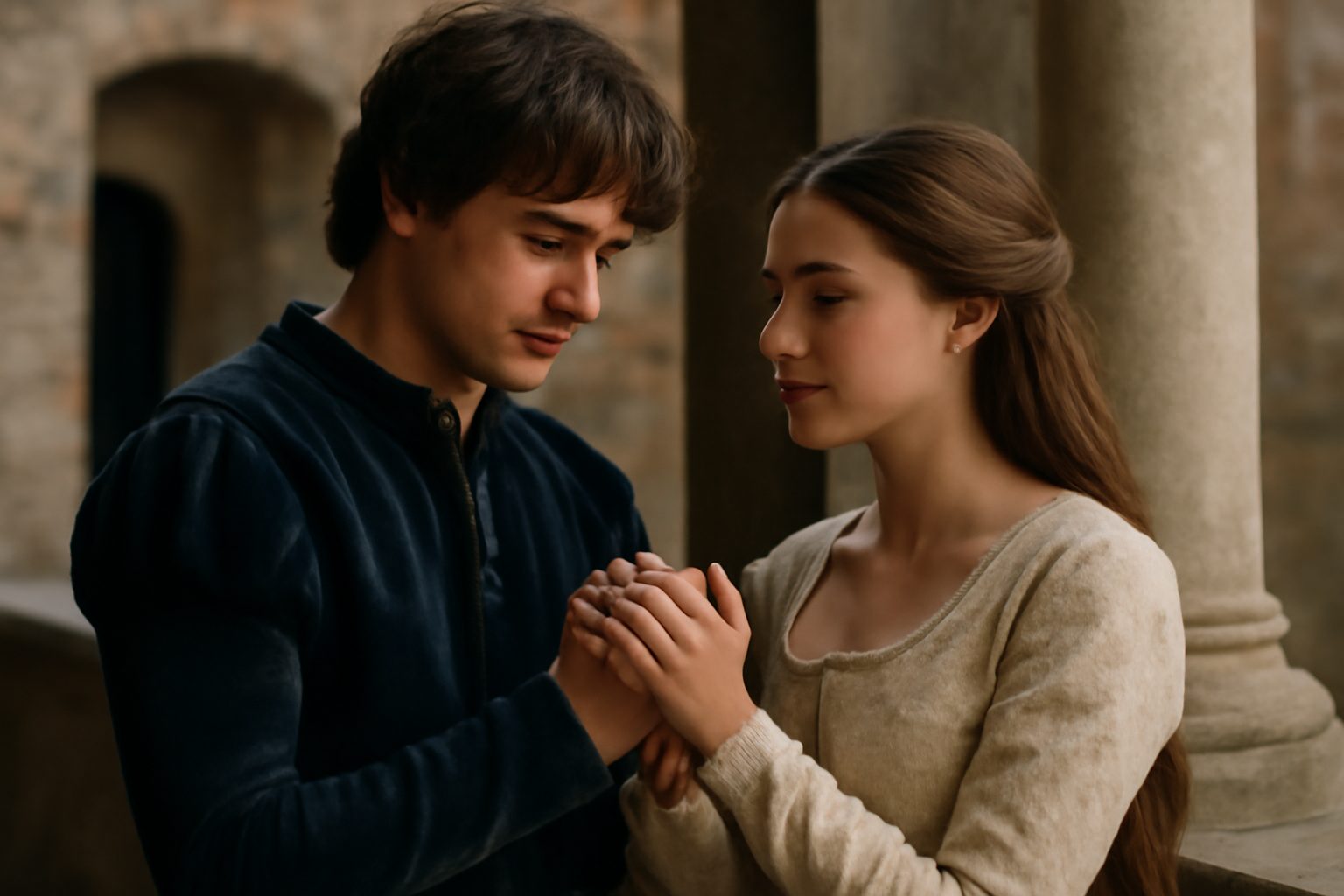
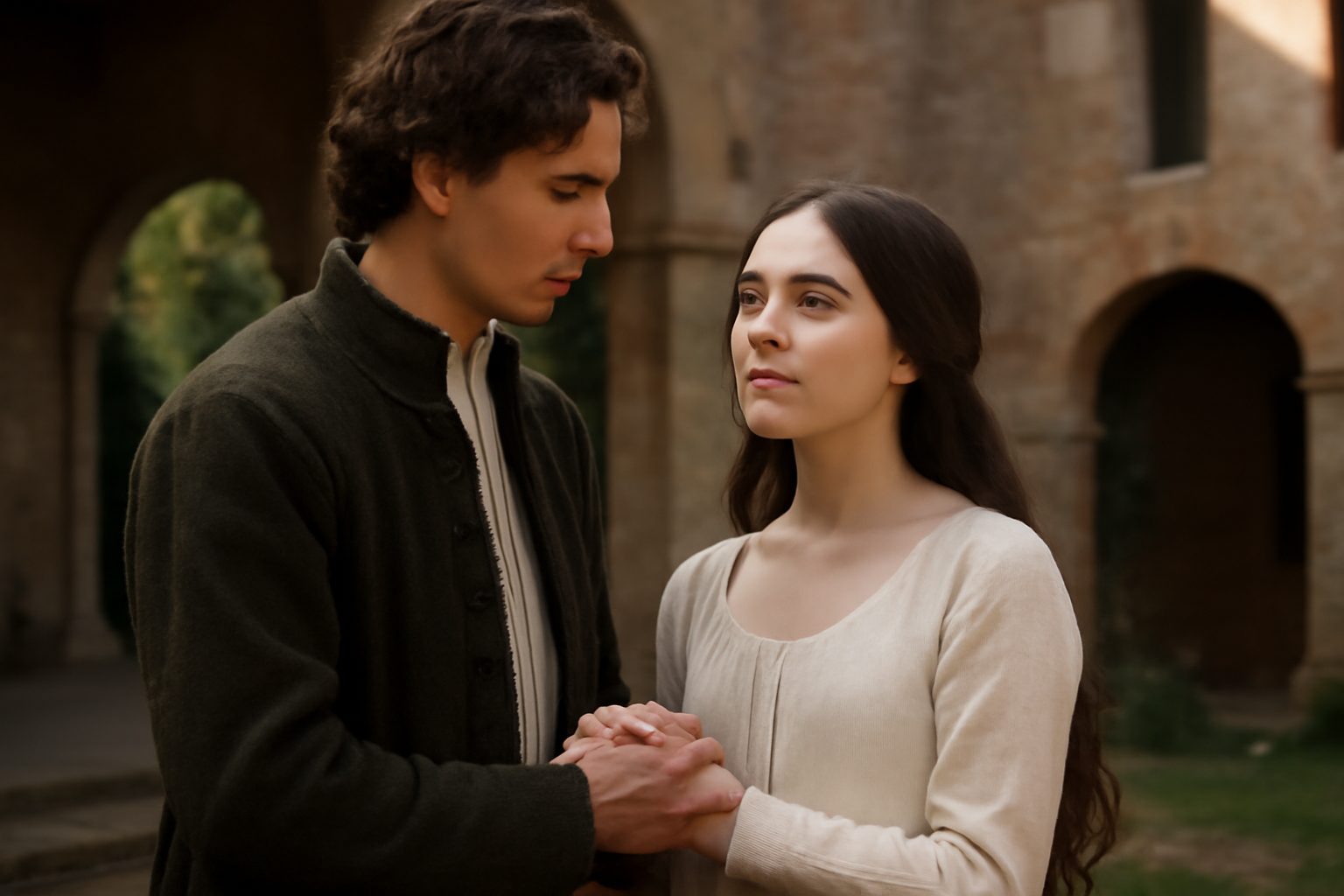
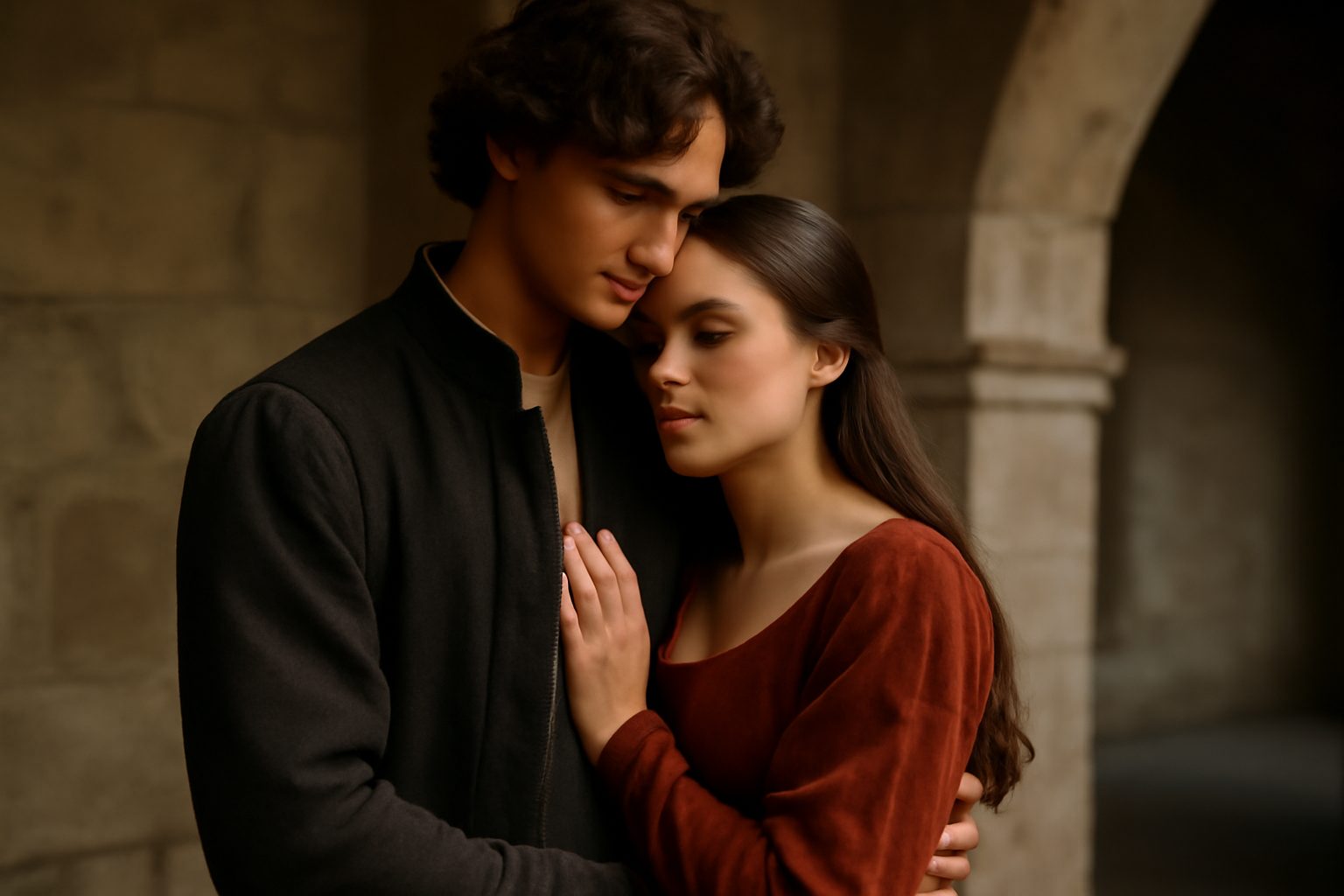
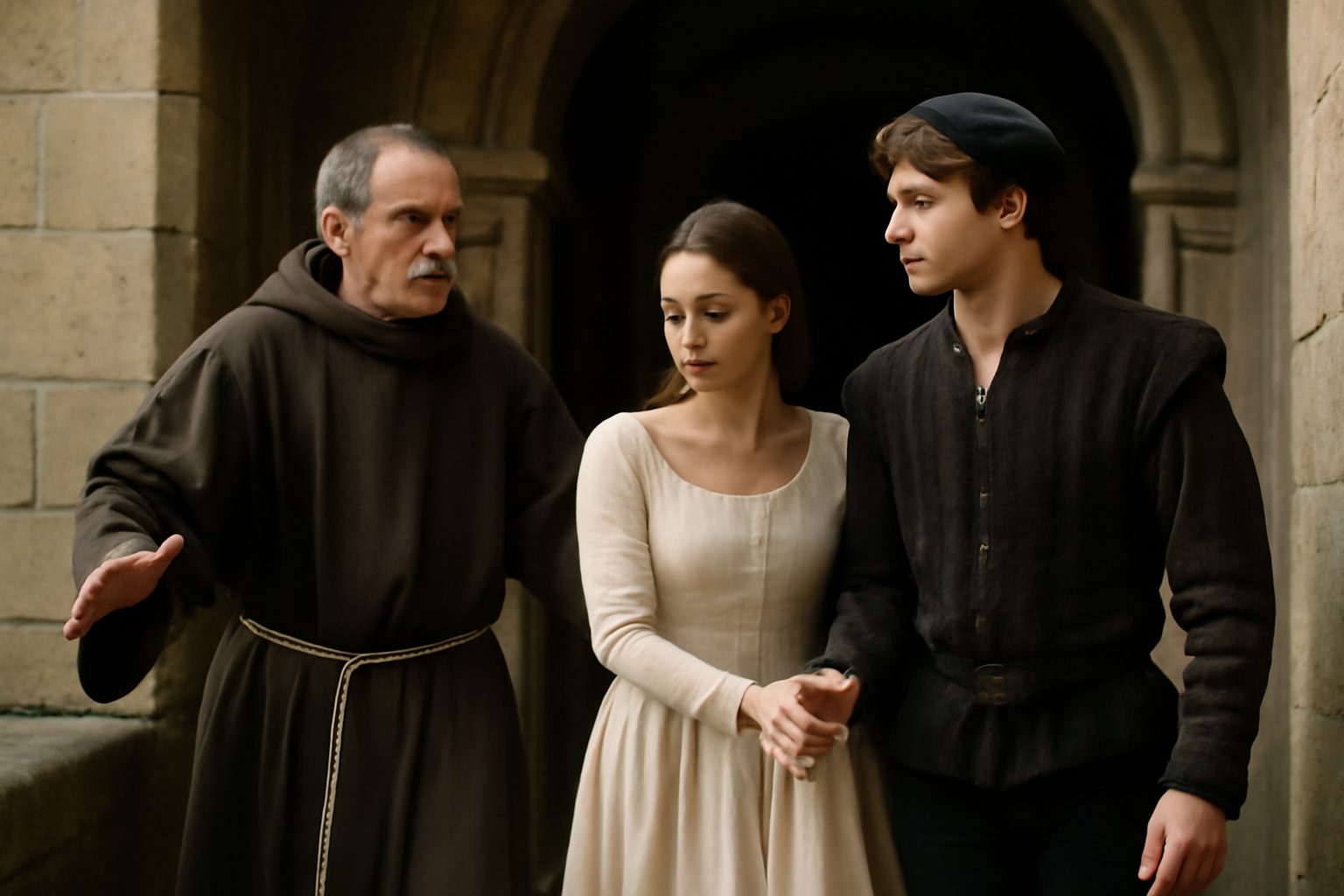
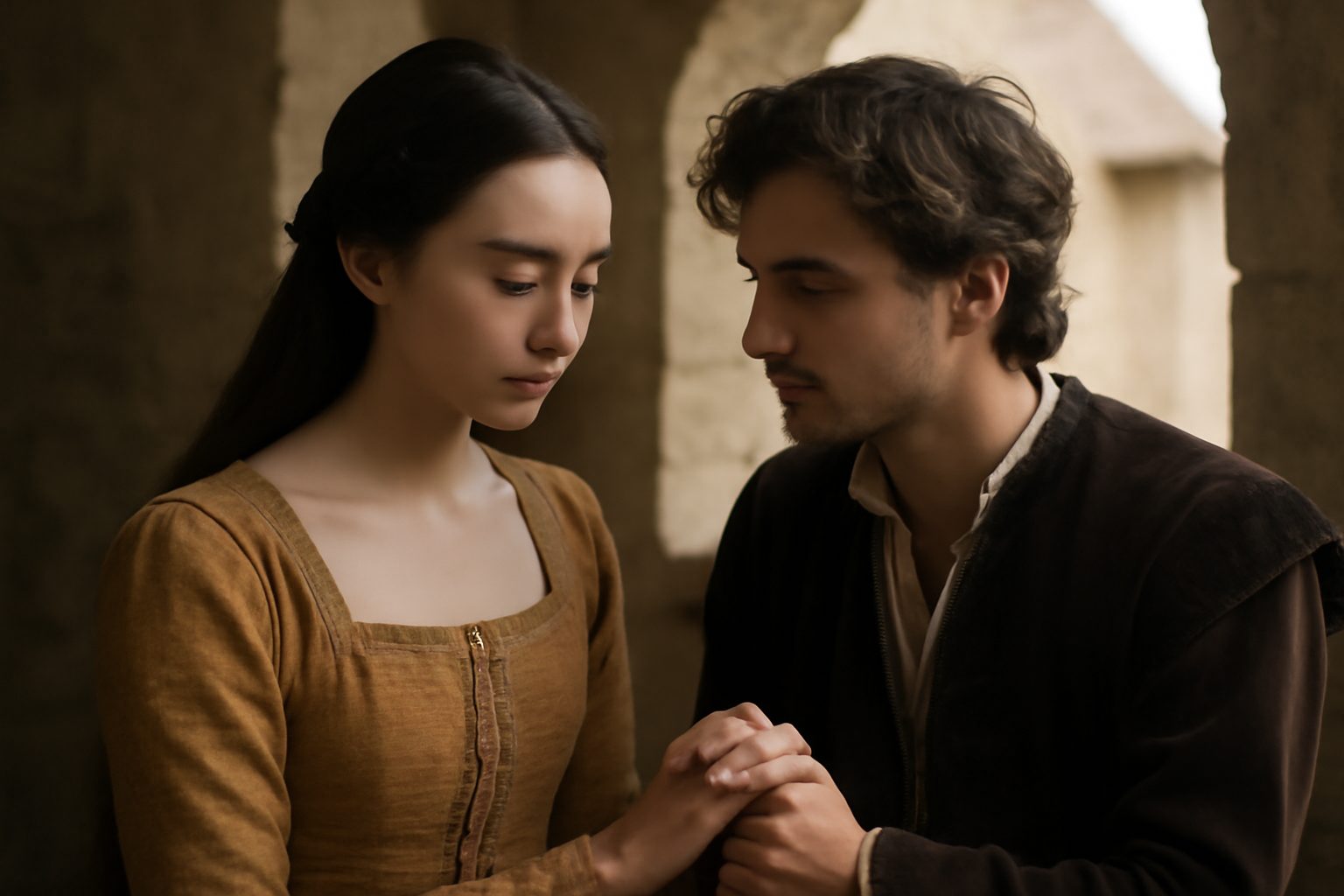
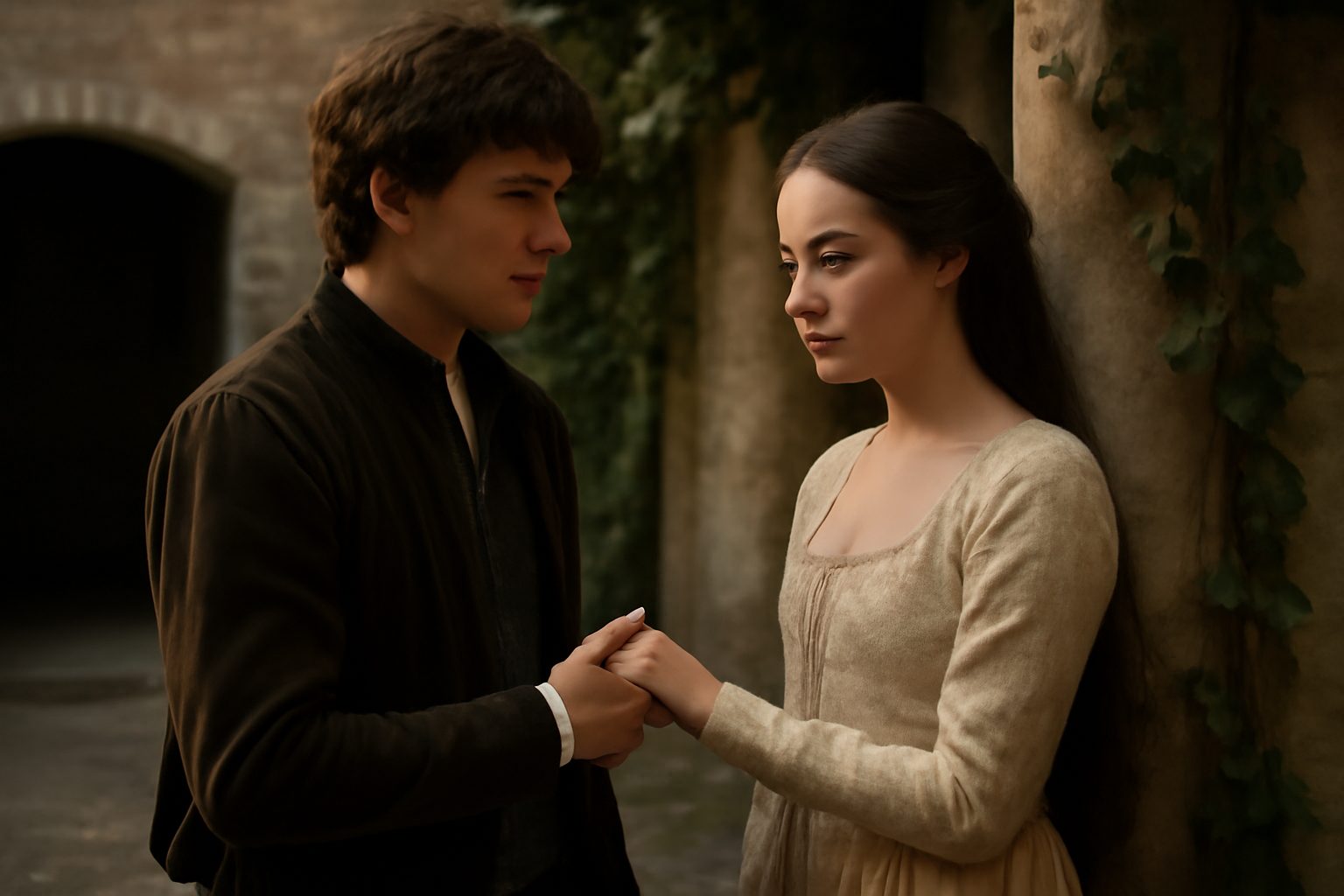
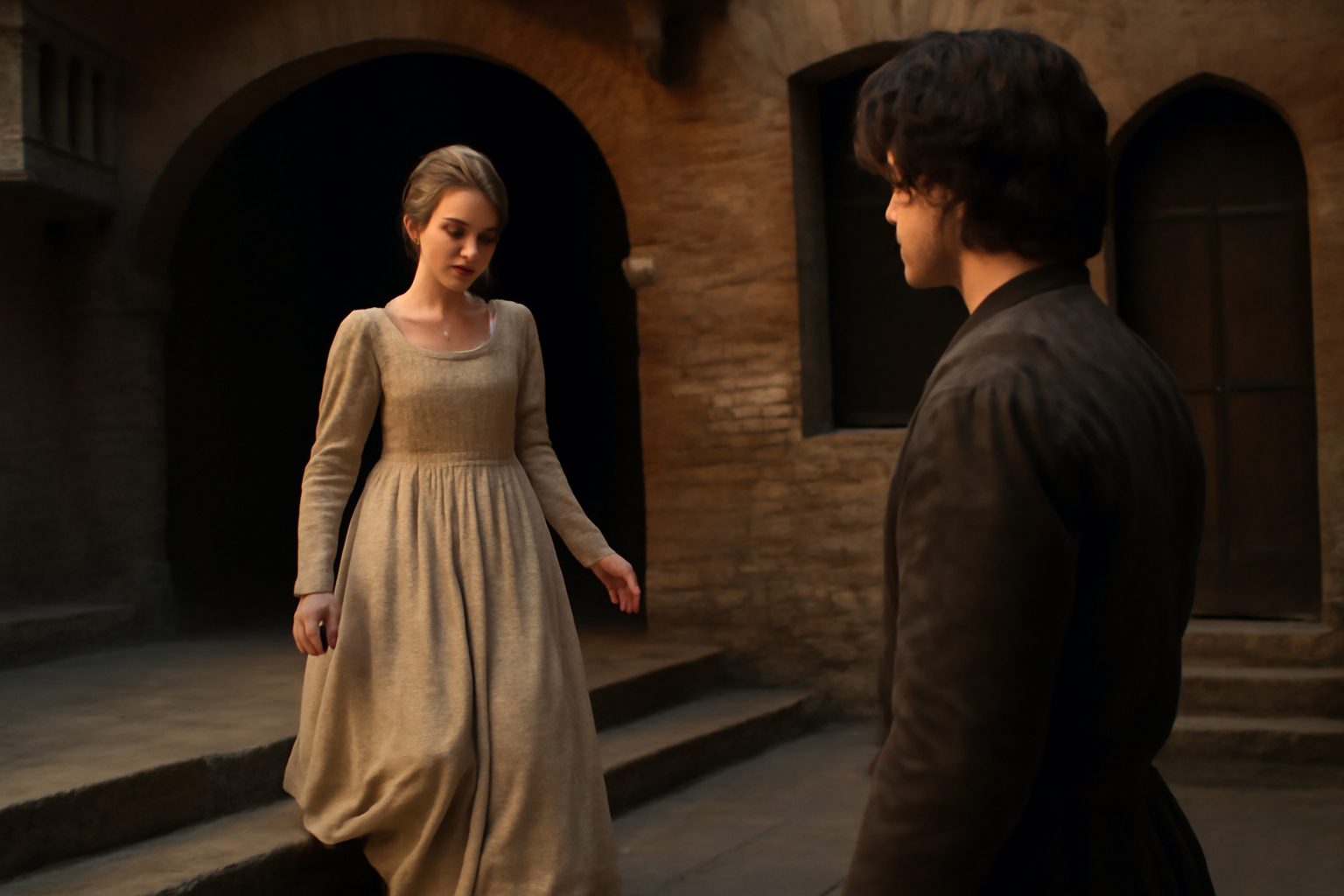
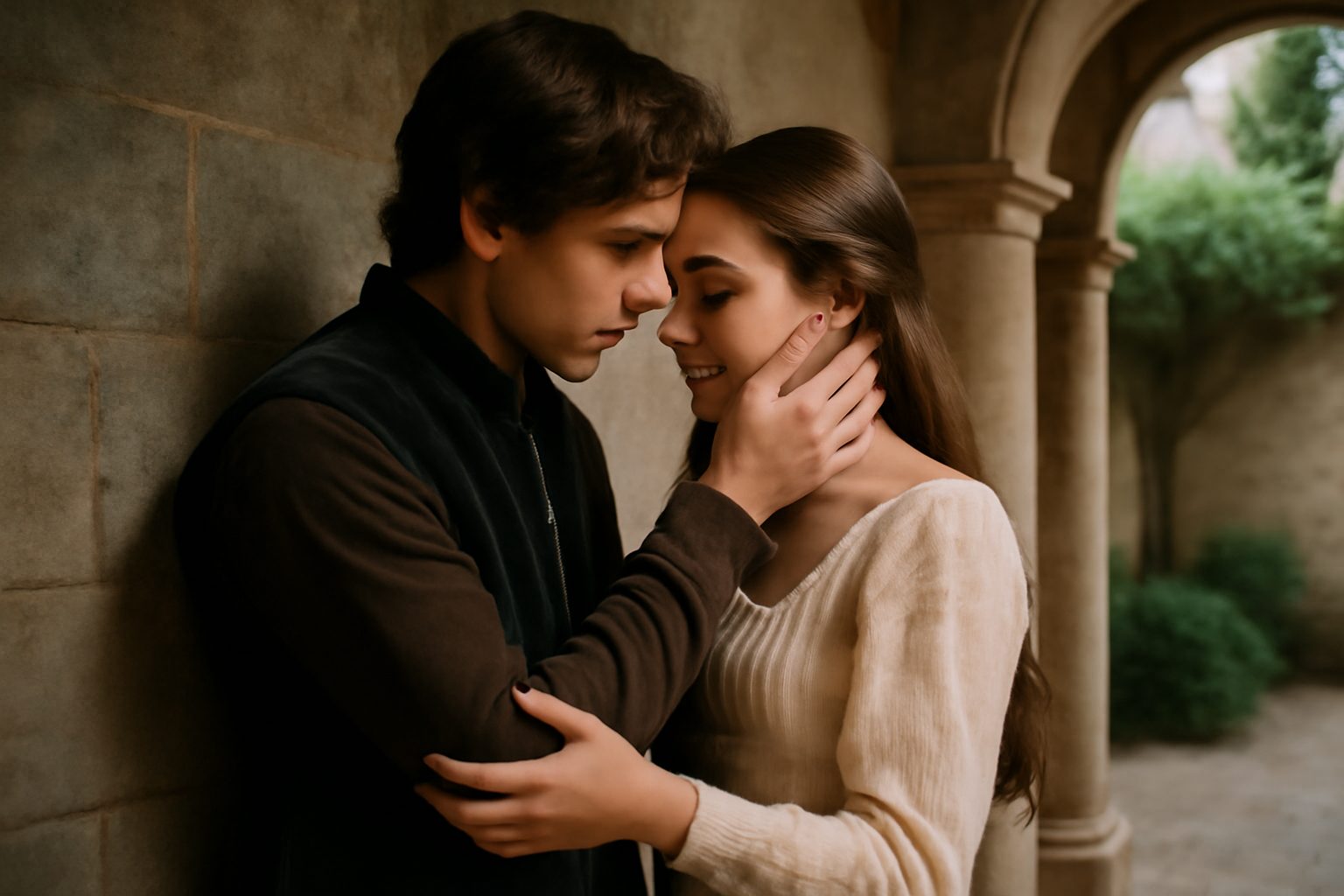
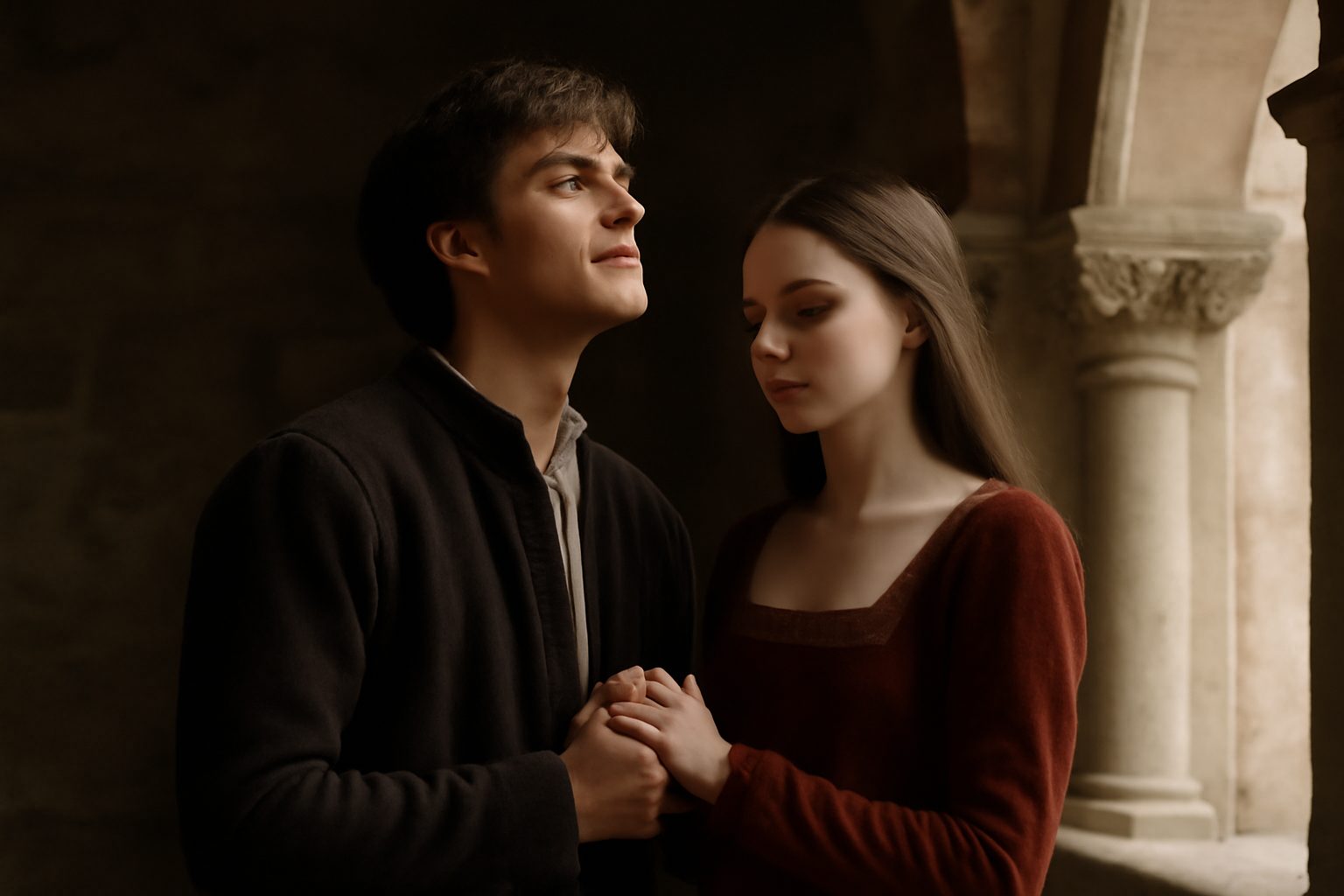
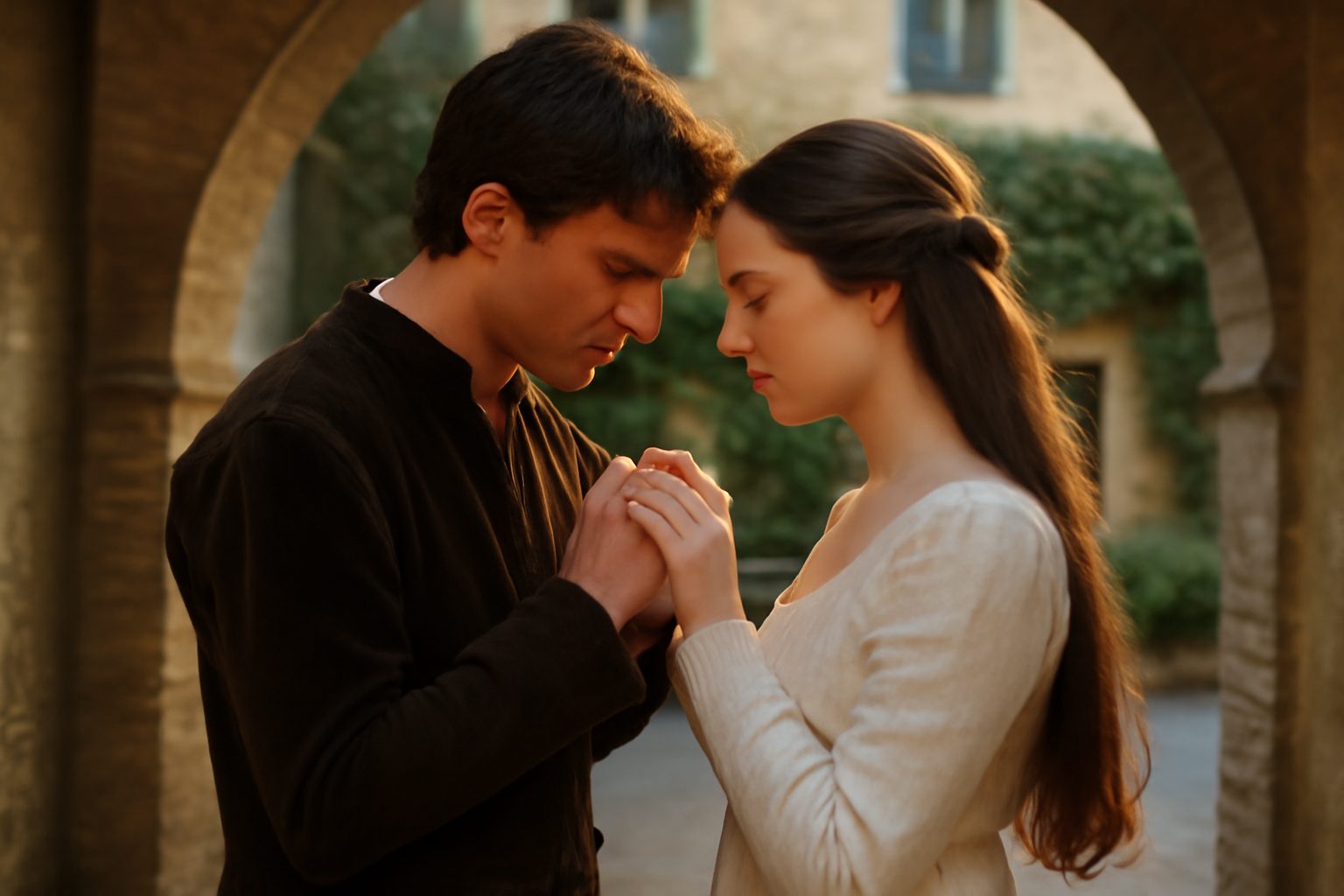
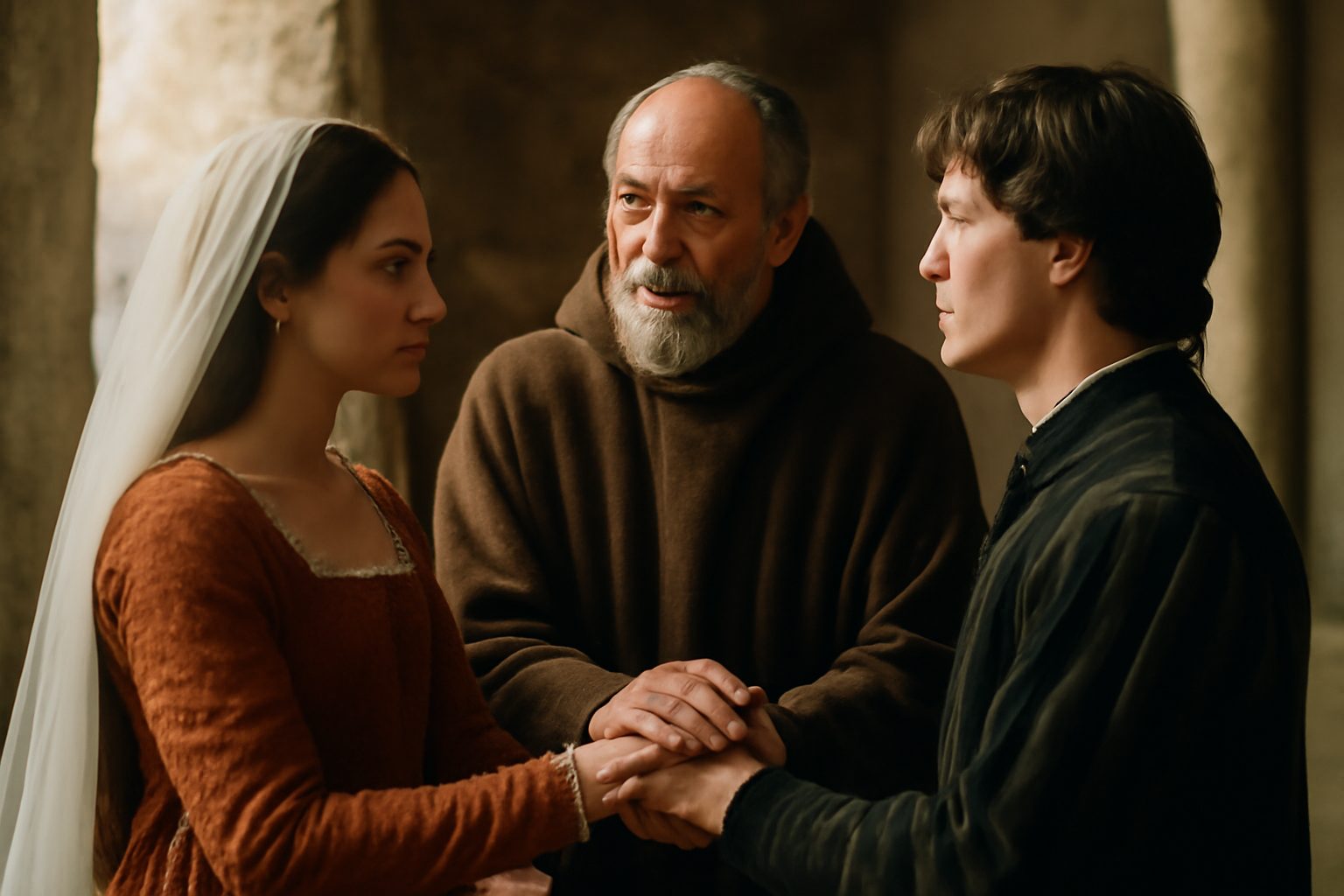
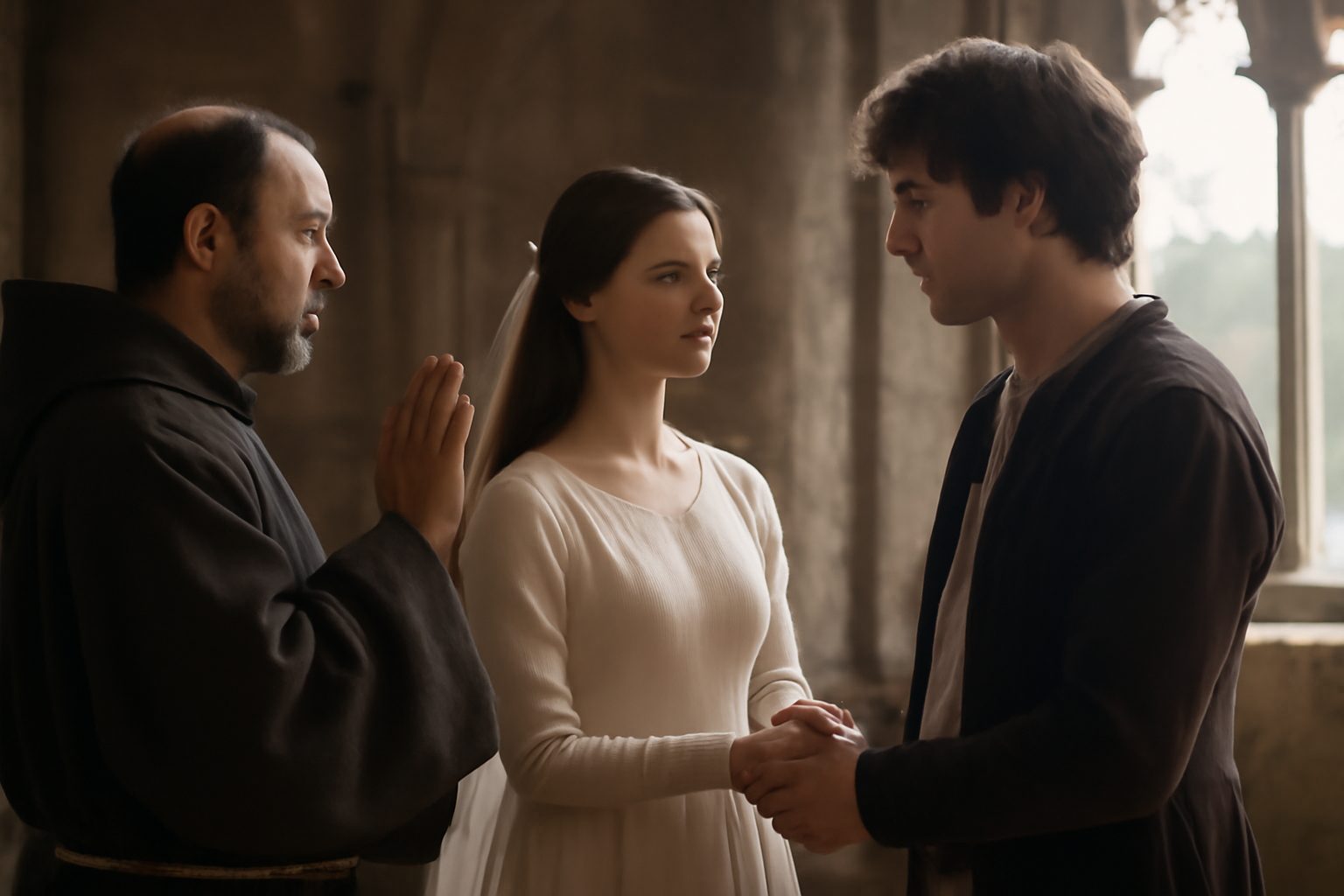
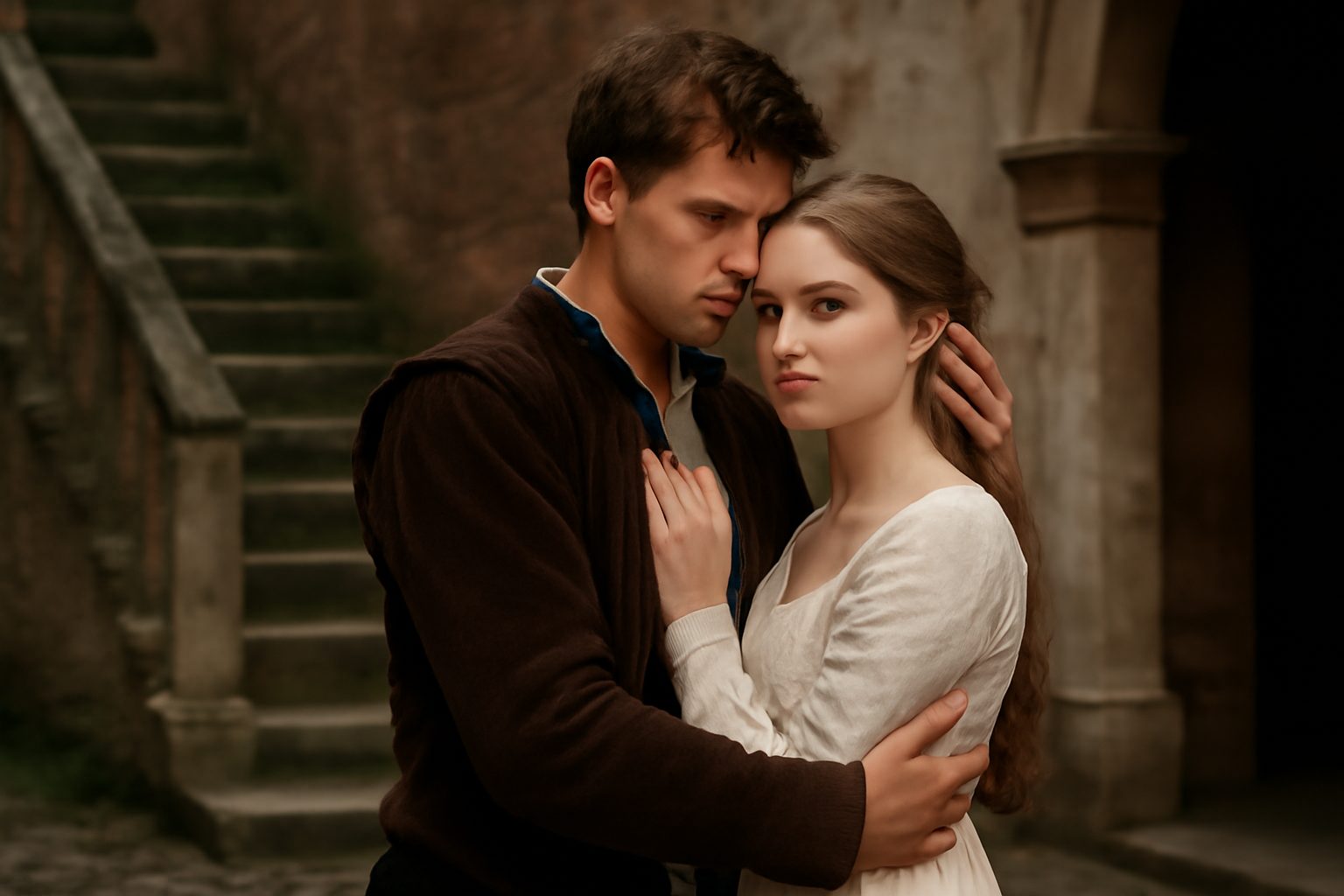
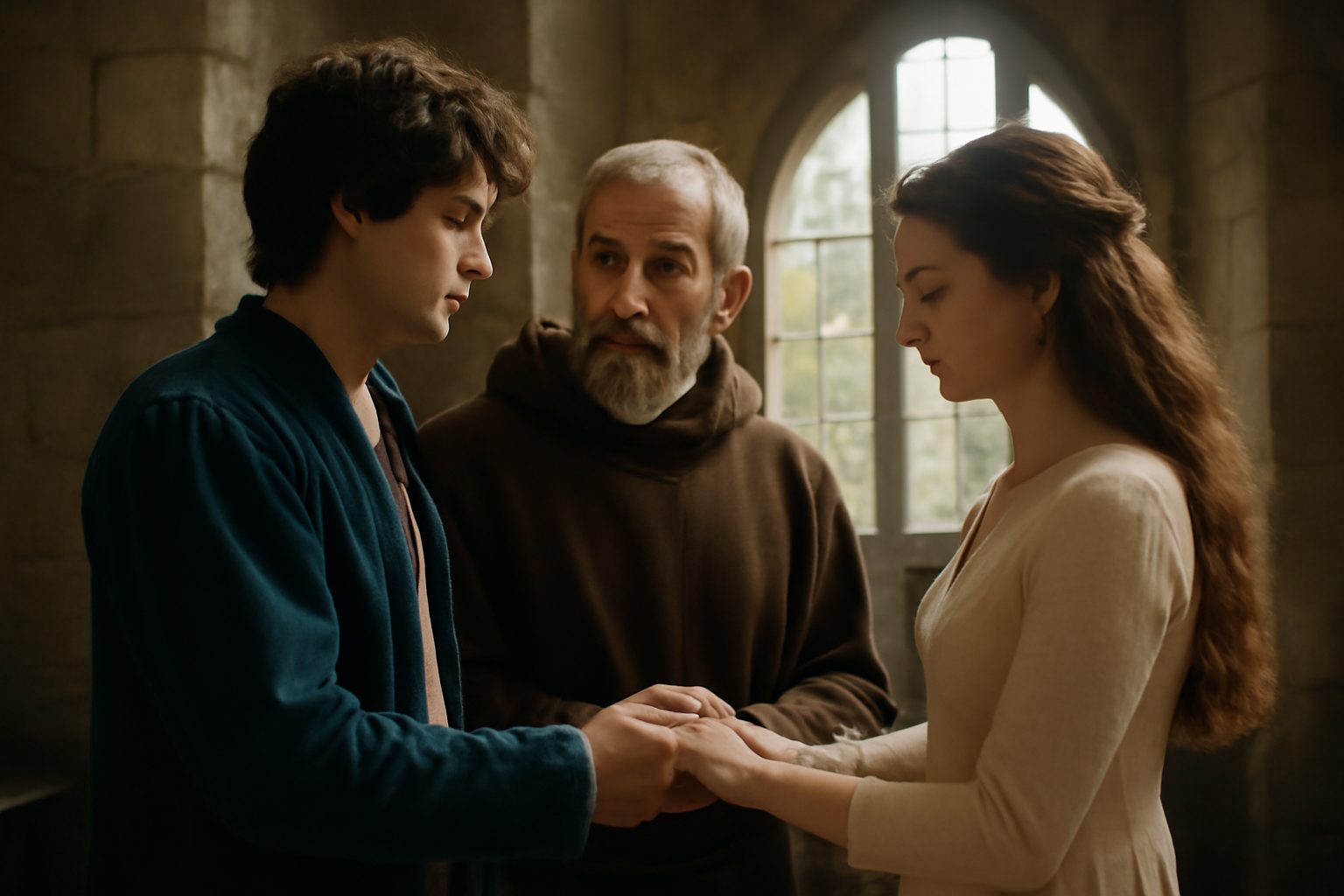
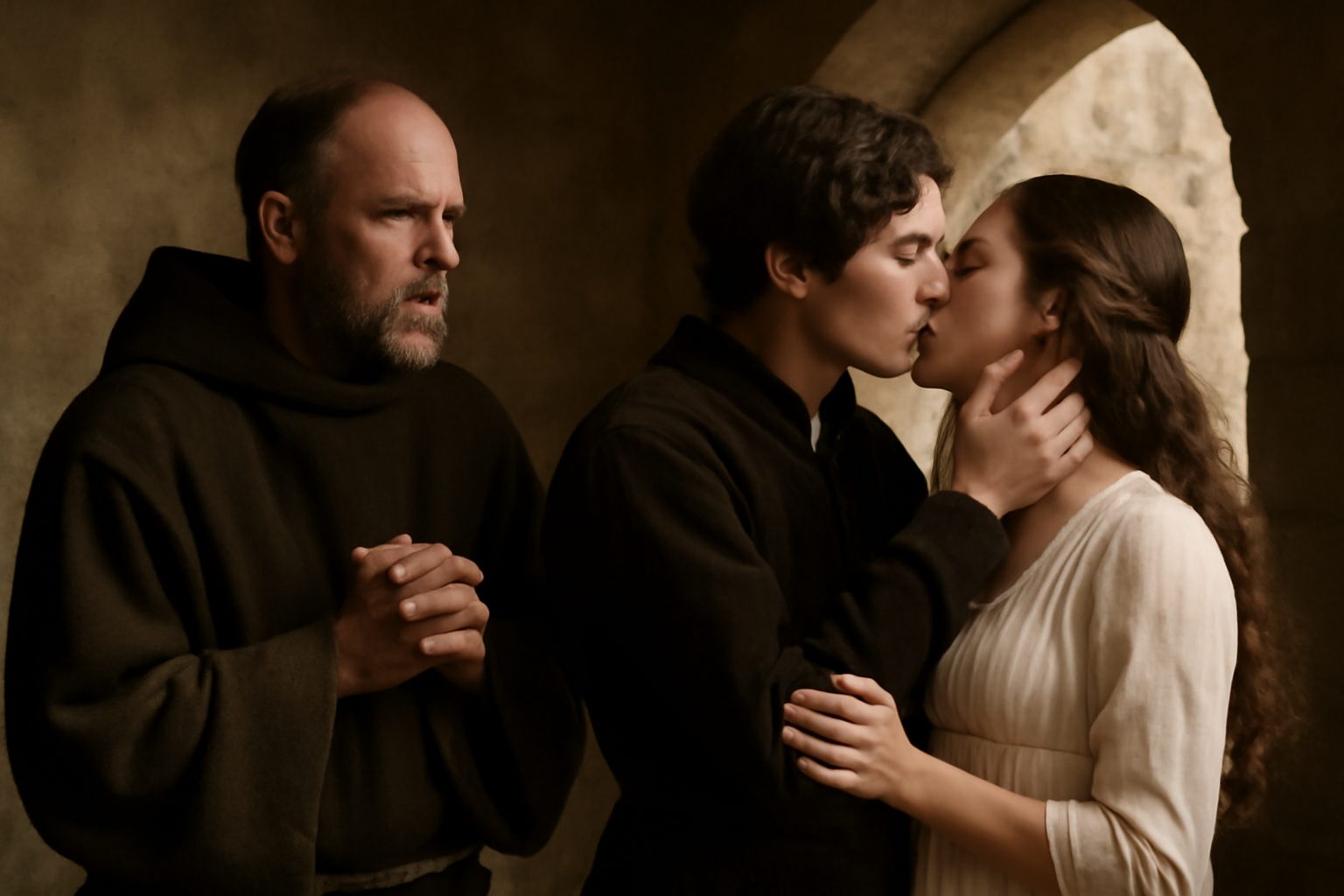
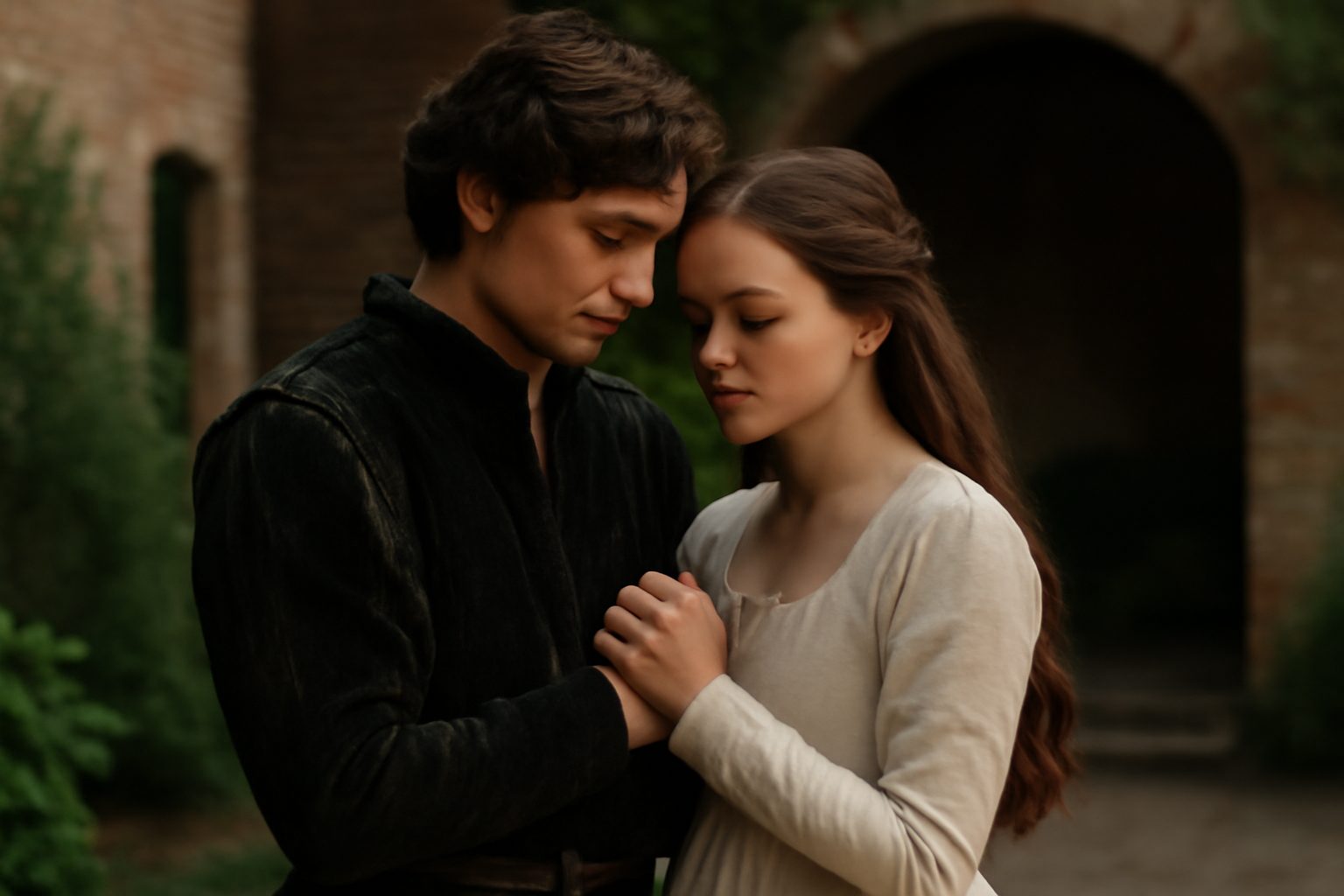
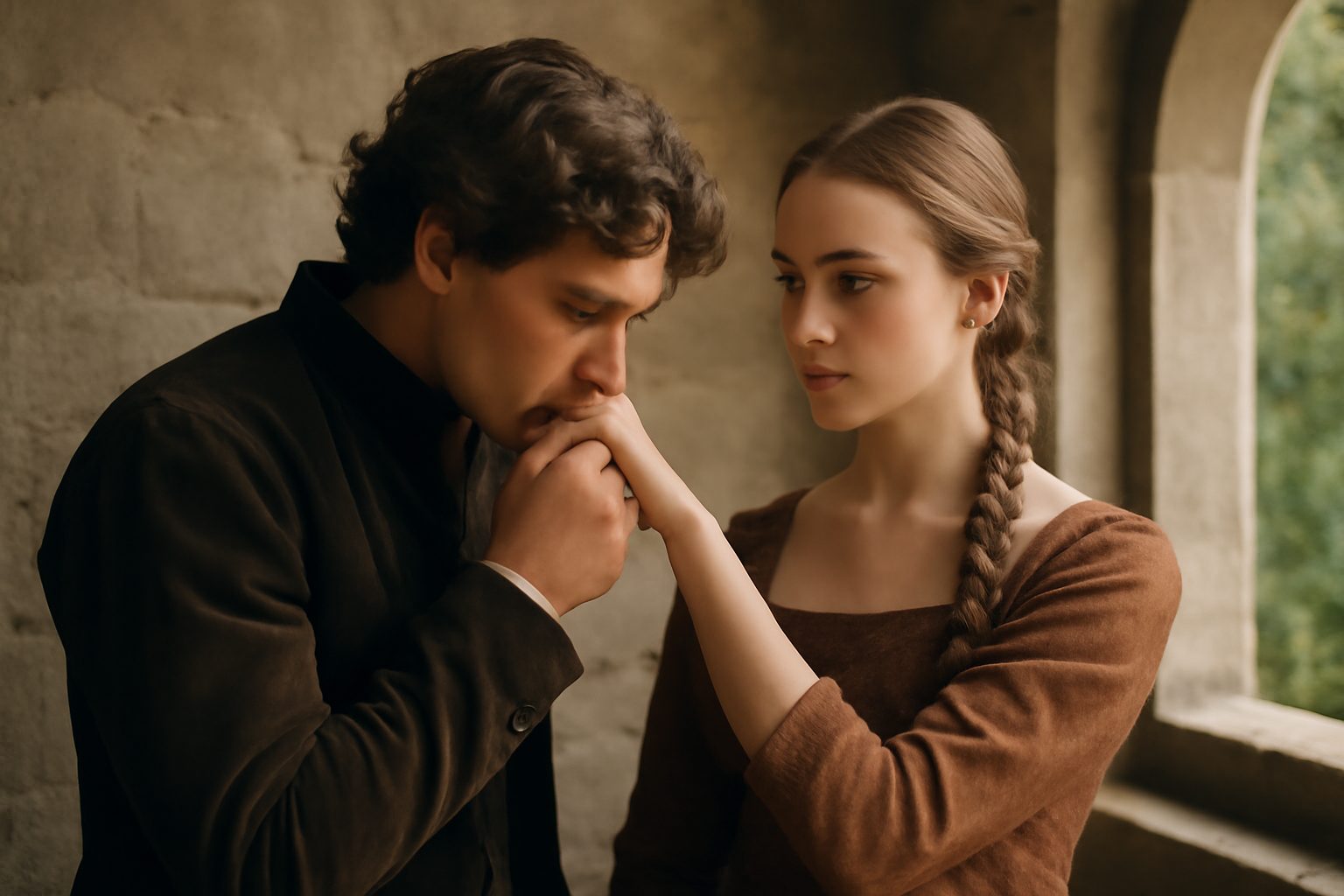
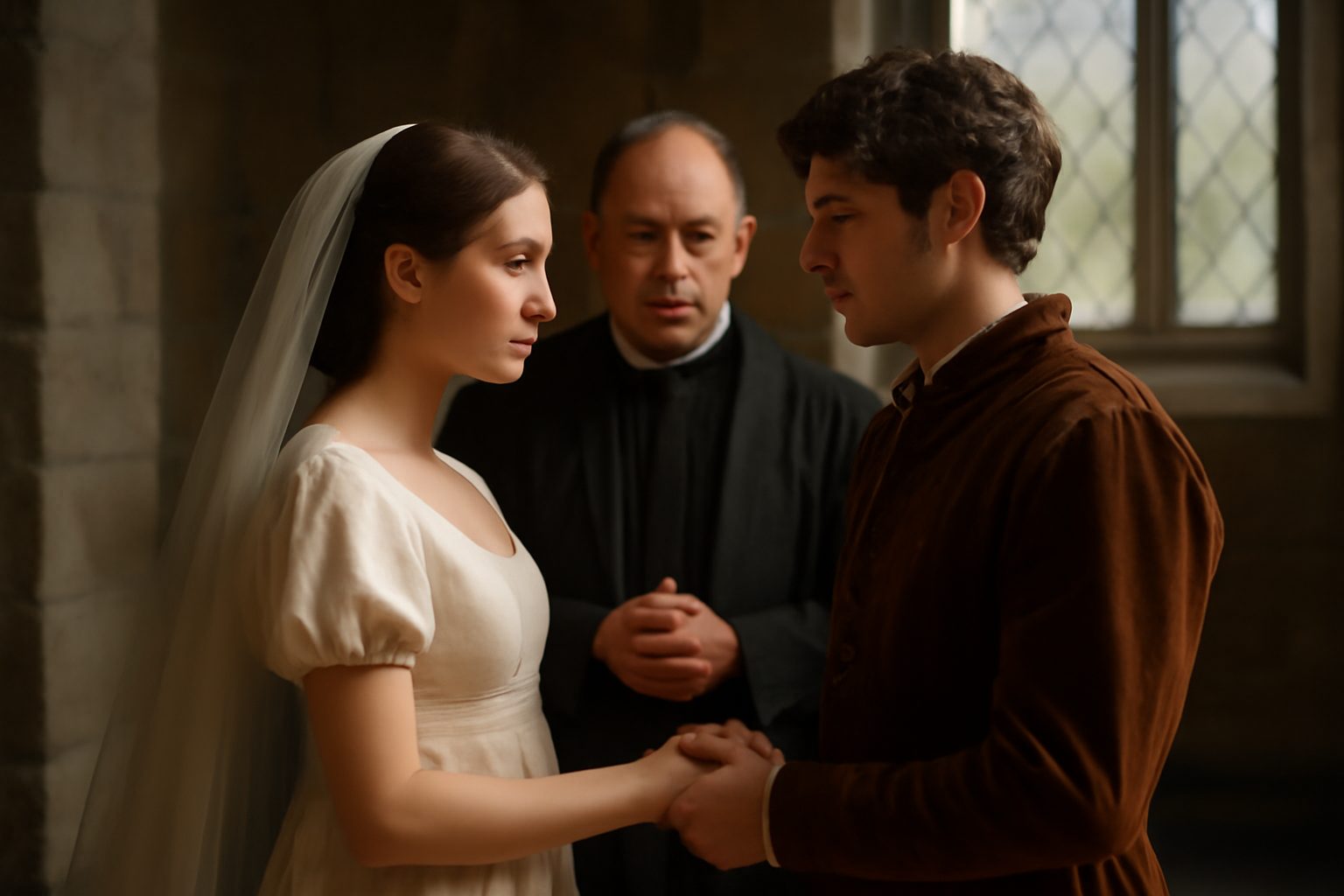
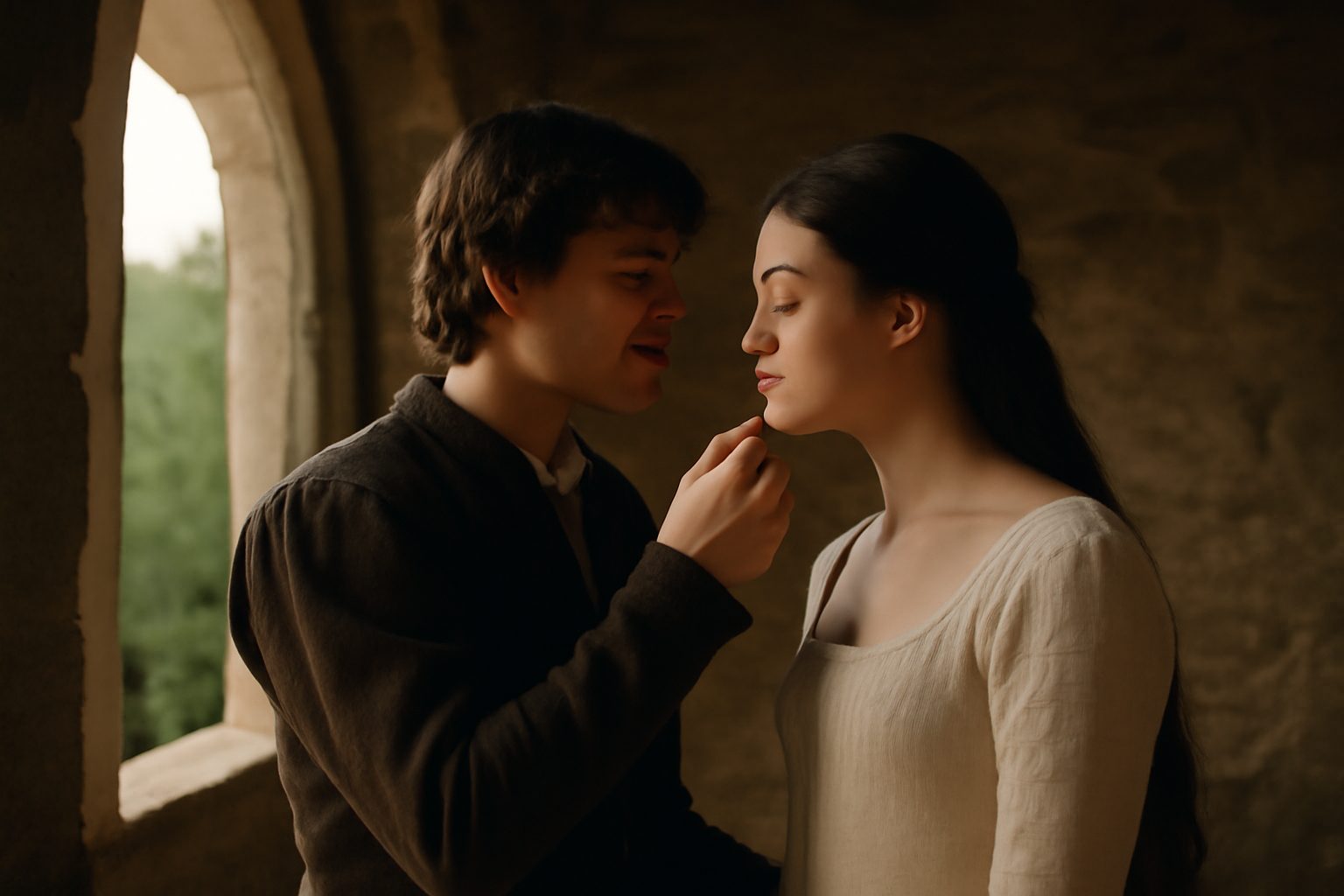
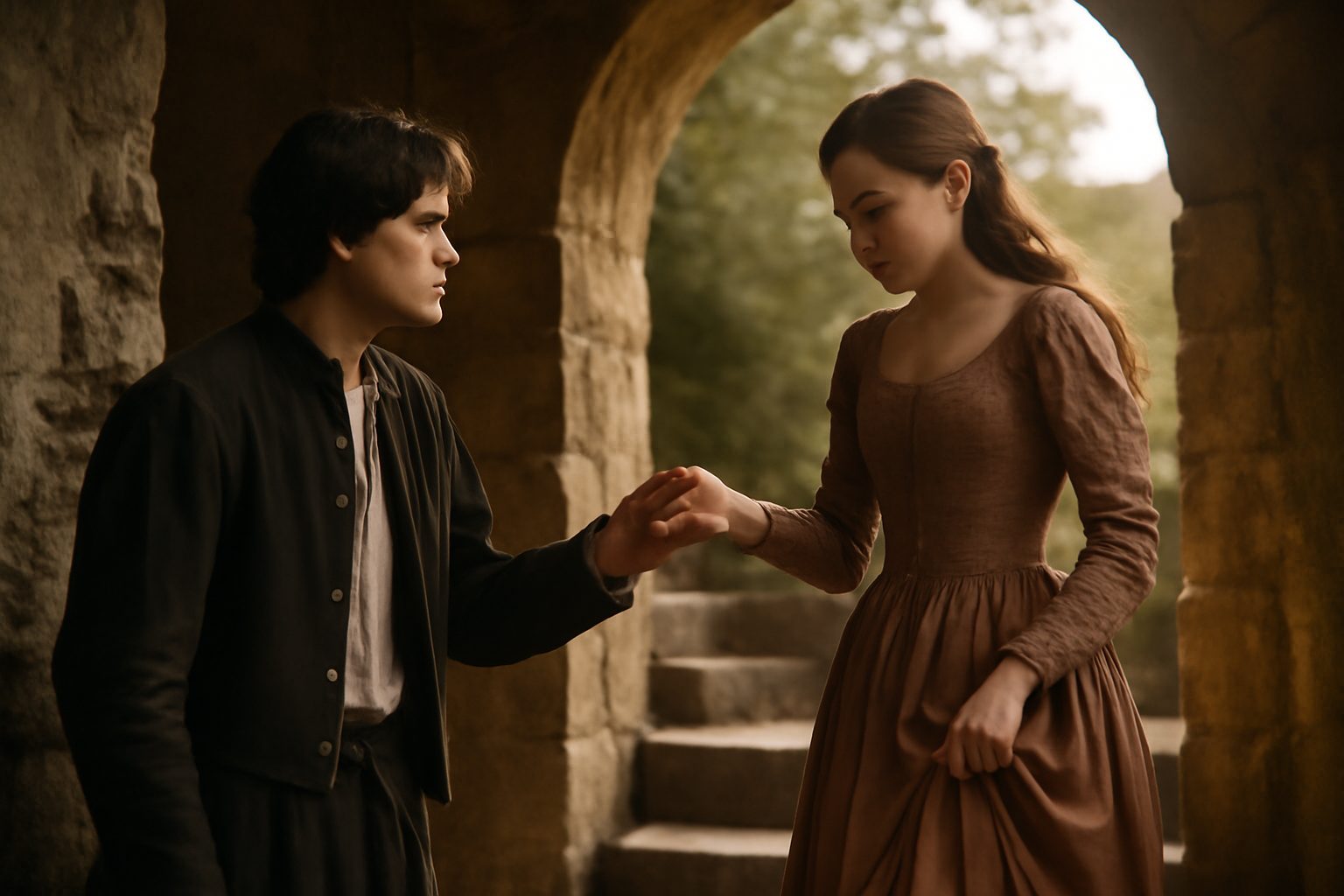
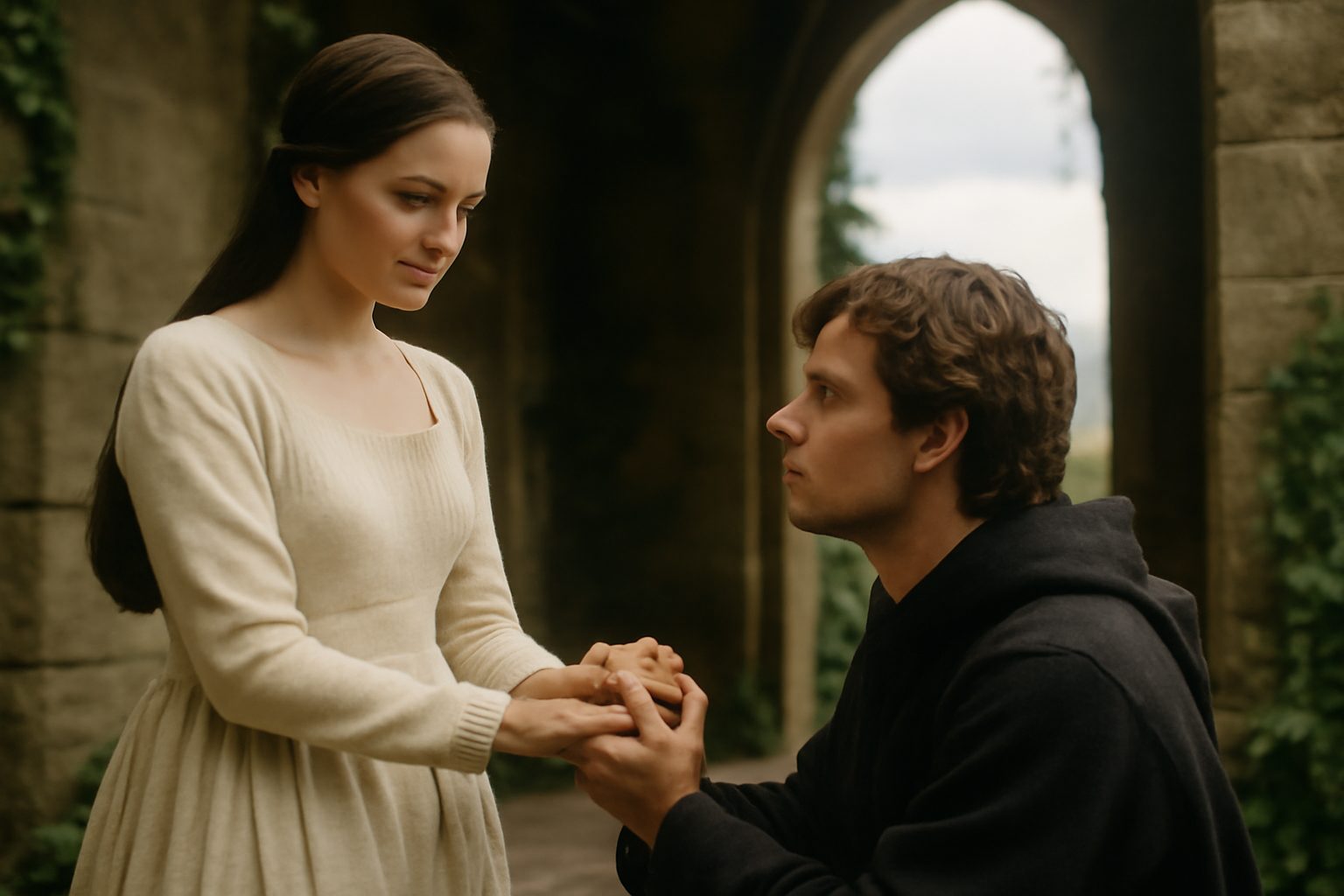
In Act 2, Scene 6 of Romeo and Juliet, Romeo speaks these words to Friar Laurence as he eagerly anticipates his secret marriage to Juliet. The scene takes place in the friar's cell, where the couple has come to be wed in haste, despite the ongoing feud between their families. Romeo's request reflects his impatience and desire to formalize their love, believing the friar's blessing will unite them forever.
Romeo: "Do thou but close our hands with holy words,"
In modern day english, we would say:
Just say the words that will unite us in marriage.
Frequently Asked Questions
What is Romeo asking for in this line?
Romeo is asking for a marriage ceremony to unite him and Juliet.
Connections to other verses:
Connections to Friar Laurence's Role
In the verse Do thou but close our hands with holy words, Romeo implores Friar Laurence to sanctify his union with Juliet. This directly ties to the Friar's response in Amen, amen! but come what sorrow can, where he agrees to perform the ceremony despite his foreboding, emphasizing his dual role as a spiritual guide and a pragmatic voice. The Friar's cautionary advice in Therefore love moderately; long love doth so further contextualizes this moment, as he warns against the intensity of their passion, which contrasts with Romeo's urgency.
Symbolism and Foreshadowing
The plea for holy words connects to the imagery of fragility and transience in the scene. For instance, A lover may bestride the gossamer evokes the delicate nature of their love, much like the gossamer thread, while And in their triumph die, like fire and powder foreshadows the destructive potential of their union. The idea of consummation and its risks is echoed in Which as they kiss consume: the sweetest honey, reinforcing the theme that intense joy can lead to swift demise.
Emotional and Thematic Resonance
Romeo's request highlights his impatience and idealization of love, which is mirrored in his declaration It is enough I may but call her mine, showcasing his overwhelming devotion. Juliet's arrival, noted in Here comes the lady: O, so light a foot, amplifies the moment's significance, as her presence fulfills Romeo's desires. The culmination of this sacred act is captured in Till holy church incorporate two in one, directly fulfilling Romeo's initial plea for unity through holy words.
Contrast with Warnings
Despite Romeo's focus on the immediate joy, the Friar's warnings in verses like These violent delights have violent ends serve as a stark counterpoint, suggesting that the "holy words" may not shield them from tragedy. This tension between spiritual blessing and earthly consequence is central to the scene's dramatic irony.