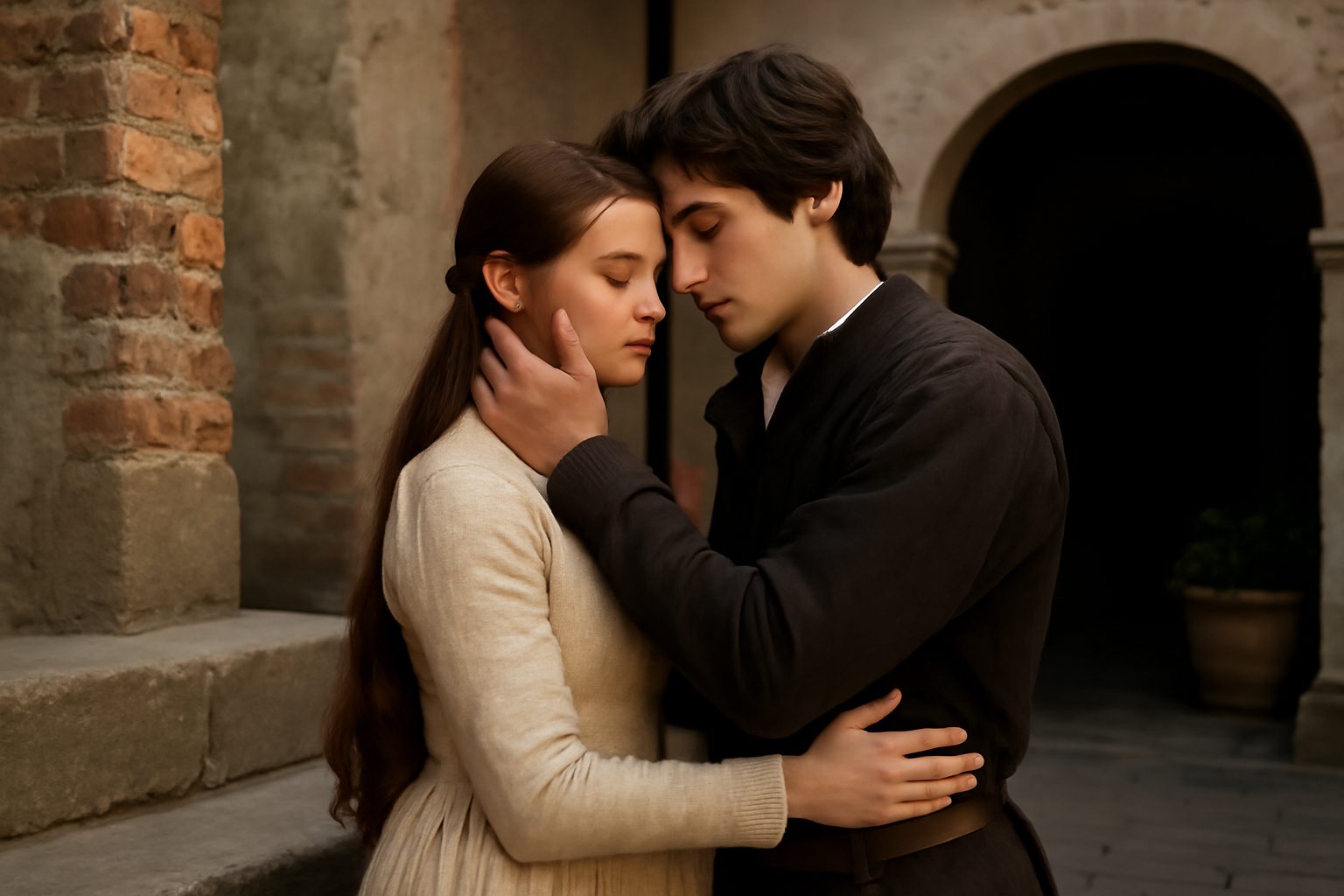
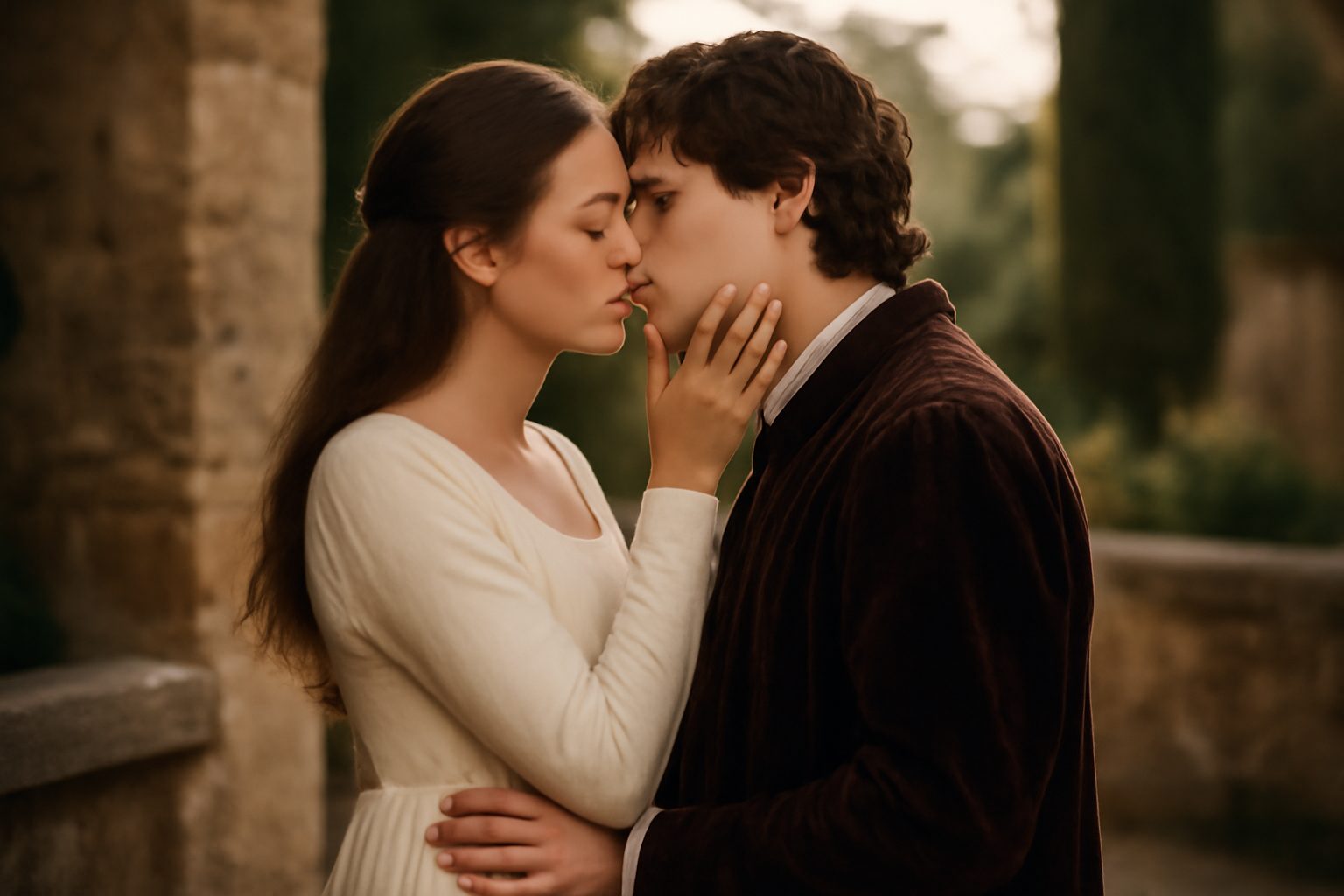
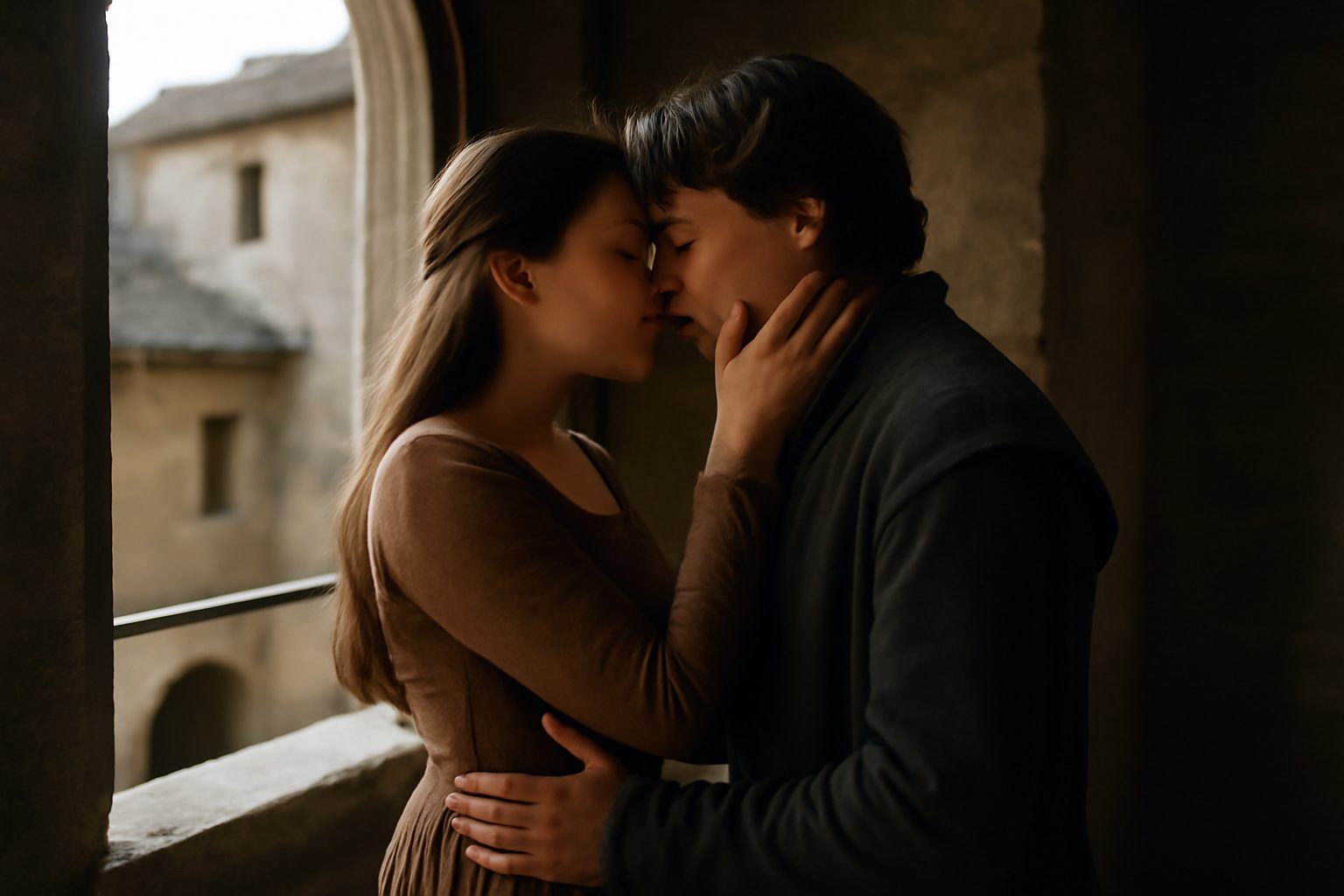
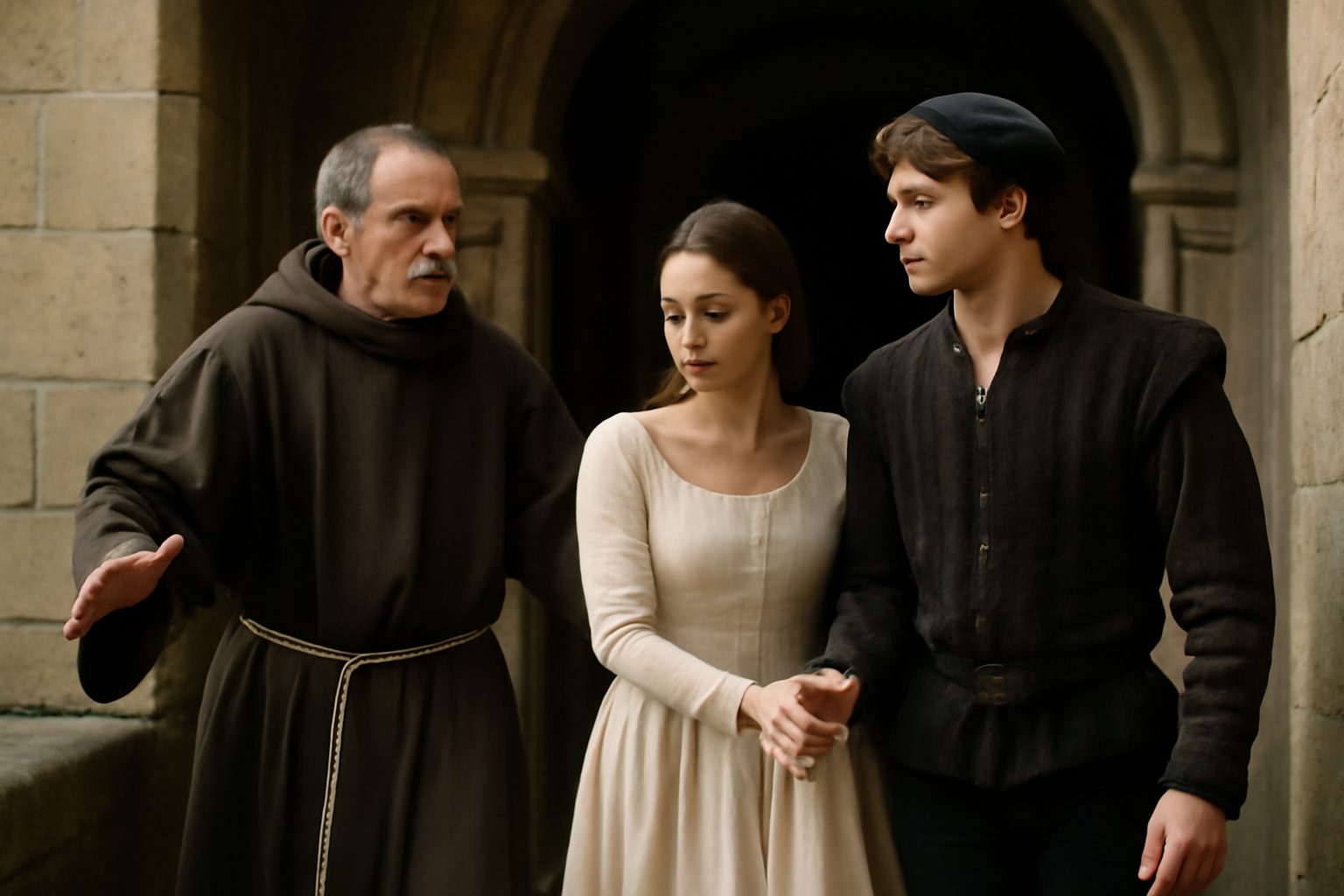
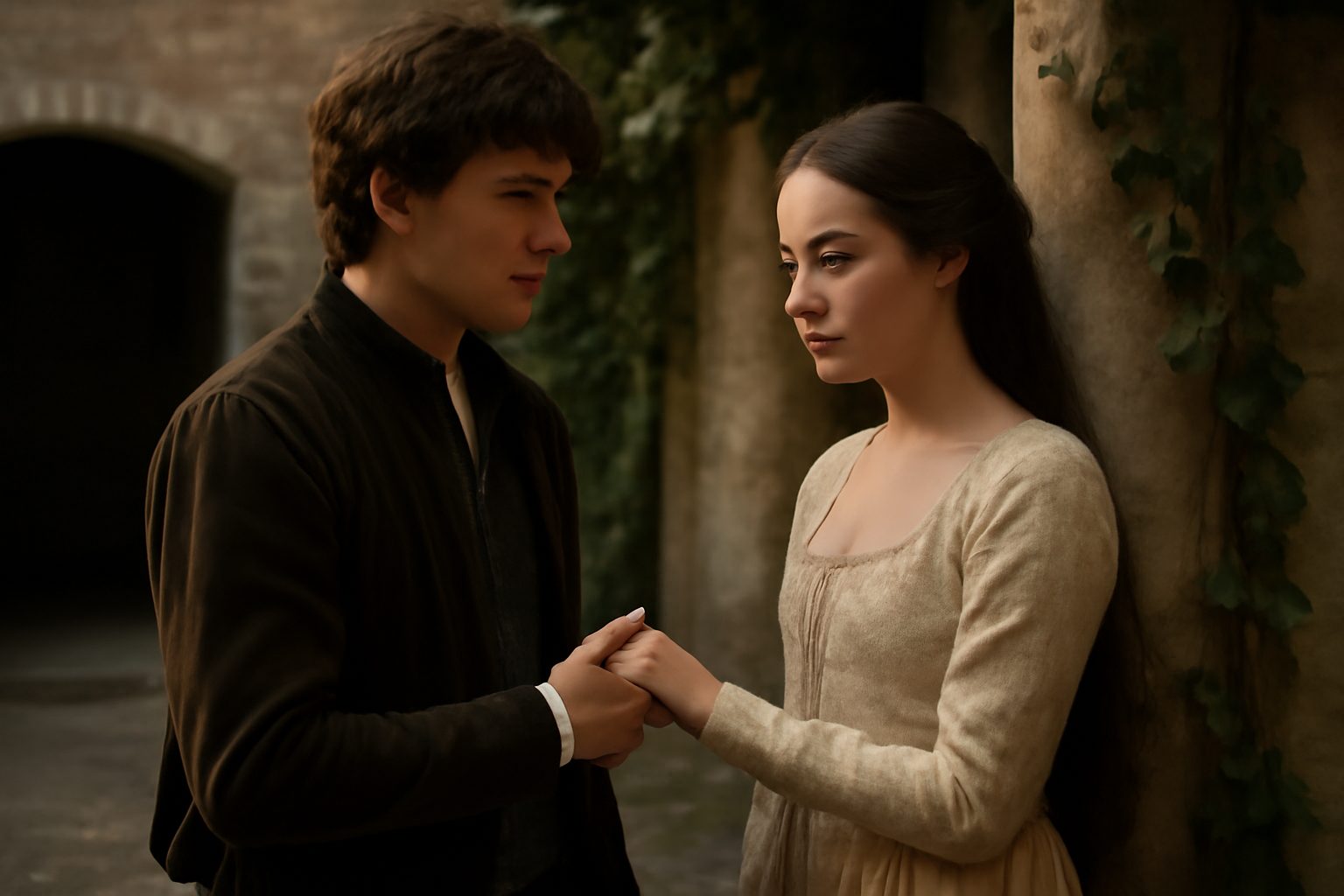
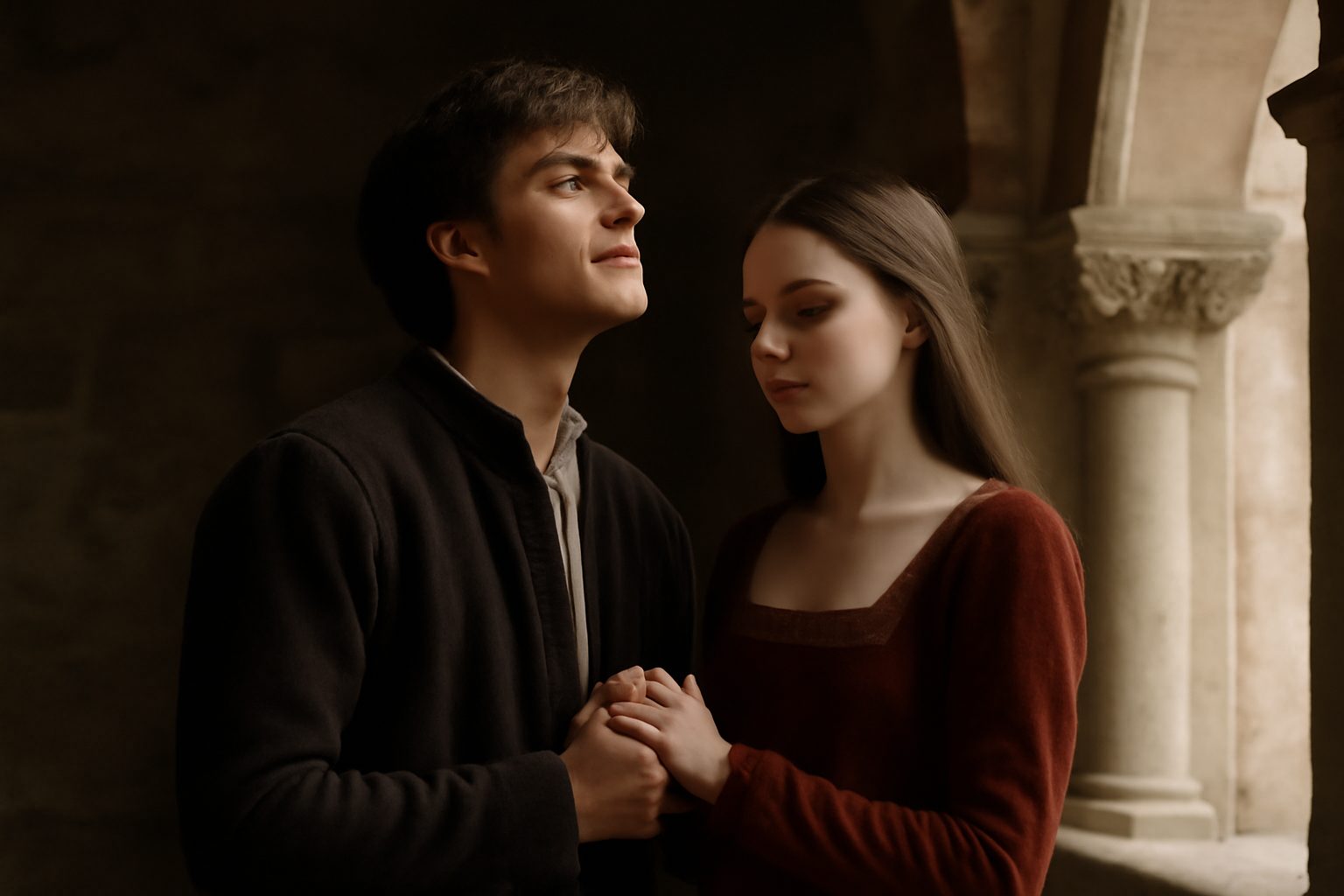
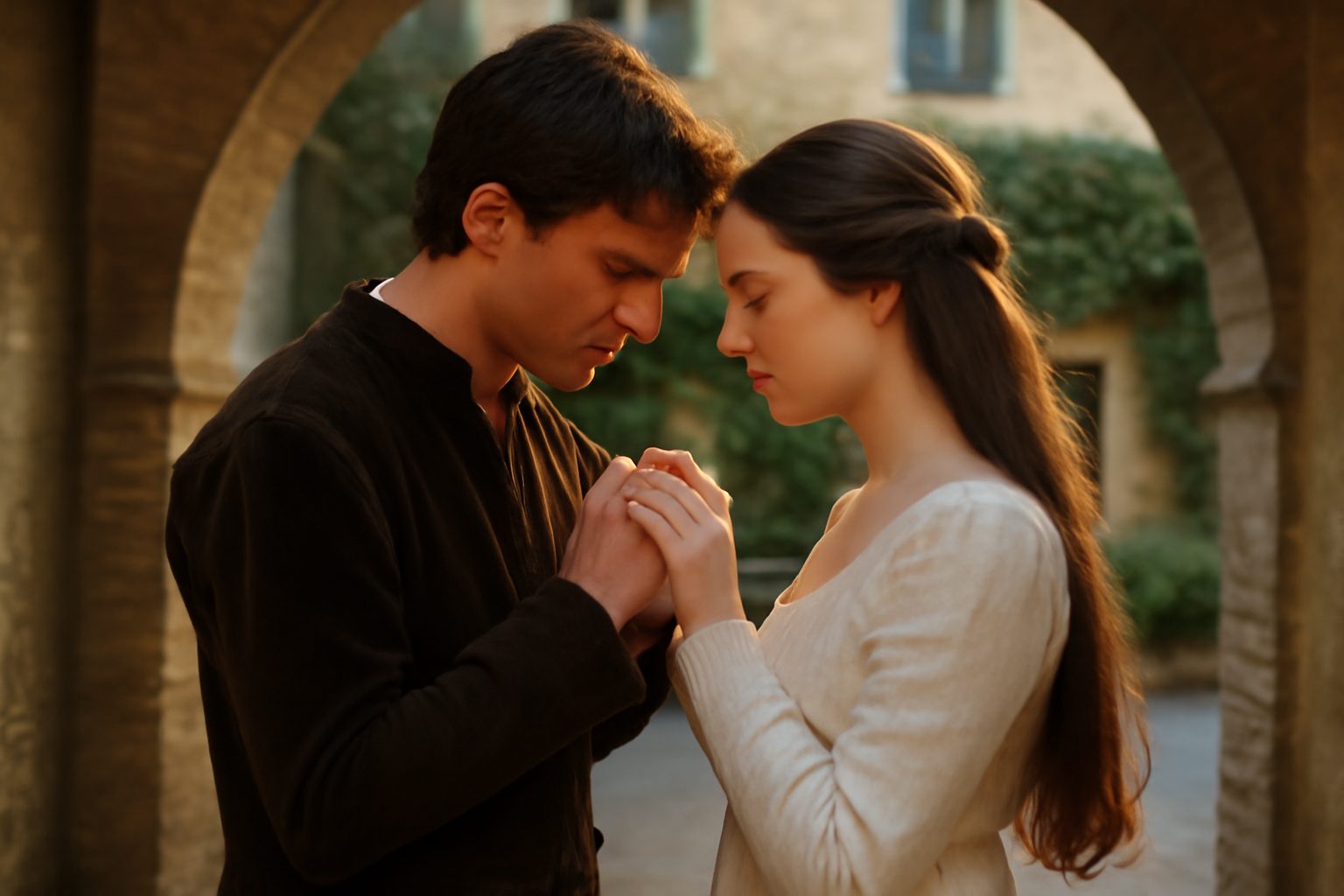
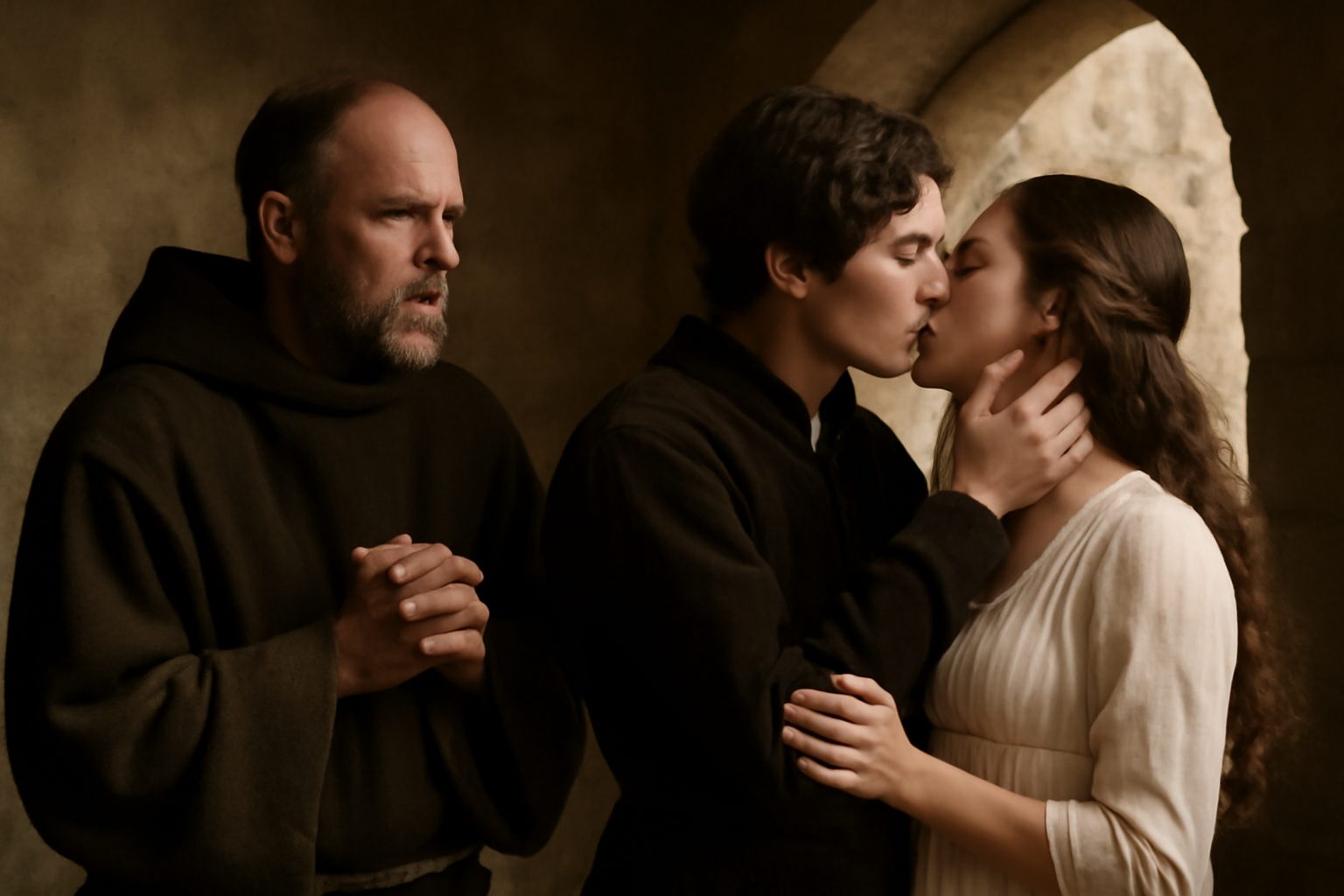
In Act 2, Scene 6 of Romeo and Juliet, Friar Laurence warns Romeo about the dangers of loving too intensely. As Romeo eagerly anticipates his secret marriage to Juliet, the Friar cautions that excessive passion can burn out quickly, while moderate love endures. This advice foreshadows the tragic consequences of the lovers' impulsive actions later in the play.
Friar Laurence: "Therefore love moderately; long love doth so;"
In modern day english, we would say:
Love in moderation lasts longer, so don’t rush into it too intensely.
Frequently Asked Questions
What advice does Friar Laurence give about love in this line?
He advises to love in moderation because lasting love grows slowly.
Connections to other verses:
Connections to "Therefore love moderately; long love doth so"
Friar Laurence's advice to "love moderately" serves as a thematic anchor for several verses in this scene, particularly those that explore the intensity and potential dangers of Romeo and Juliet's passion.
Warnings Against Excessive Passion
The verse directly connects to "These violent delights have violent ends", where the Friar warns that overwhelming emotions lead to destructive outcomes. This idea is reinforced through "And in their triumph die, like fire and powder", using explosive imagery to illustrate how extreme passions self-destruct.
The metaphor continues in "Which as they kiss consume: the sweetest honey" and "Is loathsome in his own deliciousness", showing how even sweet things become unpleasant in excess, mirroring the "moderation" theme through sensory imagery.
Romeo's Contrasting Perspective
Romeo's responses provide dramatic contrast to the Friar's wisdom. In "Then love-devouring death do what he dare", he embraces extreme passion regardless of consequences. His declaration "It is enough I may but call her mine" shows his all-or-nothing approach to love, directly opposing the Friar's moderate stance.
Romeo further emphasizes this intensity in "But my true love is grown to such excess" and "I cannot sum up sum of half my wealth", demonstrating his inability to measure or moderate his emotions.
Temporal and Spiritual Dimensions
The moderation theme intersects with time through "Too swift arrives as tardy as too slow", suggesting that improper pacing undermines love's durability. The spiritual dimension appears in "That after hours with sorrow chide us not!", expressing hope that their union won't bring future regret.
The scene concludes with the Friar's practical implementation of moderation through "Come, come with me, and we will make short work", moving the lovers toward the moderated, sanctioned union of "Till holy church incorporate two in one".