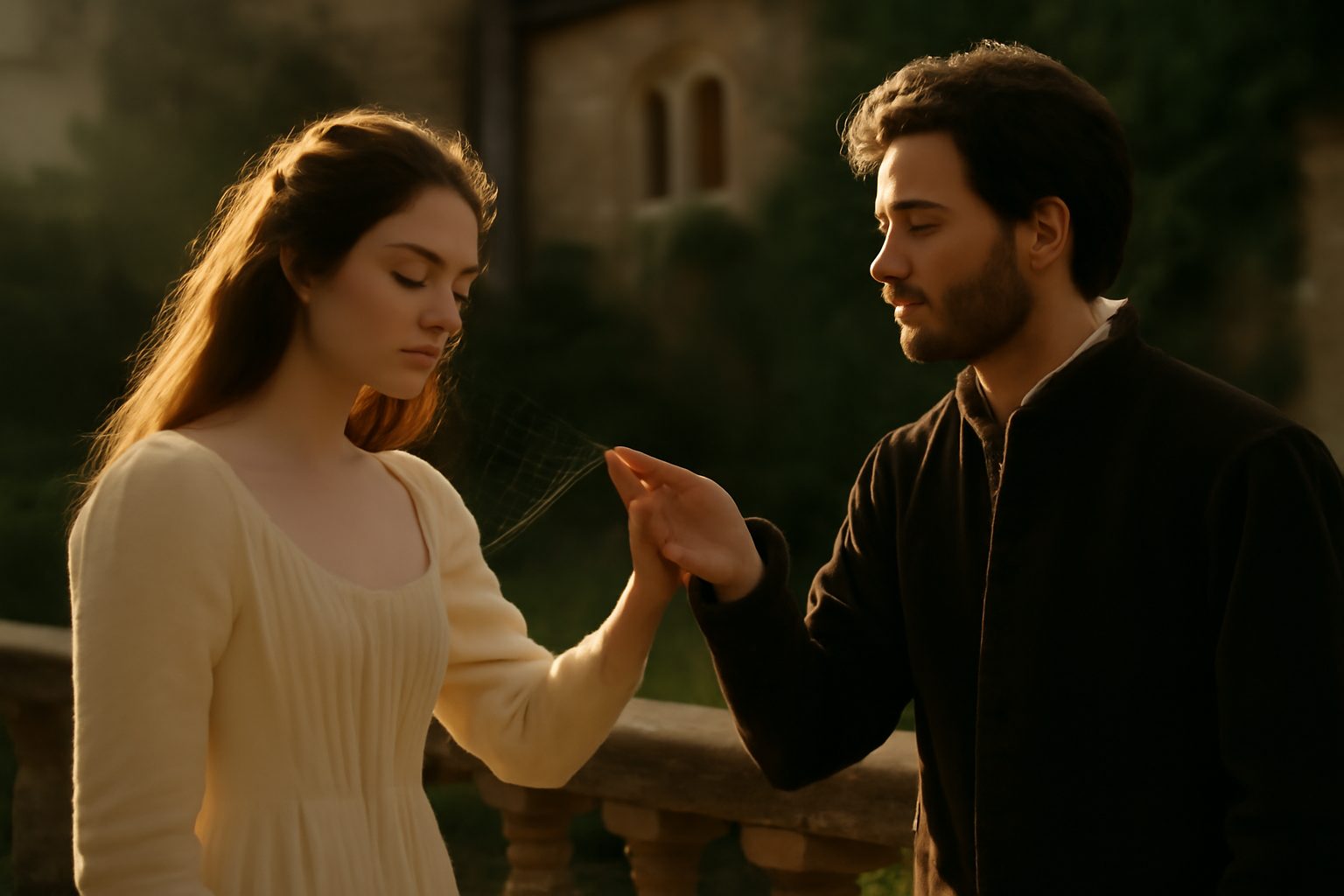
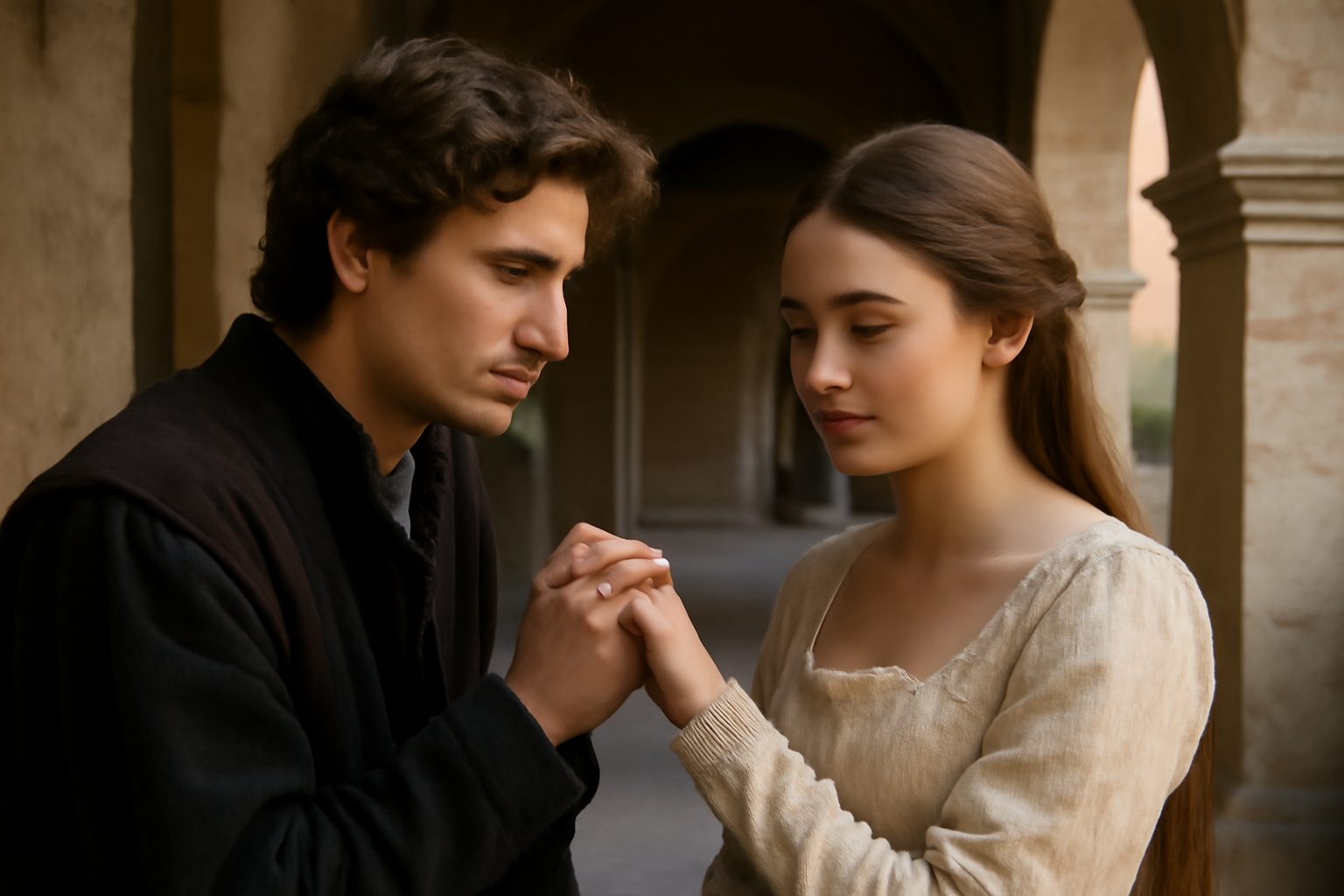
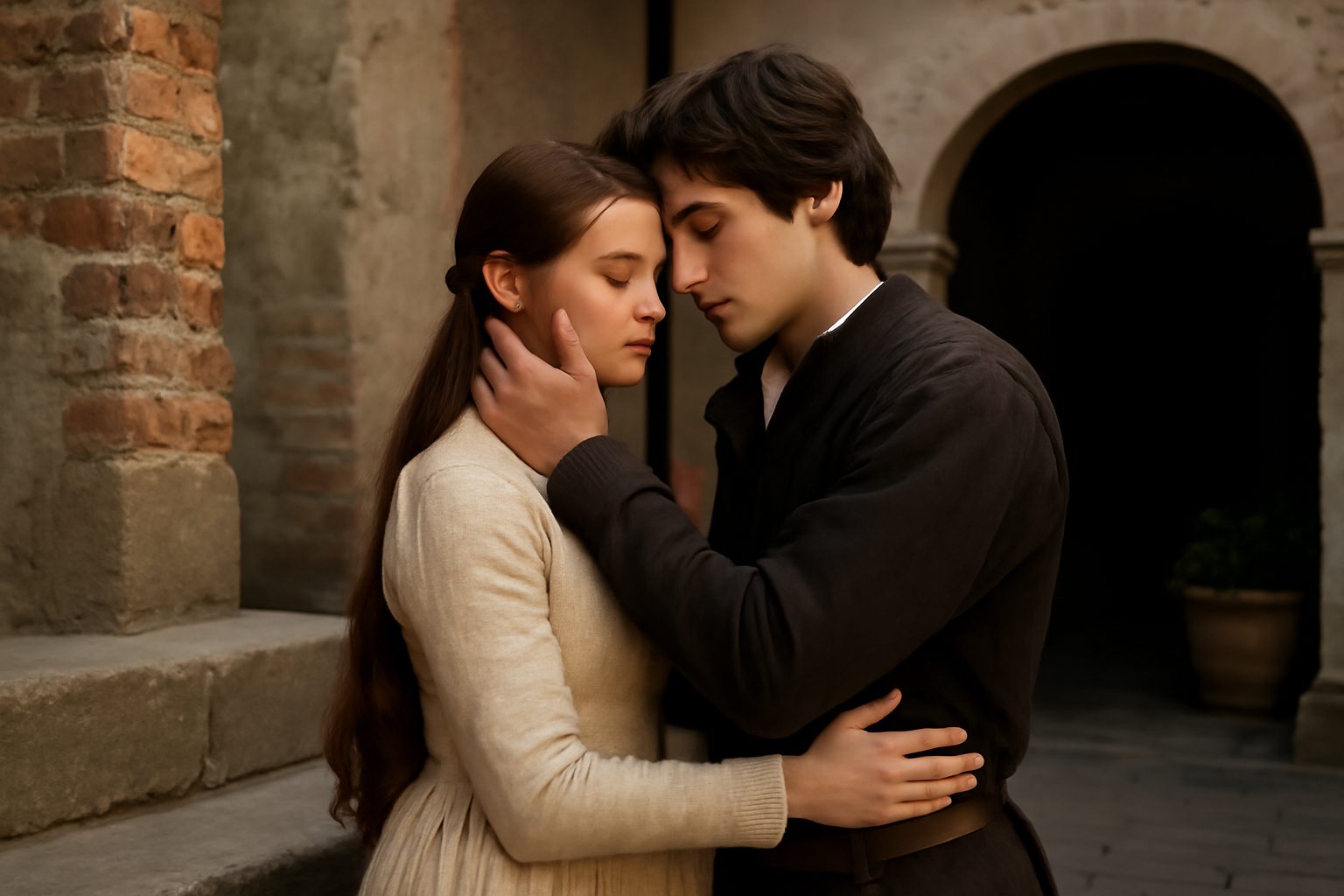
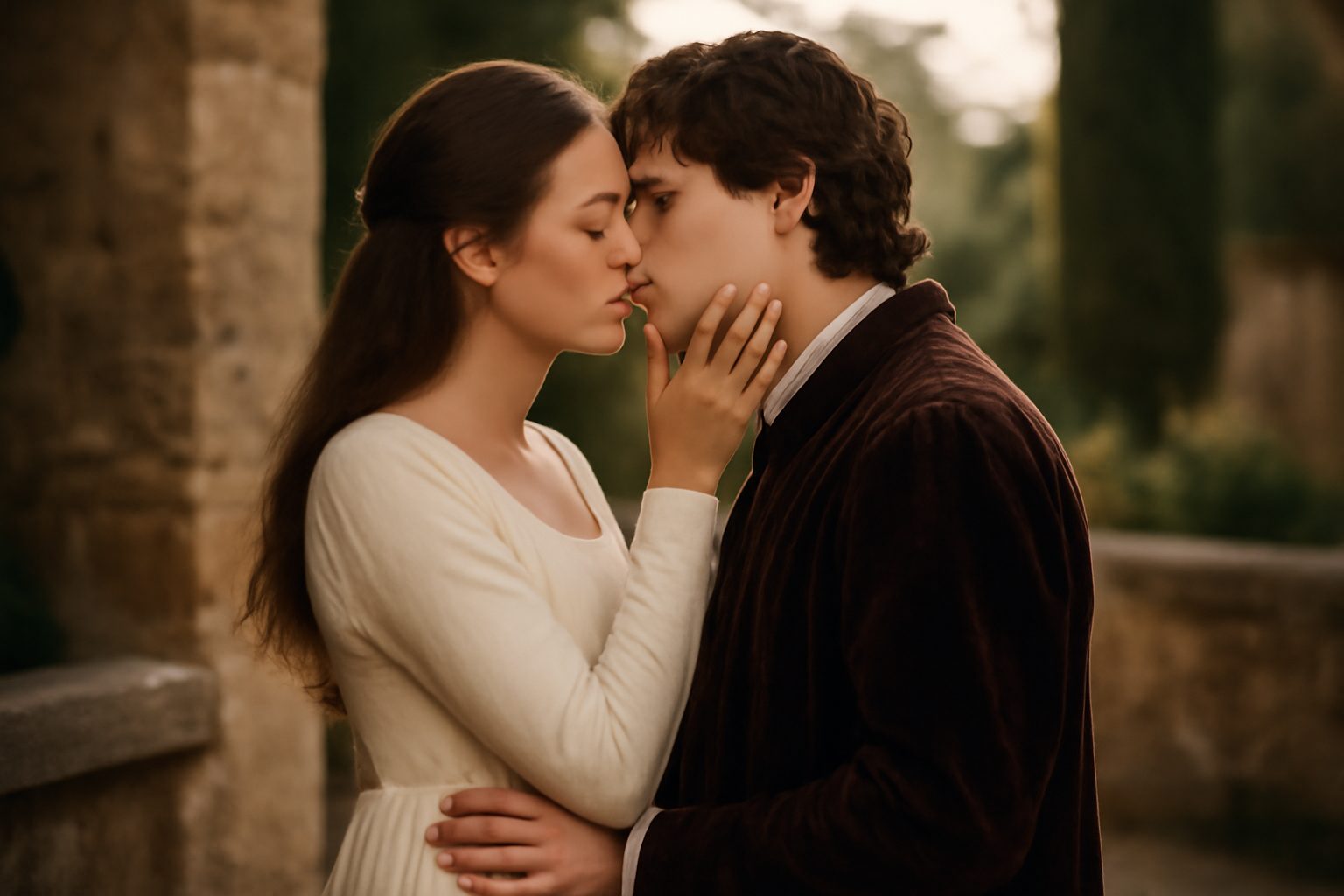
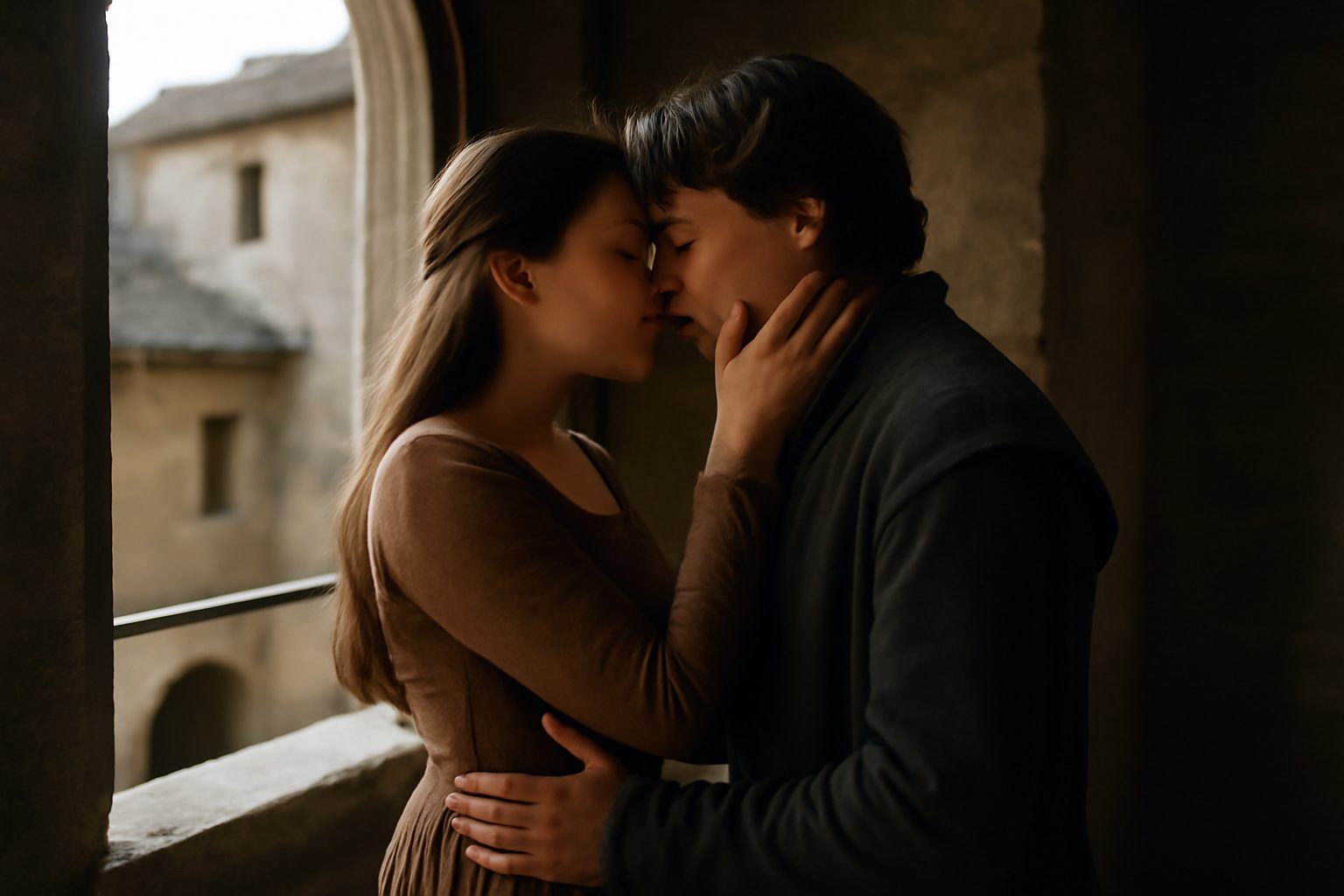
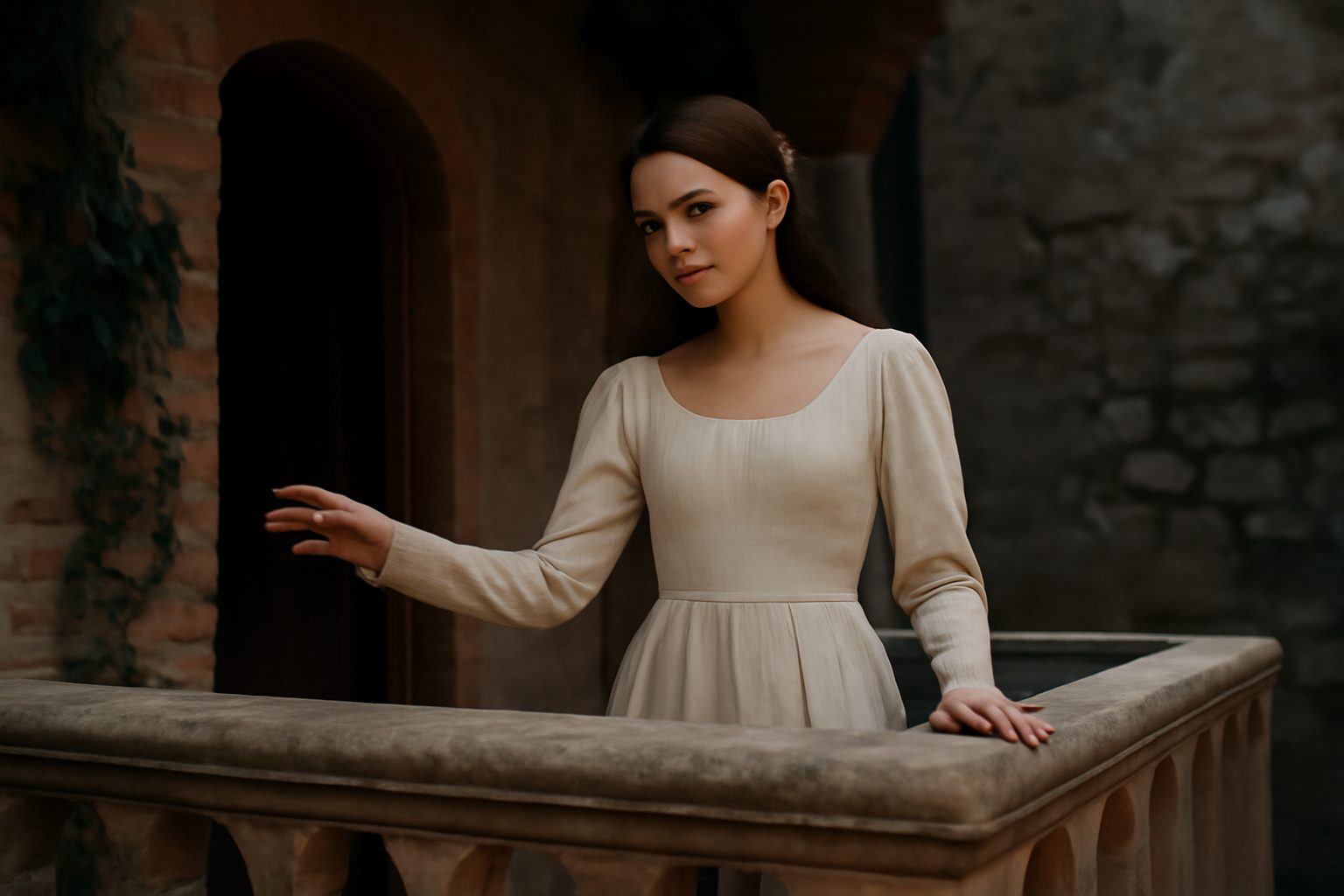
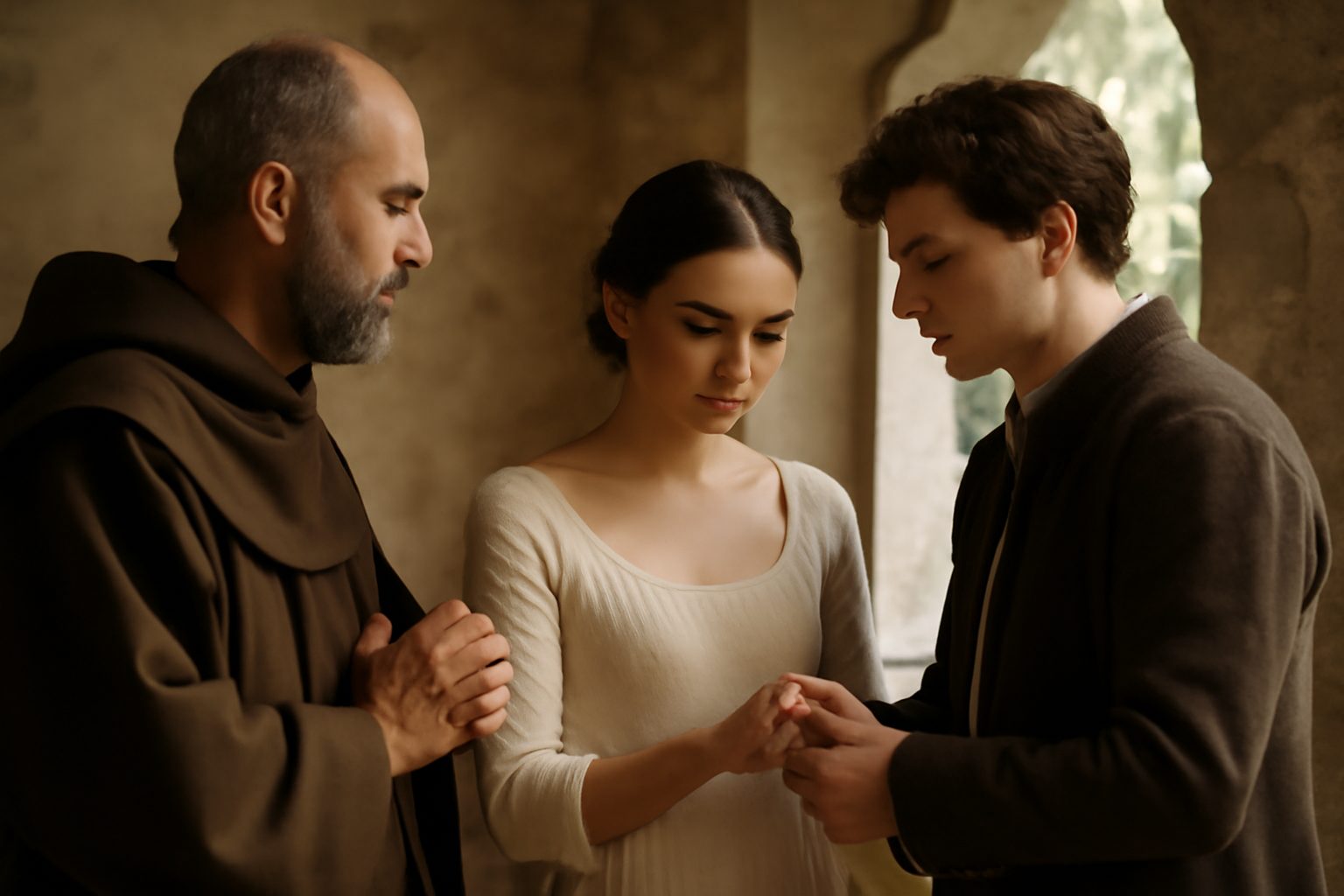
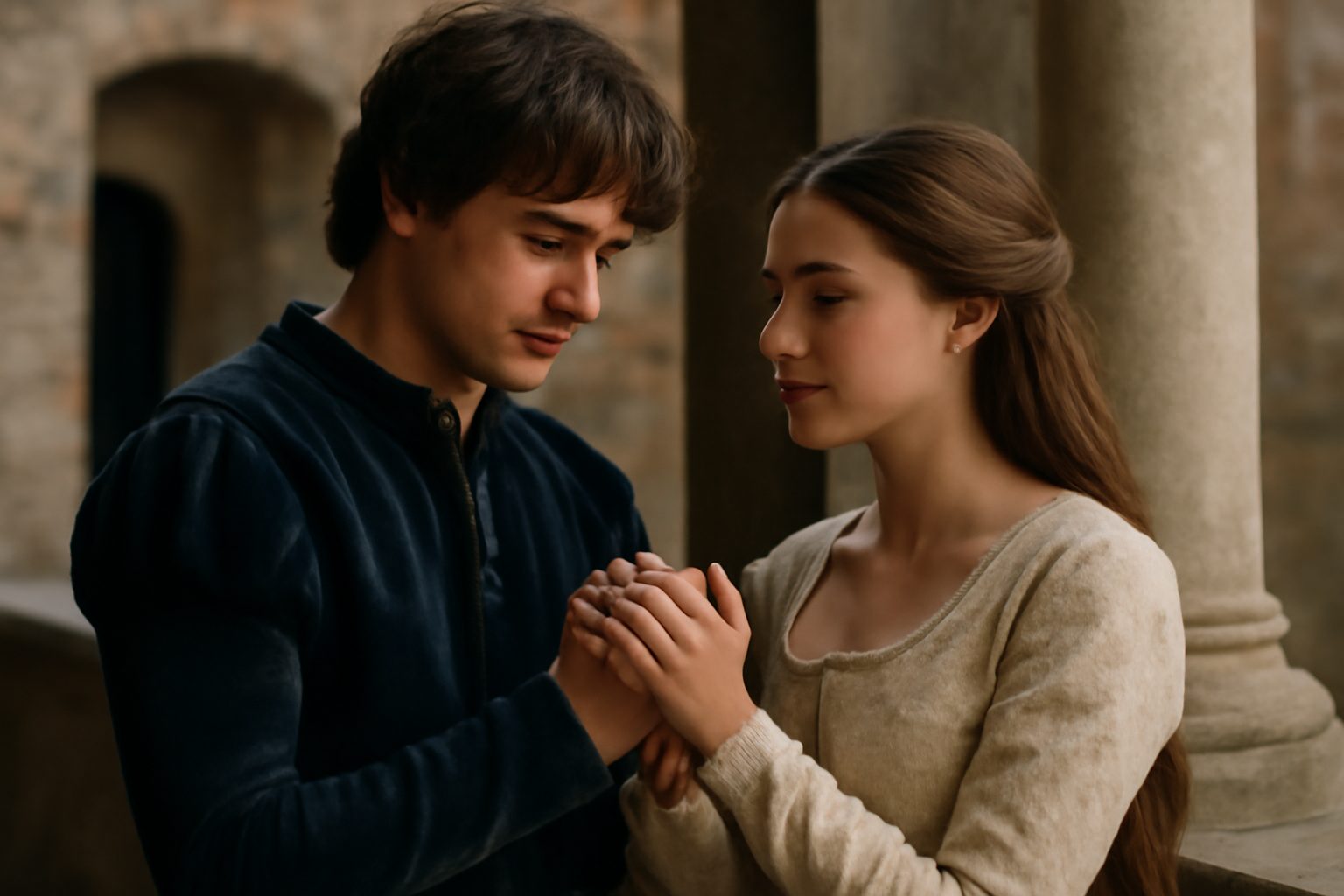
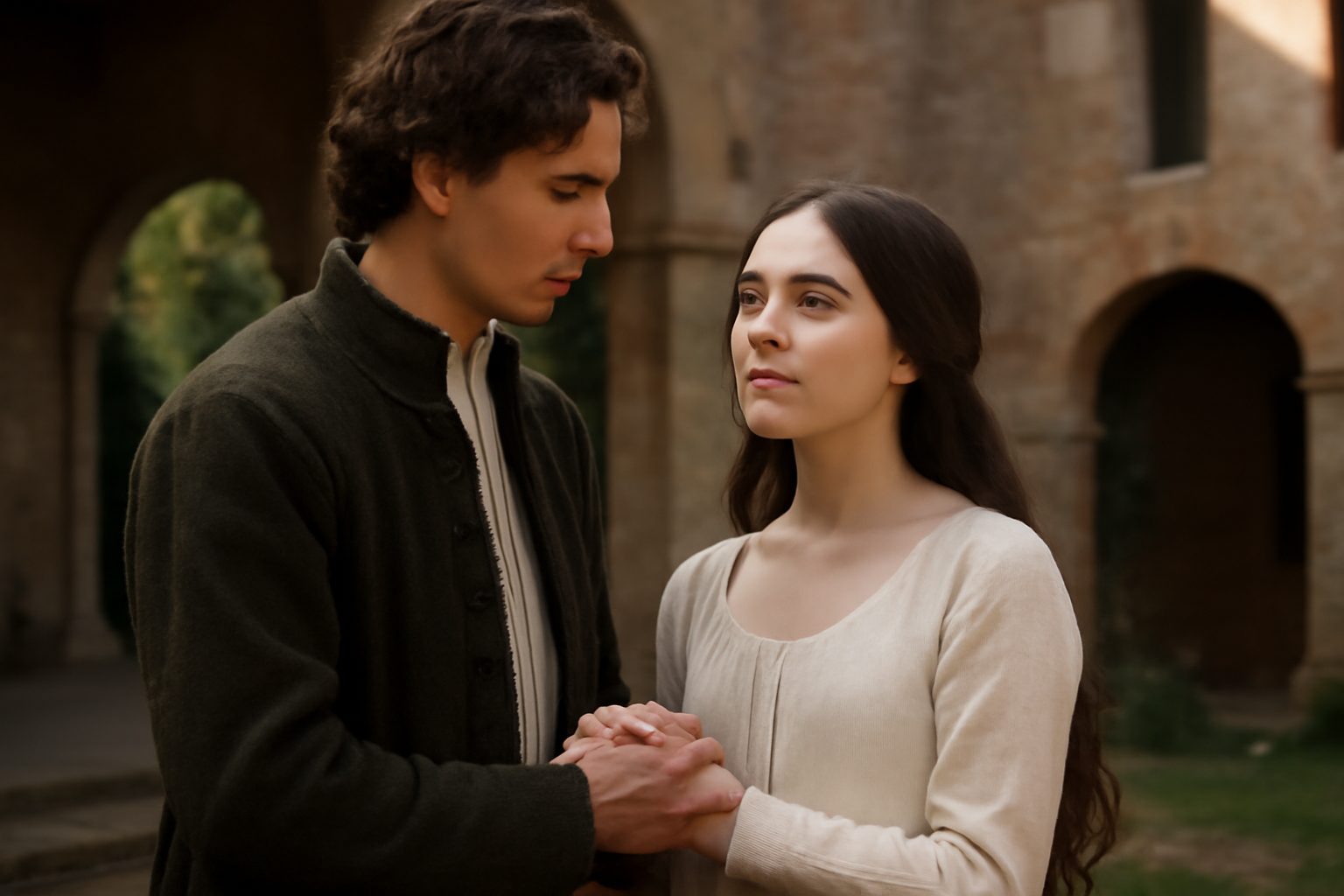
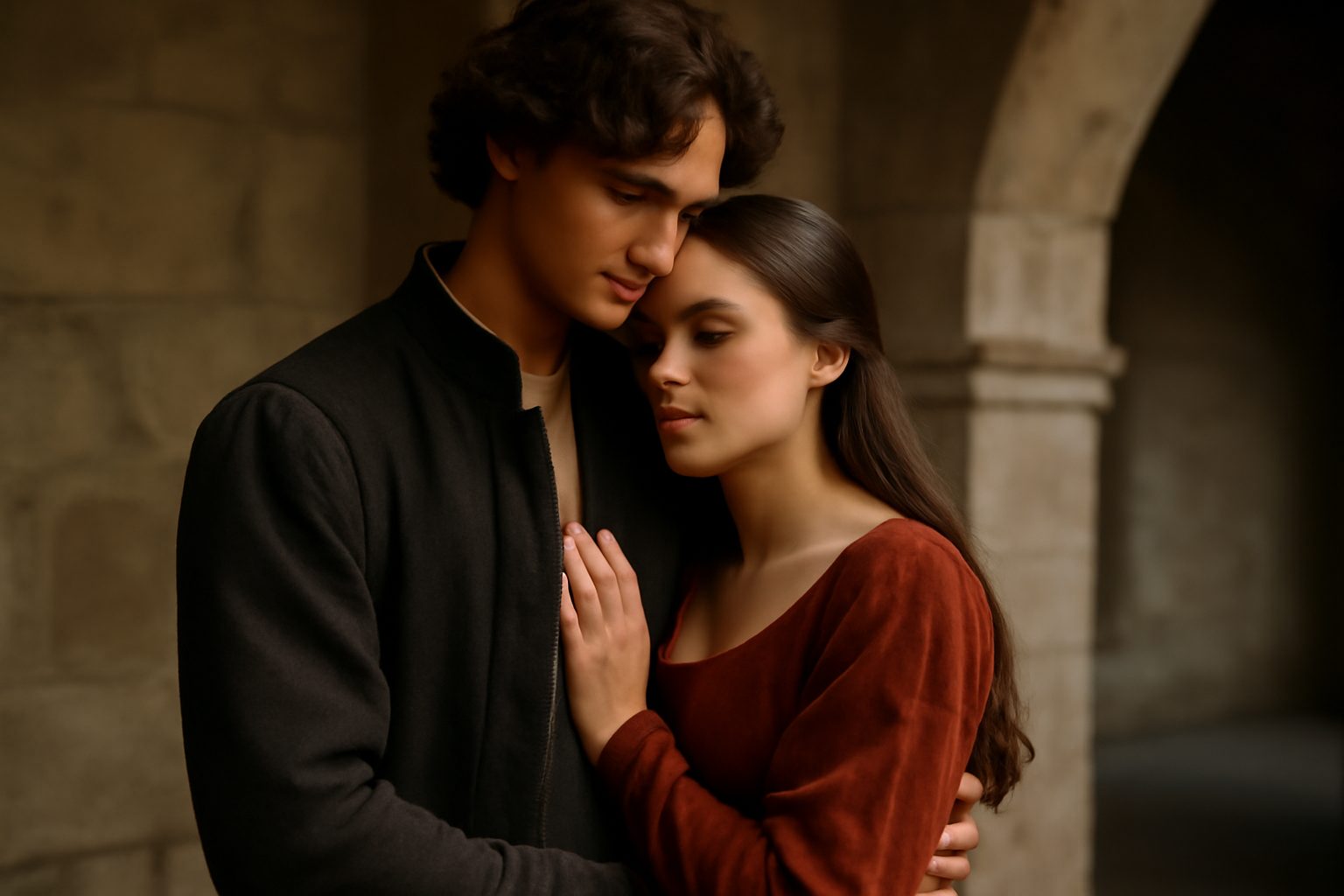
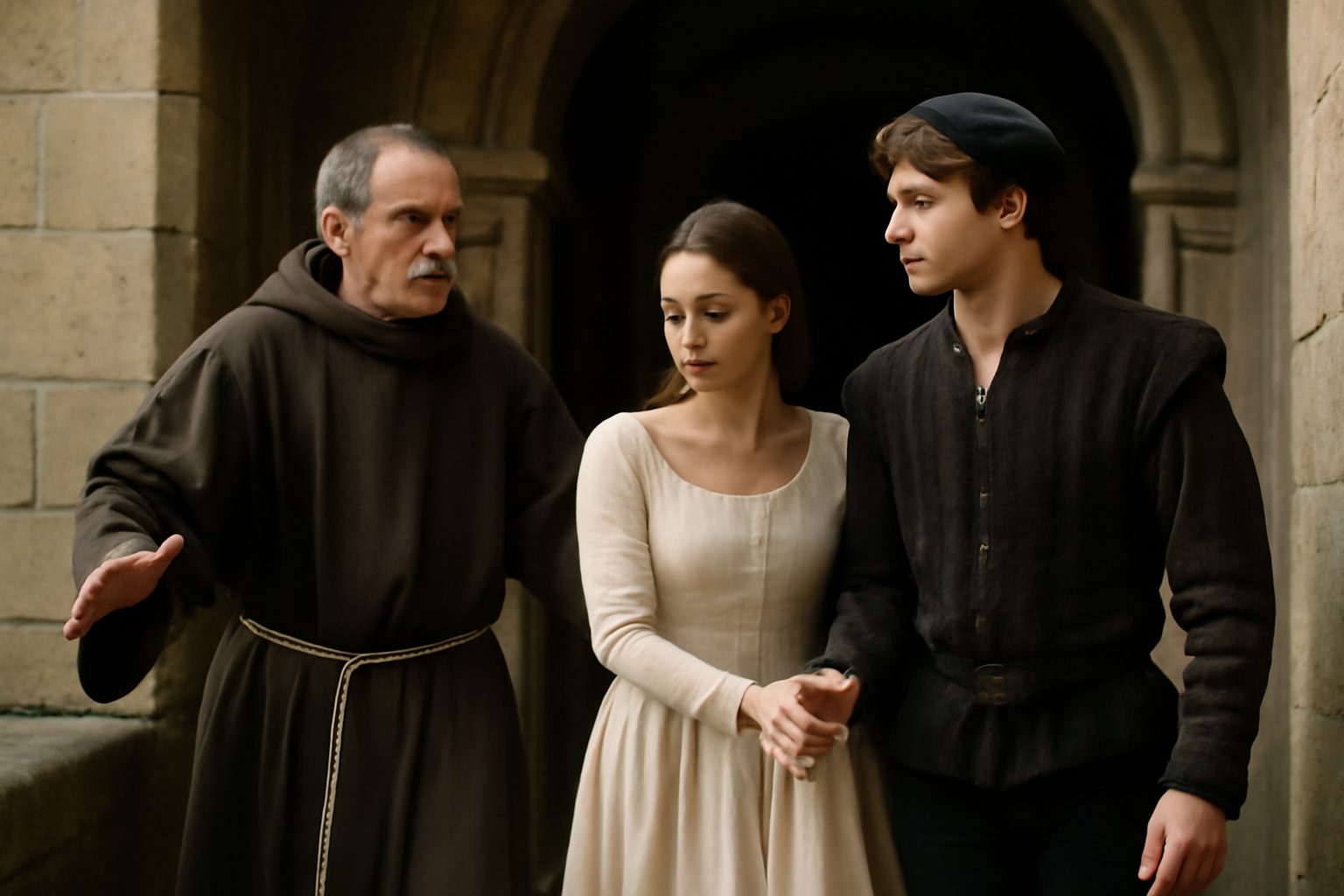
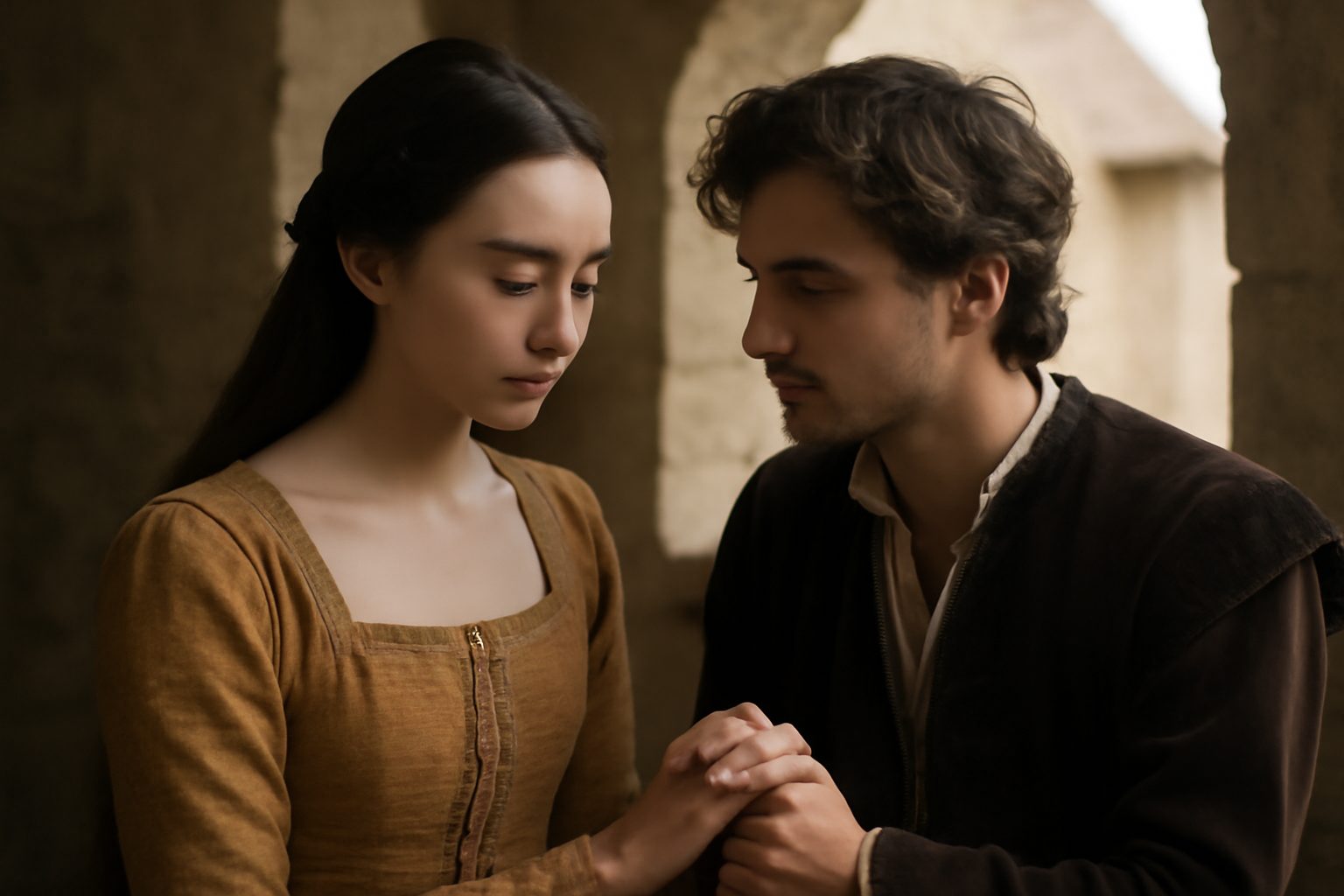
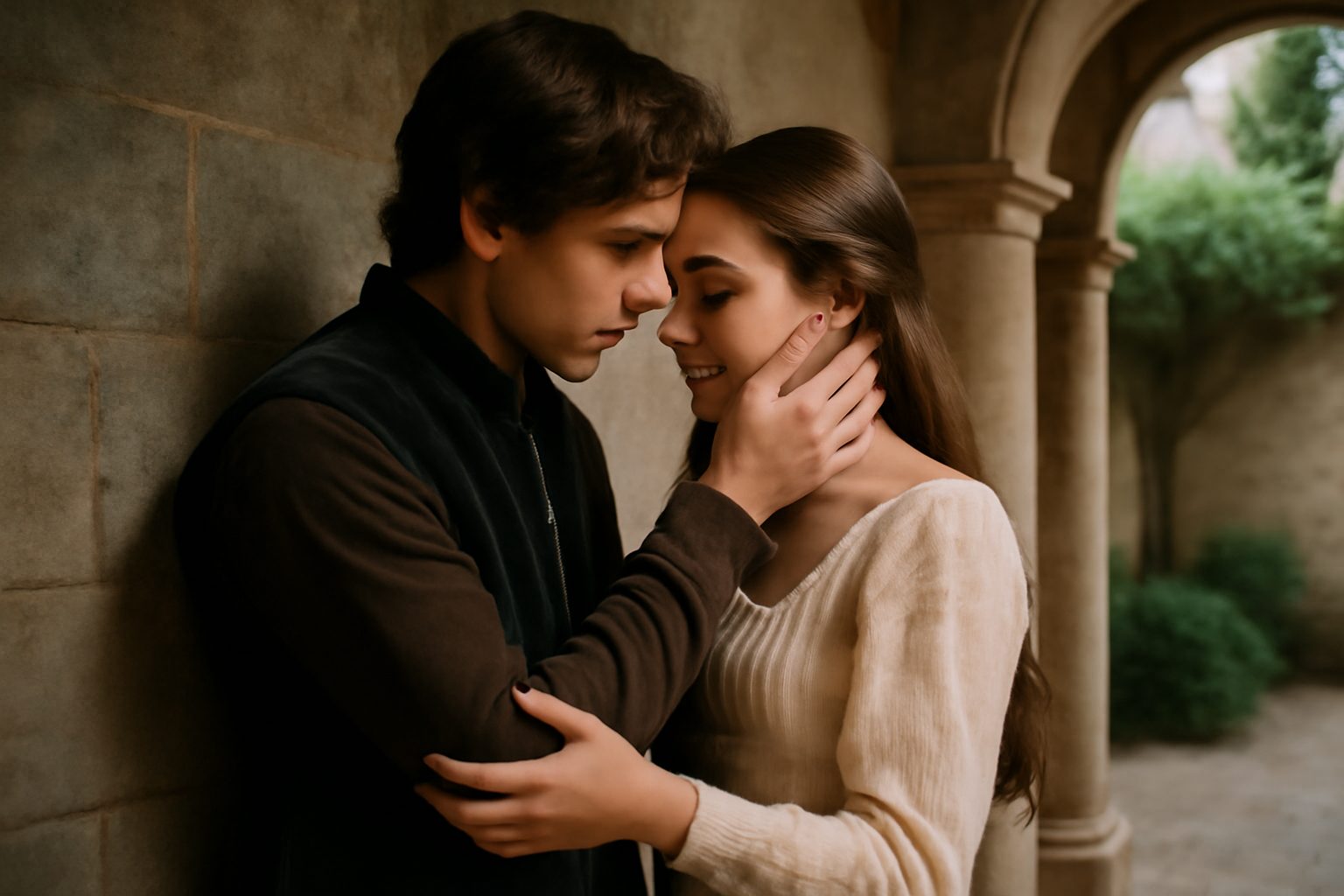
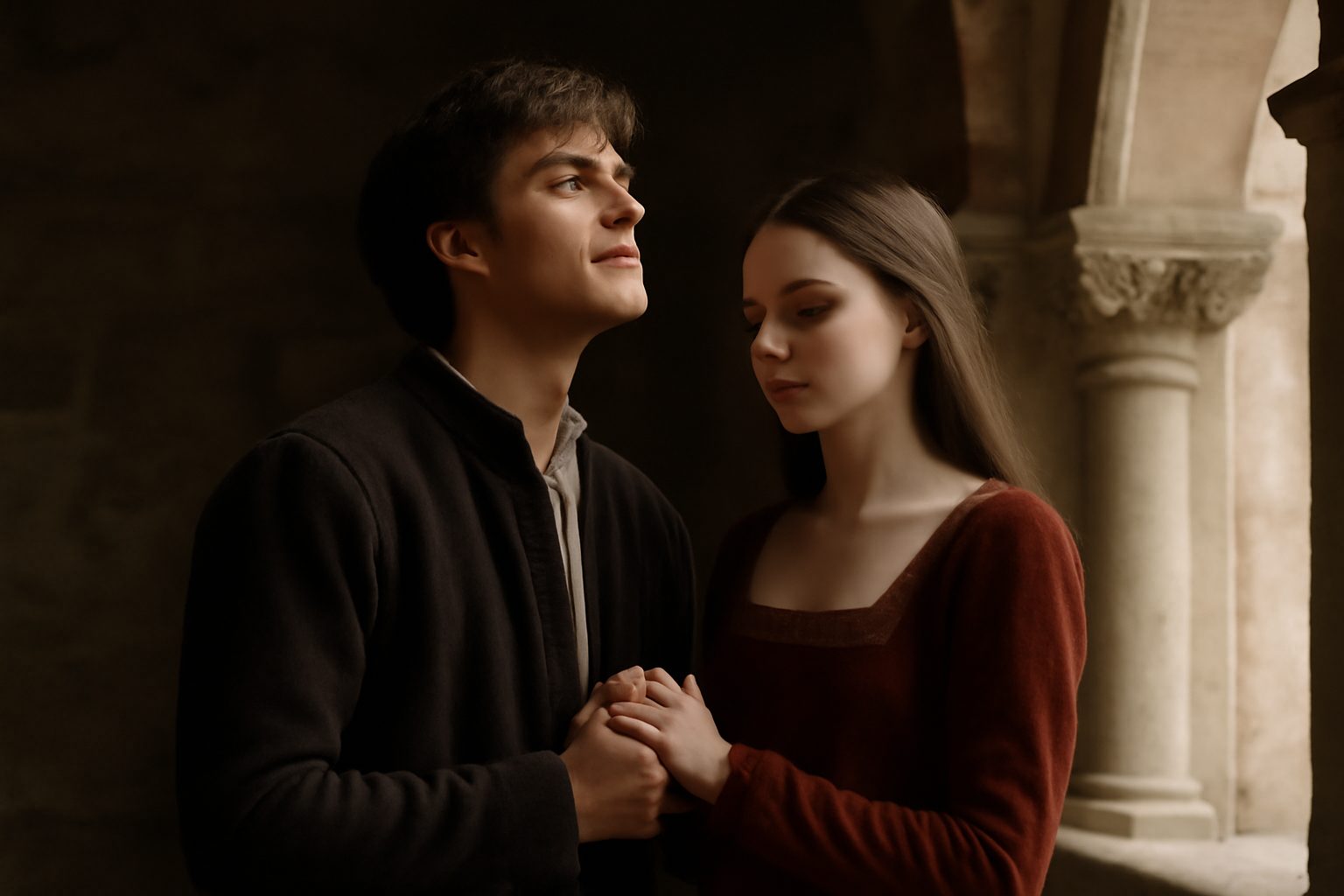
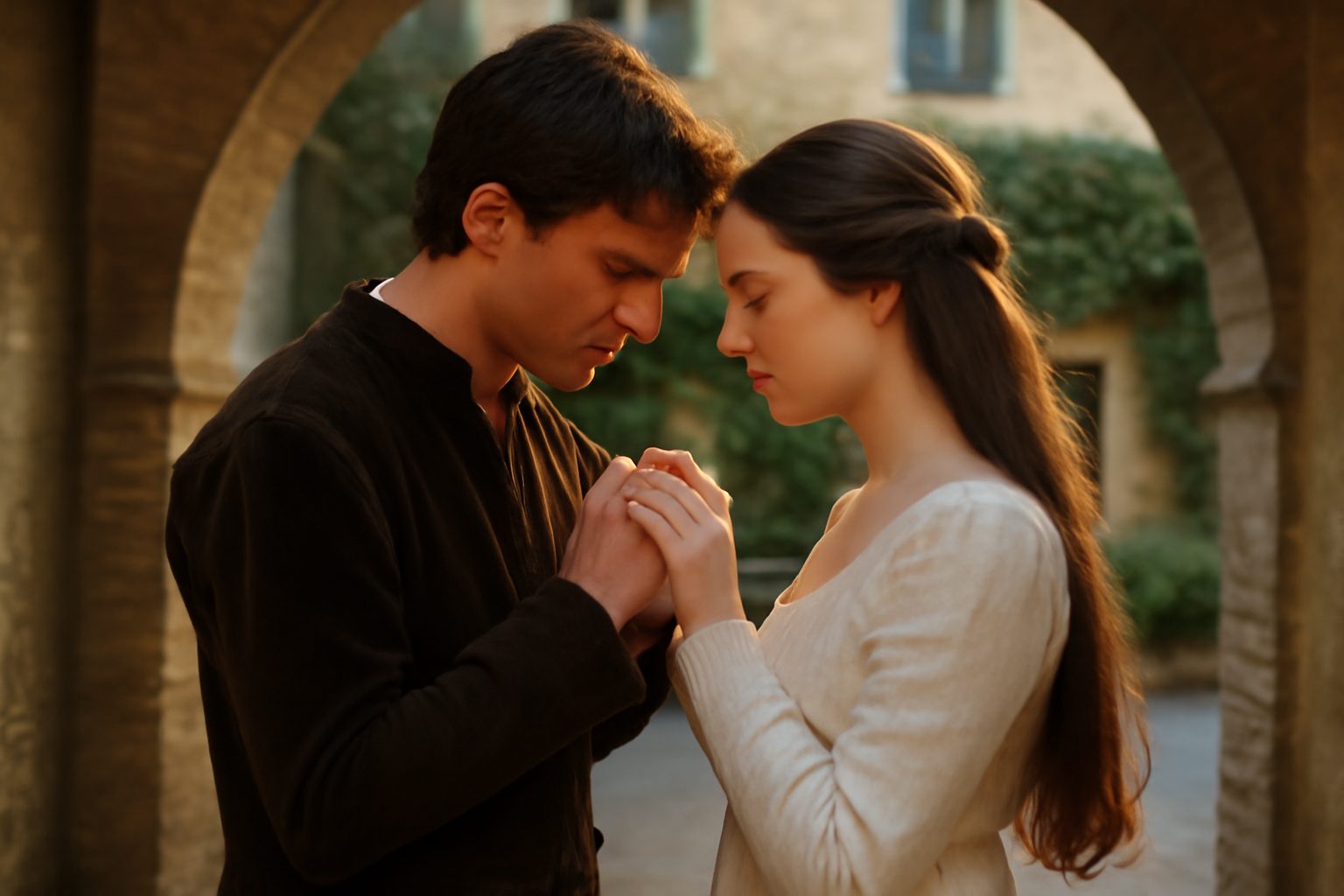
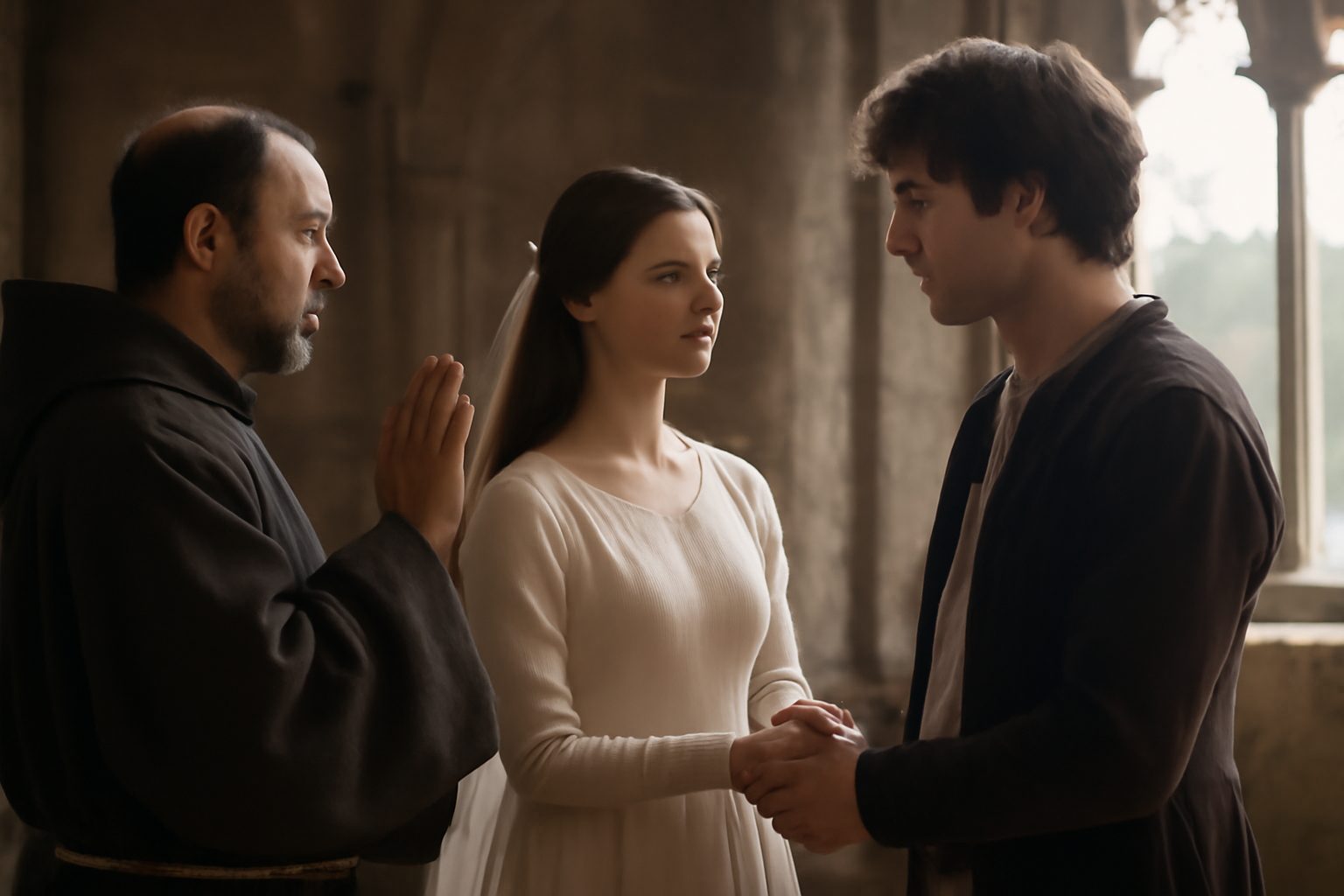
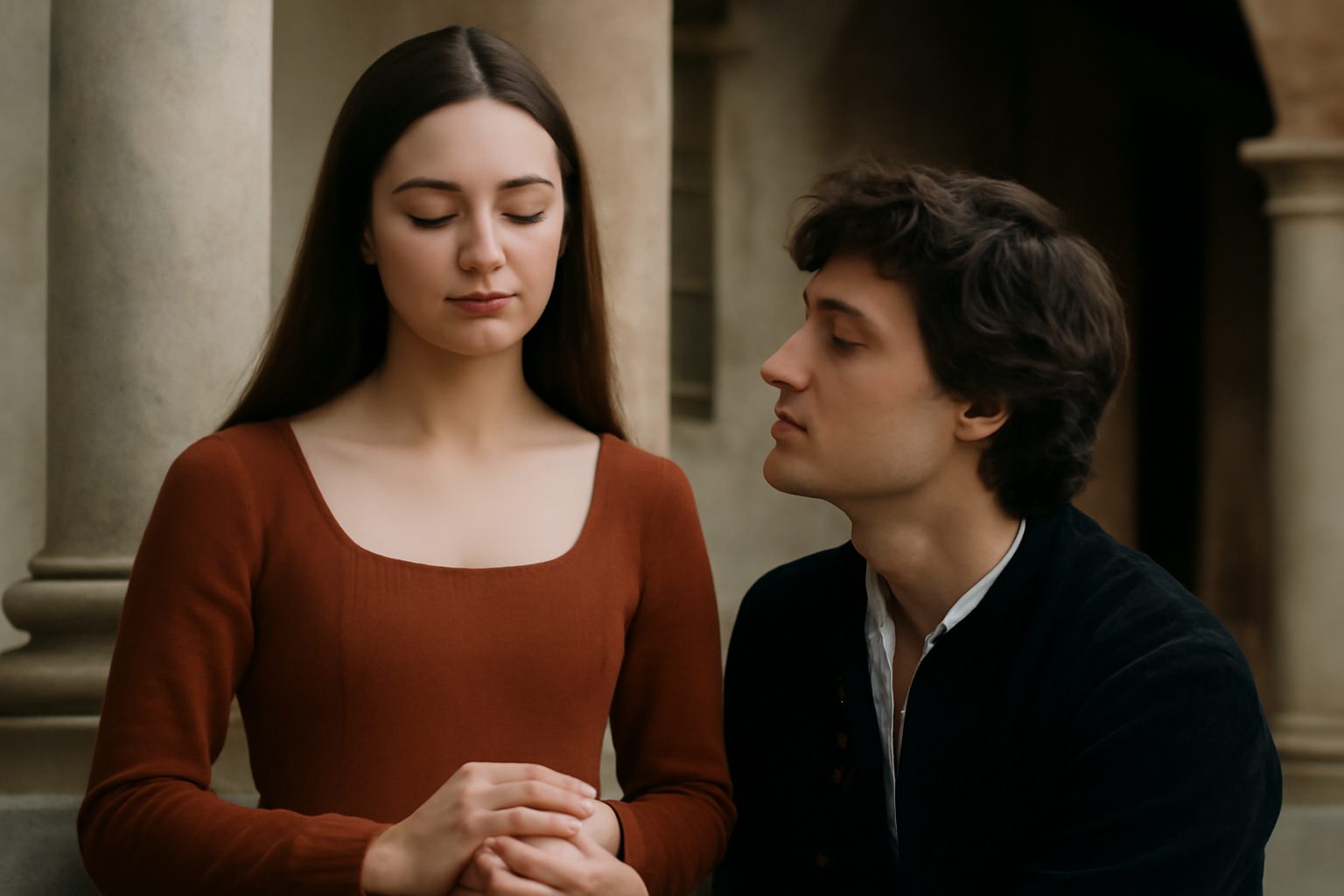
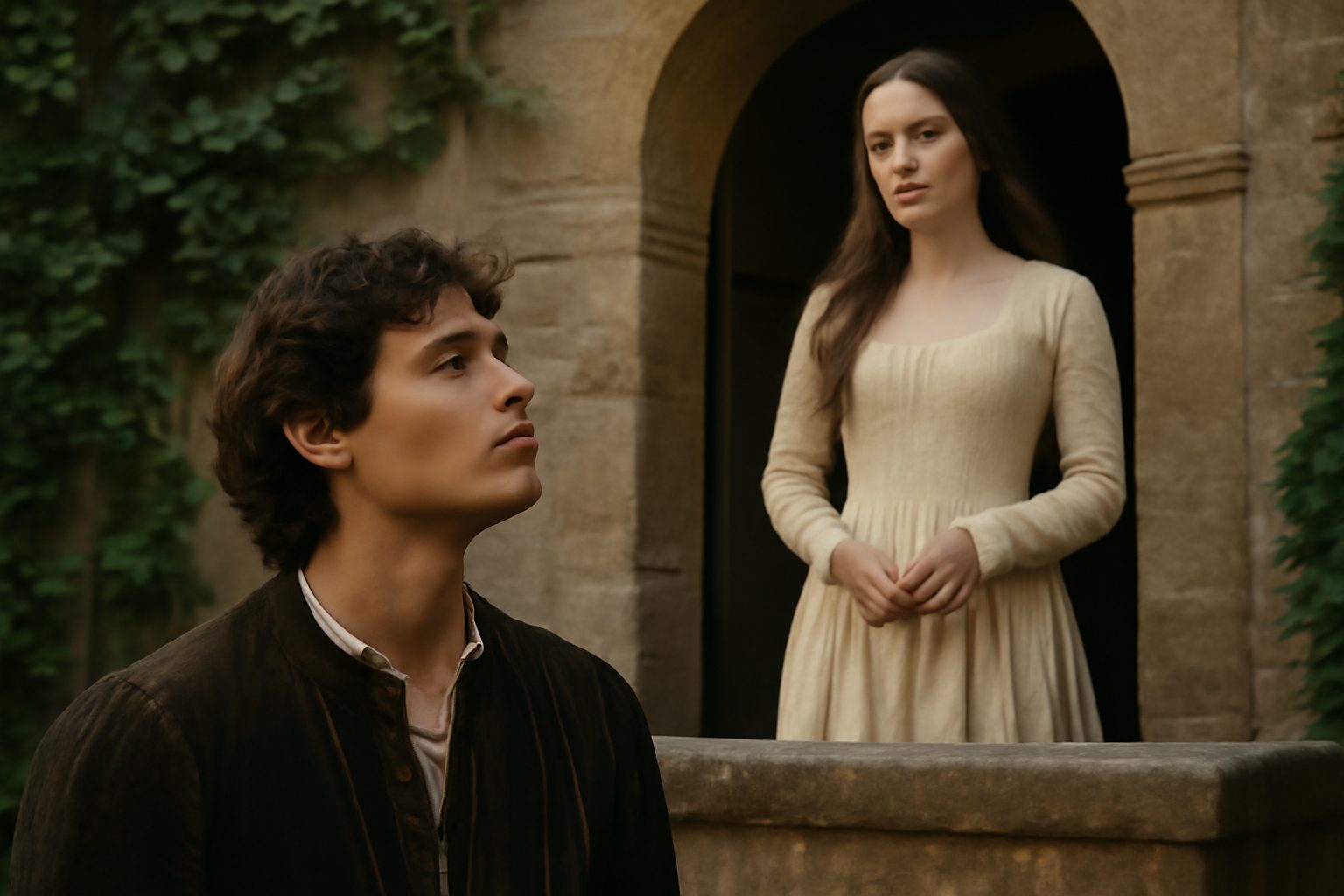
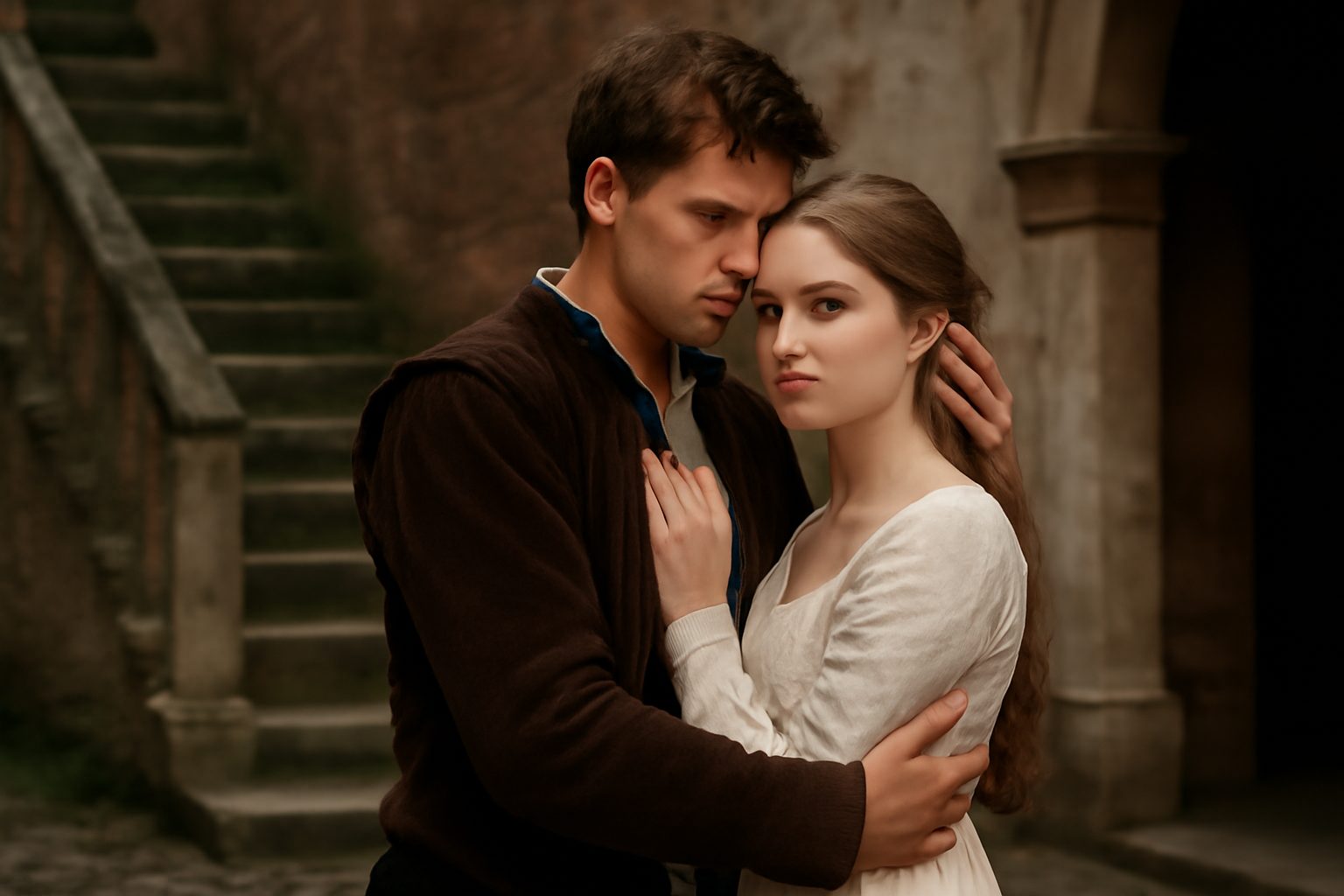
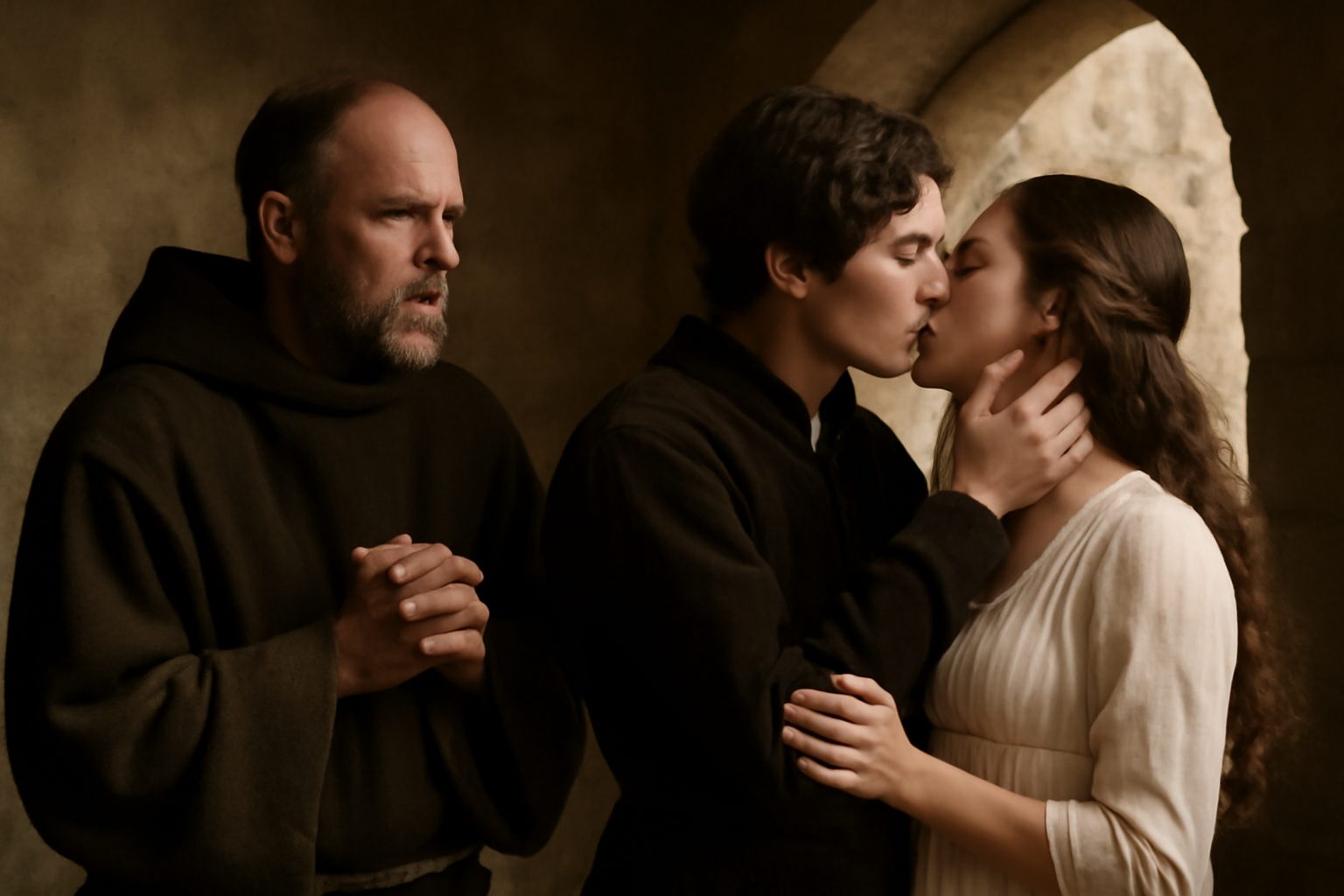
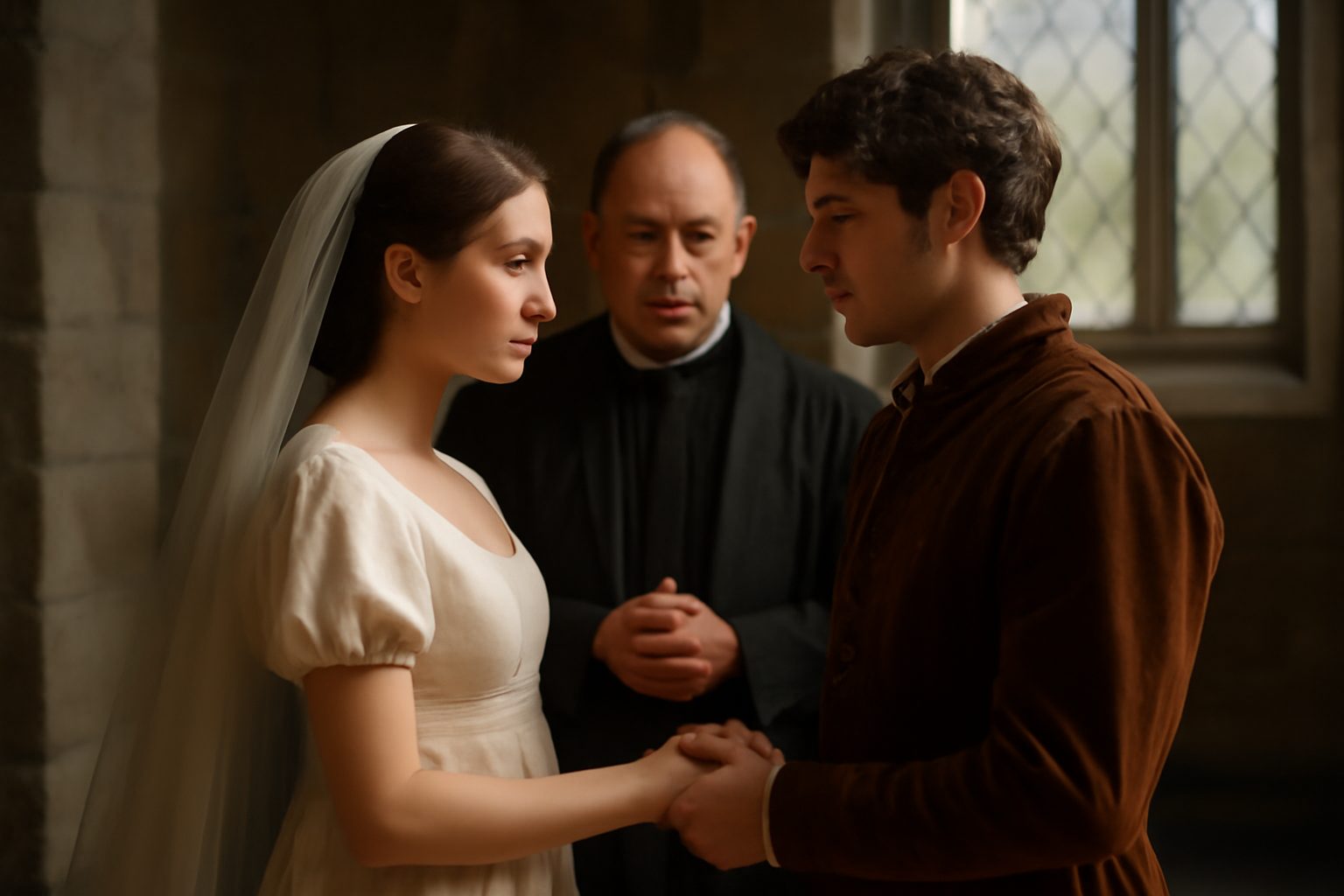
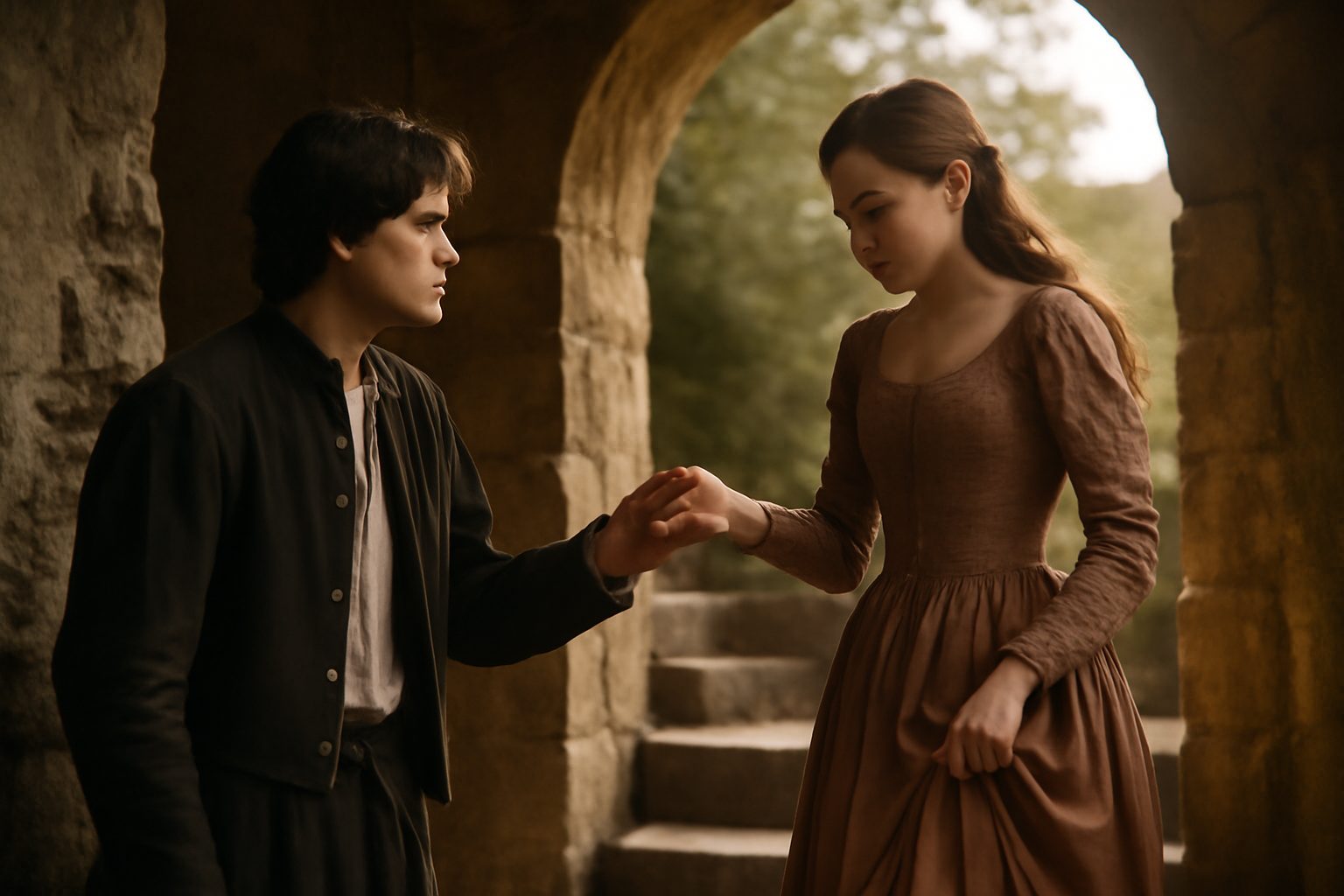
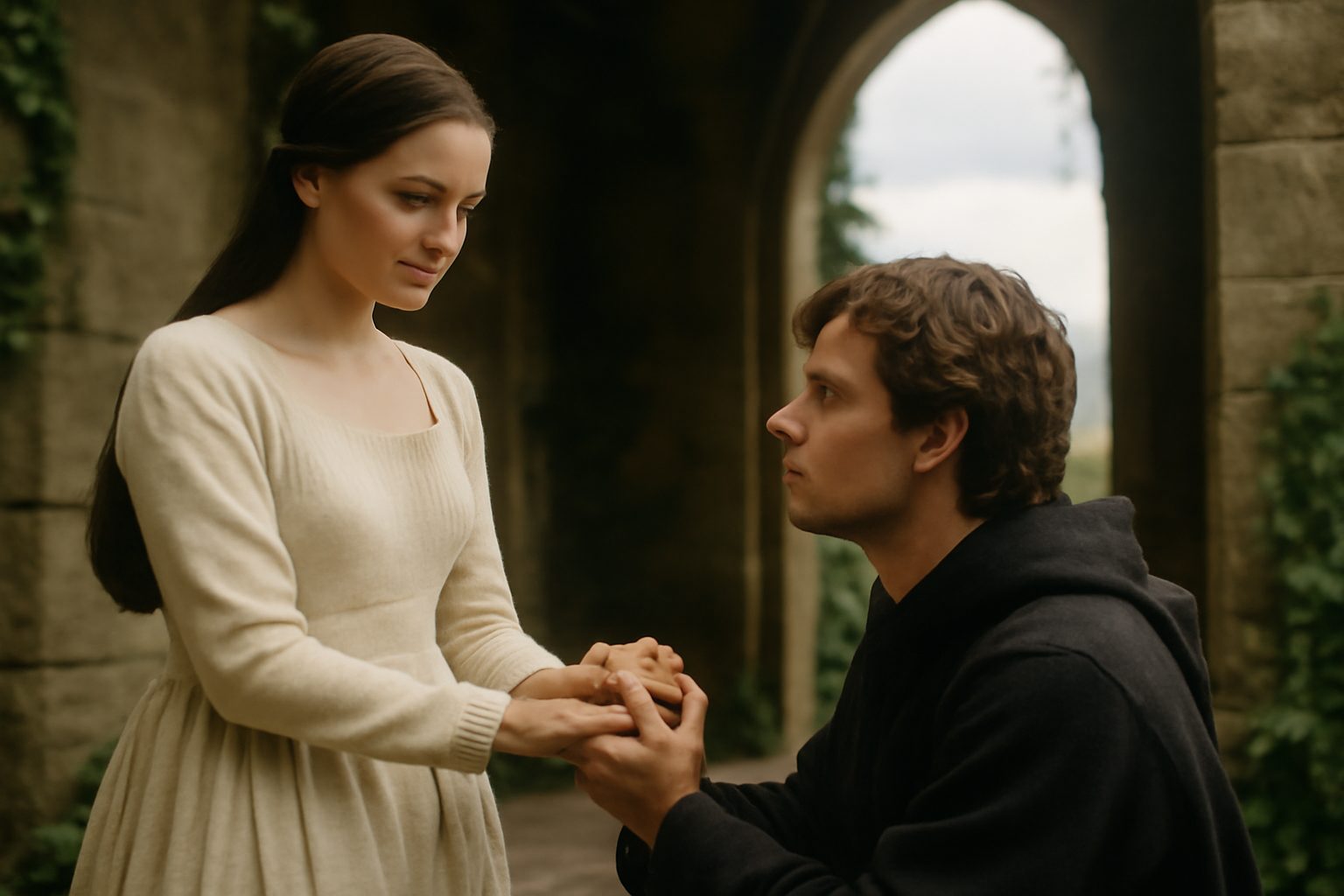
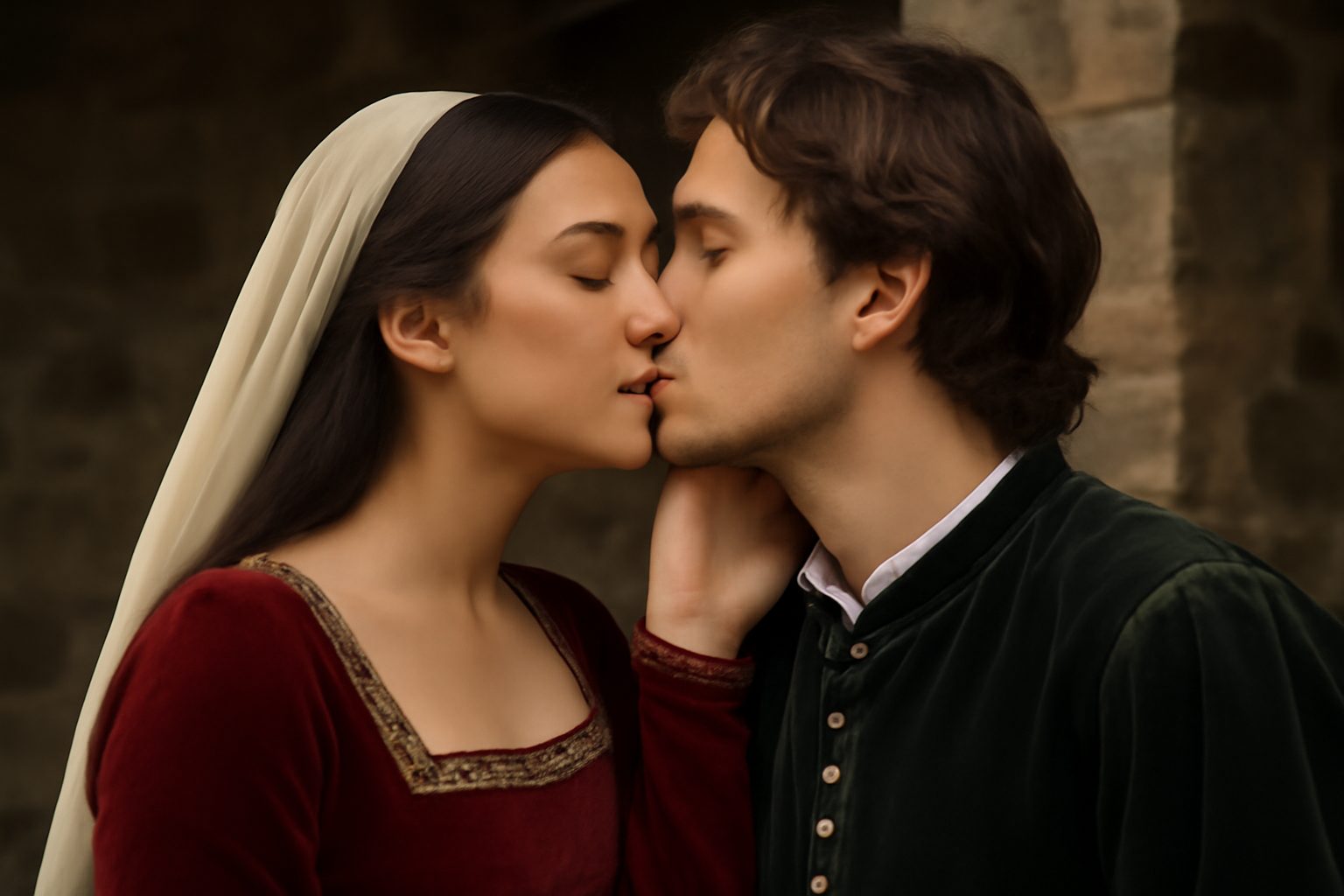
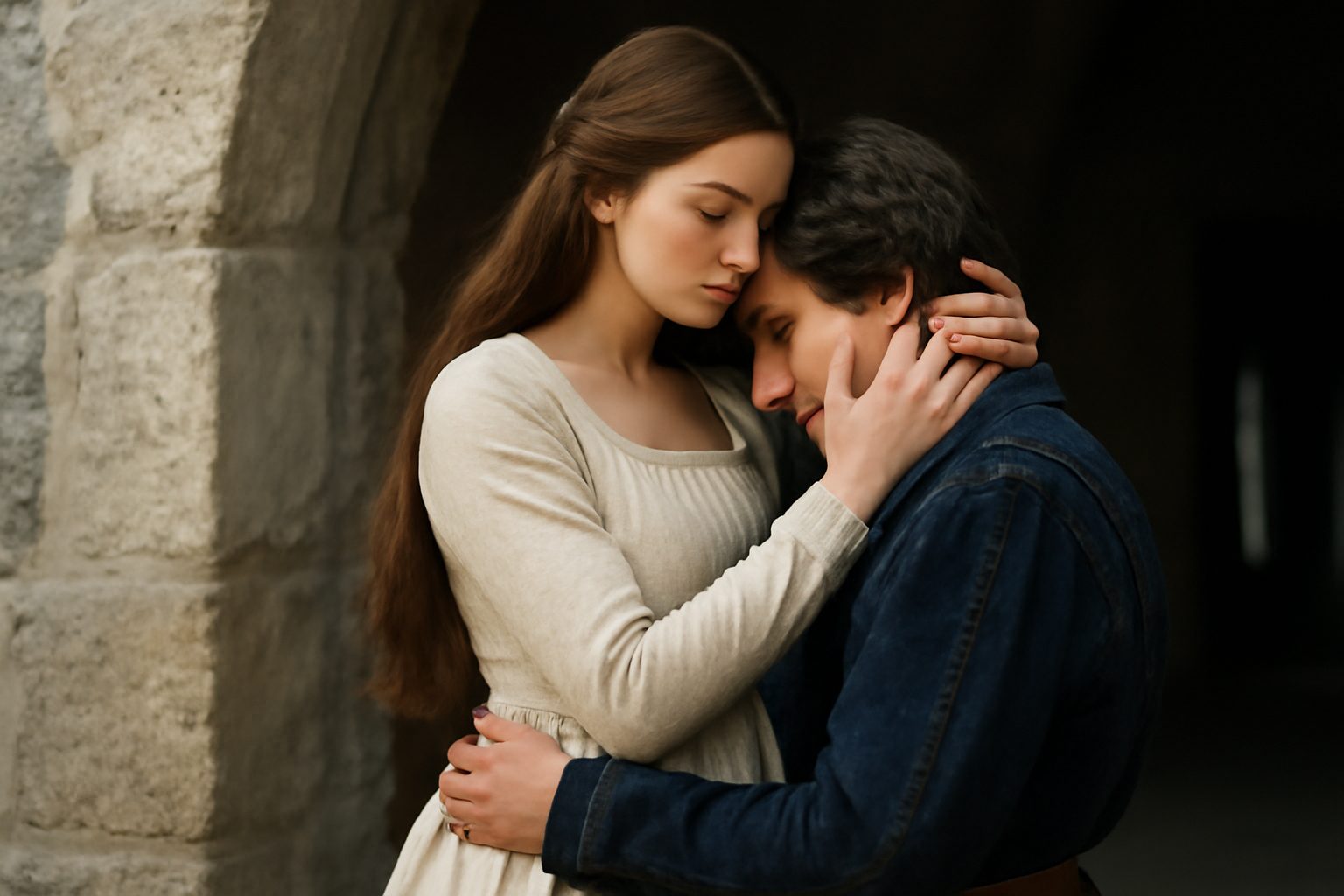
In Act 2, Scene 6 of Romeo and Juliet, Friar Laurence and Romeo await Juliet's arrival for their secret wedding. As Romeo eagerly anticipates her, he speaks of the beauty and languid ease of the summer air, reflecting his heightened emotions and the fleeting joy of the moment. This line captures the dreamy, almost careless atmosphere that contrasts with the urgency and danger of their forbidden love.
Friar Laurence: "That idles in the wanton summer air,"
In modern day english, we would say:
The warm summer breeze lazily drifts by, doing nothing.
Frequently Asked Questions
What does Friar Laurence say is happening in the summer air?
He says that something is lazily moving or existing in the playful summer air.
Connections to other verses:
Connections to "That idles in the wanton summer air"
The verse "That idles in the wanton summer air" is part of a larger speech by Romeo, expressing the lightness and joy he feels in anticipation of his union with Juliet. This imagery of lightness and airiness is echoed in "And yet not fall; so light is vanity", where Romeo compares his elevated emotional state to something so insubstantial it defies gravity, reinforcing the theme of transcendent love.
Contrast with Friar Laurence's Warnings
This buoyant imagery stands in stark contrast to Friar Laurence's cautionary words in "These violent delights have violent ends" and "And in their triumph die, like fire and powder". While Romeo speaks of idleness and playful summer air, the Friar warns of the explosive and destructive potential of such intense passion, creating a thematic tension between youthful idealism and pragmatic wisdom.
Connection to Juliet's Arrival
The lightness evoked in Romeo's line also prefigures Juliet's entrance, described in "Here comes the lady: O, so light a foot". Both verses use the motif of lightness to symbolize grace, purity, and the almost ethereal quality of their love, seamlessly linking Romeo's anticipation to Juliet's actual presence.
Juxtaposition with Moderation Theme
Furthermore, the carefree "wanton summer air" contrasts with the Friar's advice in "Therefore love moderately; long love doth so". Romeo's imagery suggests a love that is spontaneous and unrestrained, directly opposing the Friar's call for temperance, highlighting the central conflict between the lovers' impulsiveness and the need for caution.