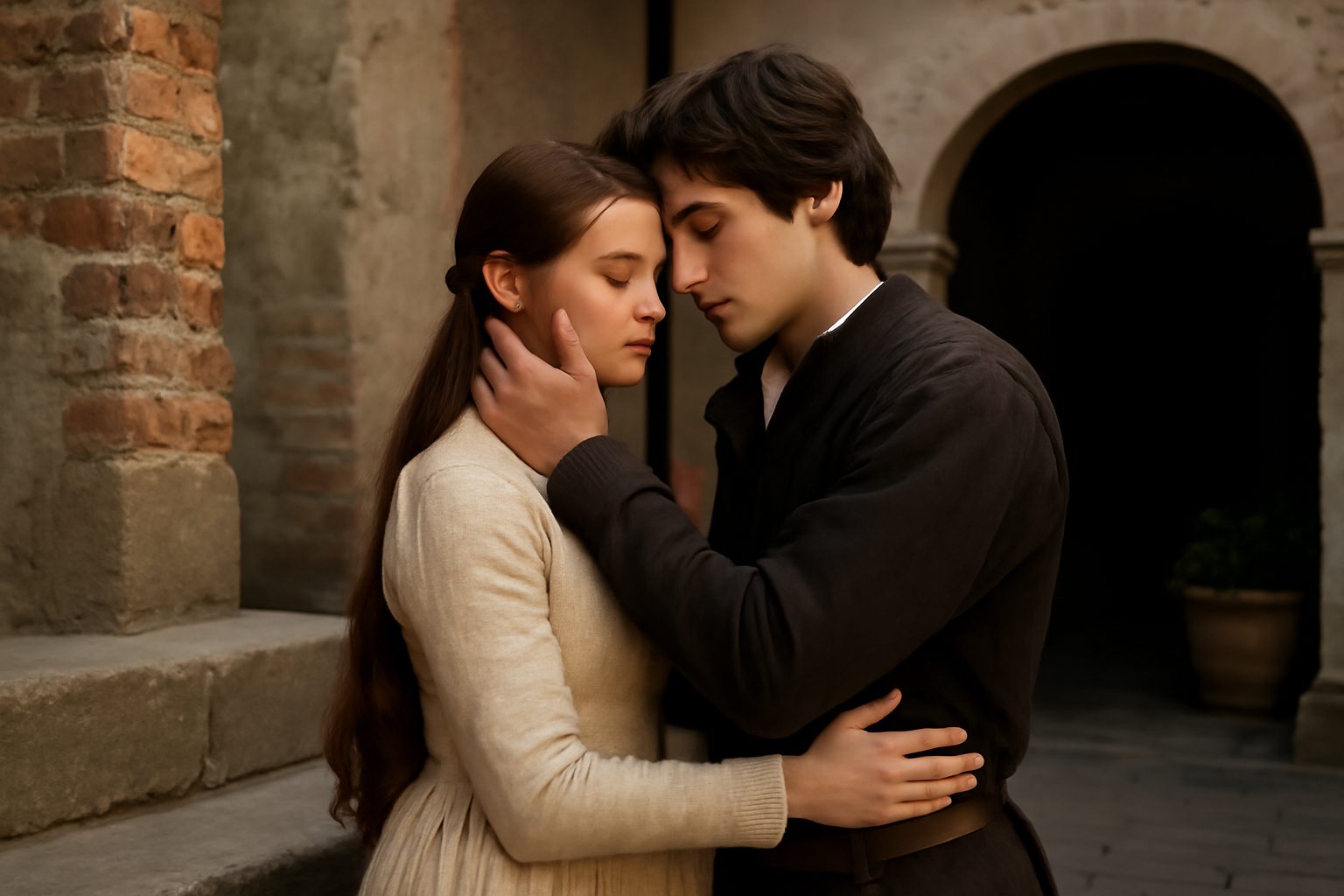
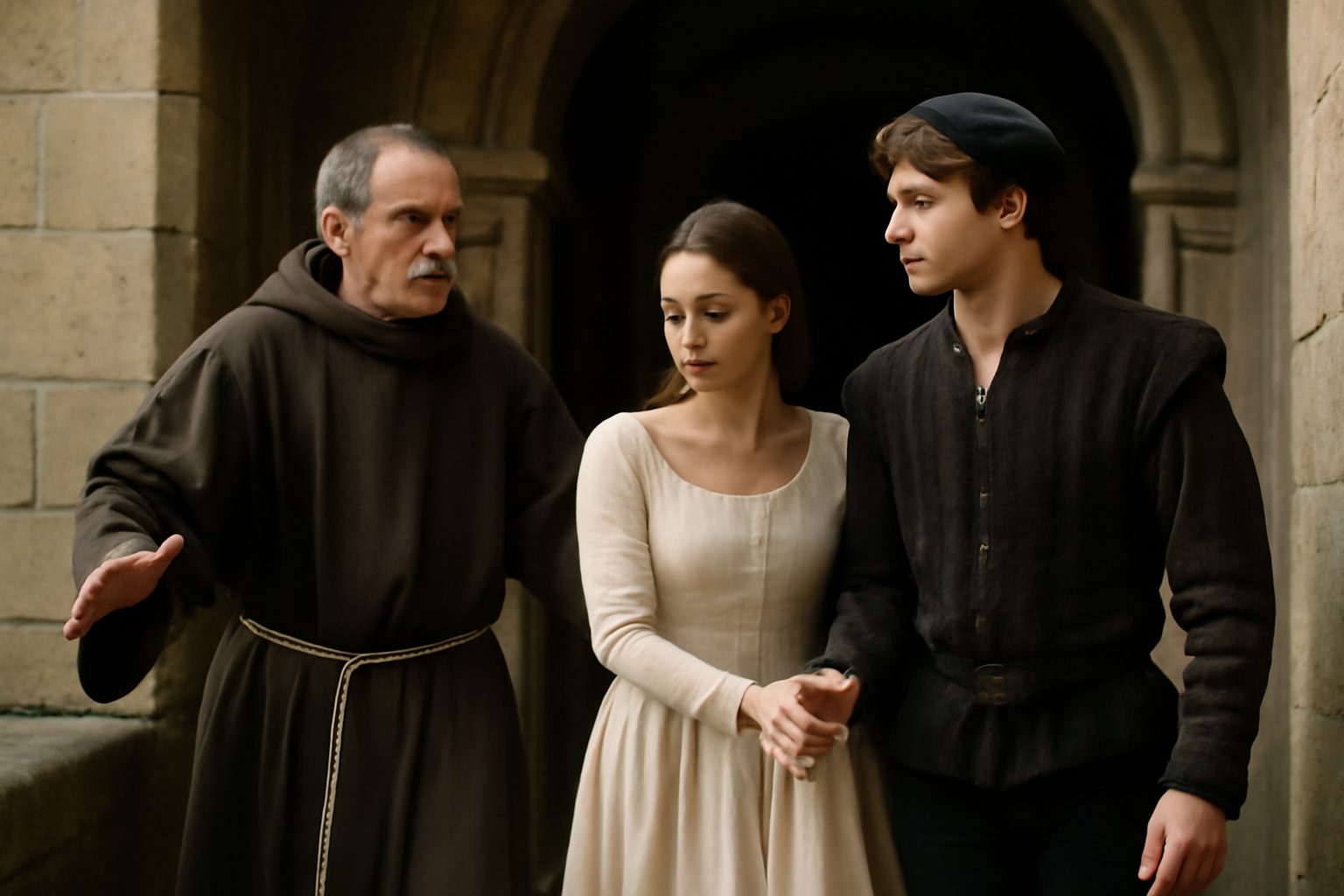
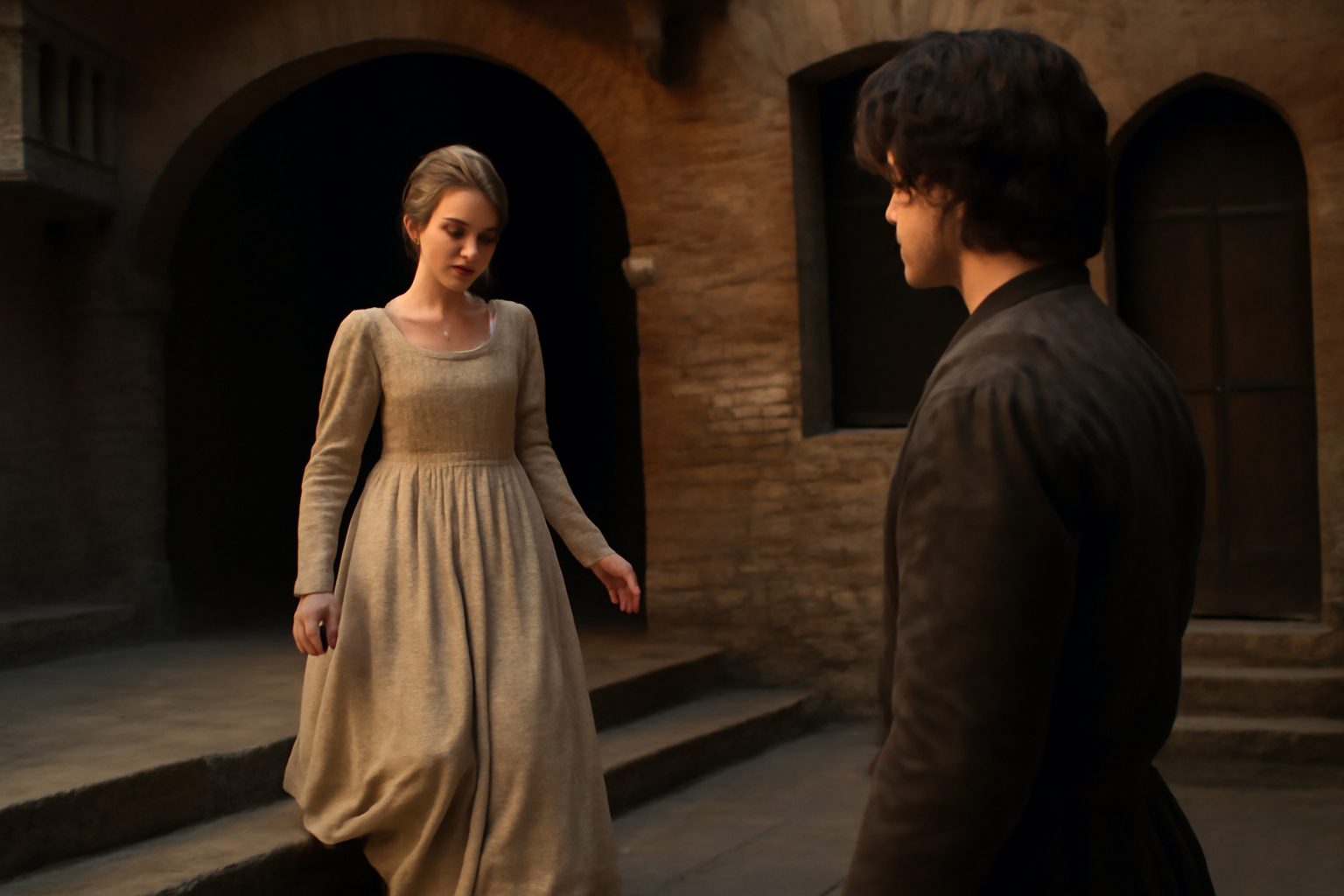
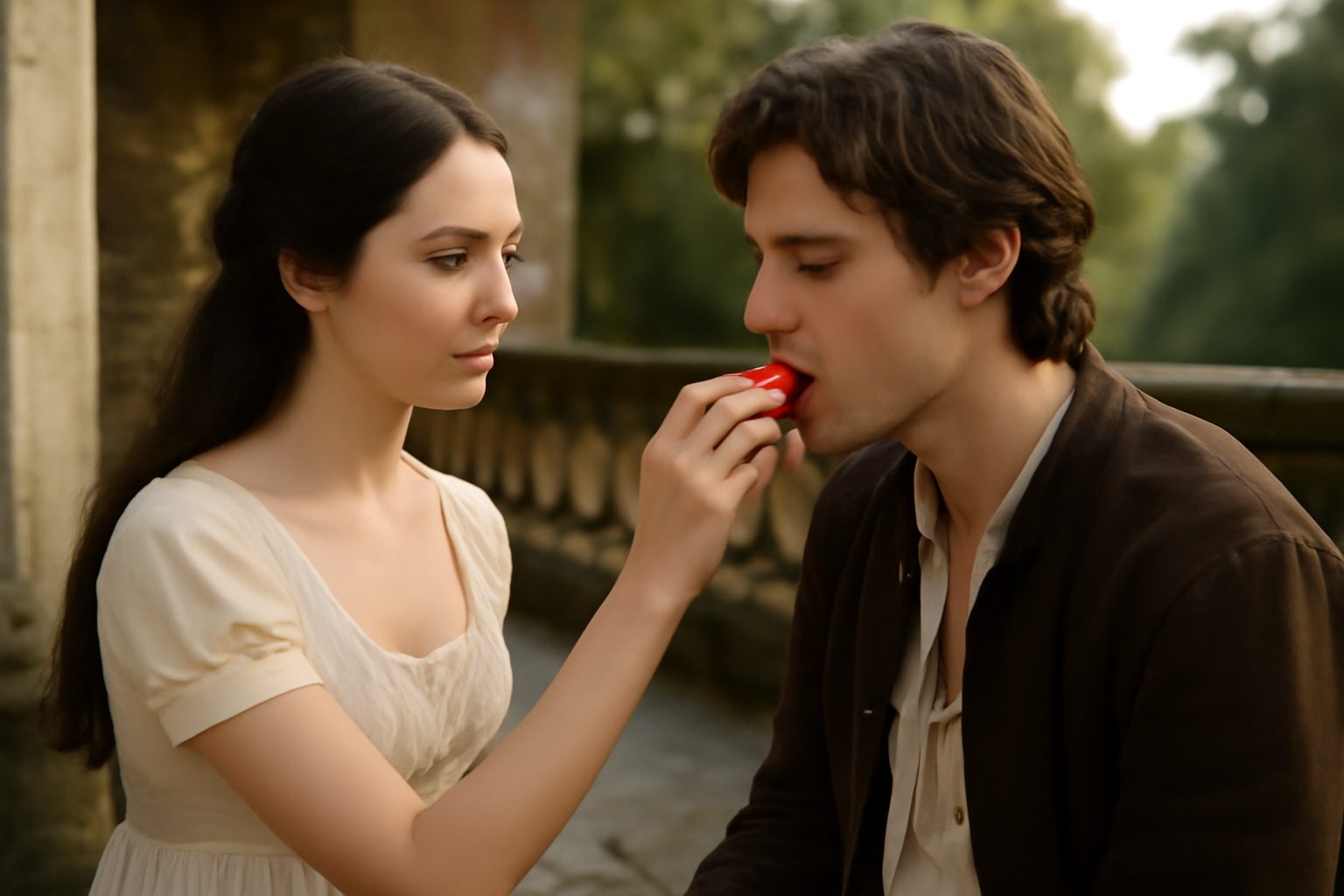
In Act 2, Scene 6 of Romeo and Juliet, Romeo eagerly awaits Juliet's arrival at Friar Laurence's cell, where they will secretly marry. As he speaks to the Friar, his words overflow with poetic admiration for Juliet, comparing her beauty to something worthy of being proclaimed and cherished. This line captures his longing to celebrate her perfection, as if her very breath could enhance the beauty he already sees in her.
Romeo: "To blazon it, then sweeten with thy breath"
In modern day english, we would say:
Then show it off and make it even more beautiful by praising it with your words.
Frequently Asked Questions
What does Romeo want Juliet to do in this line?
Romeo wants Juliet to speak sweetly about their love.
Connections to other verses:
Connections to Friar Laurence's Warning
The verse "To blazon it, then sweeten with thy breath" is spoken by Friar Laurence, who is cautioning Romeo about the intensity of his love. This connects thematically to his earlier warning in "These violent delights have violent ends", where he foreshadows the tragic consequences of their passionate but hasty union. Both lines emphasize the Friar's role as a voice of moderation and foresight.
Links to Imagery of Excess and Consumption
Friar Laurence's imagery of proclaiming love ("blazon it") and then tempering it ("sweeten with thy breath") echoes the idea of overwhelming intensity found in "Which as they kiss consume: the sweetest honey", which uses the metaphor of consuming honey to illustrate how extreme pleasures can be self-destructive. This reinforces the theme that unchecked passion leads to ruin.
Contrast with Romeo's Idealistic View
Romeo's response to the Friar's advice is one of unwavering optimism, as seen in "Then love-devouring death do what he dare", where he dismisses any fear of death. The Friar's pragmatic "sweeten with thy breath" serves as a direct counterpoint to Romeo's rash defiance, highlighting their contrasting perspectives on love and risk.
Connection to the Theme of Moderation
The idea of tempering emotion ("sweeten with thy breath") aligns with the Friar's counsel in "Therefore love moderately; long love doth so". Both verses advocate for balance and restraint, underscoring the Friar's belief that sustainable love requires careful management rather than unchecked fervor.
Juxtaposition with Juliet's Arrival
As the Friar speaks this line, Juliet enters, described in "Here comes the lady: O, so light a foot". The ethereal imagery of her arrival contrasts with the Friar's grounded advice, symbolizing the collision of idealized love and practical wisdom within the scene.
Ties to Expressions of Ineffable Joy
The phrase "To blazon it" implies an attempt to articulate profound emotion, which relates to Romeo's declaration in "I cannot sum up sum of half my wealth", where he admits the impossibility of quantifying his joy. Both lines explore the tension between expressing and containing overwhelming feelings.