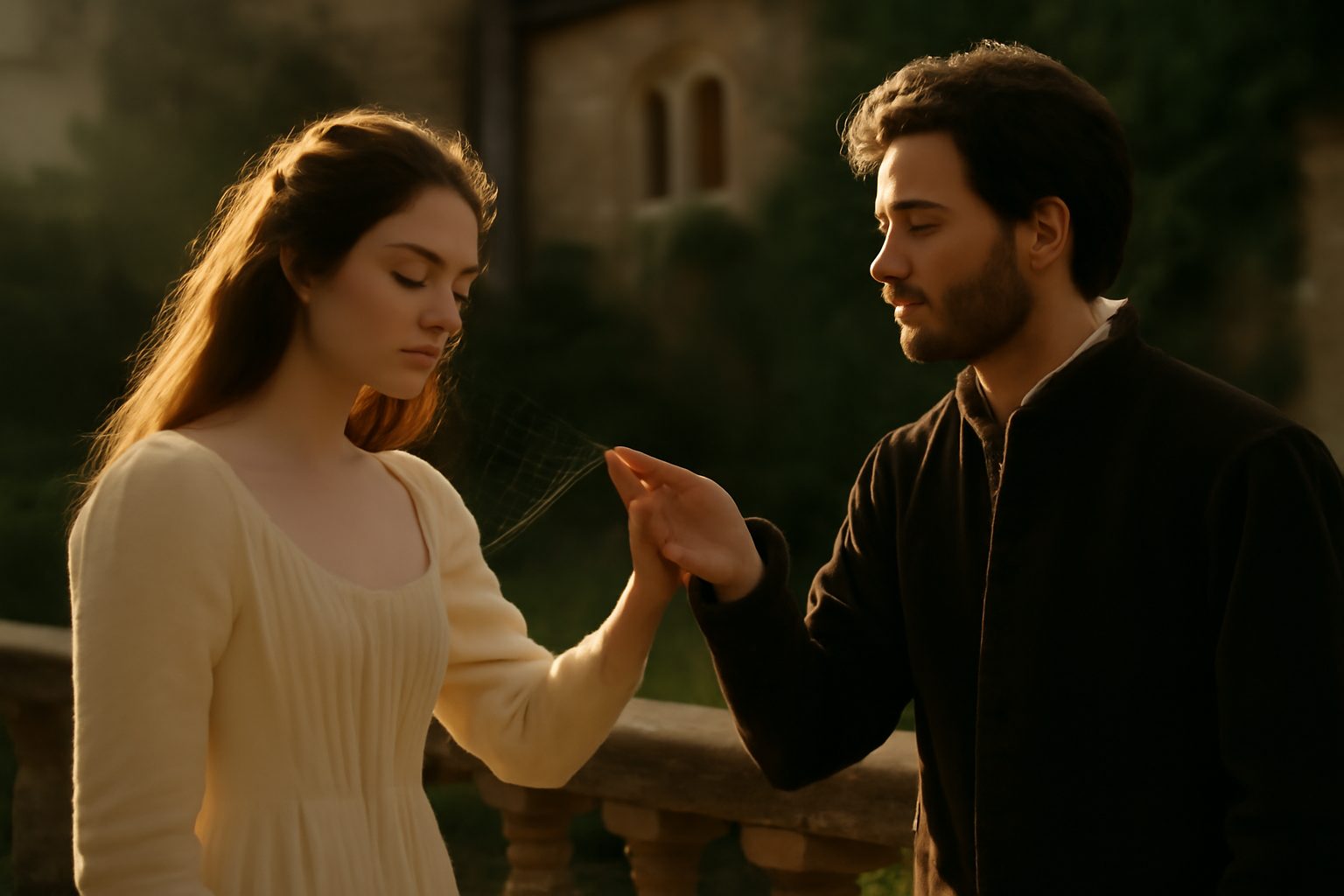
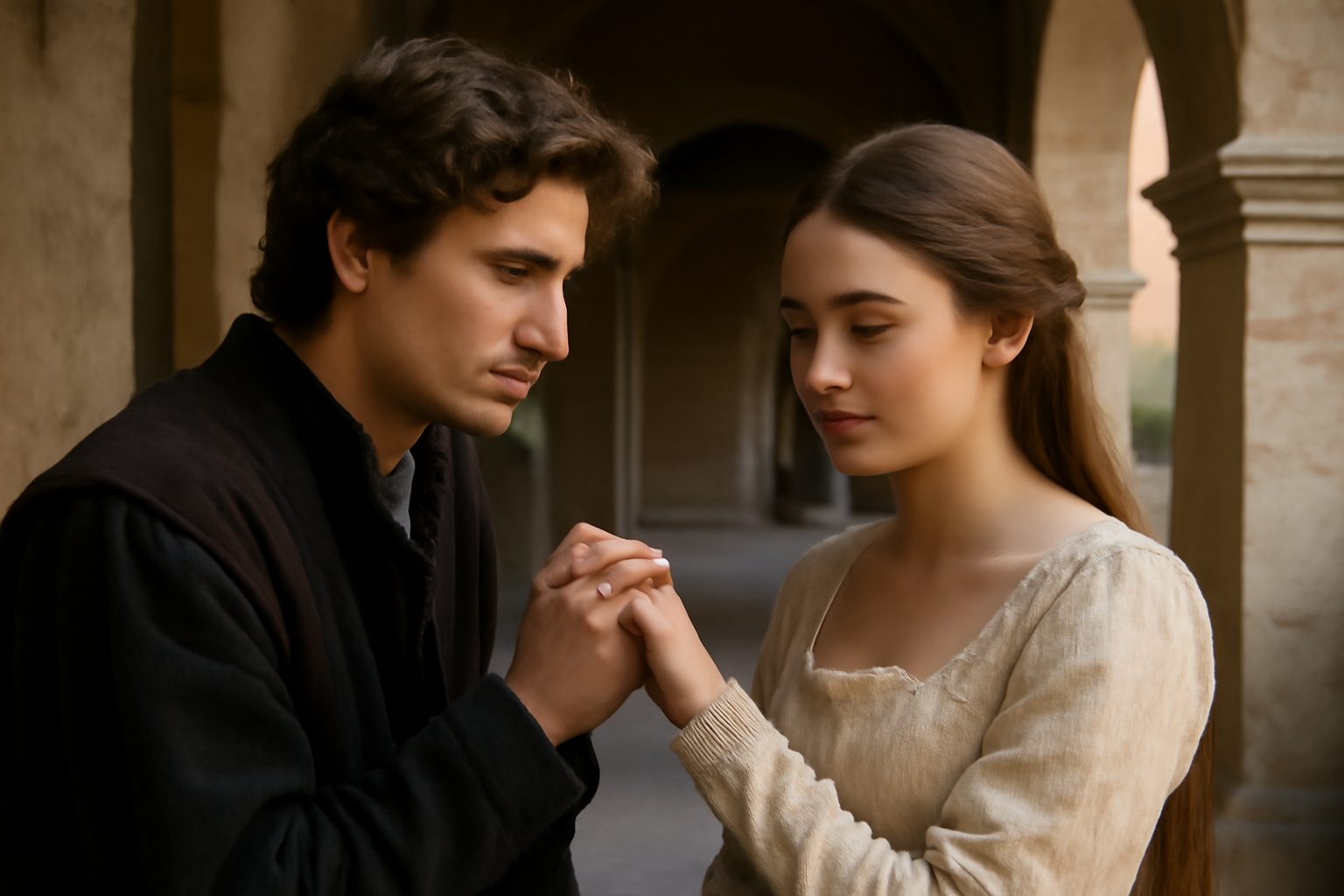
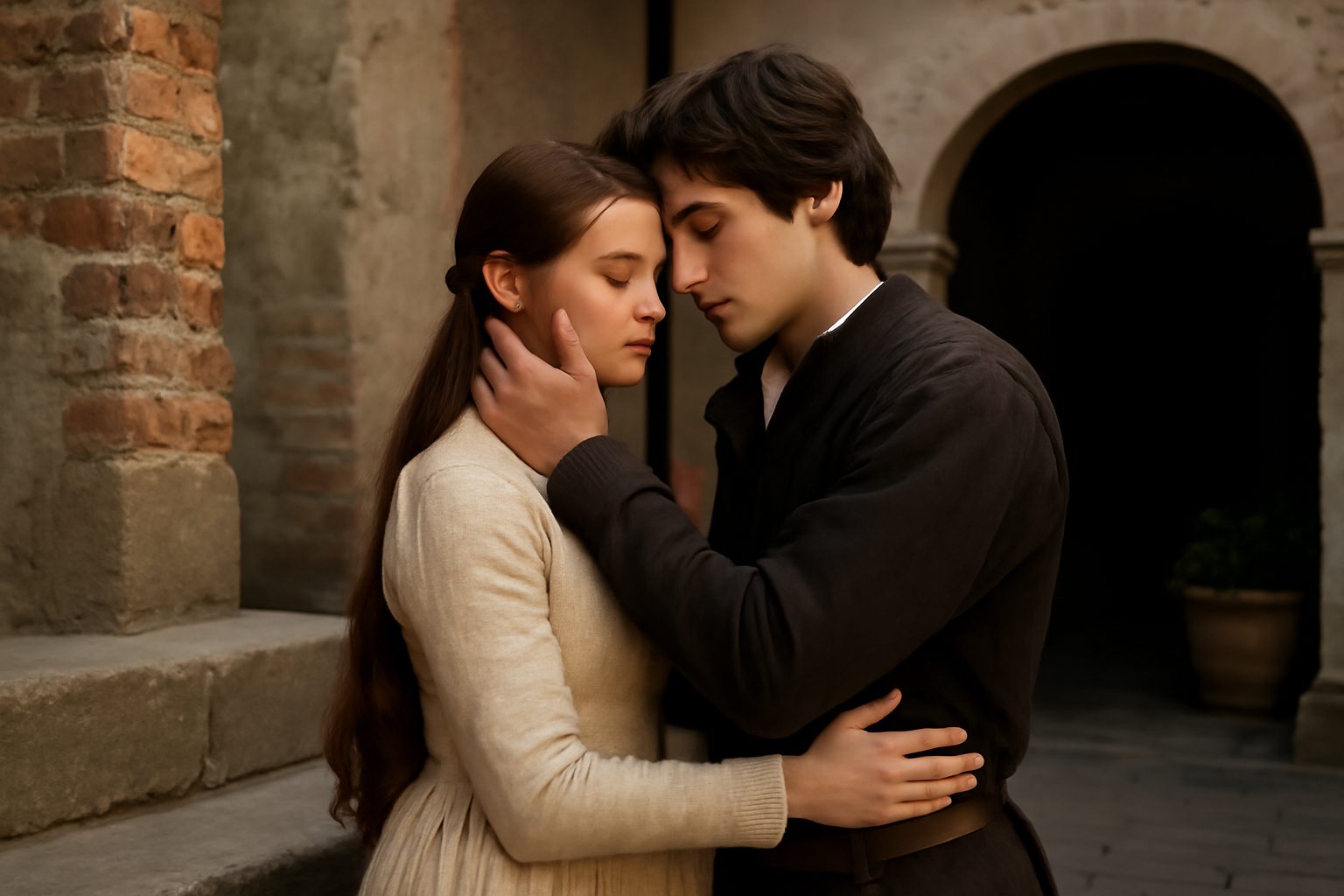
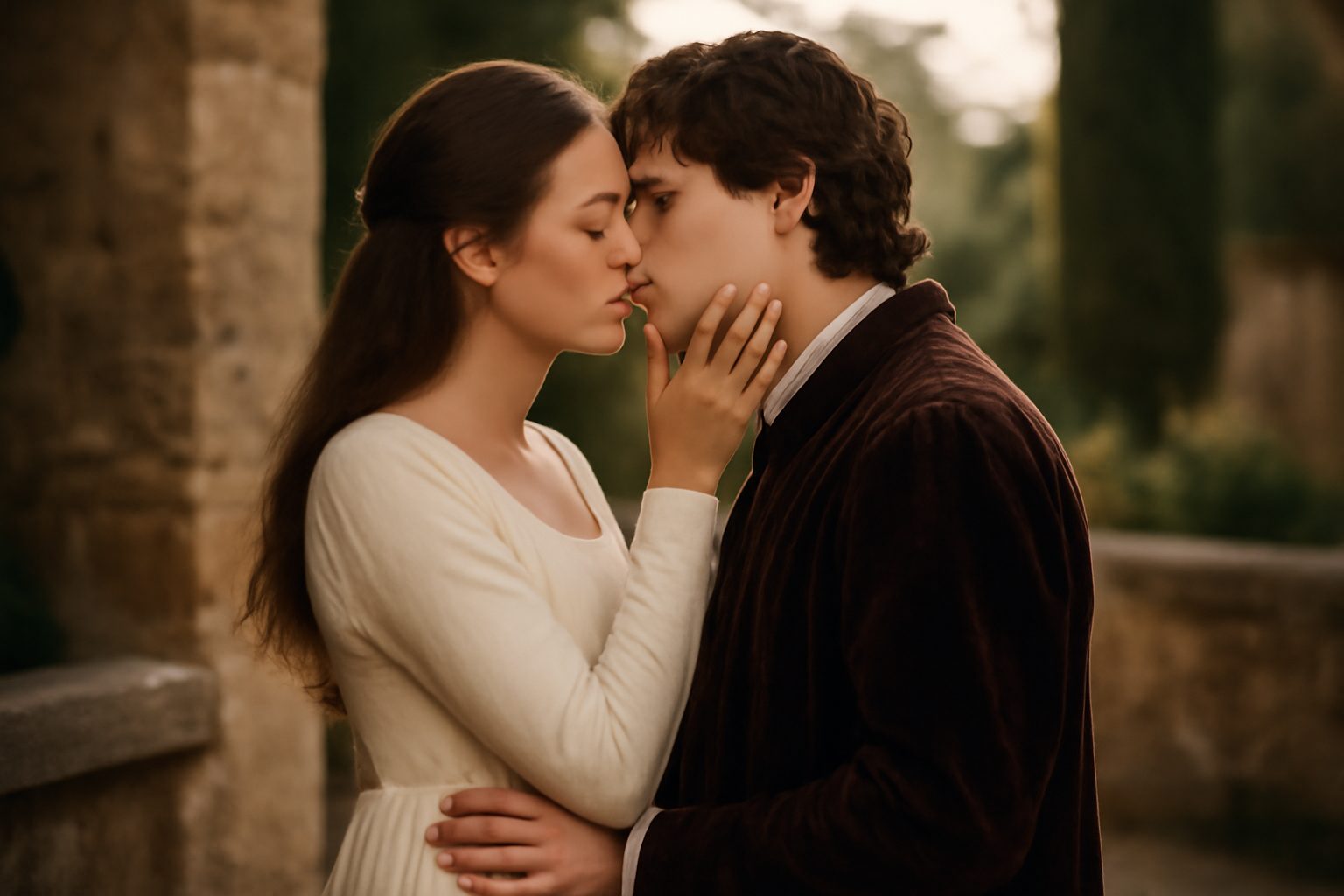
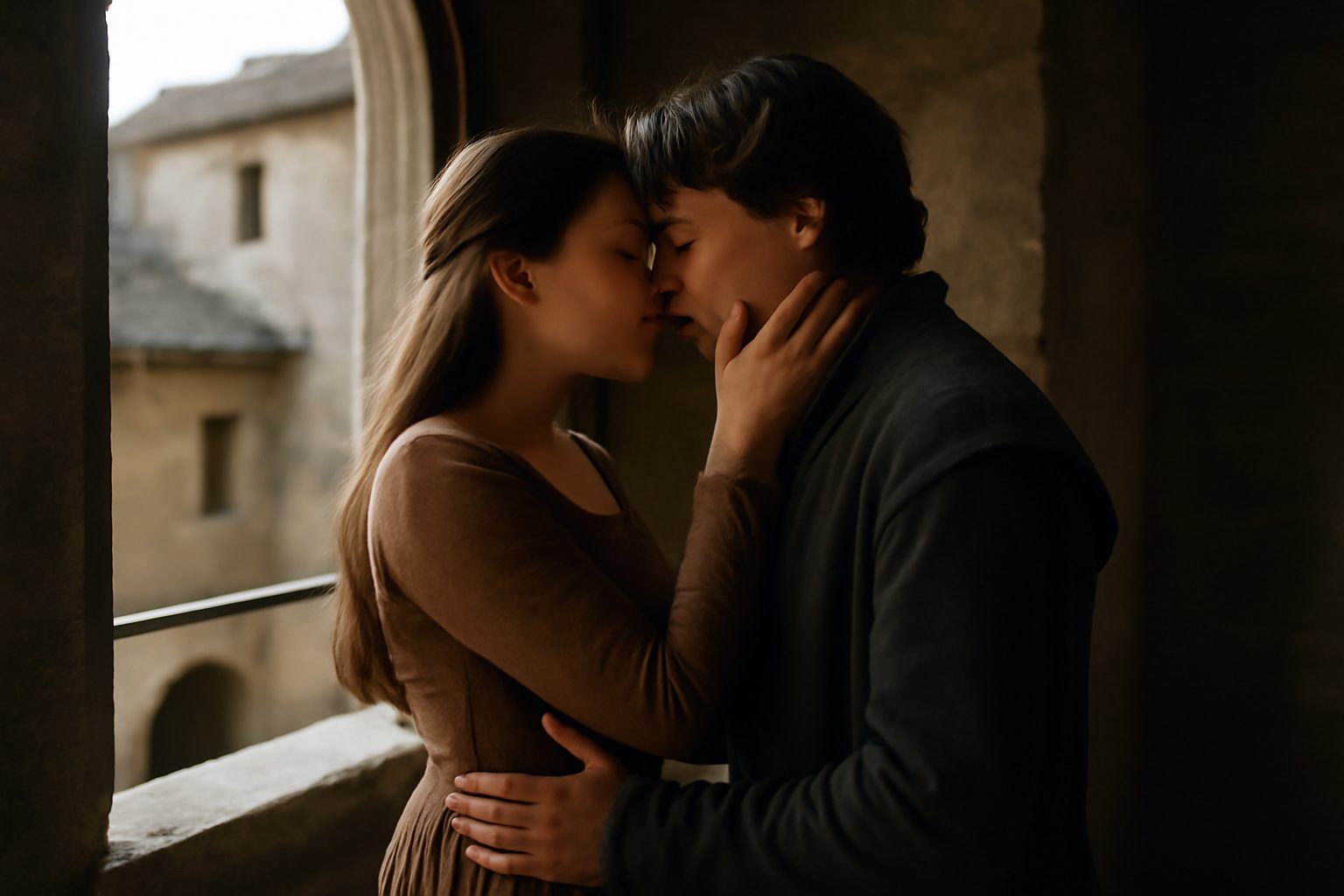
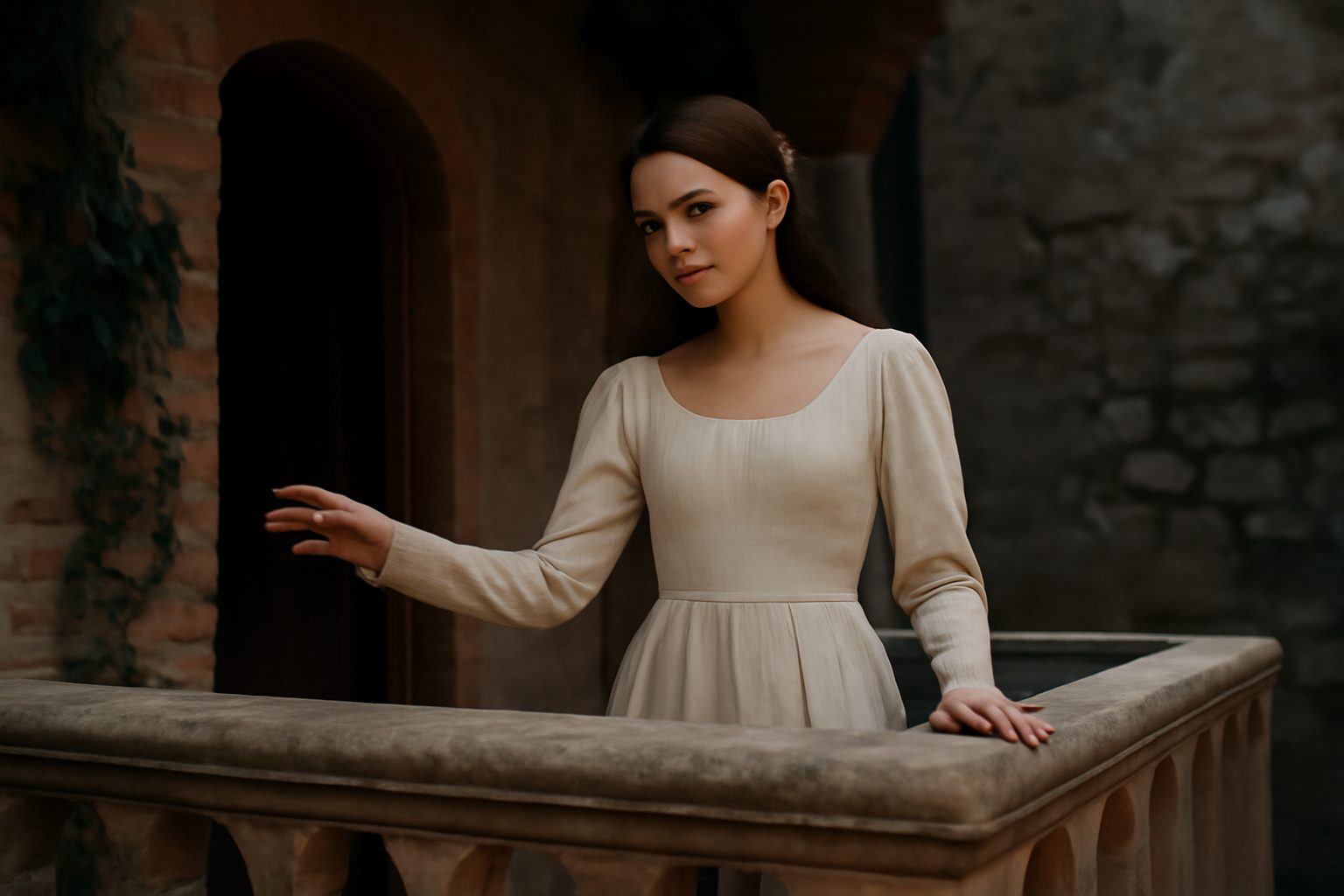
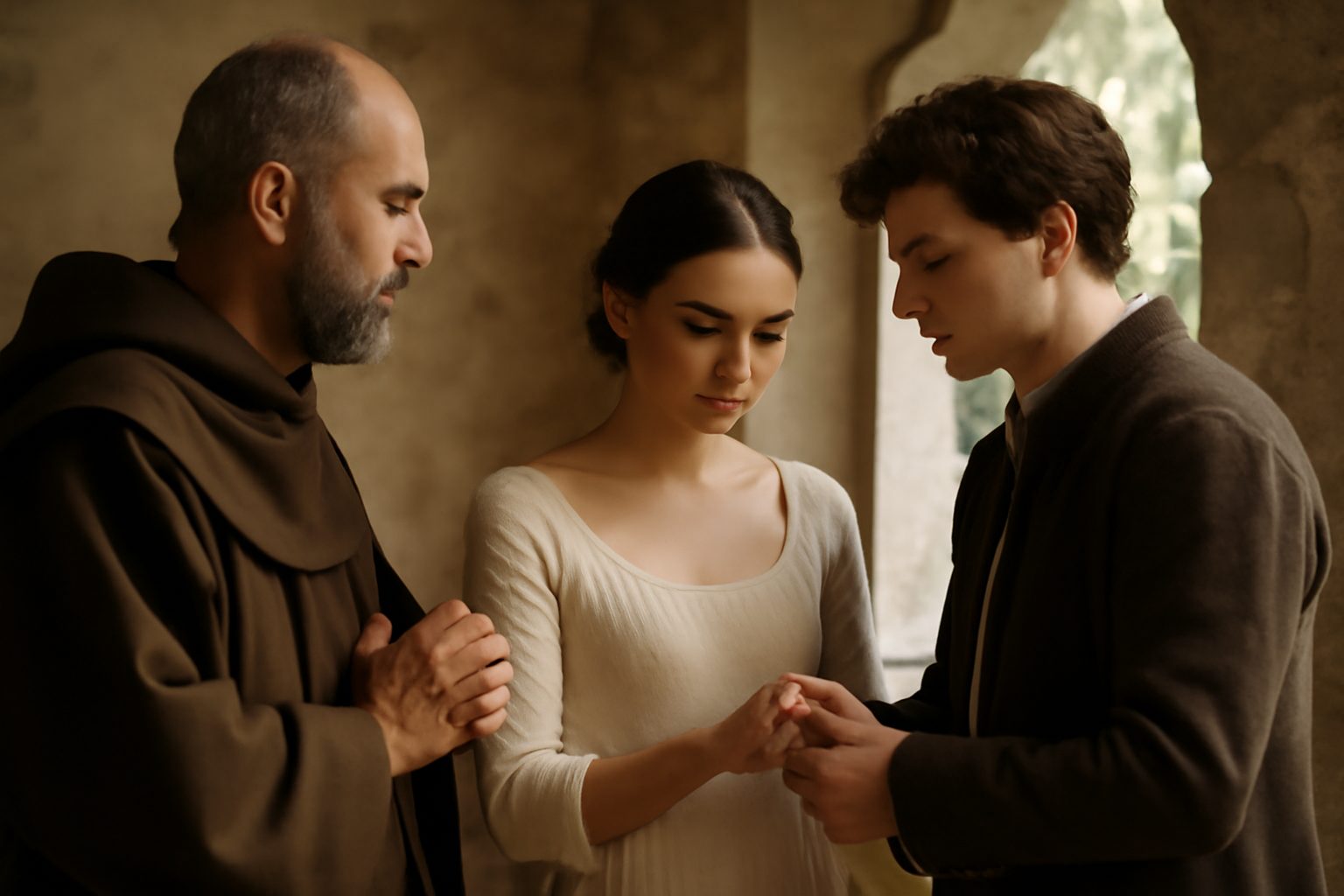
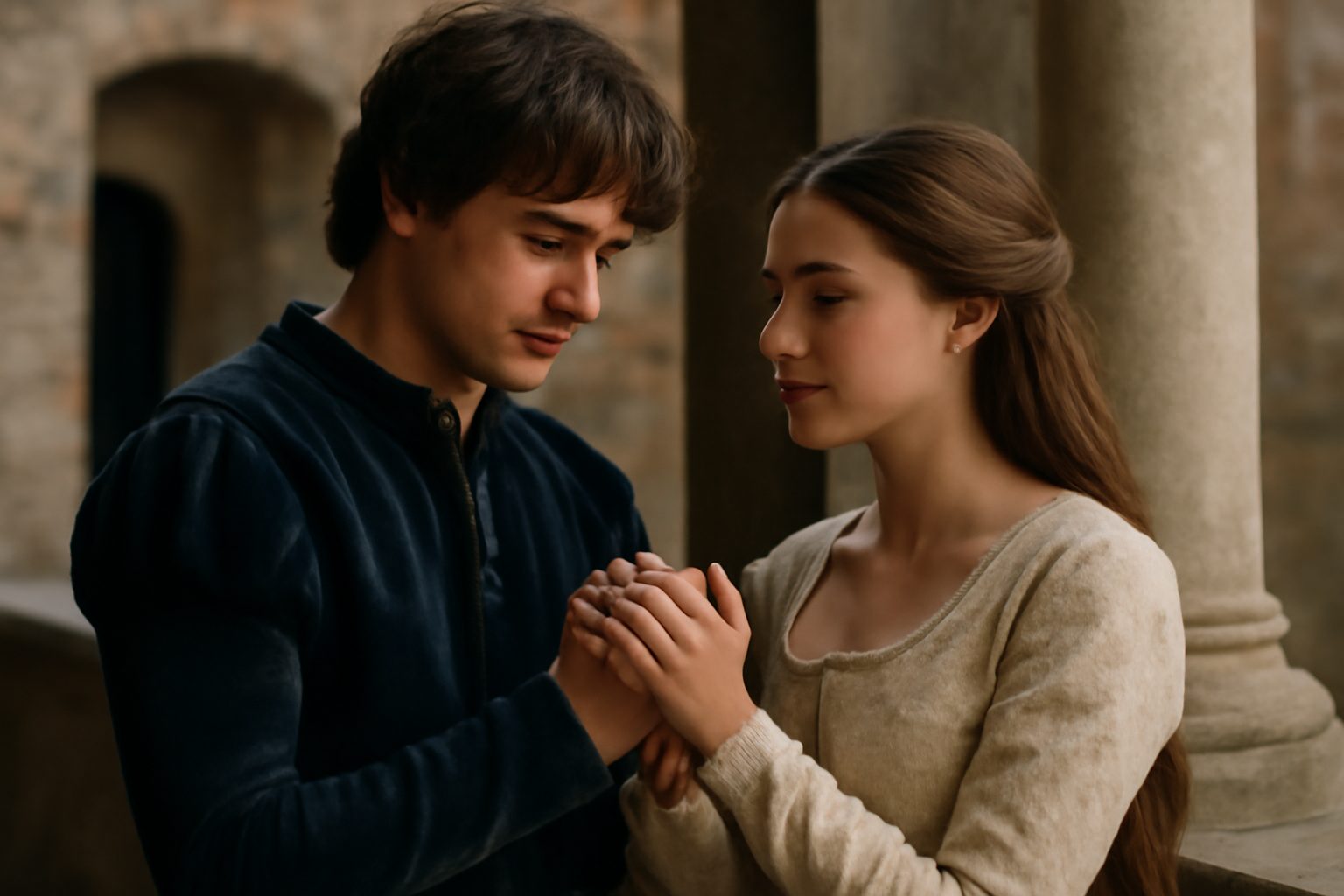
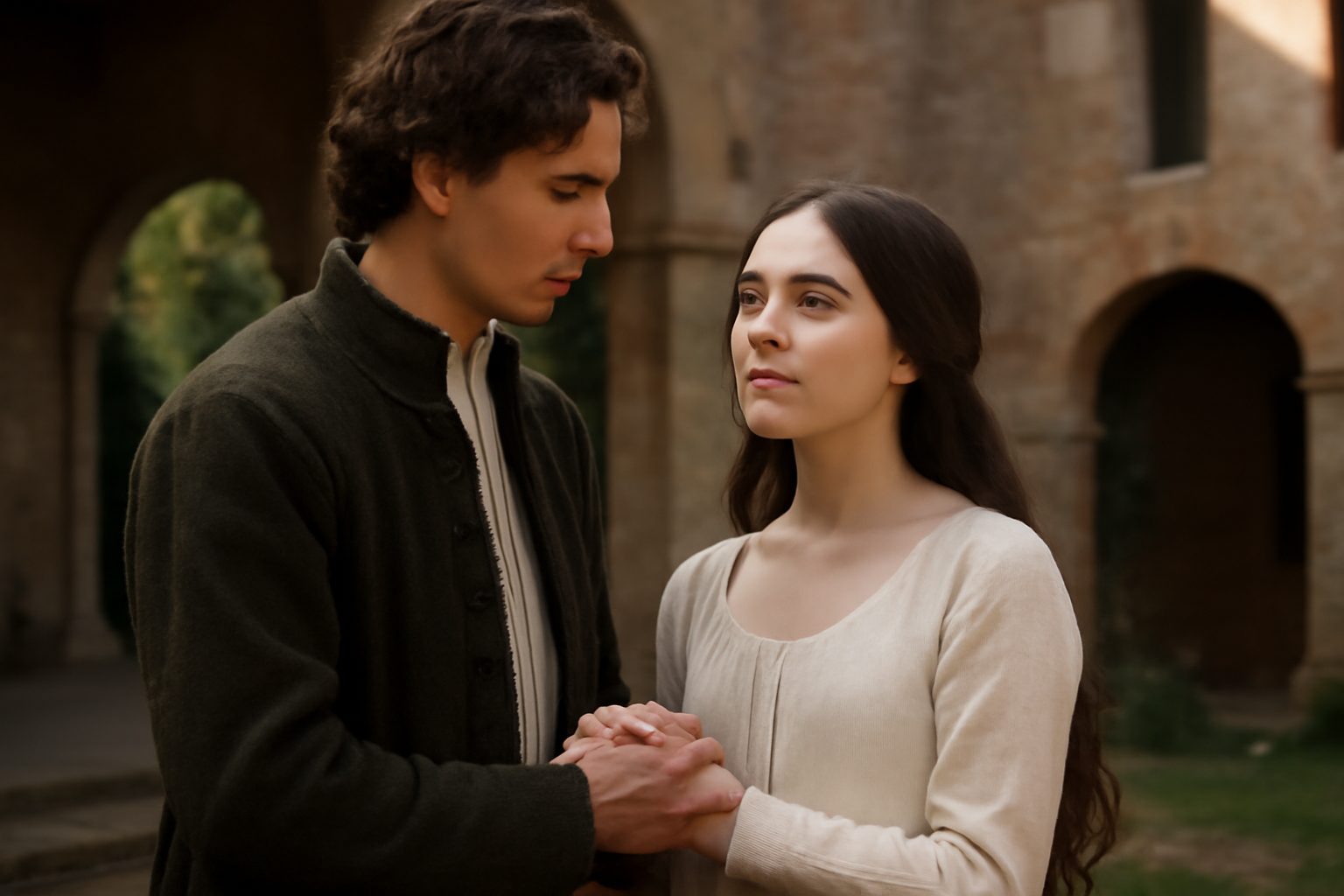
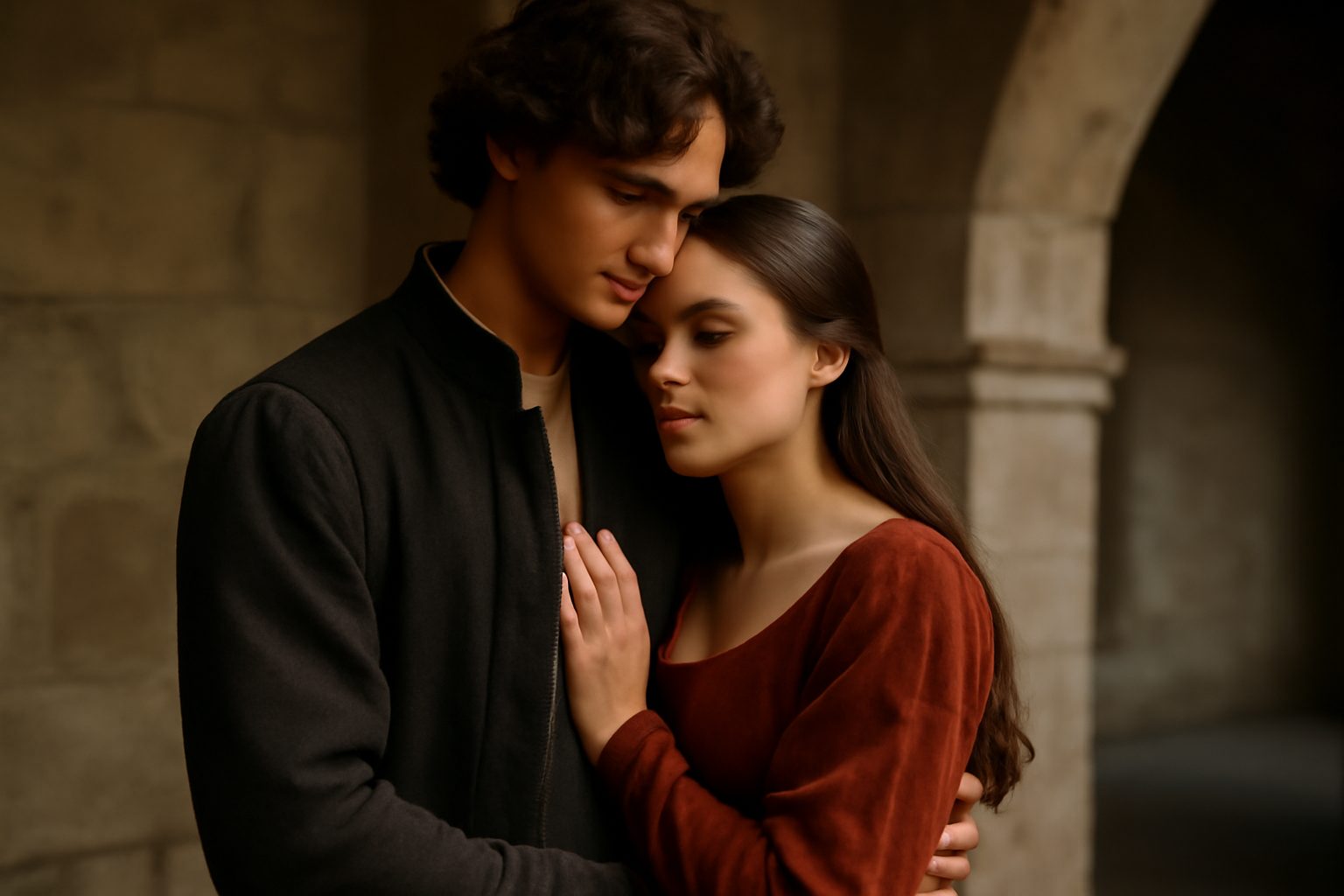
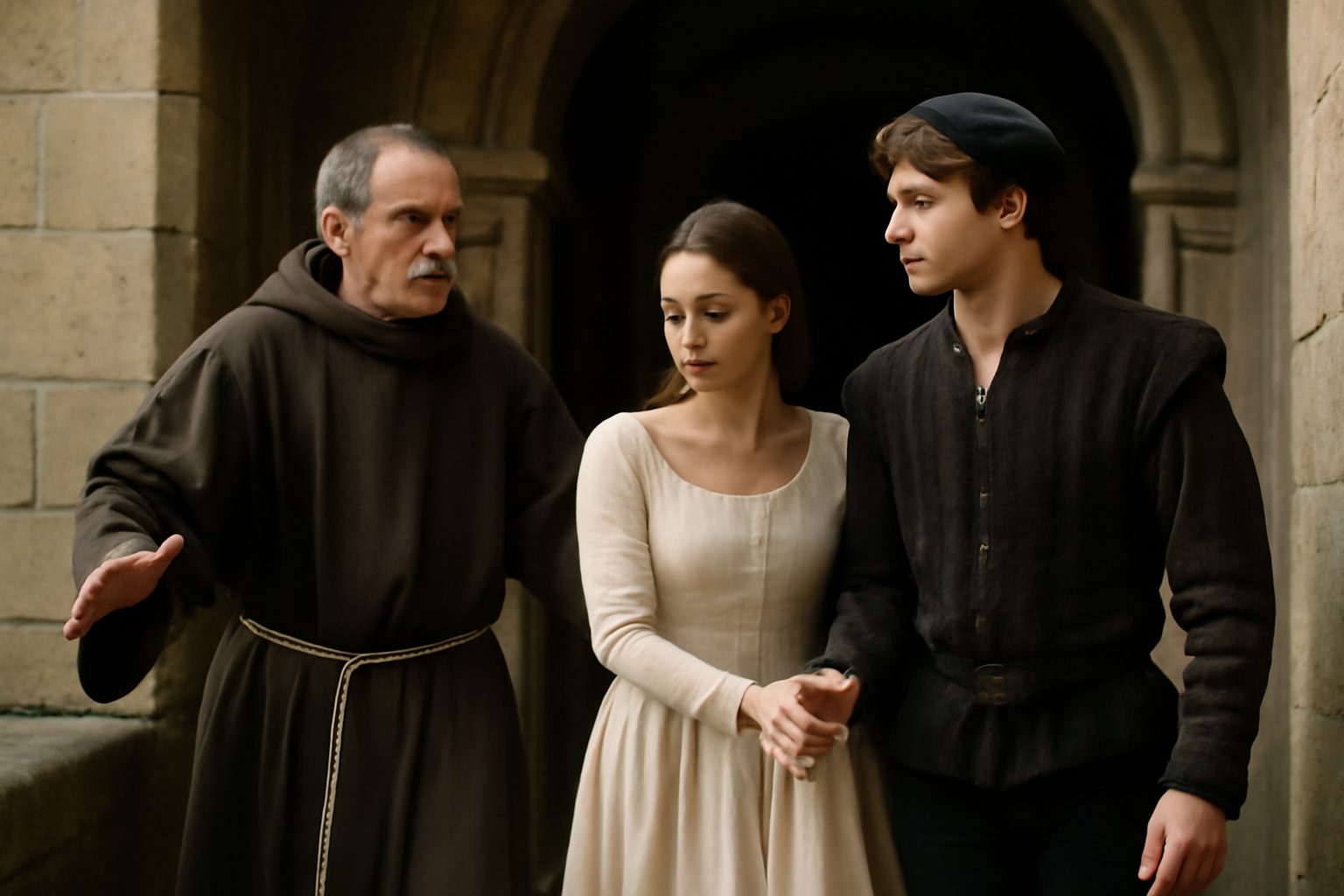
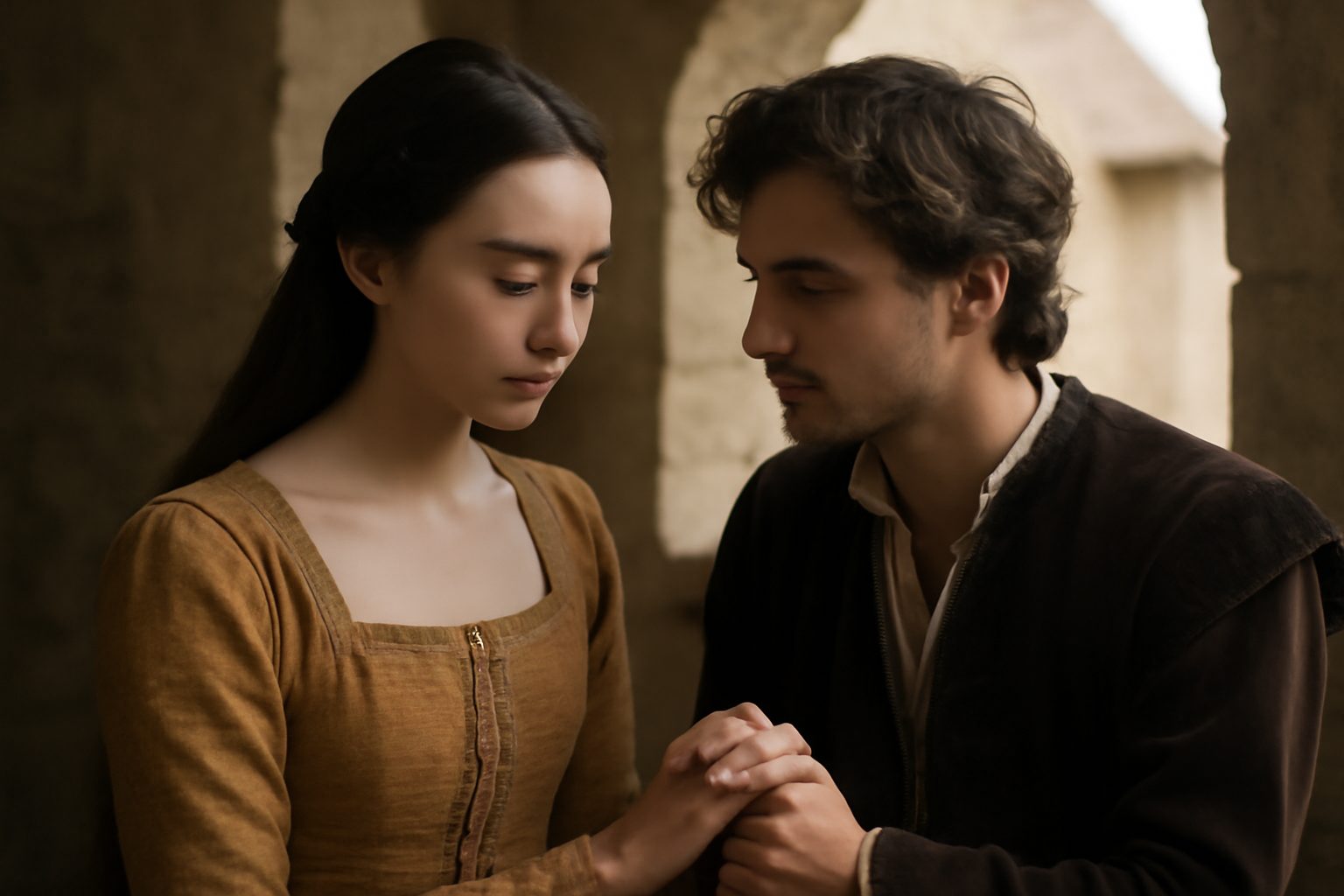
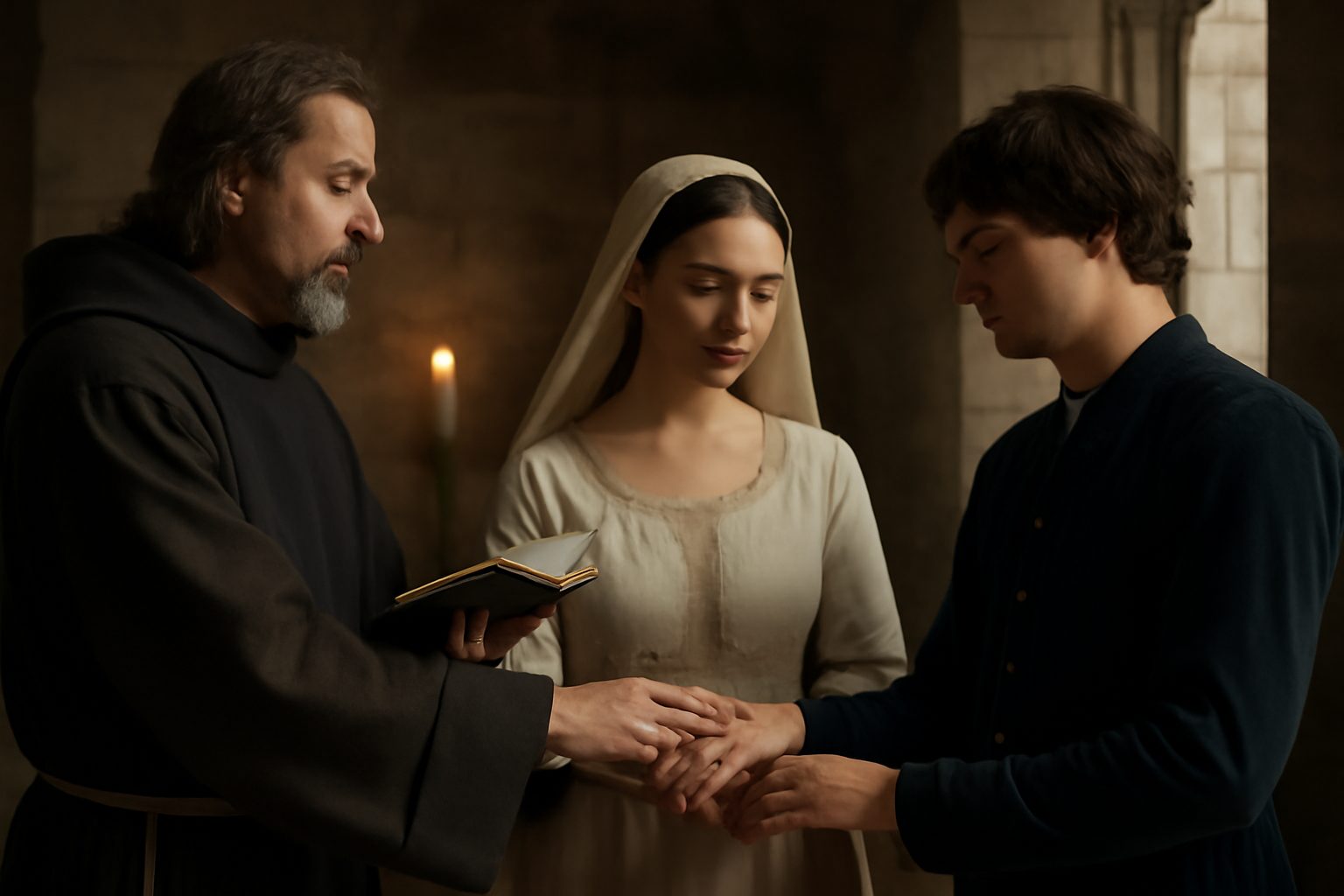
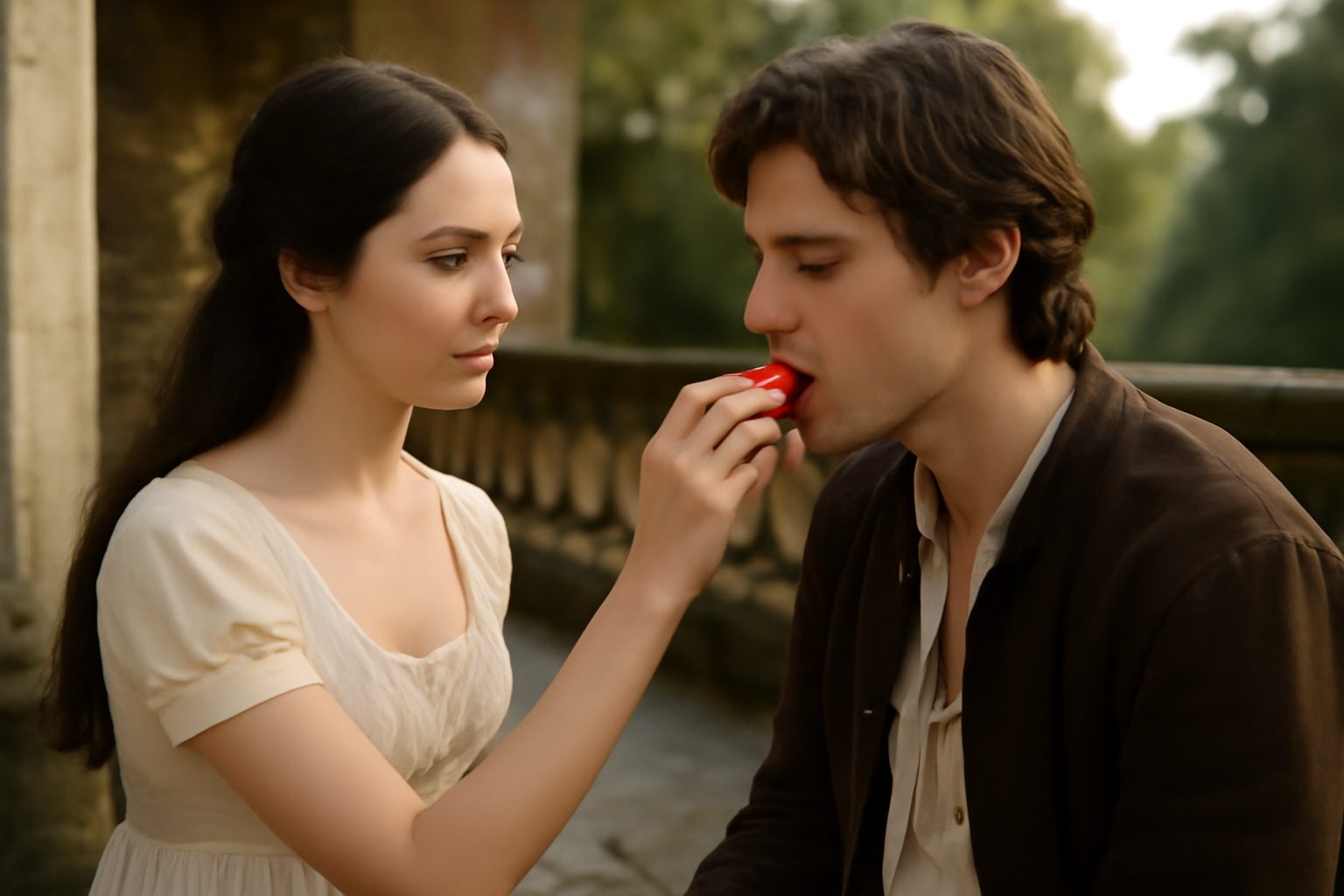
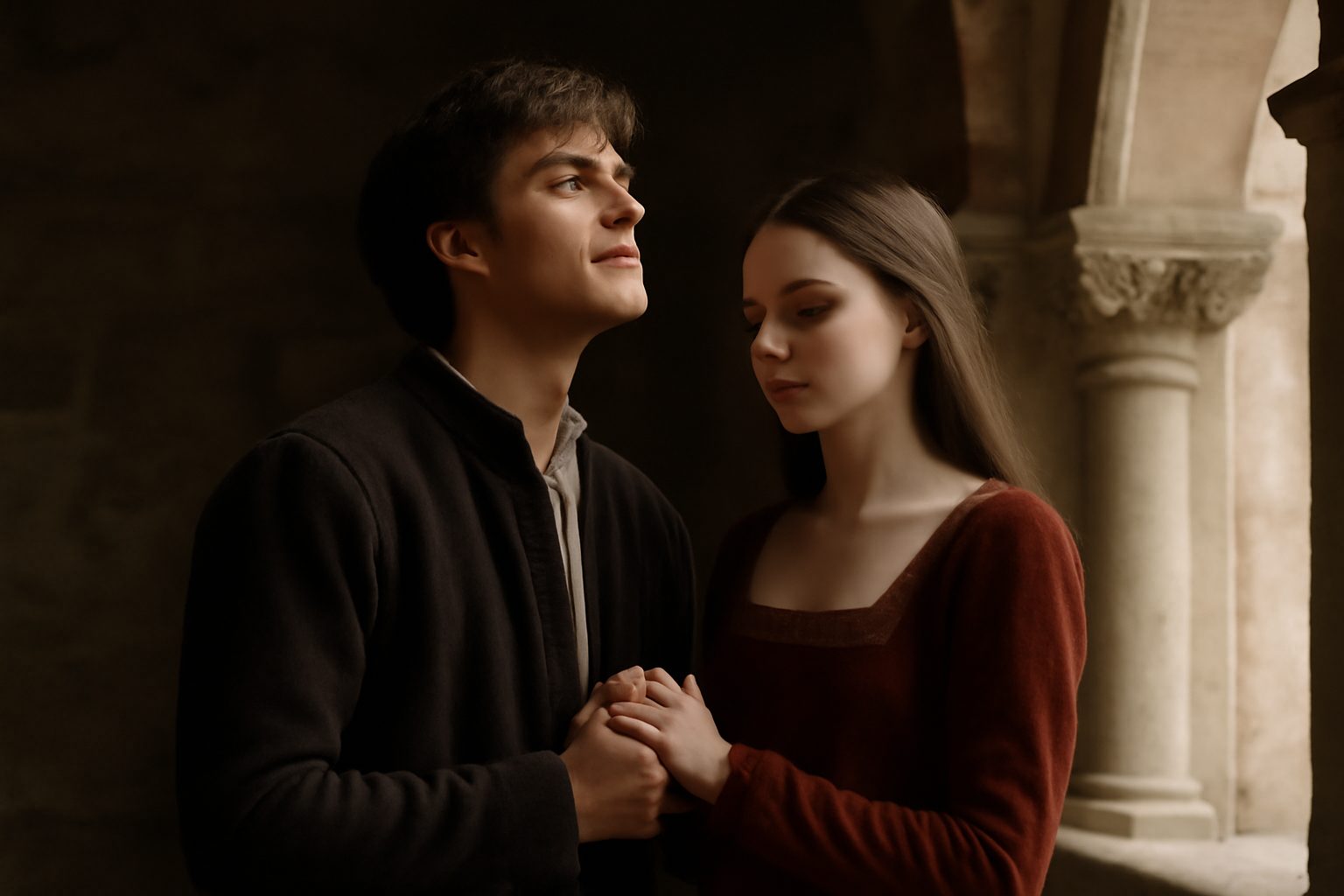
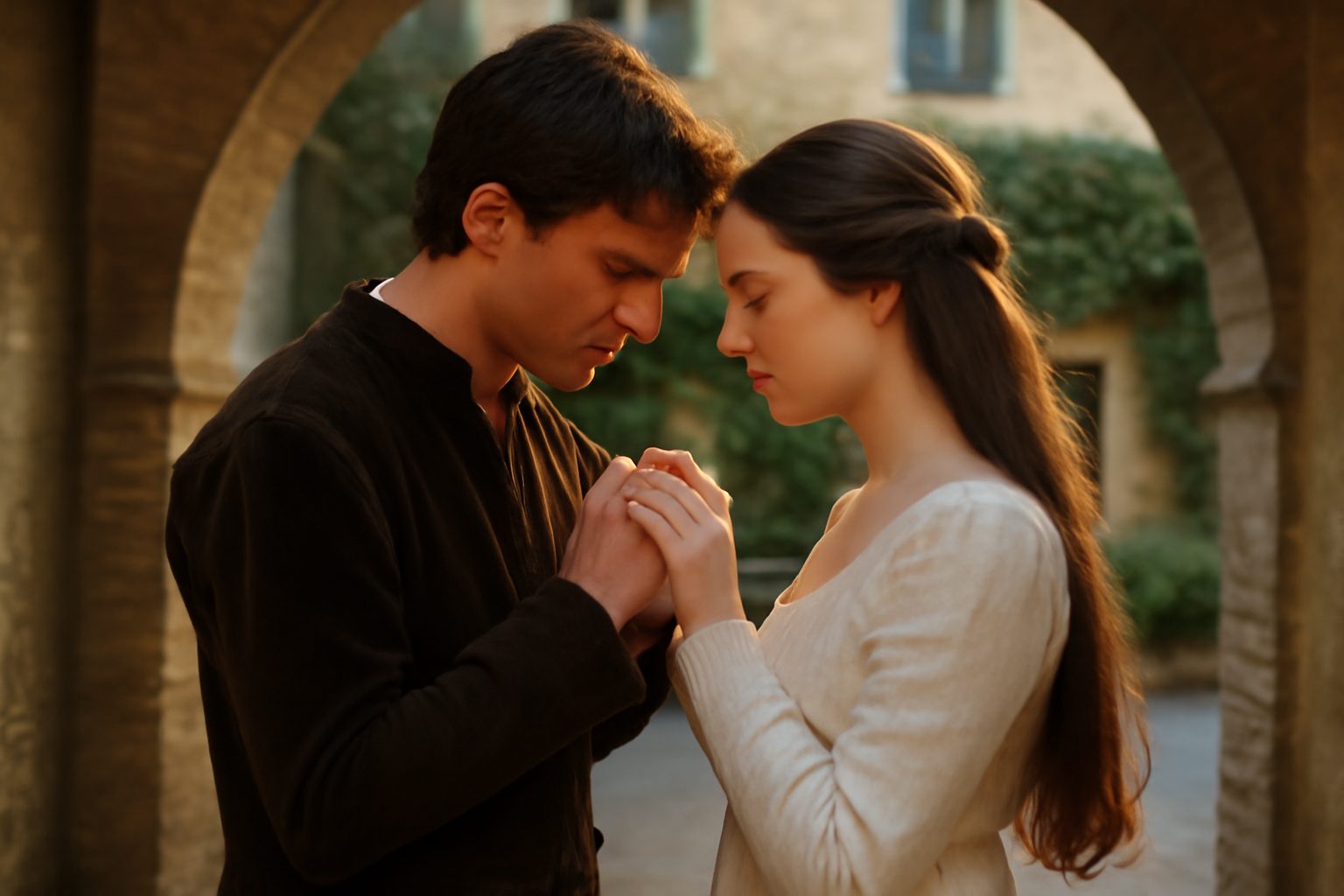
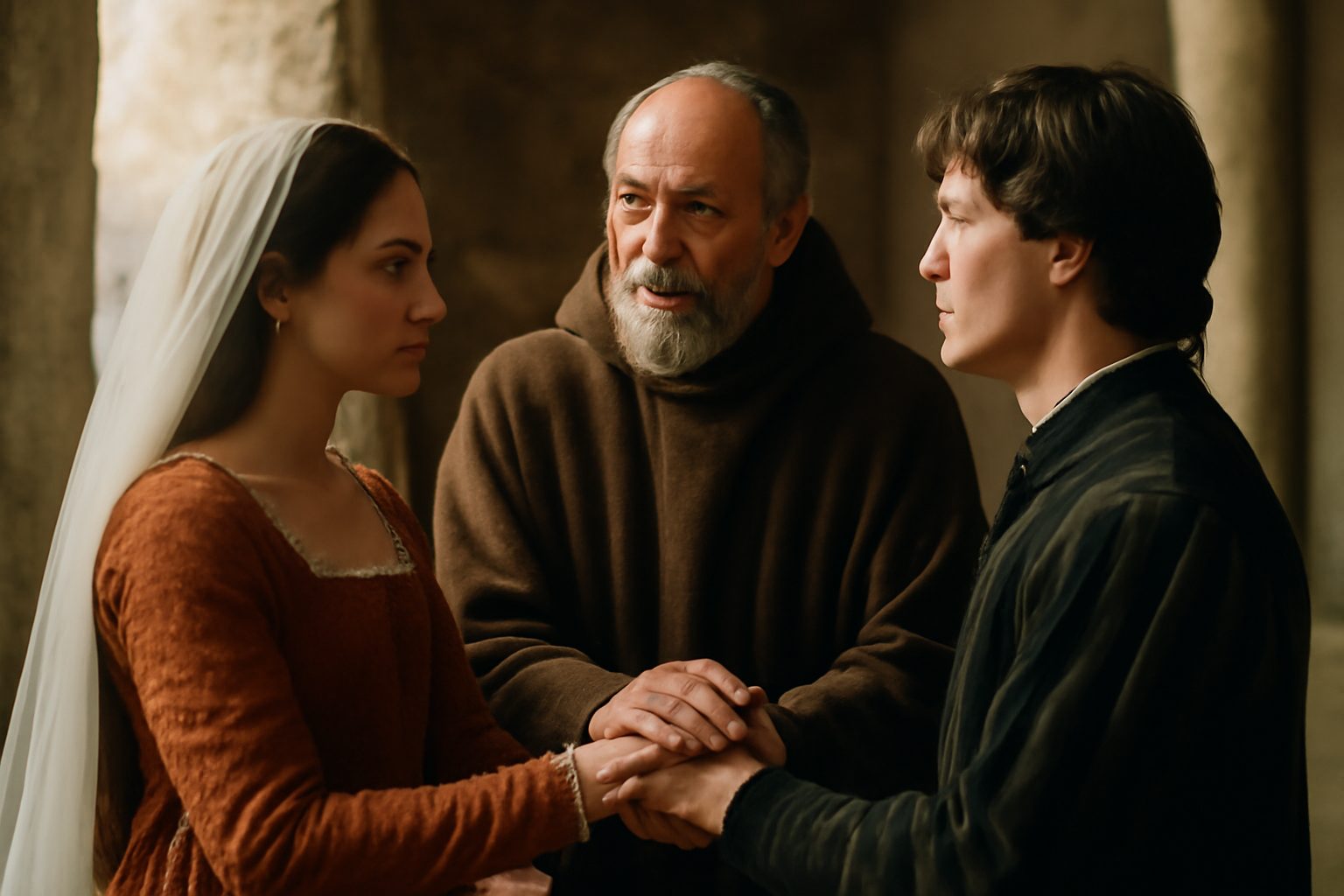
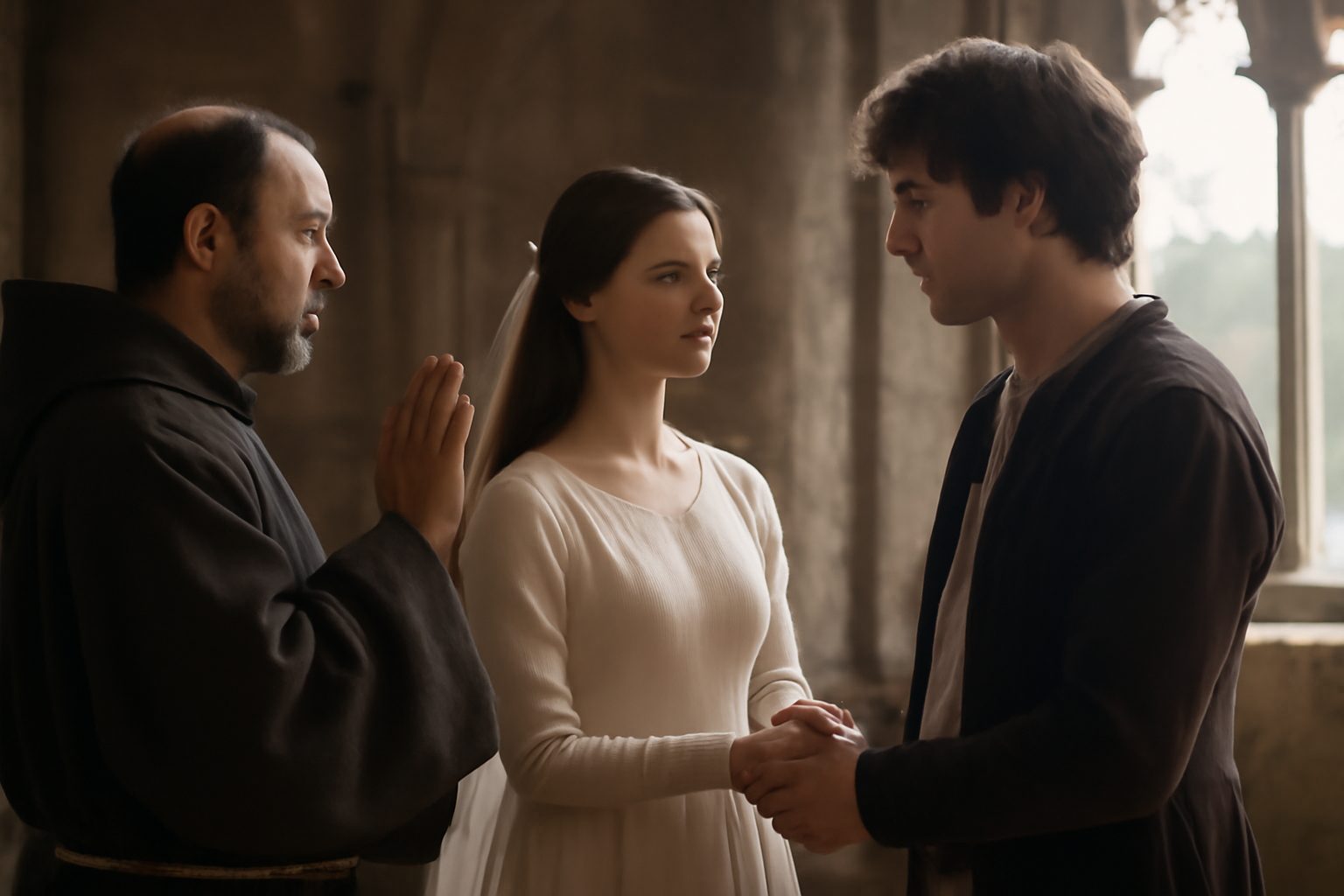
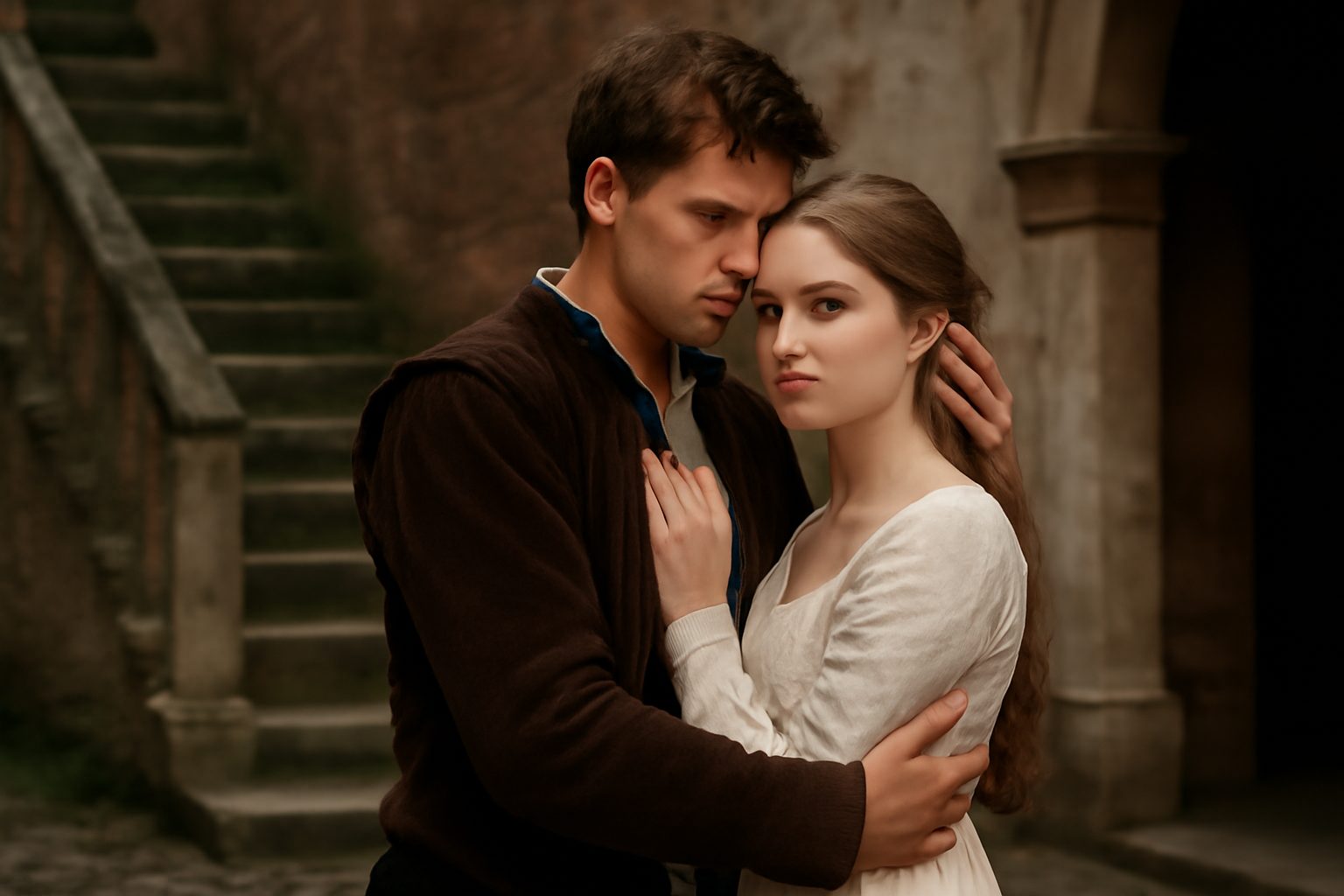
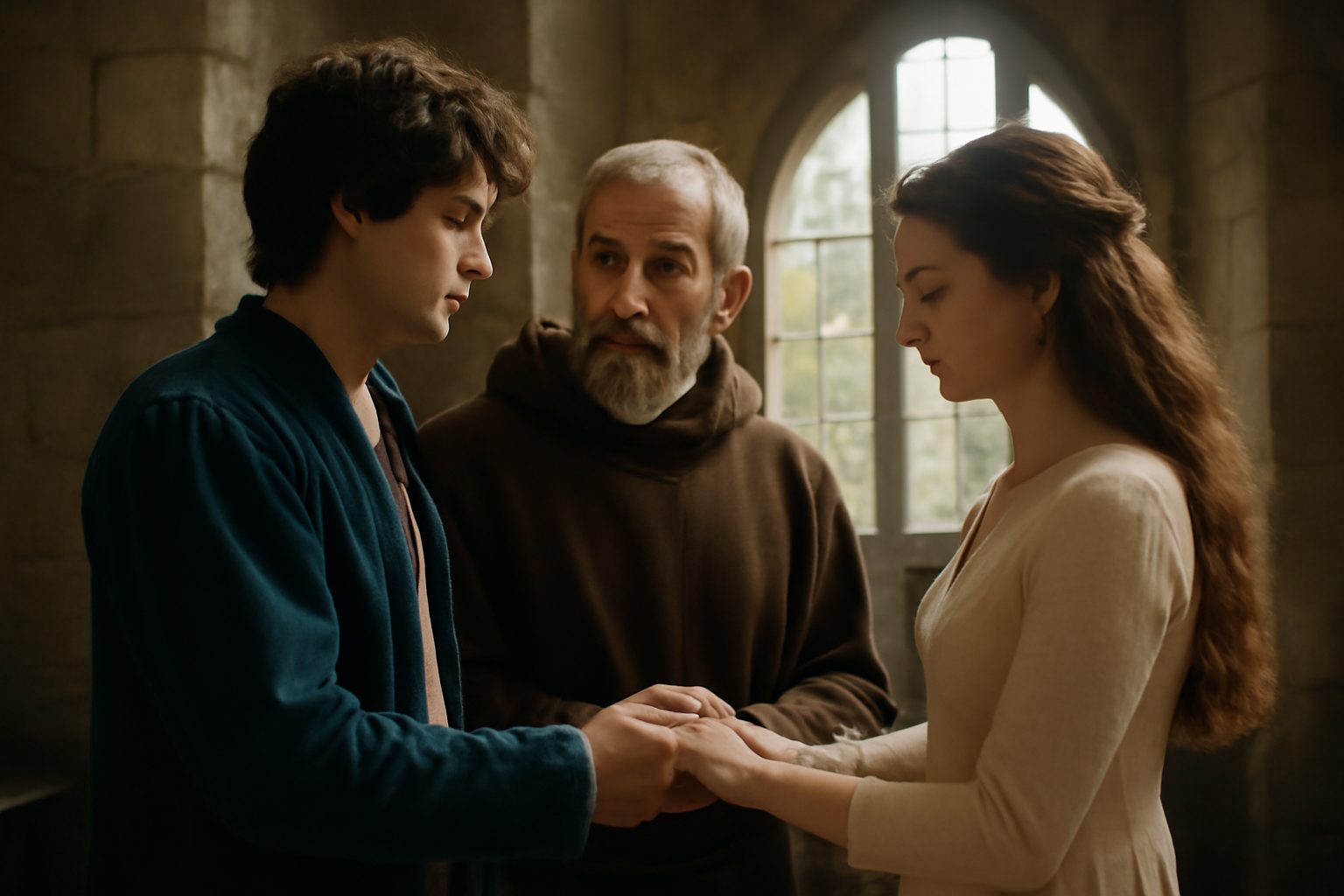
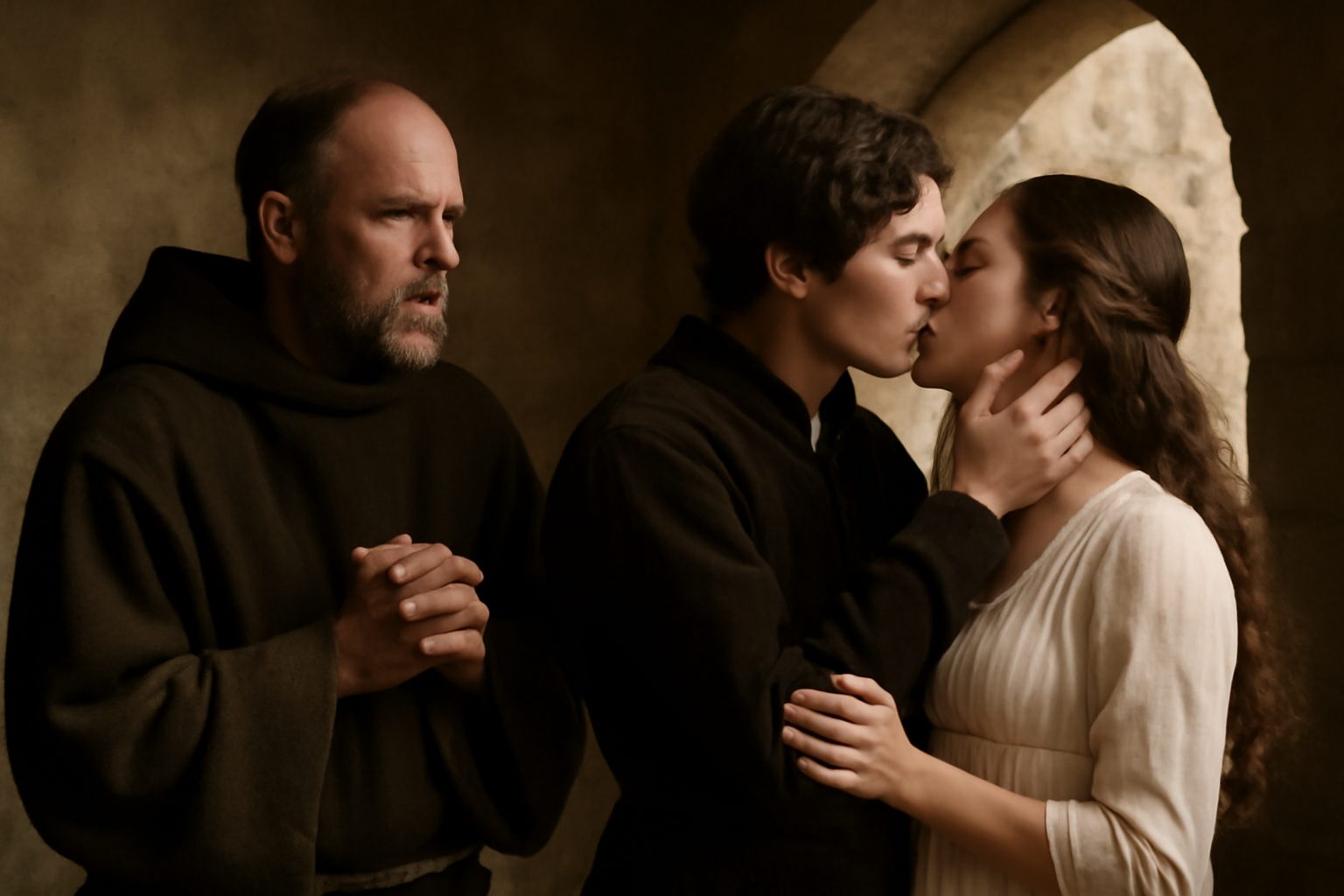
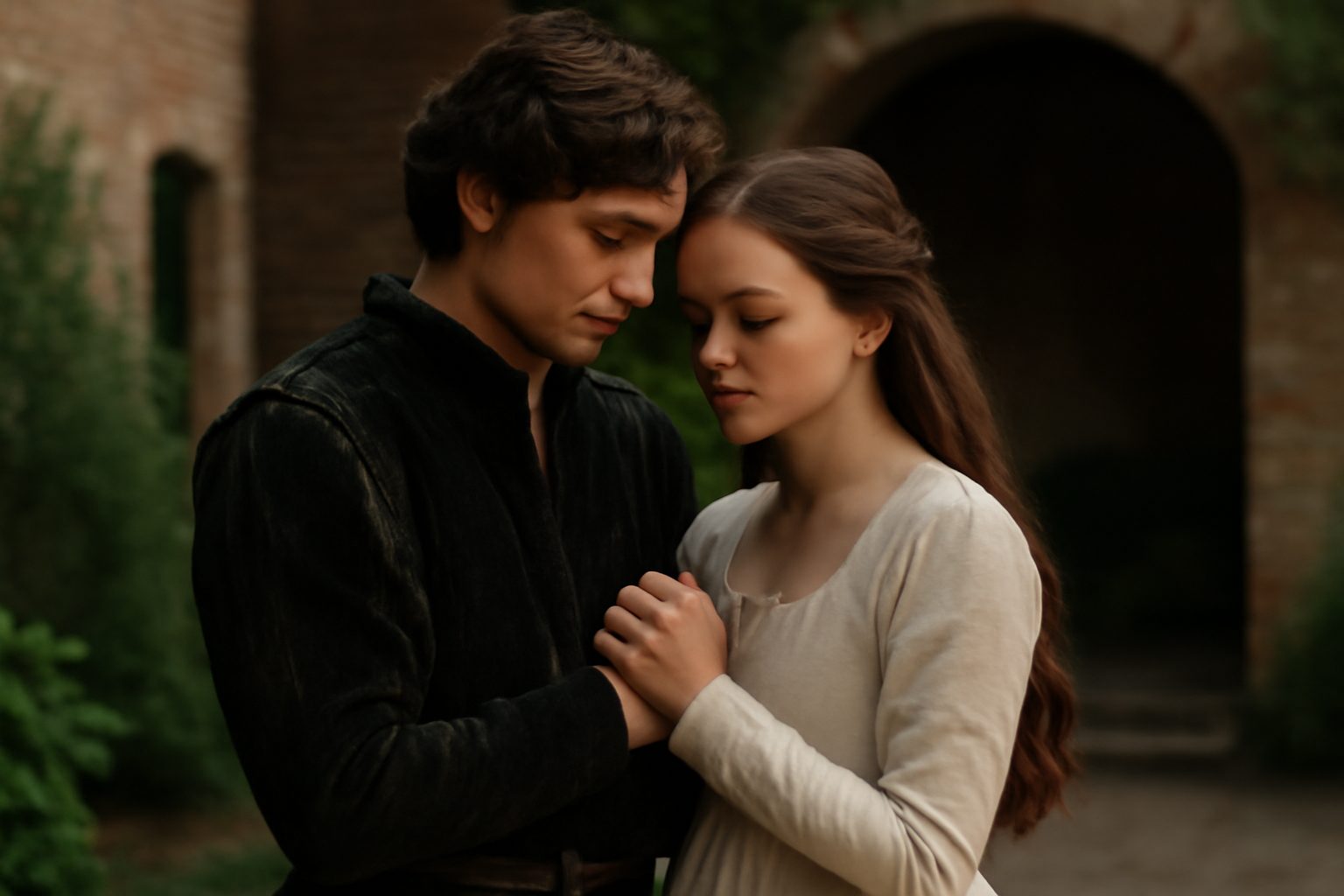
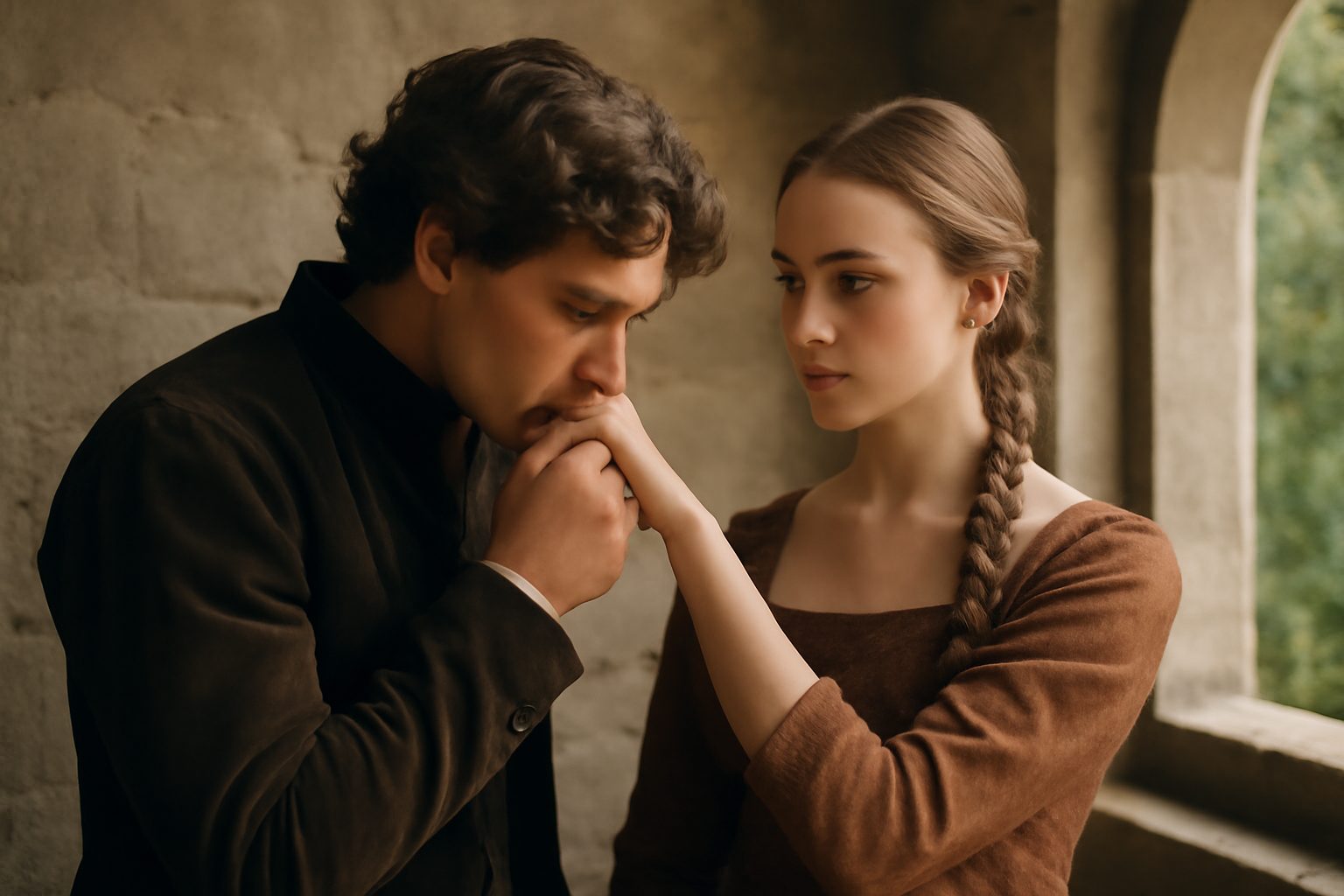
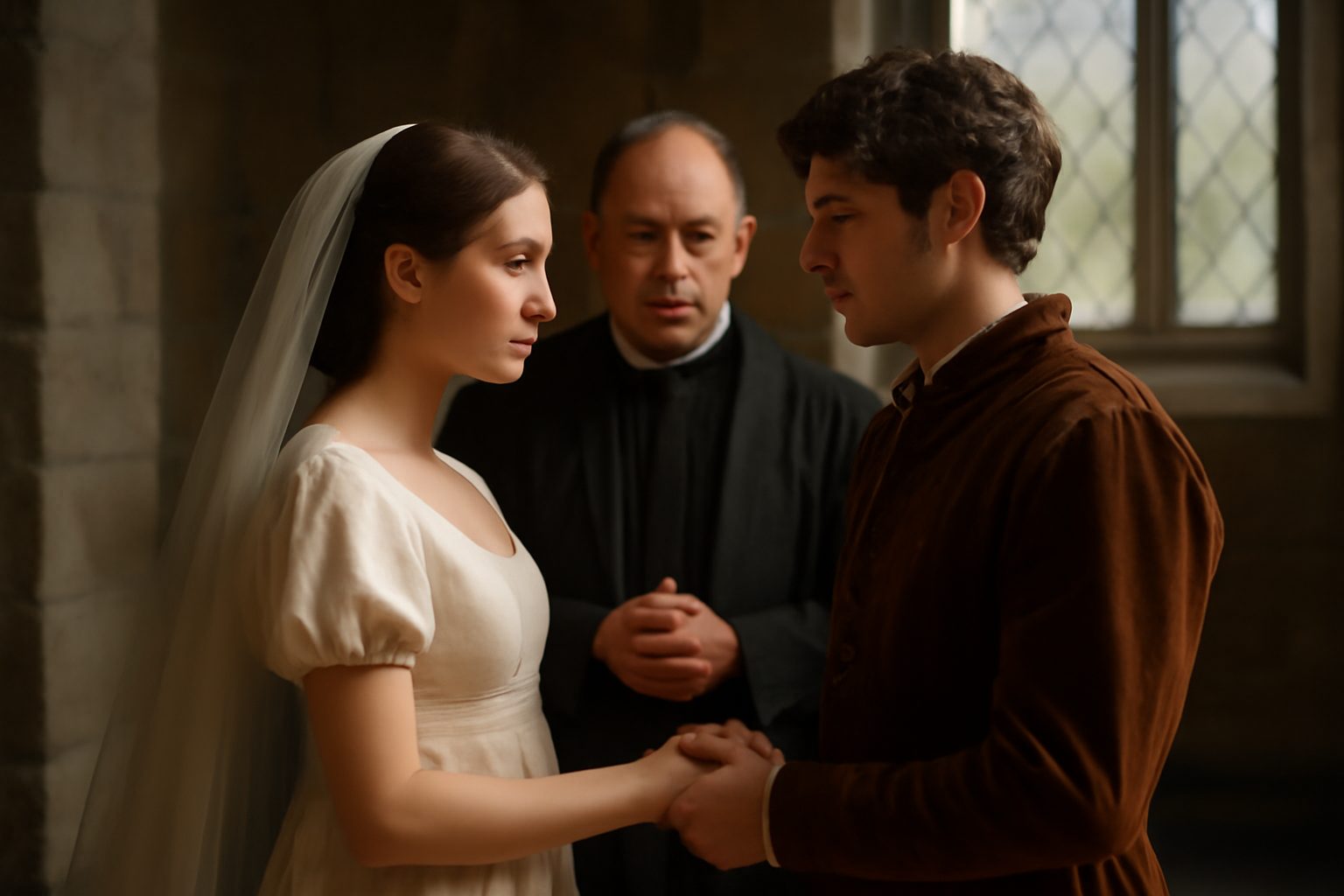
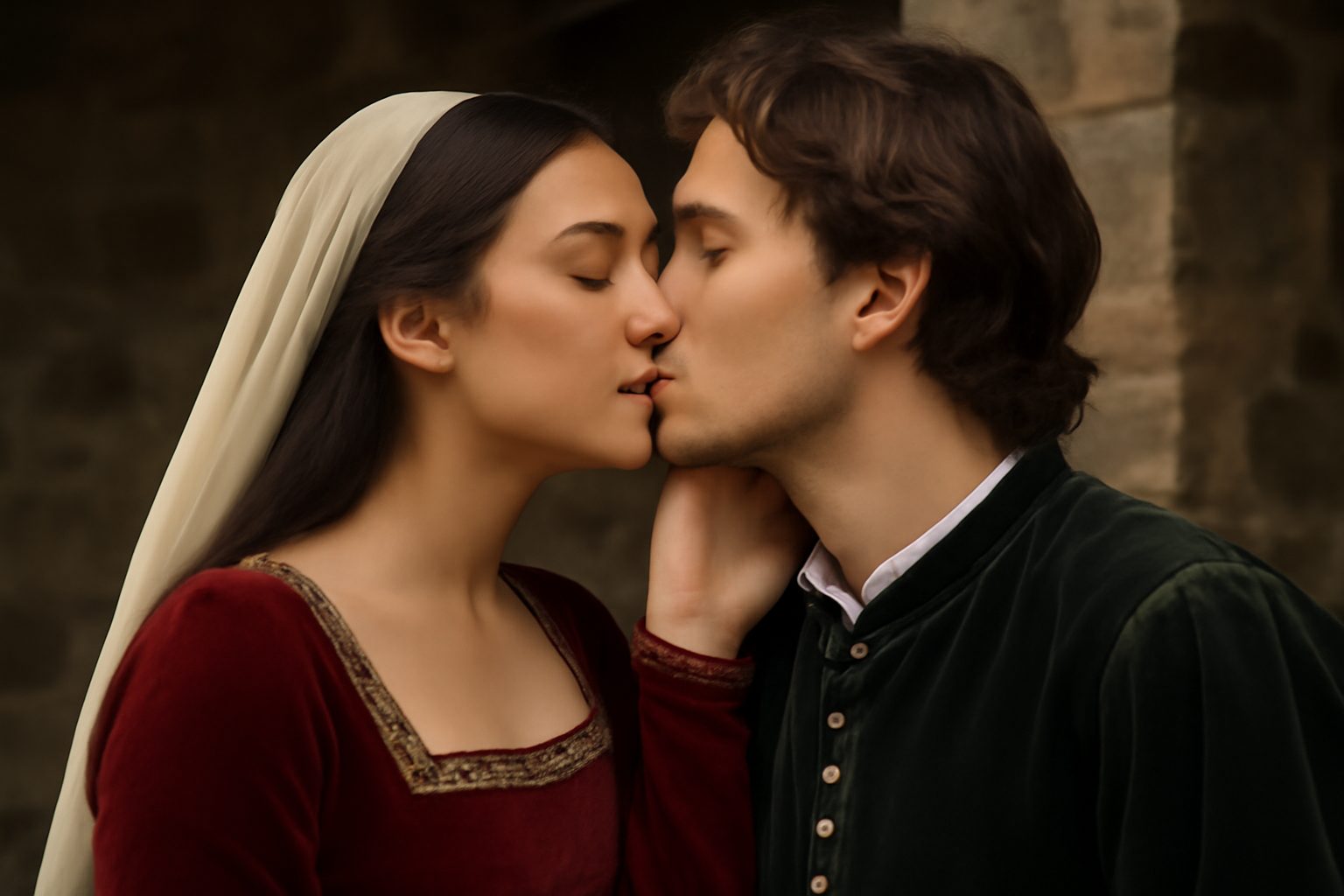
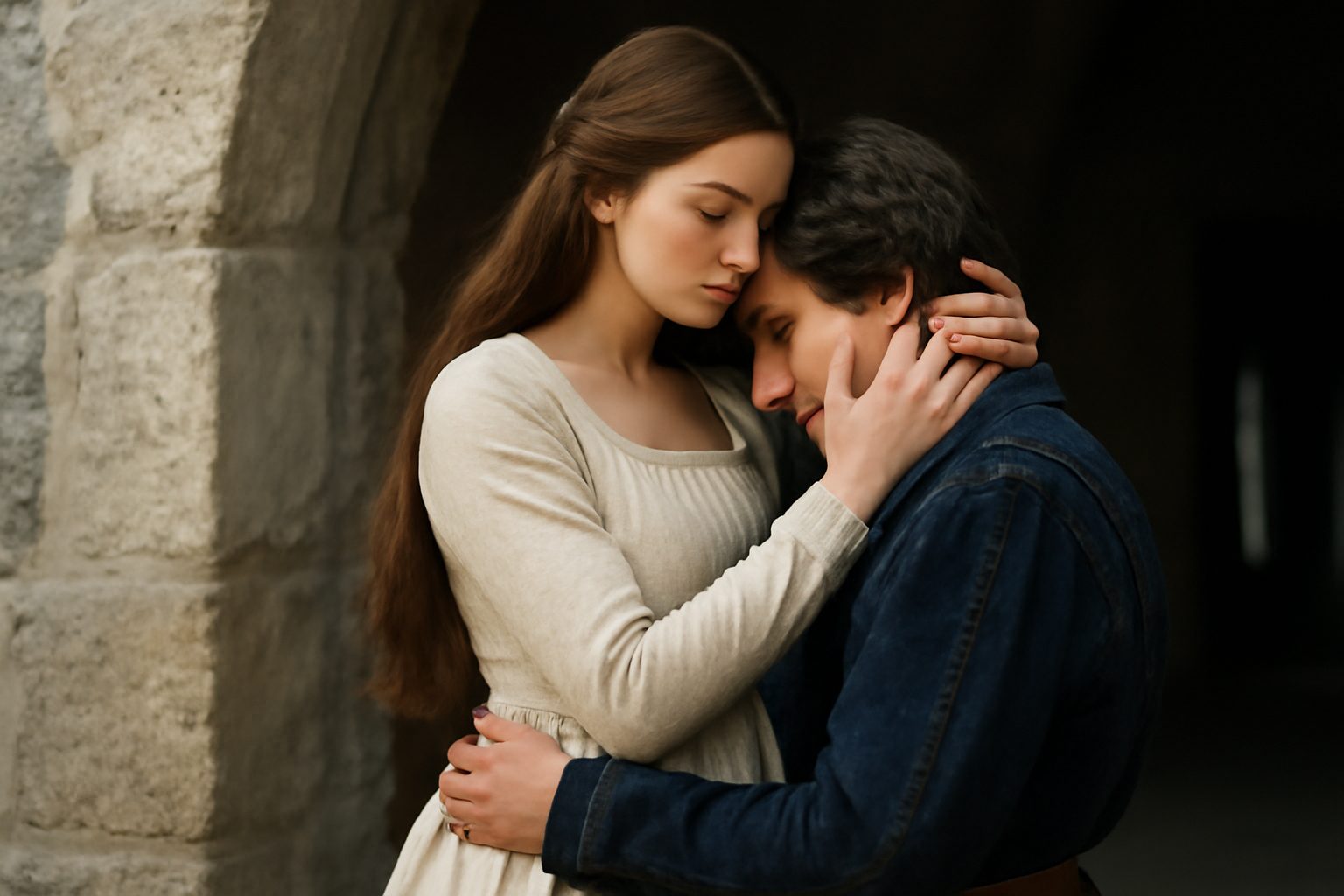
In Act 2, Scene 6 of Romeo and Juliet, Friar Laurence prepares to marry the young lovers in secret, hoping their union might reconcile their feuding families. As Romeo arrives first, he eagerly awaits Juliet, and the Friar cautions him about the intensity of his passion. This line captures Romeo's impatient longing, urging the Friar to envision the joy he and Juliet will share once they are wed.
Romeo: "Unfold the imagined happiness that both"
In modern day english, we would say:
Describe the joy you both dream of sharing together.
Frequently Asked Questions
What is Romeo asking for in this line from Act 2, Scene 6?
Romeo is asking to hear more about the happiness they imagine sharing together.
Connections to other verses:
Connections to "Unfold the imagined happiness that both"
The verse "Unfold the imagined happiness that both" serves as a pivotal moment in the scene, encapsulating the lovers' idealized vision of their union. It connects thematically and emotionally with several other verses, highlighting the tension between their intense joy and the foreshadowed tragedy.
Foreshadowing and Warnings
This line directly contrasts with Friar Laurence's cautionary words in "These violent delights have violent ends" and "Therefore love moderately; long love doth so," which warn against the excessiveness of their passion. The imagined happiness unfolds against a backdrop of impending doom, as hinted in "And in their triumph die, like fire and powder," symbolizing the explosive and self-destructive nature of their love.
Idealization vs. Reality
The "imagined happiness" reflects Romeo's earlier declaration in "It is enough I may but call her mine," emphasizing his contentment with mere possession, yet it also aligns with Juliet's hyperbolic expression in "But my true love is grown to such excess," showcasing their shared, overwhelming emotions. This idealization is further enriched by Romeo's metaphor in "A lover may bestride the gossamer," which illustrates the delicate, almost unreal quality of their joy.
Spiritual and Emotional Union
The phrase "imagined happiness" culminates in the physical and spiritual union promised in "Till holy church incorporate two in one," reinforcing the theme of two becoming one. It also echoes the reciprocal joy mentioned in "Receive in either by this dear encounter," highlighting the mutual exchange of happiness between Romeo and Juliet.
Contrast with Lightness and Vanity
The ethereal quality of their happiness is contrasted with the notion of vanity in "And yet not fall; so light is vanity," suggesting that their joy, while profound, is fragile and transient, much like the gossamer imagery earlier in the scene.
Conclusion of the Scene
Finally, this imagined happiness is swiftly brought to a close with the Friar's pragmatic words in "Come, come with me, and we will make short work," underscoring the urgency and brevity of their bliss, which is forever shadowed by the sorrow foreseen in "That after hours with sorrow chide us not!"