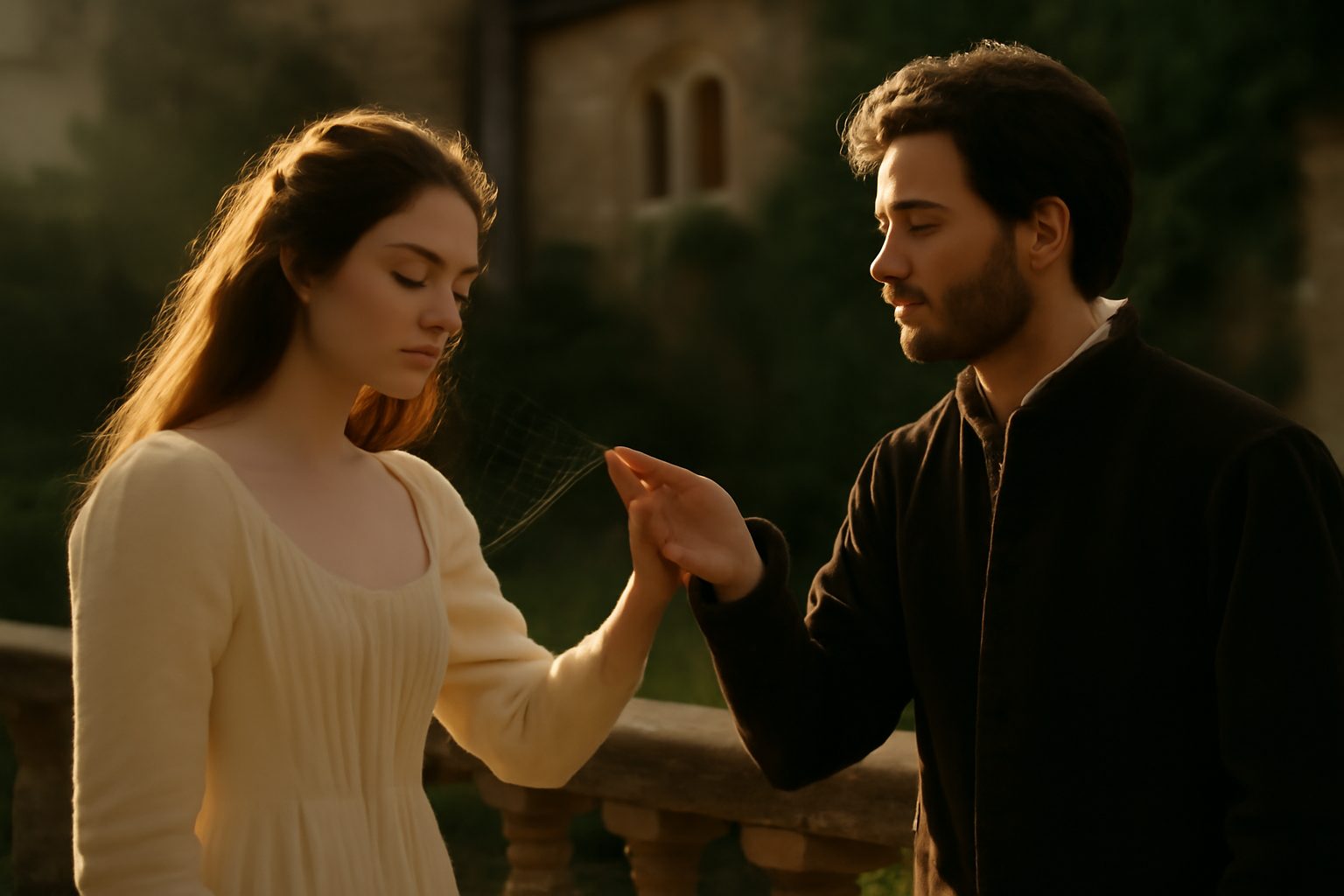
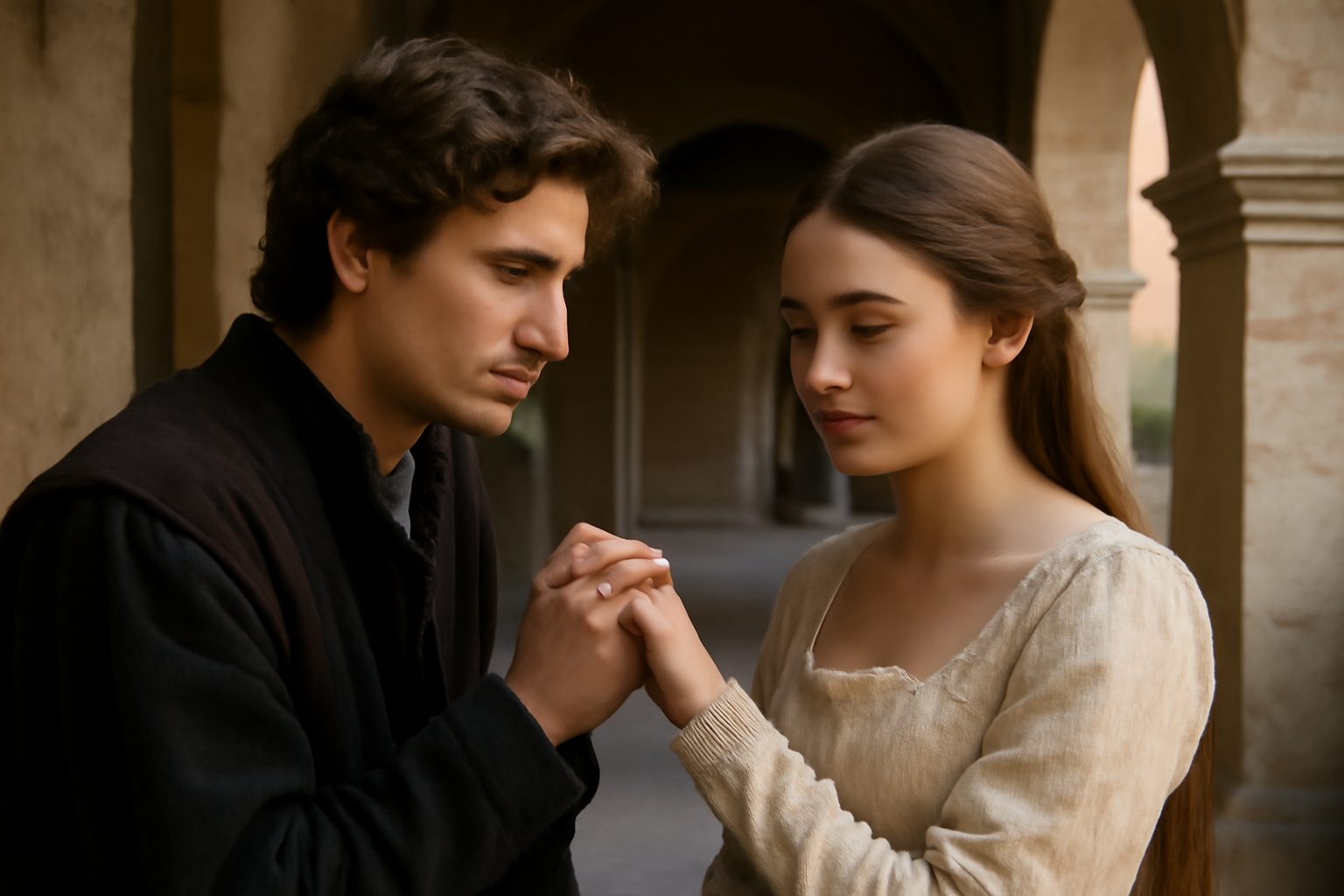
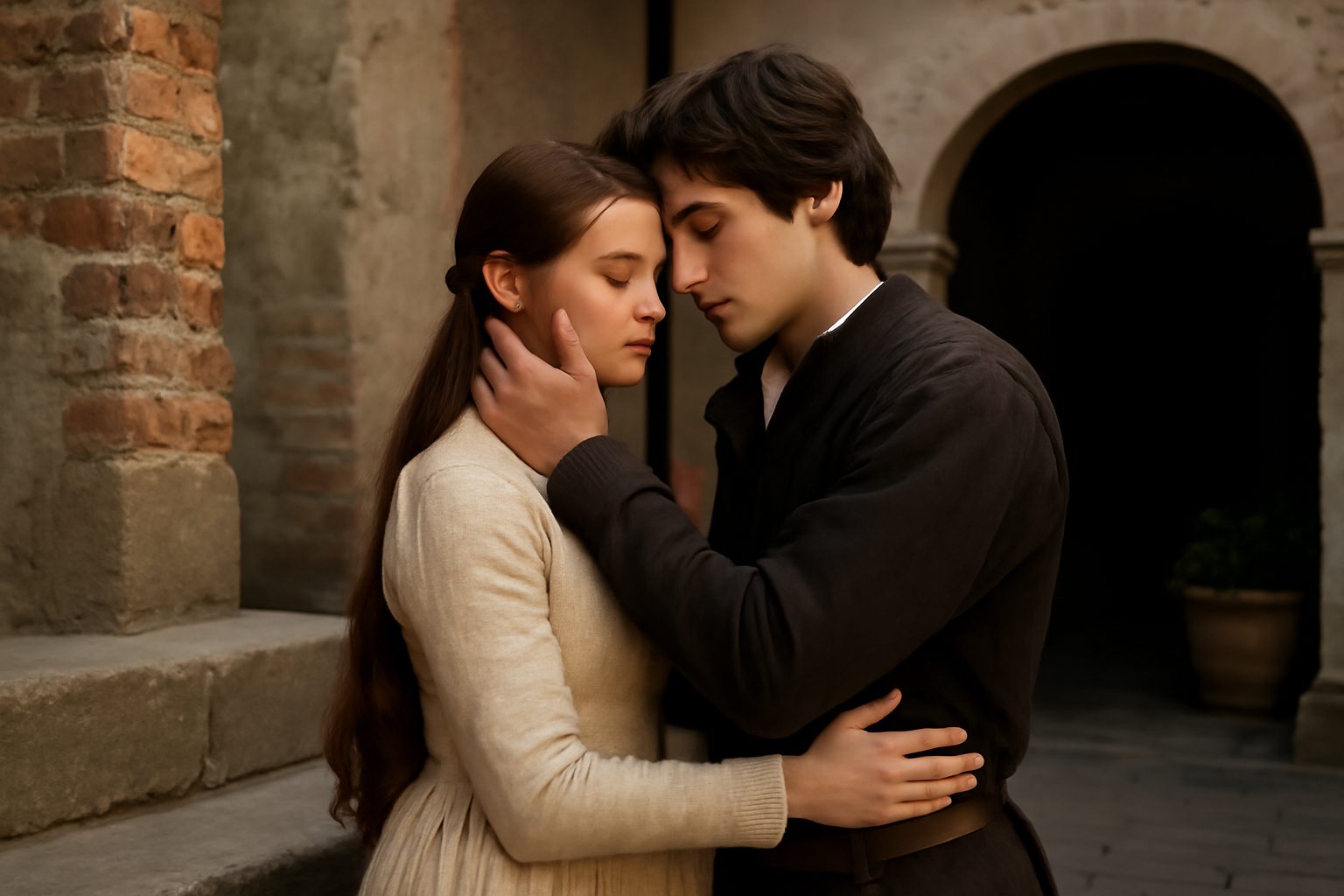
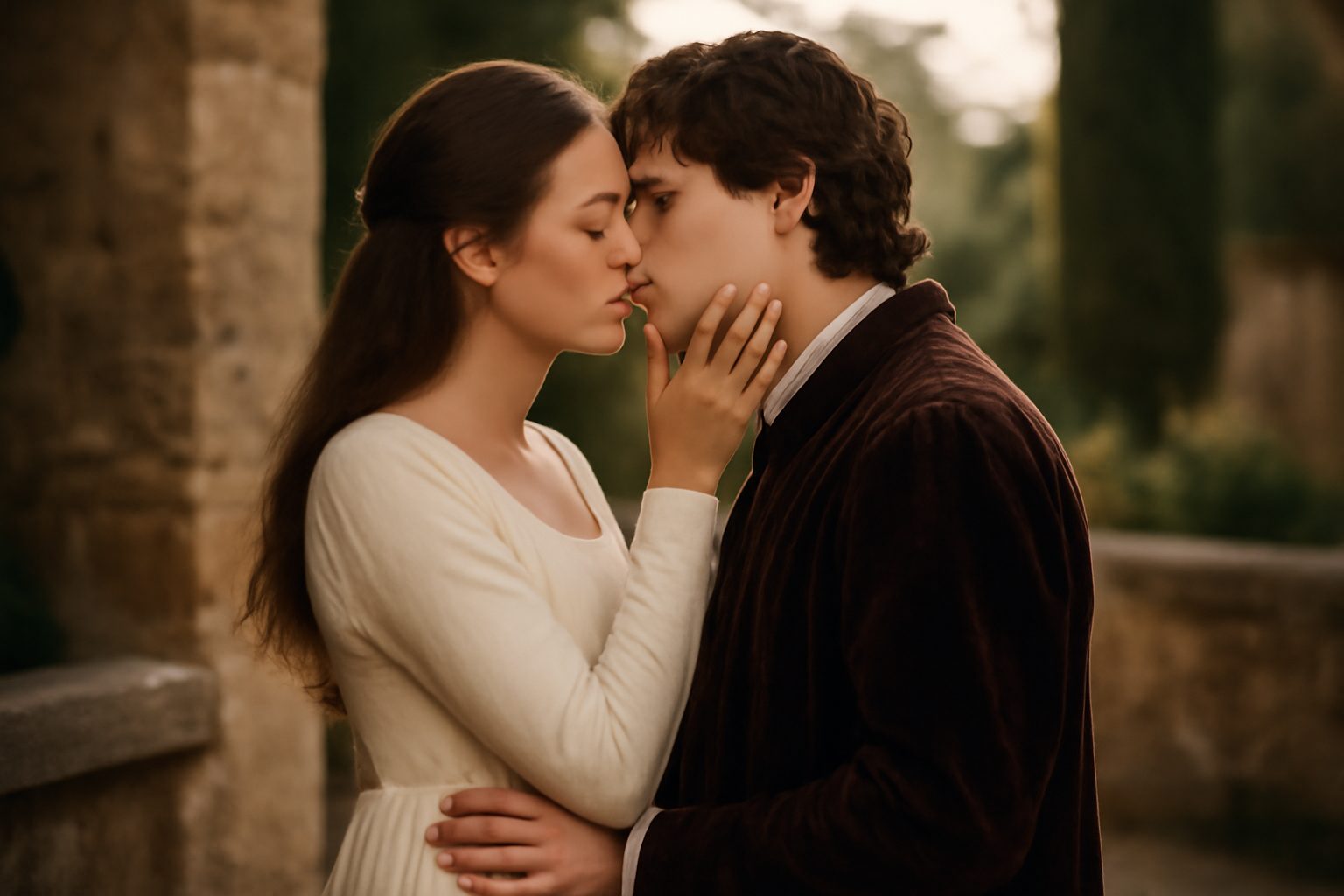
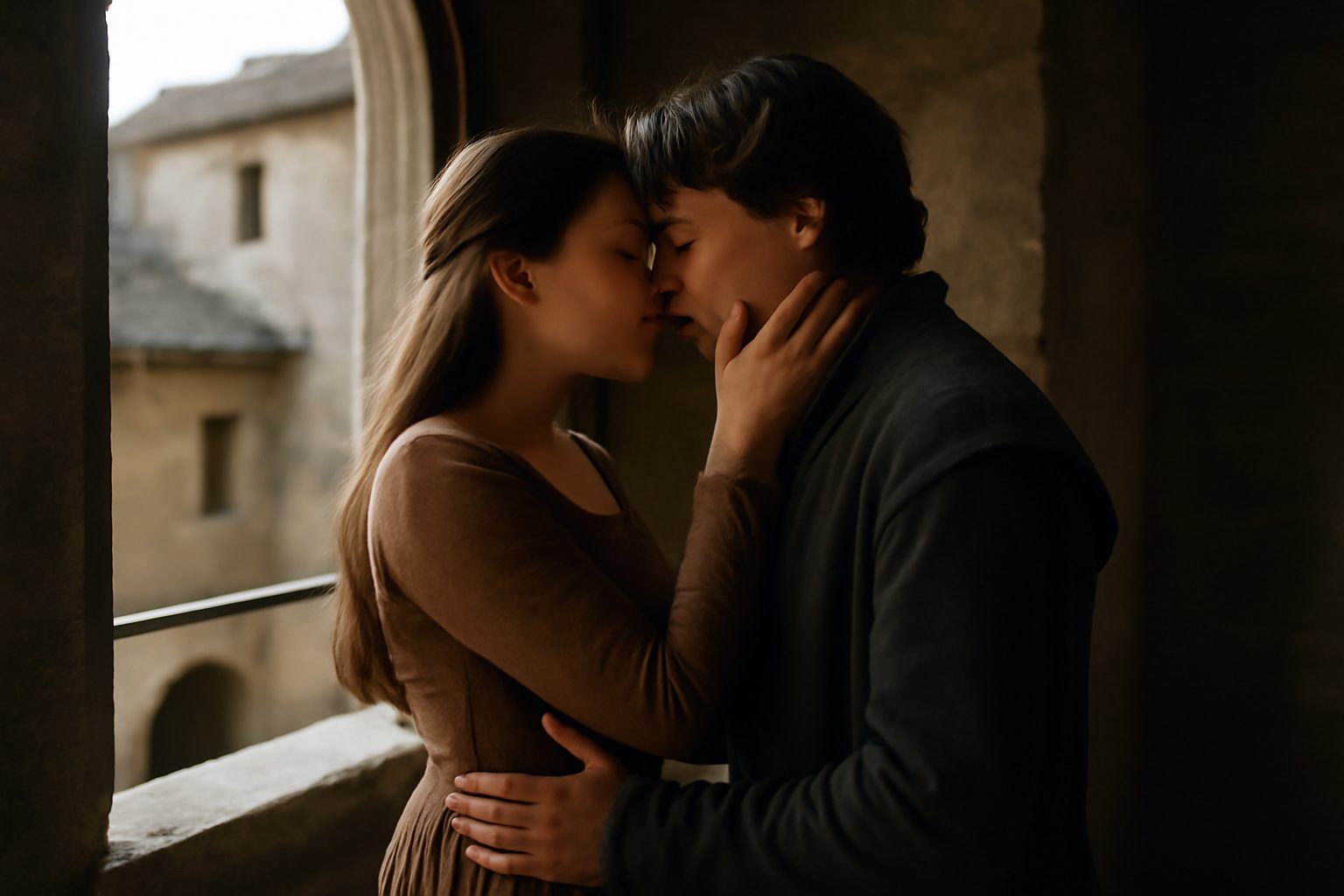
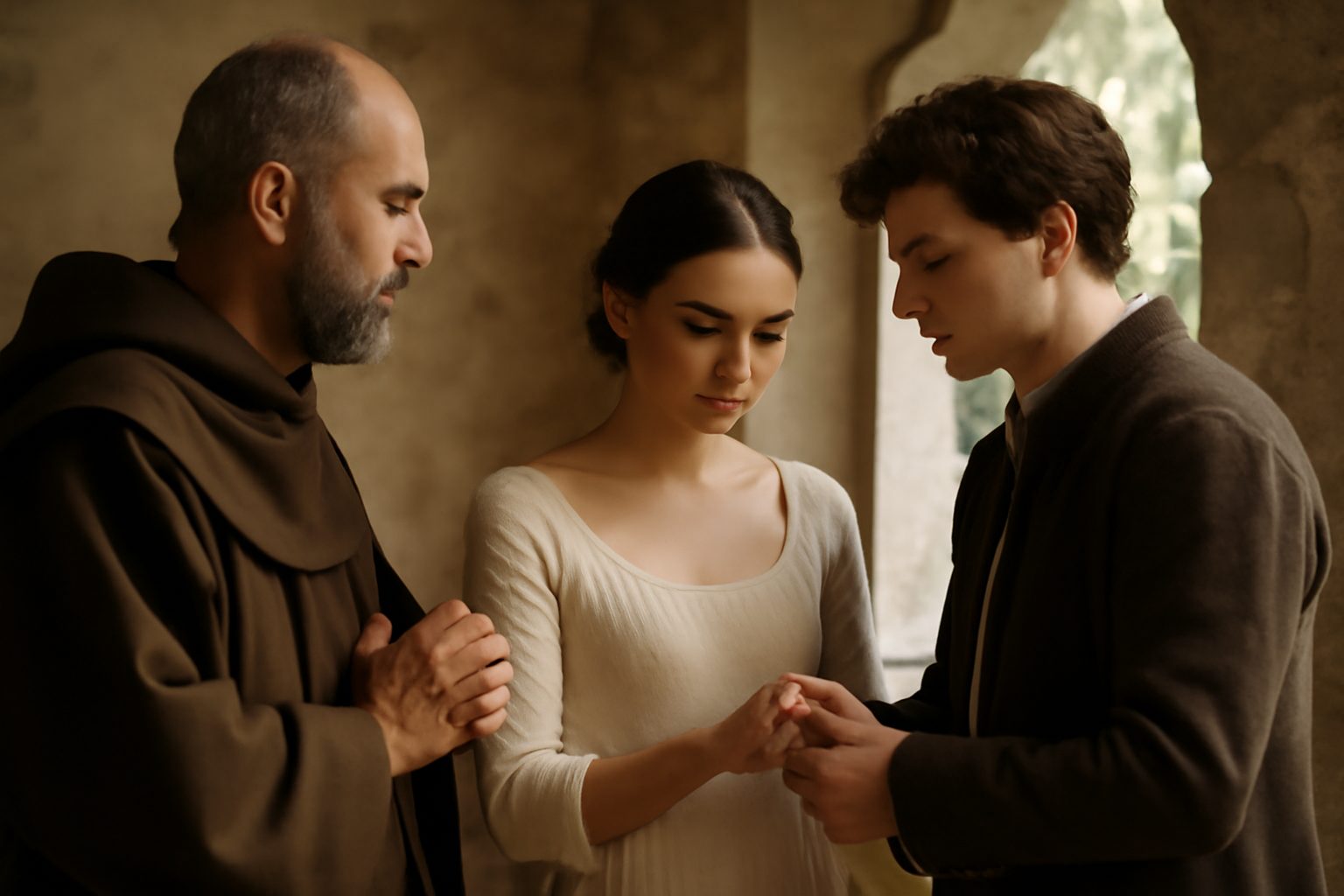
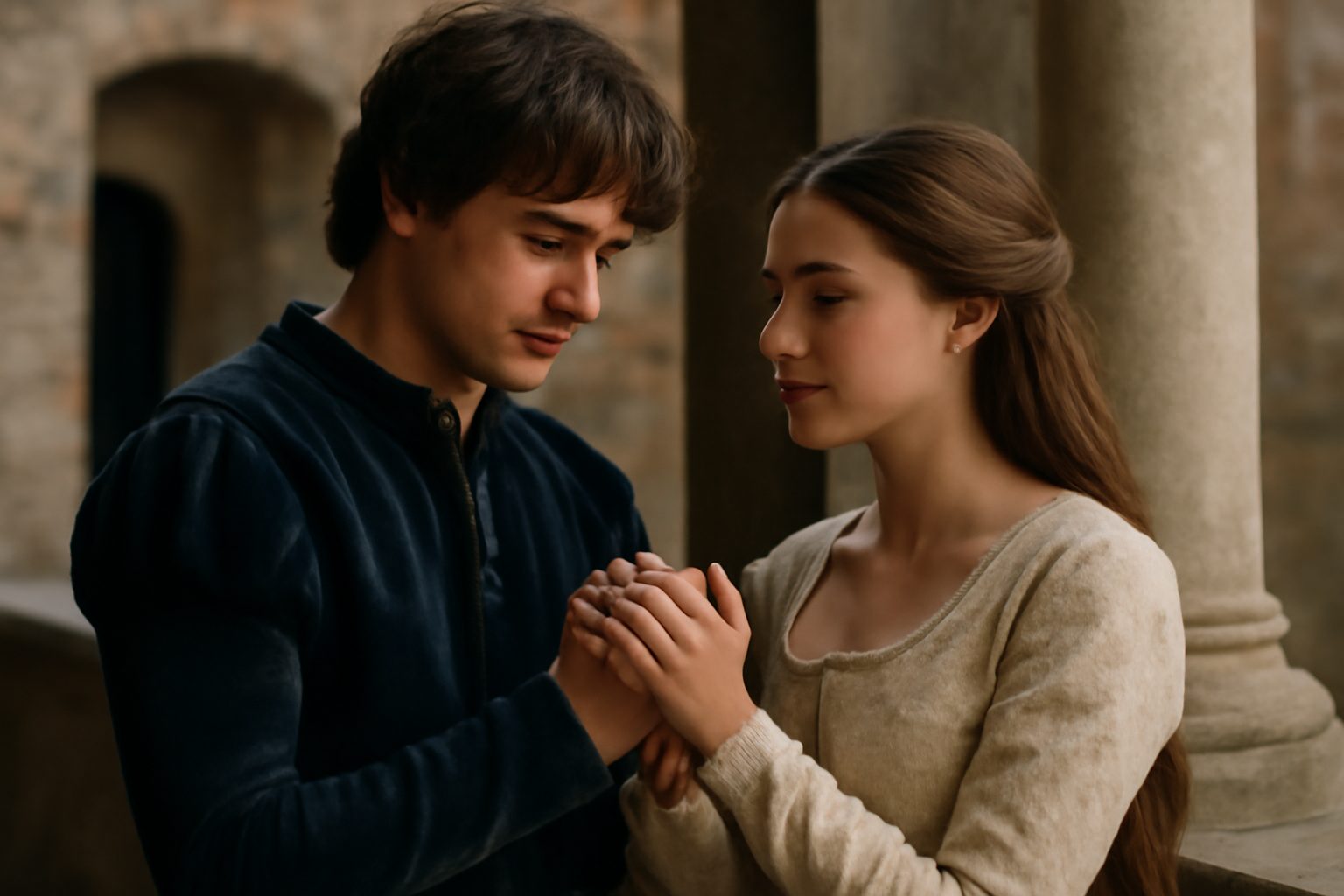
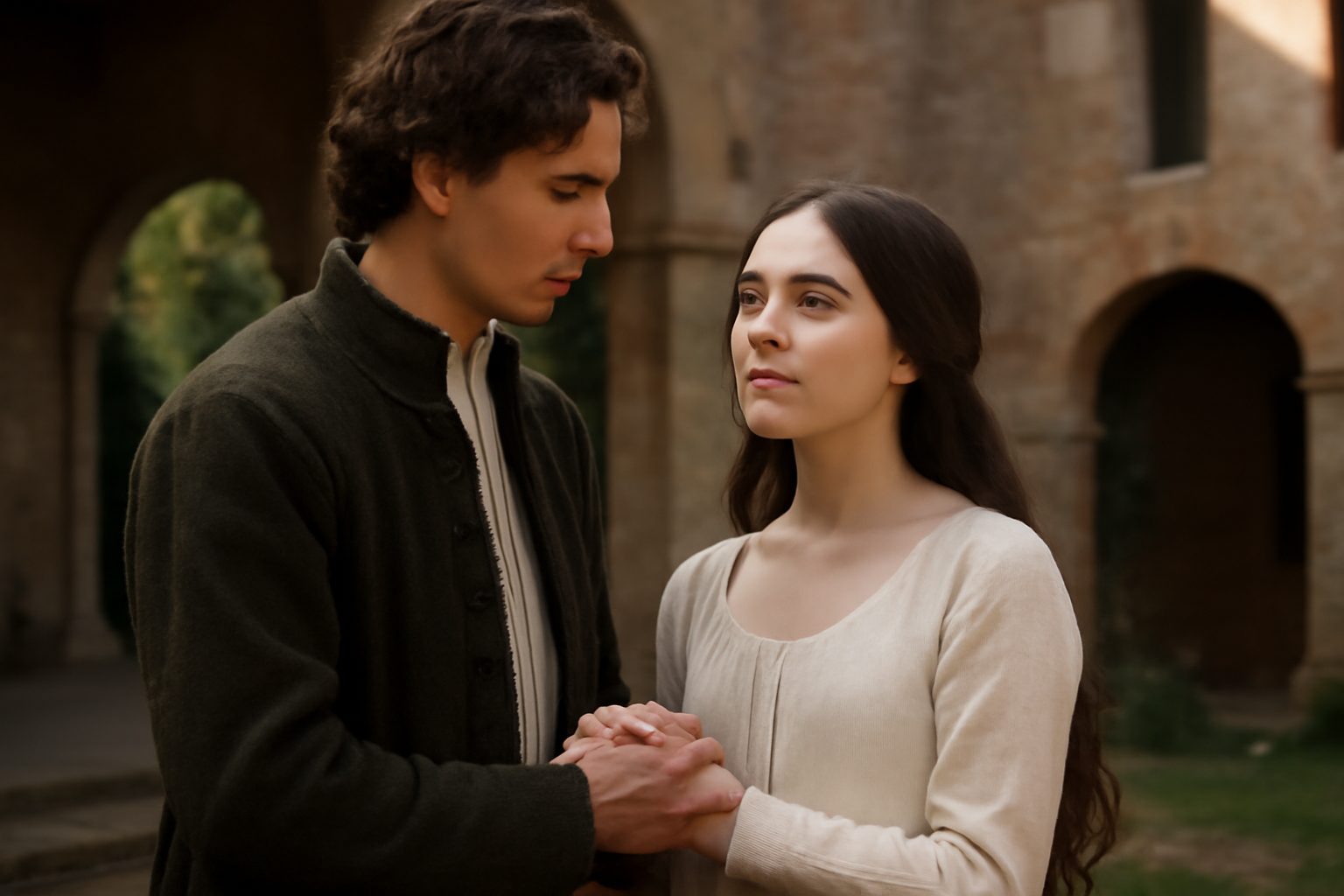
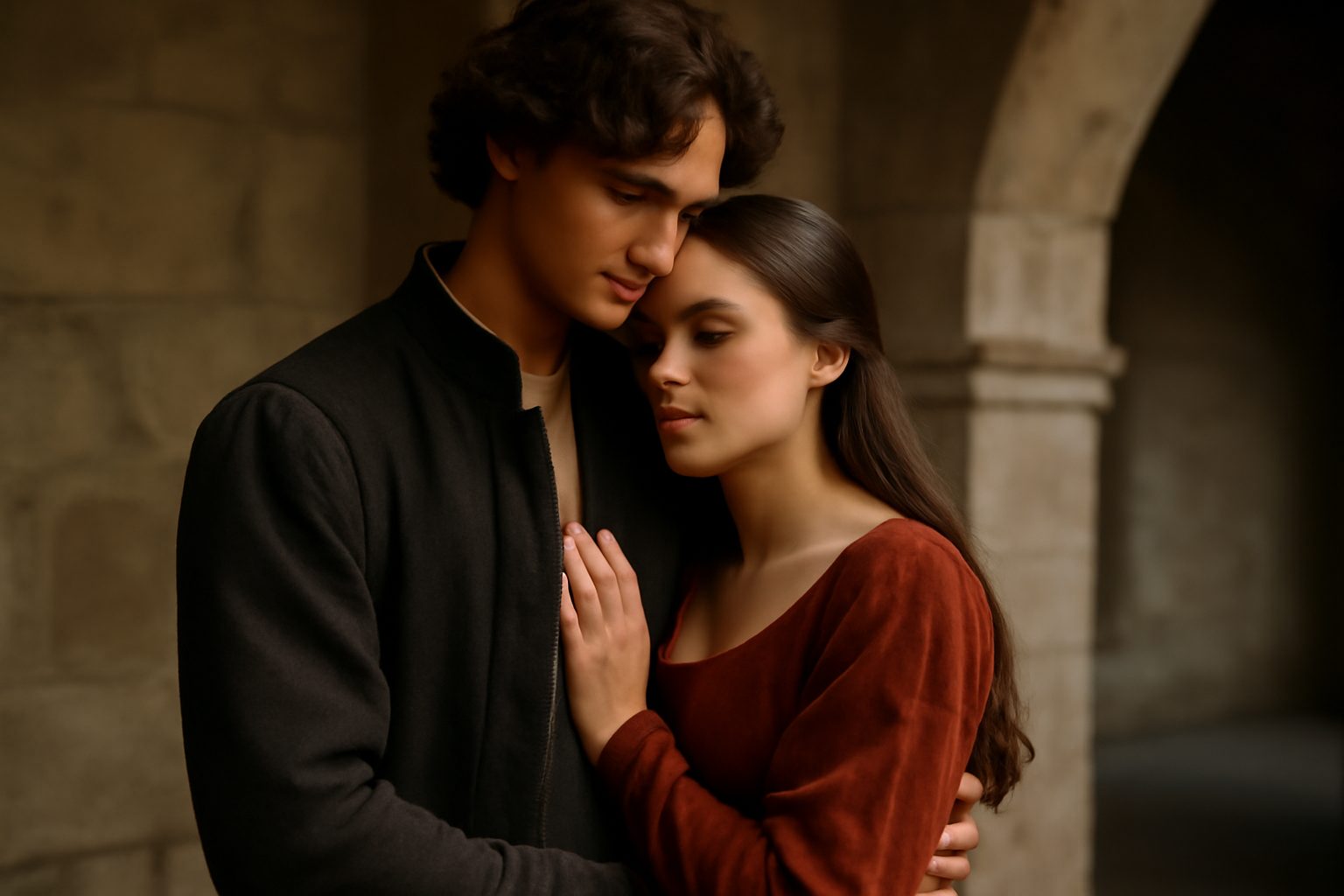
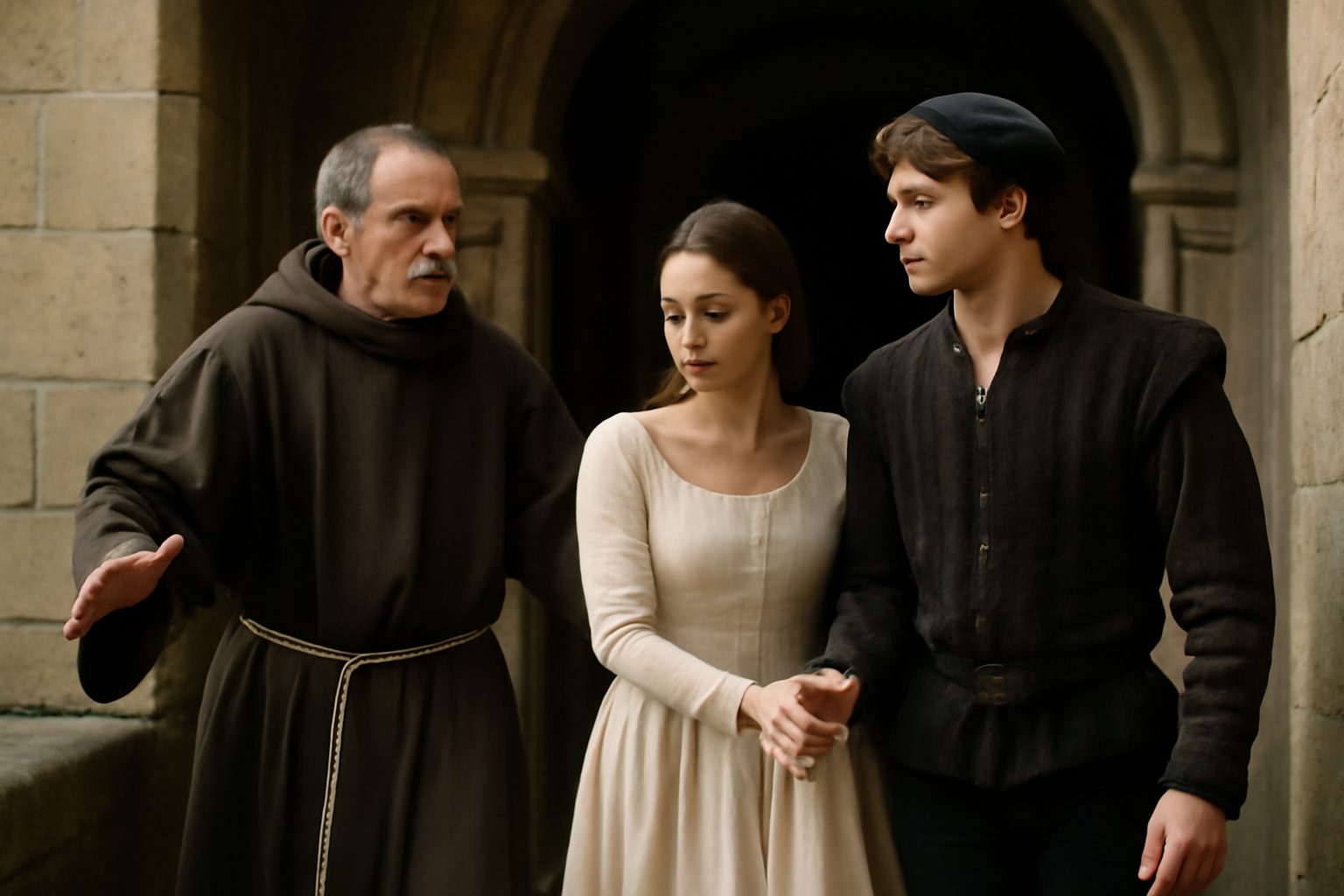
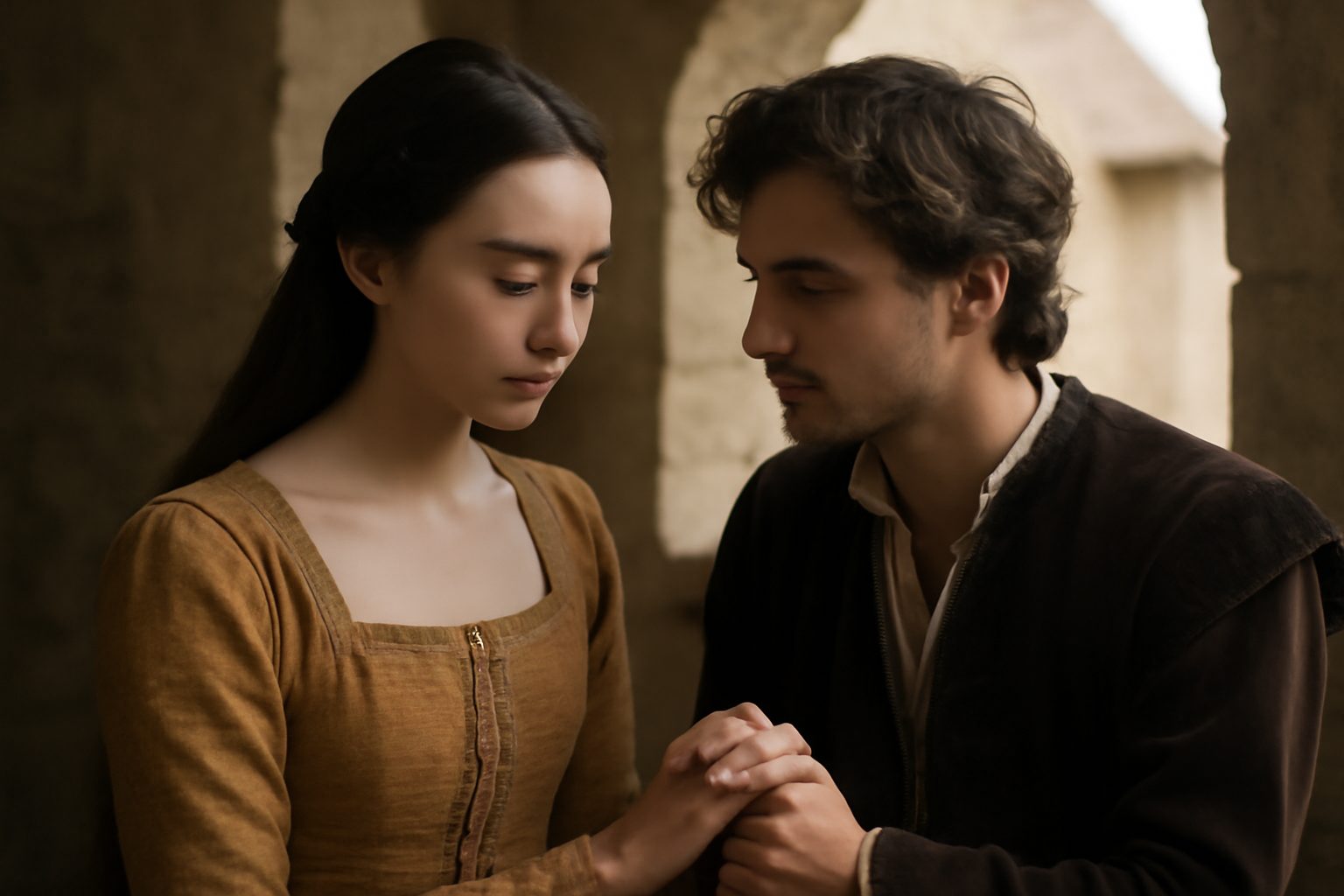
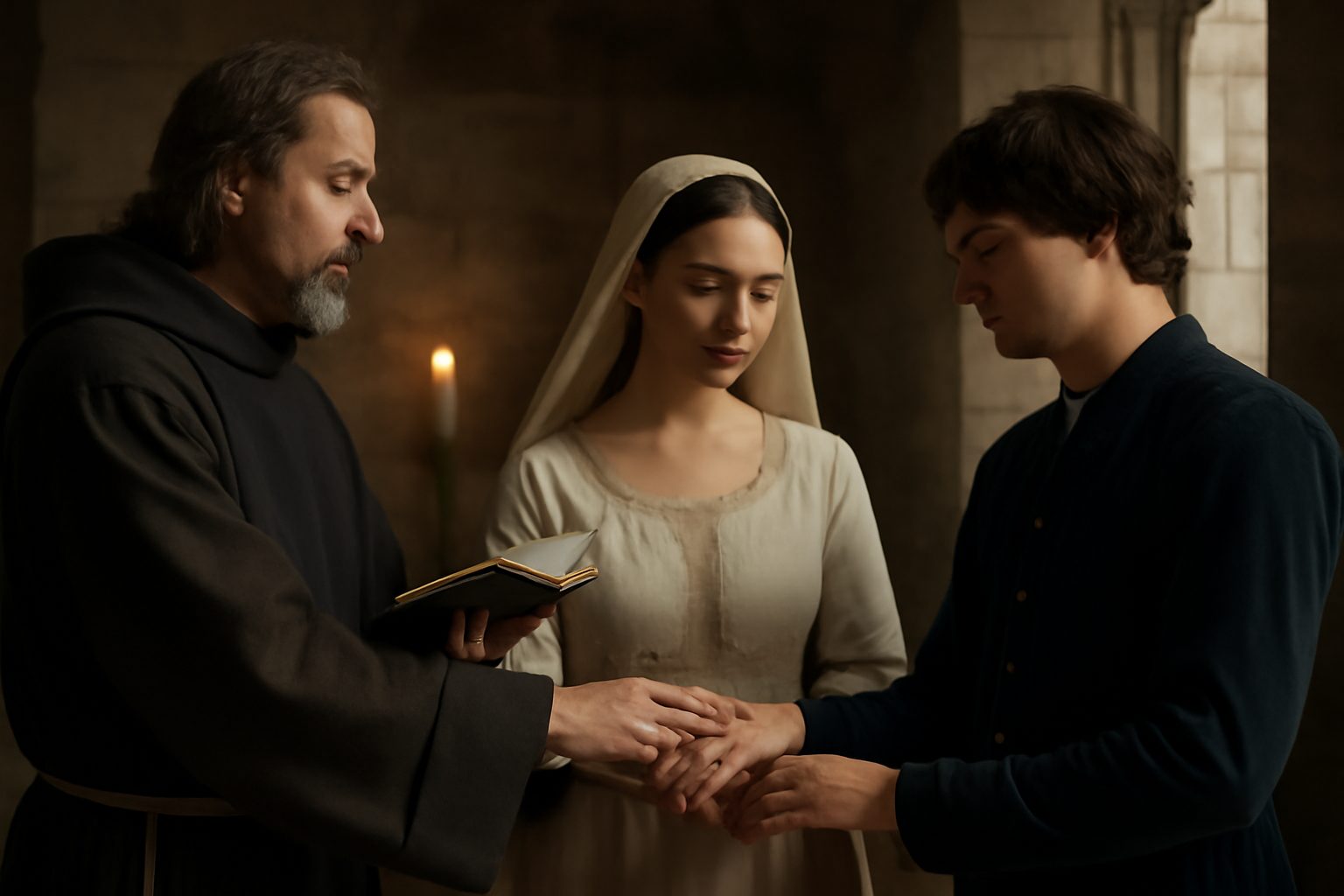
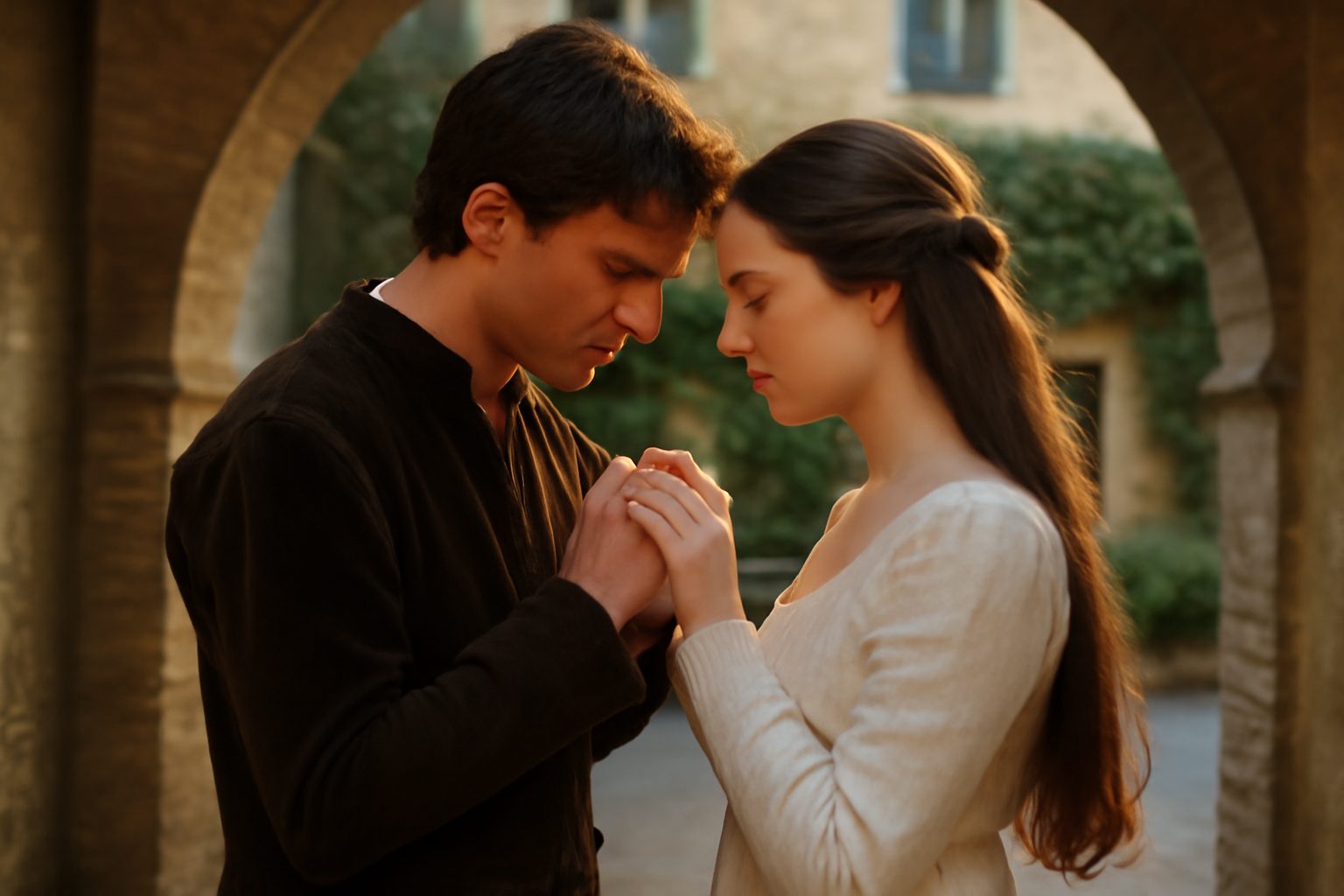
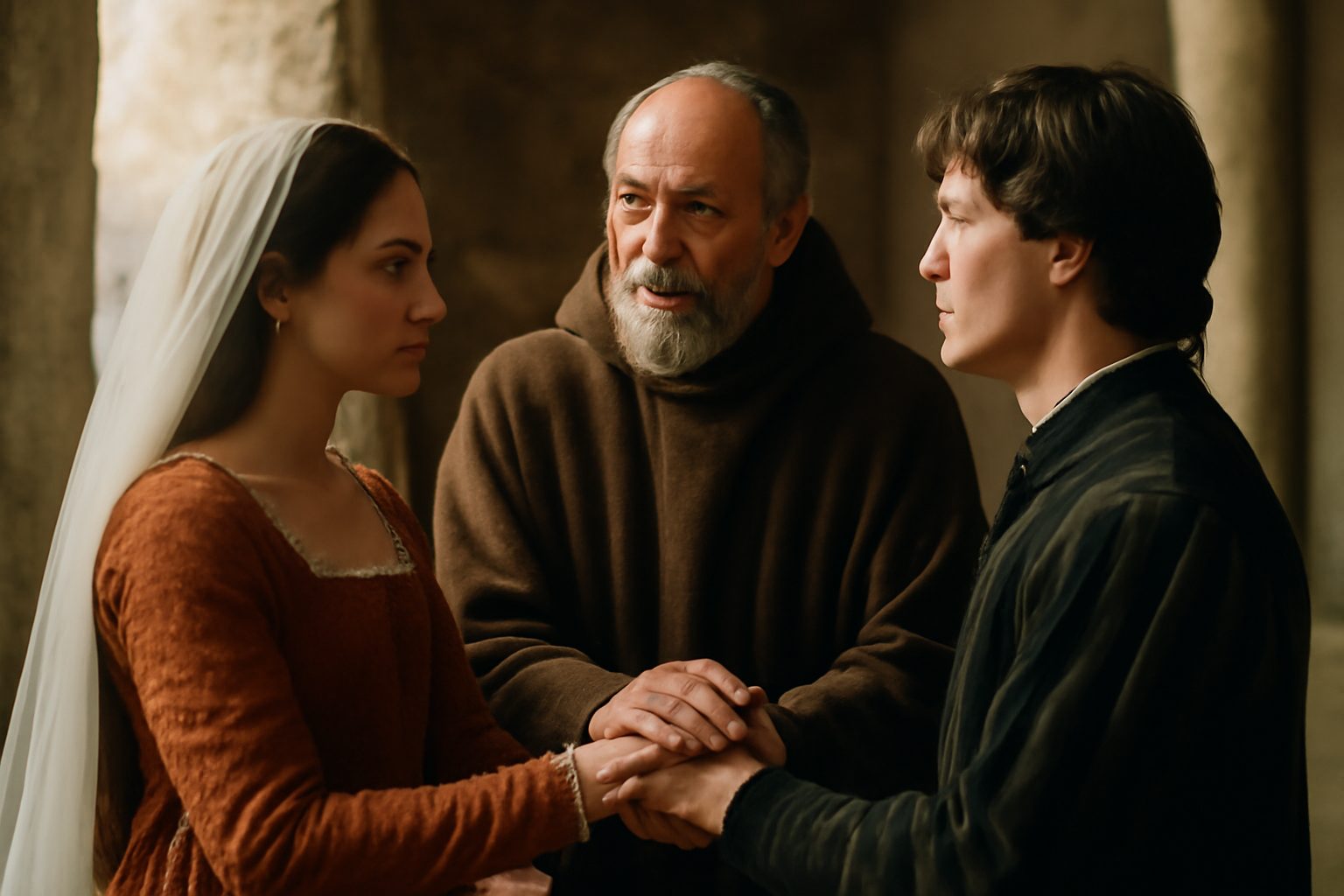
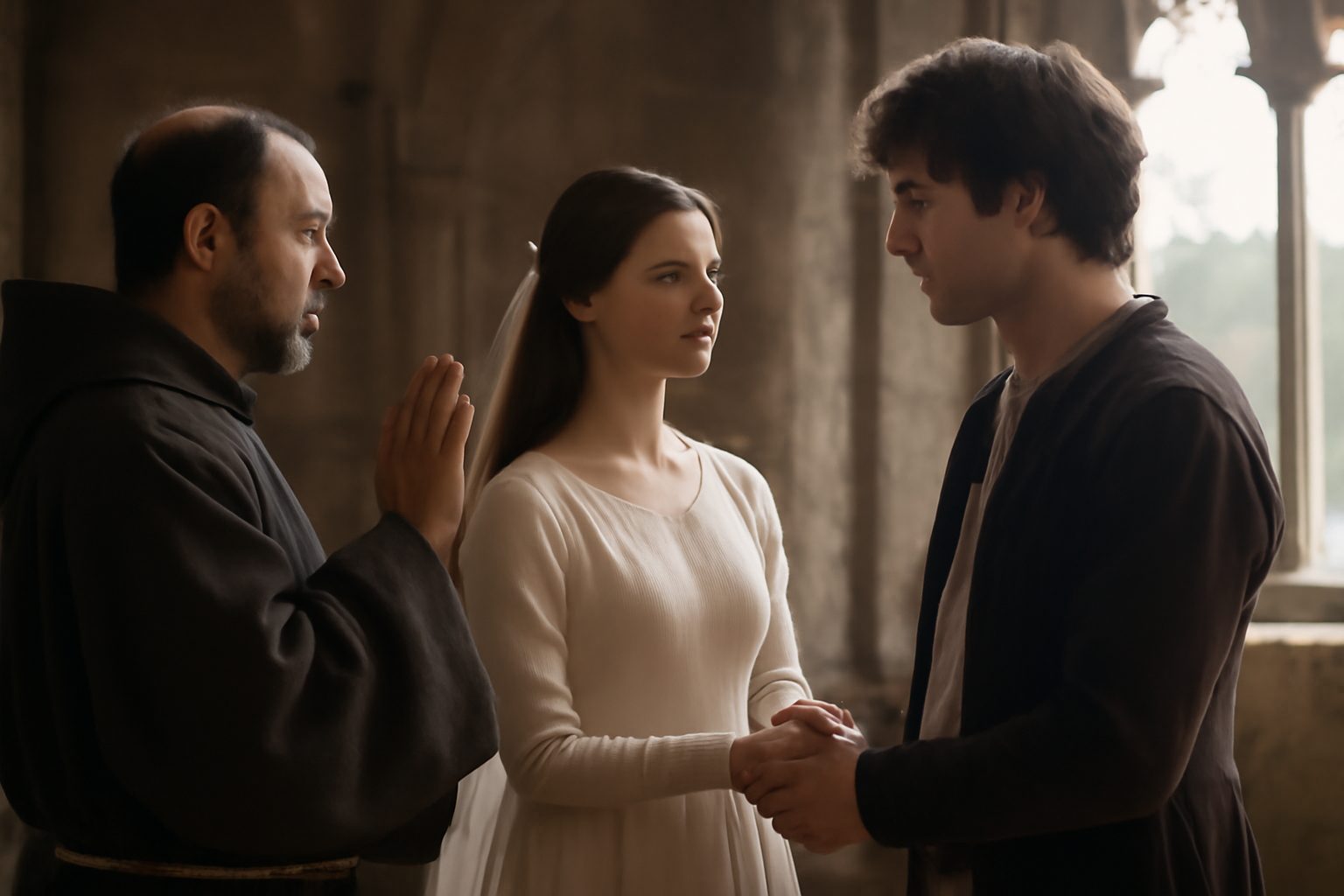
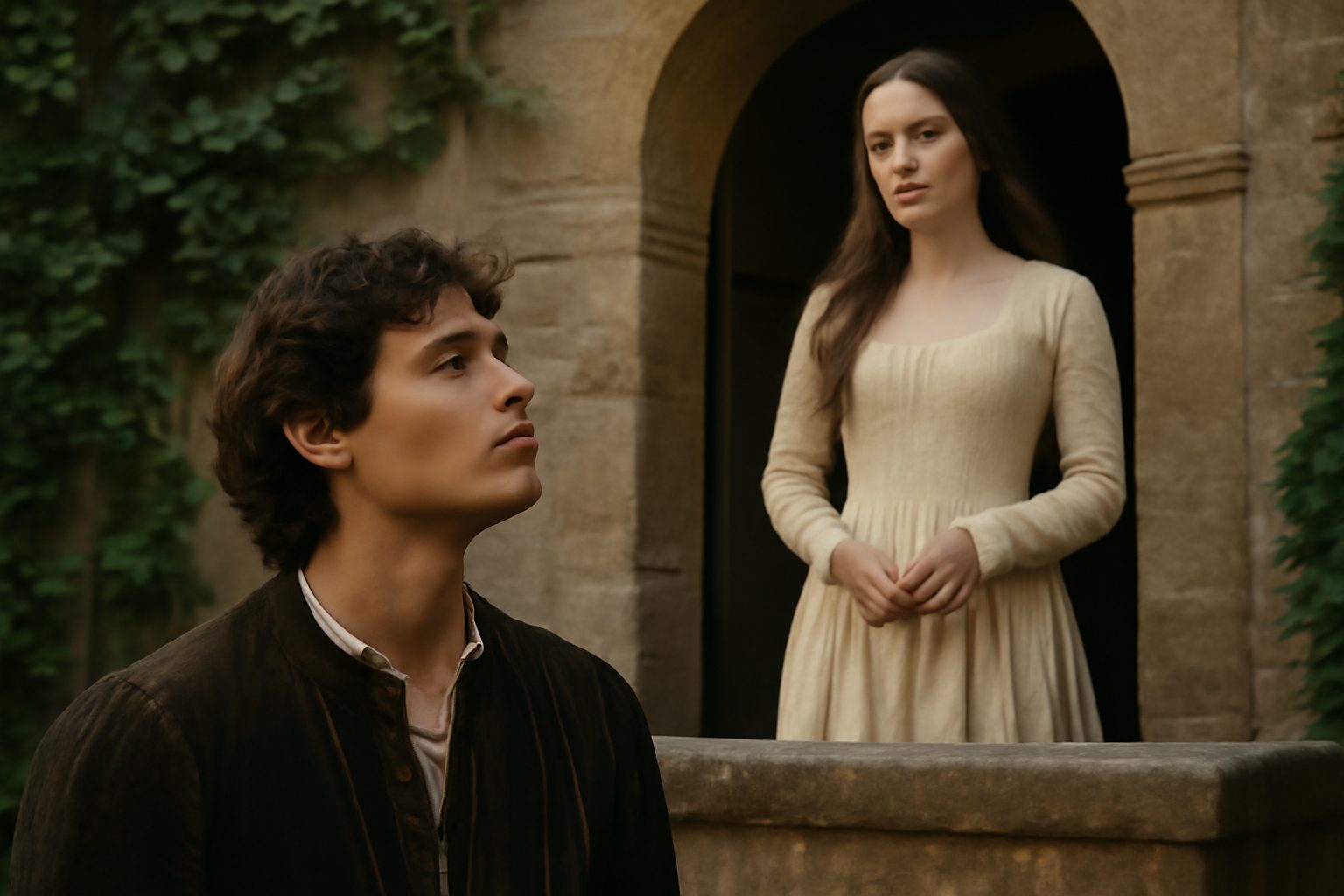
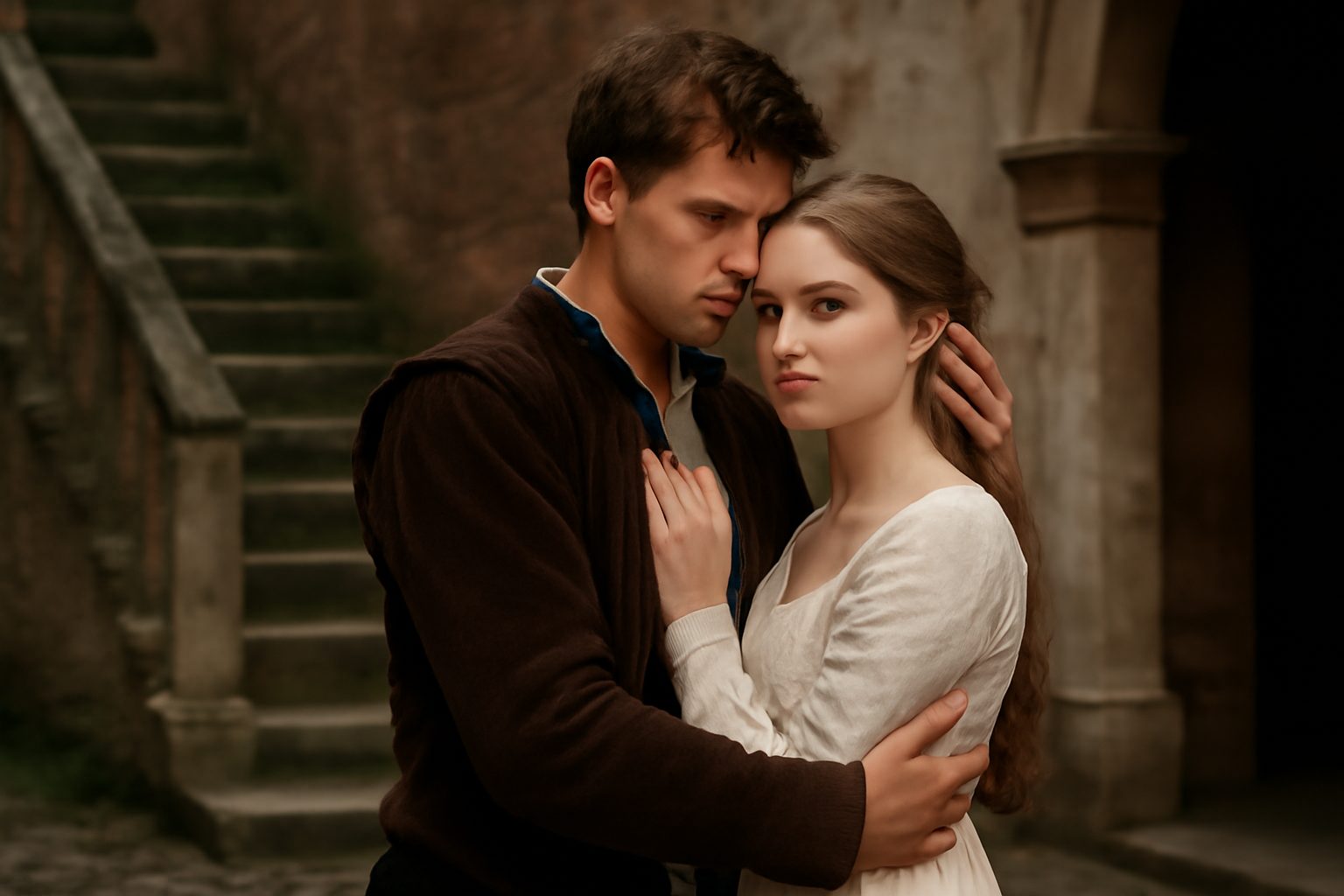
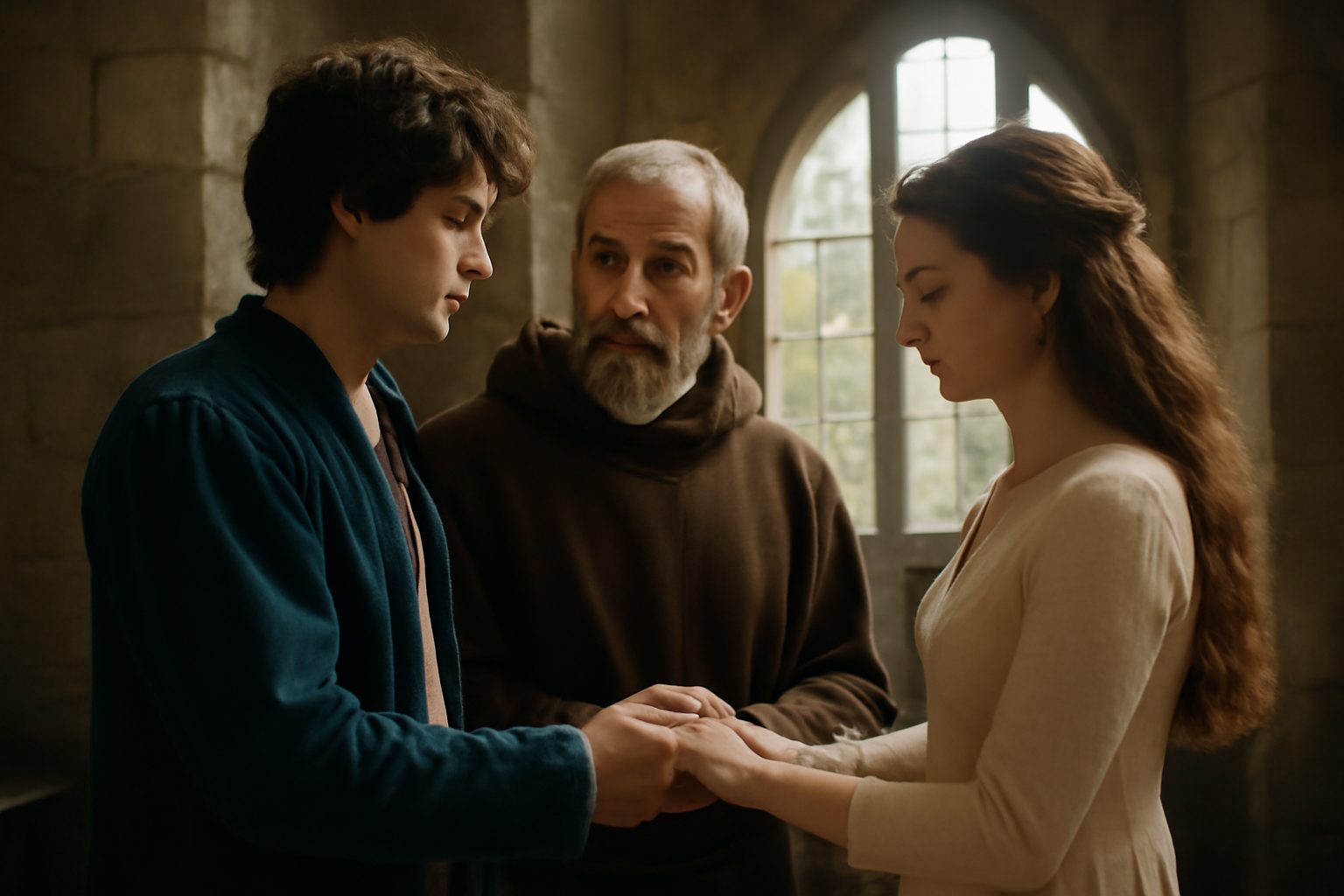
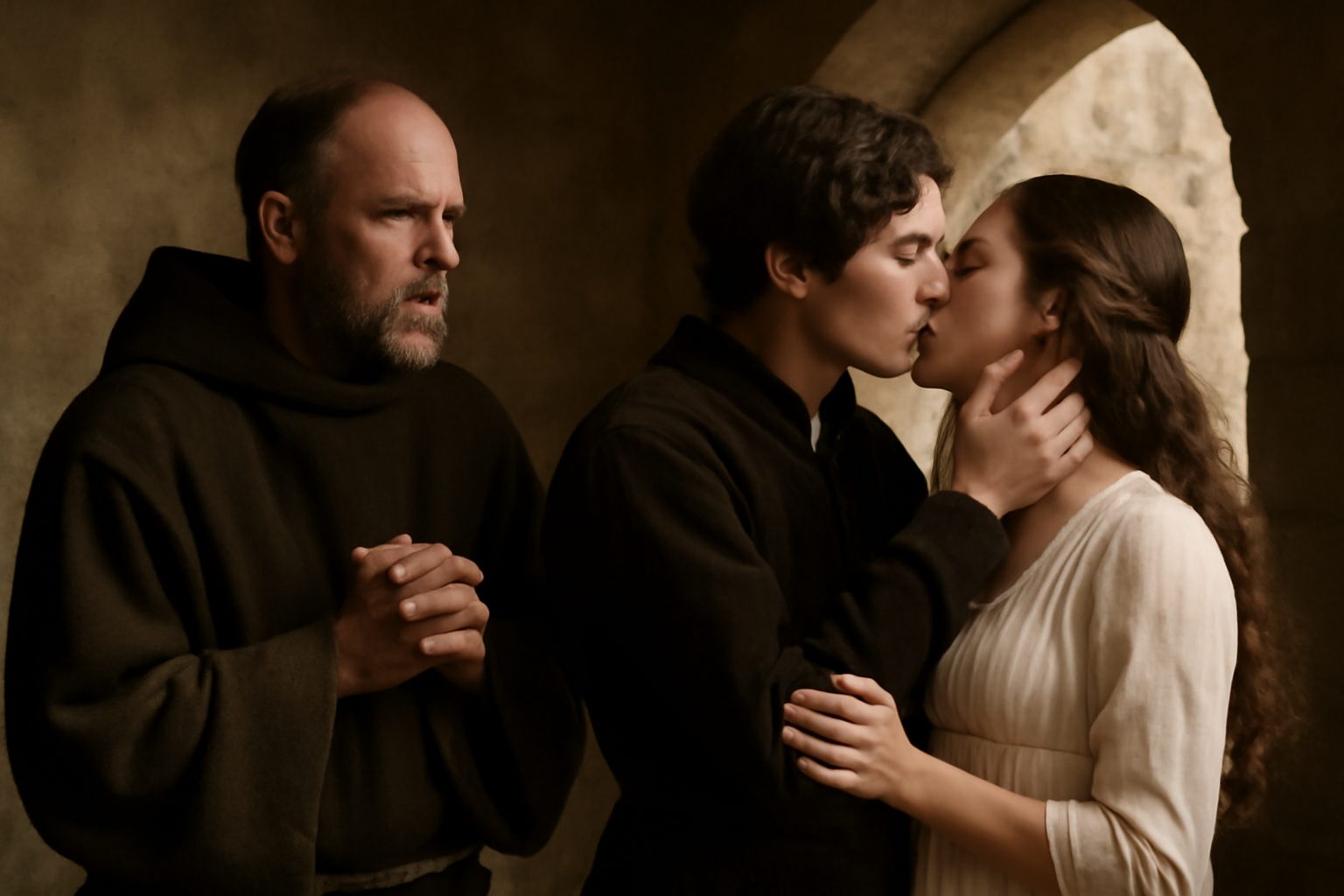
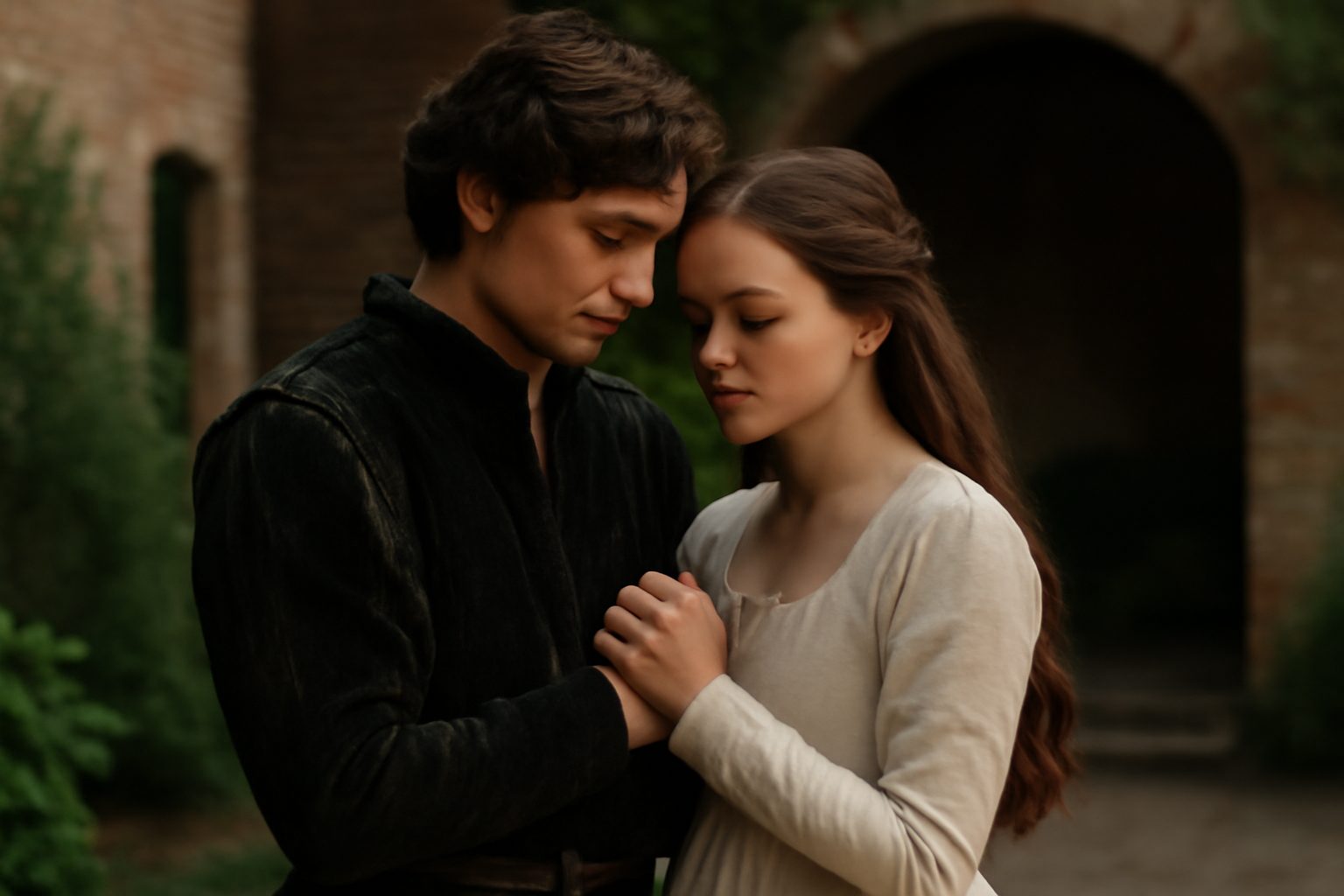
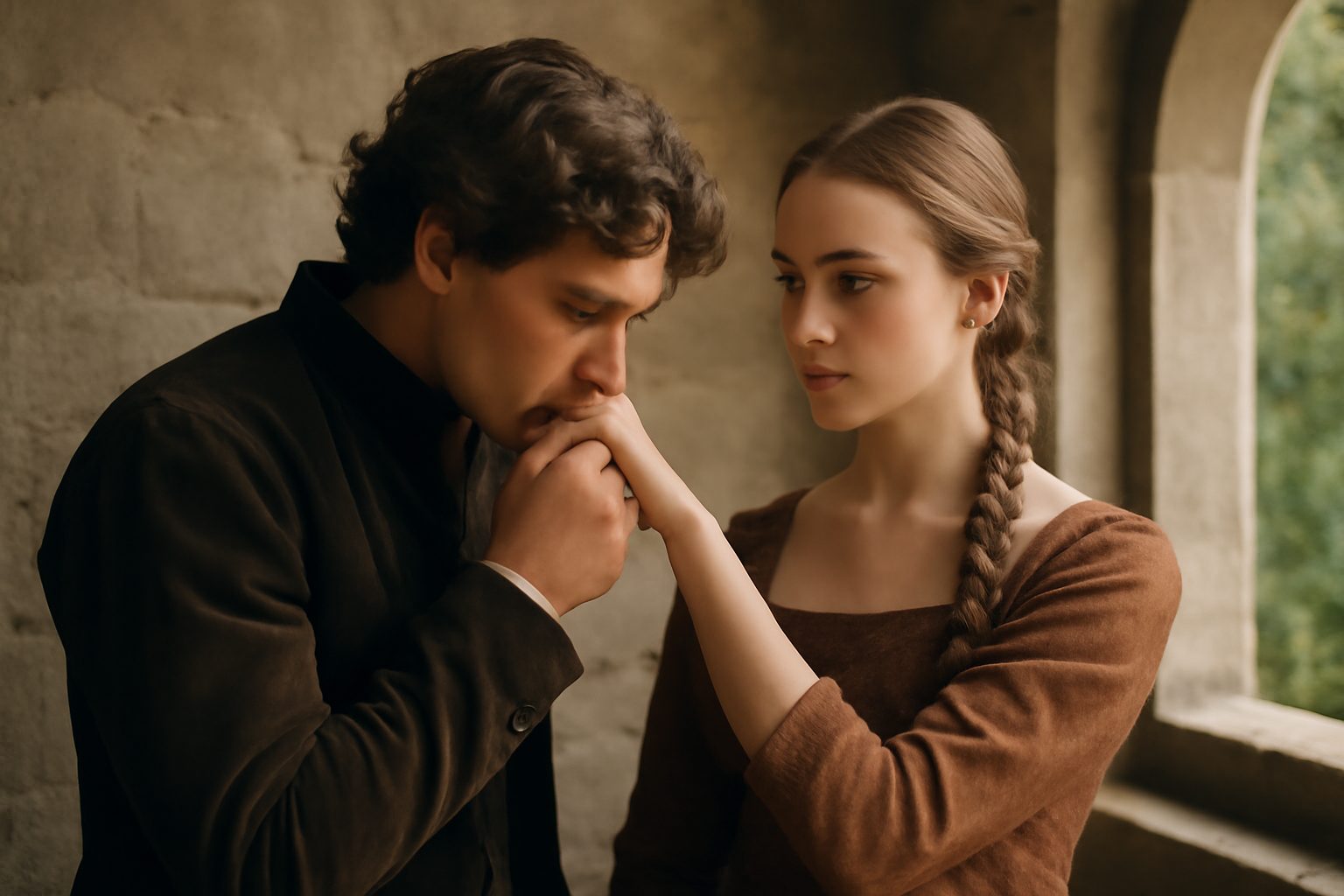
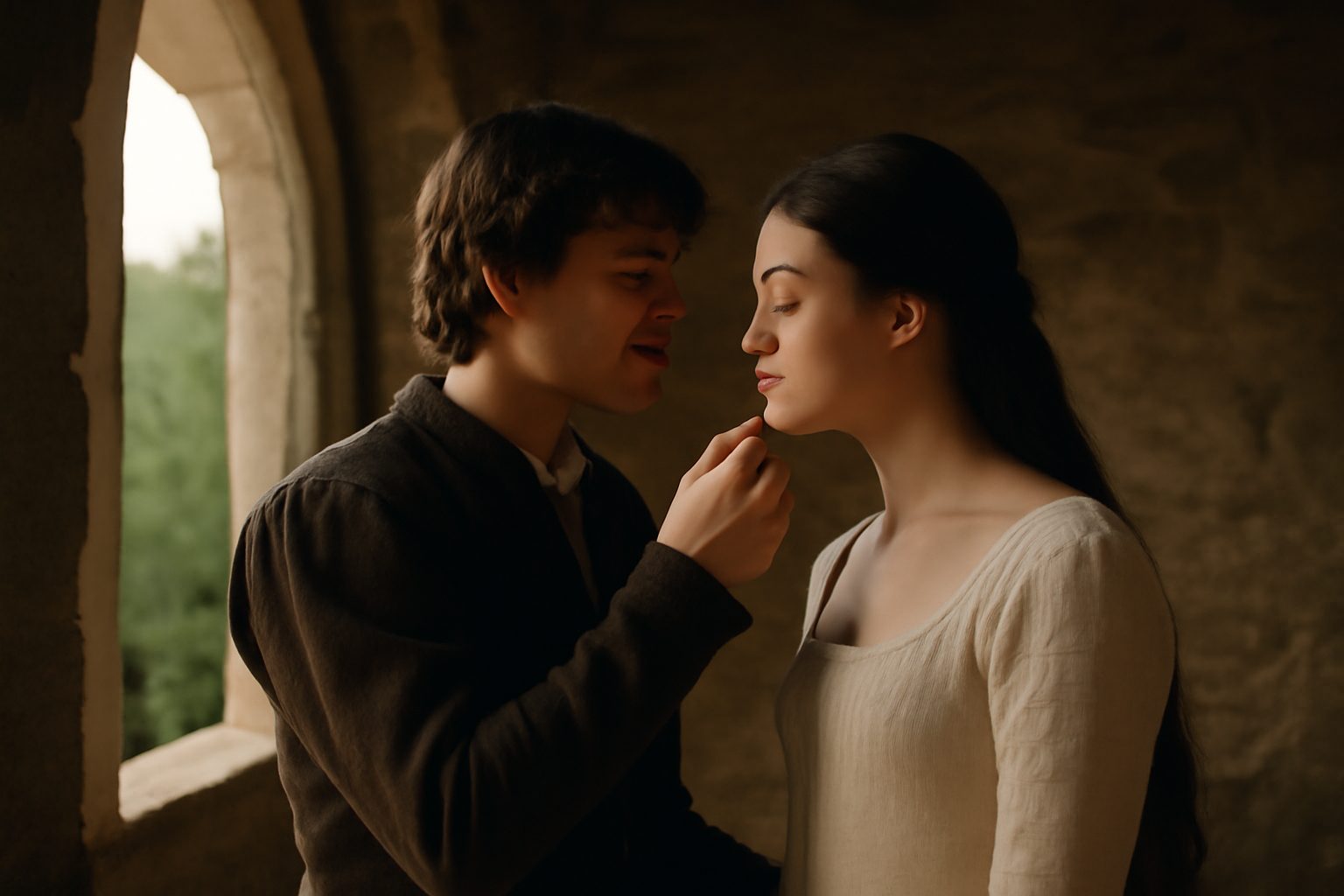
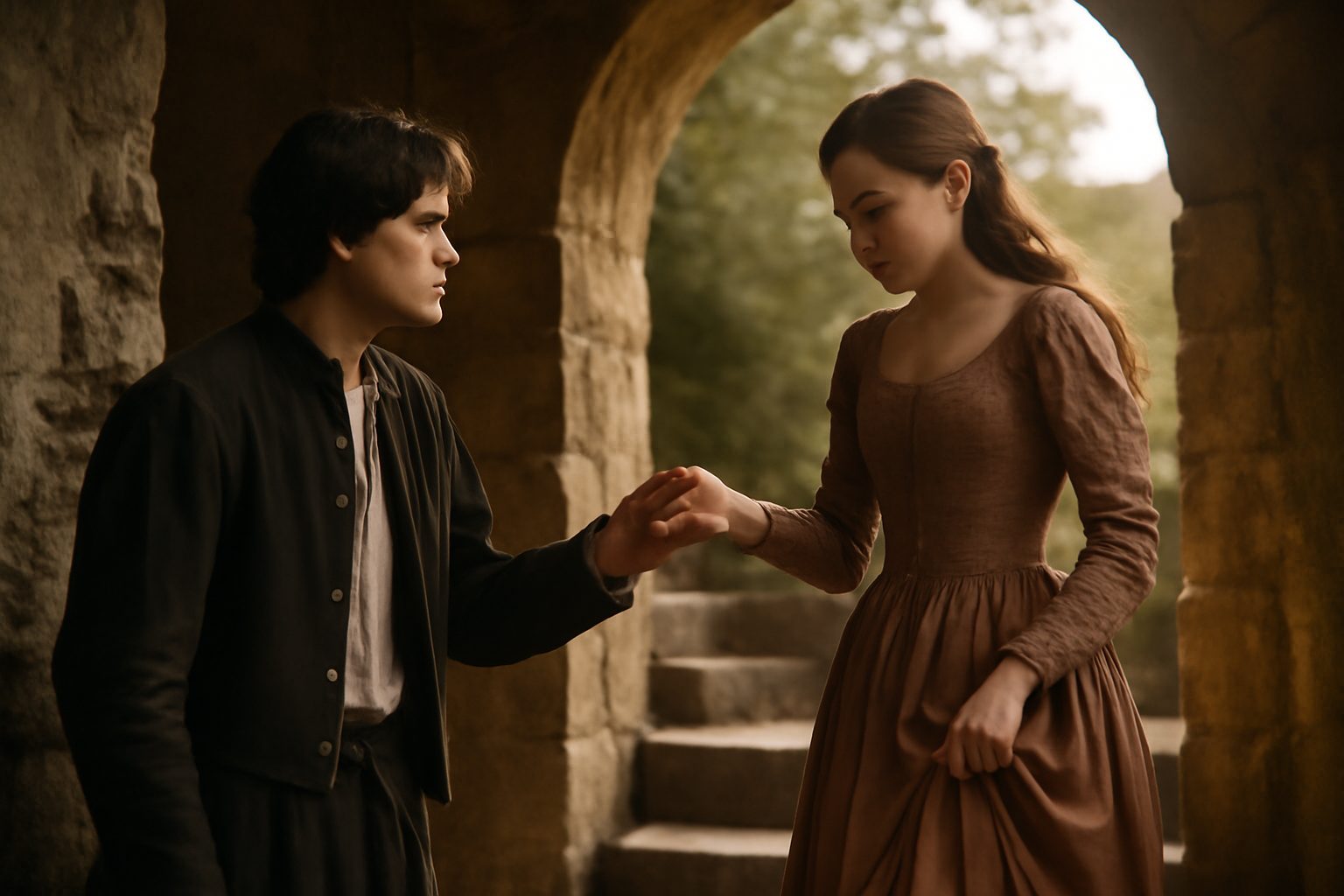
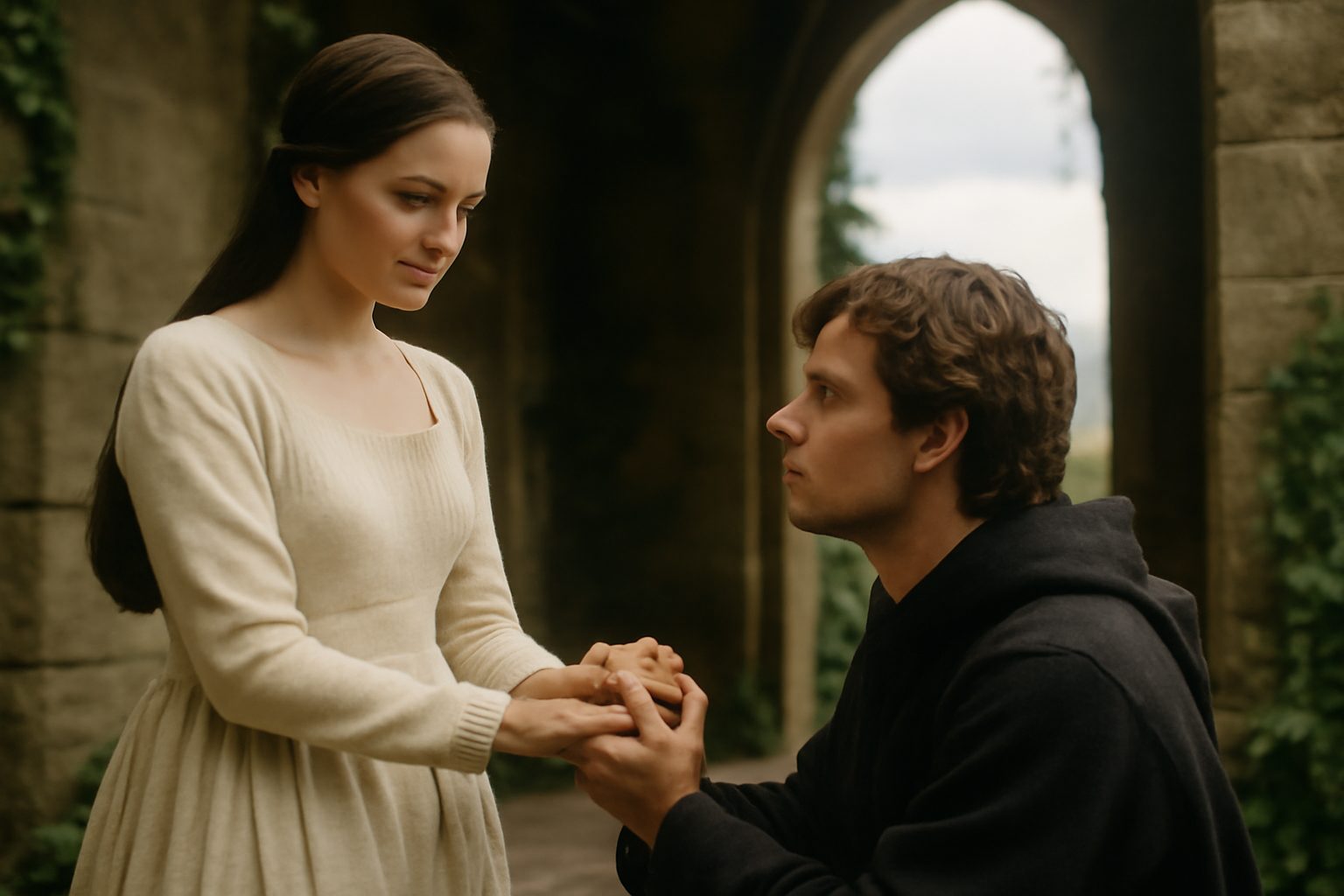
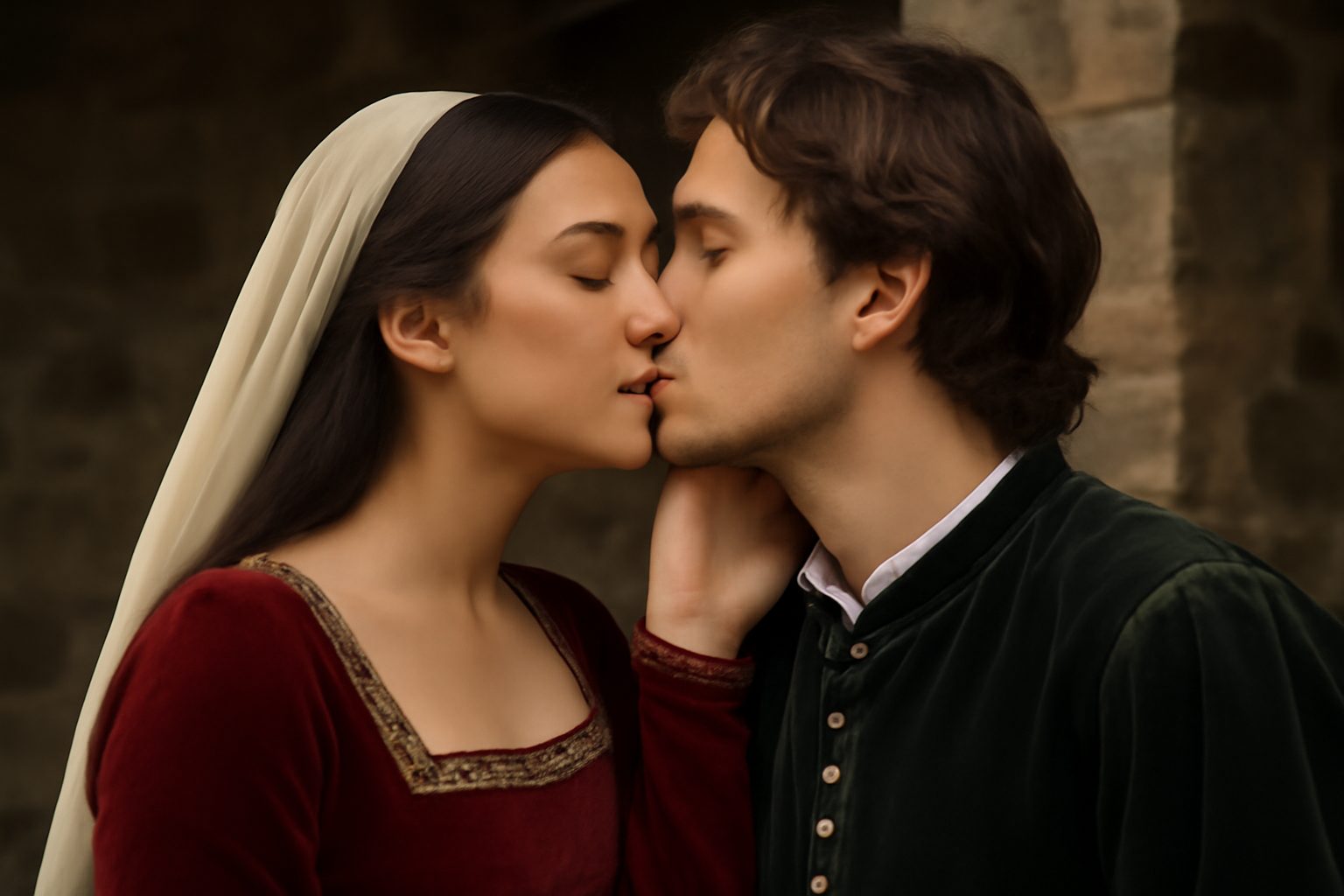
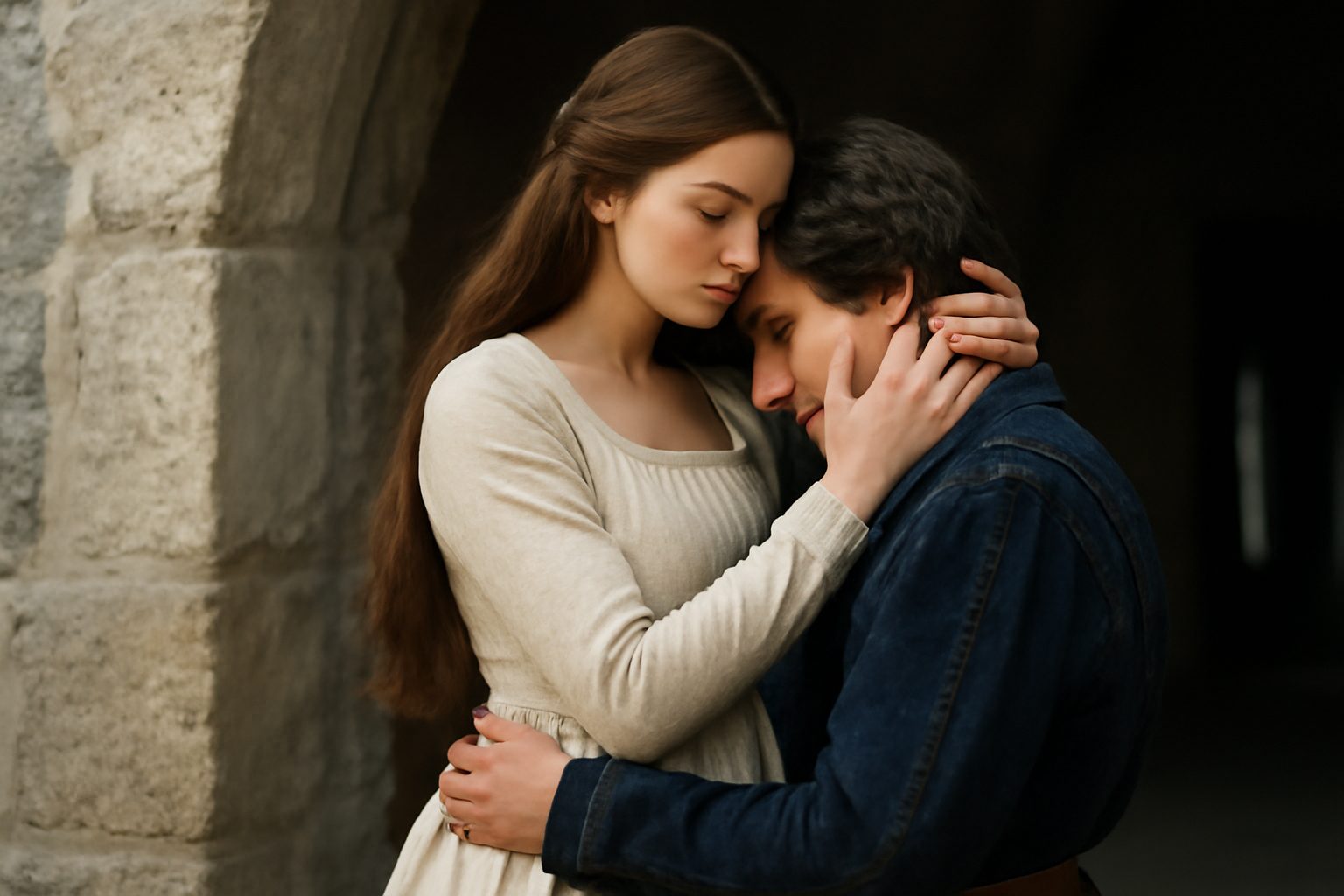
In Act 2, Scene 6 of Romeo and Juliet, Friar Laurence prepares to marry the two lovers in secret. This line reflects the Friar's hope that their union will dissolve the feud between their families by merging their identities into one. It captures the moment just before their wedding, blending religious solemnity with the urgency of their forbidden love.
Friar Laurence: "Till holy church incorporate two in one."
In modern day english, we would say:
Until the wedding ceremony joins us together as one.
Frequently Asked Questions
What does Friar Laurence mean when he says that the church will join two people into one?
He is referring to the marriage ceremony where Romeo and Juliet will be united as a married couple in the eyes of the church.
Connections to other verses:
Connections to "Till holy church incorporate two in one"
The verse "Till holy church incorporate two in one" refers to the sacred union of marriage, where Romeo and Juliet become one through the church's rites. This idea of unity is echoed in other parts of the scene, emphasizing both the spiritual and emotional merging of the lovers.
Spiritual and Ceremonial Unity
Friar Laurence's role in uniting the couple is highlighted in "Do thou but close our hands with holy words", where Romeo asks the Friar to officiate their union with sacred language. This directly precedes the incorporation of the two into one, reinforcing the ceremonial aspect of their bond.
Emotional and Metaphysical Oneness
The theme of two becoming one is also reflected in the emotional intensity of their love. In "Receive in either by this dear encounter", the idea of mutual exchange and shared experience underscores their interconnectedness, much like the union sanctified by the church.
Contrast with Warnings of Excess
Interestingly, the Friar's caution in "Therefore love moderately; long love doth so" serves as a counterpoint to the intense unity described. While the marriage unites them, the Friar warns that excessive passion can lead to downfall, adding depth to the idea of incorporation by hinting at its potential fragility.
Joy and Sorrow in Union
Romeo’s declaration in "Amen, amen! but come what sorrow can" shows his willingness to embrace any sorrow for the joy of their union, tying the idea of becoming one to a defiance of future hardships, which the church’s blessing seeks to sanctify and protect.
Conclusion of the Ceremony
The scene culminates with the Friar’s directive in "Come, come with me, and we will make short work", urging them to complete the marriage quickly. This practical action aligns with the spiritual incorporation, ensuring their union is both ceremonially and legally affirmed.