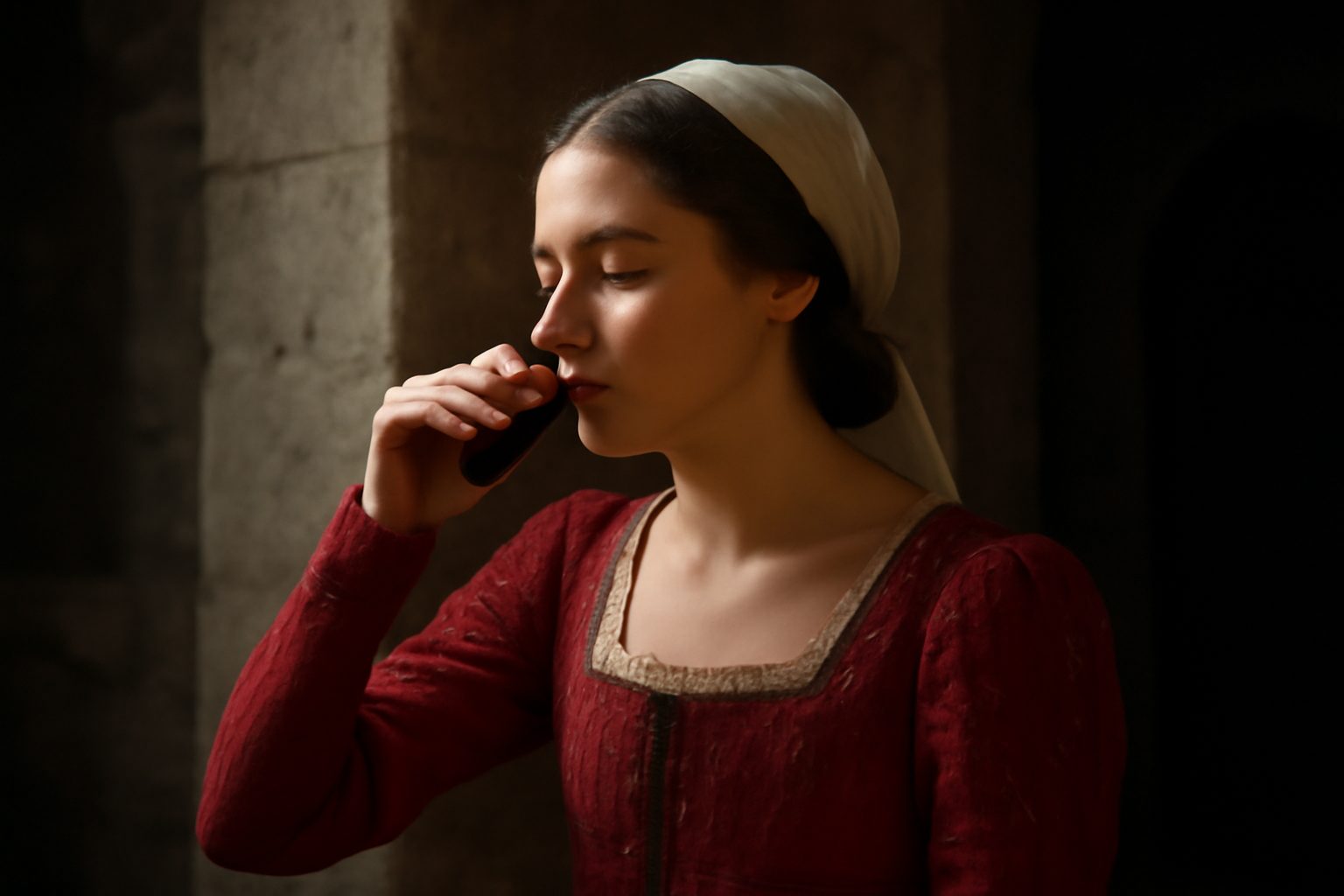
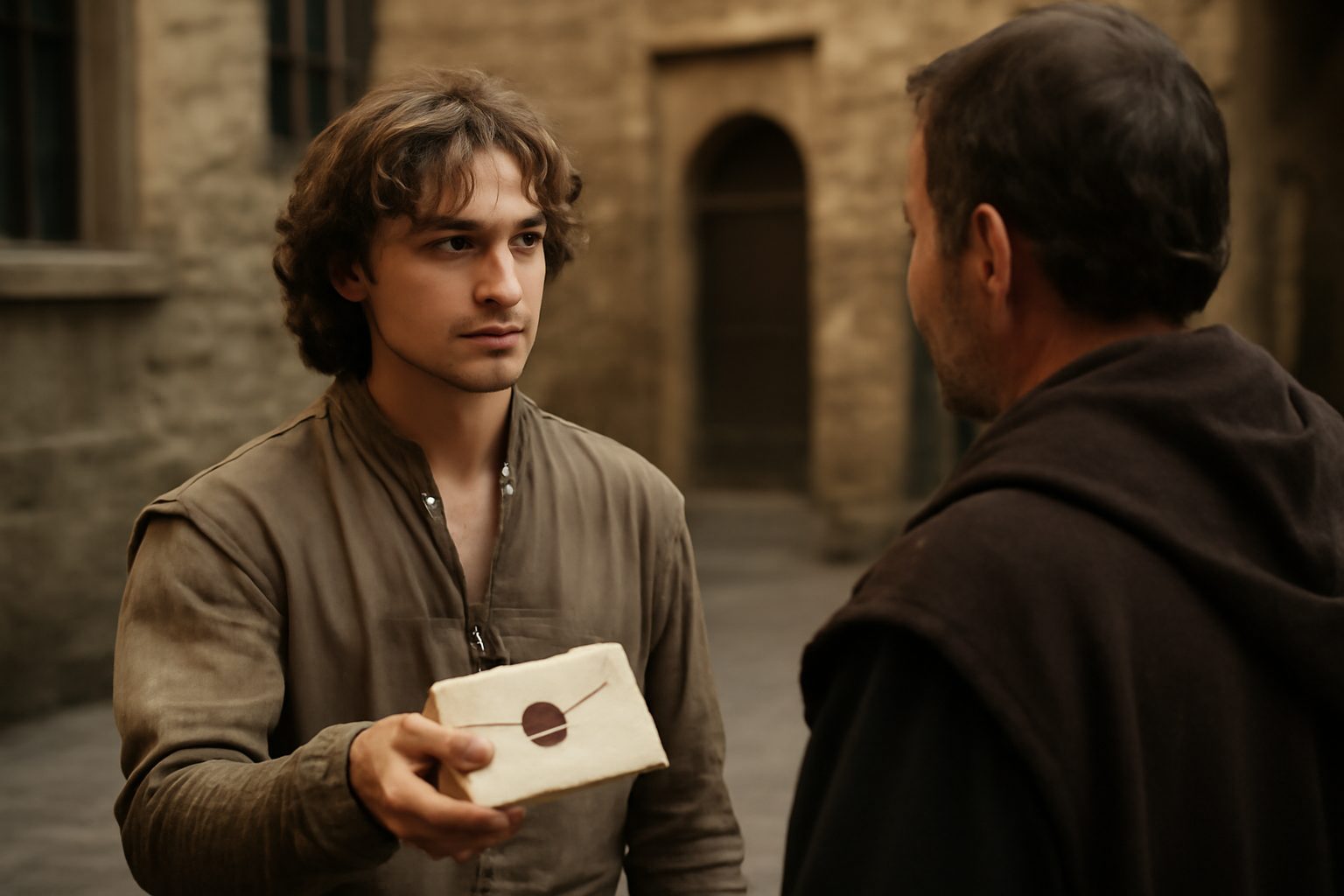
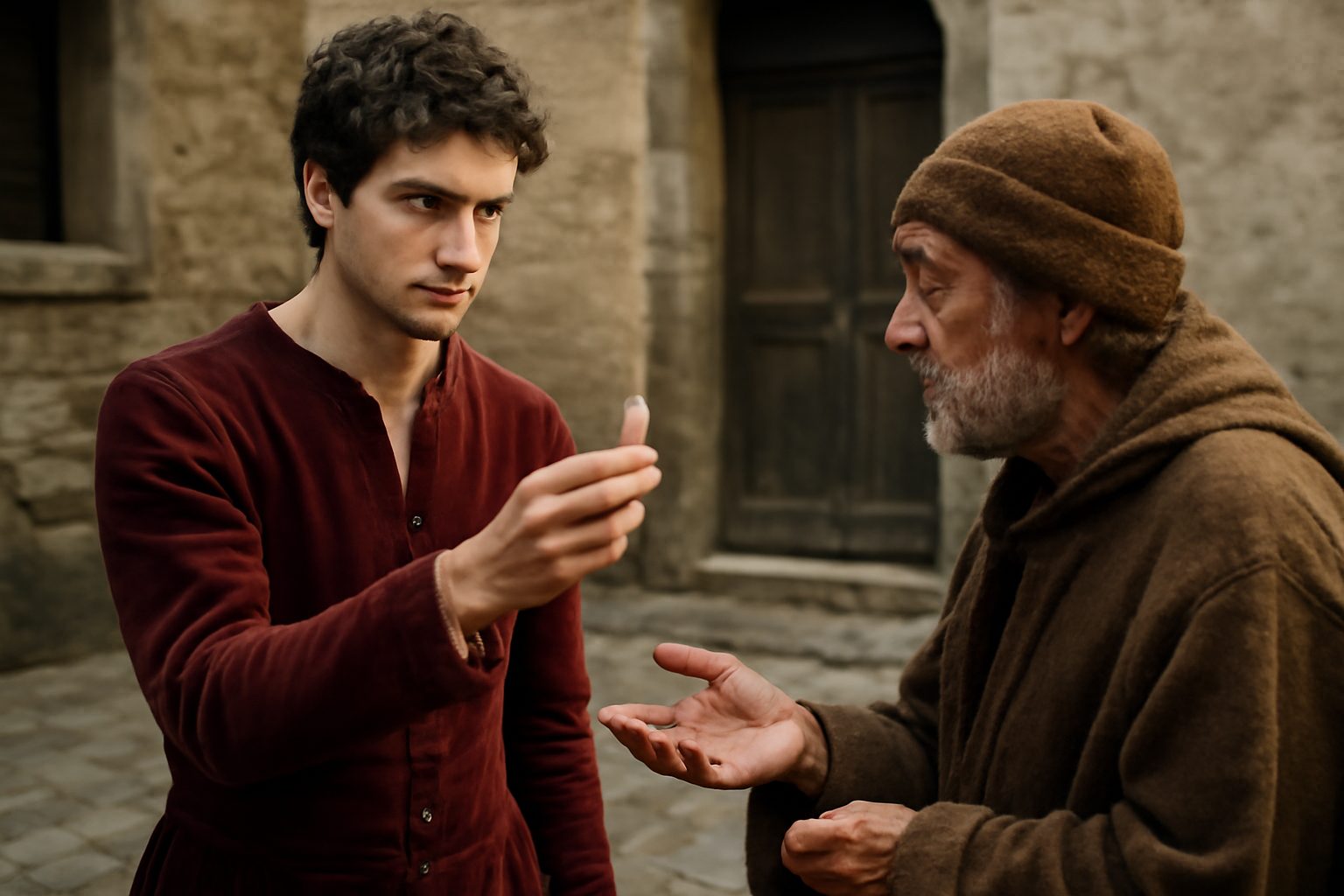
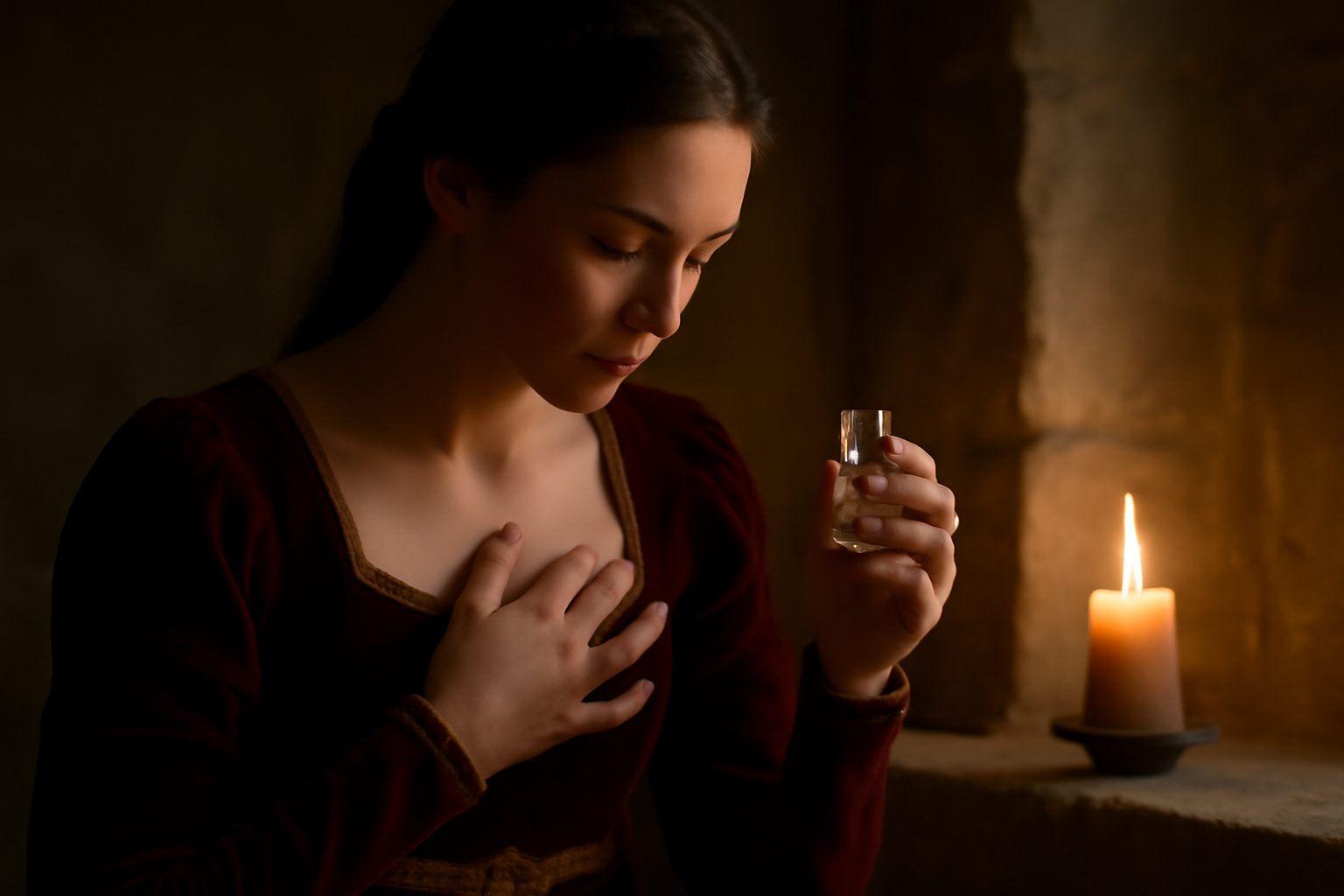
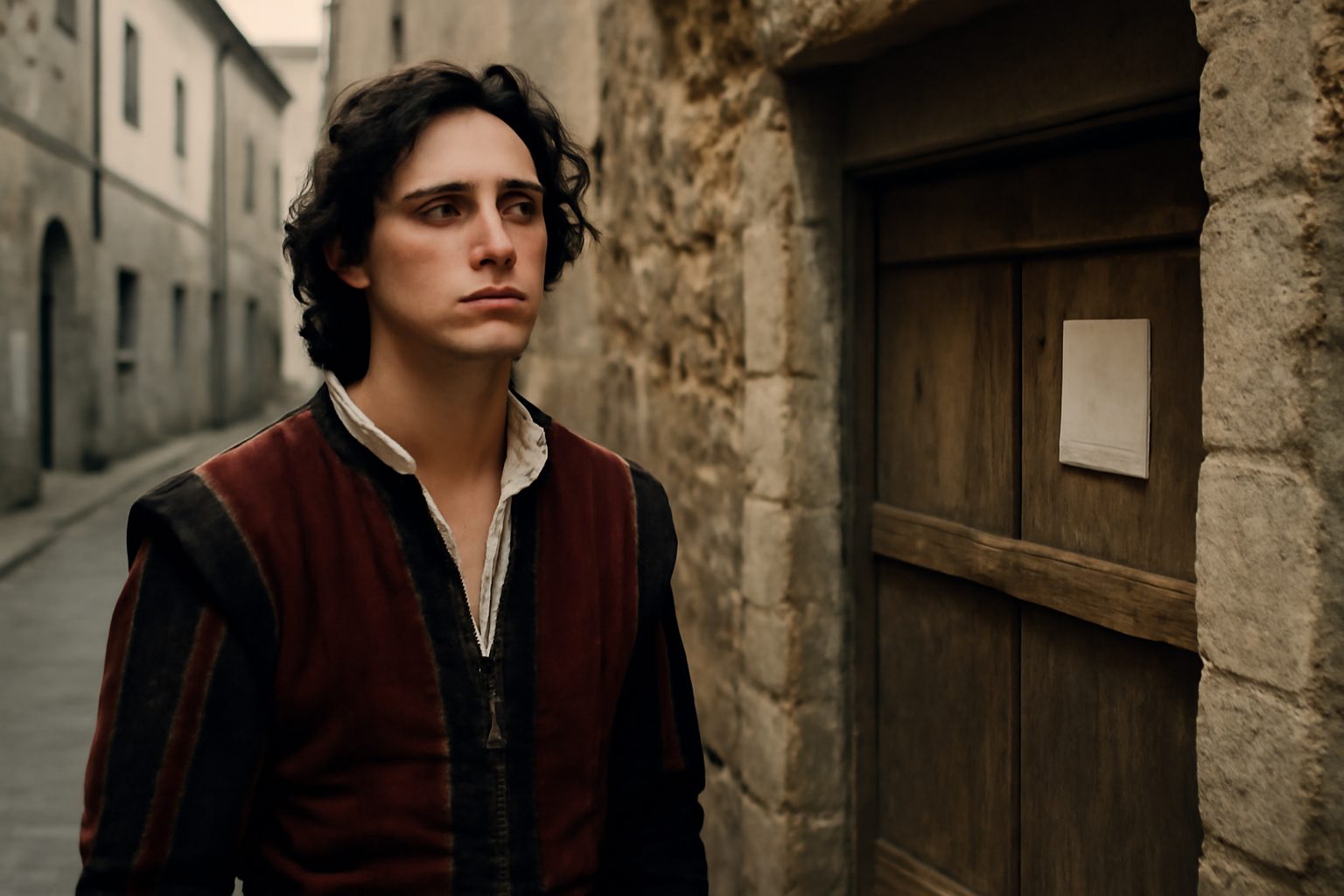
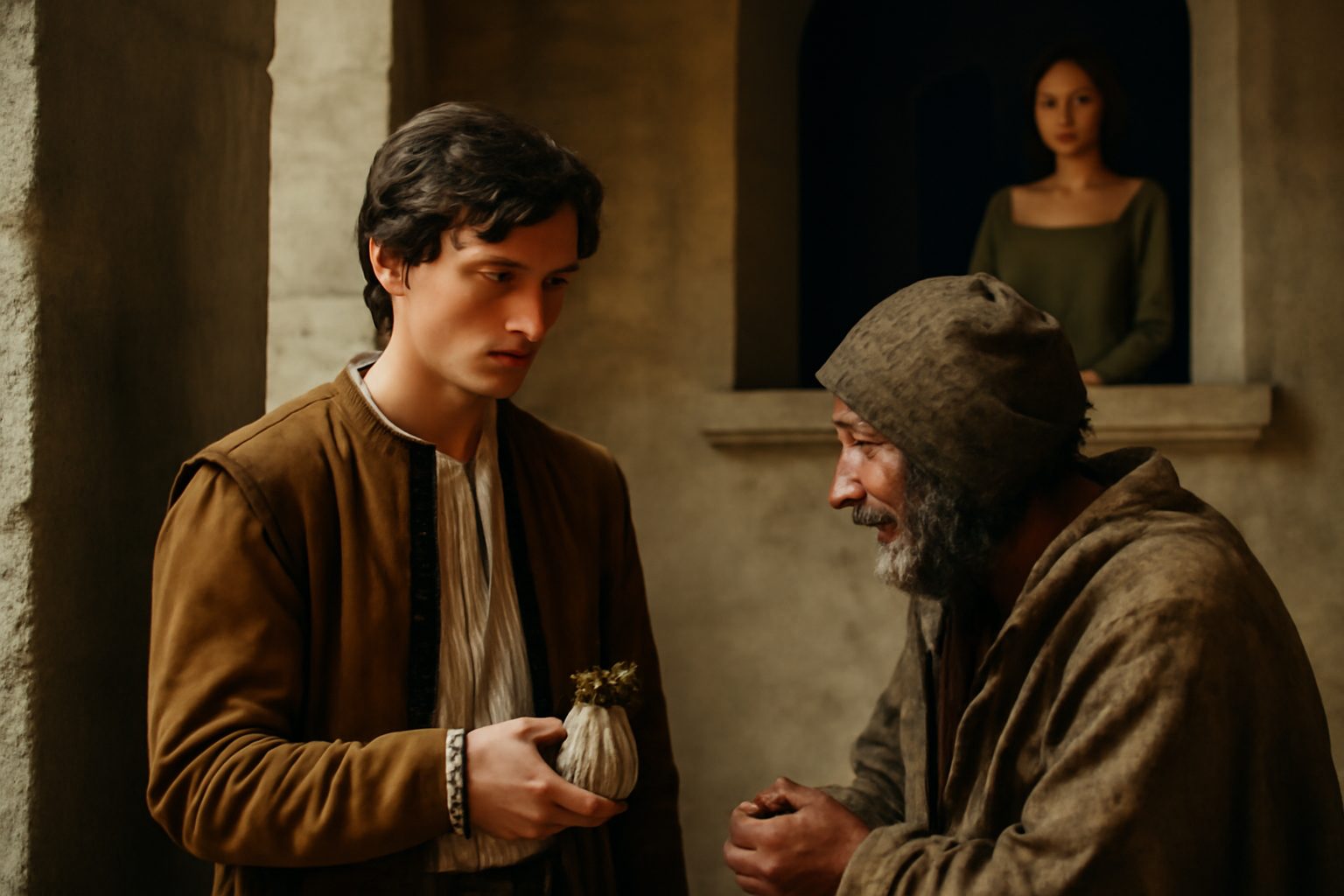
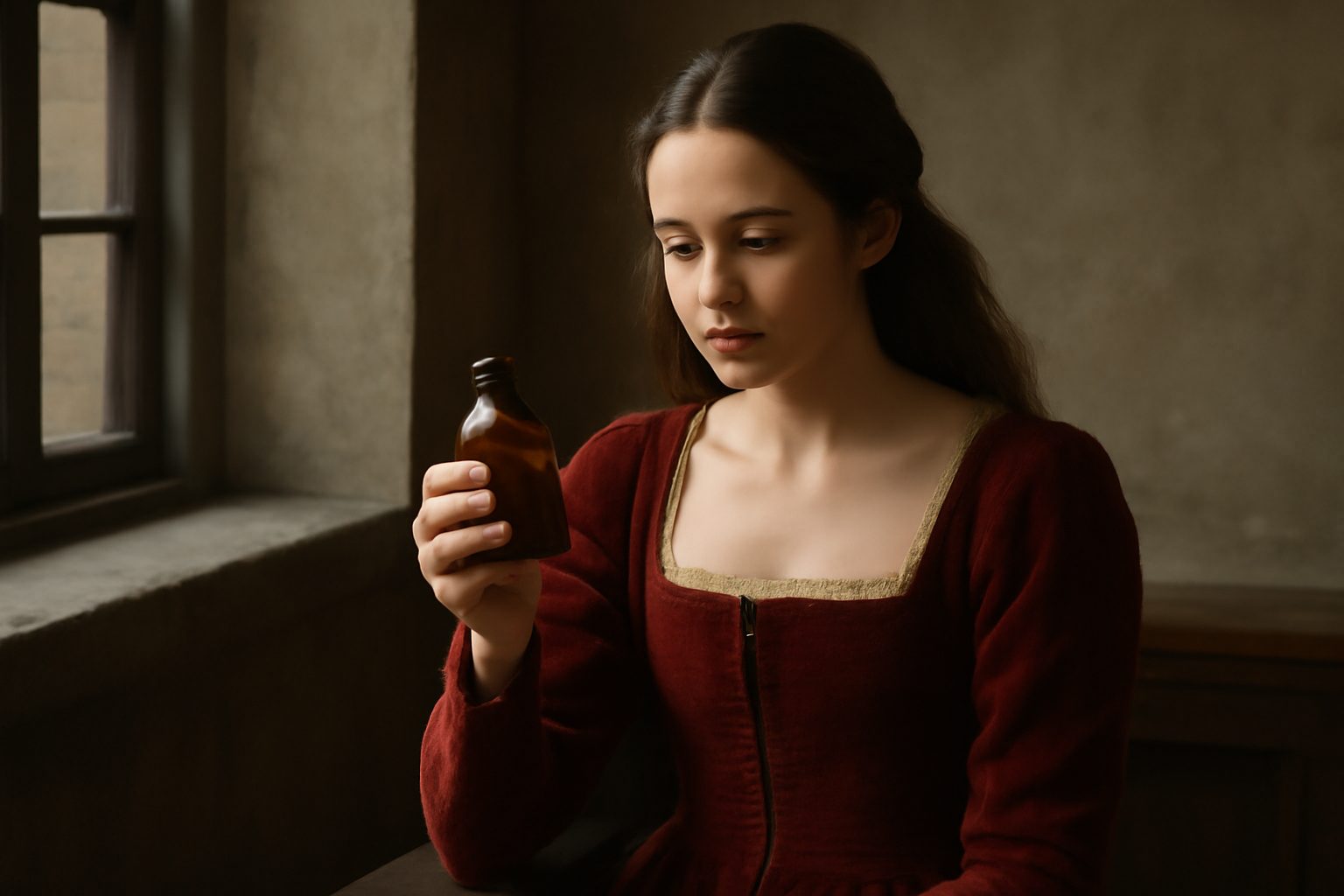
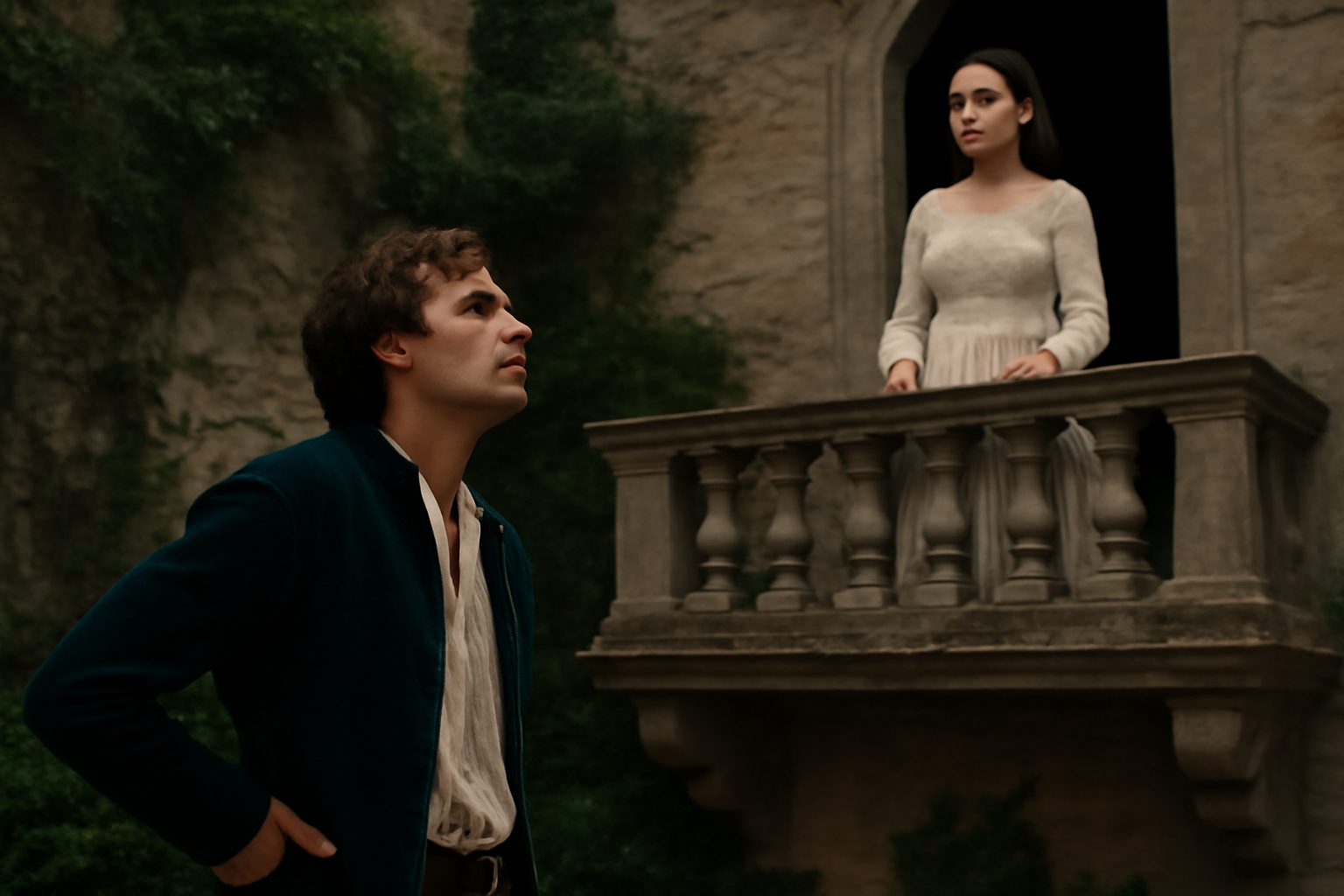
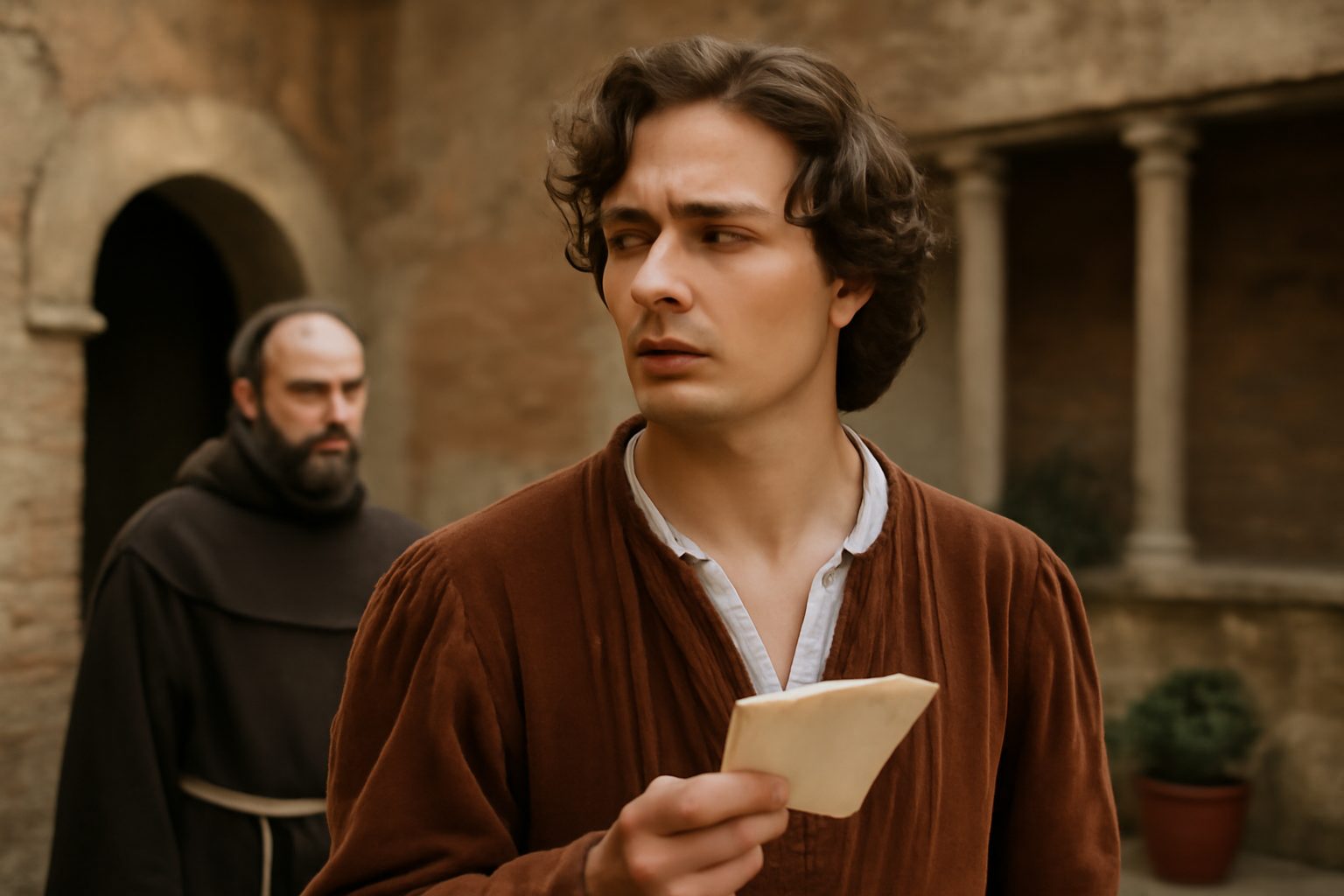
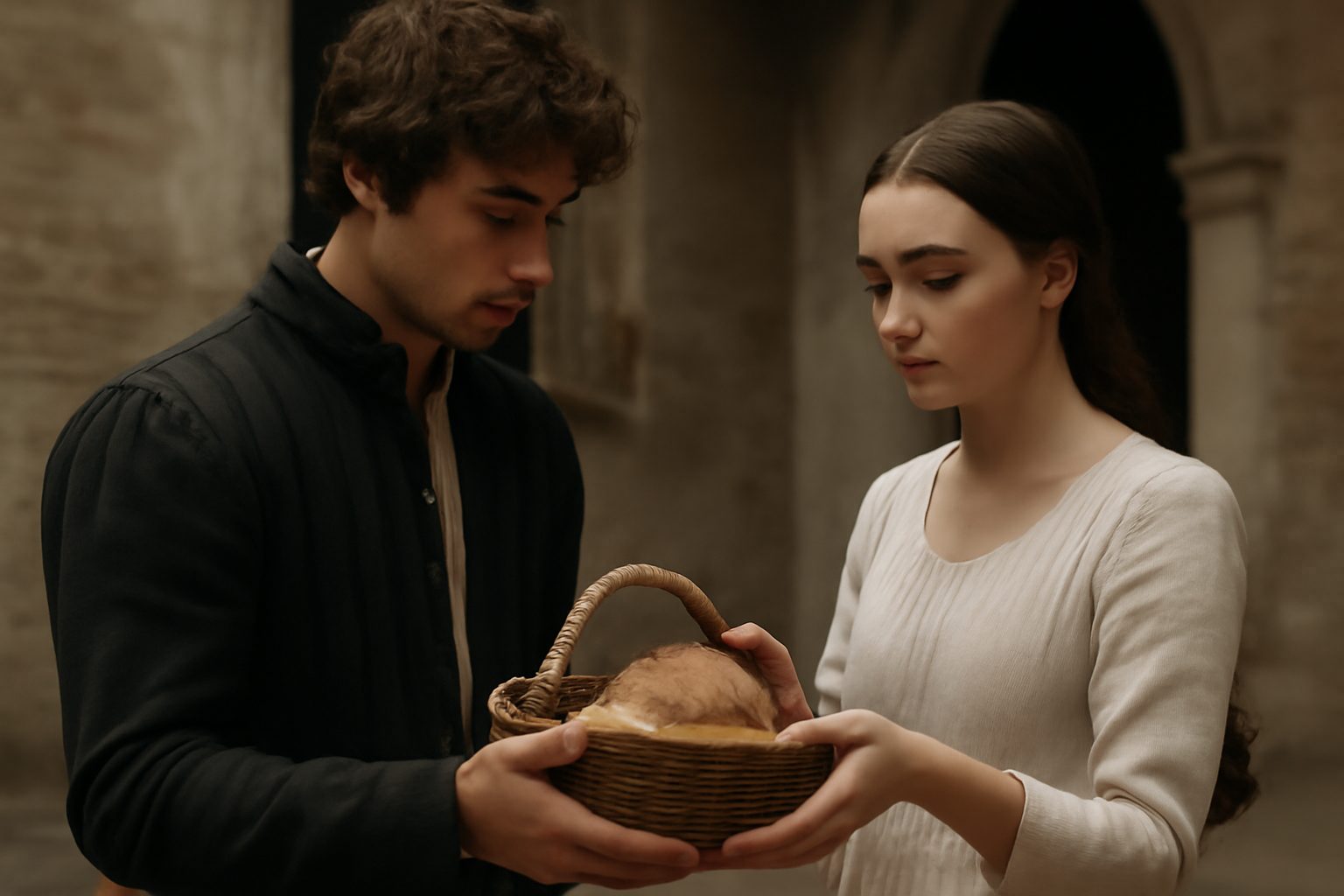
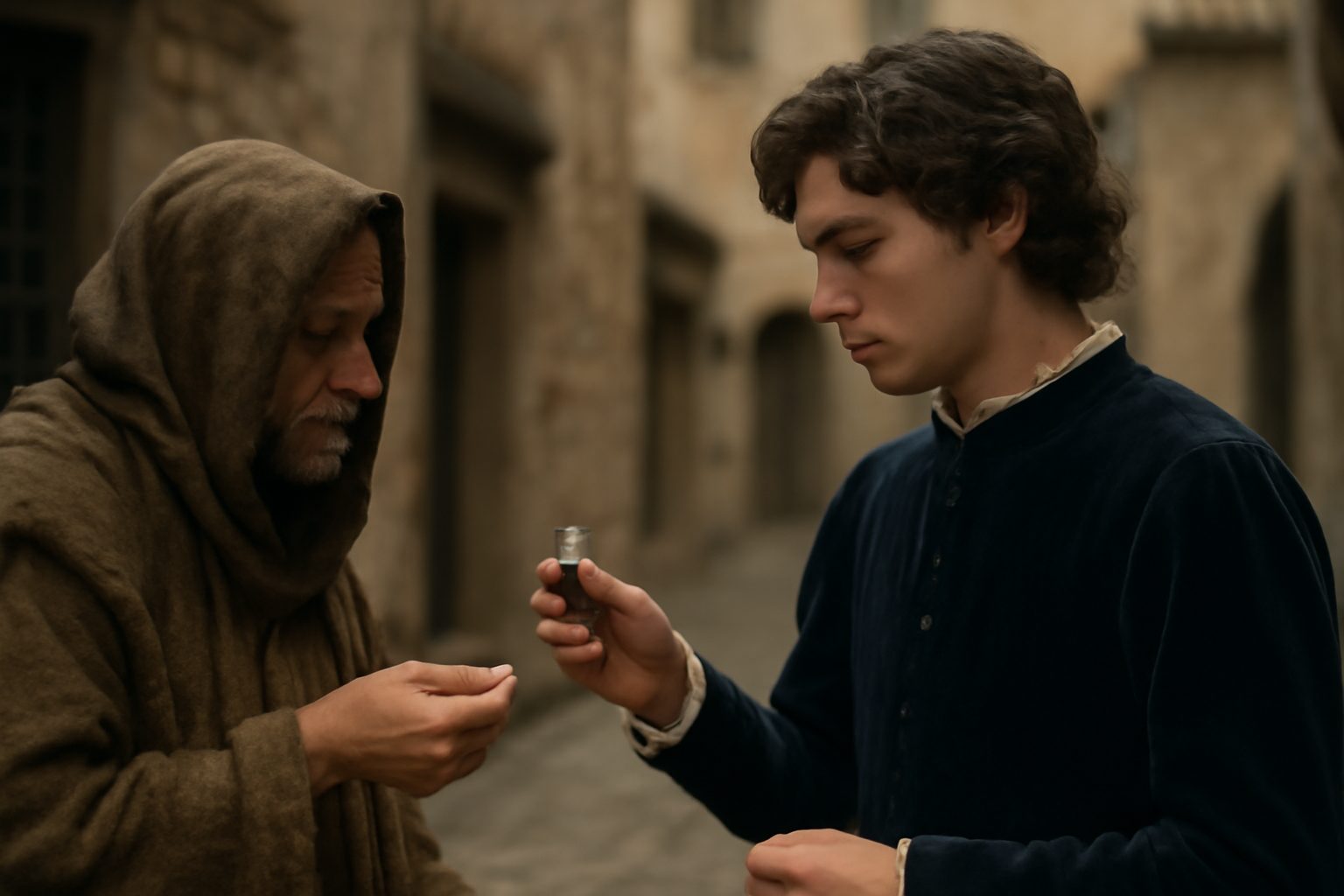
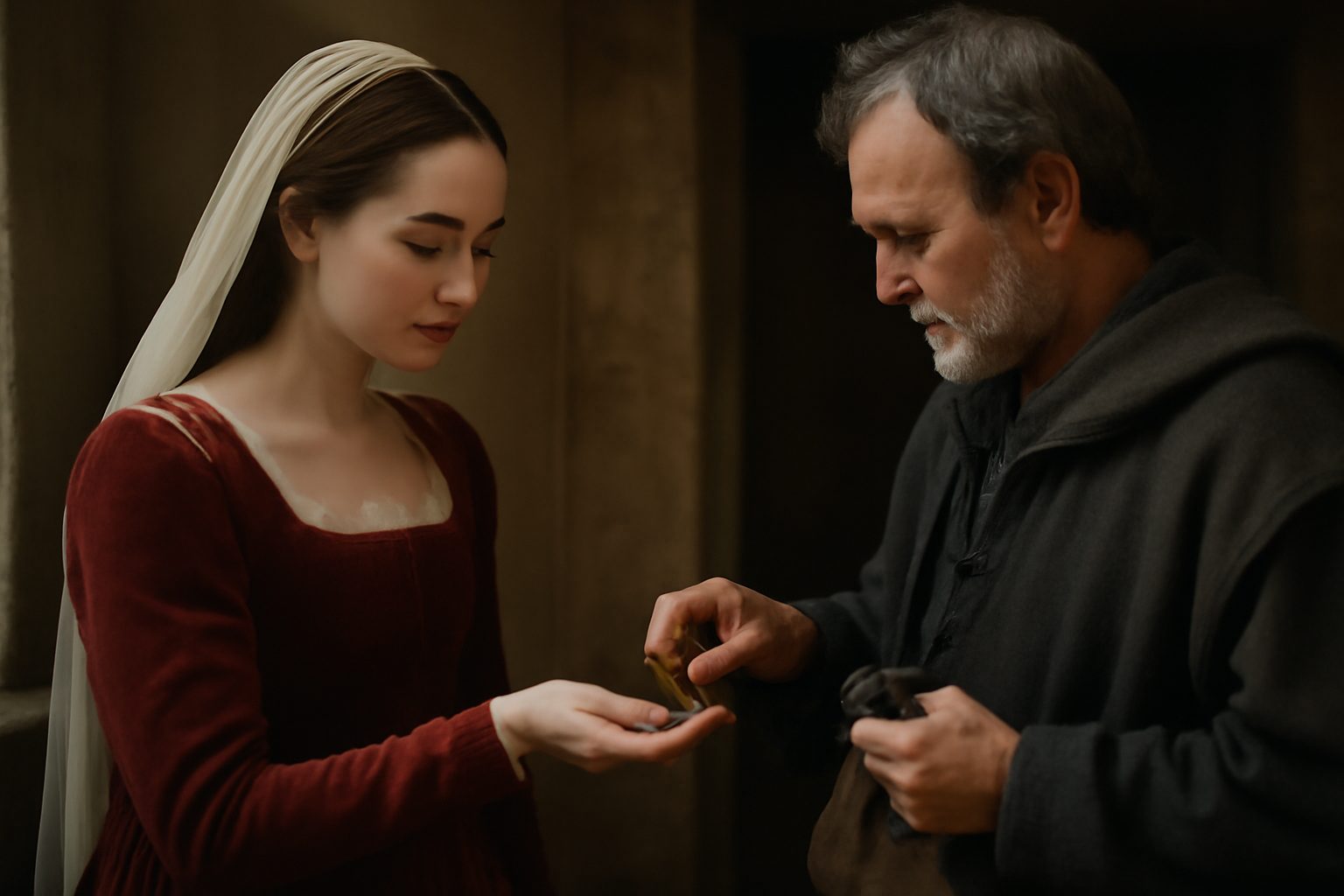
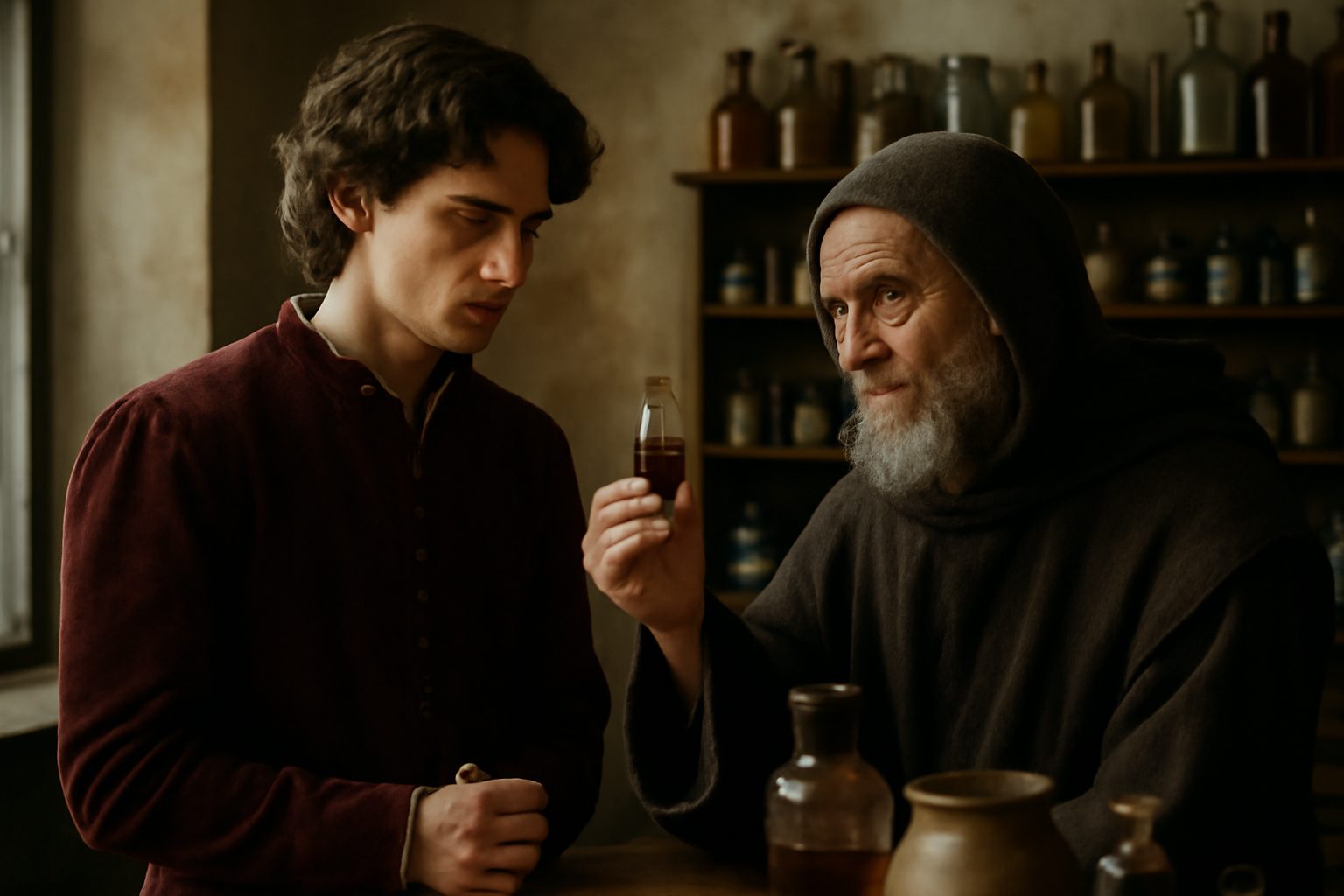
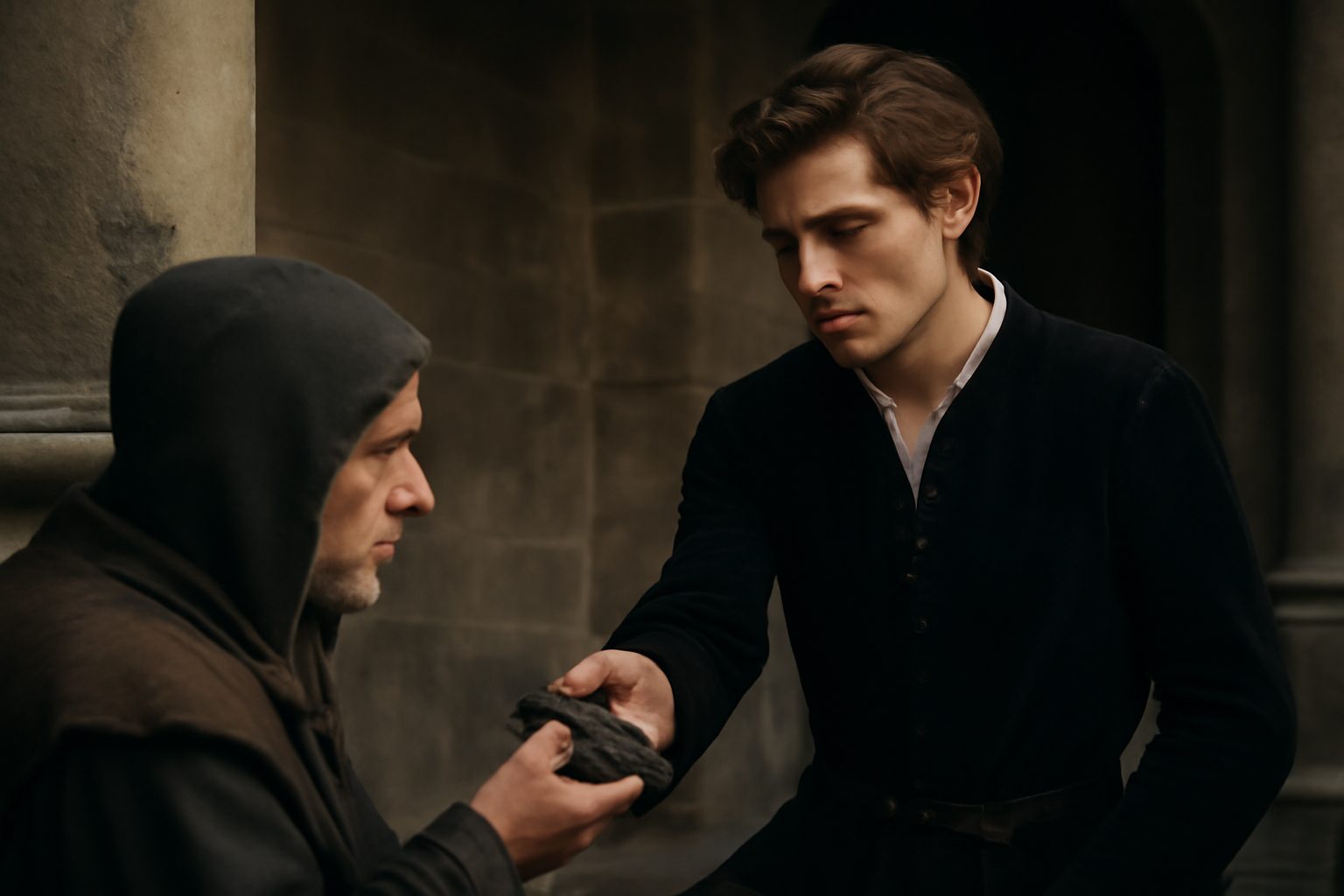
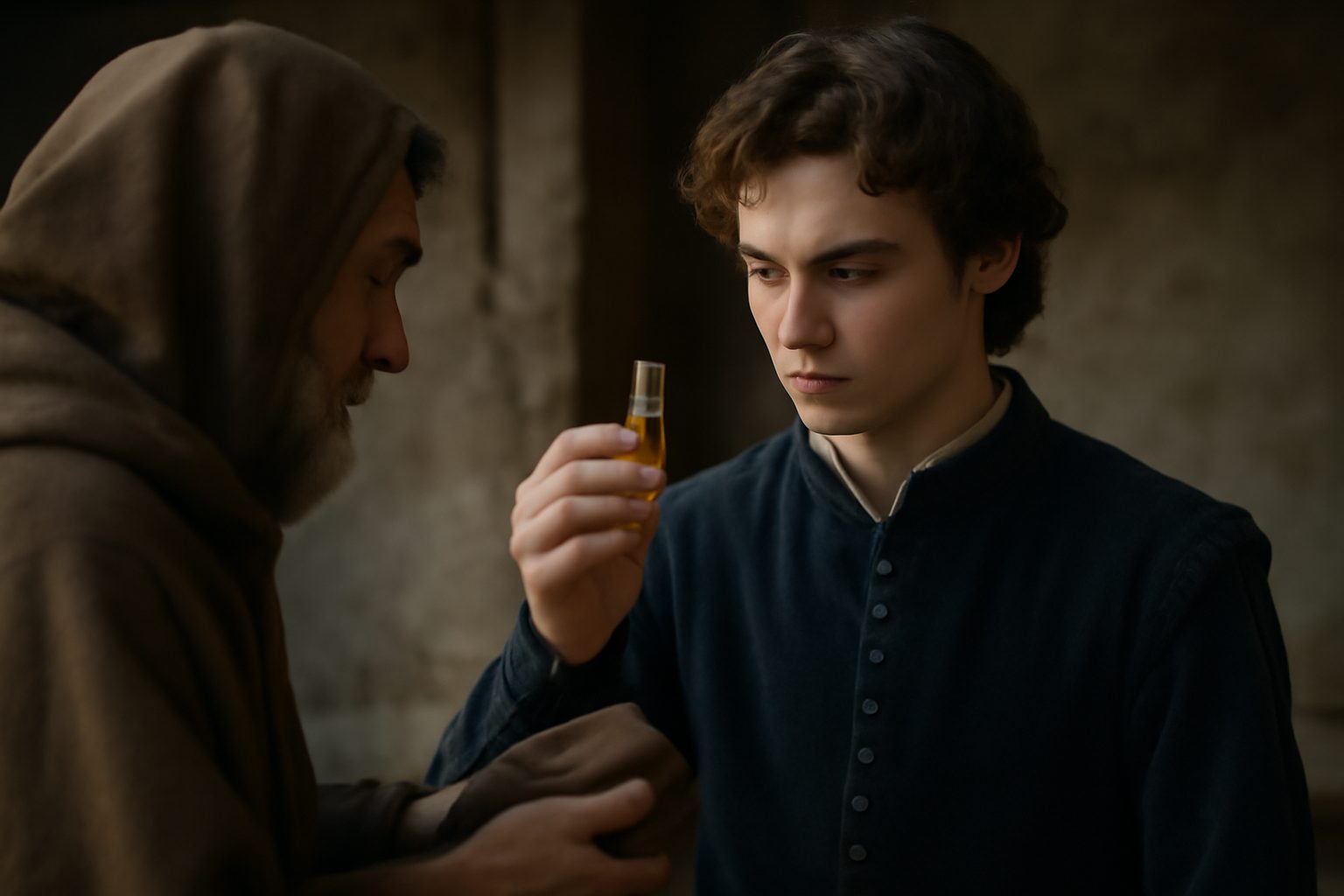
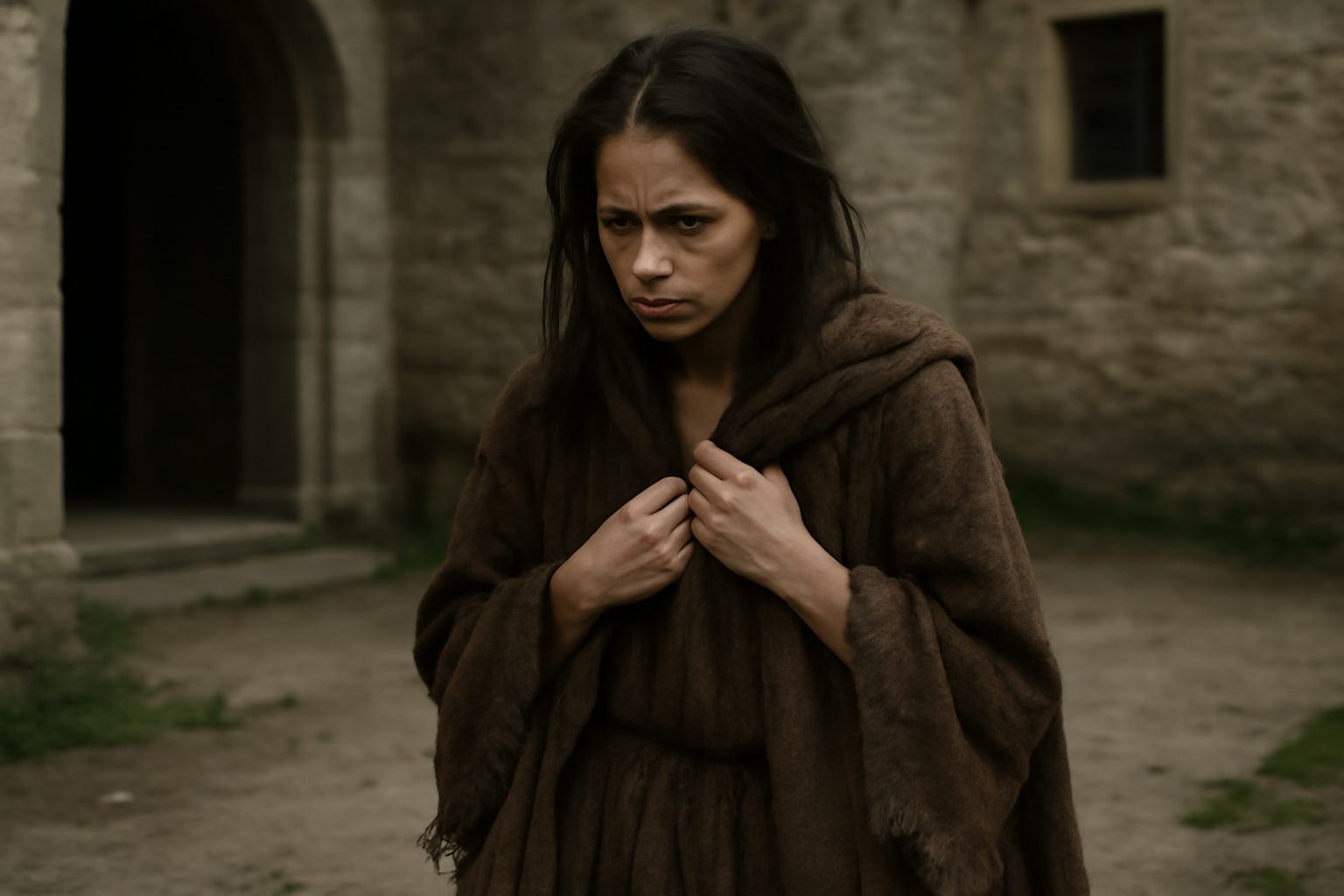
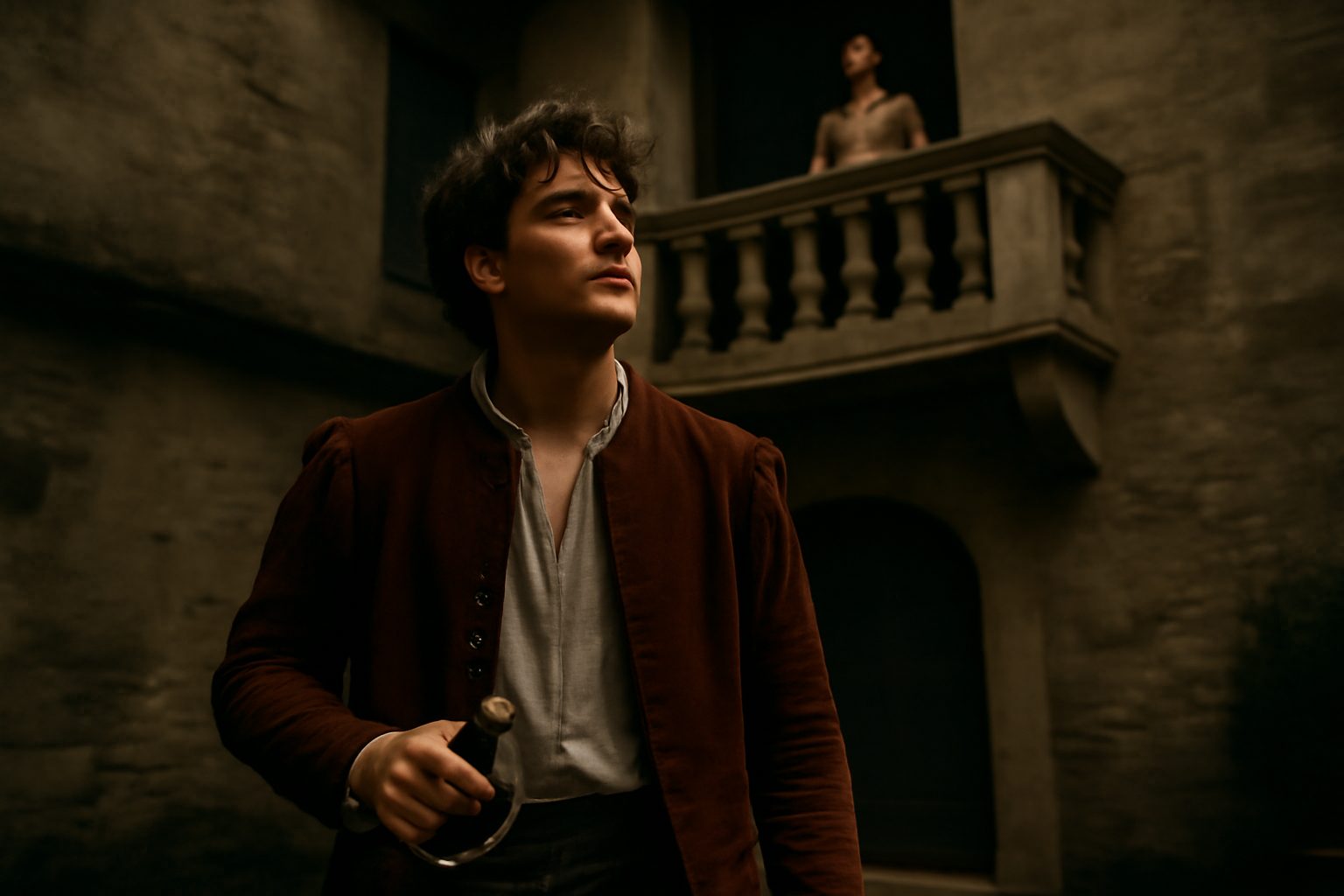
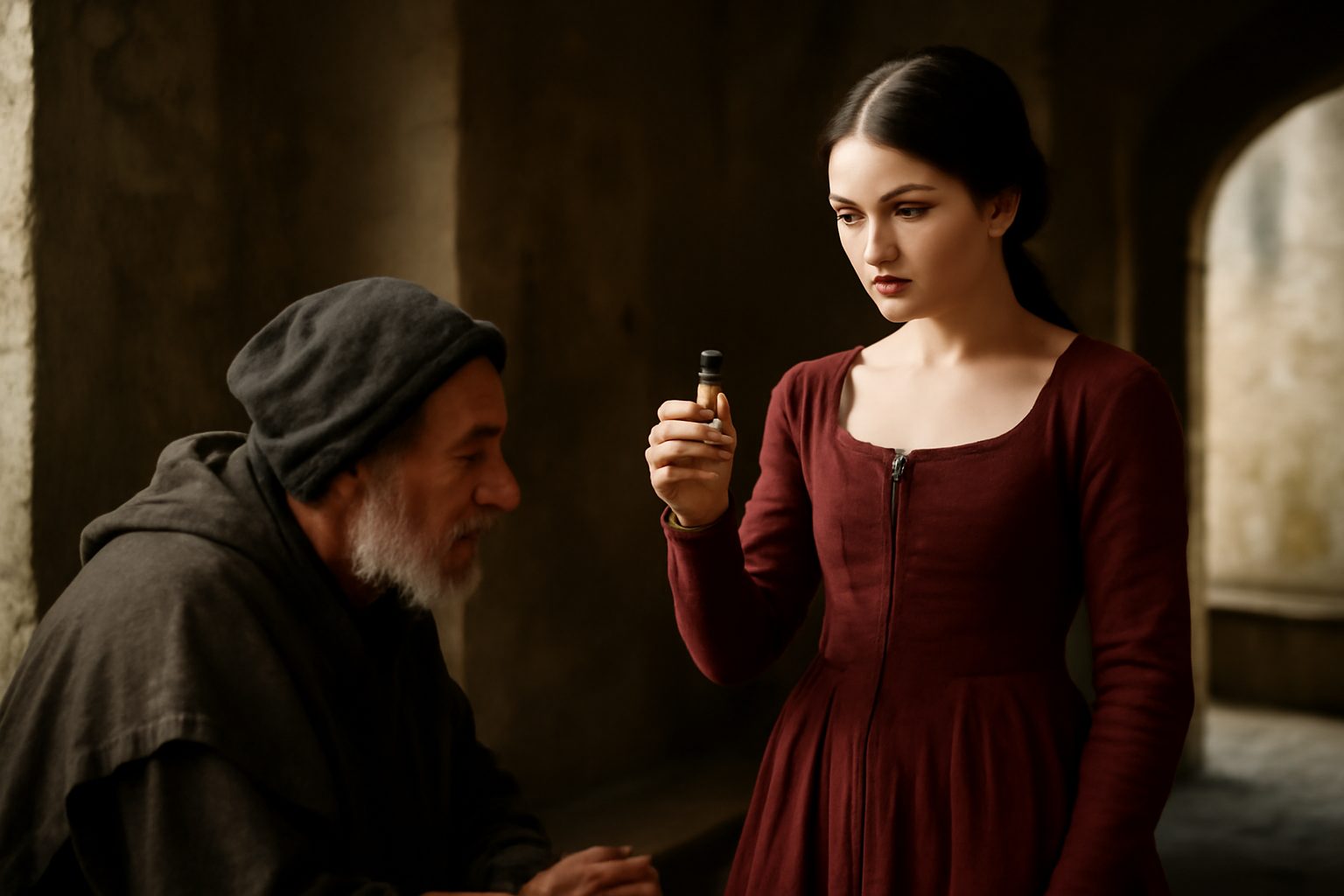
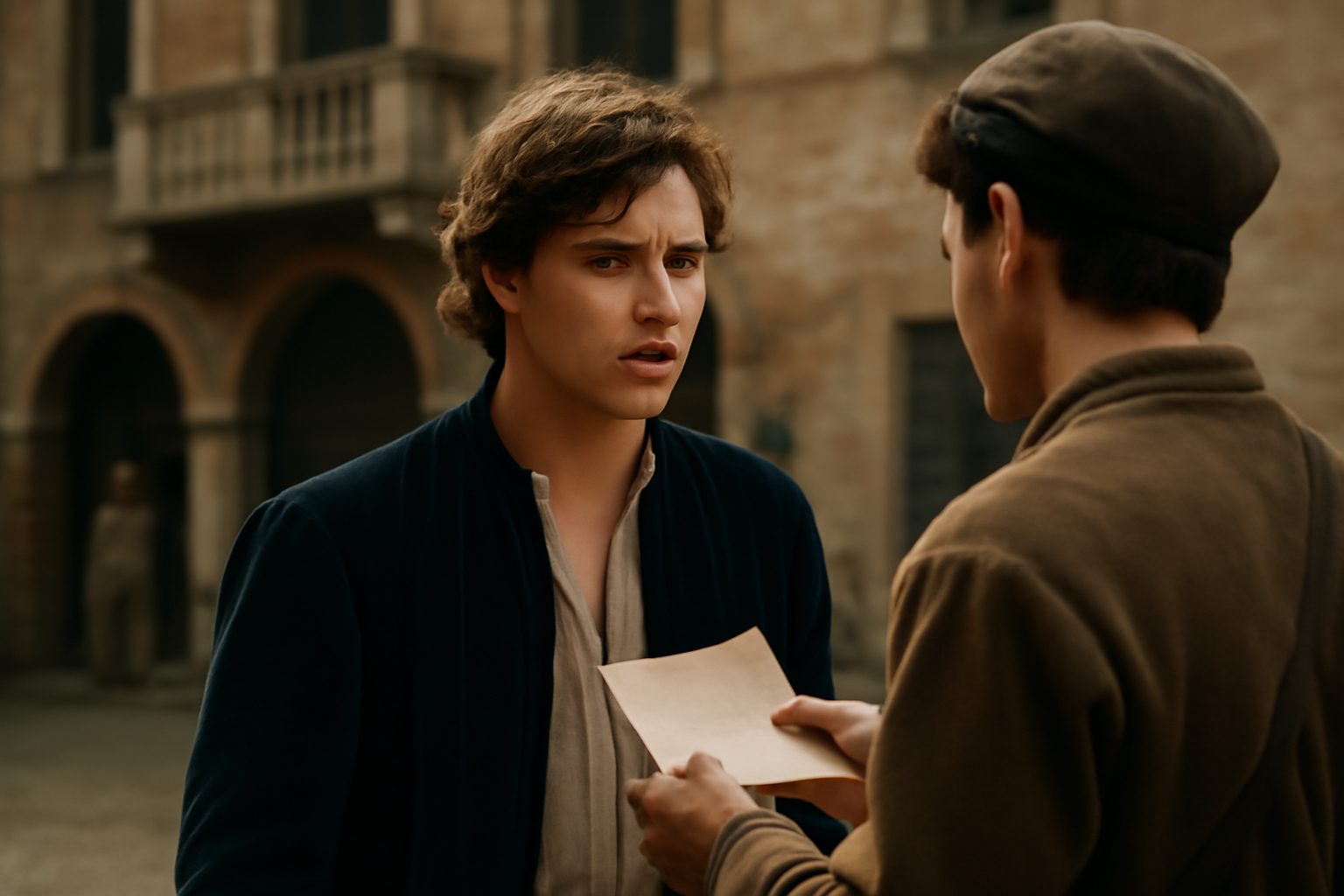
In Act 5 Scene 1 of Romeo and Juliet, Romeo encounters an impoverished apothecary in Mantua, whose gaunt appearance reflects his desperate circumstances. The line describes the apothecary gathering medicinal herbs, a detail that underscores his meager livelihood and sets the stage for Romeo's fateful purchase of poison. This moment is crucial as it propels Romeo toward his tragic decision to take his own life.
Romeo: "Culling of simples; meagre were his looks,"
In modern day english, we would say:
He was gathering medicinal herbs and appeared thin and weary.
Frequently Asked Questions
What does Romeo notice about the apothecary's appearance?
Romeo notices that the apothecary looks thin and unhealthy.
Connections to other verses:
Connections to "Culling of simples; meagre were his looks"
The verse "Culling of simples; meagre were his looks" describes the apothecary's appearance and actions, setting a tone of poverty and desperation. This connects thematically and descriptively to several other verses in the scene.
Physical Description and Poverty
The phrase "meagre were his looks" directly relates to "Sharp misery had worn him to the bones", emphasizing the apothecary's gaunt, suffering appearance. Both lines highlight his impoverished state, which is further echoed in "In tatter'd weeds, with overwhelming brows", describing his ragged clothing and weary expression.
Shop and Surroundings
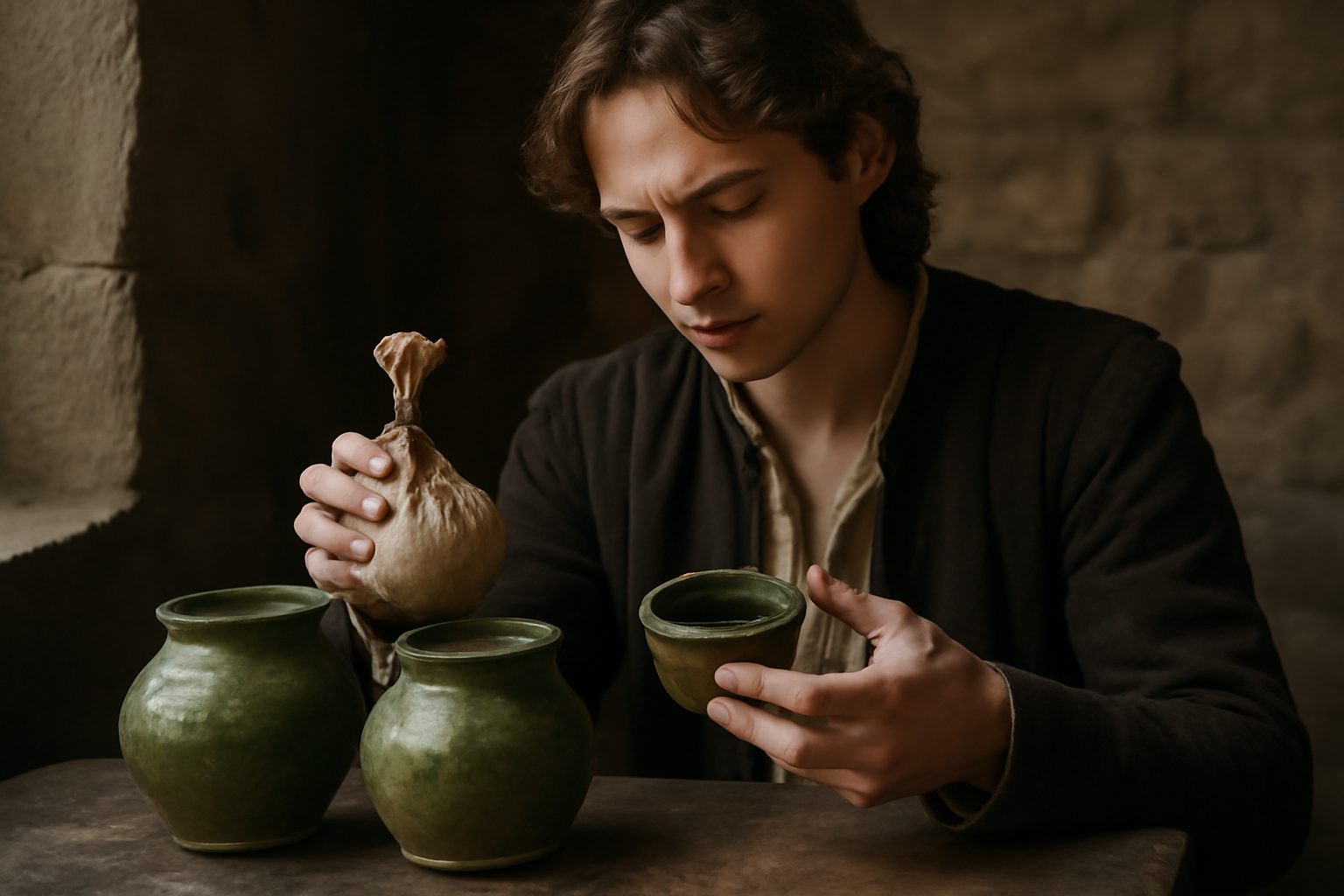
The act of "culling of simples" (gathering medicinal herbs) ties to the depiction of the apothecary's shop in verses like "And in his needy shop a tortoise hung" and "An alligator stuff'd, and other skins", which illustrate the strange, sparse items in his possession. The mention of "Green earthen pots, bladders and musty seeds" and "Remnants of packthread and old cakes of roses" further paints a picture of his meager, decaying trade goods.
Poverty and Desperation
Romeo's observation of the apothecary's poverty in this line is a precursor to his explicit comments on the man's wretchedness, such as in "Art thou so bare and full of wretchedness" and "Contempt and beggary hangs upon thy back". The apothecary's need is also noted in "Noting this penury, to myself I said", where Romeo reflects on the man's extreme poverty.
Transaction for Poison
This description sets the stage for the pivotal transaction where Romeo seeks poison, referenced in "A dram of poison, such soon-speeding gear" and "And this same needy man must sell it me". The apothecary's willingness to break the law due to his poverty is captured in "My poverty, but not my will, consents", directly linking his desperate circumstances to Romeo's acquisition of the poison.