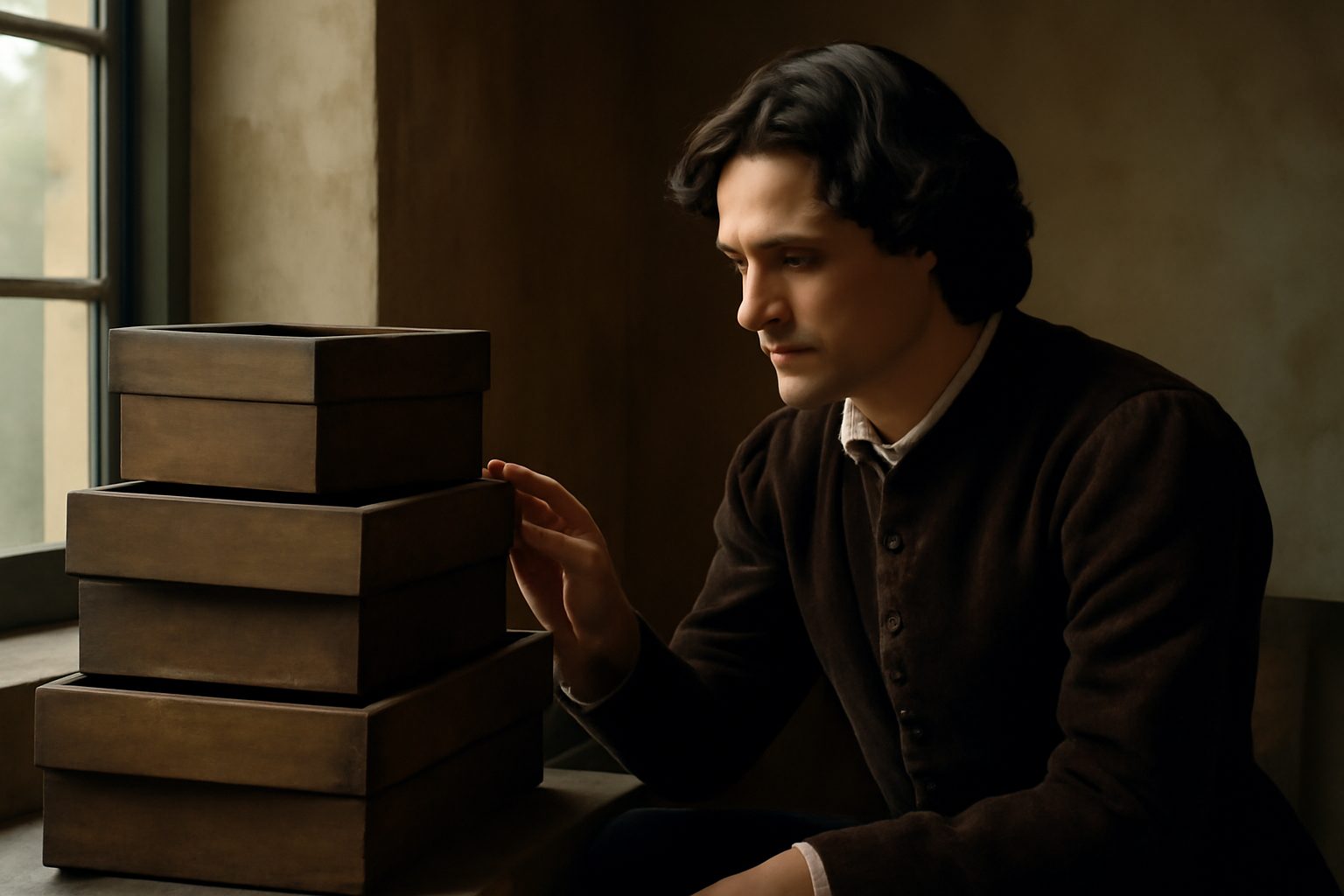
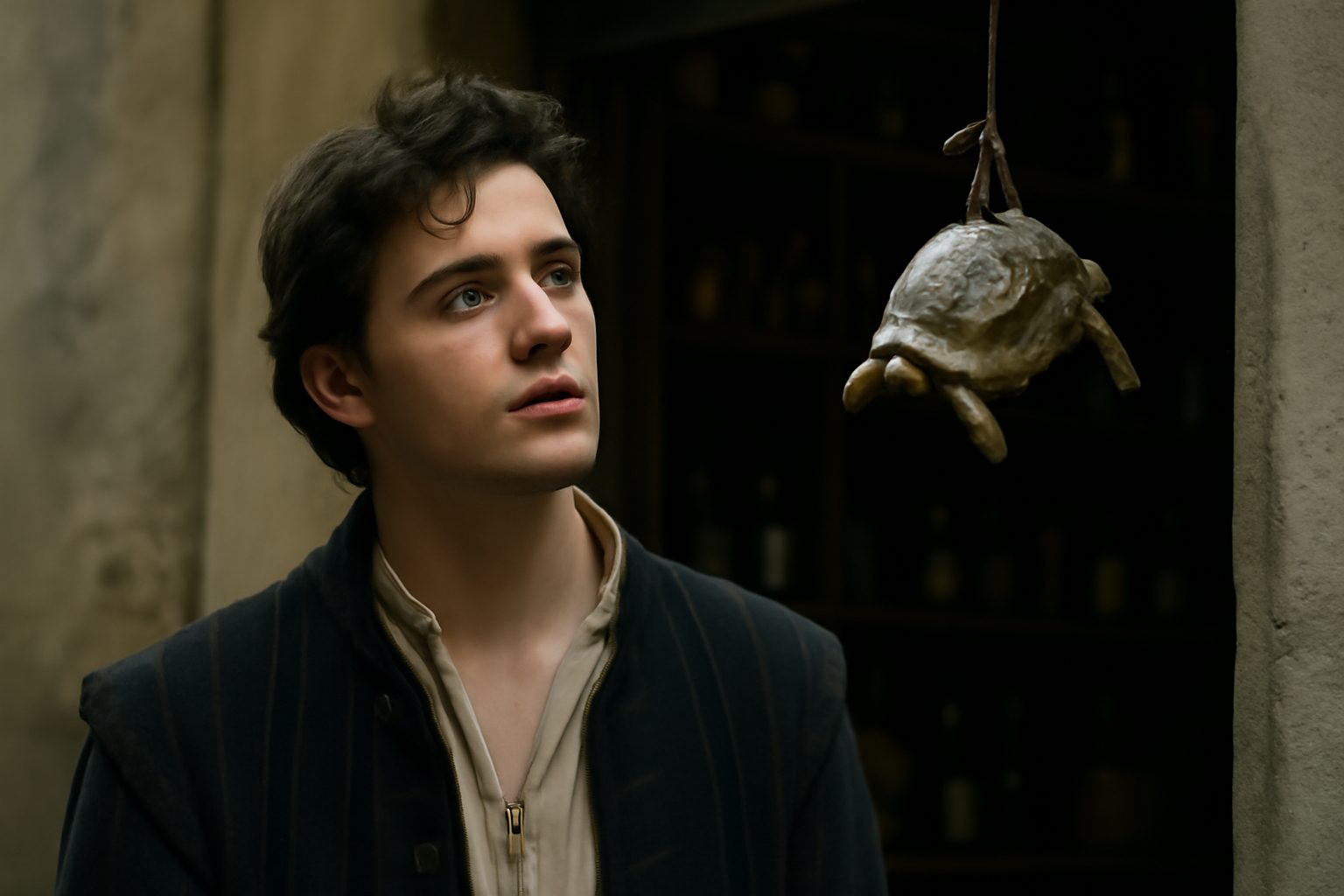
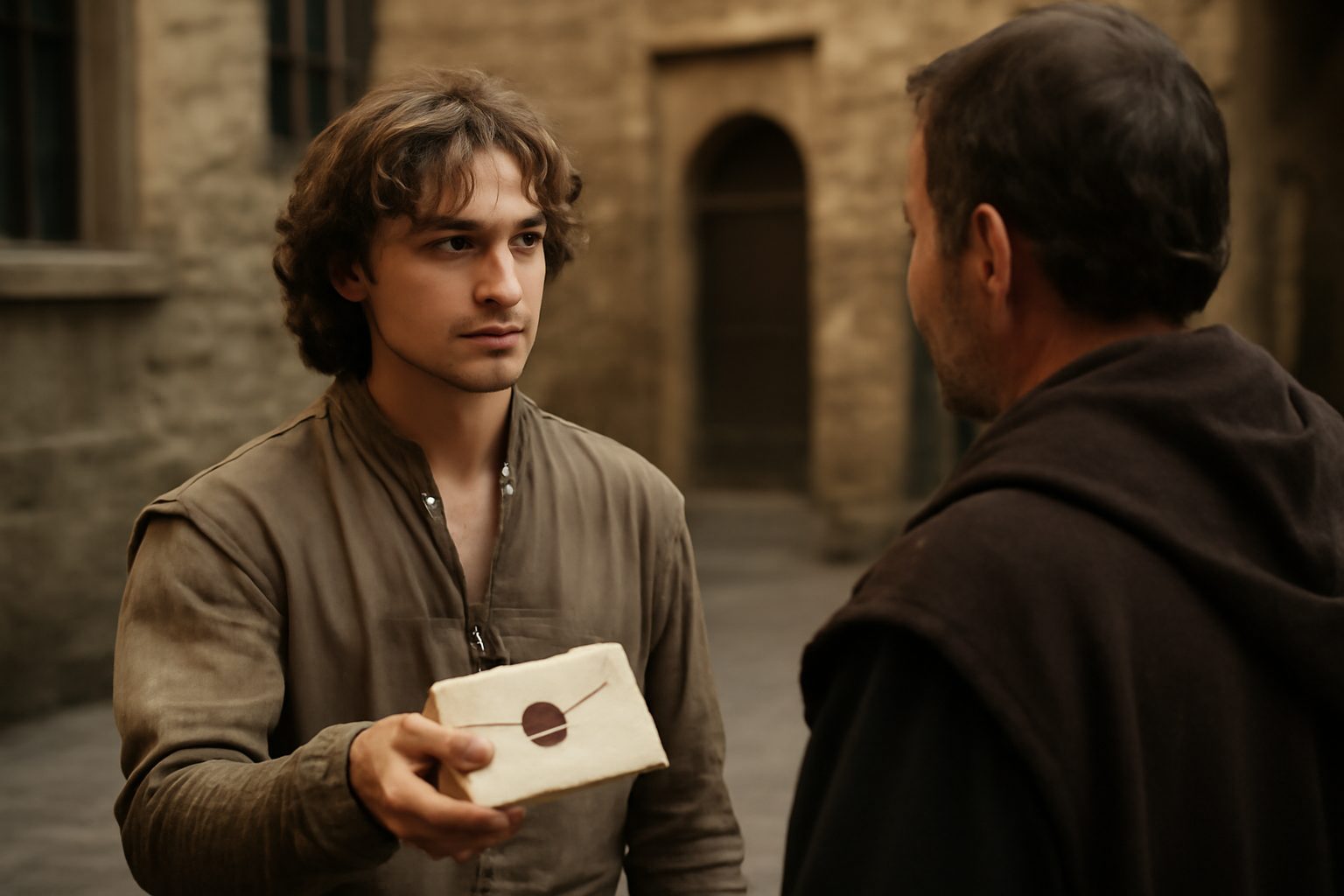
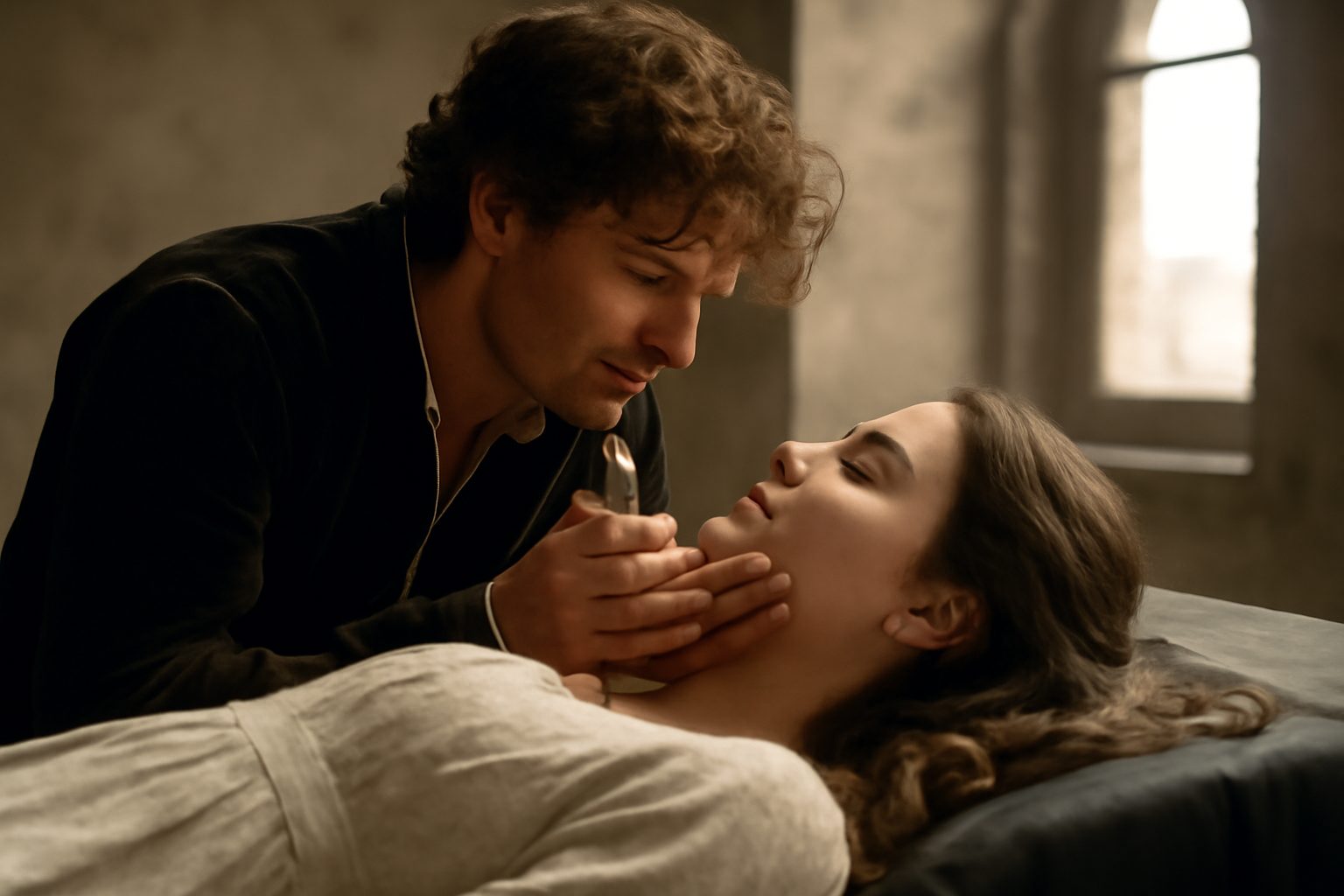
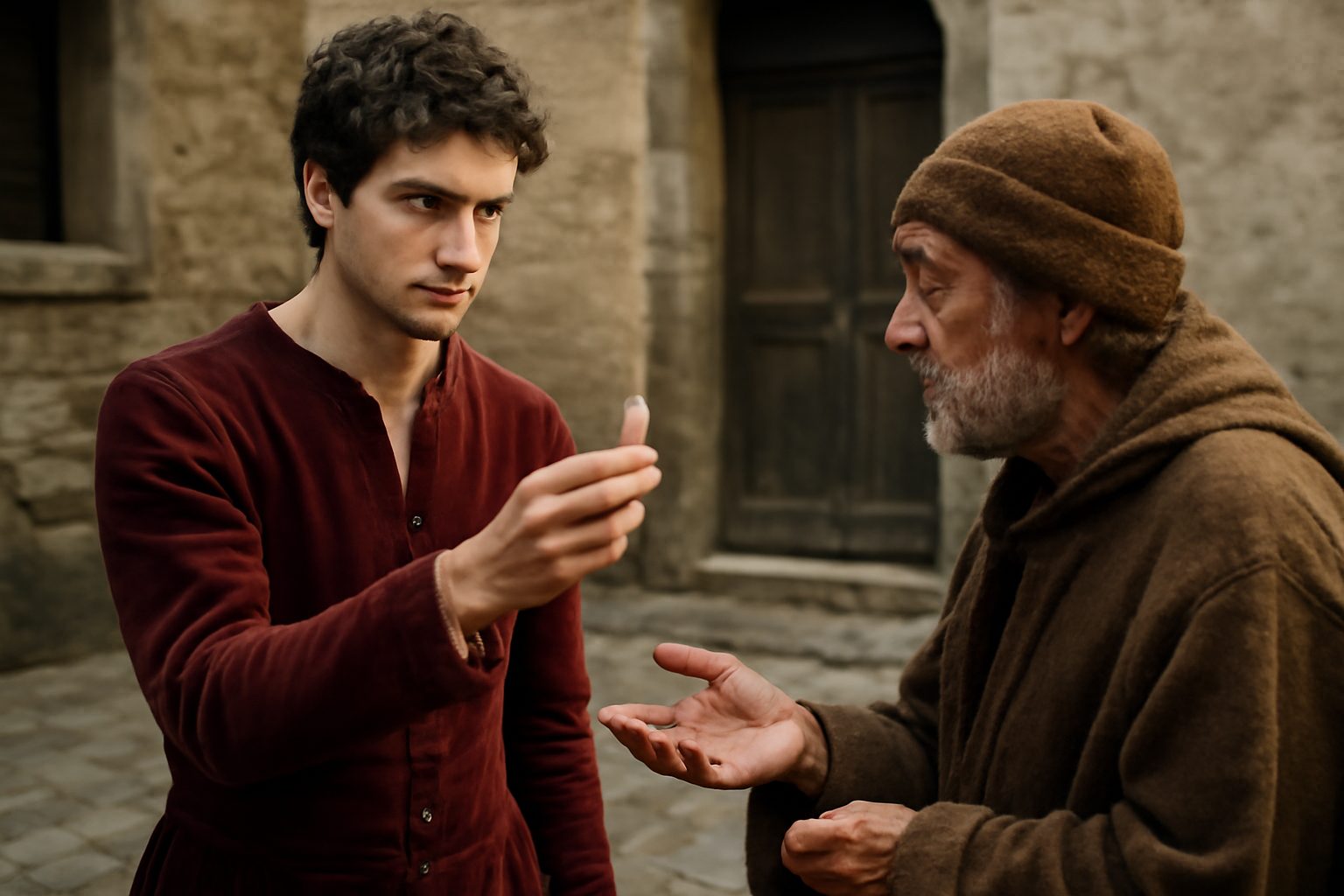
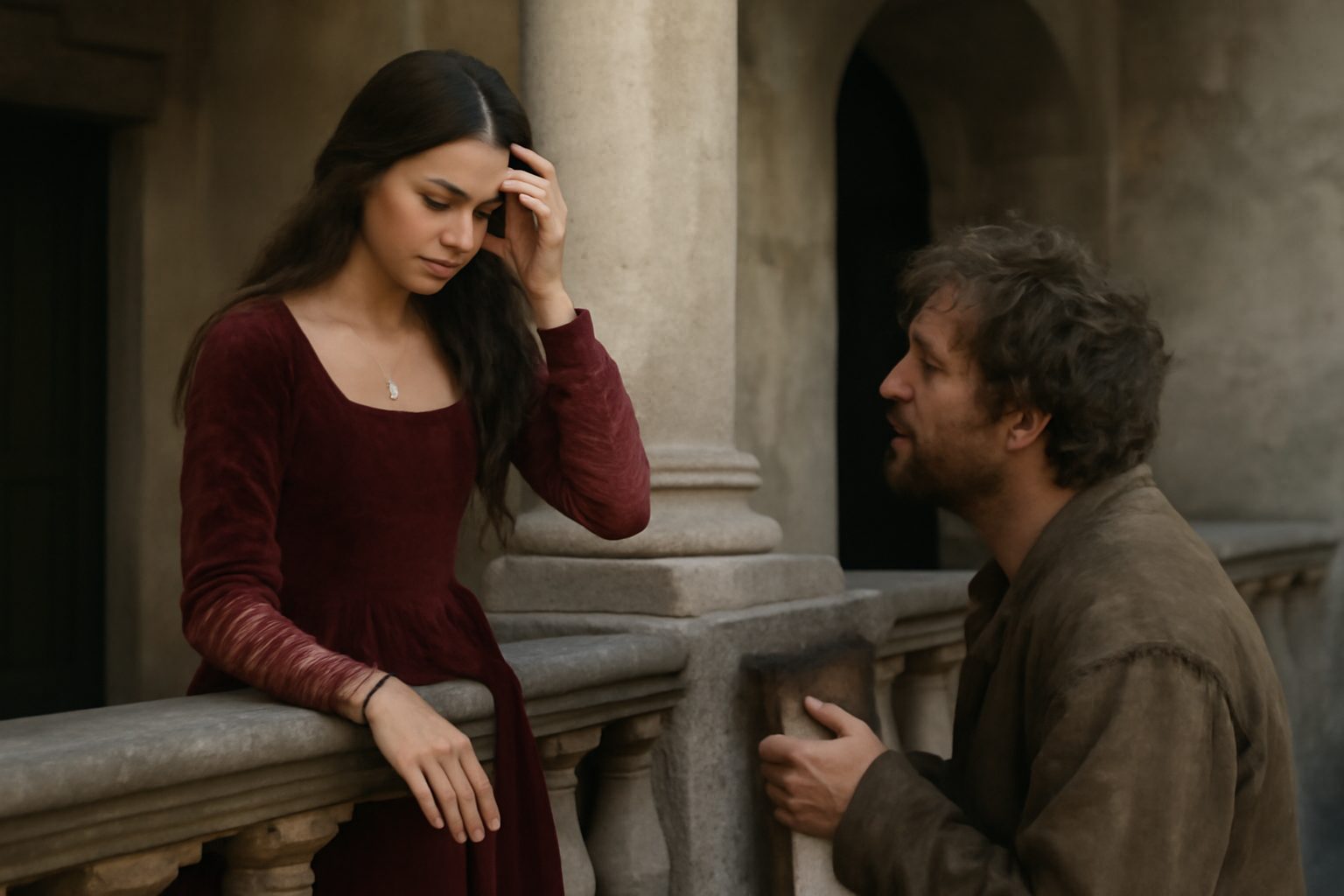
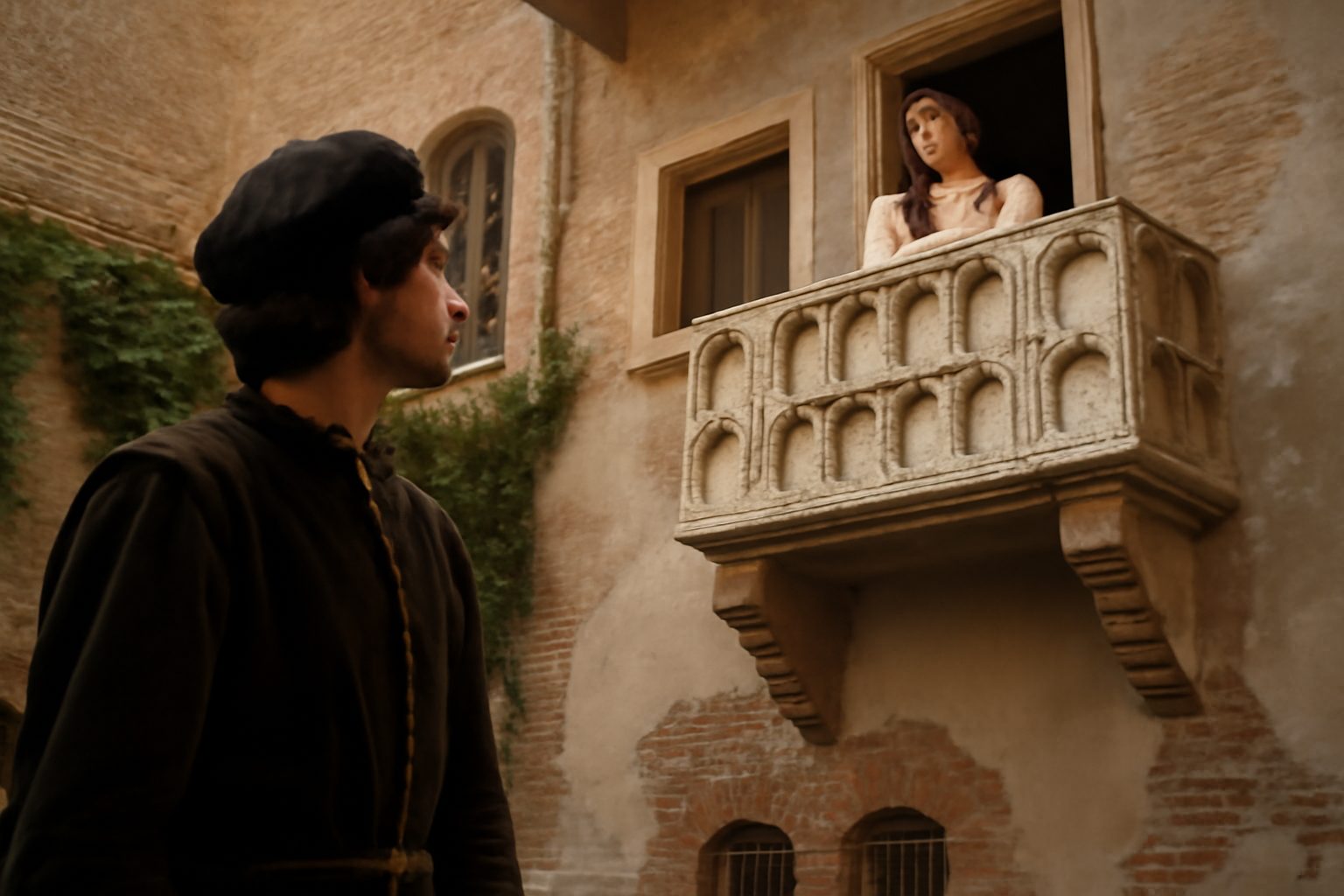
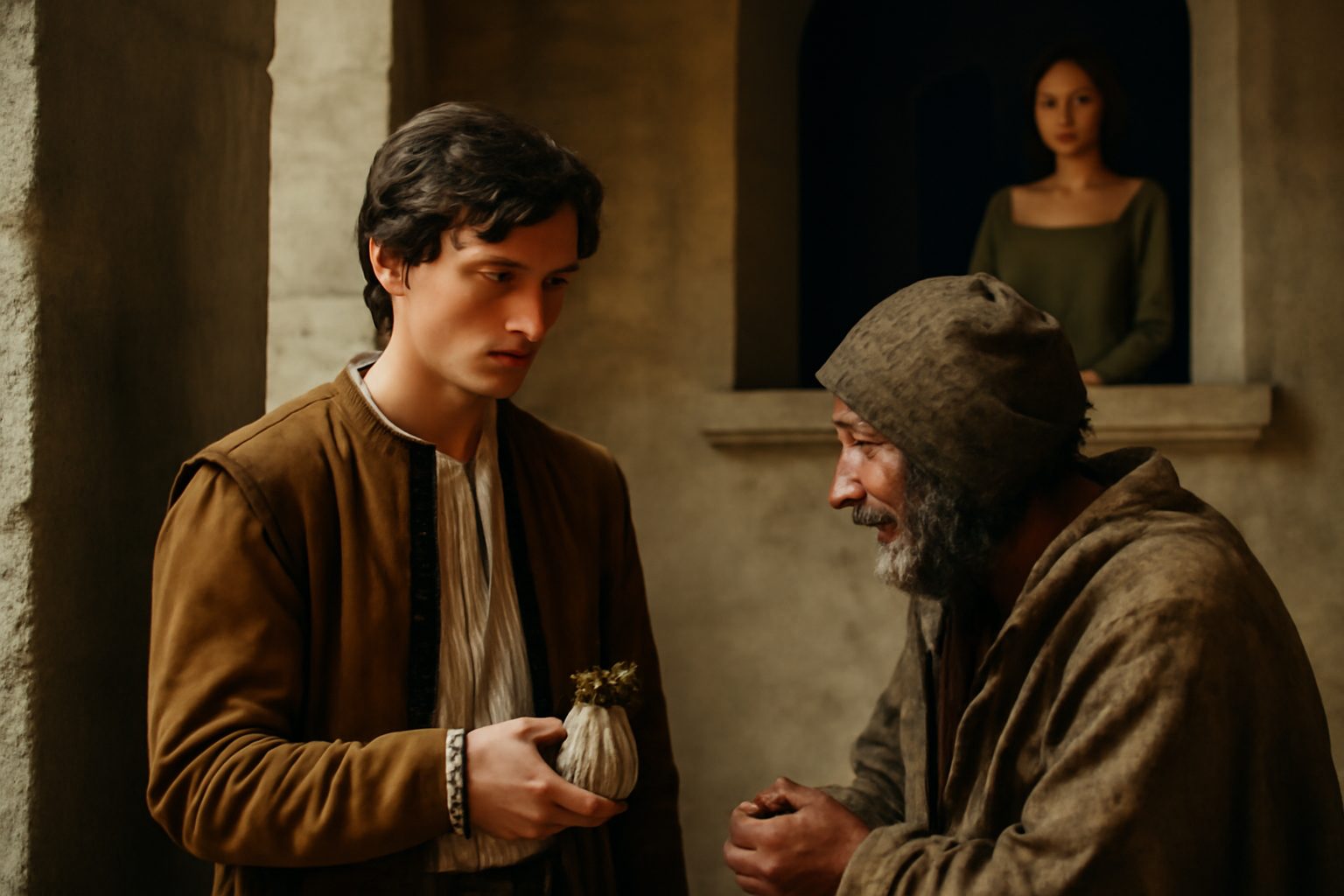
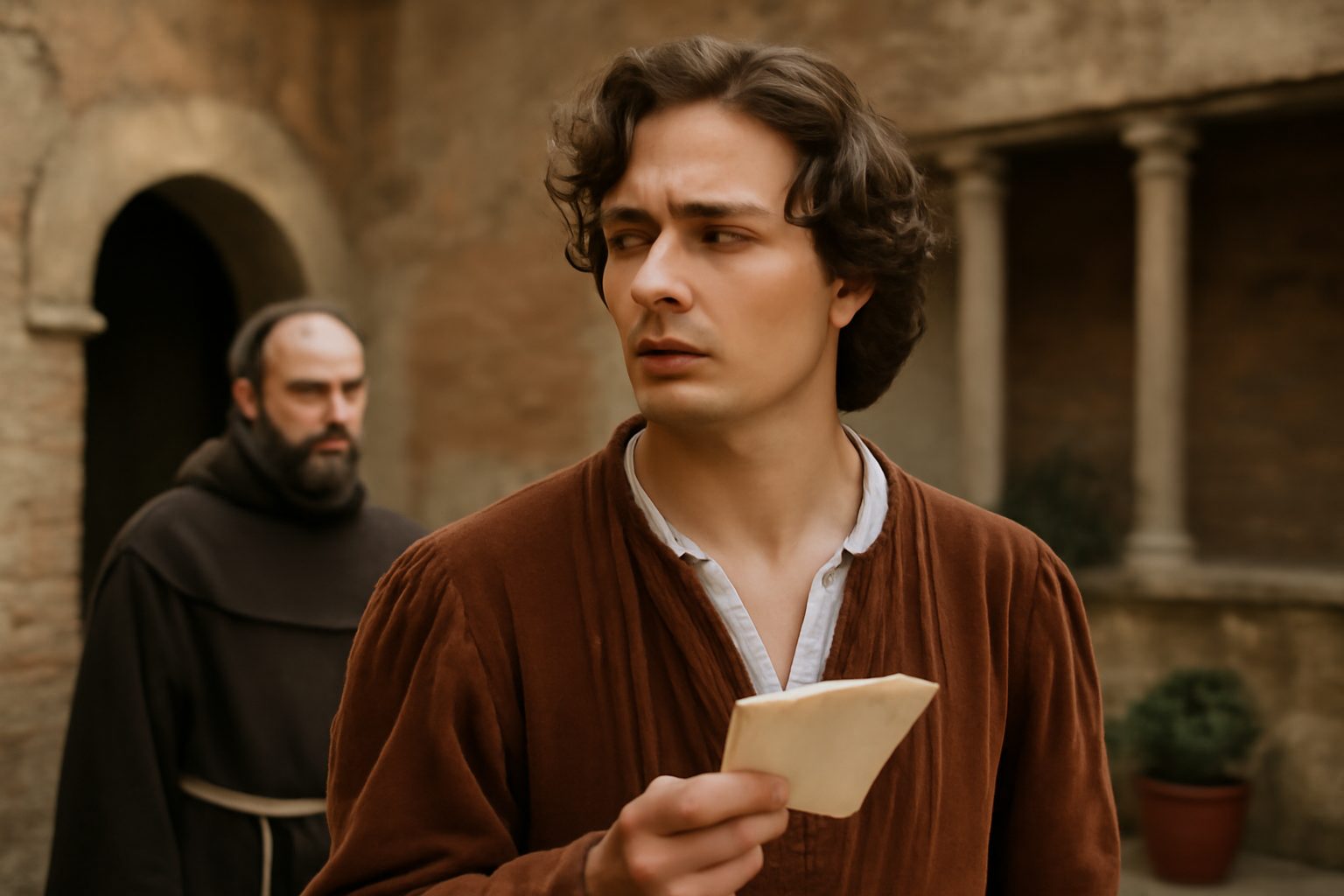
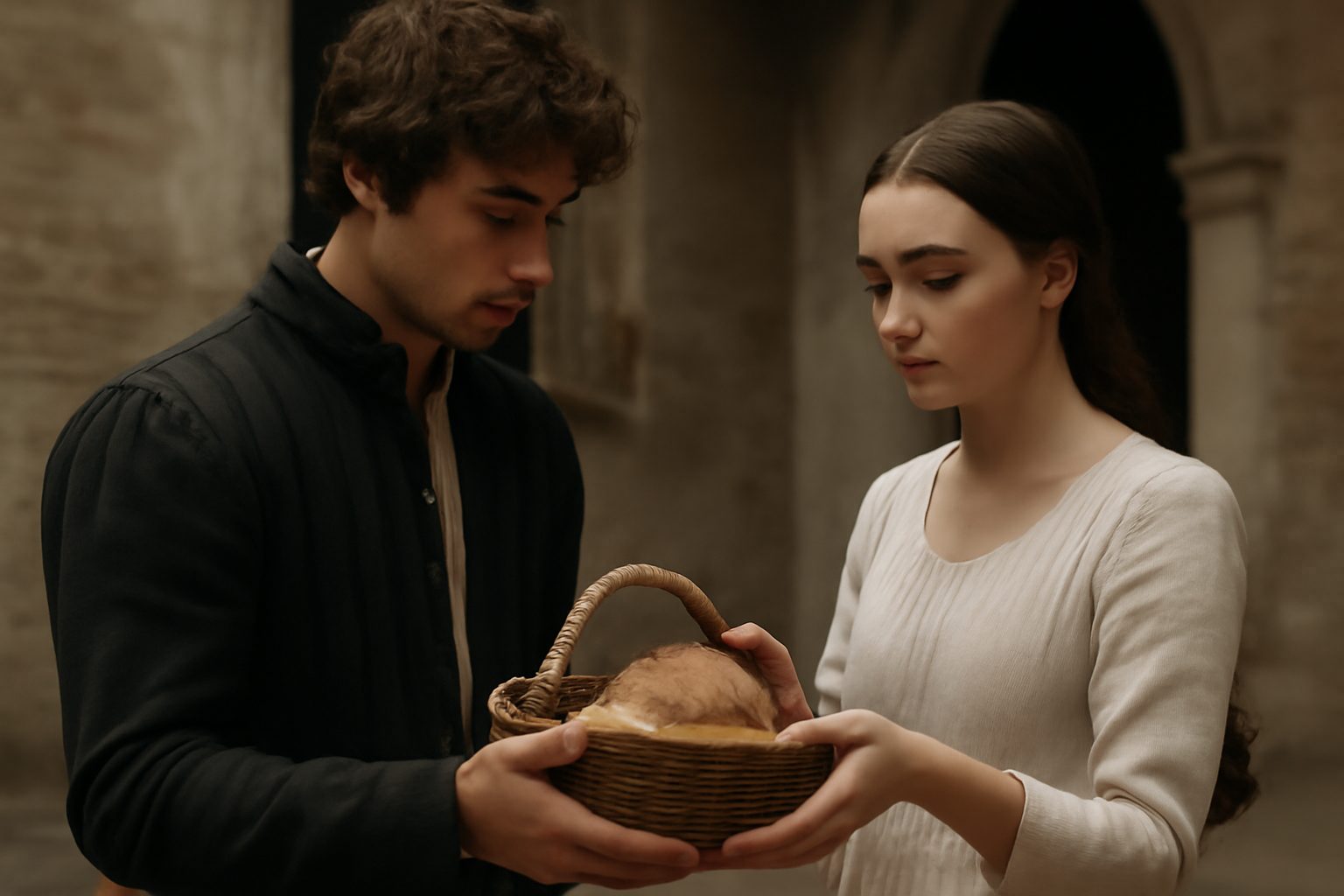
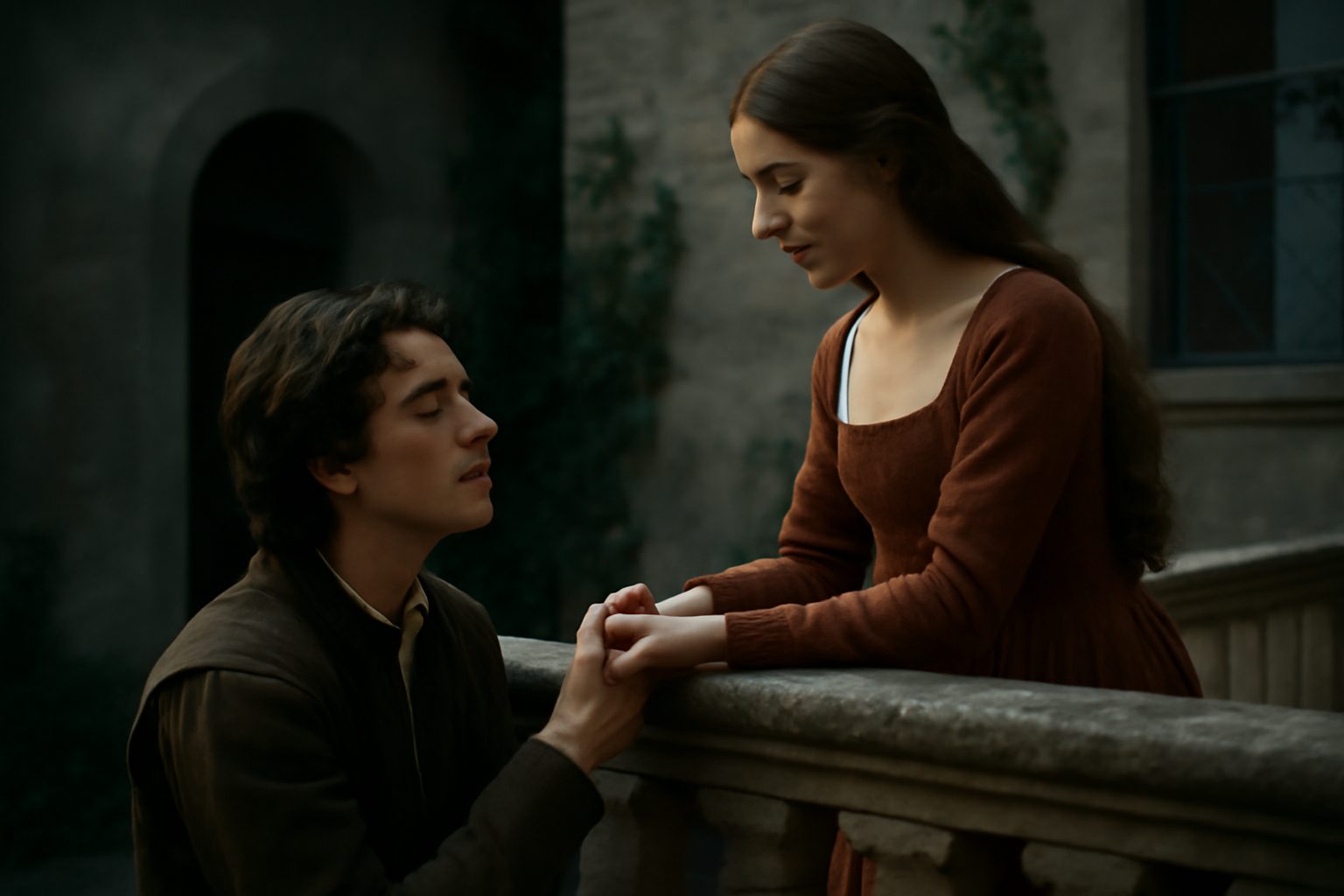
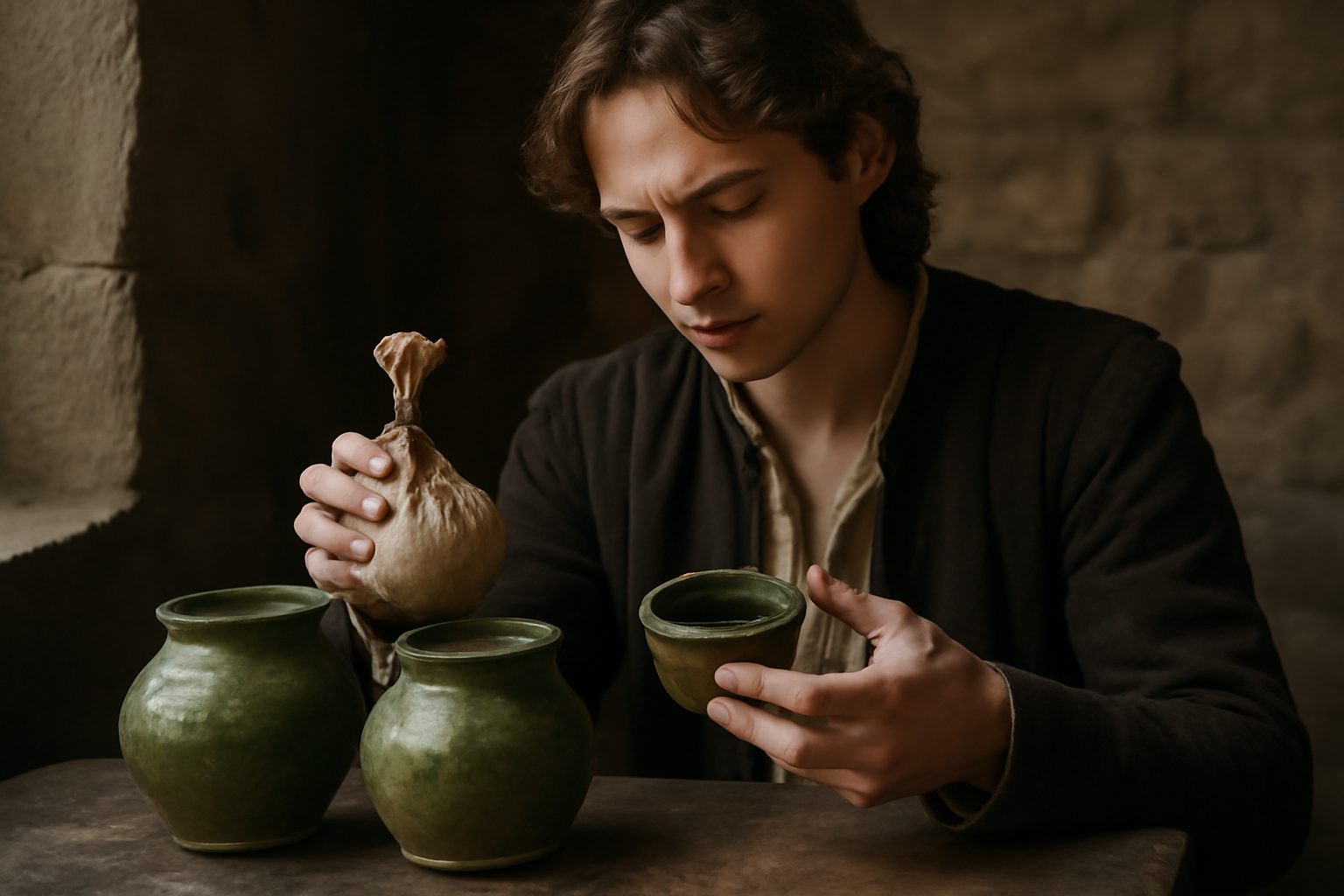
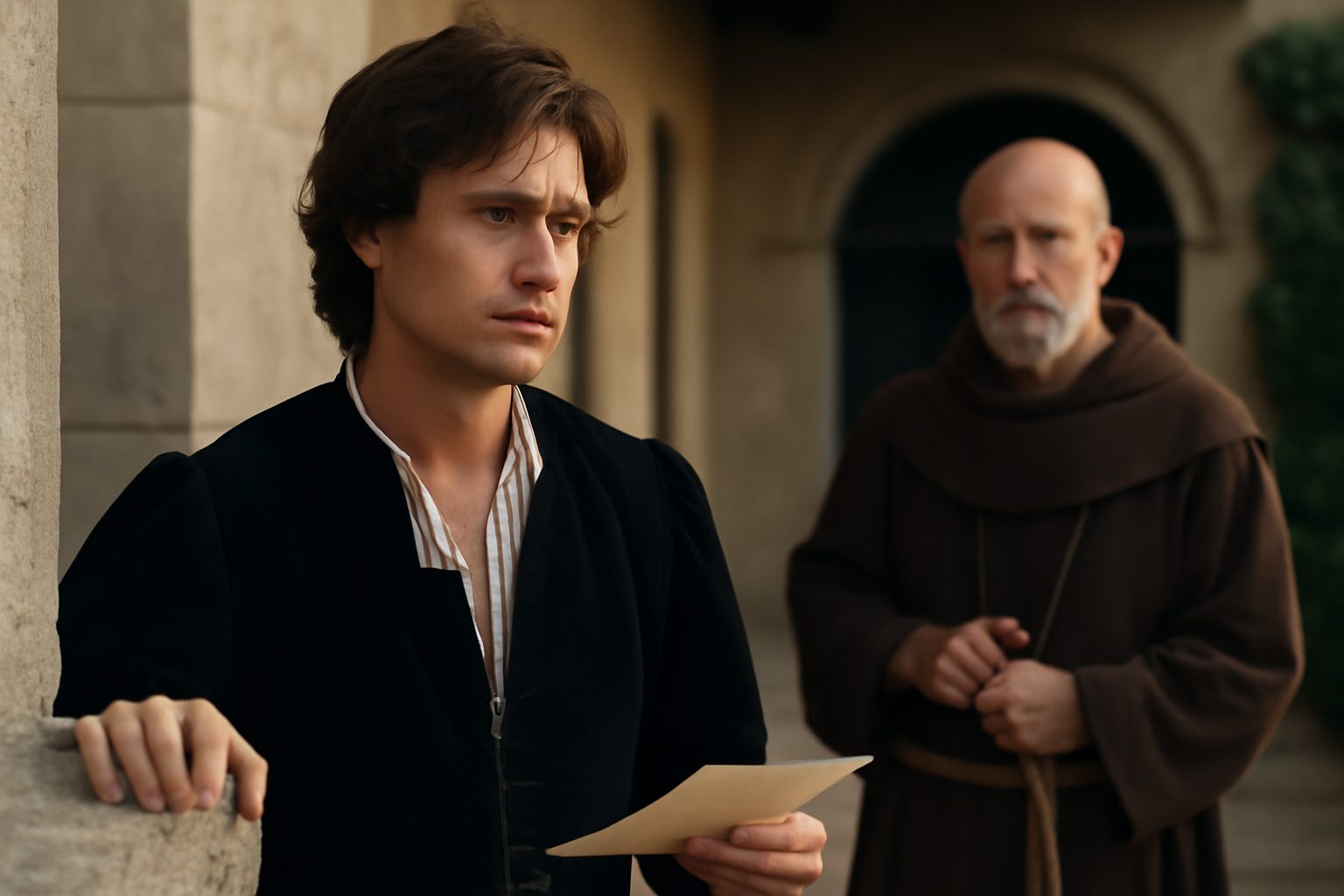
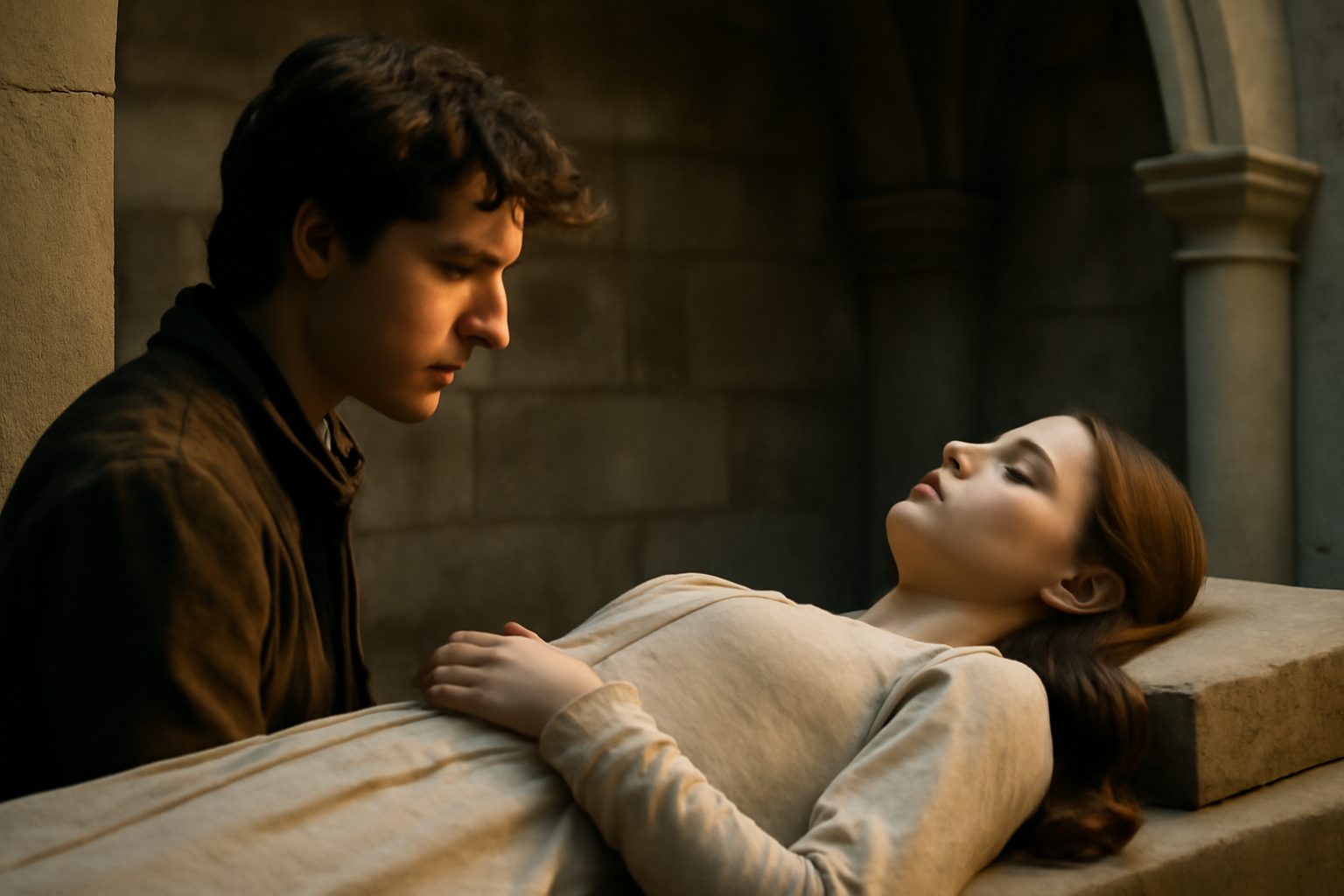
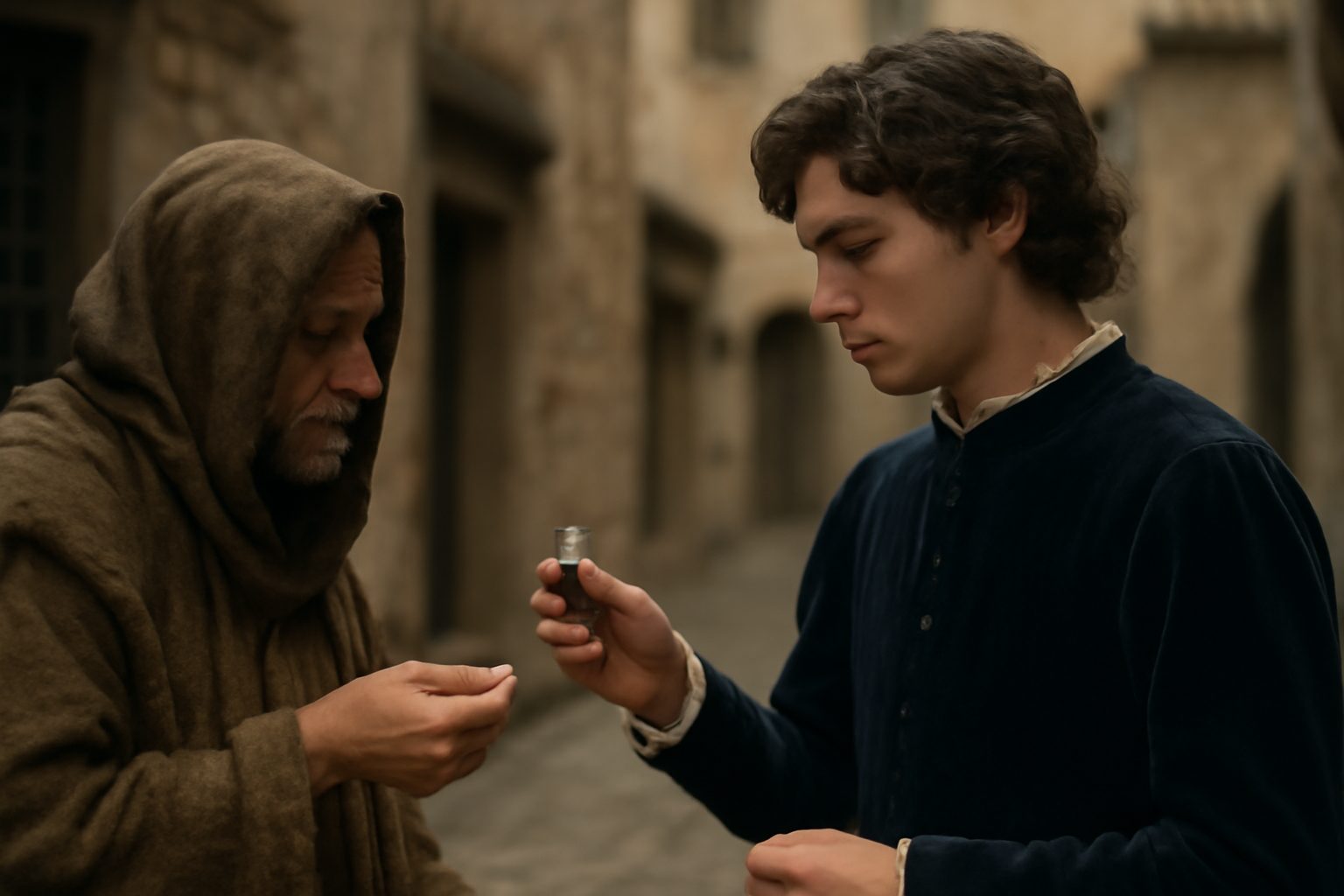
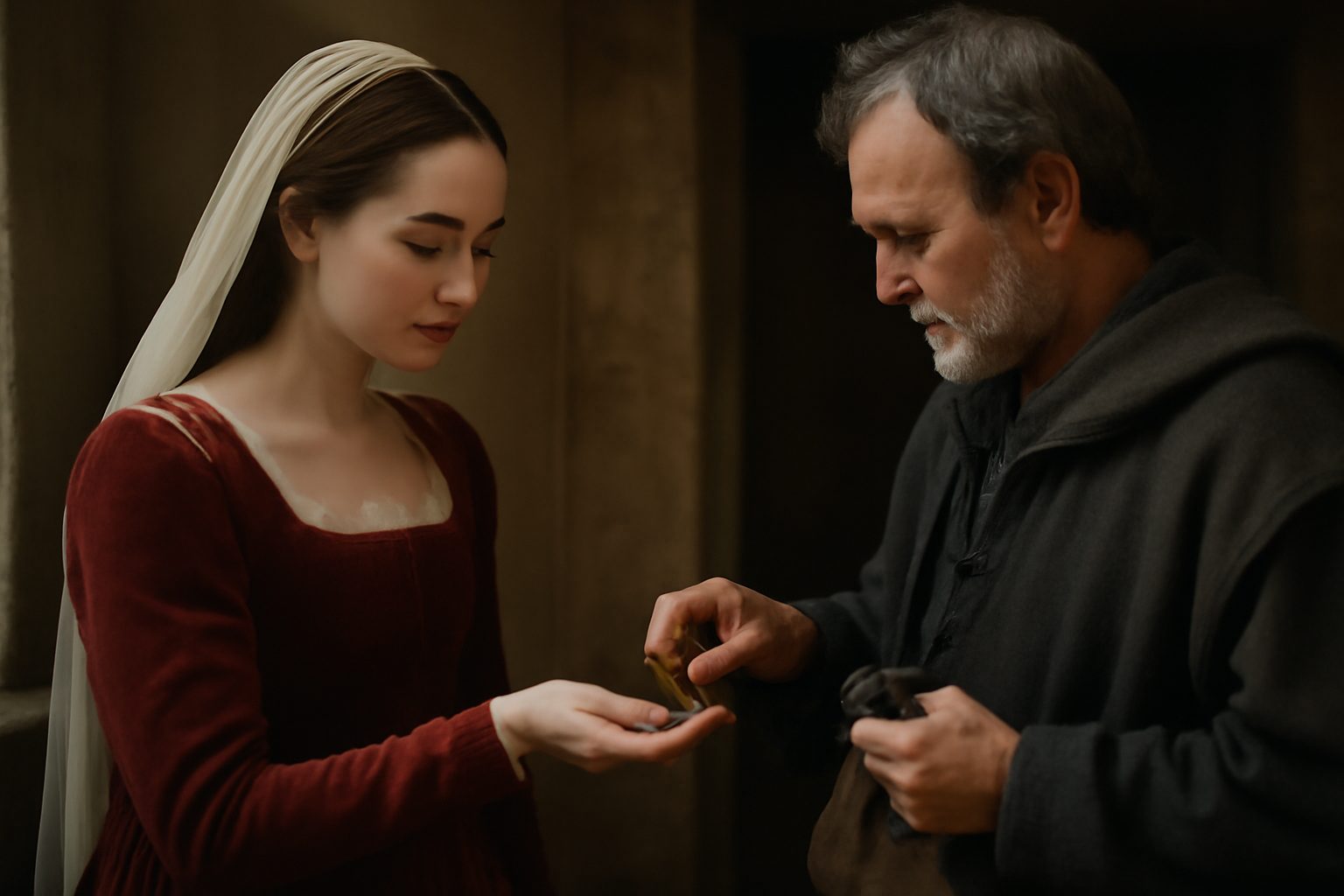
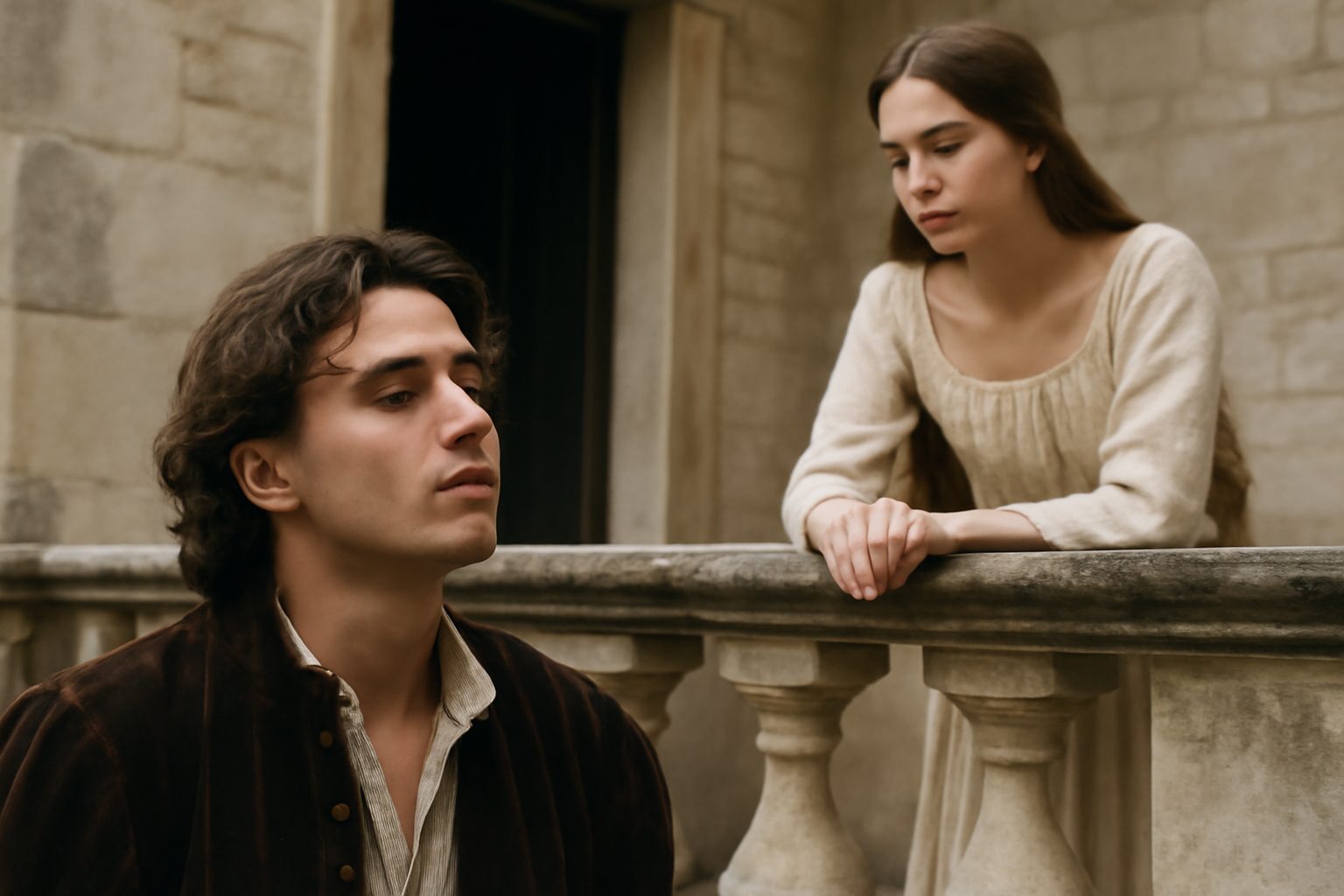
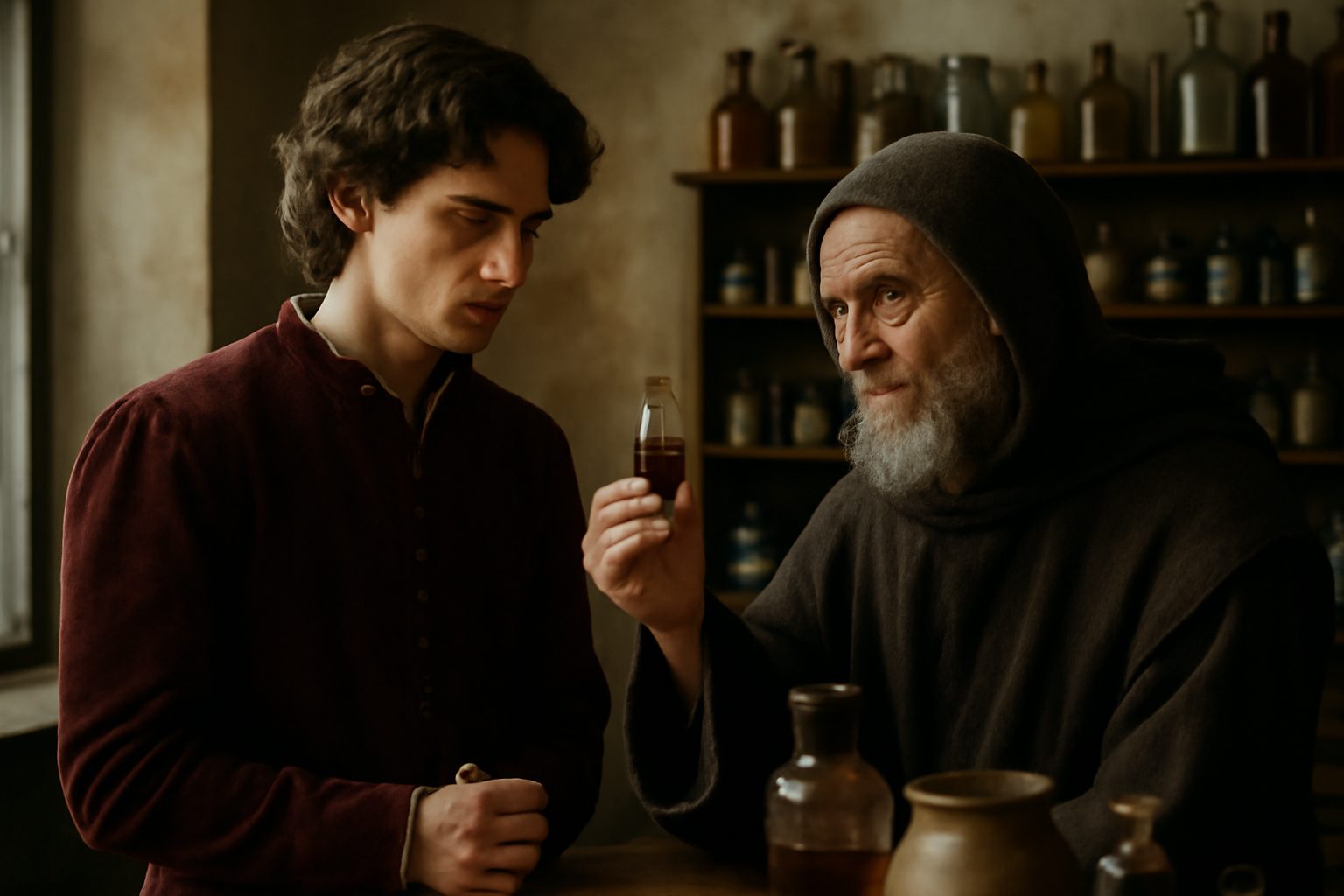
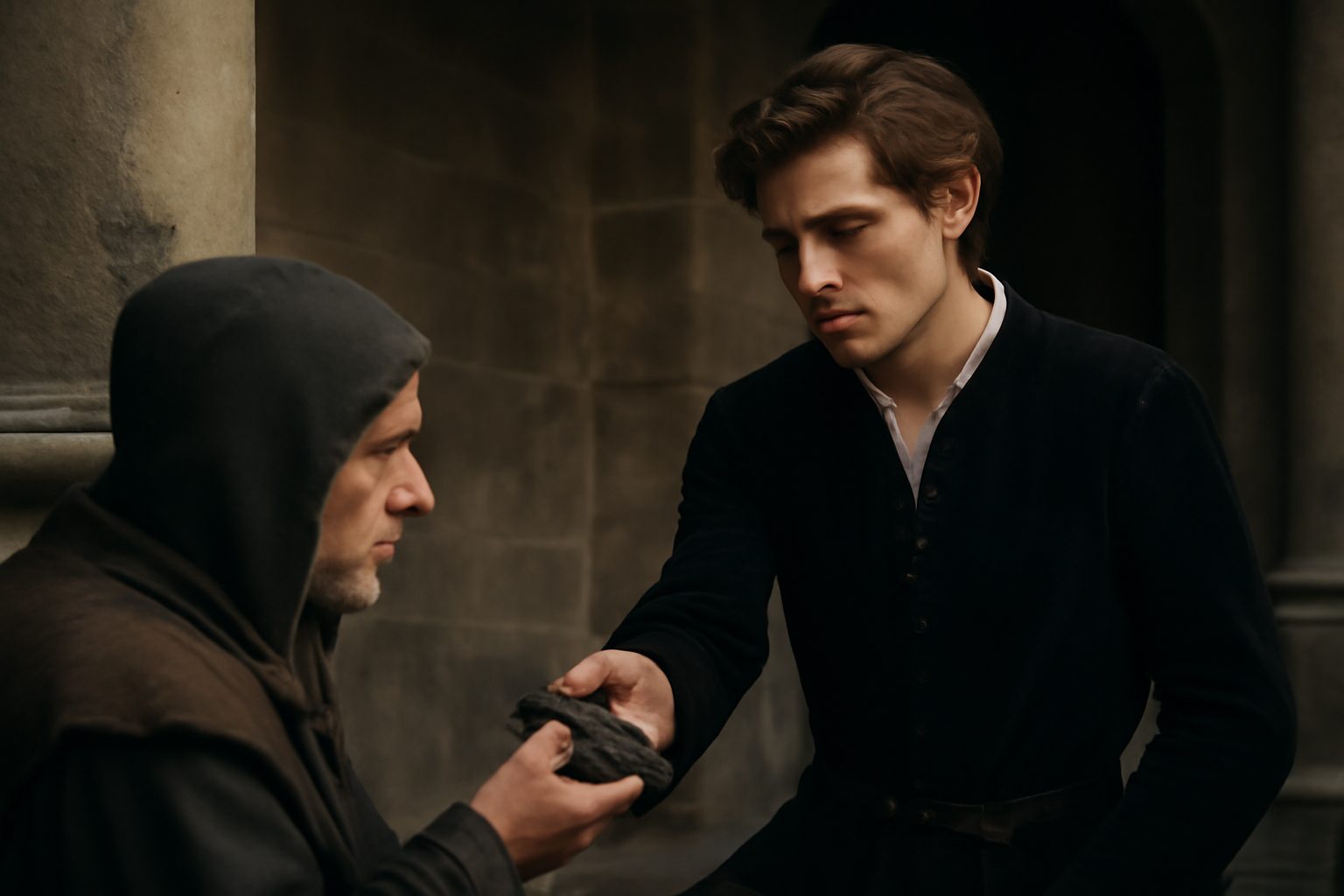
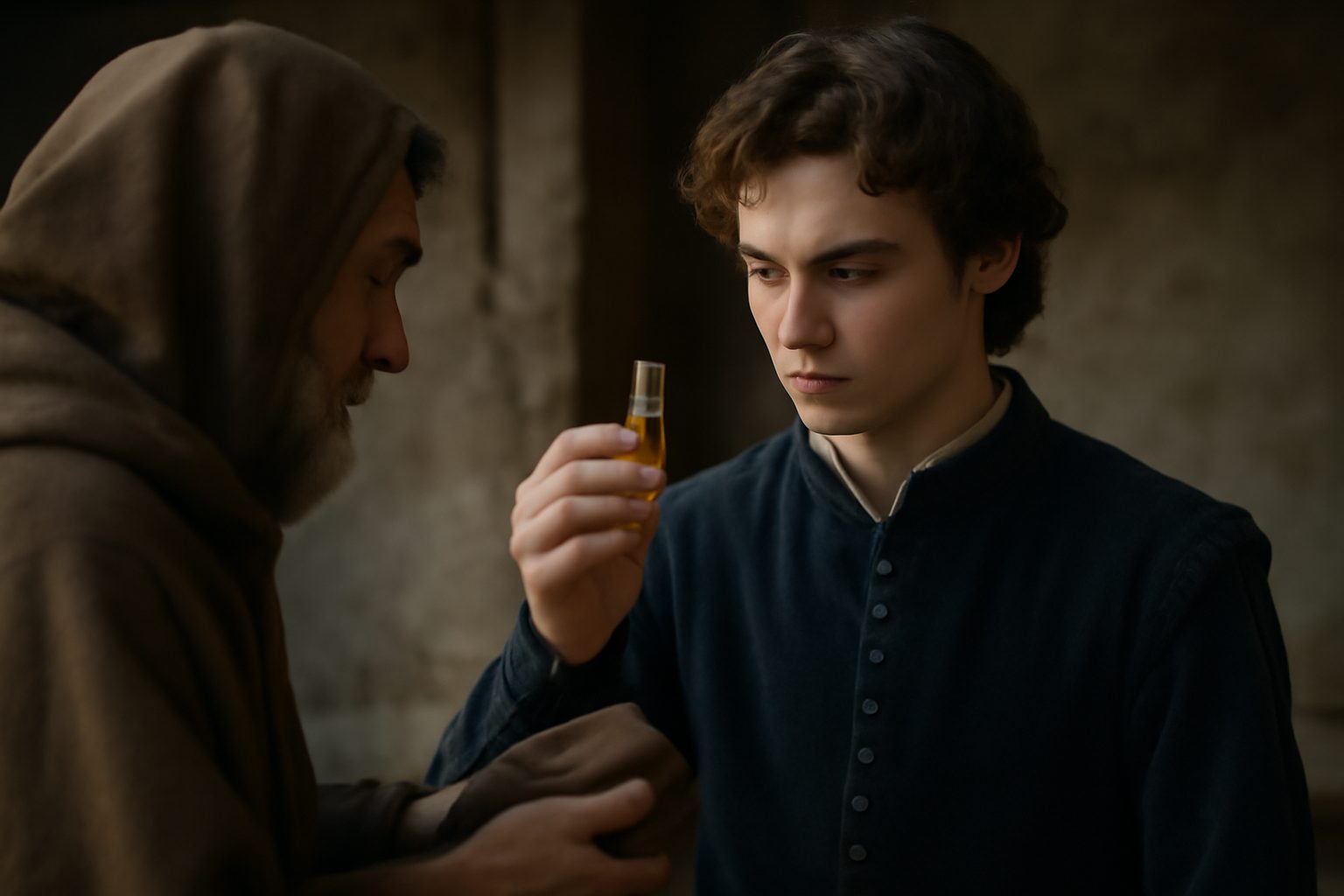
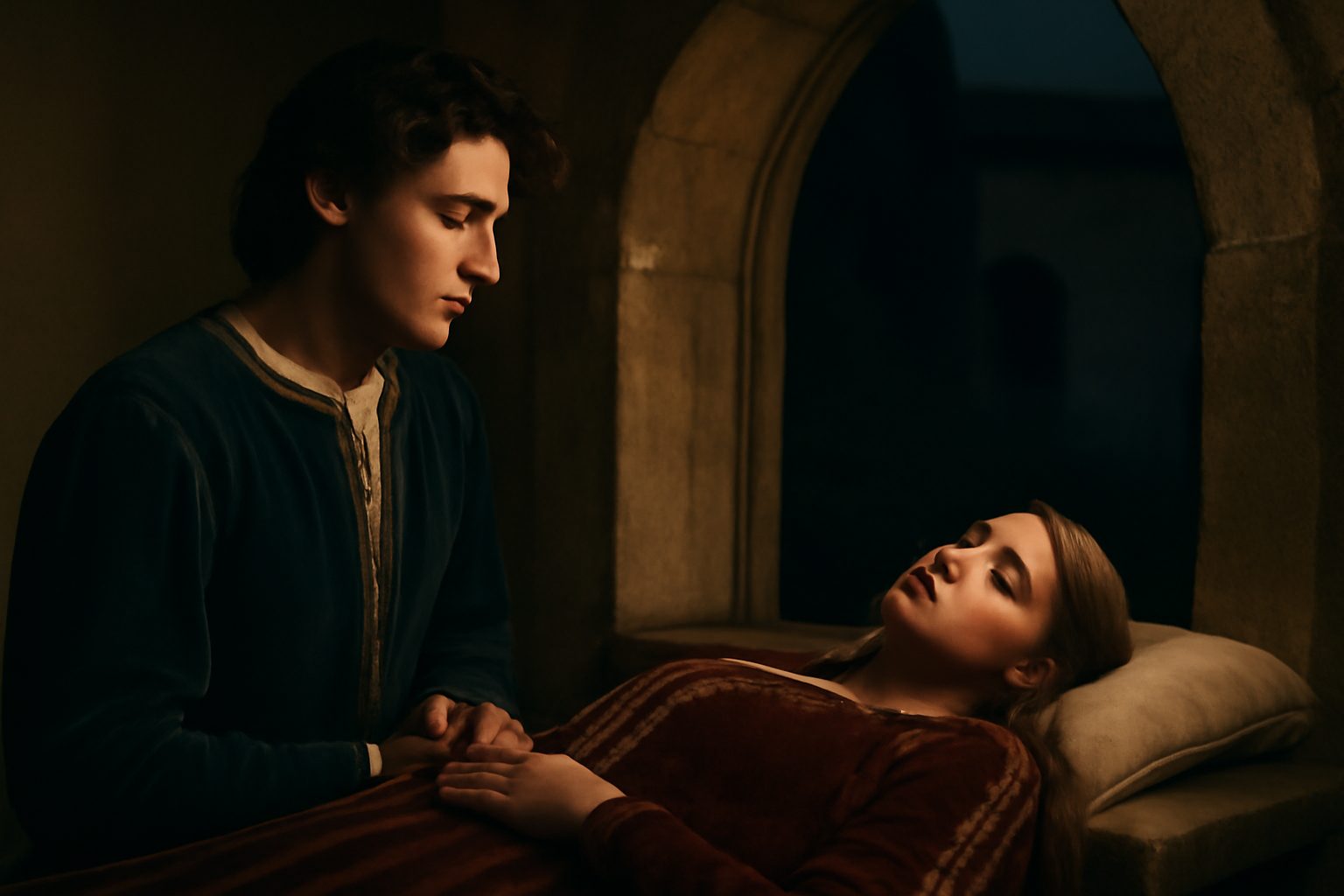
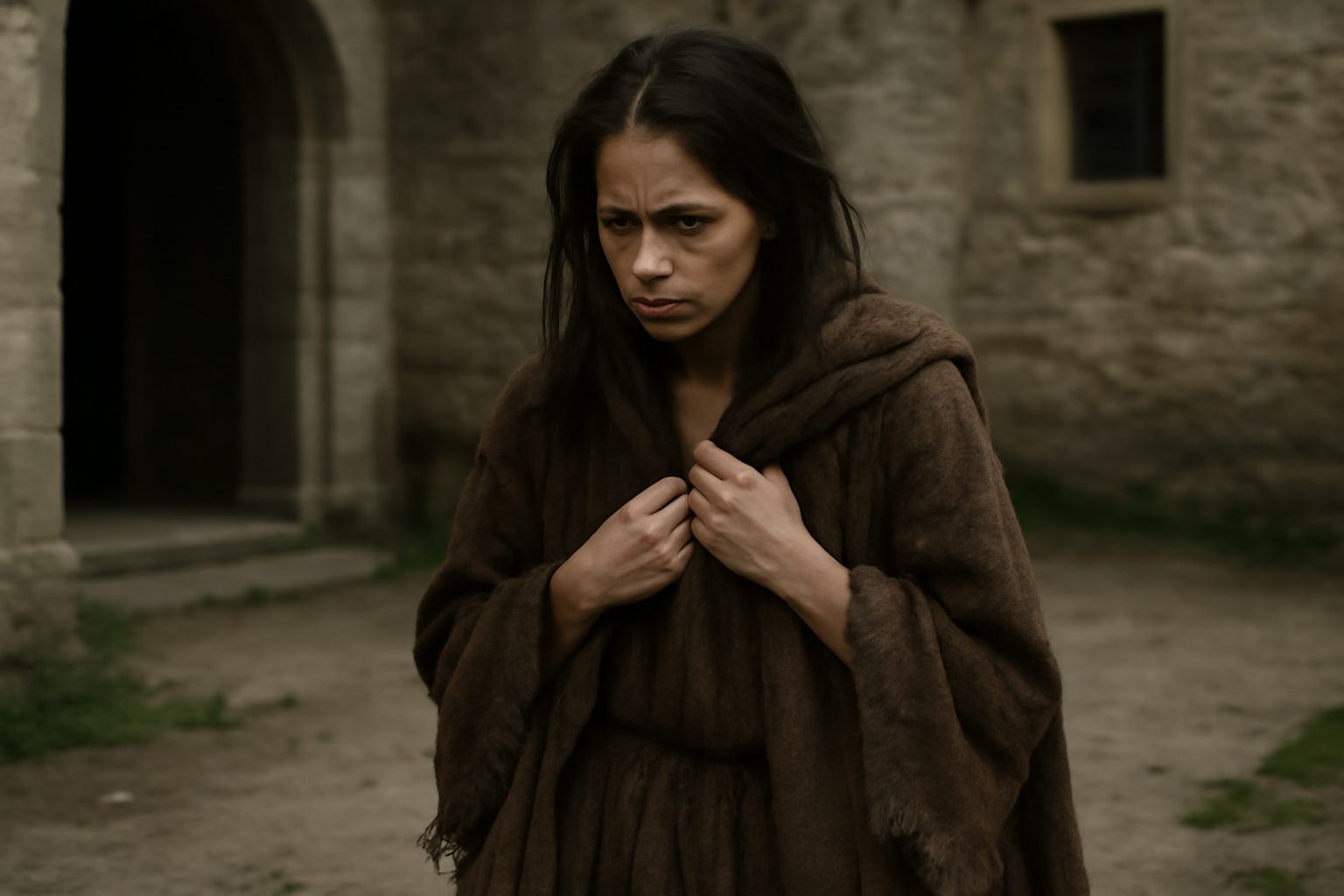
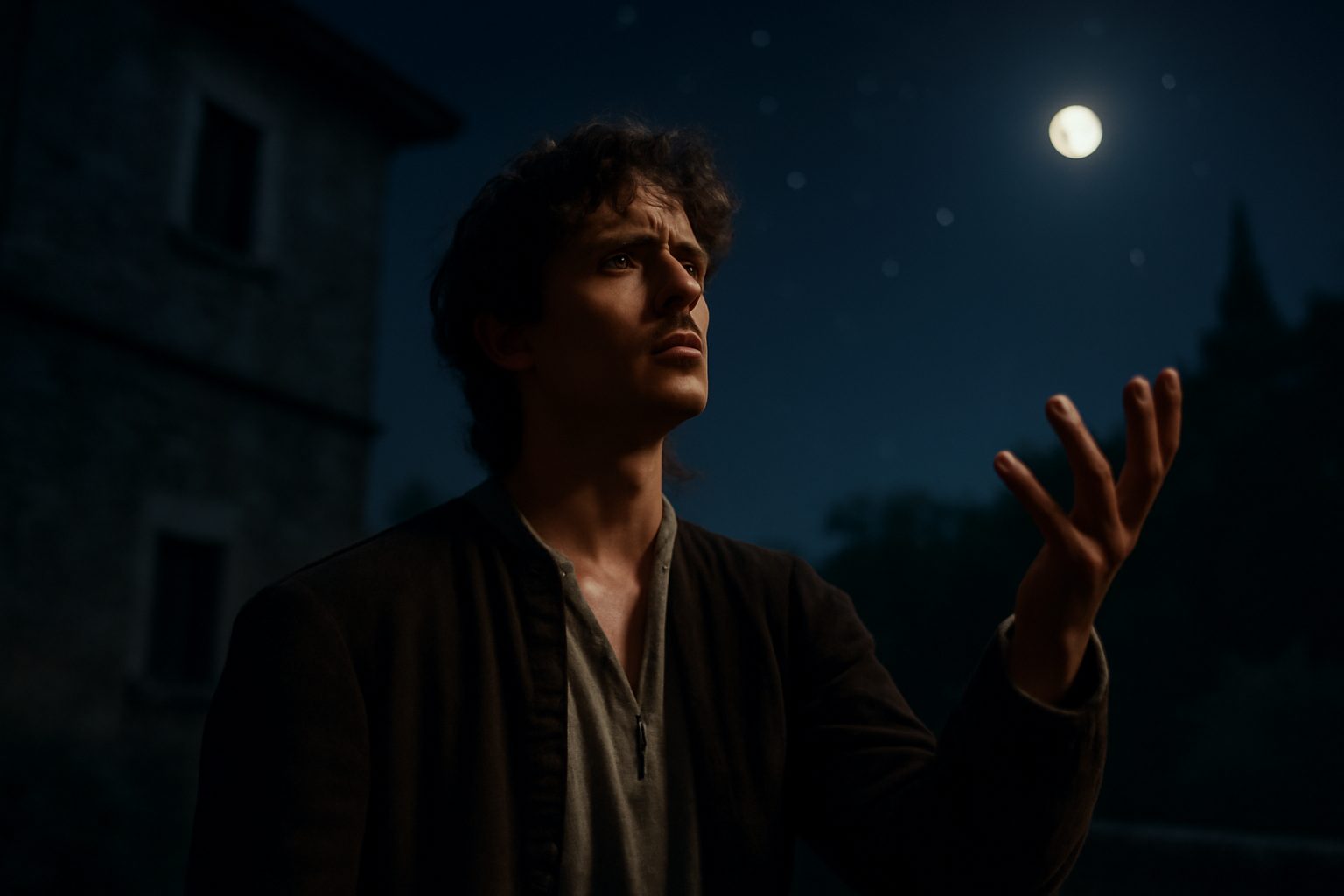
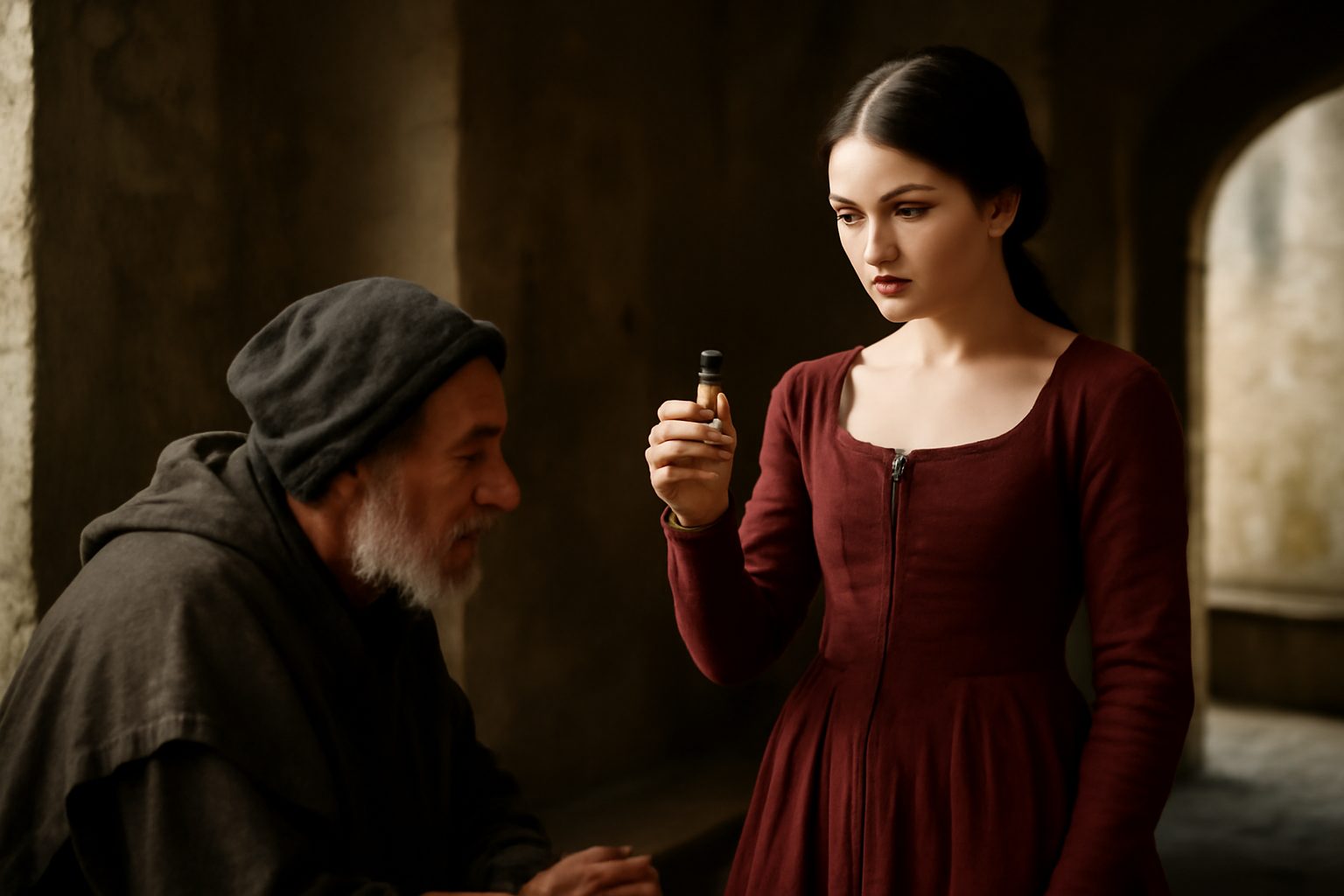
In Act 5, Scene 1 of Romeo and Juliet, Romeo, exiled in Mantua, recalls a poor apothecary whose shop is filled with decaying remnants of past wares. This line describes the shop's neglected state, hinting at the apothecary's poverty and desperation, which Romeo will later exploit to obtain poison. The imagery underscores the bleakness of Romeo's situation as he prepares for his final, tragic act.
Romeo: "Remnants of packthread and old cakes of roses,"
In modern day english, we would say:
Leftover bits of string and dried-up clumps of old rose petals.
Frequently Asked Questions
What does Romeo find in the apothecary's shop that reminds him of old, unused items?
He finds leftover pieces of string and dried-up rose petals that were once used for making perfumes.
Connections to other verses:
Connections to "Remnants of packthread and old cakes of roses"
The verse "Remnants of packthread and old cakes of roses" (/romeo-and-juliet/five/5-1/act-5-scene-1-50/) describes the impoverished and neglected state of the apothecary's shop, which Romeo visits to procure poison. This imagery of decay and scarcity is echoed in several other verses within the same scene, reinforcing themes of desperation, poverty, and the inevitability of fate.
Connection to Descriptions of the Apothecary's Shop
The depiction of the shop's squalor continues in "An alligator stuff'd, and other skins" and "Of ill-shaped fishes; and about his shelves," which further illustrate the bizarre and meager contents of the apothecary's establishment. Similarly, "A beggarly account of empty boxes" and "Green earthen pots, bladders and musty seeds" emphasize the shop's poverty and disarray, creating a cohesive image of neglect that mirrors the apothecary's own wretched state.
Connection to the Apothecary's Poverty
The apothecary's indigence is directly referenced in verses such as "Culling of simples; meagre were his looks" and "Sharp misery had worn him to the bones," which describe his gaunt and suffering appearance. Romeo's acknowledgment of this poverty is evident in "Come hither, man. I see that thou art poor" and "Art thou so bare and full of wretchedness," highlighting how the apothecary's need makes him susceptible to selling the poison despite the law.
Connection to the Poison and Romeo's Resolve
The verse also ties thematically to Romeo's acquisition of the poison, as seen in "A dram of poison, such soon-speeding gear" and "As will disperse itself through all the veins," which detail the lethal nature of the substance. Romeo's desperate determination is encapsulated in "Well, Juliet, I will lie with thee to-night" and "To Juliet's grave; for there must I use thee," showing how the apothecary's shop—and its remnants—become instrumental in his tragic plan.
Connection to Themes of Death and Destiny
The decay implied by "old cakes of roses" foreshadows the theme of mortality that permeates the scene, such as in "Her body sleeps in Capel's monument" and "That the life-weary taker may fall dead." Additionally, Romeo's defiance of fate in "Is it even so? then I defy you, stars!" is juxtaposed with the tangible symbols of decay in the apothecary's shop, underscoring the inescapable progression toward tragedy.