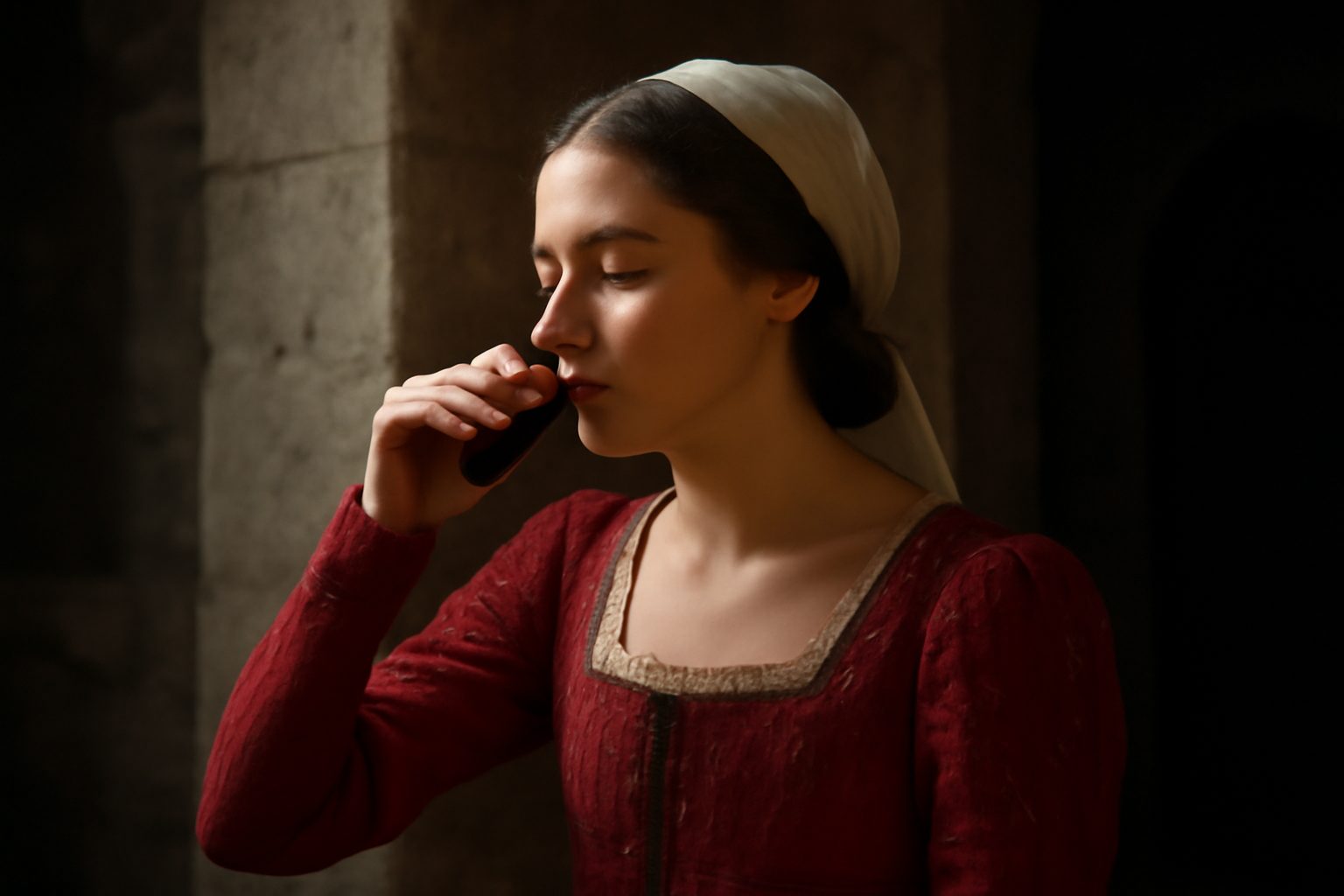
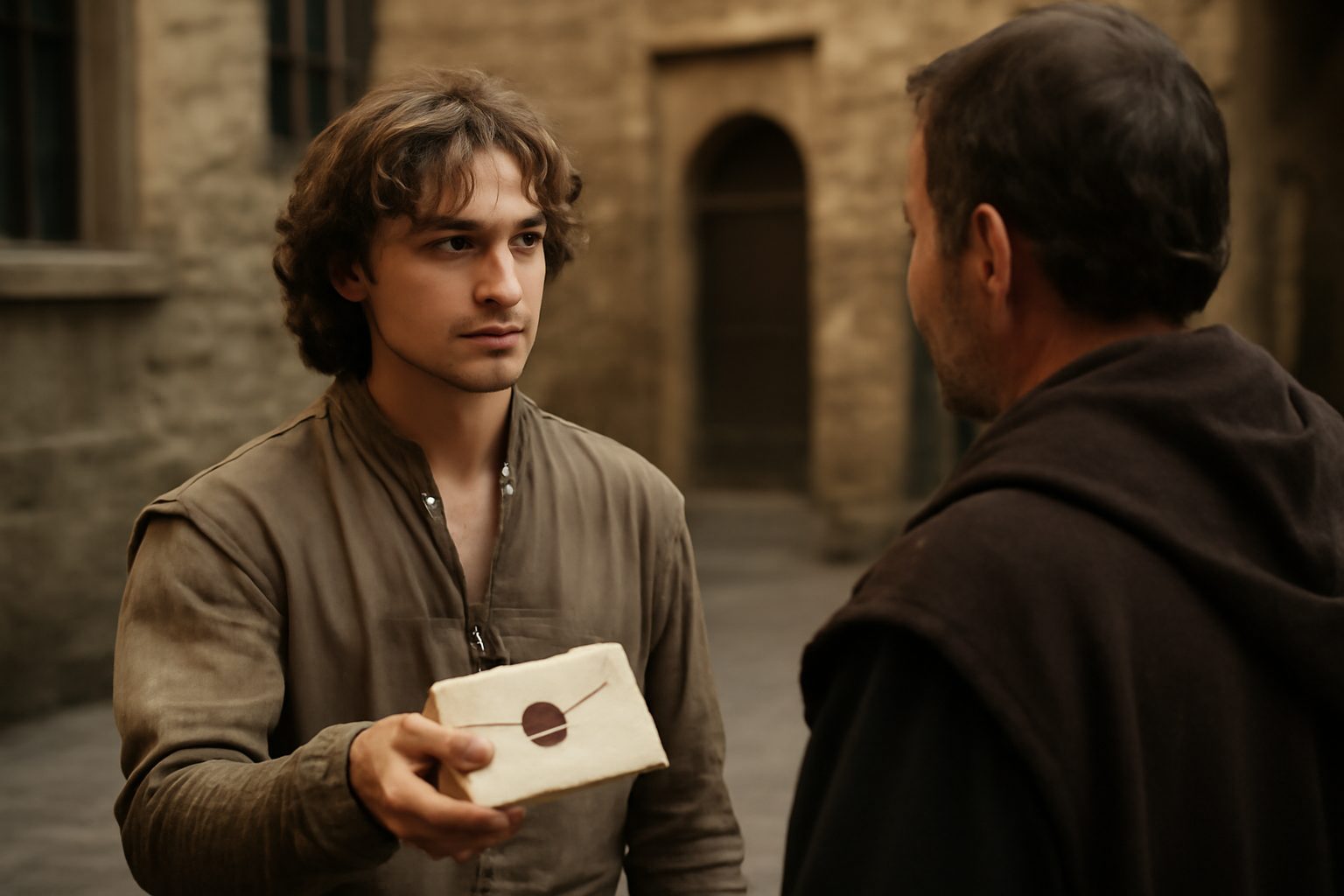
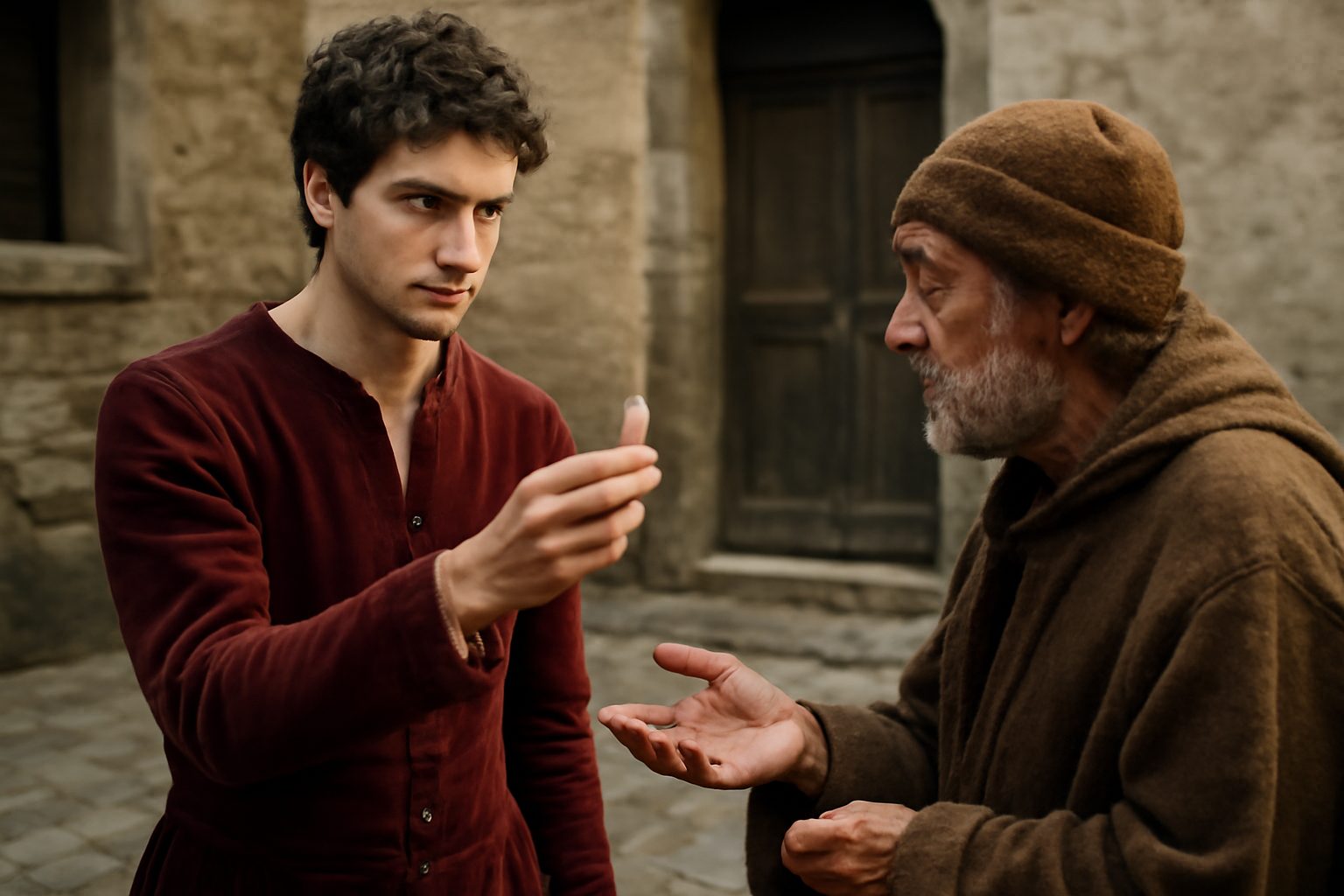
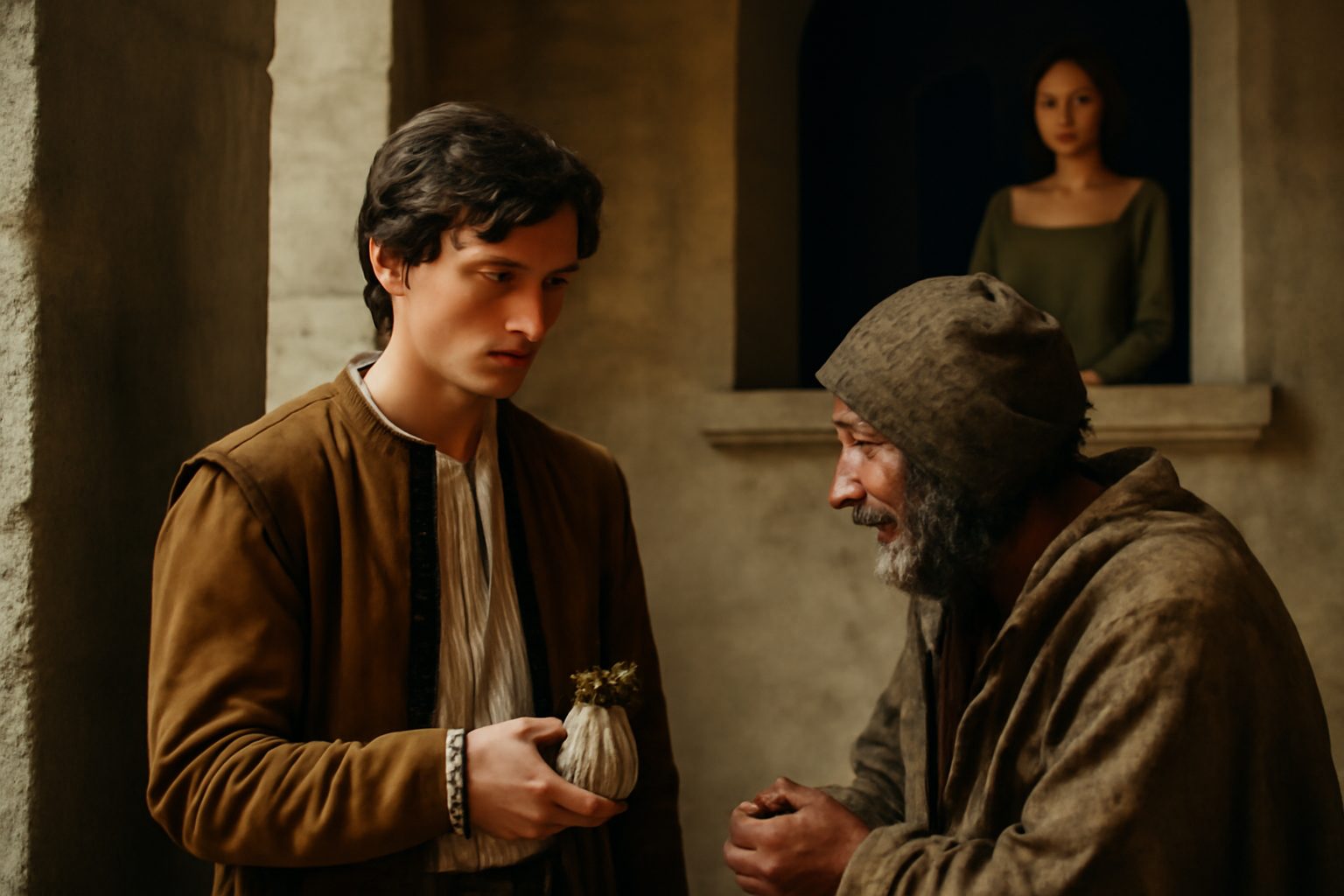
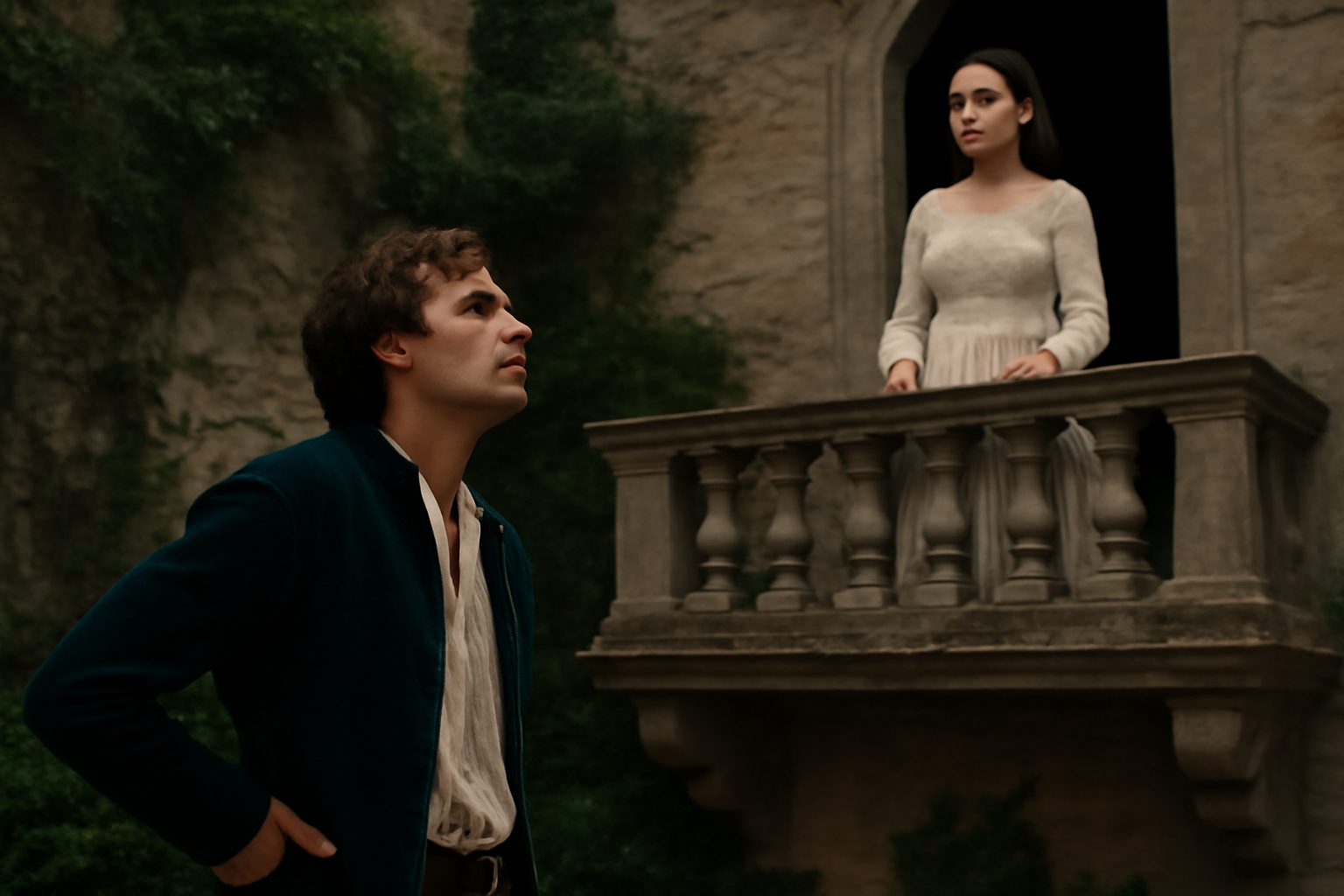
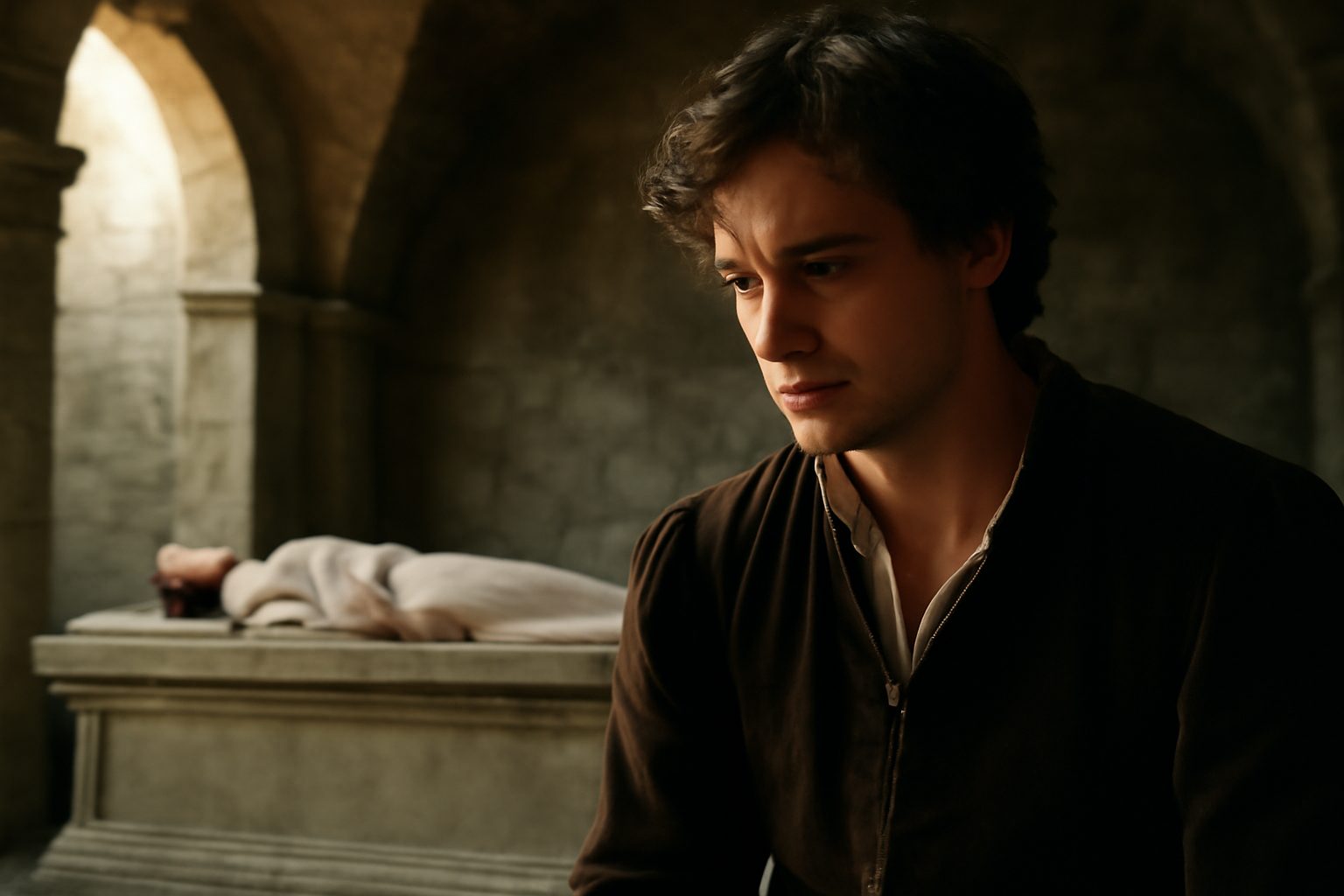
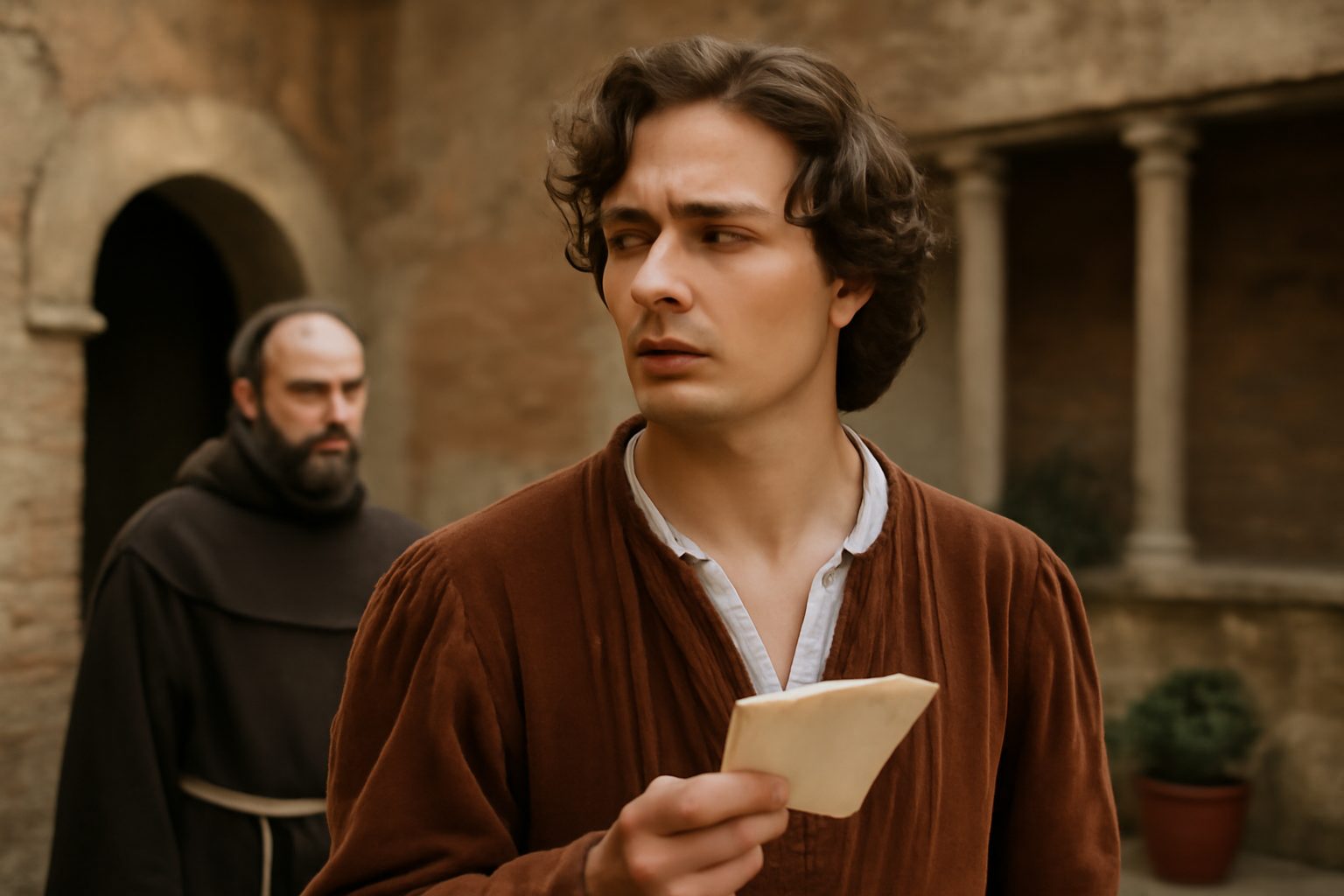
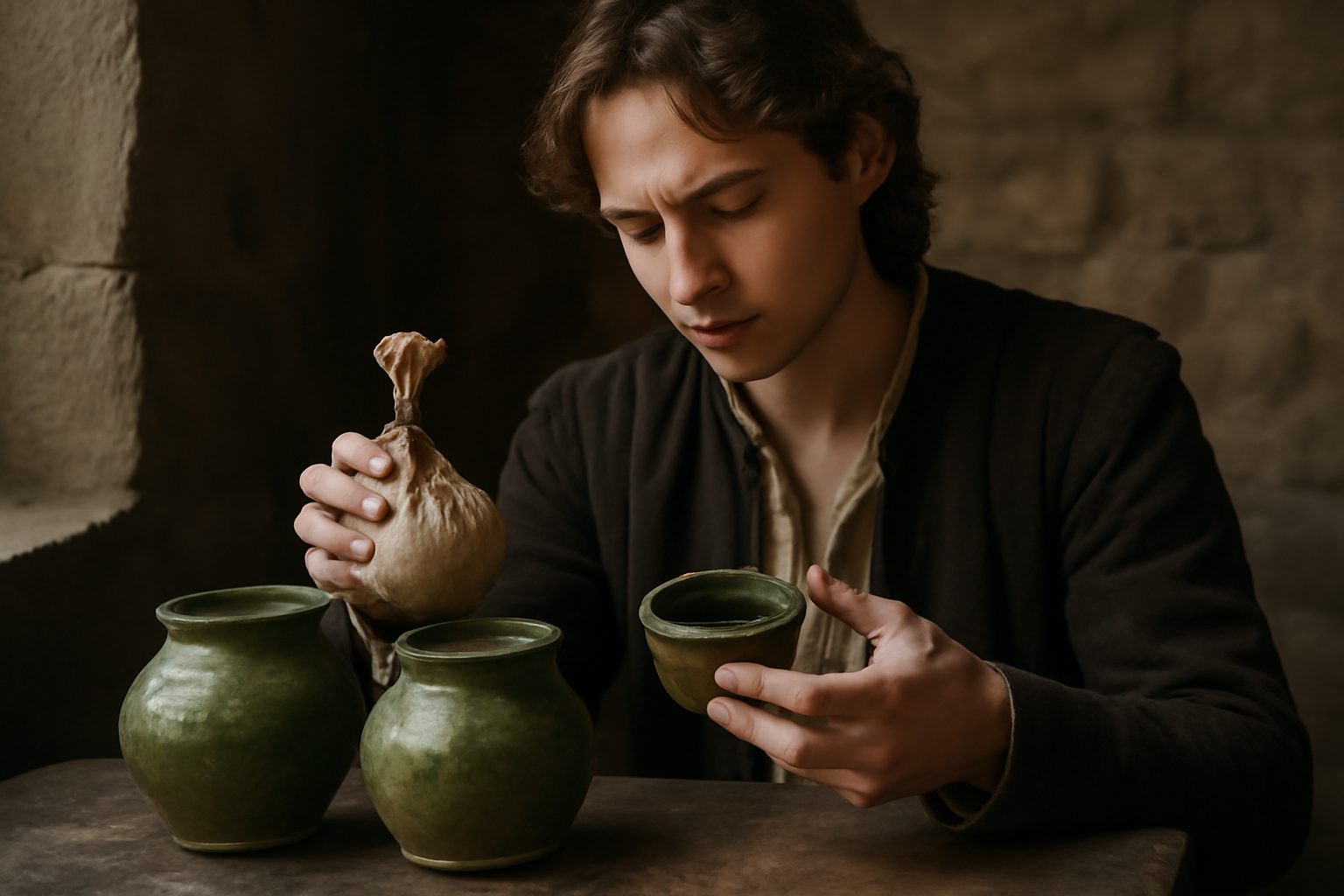
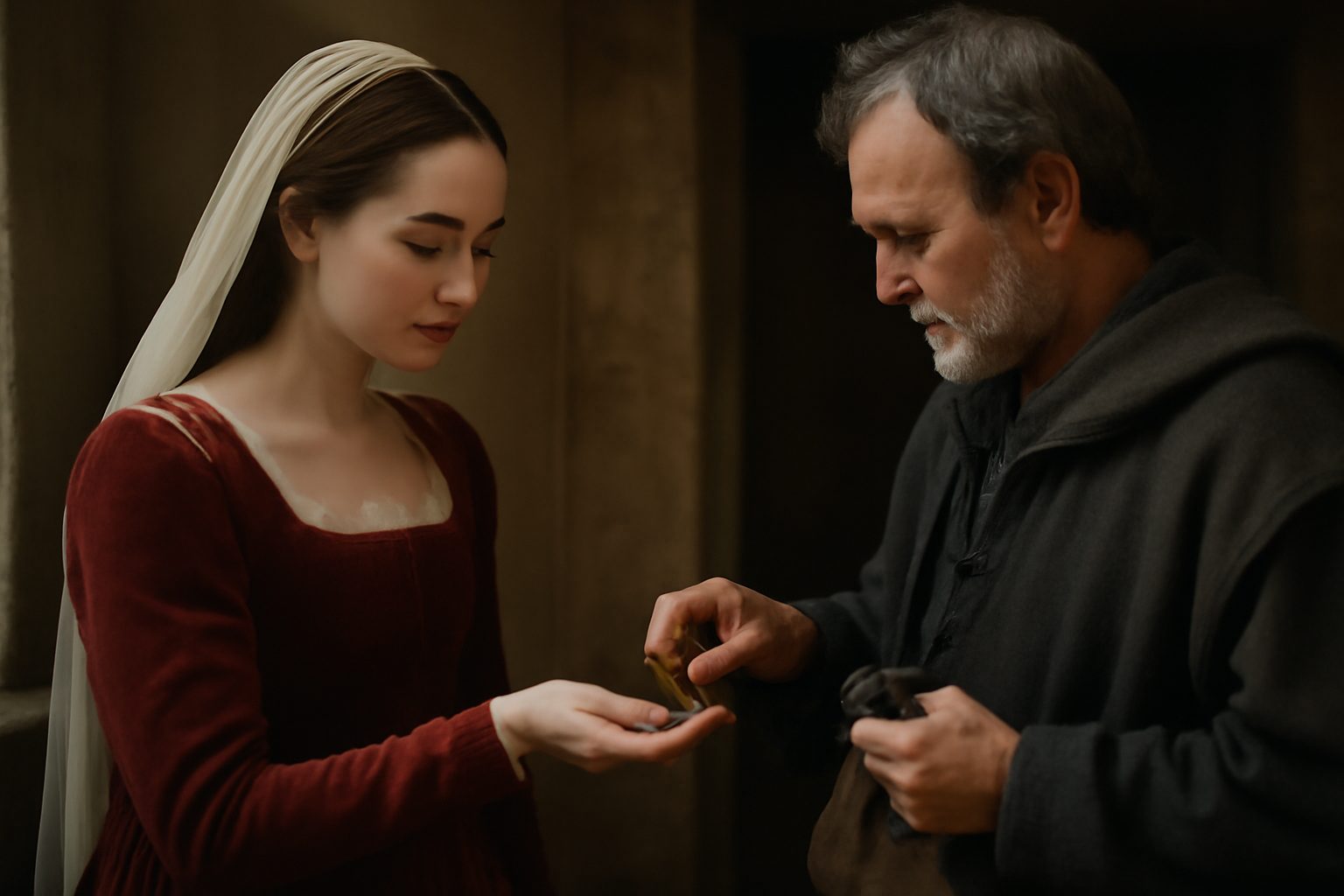
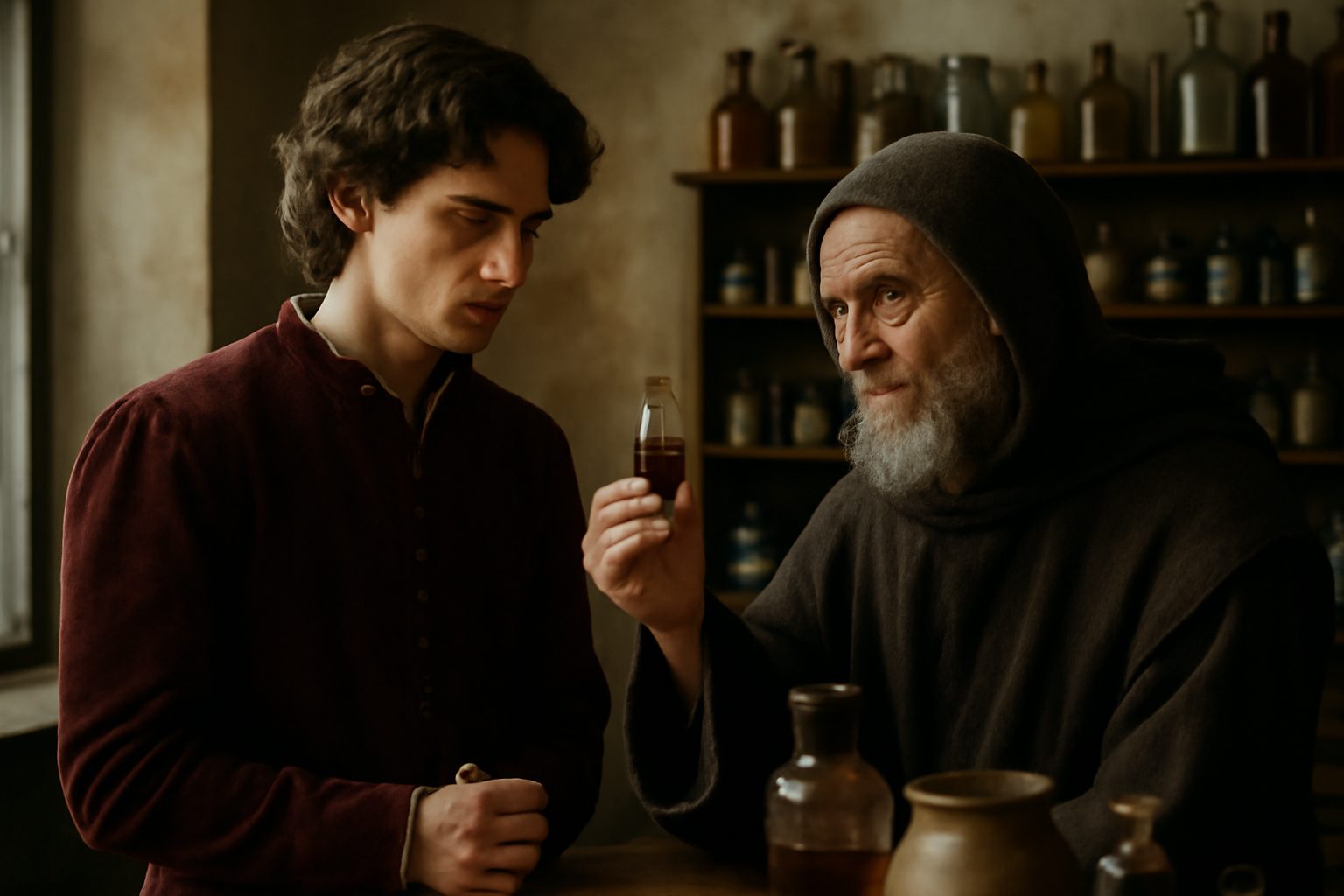
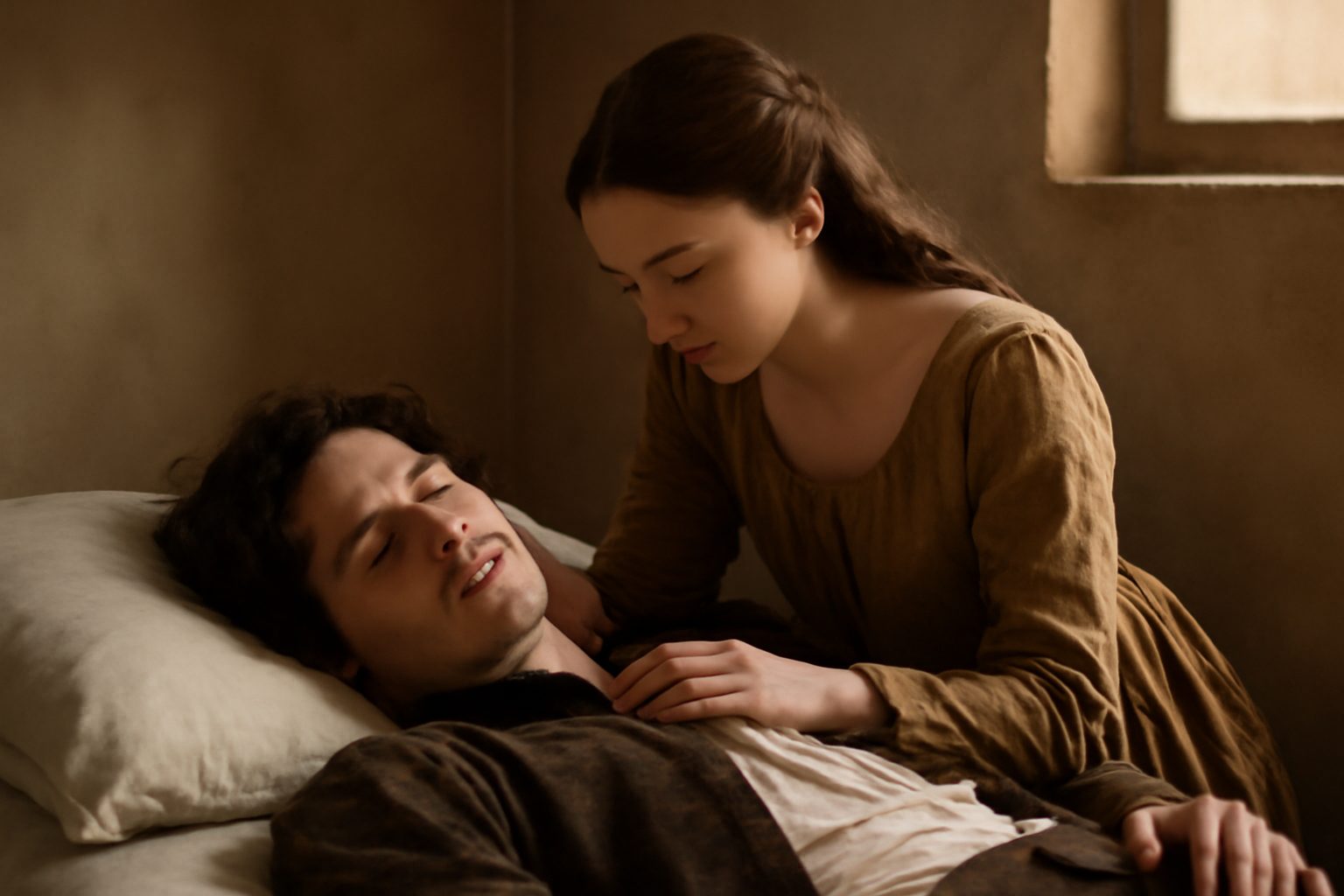
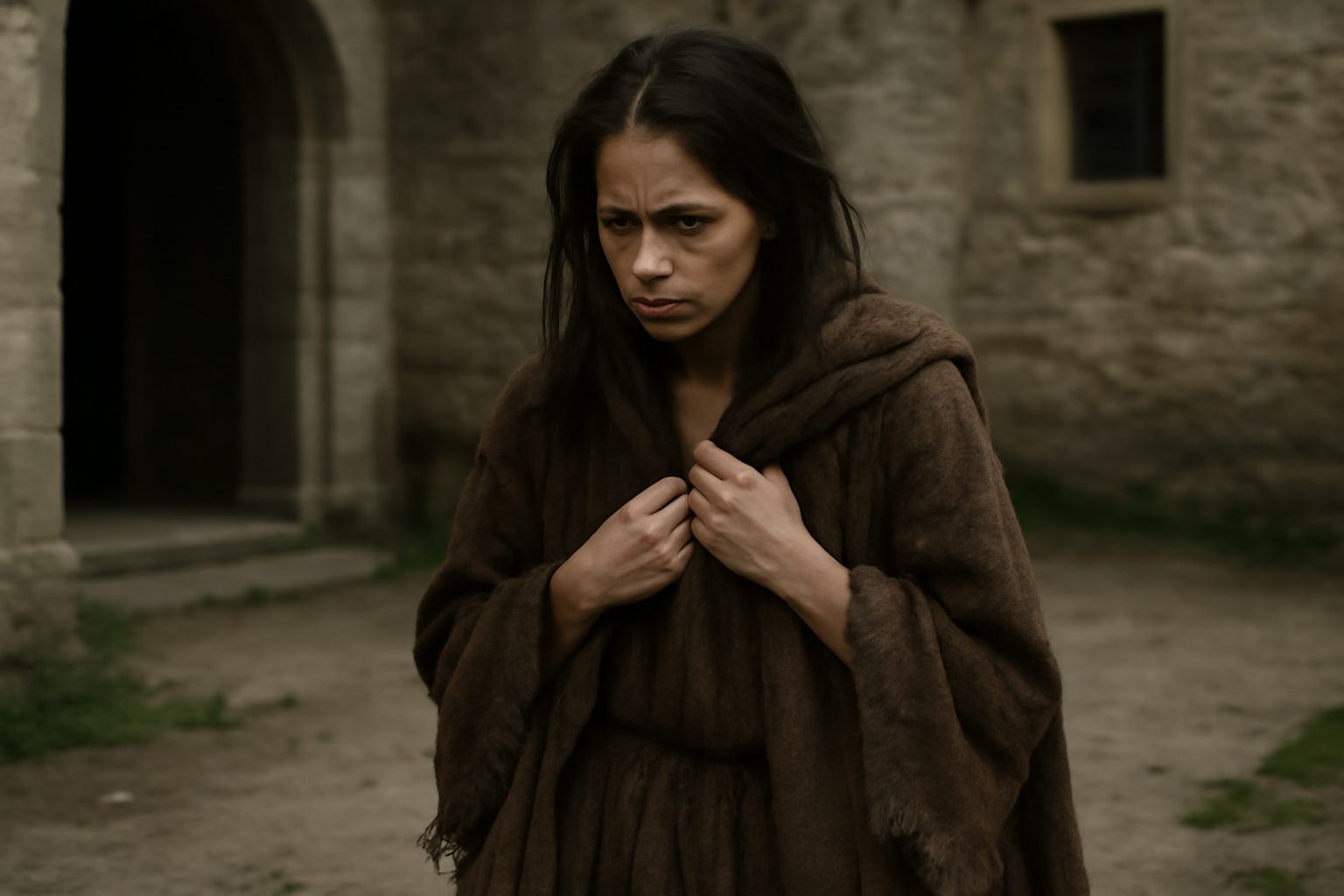
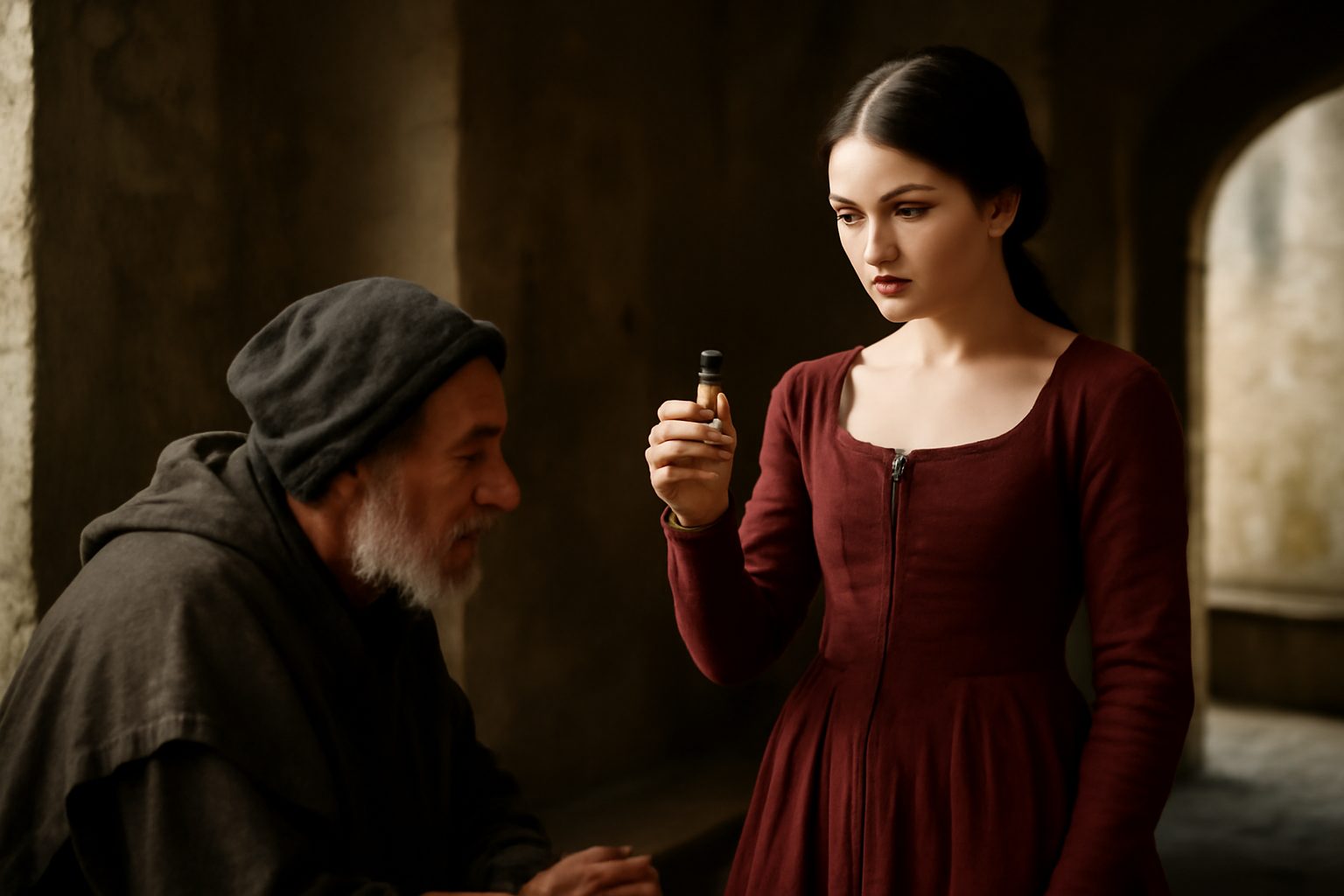
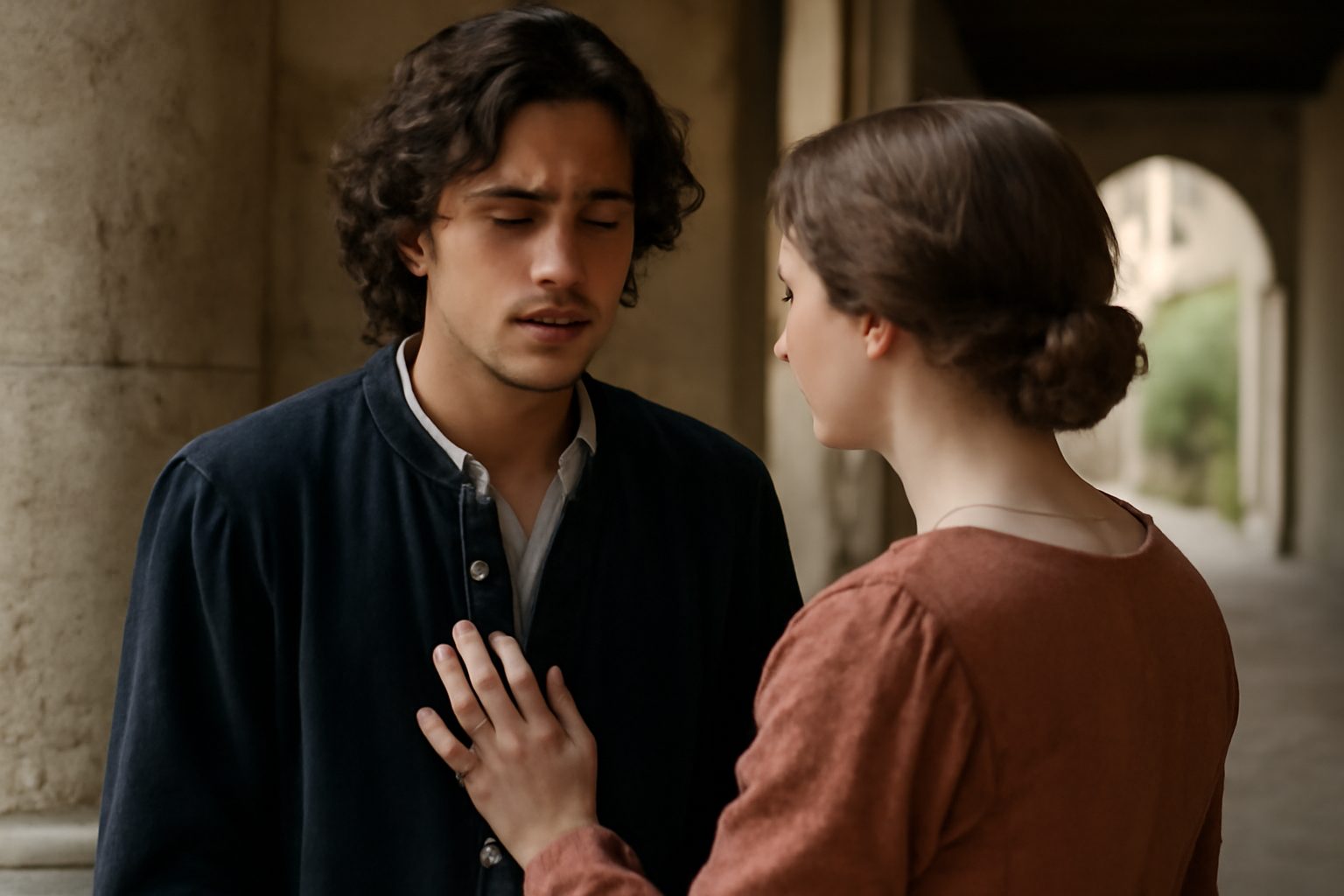
In Act 5, Scene 1 of Romeo and Juliet, Romeo is in Mantua, unaware of Juliet's plan to fake her death. Desperate for news, he speaks with Balthasar, who mistakenly reports that Juliet has died. This line refers to an apothecary Romeo seeks out, a poor and desperate man who would sell poison despite the law.
Romeo: "Here lives a caitiff wretch would sell it him.'"
In modern day english, we would say:
A miserable wretch lives here who would sell it to him.
Frequently Asked Questions
What does Romeo call the person he is talking about in this line?
Romeo calls the person a caitiff wretch, which means a miserable or cowardly person.
What does Romeo think this person would do?
Romeo thinks this person would sell something to someone else.
Connections to other verses:
Connections to "Here lives a caitiff wretch would sell it him."
This line, spoken by Romeo, directly introduces the apothecary as a desperate and impoverished figure willing to sell poison despite the law. It connects thematically and narratively to several other verses in the scene.
Poverty and Desperation
The phrase "caitiff wretch" emphasizes the apothecary's wretchedness, which is echoed in Romeo's observation of the man's poverty in Noting this penury, to myself I said. Romeo's recognition of the apothecary's need leads directly to the assertion in And this same needy man must sell it me, reinforcing the transactional dynamic driven by desperation.
Introduction and Identification
Romeo's declaration here follows his earlier recollection in I do remember an apothecary,--, where he first brings the character to mind. The specific location is confirmed when Romeo arrives and states As I remember, this should be the house, tying the "caitiff wretch" directly to the physical setting.
Moral and Legal Context
The apothecary's willingness to sell poison, hinted at in this line, is explicitly against the law, as noted in Whose sale is present death in Mantua. This illegal transaction is further justified by the apothecary's own acknowledgment of his consent due to poverty in My poverty, but not my will, consents, which Romeo counters with I pay thy poverty, and not thy will.
Imagery of Desolation
The apothecary's impoverished state, suggested by "caitiff wretch," is vividly described in Romeo's earlier observations: Culling of simples; meagre were his looks and Sharp misery had worn him to the bones. The bleak setting of his shop, with A beggarly account of empty boxes, reinforces the connection between his physical and moral desolation.