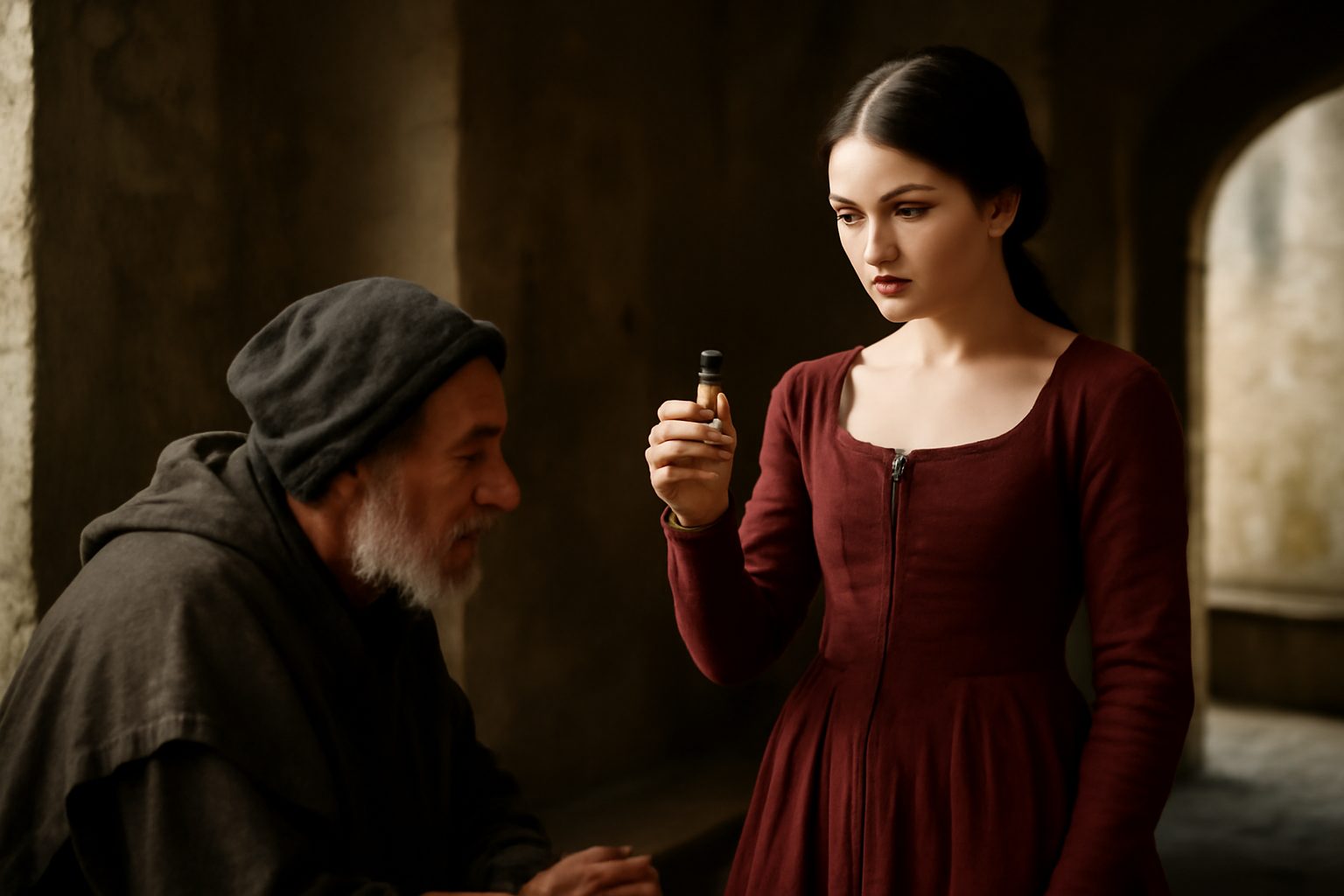
In Act 5, Scene 1 of Romeo and Juliet, Romeo, exiled in Mantua, receives news from Balthasar about Juliet's supposed death. Distraught, he resolves to return to Verona, unaware that Friar Laurence's plan involving a sleeping potion has gone awry. The verse refers to the dire consequence—death—for anyone selling poison in Mantua, which Romeo seeks to end his life beside Juliet.
Romeo: "Whose sale is present death in Mantua,"
In modern day english, we would say:
In Mantua, selling this poison is punishable by immediate death.
Frequently Asked Questions
What does Romeo mean when he says that selling a certain item is punishable by death in Mantua?
Romeo means that in Mantua, selling poison is a crime that is punished by death.
Connections to other verses:
Connections to "Whose sale is present death in Mantua"
Legal Prohibition and Desperation
The verse "Whose sale is present death in Mantua" directly connects to "Such mortal drugs I have; but Mantua's law", where the Apothecary confirms possessing deadly substances despite legal restrictions. This legal tension is further emphasized in "Is death to any he that utters them", reinforcing the severe punishment for selling poison.
Poverty as Motivation
Romeo's recognition of the Apothecary's poverty in "Come hither, man. I see that thou art poor:" and "Art thou so bare and full of wretchedness" explains why the Apothecary would risk "present death." The Apothecary himself acknowledges this in "My poverty, but not my will, consents", showing how economic desperation overrides legal fear.
Romeo's Resolve and Foreshadowing
The verse ties to Romeo's determination to defy fate after learning of Juliet's death, as seen in "Is it even so? then I defy you, stars!". His plan to acquire poison culminates in "Well, Juliet, I will lie with thee to-night", directly linking the prohibited sale to his suicidal intent.
Moral and Ironic Contrast
Romeo's payment for the poison in "I pay thy poverty, and not thy will" highlights the transactional nature of the deadly exchange. This contrasts ironically with "There is thy gold, worse poison to men's souls", where Romeo condemns wealth as more destructive than the physical poison.