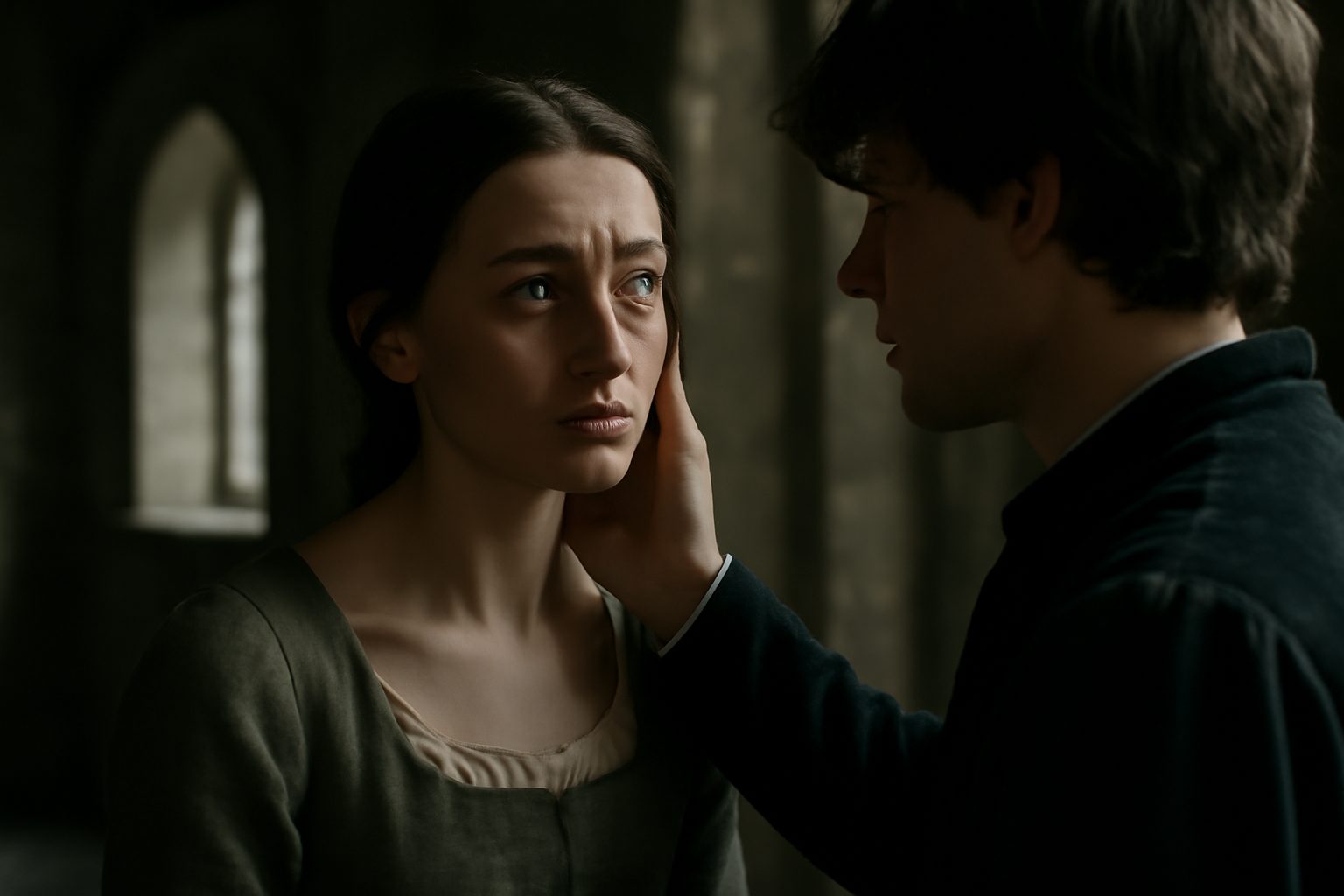
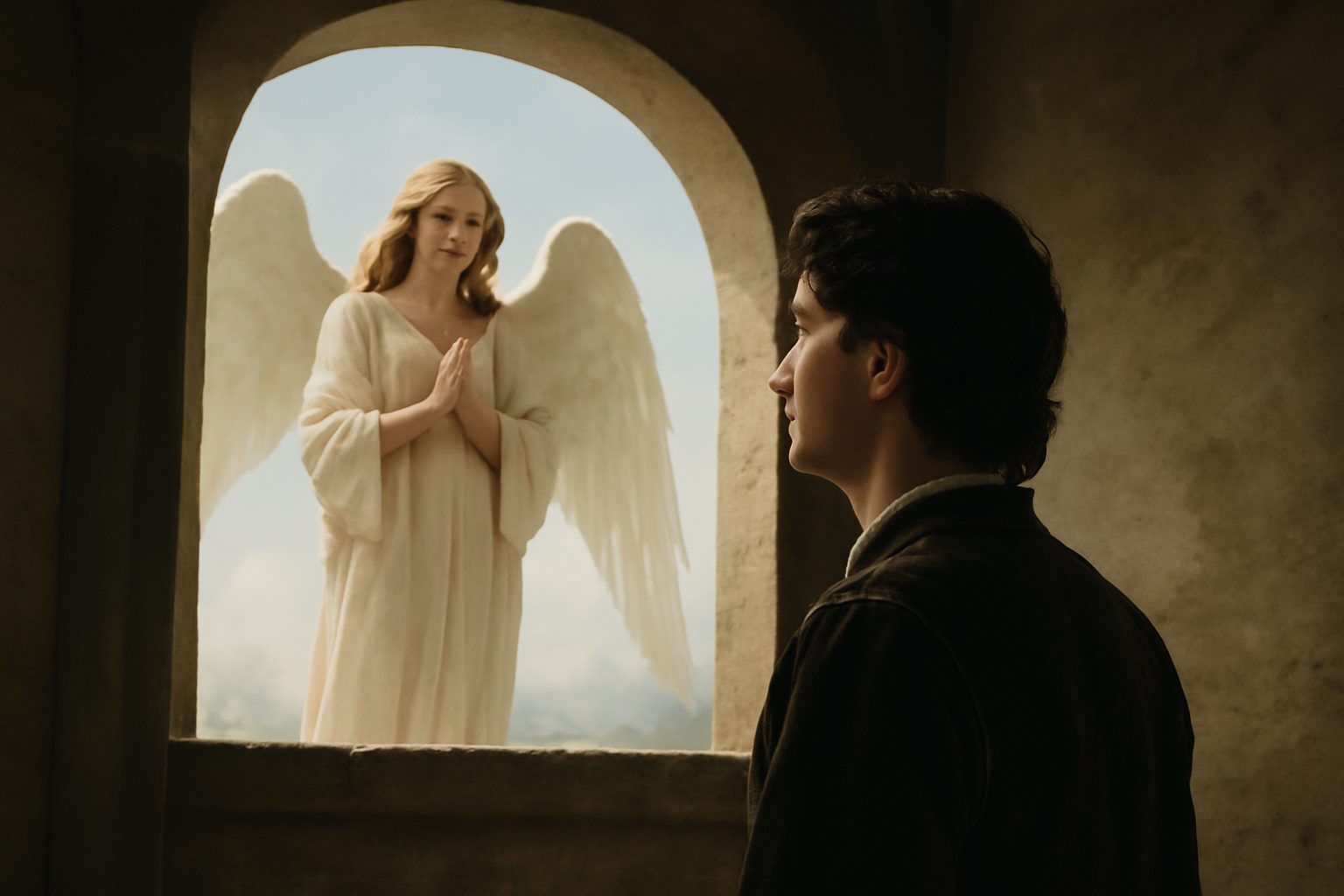
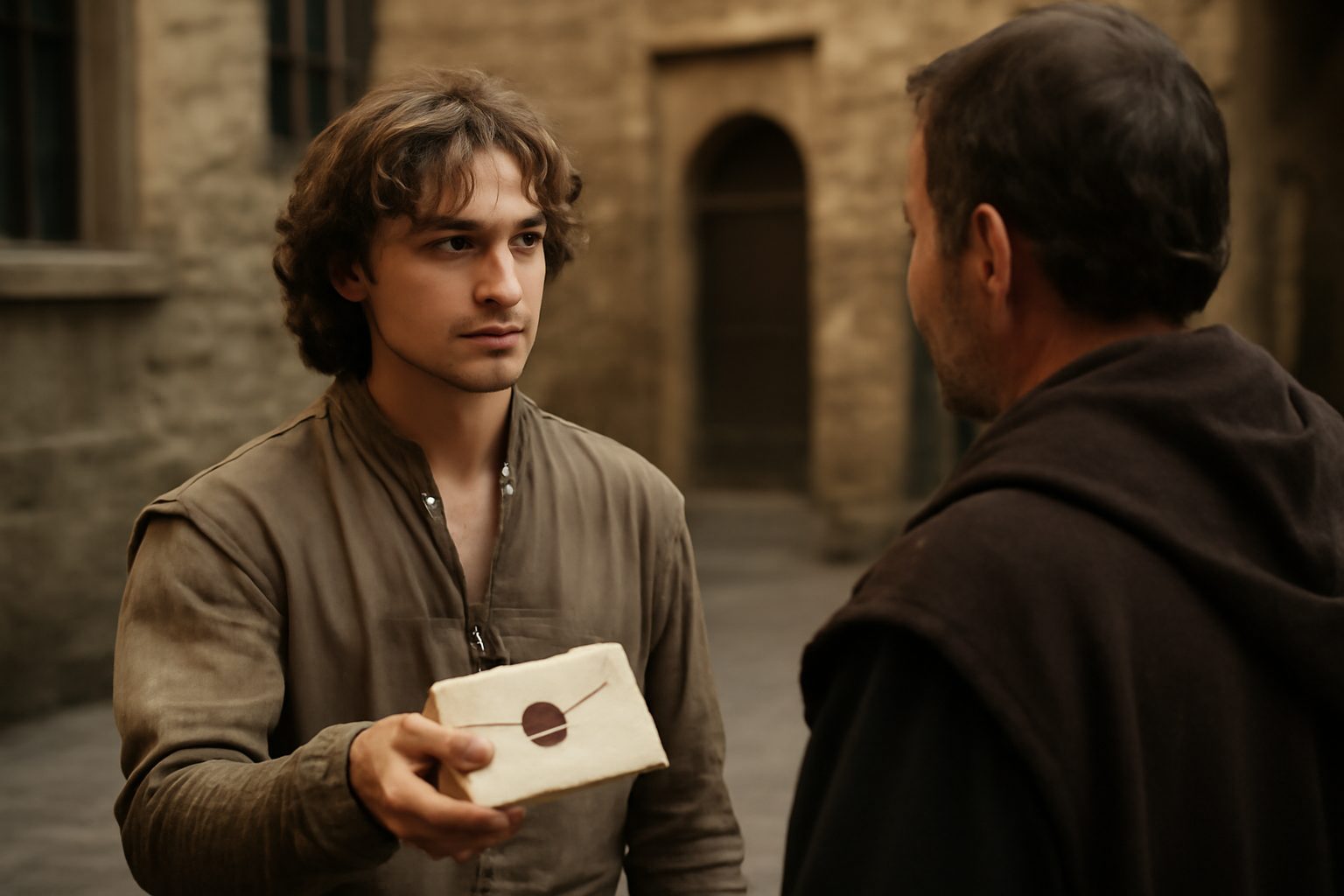
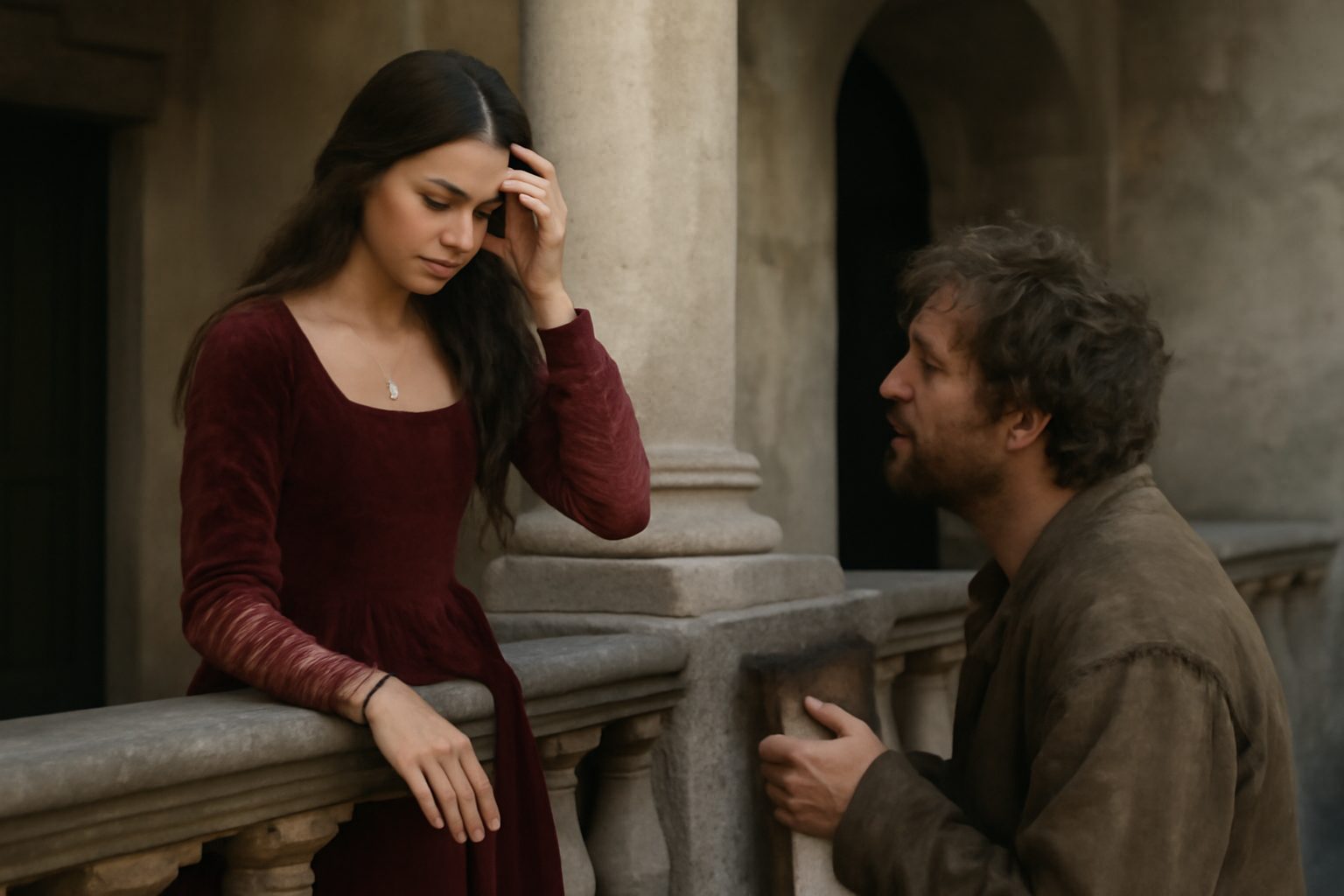
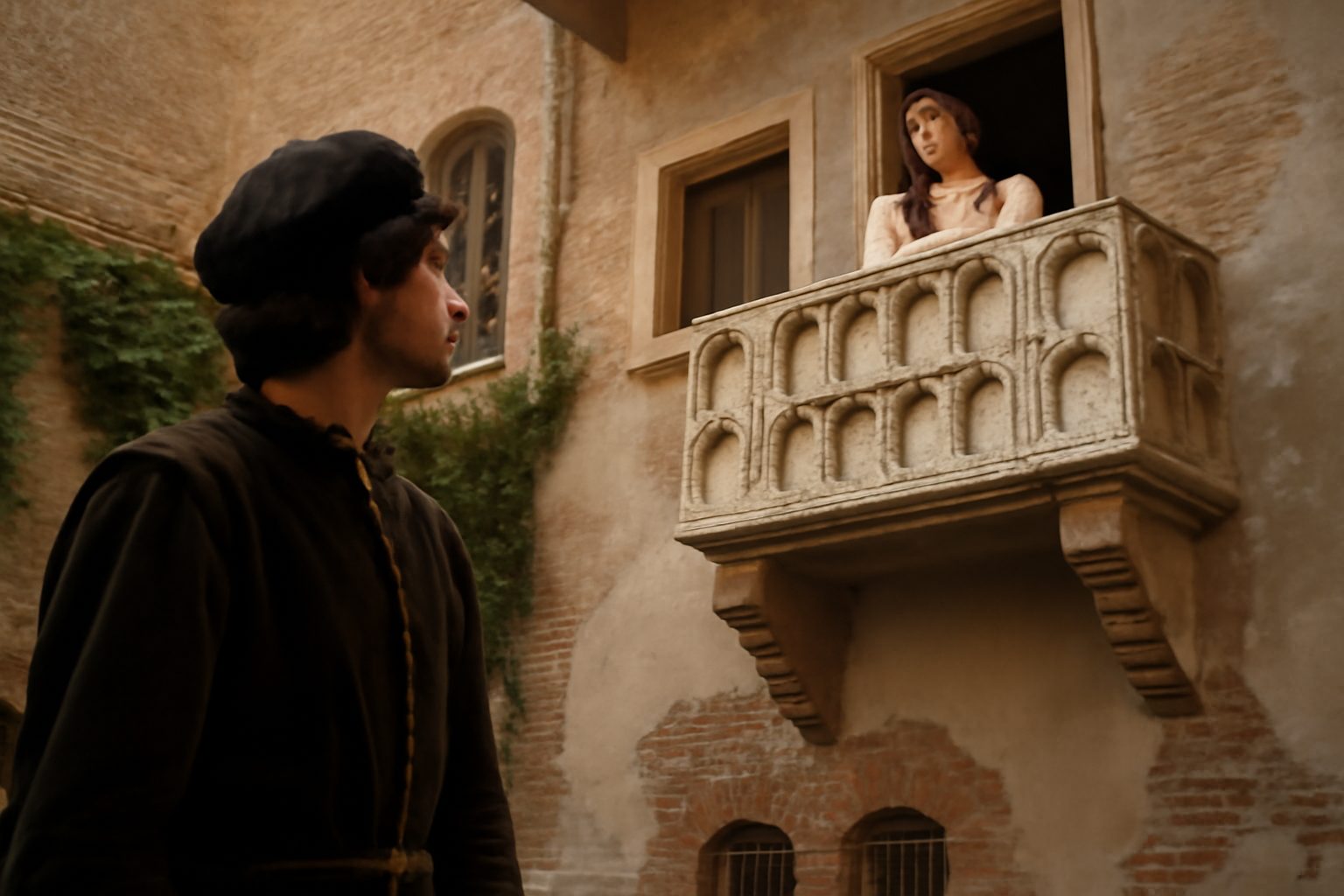
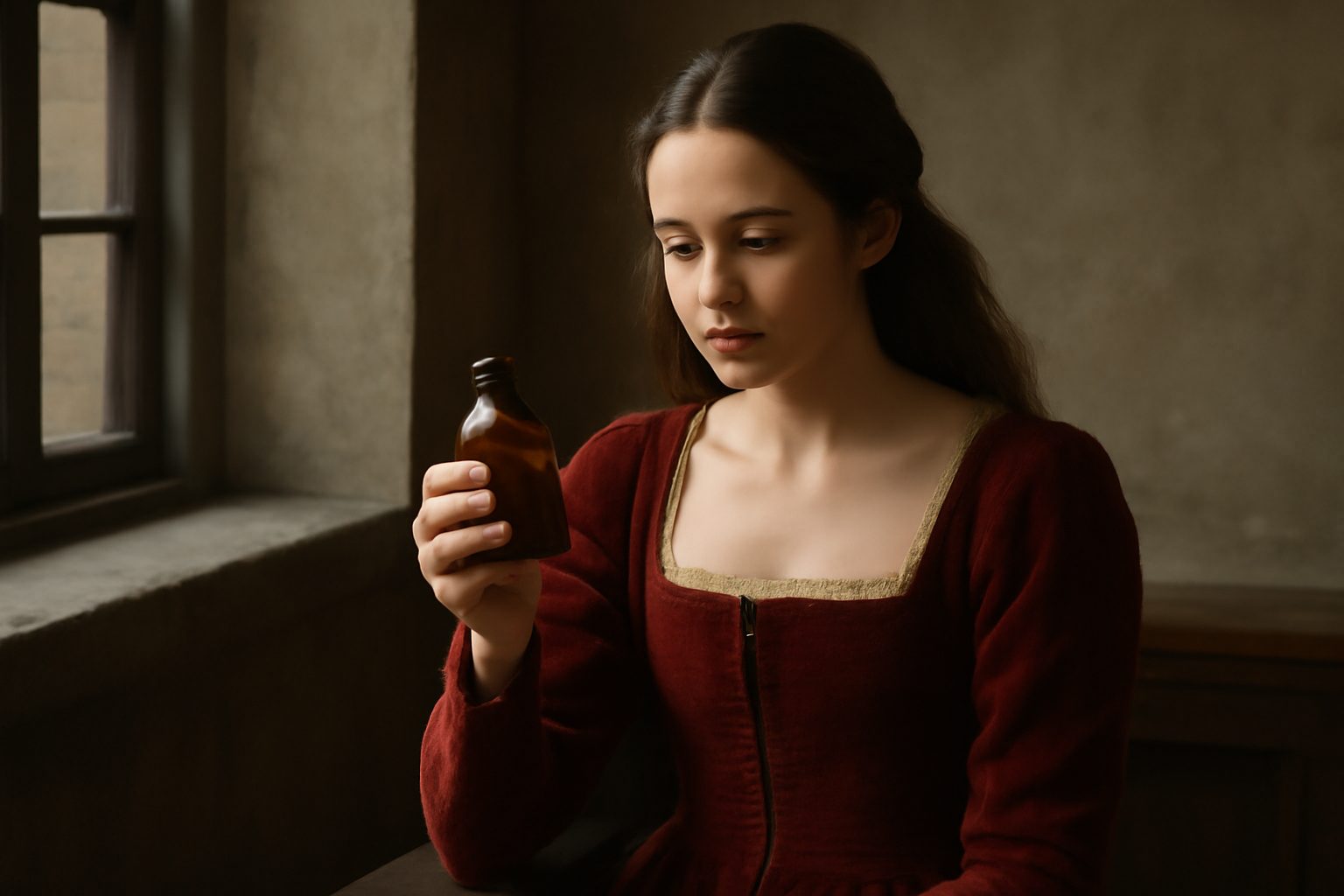
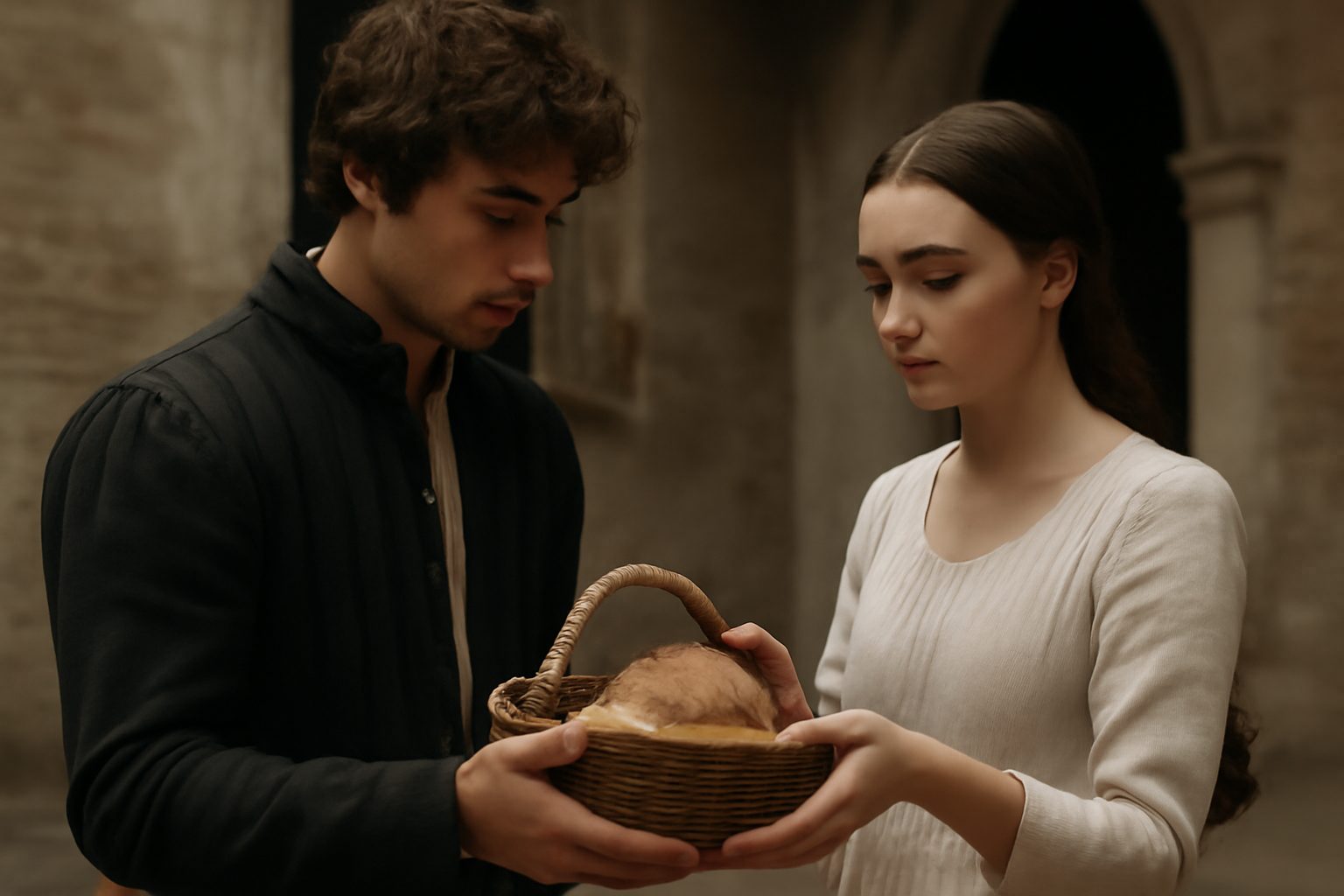
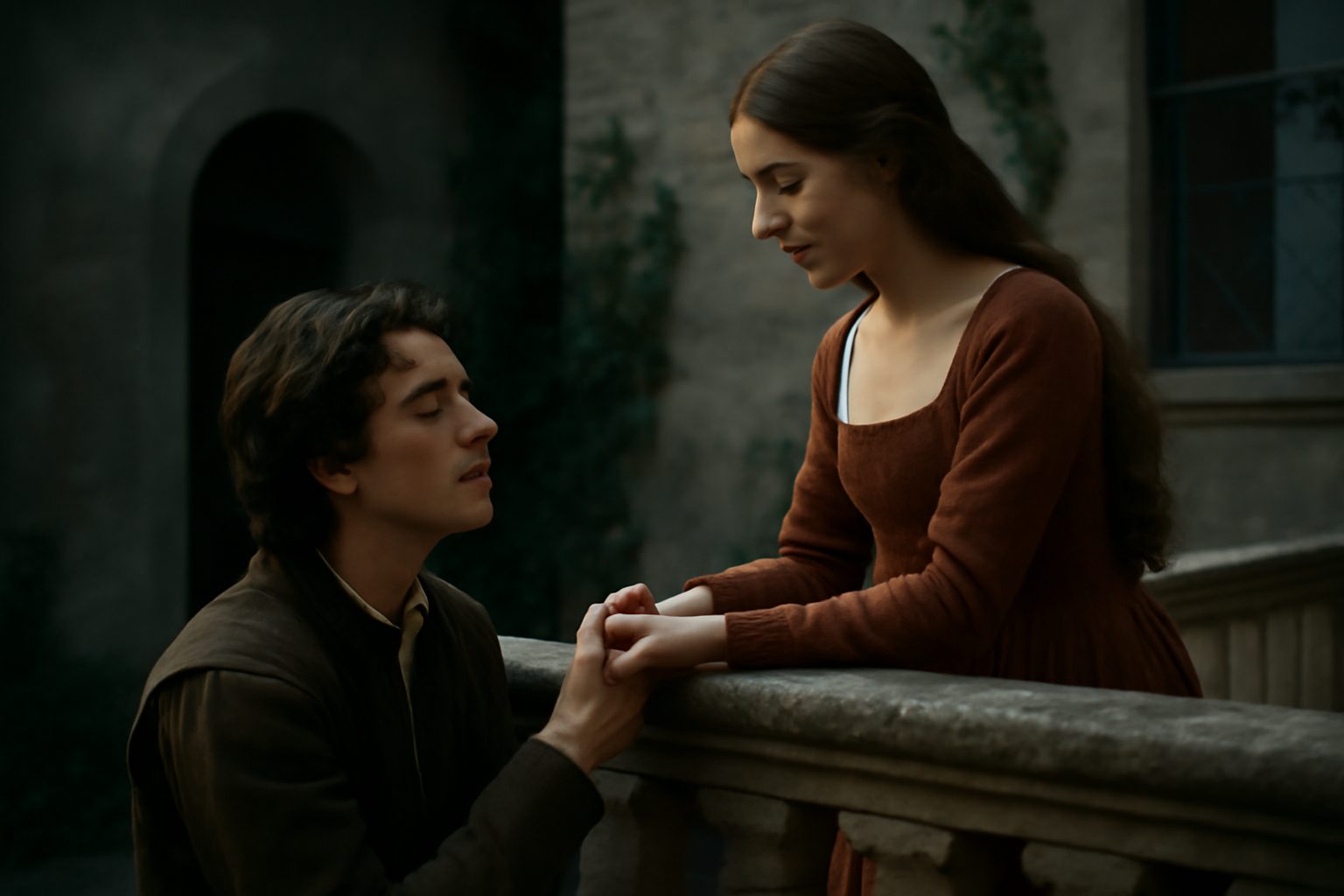
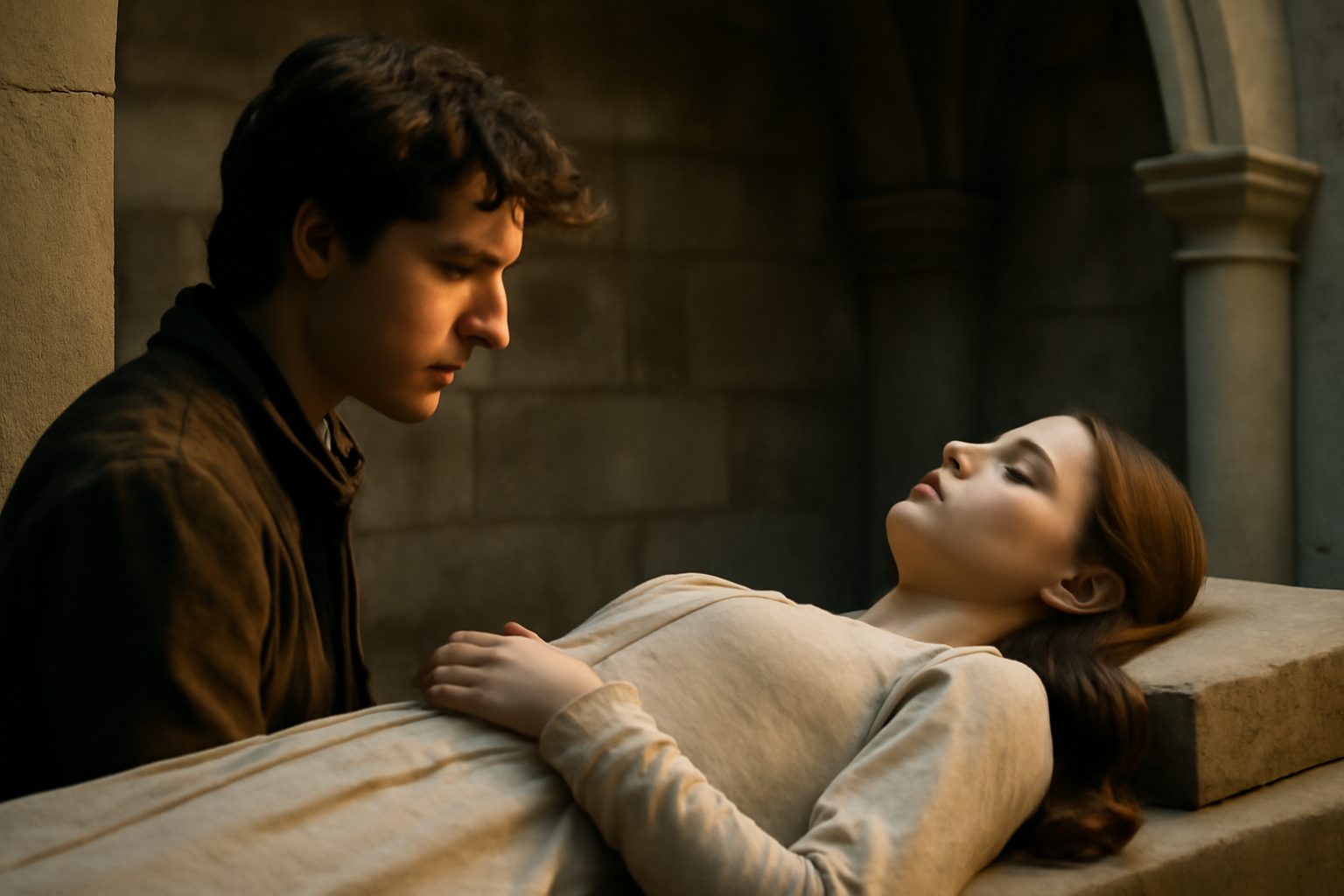
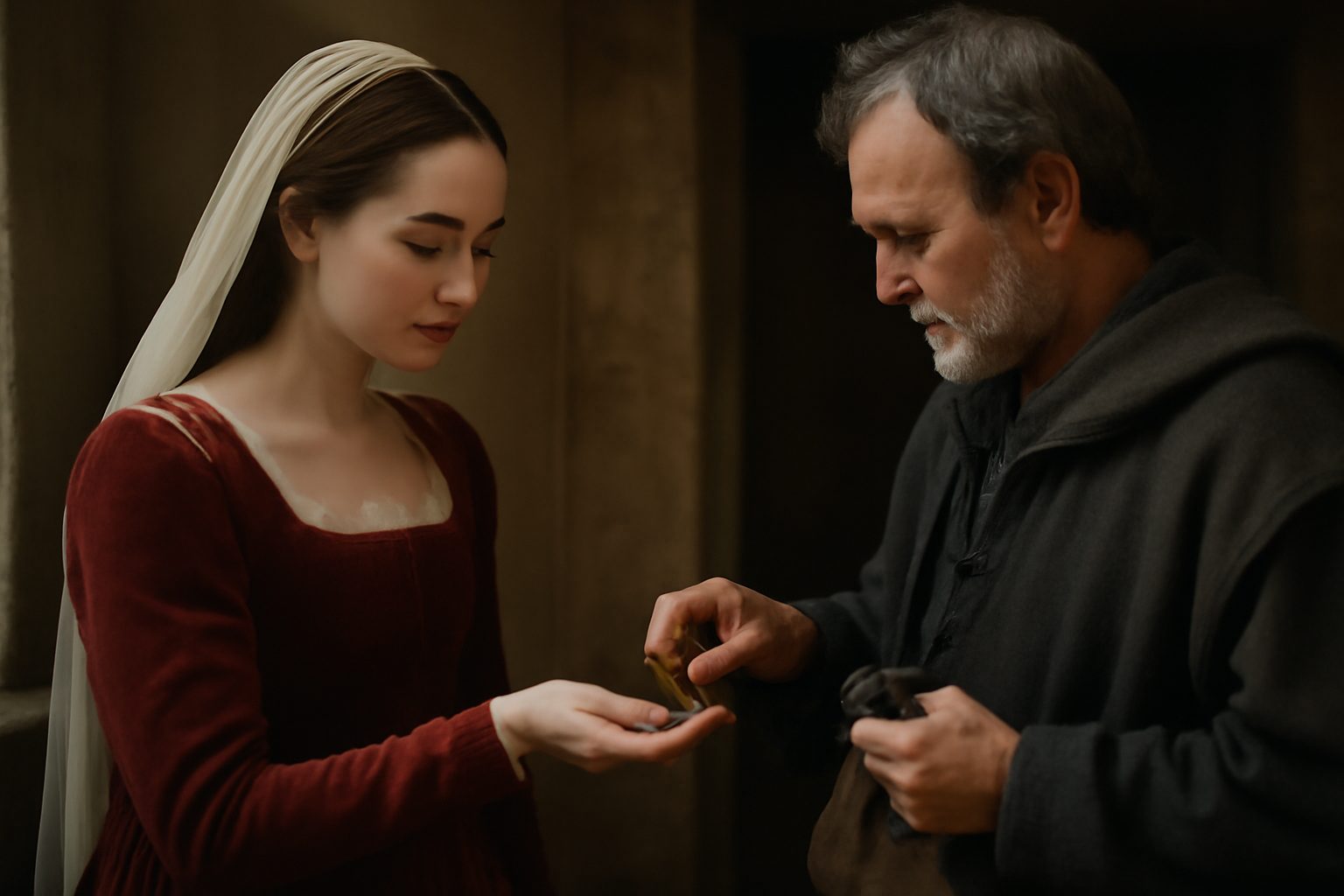
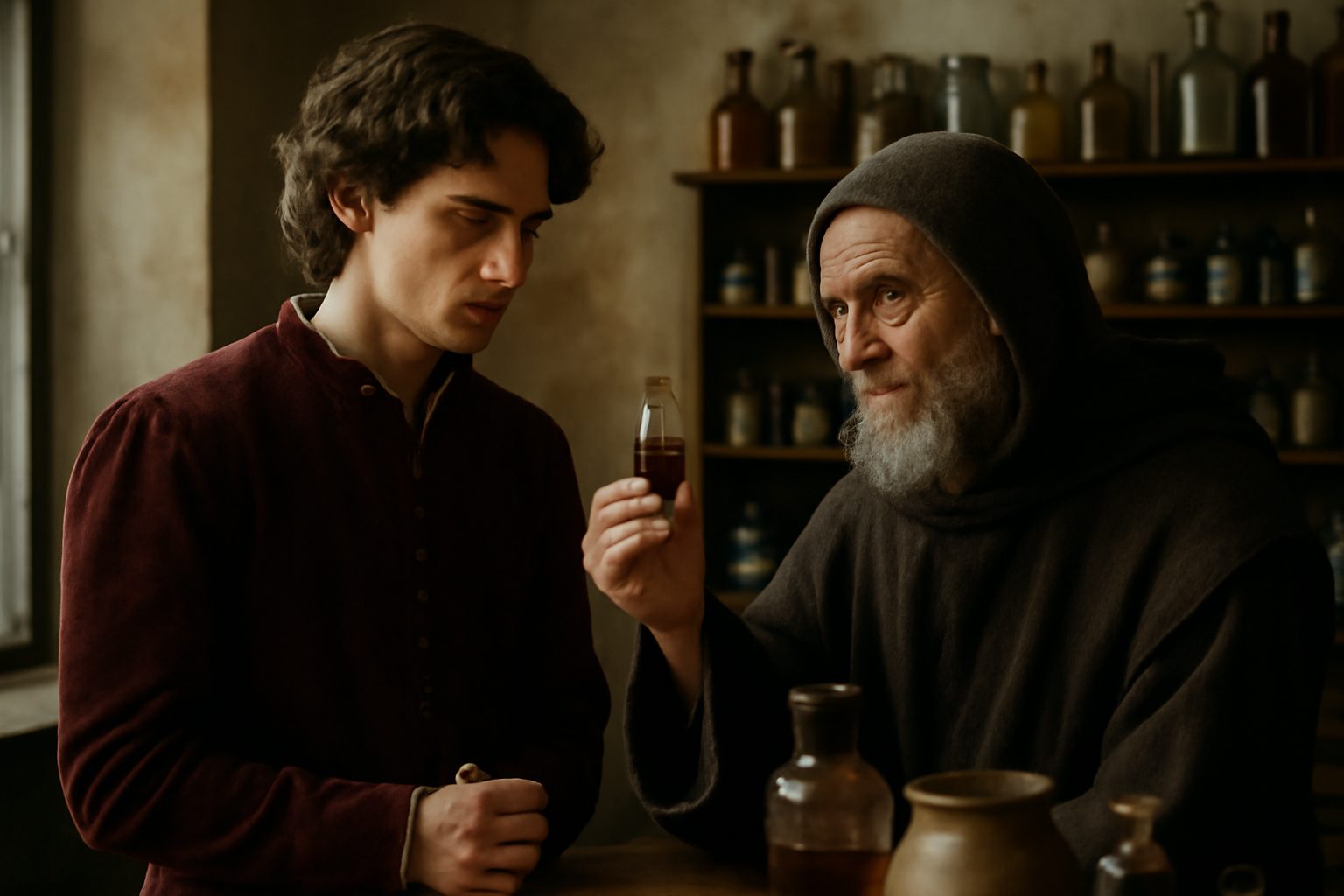
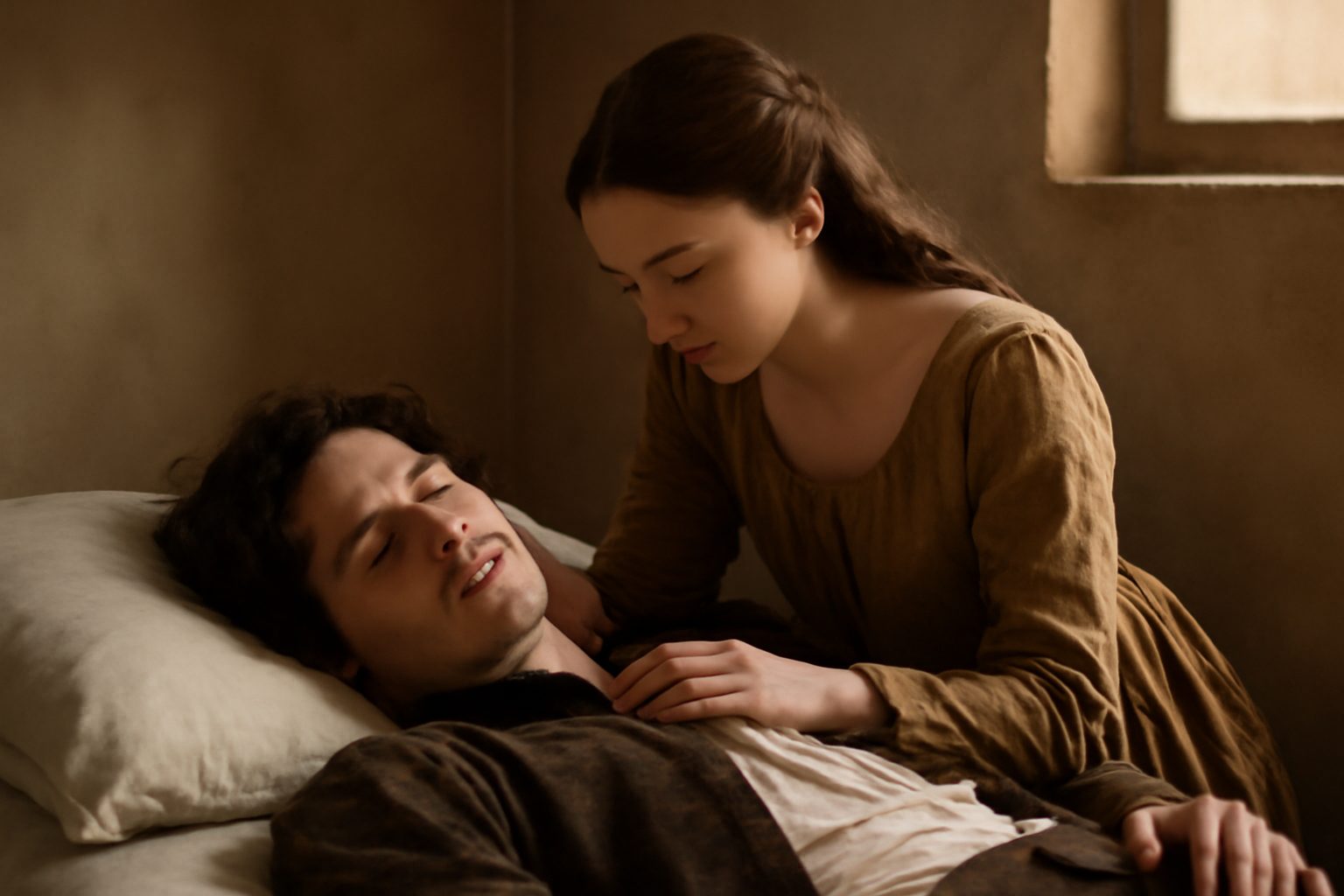
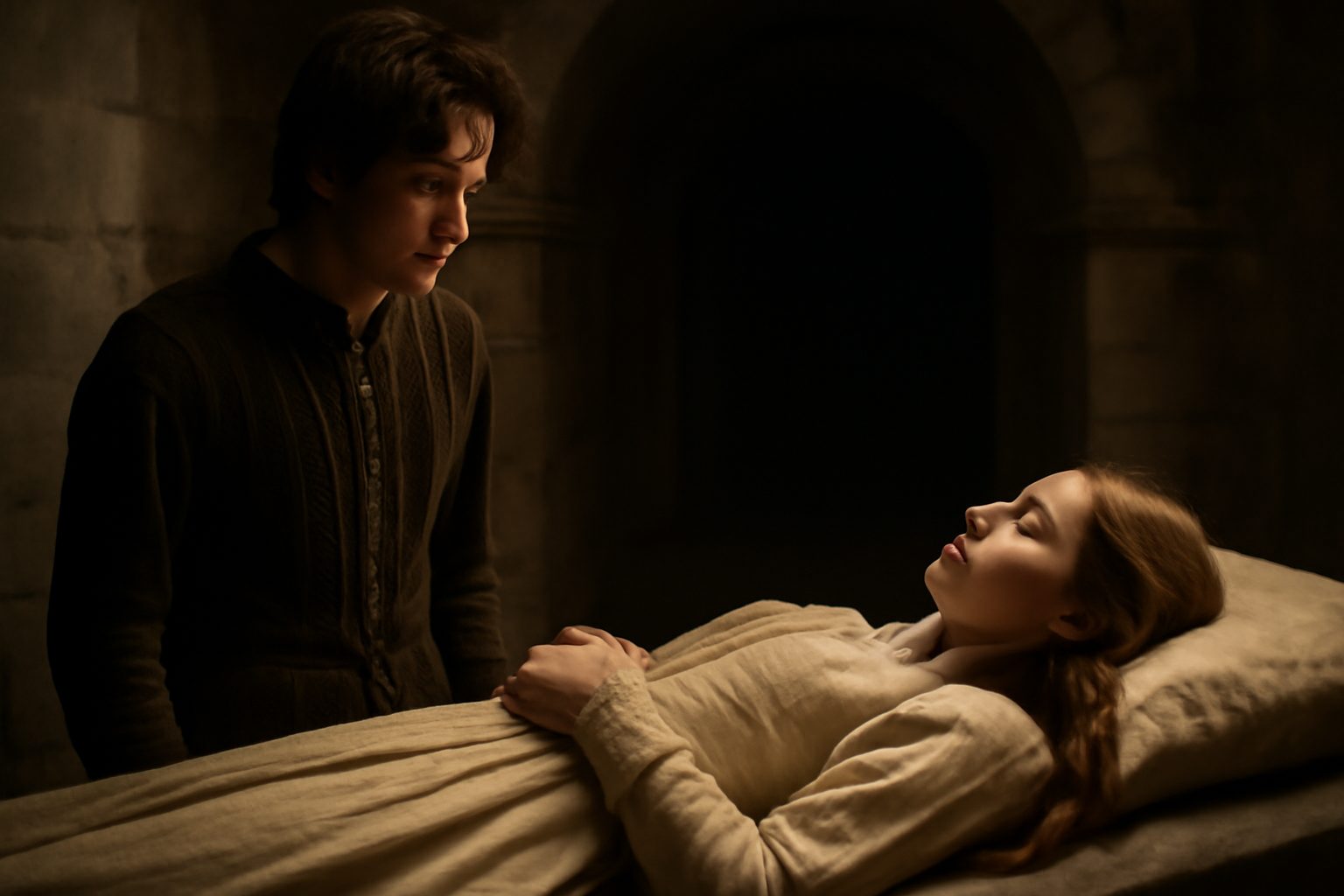
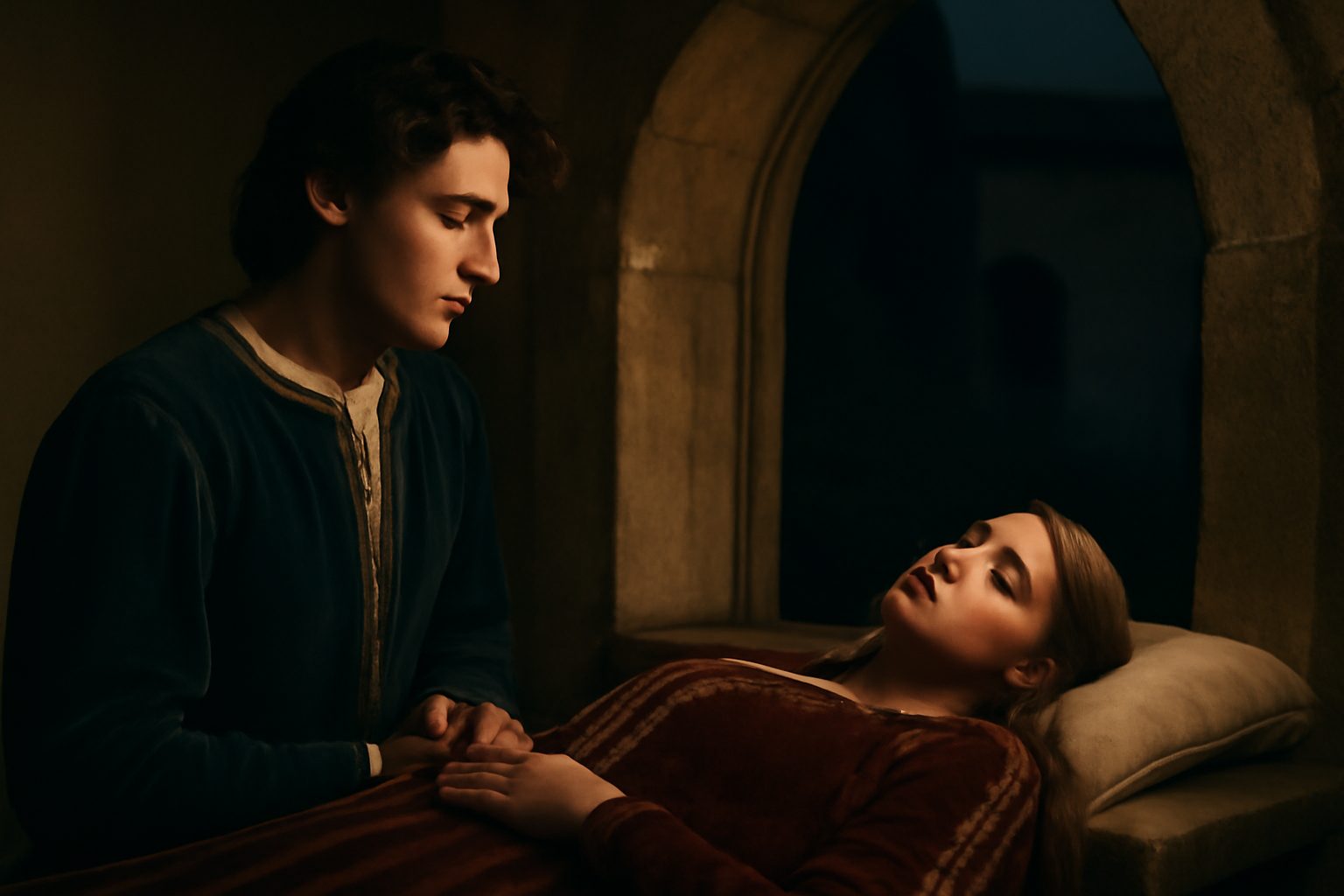
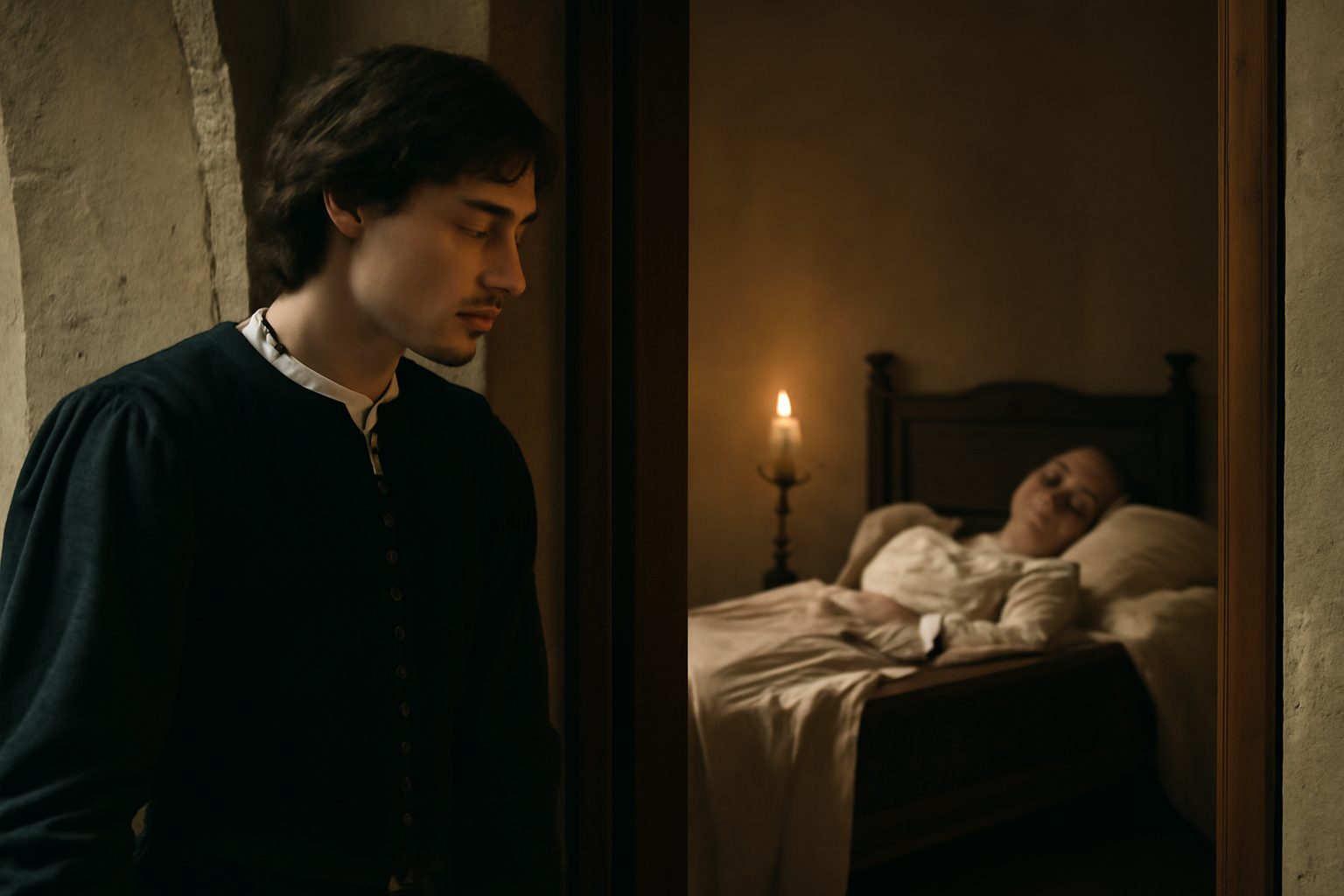
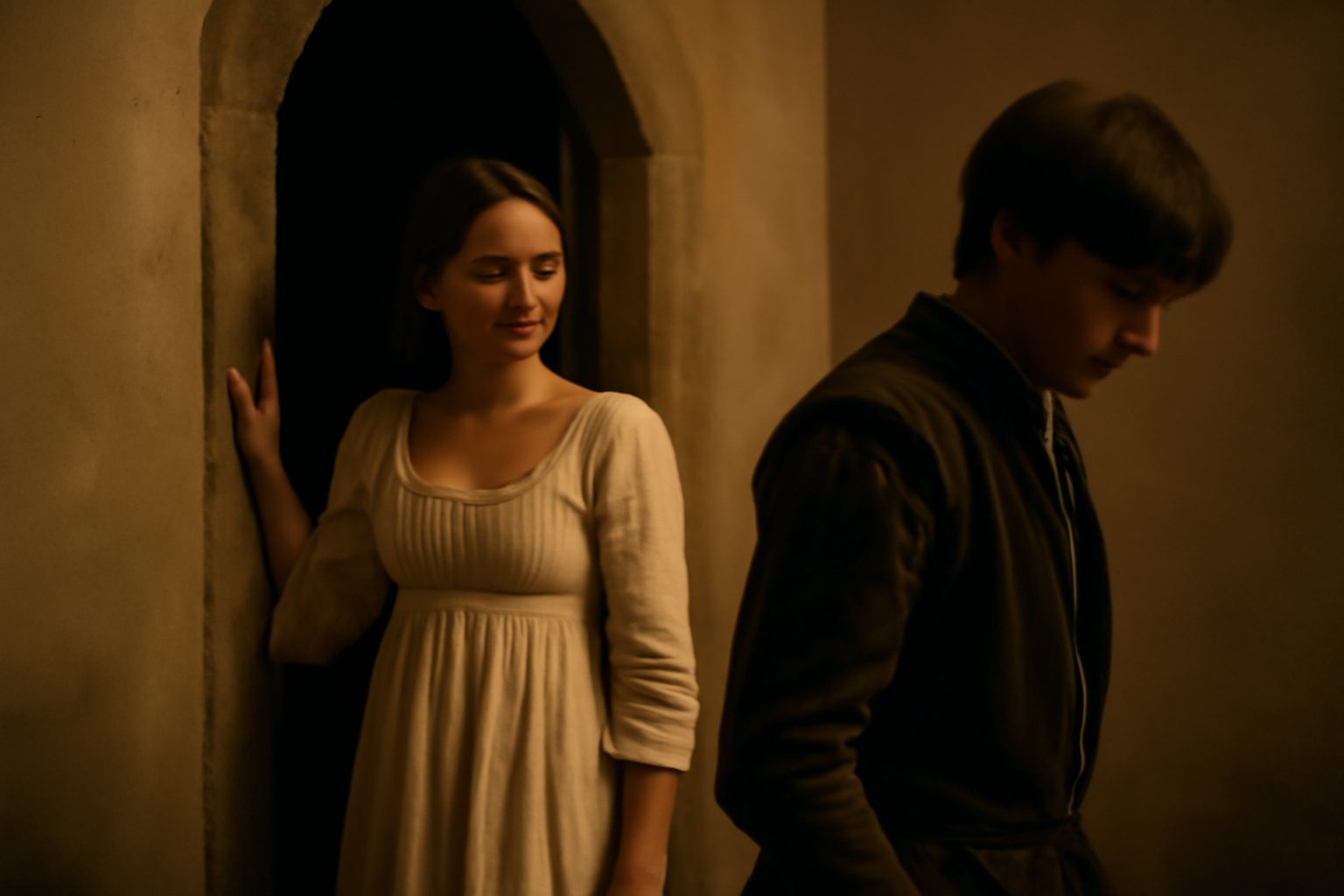
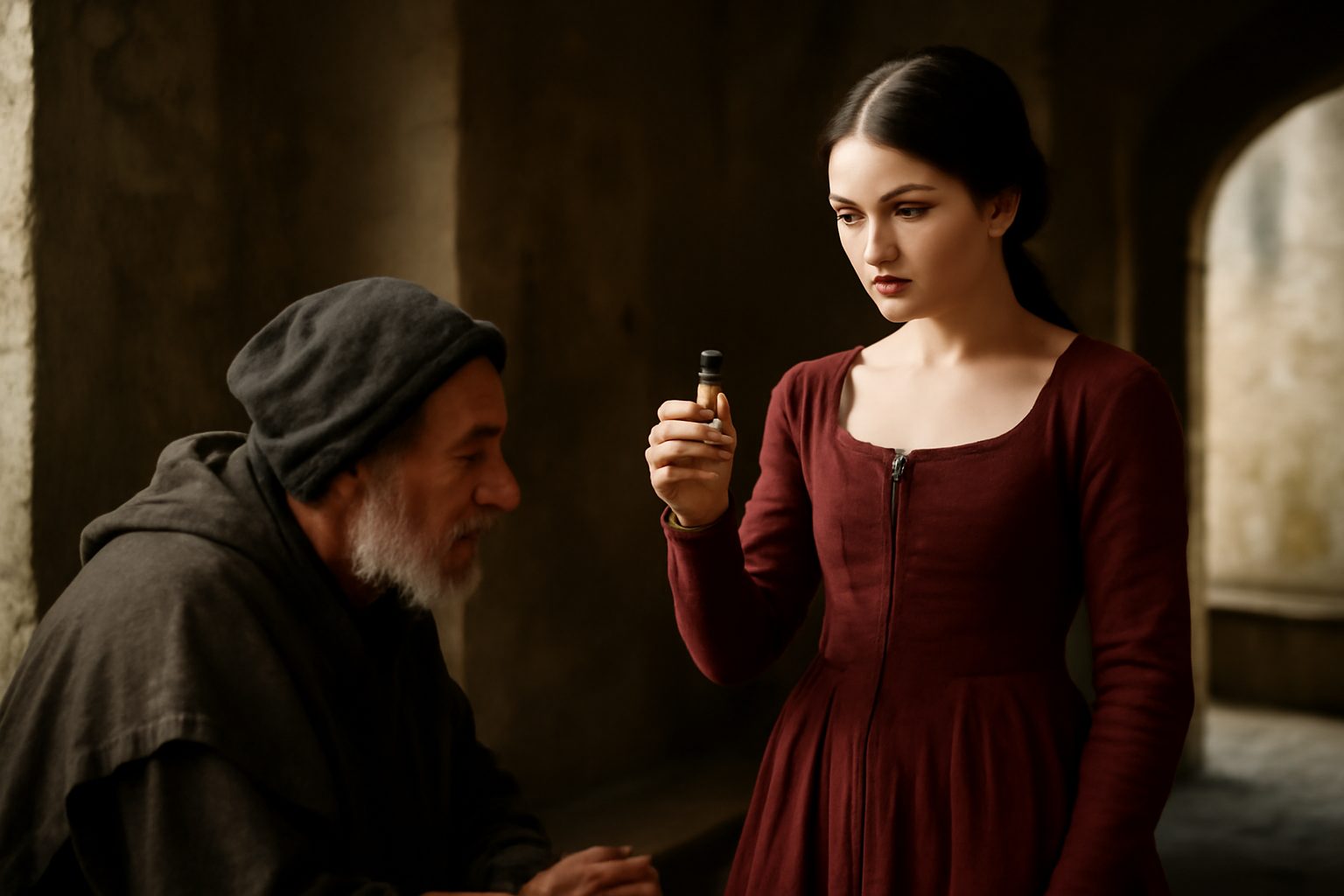
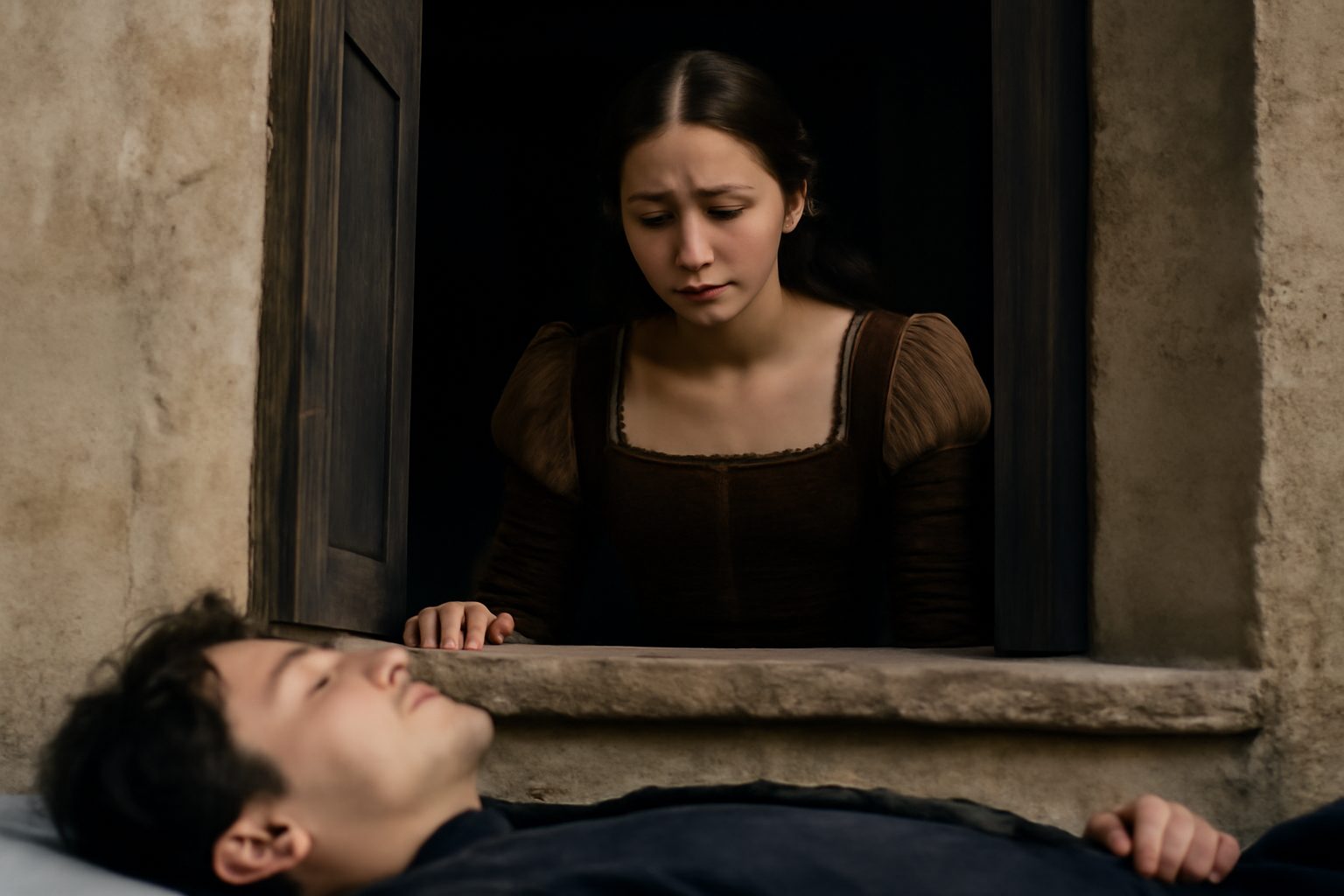
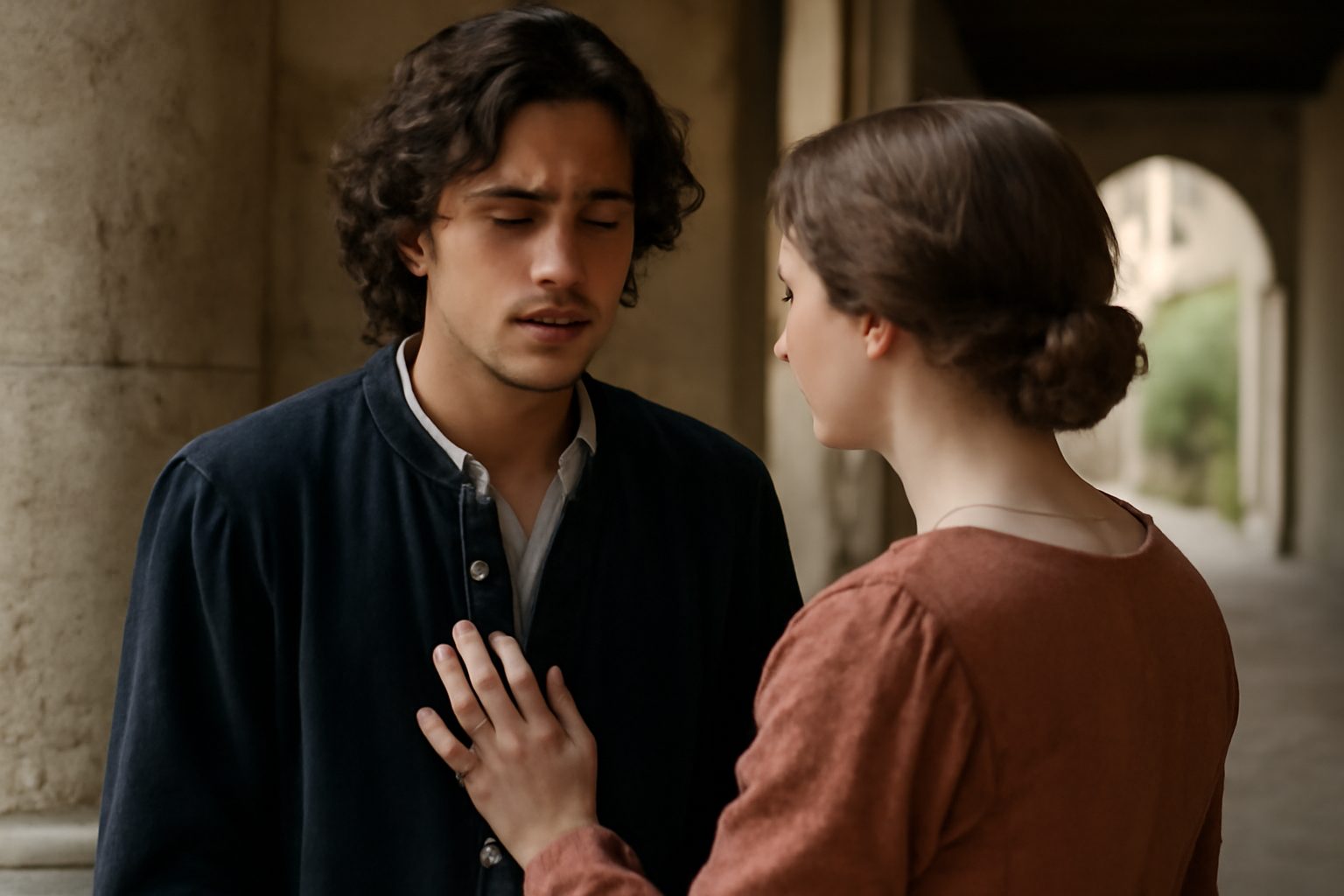
In Act 5, Scene 1 of Romeo and Juliet, Romeo, exiled in Mantua, receives false news of Juliet's death. Overcome with grief, he resolves to return to Verona and take his own life beside her in the Capulet tomb. This line reflects his desperate wish for death, as he seeks a poison strong enough to end his suffering instantly.
Romeo: "That the life-weary taker may fall dead"
In modern day english, we would say:
A person tired of living might die after taking it.
Frequently Asked Questions
What does Romeo mean when he says that the life-weary taker may fall dead?
Romeo is expressing his hope that the person who takes his life (the poison he bought) will also die from exhaustion or sorrow, showing his deep despair and wish for an end to his suffering.
Connections to other verses:
Connections to "That the life-weary taker may fall dead"
The verse "That the life-weary taker may fall dead" reflects Romeo's intention to use poison to end his life, a decision driven by despair over Juliet's supposed death. It connects thematically and narratively to several other verses in Act 5, Scene 1.
Desperation and Poison
Romeo's resolve to acquire poison is evident in "An if a man did need a poison now", where he recalls the apothecary, and "A dram of poison, such soon-speeding gear", describing the lethal substance he seeks. The immediacy and violence of the poison's effect are echoed in "As violently as hasty powder fired" and "As will disperse itself through all the veins", emphasizing the swift and fatal outcome he desires.
Poverty and Moral Conflict
The apothecary's poverty, which Romeo exploits, is highlighted in "Art thou so bare and full of wretchedness" and "Contempt and beggary hangs upon thy back". Romeo acknowledges this in "I pay thy poverty, and not thy will", while the apothecary's reluctant consent is captured in "My poverty, but not my will, consents".
Fate and Defiance
Romeo's defiance of fate after learning of Juliet's death is clear in "Is it even so? then I defy you, stars!". His determination to join Juliet in death is stated in "Well, Juliet, I will lie with thee to-night" and "To Juliet's grave; for there must I use thee", directly linking the poison's purpose to his suicidal intent.
Irony and Finality
The irony of gold being a "worse poison" is presented in "There is thy gold, worse poison to men's souls", contrasting material and spiritual corruption. The finality of his plan is reinforced in "And that the trunk may be discharged of breath", paralleling the lifeless outcome he seeks.