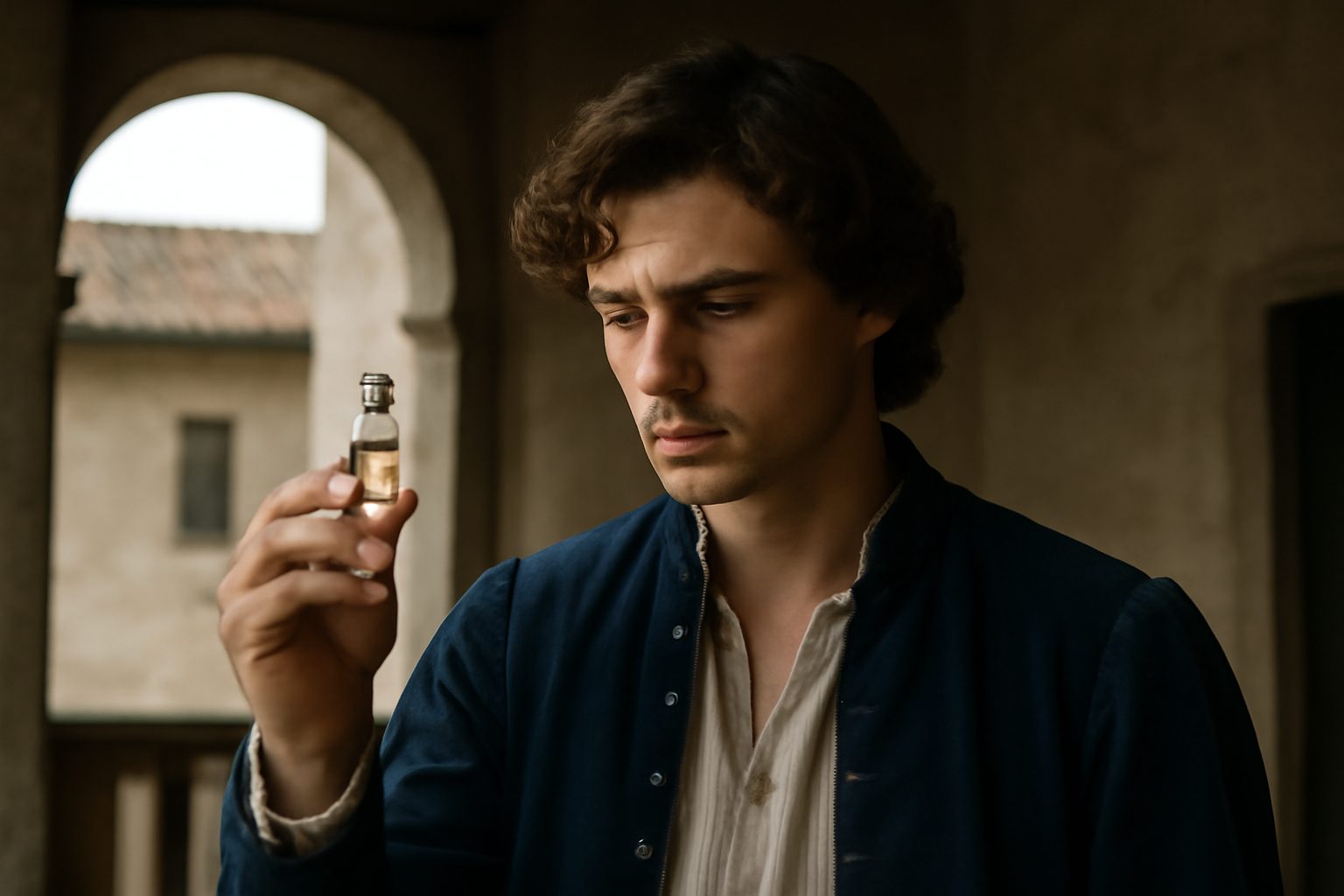
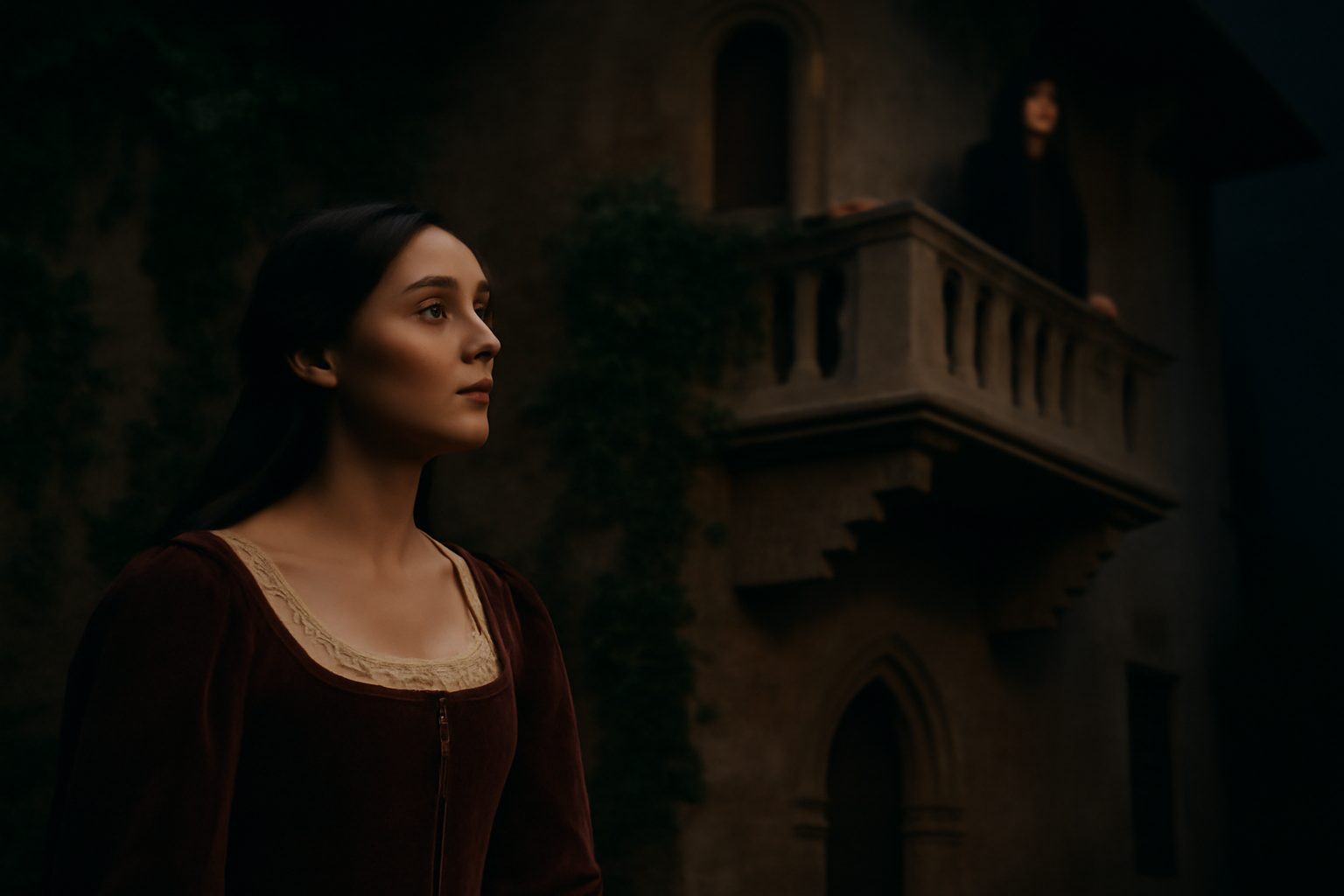
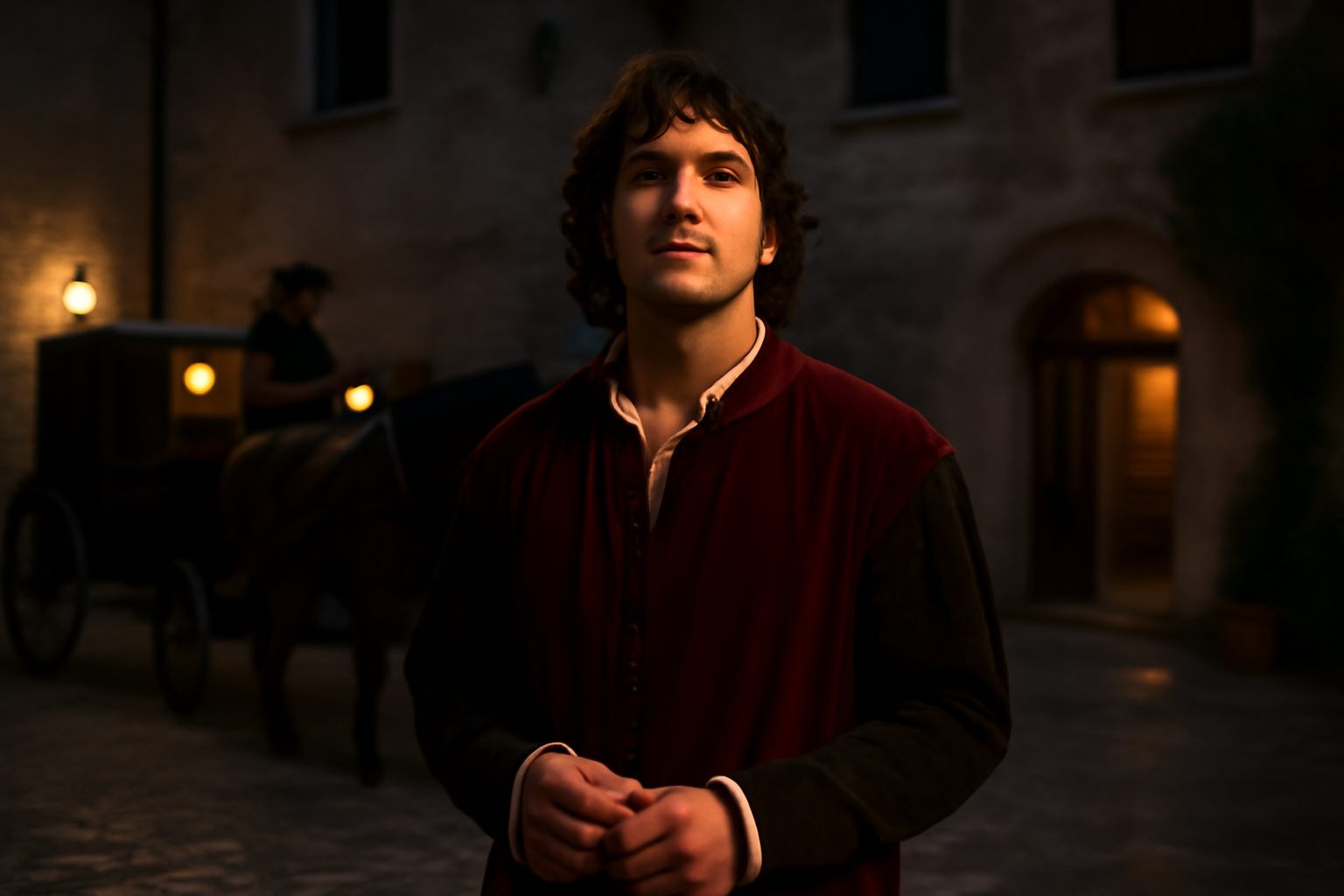
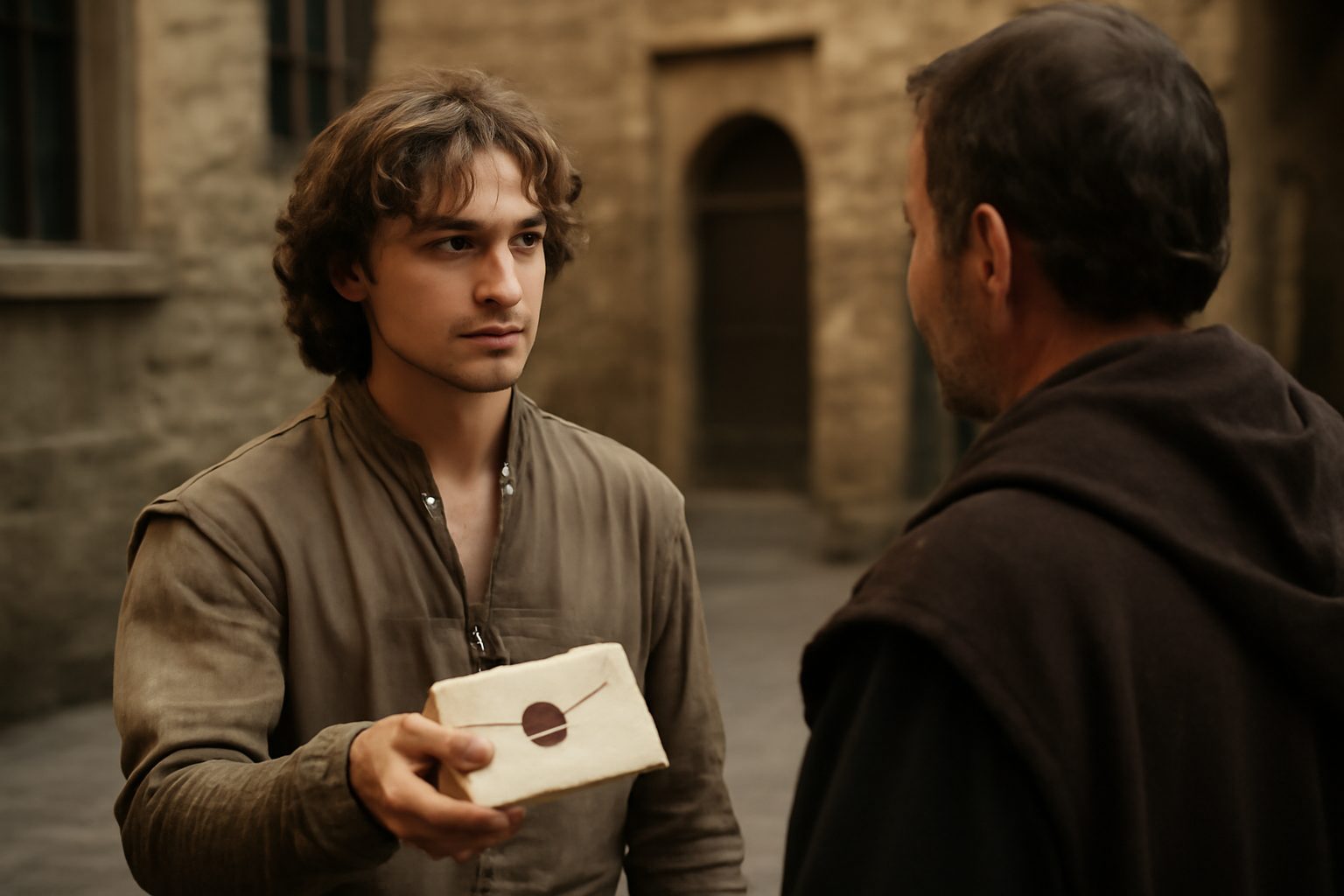
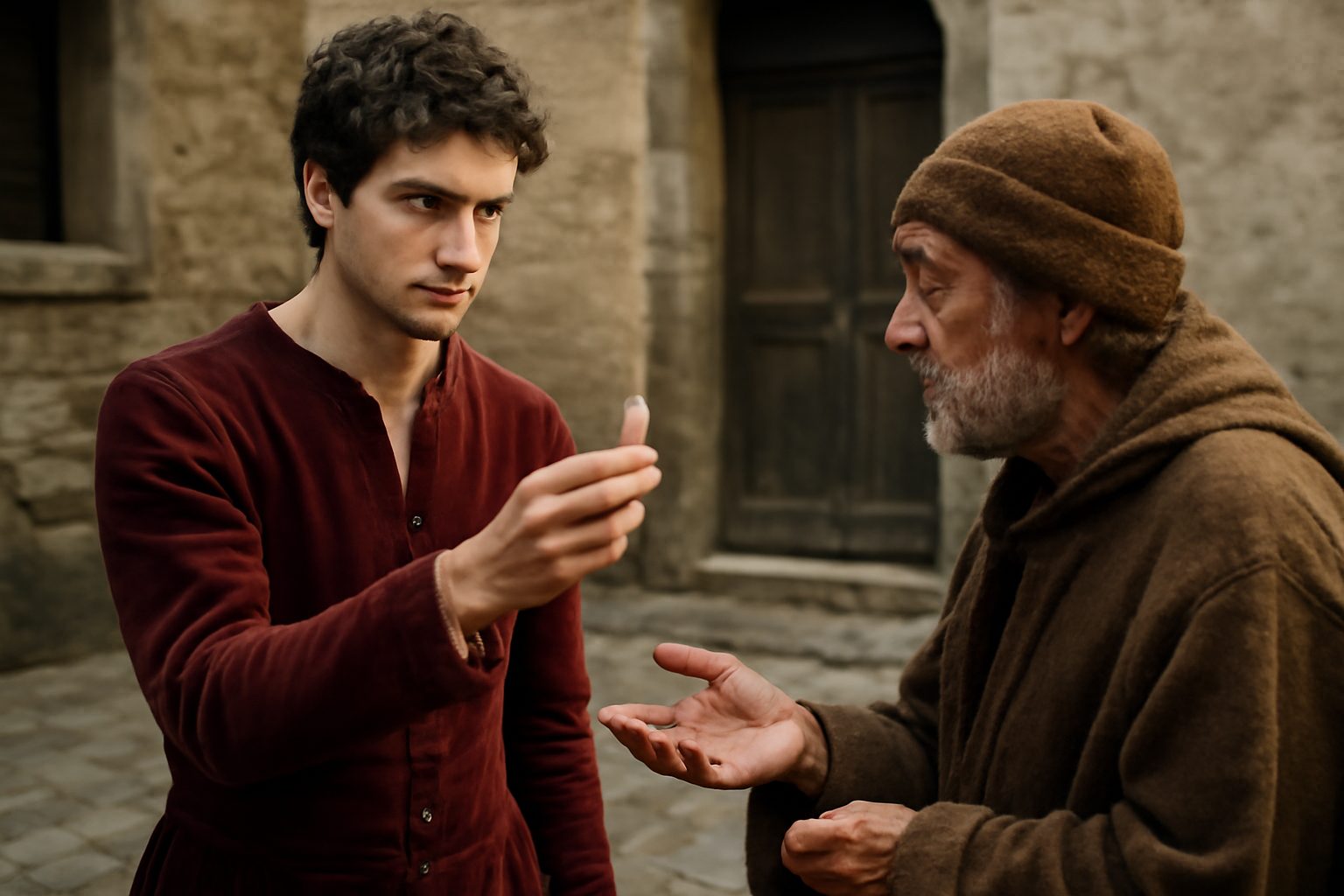
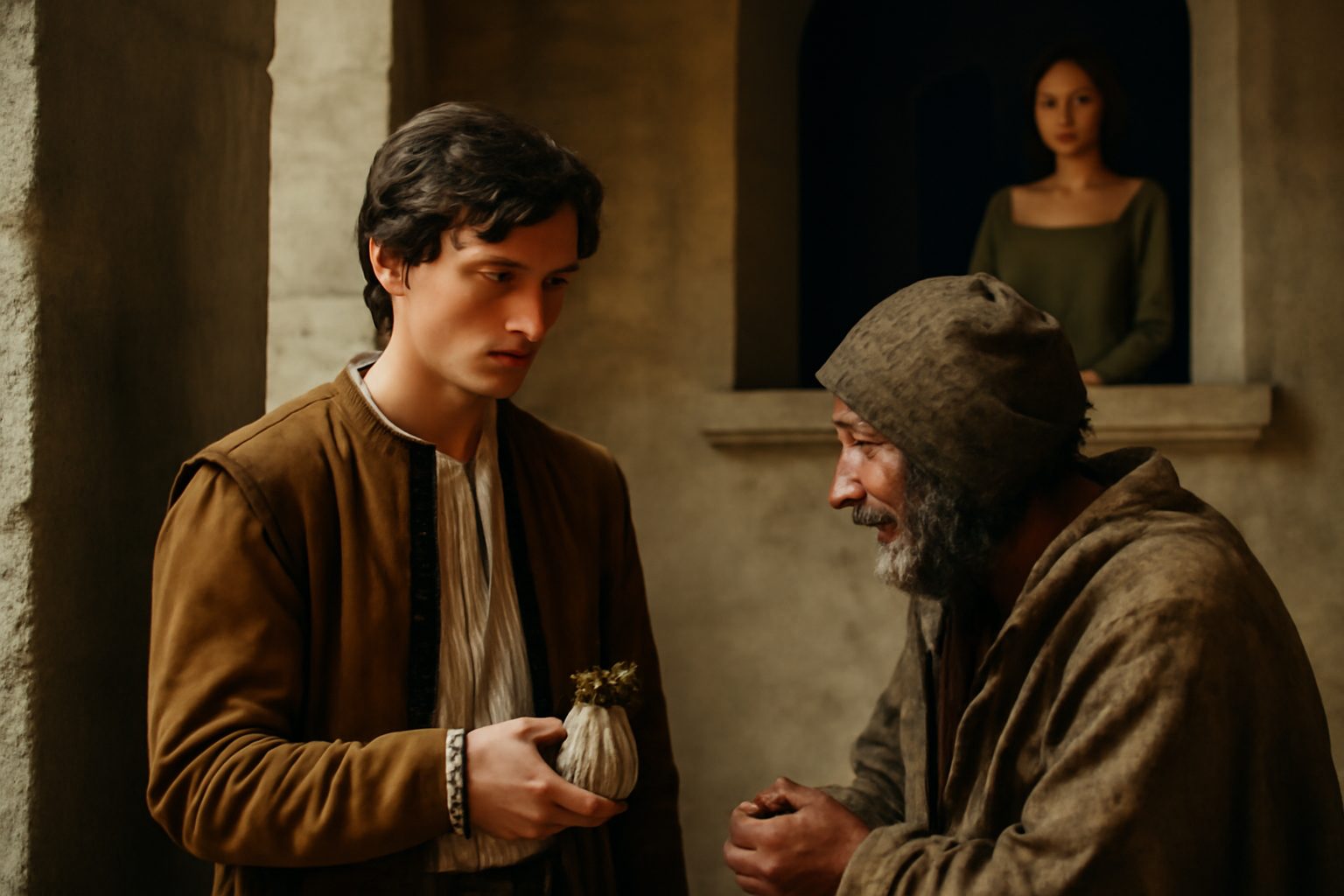
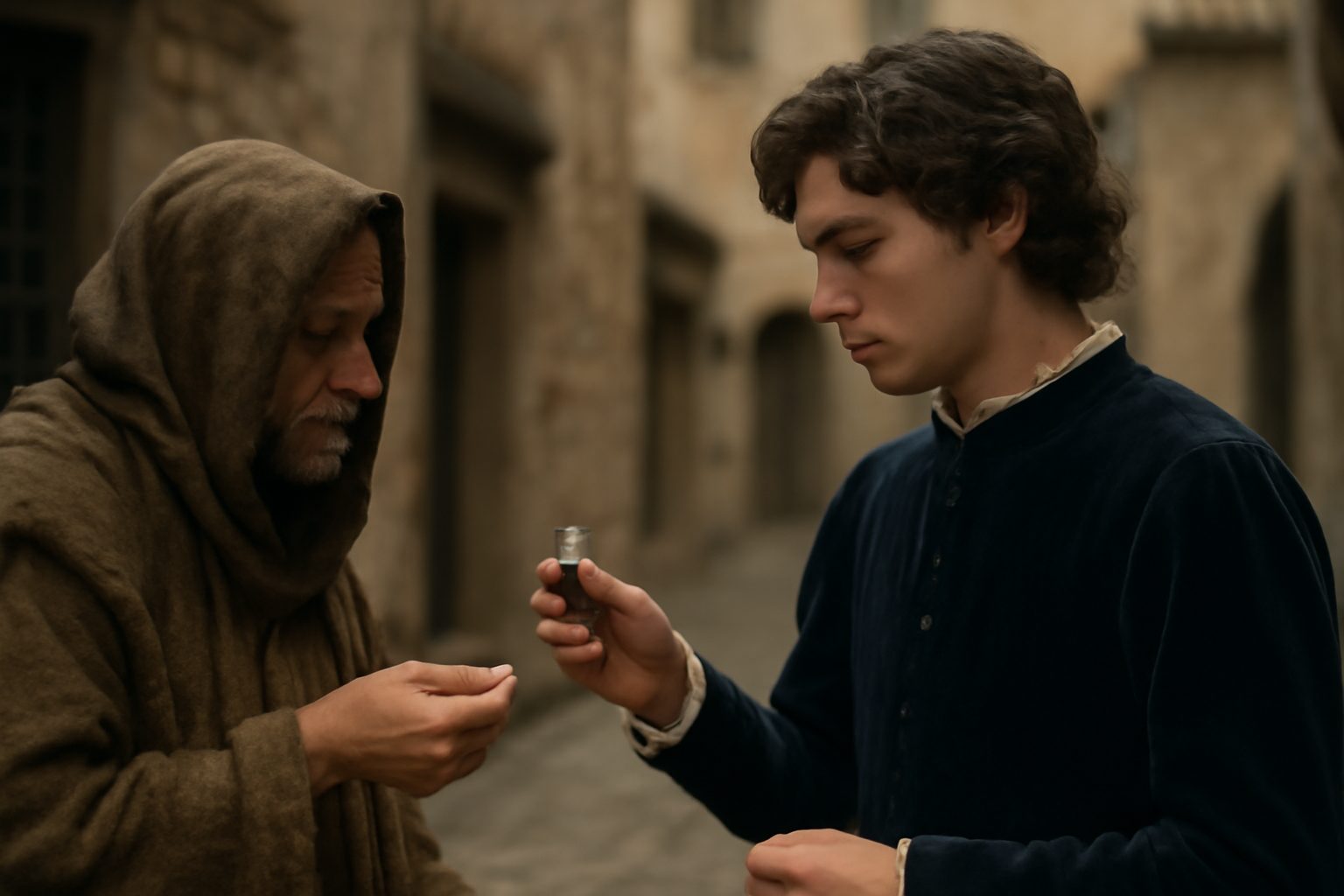
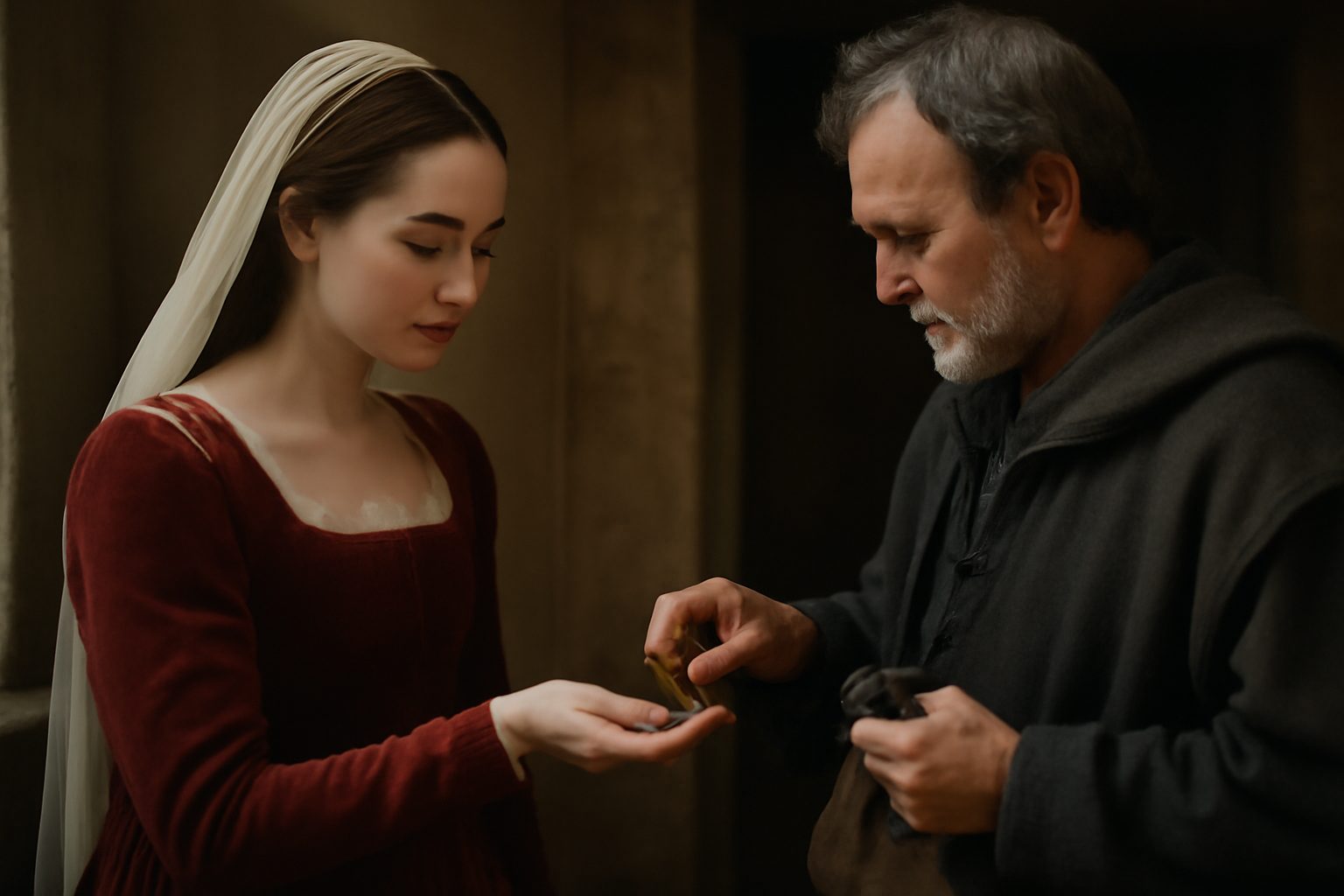
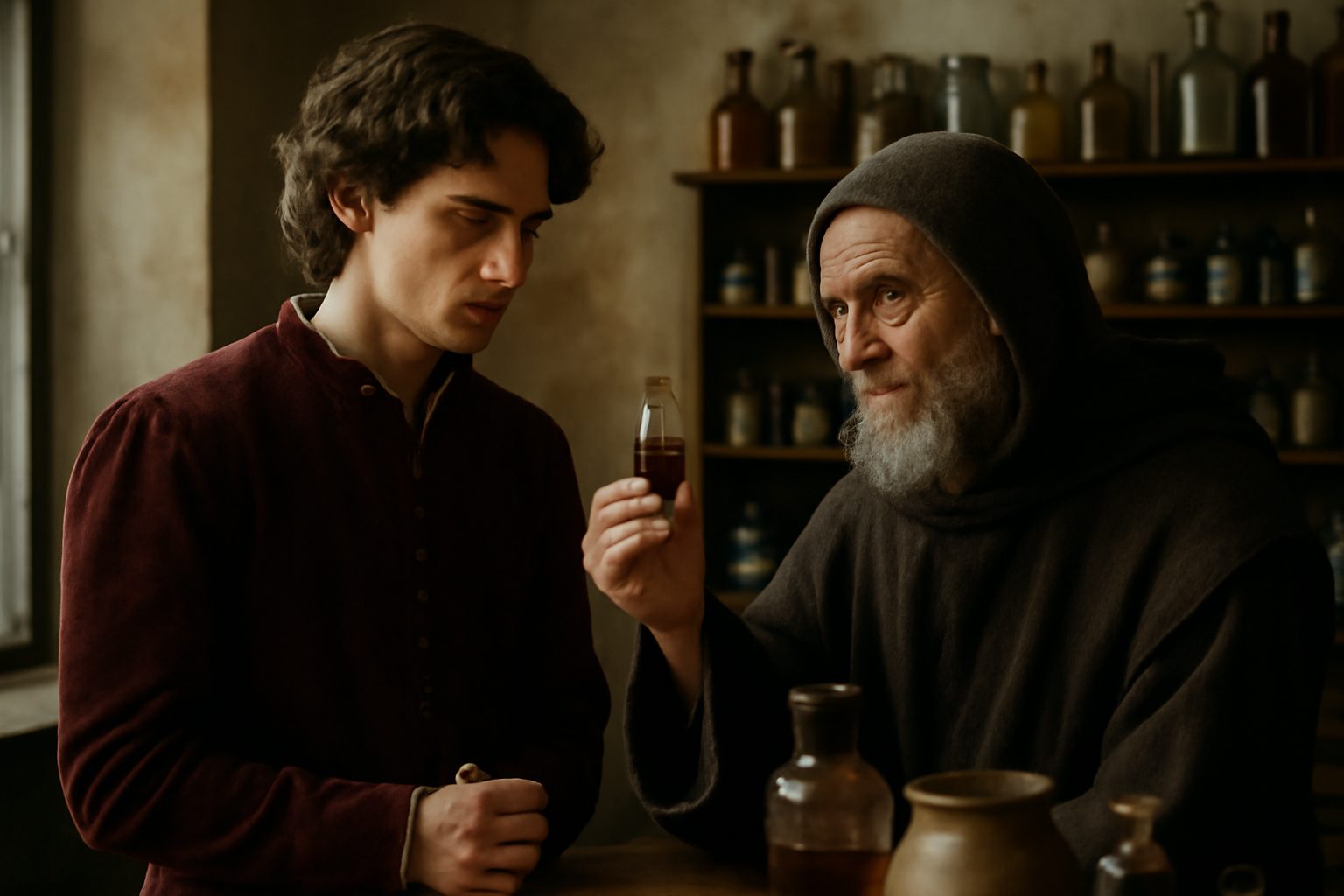
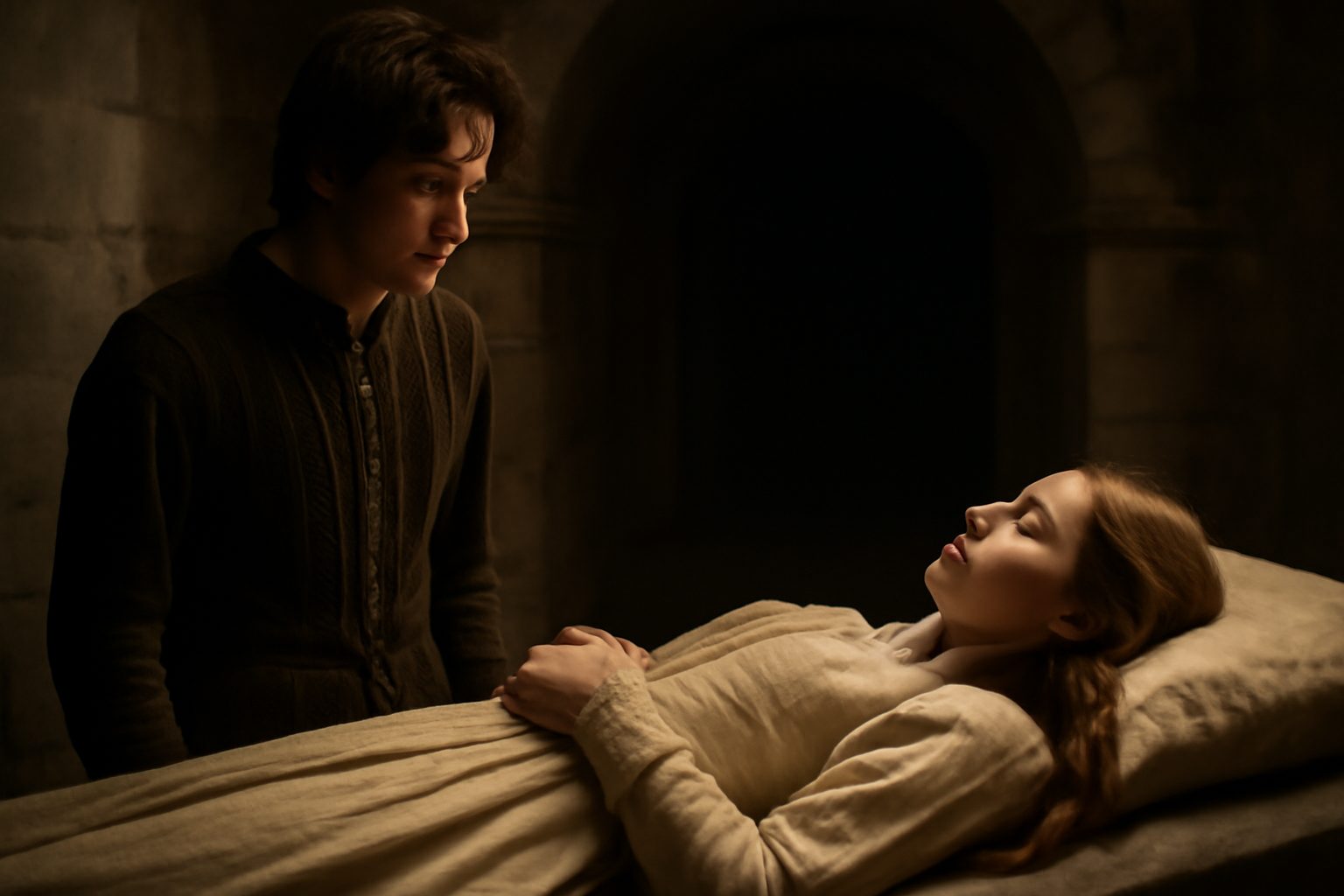
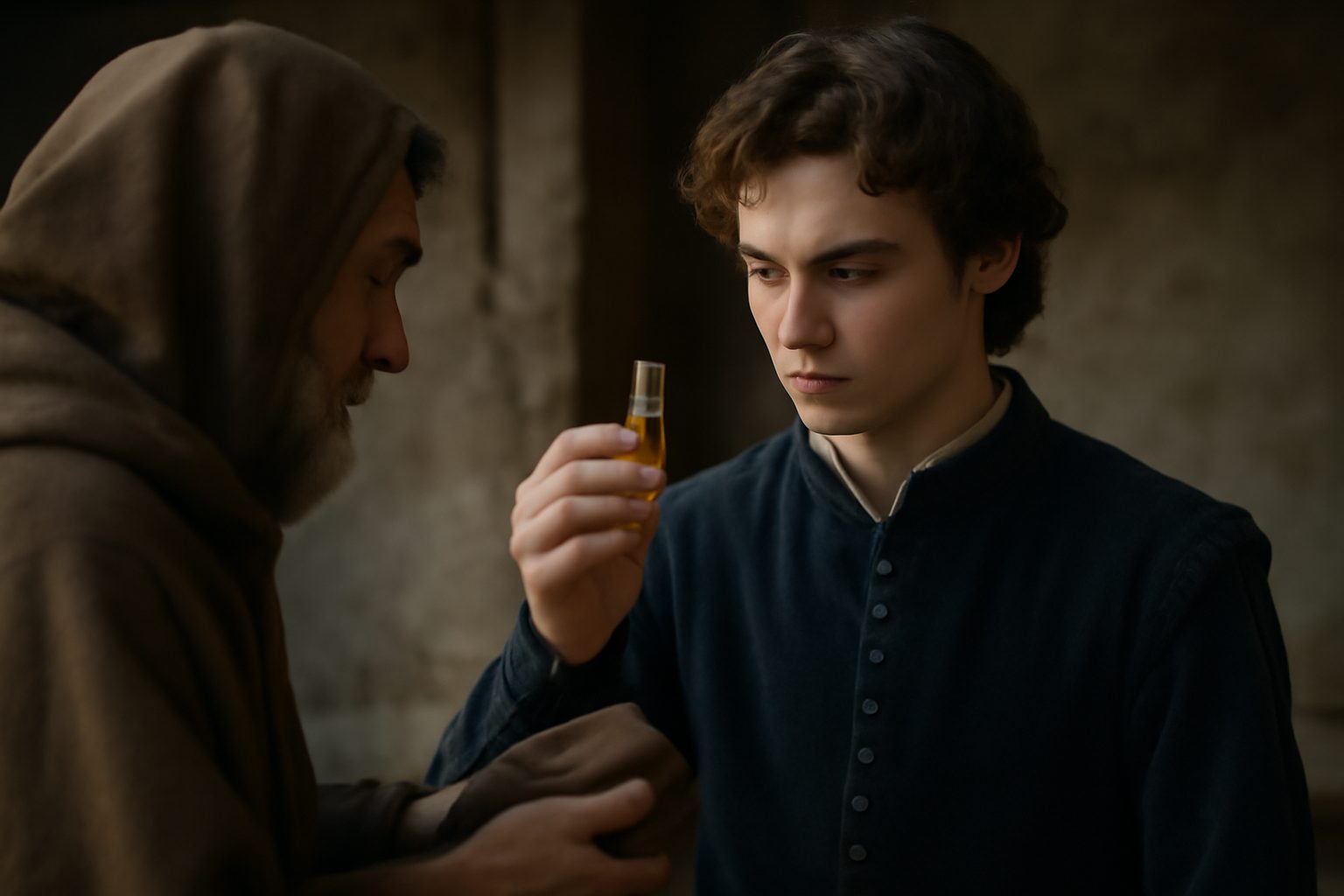
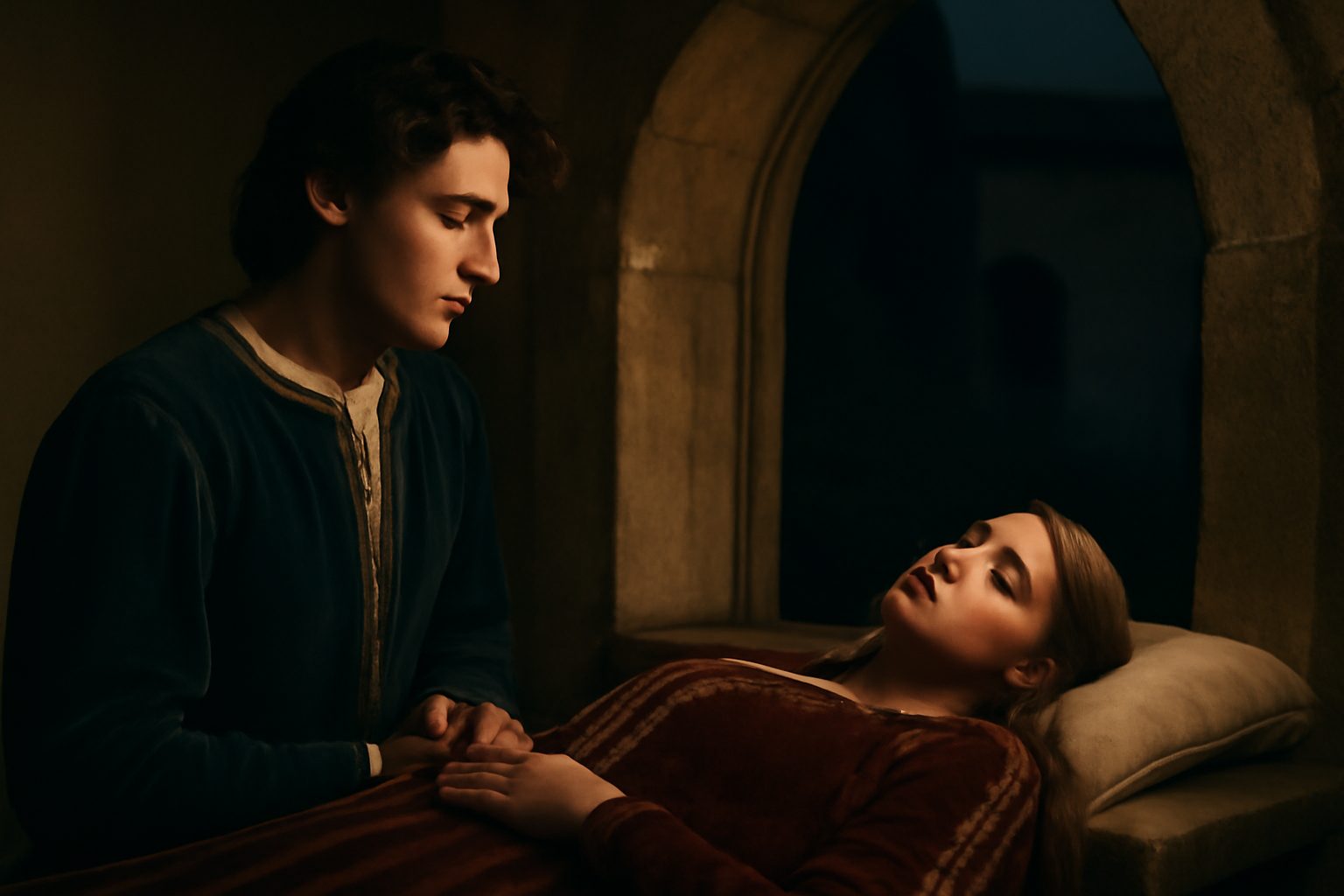
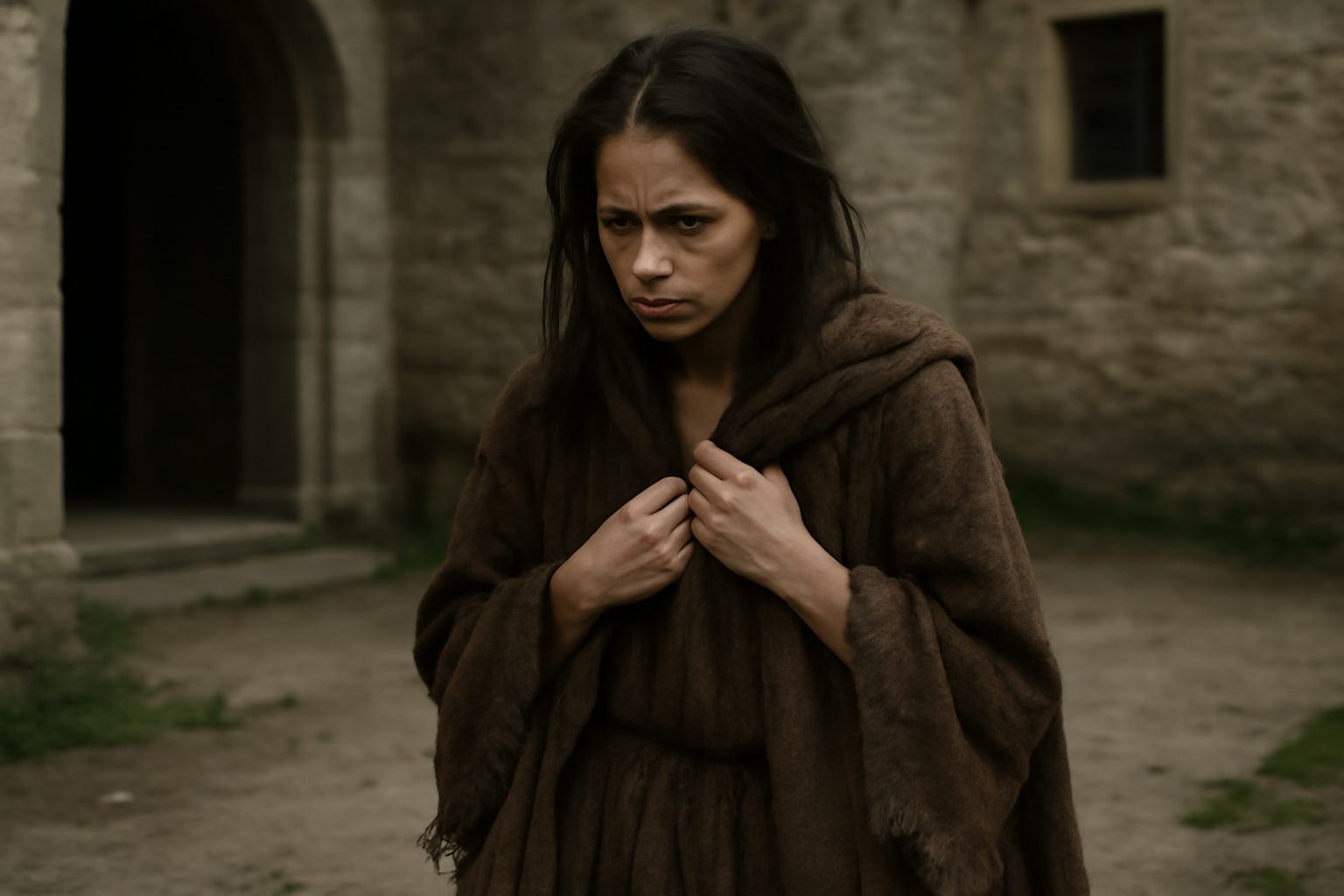
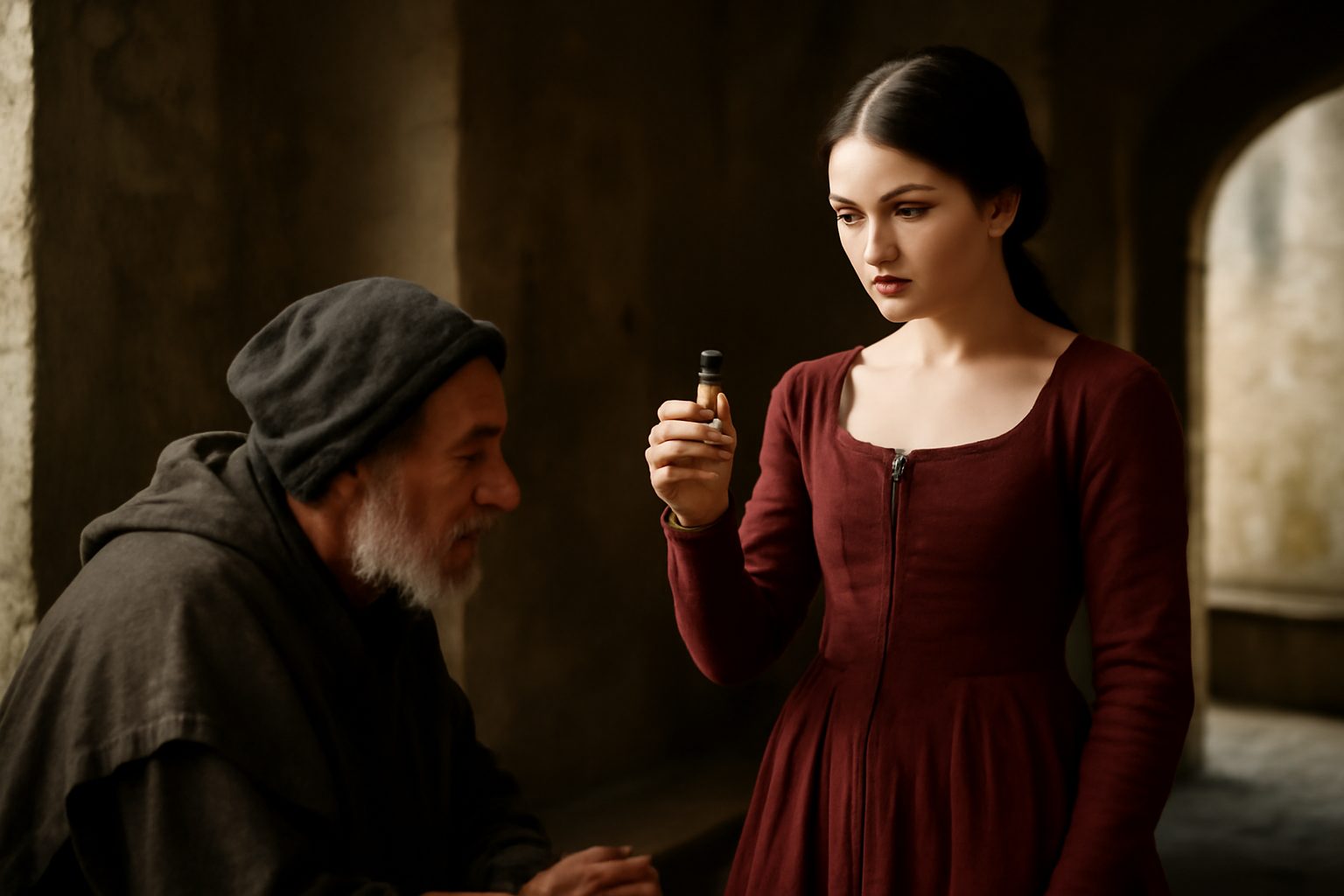
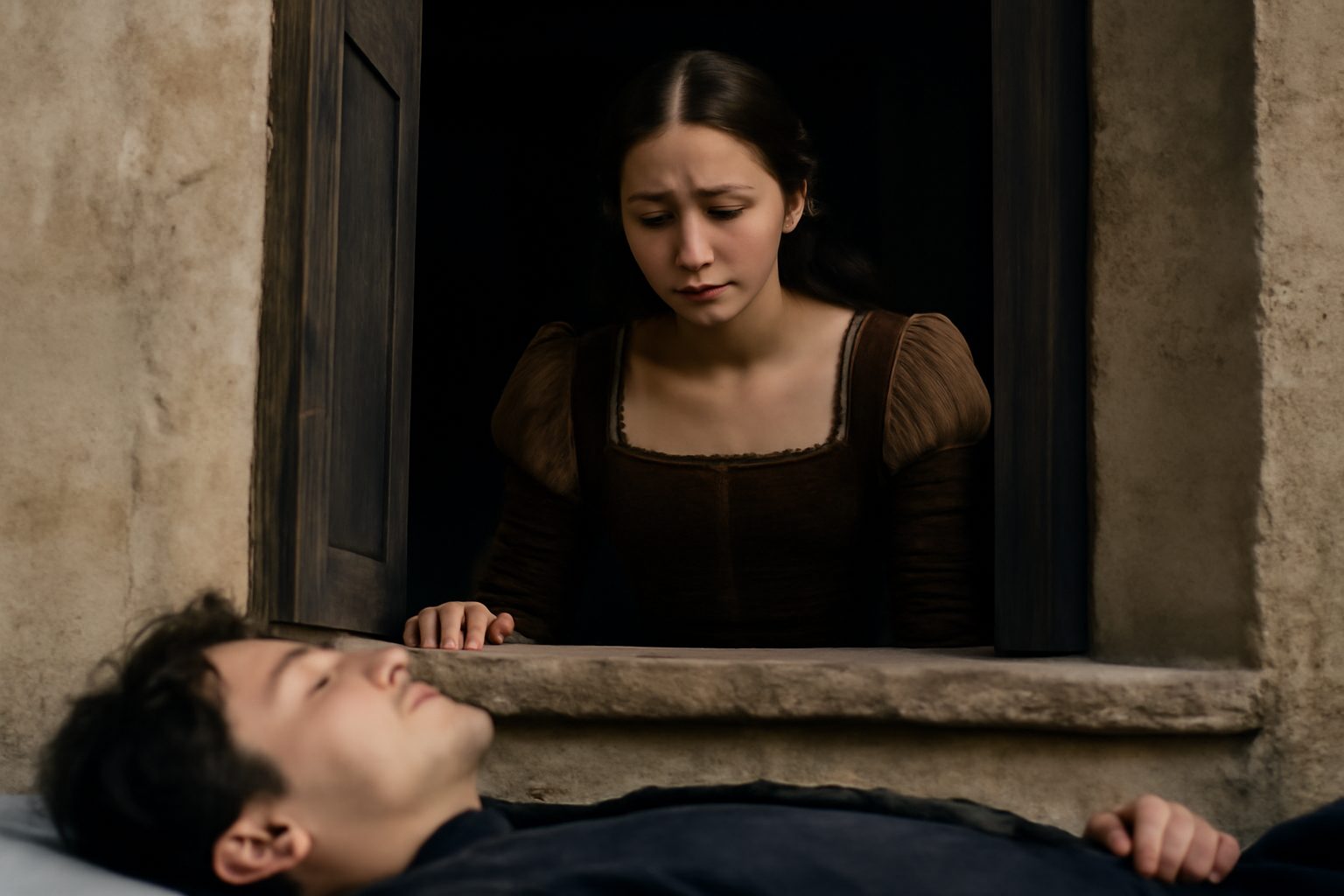
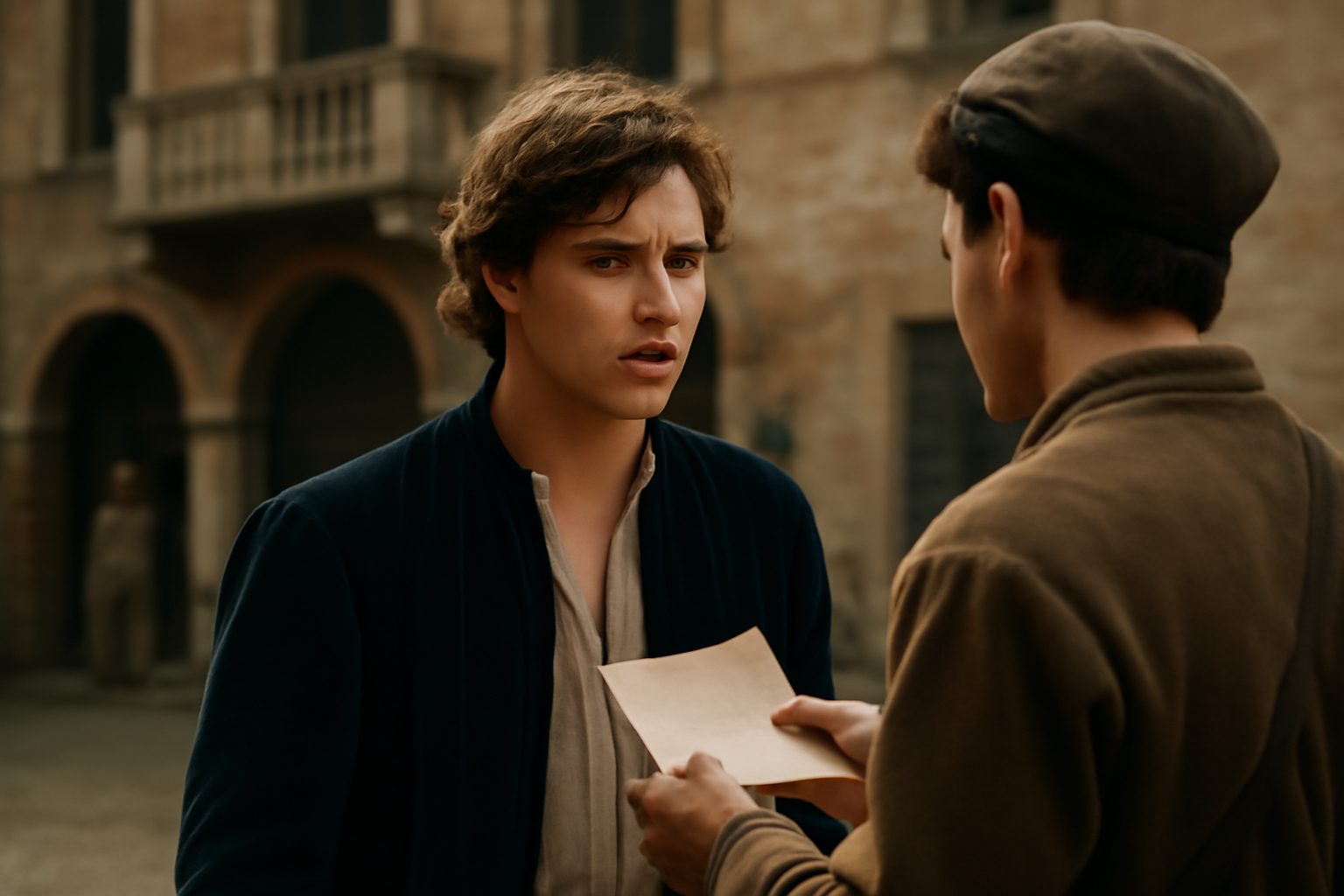
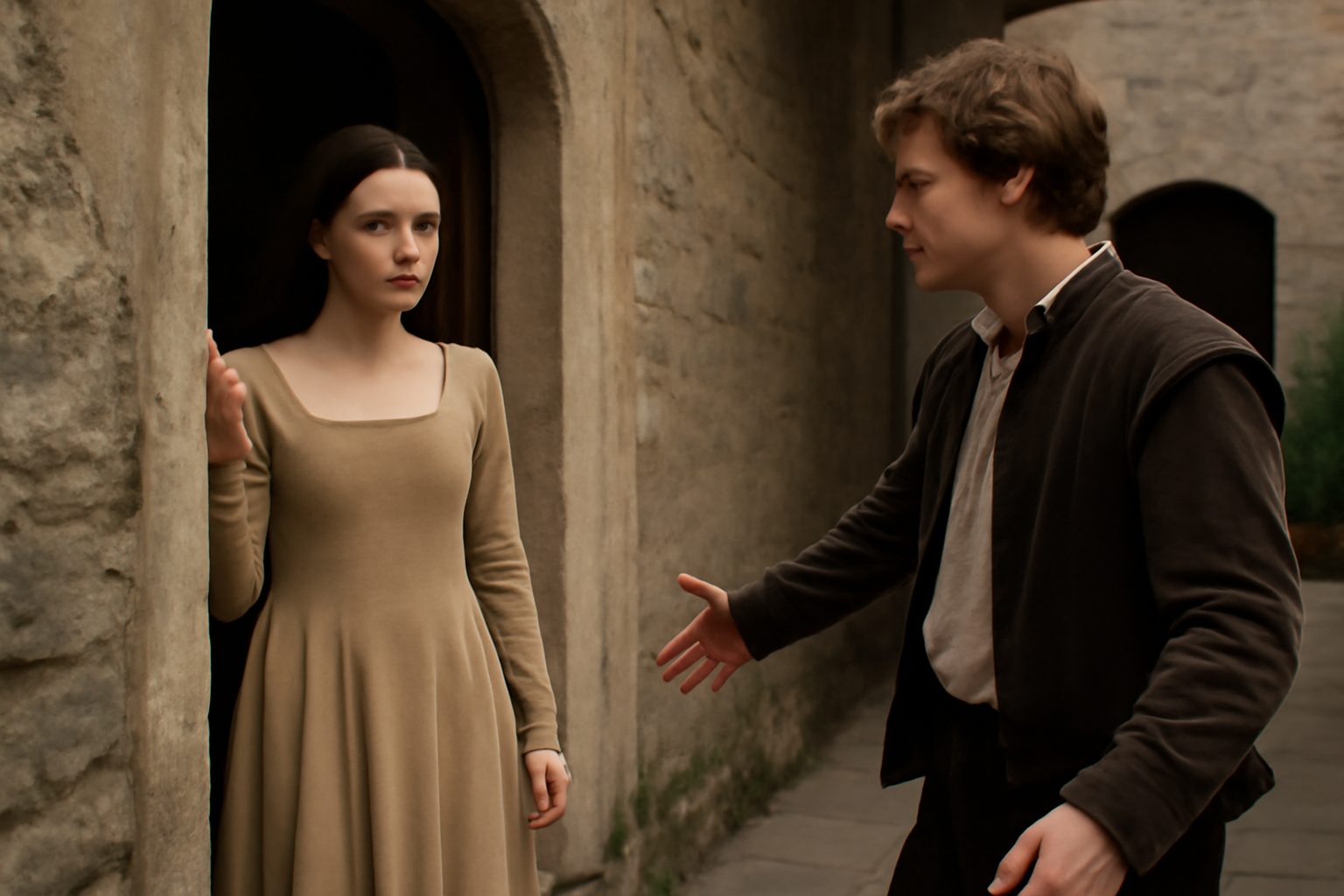
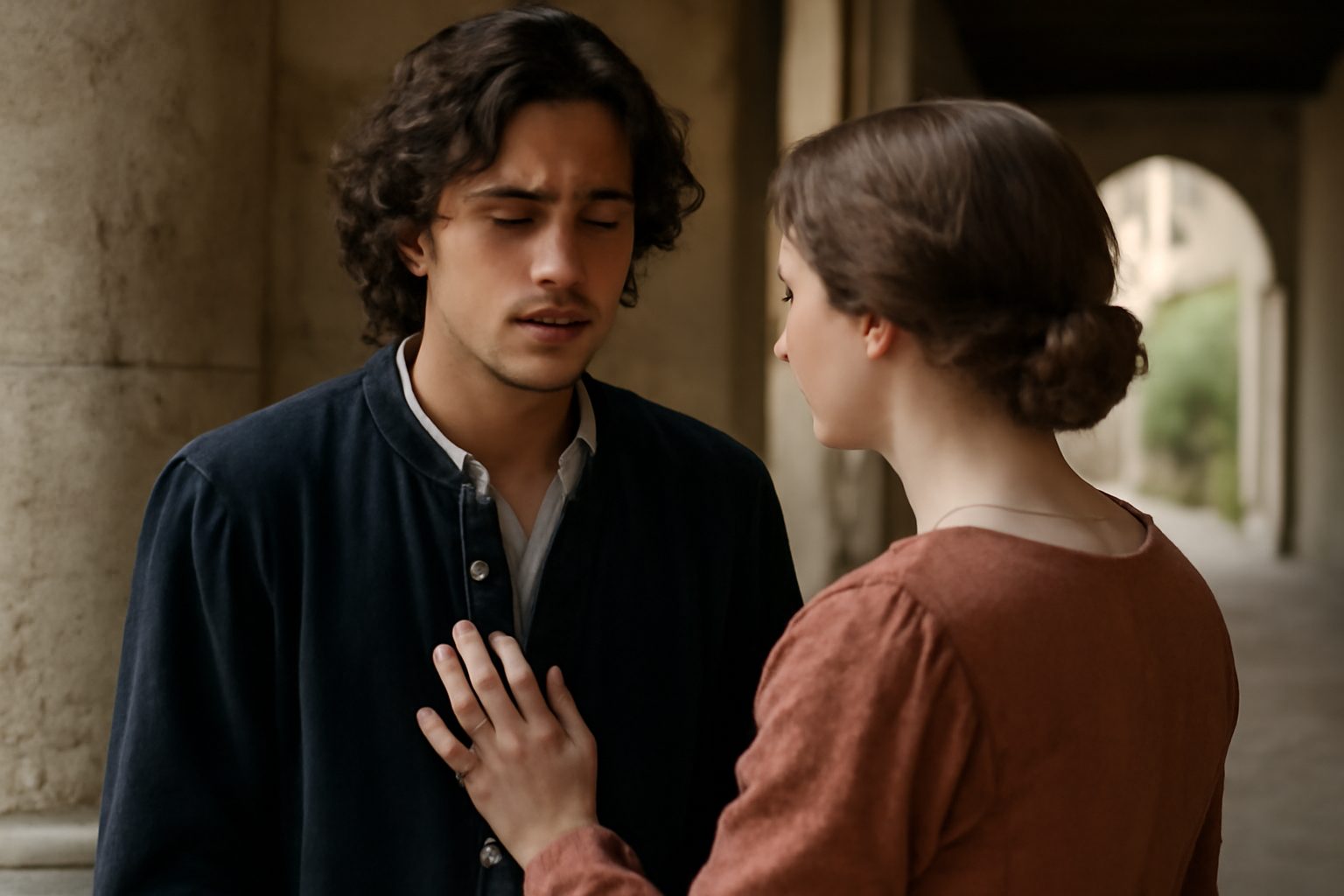
In Act 5, Scene 1 of Romeo and Juliet, Romeo speaks these words to an impoverished apothecary in Mantua. Desperate to obtain poison after hearing of Juliet's supposed death, Romeo highlights the man's poverty to persuade him to sell the illegal substance. This moment underscores Romeo's reckless determination and the bleak circumstances driving his actions.
Romeo: "Art thou so bare and full of wretchedness,"
In modern day english, we would say:
Are you so poor and miserable?
Frequently Asked Questions
What is Romeo asking in this line from Act 5 Scene 1?
Romeo is asking if the person he is speaking to is truly poor and miserable.
Connections to other verses:
Connections to "Art thou so bare and full of wretchedness"
The verse "Art thou so bare and full of wretchedness" is spoken by Romeo to the apothecary, highlighting the man's extreme poverty. This directly connects to "Come hither, man. I see that thou art poor", where Romeo first acknowledges the apothecary's destitution, setting the stage for their transaction.
Physical and Emotional Depiction
Romeo's observation of the apothecary's wretchedness is reinforced by "Need and oppression starveth in thine eyes" and "famine is in thy cheeks", which vividly describe the physical toll of poverty. Additionally, "Contempt and beggary hangs upon thy back" metaphorically extends this imagery, emphasizing social and material deprivation.
Context of the Apothecary's Shop
The apothecary's impoverished state is contextualized by Romeo's earlier description of his shop in "A beggarly account of empty boxes" and "in his needy shop a tortoise hung", painting a picture of desolation and scarcity that aligns with the wretchedness mentioned.
Moral and Legal Conflict
Romeo's recognition of the apothecary's poverty leads him to note the conflict between law and survival in "The world is not thy friend nor the world's law" and "The world affords no law to make thee rich", underscoring the desperation that drives the apothecary to sell poison illegally.
Transaction and Irony
The dialogue culminates in the apothecary's reluctant agreement, captured in "My poverty, but not my will, consents", to which Romeo responds with "I pay thy poverty, and not thy will", highlighting the transactional nature of their interaction and the moral compromise involved.