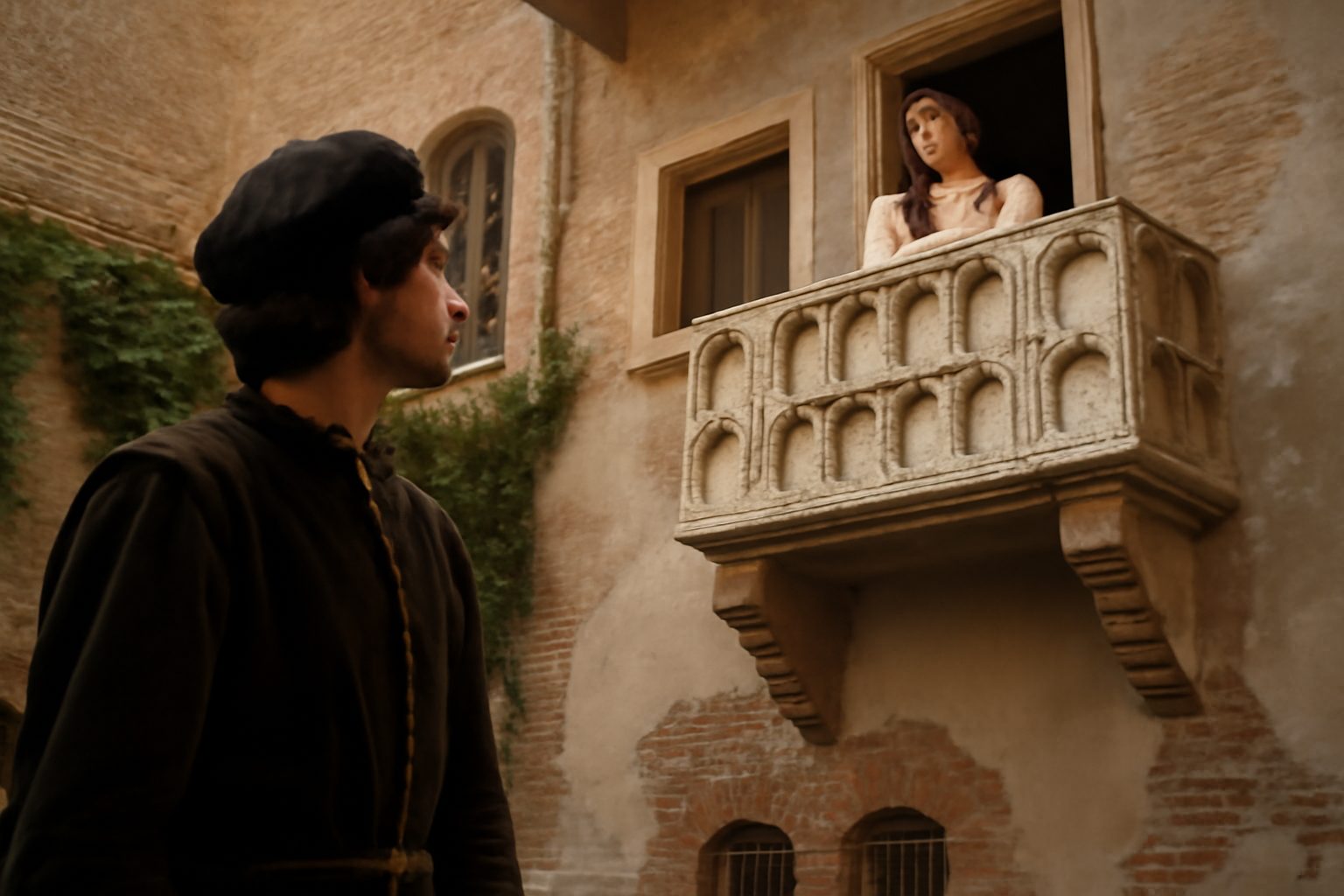
In Act 5, Scene 1 of Romeo and Juliet, Romeo is in exile when he receives news of Juliet's supposed death. Overwhelmed by grief and despair, he rejects the authority and fairness of the world, believing it has turned against him. This line reflects his sense of isolation and defiance as he resolves to take drastic action.
Romeo: "The world is not thy friend nor the world's law;"
In modern day english, we would say:
The world is not on your side, and its rules won’t help you either.
Frequently Asked Questions
What does Romeo mean when he says the world is not his friend?
Romeo means that the world is against him and does not support him or his actions.
Why does Romeo feel the world's laws are not on his side?
Romeo feels this way because the laws of the world have created obstacles for his love with Juliet, leading to their tragic situation.
Connections to other verses:
Connections to "The world is not thy friend nor the world's law"
This line, spoken by Romeo to the Apothecary, reflects a theme of societal neglect and desperation that runs through Act 5, Scene 1. It connects to several other verses in the scene:
Economic and Social Desperation
Romeo's observation that "The world is not thy friend" directly echoes his earlier assessment of the Apothecary's poverty in Art thou so bare and full of wretchedness and Contempt and beggary hangs upon thy back. These lines establish a shared understanding of how the world's laws fail those in need.
Legal and Moral Conflict
The phrase "nor the world's law" connects to the Apothecary's own acknowledgment of legal restrictions in Such mortal drugs I have; but Mantua's law and Whose sale is present death in Mantua. Romeo argues that these laws are meaningless in the face of desperation, reinforcing his point with The world affords no law to make thee rich.
Desperation Driving Action
Romeo's defiance of worldly constraints mirrors his earlier resolve in Is it even so? then I defy you, stars!, showing how his personal despair aligns with his perception of the Apothecary's societal despair. This connection highlights how both characters are driven to break laws due to their circumstances.
Wealth and Corruption
The theme of gold as a corrupting force, introduced in Romeo's line, is further developed in There is thy gold, worse poison to men's souls, suggesting that the world's values are inverted—wealth is more destructive than the poison he purchases.