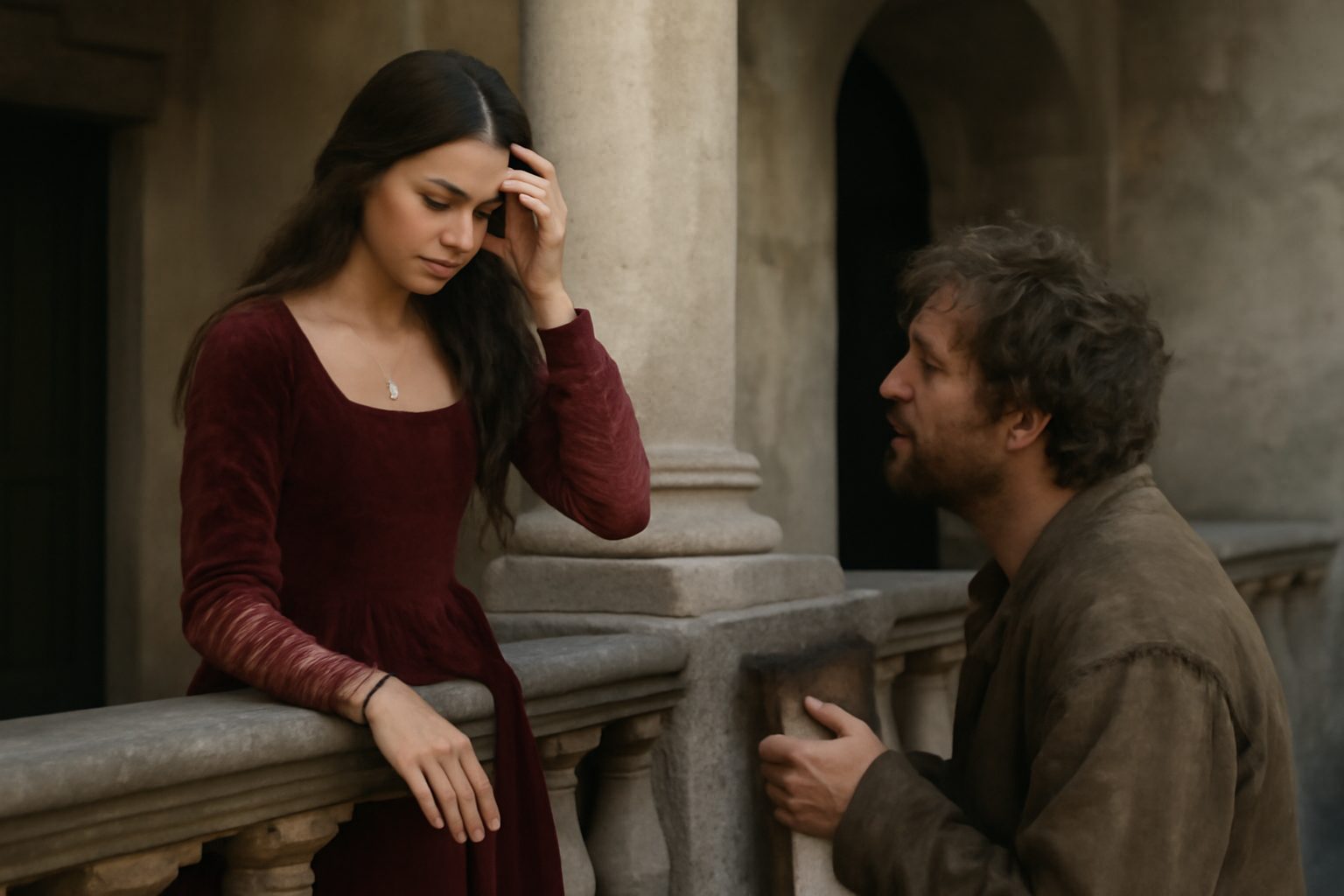
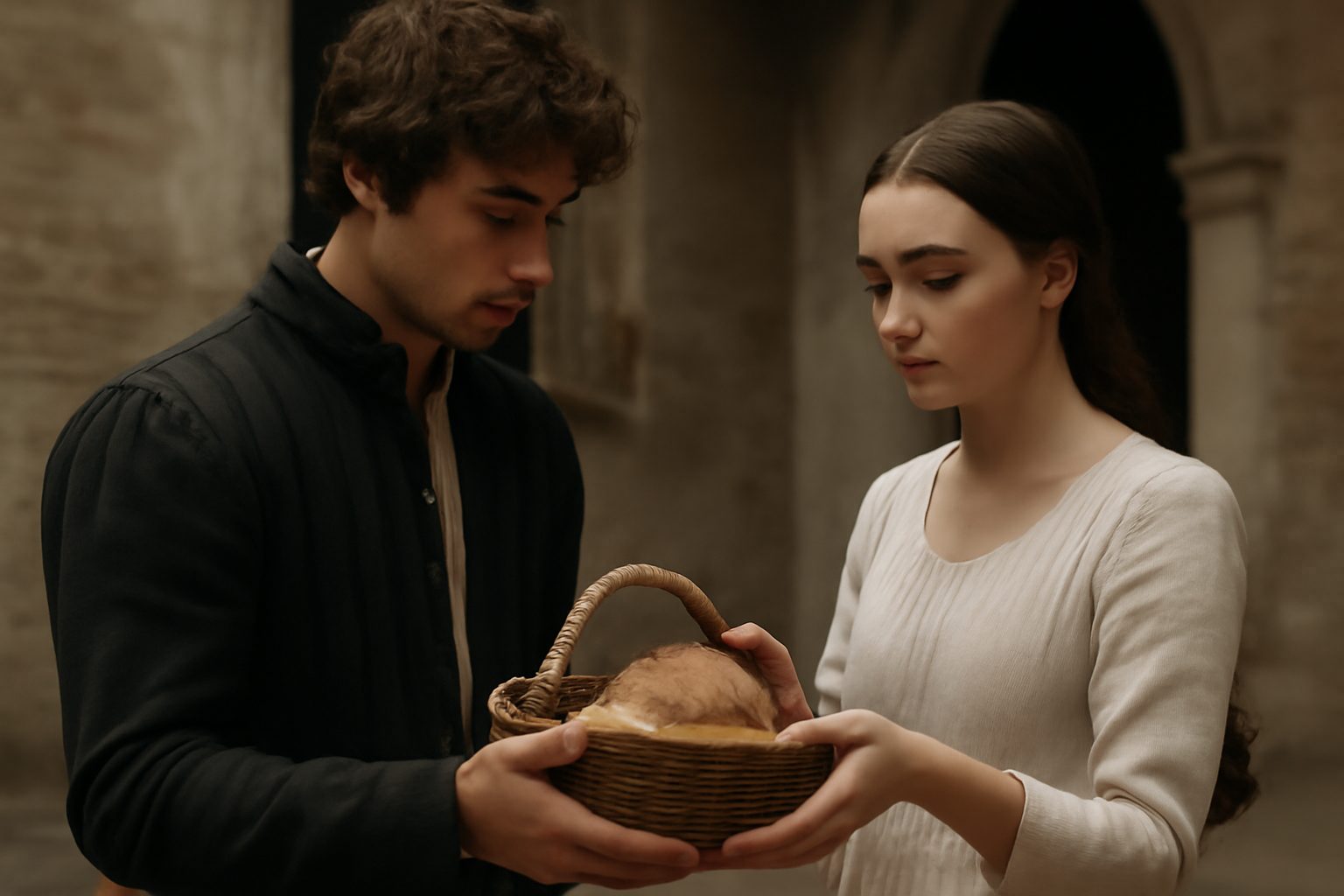
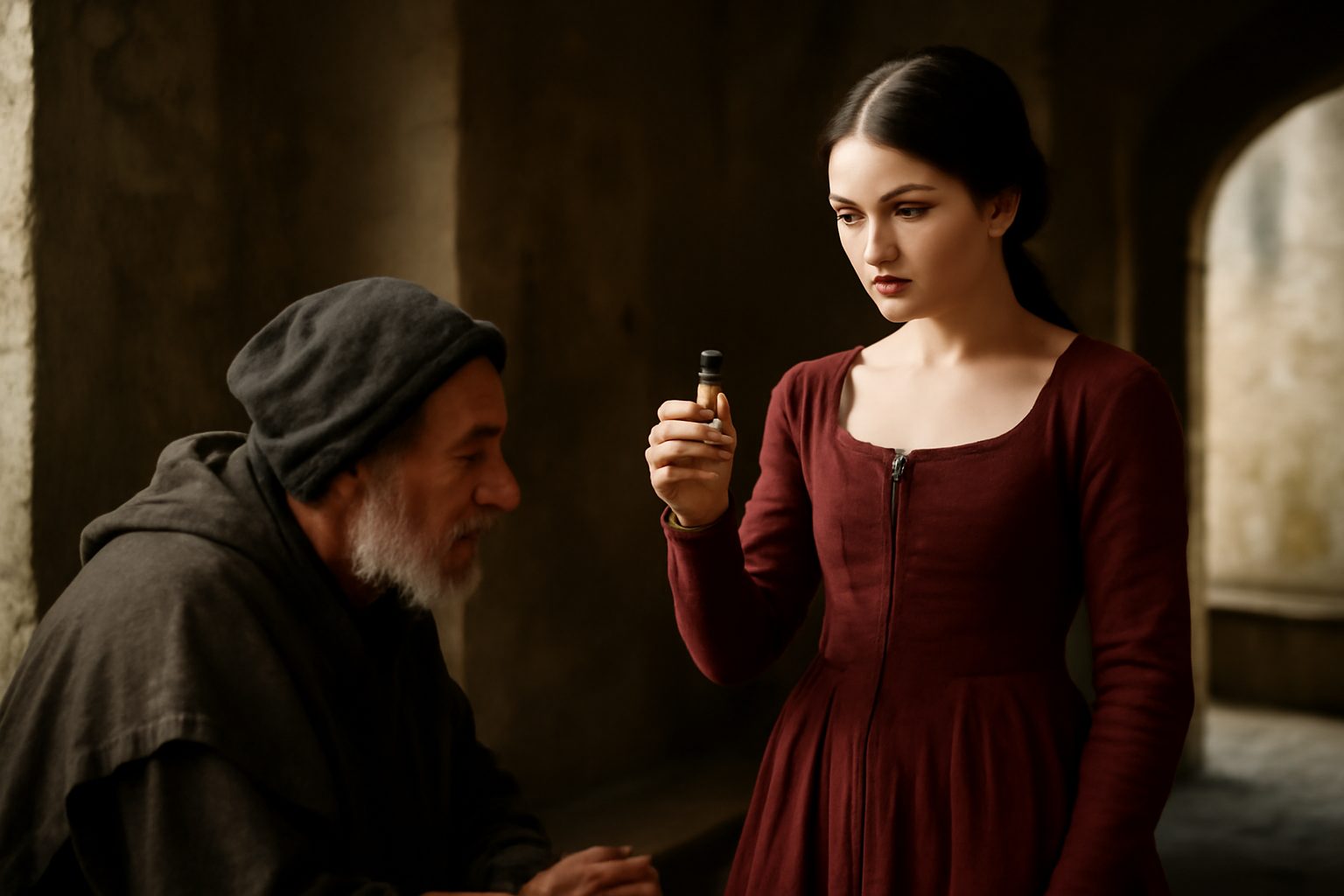
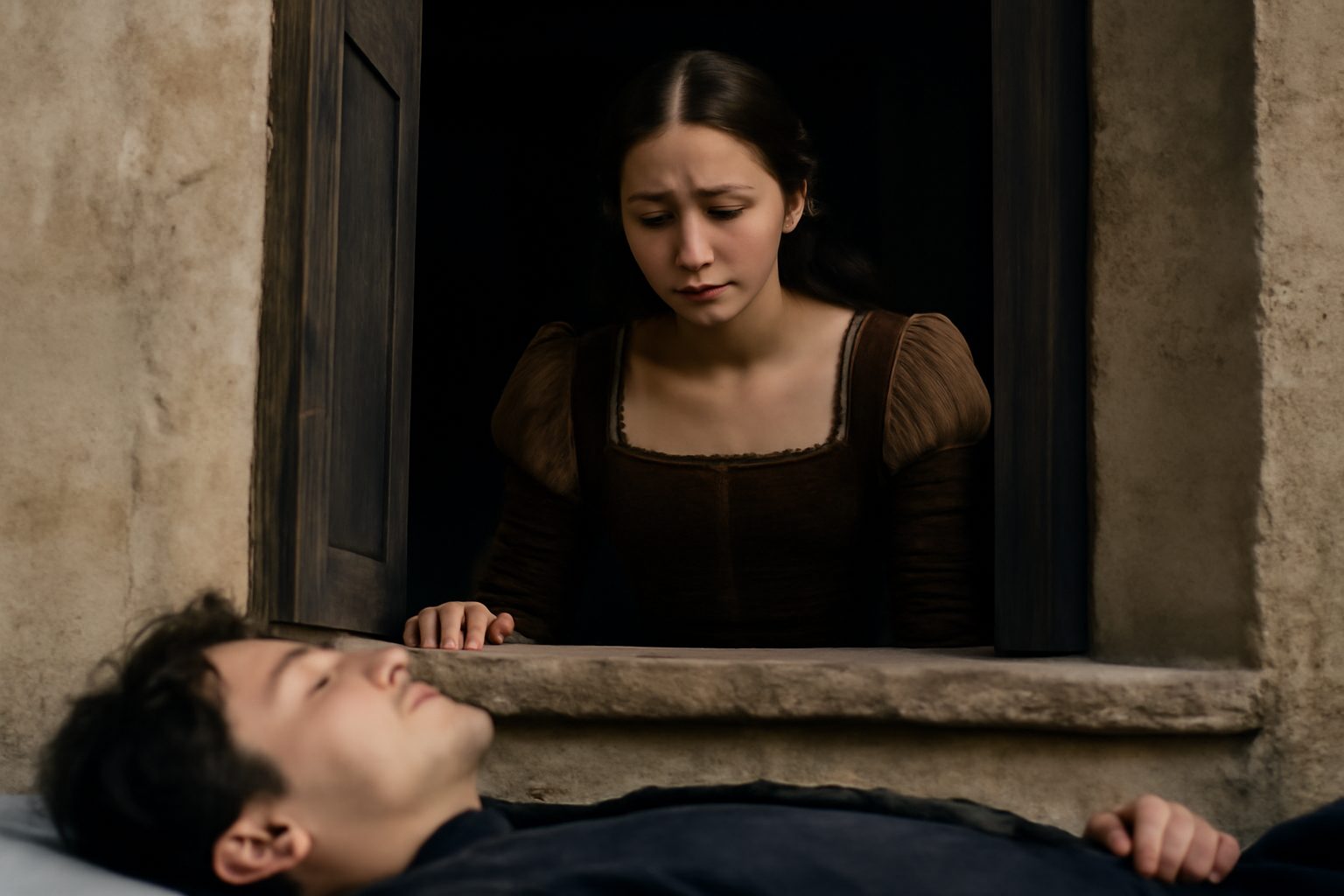
In Act 5, Scene 1 of Romeo and Juliet, Romeo speaks these words to an impoverished apothecary in Mantua. Desperate to obtain poison after hearing of Juliet's supposed death, Romeo acknowledges the man's reluctance to break the law but insists on compensating him for his financial need rather than his willingness. This moment highlights Romeo's determination and the moral ambiguity of the apothecary's situation.
Romeo: "I pay thy poverty, and not thy will."
In modern day english, we would say:
I’m giving you money because you’re poor, not because I agree with what you’re doing.
Frequently Asked Questions
What does Romeo mean when he says he pays the man's poverty and not his will?
Romeo means he is giving the man money because he is poor, not because the man wants to take it.
Connections to other verses:
Connections to "I pay thy poverty, and not thy will"
Romeo's declaration "I pay thy poverty, and not thy will" directly responds to the Apothecary's earlier statement "My poverty, but not my will, consents", creating a mirrored exchange that highlights the transactional nature of their interaction.
Economic Desperation Theme
This exchange connects thematically with Romeo's observation of the Apothecary's shop in "A beggarly account of empty boxes" and "An alligator stuff'd, and other skins", which collectively paint a picture of extreme poverty that makes the Apothecary vulnerable to Romeo's offer.
Moral Justification
Romeo's phrasing suggests he is compensating for economic coercion rather than buying willing complicity, connecting to his earlier realization in "Noting this penury, to myself I said" where he first recognizes the Apothecary's desperate circumstances might make him amenable to selling poison.
Wealth and Morality Contrast
The transaction culminates in Romeo's profound statement in "There is thy gold, worse poison to men's souls", creating a full circle from the initial negotiation to the final payment, emphasizing the corrupting influence of wealth.
Legal and Social Context
The exchange occurs within the framework established by "Such mortal drugs I have; but Mantua's law" and "Is death to any he that utters them", showing how poverty overrides legal prohibitions.