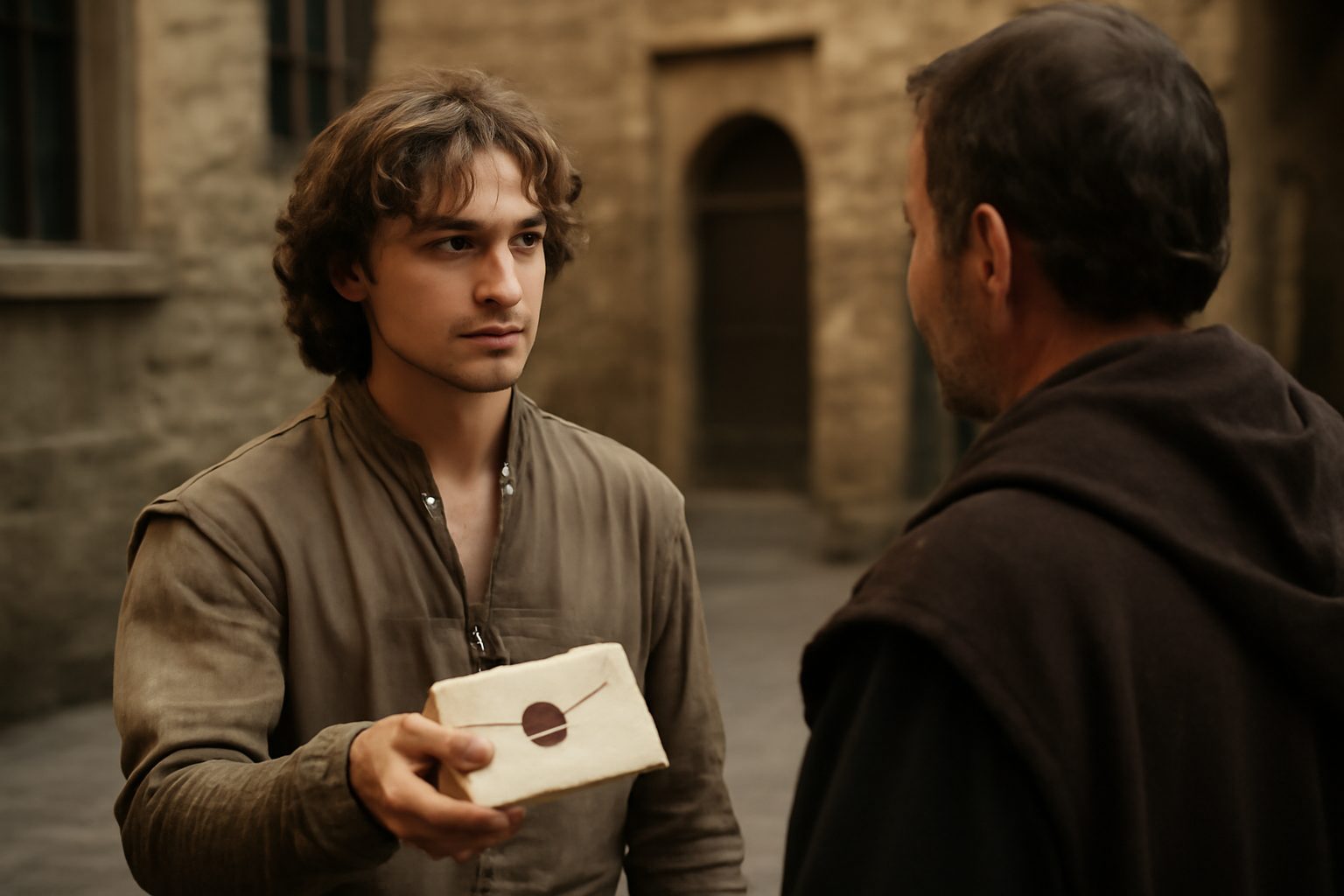
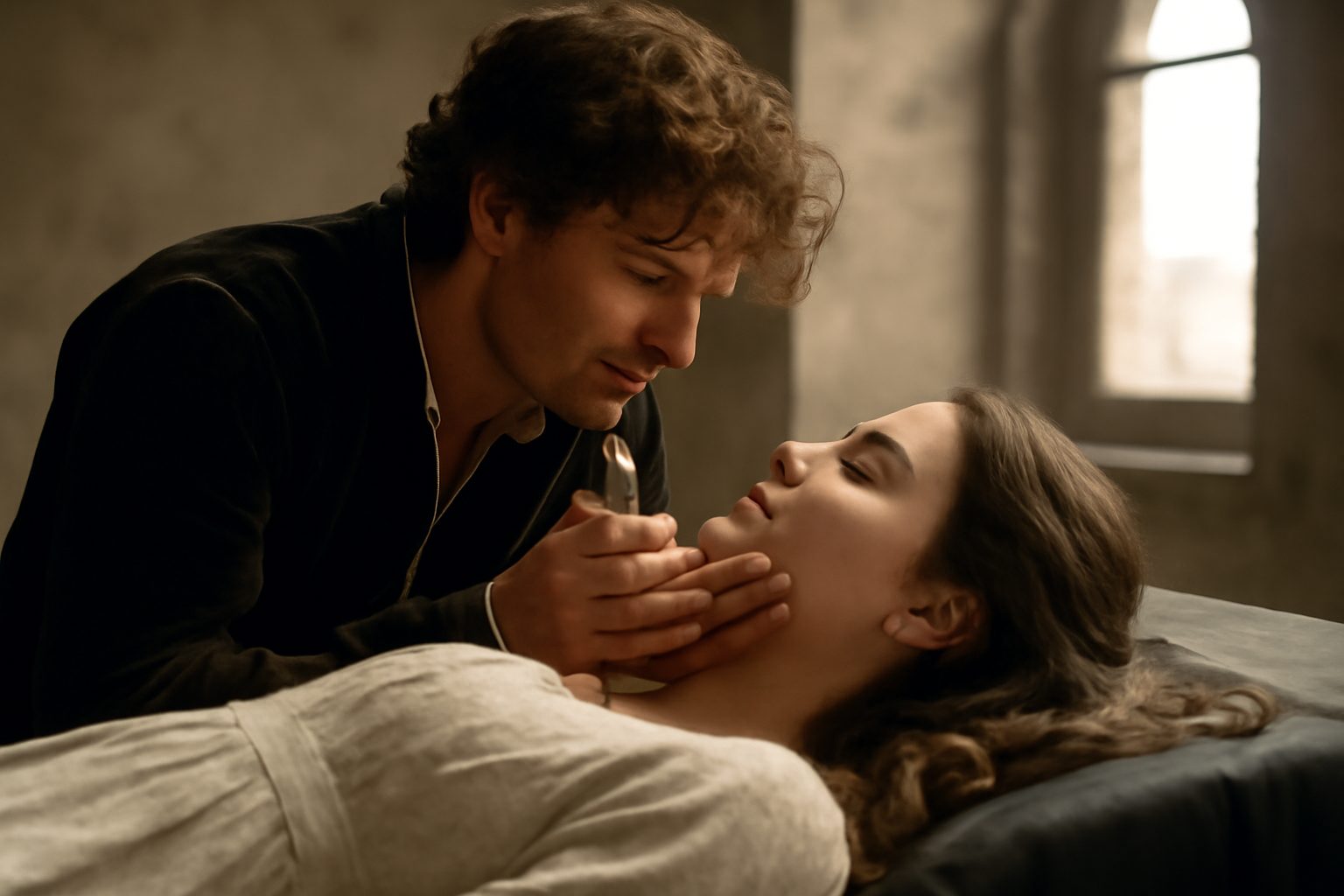
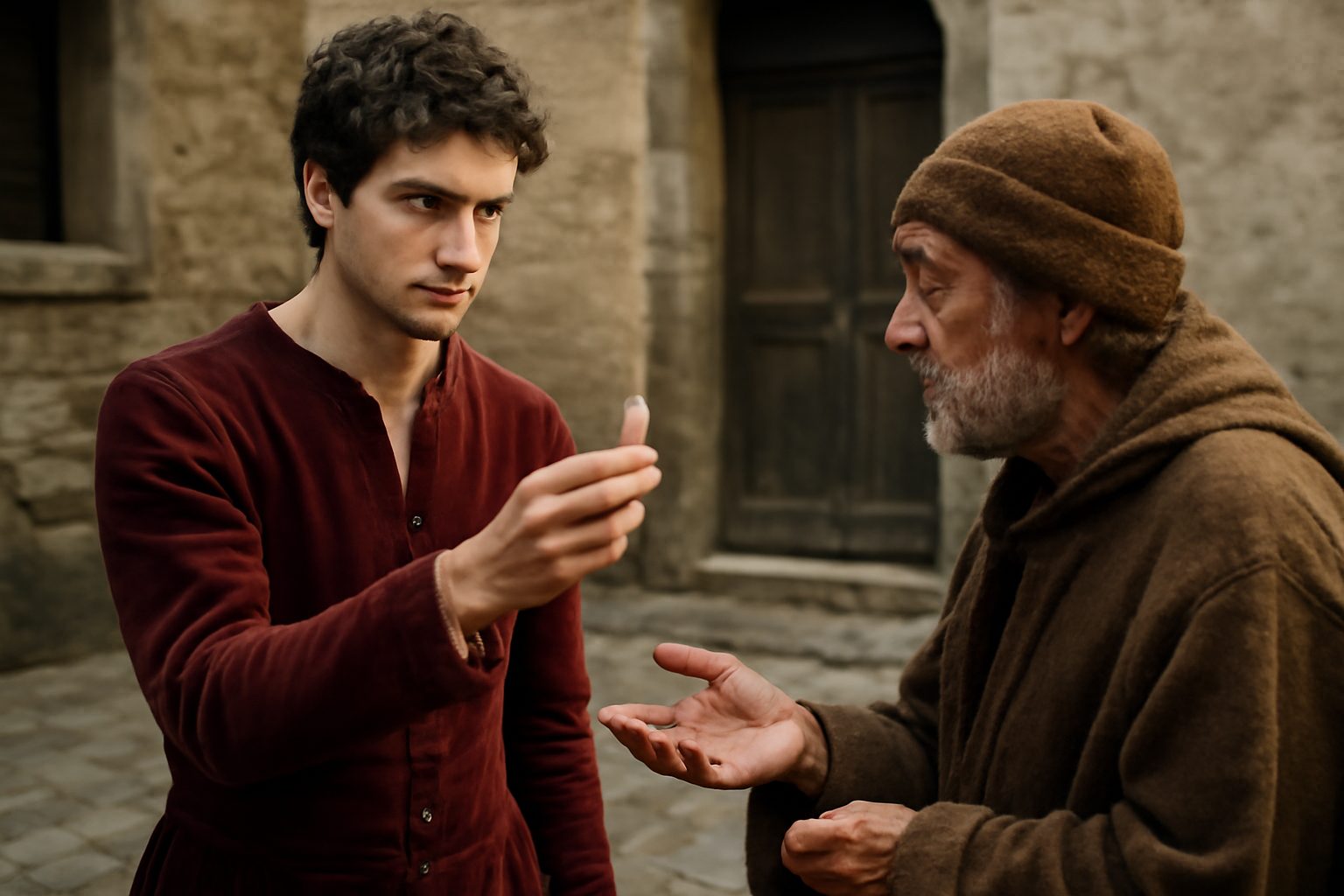
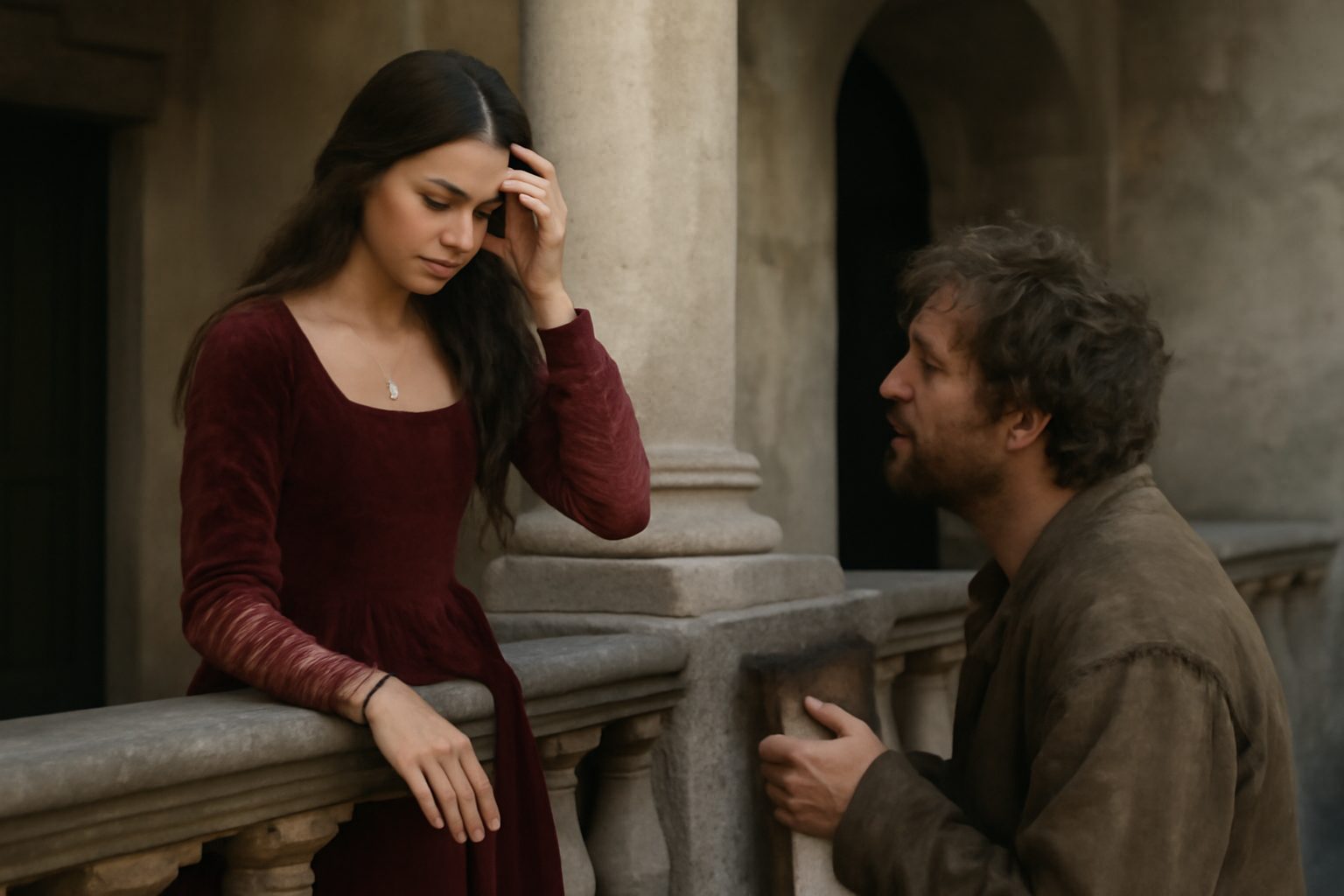
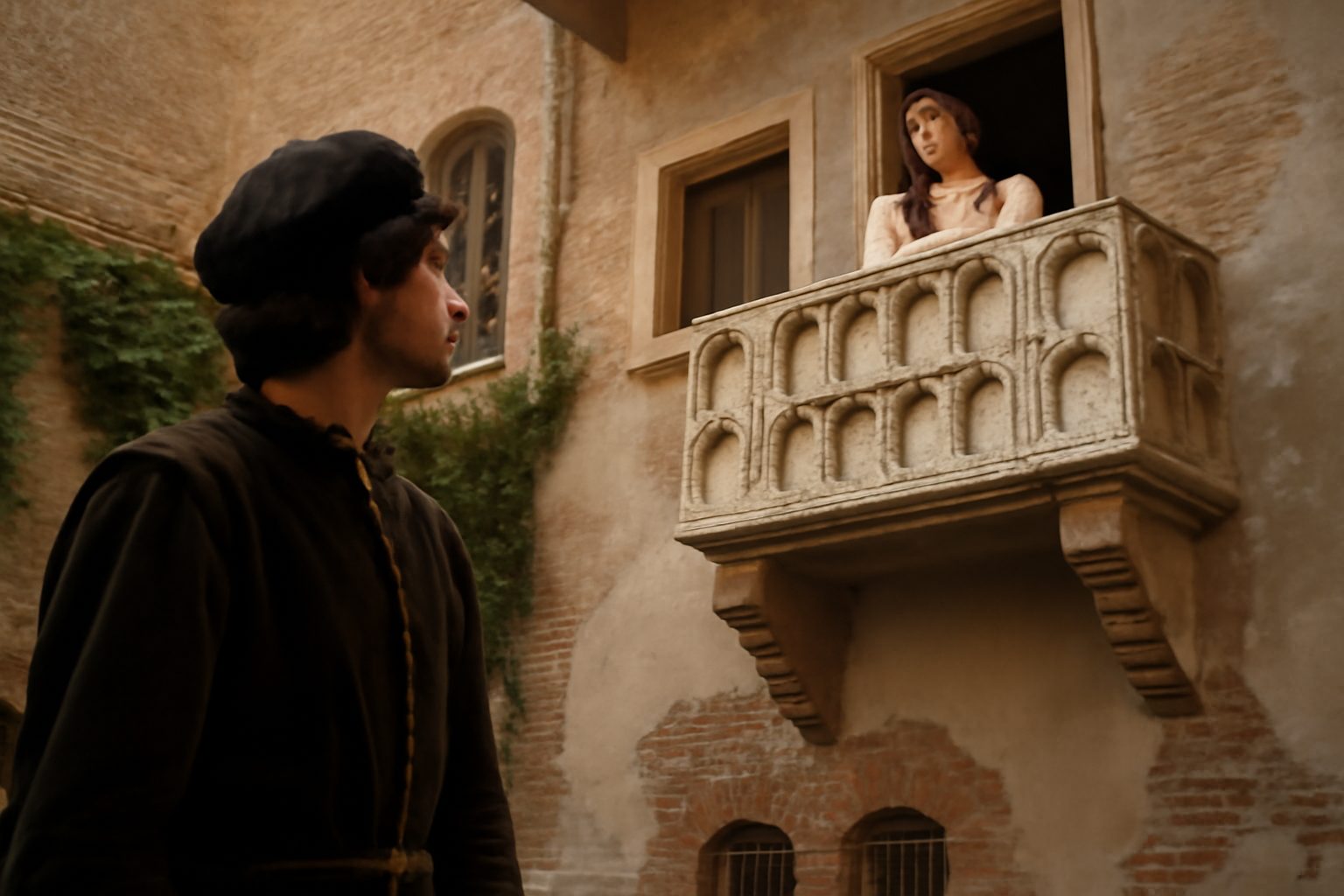
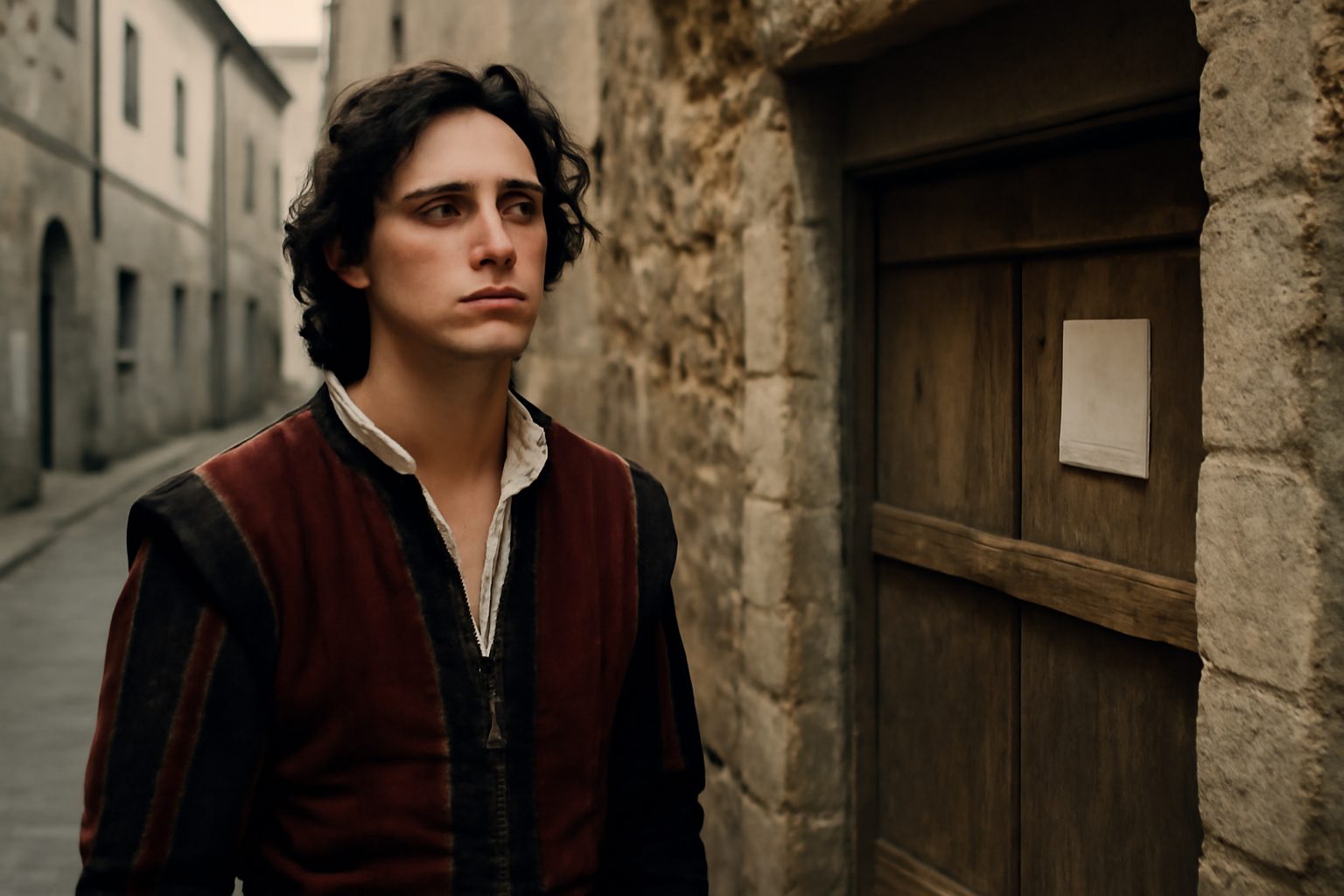
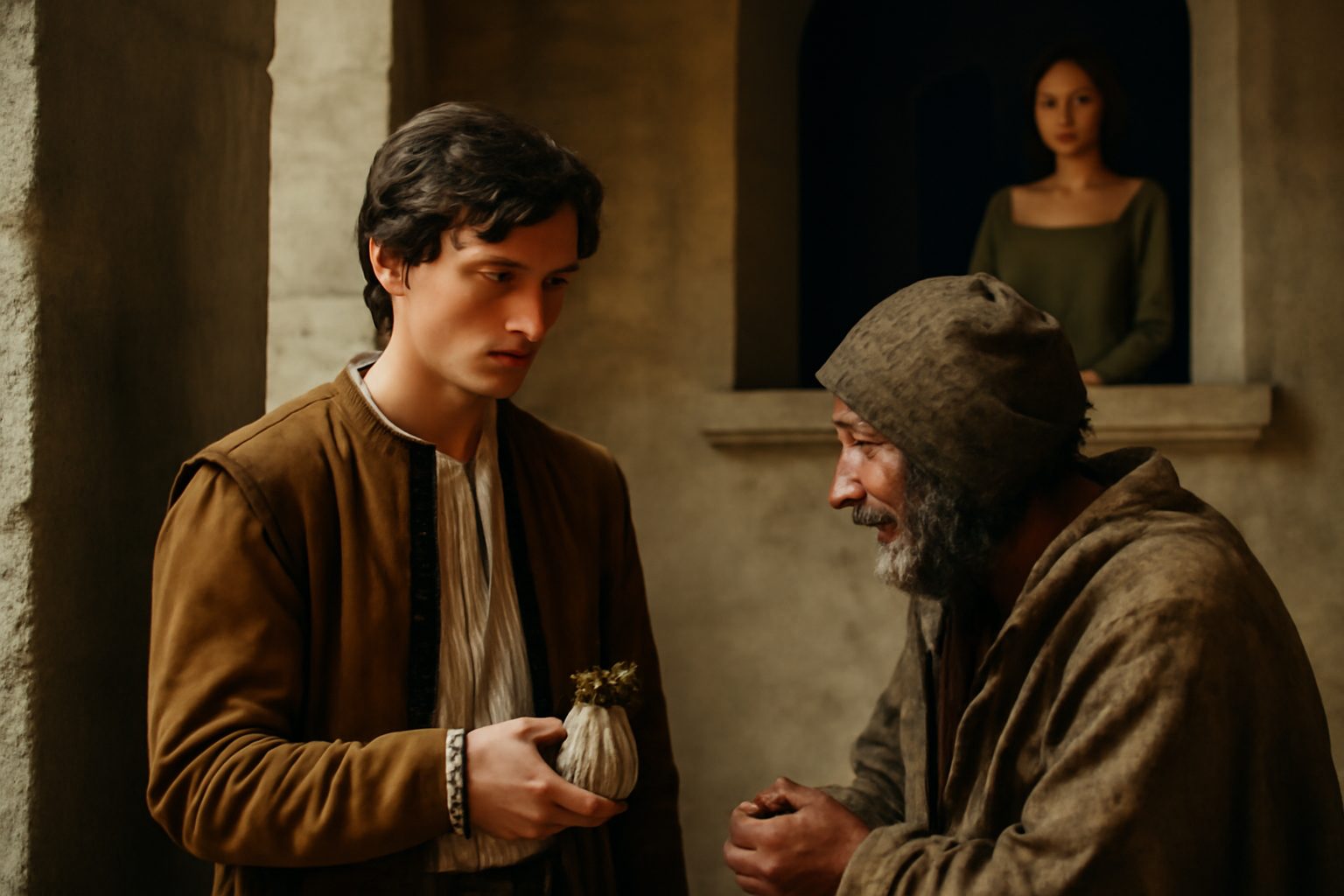
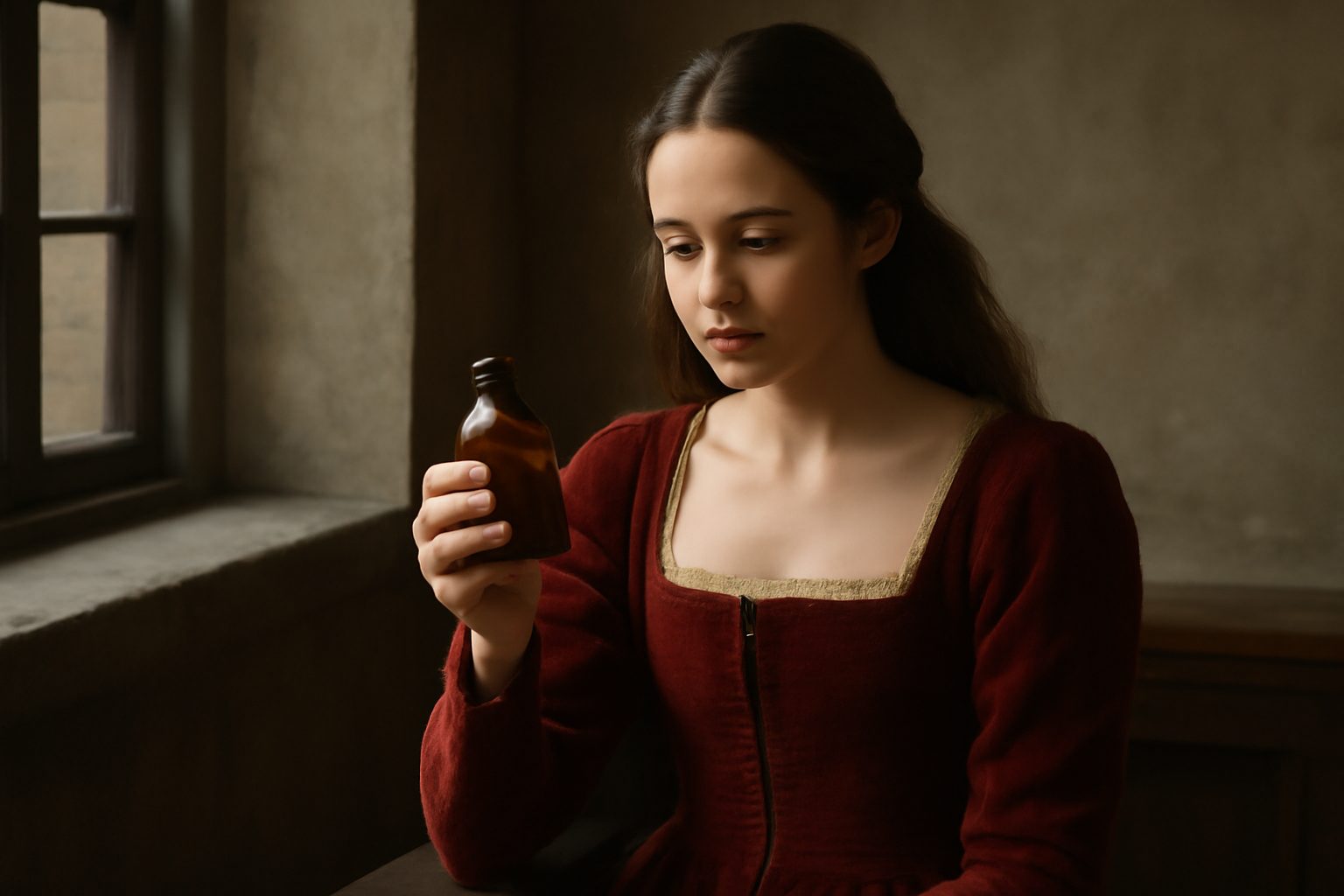
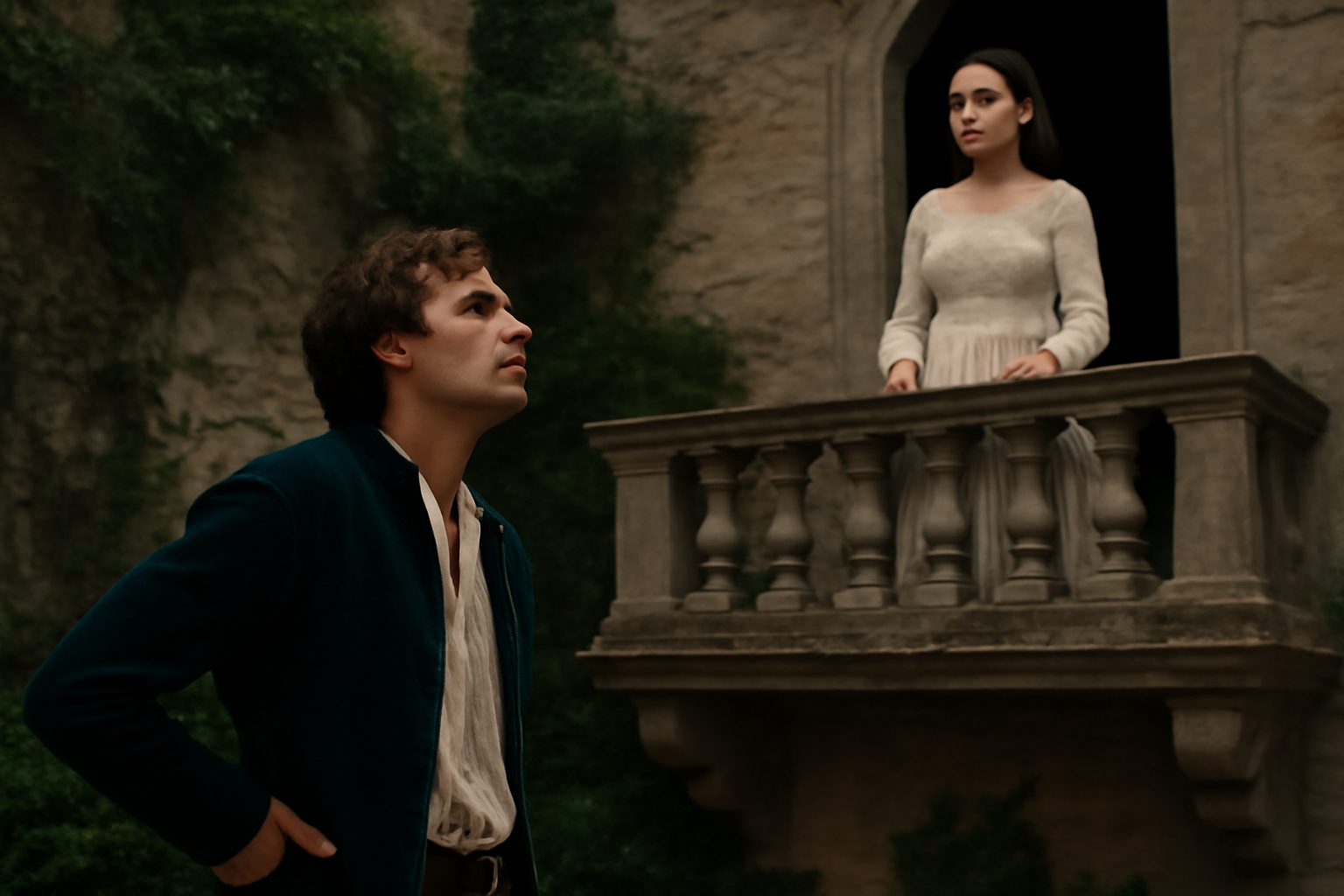
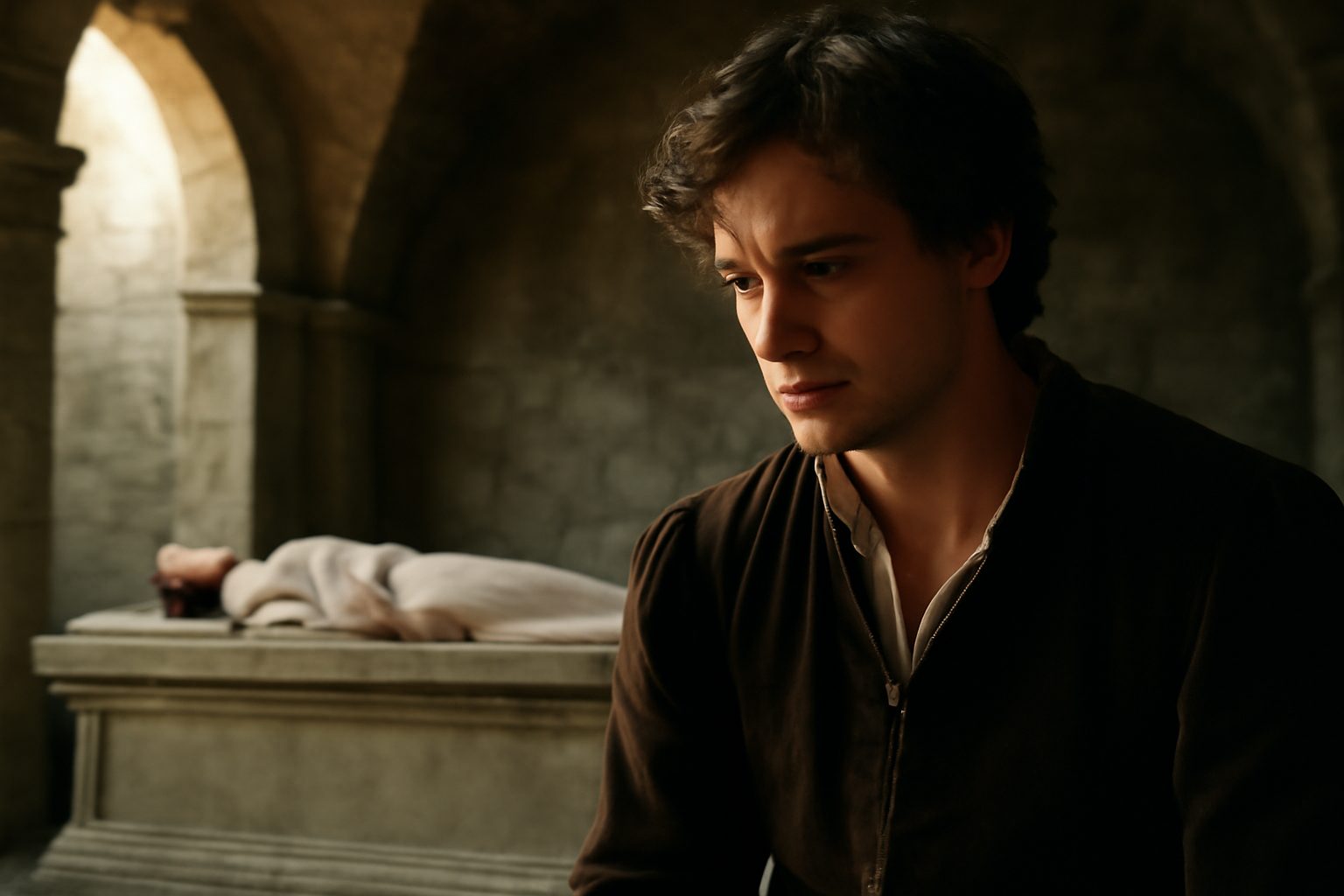
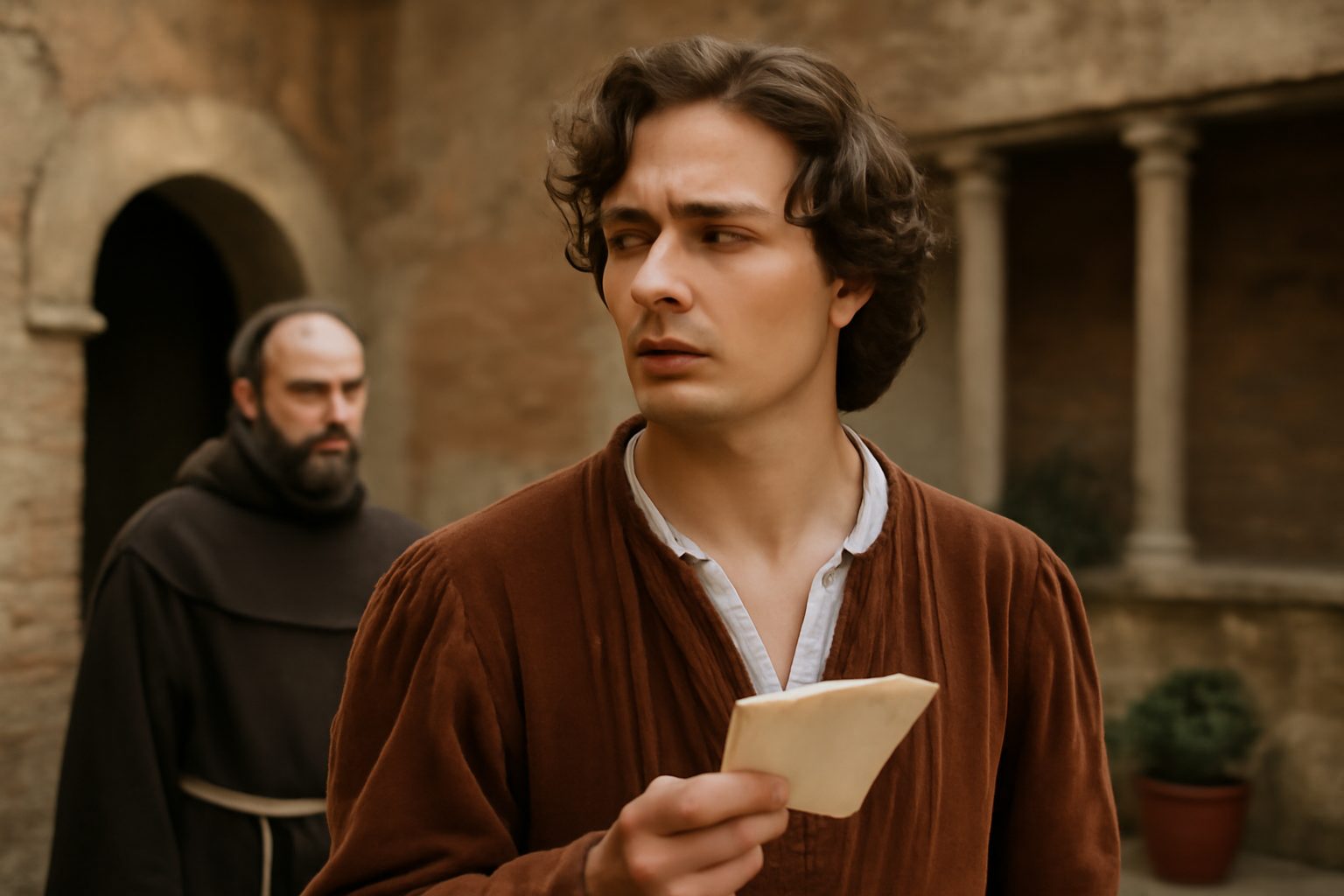
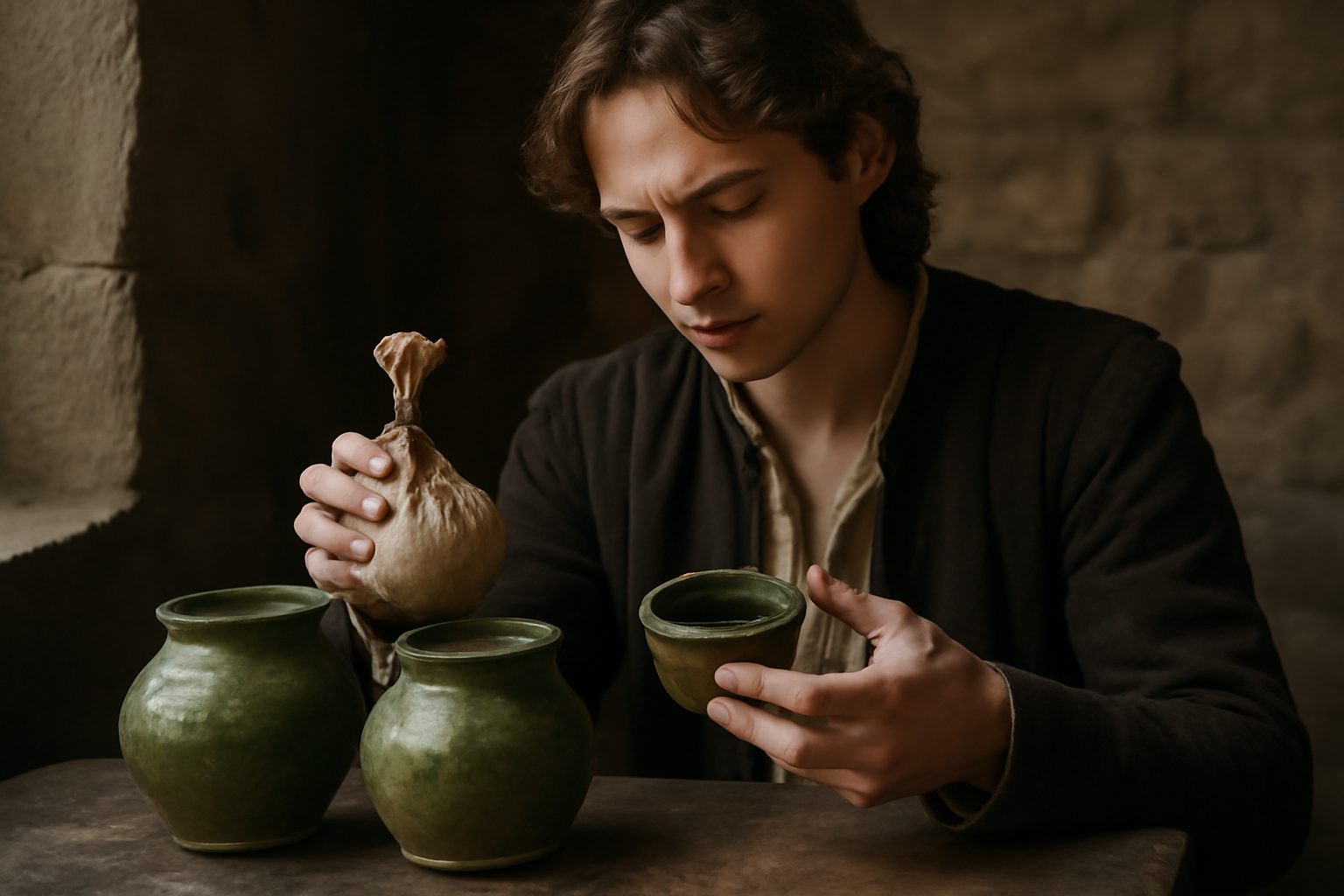
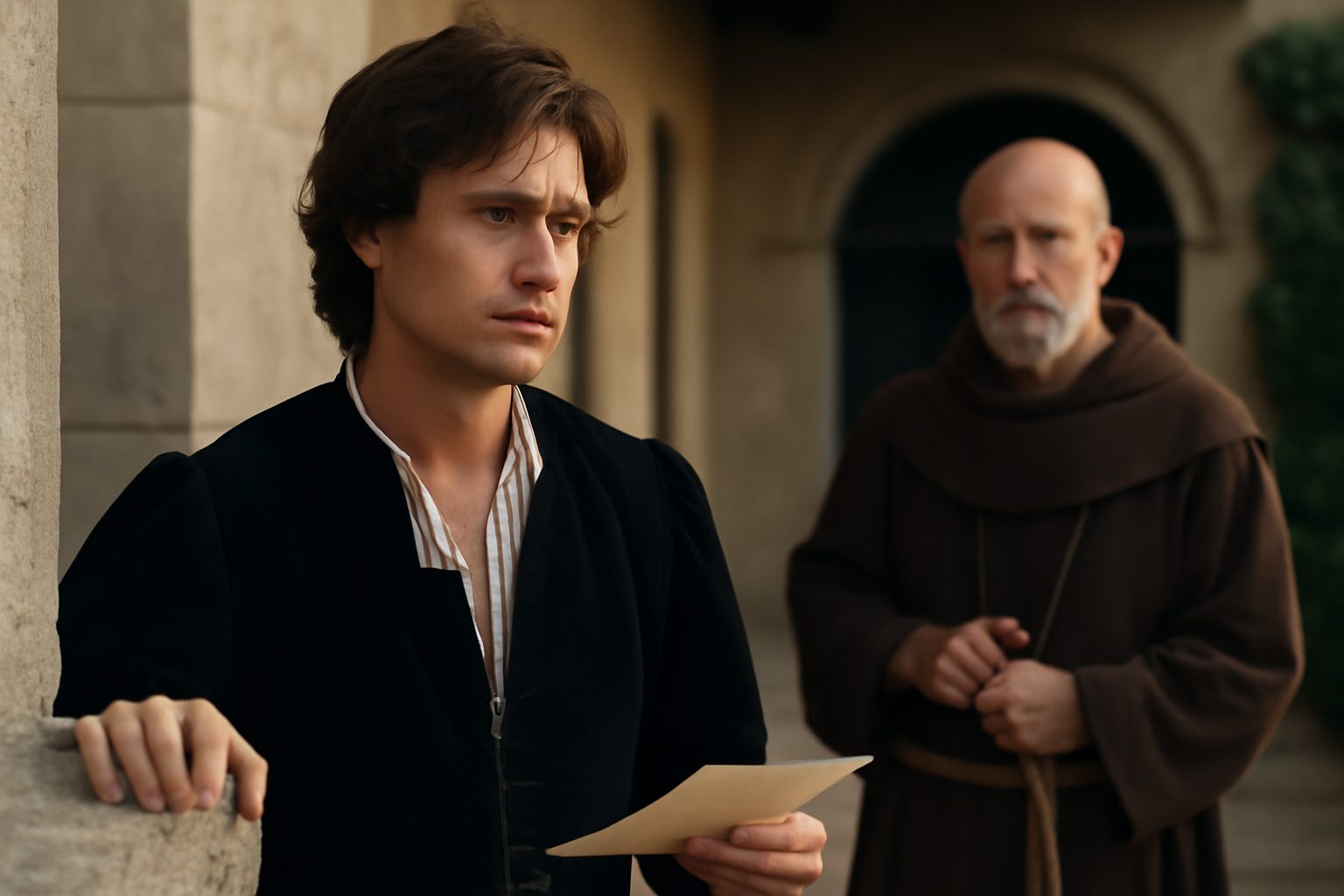
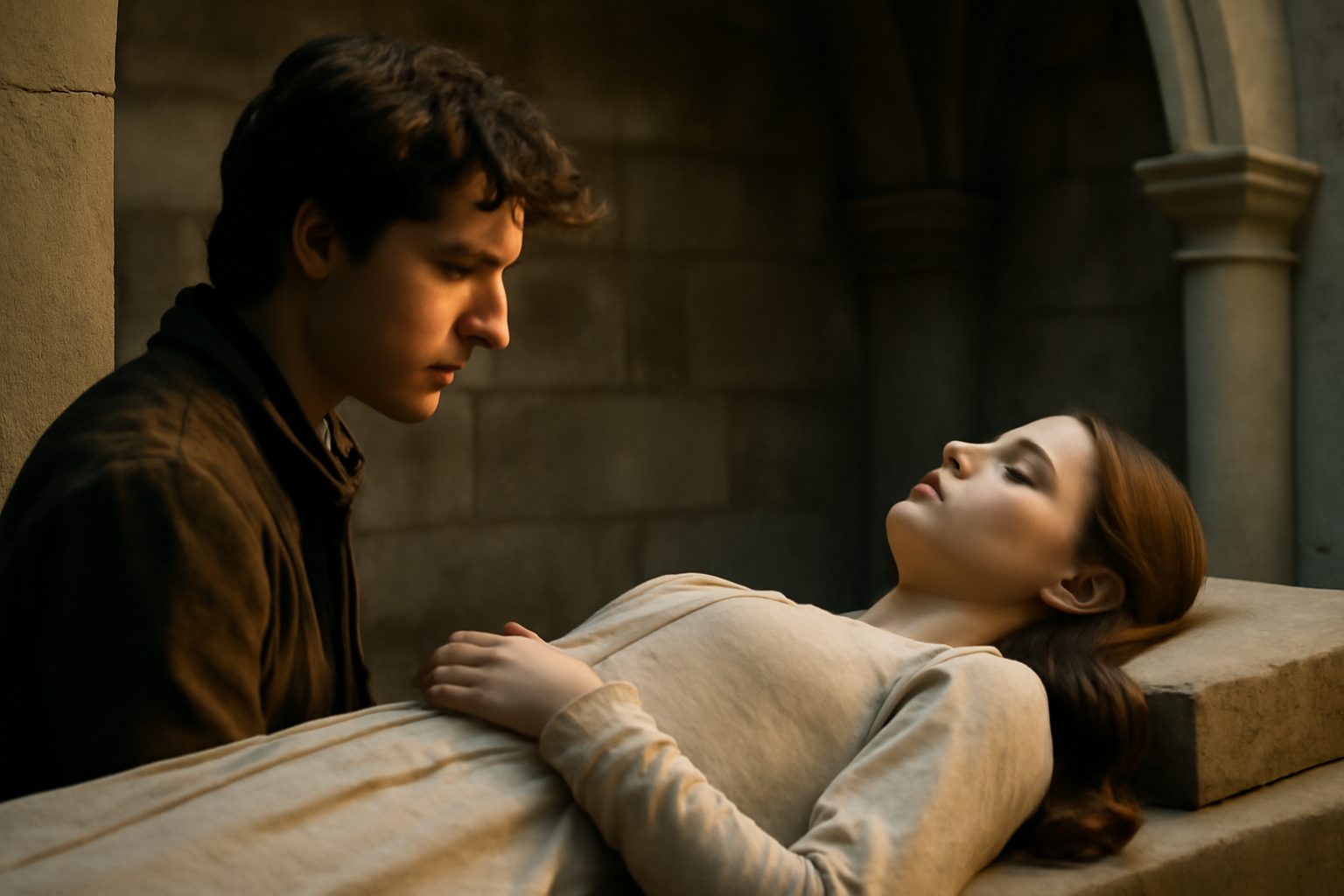
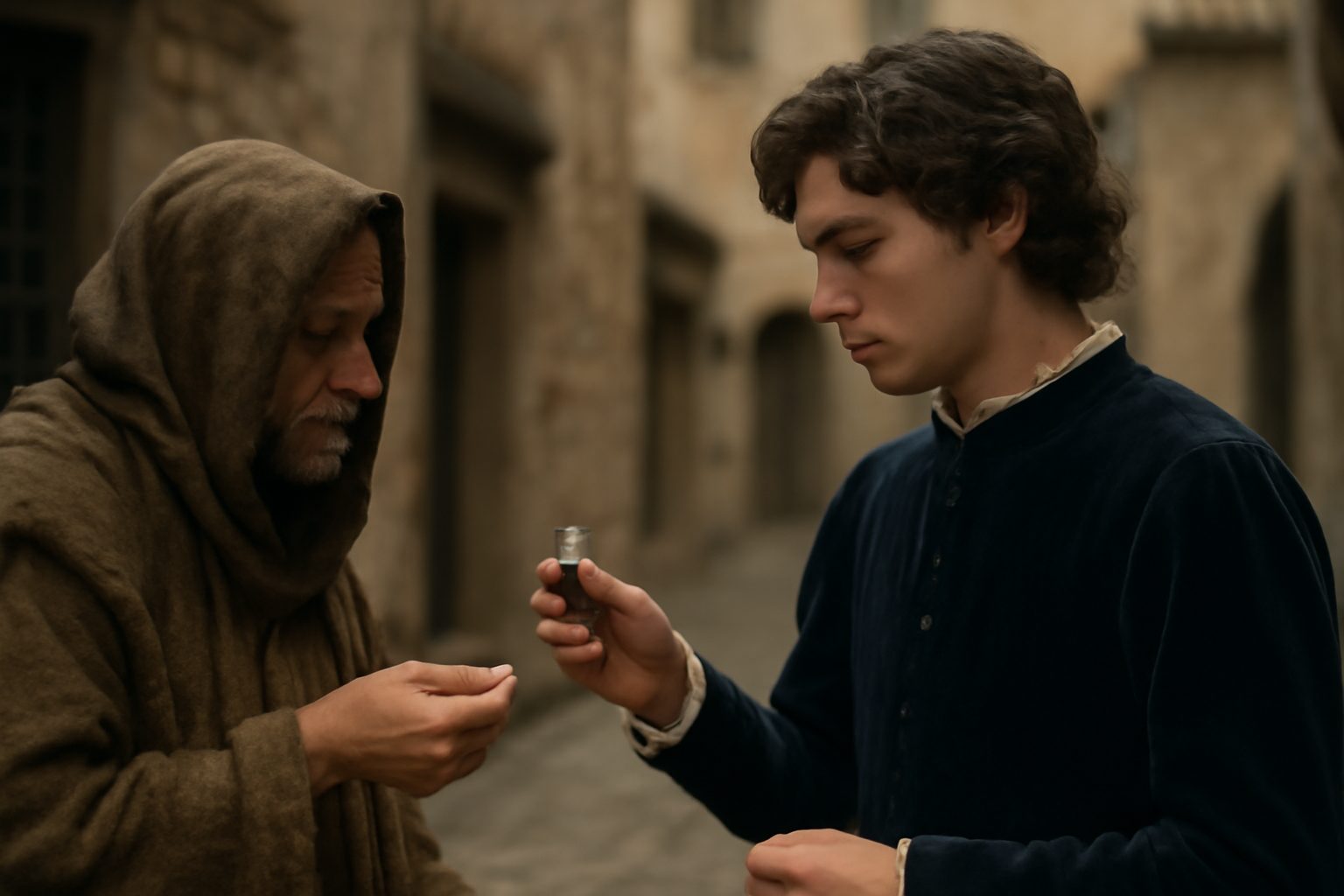
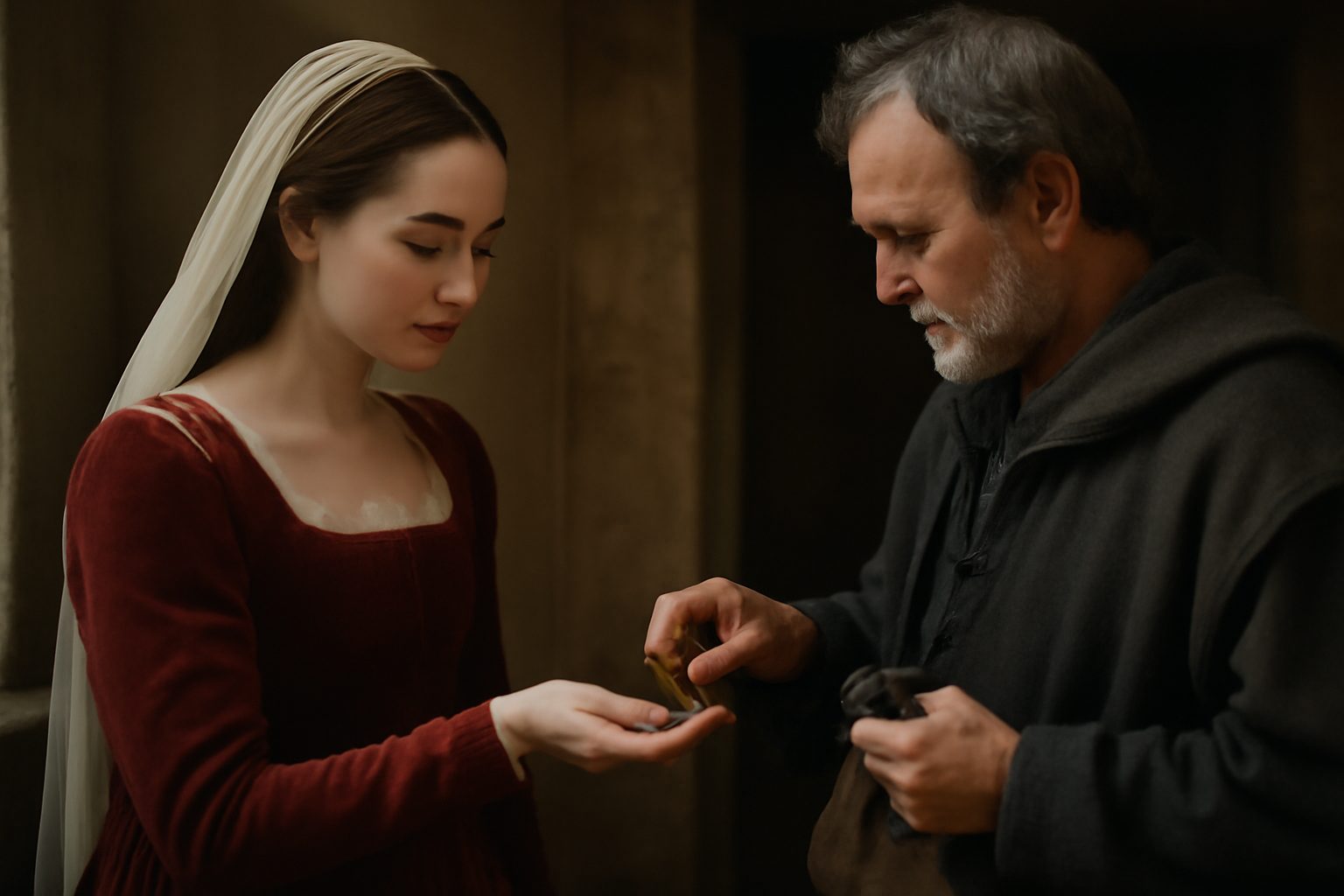
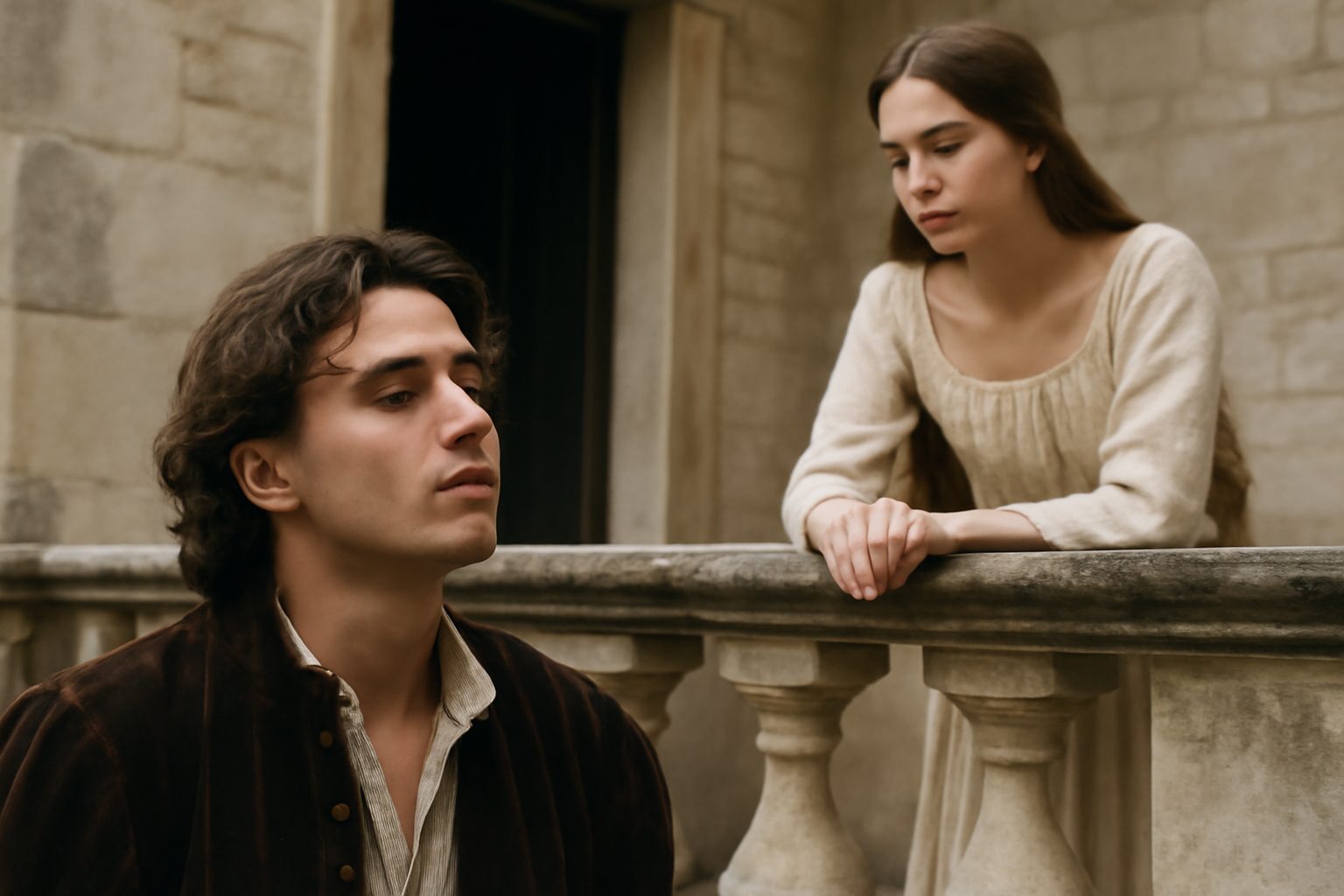
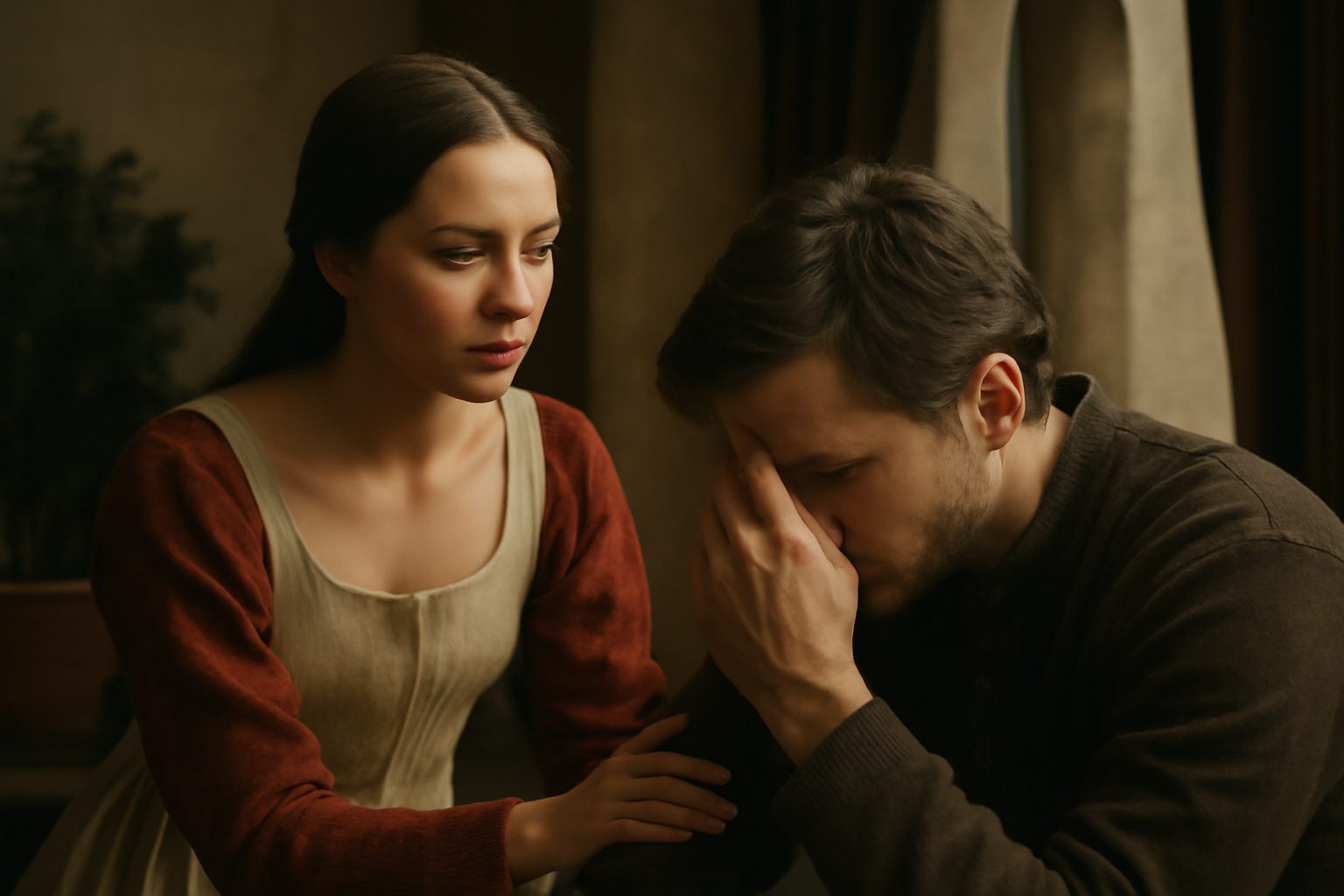
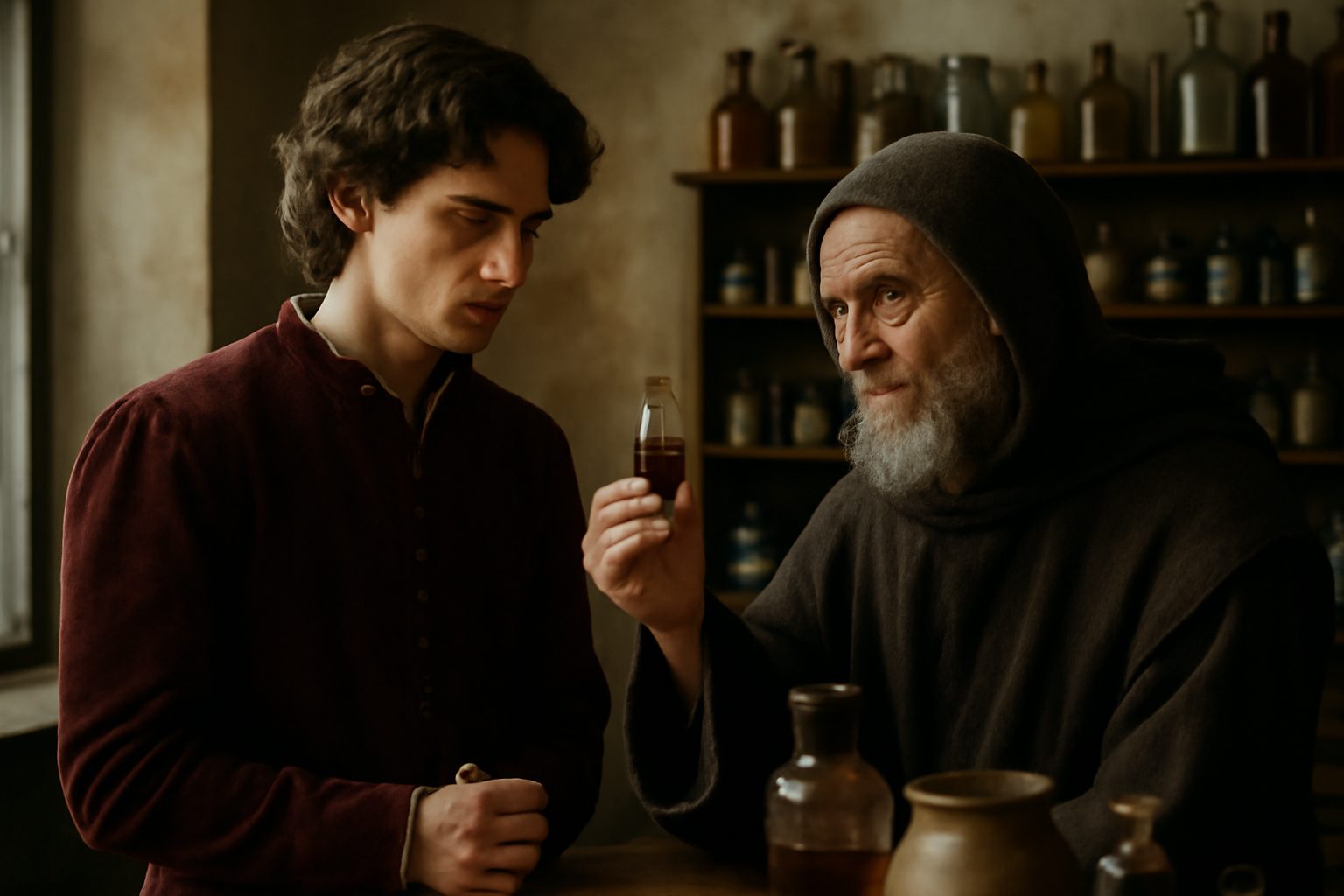
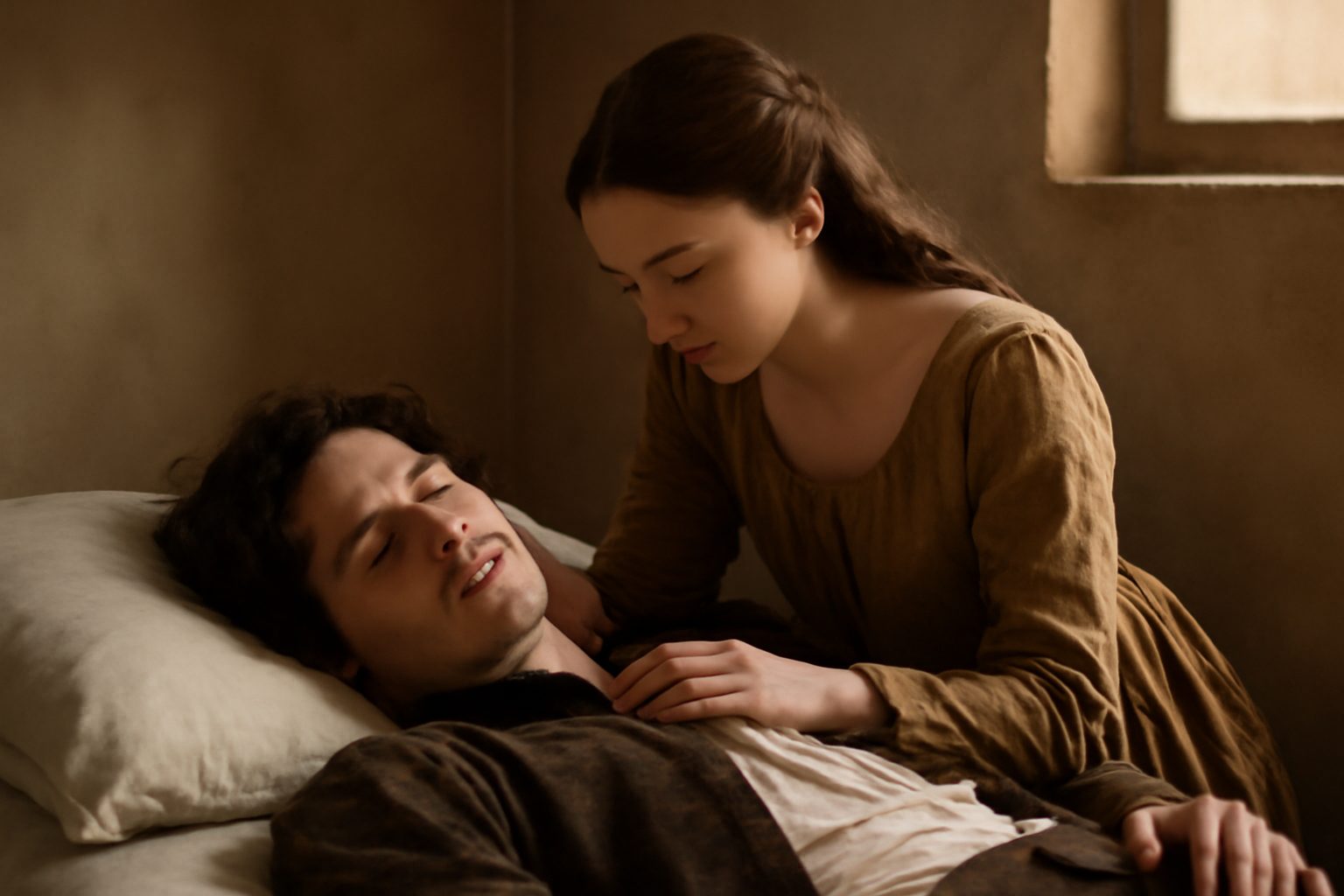
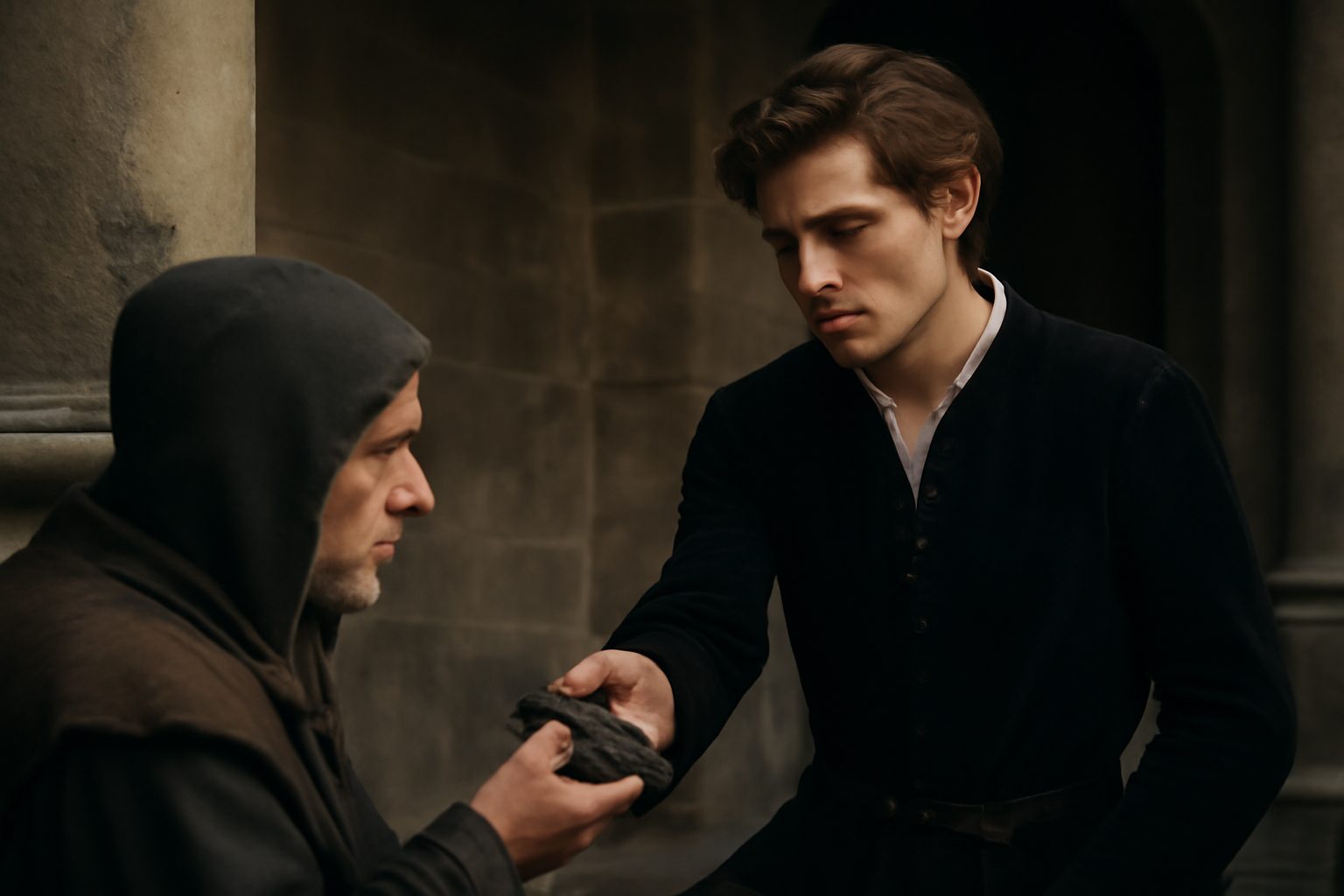
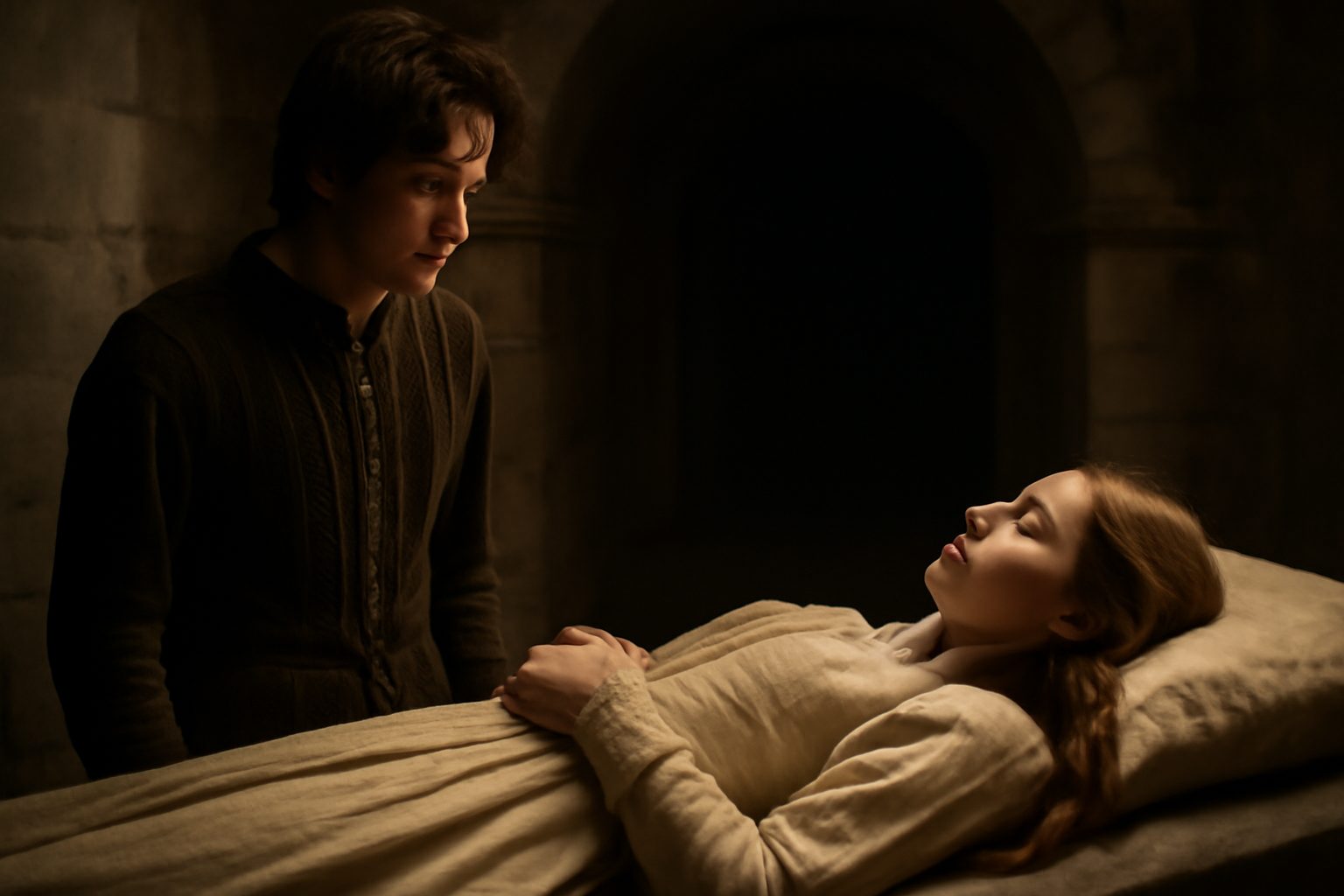
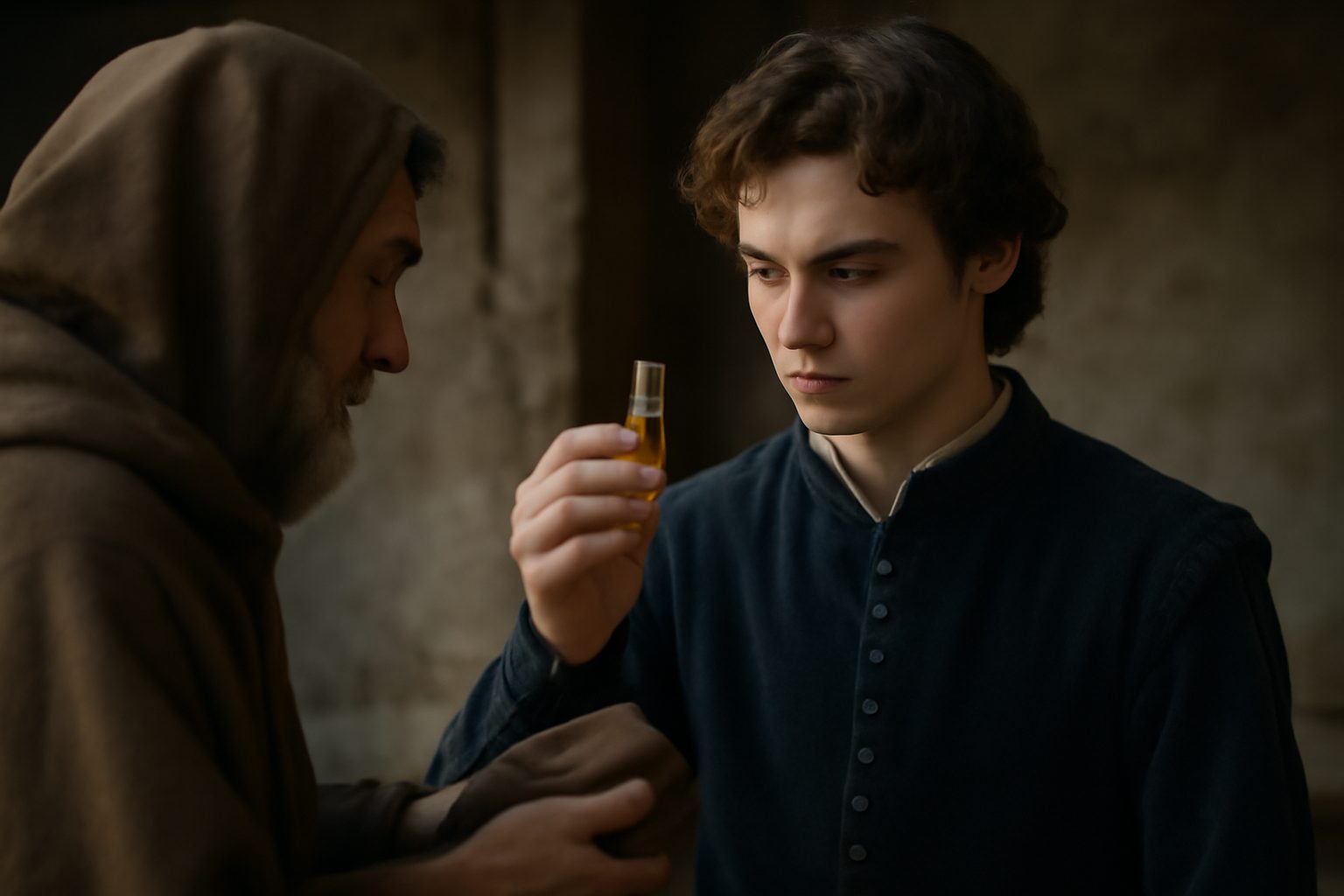
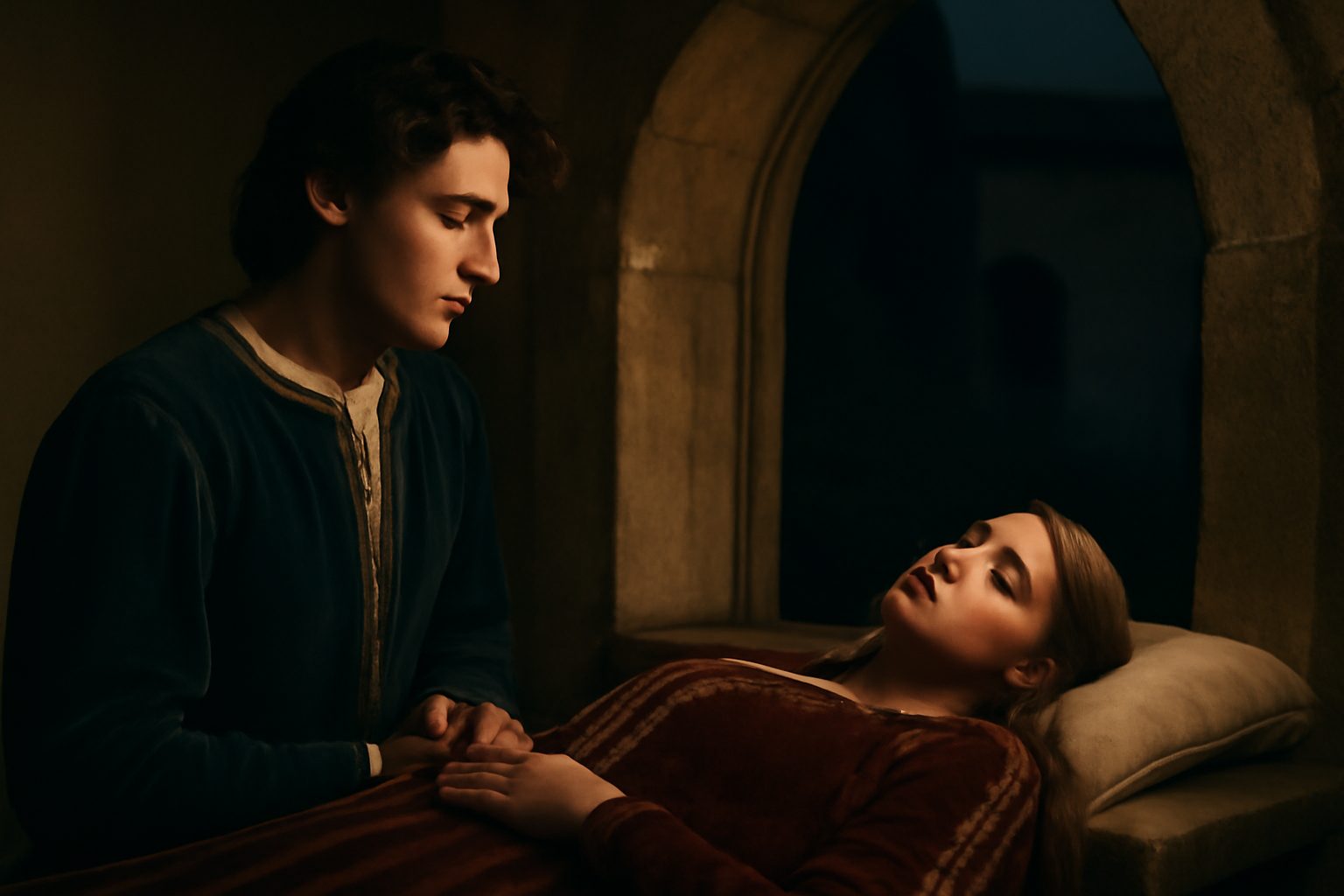
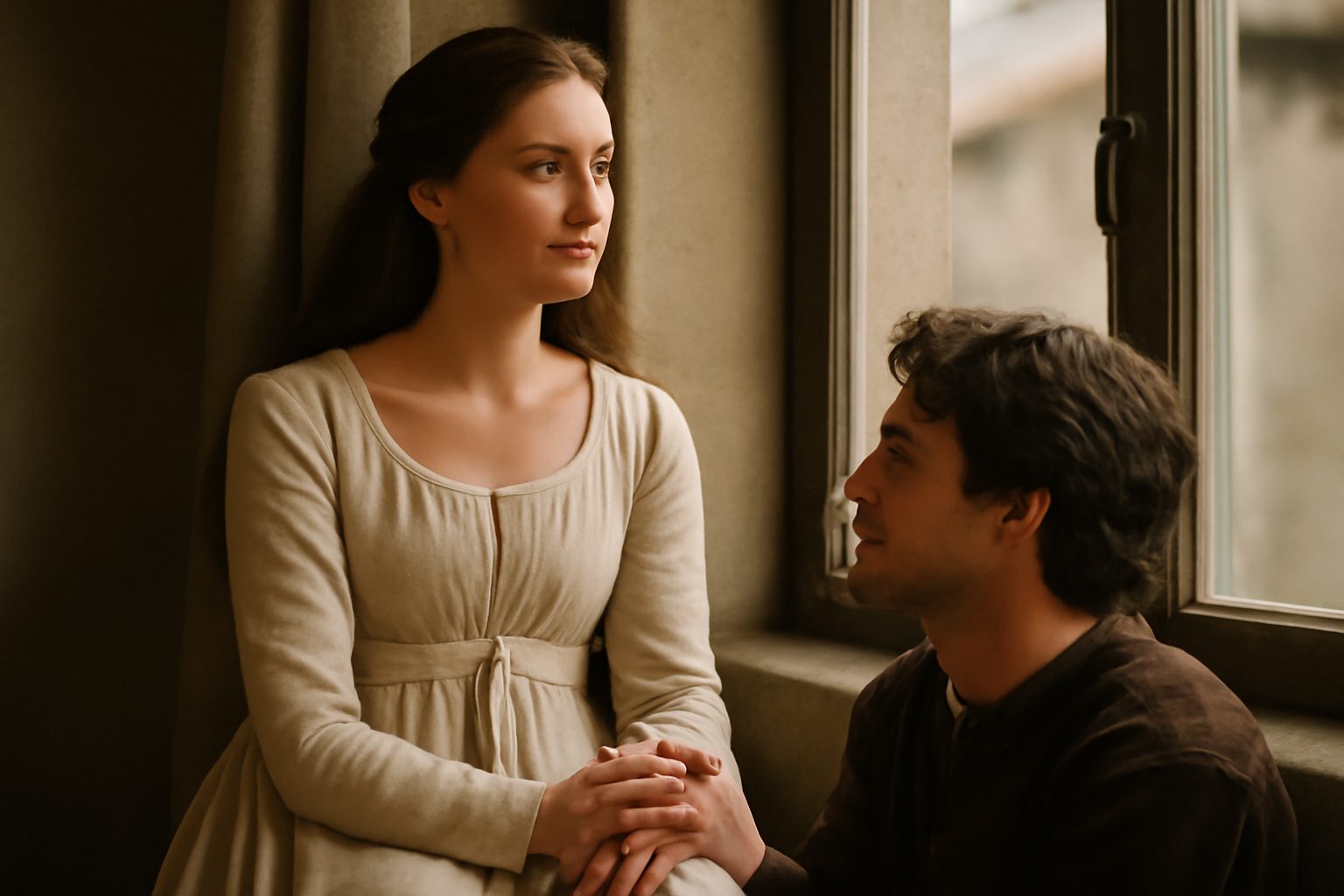
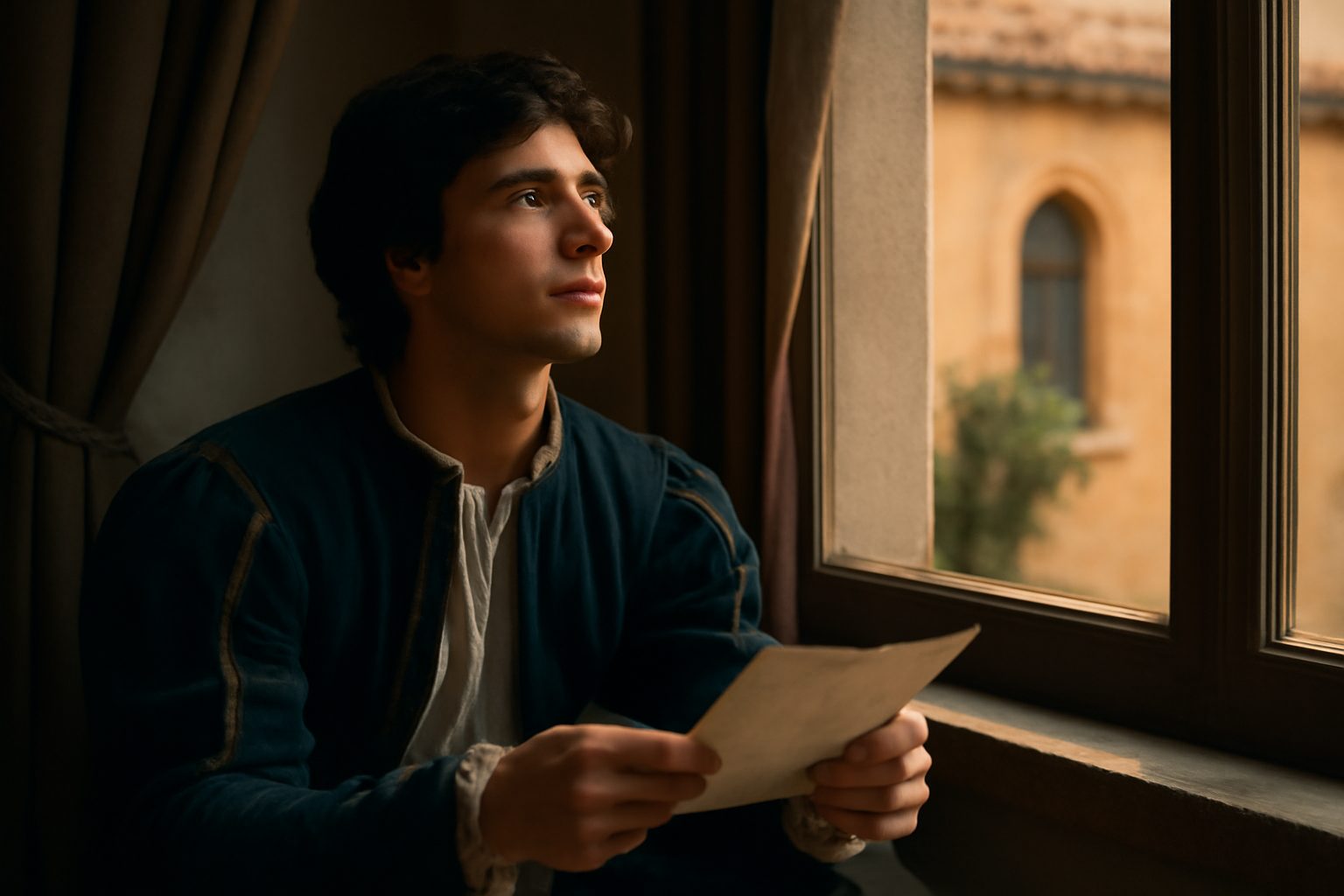
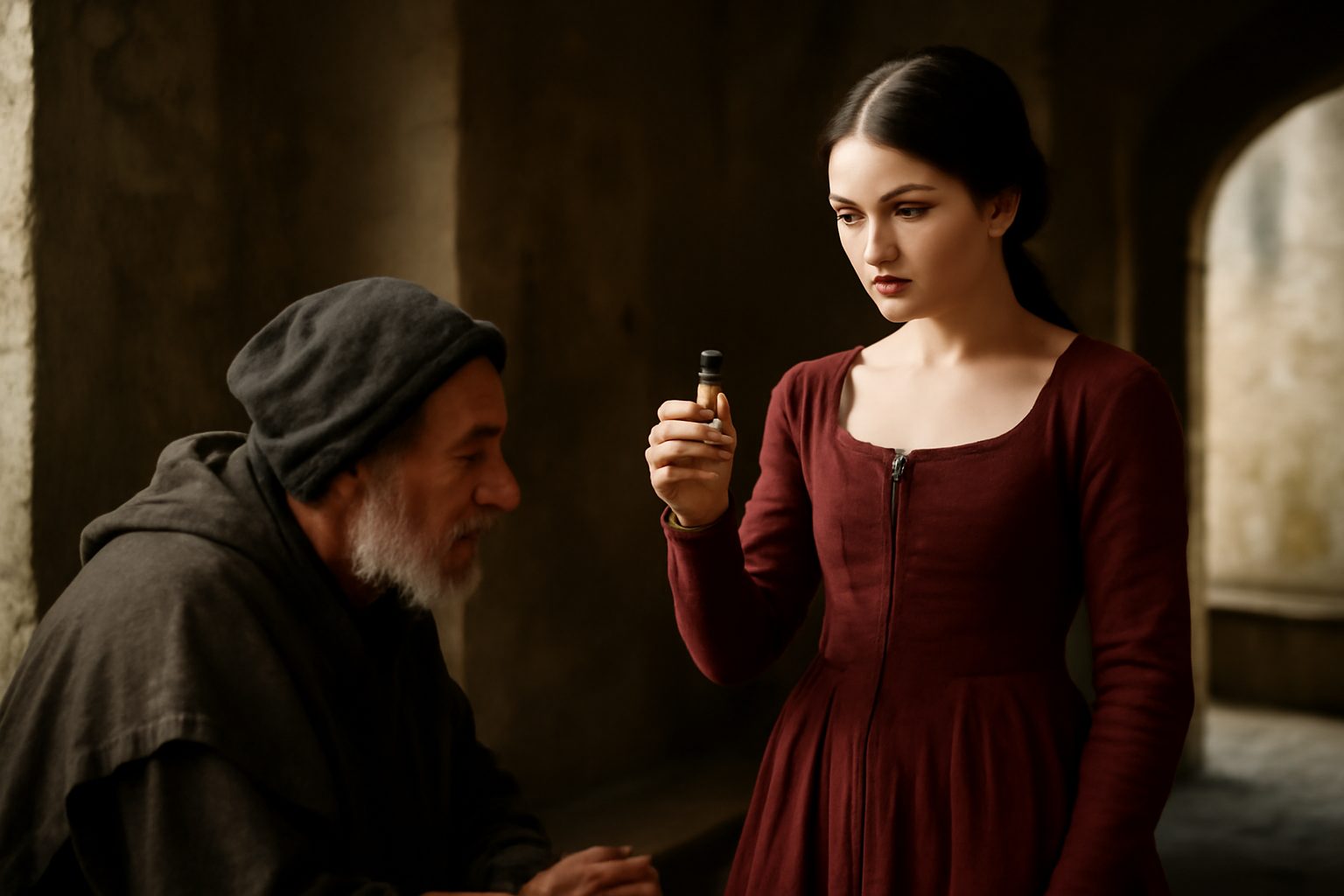
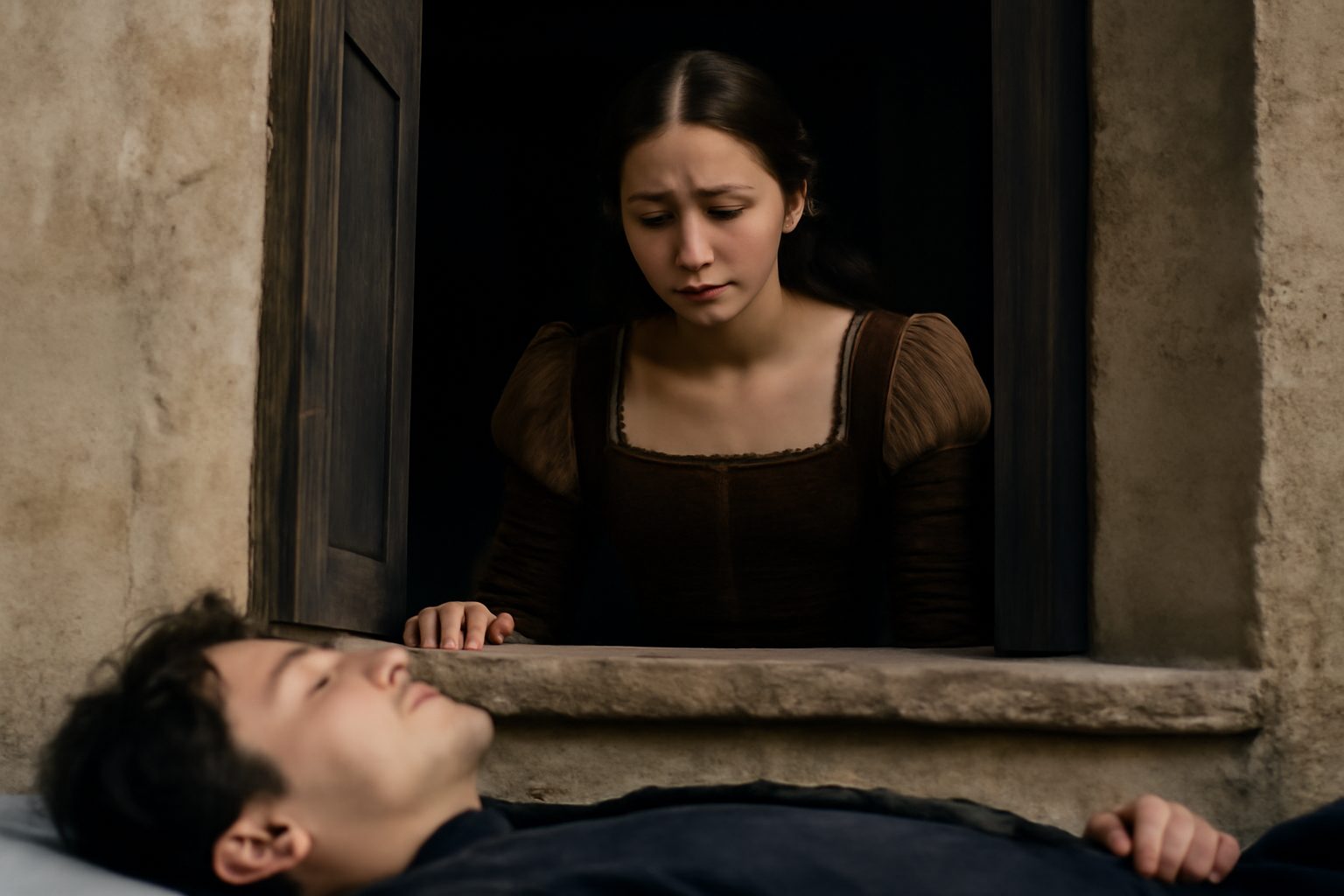
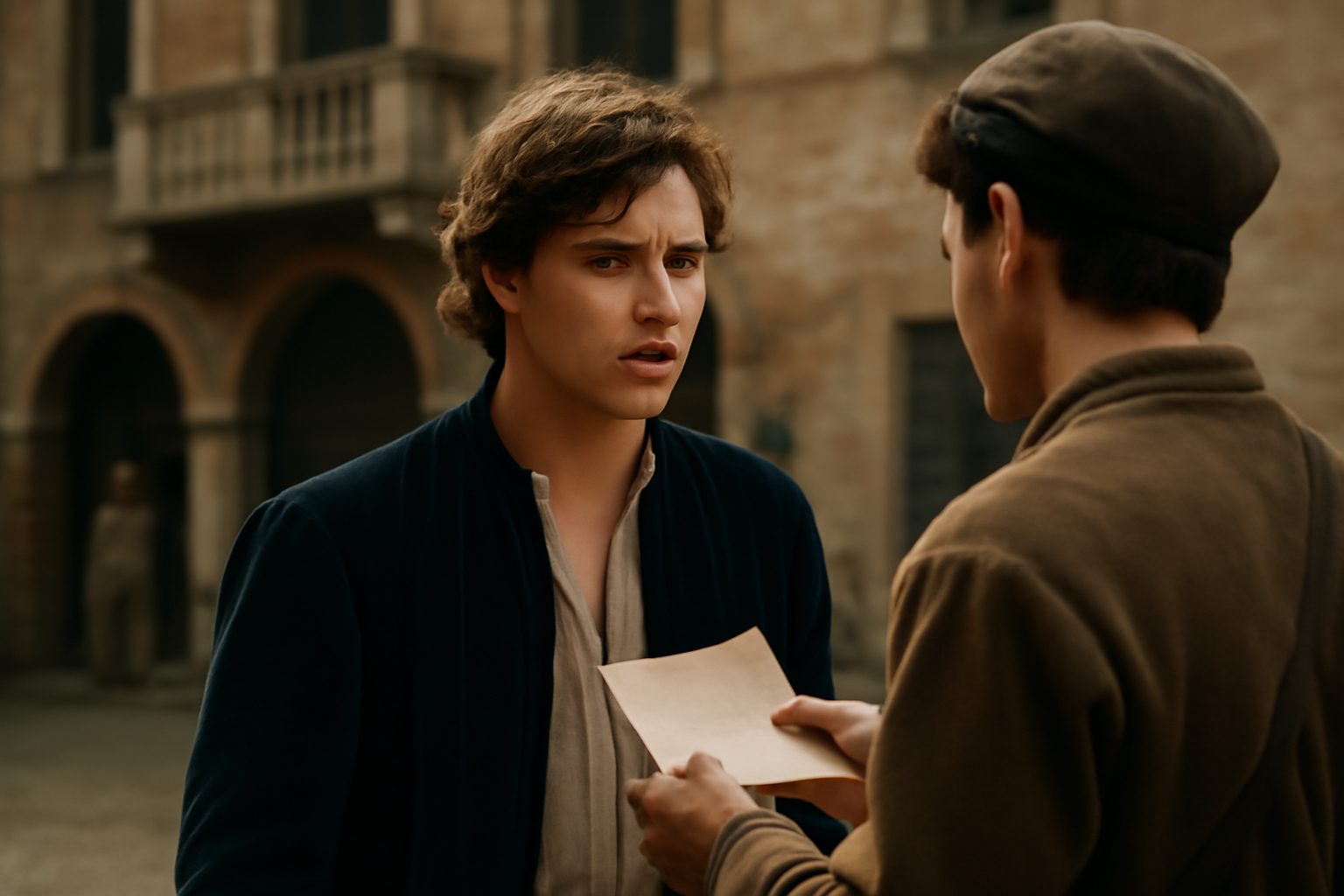
In Act 5, Scene 1 of Romeo and Juliet, Romeo is in exile in Mantua when he receives news from his servant Balthasar. Mistakenly believing Juliet to be dead, Romeo despairs and speaks these words, foreshadowing the tragic misunderstanding that will drive the play's devastating conclusion. The phrase reflects his sense of impending doom as he resolves to return to Verona.
Balthasar: "Some misadventure."
In modern day english, we would say:
Something unfortunate must have happened.
Frequently Asked Questions
What does Balthasar think has happened in Act 5 Scene 1?
Balthasar thinks something bad or unfortunate has happened.
Connections to other verses:
Connections to "Some misadventure" in Romeo & Juliet Act 5 Scene 1
The phrase "Some misadventure" (/romeo-and-juliet/five/5-1/act-5-scene-1-30/) reflects Romeo's immediate suspicion of misfortune upon learning that Balthasar brings no letter from Friar Laurence. This line connects thematically and narratively to several other verses in the scene.
Foreshadowing and Premonition
Romeo's unease about a potential misadventure is foreshadowed earlier in his dialogue with Balthasar. When he asks, "Dost thou not bring me letters from the friar?" and receives a negative response, it plants the seed of doubt that culminates in his declaration of "Some misadventure." Similarly, his earlier statement, "For nothing can be ill, if she be well," underscores how his entire emotional state hinges on Juliet's safety, making the idea of misadventure particularly devastating.
Desperation and Defiance
The suspicion of misadventure propels Romeo into a state of reckless determination. This is evident when he defiantly cries, "Is it even so? then I defy you, stars!", directly reacting to the perceived misfortune. His resolve to join Juliet in death, "Well, Juliet, I will lie with thee to-night," stems from this moment of confirmed despair.
Immediate Action
Believing in a misadventure, Romeo swiftly plans his next steps. He commands Balthasar, "Thou know'st my lodging: get me ink and paper," and "hire post-horses; I will hence to-night," demonstrating how the fear of misfortune drives him toward drastic action. His urgency is further emphasized when he insists, "Leave me, and do the thing I bid thee do," refusing to entertain alternatives.
Apothecary and Poison
The idea of misadventure leads Romeo to seek the means for his final act. He recalls "an apothecary" whose poverty makes him willing to sell poison, despite Mantua's laws. This connects to Romeo's declaration, "And this same needy man must sell it me," showing how the misadventure has pushed him to exploit another's desperation for his own ends. The poison itself, described as "a dram of poison, such soon-speeding gear", becomes the tool through which he intends to counteract the misadventure by joining Juliet.
Balthasar's Role
Balthasar's demeanor reinforces Romeo's fears. His pale and wild looks, noted in "Your looks are pale and wild, and do import", signal that something is amiss, prompting Romeo's suspicion. Additionally, Balthasar's apology, "O, pardon me for bringing these ill news," acknowledges the misadventure he inadvertently confirms.