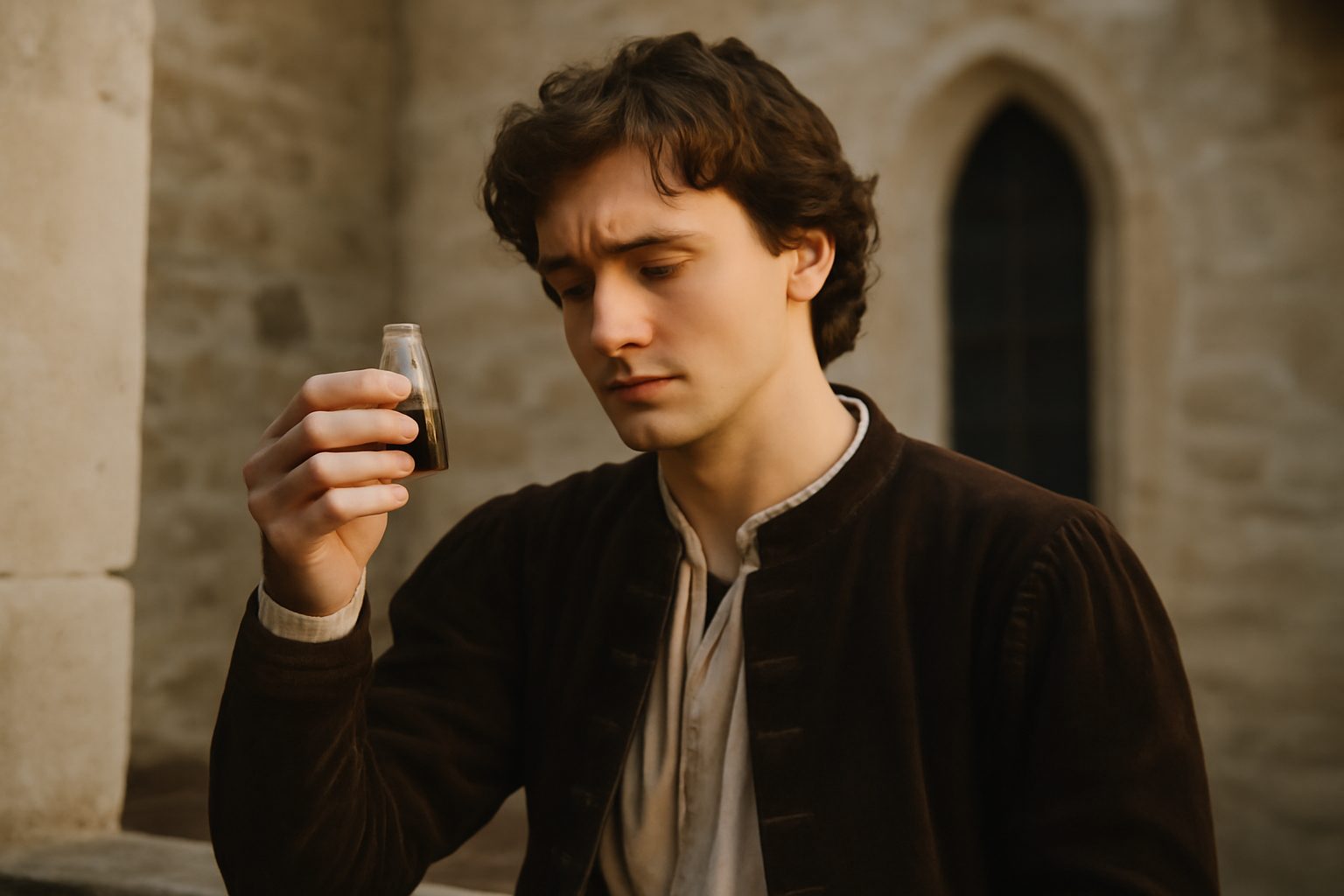
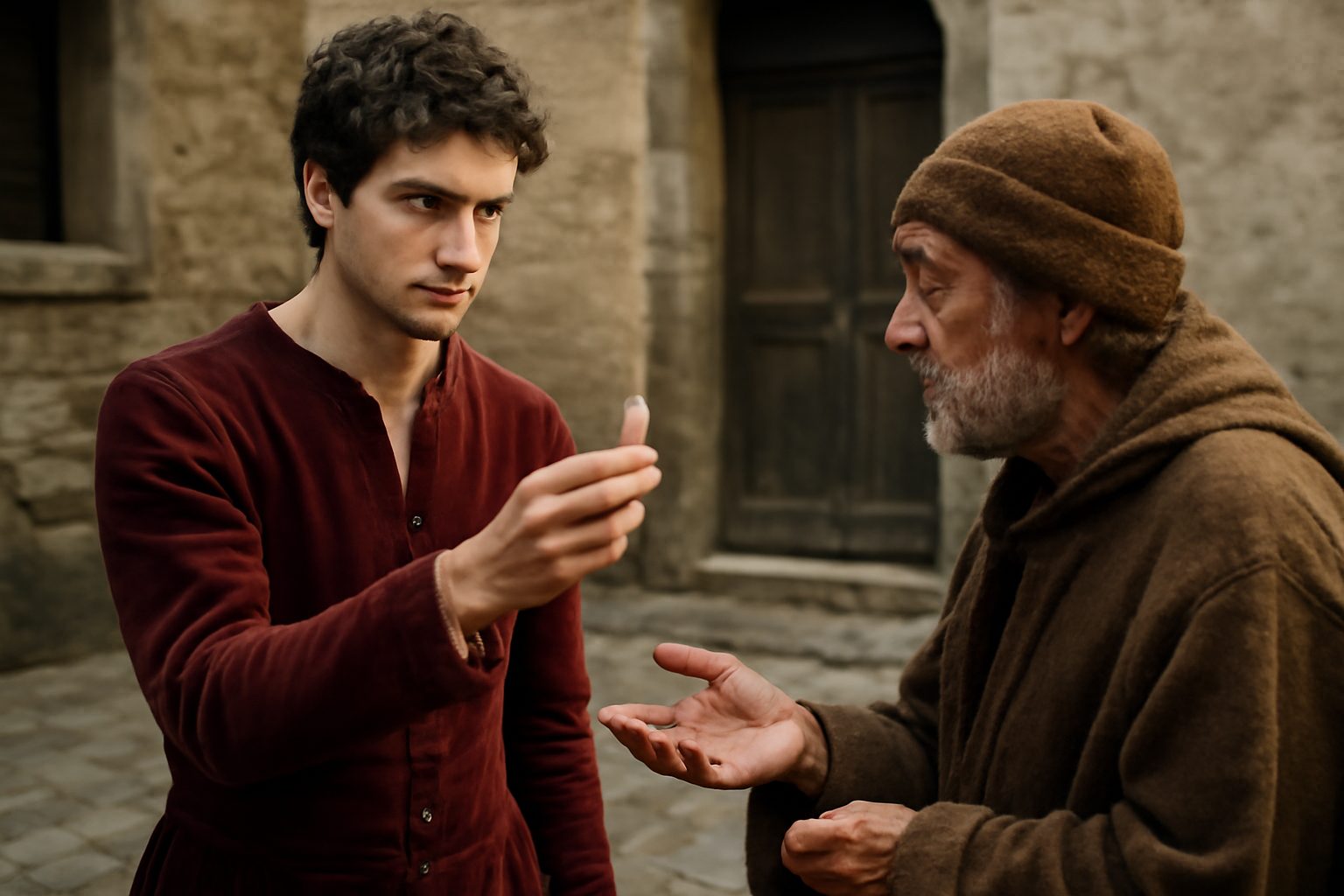
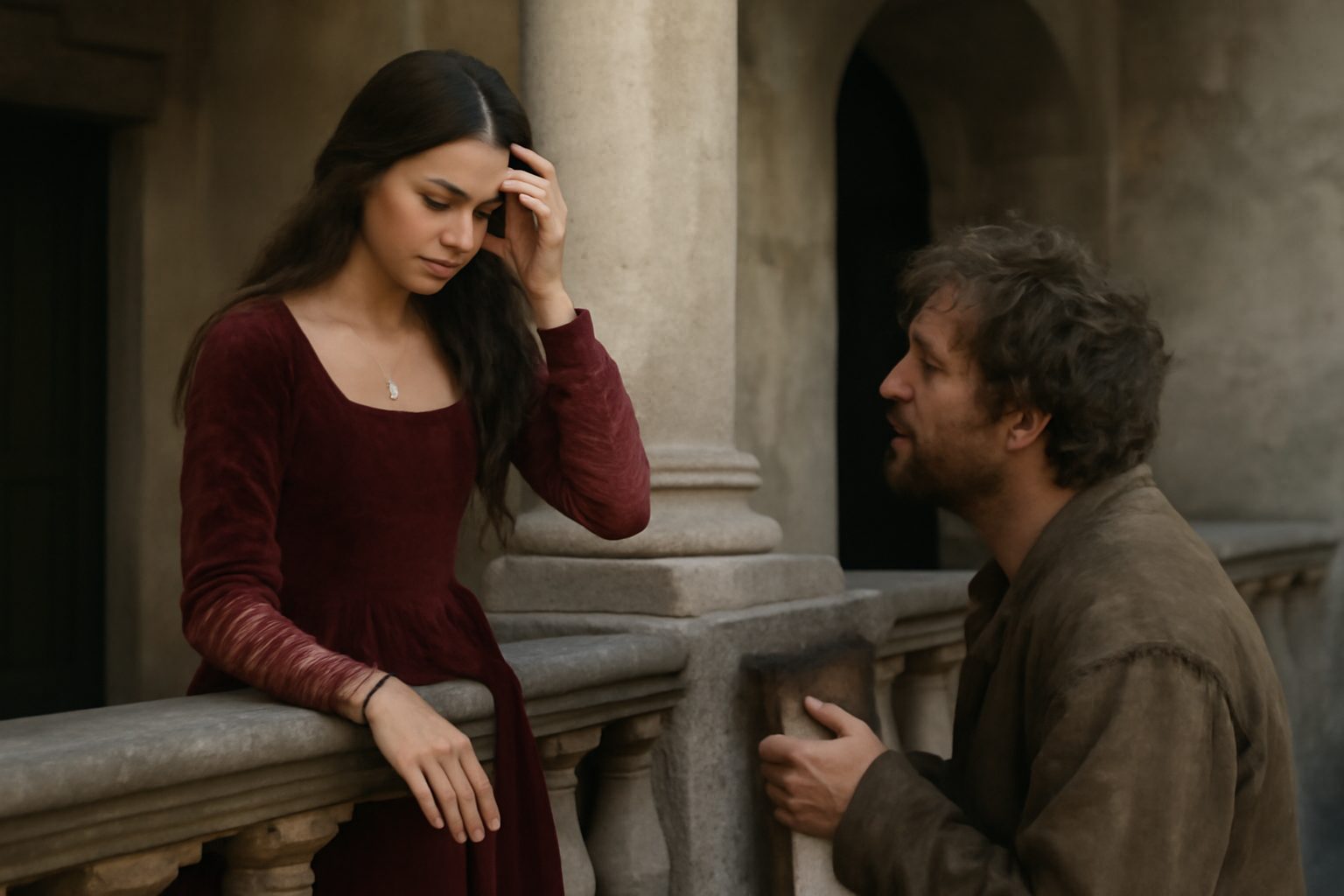
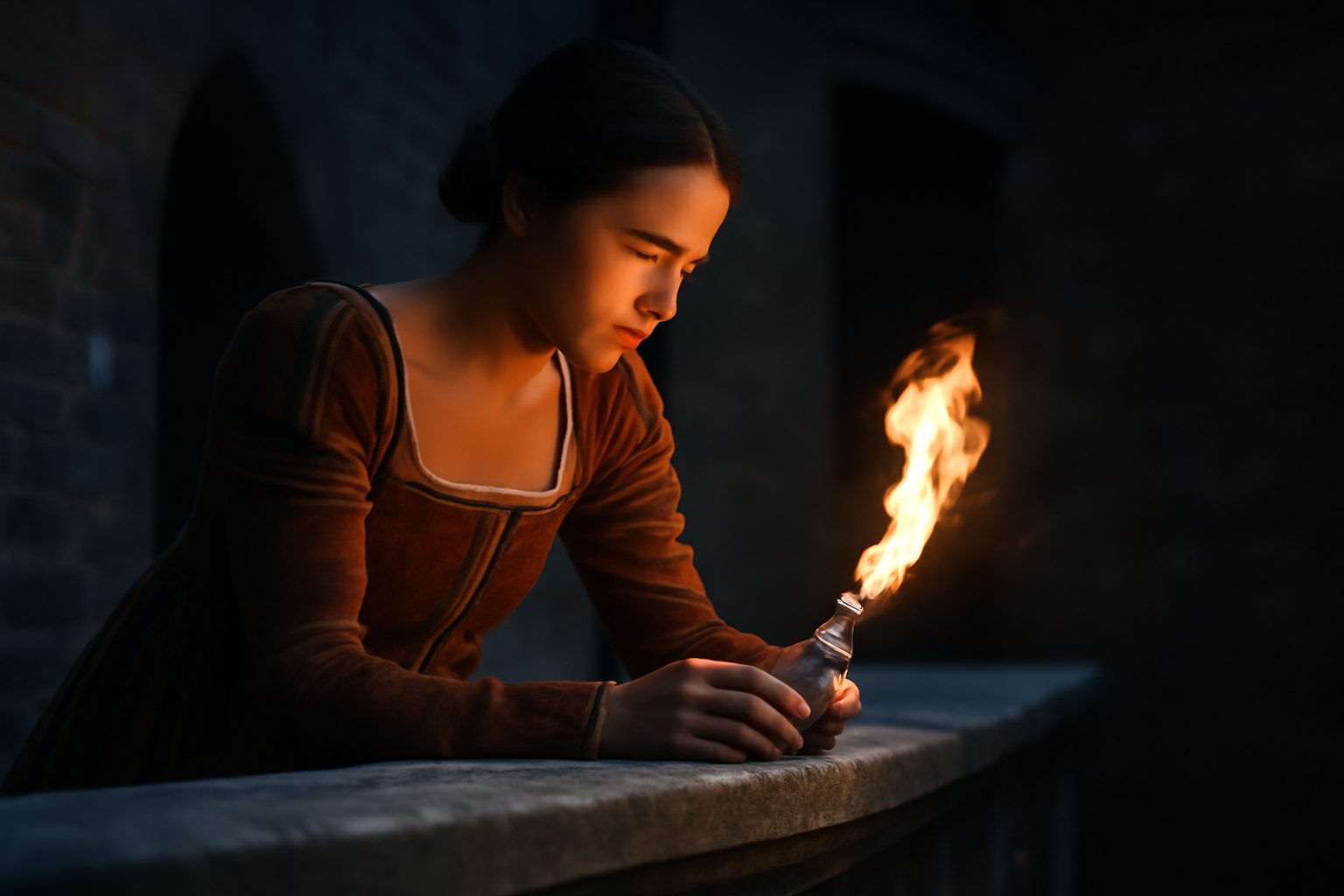
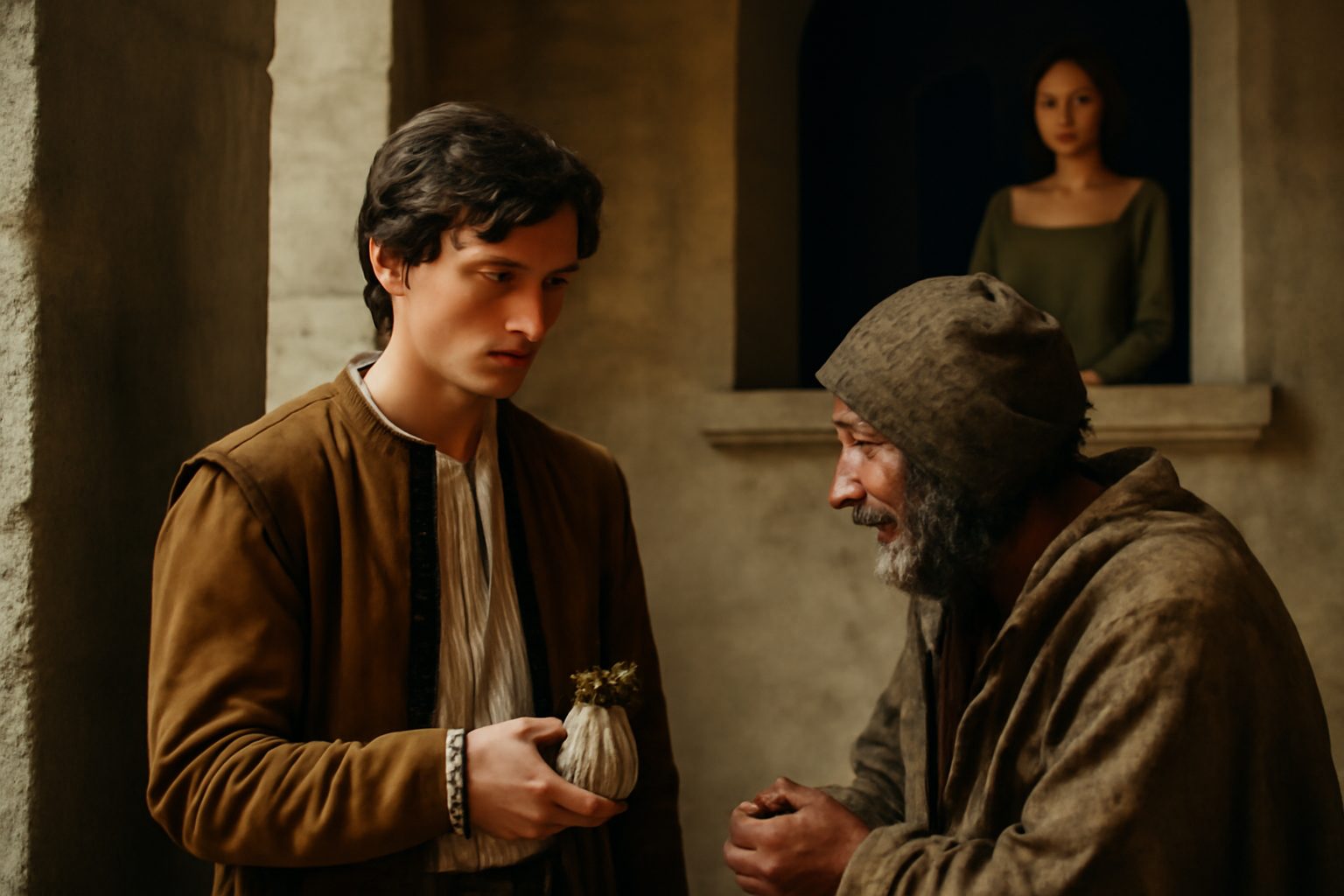
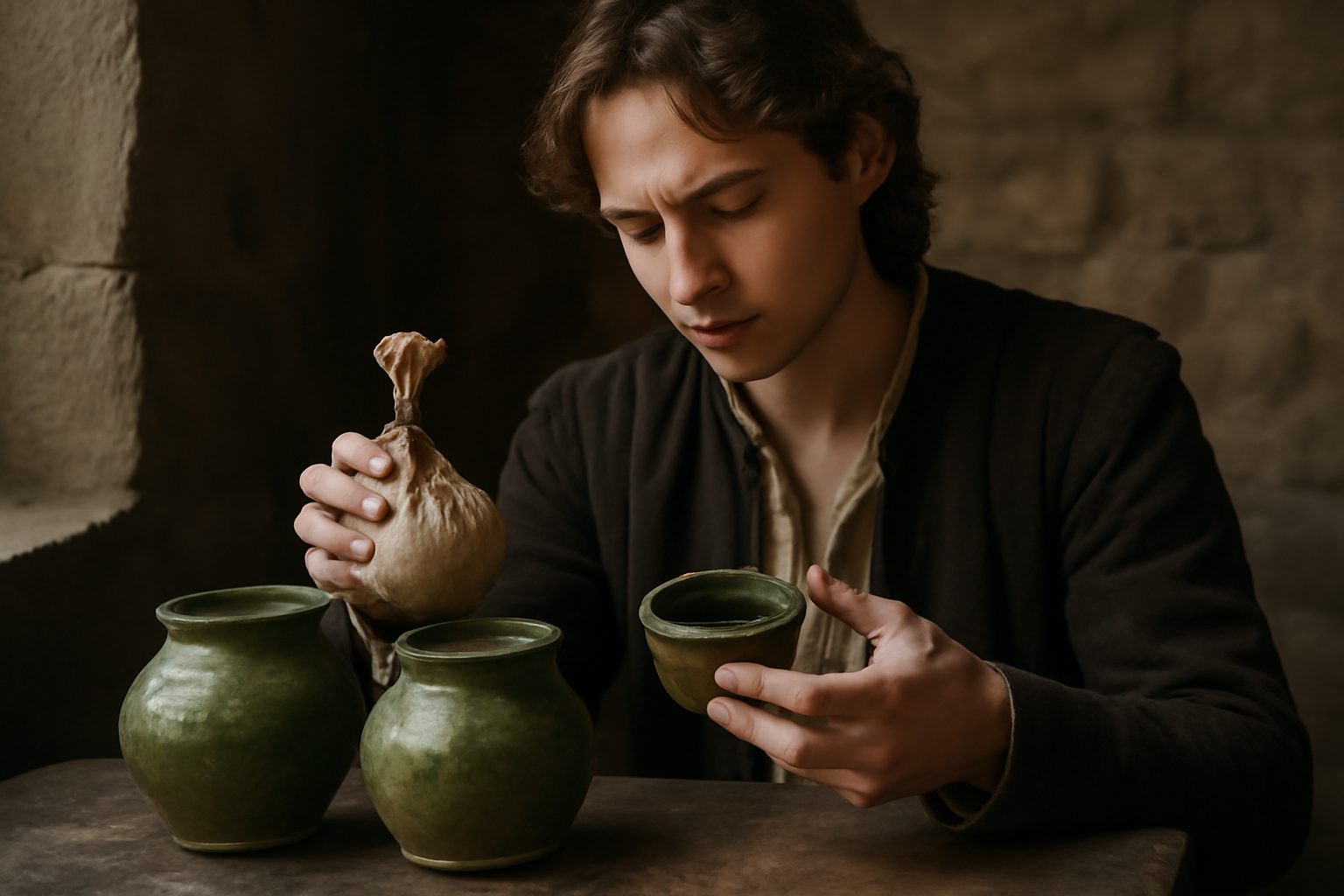
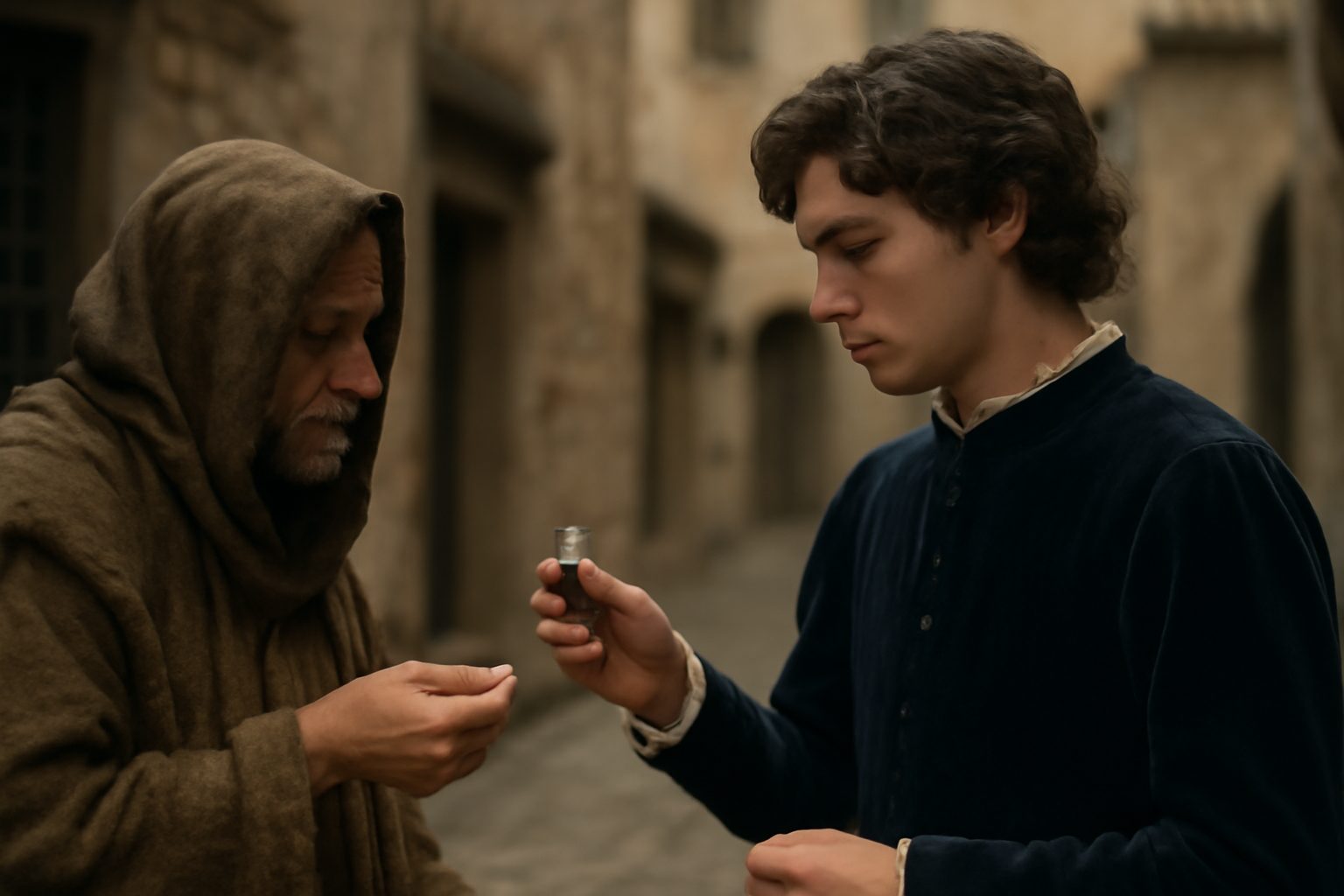
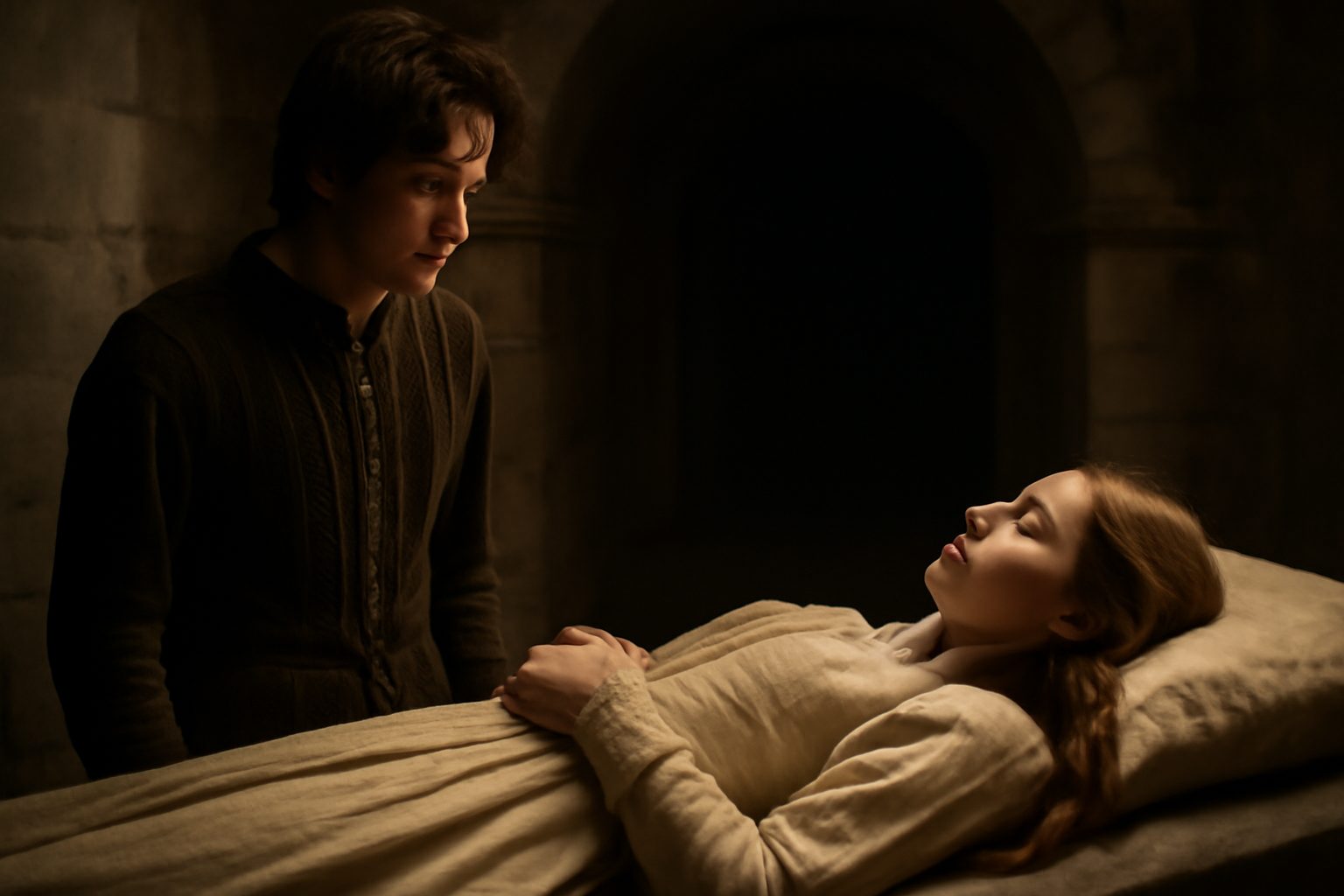
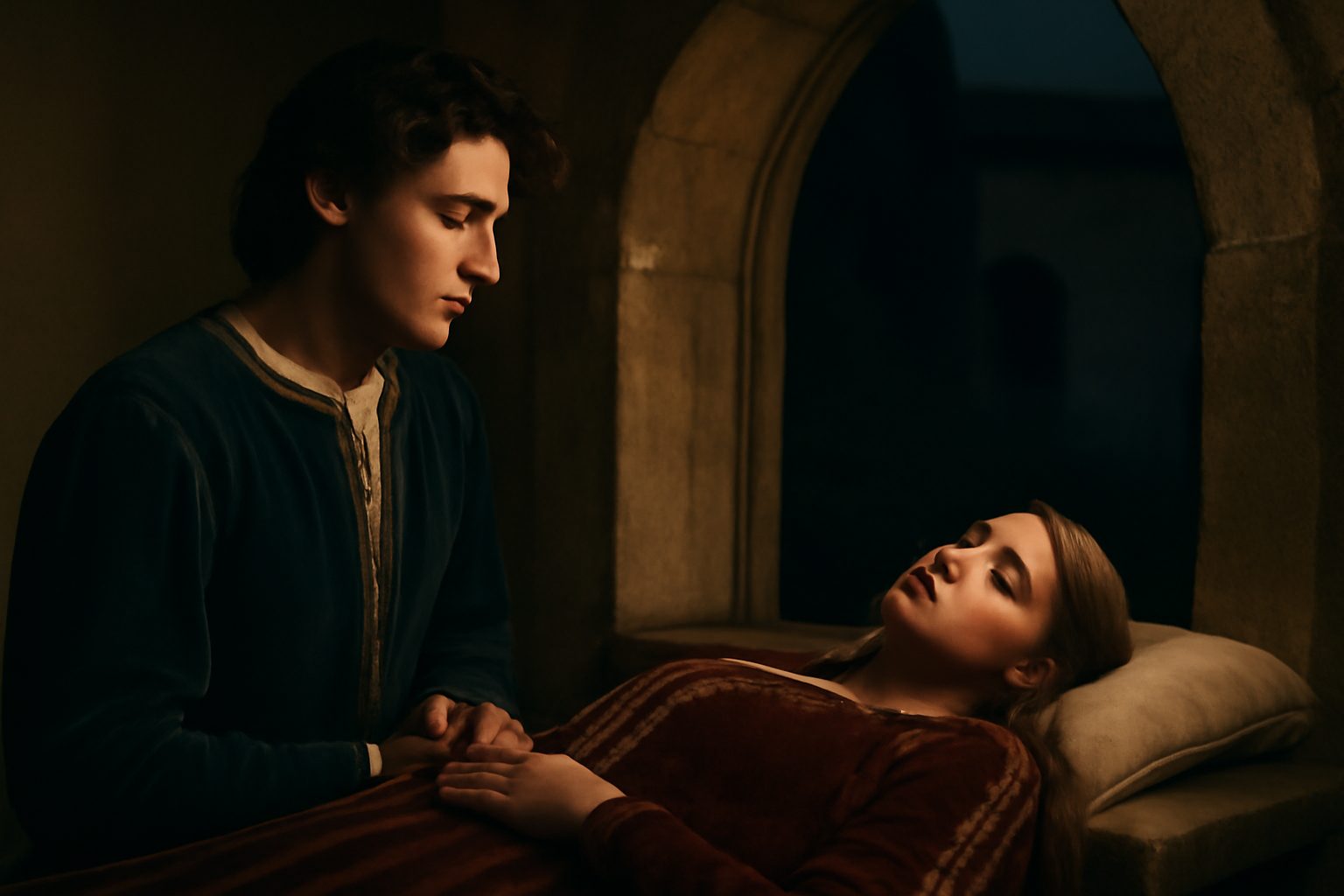
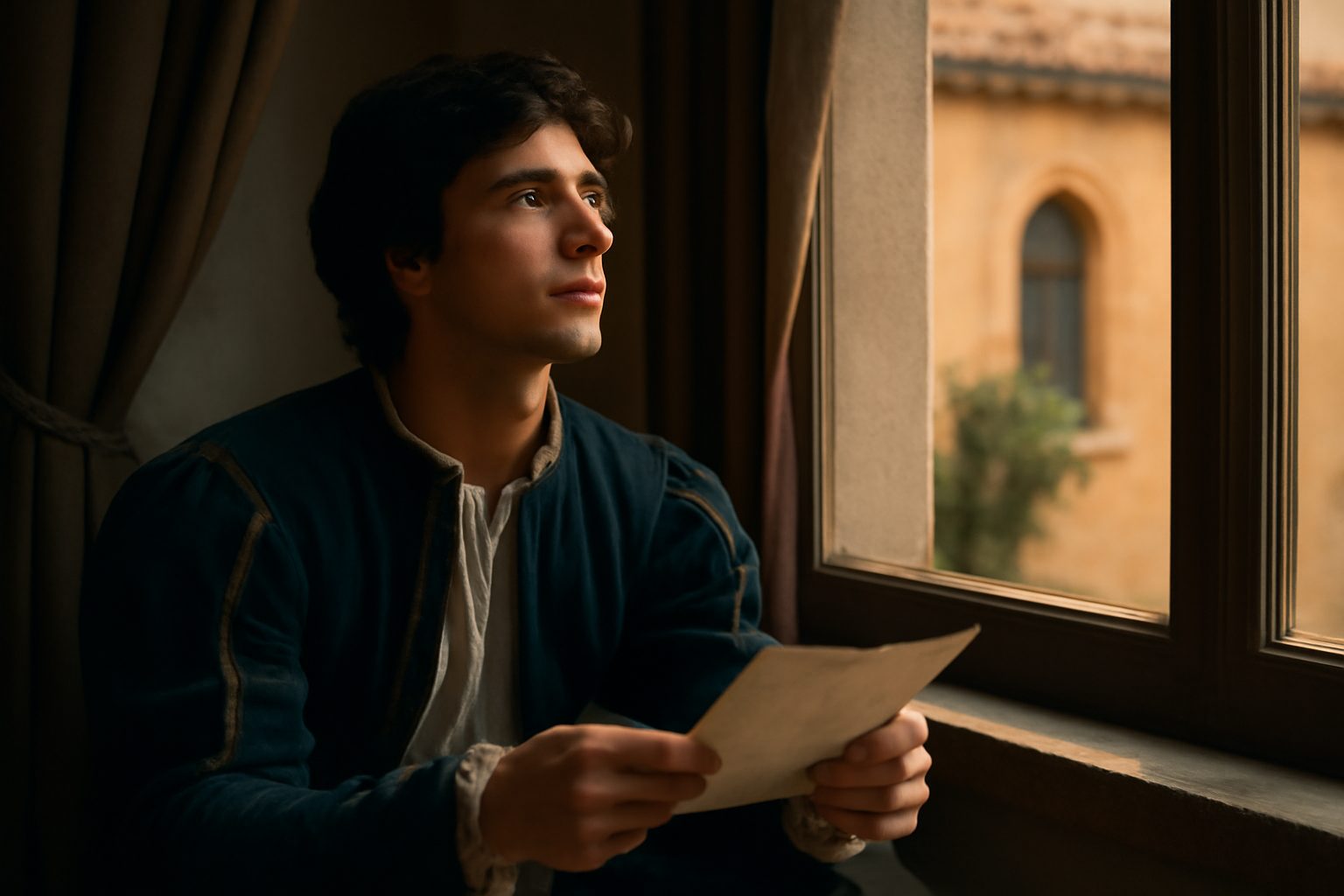
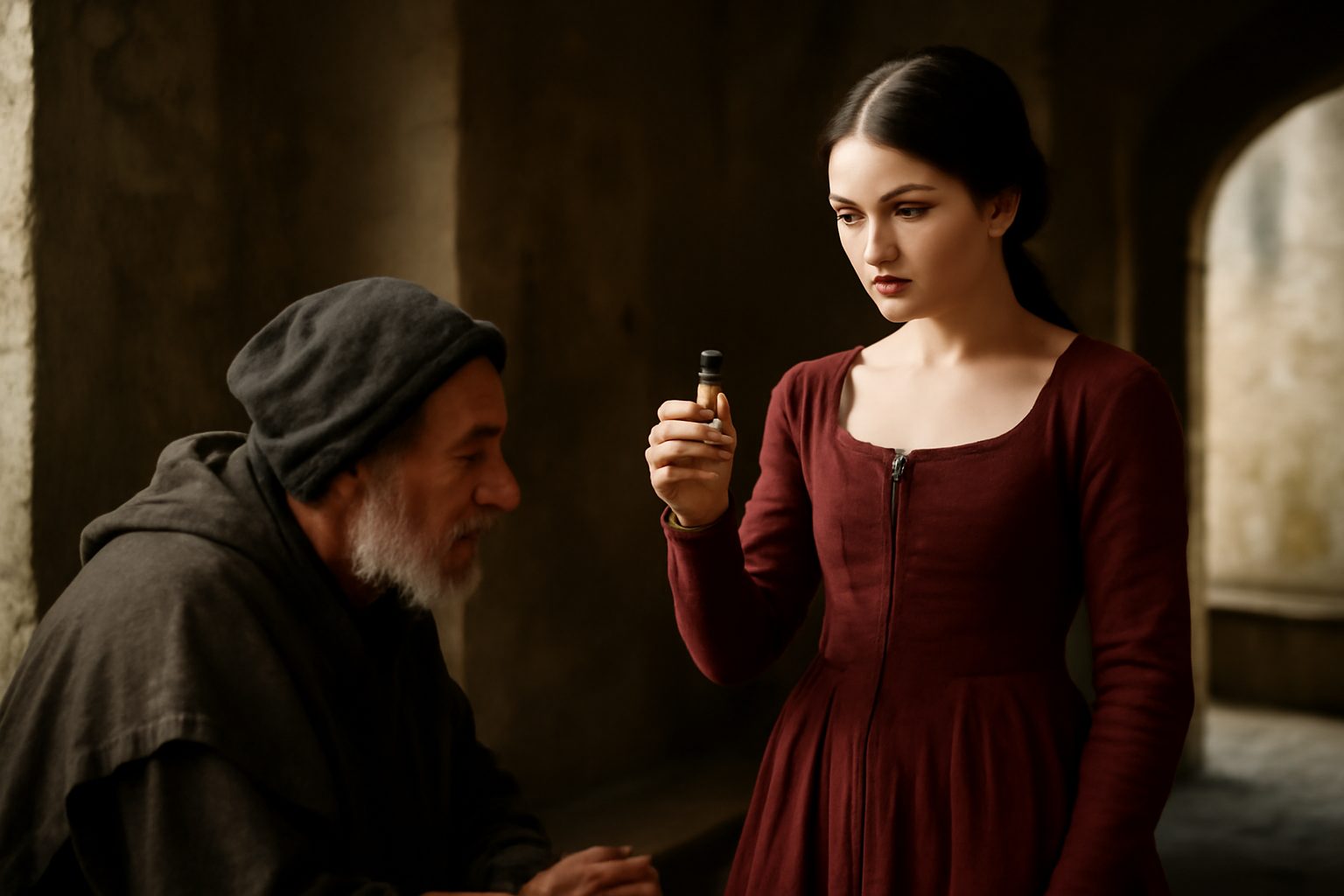
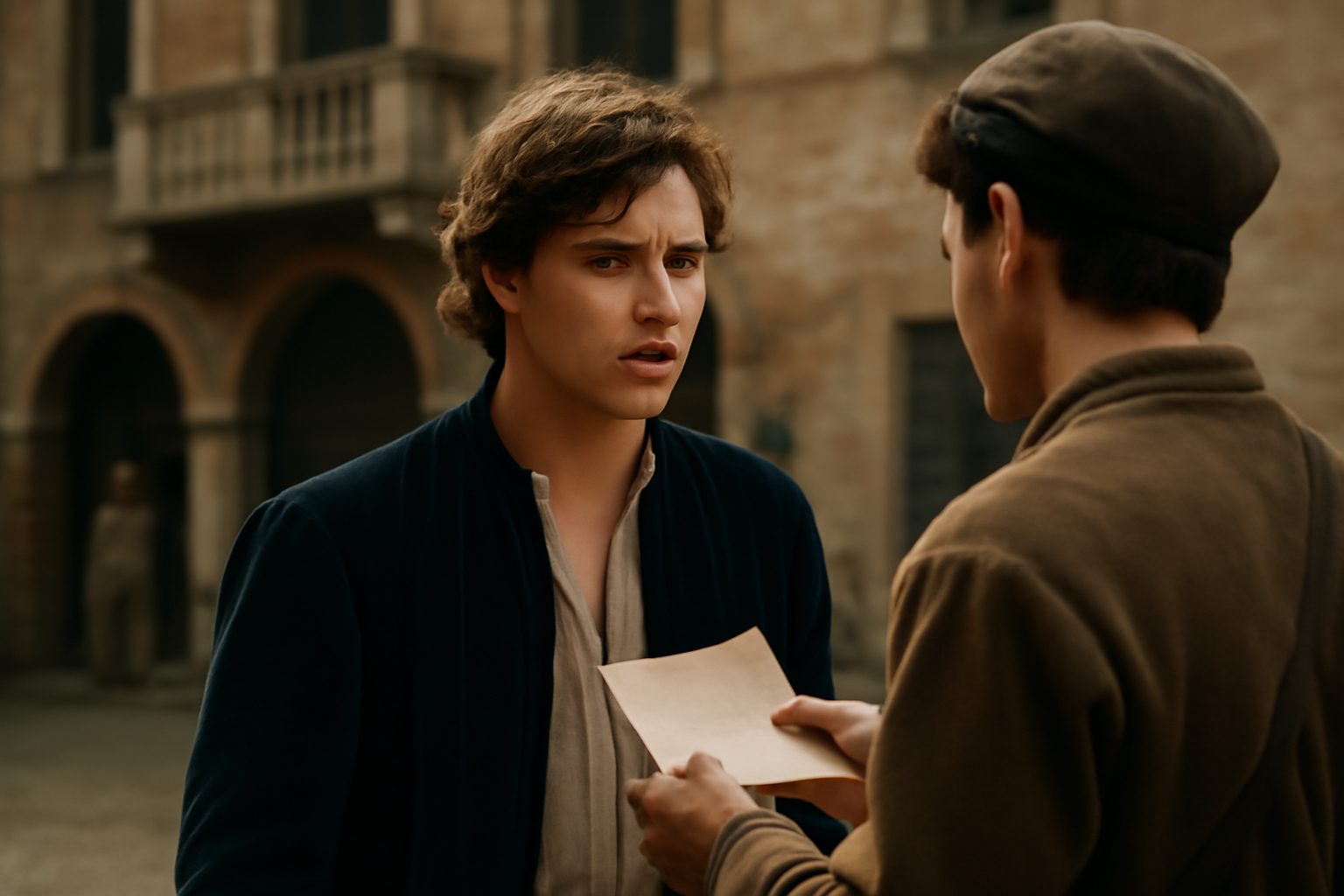
In Act 5, Scene 1 of Romeo and Juliet, Romeo, exiled in Mantua, has just received news of Juliet's supposed death from his servant Balthasar. Overwhelmed by grief, he resolves to return to Verona and die beside her. As he urgently prepares to leave, an apothecary hesitates to sell him poison, prompting Romeo to demand attention with this impatient exclamation.
Apothecary: "Who calls so loud?"
In modern day english, we would say:
Who’s shouting like that?
Frequently Asked Questions
Who is speaking in this line from Romeo and Juliet?
The Apothecary
What is the Apothecary responding to in this line?
Someone calling out loudly
Connections to other verses:
Connections to "Who calls so loud?" in Romeo & Juliet Act 5 Scene 1
The line "Who calls so loud?" is spoken by the Apothecary in response to Romeo's summons, marking a pivotal moment in the scene where Romeo seeks the means to end his life. This interaction initiates a sequence of exchanges that reveal themes of desperation, poverty, and fate.
Direct Preceding and Following Context
Romeo's call, "What, ho! apothecary!", immediately precedes this line, showing his urgency. The Apothecary’s wary response highlights his impoverished and fearful state, which Romeo later addresses with "Come hither, man. I see that thou art poor:", exploiting the man's need to obtain the poison.
Connection to Poverty and Desperation
The Apothecary's condition is further detailed in Romeo's observation: "Art thou so bare and full of wretchedness", emphasizing the moral compromise poverty forces. This ties to Romeo’s own desperation, expressed earlier when he defies fate: "Is it even so? then I defy you, stars!"
Link to the Poison Transaction
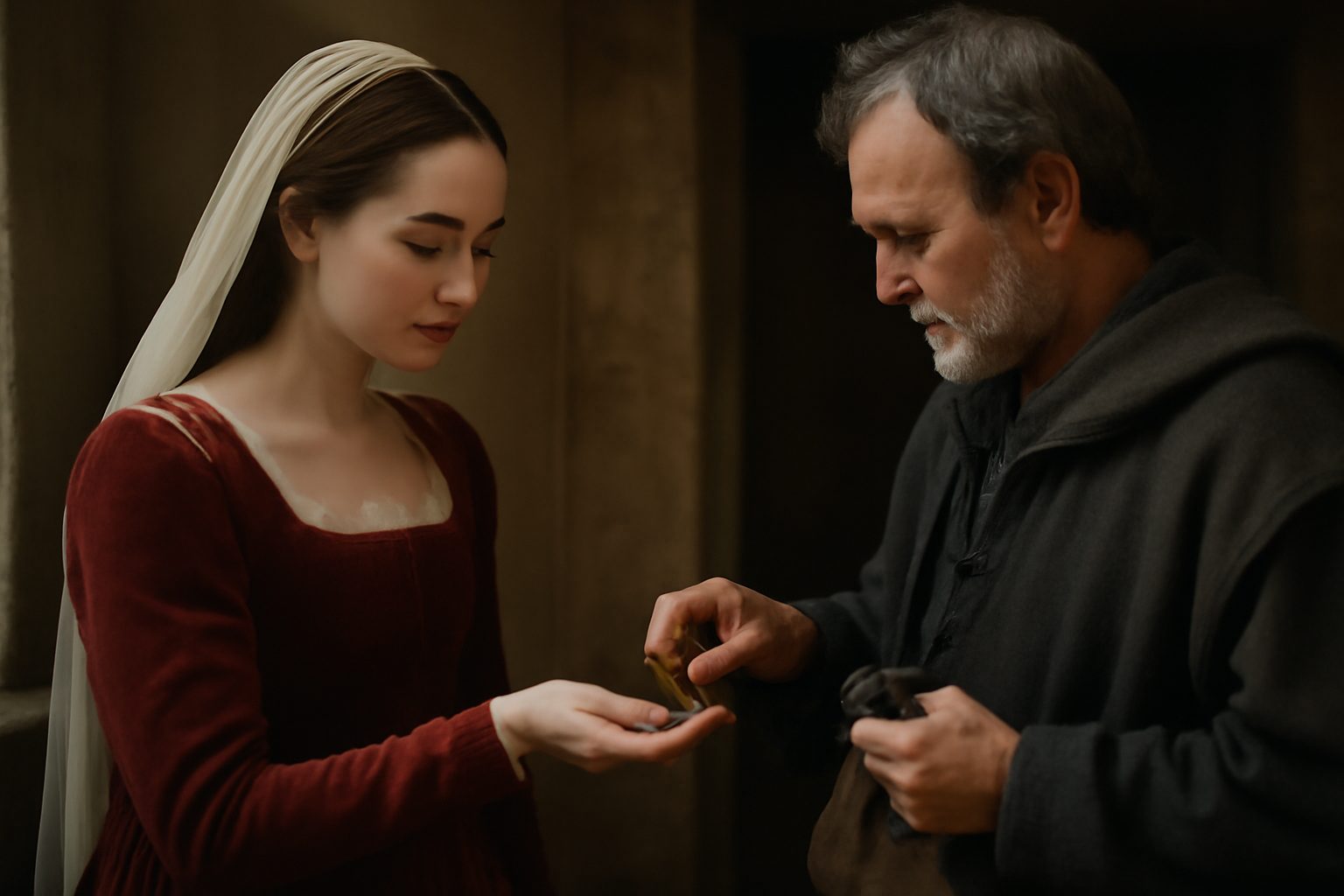
The exchange culminates in Romeo’s acquisition of the poison, described as "A dram of poison, such soon-speeding gear", which he intends to use to join Juliet in death. His resolve is clear in "Well, Juliet, I will lie with thee to-night."
Contrast with Earlier Optimism
This moment starkly contrasts with Romeo's hopeful mood at the scene's opening, where he dreamt that "I revived, and was an emperor." The turn from joy to despair underscores the tragedy’s rapid unraveling.