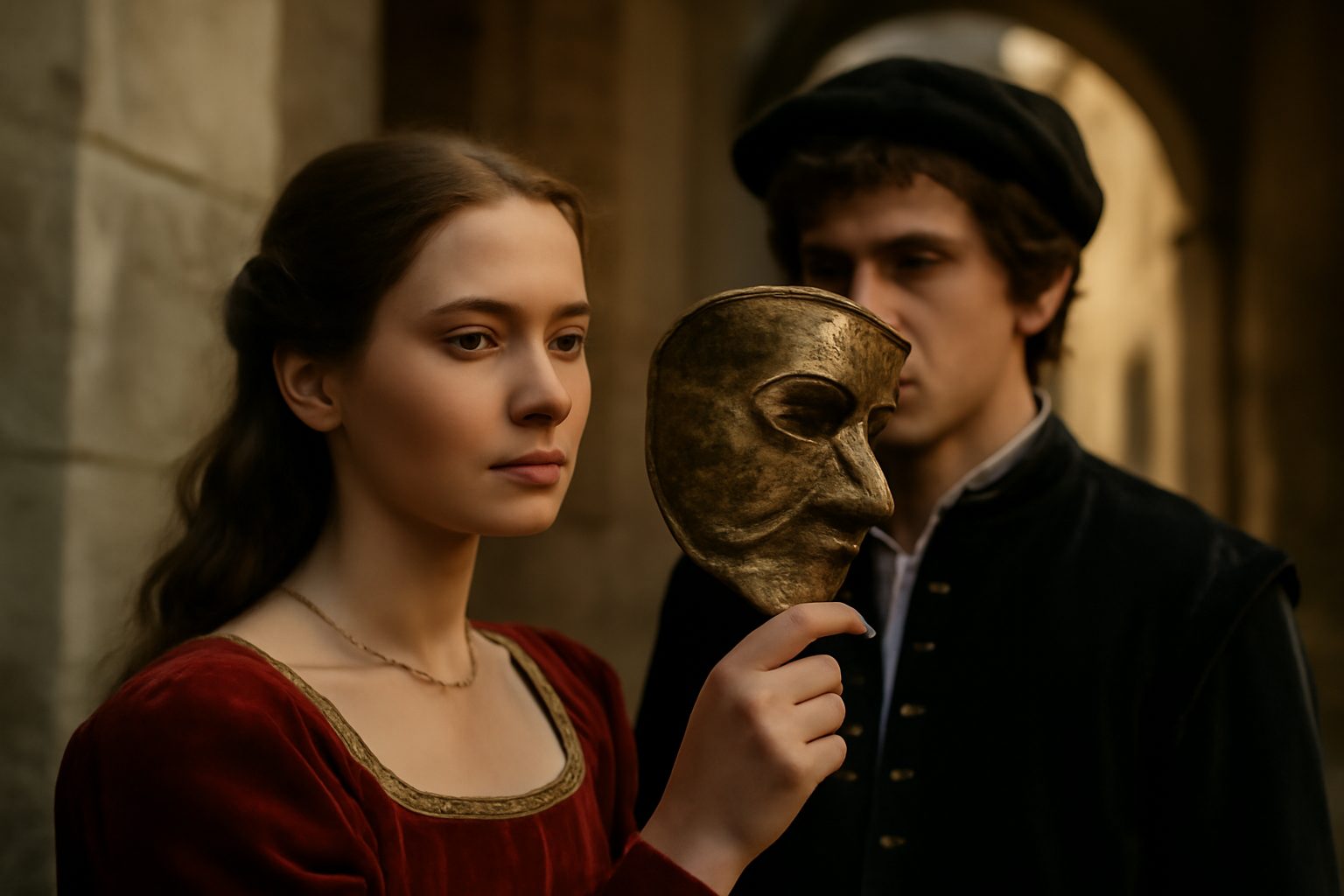
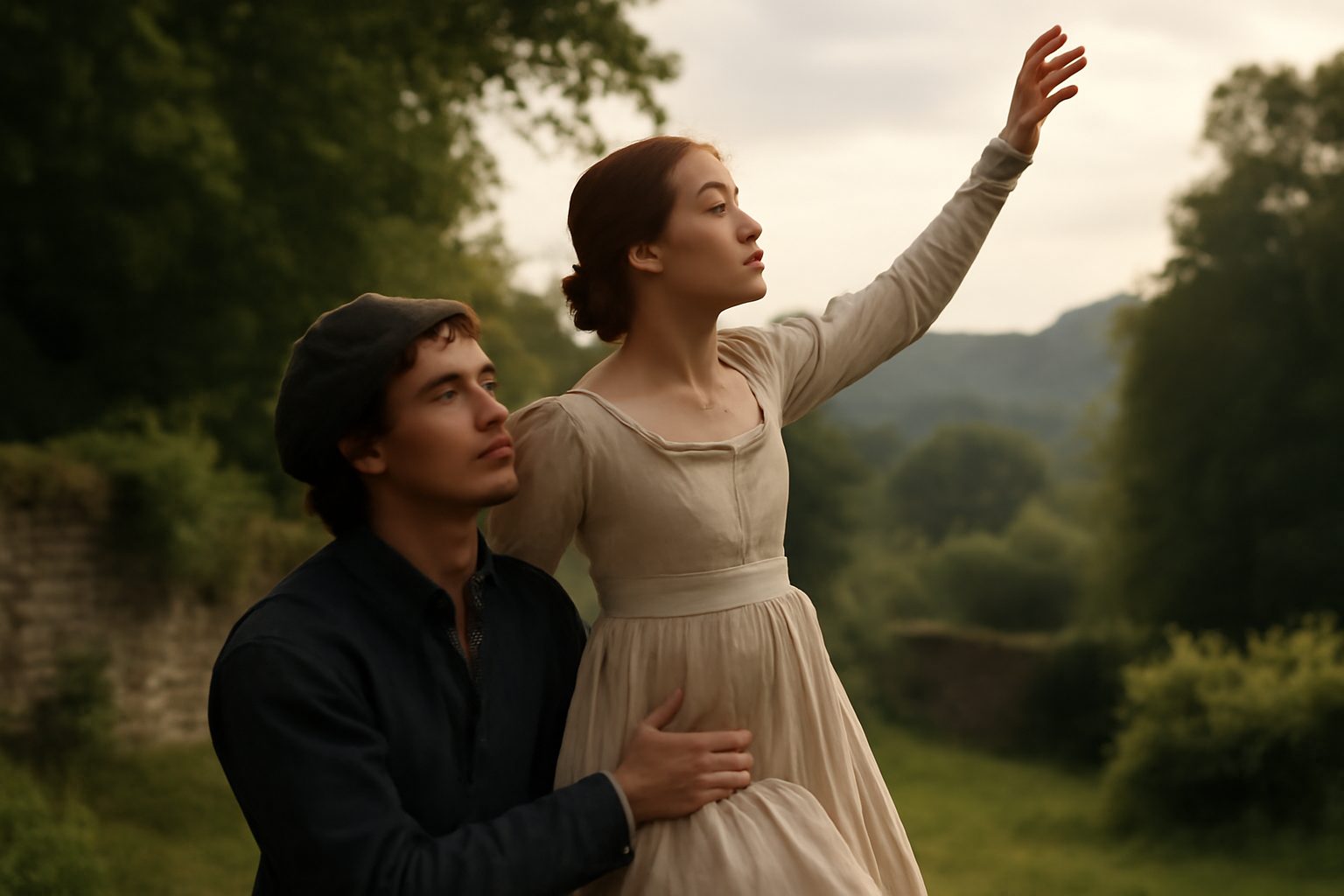
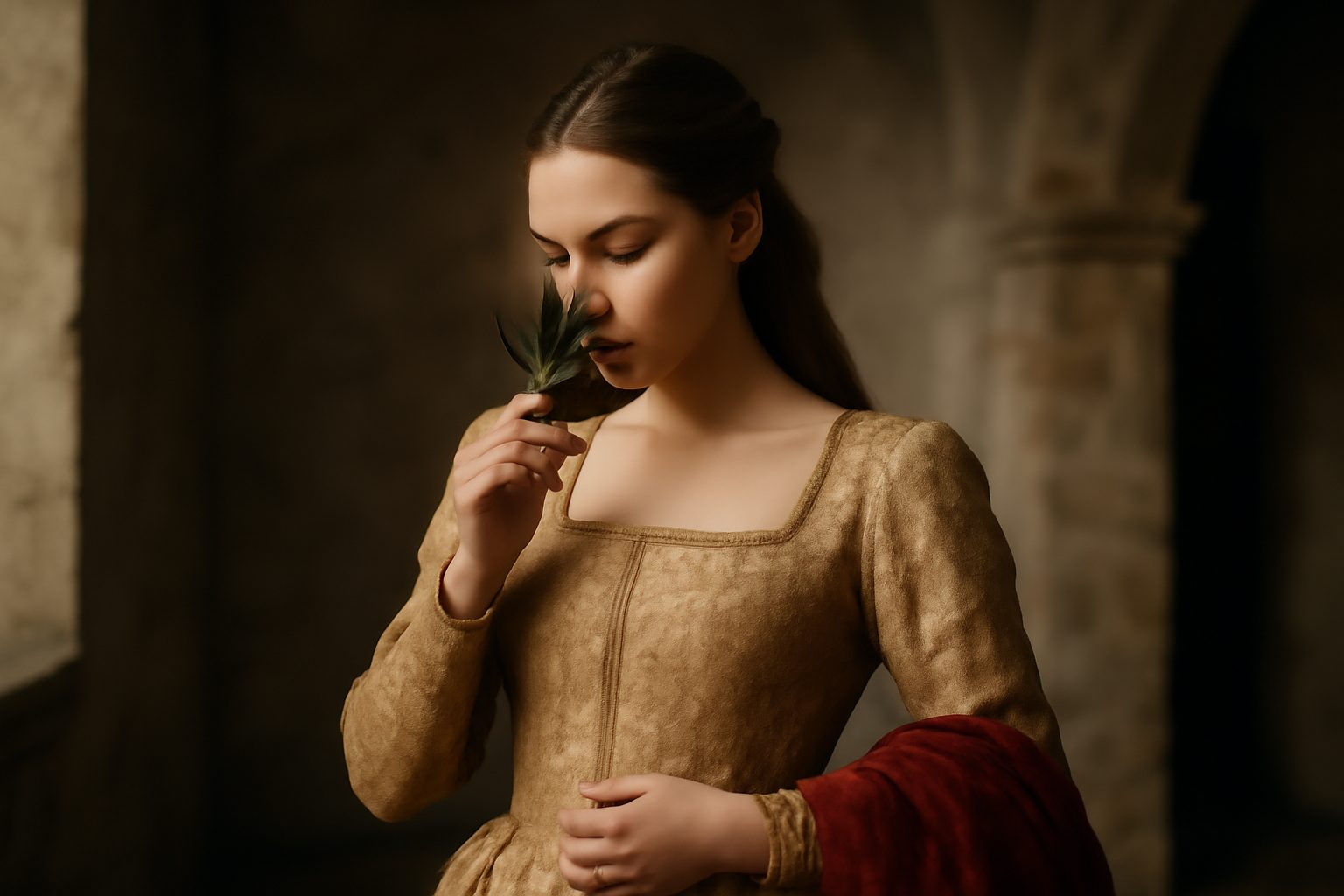
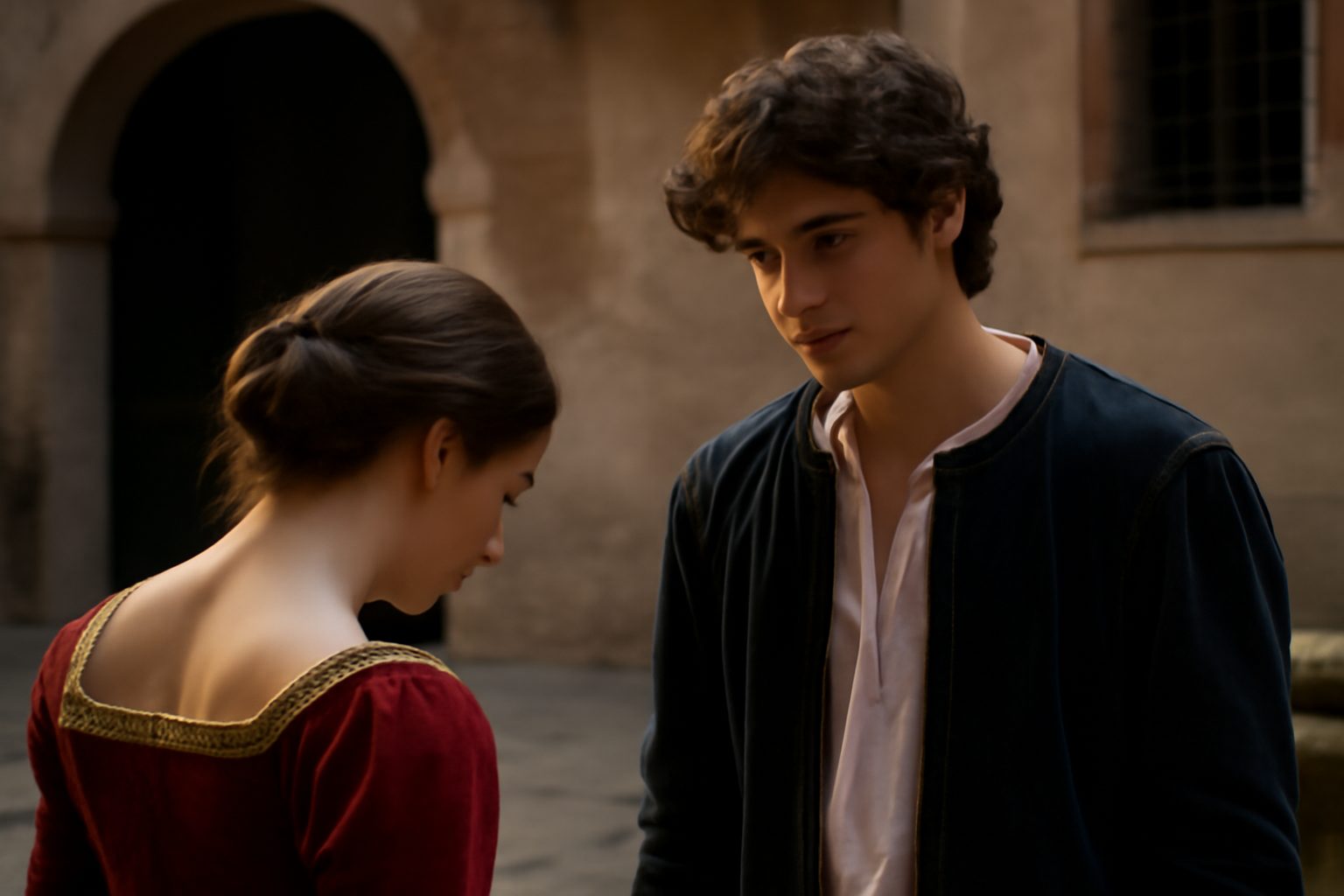
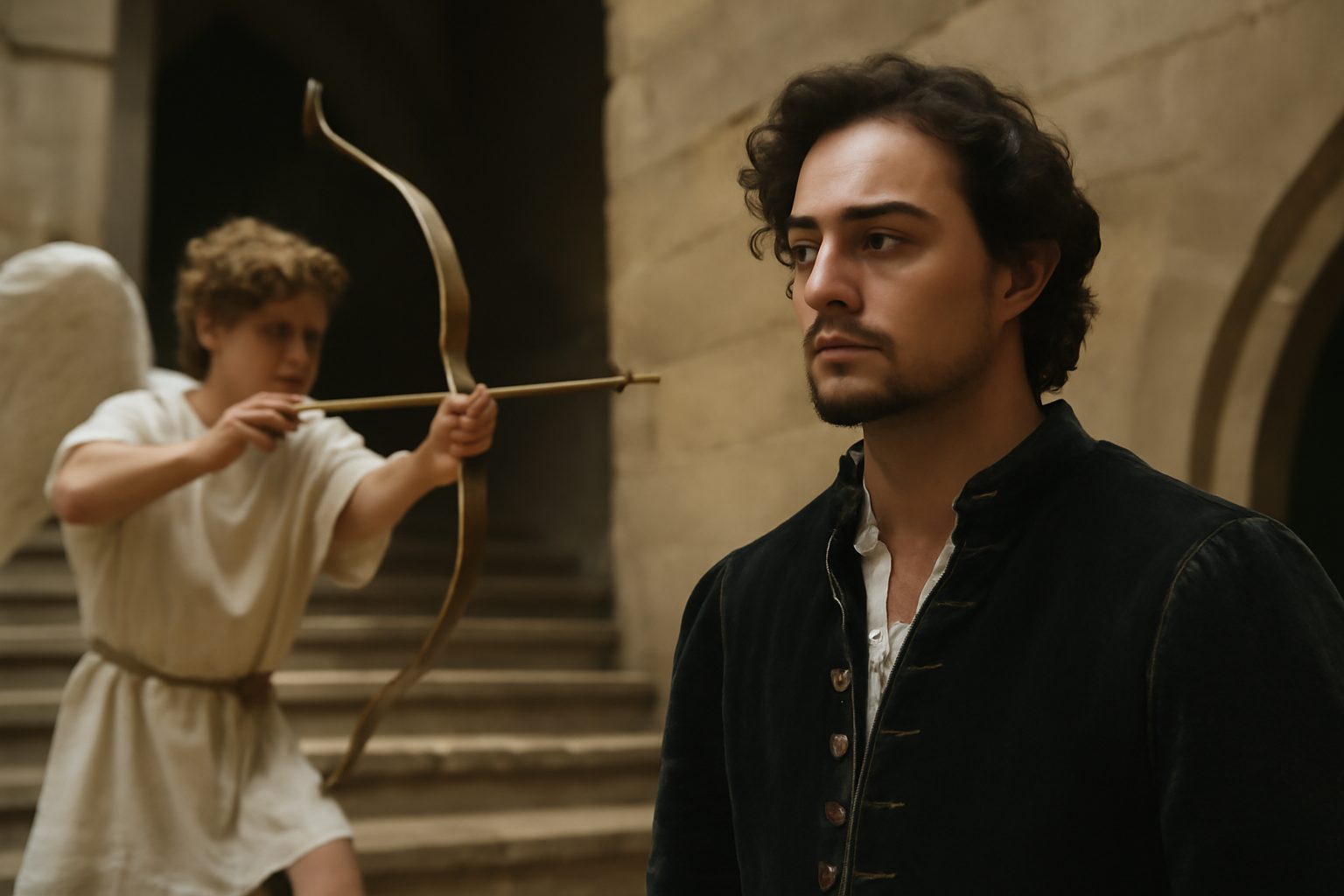
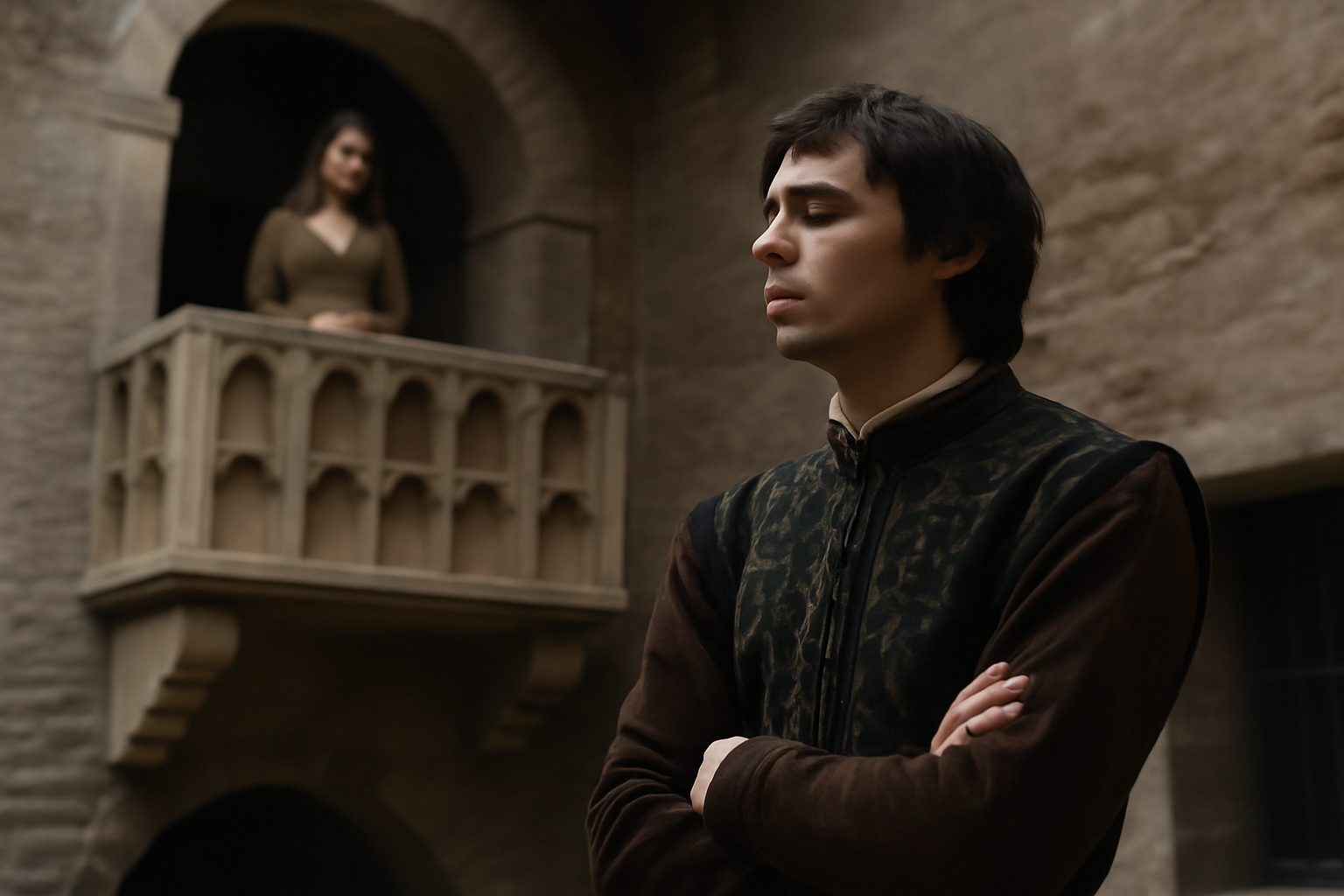
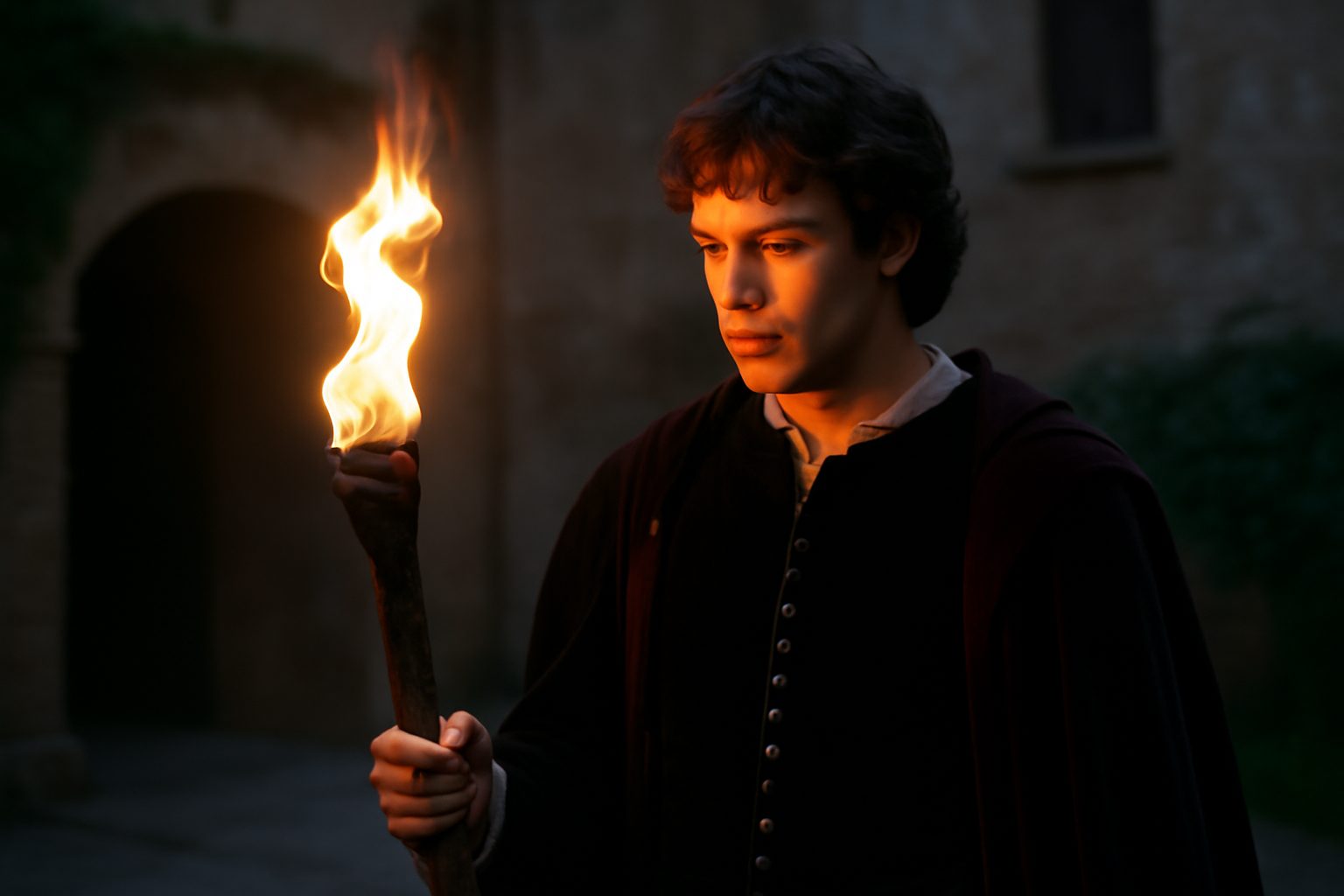
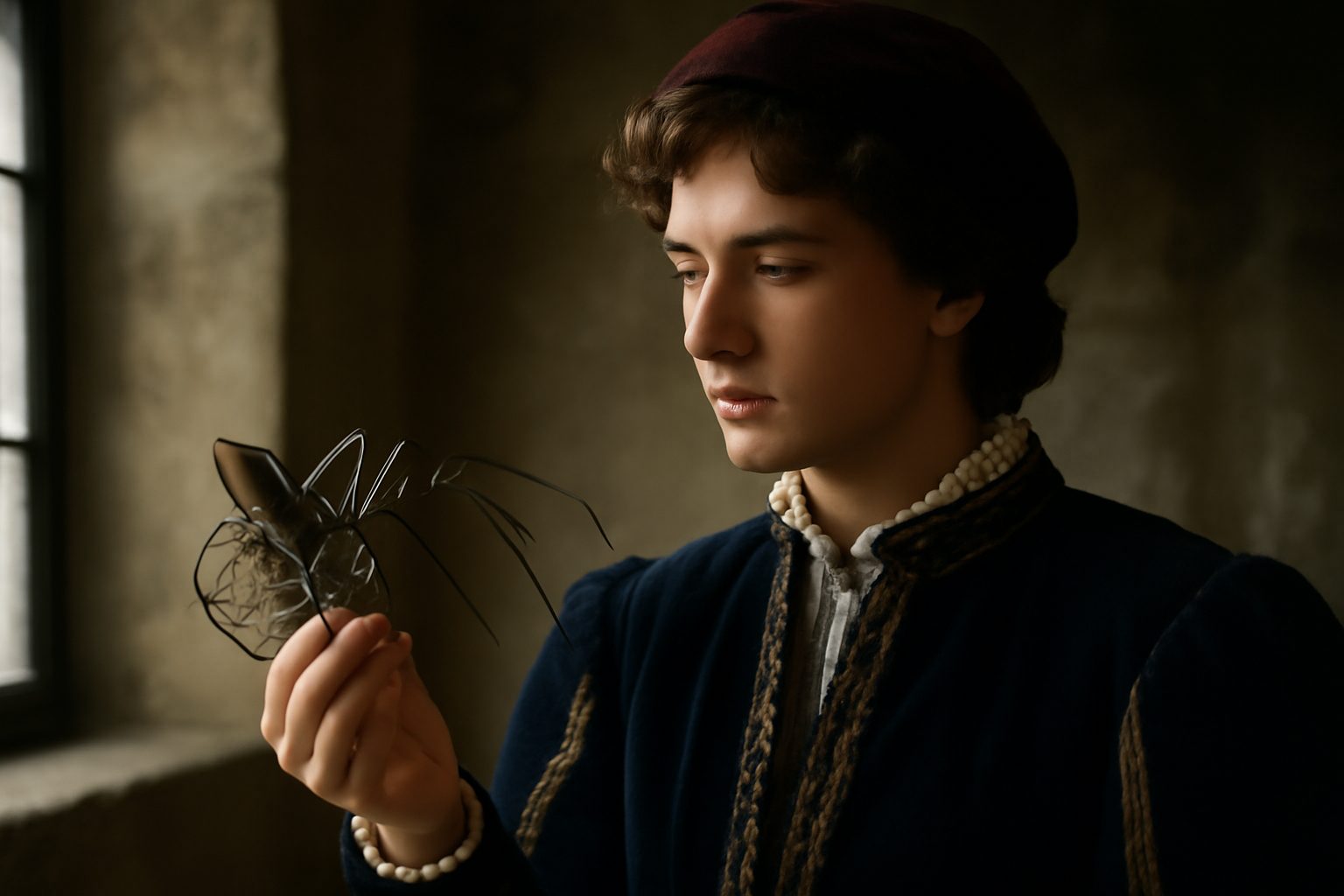
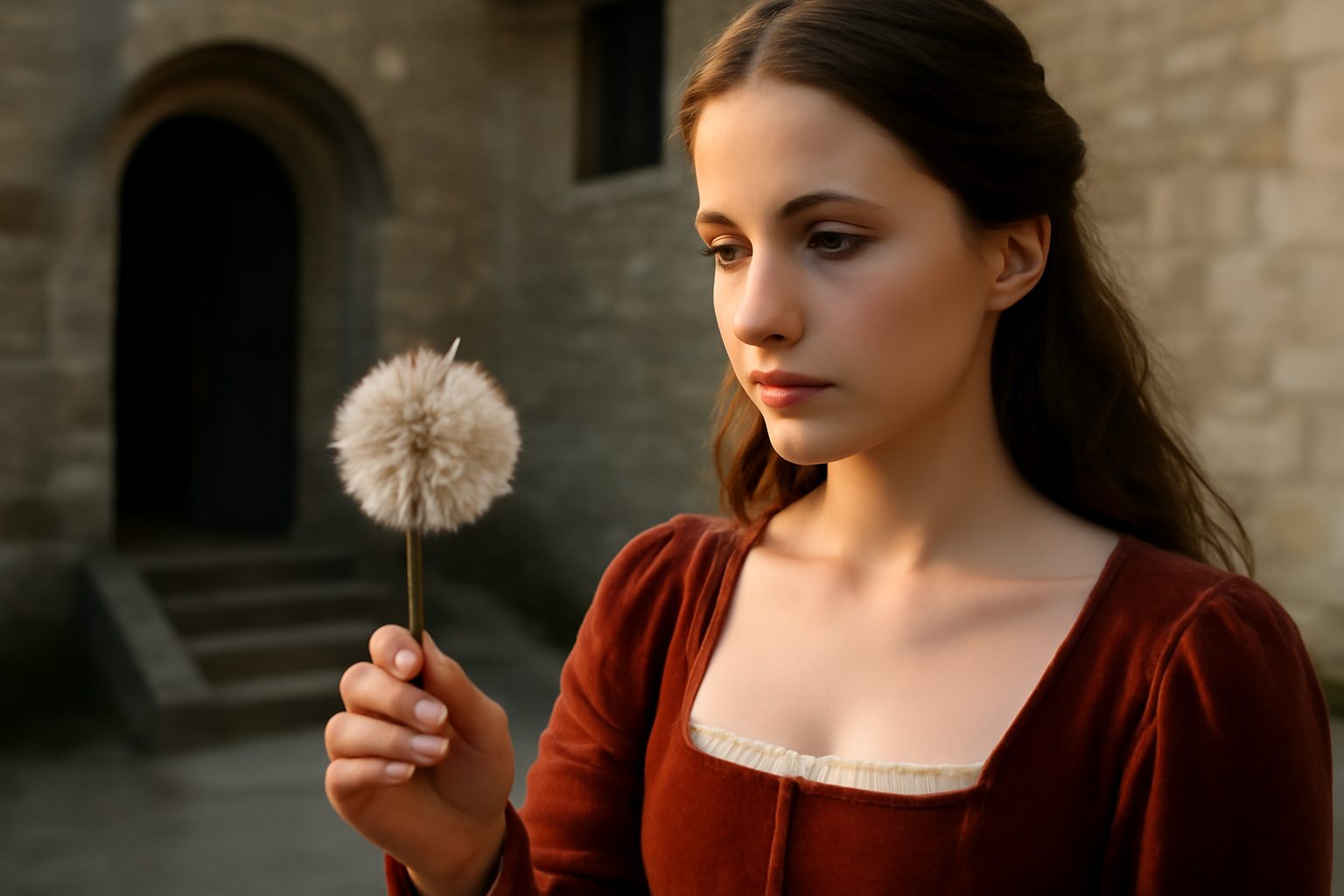
In Act 1, Scene 4 of Romeo and Juliet, Romeo and his friends are on their way to the Capulet's masquerade ball when Mercutio tries to lift Romeo's melancholic mood with playful banter. As they discuss dreams and fate, Romeo resists Mercutio's teasing, suggesting that external forces—like the wind—can disrupt their sense of control. This line reflects Romeo's reluctance to let go of his apprehensions, foreshadowing the turbulent events that will soon unfold.
Benvolio: "This wind, you talk of, blows us from ourselves;"
In modern day english, we would say:
This wind you’re talking about is pushing us off course and away from our true intentions.
Frequently Asked Questions
What does Benvolio mean when he says the wind is blowing them away from themselves?
Benvolio means that the strong wind is making them lose their sense of control or direction, almost as if it's pushing them away from their usual selves or thoughts.
Connections to other verses:
Connections to "This wind, you talk of, blows us from ourselves"
This verse, spoken by Romeo, reflects his sense of being swept away by external forces, particularly the wind as a metaphor for fate or circumstance. It connects thematically and structurally to several other verses in the scene.
Foreshadowing and Fate
Romeo's feeling of being blown by the wind aligns with his later premonition: I fear, too early: for my mind misgives and Some consequence yet hanging in the stars, where he senses impending doom. The wind symbolizes the uncontrollable forces leading to his tragic fate, echoed in By some vile forfeit of untimely death.
Contrast with Mercutio's Energy
Romeo's passive resignation contrasts with Mercutio's lively exhortations, such as If love be rough with you, be rough with love and Direct my sail! On, lusty gentlemen, where Mercutio embraces action and agency, unlike Romeo's submission to the wind.
Dreams and Imagination
The idea of being "blown from ourselves" ties into Mercutio's Queen Mab speech, where dreams transport people from reality: She is the fairies' midwife, and she comes and Which are the children of an idle brain. Both wind and dreams displace the self, emphasizing themes of illusion versus reality.
Lightness and Burden Imagery
Romeo's heaviness, expressed in Under love's heavy burden do I sink, contrasts with the wind's force that "blows us from ourselves." This juxtaposition highlights his emotional weight against the ethereal, freeing quality of the wind, further reflected in Which is as thin of substance as the air.
Resolution and Acceptance
Ultimately, Romeo yields to the wind's guidance, leading to his resigned acceptance: But He, that hath the steerage of my course, acknowledging a higher power directing his path, much like the wind blowing him onward.