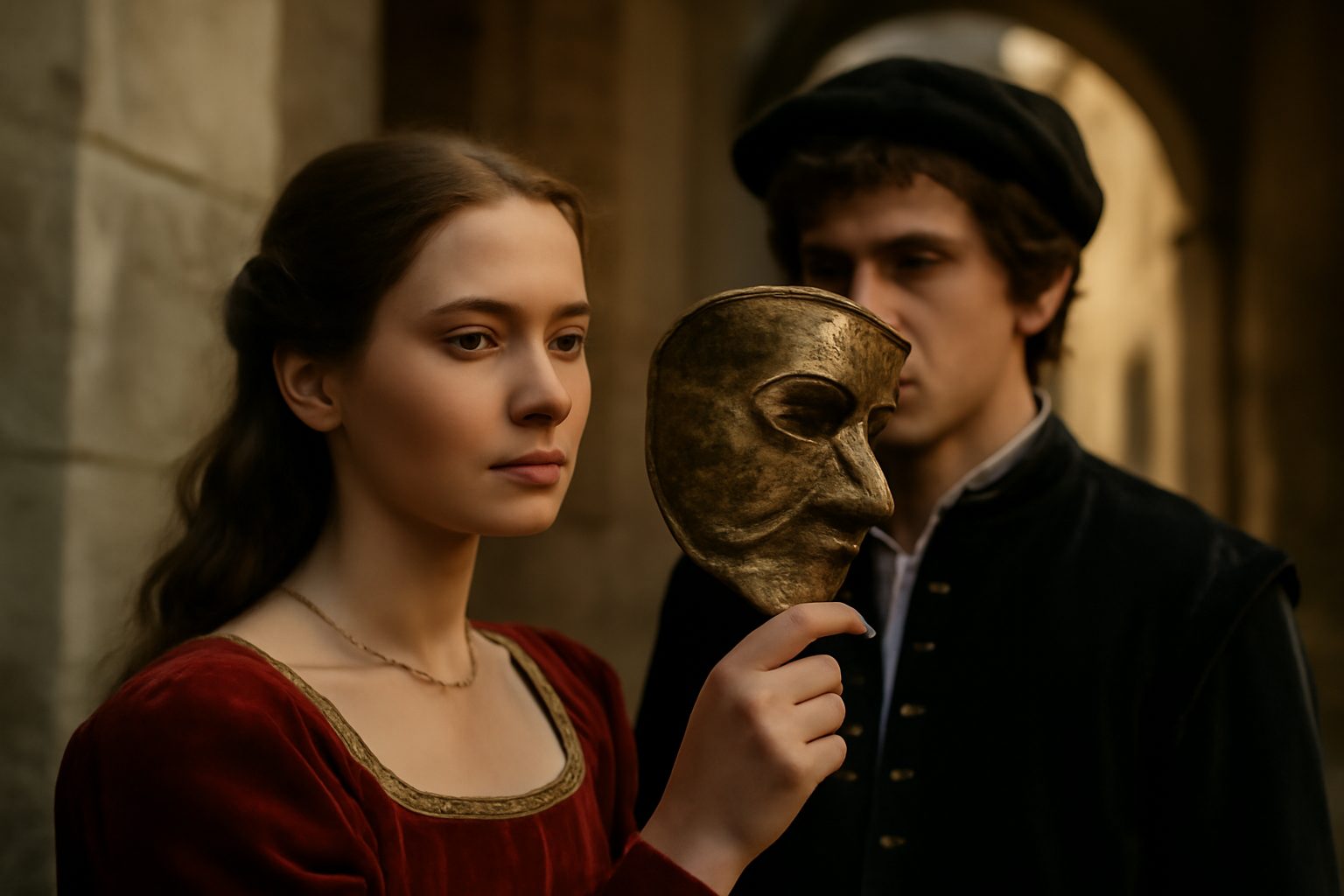
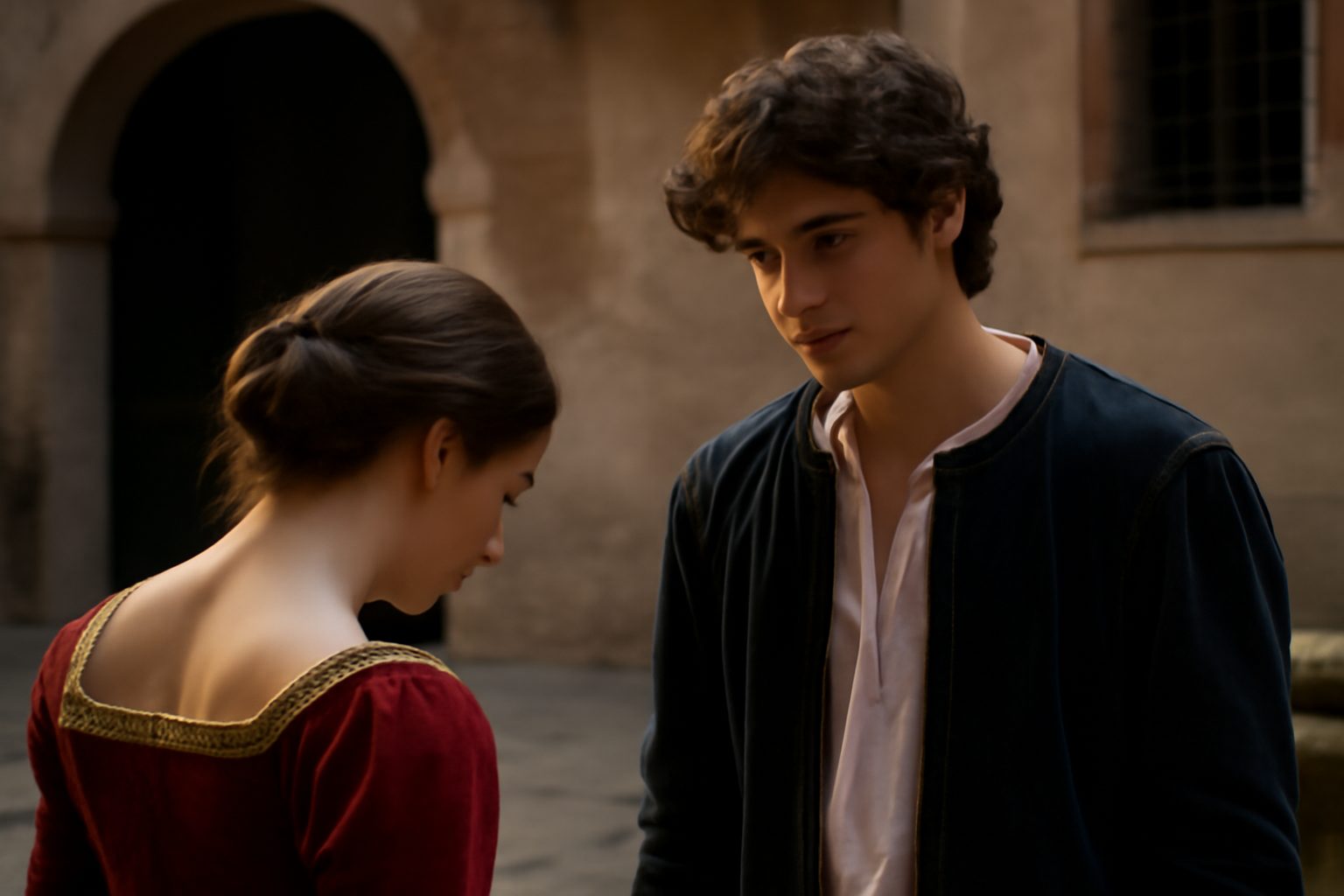
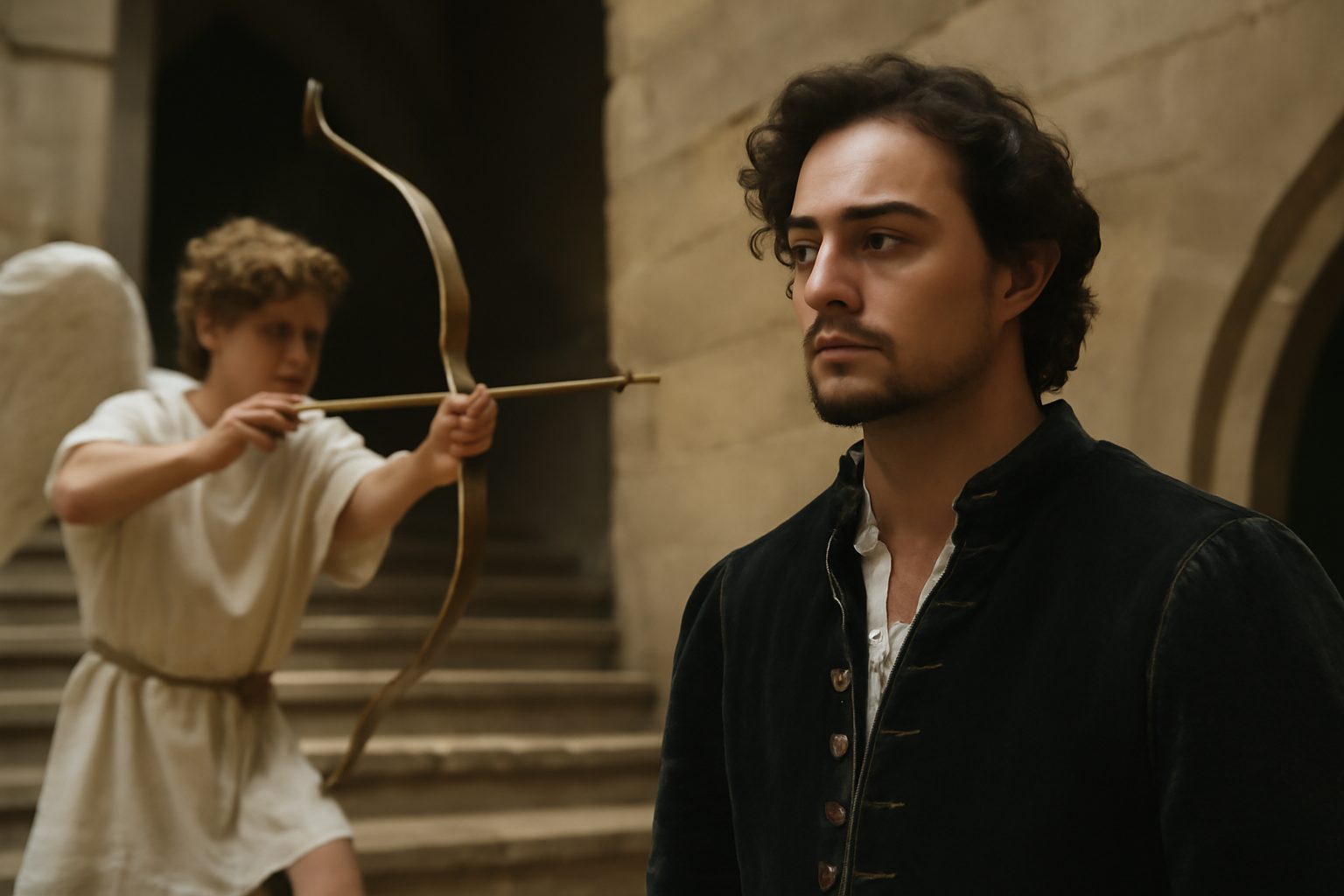
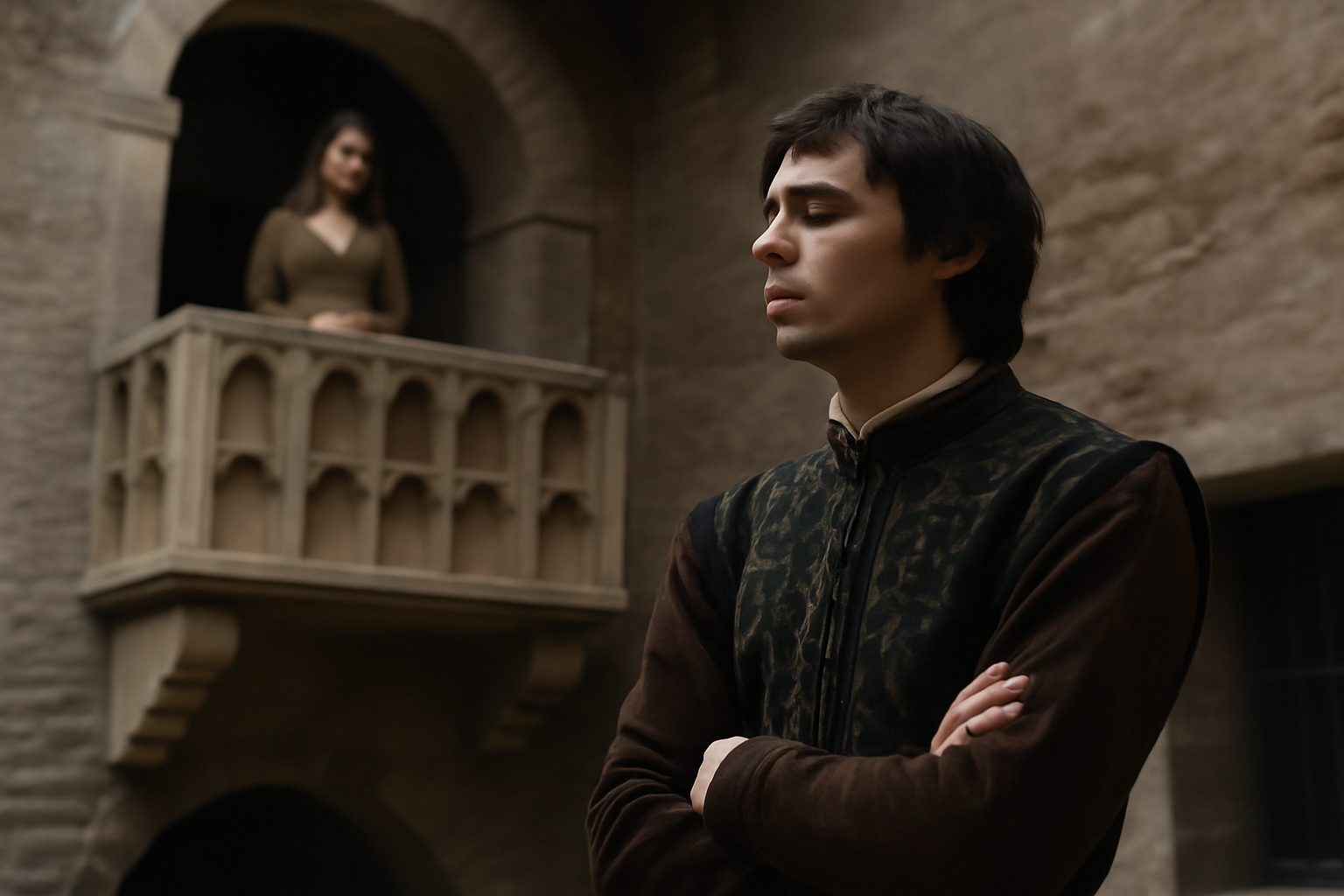
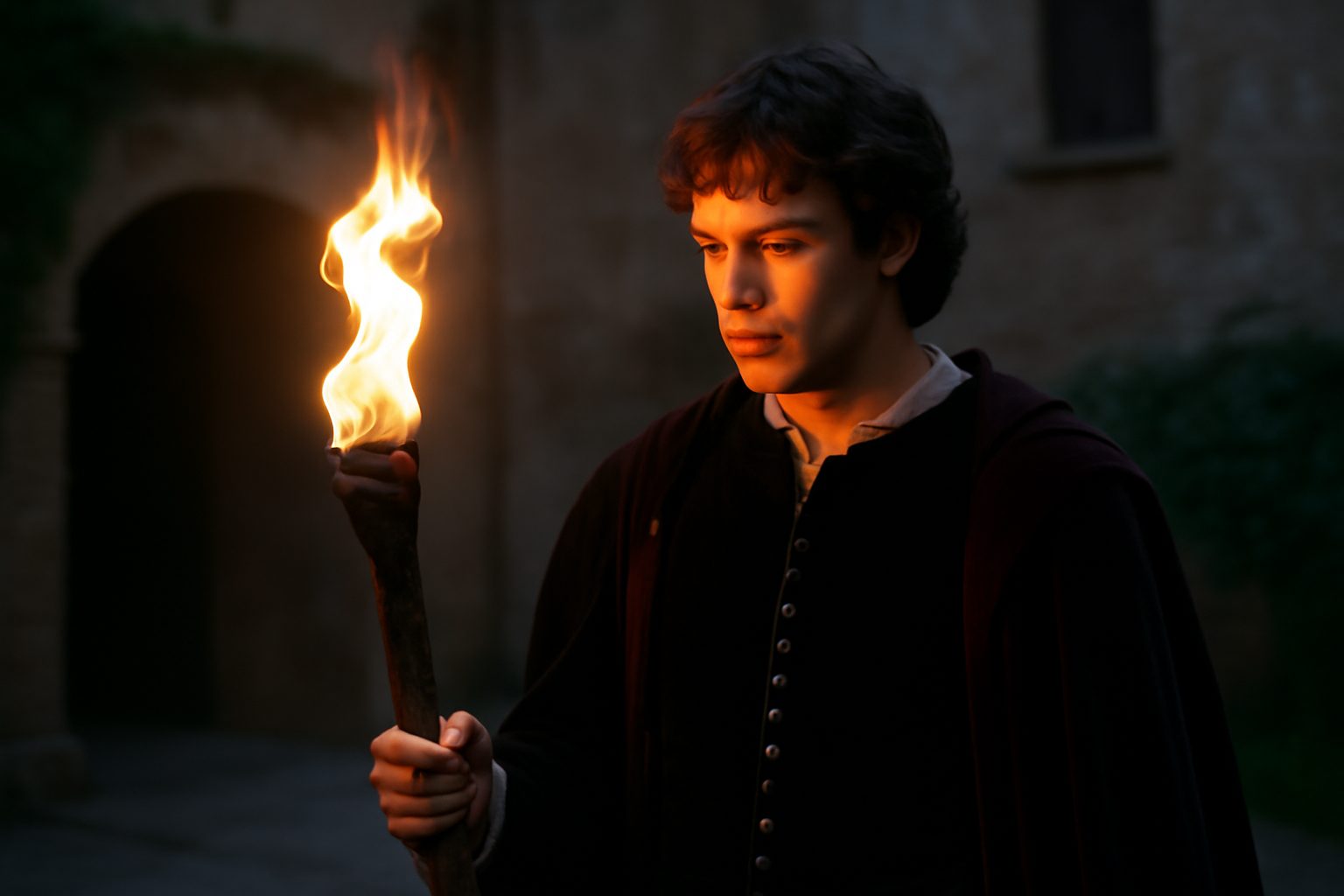
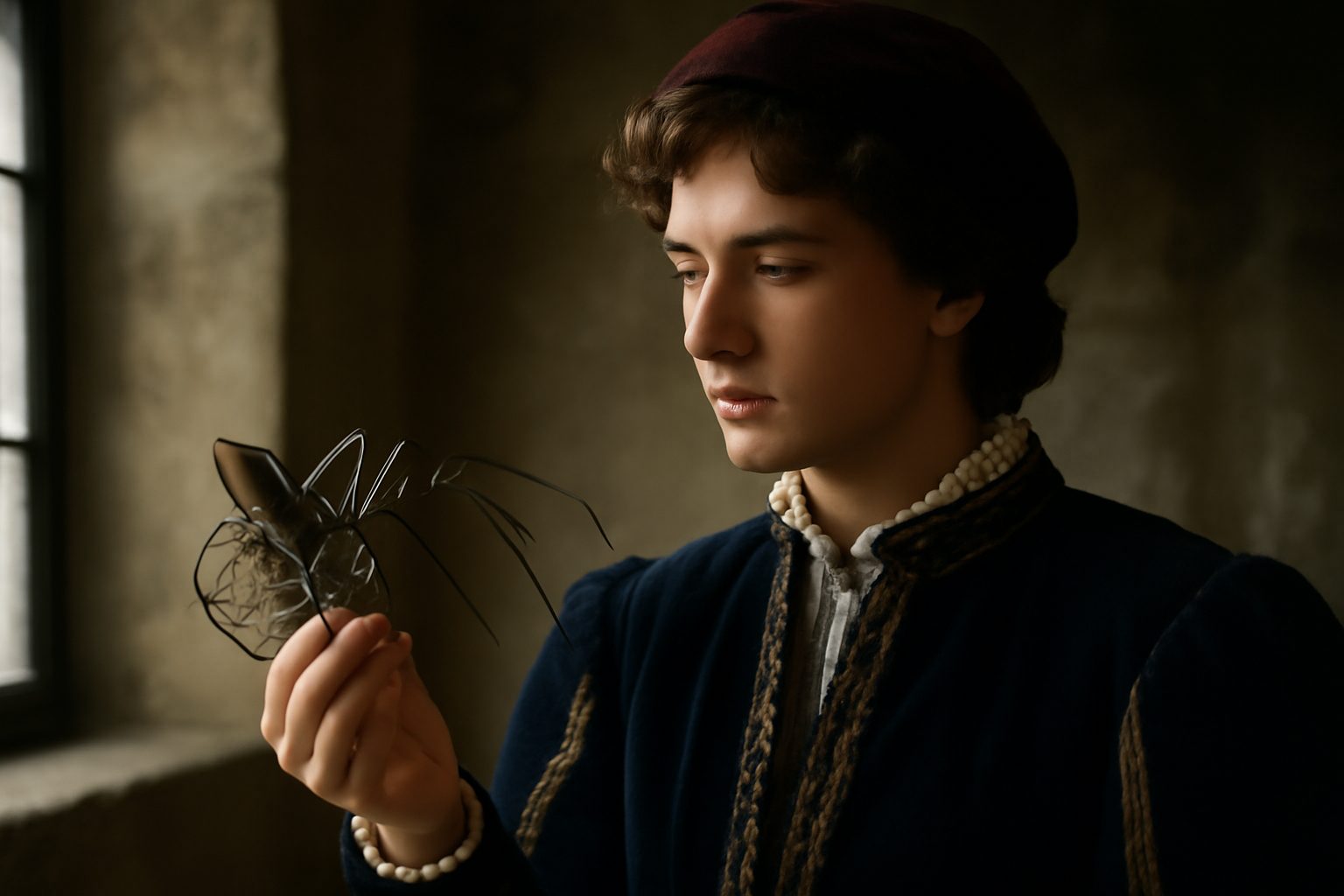
In Act 1, Scene 4 of Romeo and Juliet, Mercutio and Romeo are on their way to the Capulet's masquerade feast when Mercutio, ever the spirited jester, calls for the drum to strike. This brief command signals the start of their playful, energetic advance toward the party, setting a tone of anticipation and revelry. The moment contrasts with Romeo's earlier melancholy, highlighting the shift as he reluctantly joins in the festivities.
Benvolio: "Strike, drum."
In modern day english, we would say:
Start the music, let the drum begin.
Frequently Asked Questions
What does Benvolio tell the drum to do in Act 1 Scene 4 of Romeo and Juliet?
Benvolio tells the drum to strike, meaning to start playing.
Connections to other verses:
Connections to "Strike, drum." in Romeo & Juliet Act 1, Scene 4
The line "Strike, drum." serves as a decisive call to action, marking the transition from dialogue to movement as the characters proceed to the Capulet feast. This command is deeply connected to several preceding verses in the scene, reflecting themes of urgency, fate, and the contrast between reluctance and readiness.
Urgency and Impatience
The call to strike the drum responds to earlier expressions of haste, such as "Supper is done, and we shall come too late." and "Up to the ears. Come, we burn daylight, ho!", emphasizing the group's impatience to depart. It counters Romeo's melancholy and hesitation, highlighted in "Give me a torch: I am not for this ambling;", by propelling the party forward.
Foreshadowing and Fate
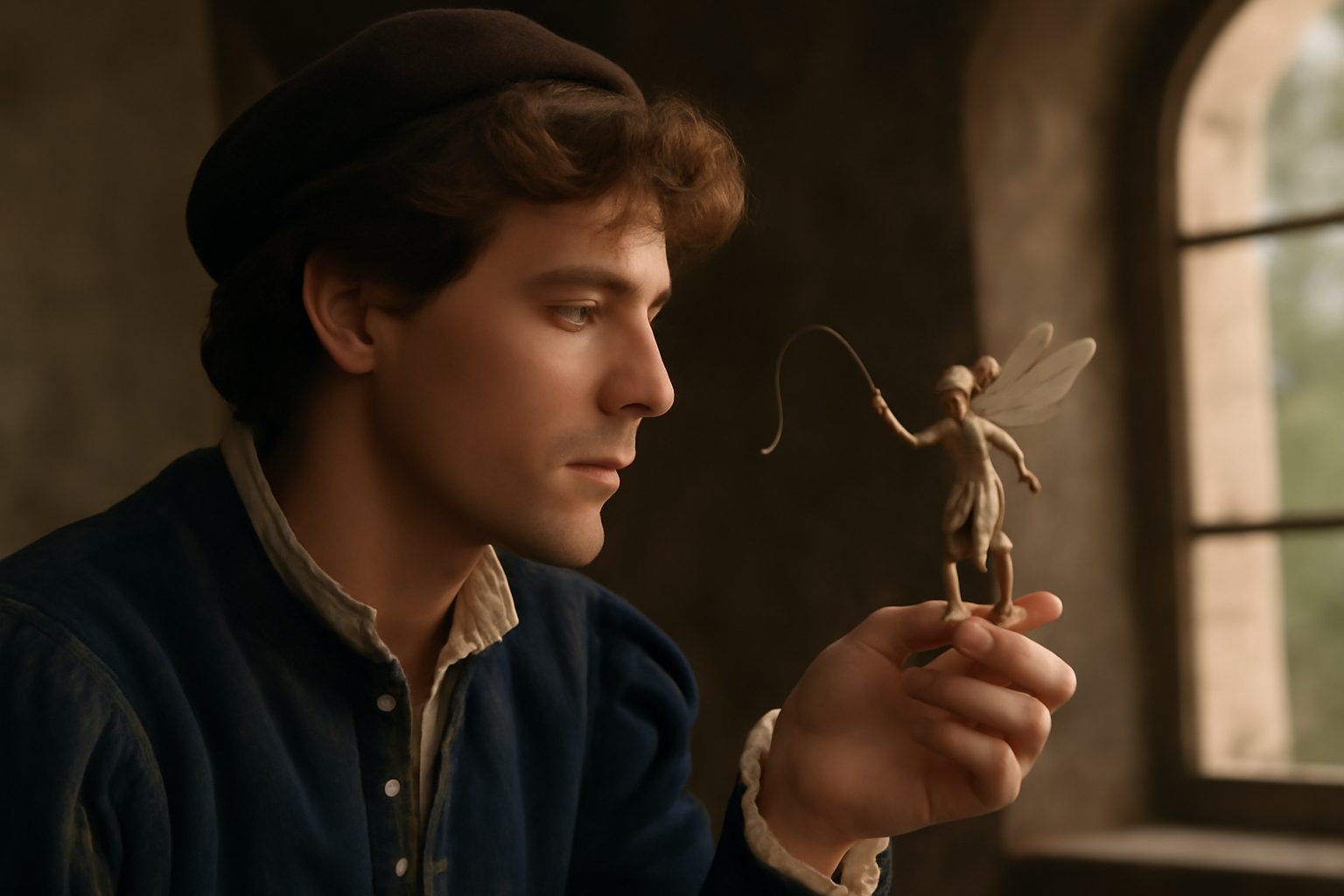
This action aligns with Romeo's foreboding sense of destiny in "Some consequence yet hanging in the stars" and "By some vile forfeit of untimely death.", as the drumbeat symbolizes the inexorable march toward the tragic events that follow. It also contrasts with Mercutio's fanciful Queen Mab speech ("She is the fairies' midwife"), grounding the scene in reality.
Contrast in Tone
The directive contrasts with the playful banter earlier in the scene, such as "A visor for a visor! what care I" and the whimsical description of Mab's chariot ("Her chariot is an empty hazel-nut"), shifting the focus from imagination to action.
Resolution and Movement
It culminates the discussion on whether to attend the masque, resolving debates like "And we mean well in going to this mask;" and "But 'tis no wit to go.", and directly follows Romeo's submission to fate in "But He, that hath the steerage of my course" and "Direct my sail! On, lusty gentlemen.", serving as the physical execution of that surrender.