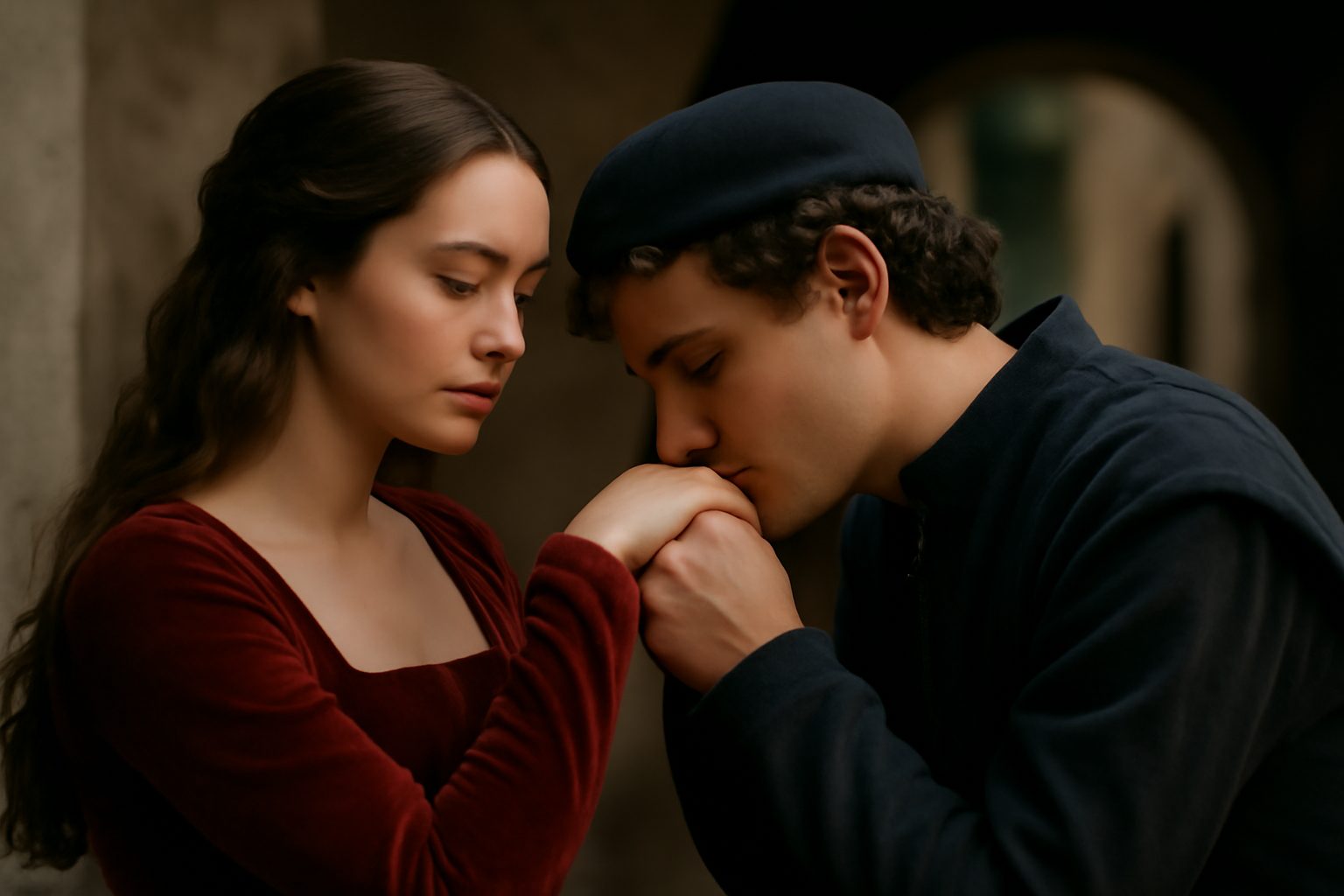
In Act 1, Scene 4 of Romeo and Juliet, Mercutio mocks Romeo's lovesick demeanor as they head to the Capulet feast. This line comes as Mercutio argues that love, though burdensome, teaches patience through hardship. His cynical wit contrasts with Romeo's romantic idealism, setting up their differing perspectives on love and fate.
Mercutio: "That presses them and learns them first to bear,"
In modern day english, we would say:
It teaches them to endure their burdens by making them carry the weight.
Frequently Asked Questions
What does Mercutio say teaches people to endure things first?
Mercutio says that pressure or difficulty teaches people to endure things first.
Connections to other verses:
Connections to "That presses them and learns them first to bear"
The verse "That presses them and learns them first to bear," spoken by Mercutio during his Queen Mab speech, describes how the fairy queen teaches maidens to endure burdens. This theme of bearing weight or oppression connects to several other lines in the scene, particularly those discussing love's burdens and the consequences of actions.
Love's Oppressive Nature
Romeo's lament about love's heaviness in "Under love's heavy burden do I sink" echoes the idea of bearing a weight, directly paralleling the "presses them... to bear" concept. Similarly, "And, to sink in it, should you burden love;" reinforces this imagery of love as an oppressive force that one must endure.
Dreams and Consequences
Mercutio's entire Queen Mab speech explores how dreams press upon different people, teaching them to bear their desires or fears. For example, "Which once untangled, much misfortune bodes:" suggests that the burdens imposed by dreams lead to misfortune, extending the idea of bearing beyond physical weight to emotional or fateful consequences.
Endurance and Movement
The notion of being pressed down and learning to bear connects to Romeo's inability to move in "So stakes me to the ground I cannot move." Here, the burden of love immobilizes him, contrasting with the idea of learning to bear it and potentially overcome it.
Contrast with Lightness
Romeo's request in "Give me a torch: I am not for this ambling;" highlights his heaviness of heart, opposing the "light" nature of the other revelers. This contrast emphasizes the theme of bearing weight versus being free from it.
Foreshadowing Fate
Finally, Romeo's foreboding in "Of a despised life closed in my breast" and "By some vile forfeit of untimely death" suggests a burden of fate that he must bear, linking the physical and metaphorical pressures introduced by Mercutio's line to the tragic outcomes of the play.