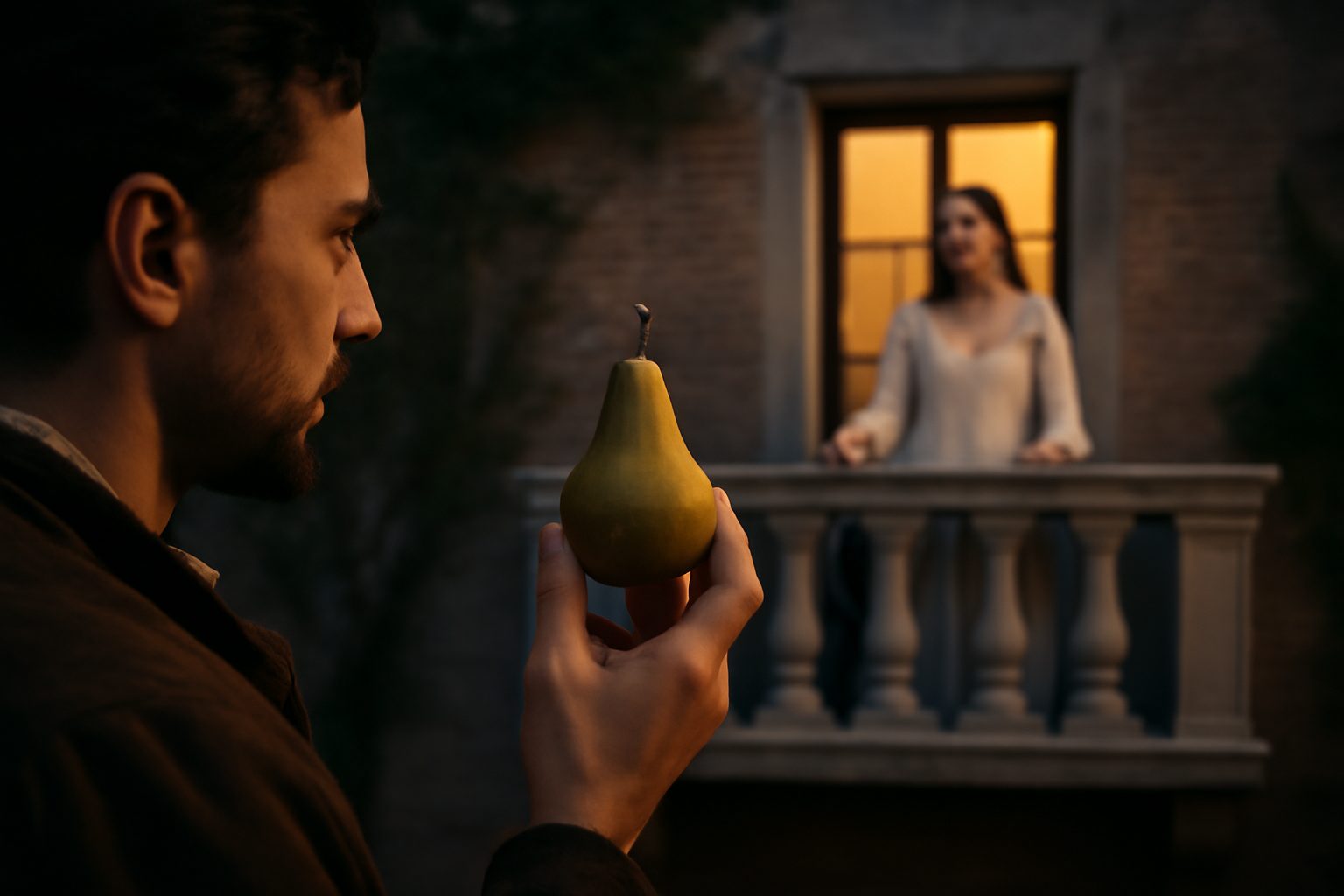
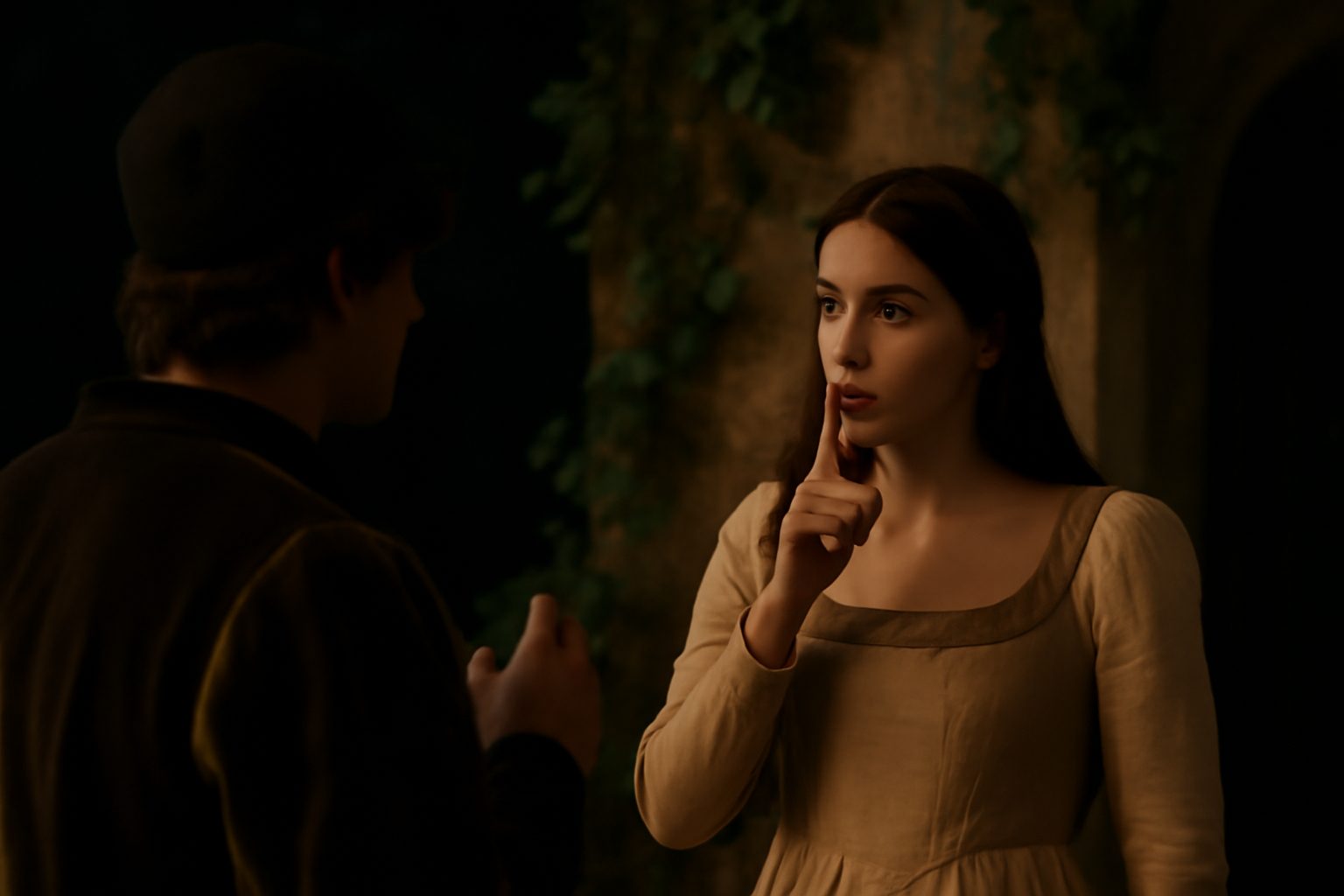
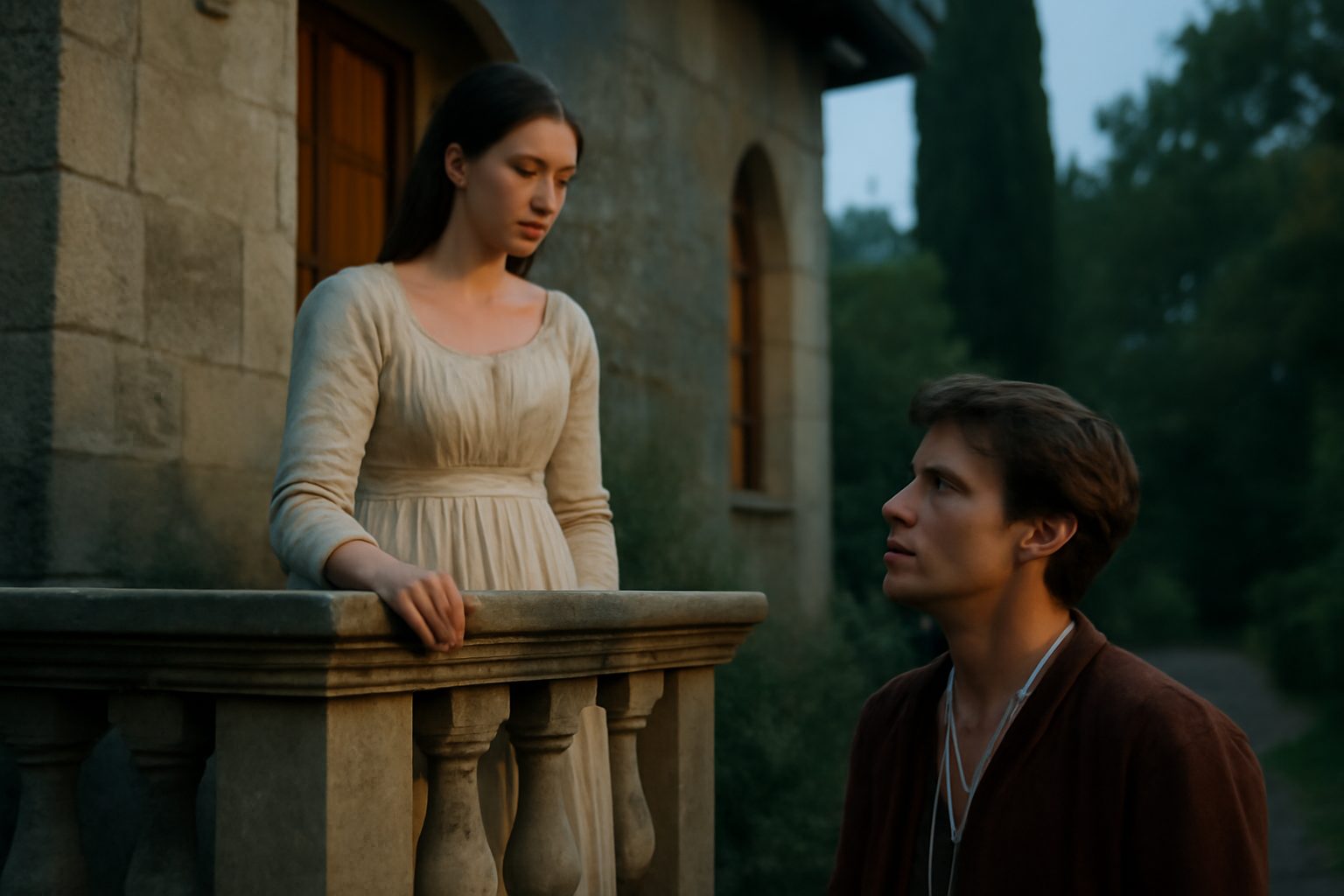
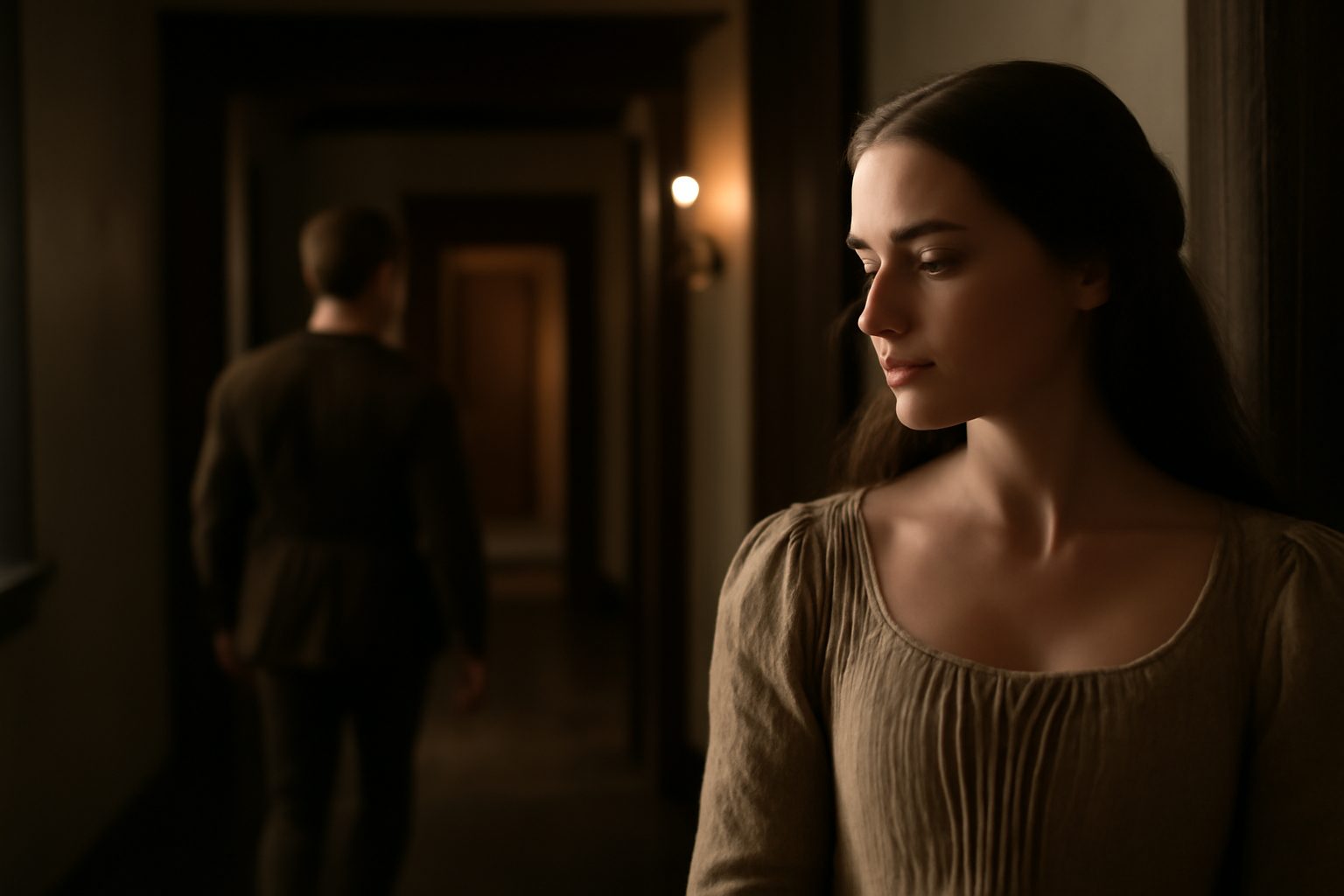
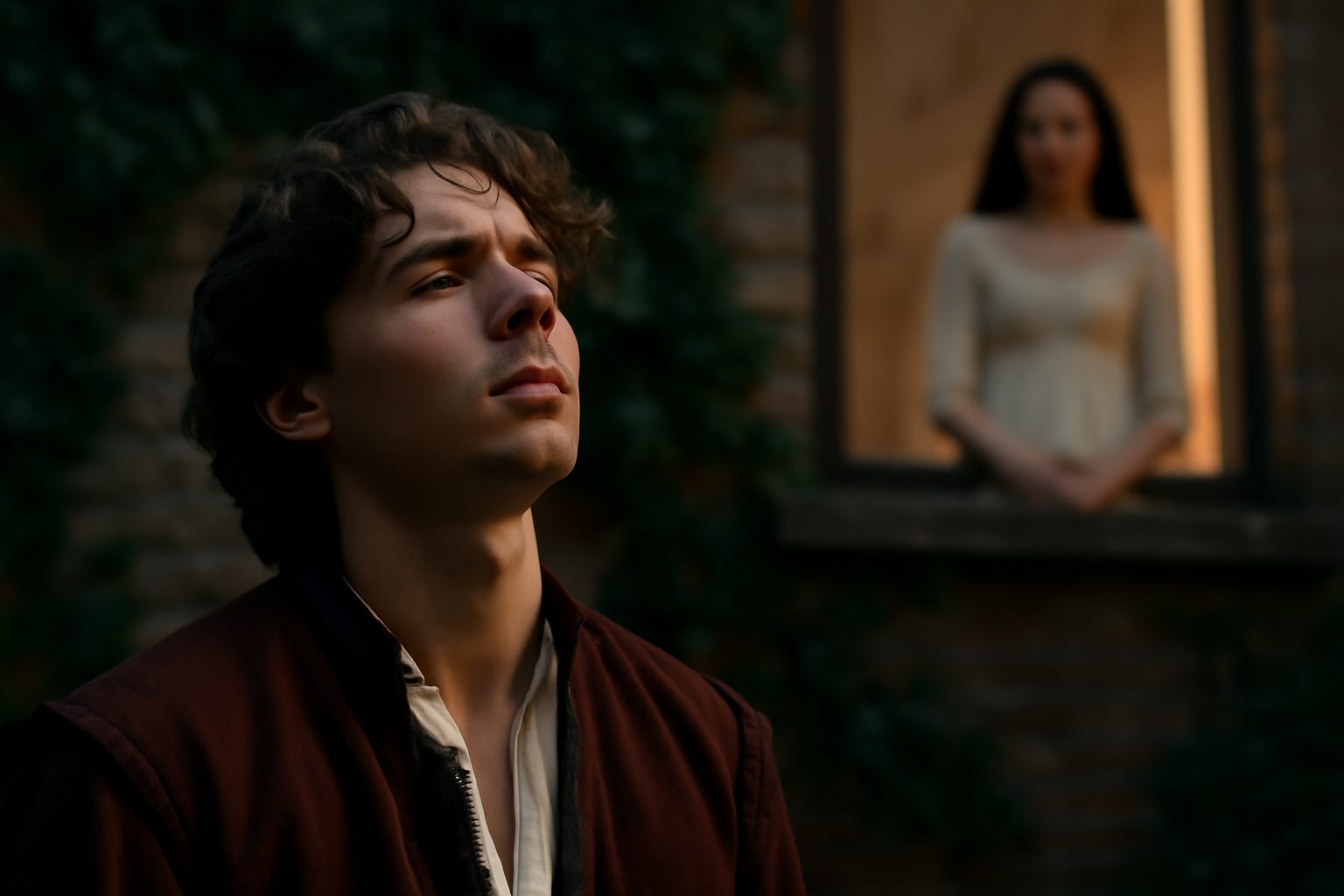
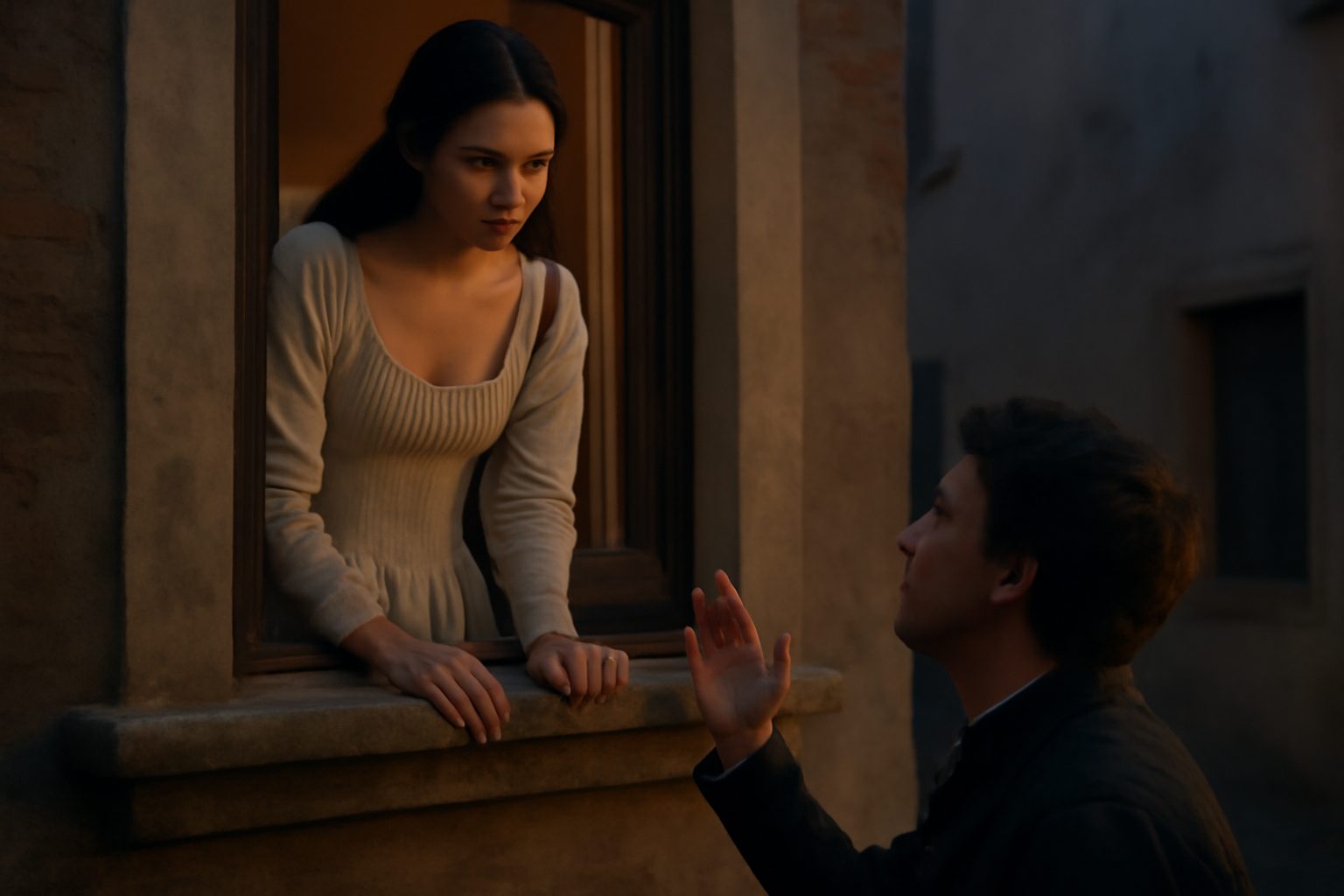
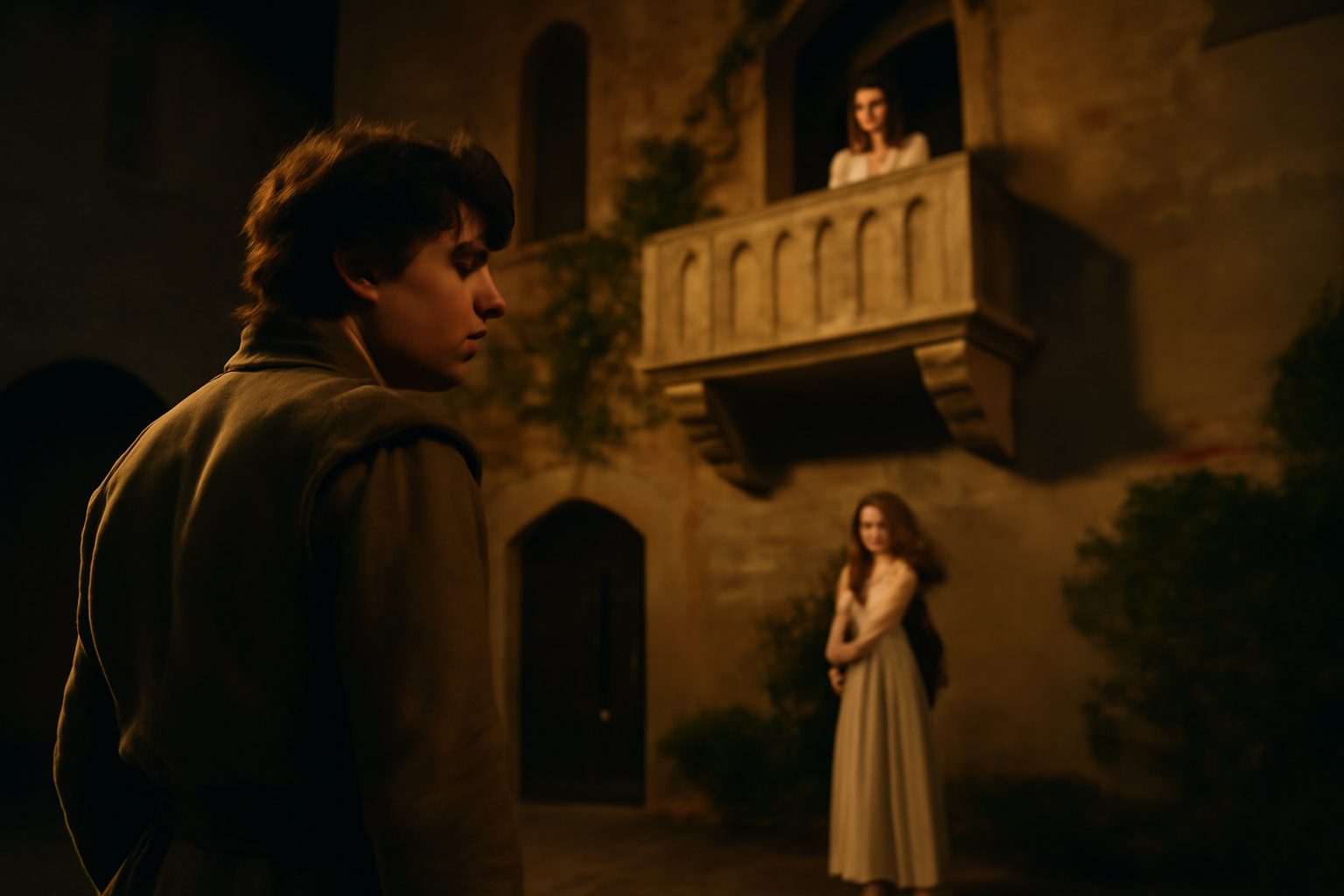
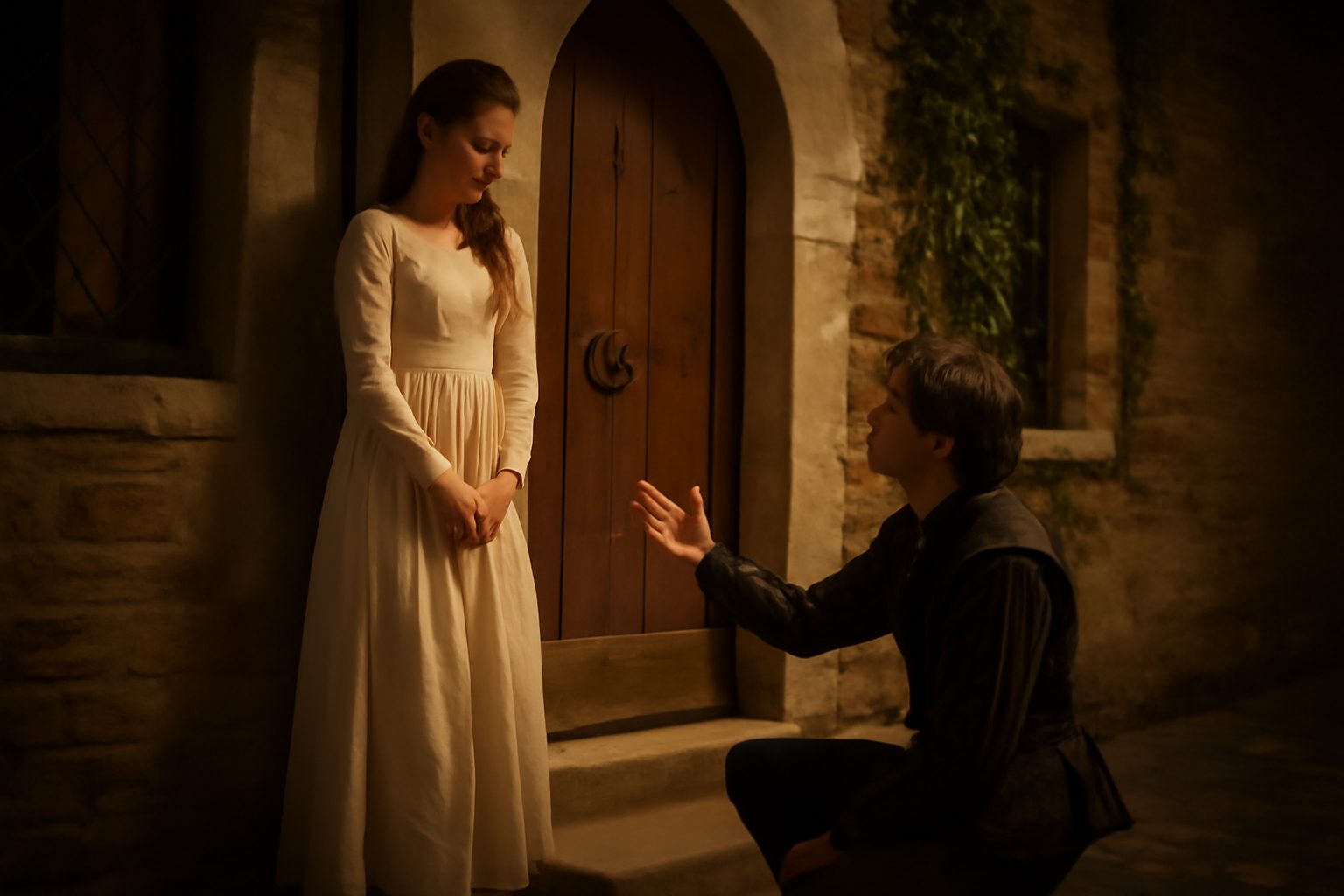
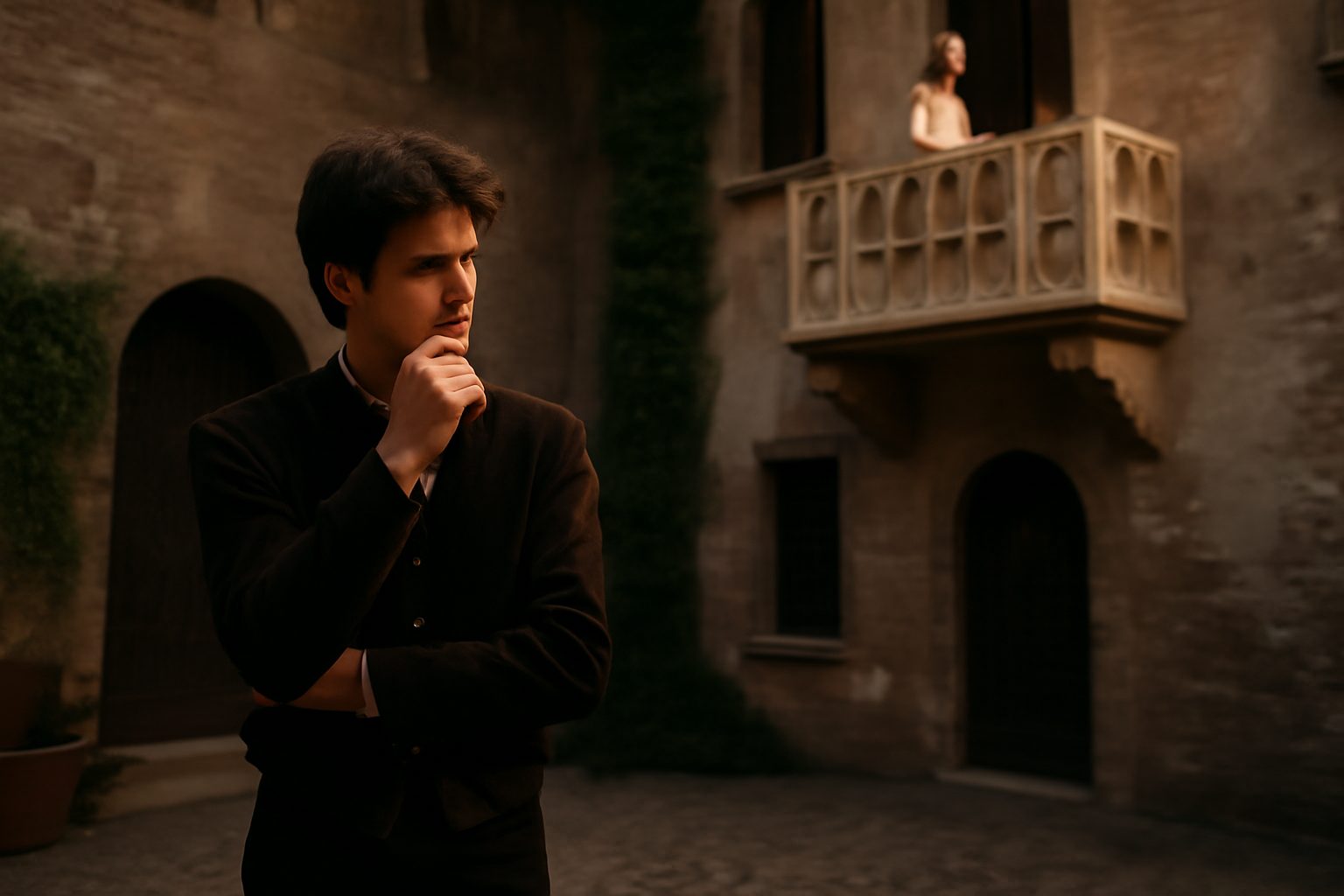
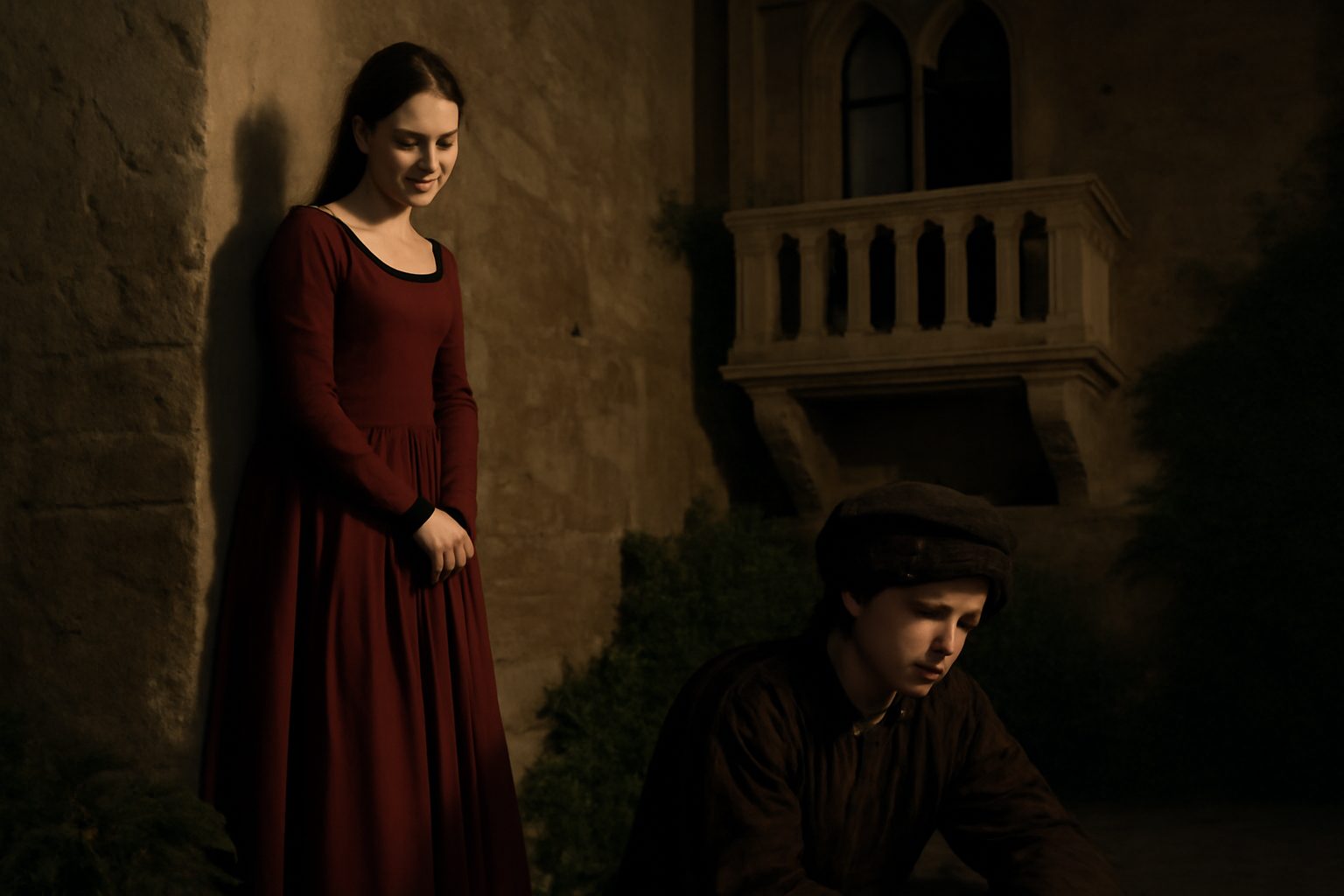
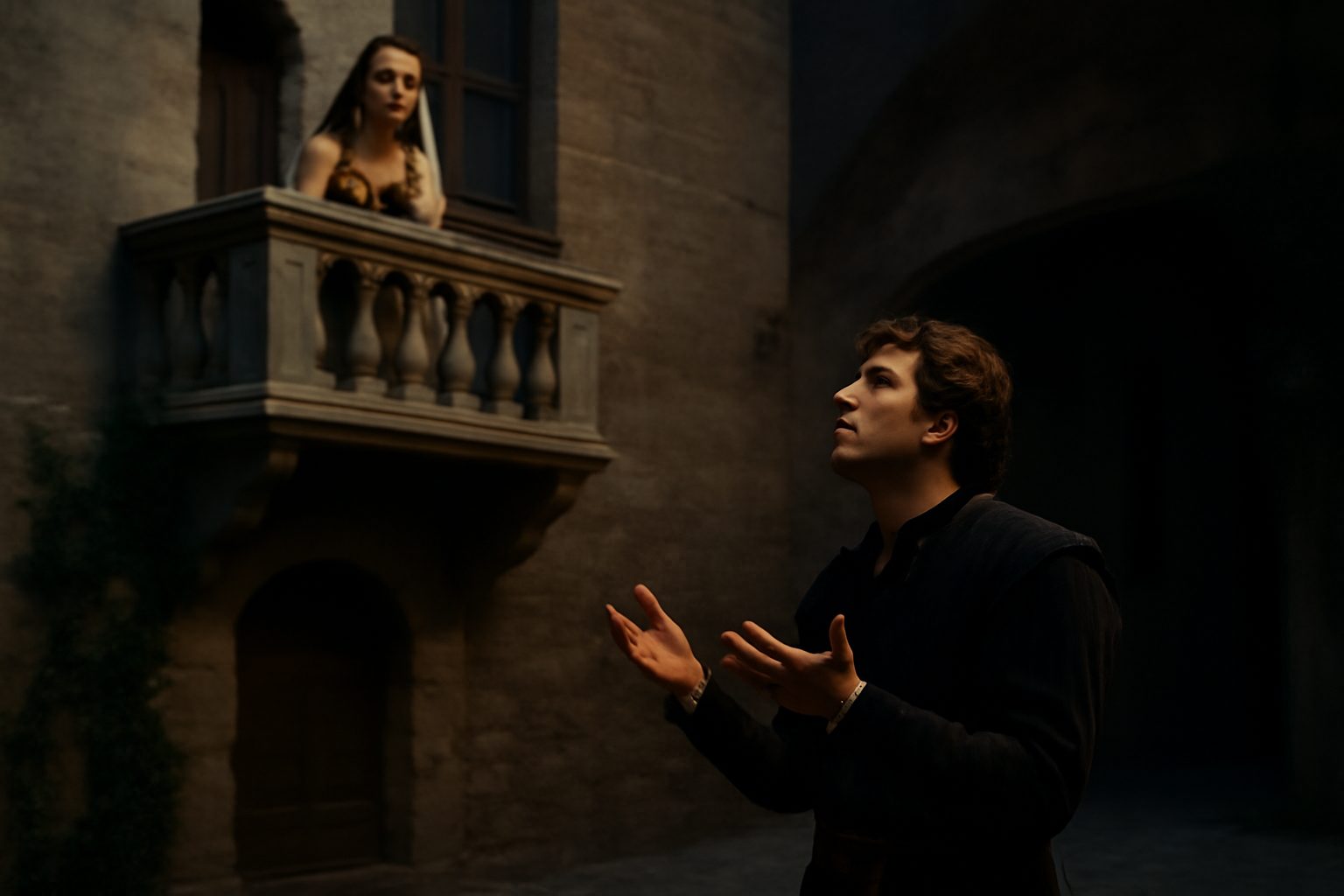
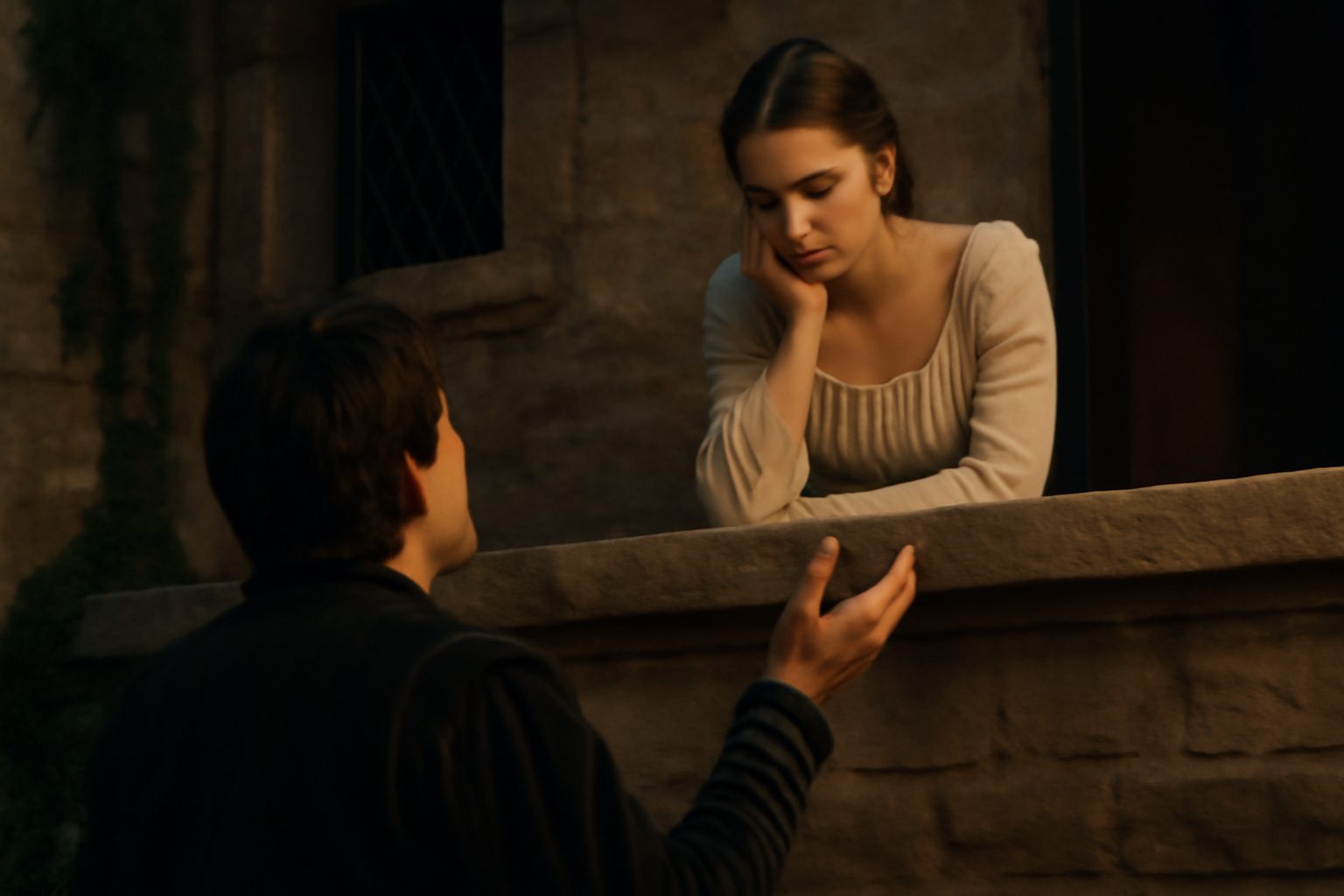
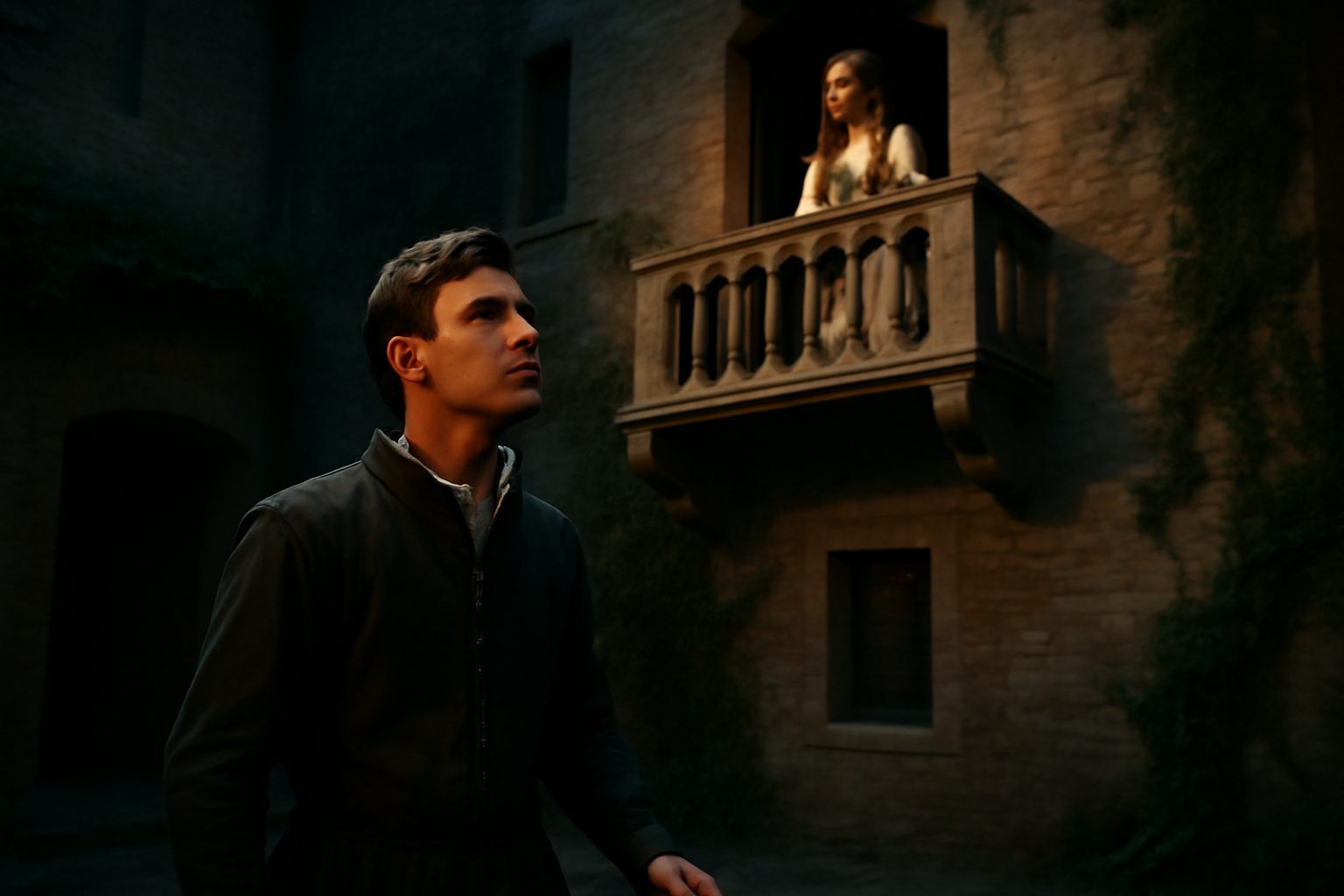
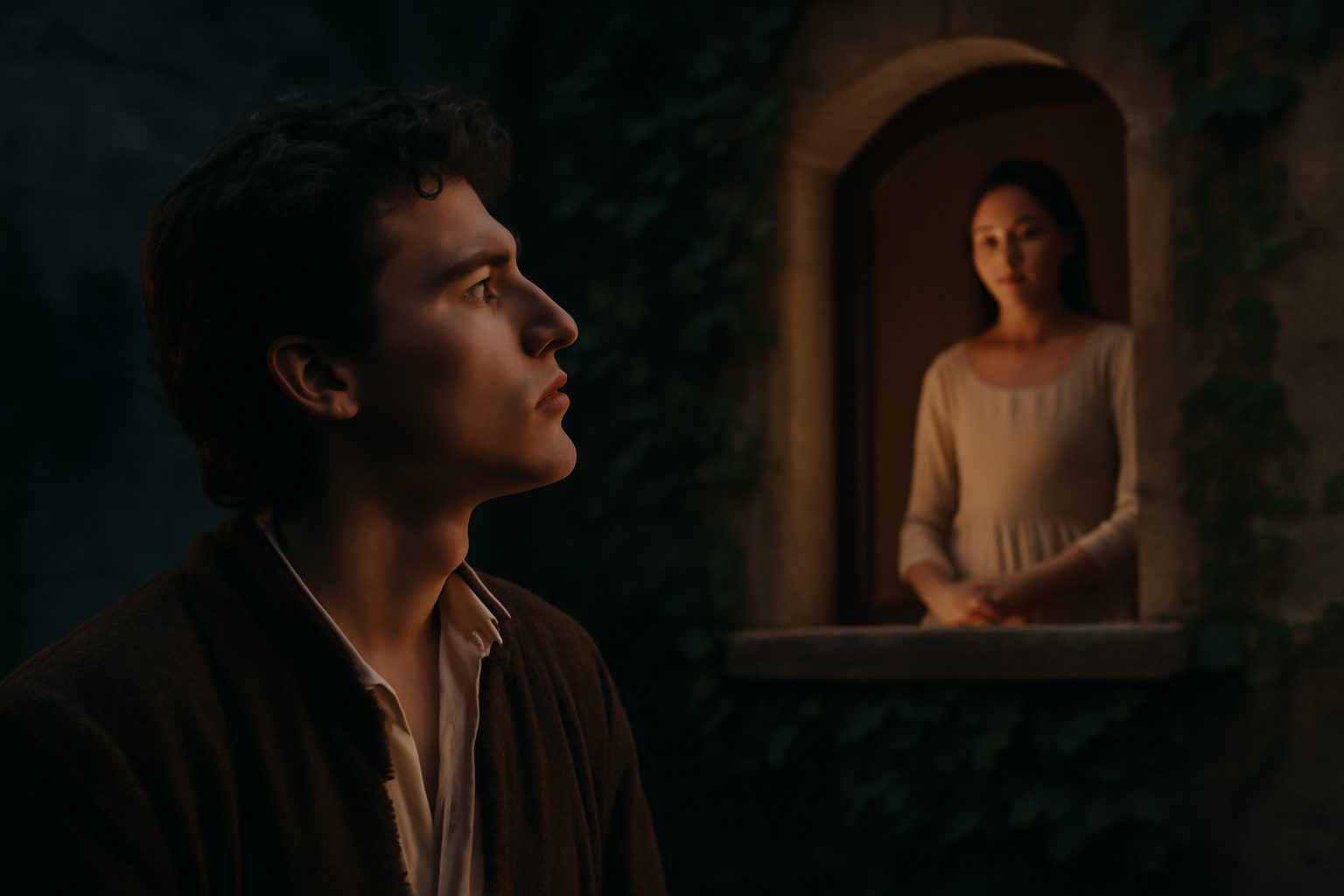
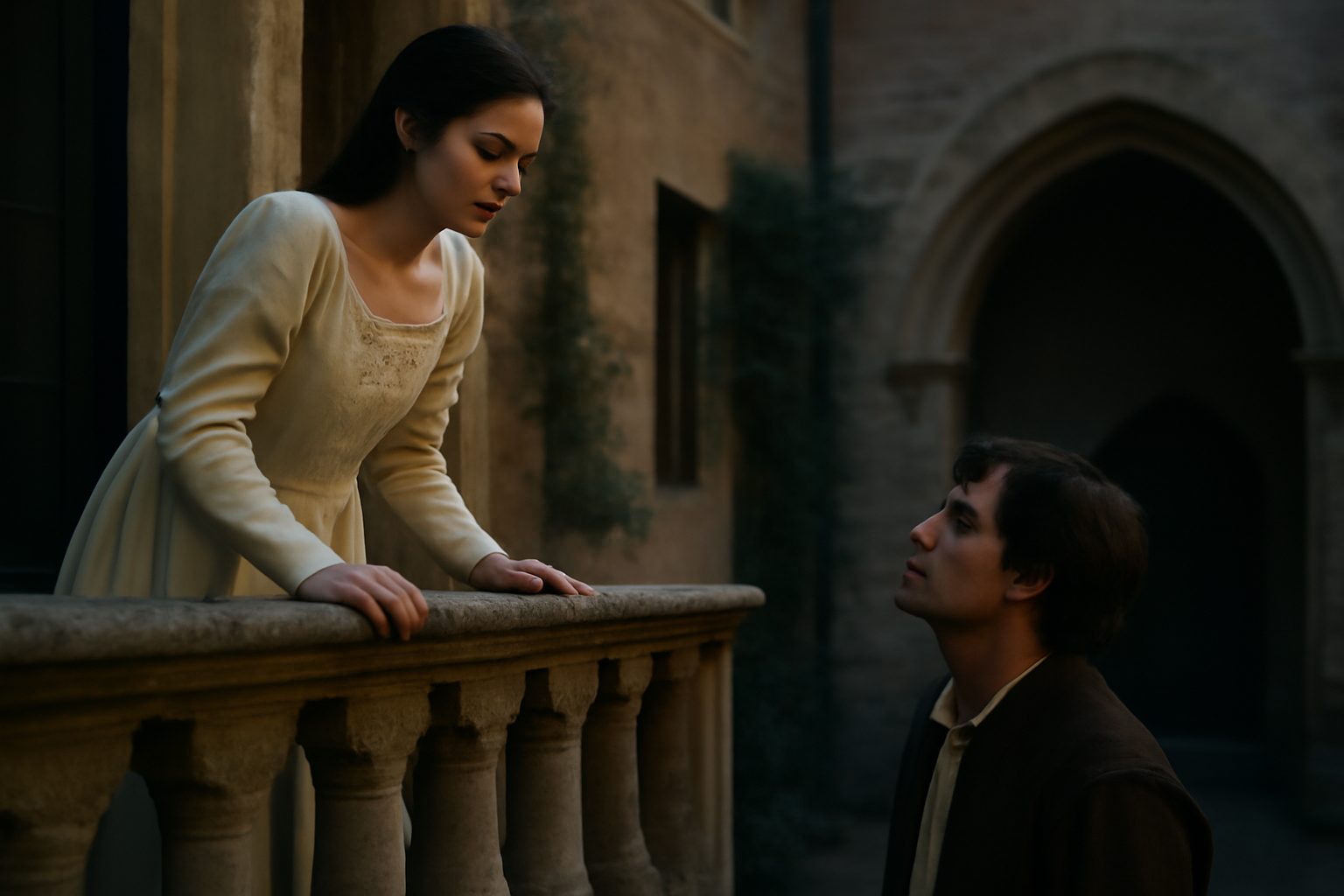
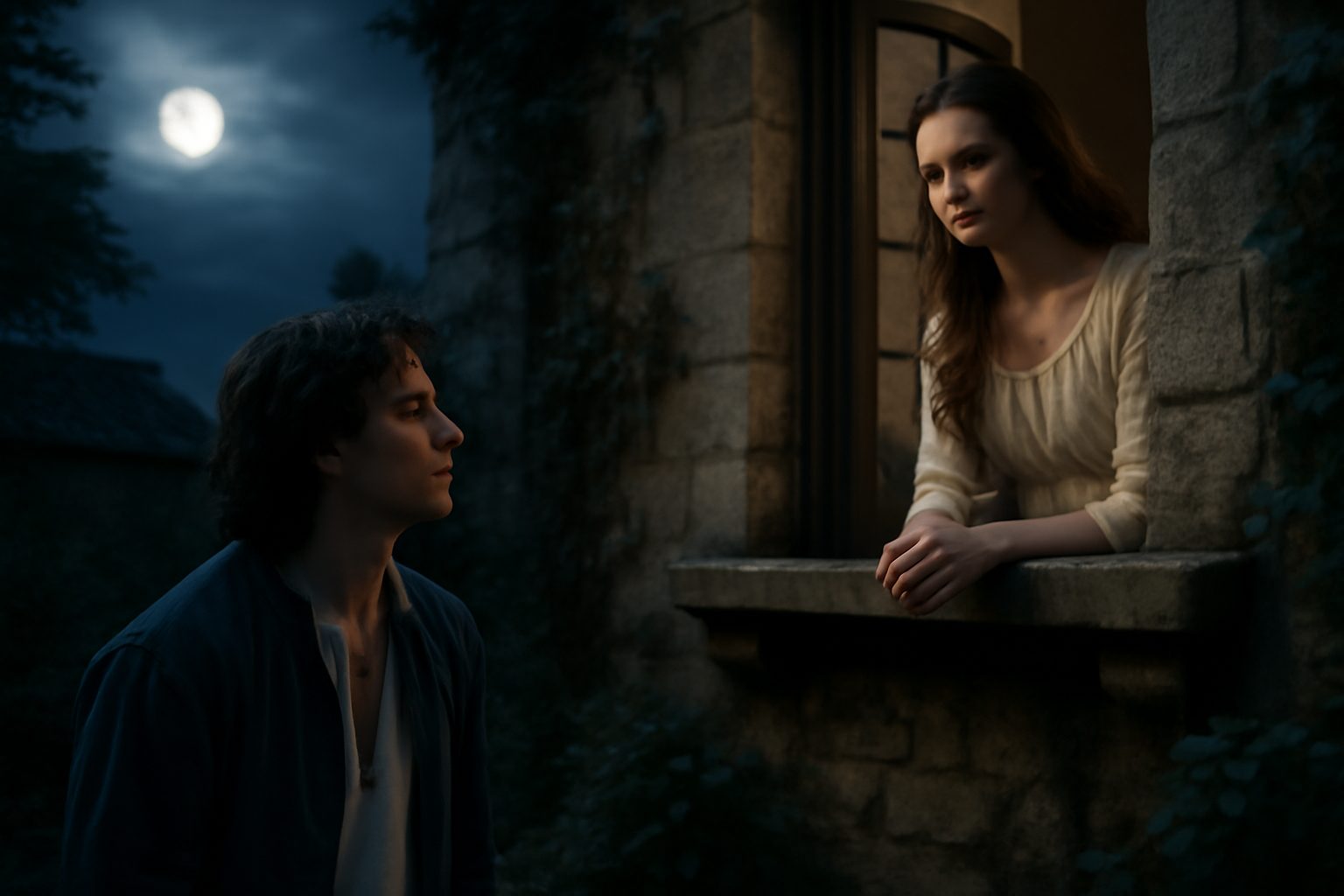
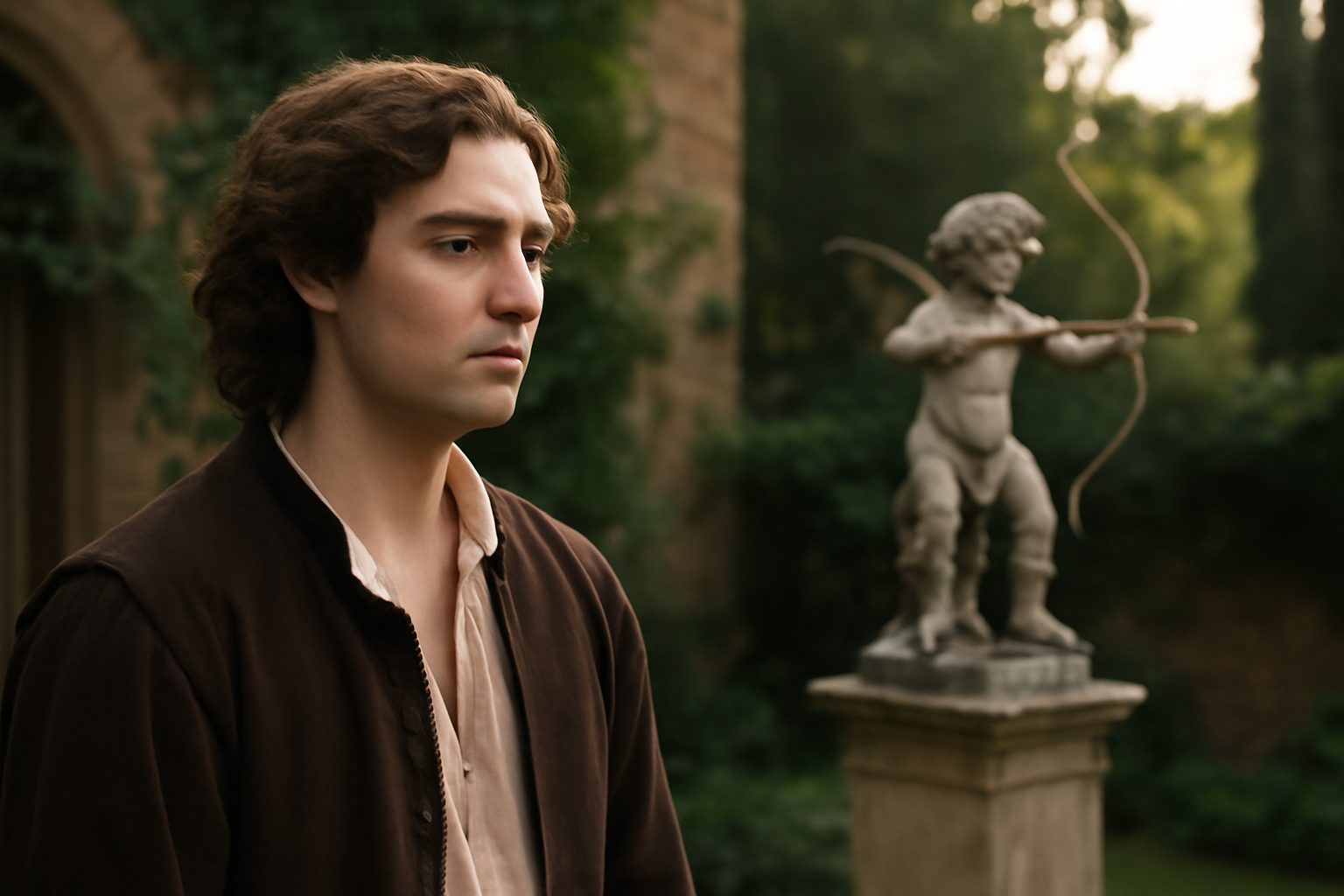
In Act 2, Scene 1 of Romeo and Juliet, Mercutio mocks Romeo's lovestruck state by referencing the tale of King Cophetua, a legendary African ruler who fell for a beggar-maid. The line is part of Mercutio's playful teasing, suggesting that love, even between mismatched pairs, can strike unexpectedly. This mythological allusion highlights the contrast between Romeo's idealized passion and Mercutio's cynical wit.
Mercutio: "When King Cophetua loved the beggar-maid!"
In modern day english, we would say:
It’s like that old story where a king fell in love with a beggar girl.
Frequently Asked Questions
Who is Mercutio talking about when he mentions King Cophetua and the beggar-maid?
Mercutio is referring to an old story about a king who fell in love with a poor beggar woman, showing that love can cross social boundaries.
Connections to other verses:
Connections to "When King Cophetua loved the beggar-maid!"
This line, spoken by Mercutio, refers to a legendary tale of a king who fell in love with a beggar, highlighting the theme of love transcending social boundaries. It connects to several other verses in the scene that explore love, desire, and Romeo's infatuation.
Love and Social Status
The reference to King Cophetua and the beggar-maid echoes the idea of love overcoming class divides, similar to Romeo's own situation with Juliet. This is subtly reinforced in "Is fair and honest, and in his mistress' name", where Mercutio hints at Romeo's honorable intentions despite the feud between their families.
Mercutio's Mocking Tone
Mercutio uses this allusion to tease Romeo about his romantic idealism, much like he does in "Romeo! humours! madman! passion! lover!", where he ridicules Romeo's lovesick behavior. The playful mockery continues in "One nick-name for her purblind son and heir", referencing Cupid's blindness to reason, which ties back to the irrational nature of love exemplified by King Cophetua.
Ideals of Beauty and Desire
The beggar-maid's allure in the tale parallels Mercutio's earlier bawdy descriptions of Rosaline's physical attributes, such as in "By her high forehead and her scarlet lip" and "By her fine foot, straight leg and quivering thigh". These lines emphasize how love and desire are often provoked by idealized beauty, whether in a beggar or a noblewoman.
Blindness of Love
The theme of love's blindness, central to the King Cophetua story, is directly addressed in "Blind is his love and best befits the dark" and "If love be blind, love cannot hit the mark". These verses reinforce the idea that love ignores practical concerns, much like the king's disregard for social hierarchy.
Conjuring and Invocation
Mercutio's reference to the legendary tale is part of his larger attempt to "conjure" Romeo, as seen in "The ape is dead, and I must conjure him" and "I conjure only but to raise up him". By invoking stories like King Cophetua's, Mercutio blends humor with mythological allusions to provoke a reaction from Romeo.