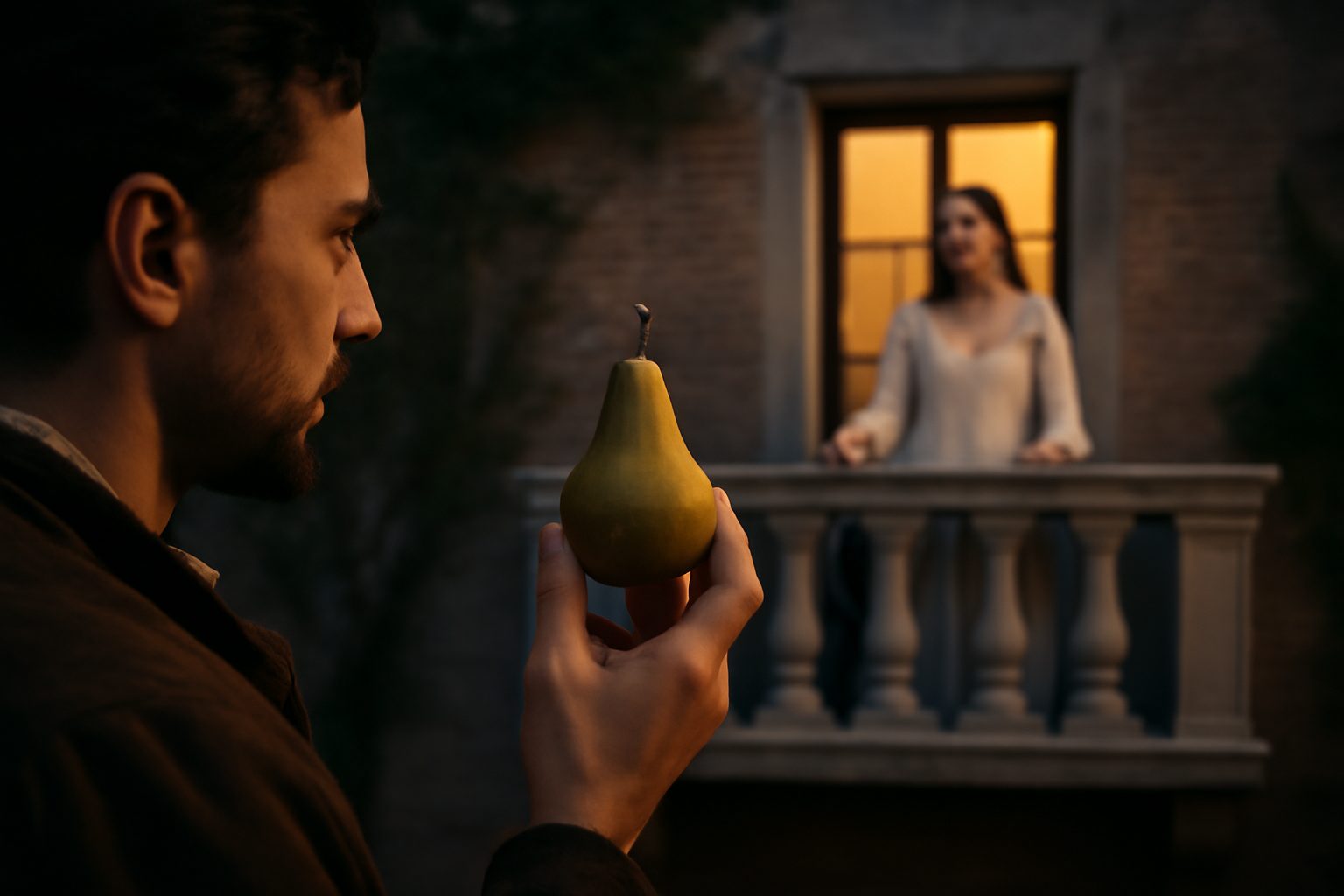
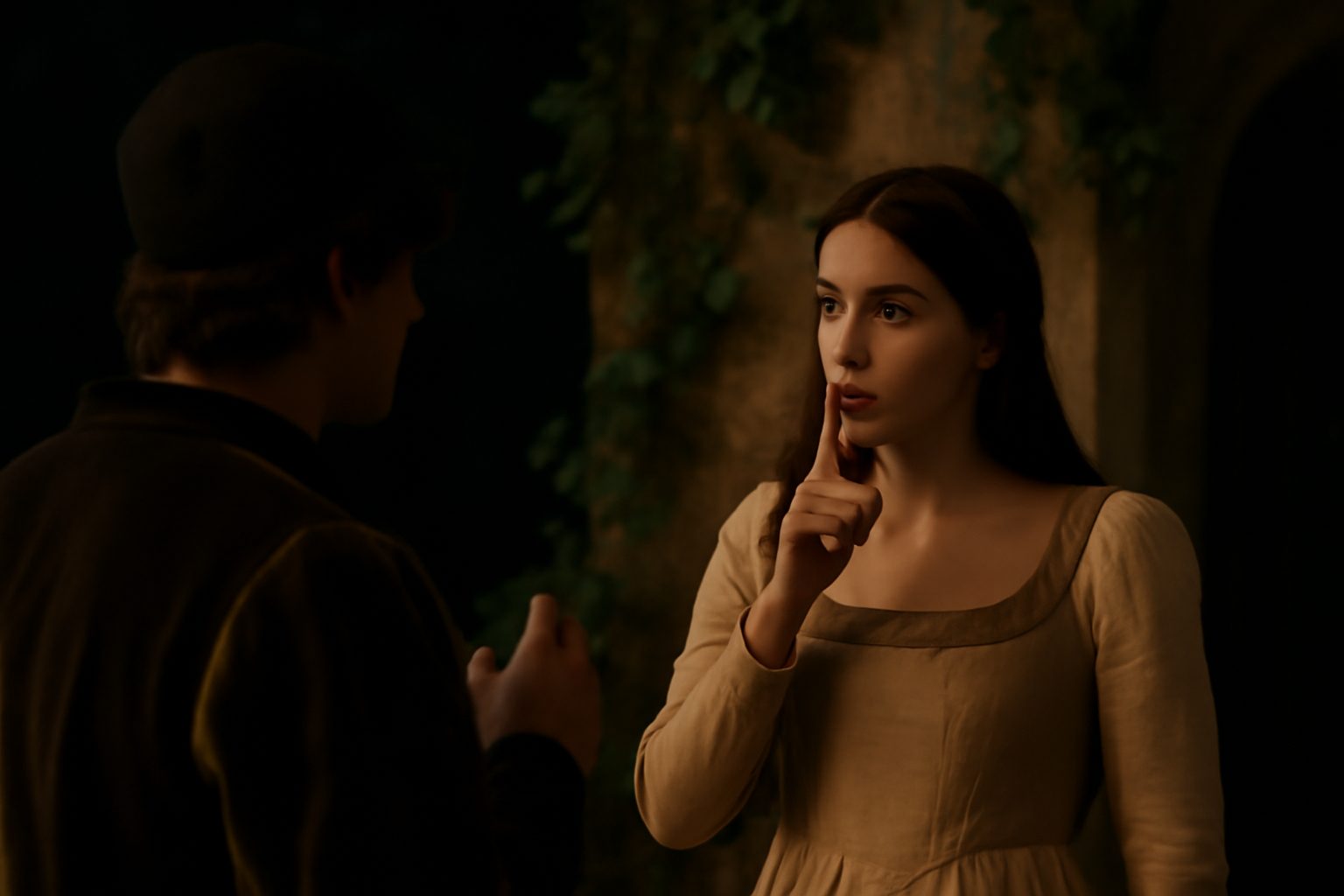
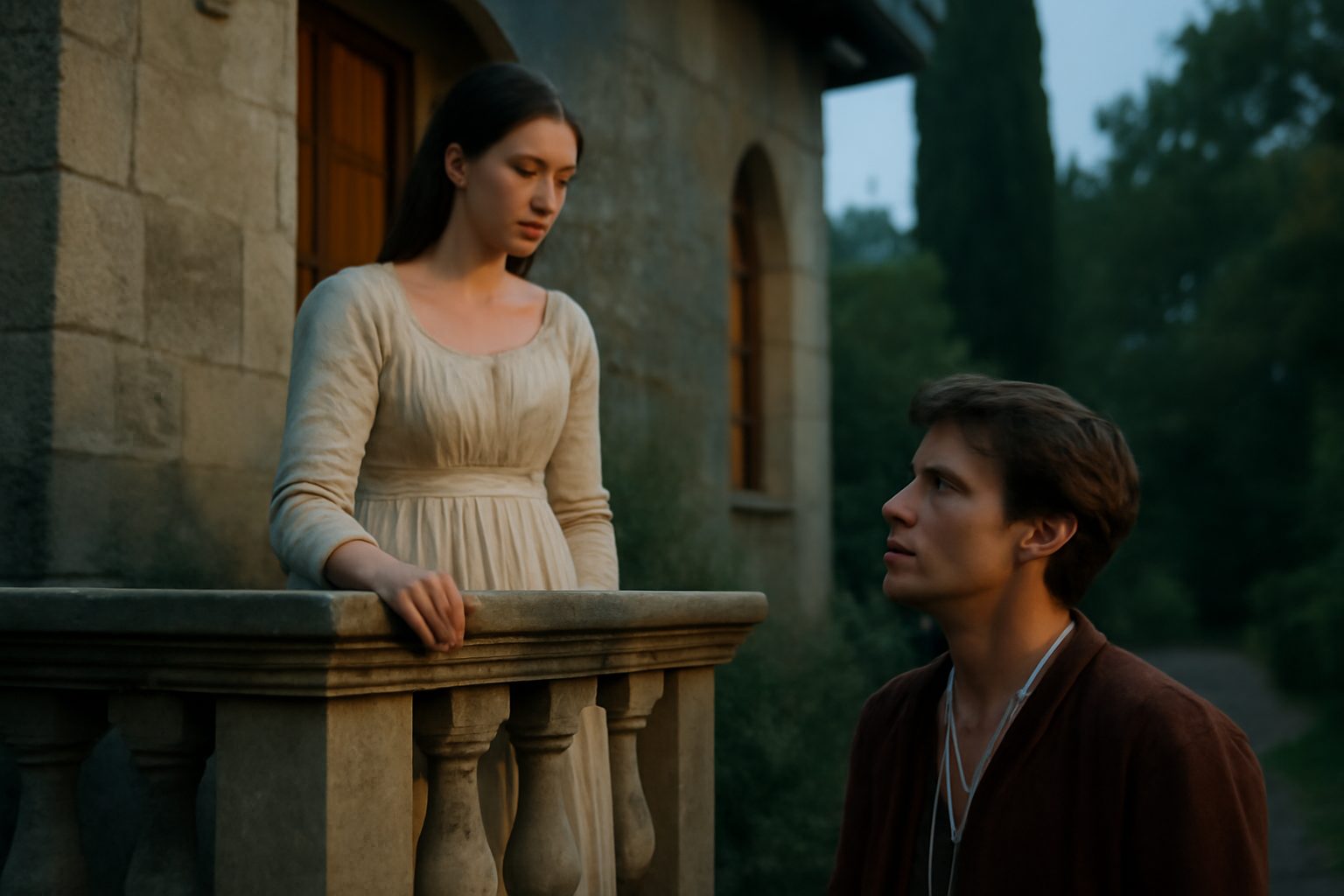
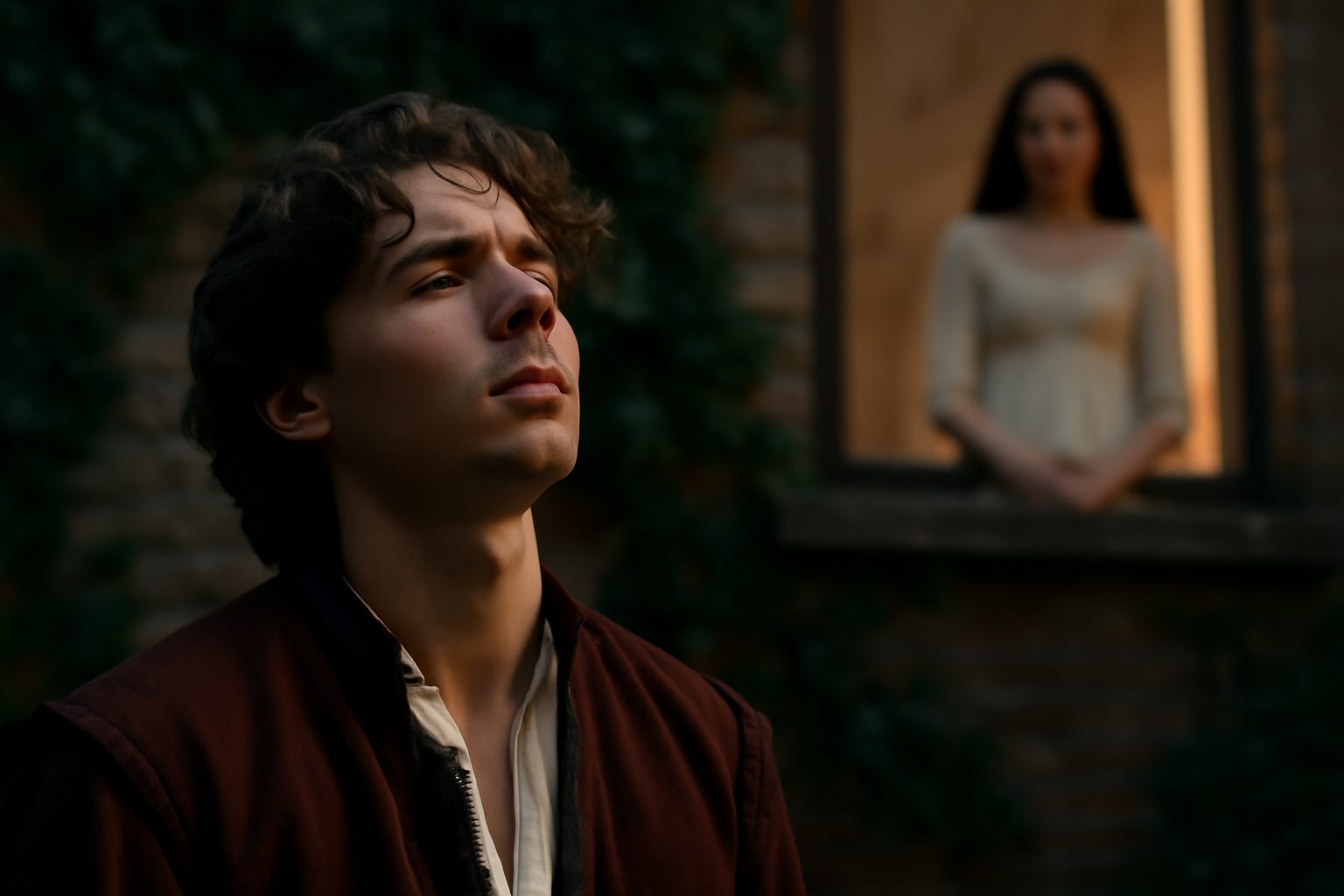
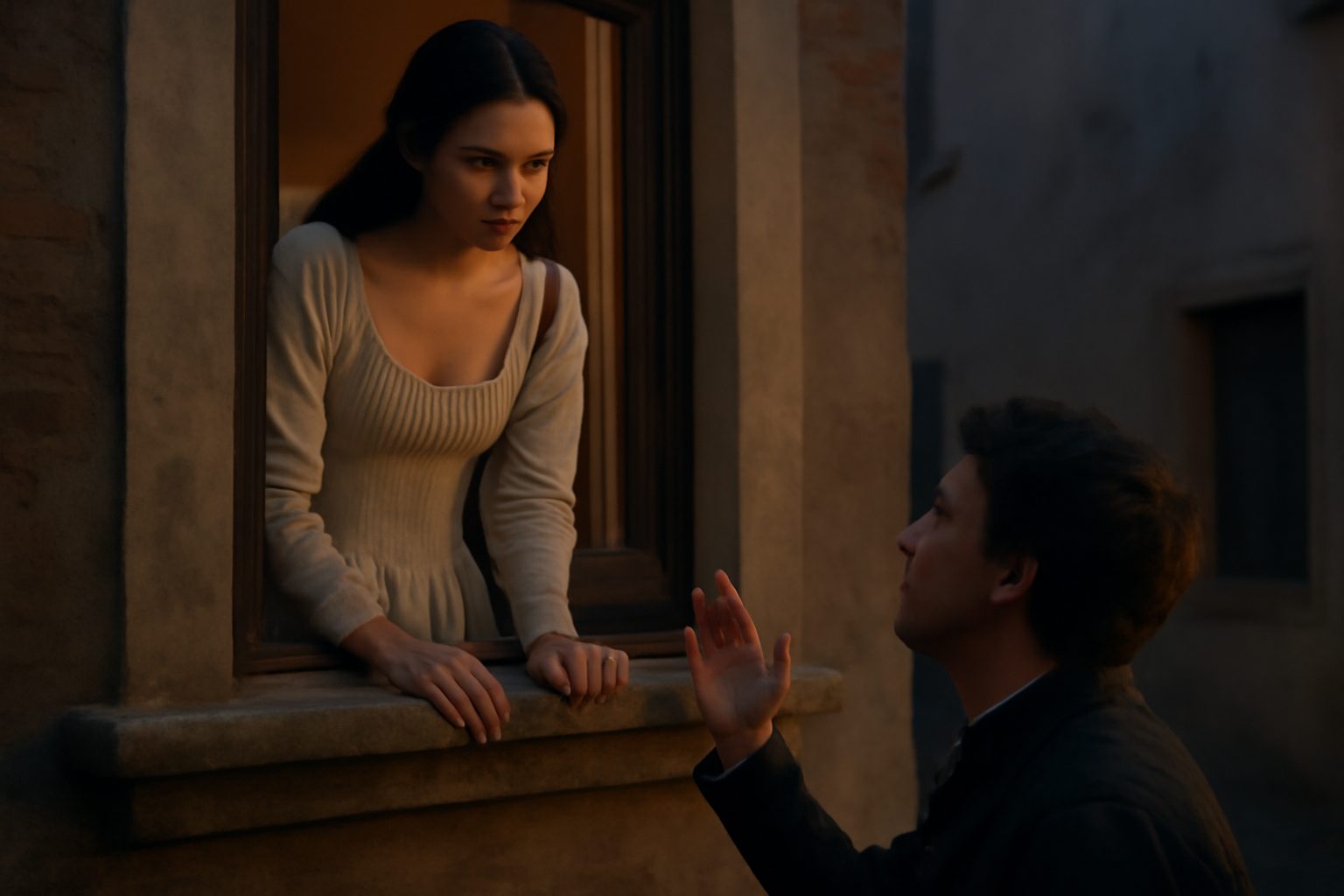
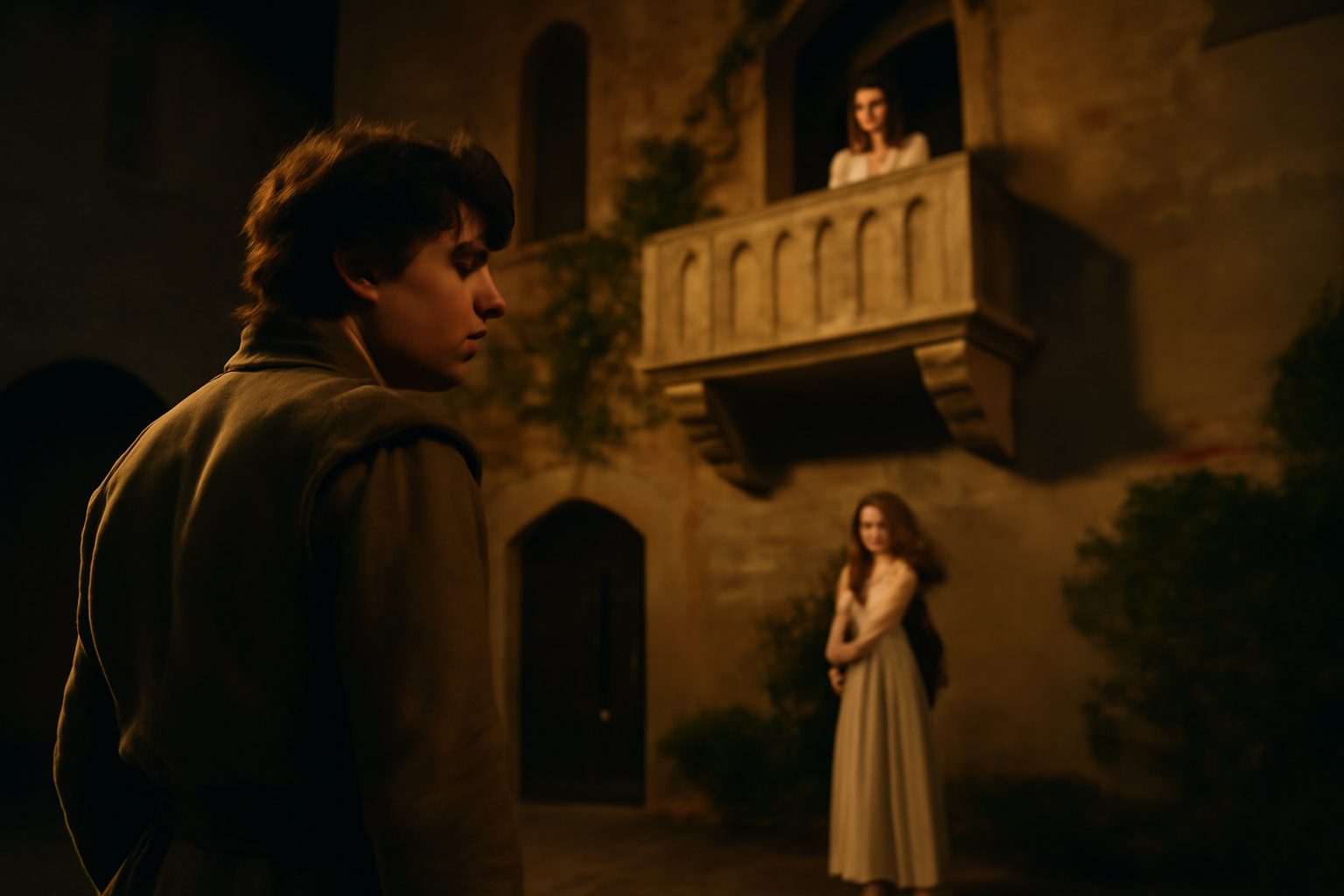
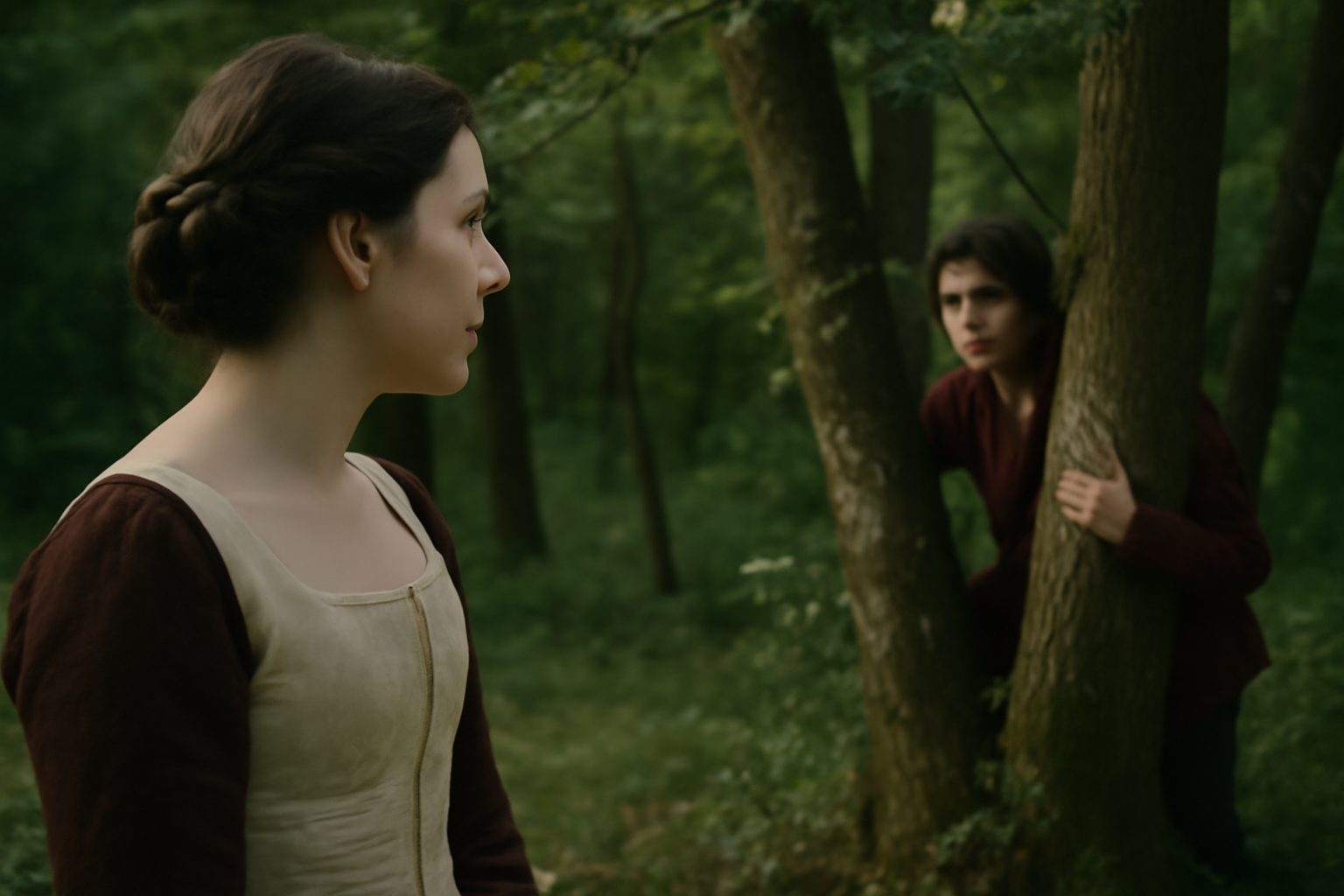
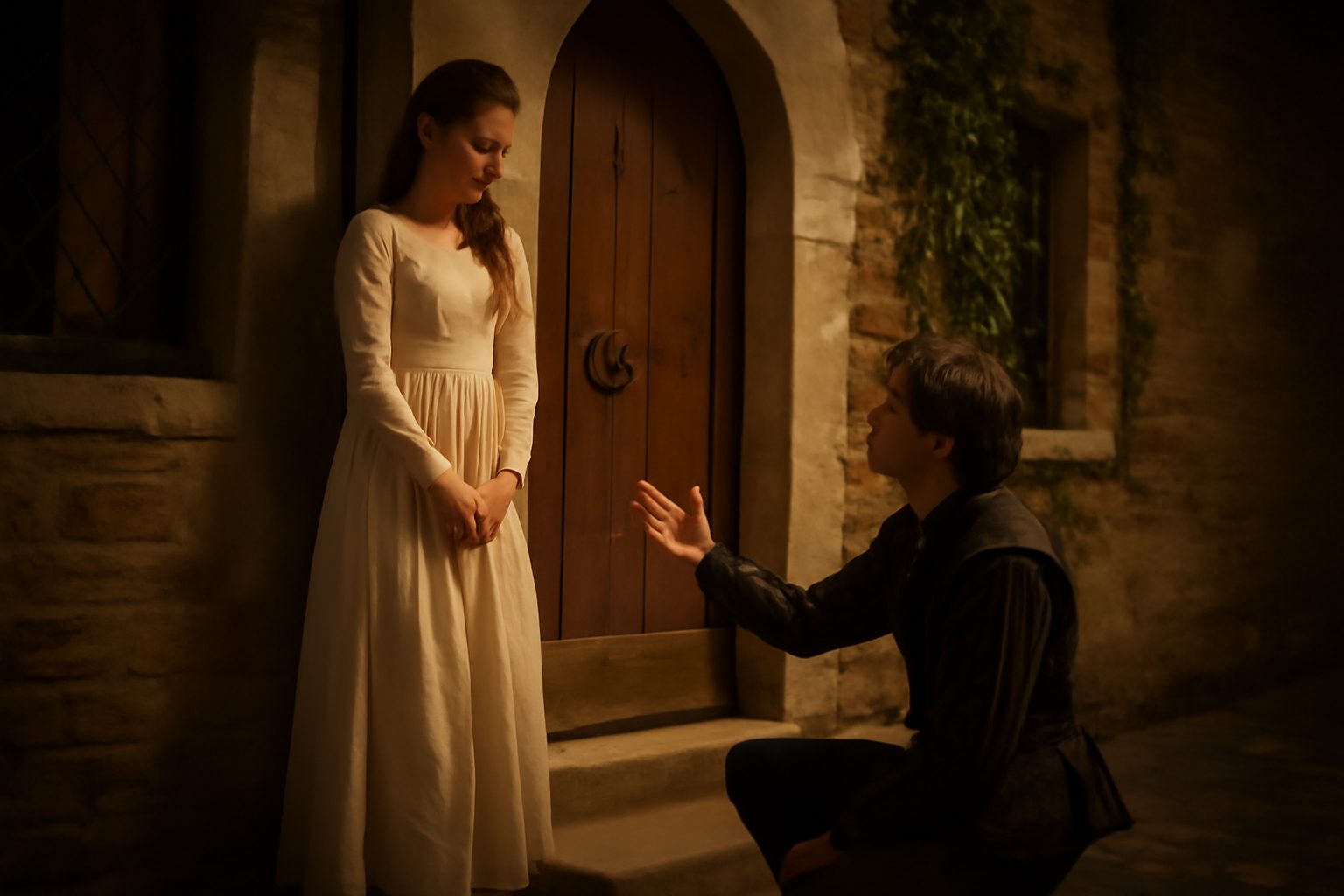
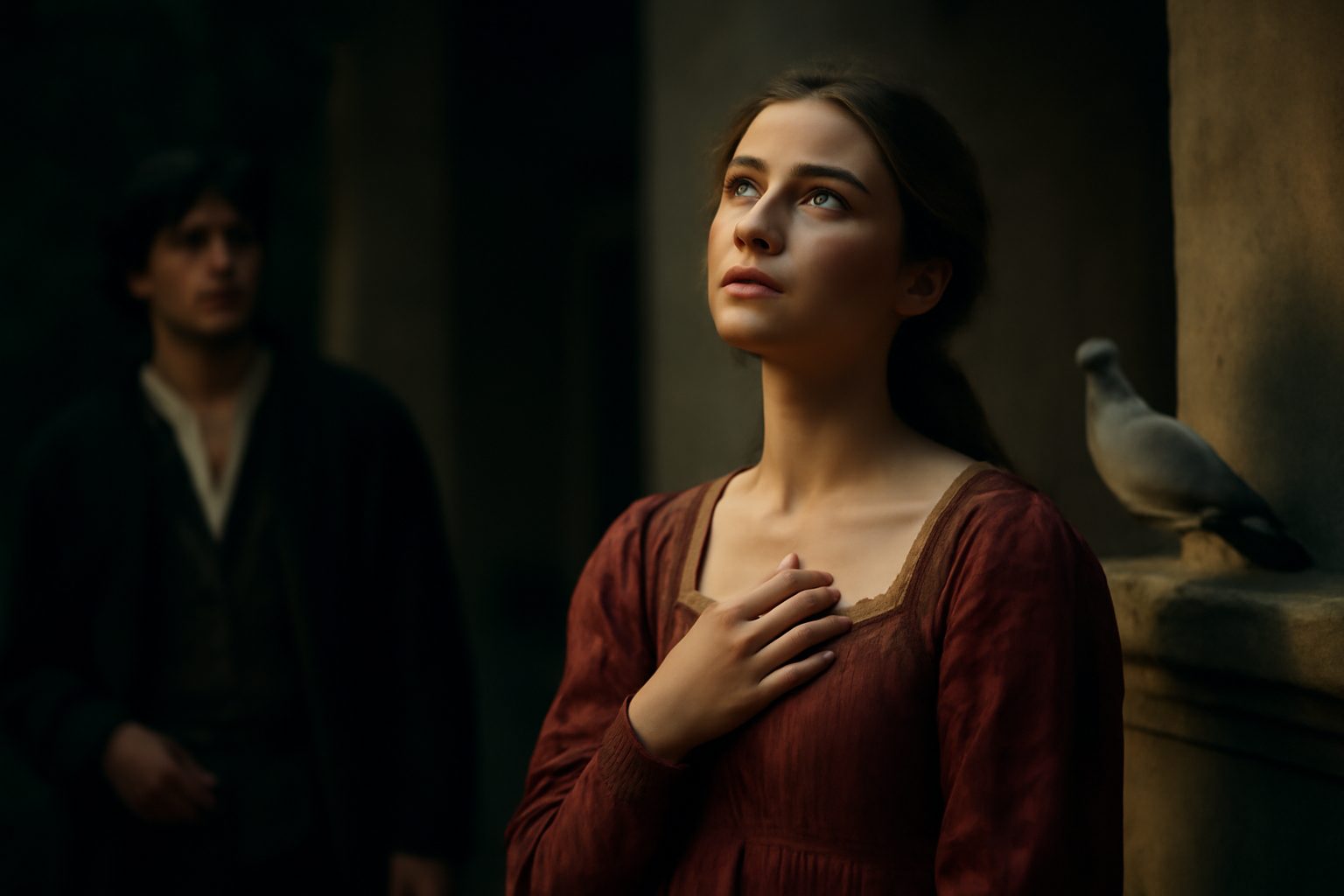
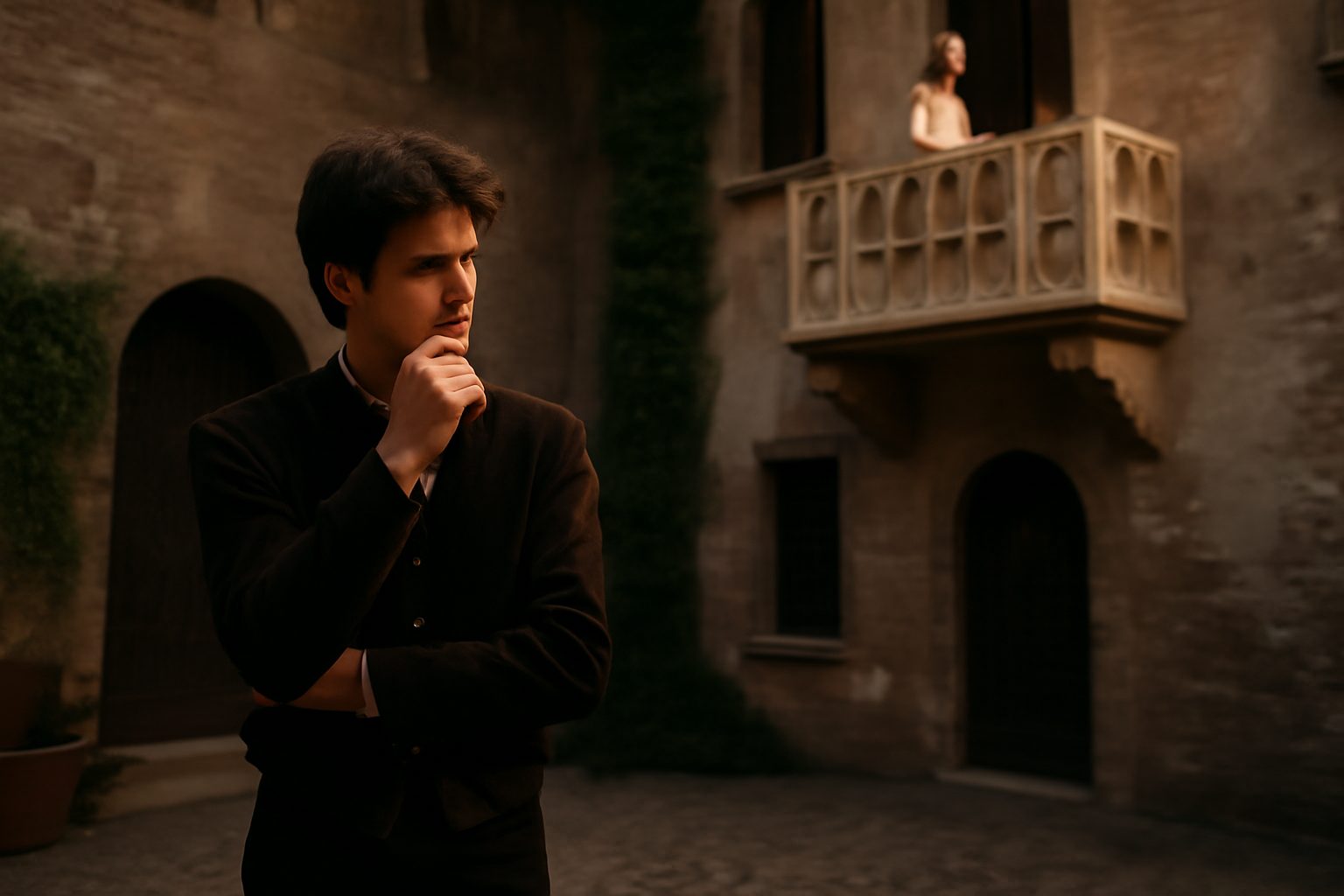
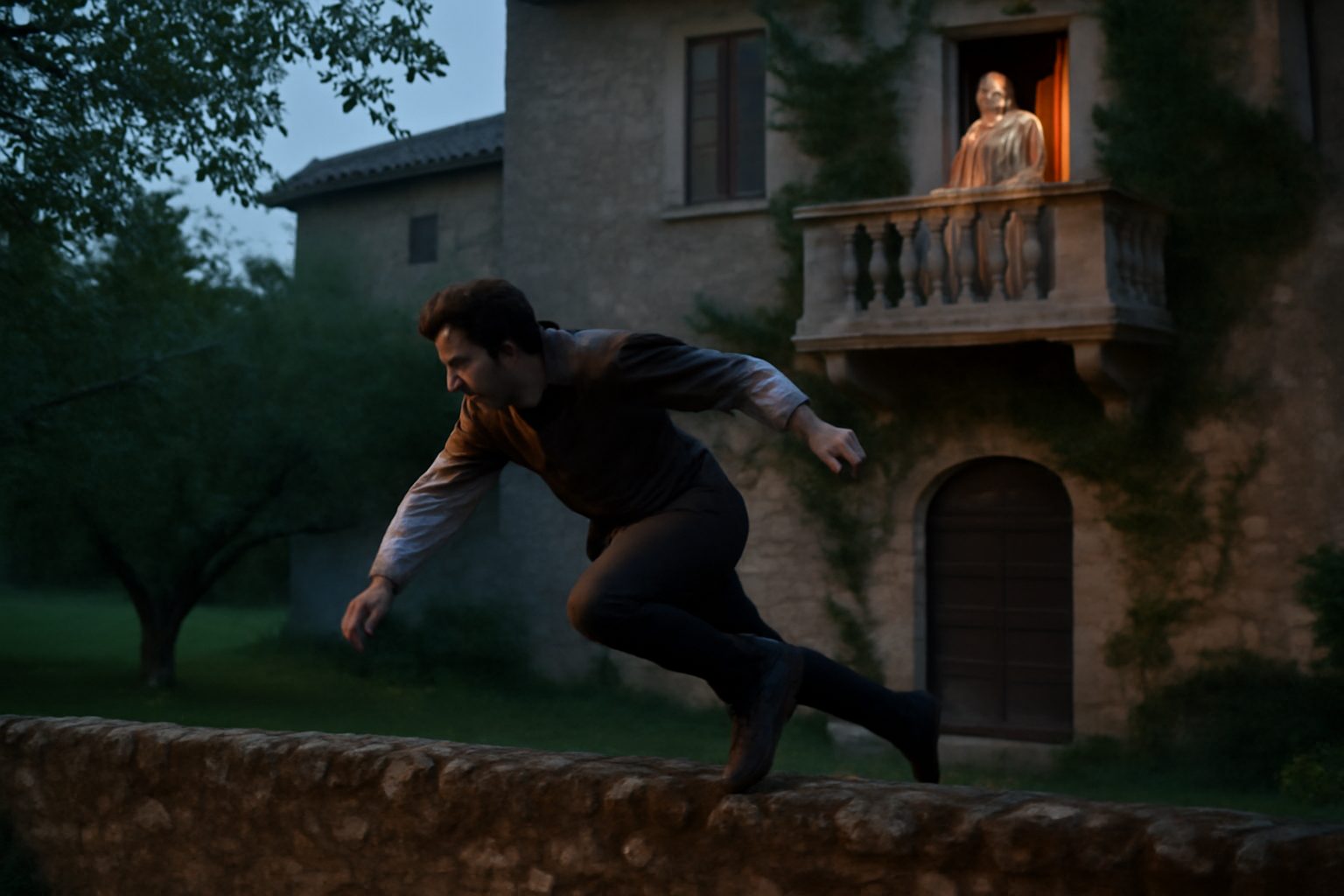
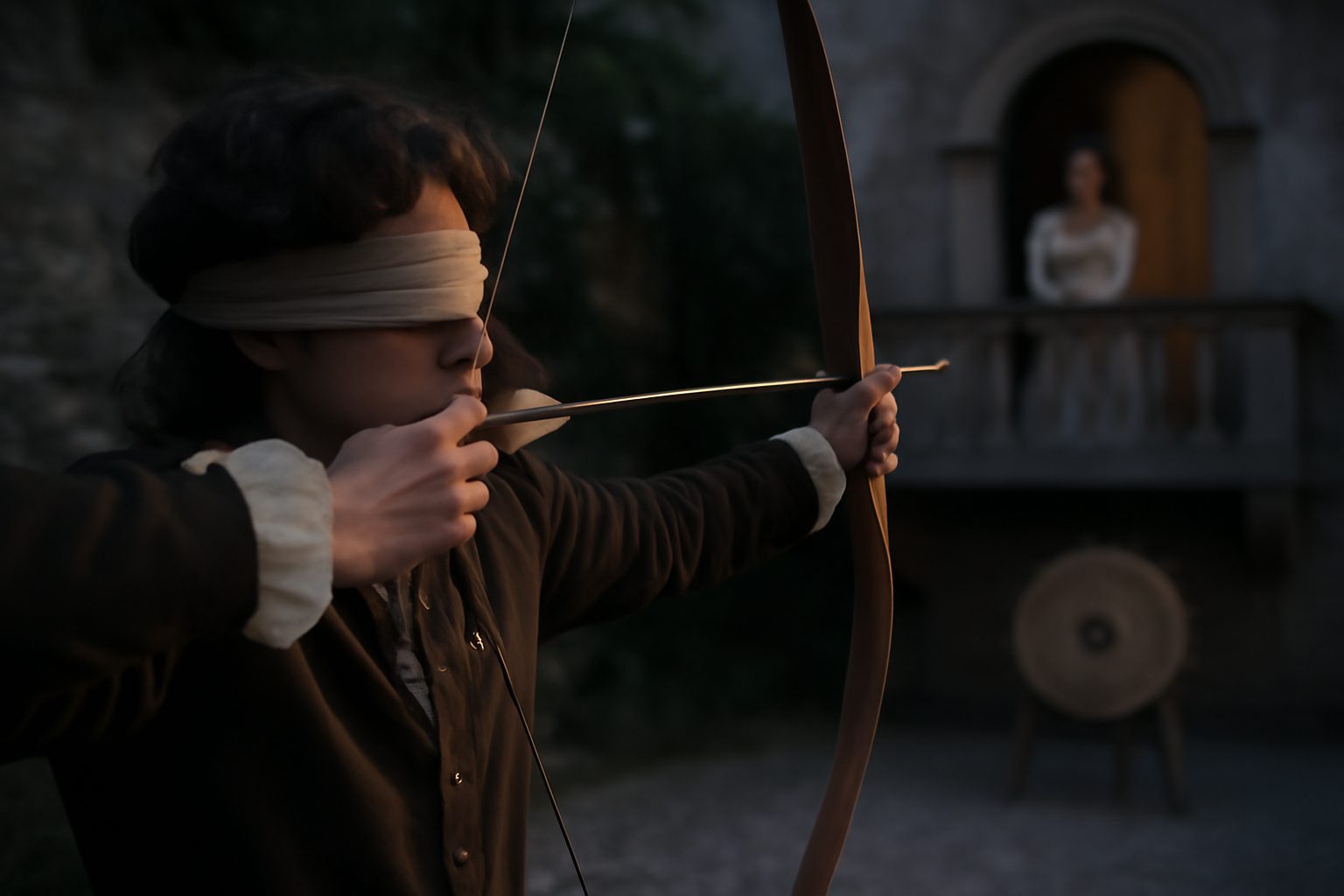
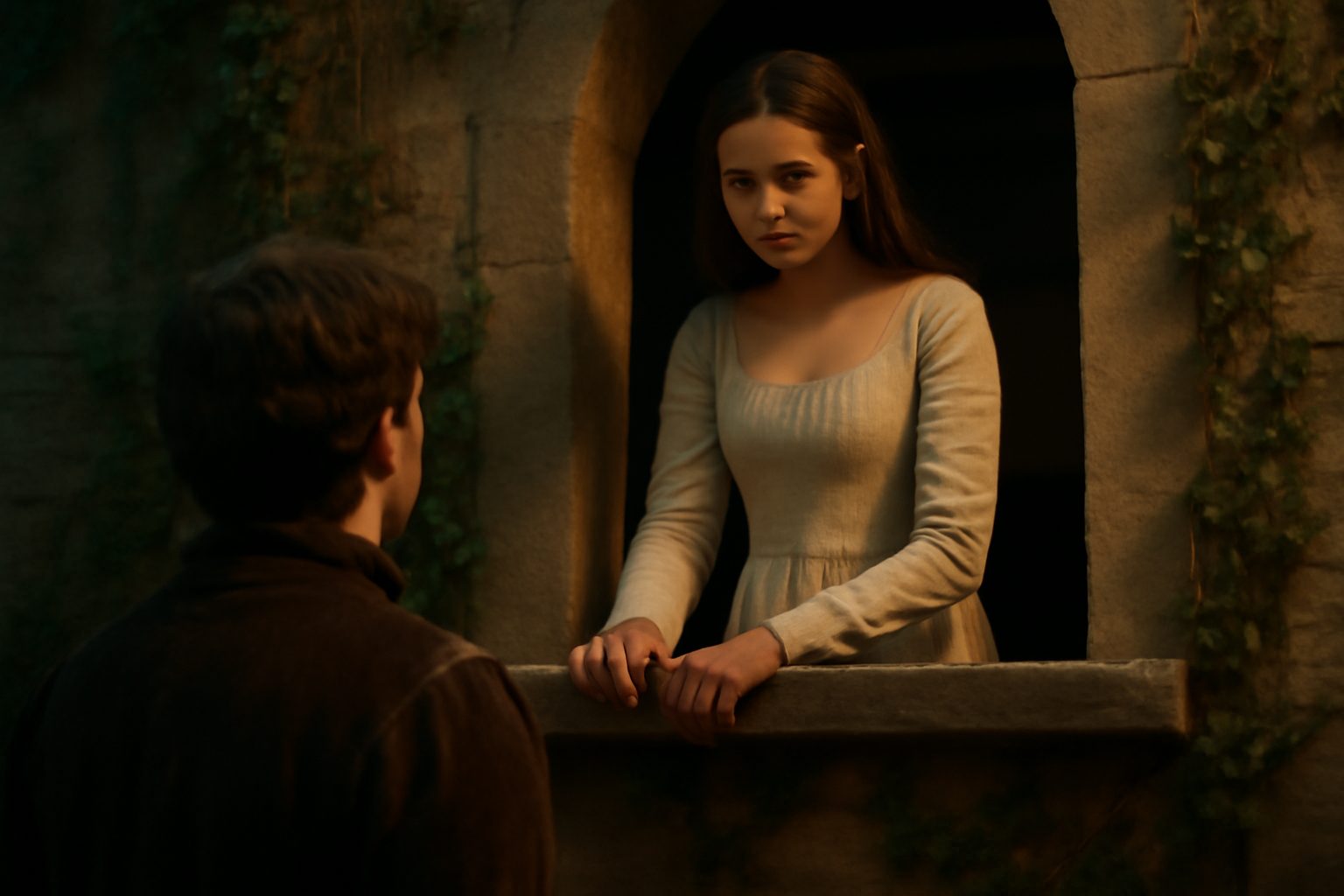
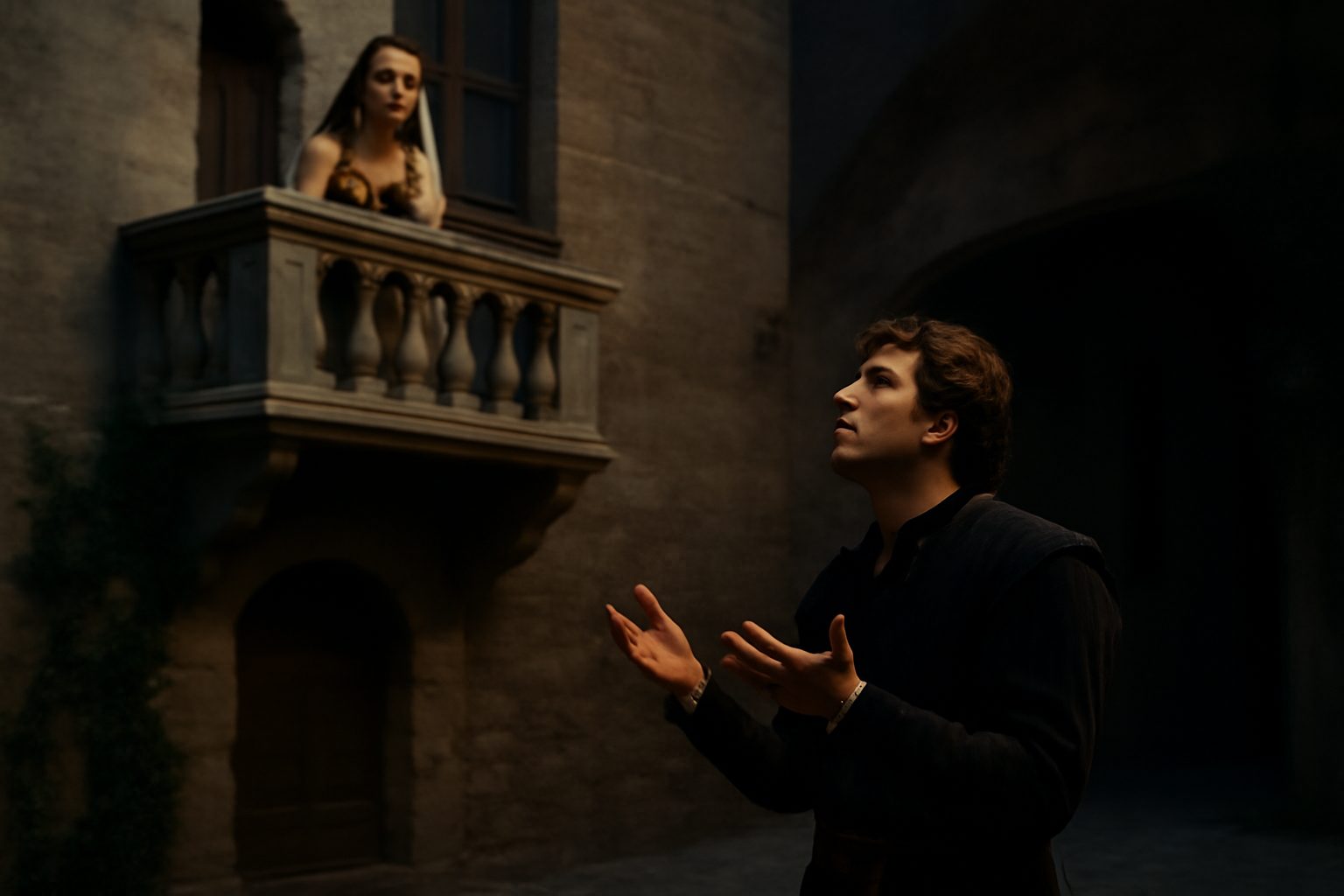
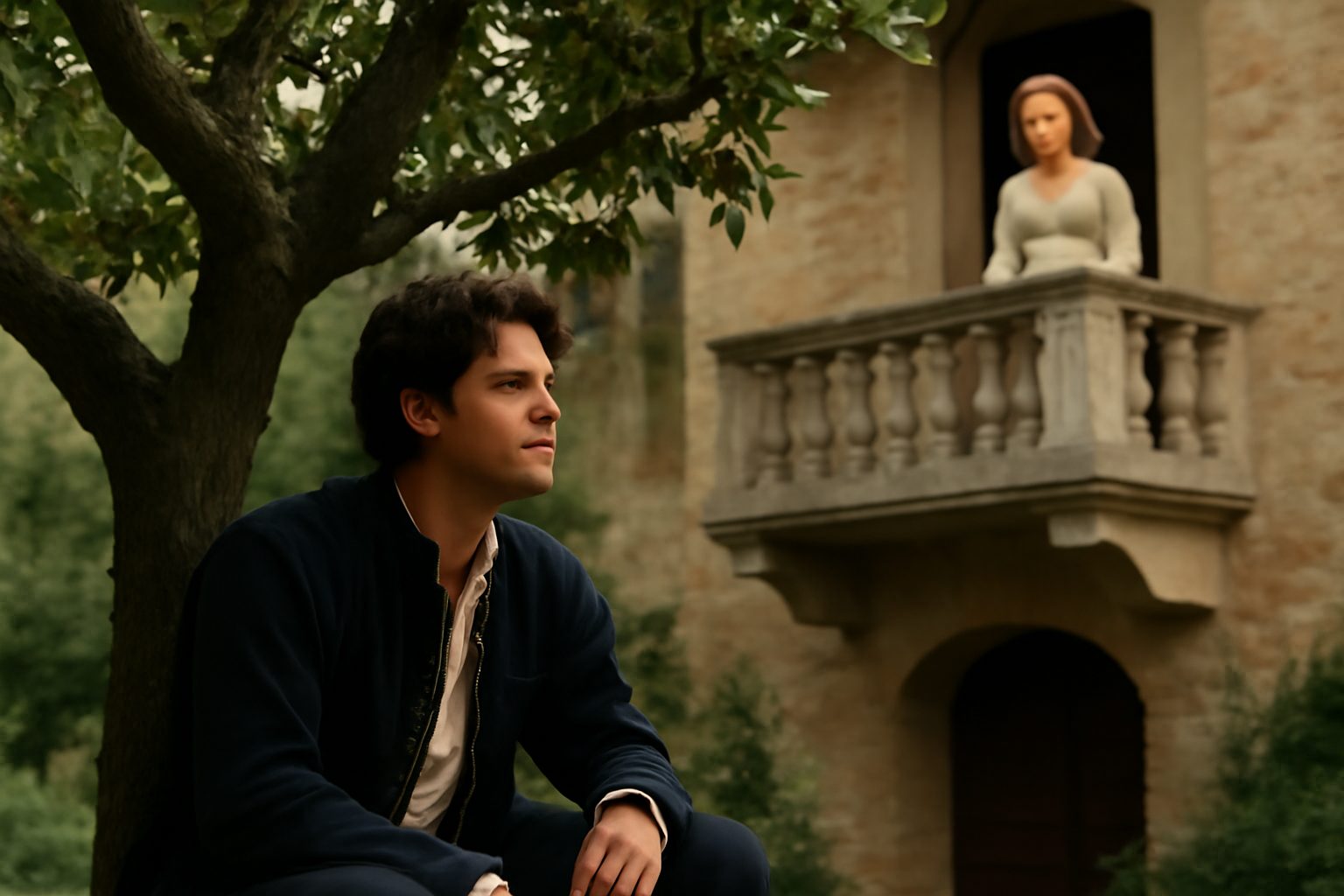
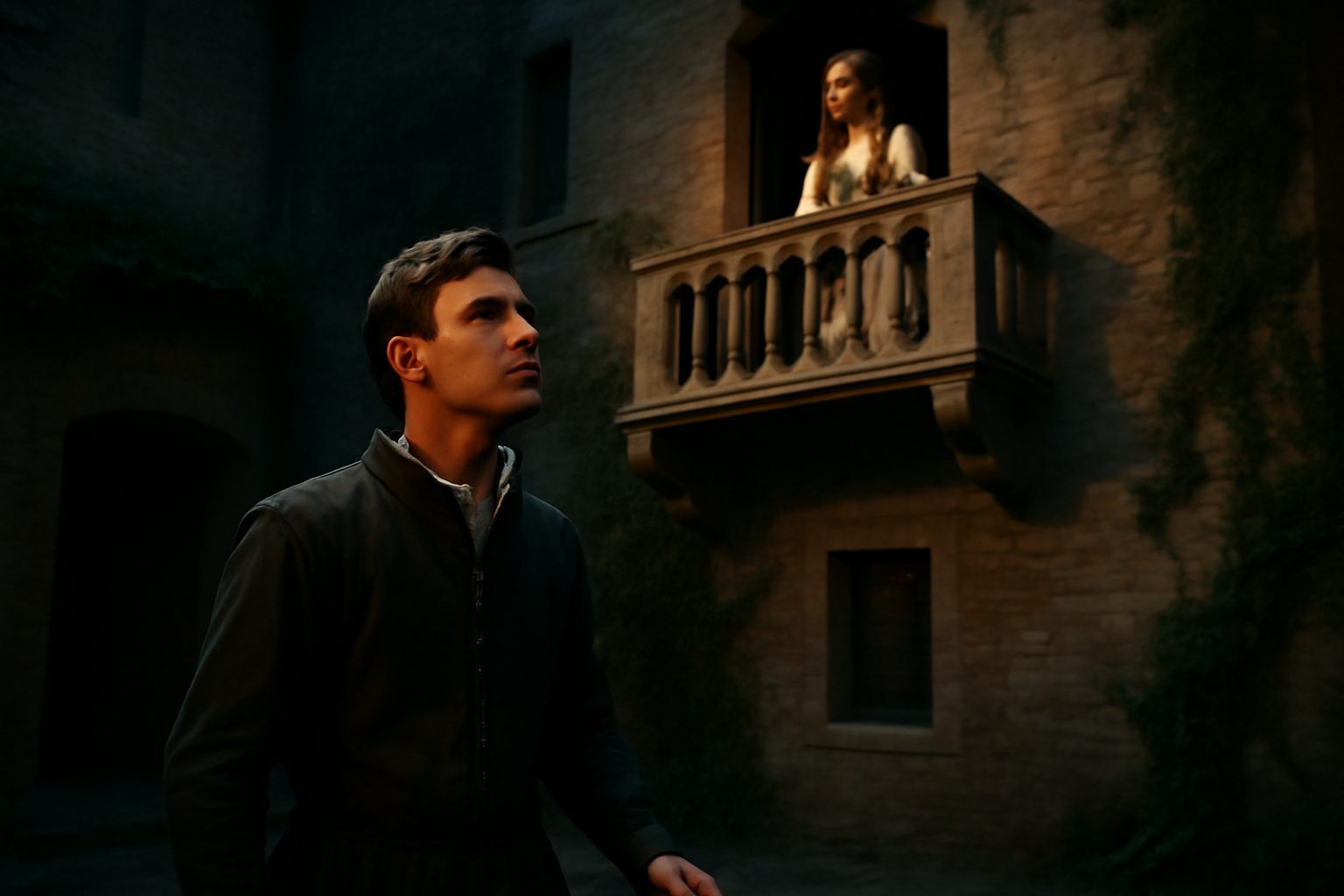
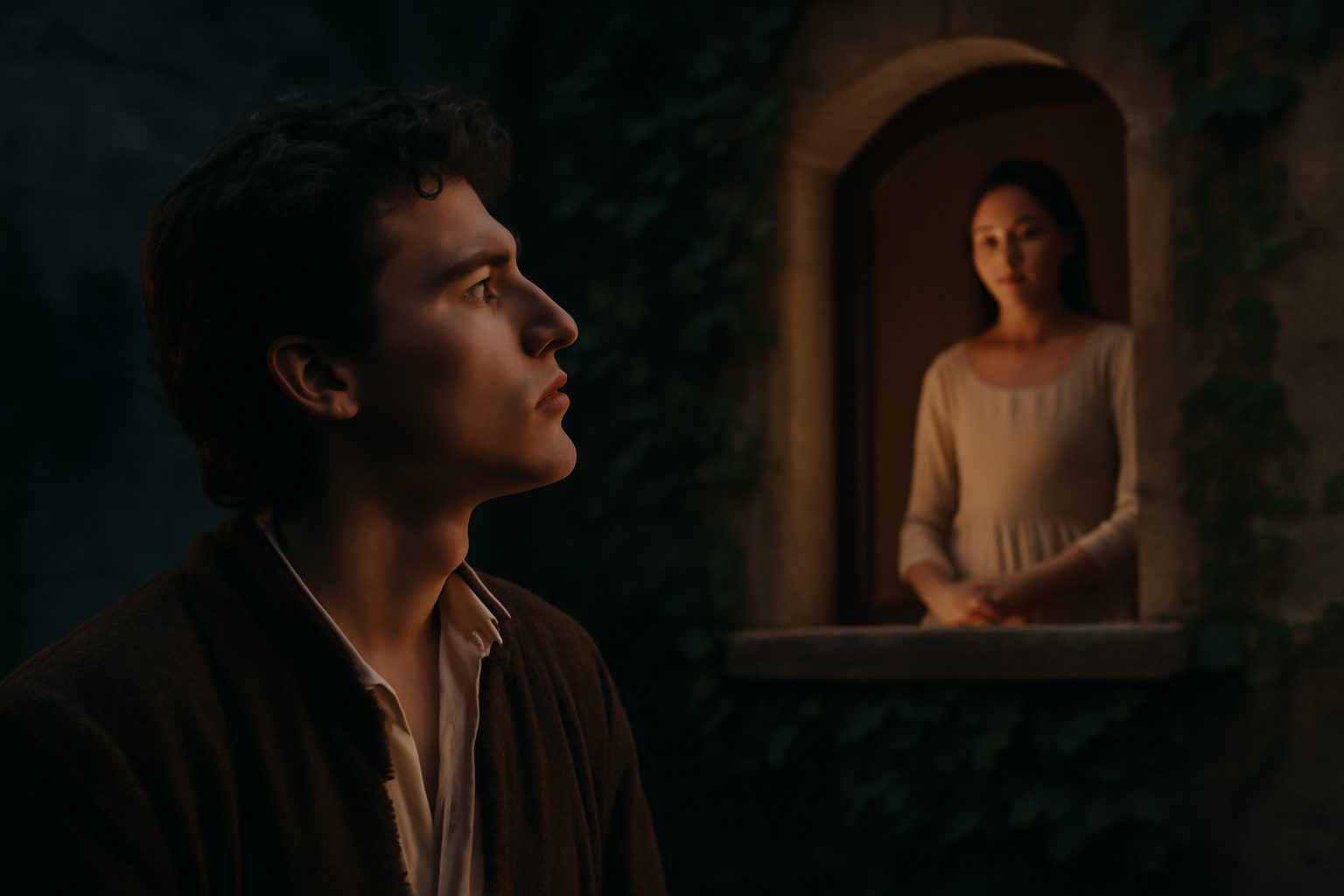
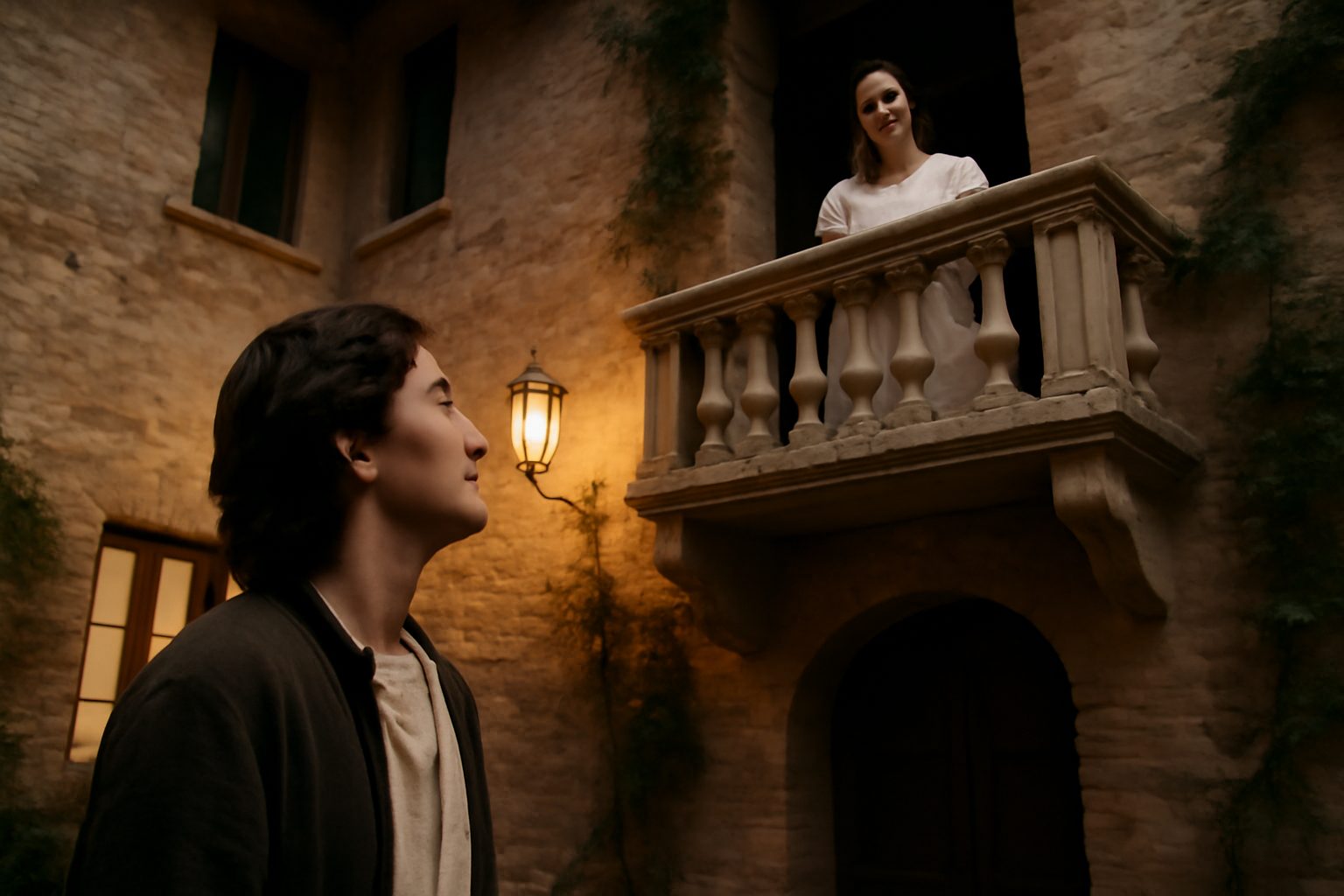
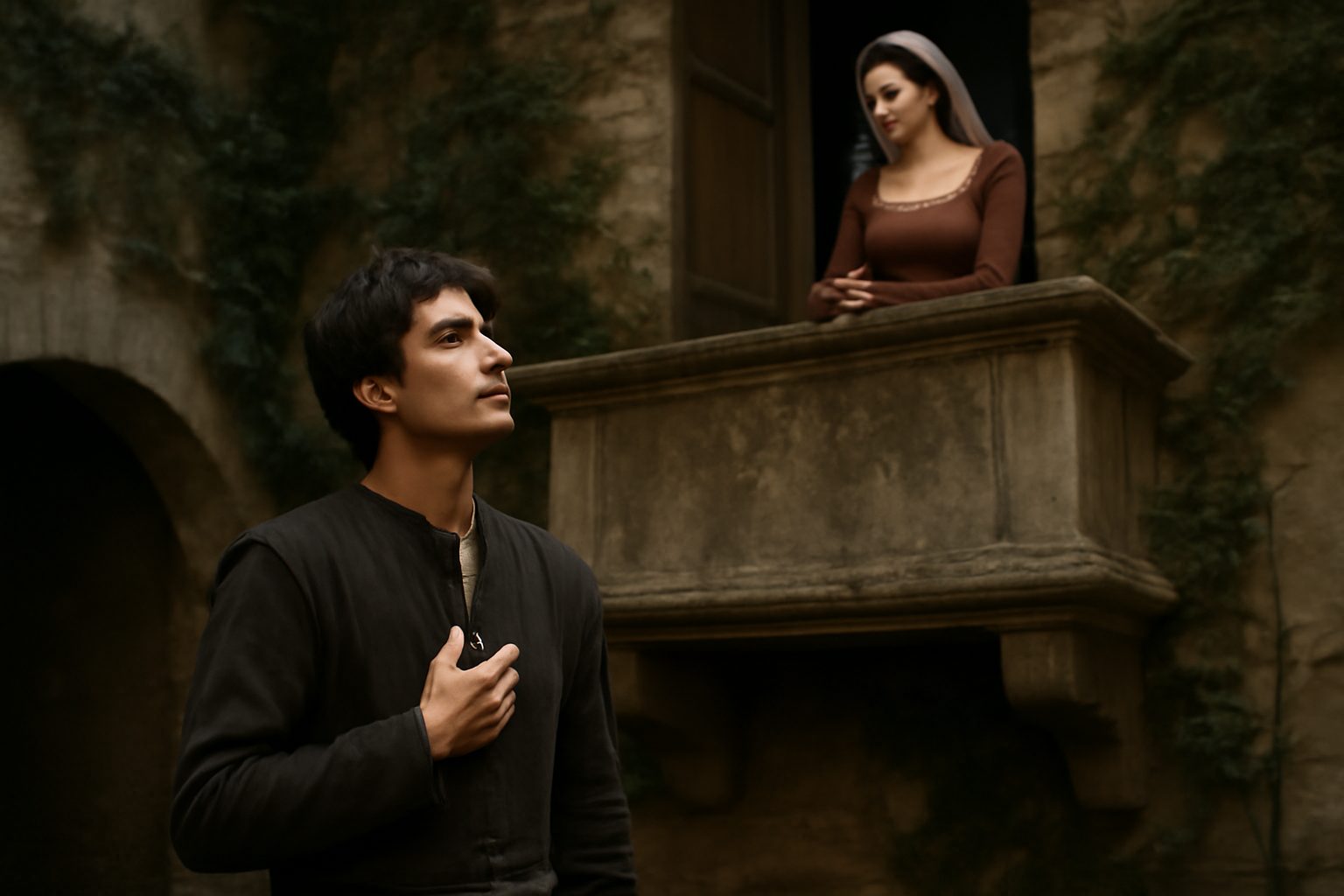
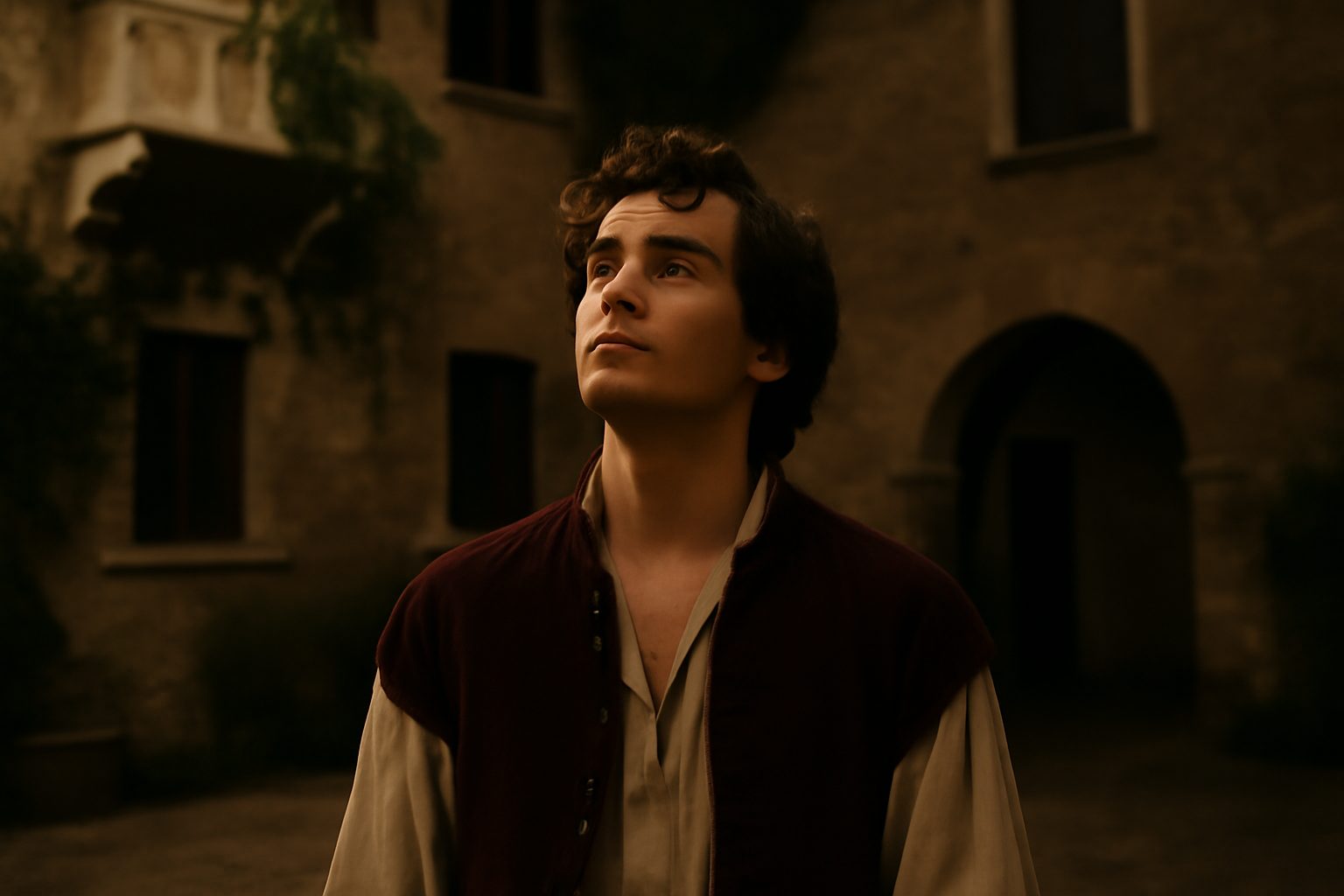
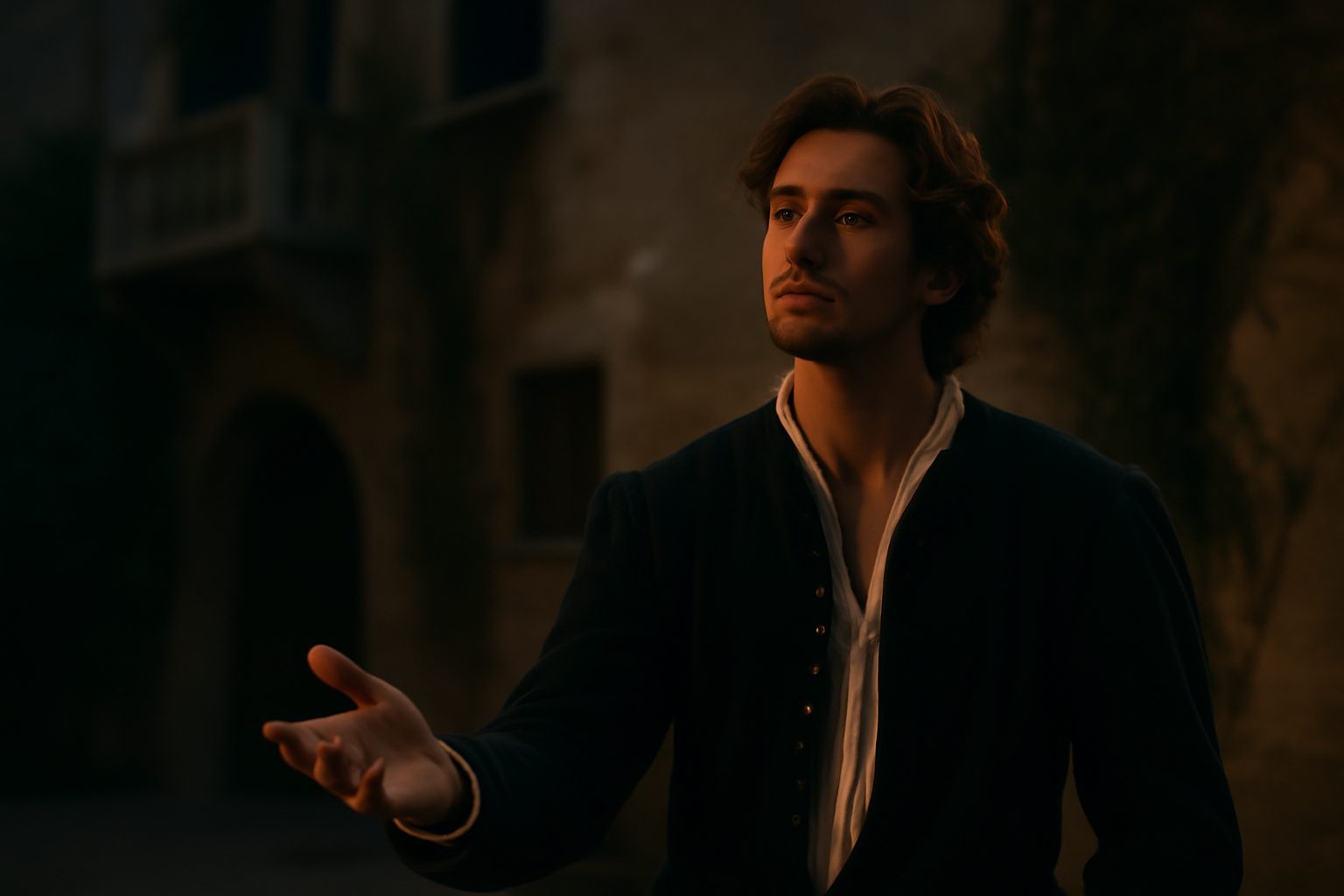
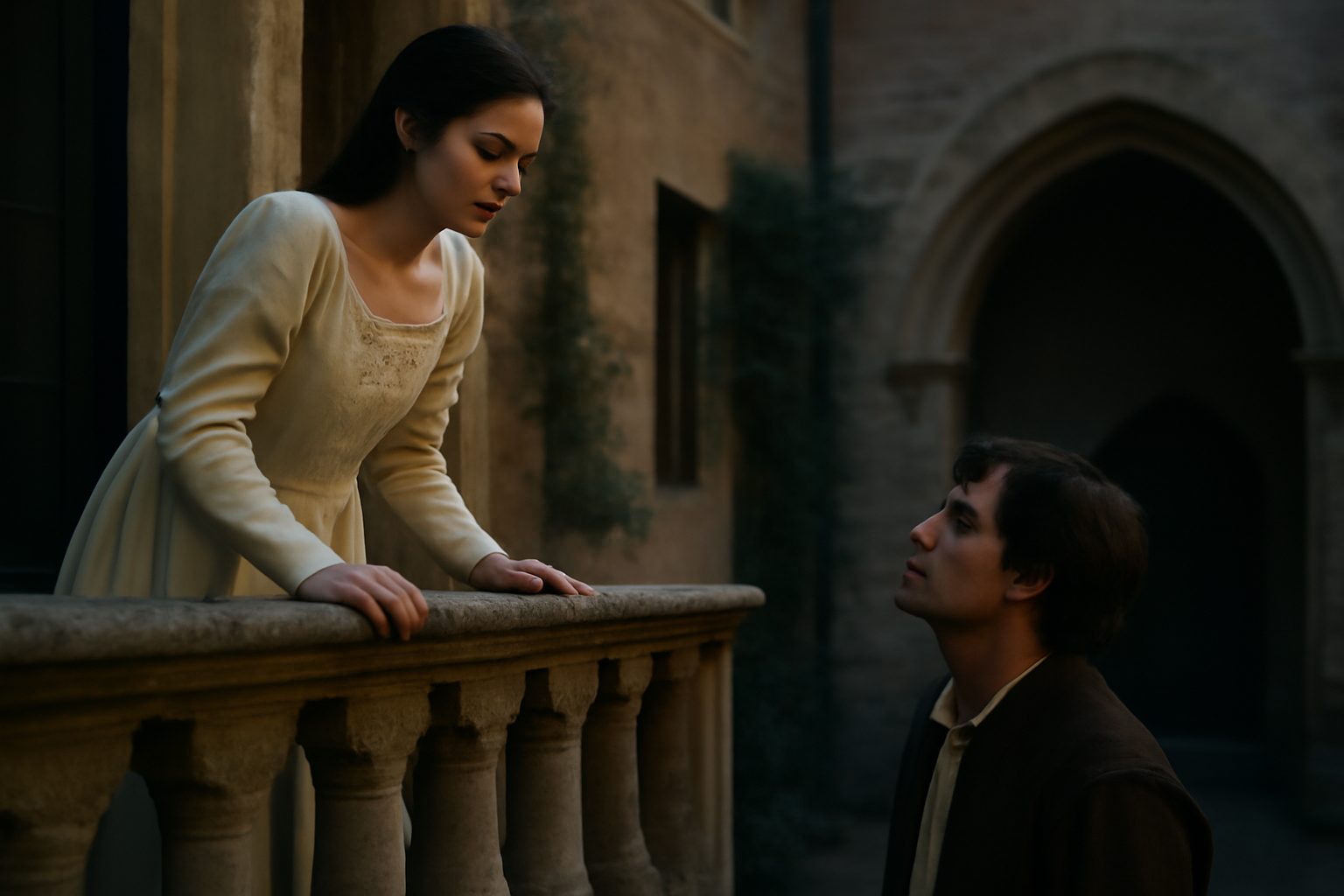
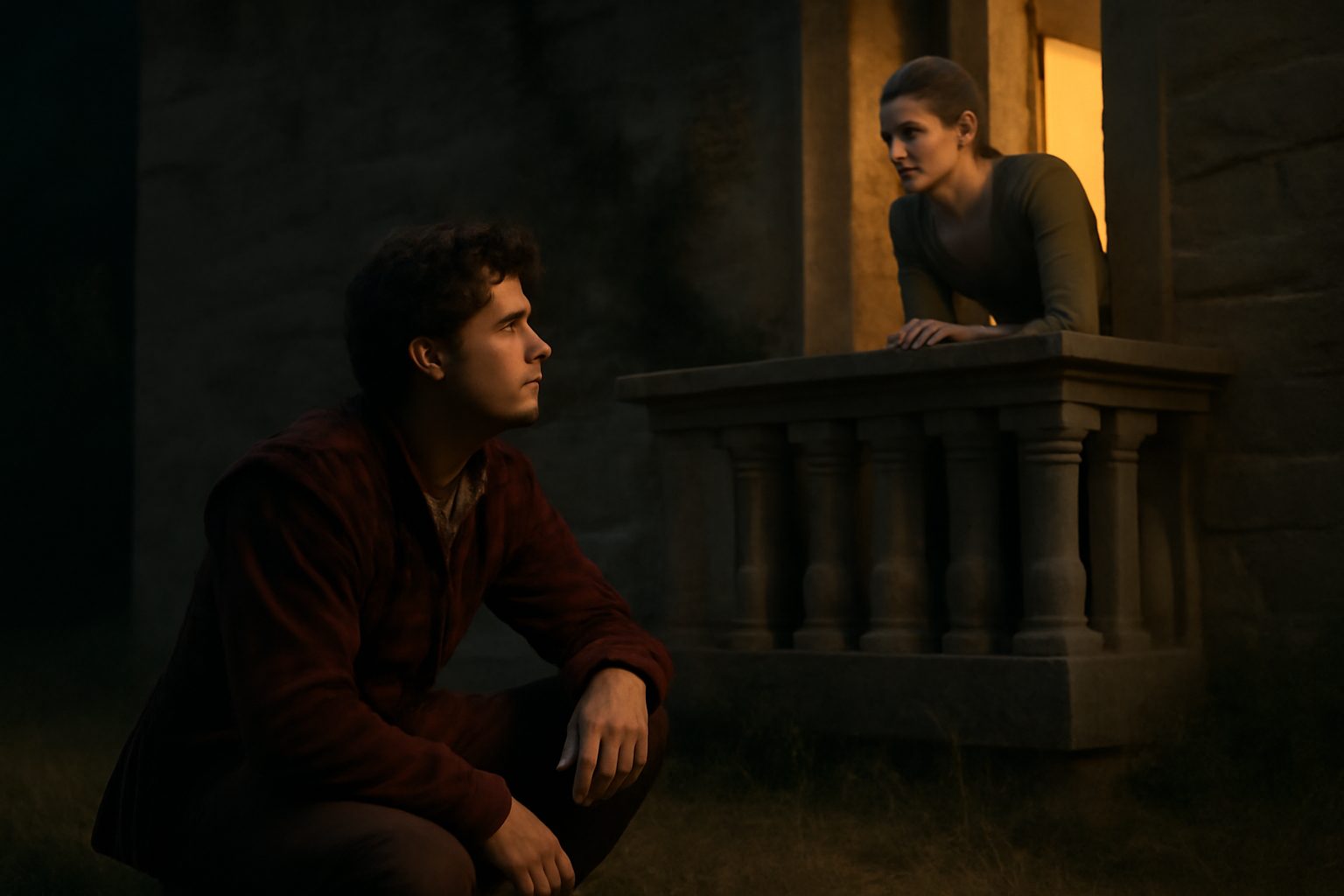
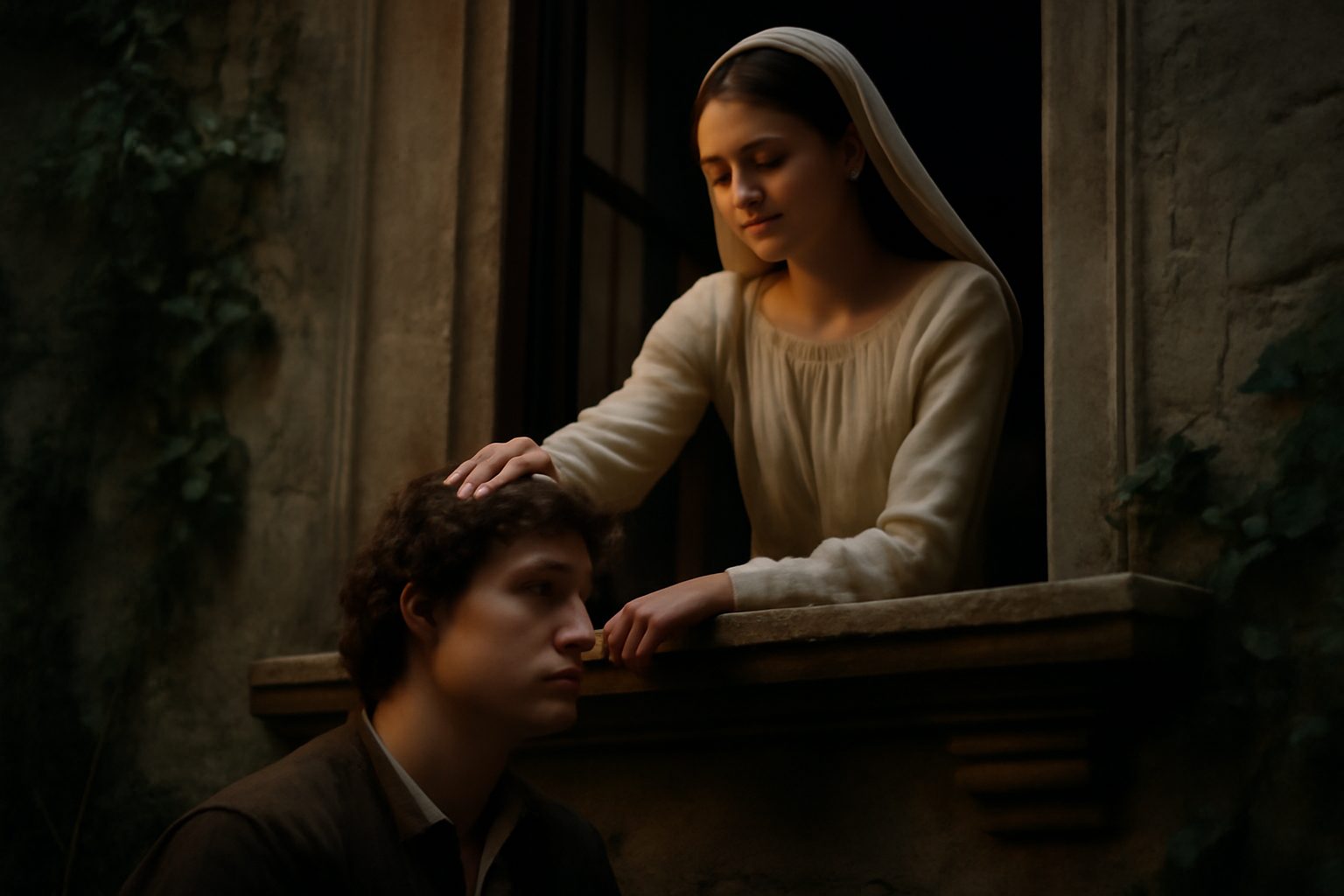
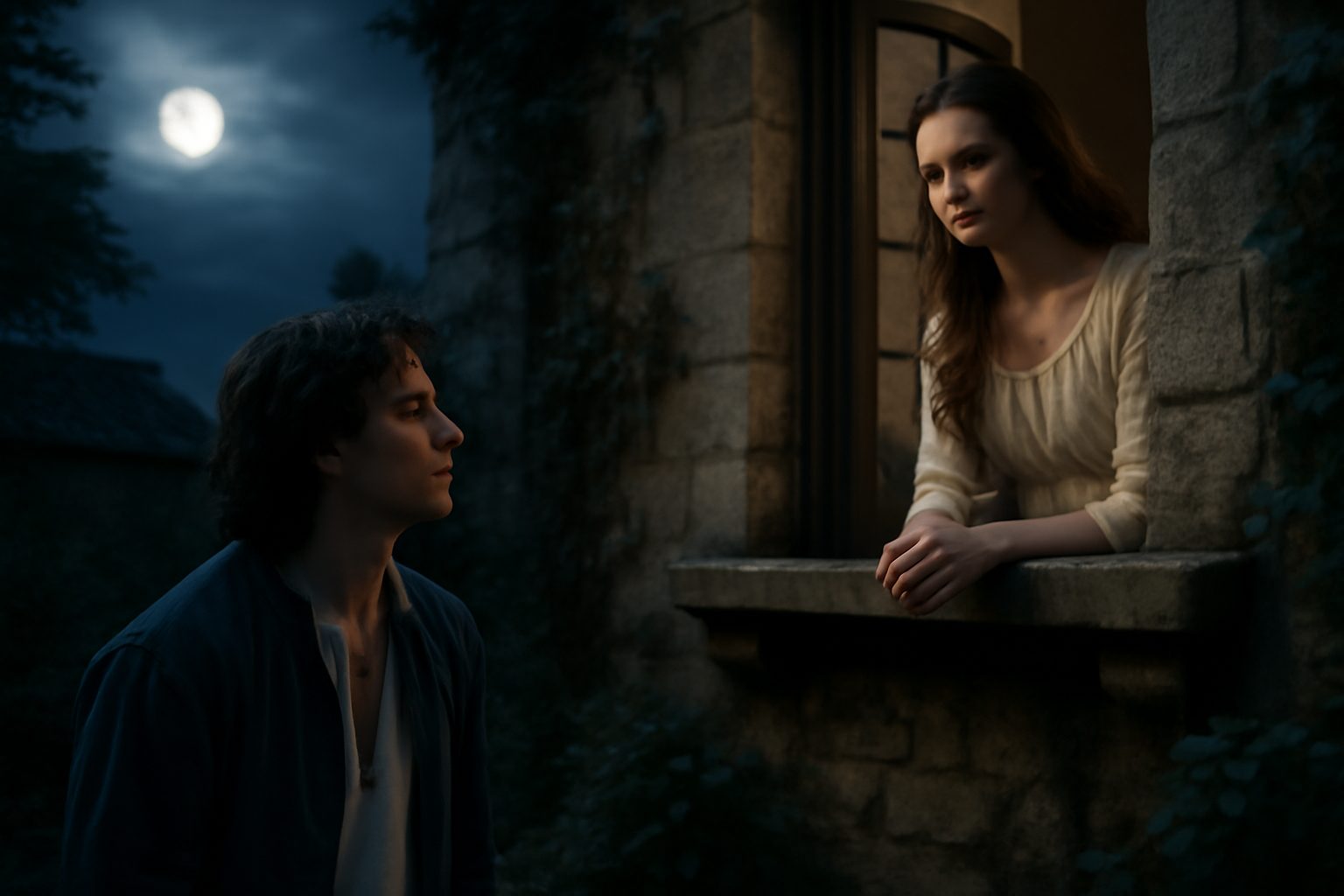
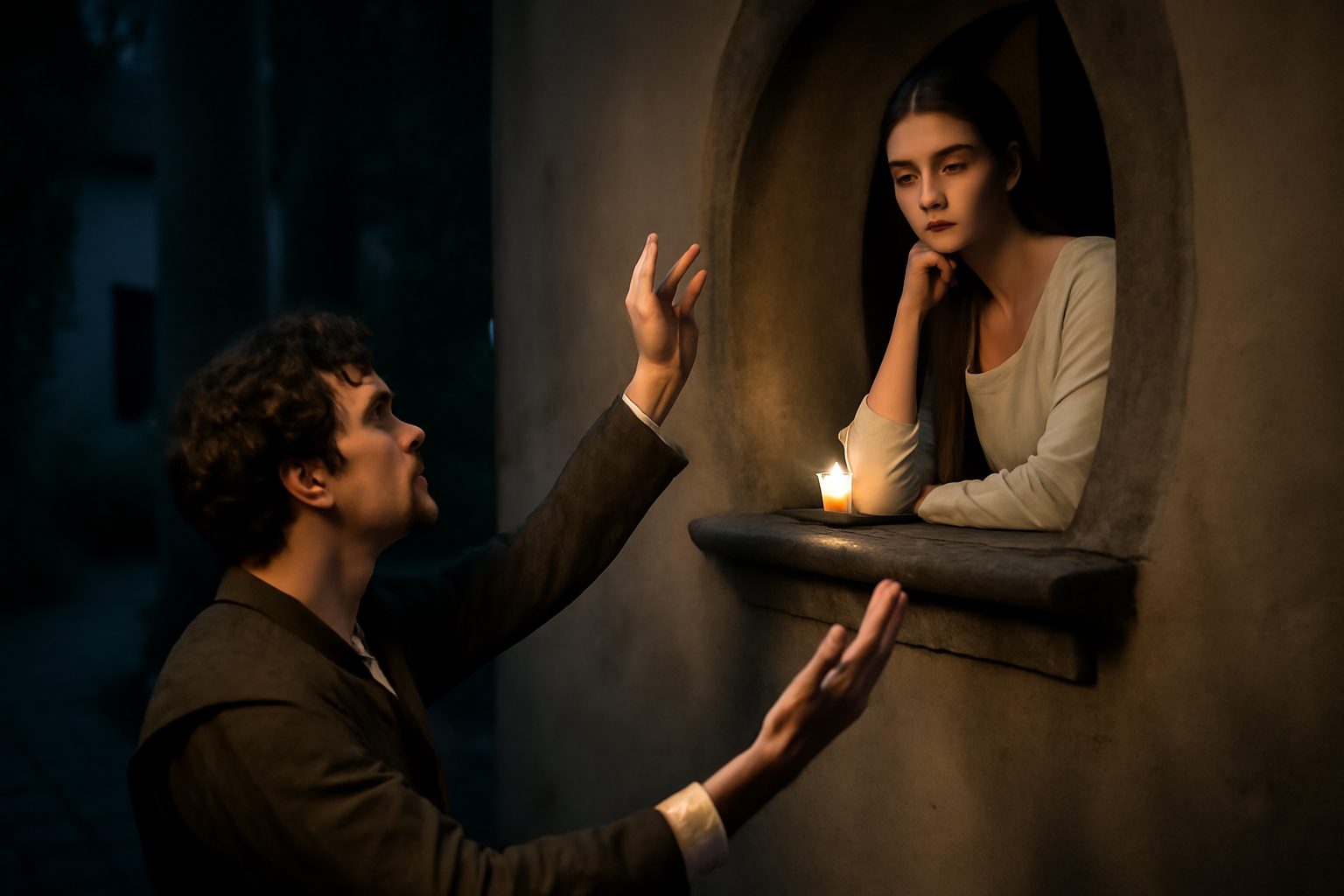
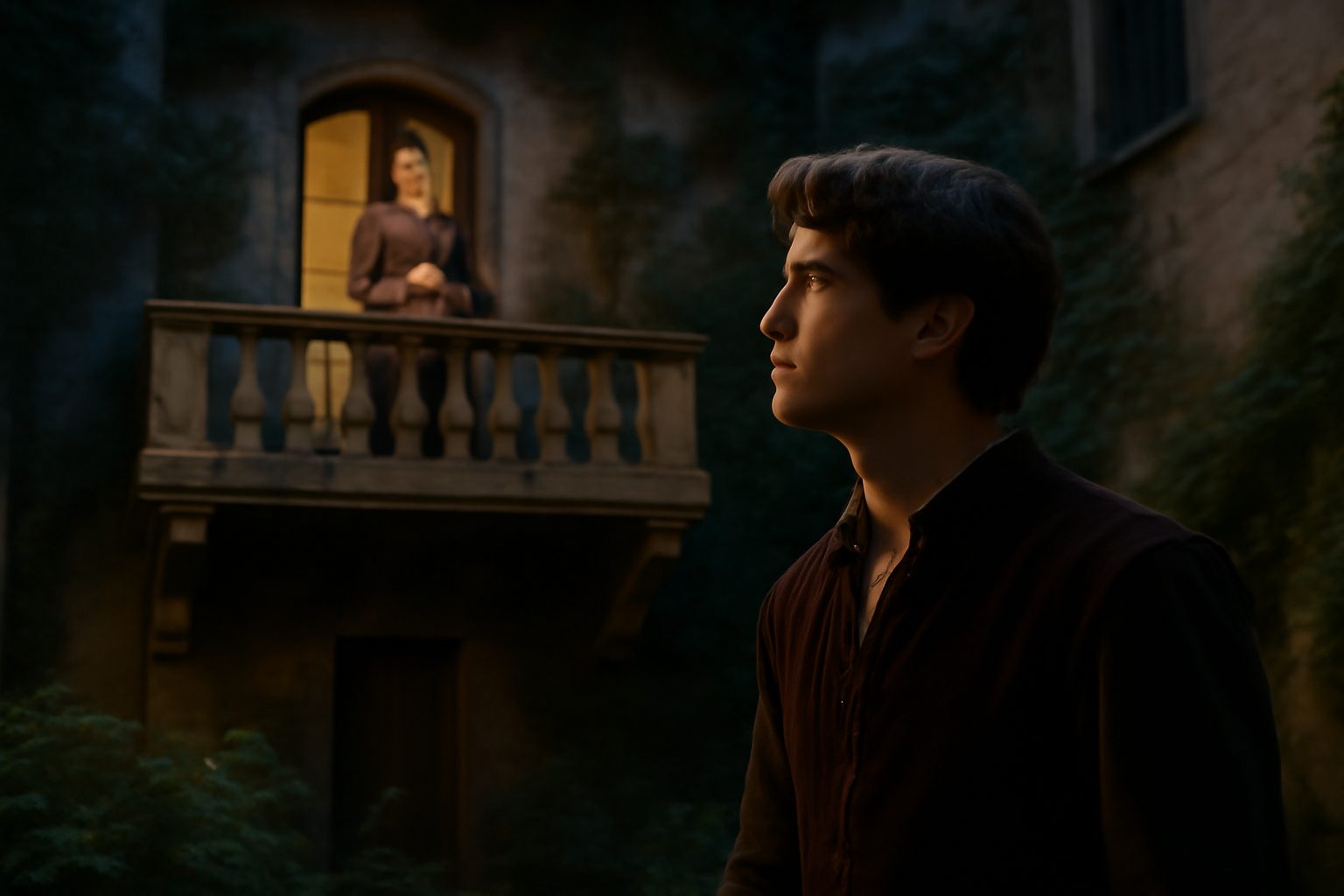
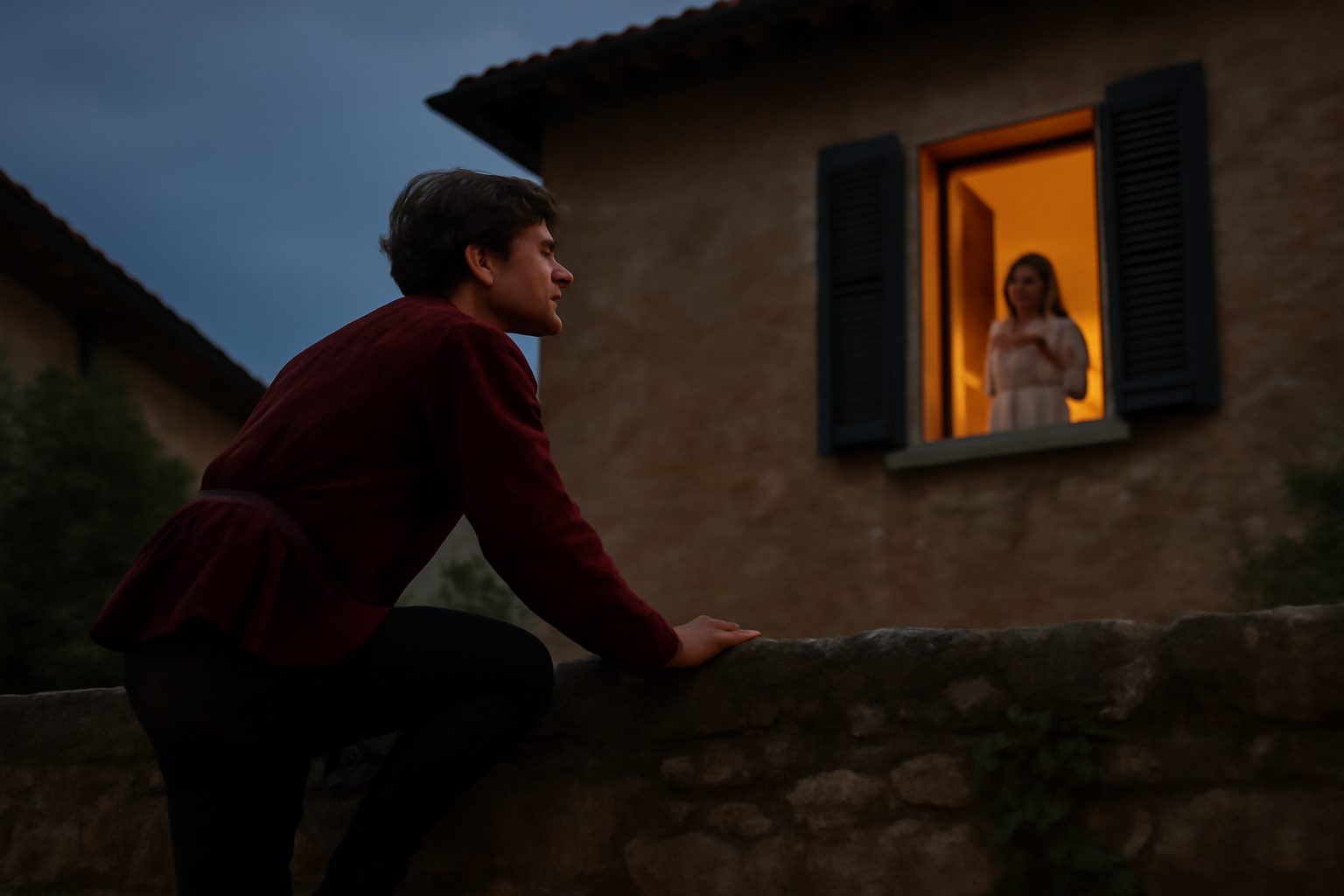
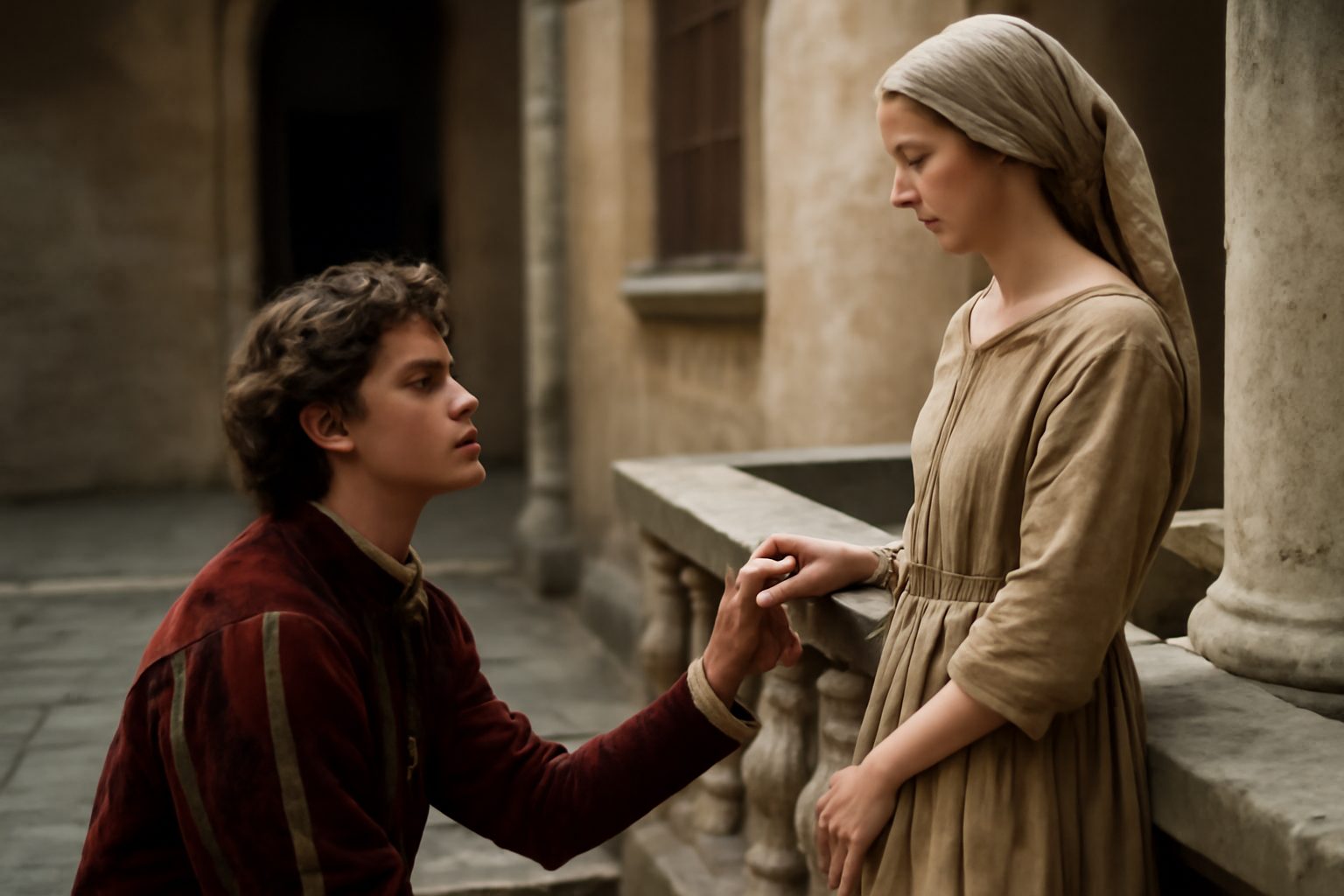
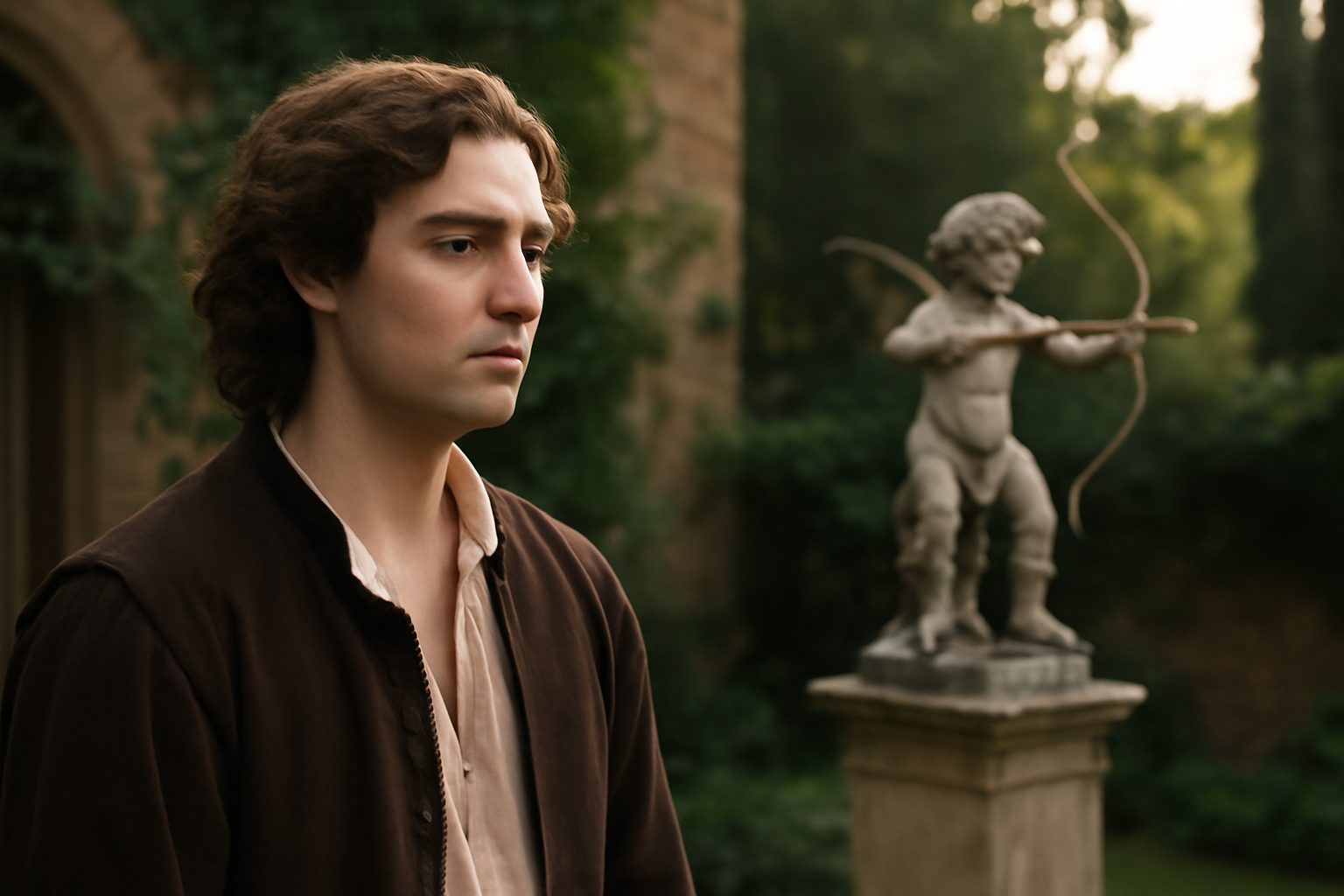
In Act 2, Scene 1 of Romeo and Juliet, Mercutio jests about Romeo's lovesick state, mocking his infatuation with Rosaline. As Romeo lingers near Juliet's window, unseen by his friends, Mercutio playfully calls out, teasing him to appear in the form of his beloved. This line reflects Mercutio's wit and the lighthearted banter among Romeo's companions, unaware of his newfound love for Juliet.
Mercutio: "That in thy likeness thou appear to us!"
In modern day english, we would say:
Show yourself to us looking just like you really are.
Frequently Asked Questions
Who is Mercutio talking to when he says this line?
Mercutio is talking to Romeo, trying to get him to come out of hiding.
What is Mercutio trying to do with these words?
Mercutio is trying to make Romeo reveal himself by appearing in his true form.
Connections to other verses:
Connections to "That in thy likeness thou appear to us!"
The verse "That in thy likeness thou appear to us!" is part of Mercutio's playful conjuration, calling for Romeo to appear. It connects thematically and structurally to several other lines in the scene.
Conjuration and Invocation
This line is part of a series of conjurations where Mercutio attempts to summon Romeo. It directly follows "I conjure thee by Rosaline's bright eyes" and precedes "To raise a spirit in his mistress' circle", emphasizing the mock-magical tone. Mercutio's declaration "The ape is dead, and I must conjure him" sets up this entire sequence, framing Romeo's absence as a state requiring supernatural intervention.
Appearance and Likeness
The idea of appearing in a specific form is echoed in "Appear thou in the likeness of a sigh", where Mercutio whimsically requests Romeo to manifest as an embodiment of lovesick melancholy. Both lines use the concept of "likeness" to humorously demand Romeo's presence in an imagined form.
Responses and Reactions
Benvolio's warning "And if he hear thee, thou wilt anger him" contrasts with Mercutio's bold conjurations, including this line, highlighting the difference in their attitudes toward Romeo's romantic plight. Additionally, Mercutio's follow-up assertion "This cannot anger him" defends his provocative language, suggesting that such invocations are in jest.
Thematic Links to Love and Vision
The request for Romeo to appear "in thy likeness" ties into the scene's exploration of love's blindness, as seen in "Blind is his love and best befits the dark" and the retort "If love be blind, love cannot hit the mark". These lines collectively question the nature of perception and desire in romantic pursuit.
Structural and Tonal Connections
Mercutio's conjurations, including this line, are part of a larger pattern of ribald humor and wordplay, such as his reference to "Now will he sit under a medlar tree" and the sexual innuendo in "And wish his mistress were that kind of fruit". The tone shifts from mock-serious invocation to playful teasing, underscoring Mercutio's character as both witty and irreverent.