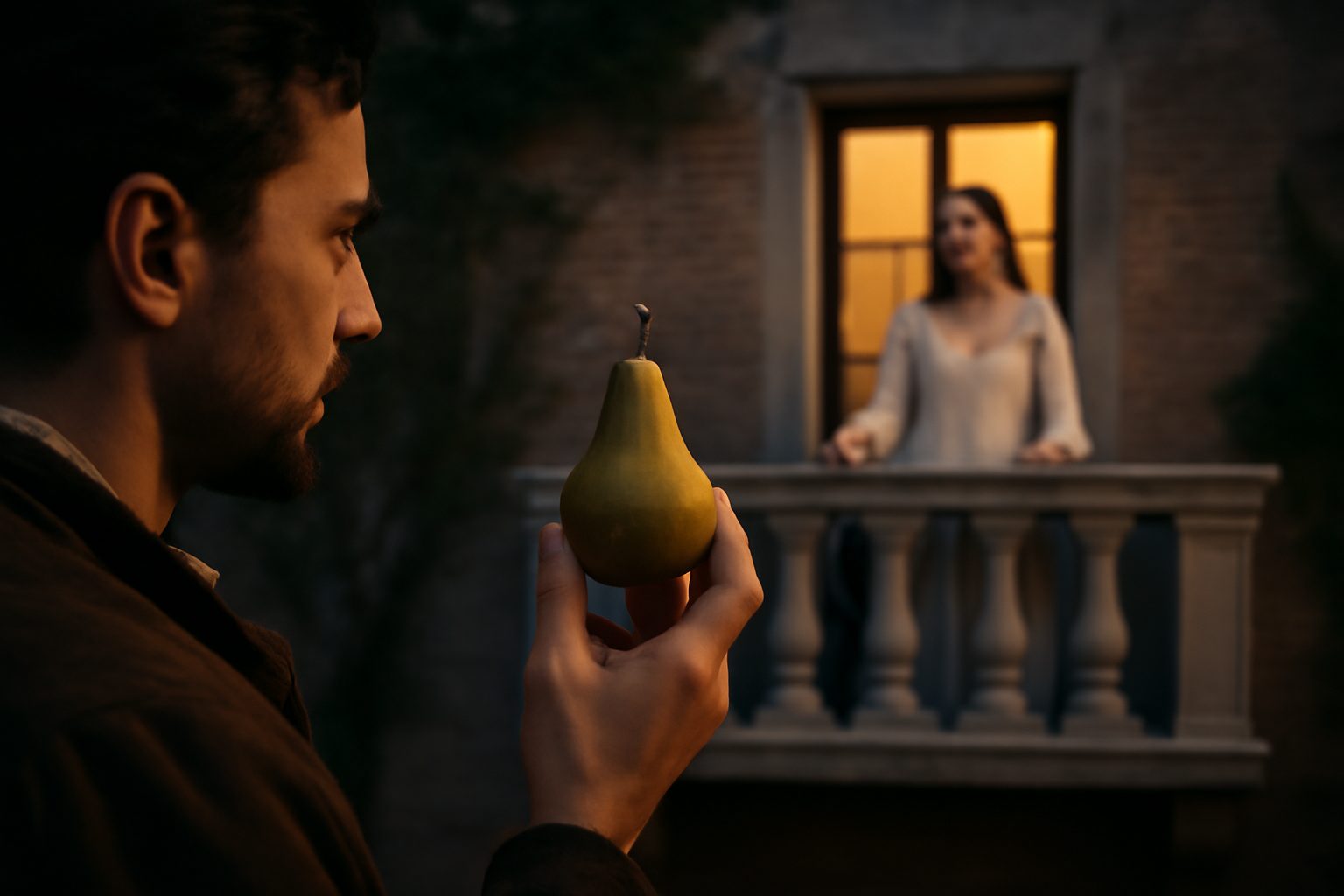
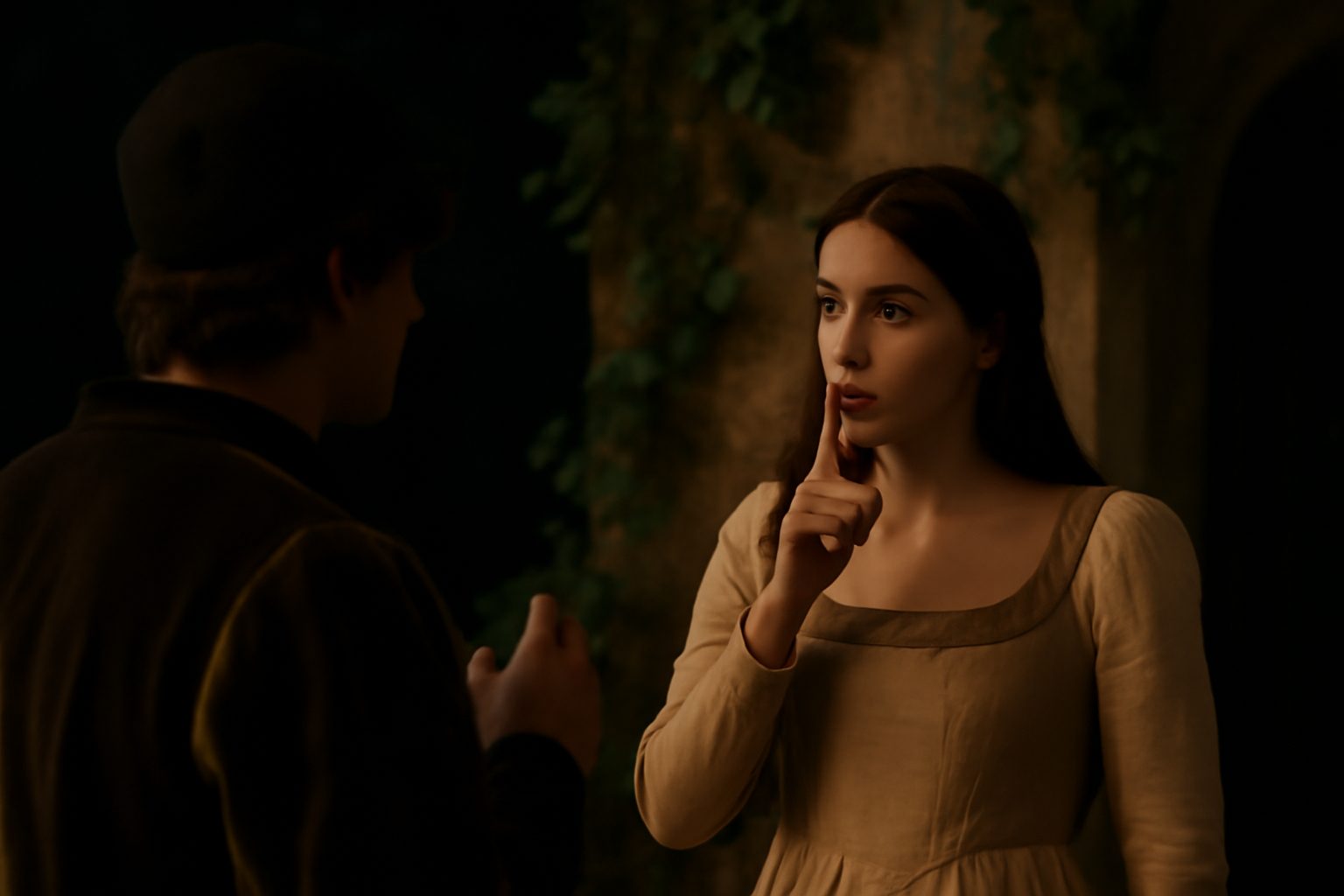
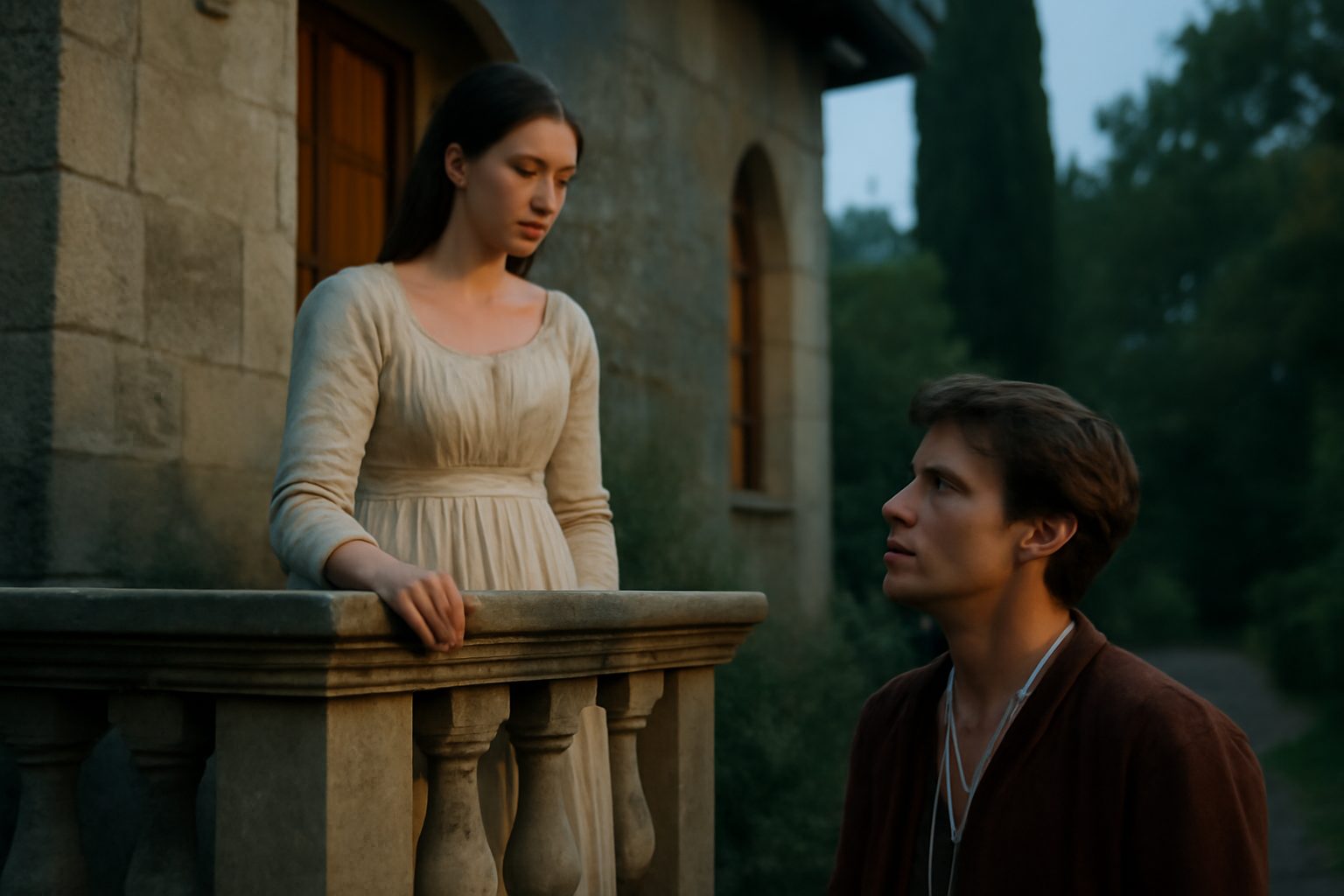
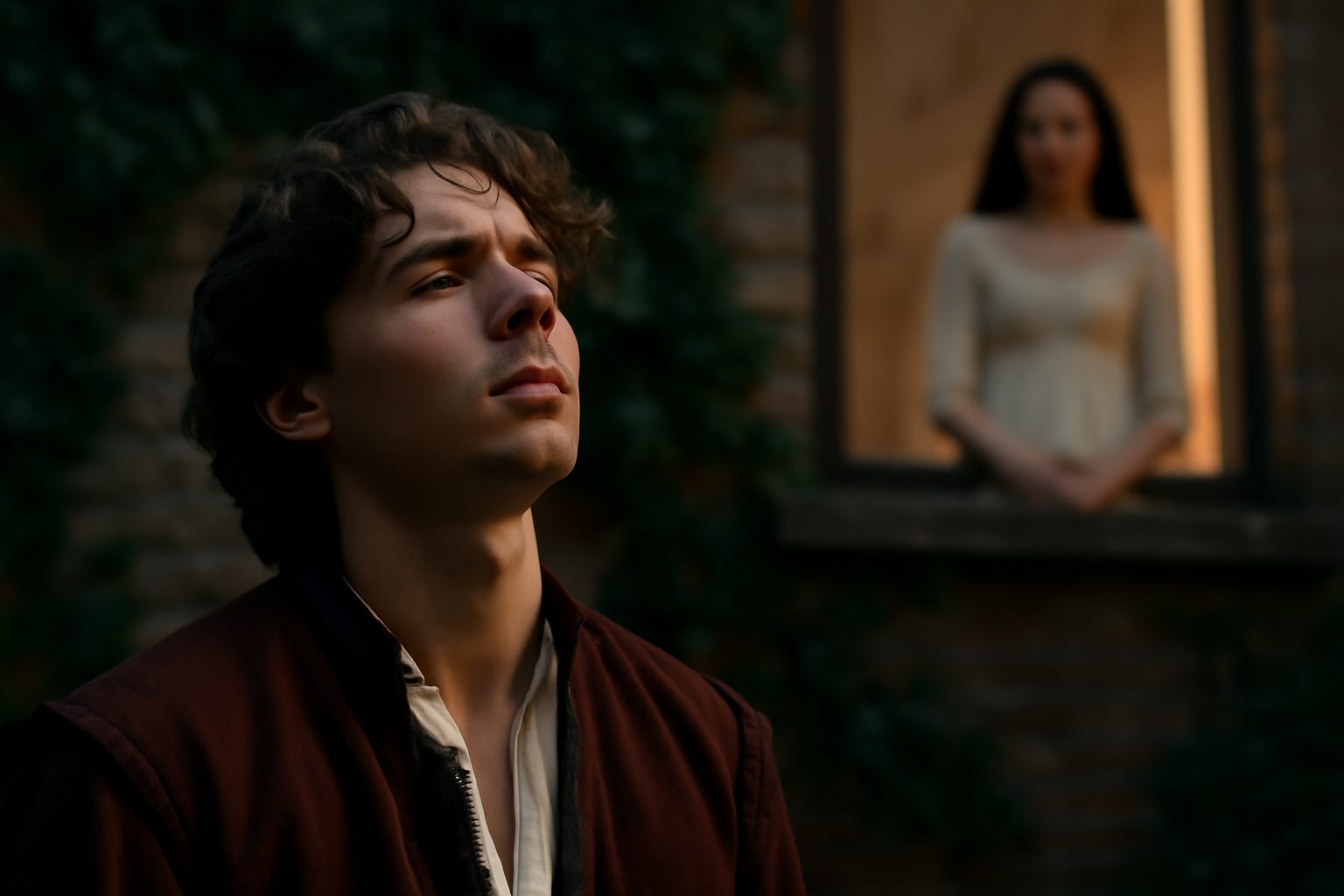
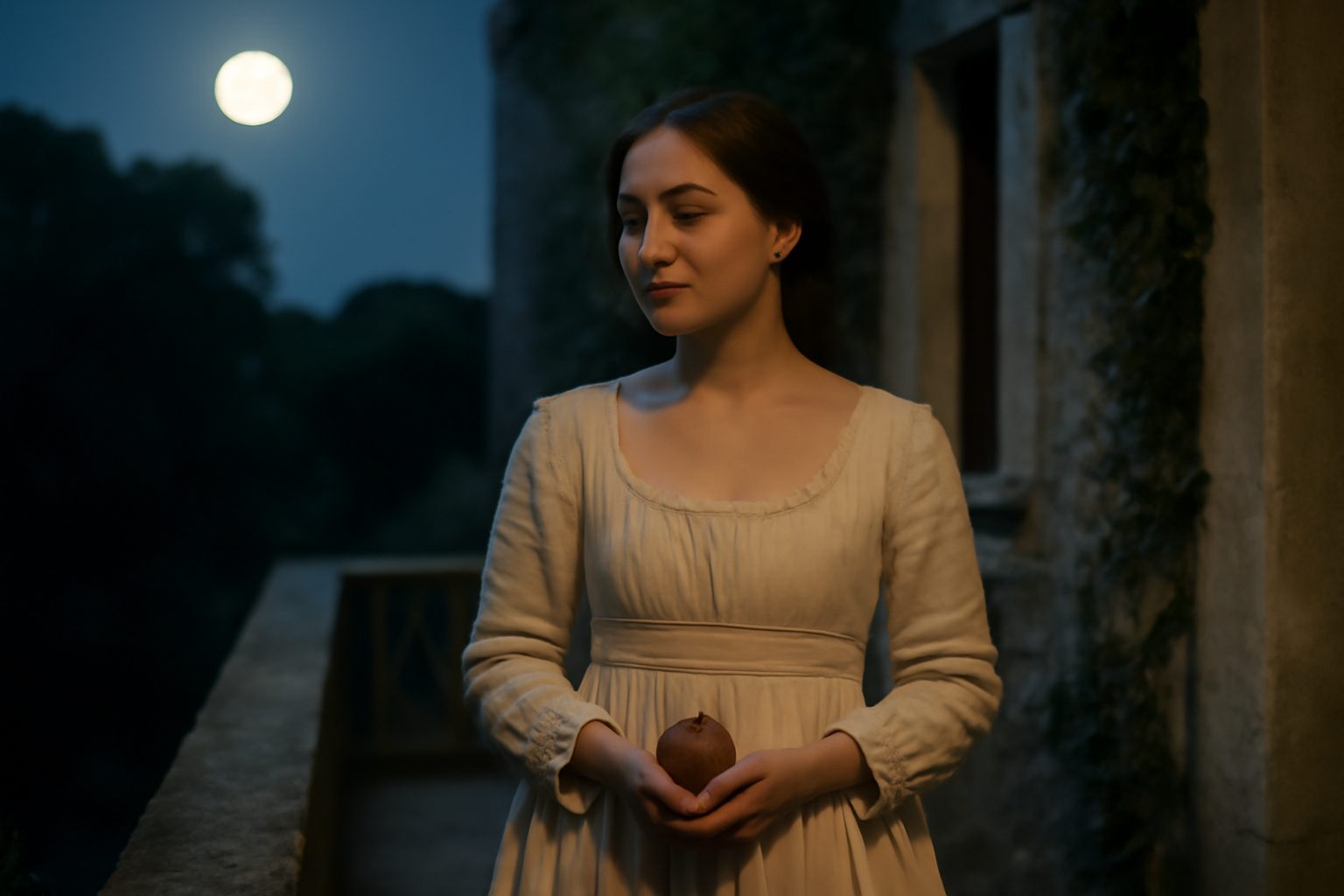
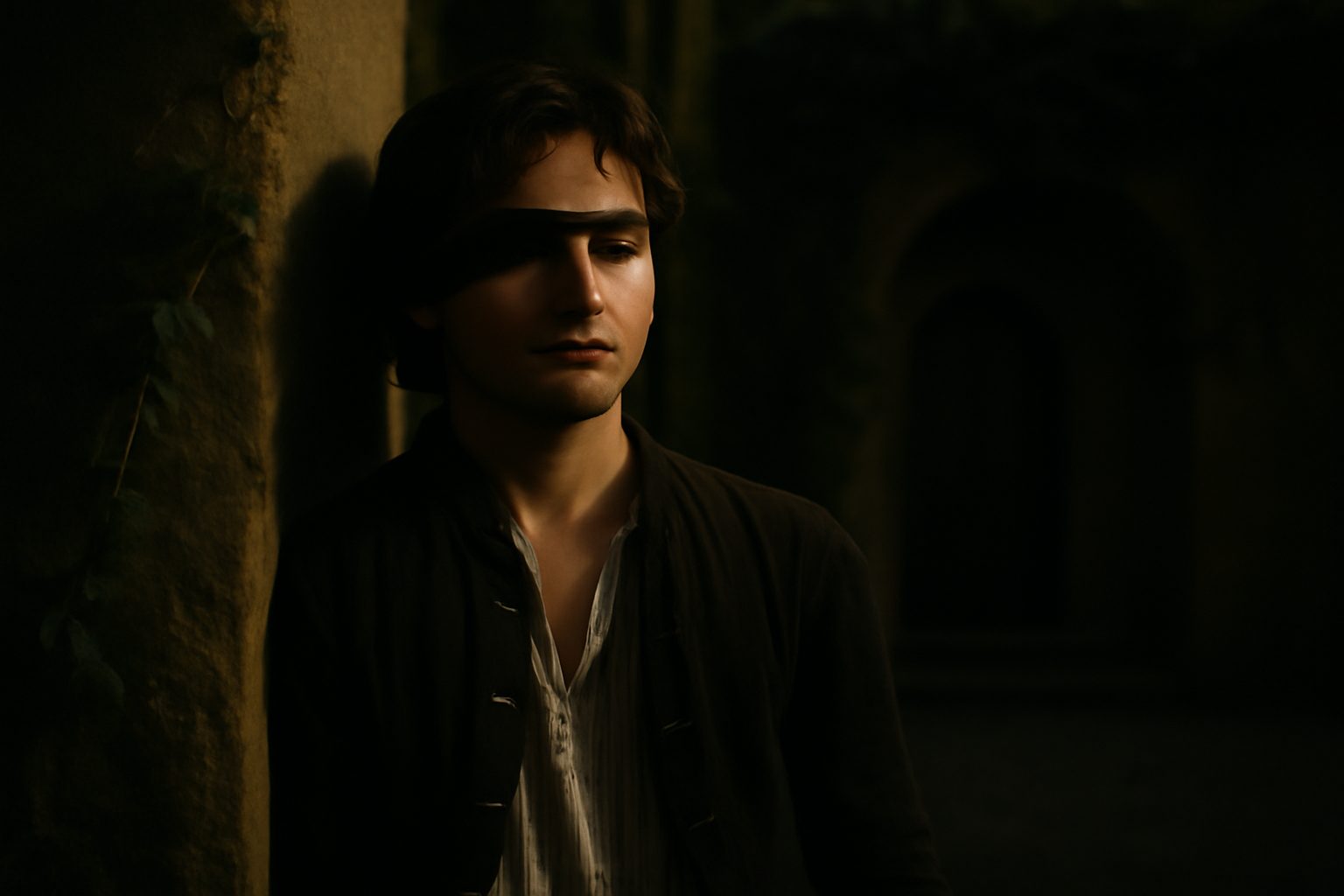
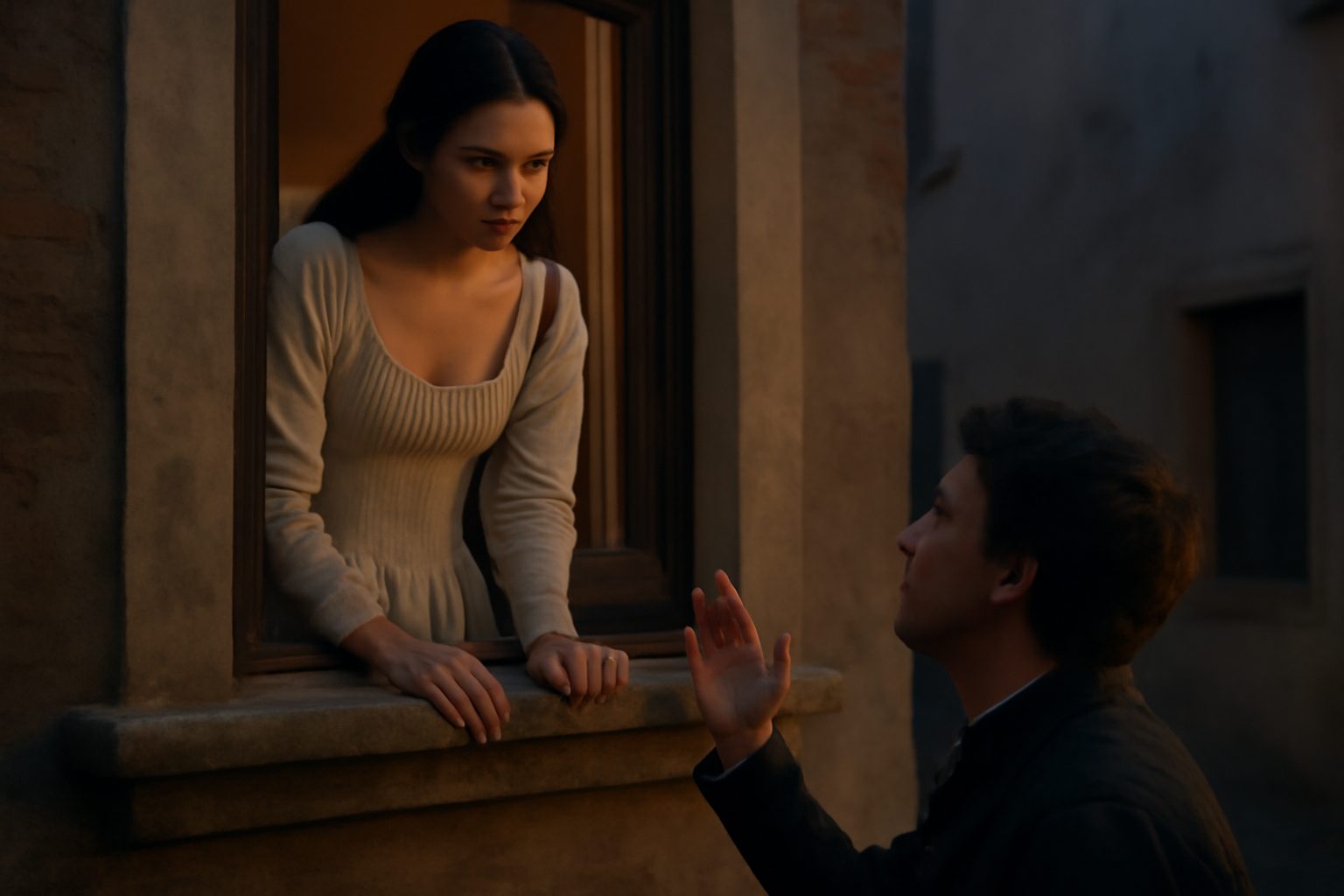
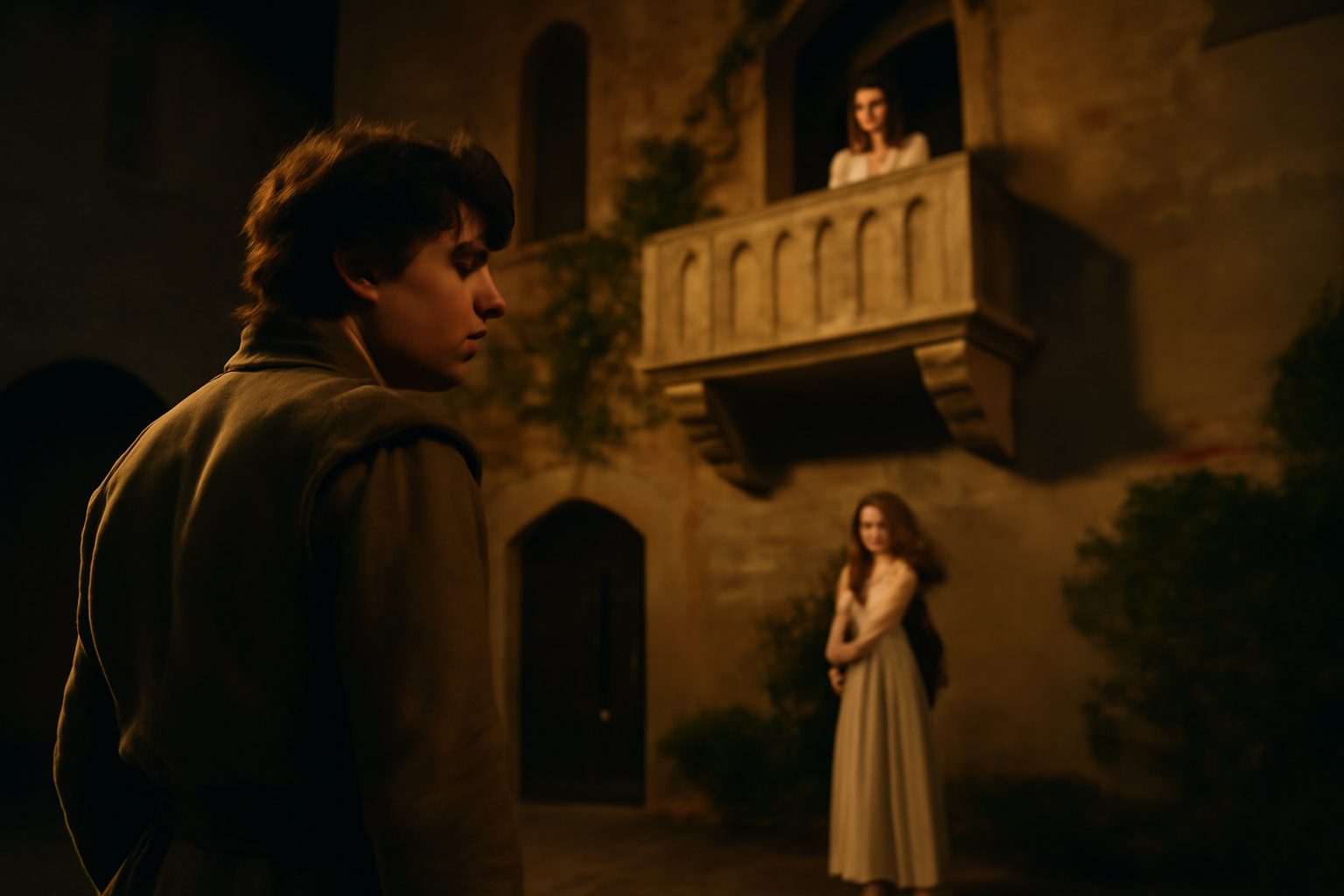
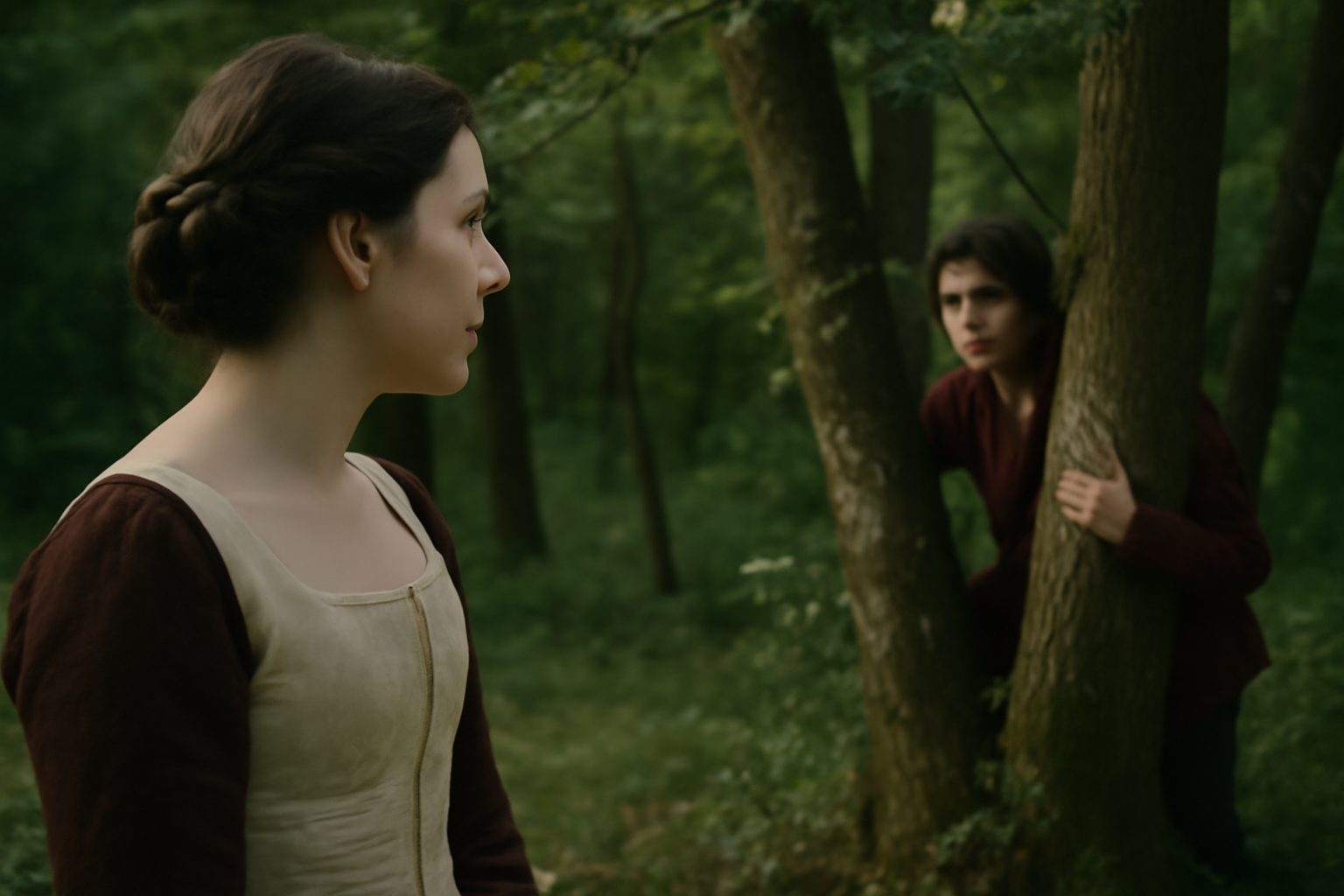
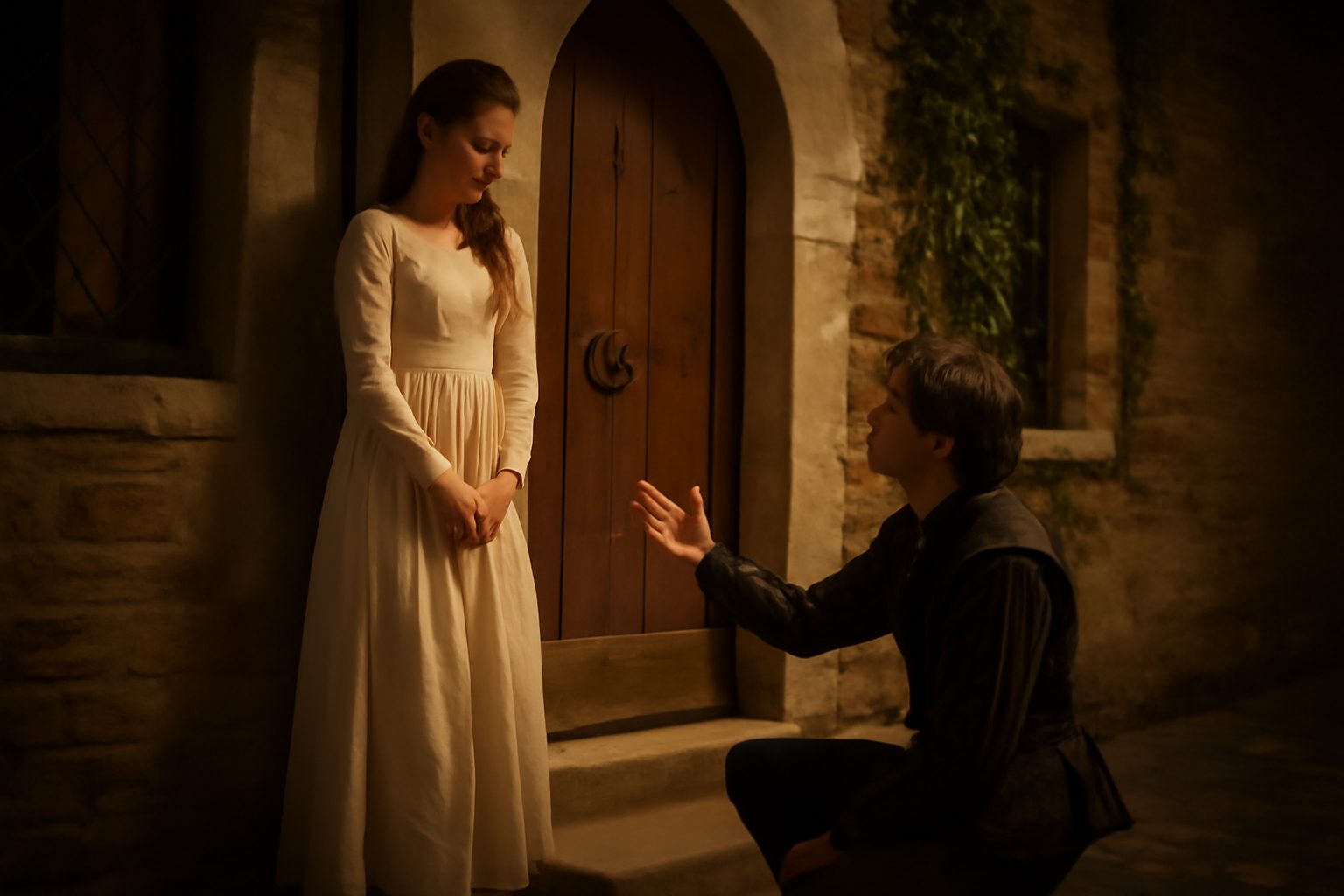
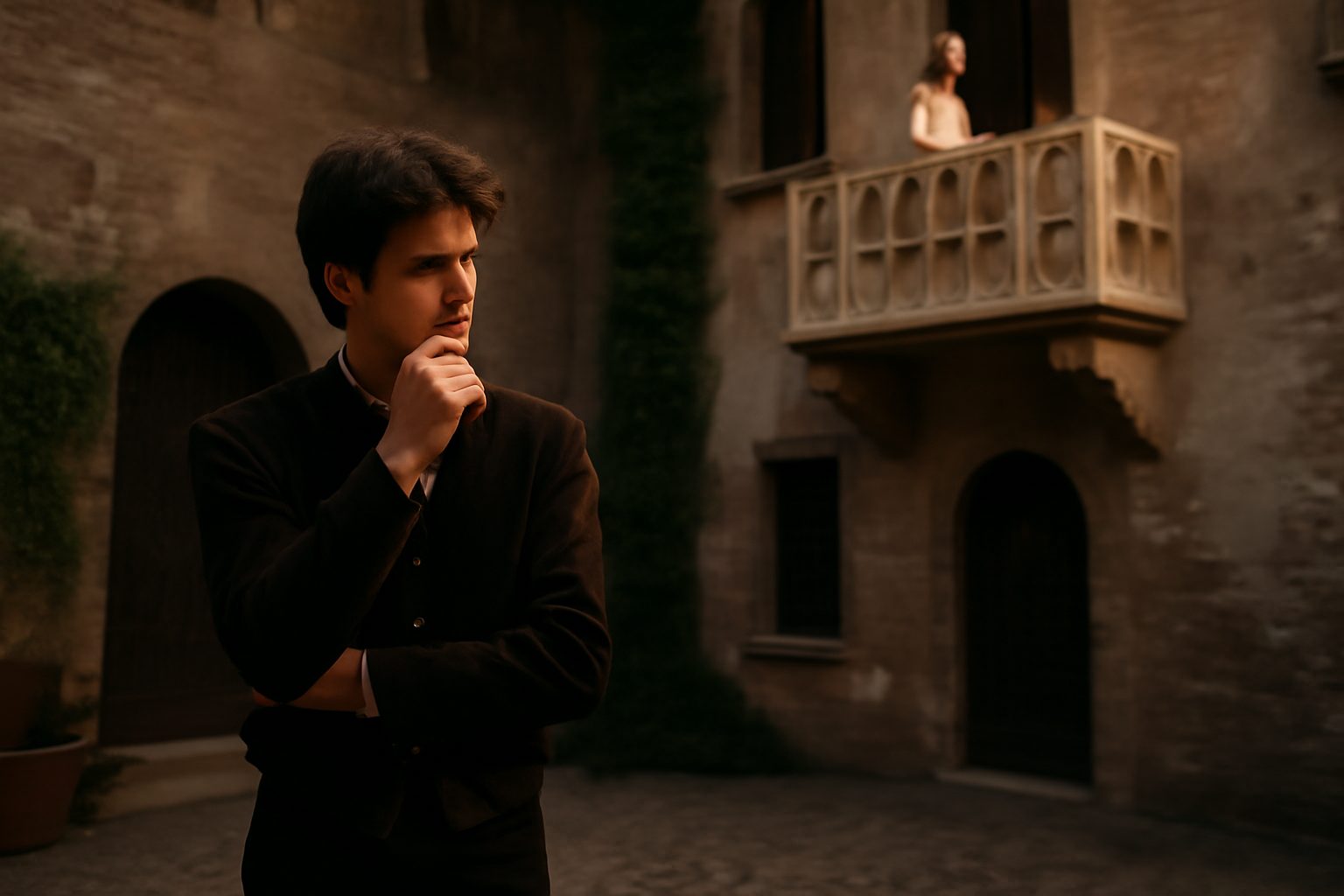
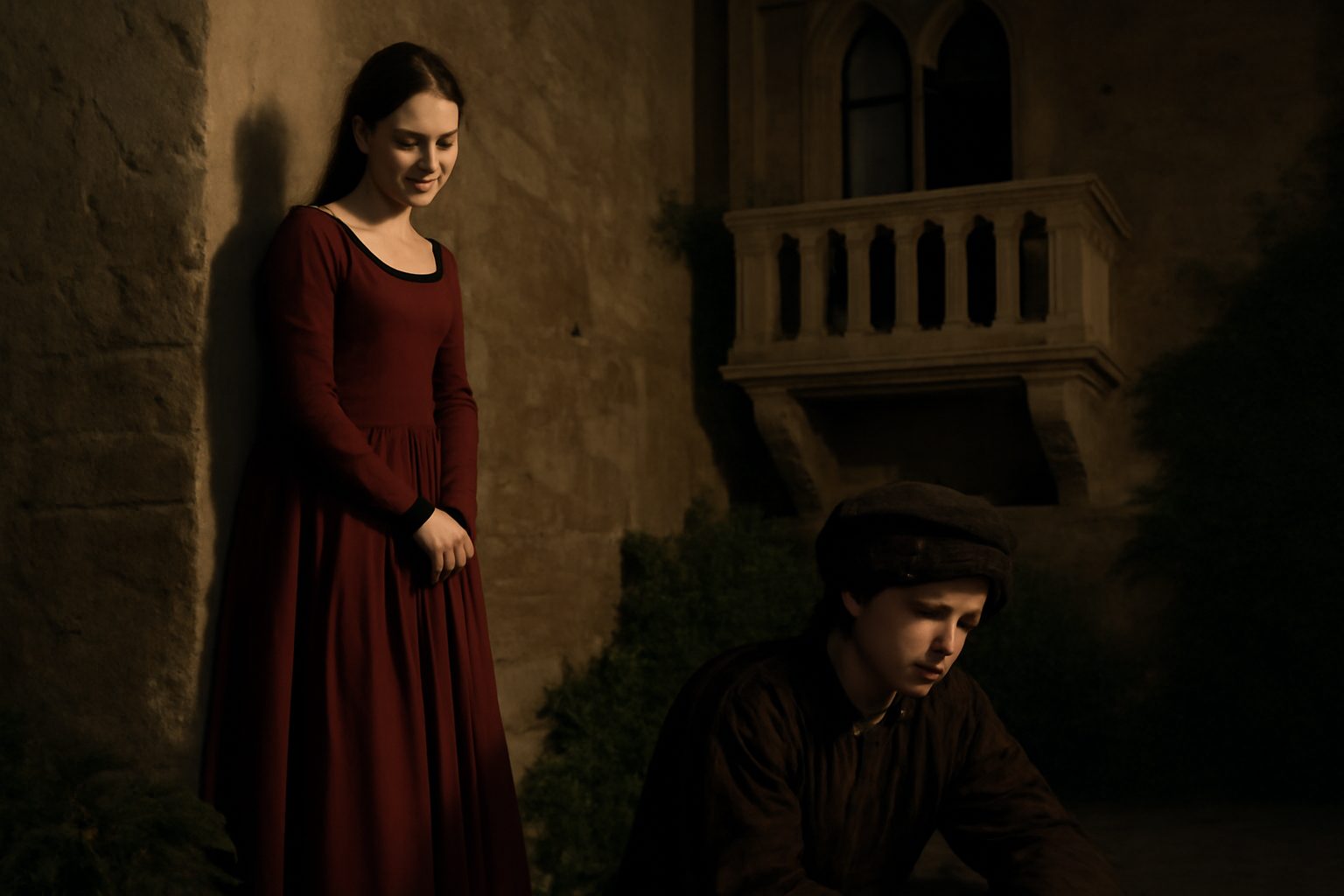
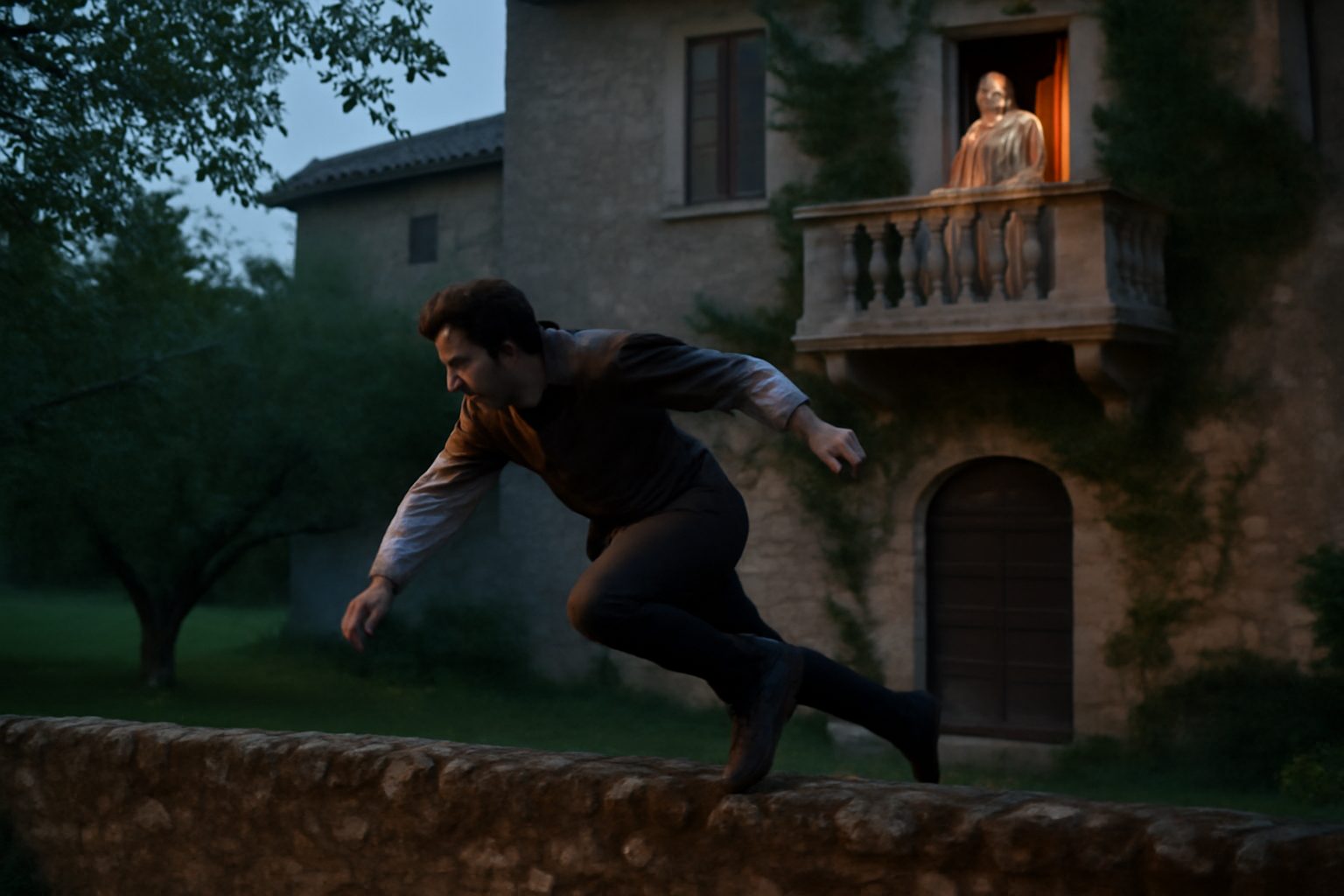
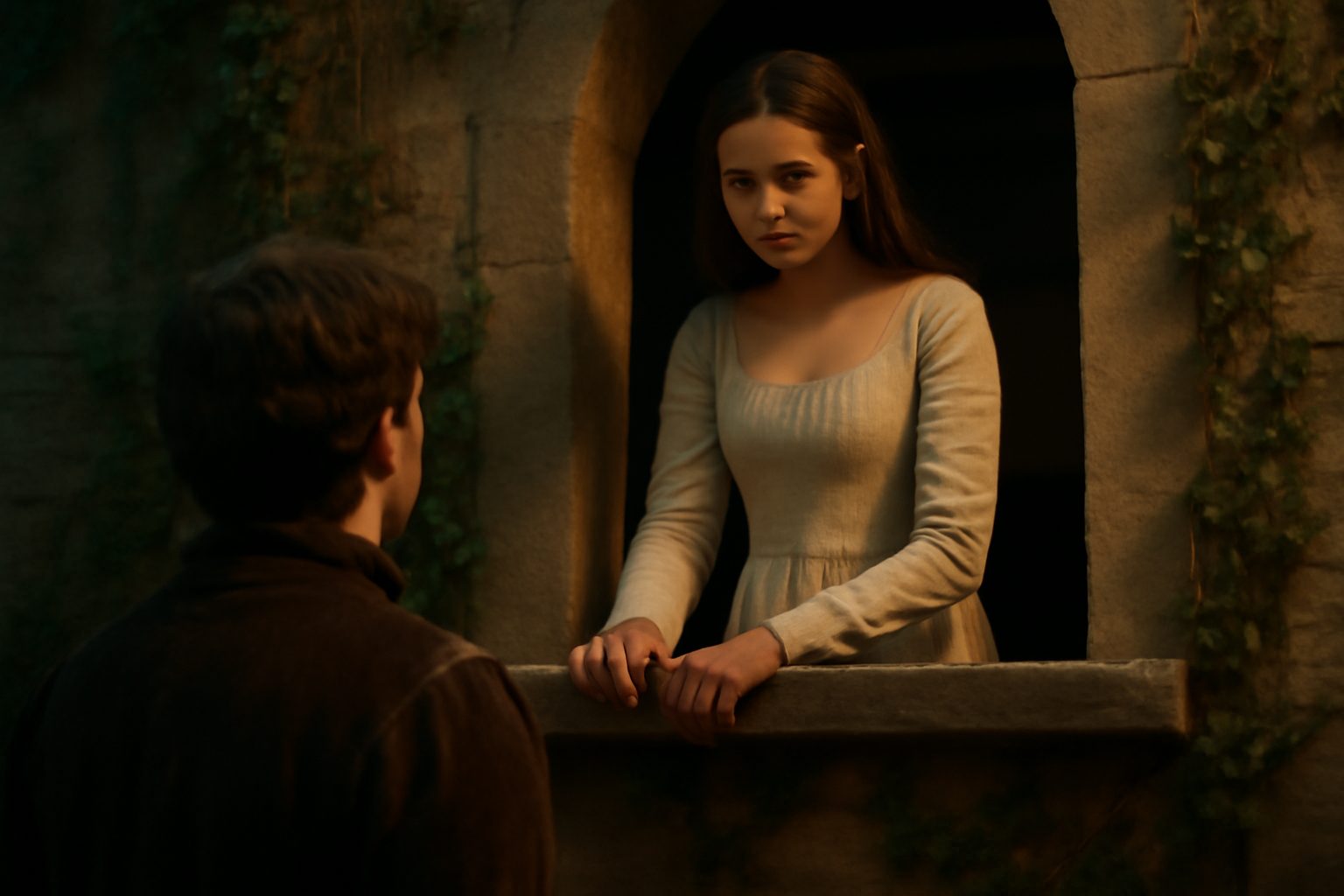
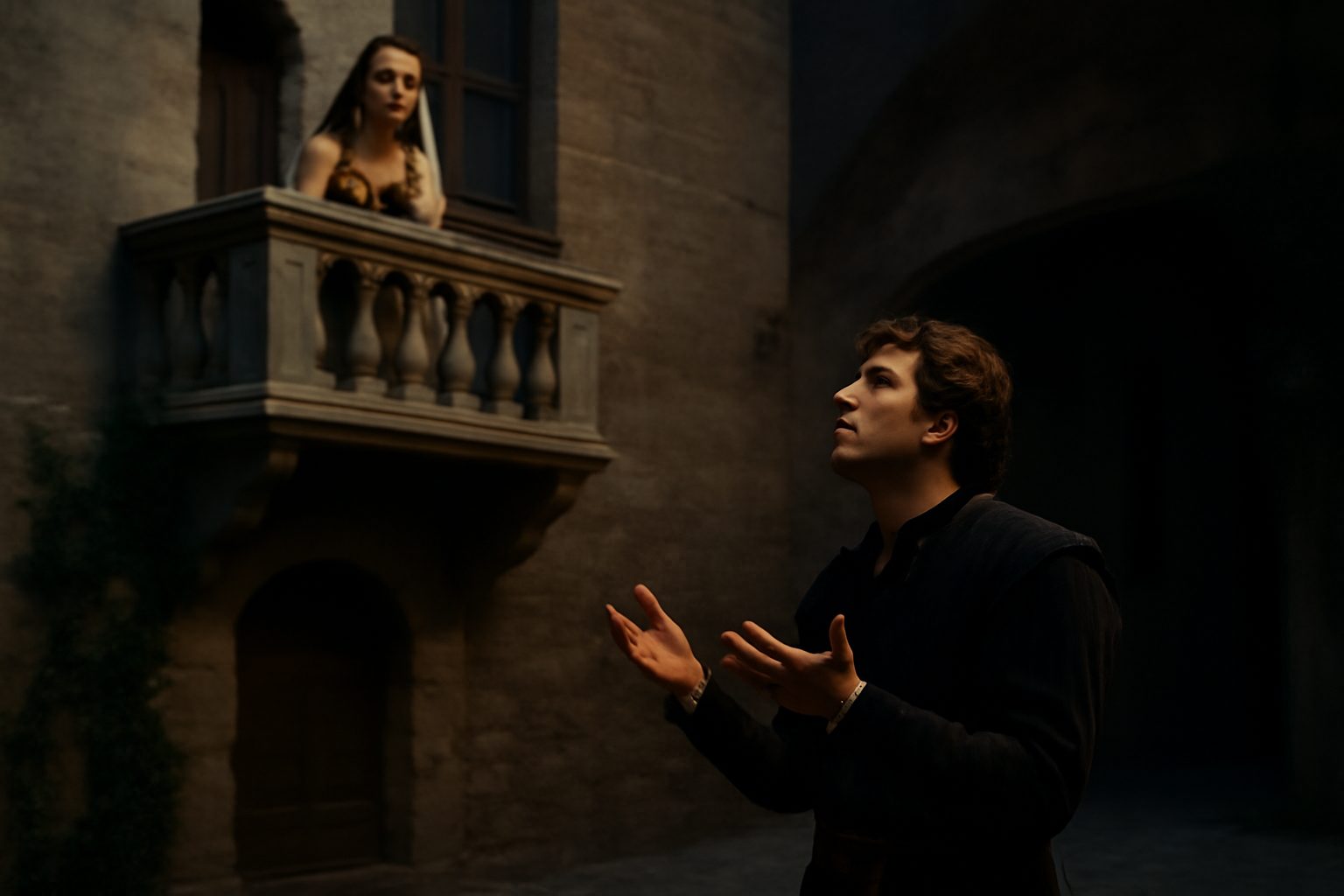
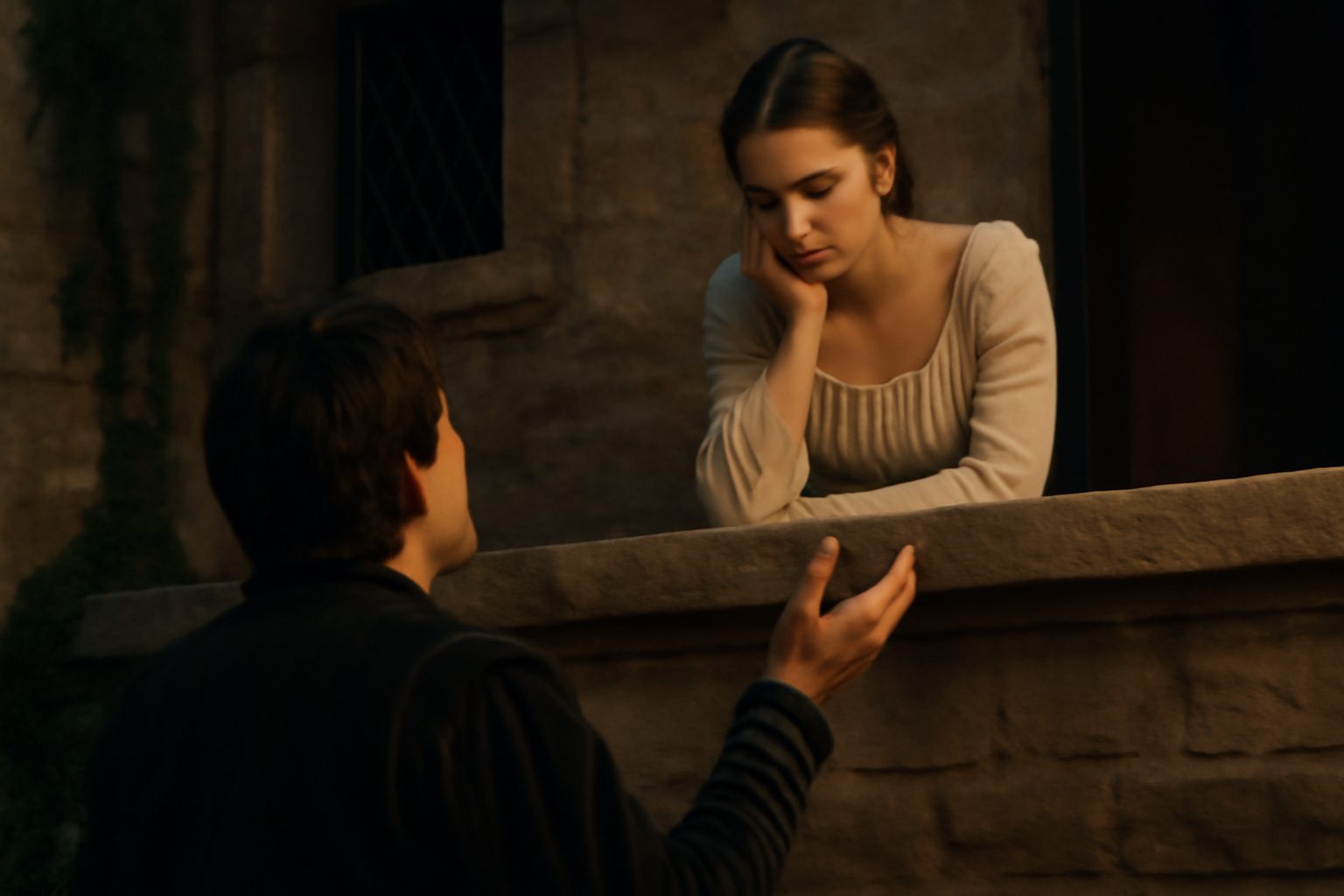
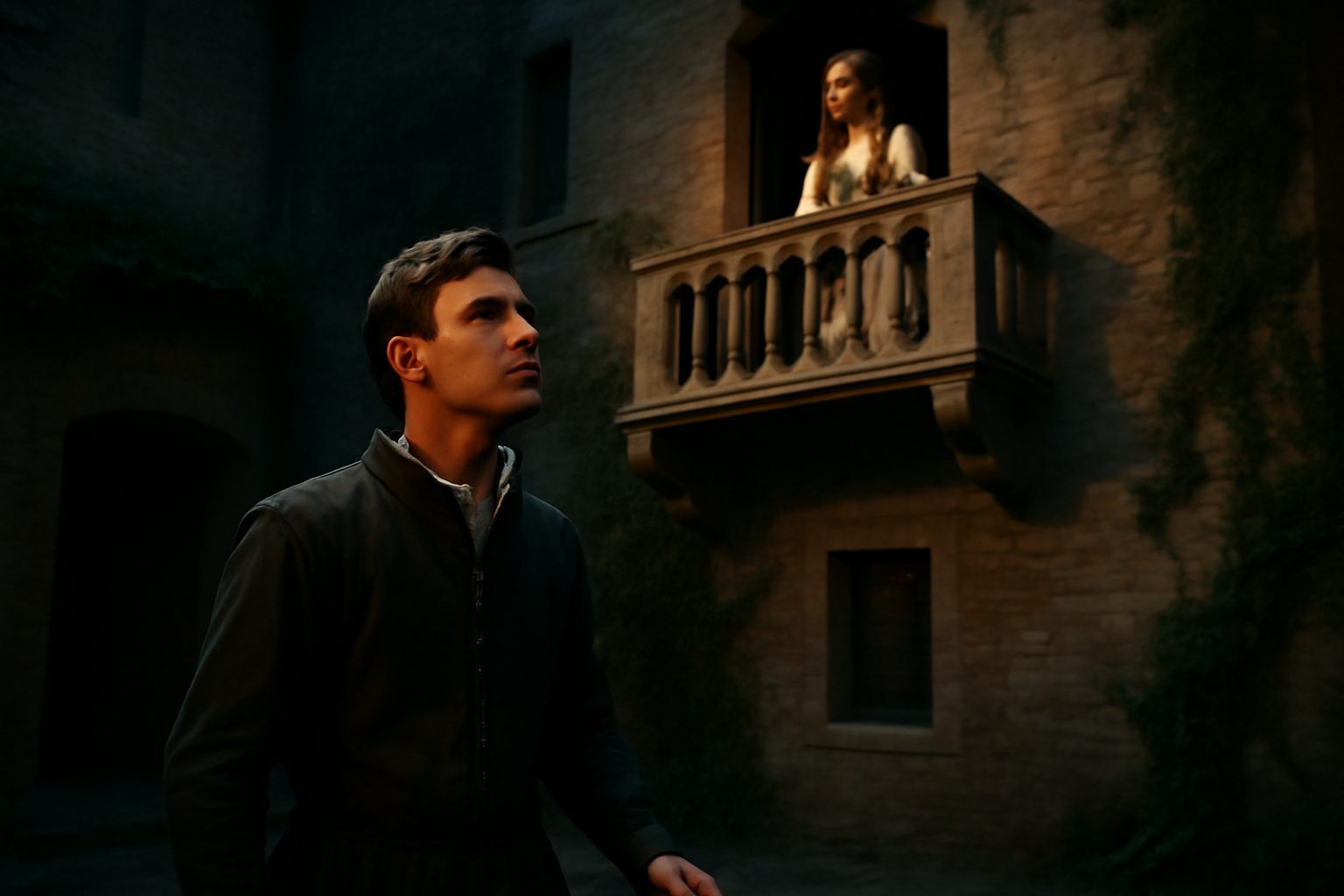
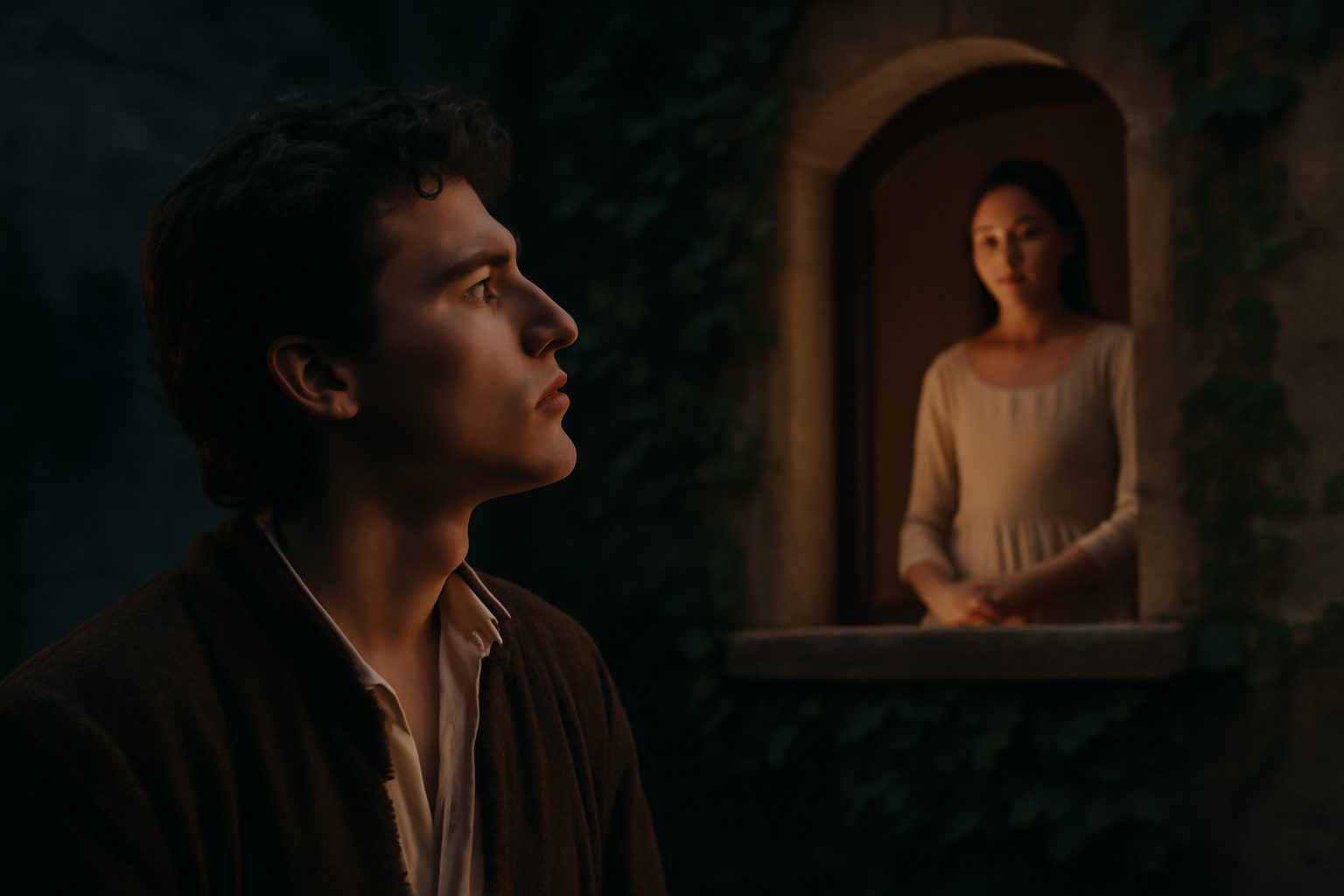
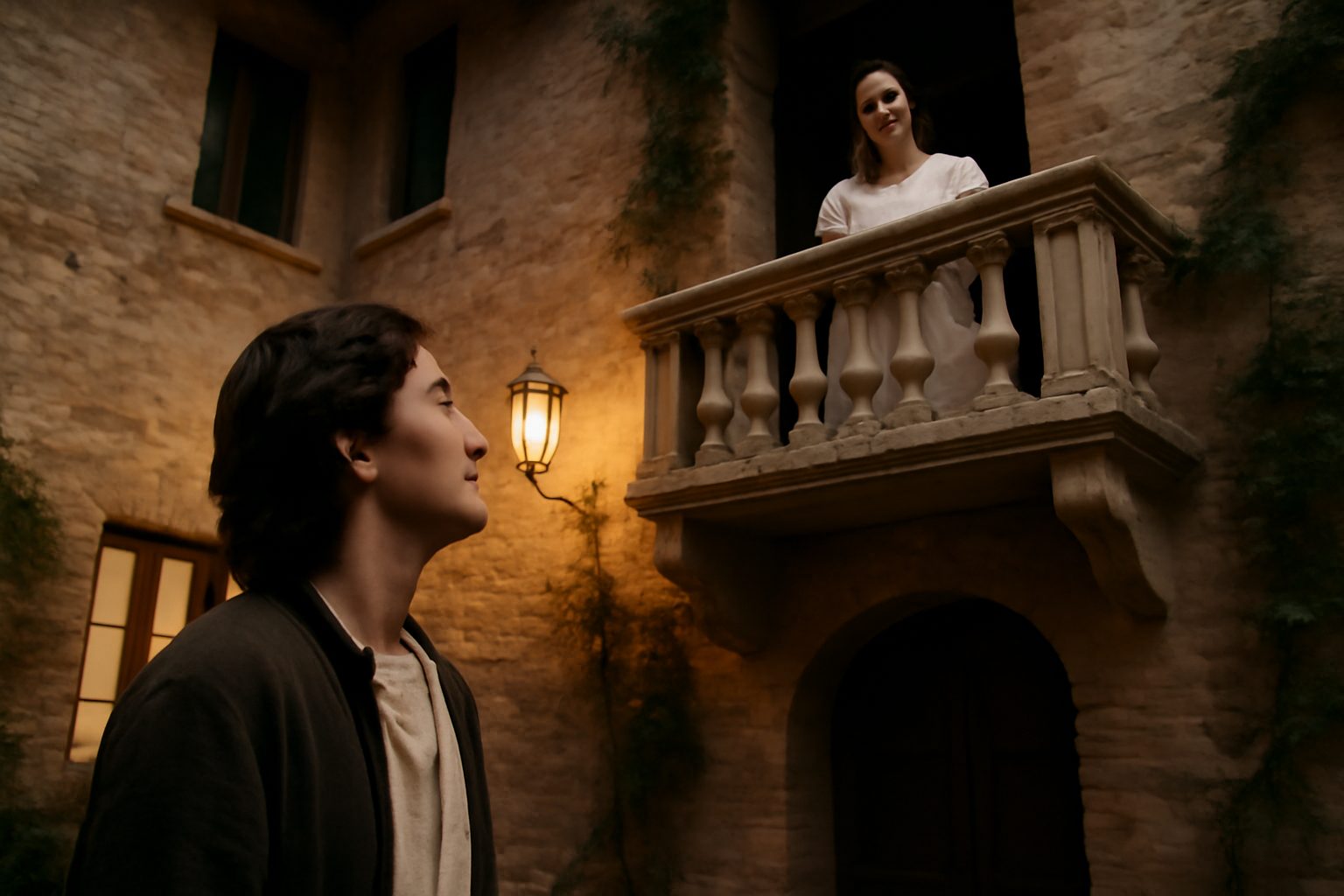
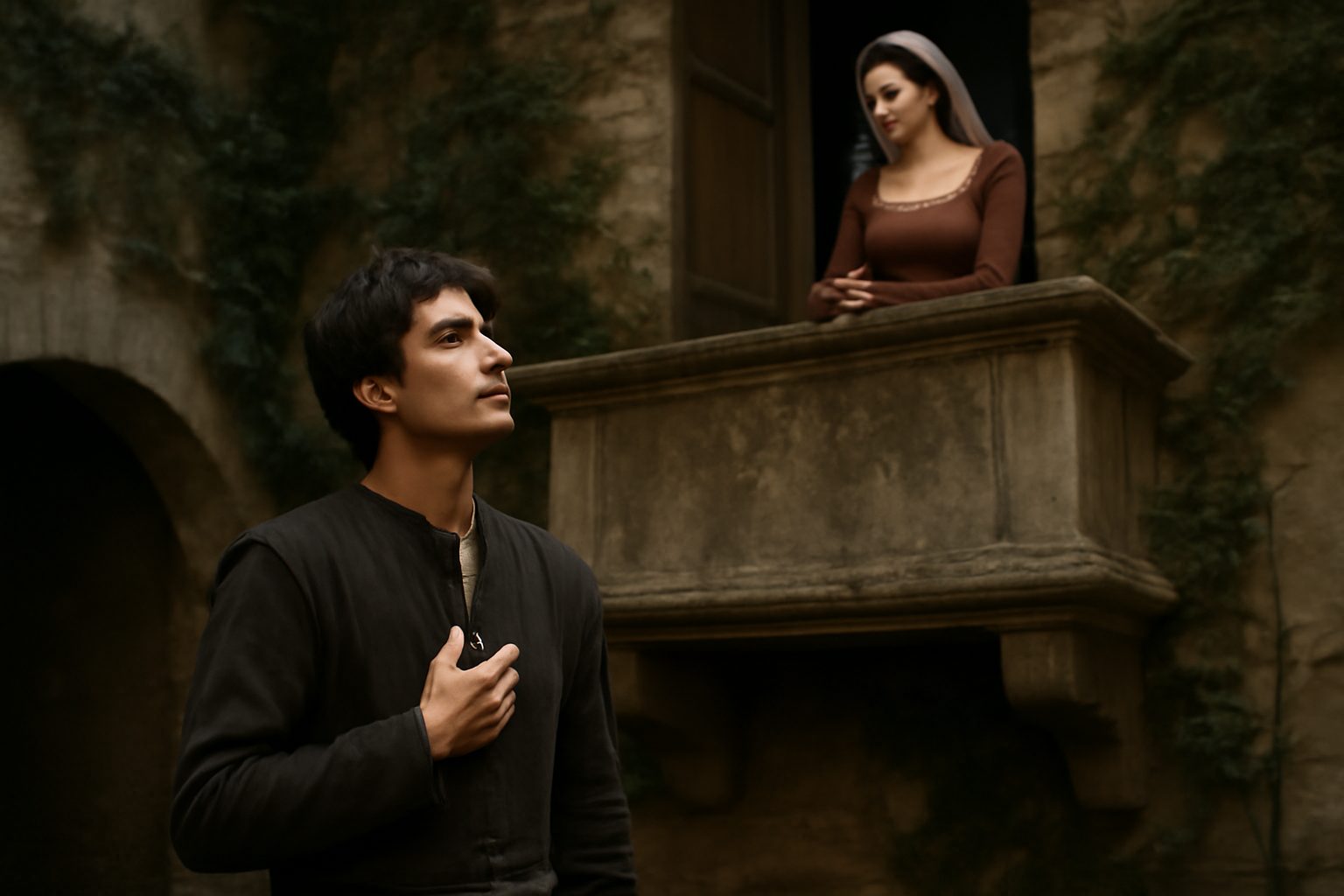
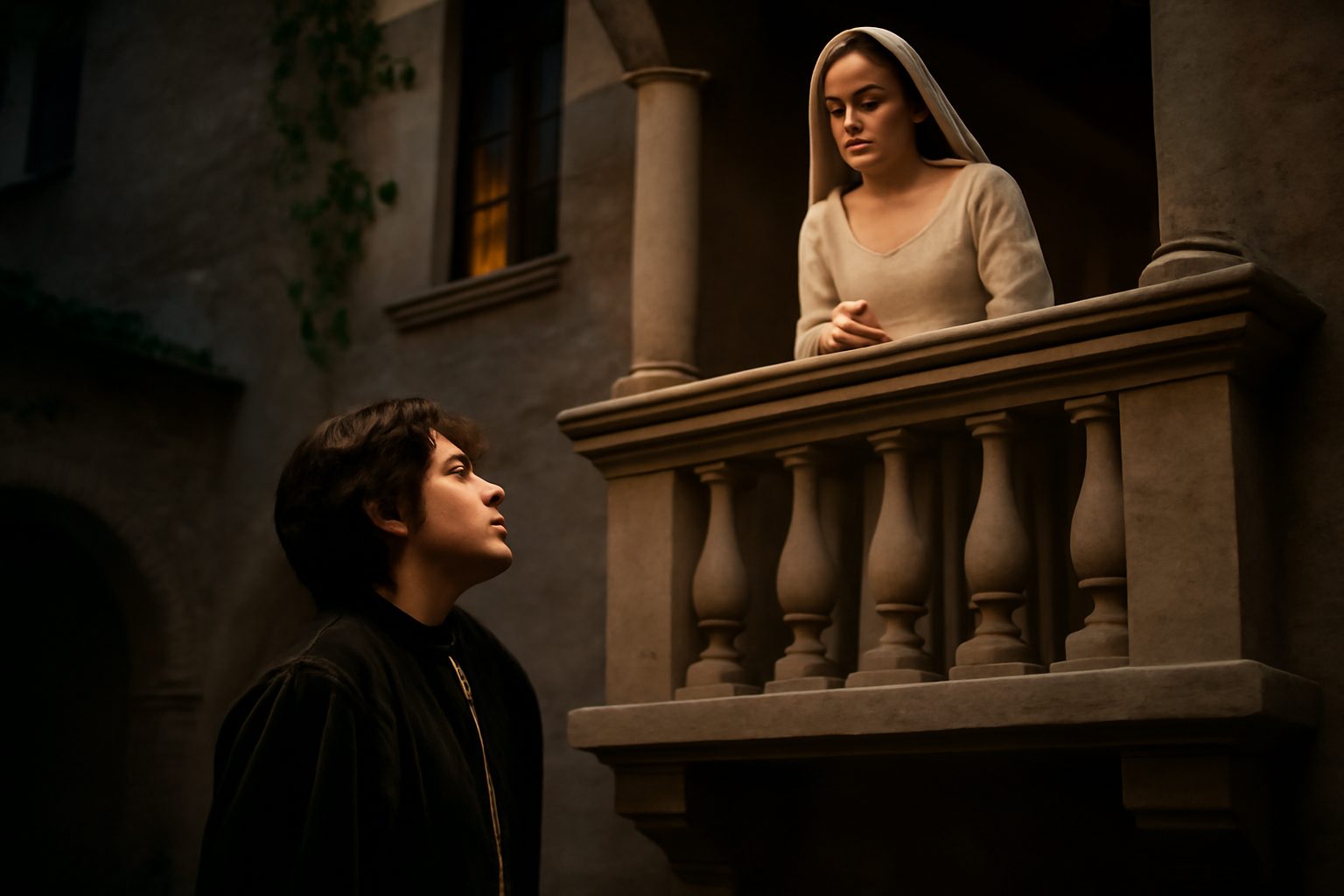
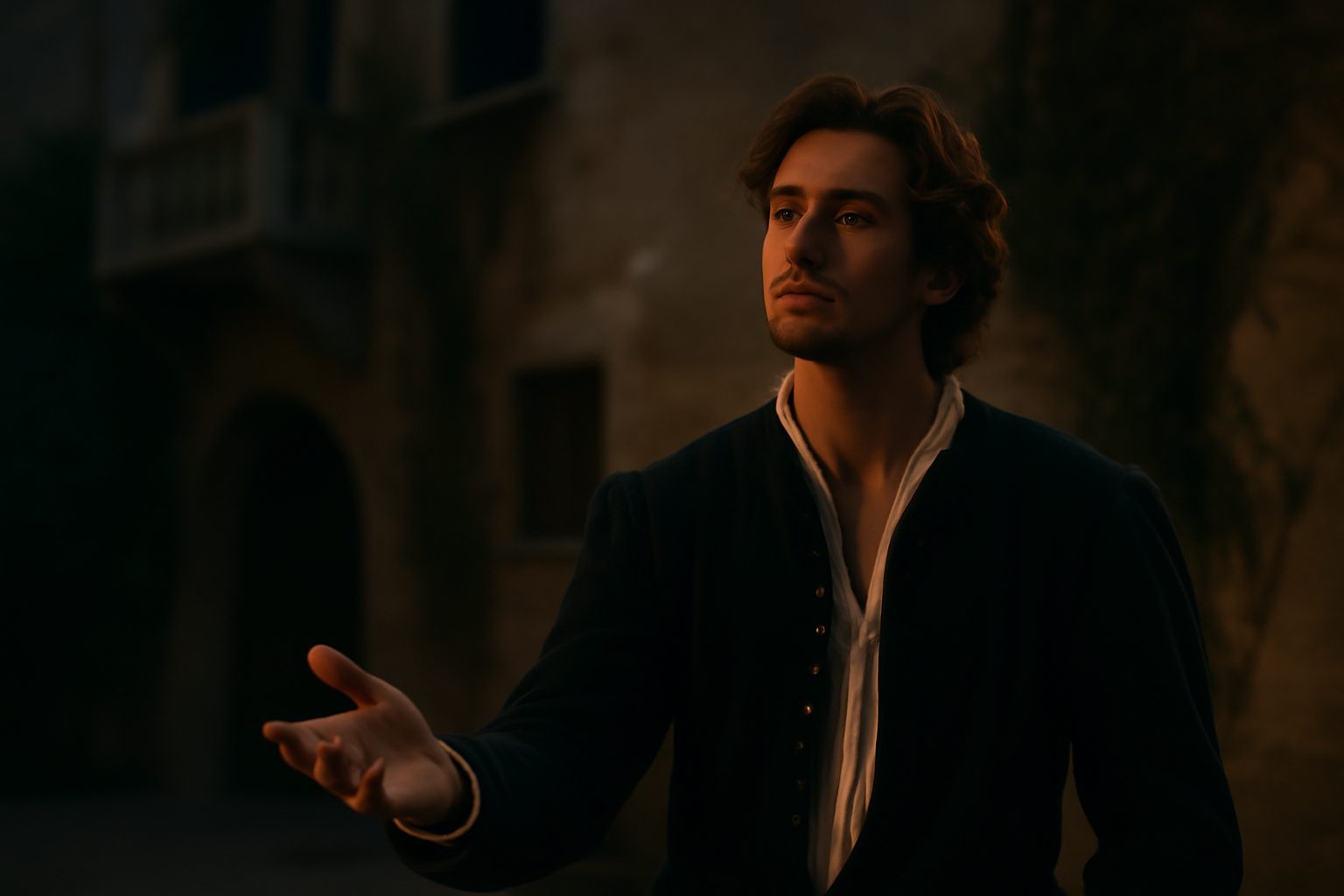
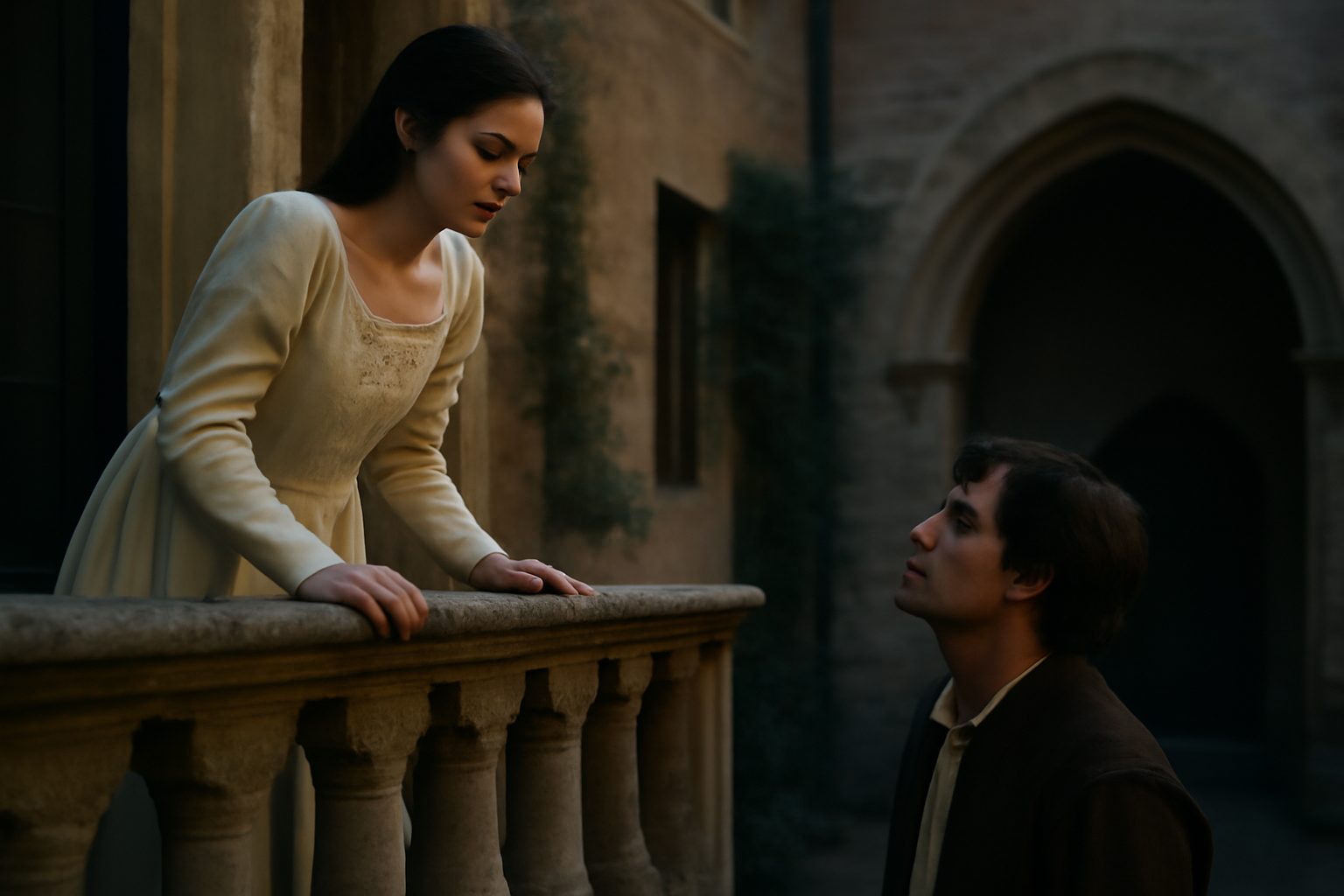
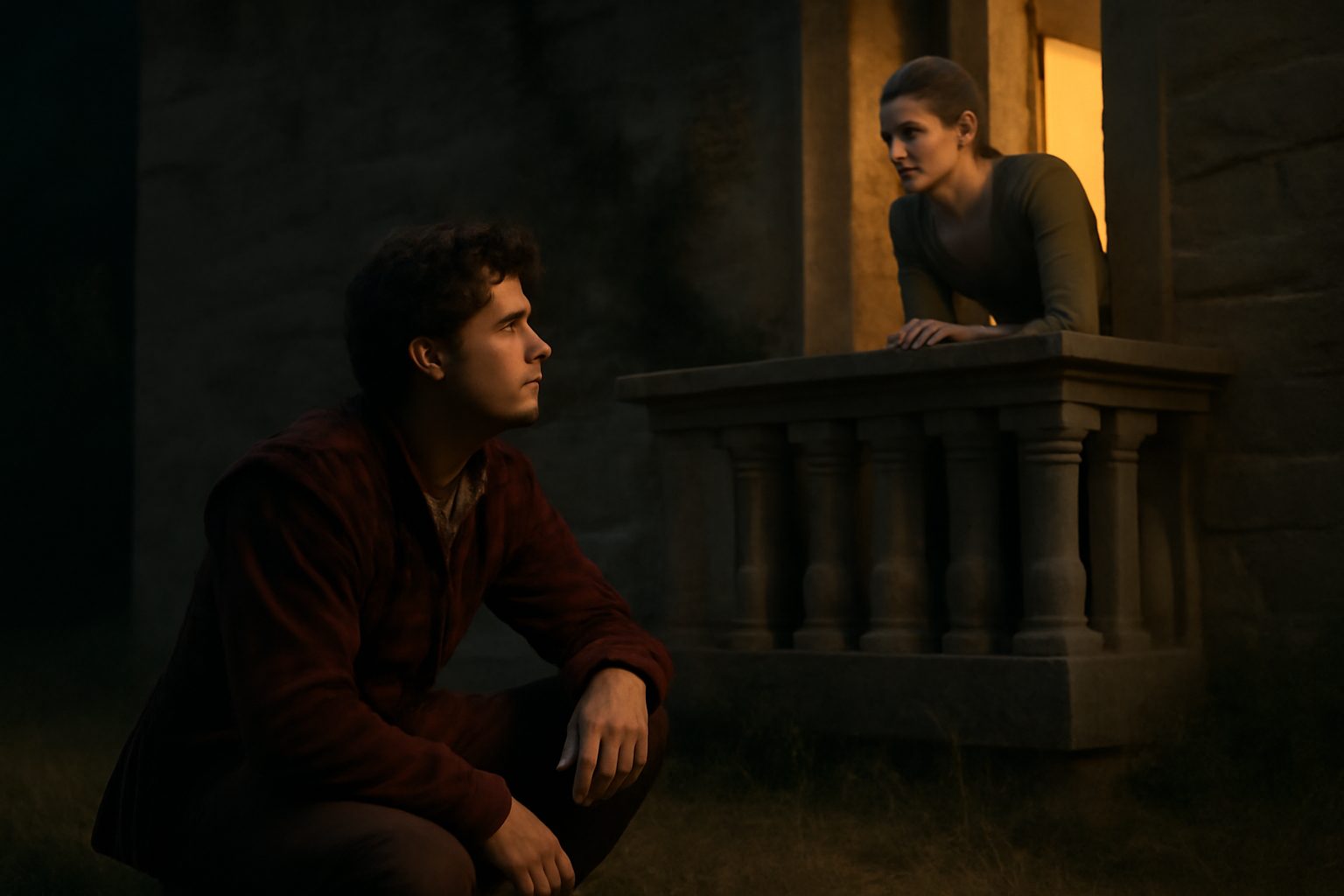
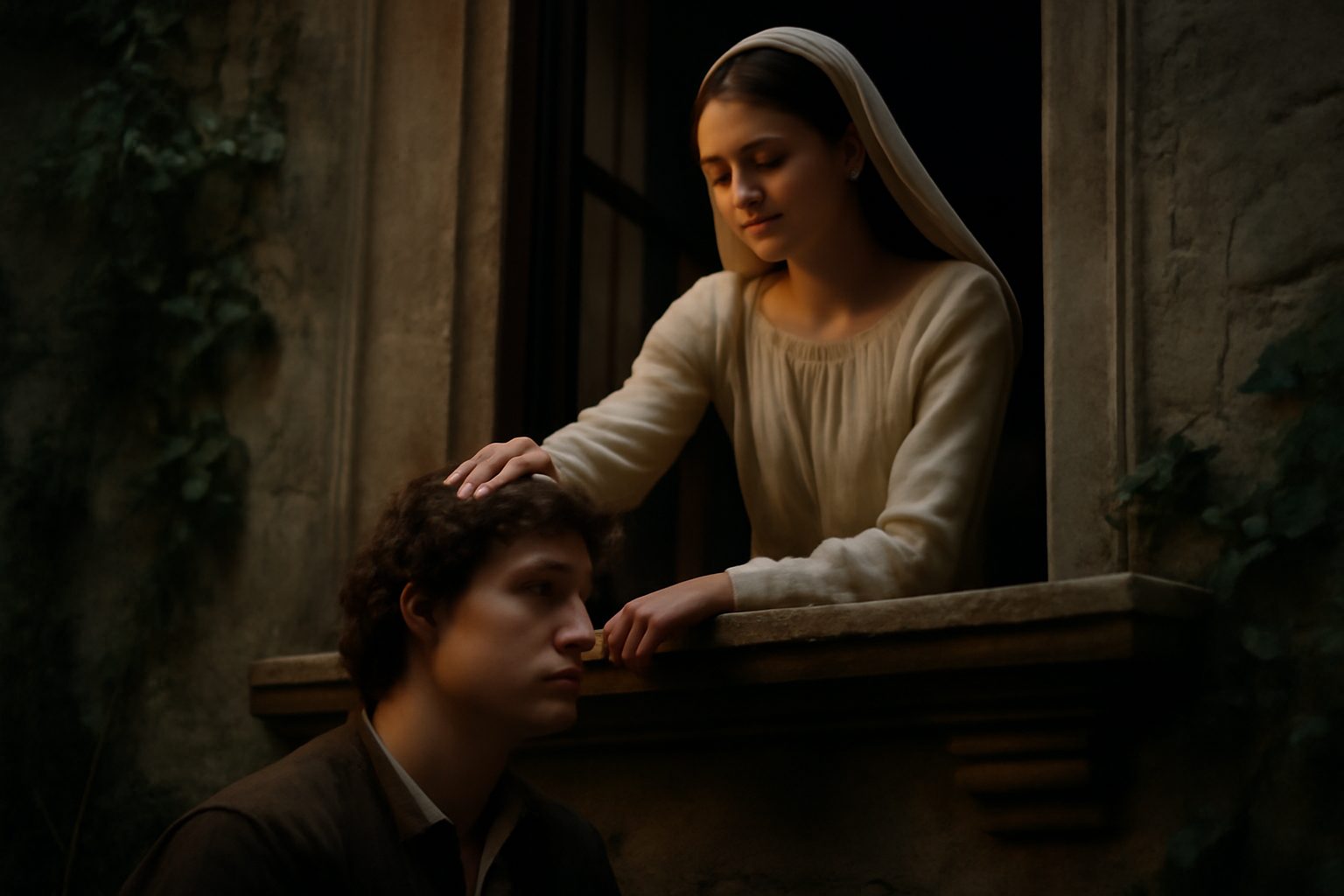
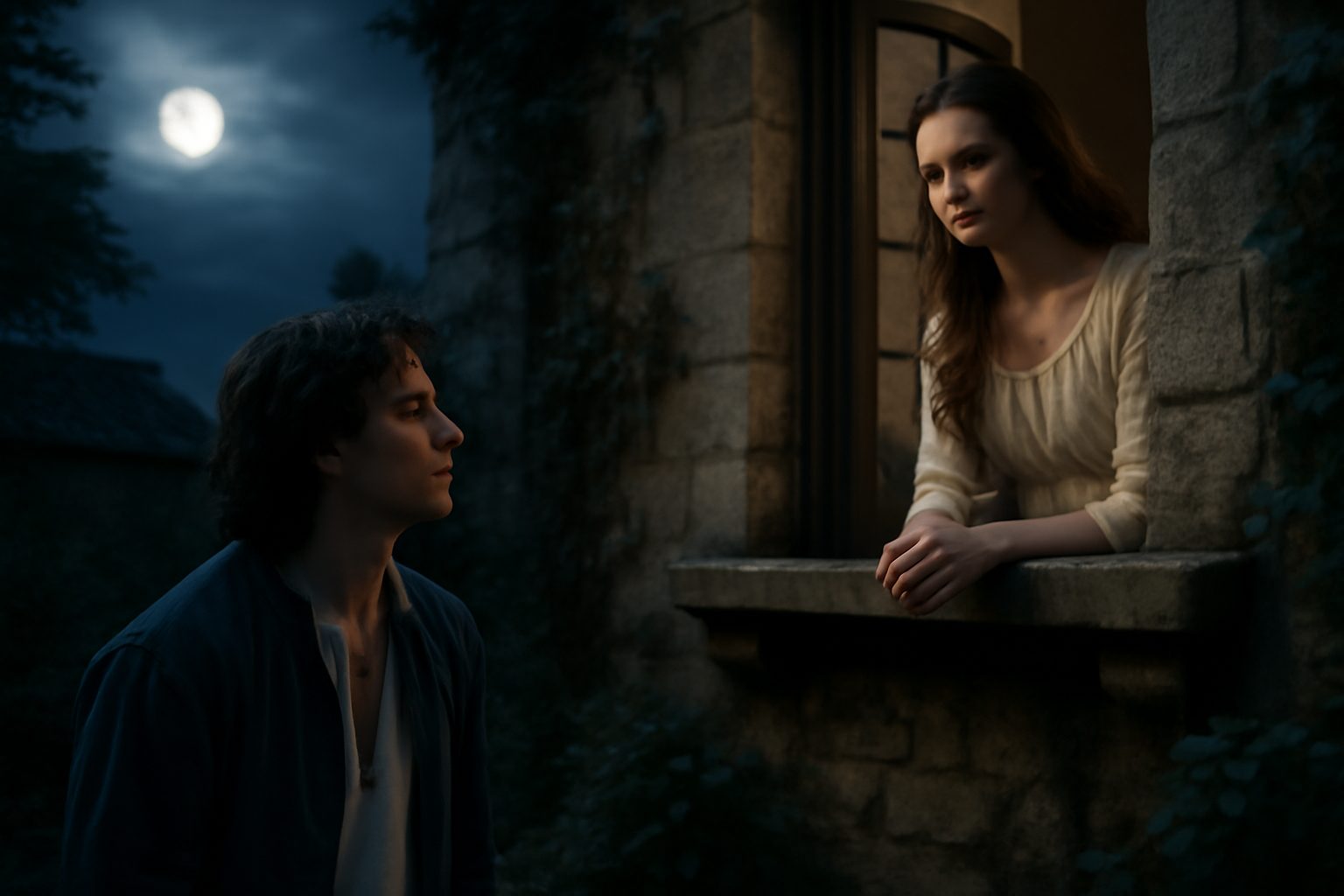
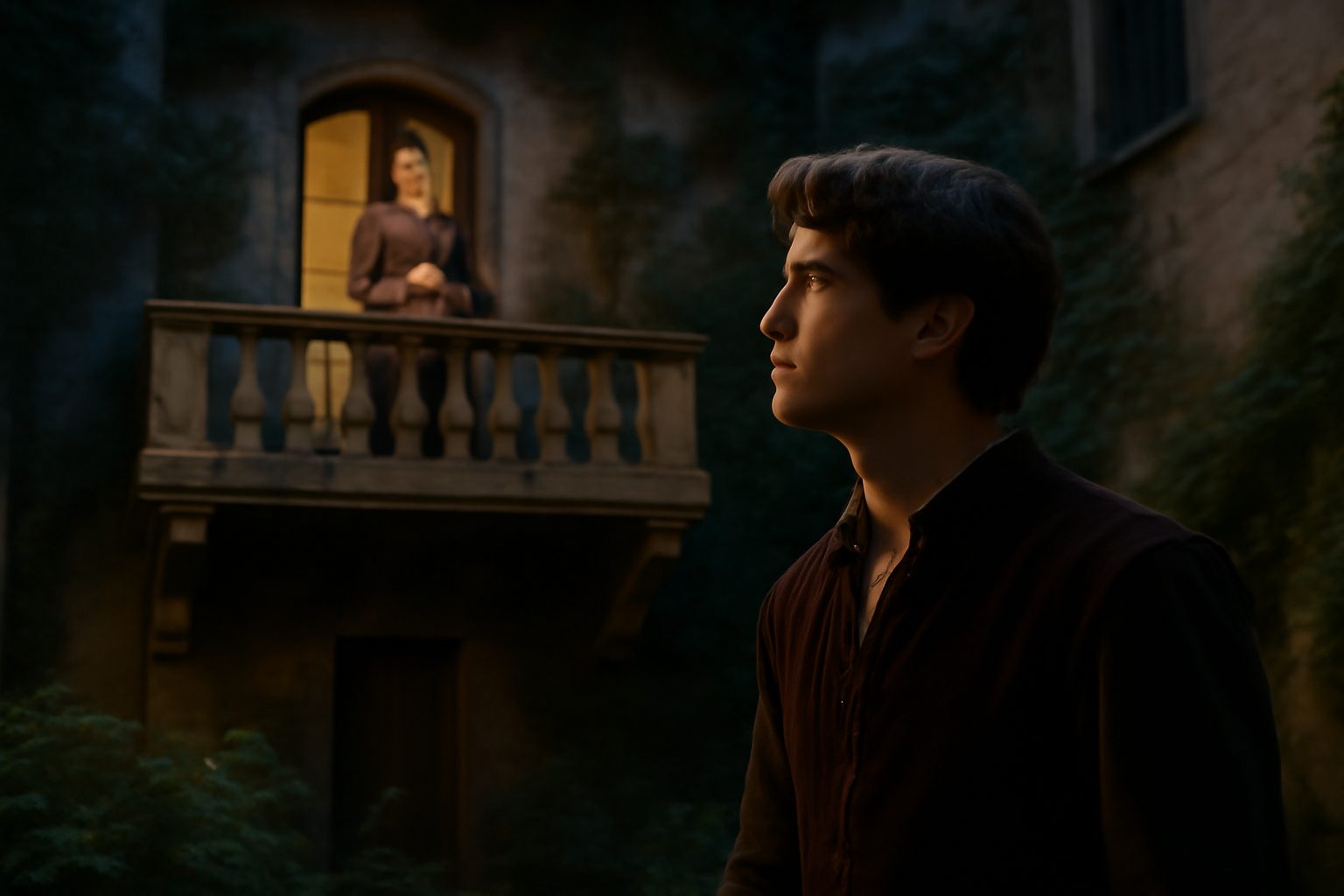
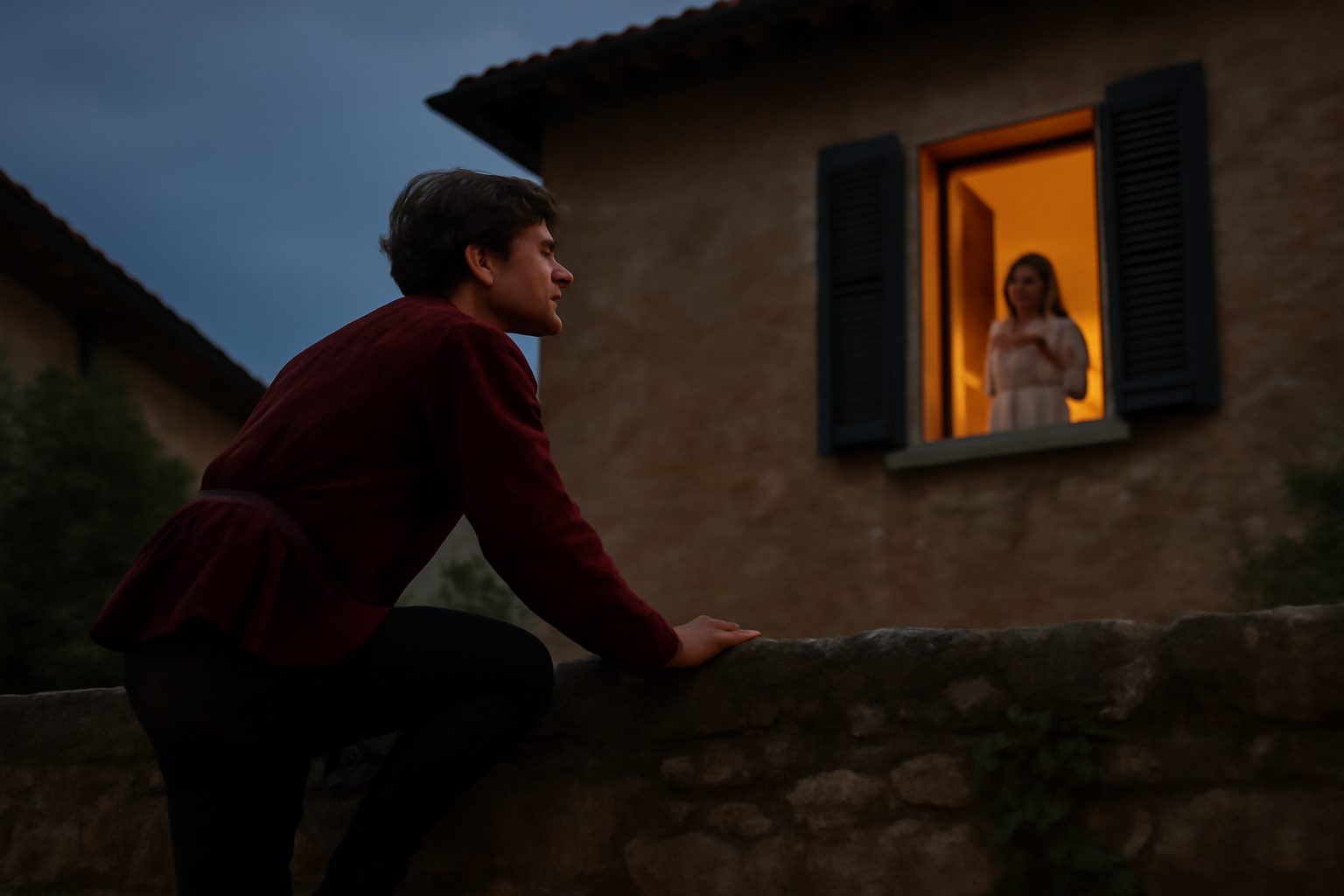
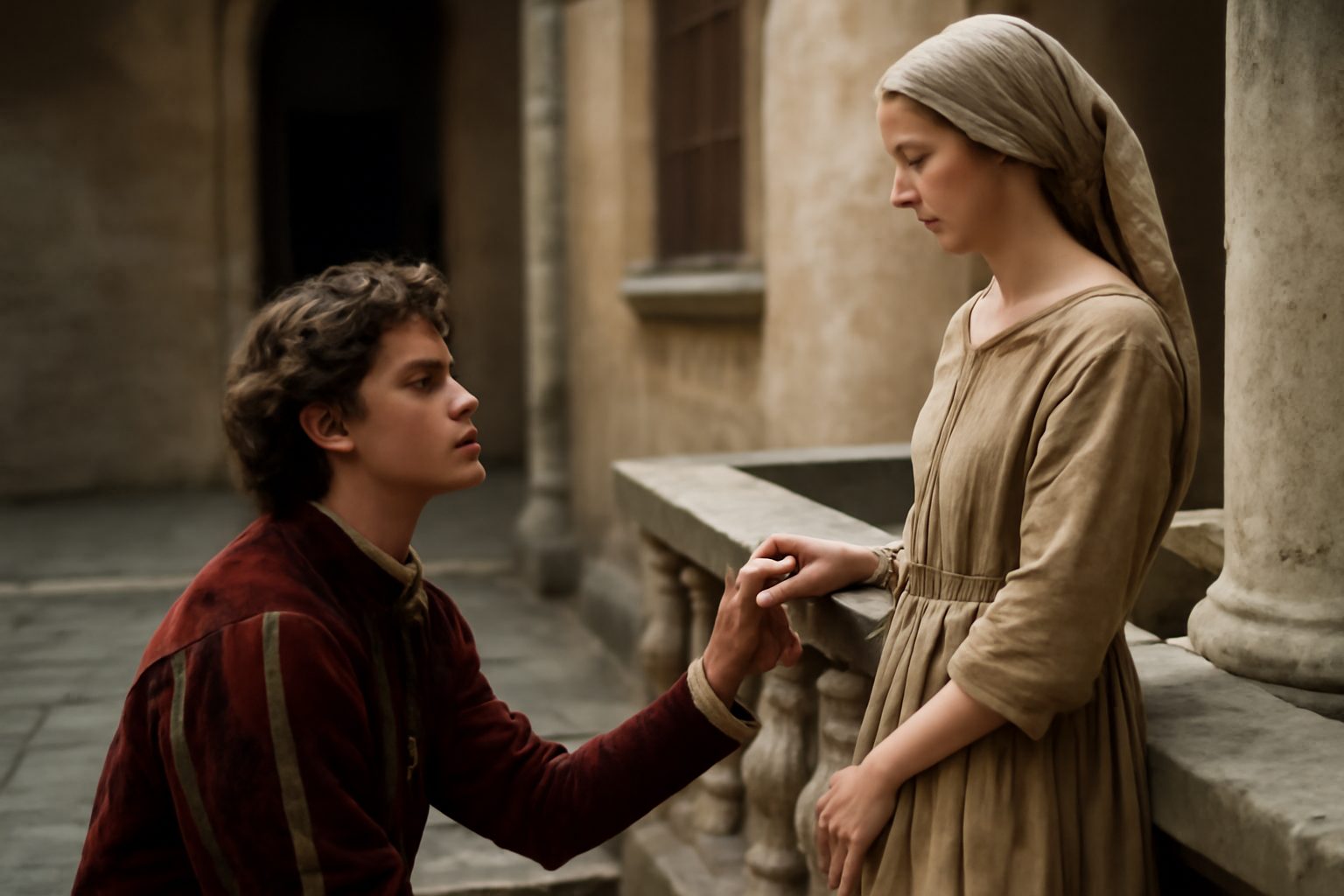
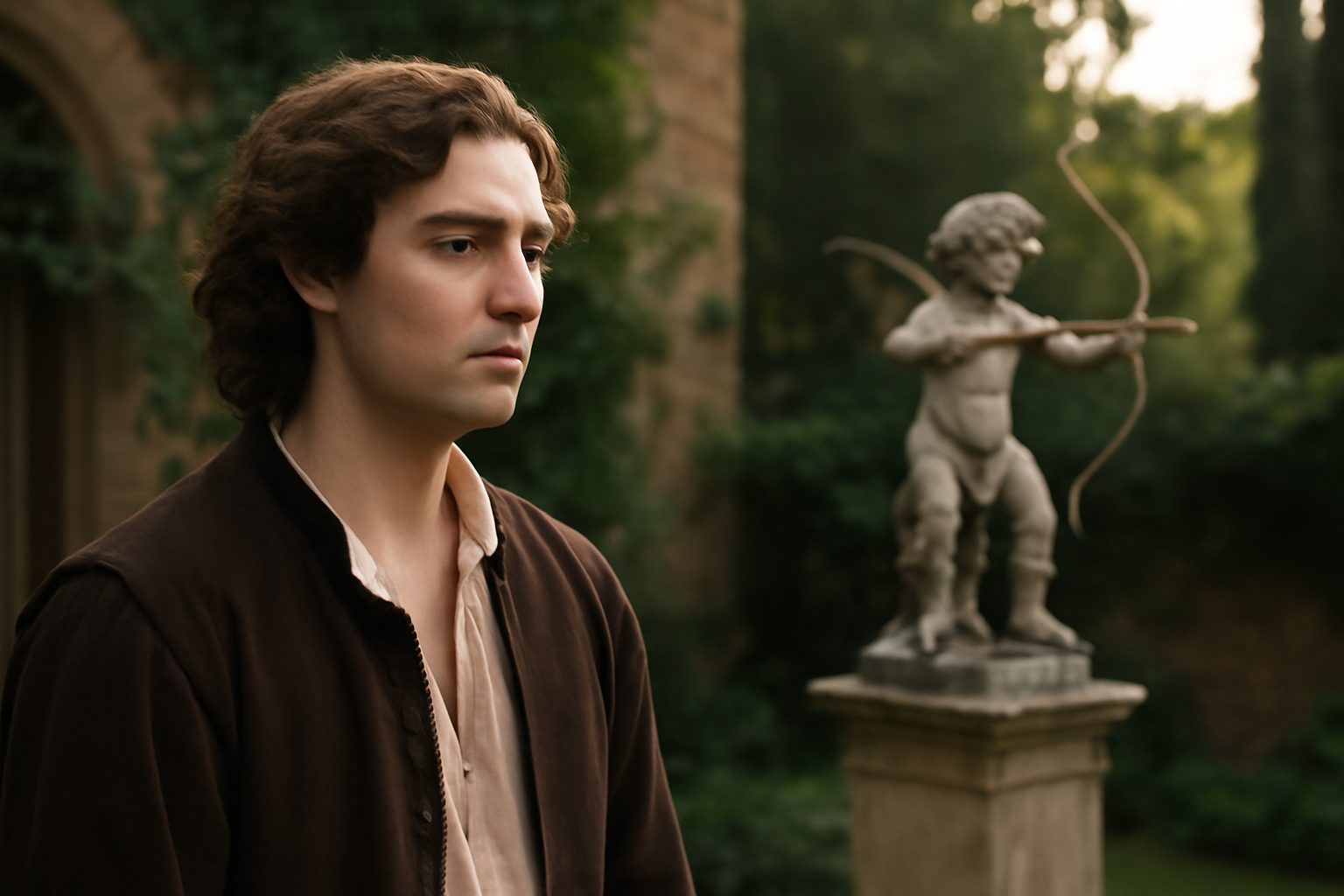
In Act 2, Scene 1 of Romeo and Juliet, Mercutio mocks Romeo's infatuation with Rosaline, suggesting that love's irrationality makes it aimless. This line playfully critiques the idea of blind love, implying that without reason or sight, it cannot achieve its goal. The remark comes as Romeo, hidden nearby, has already shifted his affections to Juliet, adding irony to Mercutio's jest.
Mercutio: "If love be blind, love cannot hit the mark."
In modern day english, we would say:
If love can't see clearly, then it won't reach its target.
Frequently Asked Questions
What does Mercutio mean when he says that blind love cannot hit the mark?
Mercutio is suggesting that if love is blind, it cannot see its target and therefore cannot succeed or achieve its goal.
Connections to other verses:
Connections to "If love be blind, love cannot hit the mark."
The verse "If love be blind, love cannot hit the mark." reflects Mercutio's cynical view of love, suggesting that blind passion leads to failure. This idea is echoed in "Blind is his love and best befits the dark.", which directly reinforces the theme of love's blindness and its association with obscurity and misdirection.
Related Themes and Imagery
Mercutio's mocking conjurations, such as "I conjure thee by Rosaline's bright eyes," and "Speak to my gossip Venus one fair word," further emphasize love's fickle and superficial nature, aligning with the idea that blind love misses its true target. The references to Cupid, like "Young Adam Cupid, he that shot so trim," and "One nick-name for her purblind son and heir," directly tie to the motif of love's blindness, as Cupid is often depicted as blindfolded.
Contrast with Romeo's Idealism
In contrast, Romeo's own words, such as "Can I go forward when my heart is here?", show his earnest, all-consuming passion, which Mercutio's quip critiques. The bawdy humor in lines like "And wish his mistress were that kind of fruit" and "As maids call medlars, when they laugh alone." underscores Mercutio's view that love is not lofty but grounded in physical desire, often misguided or "blind."
Conclusion of the Scene
Mercutio's final dismissal, "Go, then; for 'tis in vain" and "To seek him here that means not to be found.", reinforces the futility of pursuing blind love, tying back to the central idea that such love cannot "hit the mark" or achieve its goal.