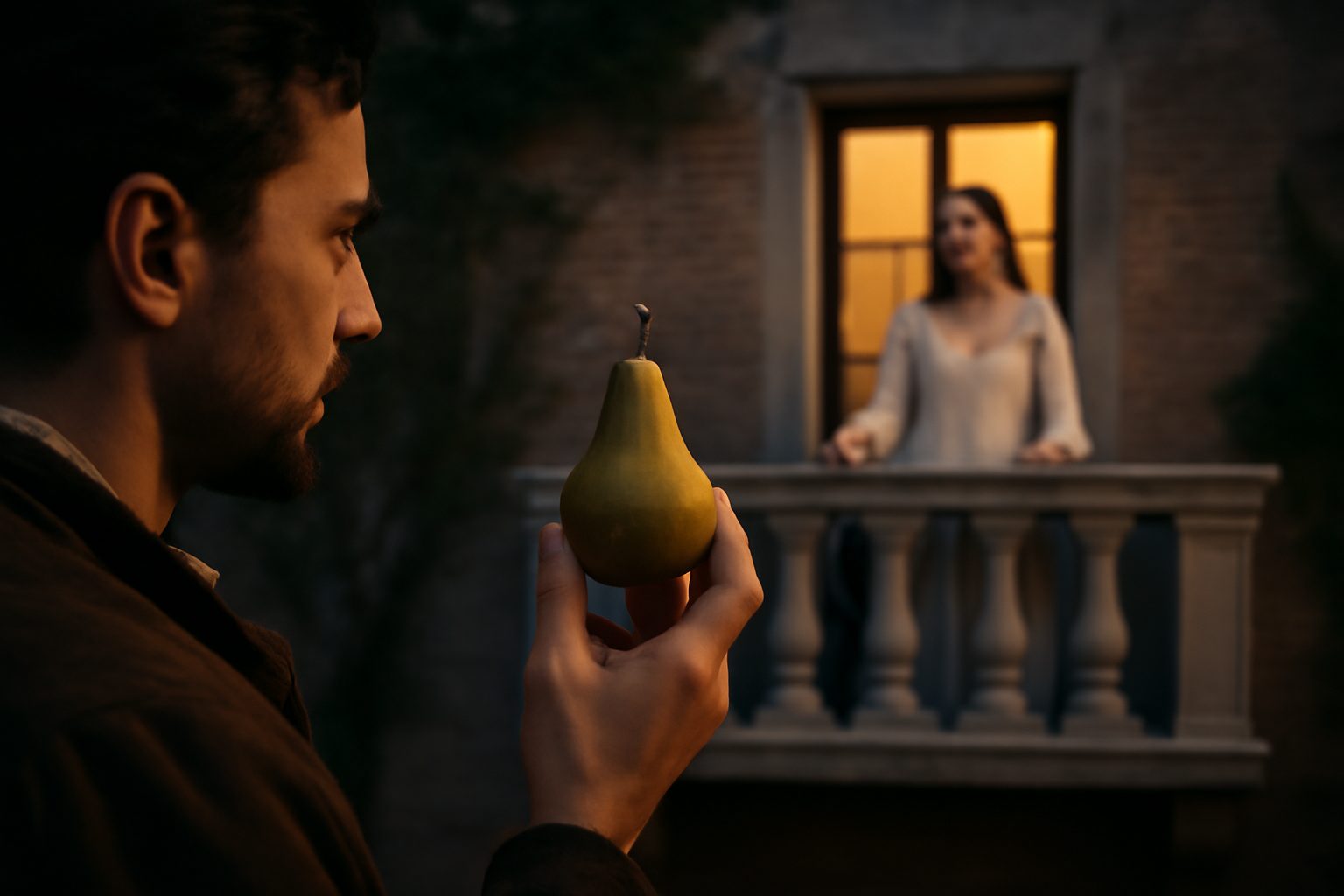
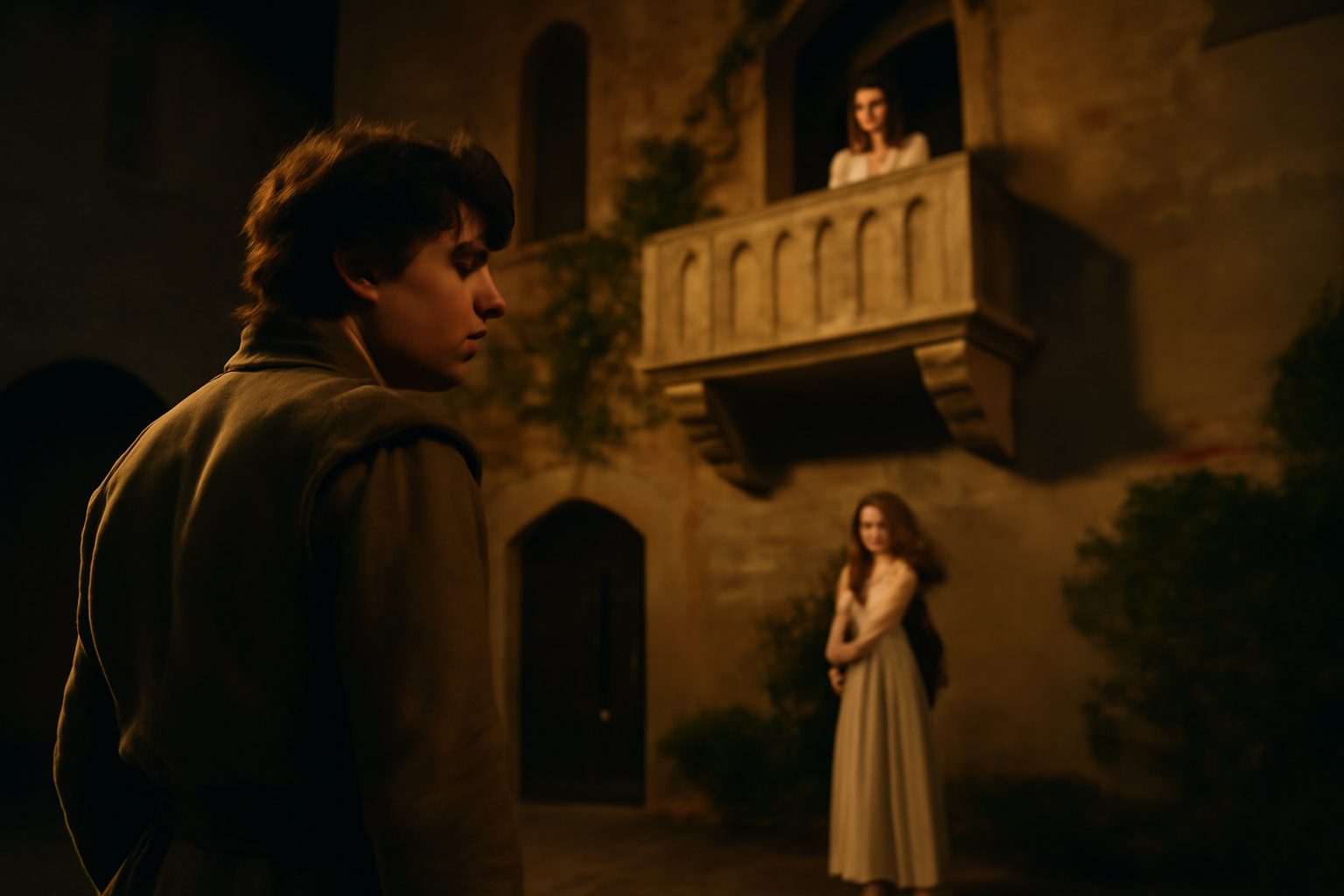
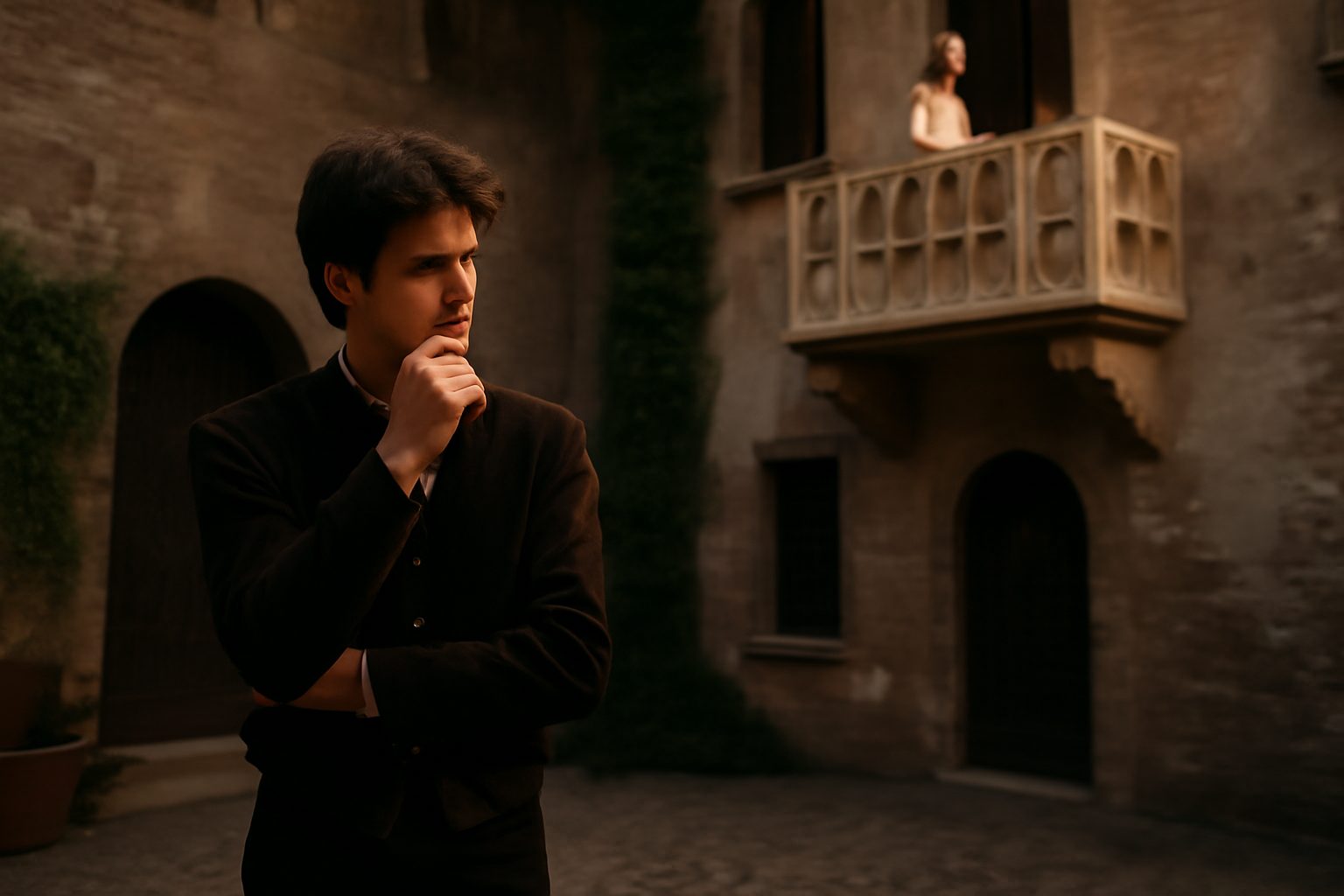
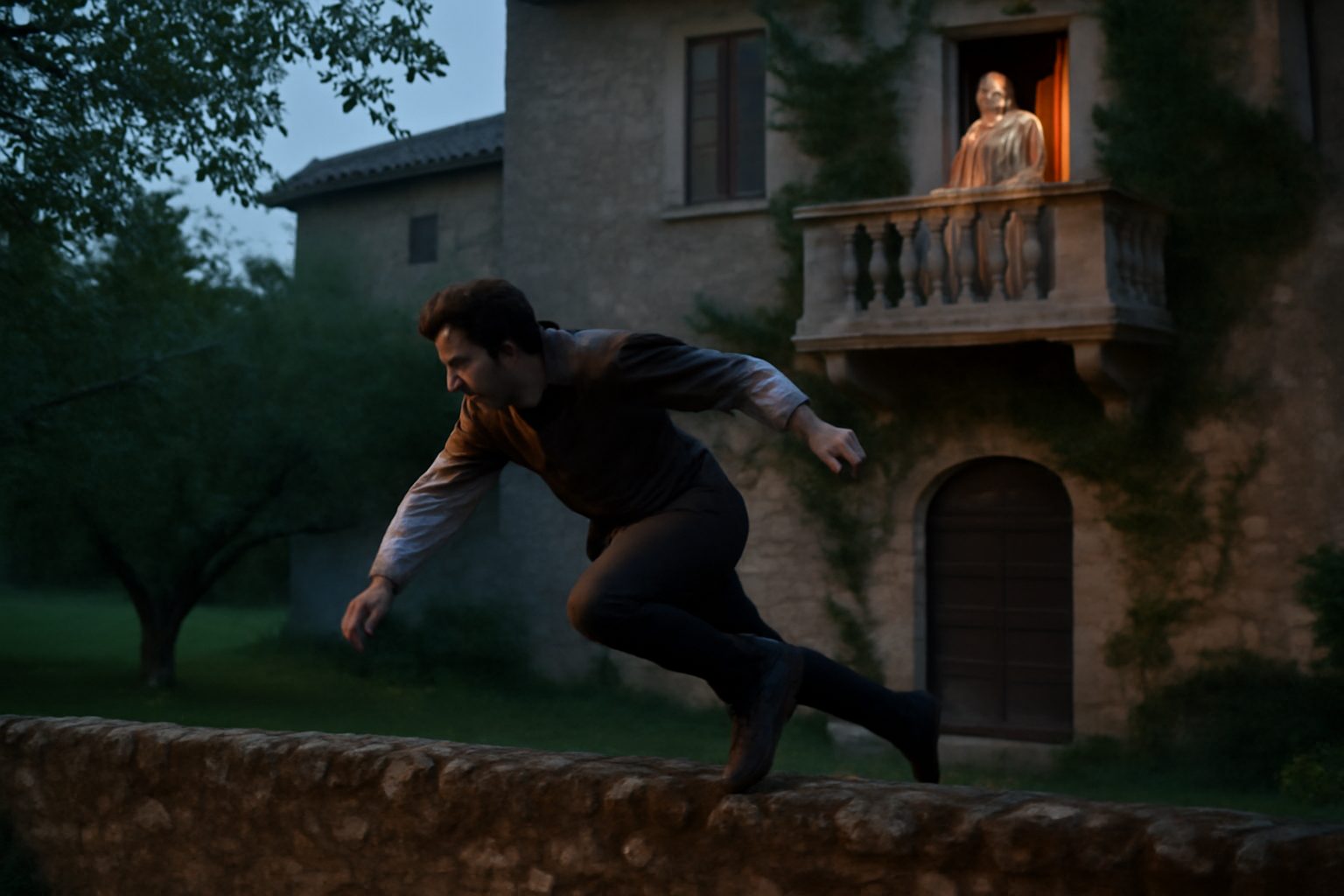
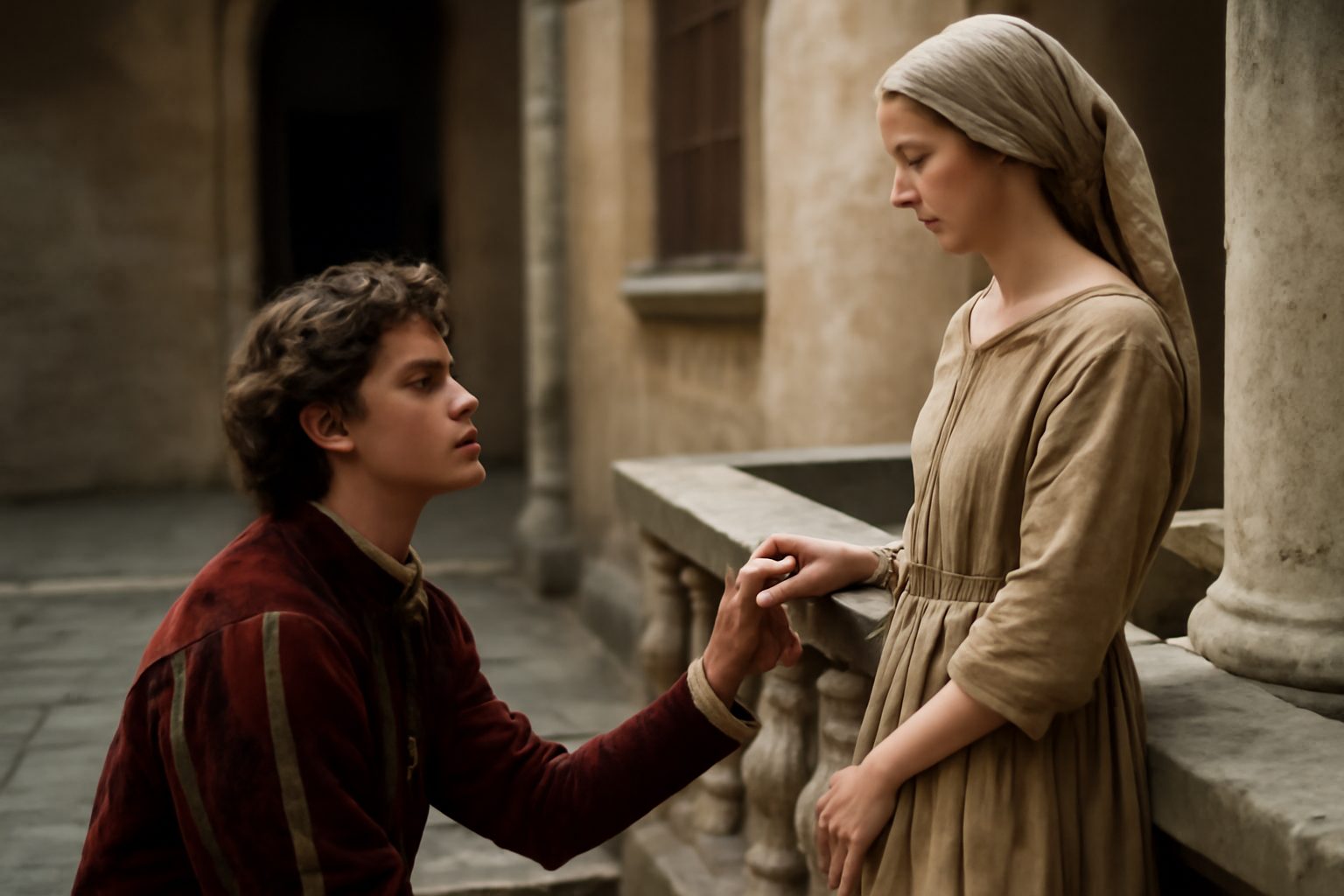
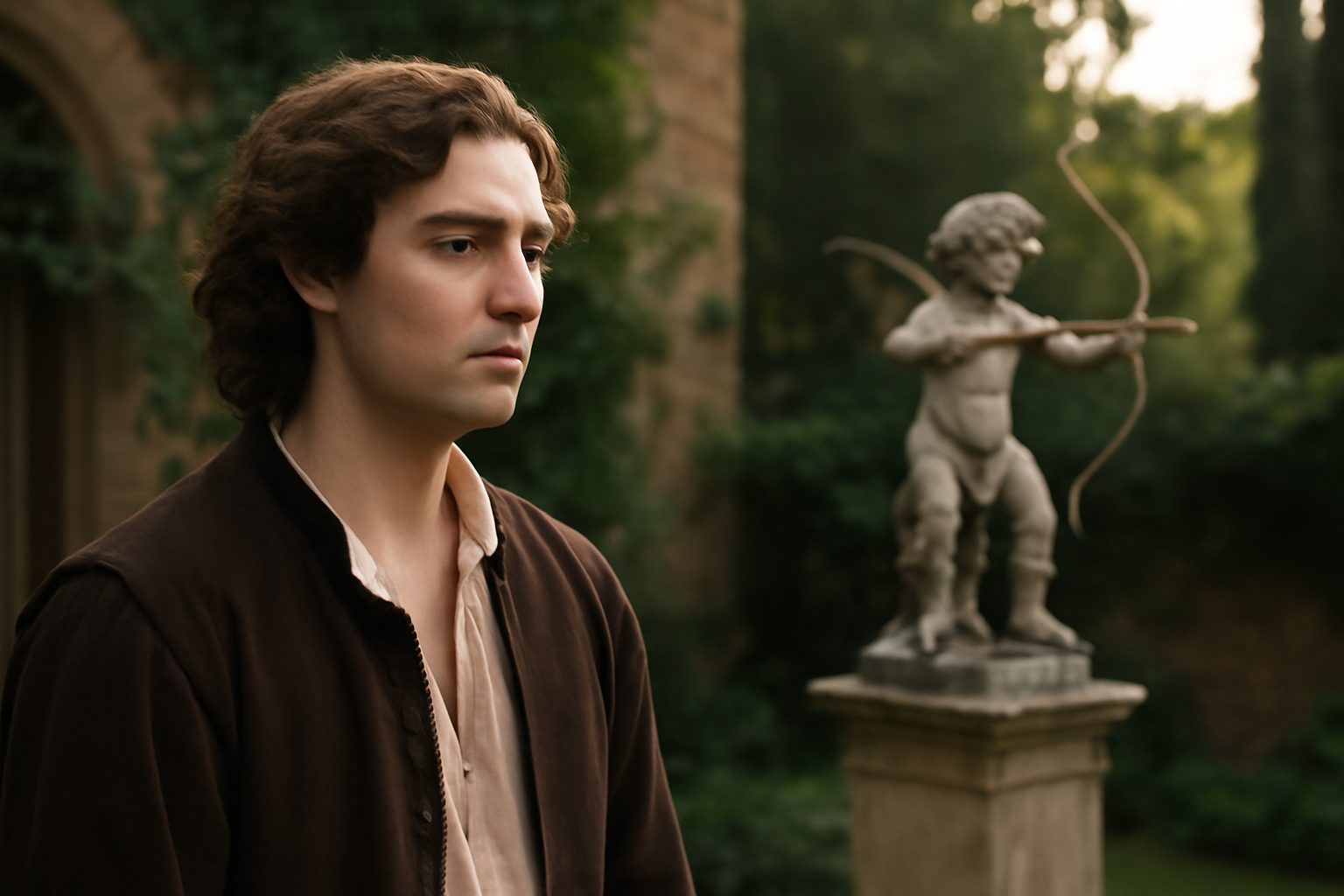
In Act 2, Scene 1 of Romeo and Juliet, Mercutio and Benvolio are searching for Romeo after the Capulet feast. Mercutio, ever the jester, mockingly calls out to Romeo, pretending to summon him as if by magic. His playful remark reflects his wit and frustration at Romeo's sudden disappearance.
Mercutio: "Nay, I'll conjure too."
In modern day english, we would say:
Fine, I’ll try to summon him as well.
Frequently Asked Questions
What does Mercutio say he will do in this line?
He says he will conjure too.
Connections to other verses:
Connections to "Nay, I'll conjure too."
Mercutio's declaration, Nay, I'll conjure too, is a direct response to Benvolio's earlier suggestion to Call, good Mercutio. This initiates a series of playful, mocking invocations aimed at Romeo, who is hiding nearby.
Conjuration Theme
The theme of conjuration is sustained throughout the scene. Mercutio refers to Romeo as The ape is dead, and I must conjure him, framing his efforts as a magical summoning. He later clarifies his intent with I conjure only but to raise up him, emphasizing the humorous rather than supernatural nature of his calls.
Invocation Examples
Mercutio's conjurations include vivid, exaggerated appeals, such as beseeching Romeo to Appear thou in the likeness of a sigh and invoking Rosaline's bright eyes. These are part of his taunting, elaborate performance to provoke Romeo's response.
Reactions and Warnings
Benvolio interjects with caution, noting And if he hear thee, thou wilt anger him, to which Mercutio retorts with This cannot anger him: 'twould anger him, highlighting the futility and jest of the situation.
Abandoning the Effort
The conjuration attempts ultimately prove fruitless, leading Mercutio to concede with Go, then; for 'tis in vain and the realization that they are To seek him here that means not to be found, closing the scene on their resigned departure.