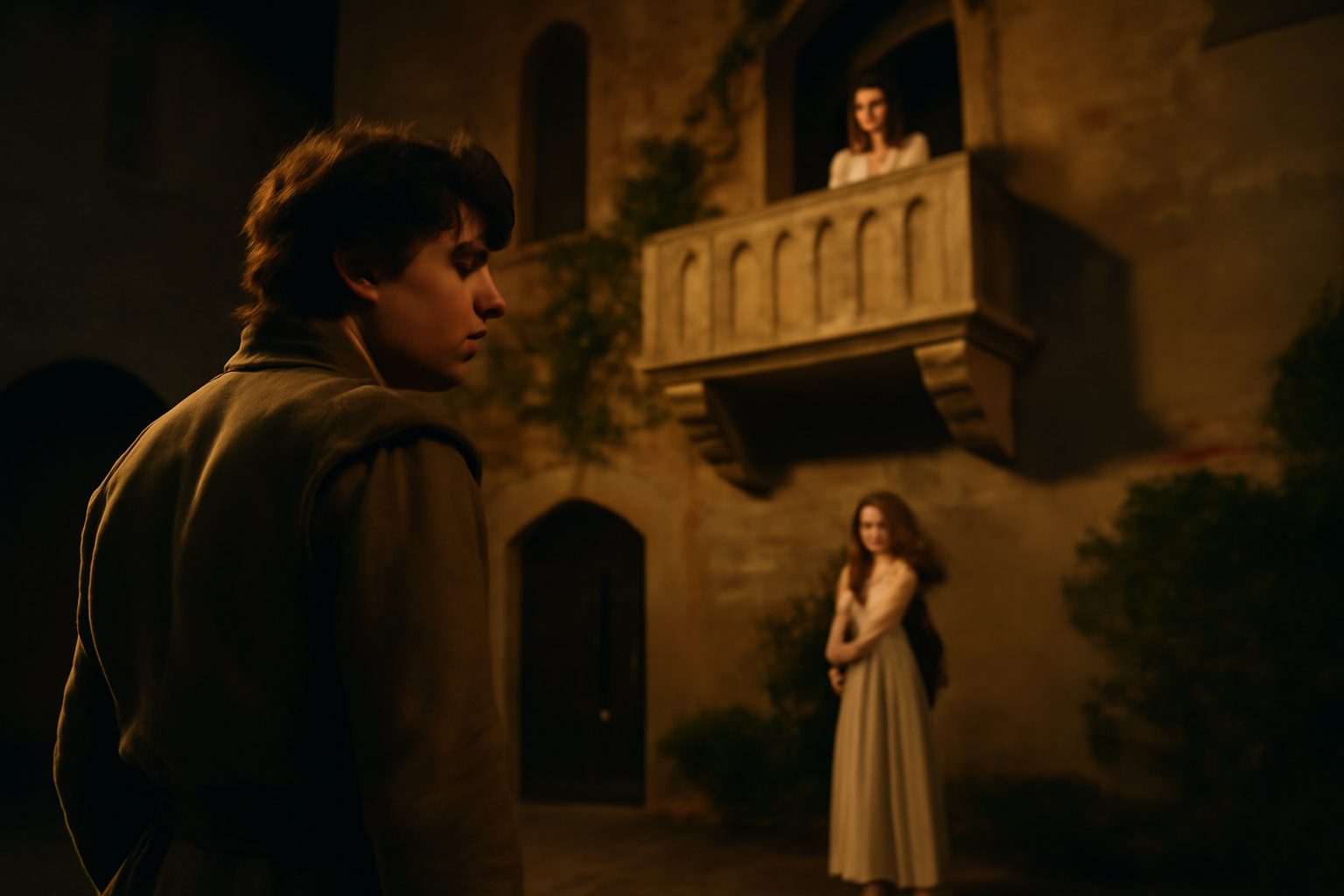
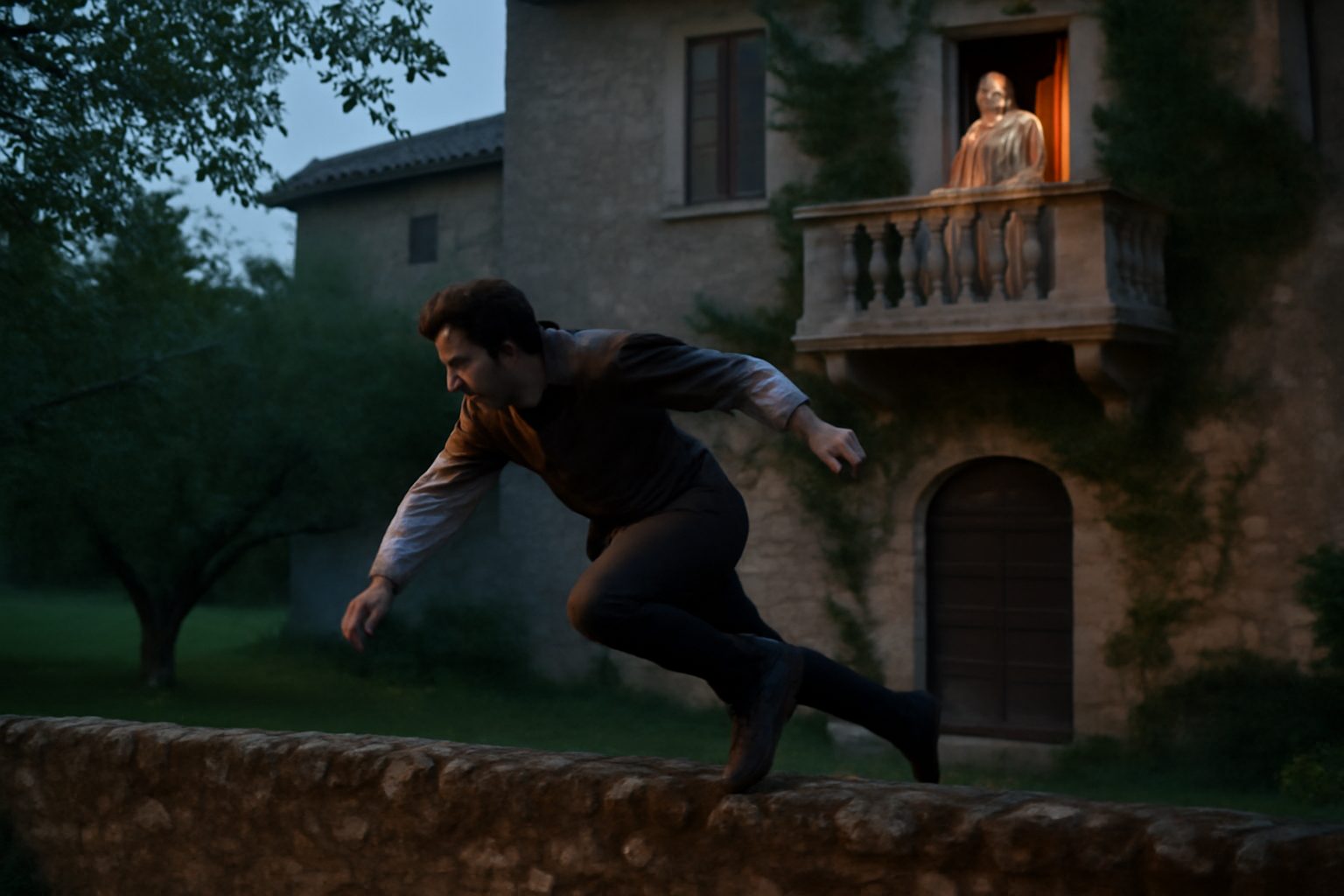
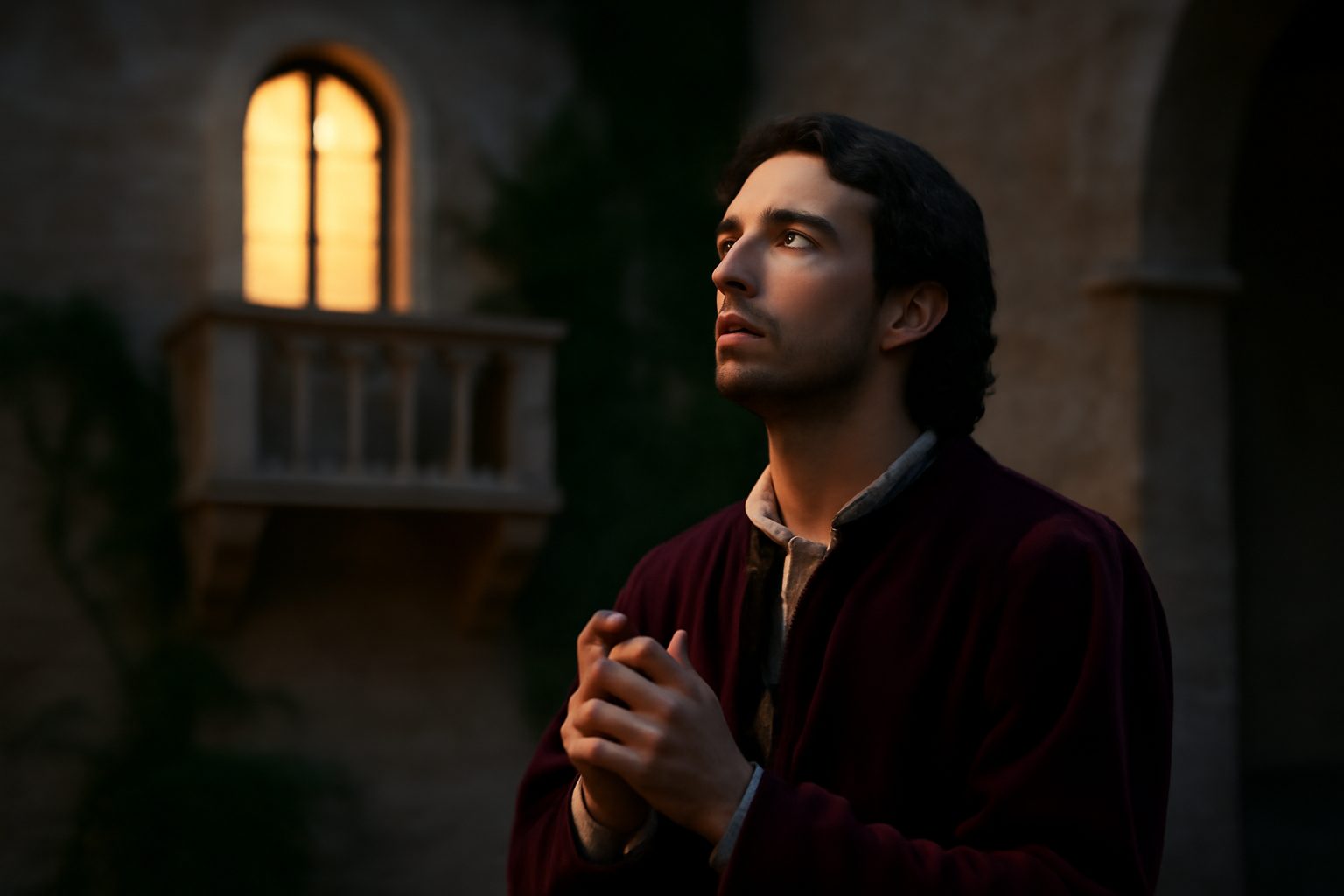
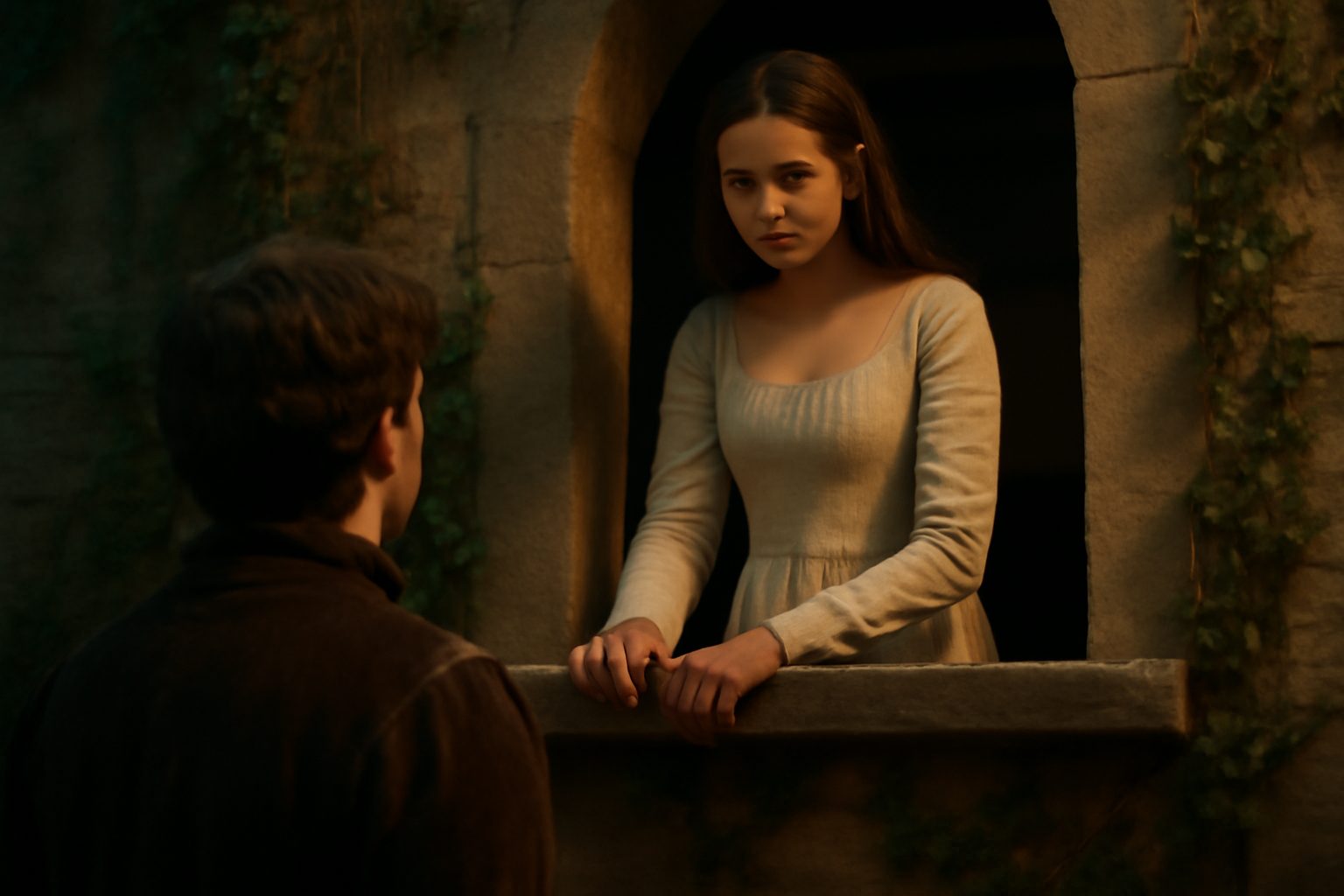
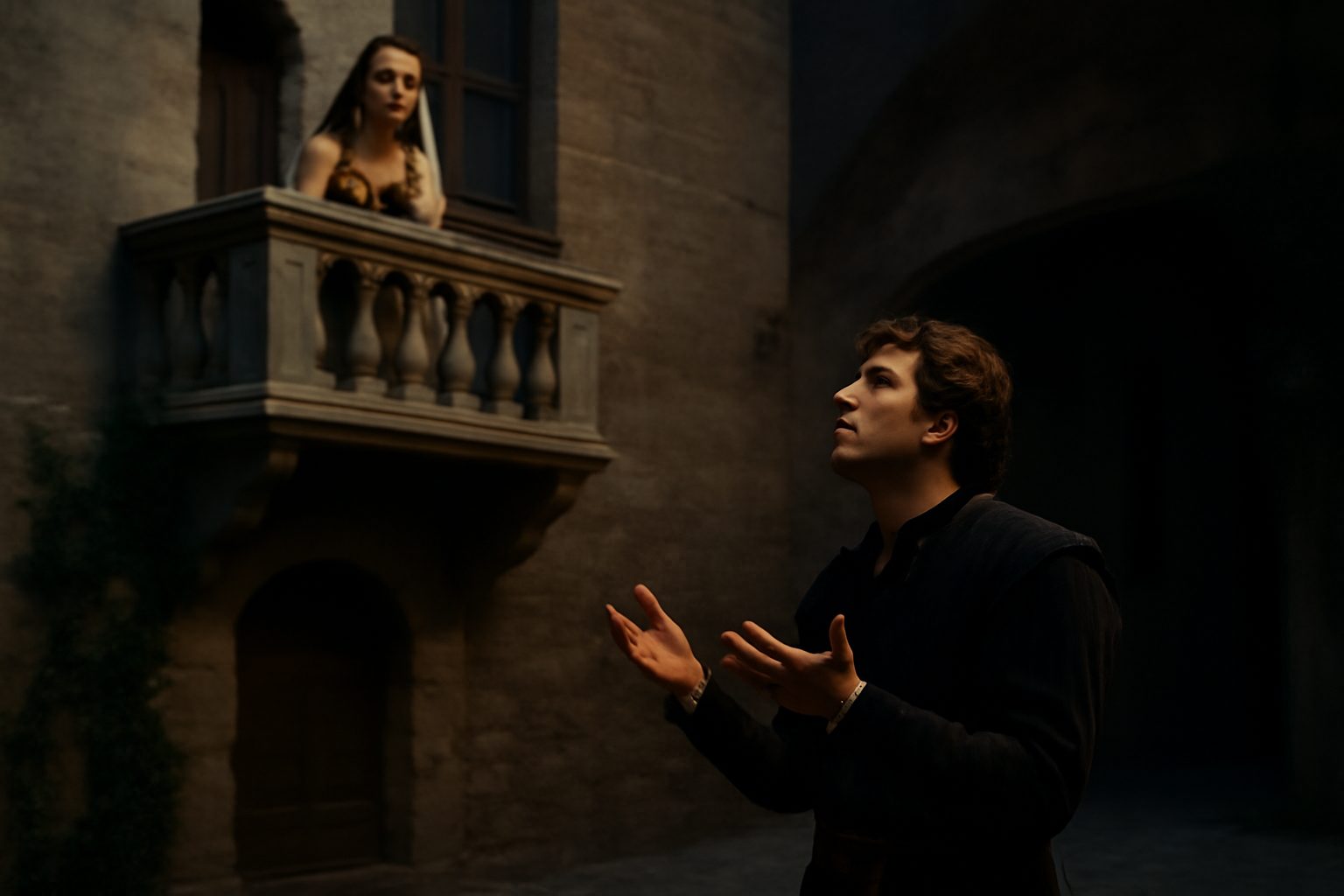
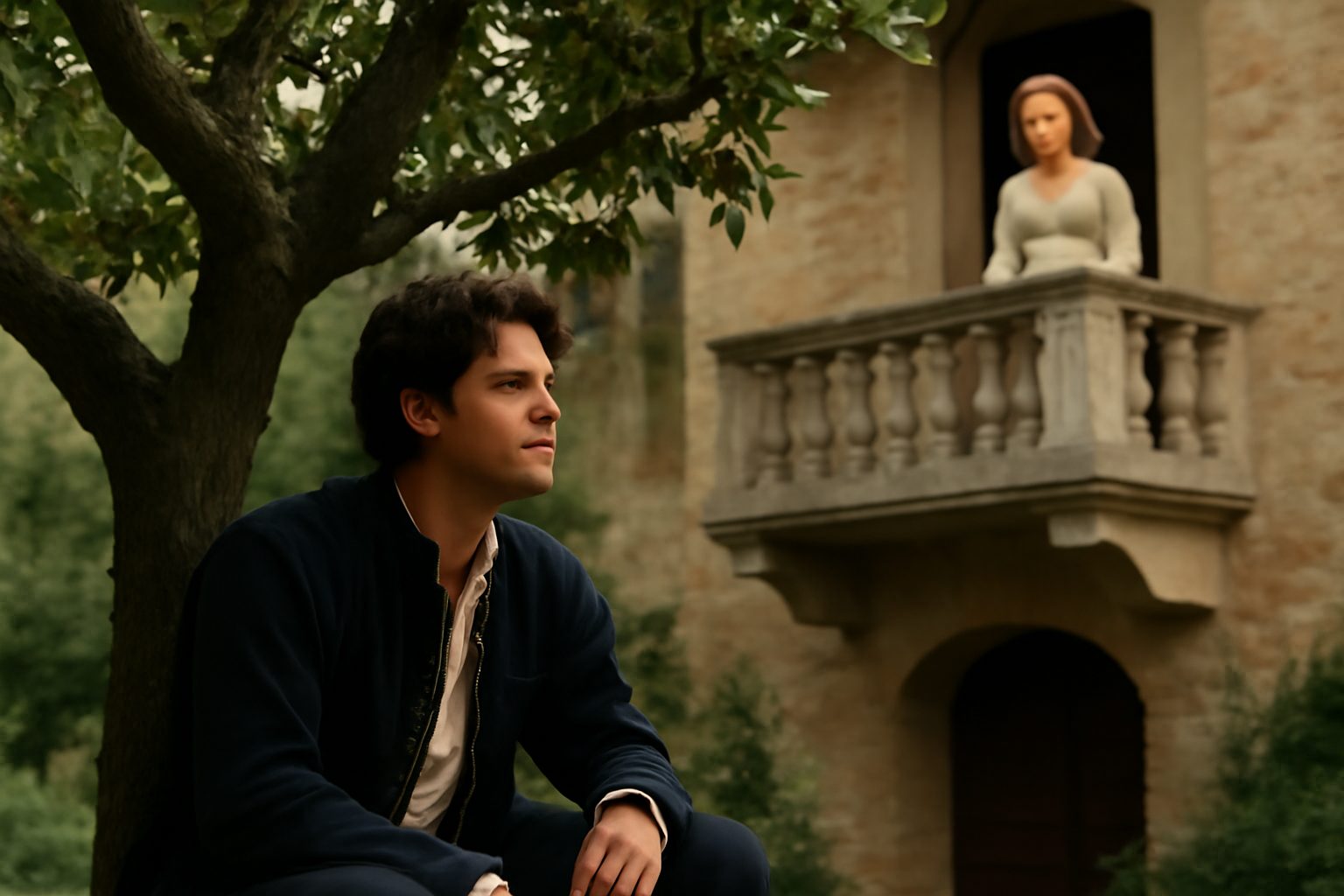
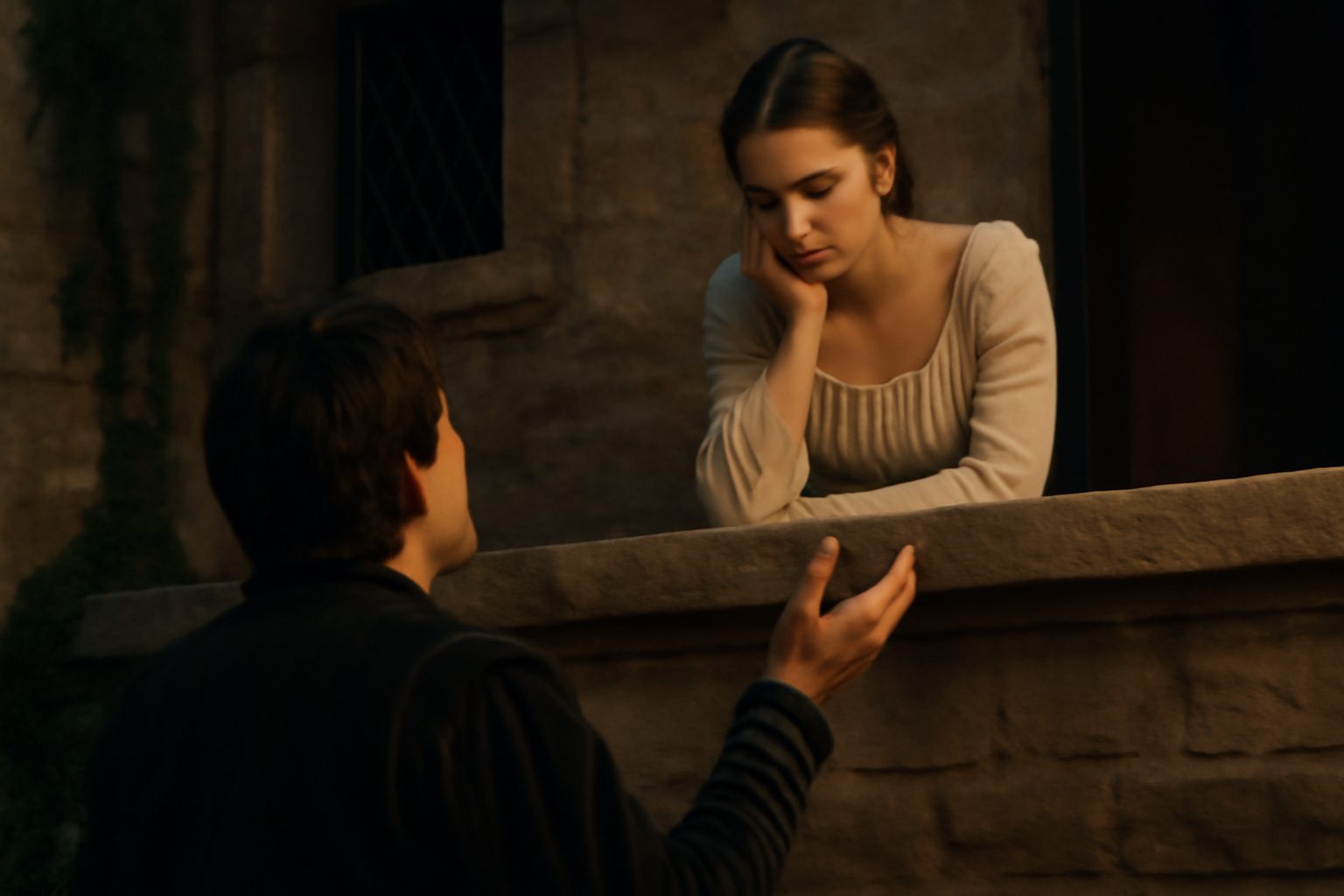
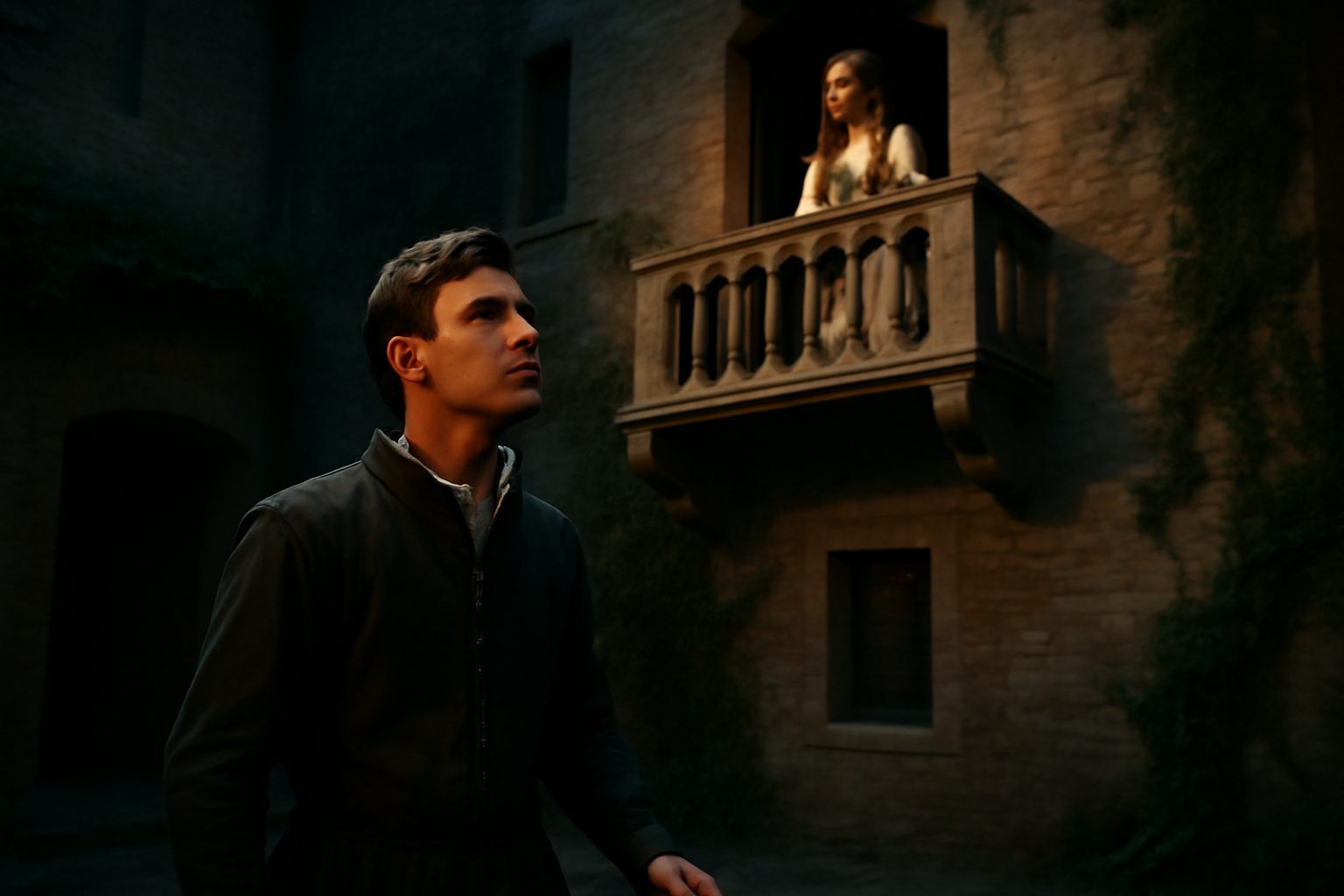
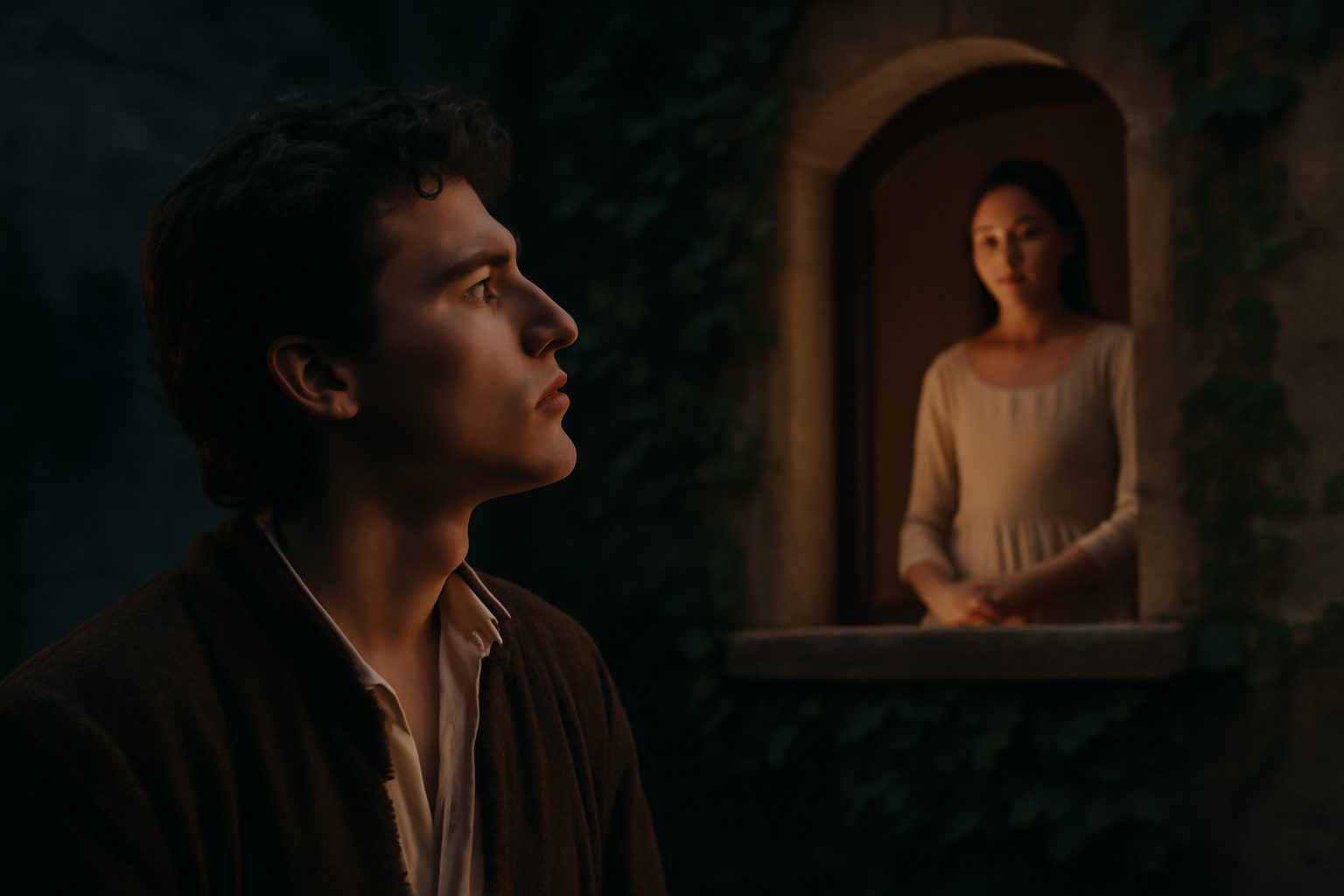
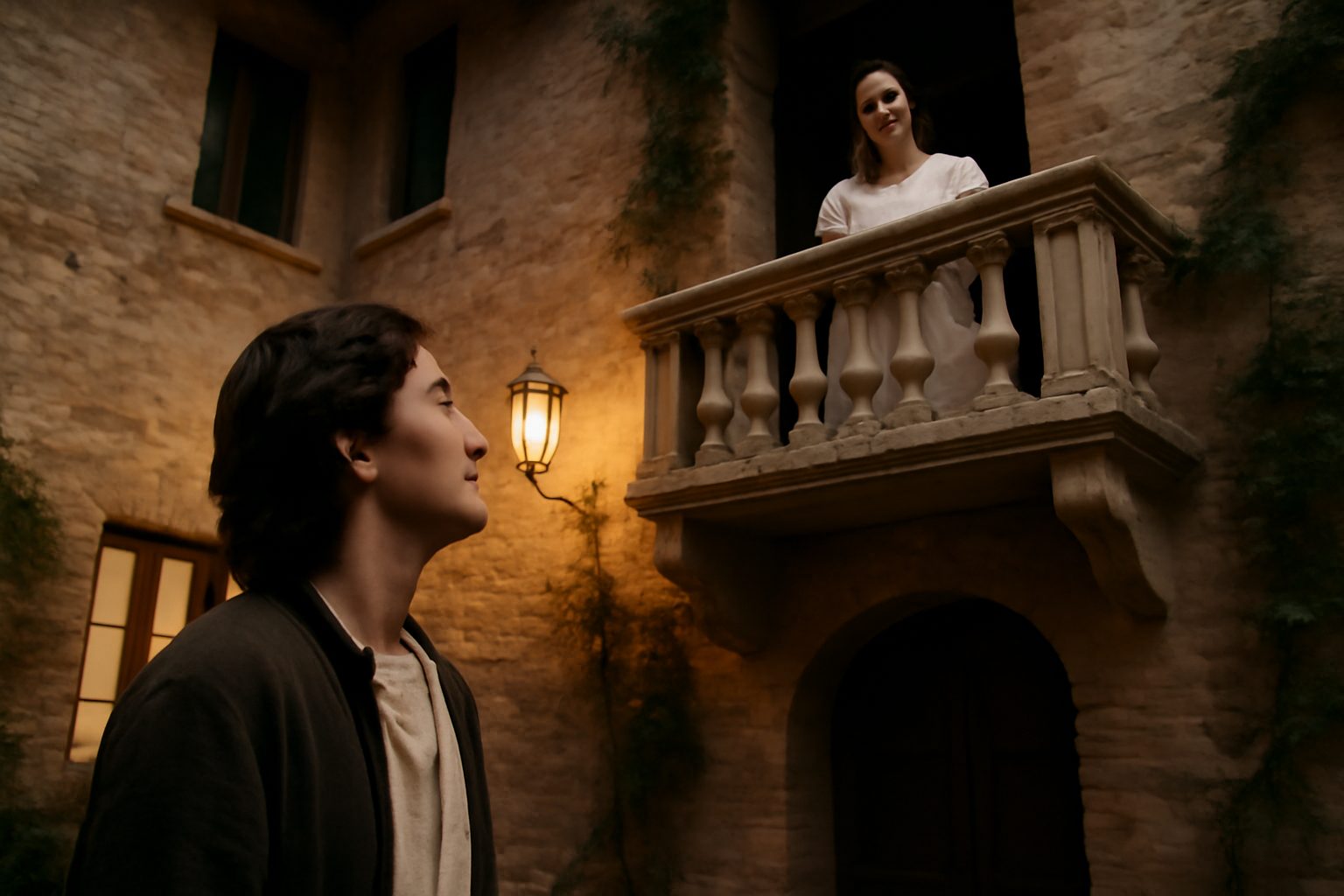
In Act 2, Scene 1 of Romeo and Juliet, Romeo has just left the Capulet feast and lingers near Juliet's orchard, unwilling to depart. Mercutio and Benvolio, unaware of Romeo's newfound love, mockingly call for him, teasing him about his unrequited infatuation with Rosaline. The line refers to the surrounding lands near the Capulet estate, emphasizing Romeo's fixation on the place where Juliet lives.
Mercutio: "And the demesnes that there adjacent lie,"
In modern day english, we would say:
The lands that are next to this place.
Frequently Asked Questions
What is Mercutio referring to when he mentions the adjacent lands in this line?
Mercutio is talking about the lands or properties that are next to where they are standing.
Connections to other verses:
Connections to "And the demesnes that there adjacent lie"
The verse "And the demesnes that there adjacent lie" is part of Mercutio's bawdy conjuration speech, where he mocks Romeo's lovesick state. This line refers to the surrounding lands or territories near Rosaline's body, continuing the theme of physical and geographical imagery used to tease Romeo.
Link to Physical Descriptions
This verse connects to earlier lines where Mercutio describes Rosaline's physical attributes in exaggerated, almost cartographical terms, such as "By her high forehead and her scarlet lip" and "By her fine foot, straight leg and quivering thigh". These build a metaphorical landscape of her body, making "demesnes that there adjacent lie" a natural extension of this imagery.
Conjuration Context
It is part of a larger pattern of conjuration verses where Mercutio attempts to "raise" Romeo by invoking humorous and provocative images. Related lines include "To raise a spirit in his mistress' circle" and "I conjure only but to raise up him", emphasizing the playful mockery of love spells.
Response and Further Taunting
Mercutio's speech elicits responses from Benvolio, who warns "And if he hear thee, thou wilt anger him", highlighting the tension between jest and genuine emotion. The thematic flow continues into later verses like "Now will he sit under a medlar tree", which sustains the imagery of love-sick folly in natural settings.