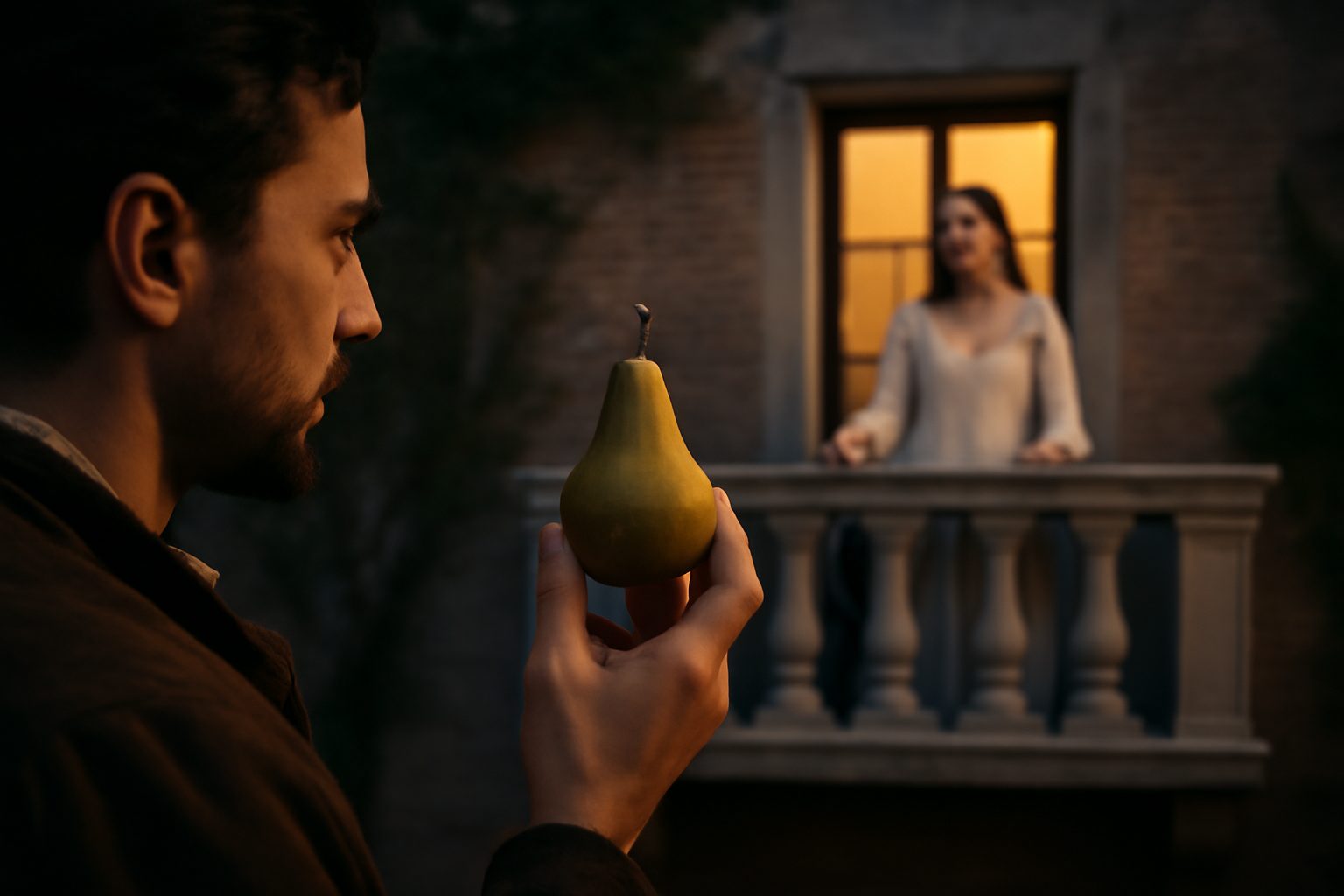
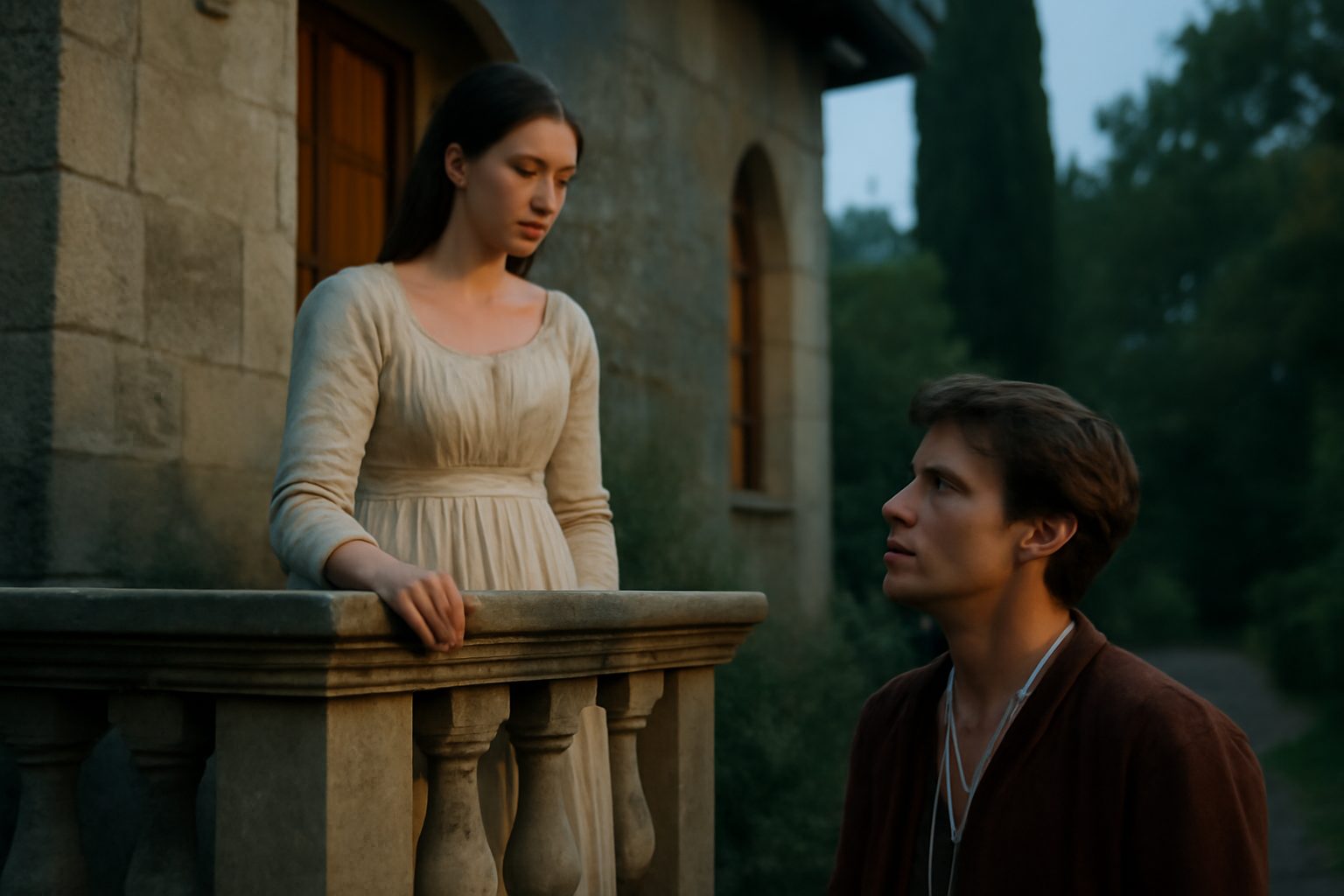
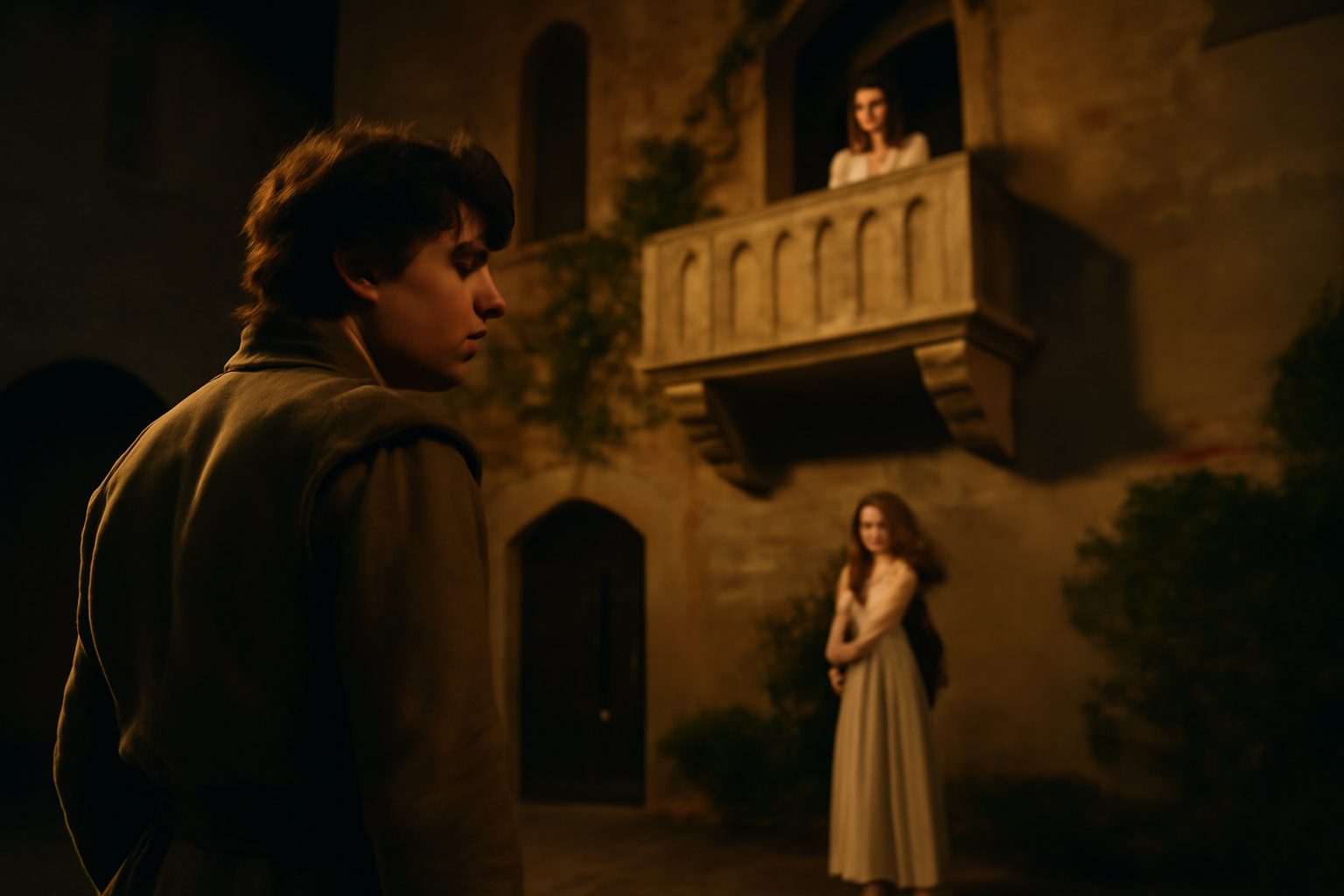
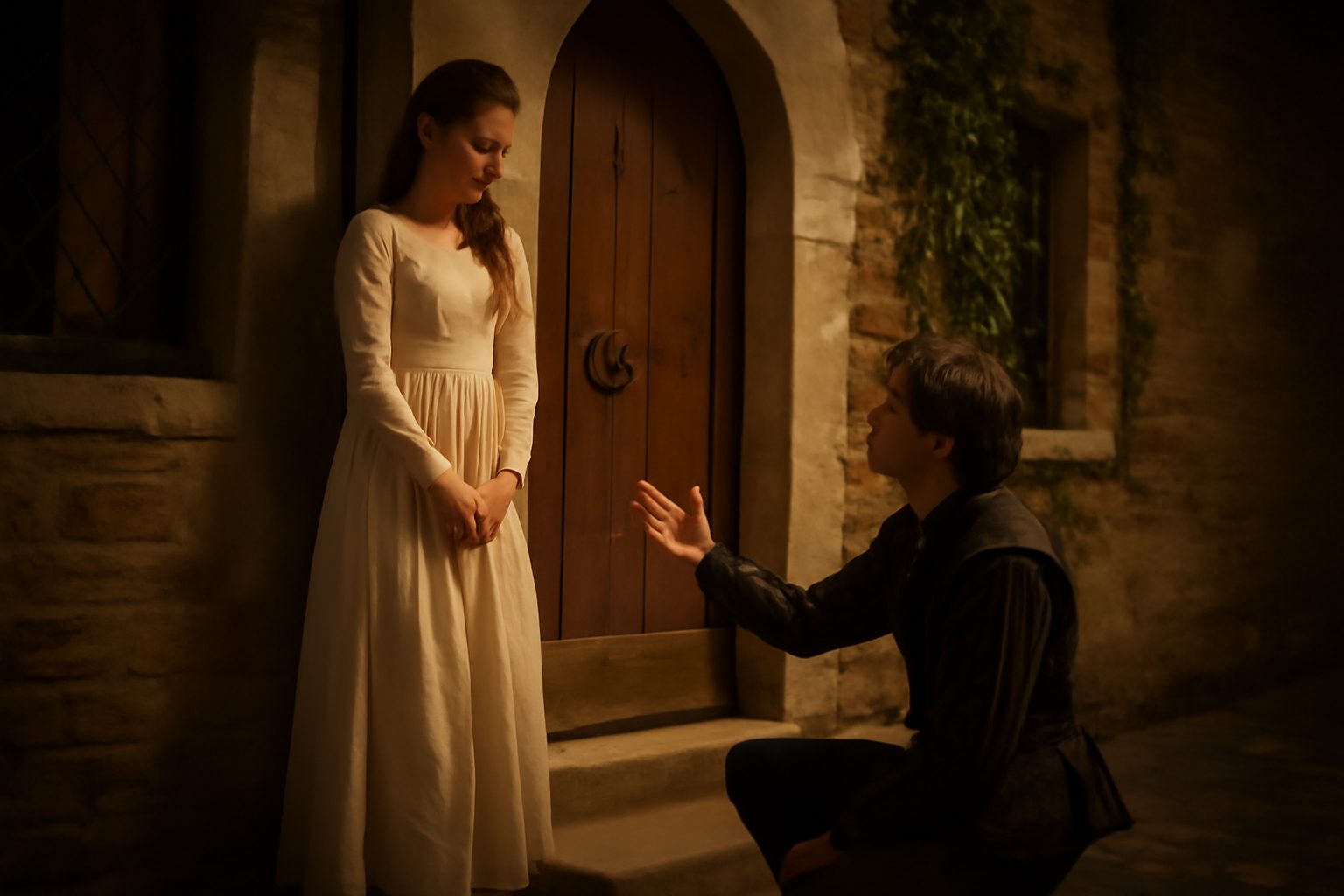
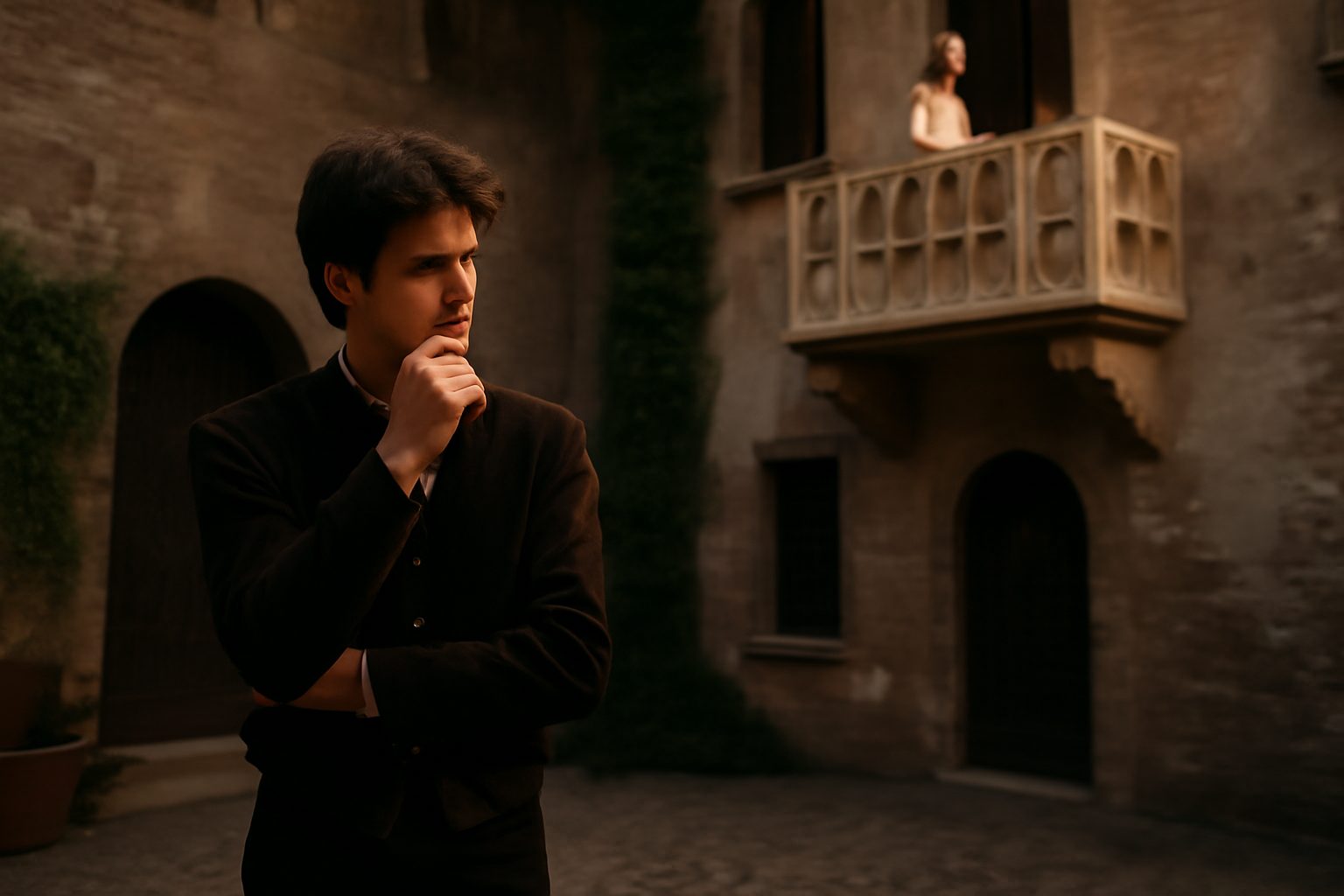
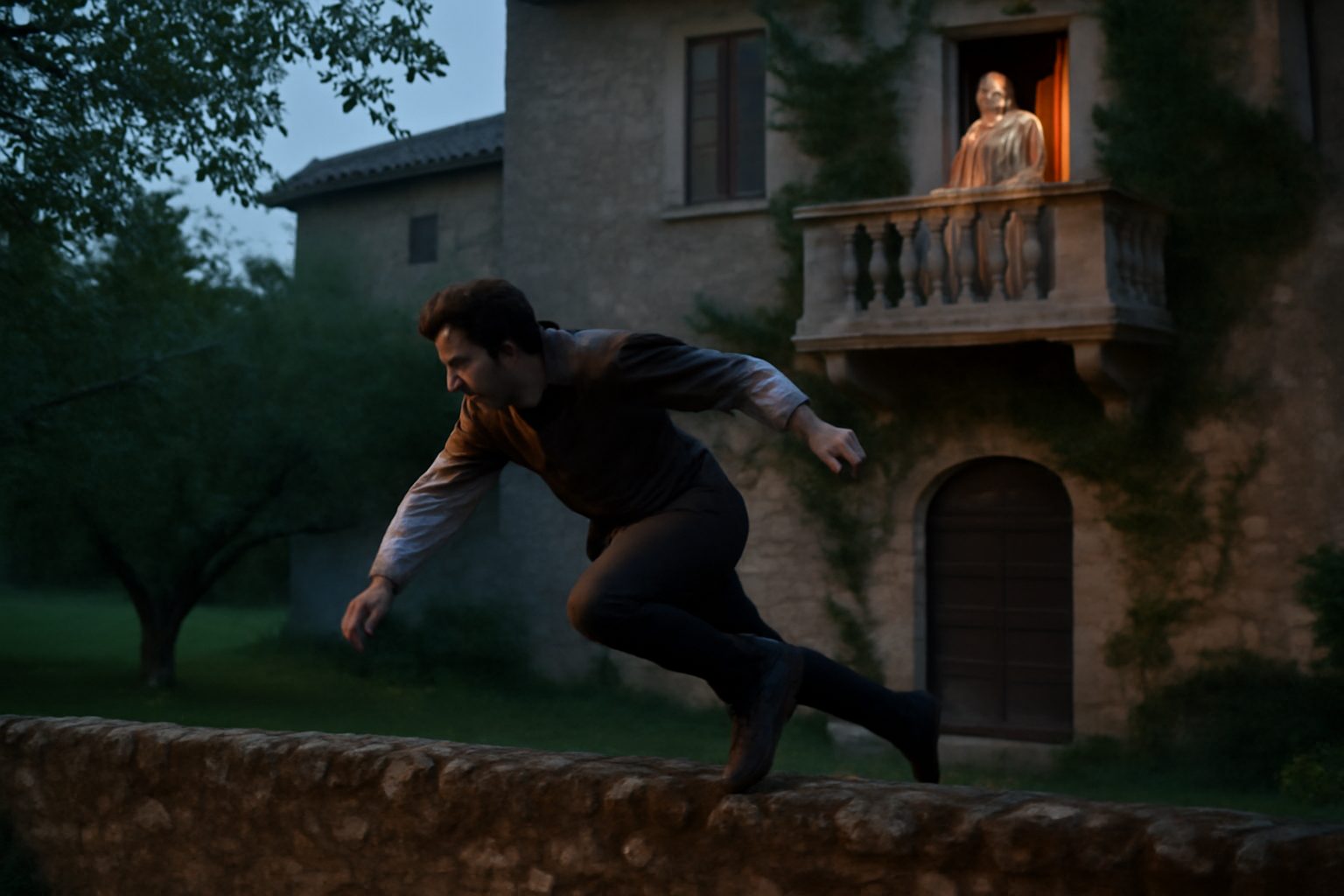
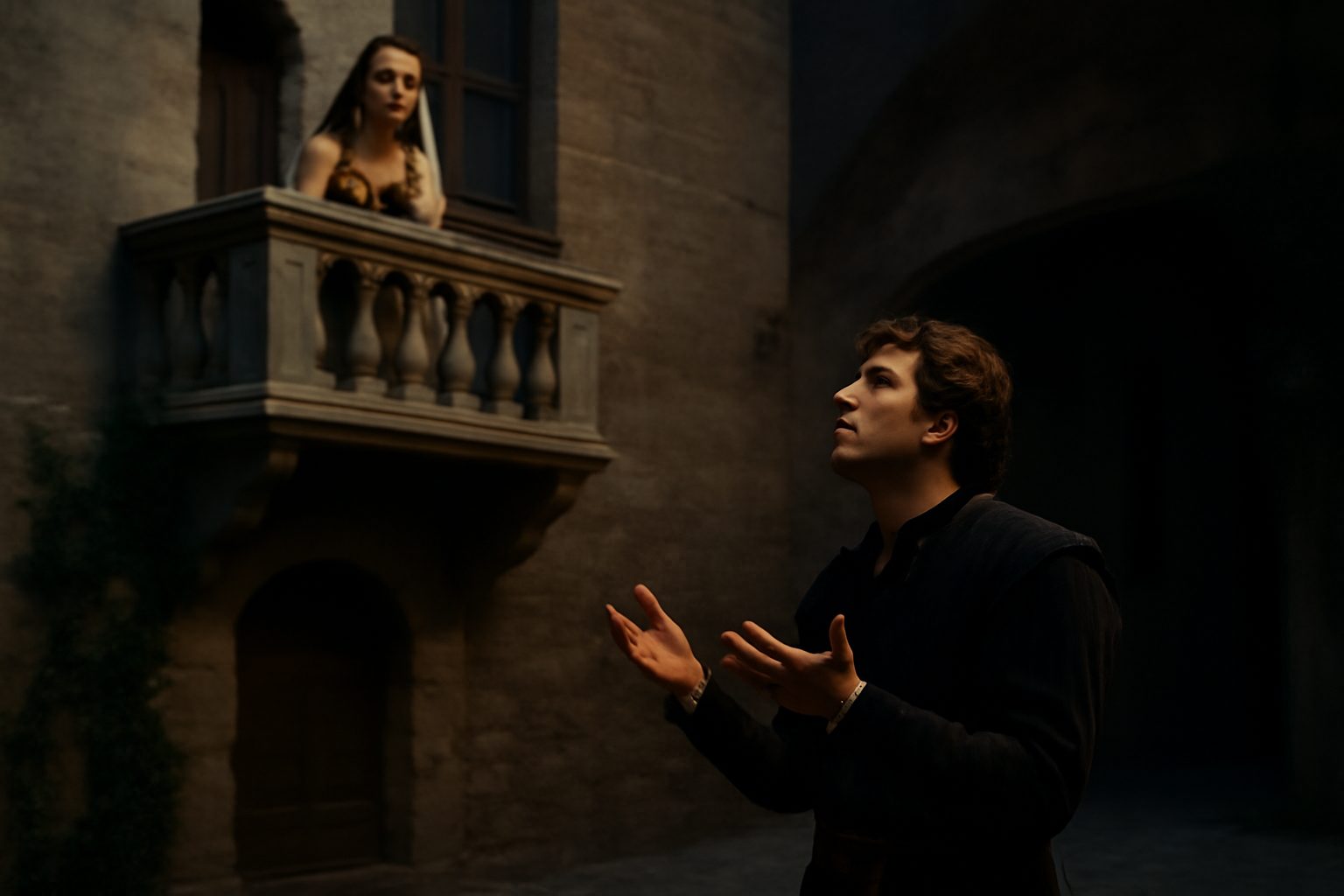
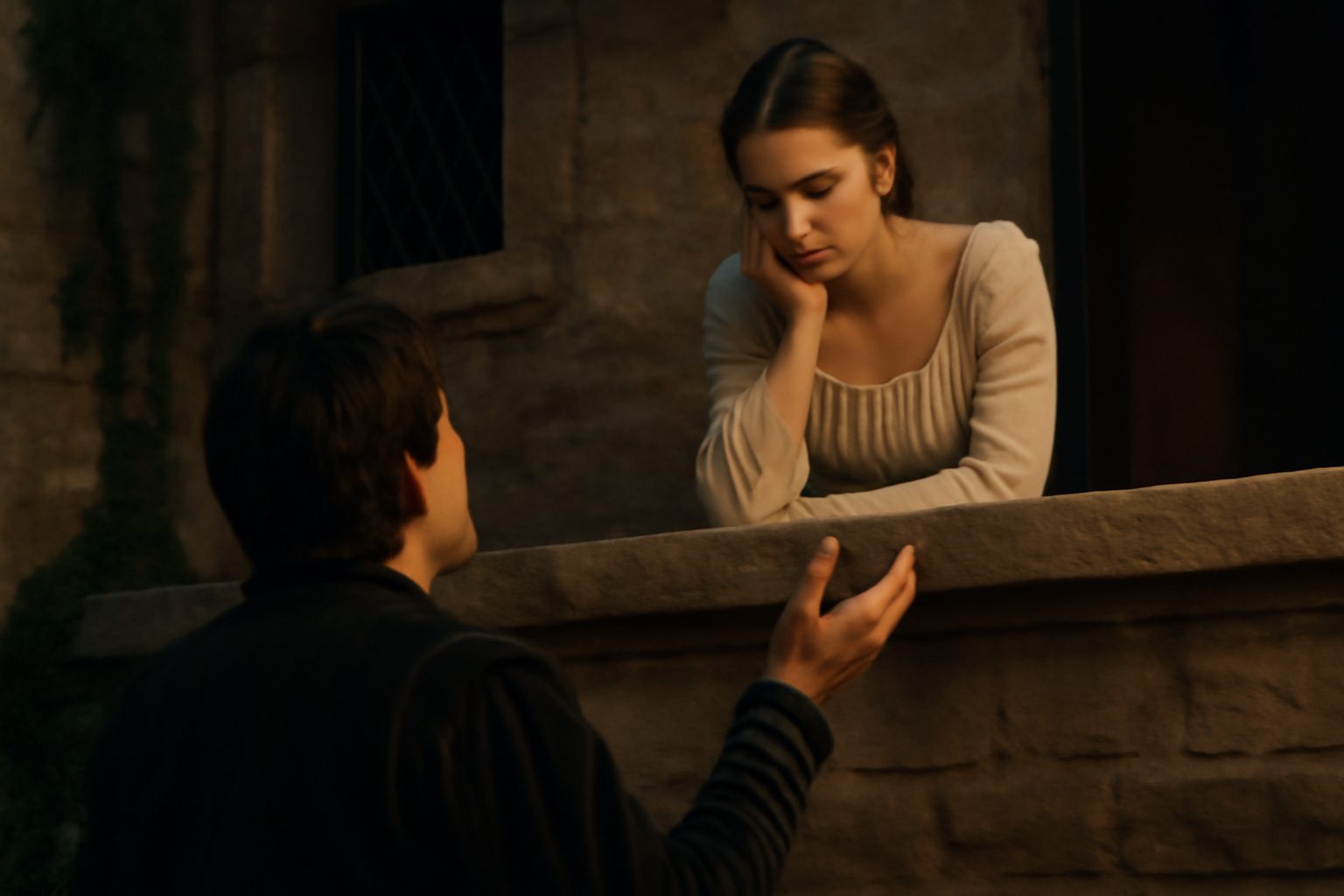
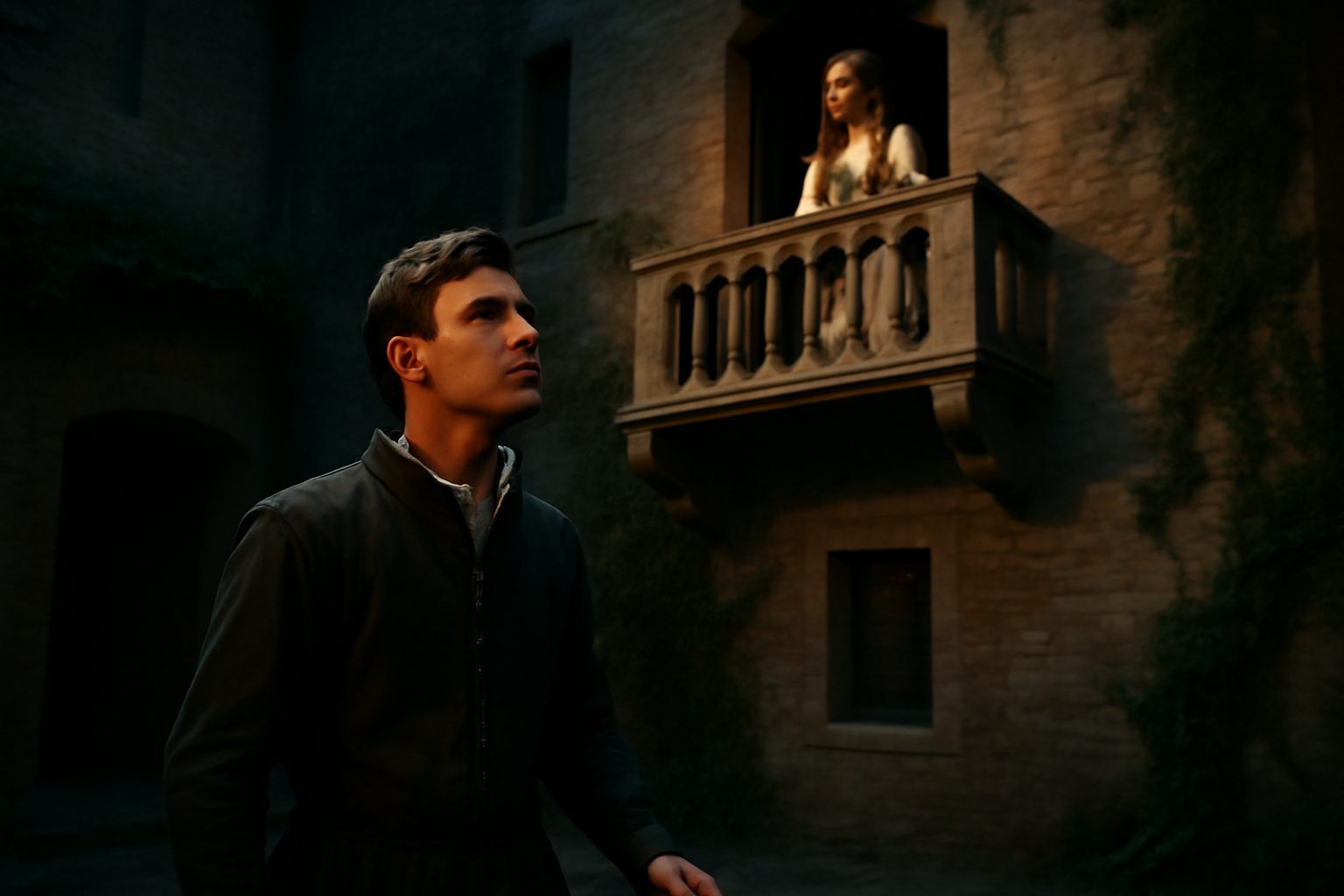
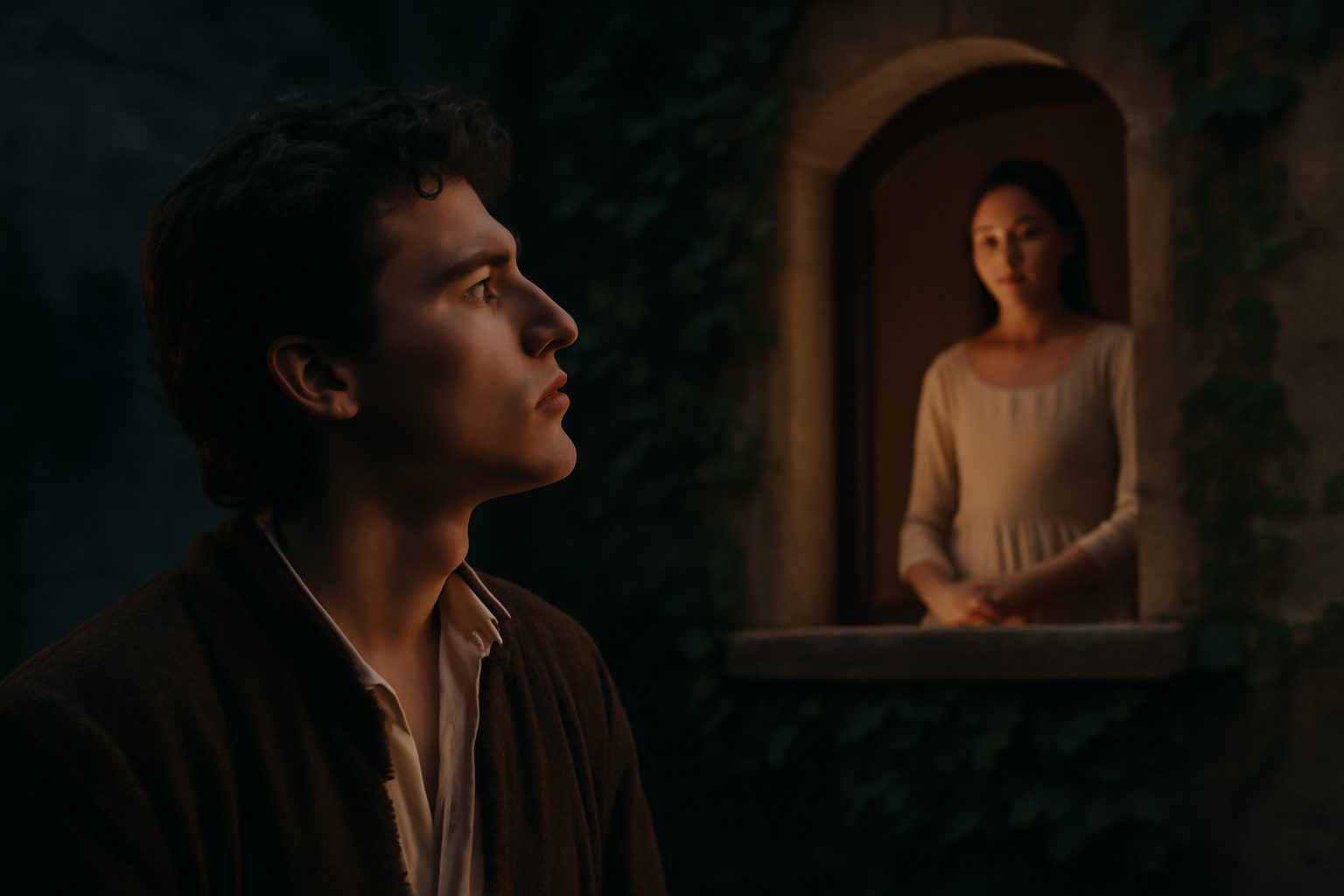
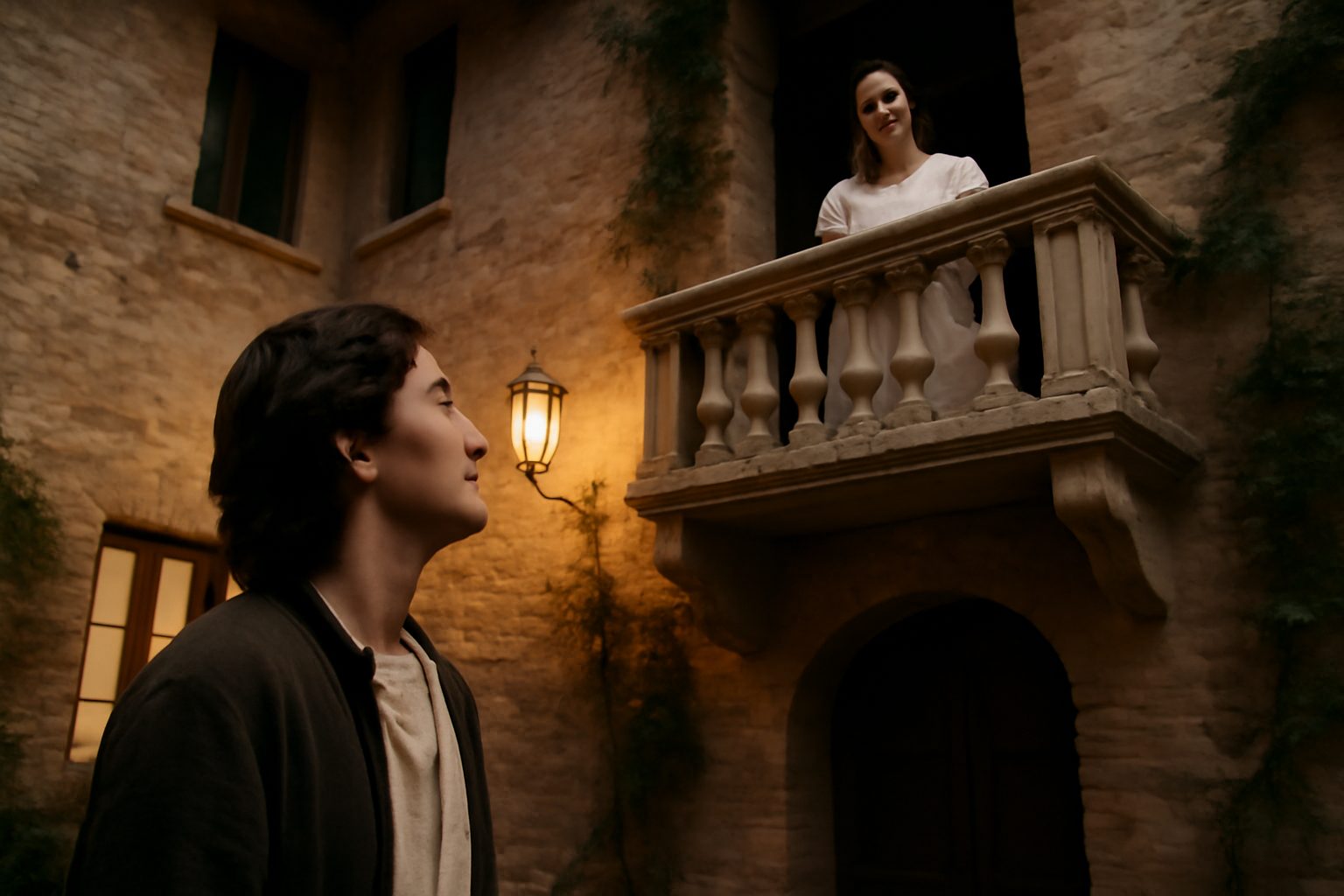
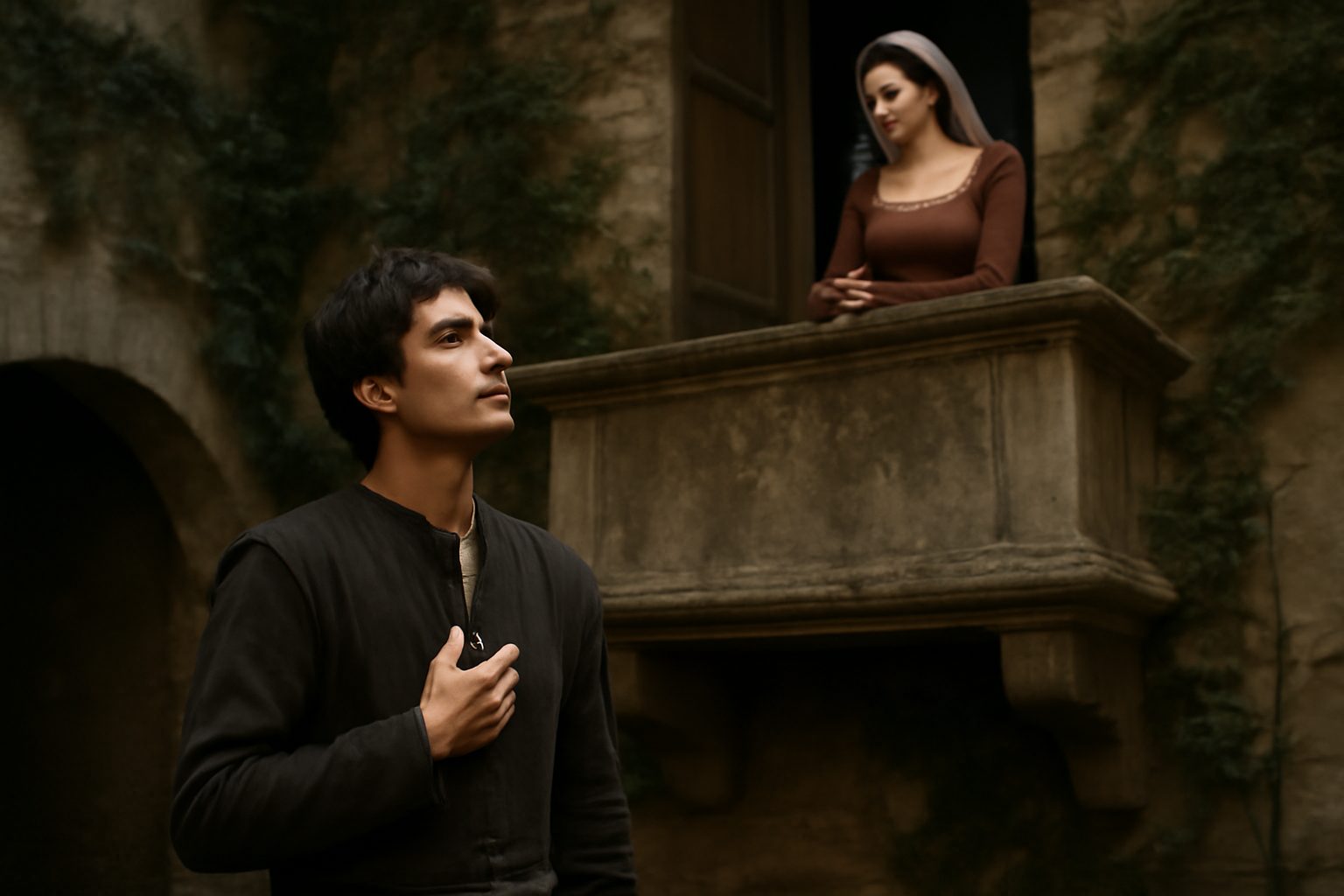
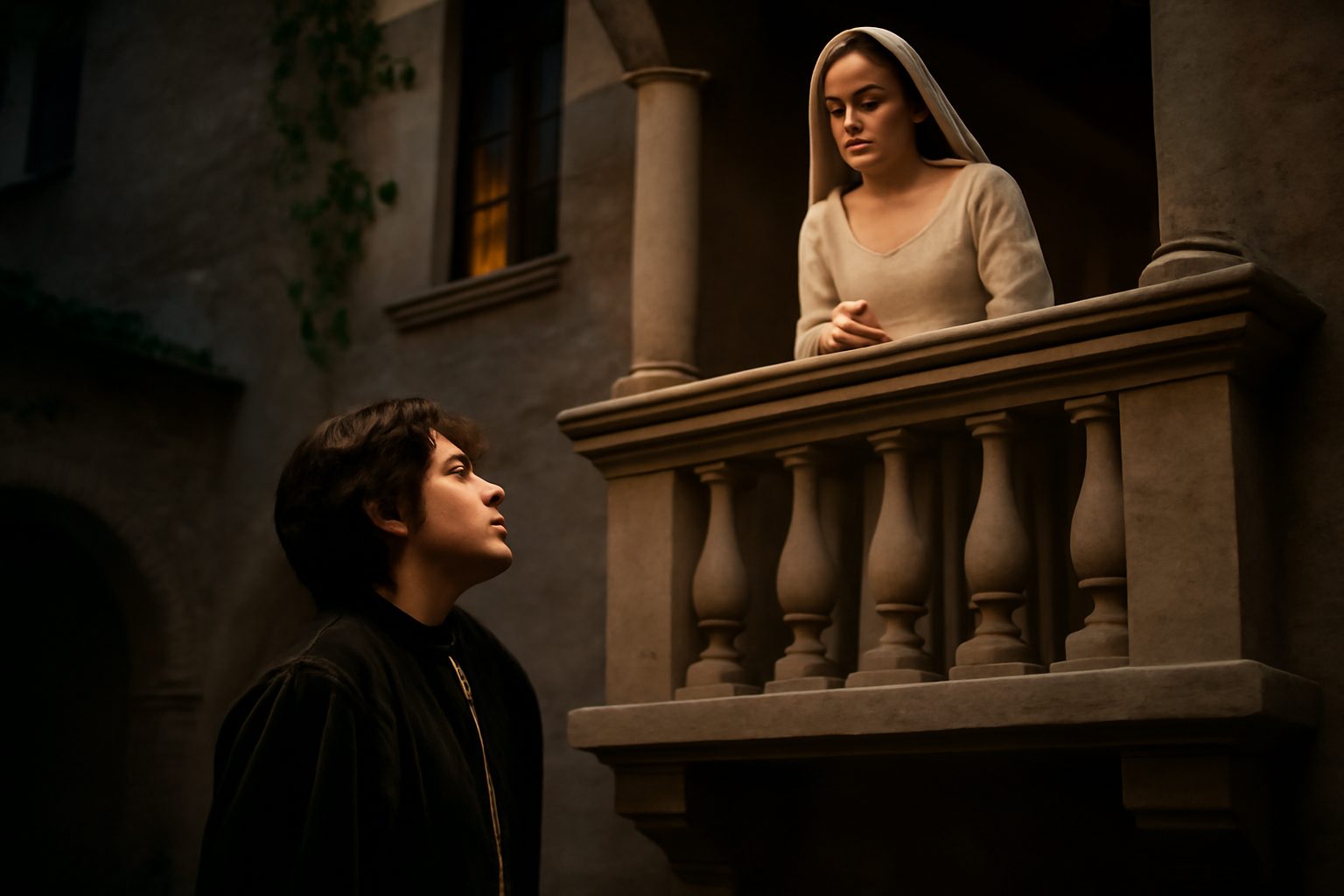
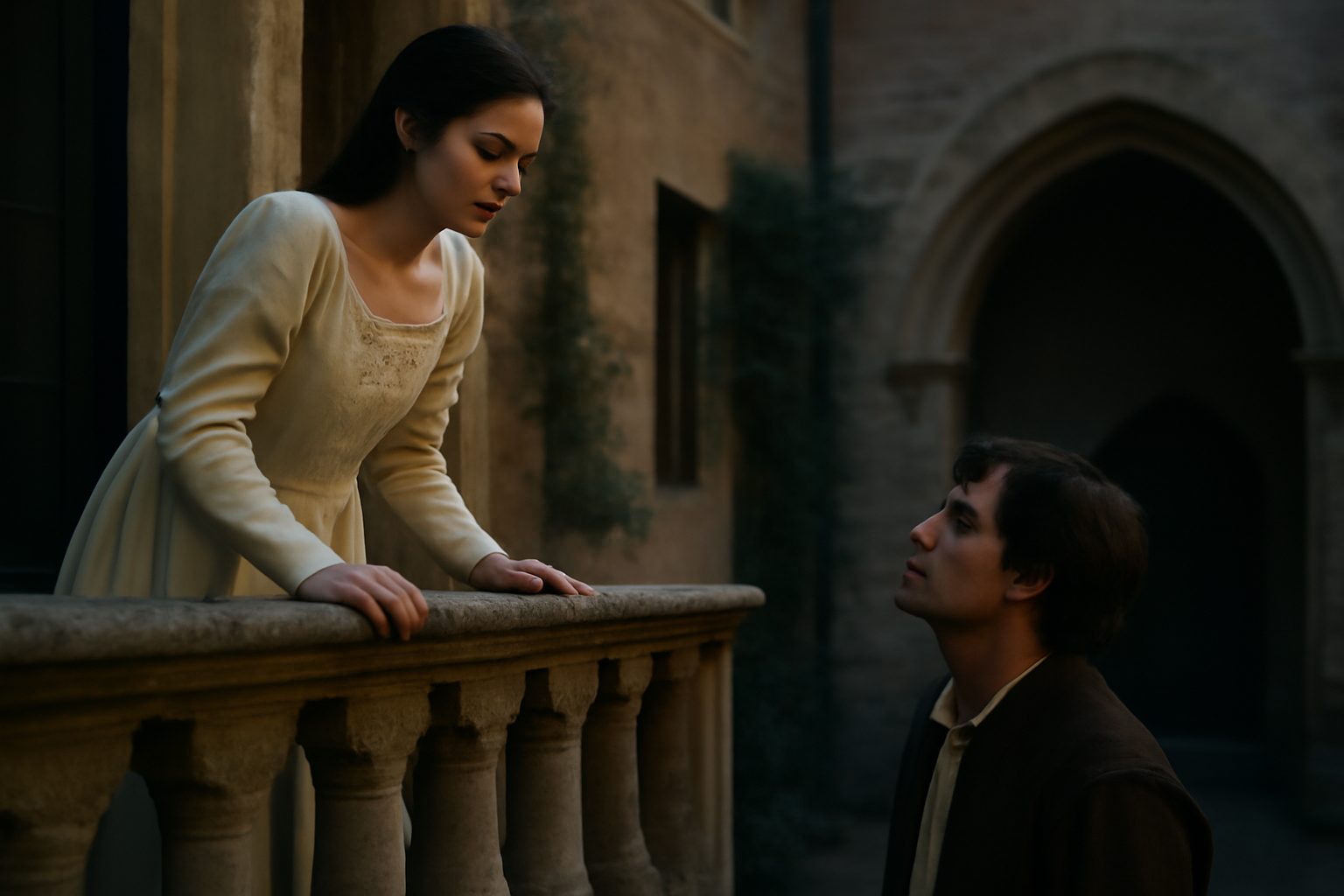
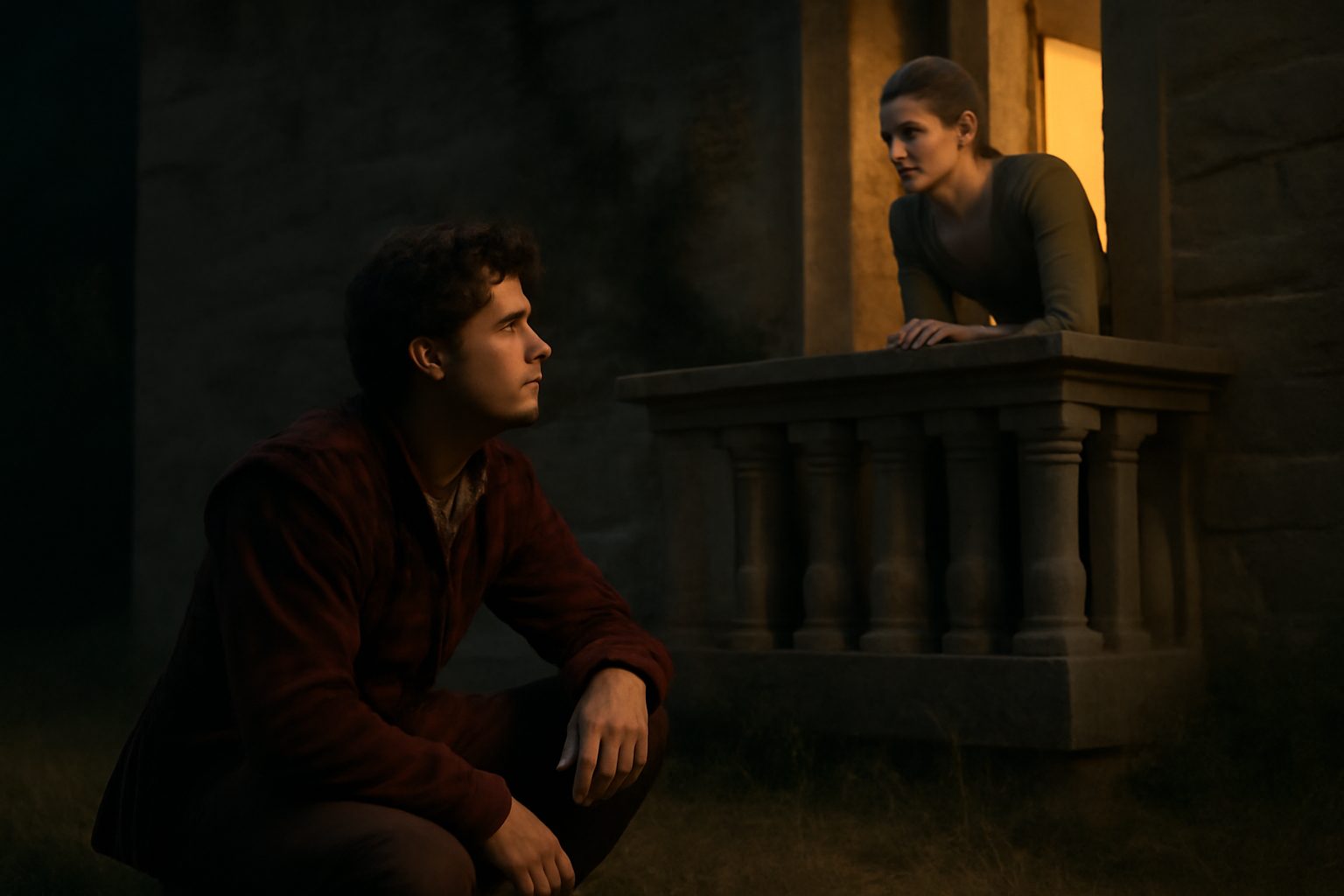
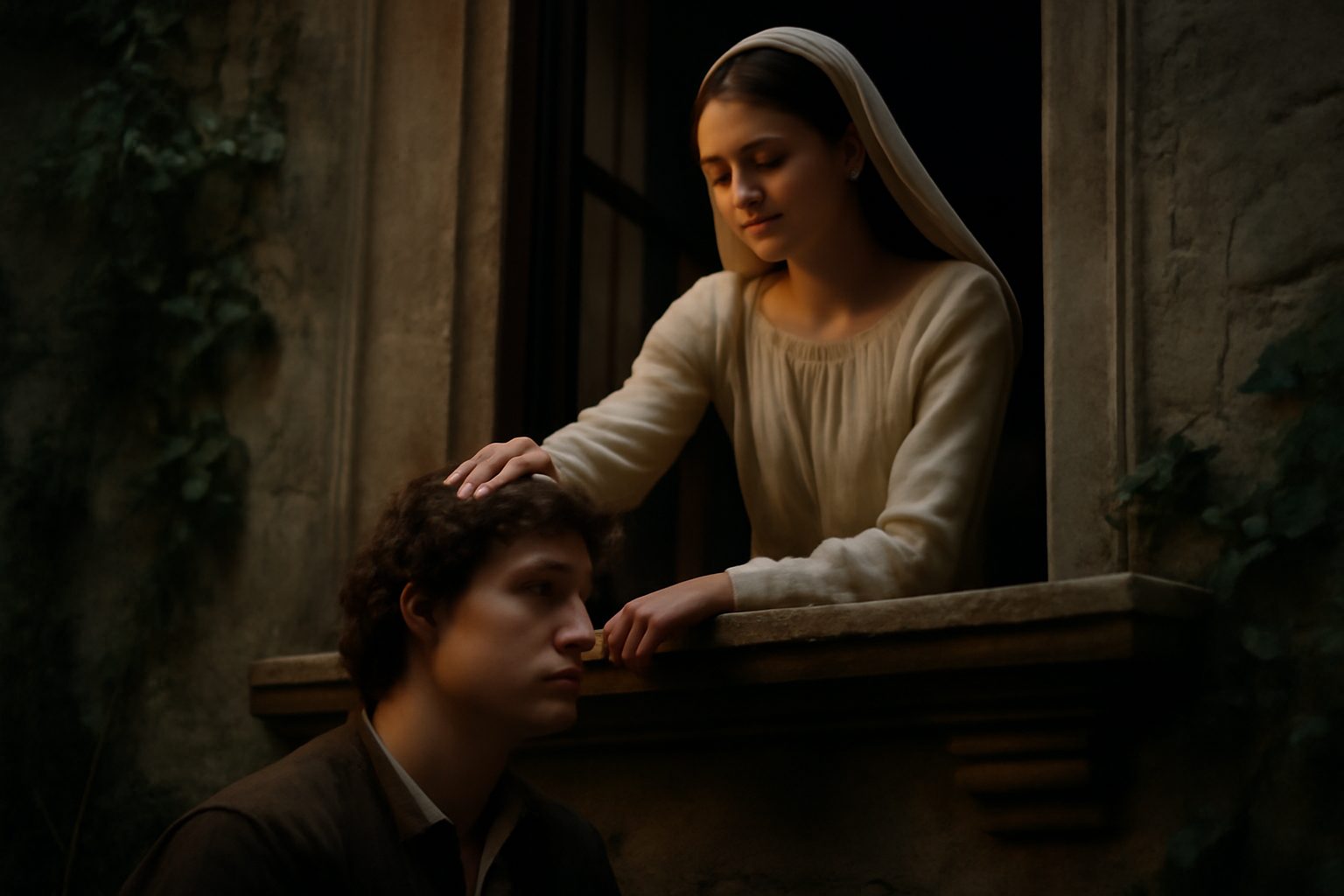
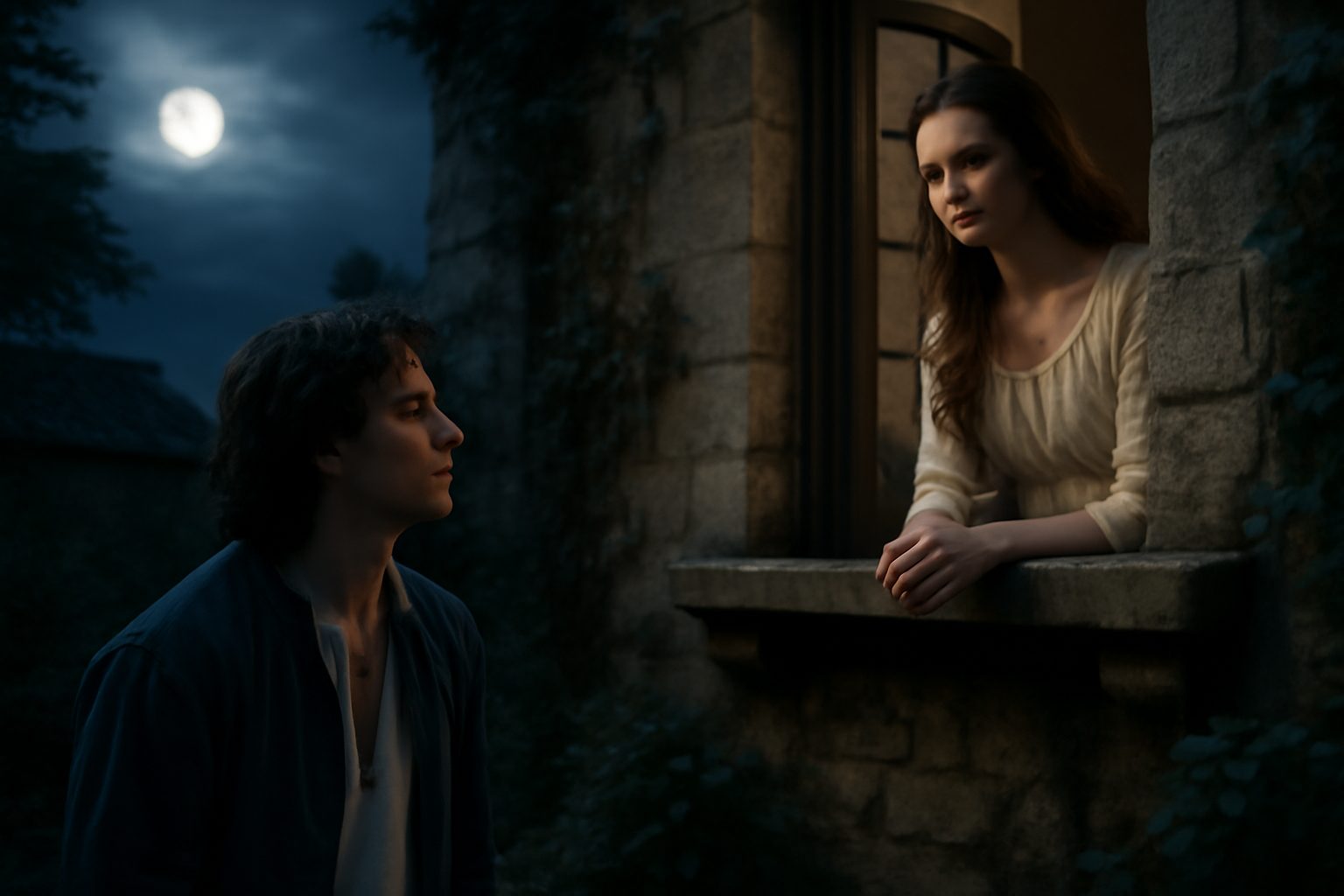
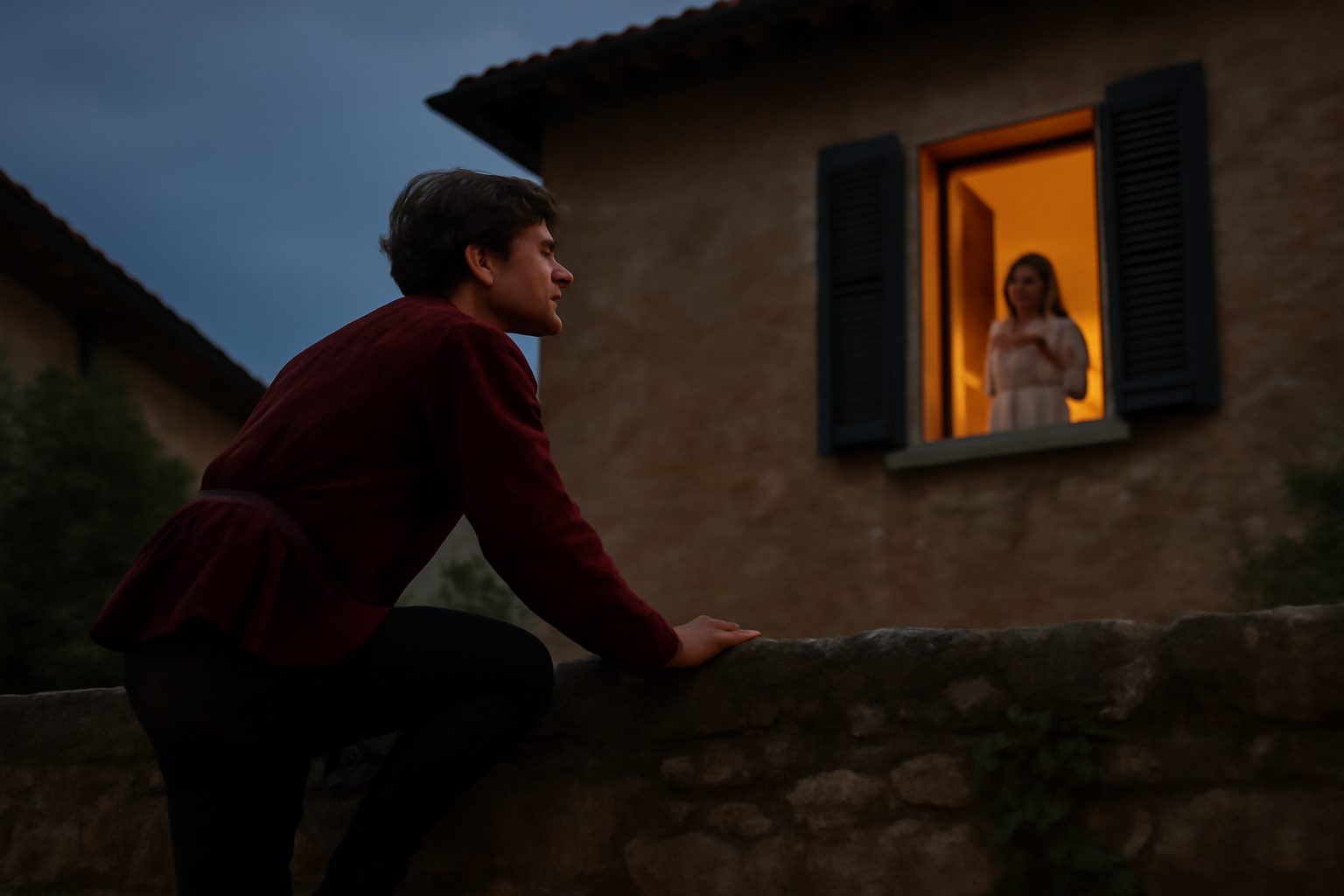
In Act 2, Scene 1 of Romeo and Juliet, Mercutio and Benvolio search for Romeo after the Capulet feast, unaware that he has slipped away to pursue Juliet. Mercutio, ever the jester, mocks Romeo's lovesick behavior, suggesting he is hiding from them on purpose. This line reflects Mercutio's playful frustration as he teases Romeo's elusive romantic tendencies.
Benvolio: "To seek him here that means not to be found."
In modern day english, we would say:
He's hiding here but doesn’t want to be found.
Frequently Asked Questions
What is Benvolio saying about Romeo in this line?
Benvolio is saying that Romeo does not want to be found, so it is pointless to look for him.
Connections to other verses:
Connections to "To seek him here that means not to be found."
This line, spoken by Benvolio, serves as a conclusion to the scene's central action—the search for Romeo. It connects thematically and narratively with several other verses in Act 2, Scene 1.
Direct Narrative Precedents
Benvolio's statement directly responds to Mercutio's earlier efforts to summon Romeo, such as when he declares, Call, good Mercutio, and proceeds with his colorful conjurations. It also follows Come, he hath hid himself among these trees, where Benvolio suggests Romeo's deliberate concealment, reinforcing the idea that Romeo does not wish to be found.
Thematic Links: Love and Concealment
The notion of seeking someone who evades discovery ties into Romeo's new, secretive love for Juliet. This is contrasted with his previous infatuation with Rosaline, referenced in I conjure thee by Rosaline's bright eyes. Additionally, Romeo's hiding and emotional state are described in To be consorted with the humorous night, emphasizing his withdrawal into a private, love-filled world.
Abandonment of the Search
Benvolio's line paves the way for the scene's end, leading directly to Come, shall we go? and Go, then; for 'tis in vain, where the friends acknowledge the futility of their search and decide to leave Romeo alone.